Article

Understanding Loss to Follow-Up in AMD Patients Receiving VEGF Inhibitor Therapy: Associated Factors and Underlying Reasons


1
Department of Ophthalmology, University Hospital—St. Michael’s Hospital, 811 08 Bratislava, Slovakia
2
First Department of Internal Medicine, Faculty of Medicine, Comenius University, University Hospital Bratislava, 811 07 Bratislava, Slovakia
3
Vikom Ophthalmology Center, 010 08 Zilina, Slovakia
4
Department of Ophthalmology, Faculty Hospital Nitra, 950 01 Nitra, Slovakia
5
Department of Ophthalmology, Faculty of Medicine, Comenius University, 821 01 Bratislava, Slovakia
6
Oftalmocentrum Betliarska Euromedix, 851 07 Bratislava, Slovakia
*
Author to whom correspondence should be addressed.
Diagnostics 2024, 14(4), 400; https://doi.org/10.3390/diagnostics14040400

Submission received: 15 January 2024 / Revised: 30 January 2024 / Accepted: 5 February 2024 / Published: 12 February 2024
(This article belongs to the Section Biomedical Optics)

Abstract

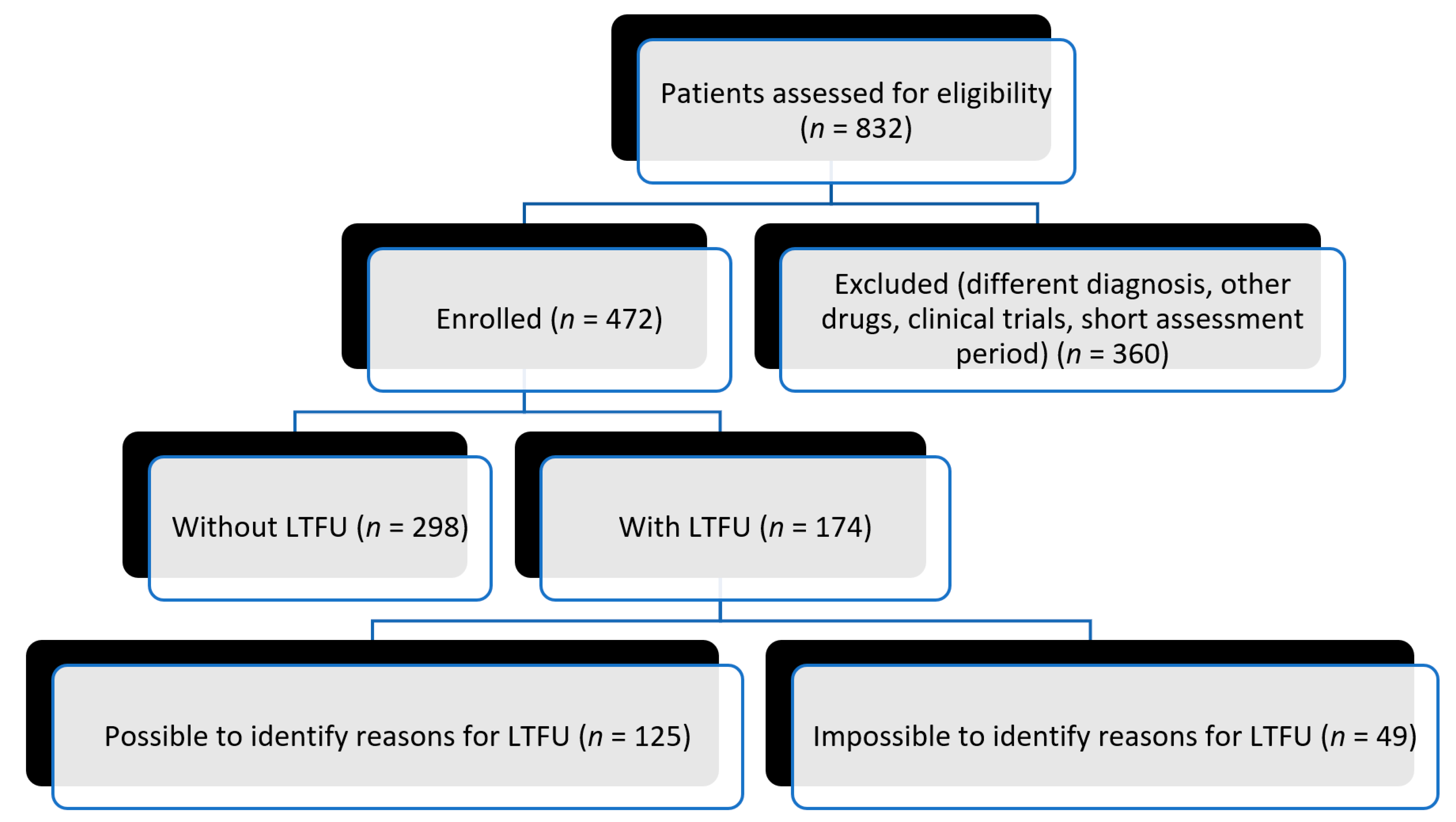
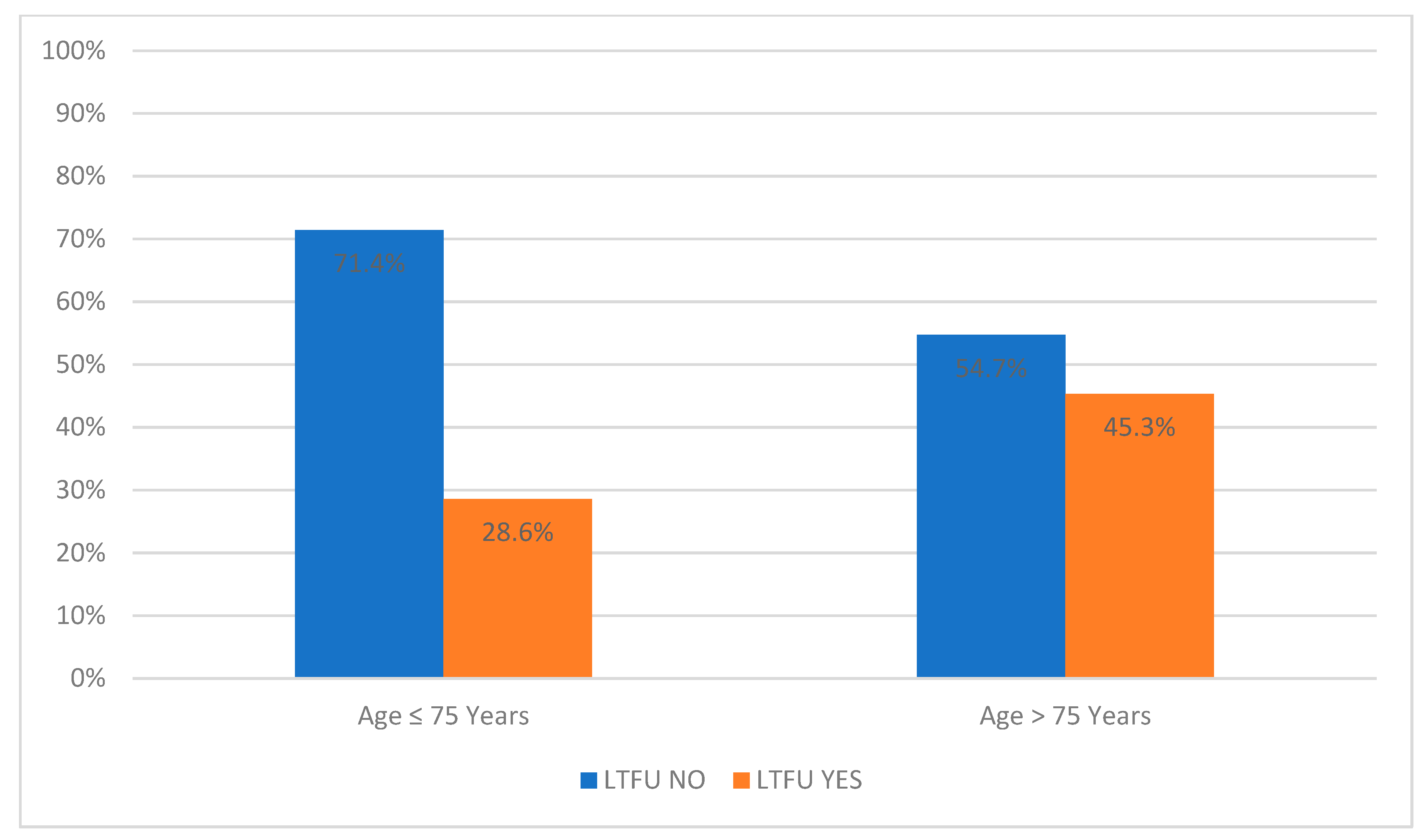
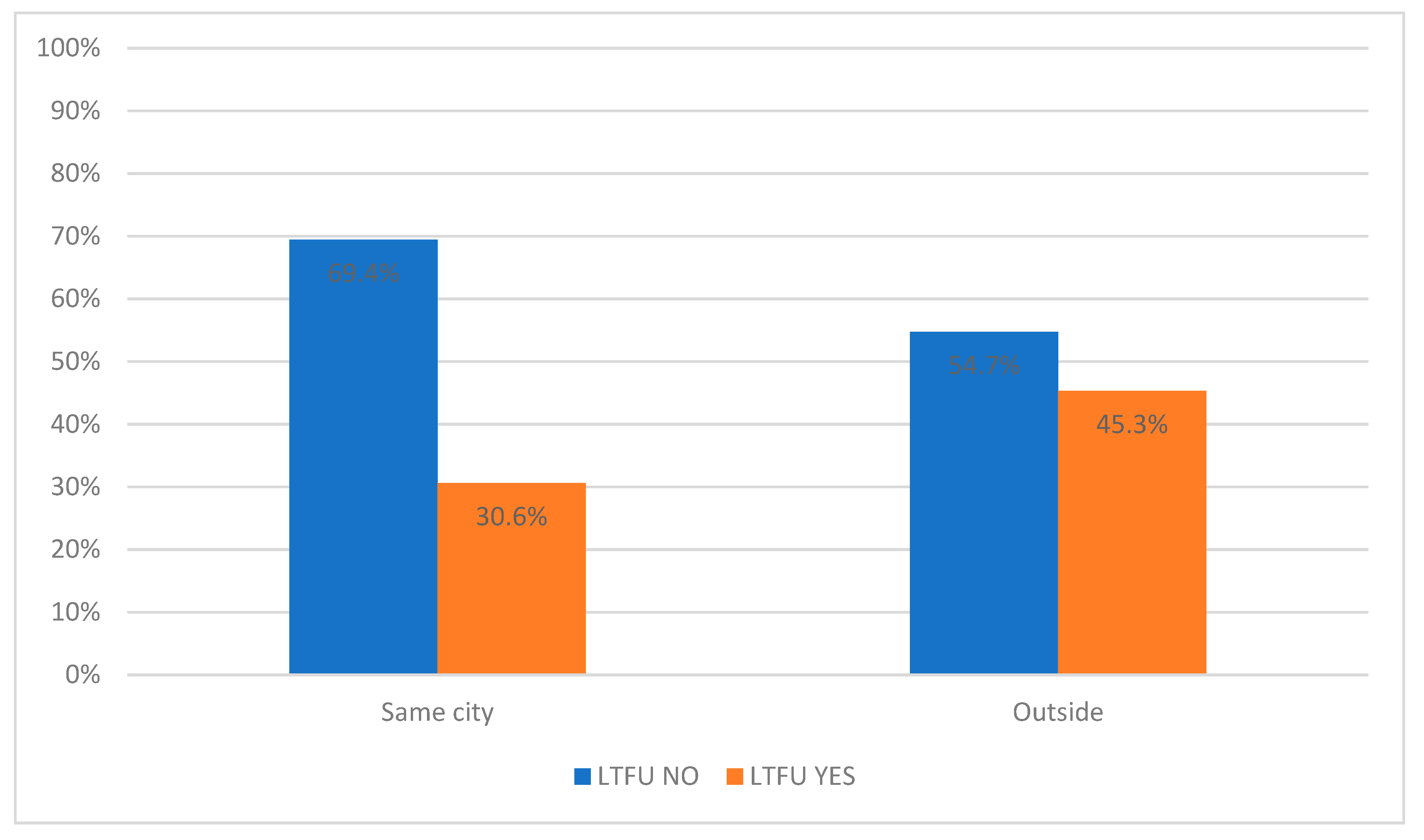
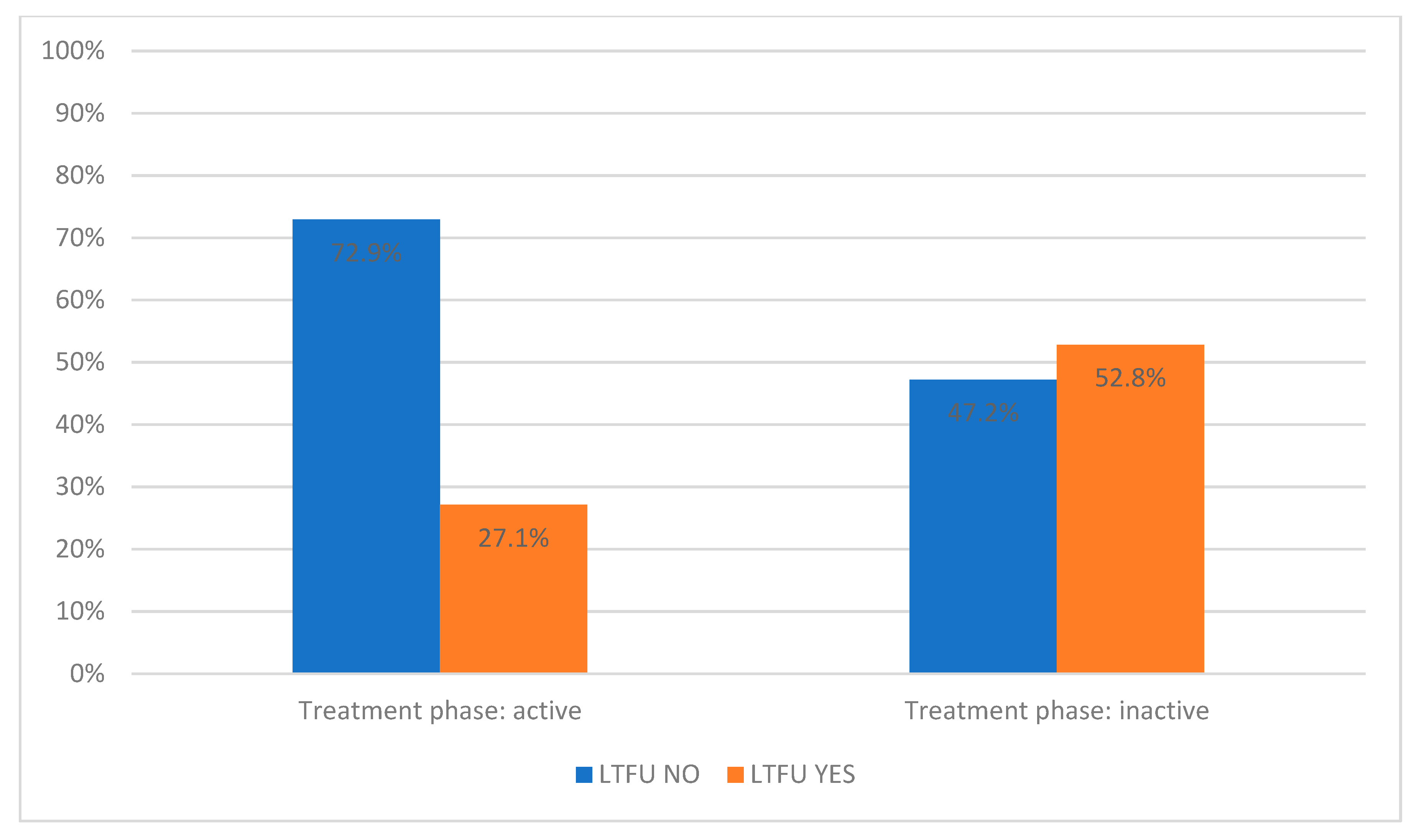
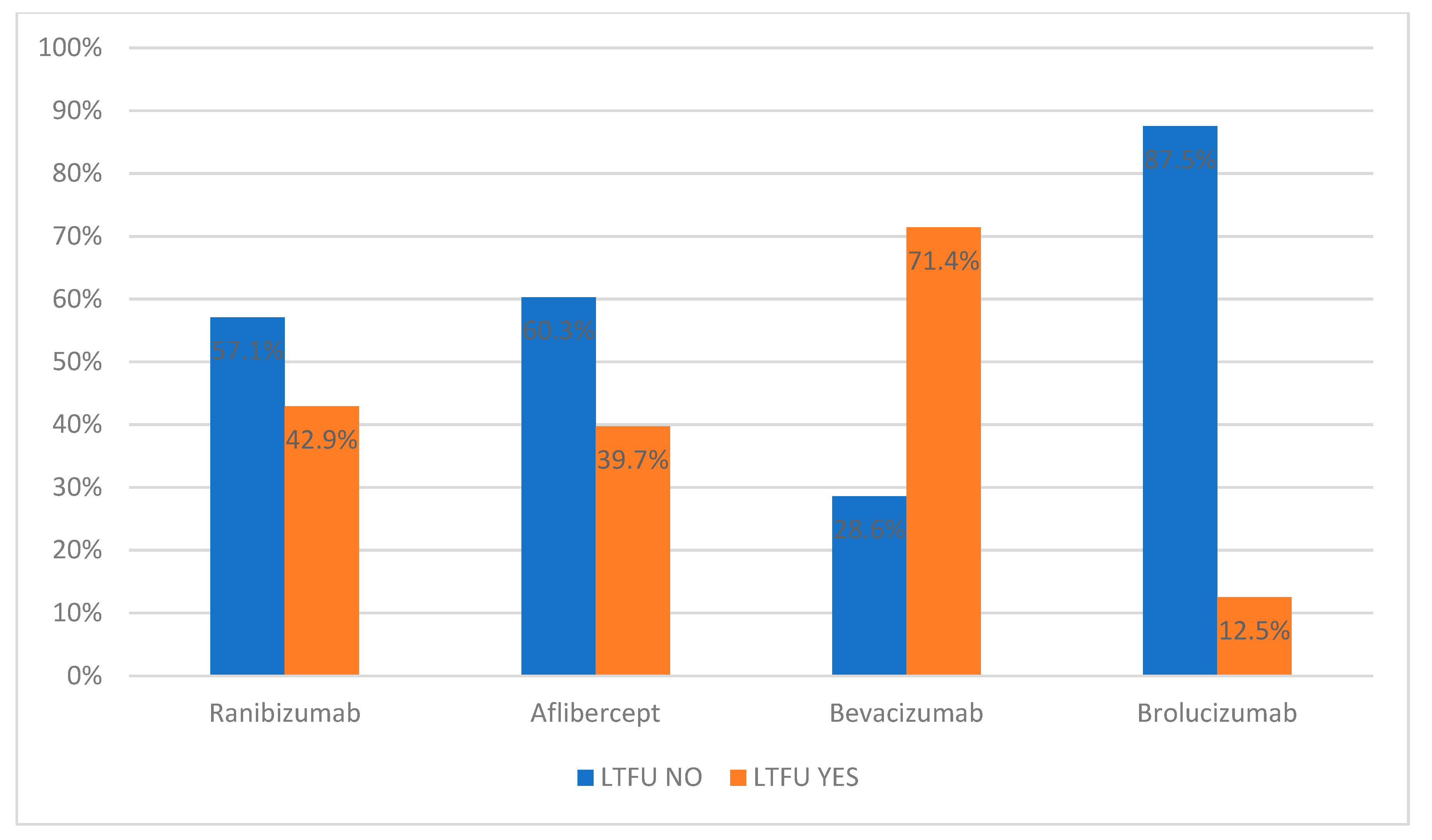
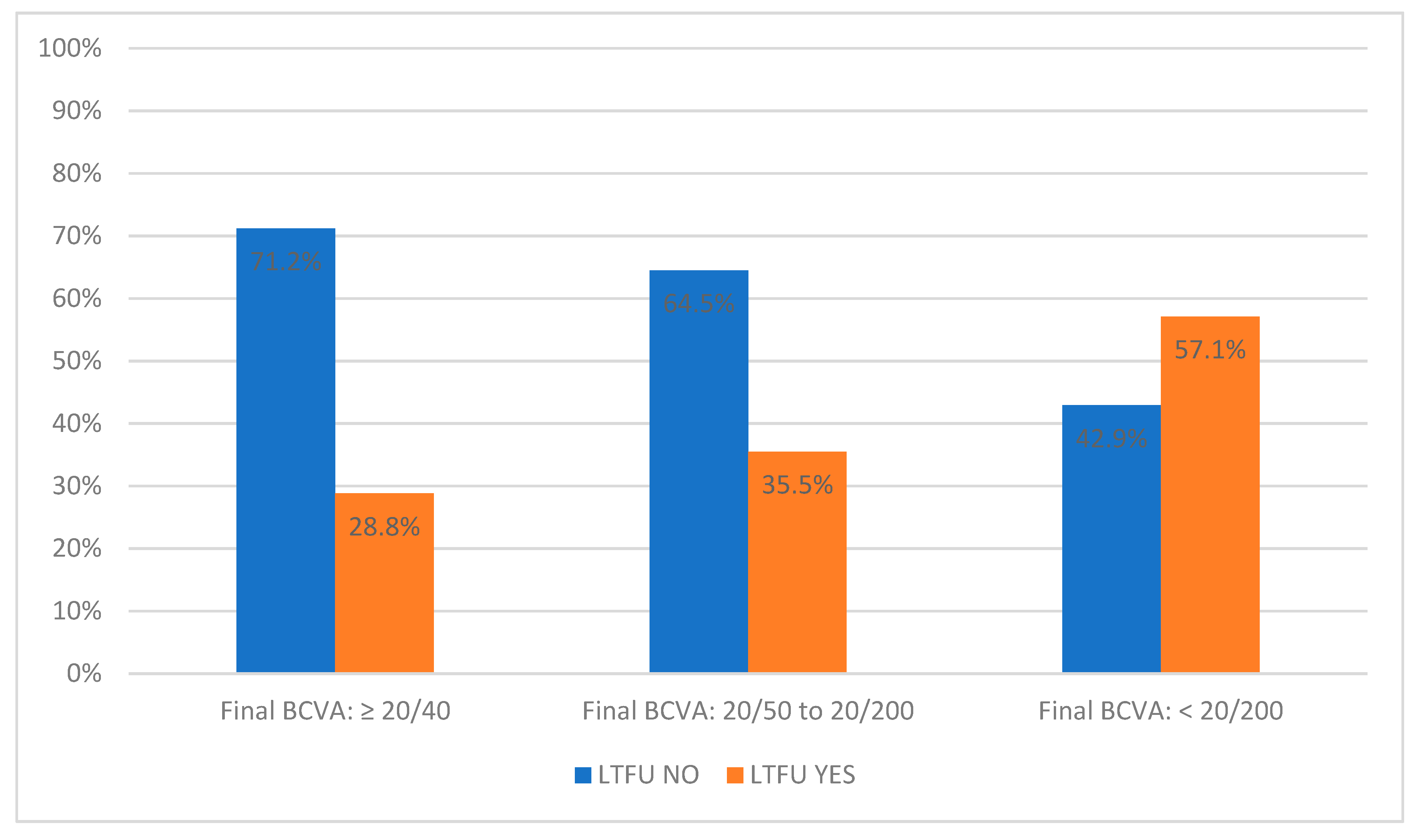
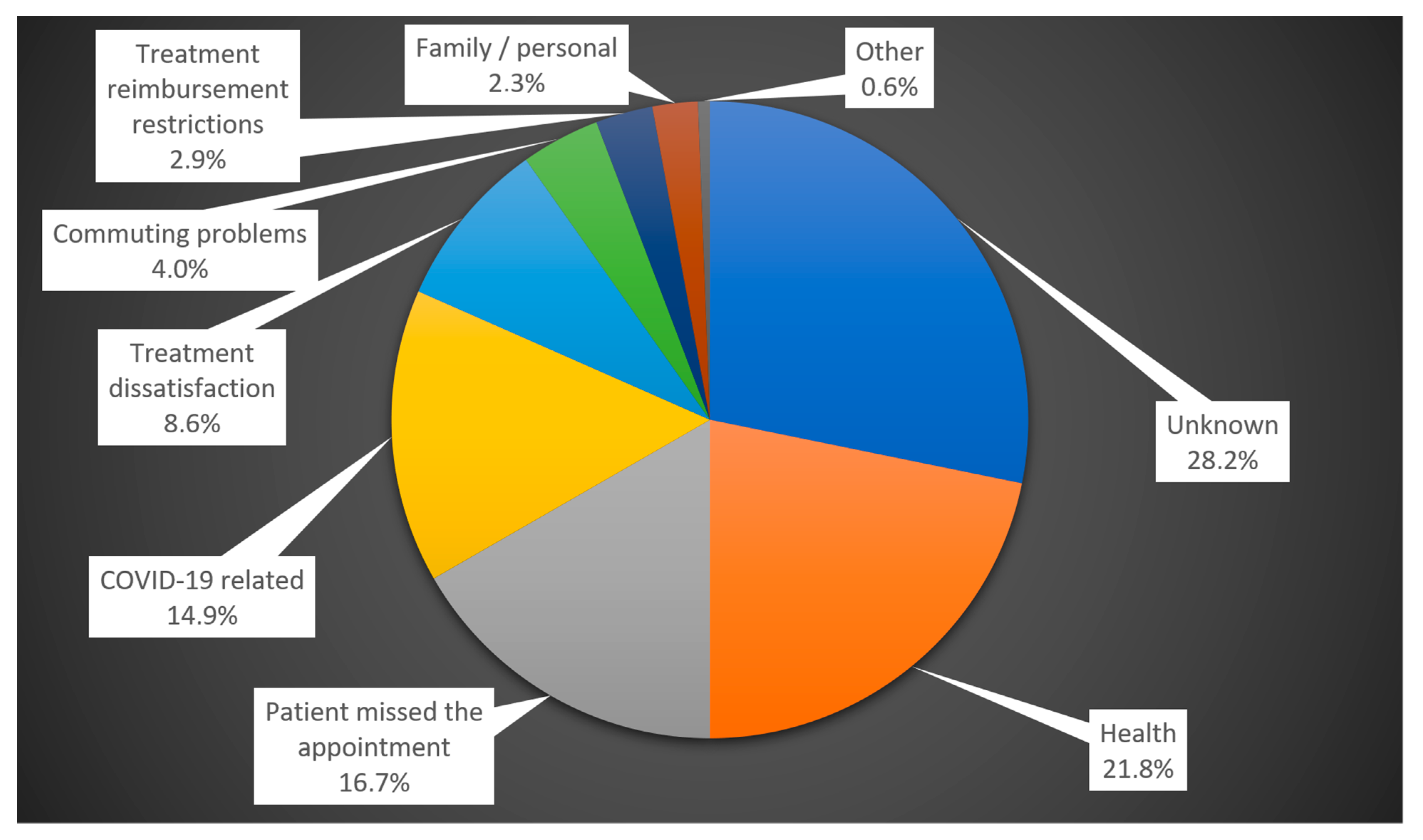
Background: In patients with wet age-related macular degeneration (AMD), loss to follow-up (LTFU) leads to unplanned interruptions in therapy and the risk of visual loss. Methods: This retrospective and prospective case–control cohort study compared AMD patients with (LTFU YES) and without (LTFU NO) LTFU during anti-VEGF treatment over 12 years. LTFU was defined as missing any treatment or monitoring visits, or not scheduling follow-ups for six months. Results: Significant differences between LTFU NO (n = 298) and LTFU YES (n = 174) groups were age, treatment phase, baseline and final best-corrected visual acuity (BCVA), type of anti-VEGF drug, treatment switch, commuting distance, and escort during commuting. A multivariate logistic regression analysis identified the need for an escort during the commuting and treatment phase as the only significant difference. The four most common reasons for LTFU were general health worsening (21.8%), patient-missed appointments (16.7%), COVID-19-related issues (14.9%), and treatment dissatisfaction (8.6%). Conclusions: The factors associated with increased LTFU rates were older age, inactive treatment phase, lower baseline and final BCVA, bevacizumab treatment, monotherapy, longer travelling distance, and commuting with an escort. According to the multivariate logistic regression analysis, only the escort during the commuting and treatment phases was significant. These findings could direct research to explore social support in treatment adherence and highlight the importance of treatment phases in practice.
Keywords: loss to follow-up; AMD; anti-VEGF; factors; reasons; non-persistence loss to follow-up; AMD; anti-VEGF; factors; reasons; non-persistence