Article

Sequence-Type Classification of Brain MRI for Acute Stroke Using a Self-Supervised Machine Learning Algorithm


1
Department of Computer Science and Engineering, Konkuk University, Seoul 05029, Republic of Korea
2
Biomedical Research Center, Asan Institute for Life Sciences, Asan Medical Center, Seoul 05505, Republic of Korea
3
Department of Radiology and Research Institute of Radiology, Asan Medical Center, University of Ulsan College of Medicine, Seoul 05505, Republic of Korea
4
Clinical Research Center, Asan Medical Center, Seoul 05505, Republic of Korea
5
Department of Convergence Medicine, University of Ulsan College of Medicine, Seoul 05505, Republic of Korea
6
Trialinformatics Inc., Seoul 05505, Republic of Korea
7
Department of Radiation Science & Technology, Jeonbuk National University, Jeonju 56212, Republic of Korea
8
Shin Poong Pharm. Co., Ltd., Seoul 06246, Republic of Korea
9
Graduate School of Clinical Pharmacy, CHA University, Pocheon-si 11160, Republic of Korea
10
Department of Smart ICT Convergence Engineering, Konkuk University, Seoul 05029, Republic of Korea
*
Authors to whom correspondence should be addressed.
These authors contributed equally to this work.
Diagnostics 2024, 14(1), 70; https://doi.org/10.3390/diagnostics14010070

Submission received: 21 November 2023 / Revised: 18 December 2023 / Accepted: 22 December 2023 / Published: 27 December 2023
(This article belongs to the Section Medical Imaging and Theranostics)

Abstract

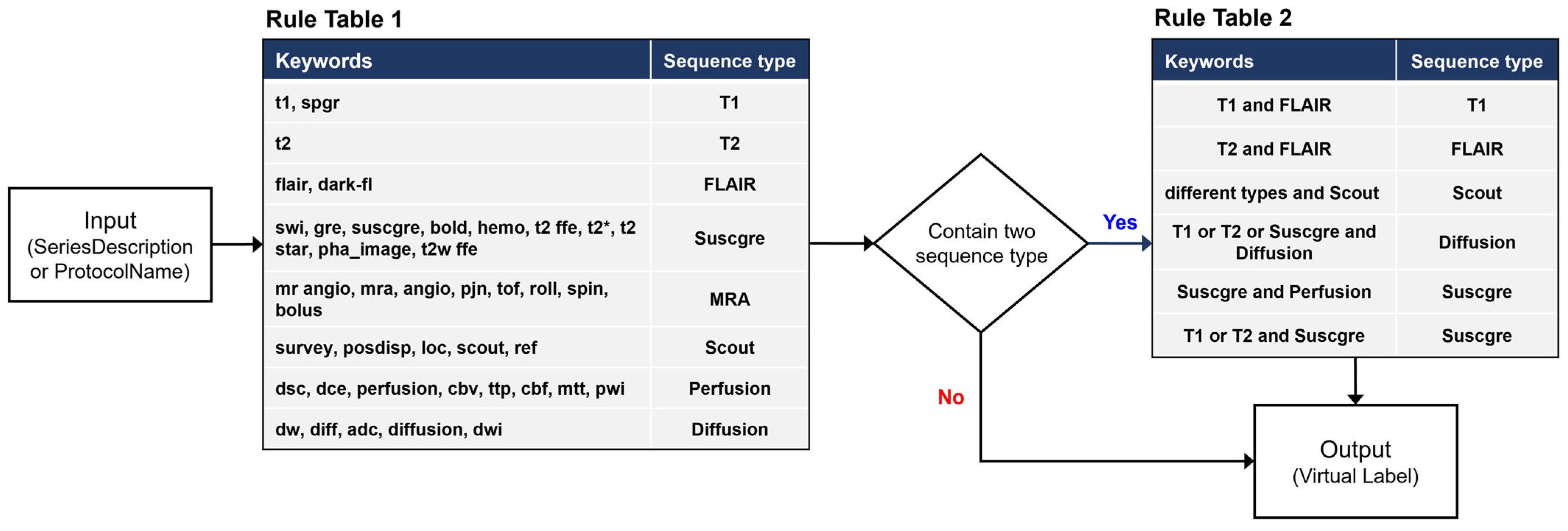
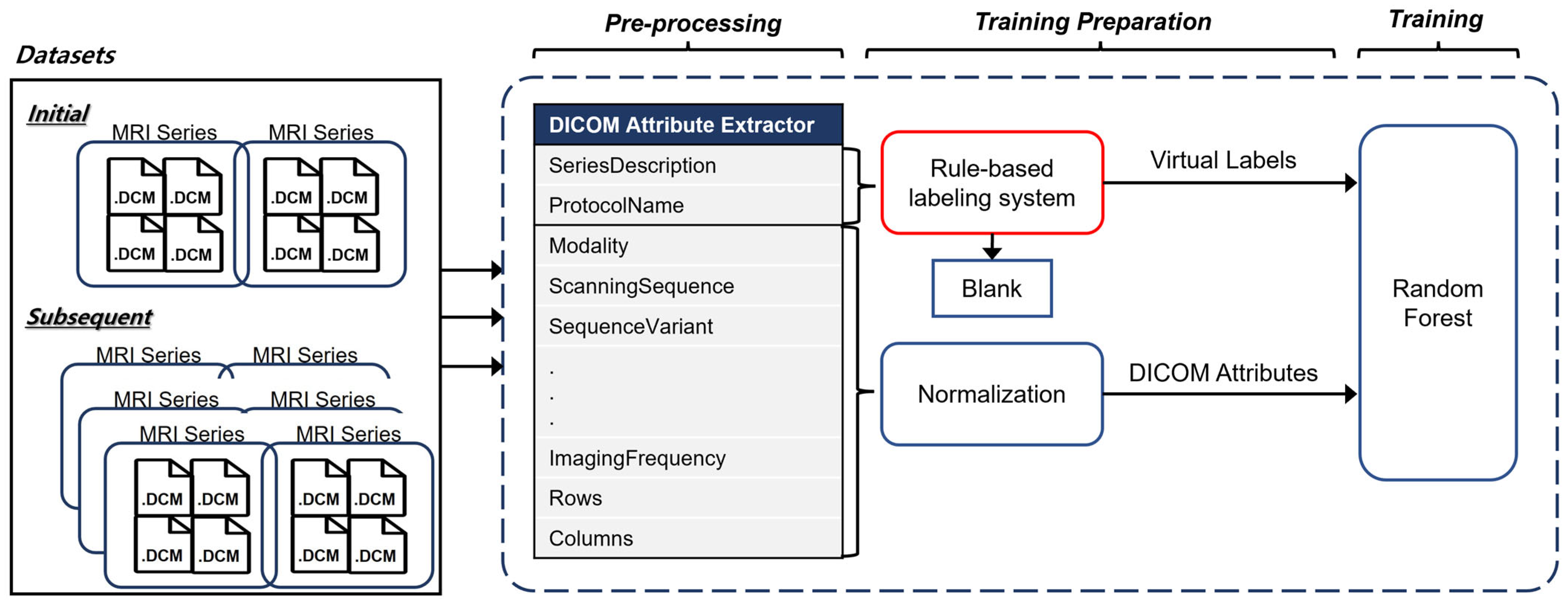
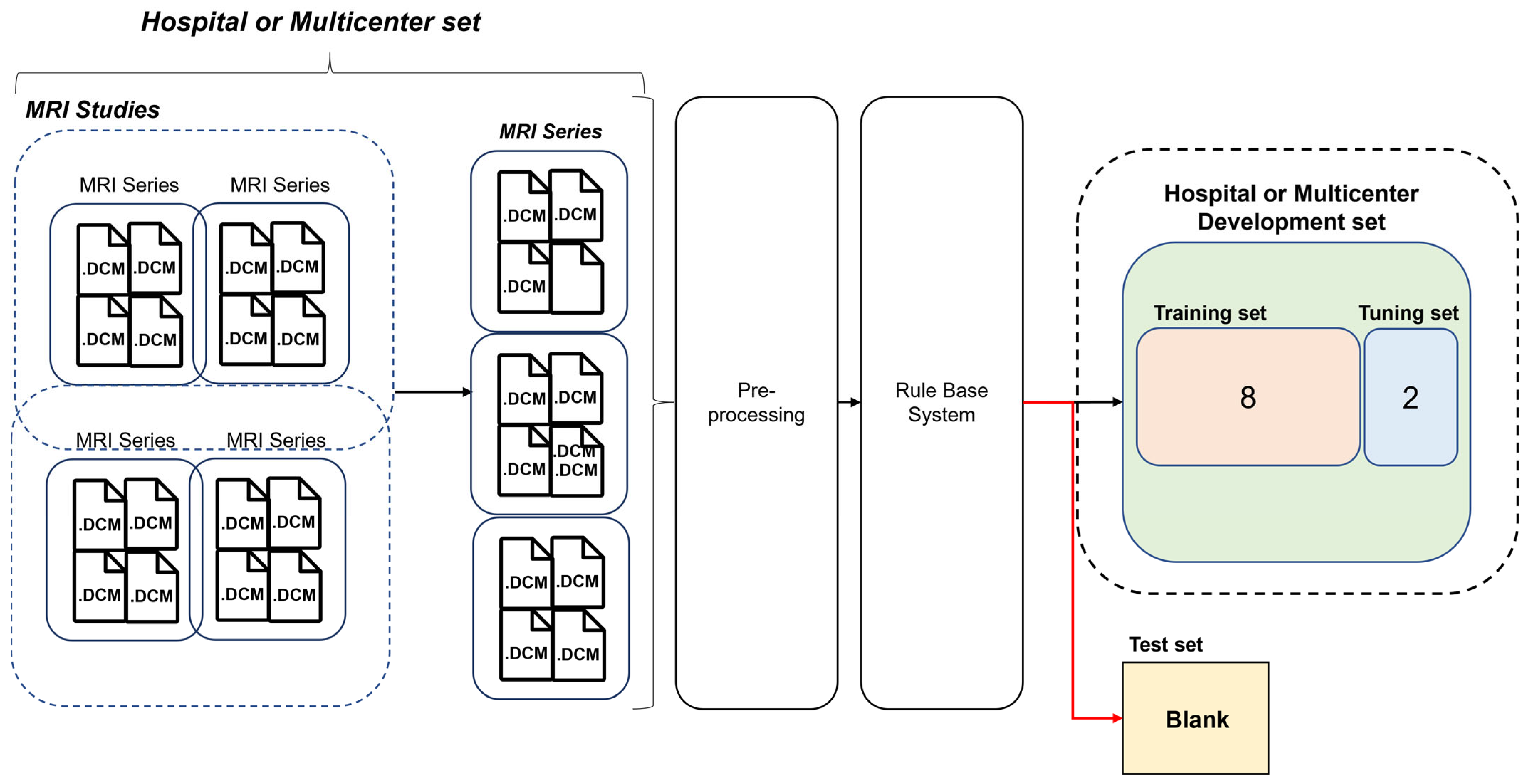
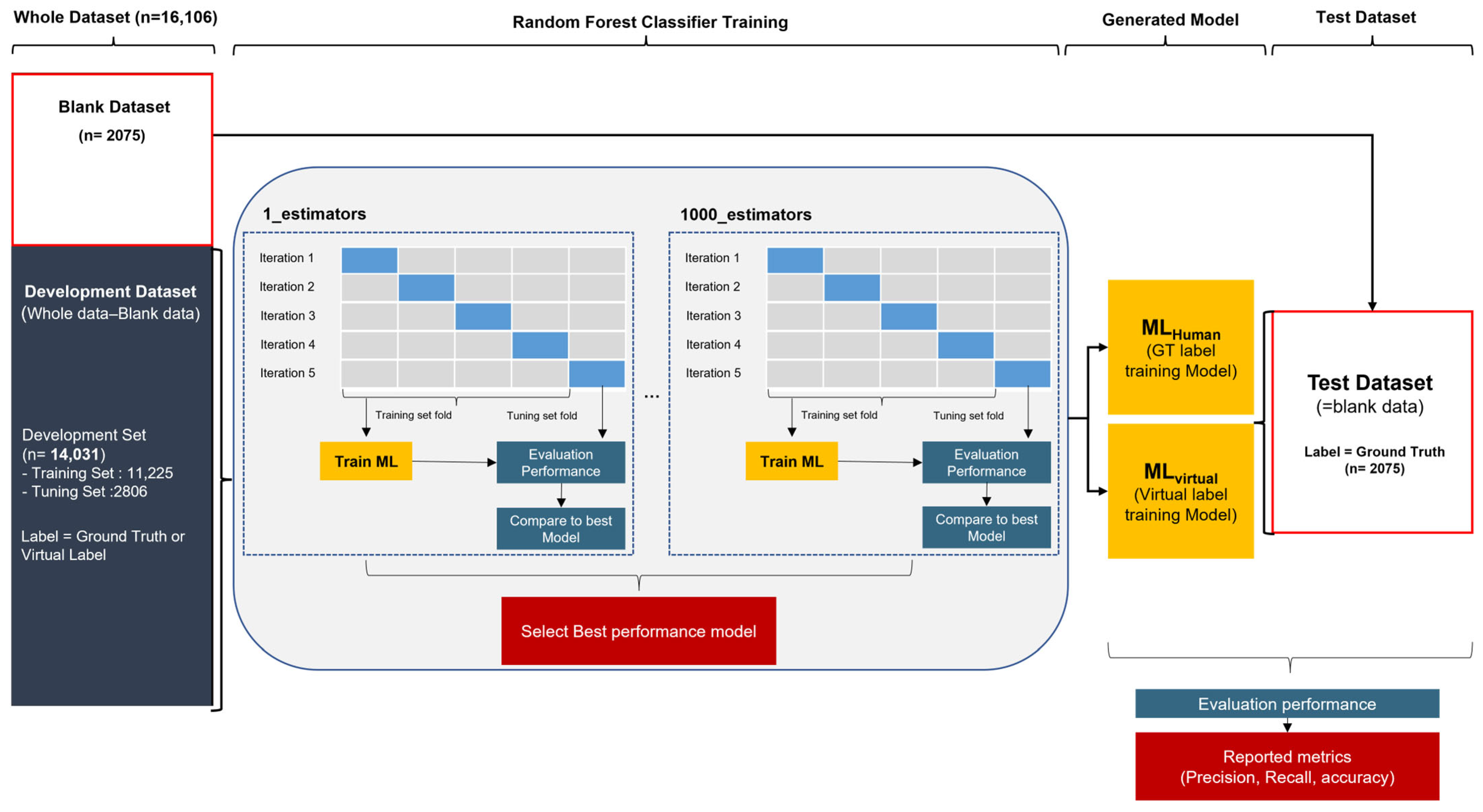
We propose a self-supervised machine learning (ML) algorithm for sequence-type classification of brain MRI using a supervisory signal from DICOM metadata (i.e., a rule-based virtual label). A total of 1787 brain MRI datasets were constructed, including 1531 from hospitals and 256 from multi-center trial datasets. The ground truth (GT) was generated by two experienced image analysts and checked by a radiologist. An ML framework called ImageSort-net was developed using various features related to MRI acquisition parameters and used for training virtual labels and ML algorithms derived from rule-based labeling systems that act as labels for supervised learning. For the performance evaluation of ImageSort-net (MLvirtual), we compare and analyze the performances of models trained with human expert labels (MLhumans), using as a test set blank data that the rule-based labeling system failed to infer from each dataset. The performance of ImageSort-net (MLvirtual) was comparable to that of MLhuman (98.5% and 99%, respectively) in terms of overall accuracy when trained with hospital datasets. When trained with a relatively small multi-center trial dataset, the overall accuracy was relatively lower than that of MLhuman (95.6% and 99.4%, respectively). After integrating the two datasets and re-training them, MLvirtual showed higher accuracy than MLvirtual trained only on multi-center datasets (95.6% and 99.7%, respectively). Additionally, the multi-center dataset inference performances after the re-training of MLvirtual and MLhumans were identical (99.7%). Training of ML algorithms based on rule-based virtual labels achieved high accuracy for sequence-type classification of brain MRI and enabled us to build a sustainable self-learning system.
Keywords: magnetic resonance image; machine learning; metadata magnetic resonance image; machine learning; metadata