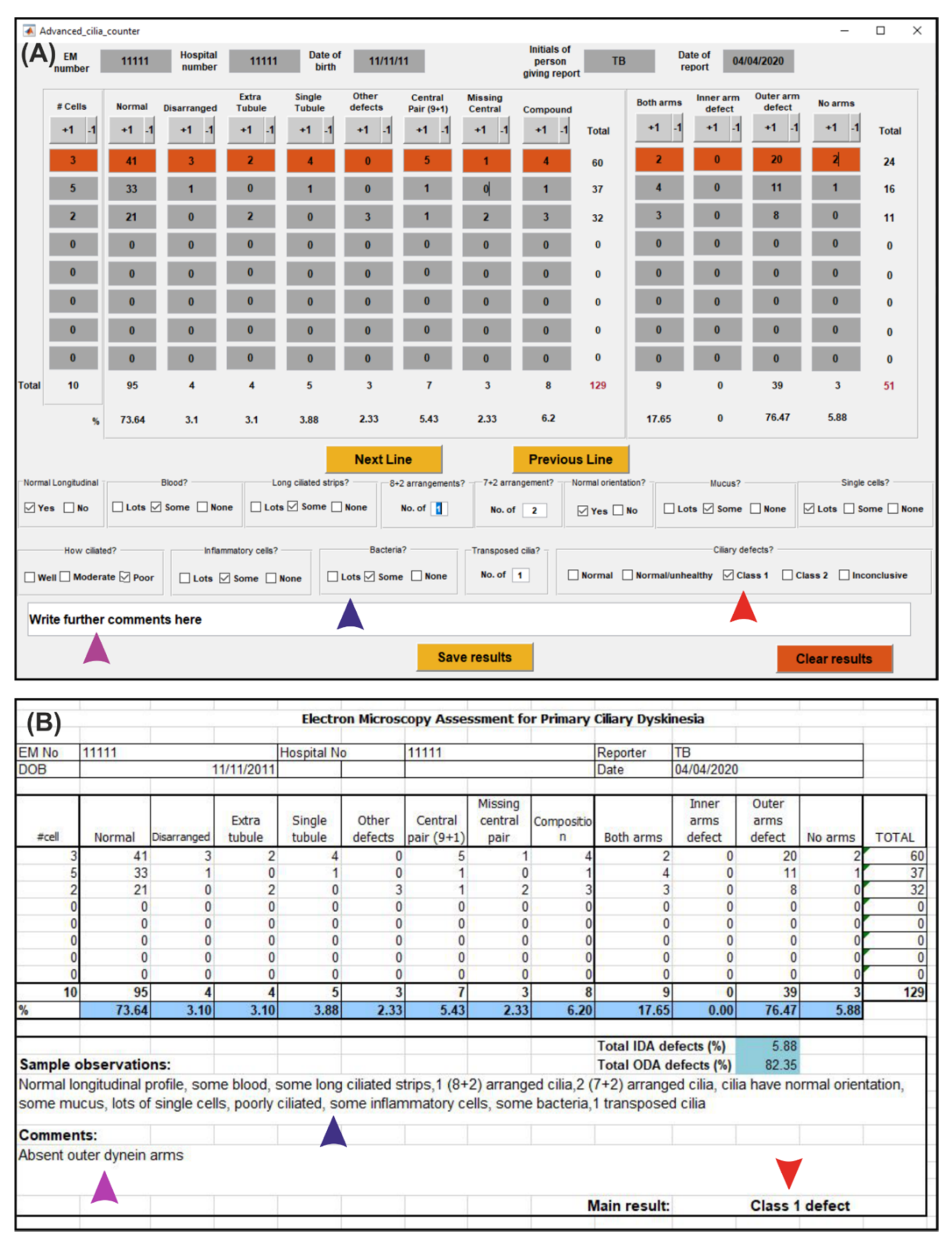
Ciliary Feature Counter: A program for the Quantitative Assessment of Cilia to Diagnose Primary Ciliary Dyskinesia


Abstract
Share and Cite
Pinto, A.L.; Rai, R.K.; Hogg, C.; Burgoyne, T. Ciliary Feature Counter: A program for the Quantitative Assessment of Cilia to Diagnose Primary Ciliary Dyskinesia. Diagnostics 2020, 10, 524. https://doi.org/10.3390/diagnostics10080524
Pinto AL, Rai RK, Hogg C, Burgoyne T. Ciliary Feature Counter: A program for the Quantitative Assessment of Cilia to Diagnose Primary Ciliary Dyskinesia. Diagnostics. 2020; 10(8):524. https://doi.org/10.3390/diagnostics10080524
Chicago/Turabian StylePinto, Andreia L., Ranjit K. Rai, Claire Hogg, and Thomas Burgoyne. 2020. "Ciliary Feature Counter: A program for the Quantitative Assessment of Cilia to Diagnose Primary Ciliary Dyskinesia" Diagnostics 10, no. 8: 524. https://doi.org/10.3390/diagnostics10080524
APA StylePinto, A. L., Rai, R. K., Hogg, C., & Burgoyne, T. (2020). Ciliary Feature Counter: A program for the Quantitative Assessment of Cilia to Diagnose Primary Ciliary Dyskinesia. Diagnostics, 10(8), 524. https://doi.org/10.3390/diagnostics10080524