Midlife Vascular and Lifestyle Determinants of Late-Life Cognitive Decline and Dementia: A Life-Course Prevention Framework with a Gulf (GCC) Perspective


Abstract
1. Introduction
2. Scope and Approach
3. Dementia as a Life-Course Disorder
4. Midlife Vascular Determinants
4.1. Hypertension and Cerebral Small-Vessel Disease
4.2. Diabetes Mellitus and Insulin Resistance
4.3. Obesity, Adiposity, and Metabolic Syndrome
4.4. Dyslipidemia and Low-Density Lipoprotein Cholesterol
4.5. Smoking and Cumulative Vascular Injury
5. Midlife Lifestyle Determinants
5.1. Physical Activity and Fitness
5.2. Dietary Patterns and Cardiometabolic Health
5.3. Sleep and Sleep-Disordered Breathing
5.4. Cognitive Engagement, Social Connection, and Reserve
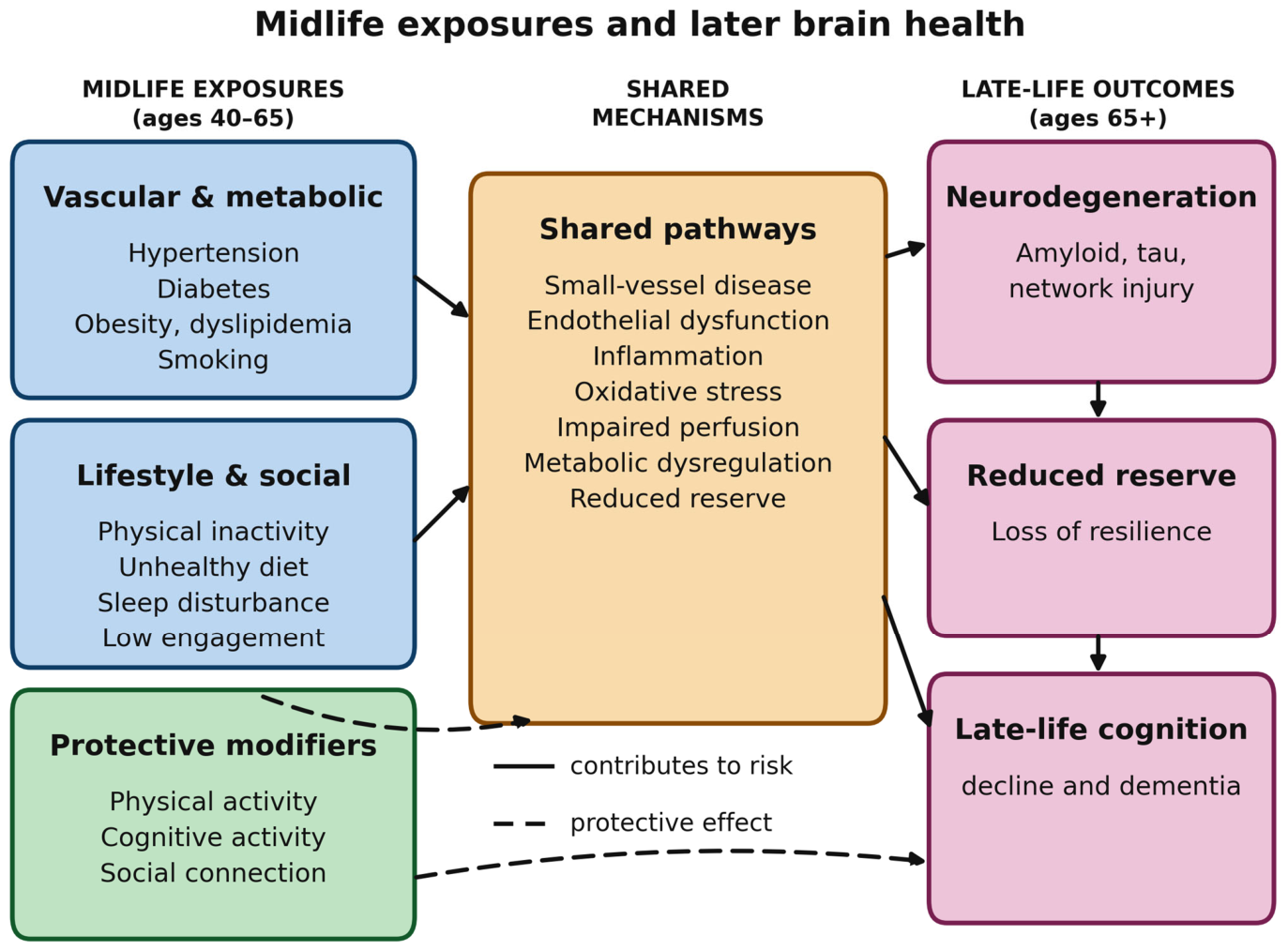
6. Integrated Mechanisms Linking Midlife Exposures to Late-Life Outcomes
7. Regional Relevance: Midlife Prevention in the Gulf (GCC) Countries
7.1. The Regional Burden of Risk and Disease
7.2. Genetic Background and Consanguinity
7.3. Adapting Prevention to the Regional Context
8. From Risk-Factor Lists to Clinical Prevention
9. Controversies and Evolving Evidence
10. Limitations and Future Directions
11. Conclusions
Author Contributions
Funding
Institutional Review Board Statement
Informed Consent Statement
Data Availability Statement
Acknowledgments
Conflicts of Interest
References
- World Health Organization. Dementia. Fact Sheet. 31 March 2025. Available online: https://www.who.int/news-room/fact-sheets/detail/dementia (accessed on 25 June 2026).
- Livingston, G.; Huntley, J.; Liu, K.Y.; Costafreda, S.G.; Selbaek, G.; Alladi, S.; Ames, D.; Banerjee, S.; Burns, A.; Brayne, C.; et al. Dementia prevention, intervention, and care: 2024 report of the Lancet standing Commission. Lancet 2024, 404, 572–628. [Google Scholar] [CrossRef] [Scilit] [PubMed]
- Jack, C.R., Jr.; Bennett, D.A.; Blennow, K.; Carrillo, M.C.; Dunn, B.; Haeberlein, S.B.; Holtzman, D.M.; Jagust, W.; Jessen, F.; Karlawish, J.; et al. NIA-AA Research Framework: Toward a biological definition of Alzheimer’s disease. Alzheimer’s Dement. 2018, 14, 535–562. [Google Scholar] [CrossRef] [Scilit] [PubMed]
- Nichols, E.; Steinmetz, J.D.; Vollset, S.E.; Fukutaki, K.; Chalek, J.; Abd-Allah, F.; Abdoli, A.; Abualhasan, A.; Abu-Gharbieh, E.; Akram, T.T.; et al. Estimation of the global prevalence of dementia in 2019 and forecasted prevalence in 2050: An analysis for the Global Burden of Disease Study 2019. Lancet Public Health 2022, 7, e105–e125. [Google Scholar] [CrossRef] [PubMed]
- Whitmer, R.A.; Sidney, S.; Selby, J.; Johnston, S.C.; Yaffe, K. Midlife cardiovascular risk factors and risk of dementia in late life. Neurology 2005, 64, 277–281. [Google Scholar] [CrossRef] [Scilit] [PubMed]
- Kivipelto, M.; Ngandu, T.; Fratiglioni, L.; Viitanen, M.; Kareholt, I.; Winblad, B.; Helkala, E.-L.; Tuomilehto, J.; Soininen, H.; Nissinen, A. Obesity and vascular risk factors at midlife and the risk of dementia and Alzheimer disease. Arch. Neurol. 2005, 62, 1556–1560. [Google Scholar] [CrossRef] [Scilit] [PubMed]
- Floud, S.; Hermon, C.; Whiteley, W.; Fitzpatrick, K.E.; Reeves, G.K. Hypertension in pregnancy and in midlife and the risk of dementia: Prospective study of 1.3 million UK women. Alzheimer’s Dement. 2025, 21, e70595. [Google Scholar] [CrossRef] [Scilit] [PubMed]
- Joyce, O.C.; McHugh, C.; Mockler, D.; Wilson, F.; Kelly, A.M. Midlife hypertension is a risk factor for some, but not all, domains of cognitive decline in later life: A systematic review and meta-analysis. J. Hypertens. 2024, 42, 205–223. [Google Scholar] [CrossRef] [Scilit] [PubMed]
- SPRINT MIND Investigators for the SPRINT Research Group; Williamson, J.D.; Pajewski, N.M.; Auchus, A.P.; Bryan, R.N.; Chelune, G.; Cheung, A.K.; Cleveland, M.L.; Coker, L.H.; Crowe, M.G.; et al. Effect of intensive vs standard blood pressure control on probable dementia: A randomized clinical trial. JAMA 2019, 321, 553–561. [Google Scholar] [CrossRef] [Scilit] [PubMed]
- Biessels, G.J.; Staekenborg, S.; Brunner, E.; Brayne, C.; Scheltens, P. Risk of dementia in diabetes mellitus: A systematic review. Lancet Neurol. 2006, 5, 64–74. [Google Scholar] [CrossRef] [Scilit] [PubMed]
- Tabesh, M.; Sacre, J.W.; Mehta, K.; Chen, L.; Sajjadi, S.F.; Magliano, D.J.; Shaw, J.E. Associations of glycaemia-related risk factors with dementia and cognitive decline in individuals with type 2 diabetes: A systematic review and meta-analysis. Diabet. Med. 2025, 42, e70123. [Google Scholar] [CrossRef] [Scilit] [PubMed]
- Biswas, R.; Capuano, A.W.; Mehta, R.I.; Barnes, L.L.; Bennett, D.A.; Arvanitakis, Z. Review of associations of diabetes and insulin resistance with brain health in three harmonised cohort studies of ageing and dementia. Diabetes Metab. Res. Rev. 2025, 41, e70032. [Google Scholar] [CrossRef] [Scilit] [PubMed]
- Yu, J.H.; Kim, R.E.Y.; Park, S.Y.; Lee, D.Y.; Cho, H.J.; Kim, N.H.; Yoo, H.J.; Seo, J.A.; Kim, S.G.; Choi, K.M.; et al. Association of long-term hyperglycaemia and insulin resistance with brain atrophy and cognitive decline: A longitudinal cohort study. Diabetes Obes. Metab. 2023, 25, 1091–1100. [Google Scholar] [CrossRef] [Scilit] [PubMed]
- Anstey, K.J.; Cherbuin, N.; Budge, M.; Young, J. Body mass index in midlife and late-life as a risk factor for dementia: A meta-analysis of prospective studies. Obes. Rev. 2011, 12, e426–e437. [Google Scholar] [CrossRef] [Scilit] [PubMed]
- Wei, J.; Zhu, X.; Liu, J.; Gao, Y.; Liu, X.; Wang, K.; Zheng, X. Estimating global prevalence of mild cognitive impairment and dementia in elderly with overweight, obesity, and central obesity: A systematic review and meta-analysis. Obes. Rev. 2025, 26, e13882. [Google Scholar] [CrossRef] [Scilit] [PubMed]
- HasanRashedi, M.; Ghaemi, S.; Salabat, D.; Bafkar, N.; Bahrami Rad, A.; Vasheghani Farahani, A.; Gohari Dezfuli, Z.; Memari, A. The association between body weight variability and dementia and cognitive decline: A systematic review and meta-analysis of cohort studies with the GRADE assessment. Obes. Rev. 2026, 27, e70055. [Google Scholar] [CrossRef] [Scilit] [PubMed]
- Reddin, C.; Stankard, A.; Chan, K.Y.; Krewer, F.; Judge, C.; Canavan, M.; Davis, D.H.J.; O’Donnell, M. Association of lipid-lowering therapy with dementia and cognitive outcomes: A systematic review and meta-analysis. Age Ageing 2025, 54, afaf219. [Google Scholar] [CrossRef] [Scilit] [PubMed]
- Nordestgaard, L.T.; Hanson, A.; Sanderson, E.; Anderson, E.; Walker, V.; Tybjærg-Hansen, A.; Davey Smith, G.; Nordestgaard, B.G. Cholesterol-lowering drug targets reduce risk of dementia: Mendelian randomization and meta-analyses of 1 million individuals. Alzheimer’s Dement. 2025, 21, e70638. [Google Scholar] [CrossRef] [Scilit] [PubMed]
- Peters, R.; Poulter, R.; Warner, J.; Beckett, N.; Burch, L.; Bulpitt, C. Smoking, dementia and cognitive decline in the elderly, a systematic review. BMC Geriatr. 2008, 8, 36. [Google Scholar] [CrossRef] [Scilit] [PubMed]
- Chen, H.; Wang, J.; Lai, S.; Peng, G.; Zong, G.; Yuan, C.; Luo, B. Smoking cessation, weight change, and risk of dementia: A prospective cohort study. Neurology 2026, 106, e218123. [Google Scholar] [CrossRef] [Scilit] [PubMed]
- Bloomberg, M.; Brown, J.; Di Gessa, G.; Bu, F.; Steptoe, A. Cognitive decline before and after mid-to-late-life smoking cessation: A longitudinal analysis of prospective cohort studies from 12 countries. Lancet Healthy Longev. 2025, 6, 100753. [Google Scholar] [CrossRef] [Scilit] [PubMed]
- Rovio, S.; Kareholt, I.; Helkala, E.-L.; Viitanen, M.; Winblad, B.; Tuomilehto, J.; Soininen, H.; Nissinen, A.; Kivipelto, M. Leisure-time physical activity at midlife and the risk of dementia and Alzheimer’s disease. Lancet Neurol. 2005, 4, 705–711. [Google Scholar] [CrossRef] [Scilit] [PubMed]
- Hamer, M.; Chida, Y. Physical activity and risk of neurodegenerative disease: A systematic review of prospective evidence. Psychol. Med. 2009, 39, 3–11. [Google Scholar] [CrossRef] [Scilit] [PubMed]
- Iso-Markku, P.; Kujala, U.M.; Knittle, K.; Polet, J.; Vuoksimaa, E.; Waller, K. Physical activity as a protective factor for dementia and Alzheimer’s disease: Systematic review, meta-analysis and quality assessment of cohort and case-control studies. Br. J. Sports Med. 2022, 56, 701–709. [Google Scholar] [CrossRef] [Scilit] [PubMed]
- Ngandu, T.; Lehtisalo, J.; Solomon, A.; Levalahti, E.; Ahtiluoto, S.; Antikainen, R.; Backman, L.; Hanninen, T.; Jula, A.; Laatikainen, T.; et al. A 2 year multidomain intervention of diet, exercise, cognitive training, and vascular risk monitoring versus control to prevent cognitive decline in at-risk elderly people (FINGER): A randomised controlled trial. Lancet 2015, 385, 2255–2263. [Google Scholar] [CrossRef] [Scilit] [PubMed]
- Baker, L.D.; Espeland, M.A.; Whitmer, R.A.; Snyder, H.M.; Leng, X.; Lovato, L.; Papp, K.V.; Yu, M.; Kivipelto, M.; Alexander, A.S.; et al. Structured vs self-guided multidomain lifestyle interventions for global cognitive function: The US POINTER randomized clinical trial. JAMA 2025, 334, 681–691. [Google Scholar] [CrossRef] [Scilit] [PubMed]
- Sabia, S.; Fayosse, A.; Dumurgier, J.; van Hees, V.T.; Paquet, C.; Sommerlad, A.; Kivimaki, M.; Dugravot, A.; Singh-Manoux, A. Association of sleep duration in middle and old age with incidence of dementia. Nat. Commun. 2021, 12, 2289. [Google Scholar] [CrossRef] [Scilit] [PubMed]
- Xie, L.; Kang, H.; Xu, Q.; Chen, M.J.; Liao, Y.; Thiyagarajan, M.; O’Donnell, J.; Christensen, D.J.; Nicholson, C.; Iliff, J.J.; et al. Sleep drives metabolite clearance from the adult brain. Science 2013, 342, 373–377. [Google Scholar] [CrossRef] [Scilit] [PubMed]
- Ungvari, Z.; Fekete, M.; Lehoczki, A.; Munkacsy, G.; Fekete, J.T.; Zabo, V.; Purebl, G.; Varga, P.; Ungvari, A.; Gyorffy, B. Sleep disorders increase the risk of dementia, Alzheimer’s disease, and cognitive decline: A meta-analysis. Geroscience 2025, 47, 4899–4920. [Google Scholar] [CrossRef] [Scilit] [PubMed]
- Miyata, J.; Muraki, I.; Iso, H.; Yamagishi, K.; Yasuda, N.; Sawada, N.; Inoue, M.; Tsugane, S. Sleep duration, its change, and risk of dementia among Japanese: The Japan Public Health Center-based prospective study. Prev. Med. 2024, 180, 107884. [Google Scholar] [CrossRef] [Scilit] [PubMed]
- Stern, Y. Cognitive reserve in ageing and Alzheimer’s disease. Lancet Neurol. 2012, 11, 1006–1012. [Google Scholar] [CrossRef] [Scilit] [PubMed]
- Kuiper, J.S.; Zuidersma, M.; Oude Voshaar, R.C.; Zuidema, S.U.; van den Heuvel, E.R.; Stolk, R.P.; Smidt, N. Social relationships and risk of dementia: A systematic review and meta-analysis of longitudinal cohort studies. Ageing Res. Rev. 2015, 22, 39–57. [Google Scholar] [CrossRef] [Scilit] [PubMed]
- Luchetti, M.; Aschwanden, D.; Sesker, A.A.; Zhu, X.; O’Suilleabhain, P.S.; Stephan, Y.; Terracciano, A.; Sutin, A.R. A meta-analysis of loneliness and risk of dementia using longitudinal data from >600,000 individuals. Nat. Ment. Health 2024, 2, 1350–1361. [Google Scholar] [CrossRef] [Scilit] [PubMed]
- Norton, S.; Matthews, F.E.; Barnes, D.E.; Yaffe, K.; Brayne, C. Potential for primary prevention of Alzheimer’s disease: An analysis of population-based data. Lancet Neurol. 2014, 13, 788–794. [Google Scholar] [CrossRef] [Scilit] [PubMed]
- Deckers, K.; van Boxtel, M.P.J.; Schiepers, O.J.G.; de Vugt, M.; Sanchez, J.L.; Anstey, K.J.; Brayne, C.; Dartigues, J.-F.; Engedal, K.; Kivipelto, M.; et al. Target risk factors for dementia prevention: A systematic review and Delphi consensus study on the evidence from observational studies. Int. J. Geriatr. Psychiatry 2015, 30, 234–246. [Google Scholar] [CrossRef] [Scilit] [PubMed]
- Gottesman, R.F.; Schneider, A.L.C.; Zhou, Y.; Coresh, J.; Green, E.; Gupta, N.; Knopman, D.S.; Mintz, A.; Rahmim, A.; Sharrett, A.R.; et al. Association between midlife vascular risk factors and estimated brain amyloid deposition. JAMA 2017, 317, 1443–1450. [Google Scholar] [CrossRef] [Scilit] [PubMed]
- Debette, S.; Seshadri, S.; Beiser, A.; Au, R.; Himali, J.J.; Palumbo, C.; Wolf, P.A.; DeCarli, C. Midlife vascular risk factor exposure accelerates structural brain aging and cognitive decline. Neurology 2011, 77, 461–468. [Google Scholar] [CrossRef] [Scilit] [PubMed]
- Aderinto, N.; Olatunji, G.; Abdulbasit, M.; Ashinze, P.; Faturoti, O.; Ajagbe, A.; Ukoaka, B.; Aboderin, G. The impact of diabetes in cognitive impairment: A review of current evidence and prospects for future investigations. Medicine 2023, 102, e35557. [Google Scholar] [CrossRef] [Scilit] [PubMed]
- Kim, A.B.; Arvanitakis, Z. Insulin resistance, cognition, and Alzheimer’s disease. Obesity 2023, 31, 1486–1498. [Google Scholar] [CrossRef] [Scilit] [PubMed]
- Raji, C.A.; Meysami, S.; Hashemi, S.; Garg, S.; Akbari, N.; Gouda, A.; Chodakiewitz, Y.G.; Nguyen, T.D.; Niotis, K.; Merrill, D.A.; et al. Visceral and subcutaneous abdominal fat predict brain volume loss at midlife in 10,001 individuals. Aging Dis. 2024, 15, 1831–1842. [Google Scholar] [CrossRef] [Scilit] [PubMed]
- Xu, S.; Wen, S.; Yang, Y.; He, J.; Yang, H.; Qu, Y.; Zeng, Y.; Zhu, J.; Fang, F.; Song, H. Association between body composition patterns, cardiovascular disease, and risk of neurodegenerative disease in the UK Biobank. Neurology 2024, 103, e209659. [Google Scholar] [CrossRef] [Scilit] [PubMed]
- Fang, S.; Guan, L.; Jian, H.; Dai, X.J.; Gong, L. Body weight and BMI variability linked to dementia risk: A meta-analysis. Biomol. Biomed. 2025, 25, 2632–2646. [Google Scholar] [CrossRef] [Scilit] [PubMed]
- Stephan, B.C.M.; Cochrane, L.; Kafadar, A.H.; Brain, J.; Burton, E.; Myers, B.; Brayne, C.; Naheed, A.; Anstey, K.J.; Ashor, A.W.; et al. Population attributable fractions of modifiable risk factors for dementia: A systematic review and meta-analysis. Lancet Healthy Longev. 2024, 5, e406–e421. [Google Scholar] [CrossRef] [Scilit] [PubMed]
- Morris, M.C.; Tangney, C.C.; Wang, Y.; Sacks, F.M.; Barnes, L.L.; Bennett, D.A.; Aggarwal, N.T. MIND diet associated with reduced incidence of Alzheimer’s disease. Alzheimer’s Dement. 2015, 11, 1007–1014. [Google Scholar] [CrossRef] [Scilit] [PubMed]
- Scarmeas, N.; Stern, Y.; Tang, M.-X.; Mayeux, R.; Luchsinger, J.A. Mediterranean diet and risk for Alzheimer’s disease. Ann. Neurol. 2006, 59, 912–921. [Google Scholar] [CrossRef] [Scilit] [PubMed]
- Huang, L.; Tao, Y.; Chen, H.; Chen, X.; Shen, J.; Zhao, C.; Xu, X.; He, M.; Zhu, D.; Zhang, R.; et al. Mediterranean-Dietary Approaches to Stop Hypertension Intervention for Neurodegenerative Delay (MIND) diet and cognitive function and its decline: A prospective study and meta-analysis of cohort studies. Am. J. Clin. Nutr. 2023, 118, 174–182. [Google Scholar] [CrossRef] [Scilit] [PubMed]
- Sawyer, R.P.; Blair, J.; Shatz, R.; Manly, J.J.; Judd, S.E. Association of adherence to a MIND-style diet with the risk of cognitive impairment and decline in the REGARDS cohort. Neurology 2024, 103, e209817. [Google Scholar] [CrossRef] [Scilit] [PubMed]
- Agarwal, P.; Leurgans, S.E.; Agrawal, S.; Aggarwal, N.T.; Cherian, L.J.; James, B.D.; Dhana, K.; Barnes, L.L.; Bennett, D.A.; Schneider, J.A. Association of MIND diet with cognitive decline among Black and White older adults. Alzheimer’s Dement. 2024, 20, 8461–8469. [Google Scholar] [CrossRef] [Scilit] [PubMed]
- Charisis, S.; Yannakoulia, M.; Scarmeas, N. Diets to promote healthy brain ageing. Nat. Rev. Neurol. 2024, 20, 330–341. [Google Scholar] [CrossRef] [Scilit] [PubMed]
- Zhang, J.; Ou, J.; Lu, X.; Wang, T.; Dang, W.; Ding, L.; Liu, Y.; Yan, B.; Yu, H. Sleep disorders and the risk of cognitive decline or dementia: An updated systematic review and meta-analysis of longitudinal studies. J. Neurol. 2025, 272, 689. [Google Scholar] [CrossRef] [Scilit]
- Mahalingam, G.; Samtani, S.; Lam, B.C.P.; Lipnicki, D.M.; Lima-Costa, M.F.; Blay, S.L.; Castro-Costa, E.; Shifu, X.; Guerchet, M.; Preux, P.-M.; et al. Social connections and risk of incident mild cognitive impairment, dementia, and mortality in 13 longitudinal cohort studies of ageing. Alzheimer’s Dement. 2023, 19, 5114–5128. [Google Scholar] [CrossRef] [Scilit] [PubMed]
- Huang, A.R.; Roth, D.L.; Cidav, T.; Chung, S.E.; Amjad, H.; Thorpe, R.J., Jr.; Boyd, C.M.; Cudjoe, T.K.M. Social isolation and 9-year dementia risk in community-dwelling Medicare beneficiaries in the United States. J. Am. Geriatr. Soc. 2023, 71, 765–773. [Google Scholar] [CrossRef] [Scilit] [PubMed]
- El-Metwally, A.; Toivola, P.; Al-Rashidi, M.; Nooruddin, S.; Jawed, M.; AlKanhal, R.; Abdul Razzak, H.; Albawardi, N. Epidemiology of Alzheimer’s disease and dementia in Arab countries: A systematic review. Behav. Neurol. 2019, 2019, 3935943. [Google Scholar] [CrossRef] [Scilit] [PubMed]
- Hajjar, S.H.; Alsaad, S.M.; AlFouzan, M.A.; Rohaiem, S.N.; Alamri, S.H.; Altamimi, T.N.; Alodhayani, A.A.; Hassanin, H.I.; AlHarkan, K.S.; Albalawi, A.A.; et al. Dementia prevalence within the Kingdom of Saudi Arabia National Guard Health System (2015–2023): An exploratory epidemiological study. J. Alzheimer’s Dis. 2025, 104, 488–497. [Google Scholar] [CrossRef] [Scilit] [PubMed]
- Qassem, T.; Itani, L.; Nasr, W. Prevalence and economic burden of dementia in the Arab world. BJPsych Open 2023, 9, e126. [Google Scholar] [CrossRef] [Scilit] [PubMed]
- Boettiger, D.C.; Lin, T.K.; Almansour, M.; Hamza, M.M.; Alsukait, R.; Herbst, C.H.; Altheyab, N.; Afghani, A.; Kattan, F. Projected impact of population aging on non-communicable disease burden and costs in the Kingdom of Saudi Arabia, 2020–2030. BMC Health Serv. Res. 2023, 23, 1357. [Google Scholar] [CrossRef] [Scilit] [PubMed]
- Qadi, N.; Alkhodair, Y.; Alshammari, W.; Aldakheel, A. Epidemiological and economic burden of dementia in the Middle East and North African region. J. Alzheimer’s Dis. 2025, 108, 522–530. [Google Scholar] [CrossRef] [Scilit] [PubMed]
- Al-Thani, M.H.J.T.; El-Saharty, S.; Jamal, Z.; Mishra, A.; Kokku, S.B.; Nawaz, R.N.; Skaroni, I.; Abou-Samra, A.B. Qatar’s progress in curbing diabetes: A comprehensive and proactive approach. Health Syst. Reform 2025, 11, 2516897. [Google Scholar] [CrossRef] [Scilit] [PubMed]
- Mezhal, F.; Oulhaj, A.; Abdulle, A.; AlJunaibi, A.; Alnaeemi, A.; Ahmad, A.; Leinberger-Jabari, A.; Al Dhaheri, A.S.; AlZaabi, E.; Al-Maskari, F.; et al. High prevalence of cardiometabolic risk factors amongst young adults in the United Arab Emirates: The UAE Healthy Future Study. BMC Cardiovasc. Disord. 2023, 23, 137. [Google Scholar] [CrossRef] [Scilit] [PubMed]
- Chaabane, S.; Chaabna, K.; Abraham, A.; Mamtani, R.; Cheema, S. Physical activity and sedentary behaviour in the Middle East and North Africa: An overview of systematic reviews and meta-analysis. Sci. Rep. 2020, 10, 9363. [Google Scholar] [CrossRef] [Scilit] [PubMed]
- Al-Zalabani, A.H. Secondhand smoke exposure among adolescents in the Gulf Cooperation Council countries: Analysis of Global Youth Tobacco Surveys. Sci. Rep. 2024, 14, 21534. [Google Scholar] [CrossRef] [Scilit] [PubMed]
- Alkhunizan, M.; Alkhenizan, A.; Basudan, L. Prevalence of mild cognitive impairment and dementia in Saudi Arabia: A community-based study. Dement. Geriatr. Cogn. Dis. Extra 2018, 8, 98–103. [Google Scholar] [CrossRef] [Scilit] [PubMed]
- Bowirrat, A.; Friedland, R.P.; Chapman, J.; Korczyn, A.D. The very high prevalence of AD in an Arab population is not explained by APOE ε4 allele frequency. Neurology 2000, 55, 731. [Google Scholar] [CrossRef] [Scilit] [PubMed]
- Khayat, A.M.; Alshareef, B.G.; Alharbi, S.F.; AlZahrani, M.M.; Alshangity, B.A.; Tashkandi, N.F. Consanguineous marriage and its association with genetic disorders in Saudi Arabia: A review. Cureus 2024, 16, e53888. [Google Scholar] [CrossRef] [Scilit] [PubMed]
- Farrer, L.A.; Bowirrat, A.; Friedland, R.P.; Waraska, K.; Korczyn, A.D.; Baldwin, C.T. Identification of multiple loci for Alzheimer disease in a consanguineous Israeli-Arab community. Hum. Mol. Genet. 2003, 12, 415–422. [Google Scholar] [CrossRef] [PubMed]
- Ateia, H.; Ogrodzki, P.; Wilson, H.V.; Ganesan, S.; Halwani, R.; Koshy, A.; Zaher, W.A. Population genome programs across the Middle East and North Africa: Successes, challenges, and future directions. Biomed. Hub 2023, 8, 60–71. [Google Scholar] [CrossRef] [Scilit] [PubMed]
- van Dyck, C.H.; Swanson, C.J.; Aisen, P.; Bateman, R.J.; Chen, C.; Gee, M.; Kanekiyo, M.; Li, D.; Reyderman, L.; Cohen, S.; et al. Lecanemab in early Alzheimer’s disease. N. Engl. J. Med. 2023, 388, 9–21. [Google Scholar] [CrossRef] [Scilit] [PubMed]
- Sims, J.R.; Zimmer, J.A.; Evans, C.D.; Lu, M.; Ardayfio, P.; Sparks, J.; Wessels, A.M.; Shcherbinin, S.; Wang, H.; Monkul Nery, E.S.; et al. Donanemab in early symptomatic Alzheimer disease: The TRAILBLAZER-ALZ 2 randomized clinical trial. JAMA 2023, 330, 512–527. [Google Scholar] [CrossRef] [Scilit] [PubMed]
- Livingston, G.; Costafreda, S.G.; Kivimäki, M.; Mukadam, N.; Schneider, L.S.; Selbæk, G.; Shirai, K.; Sommerlad, A. Reflections on The Lancet’s Commission on dementia prevention, intervention, and care—Authors’ reply. Lancet 2025, 405, 625–626. [Google Scholar] [CrossRef] [Scilit] [PubMed]
- Williams, V.J.; Trane, R.; Sicinski, K.; Roan, C.; Herd, P.; Engelman, M.; Asthana, S. Life course modifiable risk factors of dementia: Replicating the 2024 Lancet Commission model in a single longitudinal cohort. Alzheimer’s Dement. 2025, 21, e107692. [Google Scholar] [CrossRef] [Scilit]


| Risk Domain | Representative Evidence | Evidence Class | Plausible Pathways | Clinical Implication |
|---|---|---|---|---|
| Hypertension | Associated with higher dementia risk; recent data show domain-specific effects [5,6,7,8]. | Cohort evidence plus a randomized trial reporting cognitive endpoints (SPRINT MIND) [9]. | Cerebral small-vessel disease and white-matter injury. | Treat blood pressure early and consistently; frame control as both cardiovascular and brain protection. |
| Diabetes/insulin resistance | Diabetes, glycemic variability, and insulin resistance each add risk [5,10,11,12,13]. | Cohort and mechanistic evidence; no dementia-endpoint trial of glucose lowering. | Microvascular injury and brain insulin resistance. | Use integrated cardiometabolic care rather than glucose-only counseling. |
| Obesity/adiposity | Higher risk, driven especially by central adiposity and weight variability [6,14,15,16]. | Cohort and neuroimaging evidence; observational only. | Systemic inflammation and insulin resistance. | Address weight, waist circumference, diet, activity, and sleep as a combined risk cluster. |
| Dyslipidemia/high LDL-C | Listed as a modifiable risk [2]; trial evidence for lipid-lowering on cognition is equivocal [17]. | Cohort evidence plus Mendelian randomization [18]; late-life lipid-lowering trials neutral [17]. | Atherosclerosis and impaired cerebral perfusion. | Manage lipids according to cardiovascular-risk standards with brain-health framing. |
| Smoking | Associated with dementia; cessation lowers risk toward never-smoker levels [5,19,20,21]. | Cohort evidence only; no dementia-endpoint trial. | Endothelial injury, hypoxia, and oxidative stress. | Make cessation a repeated, supported, system-level intervention. |
| Physical inactivity | Associated with higher dementia risk; inverse associations between physical activity and dementia are stronger in studies with longer follow-up [22,23,24]. | Cohort evidence plus multidomain intervention trials [25,26]. | Reduced vascular fitness, impaired metabolic health, and diminished neurotrophic signaling. | Prescribe sustainable activity as a core component of brain-health prevention. |
| Sleep disturbance | Short sleep and sleep disorders are associated with higher dementia incidence [27,28,29,30]. | Cohort and meta-analytic evidence; no dementia-endpoint trial. | Impaired clearance, vascular stress, and intermittent hypoxia. | Screen for insomnia and sleep-disordered breathing when clinically indicated. |
| Low cognitive or social engagement | Low engagement and loneliness are independently associated with dementia risk [31,32,33]. | Cohort evidence plus multidomain trial components [25,26]. | Lower cognitive reserve and chronic stress biology. | Promote cognitive activity and social participation as realistic preventive supports. |
| Study/Source | Design or Source Type | Exposure/Intervention | Main Relevance to This Review |
|---|---|---|---|
| Lancet Commission 2024 [2] | Expert commission and evidence synthesis | Fourteen modifiable dementia risk factors across the life course | Supports prevention across early, mid-, and late life; estimates around 45% of cases may be preventable or delayable. |
| Whitmer et al. [5] | Large retrospective cohort | Midlife hypertension, diabetes, smoking, and high cholesterol | Demonstrates cumulative cardiovascular risk-factor burden in midlife and subsequent dementia risk. |
| Kivipelto et al. [6] | Population-based cohort | Midlife obesity and vascular risk factors | Supports the importance of clustered midlife cardiometabolic exposures. |
| Gottesman et al. [36] | Community cohort with neuroimaging | Midlife vascular risk factors and late-life amyloid deposition | Links vascular risk with later brain biomarker and imaging outcomes. |
| SPRINT MIND [9] | Randomized clinical trial | Intensive versus standard systolic blood-pressure treatment | Shows cognitive signals for blood-pressure intervention, especially mild cognitive impairment outcomes. |
| FINGER trial [25] | Randomized multidomain intervention | Diet, exercise, cognitive training, social activity, vascular monitoring | Supports feasibility and cognitive benefit of multidomain prevention in at-risk older adults. |
| Debate/Open Question | Current Evidence | Practical Implication |
|---|---|---|
| Lipid-lowering and cognition | Midlife LDL-C is a listed risk factor [2], but a 2025 meta-analysis of 20 trials found lipid-lowering therapy did not significantly reduce dementia or cognitive impairment, while confirming statin cognitive safety [17]. | Manage lipids for vascular protection; do not present lipid-lowering as a proven dementia prevention therapy. |
| Anti-amyloid disease-modifying therapy | Lecanemab and donanemab modestly slow decline in early Alzheimer’s disease [67,68], but effect sizes are small, ARIA risk and cost are substantial, and access is limited worldwide. | Late, partial treatment strengthens rather than replaces the case for earlier midlife risk reduction. |
| Glymphatic clearance and sleep | The glymphatic hypothesis links sleep to clearance of neurotoxic proteins, but foundational work was largely in rodents [28]; human relevance remains to be established. | Treat sleep disorders for established benefits; avoid overstating a single unproven mechanism. |
| Generalizability of the Lancet risk model | The Commission’s own authors acknowledge their population-attributable-fraction estimates are assumption-dependent and provisional [69]; preliminary conference-abstract findings from a single-cohort replication, not yet confirmed in a full report, further suggest that only a subset of factors remained significant when modeled jointly [70]. | Interpret population risk estimates as probabilistic; replicate prevention frameworks in diverse and regional cohorts. |
Disclaimer/Publisher’s Note: The statements, opinions and data contained in all publications are solely those of the individual author(s) and contributor(s) and not of MDPI and/or the editor(s). MDPI and/or the editor(s) disclaim responsibility for any injury to people or property resulting from any ideas, methods, instructions or products referred to in the content. |
© 2026 by the authors. Licensee MDPI, Basel, Switzerland. This article is an open access article distributed under the terms and conditions of the Creative Commons Attribution (CC BY) license.
Share and Cite
Qadi, N.; Aldakheel, A.; Shosha, E. Midlife Vascular and Lifestyle Determinants of Late-Life Cognitive Decline and Dementia: A Life-Course Prevention Framework with a Gulf (GCC) Perspective. Life 2026, 16, 1289. https://doi.org/10.3390/life16081289
Qadi N, Aldakheel A, Shosha E. Midlife Vascular and Lifestyle Determinants of Late-Life Cognitive Decline and Dementia: A Life-Course Prevention Framework with a Gulf (GCC) Perspective. Life. 2026; 16(8):1289. https://doi.org/10.3390/life16081289
Chicago/Turabian StyleQadi, Najeeb, Amaal Aldakheel, and Eslam Shosha. 2026. "Midlife Vascular and Lifestyle Determinants of Late-Life Cognitive Decline and Dementia: A Life-Course Prevention Framework with a Gulf (GCC) Perspective" Life 16, no. 8: 1289. https://doi.org/10.3390/life16081289
APA StyleQadi, N., Aldakheel, A., & Shosha, E. (2026). Midlife Vascular and Lifestyle Determinants of Late-Life Cognitive Decline and Dementia: A Life-Course Prevention Framework with a Gulf (GCC) Perspective. Life, 16(8), 1289. https://doi.org/10.3390/life16081289