Review

Functional Neurological Symptoms After Mild Traumatic Brain Injury: A Scoping Review and Framework for Differentiating Functional and Organic Post-Concussion Presentations


by
Ioannis Mavroudis
1,2,*,
Foivos Petridis
2,
Alin Ciobîcă
3,4,5,6,
Manuela Padurariu
7,
Sotirios Papagiannopoulos
2 and
Dimitrios Kazis
2
1
Faculty of Medicine, University of Leeds, Leeds LS2 9JT, UK
2
Third Department of Neurology, Aristotle University of Thessaloniki, 54124 Thessaloniki, Greece
3
Department of Biology, Faculty of Biology, Alexandru Ioan Cuza University of Iasi, Carol I Avenue 20th A, 700505 Iasi, Romania
4
Center of Biomedical Research, Romanian Academy, Iasi Branch, Teodor Codrescu 2, 700481 Iasi, Romania
5
Academy of Romanian Scientists, 3 Ilfov, 050044 Bucharest, Romania
6
Preclinical Department, Apollonia University, Păcurari Street 11, 700511 Iasi, Romania
7
“Socola” Institute of Psychiatry, Șoseaua Bucium 36, 700282 Iasi, Romania
*
Author to whom correspondence should be addressed.
Life 2026, 16(6), 926; https://doi.org/10.3390/life16060926
Submission received: 6 February 2026 / Revised: 22 May 2026 / Accepted: 22 May 2026 / Published: 1 June 2026
(This article belongs to the Special Issue Post-Concussion Syndrome and Functional Neurological Disorder)

Abstract

Persistent post-concussion symptoms (PPCS) following mild traumatic brain injury (mTBI) are common and frequently disabling. However, symptom persistence is often poorly correlated with injury severity or structural brain abnormalities. Increasing clinical and research evidence suggests substantial overlap between PPCS and functional neurological disorder (FND), yet this interface remains poorly synthesised and conceptually unresolved. To systematically review and synthesise the evidence linking mTBI with functional neurological symptoms, and to refine existing conceptual models by proposing a clinically useful framework for differentiating functional and organic contributions to persistent post-concussion presentations. A scoping review with narrative synthesis were conducted. Database searches yielded 120 records; after duplicate removal and abstract screening, 57 studies underwent full-text review. Included studies comprised systematic reviews, narrative and conceptual reviews, mechanistic hypothesis papers, primary observational studies, case series, case reports, and early interventional and neuroimaging investigations examining functional neurological symptoms in the context of mTBI. The literature demonstrates substantial phenomenological overlap between PPCS and FND across cognitive, motor, sensory, visual, and seizure-related domains. Functional neurological symptoms can emerge after concussion and may closely resemble PPCS, often in association with psychiatric comorbidity, dissociation, trauma exposure, and maladaptive attentional or illness-belief processes. Objective neurological impairment and injury severity show weak and inconsistent associations with symptom persistence. The evidence base is dominated by clinic-derived observational studies, with no population-level incidence estimates identified. Functional neurological symptoms represent a significant and under-recognised contributor to persistent symptoms after mTBI. Existing evidence supports moving beyond binary organic–psychogenic models toward a functional–organic differentiation framework that acknowledges dynamic interactions between injury-related and functional mechanisms. Improved screening, diagnostic communication, and stratified management are likely to enhance outcomes for patients with persistent post-concussion symptoms.

1. Introduction

Mild traumatic brain injury (mTBI), commonly referred to as concussion, represents one of the most frequent neurological injuries worldwide, accounting for the majority of traumatic brain injuries across civilian, sporting, and occupational settings [1,2,3,4]. Although most individuals experience symptom resolution within weeks, a substantial minority develop persistent post-concussion symptoms (PPCS), including headache, dizziness, fatigue, cognitive complaints, emotional disturbance, and sensory or balance symptoms that may persist for months or years [5]. The pathophysiology underlying PPCS remains incompletely understood, and there is growing recognition that persistent symptoms are often poorly correlated with conventional markers of injury severity or structural brain damage. Persistent post-concussion symptoms (PPCS) refer to the persistence of physical, cognitive, and emotional symptoms beyond the expected recovery period following mild traumatic brain injury, typically operationalised as symptoms lasting longer than 4–12 weeks depending on diagnostic criteria [5].
Traditionally, persistent symptoms after concussion have been conceptualised as the downstream consequence of neurometabolic disturbance, microstructural injury, or prolonged physiological recovery. However, the non-specific nature of PPCSs, their high prevalence in the general population, and their frequent overlap with psychiatric and functional disorders have long complicated causal attribution [6,7,8]. Symptoms commonly labelled as post-concussive—such as cognitive “brain fog,” fatigue, dizziness, and emotional lability—are not unique to mTBI and occur in a wide range of neurological and non-neurological conditions, as well as following non-head-injury trauma.
Early clinical studies highlighted that poor recovery after mTBI is often associated with factors other than injury characteristics alone [9]. Mooney and Speed (2001) demonstrated that psychiatric comorbidity, including depression, anxiety, dissociation, and conversion disorder, was strongly associated with prolonged recovery in a specialty mTBI clinic population, whereas objective neuropsychological impairment showed limited association with outcome [10]. Subsequent observational studies have reinforced the importance of affective, cognitive, and contextual factors in PPCS, including anxiety, fear-avoidance, maladaptive illness beliefs, and dissociative symptoms [11,12,13,14].
In parallel, Functional Neurological Disorder (FND) has been increasingly recognised as a common and disabling condition encountered in neurological practice. FND is characterised by genuine neurological symptoms arising from altered brain functioning rather than structural pathology, and diagnosis is based on positive clinical signs demonstrating internal inconsistency or incongruence with recognised neurological disease [6,15,16,17]. Functional symptoms span a wide range of phenotypes, including weakness, gait disturbance, tremor, sensory symptoms, speech and language disturbance, visual symptoms, and seizures. Cognitive symptoms have also been increasingly recognised, often conceptualised as Functional Cognitive Disorder (FCD) [18,19].
A growing body of evidence suggests substantial overlap between persistent symptoms after concussion and functional neurological presentations [20,21]. Systematic reviews have demonstrated a characteristic pattern of prominent subjective cognitive complaints with inconsistent or mild objective deficits across FND, fibromyalgia, and chronic fatigue syndrome, with similar profiles reported in mTBI and whiplash populations [22]. Broader systematic reviews of somatic symptom and related disorders further indicate that functional and somatic symptom burden is frequently elevated following mTBI, although methodological limitations and heterogeneity across studies preclude reliable incidence estimates [23].
Clinical reports increasingly describe functional neurological symptoms emerging after concussion. Case series and case reports have documented psychogenic gait disorders, functional weakness, visual conversion symptoms, dissociative presentations, and functional seizures complicating concussion recovery in both adult and pediatric populations [24,25,26,27,28]. More recently, a dedicated case series by Polich et al. (2024) described a broad spectrum of functional neurological phenotypes with symptom onset after concussion, many of which closely resembled PPCS, highlighting the diagnostic challenges inherent in routine clinical practice [29].
Among functional phenotypes, psychogenic non-epileptic seizures (PNES) have been particularly well studied in relation to head injury. Cross-sectional studies indicate that a history of traumatic brain injury—most commonly mTBI—is common in PNES populations and is associated with greater psychiatric comorbidity, trauma exposure, disability, and poorer functional outcomes [30,31,32]. Mechanistic syntheses have proposed that head injury may act as a precipitating or vulnerability factor for functional seizures through interactions between network-level disruption, stress responsivity, dissociation, and maladaptive learning processes, while emphasising that such associations are heterogeneous and not universally causal [33].
Beyond discrete diagnoses, emerging evidence suggests that persistent symptoms after concussion often reflect complex interactions between physical injury, psychological vulnerability, attentional processes, and contextual influences such as healthcare messaging and expectations. Narrative and conceptual reviews have argued against strict dichotomies between “organic” and “functional” pathology, proposing instead that concussion and FND may lie along a continuum of brain dysfunction shaped by injury, psychological factors, and social context [7,34,35].
Within this evolving landscape, Mavroudis et al. proposed the Functional Overlay Model, conceptualising persistent post-injury symptoms as arising from dynamic interactions between early injury-related changes and superimposed functional mechanisms [36]. In this framework, concussion acts as a salient trigger that may alter bodily sensations, cognitive efficiency, and emotional regulation, while functional processes—such as heightened symptom monitoring, altered predictive processing, and impaired sense of agency—may increasingly contribute to symptom persistence over time. The model offers a pragmatic way to understand mixed or evolving presentations, while acknowledging that organic and functional mechanisms may coexist [37].
Nevertheless, despite growing recognition of these interactions, the literature remains fragmented. Studies vary widely in design, definitions, populations, and outcomes, and few attempt to integrate functional neurological frameworks into concussion research in a systematic manner. Population-based incidence data for FND after mTBI are lacking, and there is limited synthesis across phenotypes, age groups, and clinical contexts. As a result, clinicians face ongoing uncertainty regarding how best to conceptualise, identify, and manage persistent symptoms after concussion.
The aim of the present study is therefore to provide a comprehensive scoping review and narrative synthesis of the evidence linking mild traumatic brain injury with functional neurological symptoms. By integrating data from systematic reviews, observational studies, case series, mechanistic papers, and emerging interventional research, this review seeks to clarify the scope of existing evidence, characterise the range of functional presentations reported after concussion, and identify key gaps that must be addressed to improve diagnosis, stratification, and treatment of patients with persistent post-concussion symptoms.

2. Materials and Methods

2.1. Study Design

This study was conducted as a scoping review with narrative synthesis, aiming to systematically identify, classify, and synthesise existing evidence examining the relationship between mild traumatic brain injury (mTBI), persistent post-concussion symptoms (PPCS), and functional neurological disorder (FND). The review focused on conceptual, clinical, mechanistic, and interventional literature, reflecting the heterogeneous nature of research at the intersection of concussion and functional neurological symptoms. As a scoping review, the objective was to map and synthesise heterogeneous evidence across conceptual, clinical, and mechanistic domains rather than to provide an exhaustive or quantitative systematic synthesis. Accordingly, study inclusion was guided by relevance and contribution to the conceptual framework rather than predefined numerical thresholds.

2.2. Search Strategy

A comprehensive literature search was conducted across major biomedical and psychological databases, including MEDLINE/PubMed, Embase, PsycINFO, and Scopus, from database inception to the most recent search date. The search strategy was intentionally broad to capture diverse study types relevant to this emerging interdisciplinary field. Search terms were developed to capture literature relating to mTBI and concussion in combination with functional neurological phenomena. Core search terms included combinations of:
  • mild traumatic brain injury OR concussion OR post-concussion syndrome AND
  • functional neurological disorder OR conversion disorder OR functional cognitive disorder OR psychogenic non-epileptic seizures OR somatic symptom disorder
Reference lists of included articles and relevant reviews were manually screened to identify additional eligible studies.

2.3. Eligibility Criteria

Studies were eligible for inclusion if they met the following criteria:
  • Involved human participants or provided clinically relevant conceptual or mechanistic analysis
  • Examined functional neurological symptoms, FND, or related constructs in the context of mTBI or concussion
  • Were published in peer-reviewed journals
  • Were available in English
Eligible study designs included systematic reviews, narrative and conceptual reviews, mechanistic hypothesis papers, observational studies, case series, case reports, and interventional or neuroimaging studies. Conference abstracts, non-peer-reviewed reports, editorials without substantive analysis, and animal-only studies were excluded.

2.4. Study Selection

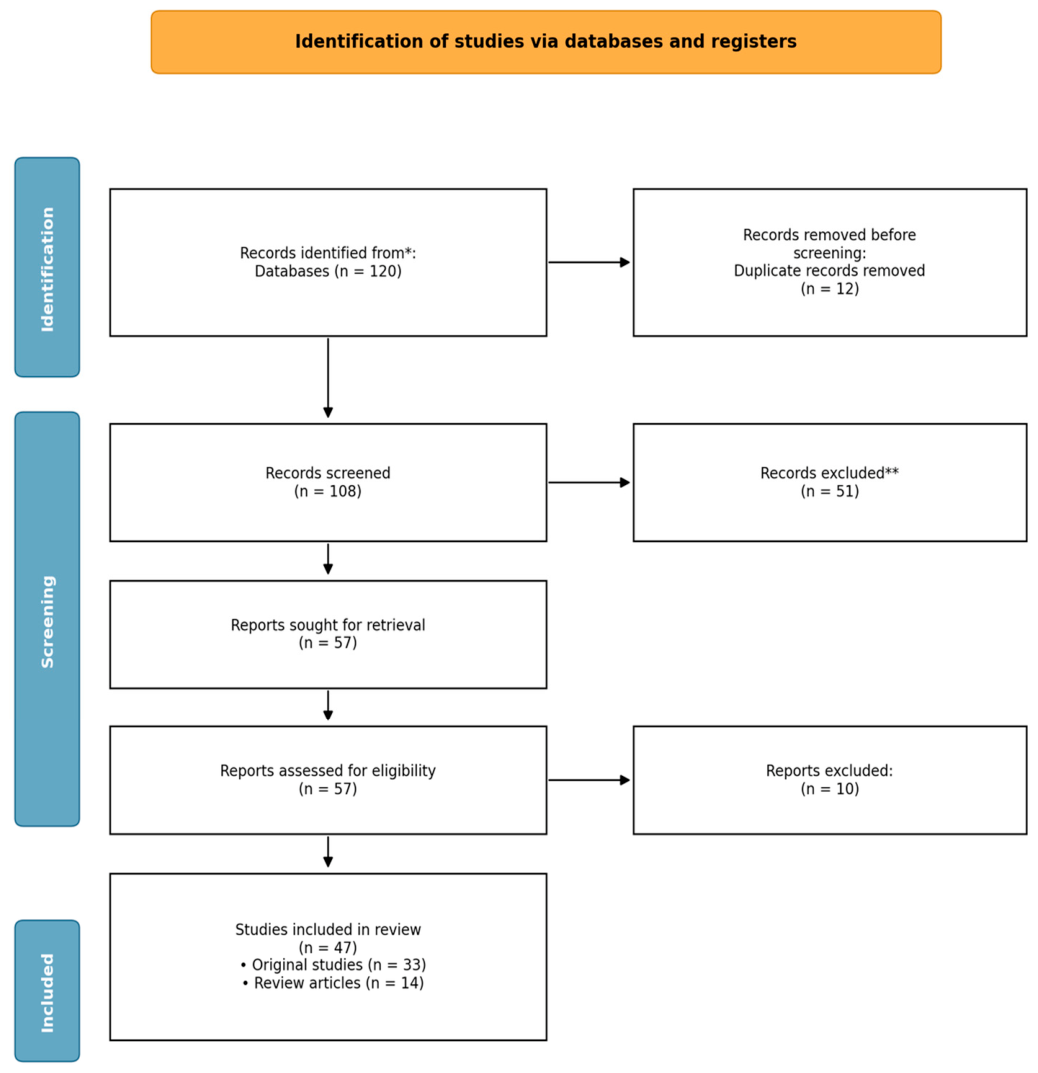
The database search yielded 120 records. After removal of duplicate records, titles and abstracts were screened for relevance. Following abstract screening, 57 studies were retained for full-text review. Full texts were assessed for eligibility based on the predefined inclusion criteria, resulting in the final set of studies included in the review. Following full-text assessment, 47 studies met inclusion criteria (33 original studies and 14 review articles) and were included in the final synthesis.
The study selection process is summarised using a PRISMA-style flow approach, with studies further classified by evidentiary role (systematic reviews, primary studies, mechanistic papers, and case-based evidence).

2.5. Data Extraction

From each included study, the following information was extracted:
  • Author(s) and year of publication
  • Study design and evidentiary category
  • Population characteristics (where applicable)
  • Type of functional neurological presentation (e.g., cognitive, motor, sensory, seizure-related)
  • Key findings relevant to the relationship between mTBI, PPCS, and functional symptoms
Data extraction focused on qualitative synthesis rather than quantitative pooling, given the heterogeneity of study designs and outcomes.

2.6. Study Classification

Included studies were categorised into the following groups to facilitate synthesis:
  • Systematic reviews
  • Narrative or conceptual reviews
  • Mechanistic or theoretical papers
  • Primary observational studies
  • Case series and case reports
  • Interventional and neuroimaging studies
This classification informed the Results section and highlighted gaps in the current evidence base.

2.7. Data Synthesis

Given the heterogeneity of methodologies, outcomes, and study designs, a narrative synthesis approach was employed. Findings were synthesised thematically, focusing on phenomenological overlap between PPCS and FND, associated risk factors, mechanistic hypotheses, clinical implications, and emerging interventional evidence. No meta-analysis was performed due to the absence of sufficiently homogeneous quantitative data.

2.8. Risk of Bias Assessment

Formal risk-of-bias assessment was not performed, as the review incorporated diverse study designs including reviews, conceptual papers, and case-based evidence. Instead, methodological limitations and sources of bias within the existing literature are addressed narratively in the Discussion.

3. Results

3.1. Study Selection

The electronic database searches yielded 120 records. After removal of duplicates, titles and abstracts were screened, resulting in 57 studies underwent full-text review, of which 47 met inclusion criteria and were included in the final synthesis (33 original studies and 14 review articles). Following full-text assessment, studies were excluded if they (i) did not address functional neurological symptoms in the context of mild traumatic brain injury (mTBI) or concussion, (ii) focused exclusively on moderate or severe TBI without relevance to concussion, or (iii) lacked primary data or substantive conceptual relevance (Figure 1).
After full-text screening, the final evidence base comprised systematic reviews, narrative and conceptual reviews, mechanistic hypothesis papers, primary observational studies, case series, case reports, and early interventional and neuroimaging studies, as summarised in Table 1. No population-based incidence studies of functional neurological disorder (FND) following mTBI were identified. Details of the study selection methodology are provided in the Methods section.

3.2. Overview of Study Types

The evidence base was heterogeneous and varied substantially in methodological strength. Systematic reviews and observational cohort studies provided the most robust data regarding associations between mTBI and functional neurological symptoms. In contrast, case reports and case series primarily served to illustrate clinical phenotypes and diagnostic challenges rather than establish causal relationships. Throughout the synthesis, higher weight was therefore given to systematic reviews and observational studies, while case-based evidence was interpreted cautiously as illustrative rather than confirmatory.
Two systematic reviews examined cognitive and somatic symptom profiles relevant to FND and mTBI [22,23]. Several narrative and conceptual reviews addressed diagnostic interfaces between concussion and FND [7,34,35]. One mechanistic hypothesis paper explored potential neurobiological vulnerability linking head trauma and functional seizures [33].
Primary data were provided by cross-sectional and clinic-based observational studies [10,11,12,30], supplemented by case series and case reports describing functional neurological presentations emerging after concussion [24,26,27,29]. Limited interventional and neuroimaging studies addressed treatment feasibility and neural correlates of functional cognitive disorder after concussion [38,39].

3.3. Systematic Reviews

3.3.1. Cognitive Symptoms and Functional Cognitive Disorder

Teodoro et al. (2018) conducted a systematic review of cognitive outcomes across functional neurological disorder, fibromyalgia, and chronic fatigue syndrome, including 39 studies of FND [22]. Across conditions, the authors identified a consistent pattern of marked subjective cognitive complaints (e.g., forgetfulness, concentration difficulties, mental fatigue) with inconsistent or mild objective neuropsychological deficits. When objective impairments were reported, they most commonly involved attention, processing speed, and susceptibility to distraction.
Importantly, the authors explicitly noted that similar subjective–objective discordance has been reported in patients with mild traumatic brain injury and whiplash, suggesting overlapping cognitive mechanisms across these conditions. Performance validity testing indicated that poor effort accounted for symptoms in only a minority of patients, arguing against widespread feigning as an explanation for persistent cognitive complaints.

3.3.2. Somatic and Functional Symptoms After mTBI

Jobin et al. (2025) [23] performed a systematic review of somatic symptom and related disorders (SSRD) in mTBI, screening over 6000 records and including 43 studies. Nine studies specifically examined functional seizures in relation to mTBI, while others evaluated somatization scales and clinician-diagnosed functional conditions [23].
Although the majority of included studies were rated as having unacceptable risk of bias, the acceptable-quality evidence consistently supported an association between mTBI and increased functional or somatic symptom burden. The authors highlighted the lack of high-quality prospective studies, and the absence of reliable incidence estimates for FND after mTBI.

3.4. Narrative and Conceptual Reviews

Phillips (2021) provided an expert narrative synthesis focused on FND in personal injury contexts [7]. The review emphasised that functional neurological symptoms commonly arise following minor accidents and injuries, including concussion, and cautioned against simplistic causal interpretations. Phillips highlighted the importance of diagnosing FND based on positive clinical signs, often demonstrated through inconsistency or distractibility, and stressed that such findings should not be equated with malingering.
More recent conceptual reviews proposed a continuum model linking concussion and FND, arguing that persistent post-concussion symptoms and functional neurological symptoms frequently overlap in phenomenology and underlying mechanisms [34,35]. These frameworks emphasised the role of expectations, illness beliefs, and healthcare interactions in shaping symptom persistence and recovery trajectories.

3.5. Mechanistic and Hypothesis-Driven Evidence

Popkirov et al. (2018) [33] explored the relationship between head trauma and psychogenic non-epileptic seizures (PNES). Reviewing existing epidemiological and neurobiological evidence, the authors noted that a history of head injury is frequently reported in PNES populations [33]. They proposed that even mTBI, despite normal routine imaging, may result in subtle disruptions of long-range network connectivity, potentially increasing vulnerability to dissociation and functional seizures in predisposed individuals.
The authors emphasised that such neurobiological vulnerability does not replace established psychological models of PNES but may interact with mechanisms such as stress responsivity, maladaptive learning, and illness attribution.

3.6. Primary Observational Studies

3.6.1. Functional Seizures (PNES) and Prior mTBI

LaFrance et al. (2013) [30] examined patients with EEG-confirmed PNES in a cross-sectional cohort. Of the 92 patients included, 41 (44.6%) reported a history of traumatic brain injury, and 73.2% of these met criteria for mild TBI [30,31,32].
Compared with PNES patients without TBI, those with prior TBI demonstrated higher disability rates, lower global functioning, and significantly greater psychiatric comorbidity. After adjustment for age and sex, prior TBI was associated with increased odds of major depressive disorder, post-traumatic stress disorder, trauma or abuse history, and cluster B personality traits [30]. These findings suggest that PNES patients with a history of mTBI represent a subgroup with increased psychosocial vulnerability and functional impairment.

3.6.2. Persistent Post-Concussion Symptoms and Psychiatric/Functional Factors

Mooney and Speed (2001) studied adults referred to a specialty mild TBI clinic, defining poor outcome as persistence of three or more post-concussive symptoms beyond three months [10]. Poor recovery was strongly associated with psychiatric comorbidity, including depression, anxiety disorders, and conversion disorder.
Dissociative symptoms were particularly prominent and robustly discriminated between good and poor recovery trajectories, with dissociation scores reported to predict outcome with high accuracy. In contrast, objective neuropsychological test abnormalities were not significantly associated with outcome, indicating that persistent symptoms were not primarily driven by measurable cognitive impairment [10].
Jobin et al. (2023) further demonstrated that, in patients with persistent post-concussion symptoms, greater functional neurological symptom severity was positively associated with higher post-concussion symptom burden, anxiety, and depression, reinforcing the interrelationship between functional symptoms and affective distress [12].

3.7. Case Series and Case Reports

Polich et al. (2024) reported a retrospective case series of 50 patients with clinician-confirmed FND whose functional neurological symptoms began after concussion [29]. Functional presentations were heterogeneous and included gait disturbances, functional seizures, speech and language symptoms, weakness, sensory symptoms, tremor, and visual or oculomotor disturbances.
Most patients exhibited multiple functional symptom types, and symptoms commonly overlapped with those typically labelled as persistent post-concussion symptoms, such as headache, dizziness, fatigue, and cognitive complaints [29].
Additional pediatric and adult case series and case reports described psychogenic gait disorders [24], conversion disorder with dissociative features [27], and functional motor deficits supported by advanced neurophysiological testing [26], illustrating the breadth of functional neurological presentations complicating concussion recovery across age groups.

3.8. Interventional and Neuroimaging Studies

Rioux et al. (2024) conducted a pilot randomised controlled trial evaluating the feasibility of cognitive-behavioural therapy tailored to functional cognitive disorder after concussion [38]. Both CBT and standard cognitive rehabilitation were well tolerated, with high adherence and credibility, although the study was not powered to detect differences in efficacy.
Westlin et al. (2025) examined structural brain measures in patients with functional cognitive disorder after concussion and reported no consistent group-level cortical or subcortical abnormalities compared with controls [39,40]. However, symptom severity and treatment response were associated with regional structural measures, suggesting that functional cognitive symptoms may relate to network-level vulnerability rather than focal injury.
Table 1. PRISMA-style classification of studies examining functional neurological symptoms after mild traumatic brain injury. This table summarises the studies included in the present review, classified by study design and evidentiary role. Included studies span systematic reviews, narrative and conceptual reviews, mechanistic hypothesis papers, primary observational studies, case series, case reports, and early interventional and neuroimaging investigations. The table highlights the heterogeneity of the existing literature and the predominance of clinic-based and observational designs. No population-based incidence studies of functional neurological disorder following mild traumatic brain injury were identified.
CategoryStudyYearDesignPopulationPrimary Contribution
Systematic reviewsTeodoro et al., JNNP [22]2018Systematic reviewFND, fibromyalgia, CFS (39 FND studies)Cognitive phenotype of FND/FCD; subjective–objective mismatch; mechanistic parallels with mTBI/whiplash
Jobin et al., Biopsychosoc Sci Med [23]2025Systematic reviewSSRD and mTBI (43 studies)Evidence linking somatic/functional symptoms with mTBI; highlights poor methodological quality
Narrative/conceptual reviewsPhillips, BMJ Neurol Open [7]2021Expert narrative reviewInjury-related FND (medicolegal focus)Diagnostic reasoning, illness beliefs, positive-sign diagnosis after injury
Burke & Silverberg, Br J Sports Med [34]2025Conceptual frameworkConcussion ↔ FND continuumProposes unified conceptual continuum
Mollica et al., Semin Neurol [35]2025Narrative reviewPSaC & FNDClinical intersections and rehabilitation implications
Mechanistic/hypothesis papersPopkirov et al., Seizure [33]2018Mechanistic hypothesisPNES after head trauma“Dissociogenic lesion” concept; network vulnerability + psychological models
Primary observational studiesLaFrance et al., Epilepsia [30]2013Cross-sectional cohortPNES with vs without TBIQuantifies burden of TBI (mostly mTBI) in PNES; psychiatric and disability outcomes
Mooney & Speed, Brain Injury [10]2001Clinic cohortmTBI outpatientsPsychiatric comorbidity & dissociation predict poor recovery
Jobin et al., NeuroRehabilitation [12]2023Cross-sectionalPPCS clinic sampleAssociation between FND severity, anxiety, depression, PPCS burden
Picon et al., J Psychosom Res [11]2021ObservationalPPCS patientsPsychological risk factors for functional/SSRD symptoms
Case seriesPolich et al., J Neuropsychiatry Clin Neurosci [29]2024Retrospective case seriesFND onset after concussion (n = 50)Phenotypic spectrum and risk-factor clustering
Otallah, Pediatr Neurol [24]2020Case seriesPediatric concussionPsychogenic gait disorder complicating recovery
Case reportsLeczycki et al., Cureus [27]2023Case reportAdolescent mTBIConversion disorder with dissociation
Jang & Seo, Diagnostics [26]2019Case reportmTBIDTT/TMS used to support conversion diagnosis
Interventional/feasibility studiesRioux et al., BMJ Neurol Open [38]2024Pilot RCTFCD after concussionCBT vs cognitive rehab feasibility
Neuroimaging studiesWestlin et al., NeuroImage: Clinical [39]2025Case–control imagingFCD after concussionStructural correlates of symptom severity and treatment response
Meta-analysisFranekova et al., Acta Neurol Belg [19]2025Meta-analysisFunctional cognitive disorderMetacognitive performance deficits across FCD; relevance to subjective–objective discordance in PPCS
Narrative/conceptual reviewsStone et al., Neurol Clin [6]2016Narrative review with case examplesFunctional disorders in neurologyDiagnostic principles for FND based on positive clinical signs; relevance to post-injury presentations
Aaron & Buchwald, Ann Intern Med [20]2001Narrative reviewOverlapping unexplained clinical conditionsEvidence for symptom overlap across functional somatic syndromes including post-traumatic presentations
Pertab et al., J Pers Med [21]2025Narrative review/frameworkPersisting symptoms after concussionAutonomic, immune, and endocrine contributions to persisting PCS; integrative treatment framework
Mavroudis et al., Diagnostics [1]2022Narrative reviewPCS and chronic traumatic encephalopathyNeuropathology, neuroimaging and fluid biomarker landscape in PCS
Mavroudis et al., Acta Neurol Belg [5]2025Narrative reviewPost-concussion syndromeEpidemiology, pathophysiology, neuropathology, neuroimaging, and salivary biomarkers in PCS
Mavroudis et al., Acta Neurol Belg [9]2024Narrative reviewPersonality traits in PCSPersonality and psychological risk profiles associated with persistent PCS
Mavroudis et al., Front Aging Neurosci [18]2025Narrative reviewFunctional cognitive disorderDiagnostic challenges, clinical features, and emerging directions in FCD
Mavroudis et al., Brain Sci [36]2025Conceptual reviewPCS and FNDFunctional Overlay Model: diagnostic interfaces, risk mechanisms
Mavroudis et al., Brain Sci [37]2023Conceptual reviewPersistent PCSOriginal Functional Overlay Model linking injury and functional mechanisms
Primary observational studiesMcMahon et al., J Neurotrauma [2]2014Prospective cohort (TRACK-TBI)Adult mTBISymptomatology and functional outcome trajectories after mTBI
Theadom et al., Br J Gen Pract [3]2016Longitudinal population studymTBI (New Zealand population)Population-level burden of persistent problems 1 year after mTBI
Nelson et al., JAMA Neurol [4]2019Multicenter prospective cohortmTBI at US Level I trauma centersRecovery trajectories and outcome predictors after mTBI
Donnell et al., Clin Neuropsychol [8]2012Cross-sectionalPsychiatric, mTBI, and comorbid groupsIncidence of post-concussion symptoms in psychiatric diagnostic groups vs mTBI
Ponsford et al., Neuropsychology [13]2012Prospective observationalmTBIPsychological and contextual predictors of post-concussive symptoms at 3 months
Doroszkiewicz et al., J Neurotrauma [14]2021Long-term follow-upPersistent PCSAnxiety, depression, and quality-of-life outcomes in persisting PCS
Max et al., J Neuropsychiatry Clin Neurosci [28]2013Prospective observationalPediatric mTBIIncidence of psychiatric disorders 6–12 months after pediatric mTBI
Westbrook et al., Epilepsia [31]1998ObservationalNonepileptic seizures after head injuryEarly evidence linking head injury with PNES
Salinsky et al., Neurology [32]2011Cross-sectional cohortPNES in US veteransTBI history and psychiatric burden in veteran PNES population
McWhirter et al., J Psychosom Res [41]2011Prospective unblinded cohortSuspected stroke/functional weaknessDiagnostic accuracy of Hoover’s sign for functional weakness
Daum et al., J Neurol Neurosurg Psychiatry [42]2015Pilot validation studyConversion disorderInterobserver agreement and validity of bedside positive signs
Lagrand et al., Eur J Neurol [43]2025Prospective study (TASMAN)Functional movement disordersPositive history-based signs aiding early FMD diagnosis
Case reportsFoutch, J Optom [25]2015Case reportAdult patientAtypical presentation of visual conversion disorder
Neuroimaging studiesAybek et al., PLoS One [15]2015Case–control fMRIConversion disorderEmotion–motor interactions implicated in functional motor symptoms
Maurer et al., Neurology [16]2016Resting-state fMRIFunctional movement disorderImpaired sense of agency network in FMD
Diez et al., J Neurol Neurosurg Psychiatry [17]2019Multimodal imagingFNDCorticolimbic fast-tracking: enhanced multimodal integration in FND
Allendorfer et al., Neuroimage Clin [40]2019Case–control fMRI + biomarkerPNES vs healthy controlsStress-response neural signature differentiating PNES from controls
Interventional/feasibility studiesPotter et al., J Neurol Neurosurg Psychiatry [44]2016Randomised waitlist-controlled trialPersistent post-concussional symptomsEfficacy signal for CBT in persistent PCS after predominantly mild–moderate TBI
Scheenen et al., J Neurotrauma [45]2017Randomised trialAdult mTBICBT intervention compared with telephone counselling early after mTBI
Silverberg et al., J Head Trauma Rehabil [46]2013Pilot RCTAt-risk mTBICognitive–behavioural prevention of PCS in at-risk patients
Tomfohr-Madsen et al., J Head Trauma Rehabil [47]2020Pilot RCTAdolescent persistent PCSCBT for insomnia in adolescents with persisting PCS

4. Discussion

4.1. Principal Findings

This scoping review synthesises a heterogeneous but increasingly coherent body of evidence indicating substantial overlap between persistent post-concussion symptoms (PPCS) and functional neurological disorder (FND). Across systematic reviews, observational cohorts, mechanistic syntheses, and case-based reports, three principal findings emerge. First, persistent symptoms after mild traumatic brain injury (mTBI) frequently exceed what can be accounted for by objective neurological impairment or measurable injury severity, with psychiatric comorbidity, dissociation, trauma exposure, and maladaptive illness beliefs repeatedly identified as stronger predictors of poor recovery than injury parameters [10,12,13]. Second, functional neurological phenotypes—including functional cognitive disorder, psychogenic non-epileptic seizures, functional motor and gait disturbance, and functional sensory or visual symptoms—are reported across the post-concussion symptom spectrum, and often closely resemble the symptom profile of PPCS [24,25,26,27,28,29]. Third, no population-based incidence data for FND following mTBI were identified, and the existing evidence base is dominated by clinic-derived samples that may overestimate the prevalence of severe or refractory cases [23].

4.2. Phenomenological Overlap Between PPCS and FND

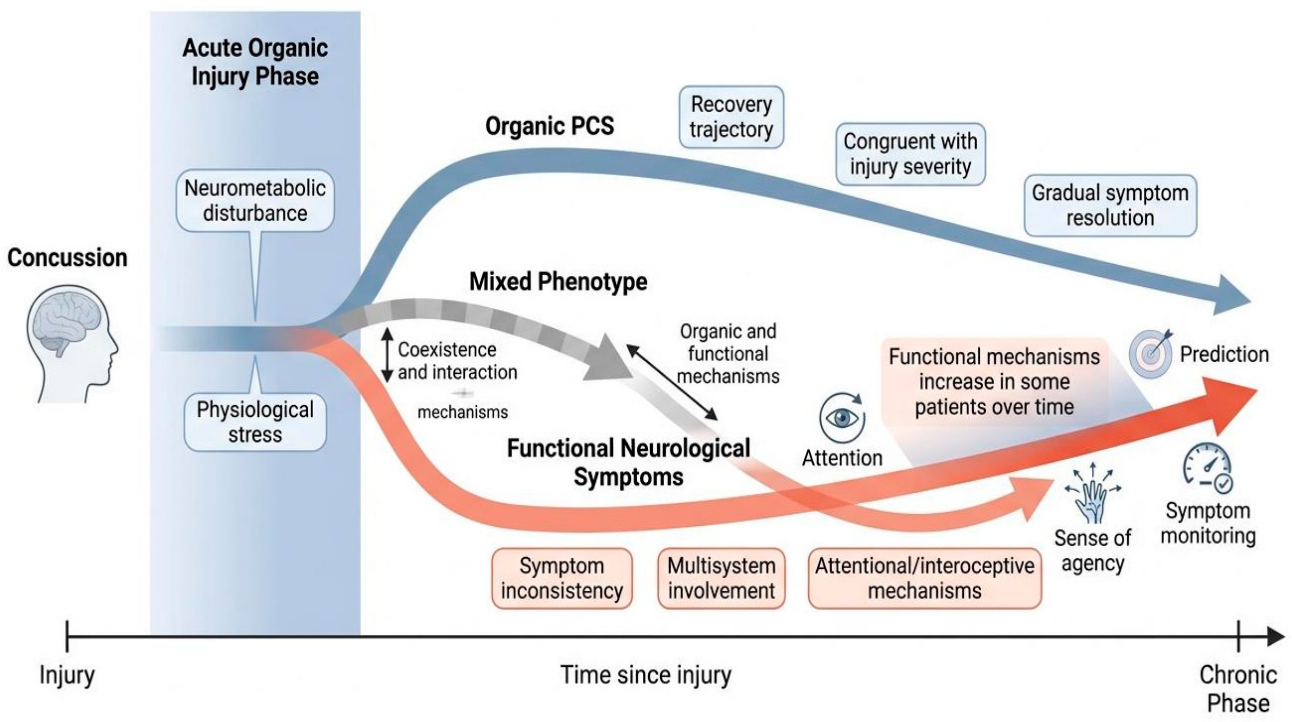
The most striking finding across the included literature is the consistency with which subjective–objective discordance has been described in both PPCS and FND. Teodoro and colleagues (2018) reported that patients with FND, fibromyalgia, and chronic fatigue syndrome demonstrate prominent subjective cognitive complaints despite mild and inconsistent objective neuropsychological deficits, a pattern that the authors explicitly extended to mTBI and whiplash populations [22]. Similar patterns have been documented in PPCS cohorts, in which patient-reported symptom burden often outweighs objective findings on neuropsychological testing and neuroimaging [8,13]. Polich and colleagues (2024) further illustrated that FND symptoms beginning after concussion frequently coexist with—and are clinically indistinguishable from—symptoms typically labelled as post-concussive, including headache, dizziness, fatigue, and cognitive complaints [29]. Together, these data support the view that PPCS and FND should not be conceptualised as mutually exclusive diagnostic entities but as overlapping clinical presentations that may share common mechanistic substrates [34,35] (Figure 2).

4.3. Mechanistic Considerations

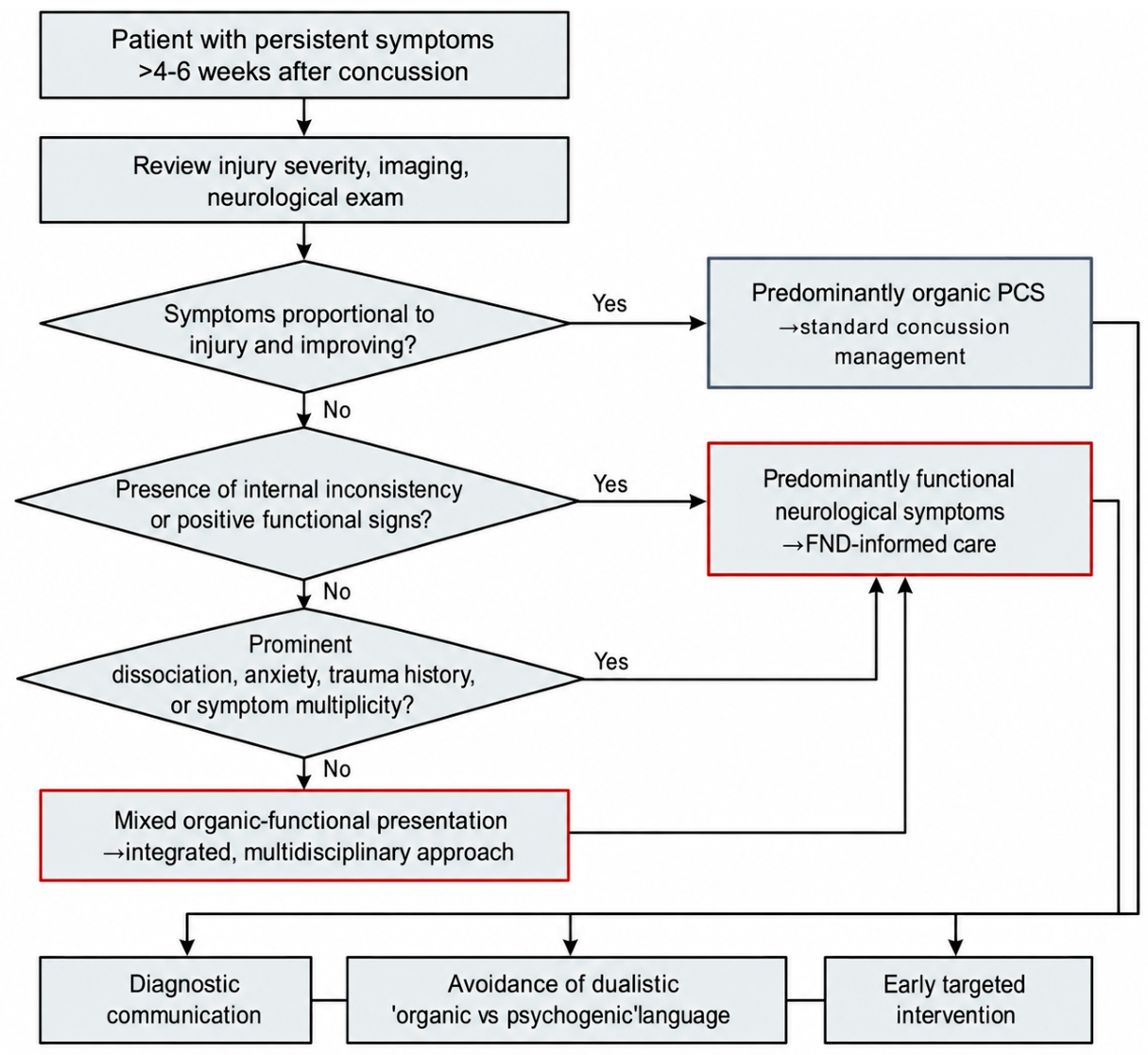
The mechanistic literature reviewed offers complementary frameworks for understanding this overlap. Popkirov and colleagues (2018) proposed that mTBI may act as a “dissociogenic” event, producing subtle disruptions of large-scale network connectivity that interact with psychological vulnerability and stress responsivity to predispose susceptible individuals to functional seizures and other functional phenotypes [33]. Neuroimaging studies in FND populations have demonstrated altered emotion–motor coupling, impaired sense of agency, and enhanced corticolimbic integration, suggesting that functional symptoms arise from genuine alterations in brain function rather than from feigning or simulated deficits [15,16,17,40]. Westlin and colleagues (2025) reported no consistent group-level structural abnormalities in patients with functional cognitive disorder after concussion, although regional measures correlated with symptom severity and treatment response, supporting a network-vulnerability rather than focal-lesion model [39]. Collectively, these findings align with predictive-processing accounts of FND, in which heightened attentional focus on bodily symptoms, altered interoceptive predictions, and impaired sense of agency drive symptom generation and persistence (Figure 3).

4.4. Clinical Implications and the Functional–Organic Framework

The conceptual reviews included in this synthesis converge on the inadequacy of strict organic–psychogenic dichotomies. Burke and Silverberg (2025) and Mollica and colleagues (2025) argue that concussion and FND lie along a continuum of brain dysfunction shaped by injury, psychological factors, and contextual influences [34,35]. The Functional Overlay Model proposed by Mavroudis and colleagues operationalises this continuum by conceptualising persistent symptoms as arising from dynamic interactions between early injury-related changes and superimposed functional mechanisms, with their relative contribution evolving over time [36,37]. The framework presented in this review extends these concepts by proposing a functional–organic differentiation pathway: in the acute and subacute phases, organic processes predominate, but over time three broad trajectories may emerge—predominantly organic, predominantly functional, or mixed presentations. This framework has direct clinical implications. Positive diagnostic signs of FND, such as Hoover’s sign for functional weakness, distractibility in tremor, and inconsistency in cognitive testing, can be applied at the bedside in post-concussion patients [41,42,43], and early recognition opens the door to evidence-based treatments. Cognitive–behavioural interventions, both general and FND-specific, have demonstrated feasibility and preliminary signals of efficacy in PPCS and functional cognitive disorder after concussion [38,44,45,46,47], providing a tangible therapeutic target where conventional concussion rehabilitation may have plateaued.

4.5. Strengths and Limitations

This review has several strengths. Its broad scoping approach enabled integration of conceptual, mechanistic, observational, and interventional evidence across age groups and functional phenotypes, providing a more holistic synthesis than narrower reviews focused on single conditions. The classification of evidence by study design and evidentiary role permitted transparent weighting of conclusions, with greater interpretive weight assigned to systematic reviews and observational cohorts than to case-based illustrations. Several limitations must, however, be acknowledged. First, as a scoping review, no formal risk-of-bias assessment was undertaken, and the heterogeneity of designs and outcomes precluded meta-analysis. Second, the included literature is dominated by clinic-based samples drawn from specialty mTBI, FND, or epilepsy services, which are likely to overestimate symptom persistence and functional comorbidity relative to community samples. Third, no population-based incidence studies of FND after mTBI were identified, and reliable incidence estimates therefore remain unavailable. Fourth, definitions of FND, PPCS, and somatic symptom disorder varied substantially across studies, complicating direct comparison. Finally, the literature is restricted to English-language publications and is predominantly North American and European in origin, which may limit cultural generalisability.

4.6. Future Research Directions

Several priorities for future research can be identified. Population-based prospective studies of FND incidence after mTBI are urgently needed to establish reliable epidemiological estimates and to clarify the temporal relationship between concussion and the emergence of functional symptoms. Standardised diagnostic and outcome measures—incorporating positive FND signs, screening tools for dissociation and somatic symptoms, and validated measures of post-concussion symptom burden—would enable more meaningful comparison across studies. Mechanistic studies combining multimodal neuroimaging, autonomic and stress-response physiology, and detailed psychological phenotyping are likely to clarify the network-level and predictive-processing substrates of functional symptoms after concussion. Finally, adequately powered randomised trials of stratified interventions, including FND-specific cognitive-behavioural and physiotherapeutic approaches, are needed to translate conceptual advances into improved patient outcomes.

5. Conclusions

Functional neurological symptoms constitute a significant and under-recognised contributor to persistent symptoms after mild traumatic brain injury. The available evidence supports moving beyond binary organic–psychogenic models toward an integrated functional–organic differentiation framework that acknowledges the dynamic interaction of injury-related and functional mechanisms. Improved clinician awareness, systematic application of positive diagnostic signs, and stratified, mechanism-targeted treatment are likely to enhance outcomes for patients with persistent post-concussion symptoms.

Author Contributions

I.M. conceived and designed the study, led the literature synthesis, developed the conceptual framework, and drafted the manuscript. F.P. and M.P. contributed to literature screening, data extraction, and critical appraisal of included studies. A.C. contributed to theoretical interpretation, mechanistic insights, and critical revision of the manuscript for intellectual content. S.P. contributed to clinical interpretation and refinement of the diagnostic and conceptual framework. D.K. provided senior oversight, contributed to study design and interpretation of findings, and critically revised the manuscript. All authors have read and agreed to the published version of the manuscript.

Funding

This research received no external funding.

Institutional Review Board Statement

Ethical approval was not required for this study, as it is an review of previously published literature and did not involve the collection of new data from human participants or animals.

Informed Consent Statement

Not applicable.

Data Availability Statement

No new data were generated or analysed in this study. All data supporting the findings of this review are derived from previously published studies and are available within the cited articles.

Acknowledgments

The authors thank the researchers and clinicians whose work contributed to the studies included in this review. We also acknowledge the contributions of patients and research participants across the original studies, without whom this body of evidence would not exist.

Conflicts of Interest

The authors declare no conflicts of interest relevant to this work.

References

  1. Mavroudis, I.; Kazis, D.; Chowdhury, R.; Petridis, F.; Costa, V.; Balmus, I.M.; Ciobica, A.; Luca, A.-C.; Radu, I.; Petru Dobrin, R.; et al. Post-Concussion Syndrome and Chronic Trau-matic Encephalopathy: Narrative Review on the Neuropathology, Neuroimaging and Fluid Biomarkers. Diagnostics 2022, 12, 740. [Google Scholar] [CrossRef]
  2. McMahon, P.; Hricik, A.; Yue, J.K.; Puccio, A.M.; Inoue, T.; Lingsma, H.F.; Beers, S.R.; Gordon, W.A.; Valadka, A.B.; Manley, G.T.; et al. Symptomatology and functional outcome in mild traumatic brain injury: Results from the prospective TRACK-TBI study. J. Neurotrauma 2014, 31, 26–33. [Google Scholar] [CrossRef] [PubMed] [PubMed Central]
  3. Theadom, A.; Parag, V.; Dowell, T.; McPherson, K.; Starkey, N.; Barker-Collo, S.; Jones, K.; Ameratunga, S.; Feigin, V.L.; on behalf of the BIONIC Research Group. Persistent problems 1 year after mild traumatic brain injury: A longitudinal population study in New Zealand. Br. J. Gen. Pract. 2016, 66, e16–e23. [Google Scholar] [CrossRef]
  4. Nelson, L.D.; Temkin, N.R.; Dikmen, S.; Barber, J.; Giacino, J.T.; Yuh, E.; Levin, H.S.; McCrea, M.A.; Stein, M.B.; Mukherjee, P.; et al. Recovery after mild traumatic brain injury in patients presenting to US Level I trauma centers: A Transforming Research and Clinical Knowledge in Traumatic Brain Injury (TRACK-TBI) study. JAMA Neurol. 2019, 76, 1049–1059. [Google Scholar] [CrossRef]
  5. Mavroudis, I.; Petridis, F.; Ciobica, A.; Kamal, F.Z.; Padurariu, M.; Kazis, D. Advancements in diagnosing Post-concussion Syndrome: Insights into epidemiology, pathophysiology, neuropathology, neuroimaging, and salivary biomarkers. Acta Neurol. Belg. 2025, 125, 923–940. [Google Scholar] [CrossRef]
  6. Stone, J.; Hoeritzauer, I.; Gelauff, J.; Lehn, A.; Gardiner, P.; van Gils, A.; Carson, A. Functional Disorders in Neurology: Case Studies. Neurol. Clin. 2016, 34, 667–681. [Google Scholar] [CrossRef]
  7. Phillips, W. Functional neurological disorders in personal injury. BMJ Neurol. Open 2021, 3, e000100. [Google Scholar] [CrossRef]
  8. Donnell, A.J.; Kim, M.S.; Silva, M.A.; Vanderploeg, R.D. Incidence of postconcussion symptoms in psychiatric diagnostic groups, mild traumatic brain injury, and comorbid conditions. Clin. Neuropsychol. 2012, 26, 1092–1101. [Google Scholar] [CrossRef]
  9. Mavroudis, I.; Chatzikonstantinou, S.; Petridis, F.; Balmus, I.-M.; Ciobica, A. A review of the personality traits in post-concussion syndrome. Acta Neurol. Belg. 2024, 124, 791–802. [Google Scholar] [CrossRef]
  10. Mooney, G.; Speed, J. The association between mild traumatic brain injury and psychiatric conditions. Brain Inj. 2001, 15, 865–877. [Google Scholar] [CrossRef]
  11. Picon, E.L.; Perez, D.L.; Burke, M.J.; Debert, C.T.; Iverson, G.L.; Panenka, W.J.; Silverberg, N.D. Unexpected symptoms after concussion: Potential links to functional neurological and somatic symptom disorders. J. Psychosom. Res. 2021, 151, 110661. [Google Scholar] [CrossRef]
  12. Jobin, K.; Wang, M.; du Plessis, S.; Silverberg, N.D.; Debert, C.T. The importance of screening for functional neurological disorders in patients with persistent post-concussion symptoms. NeuroRehabilitation 2023, 53, 199–208. [Google Scholar] [CrossRef]
  13. Ponsford, J.; Cameron, P.; Fitzgerald, M.; Grant, M.; Mikocka-Walus, A.; Schönberger, M. Predictors of postconcussive symptoms 3 months after mild traumatic brain injury. Neuropsychology 2012, 26, 304–313. [Google Scholar] [CrossRef]
  14. Doroszkiewicz, C.; Gold, D.; Green, R.; Tartaglia, M.C.; Ma, J.; Tator, C.H. Anxiety, depression, and quality of life: A long-term follow-up study of patients with persisting concussion symptoms. J. Neurotrauma 2021, 38, 493–505. [Google Scholar] [CrossRef]
  15. Aybek, S.; Nicholson, T.R.; O’Daly, O.; Zelaya, F.; A Kanaan, R.; David, A.S. Emotion-motion interactions in conversion disorder: An fmri study. PLoS ONE 2015, 10, e0123273. [Google Scholar] [CrossRef]
  16. Maurer, C.W.; LaFaver, K.; Ameli, R.; Epstein, S.A.; Hallett, M.; Horovitz, S.G. Impaired self-agency in functional movement disor-ders: A resting-state fMRI study. Neurology 2016, 87, 564–570. [Google Scholar] [CrossRef]
  17. Diez, I.; Ortiz-Terán, L.; Williams, B.; Jalilianhasanpour, R.; Ospina, J.P.; Dickerson, B.C.; Keshavan, M.S.; LaFrance, W.C., Jr.; Sepulcre, J.; Perez, D.L. Corticolimbic fast-tracking: Enhanced multimodal integration in functional neurological disorder. J. Neurol. Neurosurg. Psychiatry 2019, 90, 929–938. [Google Scholar] [CrossRef]
  18. Mavroudis, I.; Petridis, F.; Franekova, K.; Visternicu, M.; Rarinca, V.; Burlui, V.; Ciobica, A.; Novac, B.; Dobrin, I.; Hogas, M.M.; et al. Functional Cognitive Disorder: Diagnostic challenges, clinical features, and future directions in a misunderstood condition. Front. Aging Neurosci. 2025, 17, 1665510. [Google Scholar] [CrossRef]
  19. Franekova, K.; Petridis, F.; Ciobica, A.; Papagiannopoulos, S.; Kazis, D.; Mavroudis, I. Metacognitive performance in Functional Cognitive Disorder (FCD): A meta-analysis. Acta Neurol. Belg. 2025. Epub ahead of print. [Google Scholar] [CrossRef] [PubMed]
  20. Aaron, L.A.; Buchwald, D. A review of the evidence for overlap among unexplained clinical conditions. Ann. Intern. Med. 2001, 134, 868–881. [Google Scholar] [CrossRef]
  21. Pertab, J.L.; Merkley, T.L.; Winiarski, H.; Cramond, K.M.J.; Cramond, A.J. Concussion and the Autonomic, Immune, and Endocrine Systems: An Introduction to the Field and a Treatment Framework for Persisting Symptoms. J. Pers. Med. 2025, 15, 33. [Google Scholar] [CrossRef]
  22. Teodoro, T.; Edwards, M.J.; Isaacs, J.D. A unifying theory for cognitive abnormalities in functional neurological disorders, fibromyalgia and chronic fatigue syndrome: Systematic review. J. Neurol. Neurosurg. Psychiatry 2018, 89, 1308–1319. [Google Scholar] [CrossRef]
  23. Jobin, K.; Wilson, A.J.; King, R.; Eliason, P.H.; Galarneau, J.-M.; Gilmour, G.S.; Debert, C.T. Somatic Symptom and Related Disorders and Mild Traumatic Brain Injury: A Systematic Review. Biopsychosoc. Sci. Med. 2025, 87, 548–564. [Google Scholar] [CrossRef]
  24. Otallah, S.I. Psychogenic Gait Disorder Complicating Recovery After Concussion: A Case Series. Pediatr. Neurol. 2020, 111, 1–3. [Google Scholar] [CrossRef]
  25. Foutch, B.K. An atypical presentation of visual conversion disorder. J. Optom. 2015, 8, 273–275. [Google Scholar] [CrossRef]
  26. Jang, S.H.; Seo, Y.S. Diagnosis of Conversion Disorder Using Diffusion Tensor Tractography and Transcranial Magnetic Stimulation in a Patient with Mild Traumatic Brain Injury. Diagnostics 2019, 9, 155. [Google Scholar] [CrossRef]
  27. Leczycki, M.; Berne, D.J.; Shirk, D.V.; Sayers, J.M. Persistent Neurological, Dissociative, and Amnestic Symptoms Following a Mild Traumatic Brain Injury in an Adolescent: A Complex Case of Conversion Disorder. Cureus 2023, 15, e42755. [Google Scholar] [CrossRef]
  28. Max, J.E.; Pardo, D.; Hanten, G.; Schachar, R.J.; Saunders, A.E.; Ewing-Cobbs, L.; Chapman, S.B.; Dennis, M.; Wilde, E.A.; Bigler, E.D.; et al. Psychiatric disorders in children and adolescents six-to-twelve months after mild traumatic brain injury. J. Neuropsychiatry 2013, 25, 272–282. [Google Scholar] [CrossRef]
  29. Polich, G.; Baslet, G.; O’nEal, M.A.; Gupta, R.; Raynor, L.C.G. Functional Neurological Disorder Presenting After Concussion: A Retrospective Case Series. J. Neuropsychiatry 2024, 36, 333–339. [Google Scholar] [CrossRef]
  30. LaFrance, W.C.; DeLuca, M.; Machan, J.T.; Fava, J.L. Traumatic brain injury and psychogenic nonepileptic seizures yield worse outcomes. Epilepsia 2013, 54, 718–725. [Google Scholar] [CrossRef]
  31. Westbrook, L.E.; Devinsky, O.; Geocadin, R. Nonepileptic Seizures After Head Injury. Epilepsia 1998, 39, 978–982. [Google Scholar] [CrossRef] [PubMed]
  32. Salinsky, M.; Spencer, D.; Boudreau, E.; Ferguson, F. Psychogenic nonepileptic seizures in US veterans. Neurology 2011, 77, 945–950. [Google Scholar] [CrossRef] [PubMed]
  33. Popkirov, S.; Carson, A.J.; Stone, J. Scared or scarred: Could ‘dissociogenic’ lesions predispose to nonepileptic seizures after head trauma? Seizure 2018, 58, 127–132. [Google Scholar] [CrossRef]
  34. Burke, M.J.; Silverberg, N.D. New framework for the continuum of concussion and functional neurological disorder. Br. J. Sports Med. 2025, 59, 145–147. [Google Scholar] [CrossRef]
  35. Mollica, A.; Dedominicis, M.; Silverberg, N.D.; Burke, M.J. Persisting Symptoms After Concussion and Functional Neurological Disorder: Points of Intersection. Semin. Neurol. 2025, 46, 196–205. [Google Scholar] [CrossRef]
  36. Mavroudis, I.; Petridis, F.; Karantali, E.; Ciobica, A.; Papagiannopoulos, S.; Kazis, D. Post-Concussion Syndrome and Functional Neurological Disorder: Diagnostic Interfaces, Risk Mechanisms, and the Functional Overlay Model. Brain Sci. 2025, 15, 755. [Google Scholar] [CrossRef]
  37. Mavroudis, I.; Chatzikonstantinou, S.; Petridis, F.; Palade, O.D.; Ciobica, A.; Balmus, I.-M. Functional Overlay Model of Persistent Post-Concussion Syndrome. Brain Sci. 2023, 13, 1028. [Google Scholar] [CrossRef]
  38. Rioux, M.; Mamman, R.; Byworth, M.T.; Panenka, W.J.; Howard, A.K.; Perez, D.L.; Schmidt, J.; Courchesne, C.; LeMoult, J.; Heran, M.K.; et al. Pilot feasibility randomised controlled trial of cognitive–behavioural therapy for functional cognitive disorder after concussion. BMJ Neurol. Open 2024, 6, e000666. [Google Scholar] [CrossRef] [PubMed]
  39. Westlin, C.; Rioux, M.; Lee, J.; Panenka, W.; Palombo, D.J.; Todd, R.M.; Silverberg, N.D.; Perez, D.L. Structural brain alterations and predictors of clinical improvement in functional cognitive disorder after concussion. NeuroImage Clin. 2025, 49, 103936. [Google Scholar] [CrossRef]
  40. Allendorfer, J.B.; Nenert, R.; Hernando, K.A.; DeWolfe, J.L.; Pati, S.; Thomas, A.E.; Billeaud, N.; Martin, R.C.; Szaflarski, J.P. FMRI response to acute psychological stress differentiates patients with psychogenic non-epileptic seizures from healthy controls—A biochemical and neuroimaging biomarker study. NeuroImage Clin. 2019, 24, 101967. [Google Scholar] [CrossRef]
  41. McWhirter, L.; Stone, J.; Sandercock, P.; Whiteley, W. Hoover’s sign for the diagnosis of functional weakness: A prospective unblinded cohort study in patients with suspected stroke. J. Psychosom. Res. 2011, 71, 384–386. [Google Scholar] [CrossRef] [PubMed]
  42. Daum, C.; Gheorghita, F.; Spatola, M.; Stojanova, V.; Medlin, F.; Vingerhoets, F.; Berney, A.; Gholam-Rezaee, M.; E Maccaferri, G.; Hubschmid, M.; et al. Interobserver agreement and validity of bedside ‘positive signs’ for functional weakness, sensory and gait disorders in conversion disorder: A pilot study. J. Neurol. Neurosurg. Psychiatry 2015, 86, 425–430. [Google Scholar] [CrossRef]
  43. Lagrand, T.J.; Gelauff, J.M.; Brusse-Keizer, M.; Lehn, A.C.; Tijssen, M.A.J.; Other Individuals of the TASMAN Study Group. Positive signs from the history as an aid for early diagnosis in functional movement disorders: The prospective TASMAN study. Eur. J. Neurol. 2025, 32, e16525. [Google Scholar] [CrossRef]
  44. Potter, S.D.S.; Brown, R.G.; Fleminger, S. Randomised, waiting list controlled trial of cognitive–behavioural therapy for persistent postconcussional symptoms after predominantly mild–moderate traumatic brain injury. J. Neurol. Neurosurg. Psychiatry 2016, 87, 1075–1083. [Google Scholar] [CrossRef]
  45. Scheenen, M.E.; Visser-Keizer, A.C.; de Koning, M.E.; van der Horn, H.J.; van de Sande, P.; van Kessel, M.; van der Naalt, J.; Spikman, J.M. Cognitive Behavioral Intervention Compared to Telephone Counseling Early after Mild Traumatic Brain Injury: A Randomized Trial. J. Neurotrauma 2017, 34, 2713–2720. [Google Scholar] [CrossRef] [PubMed]
  46. Silverberg, N.D.; Hallam, B.J.; Rose, A.; Underwood, H.; Whitfield, K.; Thornton, A.E.; Whittal, M.L. Cognitive-behavioral prevention of postconcussion syndrome in at-risk patients: A pilot randomized controlled trial. J. Head Trauma Rehabil. 2013, 28, 313–322. [Google Scholar] [CrossRef] [PubMed]
  47. Tomfohr-Madsen, L.; Madsen, J.W.; Bonneville, D.B.; Virani, S.M.; Plourde, V.; Barlow, K.M.M.; Yeates, K.O.; Brooks, B.L. A pilot randomized controlled trial of cognitive-behavioral therapy for insomnia in adolescents with persistent postconcussion symptoms. J. Head. Trauma Rehabil. 2020, 35, E103–E112. [Google Scholar] [CrossRef]
Figure 1. PRISMA flowchart of the research and study selection process.* databases searched include PubMed, Web of Science and Scopus, ** As per the exclusion criteria.
Life 16 00926 g001
Figure 2. Conceptual schematic illustrating the proposed functional–organic differentiation framework for persistent post-concussion symptoms. Following an initial concussion, early organic and physiological processes may predominate in the acute and subacute phases. Over time, three broad clinical trajectories may emerge: (1) predominantly organic post-concussion symptoms with gradual recovery, (2) predominantly functional neurological symptoms characterised by multisystem involvement and altered attentional, predictive, and interoceptive processes, and (3) mixed presentations in which organic and functional mechanisms coexist and interact. The framework emphasises dynamic evolution over time rather than a binary distinction between organic and functional pathology.
Life 16 00926 g002
Figure 3. Flow diagram outlining a pragmatic clinical approach to patients presenting with persistent symptoms following concussion. The pathway integrates assessment of injury-related factors with targeted screening for functional neurological features, psychiatric comorbidity, and dissociative symptoms. Based on clinical findings, patients may be stratified into predominantly organic post-concussion symptoms, predominantly functional neurological symptoms, or mixed presentations, guiding appropriate management and referral pathways. The model underscores the importance of positive diagnostic features, careful diagnostic communication, and early targeted intervention.
Life 16 00926 g003
Disclaimer/Publisher’s Note: The statements, opinions and data contained in all publications are solely those of the individual author(s) and contributor(s) and not of MDPI and/or the editor(s). MDPI and/or the editor(s) disclaim responsibility for any injury to people or property resulting from any ideas, methods, instructions or products referred to in the content.