Functional Neurological Symptoms After Mild Traumatic Brain Injury: A Scoping Review and Framework for Differentiating Functional and Organic Post-Concussion Presentations

 ,
, 
Abstract
1. Introduction
2. Materials and Methods
2.1. Study Design
2.2. Search Strategy
- mild traumatic brain injury OR concussion OR post-concussion syndrome AND
- functional neurological disorder OR conversion disorder OR functional cognitive disorder OR psychogenic non-epileptic seizures OR somatic symptom disorder
2.3. Eligibility Criteria
- Involved human participants or provided clinically relevant conceptual or mechanistic analysis
- Examined functional neurological symptoms, FND, or related constructs in the context of mTBI or concussion
- Were published in peer-reviewed journals
- Were available in English
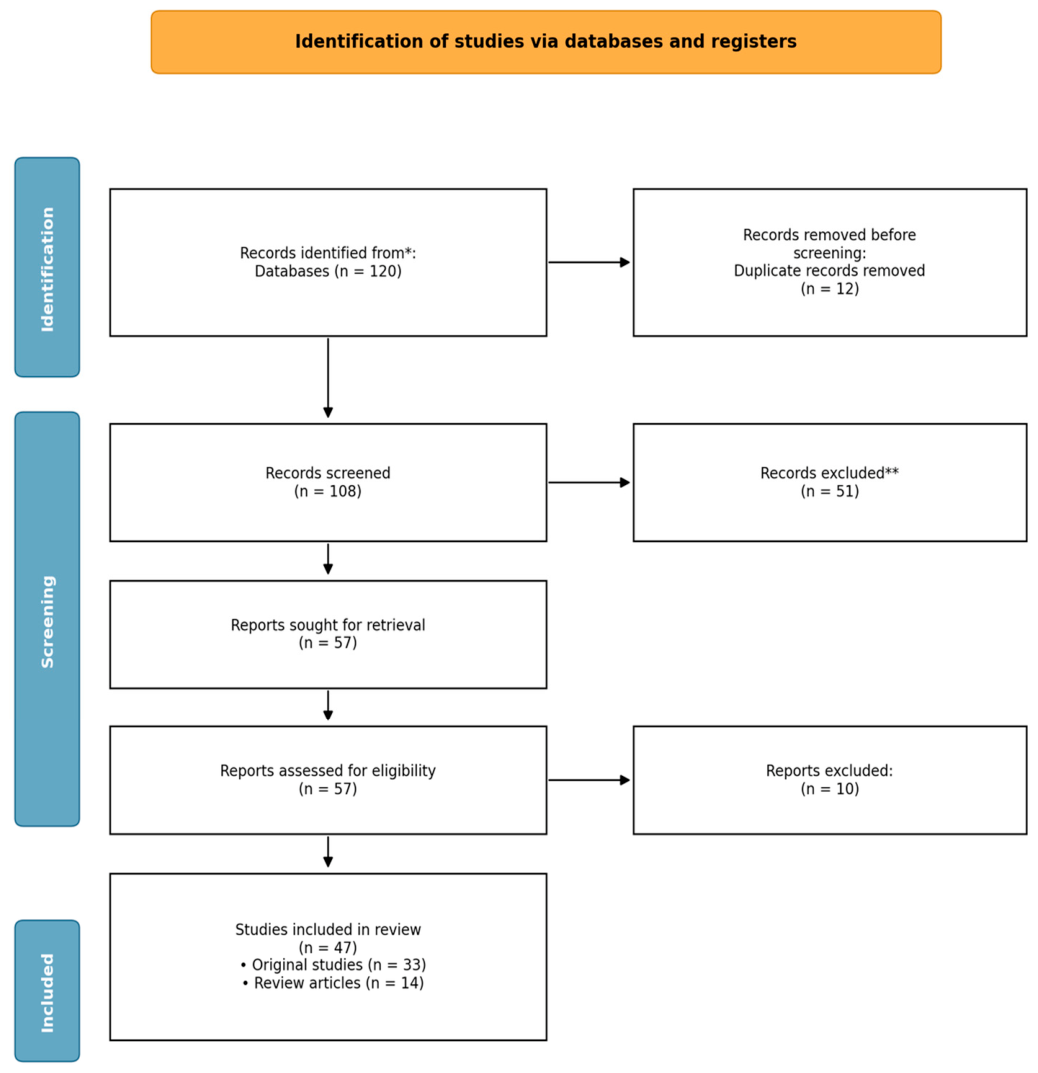
2.4. Study Selection
2.5. Data Extraction
- Author(s) and year of publication
- Study design and evidentiary category
- Population characteristics (where applicable)
- Type of functional neurological presentation (e.g., cognitive, motor, sensory, seizure-related)
- Key findings relevant to the relationship between mTBI, PPCS, and functional symptoms
2.6. Study Classification
- Systematic reviews
- Narrative or conceptual reviews
- Mechanistic or theoretical papers
- Primary observational studies
- Case series and case reports
- Interventional and neuroimaging studies
2.7. Data Synthesis
2.8. Risk of Bias Assessment
3. Results
3.1. Study Selection
3.2. Overview of Study Types
3.3. Systematic Reviews
3.3.1. Cognitive Symptoms and Functional Cognitive Disorder
3.3.2. Somatic and Functional Symptoms After mTBI
3.4. Narrative and Conceptual Reviews
3.5. Mechanistic and Hypothesis-Driven Evidence
3.6. Primary Observational Studies
3.6.1. Functional Seizures (PNES) and Prior mTBI
3.6.2. Persistent Post-Concussion Symptoms and Psychiatric/Functional Factors
3.7. Case Series and Case Reports
3.8. Interventional and Neuroimaging Studies

| Category | Study | Year | Design | Population | Primary Contribution |
|---|---|---|---|---|---|
| Systematic reviews | Teodoro et al., JNNP [22] | 2018 | Systematic review | FND, fibromyalgia, CFS (39 FND studies) | Cognitive phenotype of FND/FCD; subjective–objective mismatch; mechanistic parallels with mTBI/whiplash |
| Jobin et al., Biopsychosoc Sci Med [23] | 2025 | Systematic review | SSRD and mTBI (43 studies) | Evidence linking somatic/functional symptoms with mTBI; highlights poor methodological quality | |
| Narrative/conceptual reviews | Phillips, BMJ Neurol Open [7] | 2021 | Expert narrative review | Injury-related FND (medicolegal focus) | Diagnostic reasoning, illness beliefs, positive-sign diagnosis after injury |
| Burke & Silverberg, Br J Sports Med [34] | 2025 | Conceptual framework | Concussion ↔ FND continuum | Proposes unified conceptual continuum | |
| Mollica et al., Semin Neurol [35] | 2025 | Narrative review | PSaC & FND | Clinical intersections and rehabilitation implications | |
| Mechanistic/hypothesis papers | Popkirov et al., Seizure [33] | 2018 | Mechanistic hypothesis | PNES after head trauma | “Dissociogenic lesion” concept; network vulnerability + psychological models |
| Primary observational studies | LaFrance et al., Epilepsia [30] | 2013 | Cross-sectional cohort | PNES with vs without TBI | Quantifies burden of TBI (mostly mTBI) in PNES; psychiatric and disability outcomes |
| Mooney & Speed, Brain Injury [10] | 2001 | Clinic cohort | mTBI outpatients | Psychiatric comorbidity & dissociation predict poor recovery | |
| Jobin et al., NeuroRehabilitation [12] | 2023 | Cross-sectional | PPCS clinic sample | Association between FND severity, anxiety, depression, PPCS burden | |
| Picon et al., J Psychosom Res [11] | 2021 | Observational | PPCS patients | Psychological risk factors for functional/SSRD symptoms | |
| Case series | Polich et al., J Neuropsychiatry Clin Neurosci [29] | 2024 | Retrospective case series | FND onset after concussion (n = 50) | Phenotypic spectrum and risk-factor clustering |
| Otallah, Pediatr Neurol [24] | 2020 | Case series | Pediatric concussion | Psychogenic gait disorder complicating recovery | |
| Case reports | Leczycki et al., Cureus [27] | 2023 | Case report | Adolescent mTBI | Conversion disorder with dissociation |
| Jang & Seo, Diagnostics [26] | 2019 | Case report | mTBI | DTT/TMS used to support conversion diagnosis | |
| Interventional/feasibility studies | Rioux et al., BMJ Neurol Open [38] | 2024 | Pilot RCT | FCD after concussion | CBT vs cognitive rehab feasibility |
| Neuroimaging studies | Westlin et al., NeuroImage: Clinical [39] | 2025 | Case–control imaging | FCD after concussion | Structural correlates of symptom severity and treatment response |
| Meta-analysis | Franekova et al., Acta Neurol Belg [19] | 2025 | Meta-analysis | Functional cognitive disorder | Metacognitive performance deficits across FCD; relevance to subjective–objective discordance in PPCS |
| Narrative/conceptual reviews | Stone et al., Neurol Clin [6] | 2016 | Narrative review with case examples | Functional disorders in neurology | Diagnostic principles for FND based on positive clinical signs; relevance to post-injury presentations |
| Aaron & Buchwald, Ann Intern Med [20] | 2001 | Narrative review | Overlapping unexplained clinical conditions | Evidence for symptom overlap across functional somatic syndromes including post-traumatic presentations | |
| Pertab et al., J Pers Med [21] | 2025 | Narrative review/framework | Persisting symptoms after concussion | Autonomic, immune, and endocrine contributions to persisting PCS; integrative treatment framework | |
| Mavroudis et al., Diagnostics [1] | 2022 | Narrative review | PCS and chronic traumatic encephalopathy | Neuropathology, neuroimaging and fluid biomarker landscape in PCS | |
| Mavroudis et al., Acta Neurol Belg [5] | 2025 | Narrative review | Post-concussion syndrome | Epidemiology, pathophysiology, neuropathology, neuroimaging, and salivary biomarkers in PCS | |
| Mavroudis et al., Acta Neurol Belg [9] | 2024 | Narrative review | Personality traits in PCS | Personality and psychological risk profiles associated with persistent PCS | |
| Mavroudis et al., Front Aging Neurosci [18] | 2025 | Narrative review | Functional cognitive disorder | Diagnostic challenges, clinical features, and emerging directions in FCD | |
| Mavroudis et al., Brain Sci [36] | 2025 | Conceptual review | PCS and FND | Functional Overlay Model: diagnostic interfaces, risk mechanisms | |
| Mavroudis et al., Brain Sci [37] | 2023 | Conceptual review | Persistent PCS | Original Functional Overlay Model linking injury and functional mechanisms | |
| Primary observational studies | McMahon et al., J Neurotrauma [2] | 2014 | Prospective cohort (TRACK-TBI) | Adult mTBI | Symptomatology and functional outcome trajectories after mTBI |
| Theadom et al., Br J Gen Pract [3] | 2016 | Longitudinal population study | mTBI (New Zealand population) | Population-level burden of persistent problems 1 year after mTBI | |
| Nelson et al., JAMA Neurol [4] | 2019 | Multicenter prospective cohort | mTBI at US Level I trauma centers | Recovery trajectories and outcome predictors after mTBI | |
| Donnell et al., Clin Neuropsychol [8] | 2012 | Cross-sectional | Psychiatric, mTBI, and comorbid groups | Incidence of post-concussion symptoms in psychiatric diagnostic groups vs mTBI | |
| Ponsford et al., Neuropsychology [13] | 2012 | Prospective observational | mTBI | Psychological and contextual predictors of post-concussive symptoms at 3 months | |
| Doroszkiewicz et al., J Neurotrauma [14] | 2021 | Long-term follow-up | Persistent PCS | Anxiety, depression, and quality-of-life outcomes in persisting PCS | |
| Max et al., J Neuropsychiatry Clin Neurosci [28] | 2013 | Prospective observational | Pediatric mTBI | Incidence of psychiatric disorders 6–12 months after pediatric mTBI | |
| Westbrook et al., Epilepsia [31] | 1998 | Observational | Nonepileptic seizures after head injury | Early evidence linking head injury with PNES | |
| Salinsky et al., Neurology [32] | 2011 | Cross-sectional cohort | PNES in US veterans | TBI history and psychiatric burden in veteran PNES population | |
| McWhirter et al., J Psychosom Res [41] | 2011 | Prospective unblinded cohort | Suspected stroke/functional weakness | Diagnostic accuracy of Hoover’s sign for functional weakness | |
| Daum et al., J Neurol Neurosurg Psychiatry [42] | 2015 | Pilot validation study | Conversion disorder | Interobserver agreement and validity of bedside positive signs | |
| Lagrand et al., Eur J Neurol [43] | 2025 | Prospective study (TASMAN) | Functional movement disorders | Positive history-based signs aiding early FMD diagnosis | |
| Case reports | Foutch, J Optom [25] | 2015 | Case report | Adult patient | Atypical presentation of visual conversion disorder |
| Neuroimaging studies | Aybek et al., PLoS One [15] | 2015 | Case–control fMRI | Conversion disorder | Emotion–motor interactions implicated in functional motor symptoms |
| Maurer et al., Neurology [16] | 2016 | Resting-state fMRI | Functional movement disorder | Impaired sense of agency network in FMD | |
| Diez et al., J Neurol Neurosurg Psychiatry [17] | 2019 | Multimodal imaging | FND | Corticolimbic fast-tracking: enhanced multimodal integration in FND | |
| Allendorfer et al., Neuroimage Clin [40] | 2019 | Case–control fMRI + biomarker | PNES vs healthy controls | Stress-response neural signature differentiating PNES from controls | |
| Interventional/feasibility studies | Potter et al., J Neurol Neurosurg Psychiatry [44] | 2016 | Randomised waitlist-controlled trial | Persistent post-concussional symptoms | Efficacy signal for CBT in persistent PCS after predominantly mild–moderate TBI |
| Scheenen et al., J Neurotrauma [45] | 2017 | Randomised trial | Adult mTBI | CBT intervention compared with telephone counselling early after mTBI | |
| Silverberg et al., J Head Trauma Rehabil [46] | 2013 | Pilot RCT | At-risk mTBI | Cognitive–behavioural prevention of PCS in at-risk patients | |
| Tomfohr-Madsen et al., J Head Trauma Rehabil [47] | 2020 | Pilot RCT | Adolescent persistent PCS | CBT for insomnia in adolescents with persisting PCS |
4. Discussion
4.1. Principal Findings
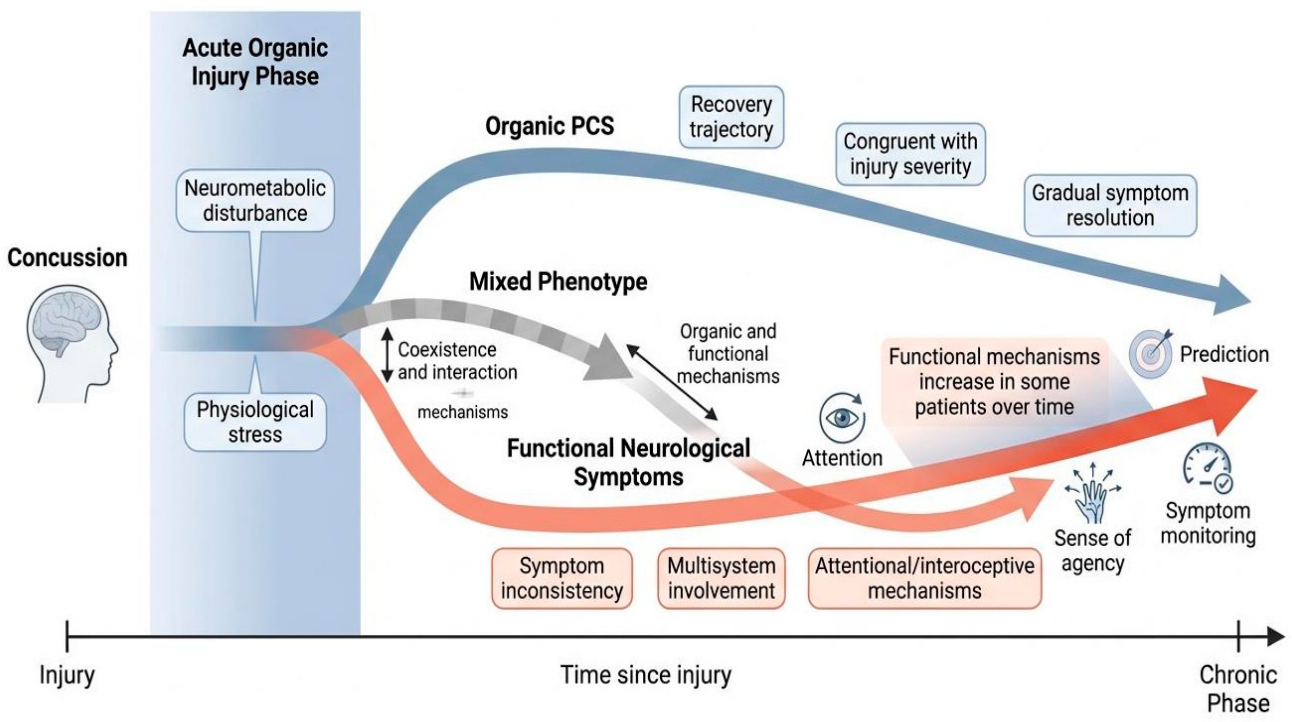
4.2. Phenomenological Overlap Between PPCS and FND
4.3. Mechanistic Considerations
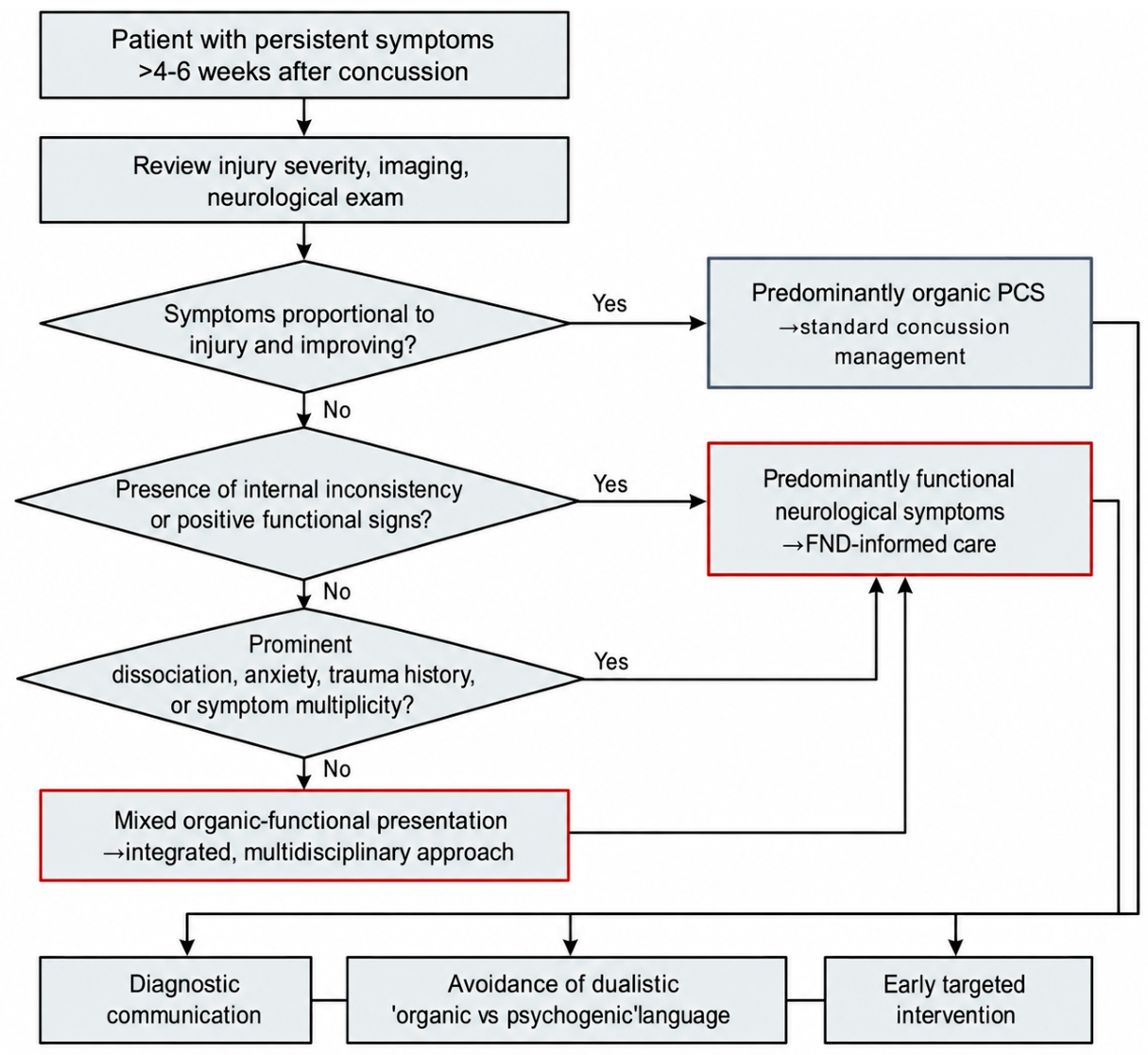
4.4. Clinical Implications and the Functional–Organic Framework
4.5. Strengths and Limitations
4.6. Future Research Directions
5. Conclusions
Author Contributions
Funding
Institutional Review Board Statement
Informed Consent Statement
Data Availability Statement
Acknowledgments
Conflicts of Interest
References
- Mavroudis, I.; Kazis, D.; Chowdhury, R.; Petridis, F.; Costa, V.; Balmus, I.M.; Ciobica, A.; Luca, A.-C.; Radu, I.; Petru Dobrin, R.; et al. Post-Concussion Syndrome and Chronic Trau-matic Encephalopathy: Narrative Review on the Neuropathology, Neuroimaging and Fluid Biomarkers. Diagnostics 2022, 12, 740. [Google Scholar] [CrossRef]
- McMahon, P.; Hricik, A.; Yue, J.K.; Puccio, A.M.; Inoue, T.; Lingsma, H.F.; Beers, S.R.; Gordon, W.A.; Valadka, A.B.; Manley, G.T.; et al. Symptomatology and functional outcome in mild traumatic brain injury: Results from the prospective TRACK-TBI study. J. Neurotrauma 2014, 31, 26–33. [Google Scholar] [CrossRef] [PubMed] [PubMed Central]
- Theadom, A.; Parag, V.; Dowell, T.; McPherson, K.; Starkey, N.; Barker-Collo, S.; Jones, K.; Ameratunga, S.; Feigin, V.L.; on behalf of the BIONIC Research Group. Persistent problems 1 year after mild traumatic brain injury: A longitudinal population study in New Zealand. Br. J. Gen. Pract. 2016, 66, e16–e23. [Google Scholar] [CrossRef]
- Nelson, L.D.; Temkin, N.R.; Dikmen, S.; Barber, J.; Giacino, J.T.; Yuh, E.; Levin, H.S.; McCrea, M.A.; Stein, M.B.; Mukherjee, P.; et al. Recovery after mild traumatic brain injury in patients presenting to US Level I trauma centers: A Transforming Research and Clinical Knowledge in Traumatic Brain Injury (TRACK-TBI) study. JAMA Neurol. 2019, 76, 1049–1059. [Google Scholar] [CrossRef]
- Mavroudis, I.; Petridis, F.; Ciobica, A.; Kamal, F.Z.; Padurariu, M.; Kazis, D. Advancements in diagnosing Post-concussion Syndrome: Insights into epidemiology, pathophysiology, neuropathology, neuroimaging, and salivary biomarkers. Acta Neurol. Belg. 2025, 125, 923–940. [Google Scholar] [CrossRef]
- Stone, J.; Hoeritzauer, I.; Gelauff, J.; Lehn, A.; Gardiner, P.; van Gils, A.; Carson, A. Functional Disorders in Neurology: Case Studies. Neurol. Clin. 2016, 34, 667–681. [Google Scholar] [CrossRef]
- Phillips, W. Functional neurological disorders in personal injury. BMJ Neurol. Open 2021, 3, e000100. [Google Scholar] [CrossRef]
- Donnell, A.J.; Kim, M.S.; Silva, M.A.; Vanderploeg, R.D. Incidence of postconcussion symptoms in psychiatric diagnostic groups, mild traumatic brain injury, and comorbid conditions. Clin. Neuropsychol. 2012, 26, 1092–1101. [Google Scholar] [CrossRef]
- Mavroudis, I.; Chatzikonstantinou, S.; Petridis, F.; Balmus, I.-M.; Ciobica, A. A review of the personality traits in post-concussion syndrome. Acta Neurol. Belg. 2024, 124, 791–802. [Google Scholar] [CrossRef]
- Mooney, G.; Speed, J. The association between mild traumatic brain injury and psychiatric conditions. Brain Inj. 2001, 15, 865–877. [Google Scholar] [CrossRef]
- Picon, E.L.; Perez, D.L.; Burke, M.J.; Debert, C.T.; Iverson, G.L.; Panenka, W.J.; Silverberg, N.D. Unexpected symptoms after concussion: Potential links to functional neurological and somatic symptom disorders. J. Psychosom. Res. 2021, 151, 110661. [Google Scholar] [CrossRef]
- Jobin, K.; Wang, M.; du Plessis, S.; Silverberg, N.D.; Debert, C.T. The importance of screening for functional neurological disorders in patients with persistent post-concussion symptoms. NeuroRehabilitation 2023, 53, 199–208. [Google Scholar] [CrossRef]
- Ponsford, J.; Cameron, P.; Fitzgerald, M.; Grant, M.; Mikocka-Walus, A.; Schönberger, M. Predictors of postconcussive symptoms 3 months after mild traumatic brain injury. Neuropsychology 2012, 26, 304–313. [Google Scholar] [CrossRef]
- Doroszkiewicz, C.; Gold, D.; Green, R.; Tartaglia, M.C.; Ma, J.; Tator, C.H. Anxiety, depression, and quality of life: A long-term follow-up study of patients with persisting concussion symptoms. J. Neurotrauma 2021, 38, 493–505. [Google Scholar] [CrossRef]
- Aybek, S.; Nicholson, T.R.; O’Daly, O.; Zelaya, F.; A Kanaan, R.; David, A.S. Emotion-motion interactions in conversion disorder: An fmri study. PLoS ONE 2015, 10, e0123273. [Google Scholar] [CrossRef]
- Maurer, C.W.; LaFaver, K.; Ameli, R.; Epstein, S.A.; Hallett, M.; Horovitz, S.G. Impaired self-agency in functional movement disor-ders: A resting-state fMRI study. Neurology 2016, 87, 564–570. [Google Scholar] [CrossRef]
- Diez, I.; Ortiz-Terán, L.; Williams, B.; Jalilianhasanpour, R.; Ospina, J.P.; Dickerson, B.C.; Keshavan, M.S.; LaFrance, W.C., Jr.; Sepulcre, J.; Perez, D.L. Corticolimbic fast-tracking: Enhanced multimodal integration in functional neurological disorder. J. Neurol. Neurosurg. Psychiatry 2019, 90, 929–938. [Google Scholar] [CrossRef]
- Mavroudis, I.; Petridis, F.; Franekova, K.; Visternicu, M.; Rarinca, V.; Burlui, V.; Ciobica, A.; Novac, B.; Dobrin, I.; Hogas, M.M.; et al. Functional Cognitive Disorder: Diagnostic challenges, clinical features, and future directions in a misunderstood condition. Front. Aging Neurosci. 2025, 17, 1665510. [Google Scholar] [CrossRef]
- Franekova, K.; Petridis, F.; Ciobica, A.; Papagiannopoulos, S.; Kazis, D.; Mavroudis, I. Metacognitive performance in Functional Cognitive Disorder (FCD): A meta-analysis. Acta Neurol. Belg. 2025. Epub ahead of print. [Google Scholar] [CrossRef] [PubMed]
- Aaron, L.A.; Buchwald, D. A review of the evidence for overlap among unexplained clinical conditions. Ann. Intern. Med. 2001, 134, 868–881. [Google Scholar] [CrossRef]
- Pertab, J.L.; Merkley, T.L.; Winiarski, H.; Cramond, K.M.J.; Cramond, A.J. Concussion and the Autonomic, Immune, and Endocrine Systems: An Introduction to the Field and a Treatment Framework for Persisting Symptoms. J. Pers. Med. 2025, 15, 33. [Google Scholar] [CrossRef]
- Teodoro, T.; Edwards, M.J.; Isaacs, J.D. A unifying theory for cognitive abnormalities in functional neurological disorders, fibromyalgia and chronic fatigue syndrome: Systematic review. J. Neurol. Neurosurg. Psychiatry 2018, 89, 1308–1319. [Google Scholar] [CrossRef]
- Jobin, K.; Wilson, A.J.; King, R.; Eliason, P.H.; Galarneau, J.-M.; Gilmour, G.S.; Debert, C.T. Somatic Symptom and Related Disorders and Mild Traumatic Brain Injury: A Systematic Review. Biopsychosoc. Sci. Med. 2025, 87, 548–564. [Google Scholar] [CrossRef]
- Otallah, S.I. Psychogenic Gait Disorder Complicating Recovery After Concussion: A Case Series. Pediatr. Neurol. 2020, 111, 1–3. [Google Scholar] [CrossRef]
- Foutch, B.K. An atypical presentation of visual conversion disorder. J. Optom. 2015, 8, 273–275. [Google Scholar] [CrossRef]
- Jang, S.H.; Seo, Y.S. Diagnosis of Conversion Disorder Using Diffusion Tensor Tractography and Transcranial Magnetic Stimulation in a Patient with Mild Traumatic Brain Injury. Diagnostics 2019, 9, 155. [Google Scholar] [CrossRef]
- Leczycki, M.; Berne, D.J.; Shirk, D.V.; Sayers, J.M. Persistent Neurological, Dissociative, and Amnestic Symptoms Following a Mild Traumatic Brain Injury in an Adolescent: A Complex Case of Conversion Disorder. Cureus 2023, 15, e42755. [Google Scholar] [CrossRef]
- Max, J.E.; Pardo, D.; Hanten, G.; Schachar, R.J.; Saunders, A.E.; Ewing-Cobbs, L.; Chapman, S.B.; Dennis, M.; Wilde, E.A.; Bigler, E.D.; et al. Psychiatric disorders in children and adolescents six-to-twelve months after mild traumatic brain injury. J. Neuropsychiatry 2013, 25, 272–282. [Google Scholar] [CrossRef]
- Polich, G.; Baslet, G.; O’nEal, M.A.; Gupta, R.; Raynor, L.C.G. Functional Neurological Disorder Presenting After Concussion: A Retrospective Case Series. J. Neuropsychiatry 2024, 36, 333–339. [Google Scholar] [CrossRef]
- LaFrance, W.C.; DeLuca, M.; Machan, J.T.; Fava, J.L. Traumatic brain injury and psychogenic nonepileptic seizures yield worse outcomes. Epilepsia 2013, 54, 718–725. [Google Scholar] [CrossRef]
- Westbrook, L.E.; Devinsky, O.; Geocadin, R. Nonepileptic Seizures After Head Injury. Epilepsia 1998, 39, 978–982. [Google Scholar] [CrossRef] [PubMed]
- Salinsky, M.; Spencer, D.; Boudreau, E.; Ferguson, F. Psychogenic nonepileptic seizures in US veterans. Neurology 2011, 77, 945–950. [Google Scholar] [CrossRef] [PubMed]
- Popkirov, S.; Carson, A.J.; Stone, J. Scared or scarred: Could ‘dissociogenic’ lesions predispose to nonepileptic seizures after head trauma? Seizure 2018, 58, 127–132. [Google Scholar] [CrossRef]
- Burke, M.J.; Silverberg, N.D. New framework for the continuum of concussion and functional neurological disorder. Br. J. Sports Med. 2025, 59, 145–147. [Google Scholar] [CrossRef]
- Mollica, A.; Dedominicis, M.; Silverberg, N.D.; Burke, M.J. Persisting Symptoms After Concussion and Functional Neurological Disorder: Points of Intersection. Semin. Neurol. 2025, 46, 196–205. [Google Scholar] [CrossRef]
- Mavroudis, I.; Petridis, F.; Karantali, E.; Ciobica, A.; Papagiannopoulos, S.; Kazis, D. Post-Concussion Syndrome and Functional Neurological Disorder: Diagnostic Interfaces, Risk Mechanisms, and the Functional Overlay Model. Brain Sci. 2025, 15, 755. [Google Scholar] [CrossRef]
- Mavroudis, I.; Chatzikonstantinou, S.; Petridis, F.; Palade, O.D.; Ciobica, A.; Balmus, I.-M. Functional Overlay Model of Persistent Post-Concussion Syndrome. Brain Sci. 2023, 13, 1028. [Google Scholar] [CrossRef]
- Rioux, M.; Mamman, R.; Byworth, M.T.; Panenka, W.J.; Howard, A.K.; Perez, D.L.; Schmidt, J.; Courchesne, C.; LeMoult, J.; Heran, M.K.; et al. Pilot feasibility randomised controlled trial of cognitive–behavioural therapy for functional cognitive disorder after concussion. BMJ Neurol. Open 2024, 6, e000666. [Google Scholar] [CrossRef] [PubMed]
- Westlin, C.; Rioux, M.; Lee, J.; Panenka, W.; Palombo, D.J.; Todd, R.M.; Silverberg, N.D.; Perez, D.L. Structural brain alterations and predictors of clinical improvement in functional cognitive disorder after concussion. NeuroImage Clin. 2025, 49, 103936. [Google Scholar] [CrossRef]
- Allendorfer, J.B.; Nenert, R.; Hernando, K.A.; DeWolfe, J.L.; Pati, S.; Thomas, A.E.; Billeaud, N.; Martin, R.C.; Szaflarski, J.P. FMRI response to acute psychological stress differentiates patients with psychogenic non-epileptic seizures from healthy controls—A biochemical and neuroimaging biomarker study. NeuroImage Clin. 2019, 24, 101967. [Google Scholar] [CrossRef]
- McWhirter, L.; Stone, J.; Sandercock, P.; Whiteley, W. Hoover’s sign for the diagnosis of functional weakness: A prospective unblinded cohort study in patients with suspected stroke. J. Psychosom. Res. 2011, 71, 384–386. [Google Scholar] [CrossRef] [PubMed]
- Daum, C.; Gheorghita, F.; Spatola, M.; Stojanova, V.; Medlin, F.; Vingerhoets, F.; Berney, A.; Gholam-Rezaee, M.; E Maccaferri, G.; Hubschmid, M.; et al. Interobserver agreement and validity of bedside ‘positive signs’ for functional weakness, sensory and gait disorders in conversion disorder: A pilot study. J. Neurol. Neurosurg. Psychiatry 2015, 86, 425–430. [Google Scholar] [CrossRef]
- Lagrand, T.J.; Gelauff, J.M.; Brusse-Keizer, M.; Lehn, A.C.; Tijssen, M.A.J.; Other Individuals of the TASMAN Study Group. Positive signs from the history as an aid for early diagnosis in functional movement disorders: The prospective TASMAN study. Eur. J. Neurol. 2025, 32, e16525. [Google Scholar] [CrossRef]
- Potter, S.D.S.; Brown, R.G.; Fleminger, S. Randomised, waiting list controlled trial of cognitive–behavioural therapy for persistent postconcussional symptoms after predominantly mild–moderate traumatic brain injury. J. Neurol. Neurosurg. Psychiatry 2016, 87, 1075–1083. [Google Scholar] [CrossRef]
- Scheenen, M.E.; Visser-Keizer, A.C.; de Koning, M.E.; van der Horn, H.J.; van de Sande, P.; van Kessel, M.; van der Naalt, J.; Spikman, J.M. Cognitive Behavioral Intervention Compared to Telephone Counseling Early after Mild Traumatic Brain Injury: A Randomized Trial. J. Neurotrauma 2017, 34, 2713–2720. [Google Scholar] [CrossRef] [PubMed]
- Silverberg, N.D.; Hallam, B.J.; Rose, A.; Underwood, H.; Whitfield, K.; Thornton, A.E.; Whittal, M.L. Cognitive-behavioral prevention of postconcussion syndrome in at-risk patients: A pilot randomized controlled trial. J. Head Trauma Rehabil. 2013, 28, 313–322. [Google Scholar] [CrossRef] [PubMed]
- Tomfohr-Madsen, L.; Madsen, J.W.; Bonneville, D.B.; Virani, S.M.; Plourde, V.; Barlow, K.M.M.; Yeates, K.O.; Brooks, B.L. A pilot randomized controlled trial of cognitive-behavioral therapy for insomnia in adolescents with persistent postconcussion symptoms. J. Head. Trauma Rehabil. 2020, 35, E103–E112. [Google Scholar] [CrossRef]


Disclaimer/Publisher’s Note: The statements, opinions and data contained in all publications are solely those of the individual author(s) and contributor(s) and not of MDPI and/or the editor(s). MDPI and/or the editor(s) disclaim responsibility for any injury to people or property resulting from any ideas, methods, instructions or products referred to in the content. |
© 2026 by the authors. Licensee MDPI, Basel, Switzerland. This article is an open access article distributed under the terms and conditions of the Creative Commons Attribution (CC BY) license.
Share and Cite
Mavroudis, I.; Petridis, F.; Ciobîcă, A.; Padurariu, M.; Papagiannopoulos, S.; Kazis, D. Functional Neurological Symptoms After Mild Traumatic Brain Injury: A Scoping Review and Framework for Differentiating Functional and Organic Post-Concussion Presentations. Life 2026, 16, 926. https://doi.org/10.3390/life16060926
Mavroudis I, Petridis F, Ciobîcă A, Padurariu M, Papagiannopoulos S, Kazis D. Functional Neurological Symptoms After Mild Traumatic Brain Injury: A Scoping Review and Framework for Differentiating Functional and Organic Post-Concussion Presentations. Life. 2026; 16(6):926. https://doi.org/10.3390/life16060926
Chicago/Turabian StyleMavroudis, Ioannis, Foivos Petridis, Alin Ciobîcă, Manuela Padurariu, Sotirios Papagiannopoulos, and Dimitrios Kazis. 2026. "Functional Neurological Symptoms After Mild Traumatic Brain Injury: A Scoping Review and Framework for Differentiating Functional and Organic Post-Concussion Presentations" Life 16, no. 6: 926. https://doi.org/10.3390/life16060926
APA StyleMavroudis, I., Petridis, F., Ciobîcă, A., Padurariu, M., Papagiannopoulos, S., & Kazis, D. (2026). Functional Neurological Symptoms After Mild Traumatic Brain Injury: A Scoping Review and Framework for Differentiating Functional and Organic Post-Concussion Presentations. Life, 16(6), 926. https://doi.org/10.3390/life16060926