Impact of a Mediterranean Diet Supplemented with Extra Virgin Olive Oil on Gut Microbiota in Fibromyalgia: A Randomized Controlled Trial

 ,
,  , , , ,
Abstract
1. Introduction
2. Materials and Methods
2.1. Study Population
2.2. Randomization and Blinding Process
2.3. Sample Size
2.4. Clinical-Nutritional Follow-Up
2.5. Dietary Intervention
2.6. Assessment of the Gut Microbiota
2.7. Fecal Bacterial DNA Extraction
2.8. Sequencing of Amplicons of the V3-V4 Regions of 16S rDNA
2.9. Taxonomic Assignment
2.10. Bioinformatic Analysis of Taxonomy
2.11. Statistical Analysis
3. Results
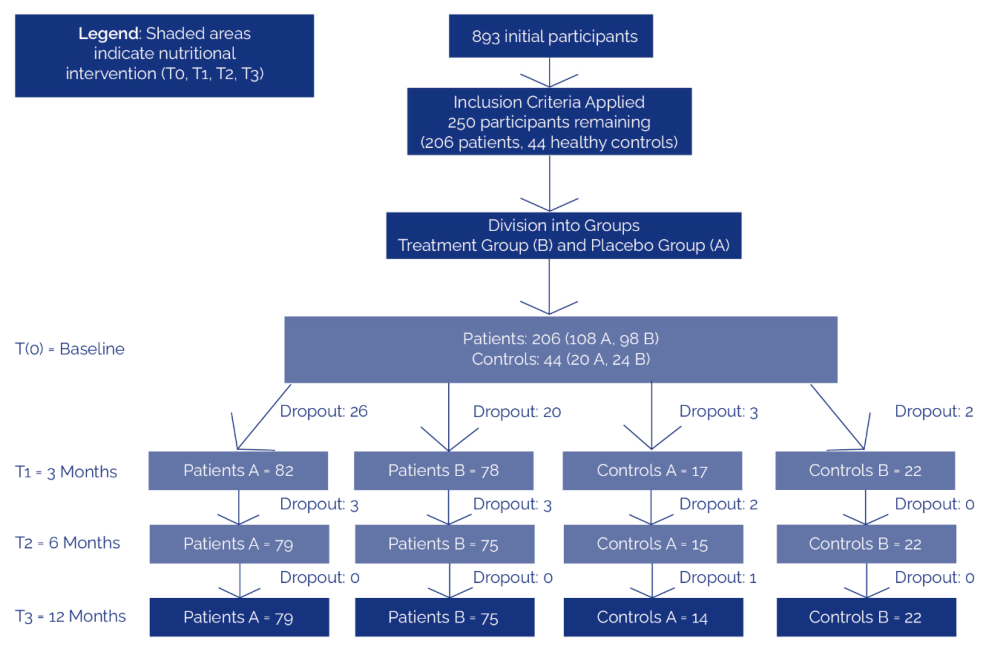
3.1. Sample and Characteristics of the Subjects
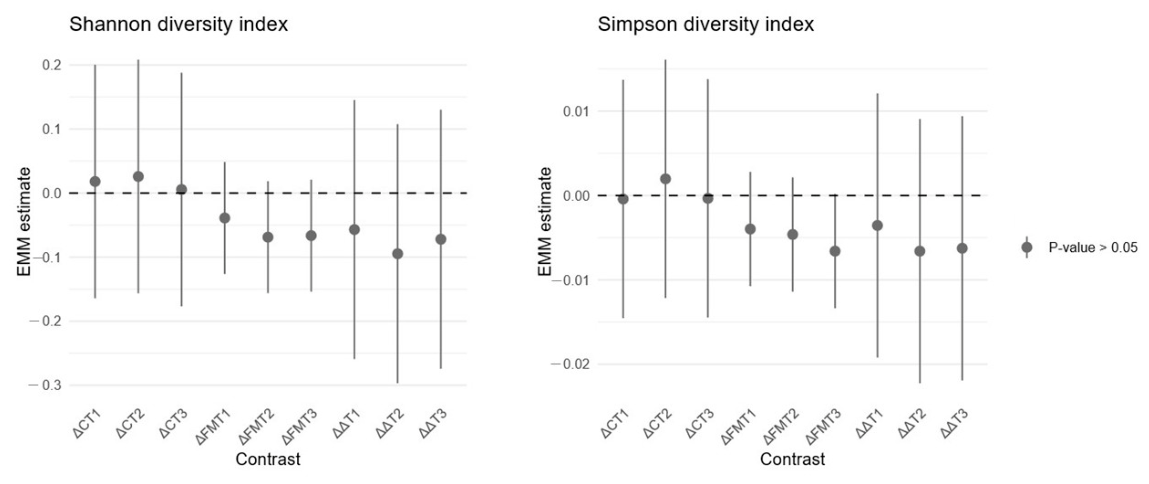
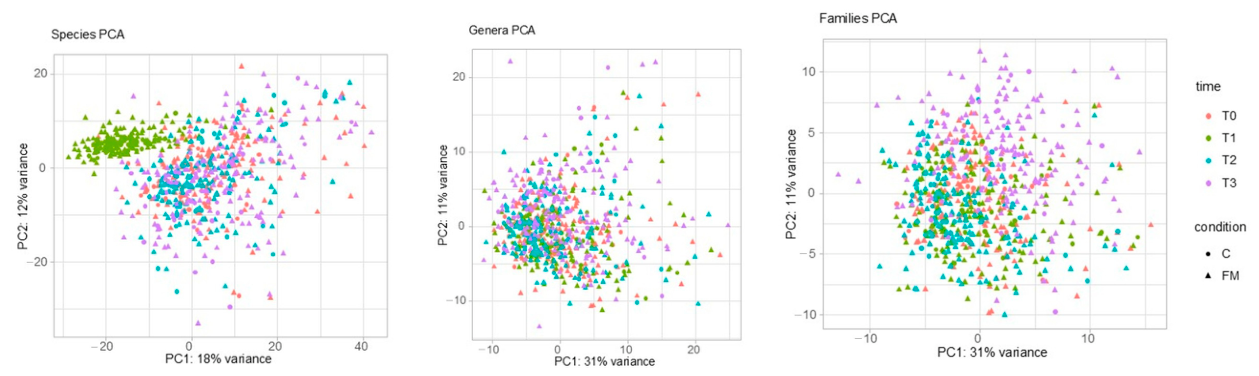
3.2. Microbial Diversity and Richness
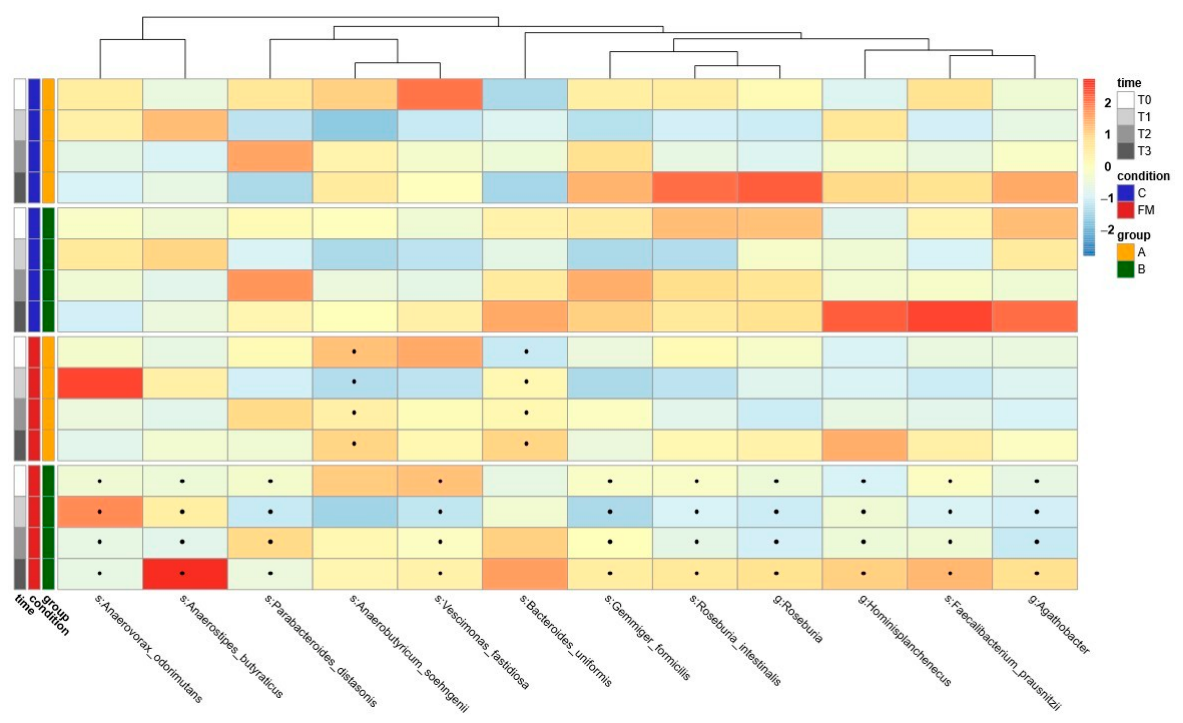
3.3. Metagenomics Study
4. Discussion

| Taxon | Observed Change | Link with FM | References |
|---|---|---|---|
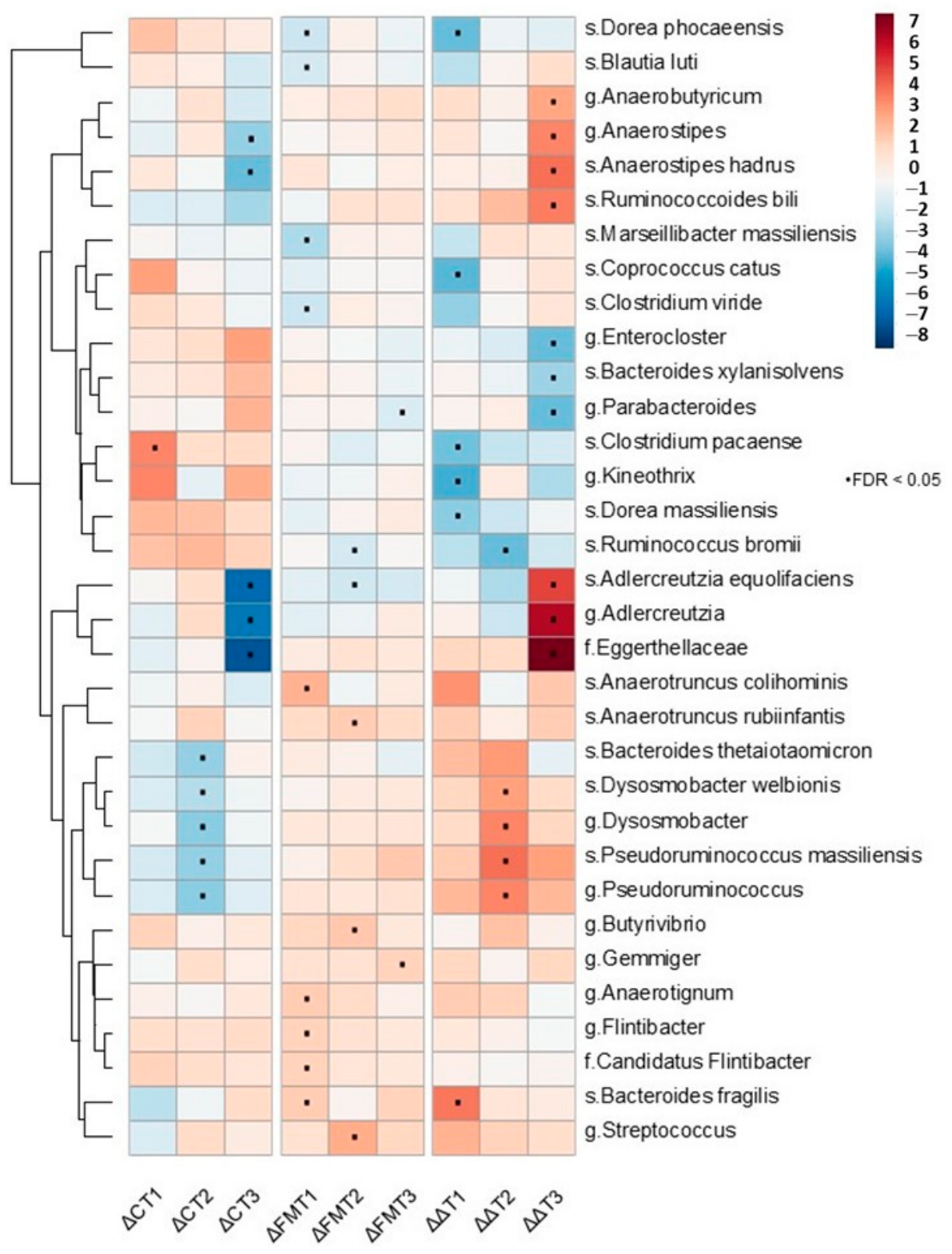
| Bacteroides fragilis | ↑ ΔΔT1 (differential increment with EVOO in FM patients when compared with EVOO in C) | GABA producer; involved in gut–brain axis modulation and chronic pain relief | [35,36] |
| Anaerotruncus colihominis | ↑ ΔFMT1 (differential increment with EVOO in FM patients when compared with FM baseline) | Associated with metabolic regulation; increased abundance linked to EVOO treatment | [60] |
| Ruminococcus bromii | ↓ ΔΔT2 (differential reduction with EVOO in FM patients when compared with EVOO in C) | Decrease in FM may relate to altered fiber degradation; contextual role not clear | [33] |
| Pseudoruminococcus | ↑ ΔΔT2 (differential increment with EVOO in FM patients when compared with EVOO in C) | Linked to fiber metabolism and short-chain fatty acid (SCFA) production | [61] |
| Dysosmobacter | ↑ ΔΔT2 (differential increment with EVOO in FM patients when compared with EVOO in C) | Emerging genus associated with lipid metabolism modulation | [62] |
| Streptococcus | ↑ ΔFMT2 (differential increment with EVOO in FM patients when compared with FM baseline) | Mixed effects; some species linked to immune modulation and inflammation | [45,63] |
| Anaerostipes hadrus | ↑ ΔΔT2 (differential increment with EVOO in FM patients when compared with EVOO in C) | Butyrate producer; potential benefit for insulin resistance | [52] |
5. Conclusions
6. Limitations and Future Perspectives
Supplementary Materials
Author Contributions
Funding
Institutional Review Board Statement
Informed Consent Statement
Data Availability Statement
Conflicts of Interest
References
- Clauw, D.J. Fibromyalgia: A clinical review. JAMA 2014, 311, 1547–1555. [Google Scholar] [CrossRef]
- Heidari, F.; Afshari, M.; Moosazadeh, M. Prevalence of fibromyalgia in general population and patients, a systematic review and meta-analysis. Rheumatol. Int. 2017, 37, 1527–1539. [Google Scholar] [CrossRef]
- Macfarlane, G.J.; Kronisch, C.; Dean, L.E.; Atzeni, F.; Häuser, W.; Fluß, E.; Choy, E.; Kosek, E.; Amris, K.; Branco, J.; et al. EULAR revised recommendations for the management of fibromyalgia. Ann. Rheum. Dis. 2017, 76, 318–328. [Google Scholar] [CrossRef]
- Wolfe, F.; Rasker, J.J.; Ten Klooster, P.; Häuser, W. Subjective Cognitive Dysfunction in Patients with and Without Fibromyalgia: Prevalence, Predictors, Correlates, and Consequences. Cureus 2021, 13, e20351. [Google Scholar] [CrossRef]
- Kumbhare, D.; Ahmed, S.; Watter, S. A narrative review on the difficulties associated with fibromyalgia diagnosis. Ther. Adv. Musculoskelet. Dis. 2018, 10, 13–26. [Google Scholar] [CrossRef]
- Guo, R.; Chen, L.H.; Xing, C.; Liu, T. Pain regulation by gut microbiota: Molecular mechanisms and therapeutic potential. Br. J. Anaesth. 2019, 123, 637–654. [Google Scholar] [CrossRef]
- Truyens, M.; Lernout, H.; De Vos, M.; Laukens, D.; Lobaton, T. Unraveling the fatigue puzzle: Insights into the pathogenesis and management of IBD-related fatigue including the role of the gut-brain axis. Front. Med. 2024, 11, 1424926. [Google Scholar] [CrossRef]
- Lv, Z.; Liu, R.; Su, K.; Gu, Y.; Fang, L.; Fan, Y.; Gao, J.; Ruan, X.; Feng, X. Acupuncture ameliorates breast cancer-related fatigue by regulating the gut microbiota-gut-brain axis. Front. Endocrinol. 2022, 13, 921119. [Google Scholar] [CrossRef]
- Minerbi, A.; Gonzalez, E.; Brereton, N.J.B.; Anjarkouchian, A.; Dewar, K.; Fitzcharles, M.A.; Chevalier, S.; Shir, Y. Altered microbiome composition in individuals with fibromyalgia. Pain 2019, 160, 2589–2602. [Google Scholar] [CrossRef]
- Hsu, C.W.; Huang, Y.C.; Chen, T.Y.; Yang, Y.S.H.; Lo, Y.C.; Kang, J.H. Associations Between Brain-Gut Axis and Psychological Distress in Fibromyalgia: A Microbiota and Magnetic Resonance Imaging Study. J. Pain. 2024, 25, 934–945. [Google Scholar] [CrossRef]
- Elma, Ö.; Yilmaz, S.T.; Deliens, T.; Coppieters, I.; Clarys, P.; Nijs, J.; Malfliet, A. Do Nutritional Factors Interact with Chronic Musculoskeletal Pain? A Systematic Review. J. Clin. Med. 2020, 9, 702. [Google Scholar] [CrossRef]
- Carrasco-Querol, N.; Cabricano-Canga, L.; Bueno Hernández, N.; Martín-Borràs, C.; Gonçalves, A.Q.; Vila-Martí, A.; Ribot, B.; Solà, J.; Valls-Llobet, C.; Caballol Angelats, R.; et al. Effectiveness of the SYNCHRONIZE + Brief Intervention in Improving Mediterranean Diet Adherence, Nutritional Quality and Intake Pattern in Persons with Fibromyalgia and Chronic Fatigue Syndrome. Nutrients 2024, 17, 11. [Google Scholar] [CrossRef]
- Casini, I.; Ladisa, V.; Clemente, L.; Delussi, M.; Rostanzo, E.; Peparini, S.; Aloisi, A.M.; de Tommaso, M. A Personalized Mediterranean Diet Improves Pain and Quality of Life in Patients with Fibromyalgia. Pain Ther. 2024, 13, 609–620. [Google Scholar] [CrossRef]
- Cicerale, S.; Lucas, L.; Keast, R. Biological Activities of Phenolic Compounds Present in Virgin Olive Oil. Int. J. Mol. Sci. 2010, 11, 458–479. [Google Scholar] [CrossRef]
- Casas, R.; Estruch, R.; Sacanella, E. The Protective Effects of Extra Virgin Olive Oil on Immune-Mediated Inflammatory Responses. Endocr. Metab. Immune Disord. Drug Targets 2018, 18, 23–35. [Google Scholar] [CrossRef]
- Rus, A.; Molina, F.; Ramos, M.M.; Martínez-Ramírez, M.J.; del Moral, M.L. Extra Virgin Olive Oil Improves Oxidative Stress, Functional Capacity, and Health-Related Psychological Status in Patients with Fibromyalgia: A Preliminary Study. Biol. Res. Nurs. 2017, 19, 106–115. [Google Scholar] [CrossRef]
- Visioli, F.; Poli, A.; Gall, C. Antioxidant and other biological activities of phenols from olives and olive oil. Med. Res. Rev. 2002, 22, 65–75. [Google Scholar] [CrossRef]
- Ramírez-Tejero, J.A.; Martínez-Lara, E.; Peinado, M.Á.; Moral, M.L.; Del Siles, E. Hydroxytyrosol as a promising ally in the treatment of fibromyalgia. Nutrients 2020, 12, 2386. [Google Scholar] [CrossRef]
- Fernández-Araque, A.; Verde, Z.; Torres-Ortega, C.; Sainz-Gil, M.; Velasco-Gonzalez, V.; González-Bernal, J.J.; Mielgo-Ayuso, J. Effects of Antioxidants on Pain Perception in Patients with Fibromyalgia-A Systematic Review. J. Clin. Med. 2022, 11, 2462. [Google Scholar] [CrossRef]
- Cardona, F.; Andrés-Lacueva, C.; Tulipani, S.; Tinahones, F.J.; Queipo-Ortuño, M.I. Benefits of Polyphenols on Gut Microbiota and Implications in Human Health. J. Nutr. Biochem. 2013, 24, 1415–1422. [Google Scholar] [CrossRef]
- Shtrozberg, S.; Bazzichi, L.; Sarzi-Puttini, P.; Aloush, V.; Ablin, J.N. Is the gut microbiome of importance in fibromyalgia? A critical review of emerging evidence. Clin. Exp. Rheumatol. 2025, 43, 990–998. [Google Scholar] [CrossRef]
- San Mauro-Martín, I.; Collado-Yurrita, L.; Sanz-Rojo, S.; López-Oliva, S.; Conty, R.; Puga, A.M.; Garicano-Vilar, E. Short-Time Strategy for Fibromyalgia Treatment Based on Olive Nutraceutical and Inflammatory Gut-Brain Axis Control Diet (IGUBAC) Diet®. Curr. Top. Nutraceutical Res. 2018, 17, 23–32. [Google Scholar] [CrossRef]
- Mas, A.J.; Carmona, L.; Valverde, M.; Ribas, B.; Study Group, E. Prevalence and impact of fibromyalgia on function and quality of life in individuals from the general population: Results from a nationwide study in Spain. Clin. Exp. Rheumatol. 2008, 26, 519–526. [Google Scholar]
- Naing, L.; Win, T.; Rusli, N. Practical Issues in Calculating the Sample Size for Prevalence Studies. Arch. Orofac. Sci. 2006, 1, 9–14. [Google Scholar]
- Bennett, R.M.; Friend, R.; Jones, K.D.; Ward, R.; Han, B.K.; Ross, R.L. The Revised Fibromyalgia Impact Questionnaire (FIQR): Validation and psychometric properties. Arthritis Res. Ther. 2009, 11, R120. [Google Scholar] [CrossRef]
- Johnson, J.S.; Spakowicz, D.J.; Hong, B.Y.; Petersen, L.M.; Demkowicz, P.; Chen, L.; Leopold, S.R.; Hanson, B.M.; Agresta, H.O.; Gerstein, M.; et al. Evaluation of 16S rRNA gene sequencing for species and strain-level microbiome analysis. Nat. Commun. 2019, 10, 5029. [Google Scholar] [CrossRef]
- McMurdie, P.J.; Holmes, S. Phyloseq: An R Package for Reproducible Interactive Analysis and Graphics of Microbiome Census Data. PLoS ONE 2013, 8, e61217. [Google Scholar] [CrossRef]
- Love, M.I.; Huber, W.; Anders, S. Moderated estimation of fold change and dispersion for RNA-seq data with DESeq2. Genome Biol. 2014, 15, 550. [Google Scholar] [CrossRef]
- Durán-González, E.; Ramírez-Tejero, J.A.; Pérez Sánchez, M.; Morales Torres, C.; Gómez Morano, R.; Díaz López, C.; Martínez Lara, A.; Cotán Marín, D. Fibromyalgia diagnosis from a multiomics approach: A gut feeling. Front. Microbiol. 2025, 16, 1641185. [Google Scholar] [CrossRef]
- Weber, T.; Tatzl, E.; Kashofer, K.; Holter, M.; Trajanoski, S.; Berghold, A.; Heinemann, A.; Holzer, P.; Herbert, M.K. Fibromyalgia-associated hyperalgesia is related to psychopathological alterations but not to gut microbiome changes. PLoS ONE 2022, 17, e0274026. [Google Scholar] [CrossRef]
- Kim, Y.; Kim, G.T.; Kang, J. Microbial Composition and Stool Short Chain Fatty Acid Levels in Fibromyalgia. Int. J. Environ. Res. Public Health 2023, 20, 3183. [Google Scholar] [CrossRef]
- Clos-Garcia, M.; Andrés-Marín, N.; Fernández-Eulate, G.; Abecia, L.; Lavín, J.L.; van Liempd, S.; Cabrera, D.; Royo, F.; Valero, A.; Errazquin, N.; et al. Gut microbiome and serum metabolome analyses identify molecular biomarkers and altered glutamate metabolism in fibromyalgia. EBioMedicine 2019, 46, 499–511. [Google Scholar] [CrossRef]
- Ramírez-Tejero, J.A.; Durán-González, E.; Martínez-Lara, A.; Lucena del Amo, L.; Sepúlveda, I.; Huancas-Díaz, A.; Carvajal, M.; Cotán, D. Microbiota and Mitochondrial Sex-Dependent Imbalance in Fibromyalgia: A Pilot Descriptive Study. Neurol. Int. 2023, 15, 868–880. [Google Scholar] [CrossRef]
- Shivaji, S. We are not alone: A case for the human microbiome in extra-intestinal diseases. Gut Pathog. 2017, 9, 13. [Google Scholar] [CrossRef]
- Otaru, N.; Ye, K.; Mujezinovic, D.; Berchtold, L.; Constancias, F.; Cornejo, F.A.; Krzystek, A.; de Wouters, T.; Braegger, C.; Lacroix, C.; et al. GABA Production by Human Intestinal Bacteroides spp.: Prevalence, Regulation, and Role in Acid Stress Tolerance. Front. Microbiol. 2021, 12, 656895. [Google Scholar] [CrossRef]
- Strandwitz, P.; Kim, K.H.; Terekhova, D.; Liu, J.K.; Sharma, A.; Levering, J.; McDonald, D.; Dietrich, D.; Ramadhar, T.R.; Lekbua, A.; et al. GABA-modulating bacteria of the human gut microbiota. Nat. Microbiol. 2019, 4, 396–403. [Google Scholar] [CrossRef]
- Nie, K.; Ma, K.; Luo, W.; Shen, Z.; Yang, Z.; Xiao, M.; Tong, T.; Yang, Y.; Wang, X. Roseburia intestinalis: A Beneficial Gut Organism from the Discoveries in Genus and Species. Front. Cell Infect. Microbiol. 2021, 22, 757718. [Google Scholar] [CrossRef]
- Han, H.S.; Hwang, S.; Choi, S.Y.; Hitayezu, E.; Humphrey, M.A.; Enkhbayar, A.; Song, D.G.; Kim, M.; Park, J.S.; Park, Y.T.; et al. Roseburia intestinalis-derived extracellular vesicles ameliorate colitis by modulating intestinal barrier, microbiome, and inflammatory responses. J. Extracell. Vesicles. 2024, 13, e12487. [Google Scholar] [CrossRef]
- Jiang, Y.; Huang, Z.; Sun, W.; Huang, J.; Xu, Y.; Liao, Y.; Jin, T.; Li, Q.; Ho, I.H.T.; Zou, Y.; et al. Roseburia intestinalis-derived butyrate alleviates neuropathic pain. Cell Host Microbe 2025, 33, 104–118. [Google Scholar] [CrossRef]
- Martínez-Lara, A.; Moreno-Fernández, A.M.; Jiménez-Guerrero, M.; Díaz-López, C.; De-Miguel, M.; Cotán, D.; Sánchez-Alcázar, J.A. Mitochondrial imbalance as a new approach to the study of fibromyalgia. Open Access Rheumatol. Res. Rev. 2020, 12, 175–185. [Google Scholar] [CrossRef]
- Clark, A.; Mach, N. The crosstalk between the gut microbiota and mitochondria during exercise. Front. Physiol. 2017, 8, 271566. [Google Scholar] [CrossRef]
- Endres, K.; Friedland, K. Talk to Me—Interplay between Mitochondria and Microbiota in Aging. Int. J. Mol. Sci. 2023, 24, 10818. [Google Scholar] [CrossRef]
- Qiao, L.; Yang, G.; Wang, P.; Xu, C. The potential role of mitochondria in the microbiota-gut-brain axis: Implications for brain health. Pharmacol. Res. 2024, 209, 107434. [Google Scholar] [CrossRef]
- Schaus, S.R.; Pereira, G.V.; Luis, A.S.; Madlambayan, E.; Terrapon, N.; Ostrowski, M.P.; Jin, C.; Henrissat, B.; Hansson, G.C.; Martens, E.C. Ruminococcus torques is a keystone degrader of intestinal mucin glycoprotein, releasing oligosaccharides used by Bacteroides thetaiotaomicron. MBio 2024, 15, e0003924. [Google Scholar] [CrossRef]
- Homayouni Rad, A.; Pourjafar, H.; Mirzakhani, E. A comprehensive review of the application of probiotics and postbiotics in oral health. Front. Cell Infect. Microbiol. 2023, 13, 1120995. [Google Scholar] [CrossRef]
- Fukui, A.; Takagi, T.; Naito, Y.; Inoue, R.; Kashiwagi, S.; Mizushima, K.; Inada, Y.; Inoue, K.; Harusato, A.; Dohi, O.; et al. Higher Levels of Streptococcus in Upper Gastrointestinal Mucosa Associated with Symptoms in Patients with Functional Dyspepsia. Digestion 2020, 101, 38–45. [Google Scholar] [CrossRef]
- Hayashi, K.; Uchida, R.; Horiba, T.; Kawaguchi, T.; Gomi, K.; Goto, Y. Soy sauce-like seasoning enhances the growth of Agathobacter rectalis and the production of butyrate, propionate, and lactate. Biosci. Microbiota Food Health 2024, 43, 275–281. [Google Scholar] [CrossRef]
- Mostafa, I.; Hibberd, M.C.; Hartman, S.J.; Hafizur Rahman, M.H.; Mahfuz, M.; Hasan, S.M.T.; Ashorn, P.; Barratt, M.J.; Ahmed, T.; Gordon, J.I. A microbiota-directed complementary food intervention in 12-18-month-old Bangladeshi children improves linear growth. EBioMedicine 2024, 104, 105166. [Google Scholar] [CrossRef]
- Hertz, S.; Anderson, J.M.; Nielsen, H.L.; Schachtschneider, C.; McCauley, K.E.; Özçam, M.; Larsen, L.; Lynch, S.V.; Nielsen, H. Fecal microbiota is associated with extraintestinal manifestations in inflammatory bowel disease. Ann. Med. 2024, 56, 2338244. [Google Scholar] [CrossRef]
- Yan, X.; Xie, R.; Ding, L.; Cheng, X.; Xu, J.; Lin, L.; Bai, L.; Li, H.; Qiao, Y. Relationships between sarcopenia, nutrient intake, and gut microbiota in Chinese community-dwelling older women. Arch. Gerontol. Geriatr. 2023, 113, 105063. [Google Scholar] [CrossRef]
- Chen, C.; Zhang, Y.; Yao, X.; Yan, Q.; Li, S.; Zhong, Q.; Liu, Z.; Tang, F.; Liu, C.; Li, H.; et al. Characterizations of the multi-kingdom gut microbiota in Chinese patients with gouty arthritis. BMC Microbiol. 2023, 23, 363. [Google Scholar] [CrossRef]
- Doumatey, A.P.; Adeyemo, A.; Zhou, J.; Lei, L.; Adebamowo, S.N.; Adebamowo, C.; Rotimi, C.N. Gut Microbiome Profiles Are Associated with Type 2 Diabetes in Urban Africans. Front. Cell Infect. Microbiol. 2020, 10, 63. [Google Scholar] [CrossRef]
- Sun, Y.; Nie, Q.; Zhang, S.; He, H.; Zuo, S.; Chen, C.; Yang, J.; Chen, H.; Hu, J.; Li, S.; et al. Parabacteroides distasonis ameliorates insulin resistance via activation of intestinal GPR109a. Nat. Commun. 2023, 14, 7740. [Google Scholar] [CrossRef]
- Wei, W.; Wong, C.C.; Jia, Z.; Liu, W.; Liu, C.; Ji, F.; Pan, Y.; Wang, F.; Wang, G.; Zhao, L.; et al. Parabacteroides distasonis uses dietary inulin to suppress NASH via its metabolite pentadecanoic acid. Nat. Microbiol. 2023, 8, 1534–1548. [Google Scholar] [CrossRef]
- Ezeji, J.C.; Sarikonda, D.K.; Hopperton, A.; Erkkila, H.L.; Cohen, D.E.; Martinez, S.P.; Cominelli, F.; Kuwahara, T.; Dichosa, A.E.K.; Good, C.E.; et al. Parabacteroides distasonis: Intriguing aerotolerant gut anaerobe with emerging antimicrobial resistance and pathogenic and probiotic roles in human health. Gut Microbes 2021, 13, 1922241. [Google Scholar] [CrossRef]
- Cui, Y.; Zhang, L.; Wang, X.; Yi, Y.; Shan, Y.; Liu, B.; Zhou, Y.; Lü, X. Roles of intestinal Parabacteroides in human health and diseases. FEMS Microbiol. Lett. 2022, 369, fnac072. [Google Scholar] [CrossRef]
- Mayo, B.; Vázquez, L.; Flórez, A.B. Equol: A Bacterial Metabolite from The Daidzein Isoflavone and Its Presumed Beneficial Health Effects. Nutrients 2019, 11, 2231. [Google Scholar] [CrossRef]
- Zheng, W.; Ma, Y.; Zhao, A.; He, T.; Lyu, N.; Pan, Z.; Mao, G.; Liu, Y.; Li, J.; Wang, P.; et al. Compositional and functional differences in human gut microbiome with respect to equol production and its association with blood lipid level: A cross-sectional study. Gut Pathog. 2019, 11, 20. [Google Scholar] [CrossRef]
- Oñate, F.P.; Chamignon, C.; Burz, S.D.; Lapaque, N.; Monnoye, M.; Philippe, C.; Bredel, M.; Chêne, L.; Farin, W.; Paillarse, J.M.; et al. Adlercreutzia equolifaciens Is an Anti-Inflammatory Commensal Bacterium with Decreased Abundance in Gut Microbiota of Patients with Metabolic Liver Disease. Int. J. Mol. Sci. 2023, 24, 12232. [Google Scholar] [CrossRef]
- Chang, Z.; Zhu, Y.; Wang, P.; Du, L.; Wu, M.; Wang, X.; Kong, C.; Huang, D.; Xie, R.; Ji, G.; et al. Multi-omic analyses of the development of obesity-related depression linked to the gut microbe Anaerotruncus colihominis and its metabolite glutamate. Sci. Bull. 2025, 70, 1822–1833. [Google Scholar] [CrossRef]
- Hiippala, K.; Khan, I.; Ronkainen, A.; Boulund, F.; Vähä-Mäkilä, H.; Suutarinen, M.; Seifert, M.; Engstrand, L.; Satokari, R. Novel strain of Pseudoruminococcus massiliensis possesses traits important in gut adaptation and host-microbe interactions. Gut Microbes 2022, 14, 2013761. [Google Scholar] [CrossRef]
- Le Roy, T.; Moens De Hase, E.; Van Hul, M.; Paquot, A.; Pelicaen, R.; Régnier, M.; Depommier, C.; Druart, C.; Everard, A.; Maiter, D.; et al. Dysosmobacter welbionis is a newly isolated human commensal bacterium preventing diet-induced obesity and metabolic disorders in mice. Gut 2022, 71, 534–543. [Google Scholar] [CrossRef]
- Osei Sekyere, J.; Mensah, E. Molecular epidemiology and mechanisms of antibiotic resistance in Enterococcus spp., Staphylococcus spp., and Streptococcus spp. in Africa: A systematic review from a One Health perspective. Ann. N. Y. Acad. Sci. 2020, 1465, 29–58. [Google Scholar] [CrossRef]


| Covariate | p-Value | p-Value adj | Q-Value | Significance | C | FM | Test |
|---|---|---|---|---|---|---|---|
| Alcohol | 8.00 × 10⁻⁵ | 3.70 × 10⁻⁴ | 1.90 × 10⁻⁴ | yes | 76.74% | 42.21% | Chi-square |
| Analgesics | 5.40 × 10⁻¹³ | 1.20 × 10⁻¹¹ | 6.40 × 10⁻¹² | yes | 13.95% | 73.87% | Chi-square |
| Antibiotics | 1.00 | 1.00 | 0.51 | no | 0.00% | 0.50% | Fisher’s exact |
| Antidepressants | 1.10 × 10⁻¹⁰ | 1.30 × 10⁻⁹ | 6.60 × 10⁻¹⁰ | yes | 4.65% | 60.30% | Chi-square |
| Antioxidants | 0.08 | 0.13 | 0.07 | no | 0.00% | 8.04% | Fisher’s exact |
| Anxiety depressive | 8.00 × 10⁻⁵ | 3.70 × 10⁻⁴ | 1.90 × 10⁻⁴ | yes | 65.12% | 89.95% | Chi-square |
| Autoimmune | 0.31 | 0.40 | 0.20 | no | 6.98% | 14.07% | Chi-square |
| Cancer | 0.80 | 0.83 | 0.43 | no | 4.65% | 2.51% | Chi-square |
| Cardiovascular | 0.08 | 0.13 | 0.07 | no | 4.65% | 16.58% | Chi-square |
| Chronic fatigue | 0.22 | 0.30 | 0.15 | no | 0.00% | 5.53% | Fisher’s exact |
| Depression | 2.80 × 10⁻⁸ | 2.10 × 10⁻⁷ | 1.10 × 10⁻⁷ | yes | 2.33% | 49.75% | Chi-square |
| Dermatologic | 0.07 | 0.13 | 0.06 | no | 4.65% | 17.09% | Chi-square |
| Digestive | 1.91 × 10⁻³ | 0.01 | 3.21 × 10⁻³ | yes | 9.30% | 34.67% | Chi-square |
| Digestive symptoms | 0.01 | 0.02 | 0.01 | yes | 93.02% | 100.00% | Fisher’s exact |
| Endometriosis | 0.09 | 0.13 | 0.07 | no | 4.65% | 16.08% | Chi-square |
| Gynecologic | 0.04 | 0.08 | 0.04 | yes | 9.30% | 25.63% | Fisher’s exact |
| Inflammatory | 0.04 | 0.08 | 0.04 | yes | 2.33% | 14.57% | Fisher’s exact |
| Metabolic | 0.15 | 0.21 | 0.11 | no | 4.65% | 14.07% | Chi-square |
| Musculoskeletal | 6.30 × 10⁻⁴ | 2.41 × 10⁻³ | 1.23 × 10⁻³ | yes | 6.98% | 34.67% | Chi-square |
| Neurological | 0.01 | 0.02 | 0.01 | yes | 2.33% | 20.10% | Chi-square |
| Sedentarism | 0.45 | 0.54 | 0.28 | no | 46.51% | 54.27% | Chi-square |
| Smoker | 0.56 | 0.62 | 0.32 | no | 11.63% | 16.58% | Chi-square |
| Specific diet | 0.56 | 0.62 | 0.32 | no | 20.93% | 29.15% | Fisher’s exact |
Disclaimer/Publisher’s Note: The statements, opinions and data contained in all publications are solely those of the individual author(s) and contributor(s) and not of MDPI and/or the editor(s). MDPI and/or the editor(s) disclaim responsibility for any injury to people or property resulting from any ideas, methods, instructions or products referred to in the content. |
© 2026 by the authors. Licensee MDPI, Basel, Switzerland. This article is an open access article distributed under the terms and conditions of the Creative Commons Attribution (CC BY) license.
Share and Cite
Durán González, E.; Ramírez Tejero, J.A.; San Mauro Martín, I.; Terrén Lora, A.; Pérez Sánchez, M.; Gómez Morano, R.; Díaz López, C.; Martínez Lara, A.; Aguilar Díaz, M.; Cotán Marín, D. Impact of a Mediterranean Diet Supplemented with Extra Virgin Olive Oil on Gut Microbiota in Fibromyalgia: A Randomized Controlled Trial. Life 2026, 16, 894. https://doi.org/10.3390/life16060894
Durán González E, Ramírez Tejero JA, San Mauro Martín I, Terrén Lora A, Pérez Sánchez M, Gómez Morano R, Díaz López C, Martínez Lara A, Aguilar Díaz M, Cotán Marín D. Impact of a Mediterranean Diet Supplemented with Extra Virgin Olive Oil on Gut Microbiota in Fibromyalgia: A Randomized Controlled Trial. Life. 2026; 16(6):894. https://doi.org/10.3390/life16060894
Chicago/Turabian StyleDurán González, Elena, Jorge Antolín Ramírez Tejero, Ismael San Mauro Martín, Ana Terrén Lora, Marta Pérez Sánchez, Rosa Gómez Morano, Claudia Díaz López, Antonio Martínez Lara, Marta Aguilar Díaz, and David Cotán Marín. 2026. "Impact of a Mediterranean Diet Supplemented with Extra Virgin Olive Oil on Gut Microbiota in Fibromyalgia: A Randomized Controlled Trial" Life 16, no. 6: 894. https://doi.org/10.3390/life16060894
APA StyleDurán González, E., Ramírez Tejero, J. A., San Mauro Martín, I., Terrén Lora, A., Pérez Sánchez, M., Gómez Morano, R., Díaz López, C., Martínez Lara, A., Aguilar Díaz, M., & Cotán Marín, D. (2026). Impact of a Mediterranean Diet Supplemented with Extra Virgin Olive Oil on Gut Microbiota in Fibromyalgia: A Randomized Controlled Trial. Life, 16(6), 894. https://doi.org/10.3390/life16060894