Article

Comparative Proteomic Analysis Reveals That TaCAD-A1 Enhances Resistance of Wheat to Powdery Mildew (Blumeria graminis f. sp. tritici)

1
Yantai Academy of Agricultural Sciences, Yantai 265500, China
2
State Key Laboratory of Agricultural Products Safety, Ningbo University, Ningbo 315211, China
3
Key Laboratory of Biotechnology in Plant Protection of MARA, Ningbo University, Ningbo 315211, China
4
Zhejiang Key Laboratory of Green Plant Protection, Institute of Plant Virology, Ningbo University, Ningbo 315211, China
*
Authors to whom correspondence should be addressed.
These authors contributed equally to this work.
Life 2026, 16(6), 872; https://doi.org/10.3390/life16060872
Submission received: 16 April 2026 / Revised: 15 May 2026 / Accepted: 15 May 2026 / Published: 22 May 2026
(This article belongs to the Special Issue Advanced Research in Plant–Pathogen Interactions)

Abstract

Powdery mildew in wheat, caused by the biotrophic fungus Blumeria graminis f. sp. tritici (Bgt), is a major threat to global wheat production, yet the molecular mechanisms underlying differential cultivar resistance remain largely unresolved. In this study, tandem mass tag (TMT)-based quantitative proteomics was employed to investigate protein dynamics in resistant (Yannong37) and susceptible (Yannong1766) wheat cultivars at 0 and 24 h following Bgt inoculation. A total of 276 proteins exhibited significant changes in abundance after infection, with enrichment in cell wall and plasmodesmata-associated proteins. Comparative analysis further identified 456 differentially expressed proteins between the two cultivars at 24 h post-inoculation. Protein–protein interaction network analysis indicated that proteins involved in secondary metabolism and immune responses form coordinated regulatory networks contributing to disease resistance. RT–qPCR validation supported the reliability of the proteomic data. Notably, TaCAD-A1 displayed higher transcript abundance in the resistant cultivar and was associated with reduced fungal biomass accumulation. Silencing of TaCAD-A1 resulted in decreased expression of multiple defense-related genes. Collectively, these findings suggest that TaCAD-A1 may positively contribute to wheat resistance against Bgt infection and may be associated with defense responses and monolignol biosynthesis-related processes.

1. Introduction

Wheat (Triticum aestivum L.) is a major staple crop worldwide. The fungal pathogen Blumeria graminis f. sp. tritici (Bgt), the etiological agent of wheat powdery mildew, poses a critical threat to global wheat production systems [1,2,3]. The strategic deployment of host resistance represents the cornerstone of integrated powdery mildew management, demonstrating 60–85% disease suppression efficacy in multi-location field trials [4,5,6].
The mechanisms of plant resistance to powdery mildew are primarily manifested through the reinforcement of the cell wall, including papillae, and the occurrence of a hypersensitive response (HR). Relevant studies at the molecular level have revealed the importance of genes encoding cellulose and callose in the formation of effective papillae in barley, highlighting the importance of glucans in the development of barley papillae [7,8]. Existing models of plant immunity propose that nucleotide-binding domain and leucine-rich repeat (NLR) proteins trigger potent broad-spectrum immune reactions by monitoring the activity of pathogen-secreted molecules known as effectors [9]. This process triggers HR, a form of programmed cell death (PCD) localized at the site of infection to limit pathogen spread [10,11]. To date, numerous wheat powdery mildew resistance genes, such as Pm2 [12], Pm3 [13], Pm8Pm17 [14], Pm21 [15,16] and Pm36 [17], have been identified and cloned in wheat. The majority of functionally characterized disease resistance genes (R-genes) in cereal crops belong to the NLR superfamily and these genes have the potential capacity to increase resistance [15]. In addition to NLRs, Wang et al. reported that the glutathione S-transferase TaGST6 interacts with the TaCBSX3, which is involved in resistance to Bgt but not Pst [18]. Another study indicated that the use of the transcription factor TaNAC1 and its regulators is a strategy for improving wheat resistance to fungal pathogens [19]. However, prolonged survival challenges and environmental pressures have caused the evolution of new virulent pathogenic strains, resulting in resistance genes of wheat becoming less effective against powdery mildew [20]. Therefore, identifying new sources of broad-spectrum resistance to control diseases is necessary.
Proteomics is the study of proteomes and focuses on the overall composition and regulatory activities of proteins, mainly the expression and functional patterns of proteins. With the development of omics technologies, proteomic approaches have been extensively utilized in the study of plant–pathogen interactions to mine new sources of disease resistance [21,22,23]. In early studies, the most commonly used methods were a combination of two-dimensional electrophoresis (2-DE) and MALDI-TOF MS (Matrix-Assisted Laser Desorption/Ionization Time-of-Flight Mass Spectrometry) [24]. Wang et al. compared the leaf proteins of Jingdong8 (JD8) and JD8 with a single Pm resistance gene, Pm30 (JD8-Pm30), and observed differentially expressed proteins involved in signal transduction, disease and defense. Some results revealed the relevance of primary plant metabolism and defense responses during compatible interactions [25]. Proteome surveys have investigated resistance proteins associated with Bgt inoculation in the wheat lines L699 (with Pm40), Neimai836 (with Pm21), and Chuannong26, which are involved in physiological and cellular processes related to wheat resistance to Bgt [26]. Proteomic analysis utilizing tandem mass tags (TMTs) has been demonstrated to be an effective approach for identifying differentially expressed proteins in wheat in response to Fusarium pseudograminearum infection [27]. These findings demonstrate that proteomics analysis is a highly effective approach to uncover the deferentially expressed proteins between resistant and susceptible wheat cultivars in response to Bgt. Nevertheless, no in-depth studies employing TMT-based proteomic analysis have been conducted to compare the interactions between wheat and Bgt in two wheat varieties with varying degrees of resistance to powdery mildew.
On the basis of the current understanding, we decided to utilize the recent advancements in TMT quantitative proteomics technology to analyze the global proteome in both resistant and susceptible wheat varieties during Bgt inoculation. We explore the possible roles of these proteins in the early defense response phase based on their functions. Our objectives were to not only enhance our comprehension of the interaction between wheat and Bgt but also to contribute to the creation of more efficient methods to manage this destructive pathogen. We believe this study will introduce novel perspectives for innovating wheat powdery mildew-resistant germplasm resources and promoting the genetic improvement and breeding of new wheat varieties.

2. Materials and Methods

2.1. The Plant Materials, Inoculation and Cytological Observation

Yannong37 and Yannong1766 were used in this research. Yannong37 is resistant to most powdery mildews isolated in China; Yannong1766 is highly vulnerable to powdery mildew, with no effective resistance genes present. The plants were grown in pots with a diameter of 8–10 cm in a greenhouse growth chamber, maintained at 18 °C and under a 12 h light/12 h dark photoperiod. These pots were divided into two groups, one treated with mock inoculation and the other with Bgt inoculation. Approximately 10 days post-sowing, the seedlings were artificially inoculated with Bgt isolate E09. The pots were shielded with translucent and aerated covers to avoid fungal cross-contamination. These seedling samples were harvested at 0 and 24 hpi with liquid nitrogen and stored at −80 °C.
Samples from the mock-inoculated group and Bgt-inoculated group were collected from three biological replicates at two time points (0 and 24 hpi). The leaf tissues were cut into 2–4 cm fragments and placed in 2 mL EP tubes. The samples were decolorized using an AA solution (a mixture of ethanol and glacial acetic acid in a 1:1 volume ratio) at 70 °C for 20 min. The samples were then stained with a Coomassie Brilliant Blue staining solution (a mixture of 0.15% trichloroacetic acid aqueous solution and 0.6% Coomassie Brilliant Blue R-250 methanol solution in a 1:1 ratio) for 4 h for cytological observation. The infection structure of Bgt was observed under a microscope (Olympus, Tokyo, Japan) [18].

2.2. Total Protein Extraction and Protein Trypsin Digestion

For the proteomics experiments, total proteins were extracted from wheat leaves using the TCA/acetone precipitation method [21]. Leaf tissues were homogenized in liquid nitrogen and resuspended in lysis buffer (40 mM Tris-HCl pH 8.5, 2 M thiourea, 7 M urea, 10 mM DTT, 4% SDS, 2 mM EDTA, 1 mM PMSF). After centrifugation (15,000 g, 10 min, 4 °C), supernatants were precipitated with 4 volumes of acetone overnight at −20 °C. The pellet was washed thrice with acetone/ethanol (1:1), air-dried, and solubilized in 8 M urea/100 mM TEAB (pH 8.0). Protein concentration was quantified by BCA assay.

2.3. LC–MS/MS Analysis and Proteomic Data Analysis

Peptides were solubilized in 0.1% formic acid (solvent A) and analyzed via Vanquish Neo UHPLC (Thermo Fisher Scientific, Waltham, MA, USA) coupled with Orbitrap Eclipse mass spectrometer (Thermo Fisher Scientific, Waltham, MA, USA). A 1 µL aliquot was injected onto a trapping column (Acclaim PepMap 100, 75 µm × 2 cm, C18) (Thermo Fisher Scientific, Waltham, MA, USA) at 10 µL/min for 3 min. Separation was achieved on an analytical column (Acclaim PepMap 100, 75 µm × 25 cm, C18) (Thermo Fisher Scientific, Waltham, MA, USA) using a gradient from 2.5% to 23% solvent B (80% acetonitrile/0.1% FA) over 100 min, followed by 23–32% in 20 min and 32–90% in 19 min (total 139 min). MS data were acquired in DDA mode with 2 s cycle time: full scans (300–2000 m/z, 120 k resolution, AGC 400 k, 50 ms IT) followed by HCD-MS/MS (1.6 m/z window, 30% NCE, AGC 50 k, 54 ms IT) at 300 nL/min (50 °C). This workflow enables sensitive analysis of complex peptide mixtures.

2.4. Statistical and Bioinformatic Analysis of Proteomic Data

Differentially expressed proteins (DEPs) were identified based on a fold change >1.5 or <0.67 and p < 0.05. Protein quantification was performed using three biological replicates for each treatment, and statistical analyses were conducted using Student’s t-test. Prior to statistical analysis, protein abundance values were normalized to minimize technical variation. Proteins showing significant abundance changes between treatments were considered DEPs and subjected to subsequent bioinformatic analyses. Detailed information for all identified DEPs is provided in Supplementary Table S3.
Functional annotation of the identified proteins was performed using the UniProt-GOA database (European Bioinformatics Institute, Cambridge, UK), accessed on 20 May 2021). GO enrichment and KEGG pathway analyses of DEPs were conducted using the online KOBAS platform. The expression levels of DEPs enriched in GO terms and KEGG pathways were transformed into log2 fold changes with p < 0.05. Protein–protein interaction (PPI) networks were constructed using STRING software (version 11.5; https://string-db.org/) and visualized using Cytoscape software (version 3.8.0).

2.5. Total RNA Extraction and RT–qPCR

Total RNA was extracted from non-inoculated control and Bgt-inoculated wheat seedlings using the HiPure Plant RNA Mini Kit (Magen, Guangzhou, China), followed by first-strand cDNA synthesis with oligo (dT) primers via the TOYOBO First Strand cDNA Synthesis Kit (Toyobo, Osaka, Japan). Quantitative PCR analysis employing SYBR Green chemistry (Vazyme, Nanjing, China) on Applied Biosystems QuantStudio 6 Flex system was performed (Applied Biosystems, Foster City, CA, USA) using gene-specific primers, with wheat actin (TaACT) as internal reference. Primers were designed using the NCBI Primer-BLAST tool based on the target gene sequences. The primer sequences used in this study are listed in Supplementary Table S5. PCR amplification was performed under the following conditions: initial denaturation at 95 °C for 3 min, followed by 35 cycles of 95 °C for 15 s, annealing at the primer-specific temperature (57–60 °C) for 15 s, and 72 °C for 20 s, with a final extension at 72 °C for 5 min. Relative expression levels were calculated by the 2−ΔΔct method, with three biological replicates and technical triplicates.

2.6. BSMV-Mediated Gene Silencing

The BSMV-based VIGS assay was performed as previously reported [18]. Briefly, to generate the γ:TaCAD-A1 constructs, 300 bp antisense fragments of γ:TaCAD-A1 were predicted using the website https://vigs.solgenomics.net/ and subcloned individually into the pBSMVγ vector. The plasmids pBSMVα, pBSMVβ, pBSMVγ, pBSMVγ:TaCAD-A1, and pBSMVγ:TaPDS were individually linearized with specific restriction enzymes. Subsequently, RNA transcripts were generated from these linearized plasmids using the mMessage mMachine T7 in vitro transcription kit according to the manufacturer’s instructions (Ambion, Austin, TX, USA). Mixtures of pBSMVα and pBSMVβ together with pBSMVγ, pBSMVγ:TaCAD-A1 and pBSMVγ:TaPDS were inoculated onto the second leaf of wheat seedling leaves. At 10 dpi with BSMV, the leaves of each wheat seedling were inoculated with Bgt, and the samples were harvested at 24 hpi for silencing efficiency determination and histological observation.

3. Results

3.1. Powdery Mildew Infection Increased Protein Abundance in Resistant Wheat Cultivars

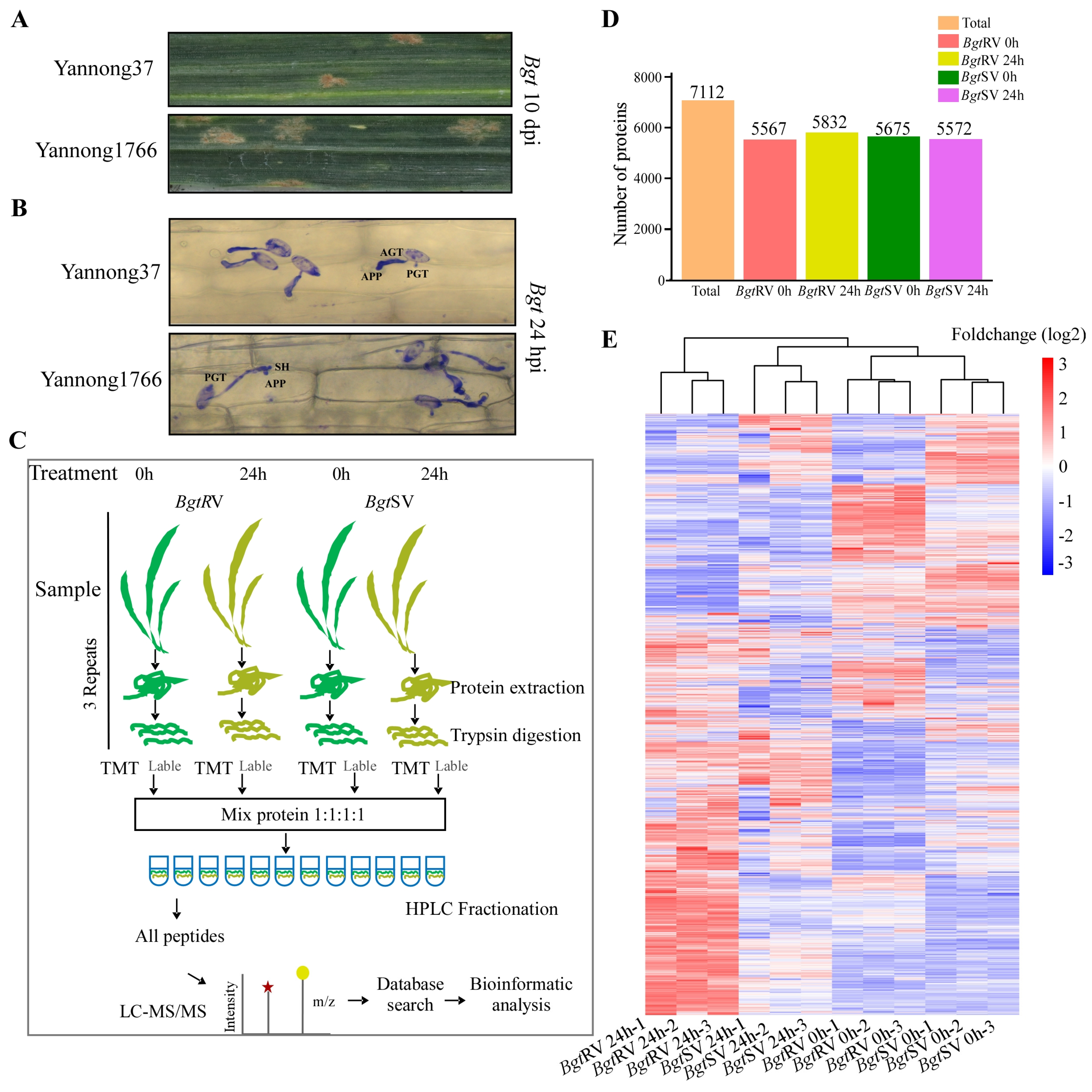
Large-scale proteomic analysis was performed using the Bgt-resistant wheat cultivar Yannong37 (BgtRV) and the Bgt-susceptible cultivar Yannong1766 (BgtSV) at 0 and 24 h post-inoculation (hpi). Phenotypic and histological analyses indicated that Yannong37 is highly resistant to Bgt. At 10 days post-inoculation (dpi), Yannong1766 developed severe disease symptoms, whereas Yannong37 showed no obvious symptoms (Figure 1A). Histological observations at 24 hpi further showed that, compared with Yannong1766, Yannong37 significantly restricted fungal growth, as evidenced by shorter hyphae and a smaller infection area (Figure 1B). After total protein extraction, trypsin digestion and labeling with isobaric tags, the samples were subjected to LC–MS/MS for analysis and identification. Three biological replicates were included at each time point. An overview of the proteomic identification assay workflow is presented in Figure 1C. A total of 7112 proteins were quantified, and 5567, 5832, 5675 and 5572 proteins were quantified in inoculated BgtRV wheat seedlings at 0 hpi and 24 hpi (BgtRV 0 h and BgtRV 24 h) and inoculated BgtSV wheat seedlings at 0 h and 24 h hpi, respectively (Figure 1D). To investigate the accumulation patterns of the quantified proteins in BgtRV and BgtSV during Bgt inoculation, we performed hierarchical clustering analysis using the intensity ratios normalized to the protein abundance. The protein abundance did not significantly change in BgtSV 0 h and BgtSV 24 h wheat seedlings but significantly increased 24 hpi with Bgt in BgtRV wheat seedlings (Figure 1E and Supplementary Table S1).

3.2. The Abundance of Proteins Enriched in the Cell Wall and Plasmodesmata Significantly Increased in the Resistant Wheat Variety

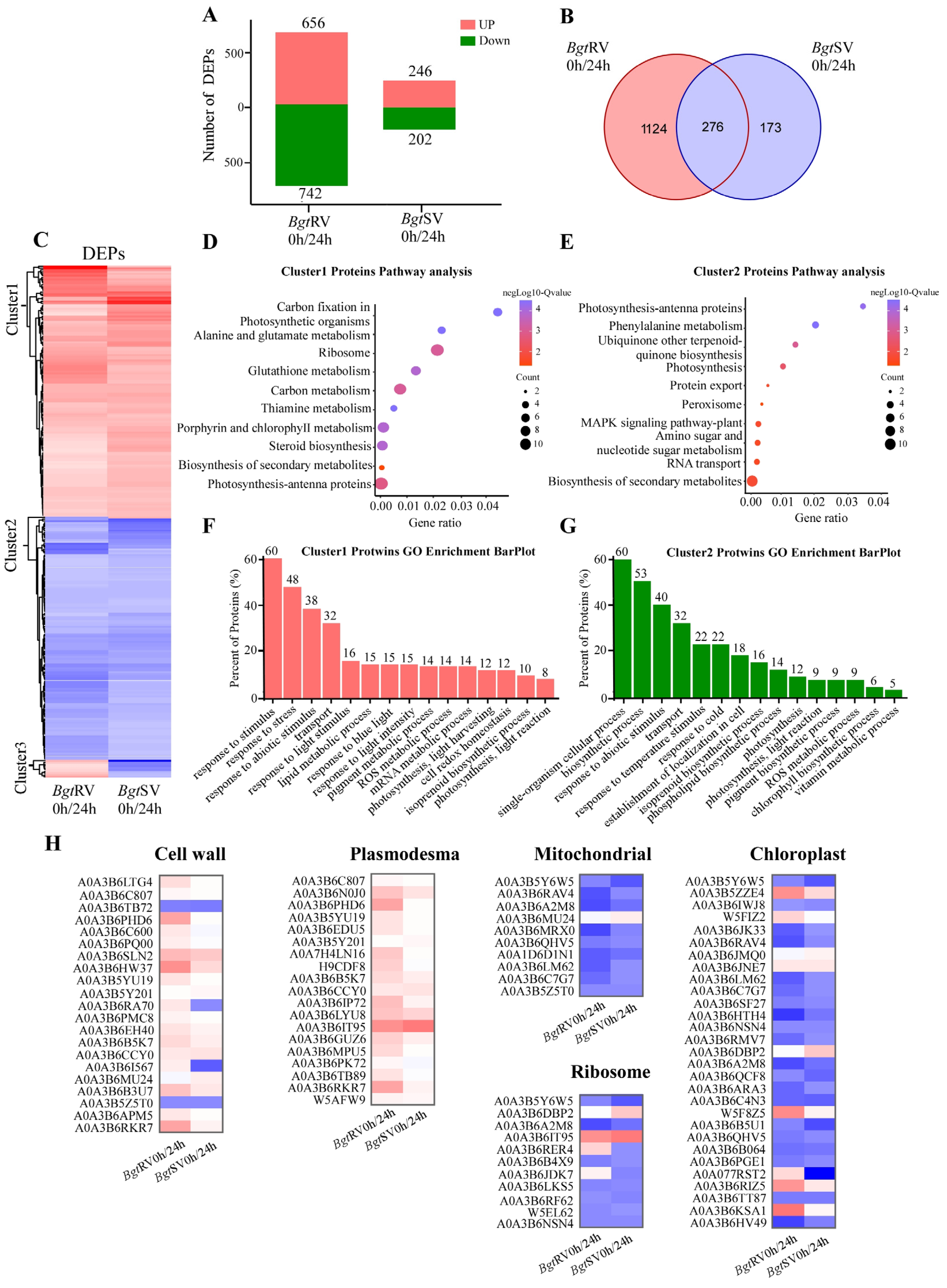
Protein abundance is influenced by multiple biological and technical factors. Differentially expressed proteins (DEPs) were identified using a stringent threshold of fold change >1.5 or <0.67 with p < 0.05 based on three biological replicates. Detailed information on the identified DEPs is provided in Supplementary Table S3. At 24 h post-inoculation (hpi), a total of 448 DEPs were identified in susceptible wheat seedlings infected with Bgt, including 246 significantly upregulated proteins and 202 significantly downregulated proteins. In comparison, a greater number of DEPs were identified in resistant wheat seedlings following Bgt infection. A total of 1398 DEPs were identified between BgtRV 0 h and BgtRV 24 h, among which 656 proteins were significantly upregulated and 742 proteins were significantly downregulated (Figure 2A). To identify the proteins regulated by Bgt inoculation, we screened 276 common proteins between BgtRV 0 h and BgtRV 24 h and between BgtSV 0 h and BgtSV 24 h (Figure 2B). Hierarchical cluster analysis was executed with 276 DEPs to explore the molecular patterns associated with Bgt inoculation; most of these patterns tended to change in the same direction in Clusters 1 and 2, whereas the changes were greater in BgtRV 0 h than in BgtRV 24 h (Figure 2C). To better understand these results, we performed a Kyoto Encyclopedia of Genes and Genomes (KEGG) pathway functional enrichment analysis. Photosynthesis-antenna proteins and biosynthesis of secondary metabolites were enriched in both Cluster 1 and Cluster 2 (Figure 2D,E). To investigate the DEP-associated pathways affected upon Bgt inoculation, a Gene Ontology (GO) enrichment analysis was performed on the DEPs in Clusters 1 and 2. Fifteen biological process (BP) terms, including lipid metabolic process, ROS metabolic process, photosynthesis and isoprenoid biosynthetic process, were significantly enriched in Cluster 1, and the ratios of the DEPs in Cluster 2 involved in transport, response to temperature stimulus, establishment of localization in cells and vitamin metabolic process were greater, suggesting that these proteins play important roles in Bgt inoculated in wheat (Figure 2F,G). The abundance of proteins in different subcellular organelles of Bgt-inoculated wheat seedling leaves is known to be affected. BgtRV 0 h vs. BgtRV 24 h and BgtSV 0 h vs. BgtSV 24 h protein abundances in different subcellular organelles tended to change in the same direction. In this study, protein abundance was significantly increased within the plasmodesmata and the cell wall upon Bgt inoculation, whereas protein abundance was significantly decreased within ribosomes, mitochondria, and chloroplasts. Notably, compared with that in the susceptible variety, the abundance of proteins enriched in the cell wall and plasmodesmata was greater after powdery mildew infection in the resistant variety (Figure 2H) and Supplementary Table S2, which is possibly related to the change in the abundance of proteins associated with the biosynthesis of secondary metabolism.

3.3. The Abundance of Immune-Related Proteins Significantly Differed Between Resistant and Susceptible Wheat Cultivars upon Bgt Inoculation

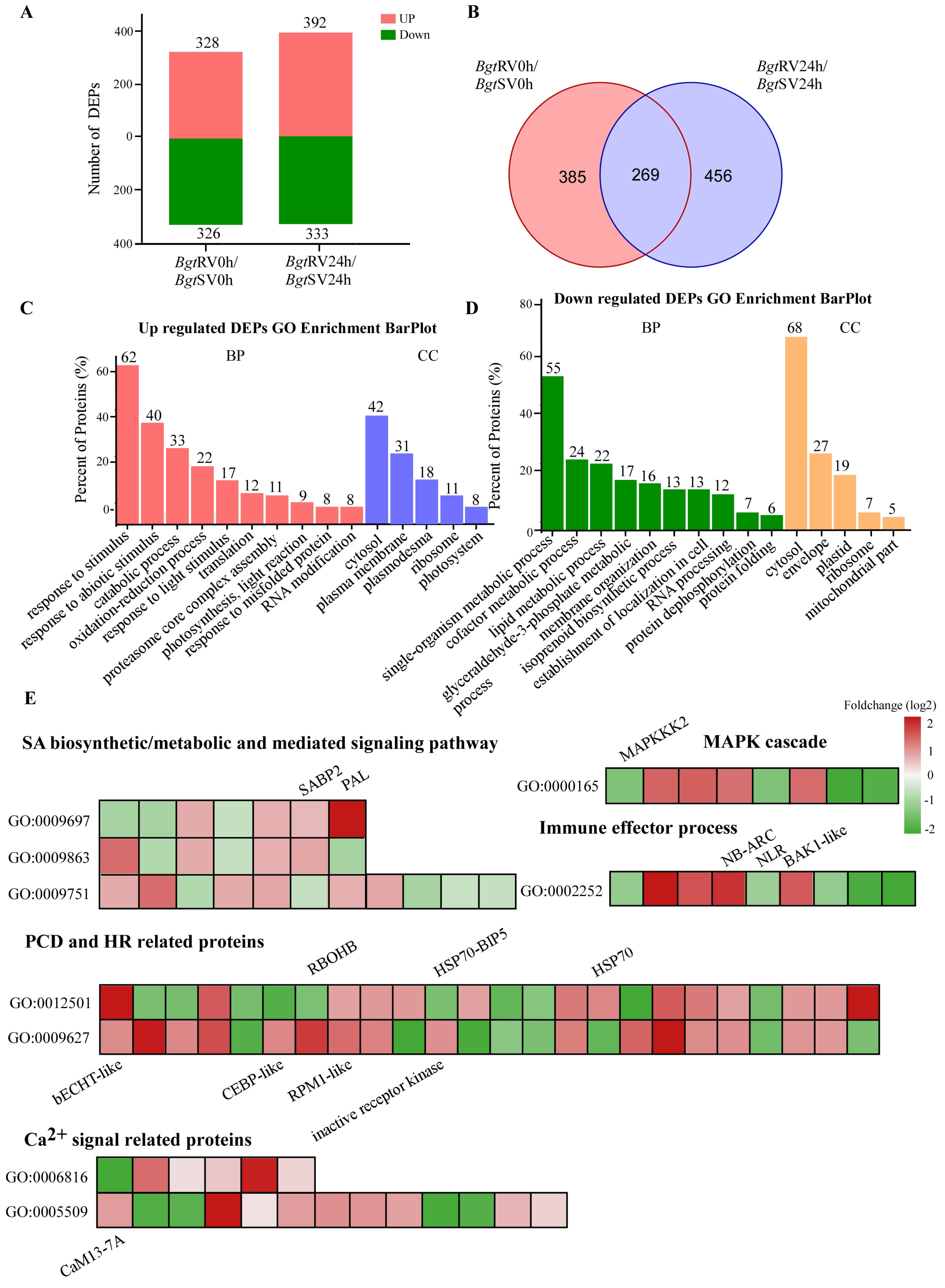
To better understand the molecular mechanism of resistance in BgtRV, we systematically investigated the proteome dynamics of Bgt-inoculated BgtRV wheat seedling leaves (Figure 3A). Compared with BgtSV, 456 unique DEPs were identified in BgtRV after Bgt was inoculated for 24 h (Figure 3B). To reveal the pathways regulated during Bgt inoculation of BgtRV wheat seedling leaves, GO enrichment analysis of 456 unique DEPs was performed. We found that ten biological process (BP) terms and five cellular component (CC) terms were highly enriched in the upregulated and downregulated DEPs, respectively (Figure 3C,D). The abundance of immune-related proteins within wheat seedling leaves significantly changed following Bgt inoculation. We investigated the expression patterns of proteins associated with disease resistance pathways in BgtRV wheat seedling leaves, including SA biosynthetic/metabolic and SA-mediated signaling pathways, the MAPK cascade, Ca2+ signal-related proteins, immune effector processes and PCD- and HR-related proteins. The abundances of salicylic acid-binding protein2-like (SABP2), phenylalanine ammonia-lyase (PAL), Calmodulin3-7A (Cam3-7A), NB-ARC domain-containing protein (NB-ARC), LRR receptor kinase BAK1-like (BAK1-like), basic endochitinase A-like (bECHT-like), chitin elicitor-binding protein-like (CEBP-like), disease resistance protein RPM1-like (RPM1-like) and heat shock cognate 70 kDa protein-like (HSP70) were significantly increased in BgtRV wheat seedling leaves, whereas the abundances of mitogen-activated protein kinase kinase kinase kinase 2 (MAPKKKK2), NLR family CARD domain-containing protein 3-like (NLR), respiratory burst oxidase homolog protein B-like (RBOHB) and heat shock 70 kDa protein BIP5-like (HSP70-BIP5) were significantly decreased in BgtRV wheat seedling leaves (Figure 3E and Supplementary Table S4).

3.4. Biosynthesis of Secondary Metabolite Proteins Forms an Interaction Network with Immune-Related Proteins

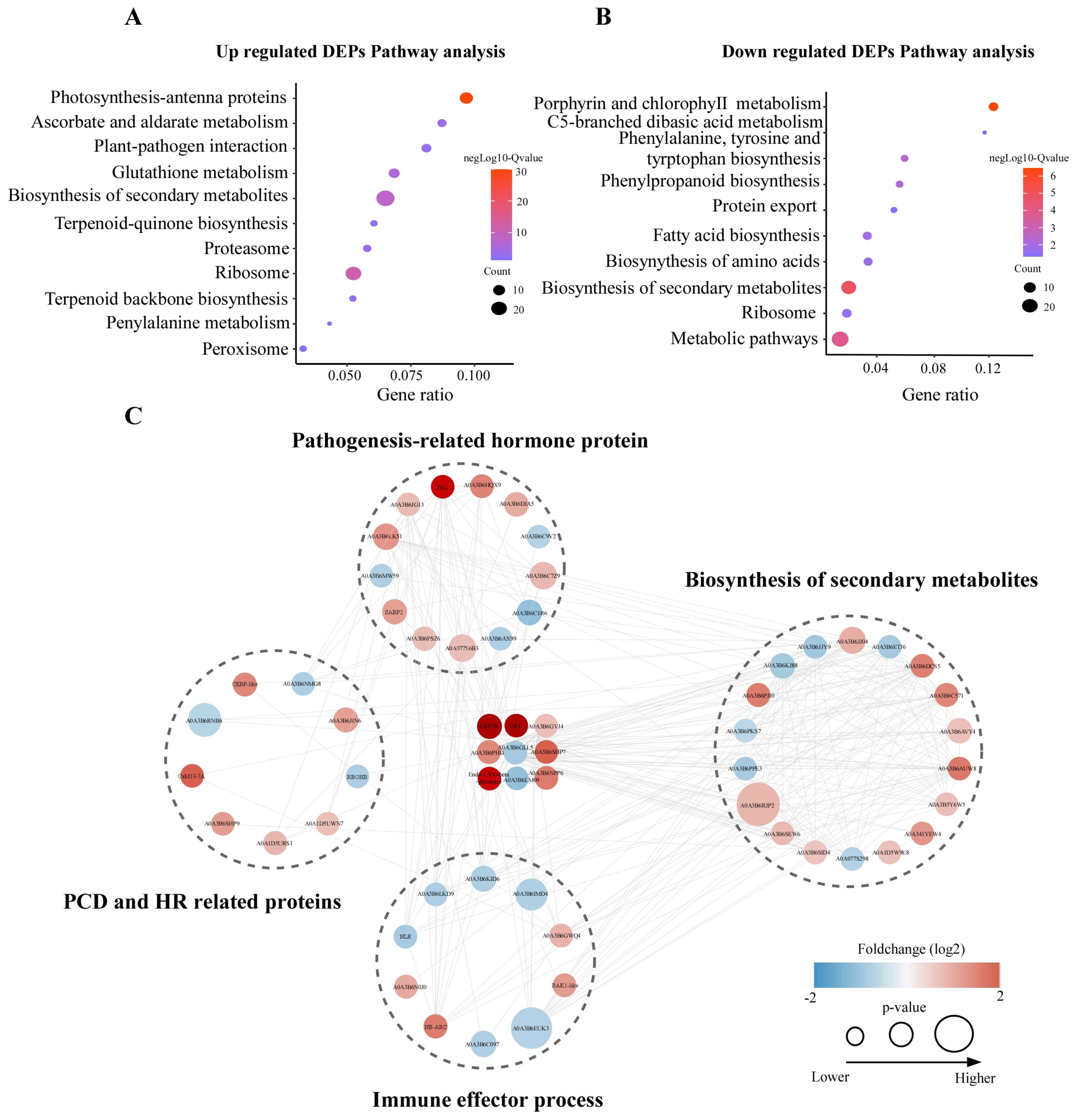
KEGG analysis revealed that the upregulated DEPs were putatively involved in plant–pathogen interactions, glutathione metabolism, and the biosynthesis of secondary metabolites (Figure 4A), whereas the downregulated DEPs were putatively involved in metabolic pathways, porphyrin metabolism, chlorophyll metabolism and C5-branched dibasic acid metabolism pathways (Figure 4B). To model the dynamics of the immune-related proteins upon Bgt inoculation, we constructed a protein–protein interaction (PPI) network to identify functional modules. We identified five modules among the proteins that were highly interconnected, including pathogenesis-related hormone proteins, PCD- and HR-related proteins, immune effector processes and the biosynthesis of secondary metabolites (Figure 4C). Therefore, we propose that some proteins involved in the biosynthesis of secondary metabolites form complex interaction networks with classic immune-related proteins to participate in wheat resistance to powdery mildew infection.

3.5. Gene Expression Analysis of Selected DEP Genes in Interaction Network via qRT–PCR

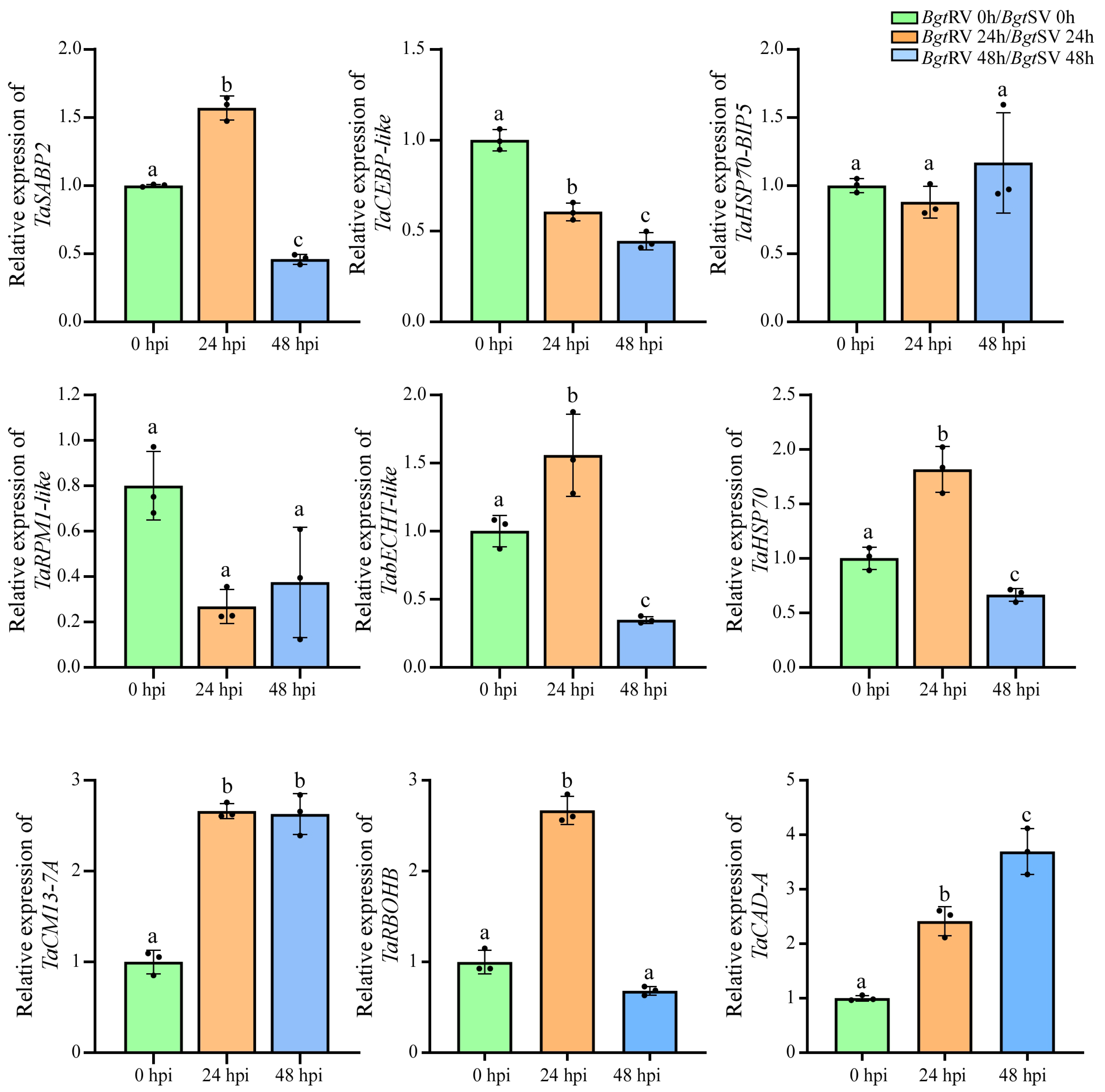
To investigate the roles of the proteins involved in the biosynthesis of secondary metabolites and classic immune-related proteins in wheat resistance to Bgt, reverse transcription quantitative PCR (RT–qPCR) was performed to verify whether the gene transcript levels were consistent with the proteomic profiles obtained upon Bgt infection. We selected 20 genes encoding DEPs in the PPI networks induced by Bgt. Transcript levels of 15 genes were successfully quantified, with 9 showing correlation with corresponding protein levels from proteomic data at at least one time point. Furthermore, we found that the expression of TaCAD-A1 (XM_044546804.1), which encodes cinnamyl alcohol dehydrogenase, was consistent at the mRNA and protein levels with the highest fold change in the resistant wheat (Figure 5). Thus, TaCAD-A1 was selected for further study.

3.6. Silencing of TaCAD-A1 Attenuates Wheat Resistance to Bgt

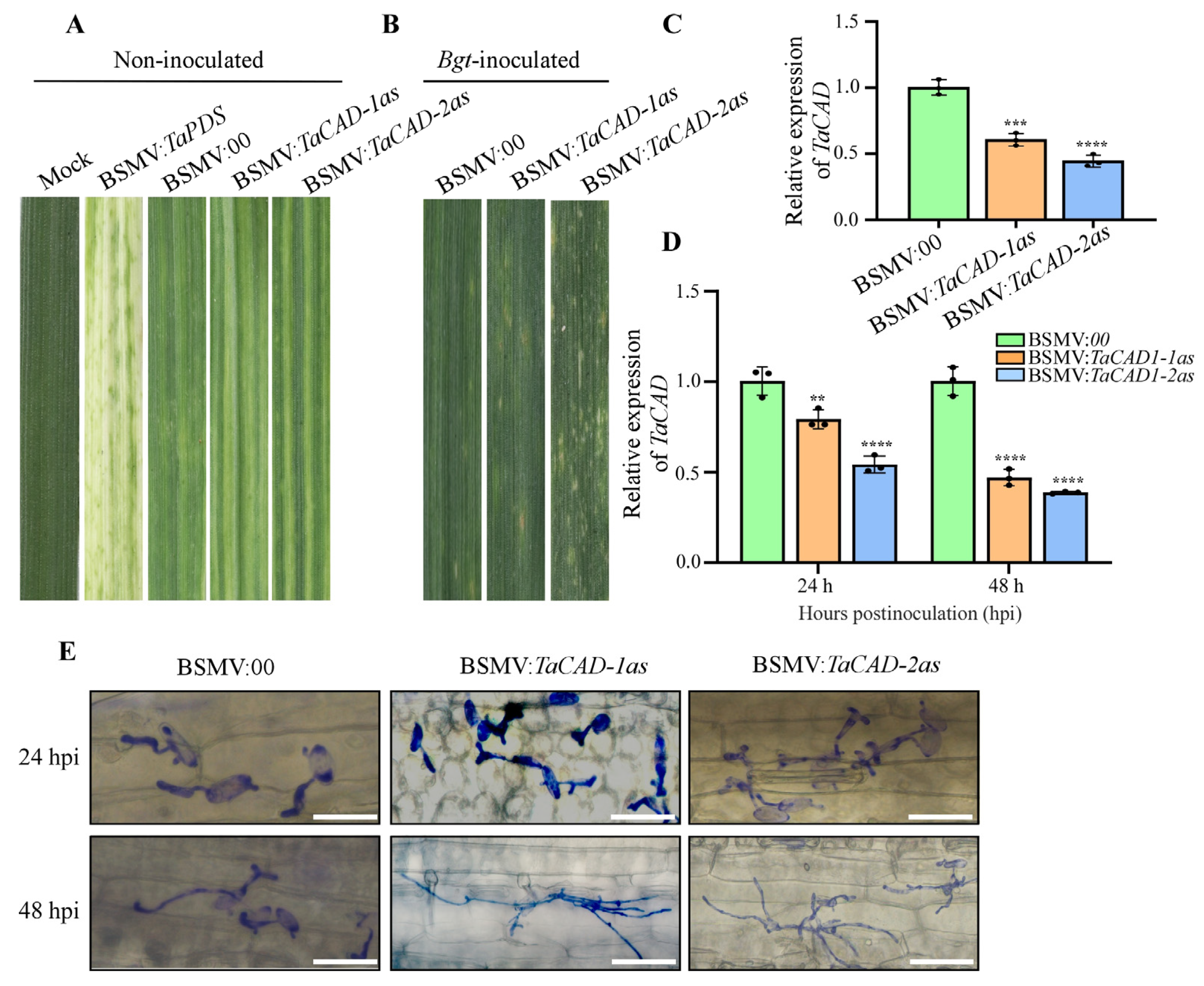
To investigate the roles of TaCAD-A1 in the wheat–Bgt interaction, we used the barley stripe mosaic virus (BSMV)-mediated virus-induced gene silencing (VIGS) system to silence TaCAD-A1 in wheat seedling leaves. BSMV:00 (negative control), BSMV:TaPDS (positive control), BSMV:TaCAD-A1 were separately inoculated onto wheat seedling leaves. At 10 days post-vector inoculation, the leaves of the inoculated wheat plants presented typical BSMV infection symptoms on newly emerged leaves, and the BSMV:TaPDS plants presented a bleaching phenotype (Figure 6A). The Bgt resistance of the plants inoculated with BSMV:TaCAD-A1 was considerably lower than that of the plants inoculated with BSMV:00 at 10 days post-inoculation (Figure 6B).qRT–PCR analyses revealed that compared with that in the BSMV:00-infected plants, the BSMV:TaCAD-A1 transcript level was 60% lower (Figure 6C). These data indicated that TaCAD-A1 was successfully silenced. These plants were further inoculated with Bgt to evaluate the role of TaCAD-A1 in defense. A comparison of the transcript levels between the BSMV:TaCAD-A1 plants and the control plants revealed that the BSMV:TaCAD-A1 transcripts were reduced by 50% (Figure 6D), and microscopic observation revealed that Bgt progressed much faster in the TaCAD-A1-silenced plants than in the control plants at 24 and 48 h post-inoculation with Bgt (Figure 6E). These results indicated that the reduced resistance of Yannong37 plants to Bgt may be due to the silencing of TaCAD-A1. In conclusion, TaCAD-A1 may participate in wheat defense responses against Bgt.

3.7. TaCAD-A1 Positively Regulates Defense- and Monolignol Biosynthesis-Related Genes

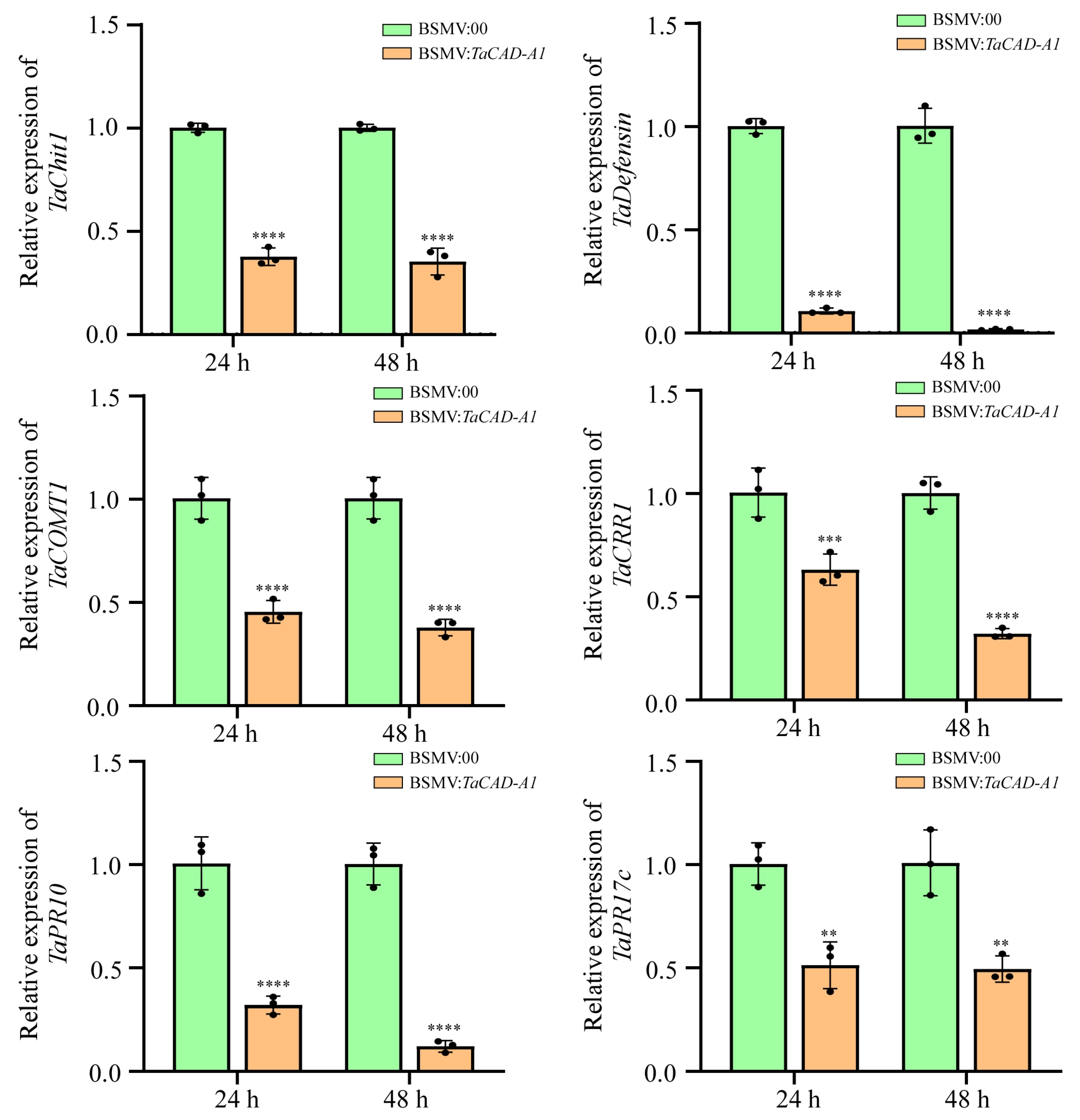
Defense genes play a crucial role in regulating plant resistance against pathogenic infections. Notably, genes associated with monolignol biosynthesis, including CAD, CRR and COMT, have also been implicated in regulating pathogen resistance. To investigate whether TaCAD-A1 modulates the expression of defense genes and monolignol biosynthesis-related genes during wheat’s resistance response to Bgt infection, we analyzed the transcriptional dynamics of a set of target genes in TaCAD-A1-silenced wheat plants and their corresponding control plants. The target genes included four defense-related genes (Defensin, PR10, PR17c, and chitinase1) and two monolignol biosynthesis-related genes (TaCCR and TaCOMT1). Following inoculation with Bgt for 24 hpi and 48 hpi, the transcriptional levels of these genes were significantly decreased in TaCAD-A1-silenced wheat plants which exhibited reduced resistance to Bgt compared to the control plants (infected with BSMV:00).The results suggested that TaCAD-A1 positively contribute to the expression of defense genes and monolignol biosynthesis-related genes in wheat.

4. Discussion

4.1. The Abundance of Proteins Enriched in the Cell Wall and Plasmodesmata Was Greater in Resistant Wheat Cultivars

In our study, a total of 7112 proteins were identified in Yannong37 and Yannong1766 during Bgt infection at 24 h post-inoculation. Compared with that in the susceptible variety Yannong1766, the protein abundance in the resistant variety significantly increased at 24 h post-inoculation (hpi) (Figure 1E). The cell wall and plasmodesmata are essential for the response to pathogenic invasion [28]. The plant cell wall serves as the primary barrier against pathogen invasion. To reinforce cell walls against fungal pathogens, plants synthesize callose, which interacts with cellulose-forming papillae [29,30]. Callose restricts the spread of microbial infections by impeding the intercellular transport of proteins and effectors via symplastic pathways formed by plasmodesmata [31]. When plants initiate a defensive response, they regulate the levels of callose and the activities of enzymes associated with plasmodesmata. This leads to the synthesis or degradation of callose depending on the type of stress they are experiencing, which in turn adjusts the permeability of plasmodesmata [32]. Feng et al. reported that a viral protein activates the MAPK pathway to promote viral infection by downregulating callose deposition in plants [33]. A recent study revealed that rice stripe virus (RSV) can disrupt the S-acylation of remorin proteins and trigger their autophagic degradation, leading to reduced callose deposition and enhanced viral infection [34]. These findings suggest that pathogens may counteract plant defense responses by affecting callose deposition at plasmodesmata. In our study, compared with those in the susceptible variety, proteins enriched in plasmodesmata and cell wall-related processes showed greater abundance in the resistant variety (Figure 2H). These observations suggest a possible association between powdery mildew resistance and cell wall-related defense responses. However, direct experimental validation, including callose staining and lignin quantification, will be necessary to further verify these potential mechanisms. Despite these findings, several limitations should be considered. In this study, only two time points (0 and 24 hpi) were included in the proteomic analysis, which may not fully capture the dynamic nature of plant defense responses. Future studies incorporating additional time points would help to better resolve the temporal dynamics of wheat responses to Bgt infection.

4.2. Proteins Related to the Biosynthesis of Secondary Metabolites Are Involved in Bgt Infection

Plants utilize two primary inducible defense mechanisms to defend against pathogen invasion: pathogen-associated molecular pattern (PAMP)- and host damage-associated molecular pattern (DAMP)-triggered immunity (PTI) and nucleotide-binding domains and leucine-rich repeat-containing protein (NLR, also known as NB-LRRs) effector-triggered immunity (ETI) [35]. To date, more than 110 Pm resistance genes have been cataloged in wheat, yet only 21 resistance (R) genes effective against wheat powdery mildew (Pm genes) have been genetically defined, 13 of which encode NLR receptors with N-terminal coiled-coil (CC) domains [36]. NLRs can either directly detect effectors or serve as helpers to initiate signal transduction [37]. Pathogen perception triggers changes downstream of PRRs and NLRs, including mitogen-activated protein kinase (MAPK) activation, the production of reactive oxygen species (ROS), the hypersensitive response (HR), cell death, callose deposition, lignification and salicylic acid (SA) levels [38,39,40]. In our study, proteins enriched in immune effector processes, PCD- and HR-related processes, the MAPK cascade, and SA biosynthetic/metabolic and SA-mediated signaling pathways showed significant abundance changes in both resistant and susceptible varieties following Bgt infection (Figure 3E). These proteins may be associated with wheat responses to powdery mildew infection and could potentially function through interconnected regulatory networks (Figure 4C).
Independent of NLR-mediated plant immunity, plant secondary metabolites are adaptations of plants to the environment resulting from long-term interactions between plants and biotic and abiotic factors during the process of evolution. In our study, the results of Kyoto Encyclopedia of Genes and Genomes (KEGG) enrichment analysis revealed that differentially abundant proteins were enriched in the biosynthesis of secondary metabolites (Figure 4A,B), including phytoalexins, lignin, and callose, which are known to be associated with plant defense against pathogen infection [41]. These findings suggest that secondary metabolism-related proteins may be involved in wheat responses to Bgt infection. Lignification has the potential to act in several ways in plant against pathogen infection. OsCPS4, which is involved in the biosynthesis of phytoalexins and oryzalexin S, improved rice blast resistance [42]. Li et al. reported that OsCyp71Z2 finely regulates phytoalexin biosynthesis in rice and that OsCyp71Z2 over-expression in wild-type rice confers resistance to M. oryzae [43]. However, these interactions were predicted based on bioinformatic models and therefore should be interpreted with caution. Further experimental validation of key interactions will be necessary to confirm the proposed regulatory relationships.

4.3. Protein TaCAD-A1 Enhances Wheat Resistance to Bgt by Reprogramming Defense Genes

In response to fungal infections, plants undergo important processes such as cell wall reinforcement and lignification. Lignin, which is a major component of secondary cell walls, is essential for host defense against pathogens [44]. The synthesis of lignin is a detailed process that requires more than 11 enzymes with three main branches. Cinnamyl alcohol dehydrogenase (CAD) catalyzes the final reduction of cinnamaldehydes to their corresponding alcohols [45]. Previous studies have shown that CAD family genes may contribute to plant defense mechanisms against biotic stresses via the biosynthesis of lignin and/or lignans. Comprehensive transcriptomic analyses revealed TaCAD genes contribute to non-redundant functions during wheat growth and development and provide tolerance to diverse abiotic and biotic stresses [46]. Rong et al. reported that TaCAD12 positively contributes to resistance against sharp eyespot through the regulation of the expression of certain defense genes and monolignol biosynthesis-related genes in wheat [47]. A study on the major genes involved in lignin biosynthesis in Arabidopsis thaliana revealed that CAD-C and CAD-D are key components in the defense against both virulent and avirulent strains of the bacterial pathogen Pseudomonas syringae pv. tomato, possibly through the salicylic acid defense pathway [48]. A study on soybean mosaic virus (SMV) revealed that GsCAD1 enhances resistance to SMV in soybeans, most likely by affecting the contents of lignin and SA [49]. These findings indicate that CAD can participate in plant defense against fungal, bacterial, and viral infections by catalyzing the synthesis of monolignols or regulating the synthesis of salicylic acid (SA). In our study, BSMV-VIGS demonstrated that TaCAD-A1 is critical for the gain of function of powdery mildew disease resistance (Figure 6E,F). Although TaCAD-A1 was functionally analyzed, its precise role in wheat defense remains unclear. In plants, defense genes play important roles in resistance to pathogens. The transcriptional levels of four wheat defense marker genes were exhibited in TaCAD-A1-silencing wheat plants (Figure 7). These data suggested that TaCAD-A1 modulates defense-related genes leading to increased wheat resistance response to Bgt. Further studies are needed to determine whether it directly participates in lignin biosynthesis, defense signaling pathways, or broader regulatory networks.

5. Conclusions

In conclusion, TMT-based proteomic analysis revealed substantial changes in protein abundance in the resistant wheat cultivar Yannong37 and the susceptible cultivar Yannong1766 following Bgt infection. Compared with the susceptible cultivar, resistant wheat showed increased abundance of proteins associated with the cell wall and plasmodesmata after powdery mildew infection. In addition, the abundance of several classical disease resistance-related proteins and secondary metabolism-related proteins differed significantly in resistant wheat following Bgt infection, and these proteins may participate in complex interaction networks. Furthermore, lignin biosynthesis-related proteins accumulated in resistant wheat after Bgt infection, suggesting a potential role in resistance to the pathogen.

Supplementary Materials

The following supporting information can be downloaded at https://www.mdpi.com/article/10.3390/life16060872/s1, Table S1: Overview of Bgt-infected wheat protein abundance in Yannong37 and Yannong1766; Table S2: Yannong37 and Yannong1766 common differentially abundant proteins in various organelles post-Bgt infection; Table S3: Yannong37 specific differentially abundant proteins post-Bgt infection; Table S4: Yannong37 differentially abundant proteins associated with the classical disease resistance pathway; Table S5: Gene-specific primers.

Author Contributions

N.S.: Data curation, Visualization, Formal analysis, Methodology, Writing—original draft. W.L.: Investigation, Validation. W.X.: Supervision, Writing—review and editing. L.L.: Supervision, Writing—review and editing. T.Y.: Conceptualization, Supervision. L.C.: Data curation, Visualization, Formal analysis, Methodology, Writing—original draft. All authors have read and agreed to the published version of the manuscript.

Funding

We acknowledge funding from National Key R&D Program of China (2024YFD1400400) and National Modern Wheat Industry Technology System, Yantai Comprehensive Experimental Station project (CARS-03-62), Yantai Academy of Agricultural Sciences, Yantai 265500, Shandong, China, as well as the Research and Application of Rapid and Accurate Breeding Technology System for Wheat (2023CXPT016).

Institutional Review Board Statement

Not applicable.

Informed Consent Statement

Not applicable.

Data Availability Statement

The original contributions presented in this study are available on request from the authors. Further inquiries can be directed to the corresponding authors.

Acknowledgments

We thank Xiao Li for the assistance provided in the phenotypic investigation in this work.

Conflicts of Interest

The authors declare that the research was conducted in the absence of any commercial or financial relationships that could be construed as a potential conflict of interest.

Abbreviations

The following abbreviations are used in this manuscript:
BgtBlumeria graminis f. sp. tritici
BgtRVBgt-resistant variety
BgtSVBgt-susceptible variety
PGTprimary germ tube
AGTappressorial germ tube
APPhooked apical appressorium
SHsecondary hyphae
DEPsdifferential expressed proteins
KEGG Kyoto Encyclopedia of Genes and Genomes
GOGene Ontology
BPbiological process
CCcellular component
PPIprotein–protein interaction
BSMV-VIGSBarley stripe mosaic virus-induced gene silencing

References

  1. Cao, X.R.; Yao, D.M.; Duan, X.Y.; Liu, W.; Fan, J.R.; Ding, K.J.; Zhou, Y.L. Effects of powdery mildew on 1000-kernel weight, crude protein content and yield of winter wheat in three consecutive growing seasons. J. Integr. Agric. 2014, 13, 1530–1537. [Google Scholar] [CrossRef]
  2. Wang, Z.L.; Li, L.H.; He, Z.H.; Duan, X.Y.; Zhou, Y.L.; Chen, X.M.; Lillemo, M.; Singh, R.P.; Wang, H.; Xia, X.C. Seedling and adult plant resistance to powdery mildew in Chinese bread wheat cultivars and lines. Plant Dis. 2005, 89, 457–463. [Google Scholar] [CrossRef] [PubMed]
  3. Huang, X.Q.; Röder, M.S. Molecular mapping of powdery mildew resistance genes in wheat: A review. Euphytica 2004, 137, 203–223. [Google Scholar] [CrossRef]
  4. Duveiller, E.; Singh, R.P.; Nicol, J.M. The challenges of maintaining wheat productivity: Pests, diseases, and potential epidemics. Euphytica 2007, 157, 417–430. [Google Scholar] [CrossRef]
  5. Chen, X.M. Epidemiology and control of stripe rust [Puccinia striiformis f. sp. tritici] on wheat. Can. J. Plant Pathol. 2005, 27, 314–337. [Google Scholar] [CrossRef]
  6. Nelson, R.; Wiesner-Hanks, T.; Wisser, R.; Balint-Kurti, P. Navigating complexity to breed disease-resistant crops. Nat. Rev. Genet. 2018, 19, 21–33. [Google Scholar] [CrossRef]
  7. Chowdhury, J.; Schober, M.S.; Shirley, N.J.; Singh, R.R.; Jacobs, A.K.; Douchkov, D.; Schweizer, P.; Fincher, G.B.; Burton, R.A.; Little, A. Down-regulation of the glucan synthase-like 6 gene (HvGsl6) in barley leads to decreased callose accumulation and increased cell wall penetration by Blumeria graminis f. sp. hordei. New Phytol. 2016, 212, 434–443. [Google Scholar] [CrossRef]
  8. Douchkov, D.; Lueck, S.; Hensel, G.; Kumlehn, J.; Rajaraman, J.; Johrde, A.; Doblin, M.S.; Beahan, C.T.; Kopischke, M.; Fuchs, R. The barley (Hordeum vulgare L.) cellulose synthase-like D2 gene (HvCslD2) mediates penetration resistance to host-adapted and nonhost isolates of the powdery mildew fungus. New Phytol. 2016, 212, 421–433. [Google Scholar] [CrossRef]
  9. Adachi, H.; Derevnina, L.; Kamoun, S. NLR singletons, pairs, and networks: Evolution, assembly, and regulation of the intracellular immunoreceptor circuitry of plants. Curr. Opin. Plant Biol. 2019, 50, 121–131. [Google Scholar] [CrossRef]
  10. Toruño, T.Y.; Stergiopoulos, I.; Coaker, G. Plant-pathogen effectors: Cellular probes interfering with plant defenses in spatial and temporal manners. Annu. Rev. Phytopathol. 2016, 54, 419–441. [Google Scholar] [CrossRef]
  11. Cui, H.T.; Tsuda, K.; Parker, J.E. Effector-triggered immunity: From pathogen perception to robust defense. Annu. Rev. Phytopathol. 2015, 66, 487–511. [Google Scholar] [CrossRef]
  12. Sánchez-Martín, J.; Steuernagel, B.; Ghosh, S.; Herren, G.; Hurni, S.; Adamski, N.; Vrána, J.; Kubaláková, M.; Krattinger, S.G.; Wicker, T.; et al. Rapid gene isolation in barley and wheat by mutant chromosome sequencing. Genome Biol. 2016, 17, 221. [Google Scholar] [CrossRef]
  13. Yahiaoui, N.; Srichumpa, P.; Dudler, R.; Keller, B. Genome analysis at different ploidy levels allows cloning of the powdery mildew resistance gene from hexaploid wheat. Plant J. 2004, 37, 528–538. [Google Scholar] [CrossRef] [PubMed]
  14. Singh, S.P.; Hurni, S.; Ruinelli, M.; Brunner, S.; Sanchez-Martin, J.; Krukowski, P.; Peditto, D.; Buchmann, G.; Zbinden, H.; Keller, B. Evolutionary divergence of the rye Pm17 and Pm8 resistance genes reveals ancient diversity. Plant Mol. Biol. 2018, 98, 249–260. [Google Scholar] [CrossRef]
  15. Xing, L.P.; Hu, P.; Liu, J.Q.; Witek, K.; Zhou, S.; Xu, J.F.; Zhou, W.H.; Gao, L.; Huang, Z.P. Pm21 from Haynaldia villosa encodes a CC-NBS-LRR protein conferring powdery mildew resistance in wheat. Mol. Plant 2018, 11, 874–878. [Google Scholar] [CrossRef]
  16. He, H.G.; Zhu, S.Y.; Zhao, R.H.; Jiang, Z.N.; Ji, Y.Y.; Ji, J.; Qiu, D.; Li, H.J.; Bie, T.D. Pm21, encoding a typical CC-NBS-LRR protein, confers broad-spectrum resistance to wheat powdery mildew disease. Mol. Plant 2018, 11, 879–882. [Google Scholar] [CrossRef]
  17. Li, M.M.; Zhang, H.Z.; Xiao, H.X.; Zhu, K.Y.; Shi, W.Q.; Zhang, D.; Wang, Y.; Yang, L.J.; Wu, Q.H.; Xie, J.Z. A membrane associated tandem kinase from wild emmer wheat confers broad-spectrum resistance to powdery mildew. Nat. Commun. 2024, 15, 3124. [Google Scholar] [CrossRef] [PubMed]
  18. Wang, Q.; Guo, J.; Jin, P.; Guo, M.; Guo, J.; Cheng, P.; Li, Q.; Wang, B. Glutathione S-transferase interactions enhance wheat resistance to powdery mildew but not wheat stripe rust. Plant Physiol. 2022, 190, 1418–1439. [Google Scholar] [CrossRef]
  19. Liu, Y.; You, H.; Li, H.; Zhang, C.; Guo, H.; Huang, X.; Zhang, Q.; Zhang, X.; Ma, C.; Wang, Y. TaNAC1 boosts powdery mildew resistance by phosphorylation-dependent regulation of TaSec1a and TaCAMTA4 via PP2Ac/CDPK20. New Phytol. 2024, 244, 635–653. [Google Scholar] [CrossRef]
  20. Lei, Y.; Wang, M.N.; Wan, A.M.; Xia, C.J.; See, D.R.; Zhang, M.; Chen, X.M. Virulence and molecular characterization of experimental isolates of the stripe rust pathogen (Puccinia striiformis) indicate somatic recombination. Phytopathology 2017, 107, 329–344. [Google Scholar] [CrossRef] [PubMed]
  21. He, L.; Jin, P.; Chen, X.; Zhang, T.Y.; Zhong, K.L.; Liu, P.; Chen, J.P.; Yang, J. Comparative proteomic analysis of Nicotiana benthamiana plants under Chinese wheat mosaic virus infection. BMC Plant Biol. 2021, 21, 51. [Google Scholar] [CrossRef]
  22. Yu, J.; Gonzalez, J.M.; Dong, Z.; Shan, Q.; Tan, B.; Koh, J.; Zhang, T.; Zhu, N.; Dufresne, C.; Martin, G.B.; et al. Integrative proteomic and phosphoproteomic analyses of pattern- and effector-triggered immunity in tomato. Front. Plant Sci. 2021, 12, 768693. [Google Scholar] [CrossRef]
  23. Jia, X.; Qin, H.; Bose, S.K.; Liu, T.; He, J.; Xie, S.; Ye, M.; Yin, H. Proteomics analysis reveals the defense priming effect of chitosan oligosaccharides in Arabidopsis-Pst DC3000 interaction. Plant Physiol.Biochem. 2020, 149, 301–312. [Google Scholar] [CrossRef] [PubMed]
  24. Li, J.; Yang, X.W.; Liu, X.H.; Yu, H.B.; Du, C.Y.; Li, M.D.; He, D.X. Proteomic analysis of the compatible interaction of wheat and powdery mildew (Blumeria graminis f. sp. tritici). Plant Physiol. Biochem. 2017, 111, 234–243. [Google Scholar] [CrossRef]
  25. Wang, B.; Xie, C.J.; Xin, M.M.; Song, N.; Ni, Z.F.; Sun, Q.X. Comparative proteomic analysis of wheat response to powdery mildew infection in wheat pm30 near-isogenic lines. J. Phytopathol. 2012, 160, 229–236. [Google Scholar] [CrossRef]
  26. Liang, Y.P.; Xia, Y.; Chang, X.L.; Gong, G.S.; Yang, J.Z.; Hu, Y.T.; Cahill, M.; Luo, L.Y.; Li, T.; He, L.; et al. Comparative proteomic analysis of wheat carrying pm40 response to Blumeria graminis f. sp. tritici using two-dimensional electrophoresis. Int. J. Mol. Sci. 2019, 20, 933. [Google Scholar] [CrossRef] [PubMed]
  27. Qiao, F.; Yang, X.; Xu, F.; Huang, Y.; Zhang, J.; Song, M.; Zhou, S.; Zhang, M.; He, D. TMT-based quantitative proteomic analysis reveals defense mechanism of wheat against the crown rot pathogen Fusarium pseudograminearum. BMC Plant Biol. 2021, 21, 82. [Google Scholar] [CrossRef]
  28. German, L.; Yeshvekar, R.; Benitez-Alfonso, Y. Callose metabolism and the regulation of cell walls and plasmodesmata during plant mutualistic and pathogenic interactions. Plant Cell Environ. 2023, 46, 391–404. [Google Scholar] [CrossRef]
  29. Houston, K.; Tucker, M.R.; Chowdhury, J.; Shirley, N.; Little, A. The plant cell wall: A complex and dynamic structure as revealed by the responses of genes under stress conditions. Front. Plant Sci. 2016, 7, 984. [Google Scholar] [CrossRef]
  30. Wang, Y.; Li, X.; Fan, B.; Zhu, C.; Chen, Z. Regulation and function of defense-related callose deposition in plants. Int. J. Mol. Sci. 2021, 22, 2393. [Google Scholar] [CrossRef]
  31. Hansen, L.L.; Nielsen, M.E. Plant exosomes: Using an unconventional exit to prevent pathogen entry. J. Exp. Bot. 2018, 69, 59–68. [Google Scholar] [CrossRef]
  32. Li, Z.P.; Variz, H.; Chen, Y.N.; Liu, S.L.; Aung, K. Plasmodesmata-dependent intercellular movement of bacterial effectors. Front. Plant Sci. 2021, 12, 640277. [Google Scholar] [CrossRef]
  33. Feng, L.X.; Luo, X.W.; Huang, L.P.; Zhang, Y.; Li, F.F.; Li, S.J.; Zhang, Z.H.; Yang, X.; Wang, X.; Ouyang, X. A viral protein activates the MAPK pathway to promote viral infection by downregulating callose deposition in plants. Nat. Commun. 2024, 15, 10548. [Google Scholar] [CrossRef] [PubMed]
  34. Fu, S.; Xu, Y.; Li, C.Y.; Li, Y.; Wu, J.X.; Zhou, X.P. Interferes with S-acylation of remorin and induces its autophagic degradation to facilitate virus infection. Mol. Plant 2018, 11, 269–287. [Google Scholar] [CrossRef]
  35. Gough, C.; Sadanandom, A. Understanding and exploiting post-translational modifications for plant disease resistance. Biomolecules 2021, 11, 1122. [Google Scholar] [CrossRef] [PubMed]
  36. Guo, G.; Bai, K.; Hou, Y.; Gong, Z.; Zhang, H.; Wu, Q. The wheat NLR pair RXL/Pm5e confers resistance to powdery mildew. Plant Biol. J. 2025, 23, 1260–1276. [Google Scholar] [CrossRef]
  37. Baggs, E.L.; Monroe, J.G. Convergent loss of an eds1/pad4 signaling pathway in several plant lineages reveals coevolved components of plant immunity and drought response. Plant Cell. 2020, 32, 2158–2177. [Google Scholar] [CrossRef]
  38. Luna, E.; Pastor, V.; Robert, J.; Flors, V.; Mauch-Mani, B.; Ton, J. Callose deposition: A multifaceted plant defense response. Mol. Plant Microbe Interact. 2011, 24, 183–193. [Google Scholar] [CrossRef]
  39. Torres, M.A. ROS in biotic interactions. Physiol. Plant. 2010, 138, 414–429. [Google Scholar] [CrossRef]
  40. Torres, M.A.; Jones, J.D.; Dangl, J.L. Reactive oxygen species signaling in response to pathogens. Plant Physiol. 2006, 141, 373–378. [Google Scholar] [CrossRef]
  41. Bennett, R.N.; Wallsgrove, R.M. Secondary metabolites in plant defence mechanisms. New Phytol. 1994, 127, 617–633. [Google Scholar] [CrossRef]
  42. Toyomasu, T.; Usui, M.; Sugawara, C.; Otomo, K.; Hirose, Y.; Miyao, A.; Hirochika, H.; Okada, K.; Shimizu, T.; Koga, J. Reverse-genetic approach to verify physiological roles of rice phytoalexins: Characterization of a knockdown mutant of phytoalexin biosynthetic gene in rice. Physiol. Plant. 2014, 150, 55–62. [Google Scholar] [CrossRef]
  43. Li, W.; Shao, M.; Yang, J.; Zhong, W.; Okada, K.; Yamane, H.; Qian, G.; Liu, F. Oscyp71Z2 involves diterpenoid phytoalexin biosynthesis that contributes to bacterial blight resistance in rice. Plant Sci. 2013, 207, 98–107. [Google Scholar] [CrossRef]
  44. Martone, P.T.; Estevez, J.M.; Lu, F.C.; Ruel, K.; Denny, M.W.; Somerville, C.; Ralph, J. Discovery of lignin in seaweed reveals convergent evolution of cell-wall architecture. Curr. Biol. 2009, 19, 169–175. [Google Scholar] [CrossRef]
  45. Anderson, N.A.; Tobimatsu, Y.; Ciesielski, P.N.; Ximenes, E.; Ralph, J.; Donohoe, B.S.; Ladisch, M.; Chapple, C. Manipulation of guaiacyl and syringyl monomer biosynthesis in an Arabidopsis cinnamyl alcohol dehydrogenase mutant results in atypical lignin biosynthesis and modified cell wall structure. Plant Cell. 2015, 27, 2195–2209. [Google Scholar] [CrossRef]
  46. Peracchi, L.M.; Brew-Appiah, R.A.T.; Garland-Campbell, K.; Roalson, E.H.; Sanguinet, K.A. Genome-wide characterization and expression analysis of the CINNAMYL ALCOHOL DEHYDROGENASE gene family in Triticum aestivum. BMC Genom. 2024, 29, 816. [Google Scholar] [CrossRef]
  47. Rong, W.; Luo, M.; Shan, T.; Wei, X.; Du, L.; Xu, H.; Zhang, Z. A wheat cinnamyl alcohol dehydrogenase TaCAD12 contributes to host resistance to the sharp eyespot disease. Front. Plant Sci. 2016, 7, 1723. [Google Scholar] [CrossRef]
  48. Tronchet, M.; Balagué, C.; Kroj, T.; Jouanin, L.; Roby, D. Cinnamyl alcohol dehydrogenases-C and D, key enzymes in lignin biosynthesis, play an essential role in disease resistance in Arabidopsis. Mol. Plant Pathol. 2010, 11, 83–92. [Google Scholar] [CrossRef] [PubMed]
  49. Xun, H.W.; Qian, X.Y.; Wang, M.; Yu, J.X.; Zhang, X.; Pang, J.S.; Wang, S.C.; Jiang, L.L.; Dong, Y.S.; Liu, B. Overexpression of a cinnamyl alcohol dehydrogenase-coding gene from wild soybean enhances resistance to soybean mosaic virus. Int. J. Mol. Sci. 2022, 23, 15206. [Google Scholar] [CrossRef]
Figure 1. Largescale proteomics analyses of wheat cultivars Yannong37 and Yannong1766 inoculated with Bgt. (A) The wheat variety resistant to powdery mildew Yannong37 (BgtRV) and the wheat variety susceptible to powdery mildew Yannong1766 (BgtSV) infected with Bgt at 10 dpi. (B) The growth of Bgt in wheat leaves was observed via microscopy. Wheat leaves inoculated with Bgt were sampled at 24 hpi. Scale bars = 20 μm; PGT, primary germ tube; AGT, appressorial germ tube; APP, hooked apical appressorium; SH, secondary hyphae. (C) The experimental workflow for the proteomics analysis is shown. Red asterisks (★) and yellow circles (●) mark peptide peaks from the control and treatment groups, respectively. (D) Bar chart displaying the overlaps of DEPs during Bgt inoculating. (E) Hierarchical clustering analysis of DEPs in Yannong37 and Yannong1766 during the 24 hpi with Bgt inoculated. The increased or decreased proteins are marked in red or blue, respectively.
Life 16 00872 g001
Figure 2. Overview of DEPs in BgtRV 0 h/24 h and BgtSV 0 h/24 h. (A) Bar chart displaying number of DEPs in BgtRV 0 h/24 h and BgtSV 0 h/24 h; (B) Venn diagrams are utilized to illustrate the intersections between the BgtRV 0 h/24 h and BgtSV 0 h/24 h. (C) Hierarchical clustering analysis of DEPs. The two columns correspond to distinct treatments of BgtRV 0 h/24 h and BgtSV 0 h/24 h; (D) KEGG pathway enrichment analysis of BgtRV 0 h/24 h and BgtSV 0 h/24 h differentially upregulated proteins; (E) downregulated proteins; (F) GO enrichment analysis of BgtRV 0 h/24 h and BgtSV 0 h/24 h differentially upregulated proteins (G) downregulated proteins in the biological processes; (H) heatmap analysis of DEPs in BgtRV 0 h/24 h and BgtSV 0 h/24 h in different organelles. The squares colored by fold change. Red squares indicate upregulation and blue squares indicate downregulation.
Life 16 00872 g002
Figure 3. Overview of DEPs in BgtRV 24 h/BgtSV 24 h. (A) Bar chart displaying number of DEPs in BgtRV 0 h/BgtSV 0 h and BgtRV 24 h/BgtSV 24 h; (B) Venn diagrams are utilized to illustrate the intersections between the BgtRV 0 h/BgtSV 0 h and BgtRV 24 h/BgtSV 24 h; (C) GO enrichment analysis of BgtRV 24 h/BgtSV 24 h differentially upregulated proteins (D) downregulated proteins in the biological processes (BP) and cellular components (CC); (E) heatmap of GO enriched terms of classic immune-related processes.
Life 16 00872 g003
Figure 4. KEGG pathway and interaction network analyses of DEPs in BgtRV 24 h/BgtSV 24 h. (A) KEGG pathway enrichment analysis of BgtRV 24 h/BgtSV 24 h differentially upregulated proteins (B) downregulated proteins; (C) interaction networks for DEPs in BgtRV 24 h/BgtSV 24 h. The Q−value is a corrected p−value that ranges from 0 to 1, with lower values indicating greater significance. Circles depict the number of enriched genes, where larger circles signify a higher number of enriched genes.
Life 16 00872 g004
Figure 5. Quantification of twelve gene transcripts at different time points post-inoculation with Bgt in wheat. The bar graph shows the fold changes in mRNA expression levels. The green, yellow and blue columns are representatives of inoculation at 0 h, 24 h and 48 h, respectively. The mRNA expression levels were quantified by qRT-PCR normalized to actin. Data represent the mean ± SE from three independent replicates. Significant differences between groups were marked with different letters (a, b, c), and the same letter meant no significant difference (p < 0.05). Data are shown as mean ± SD.
Life 16 00872 g005
Figure 6. TaCAD-A1 function analysis by BSMV–VIGS system. (A) Phenotypes of wheat leaves inoculated with BSMV:TaPDS, FES buffer (mock), BSMV:00, and BSMV:TaCAD-A1 at 10 dpi. (B) Phenotypes of the wheat seedling leaves inoculated with Bgt at 10 dpi. Plants were pre-inoculated with BSMV:00 and BSMV:TaCAD-A1. (C) Relative expression of TaCAD-A1 in BSMV:00, BSMV:TaCAD-A1. (D) Relative transcript levels of TaCAD-A1 in silenced plants inoculated with Bgt at 0, 24 and 48 hpi. The mRNA expression levels were quantified by qRT-PCR normalized to actin. Data represent the mean ± SE from three independent replicates. Asterisks denote significant differences at corresponding time points as determined by Student’s t-test (** p < 0.01, *** p < 0.001,**** p < 0.0001). (E) The growth of Bgt in BSMV:00 and BSMV:TaCAD-A1 wheat leaves was observed via microscopy. Wheat leaves inoculated with Bgt were sampled at 24 hpi and 48 hpi. Scale bars = 50 μm.
Life 16 00872 g006
Figure 7. The transcriptional levels of defense and monolignol biosynthesis-related genes after Bgt inoculation at 24 h and 48 h. The bar graph shows the fold changes in mRNA expression levels. The green and yellow columns are representatives of inoculation at 24 h and 48 h, respectively. The mRNA expression levels were quantified by qRT-PCR normalized to actin. Data represent the mean ± SE from three independent replicates. Asterisks denote significant differences at corresponding time points as determined by Student’s t-test (** p < 0.01, *** p < 0.001, **** p < 0.0001).
Life 16 00872 g007
Disclaimer/Publisher’s Note: The statements, opinions and data contained in all publications are solely those of the individual author(s) and contributor(s) and not of MDPI and/or the editor(s). MDPI and/or the editor(s) disclaim responsibility for any injury to people or property resulting from any ideas, methods, instructions or products referred to in the content.