Article

Development of the Urogenital Microbiota in Healthy Beagle Puppies: A Longitudinal Comparison with the Dam


1
Department of Companion Animal Teaching and Clinical Practice, FARAH—Comparative Veterinary Medicine, Faculty of Veterinary Medicine, University of Liège, Avenue de Cureghem 1, 4000 Liège, Belgium
2
Department of Food Sciences, Faculty of Veterinary Medicine, University of Liège, 10 Avenue de Cureghem, 4000 Liège, Belgium
3
Labforvet, 18 Rue Tienne aux Grives, 5300 Andenne, Belgium
*
Author to whom correspondence should be addressed.
These authors contributed equally to this work.
Life 2026, 16(5), 841; https://doi.org/10.3390/life16050841 (registering DOI)
Submission received: 1 April 2026 / Revised: 7 May 2026 / Accepted: 14 May 2026 / Published: 19 May 2026
(This article belongs to the Special Issue Developmental Programming in Cats and Dogs)

Abstract

Characterizing the microbiota is essential to improve the understanding and management of urogenital disorders. Using 16S rDNA sequencing, this study investigated the urogenital microbiota, including urine, vaginal, and prostatic communities, in a litter of 10 healthy beagle puppies from 4 months of age until the completion of the first estrous cycle in females and 18 months in males. A further objective was to compare these microbial profiles with those of their dam. Significant differences were observed between urinary and genital microbiota in both sexes, evolving over time. Notably, in females, puberty and the first estrous cycle were associated with marked changes in the vaginal microbiota, outweighing individual variability. In contrast, urinary microbiota remained stable during female growth. In males, microbiota showed time-dependent and individual-specific progression, with distinct microbial communities identified in the urinary bladder and prostate. Shared genera between the dam and her offspring were observed, but inter-individual variability suggested a limited maternal influence. Further investigation is needed to clarify vertical transmission patterns. In conclusion, the urogenital microbiota of healthy dogs undergoes dynamic and distinct site-specific changes during early life.

1. Introduction

In recent years, interest in the microbiota has increased substantially. Before the advent of 16S rDNA gene sequencing, microbial communities were mainly investigated using culture-based techniques, which failed to detect a large proportion of resident microbiota [1]. More recently, the lack of standardized methodologies for microbiota research has prompted efforts to establish guidelines for critical steps such as sampling, storage, DNA extraction, and data analysis [2,3].
In humans, the resident microbiota of the bladder, prostate, and vagina have now been characterized under both physiological and pathological conditions. Alterations in the urogenital microbiota have been reported in women with urge urinary incontinence, interstitial cystitis, and bladder cancer, as well as in men affected by chronic prostatitis, benign prostatic hyperplasia, infertility, and bladder or prostate cancer [4,5]. It has been suggested that the establishment of the urinary microbiota during infancy may play a key role in the etiology and onset of urogenital diseases [6,7,8]. In newborns, microbial communities of the gut, skin, and oropharynx are influenced by maternal microbiota, mode of delivery, maternal diet, environmental exposure, and postnatal interactions such as colostrum intake and lactation [9,10,11]. Although in utero microbial colonization has been proposed in humans and animals, including reports of microbial DNA in the endometrium of cows and dogs and in foal amniotic fluid [12,13,14,15,16,17,18,19,20,21], this hypothesis remains controversial due to contradictory findings [22].
In dogs, characterization of the urogenital microbiota is still limited. A recent study reported that the meconium microbiota of vaginally delivered puppies resembled that of the maternal vaginal microbiota, whereas puppies born by cesarean section showed greater similarity to maternal oral and vaginal microbiota. Bacteria were isolated from 86.5% of meconium samples and 57% of placental samples, and puppies lacking detectable microbial communities exhibited slower growth rates [19]. These findings suggest that early microbial exposure may influence postnatal development in dogs.
The vaginal microbiota of adolescent girls differs from that of their mothers, with puberty-associated increases in Lactobacillus and other lactic-acid-producing bacteria [23]. Gerber et al. [7] suggested that as a lower urinary pH exerts a protective effect against lower urinary tract infection, hormonal changes at puberty may also be associated with maturation of the microbiota of the urinary tract. A previous study by Gronsfeld et al. [24] concluded that estrogenic impregnation influenced the genital microbiota in female dogs during the estrous cycle, similar to what has been described in women [25,26,27,28]. In a study comparing non-littermate prepubertal and postpubertal female dogs, vaginal microbiota was significantly different despite individual variations [18].
In healthy prepubertal boys, urine samples did not show a clear predominance of any bacterial genus across all individuals [8], but the microbiota differed from that previously described in adults in which Staphylococcus and Corynebacterium were predominant [29].
Conversely, children with neuropathic bladders displayed a predominance of the Enterobacteriaceae family in their urinary microbiota [30]. In men, the semen microbiota presents a modest similarity to the urinary microbiota. In cases of primary idiopathic infertility, patients harbored increased seminal ⍺-diversity, distinct β-diversity, and a higher abundance of seminal Aerococus [31].
For many years, urine was considered sterile [32]. However, advances in 16S rDNA gene sequencing have demonstrated the presence of distinct urinary microbial communities [33]. A recent study by Thassakorn et al. (2026) [34] shows that cat urine is dominated by Proteobacteria, with no effect of sex and minor age-related variations. In cases of feline idiopathic cystitis, a decrease in Proteobacteria and an increase in Firmicutes were described. Alterations in the urinary microbiota have also been described in cats with urethral obstruction or urolithiasis [35,36]. In humans, urinary microbiota composition varies according to physiological factors such as age and sex [37,38], and disease-associated dysbiosis has been reported in interstitial cystitis, characterized by a reduction in Lactobacillus [39,40].
To better understand the etiology and onset of urogenital disorders, it is essential to characterize both the genital and urinary microbiota in the early life and to follow its evolution during the prepubertal period in healthy dogs. To date, no data have been reported on the urinary, vaginal, and prostatic microbiota in a controlled cohort of puppies. Commensal bacteria may act in the homeostasis of the bladder function and as a barrier in the uroepithelium, outcompete uropathogens and produce antimicrobial compounds [31]. If epithelium integrity is compromised, microbial components may translocate into other host compartments. The present study aims to describe the urogenital microbiota of healthy male and female beagle dogs from puppyhood to adulthood, providing a foundation for future investigations into pathological conditions. The specific objectives of this study were as follows: (1) to describe the urogenital microbiota (bladder, vagina, and prostate) of healthy growing dogs up to 18 months of age in males and until the end of the first estrous cycle in females; (2) to compare the microbiota between urine and prostate in males, and between urine and vagina in females; and (3) to compare the urogenital microbiota between the dam and her puppies.

2. Materials and Methods

2.1. Study Population and Design

This prospective study was conducted on laboratory beagle dogs owned by the Veterinary Faculty of the University of Liège (ULiège ethical approval number: 20-2250; laboratory approval number: LA161012): a healthy beagle dam and her 10 healthy puppies from 4 to 18 months of age for the males and to the end of the first estrous cycle for the females. All puppies were born by vaginal delivery without complication. Dogs were housed together in the same kennel with wood shavings as bedding and received the same diet. The dam was fed a growth dry diet during lactation, which was also given to the puppies after weaning. From 12 months of age, all dogs received an adult maintenance dry diet. Environmental hygiene was maintained through daily removal of urine and feces and weekly replacement of bedding. Additionally, all dogs had daily access to an outdoor enclosure throughout the morning.
All dogs were weighed and had a complete physical examination, including a vaginal examination and a vaginal cytology for the female dogs and a preputial examination and a prostatic wash for the male dogs, prior to the study. Also, urine samples were obtained via cystocentesis, and urinalysis included a dipstick test, cytologic examination and bacteriological culture. Jugular blood samples were obtained from each dog for complete blood count and biochemistry. Dogs were included in this study if they showed no signs of systemic, vaginal, prostatic, or lower urinary tract disease and had not received antibiotics or anti-inflammatory drugs within the 30 days prior to sampling.
Samples were obtained from the female beagle dogs at 4, 6, 7, 8 and 9 months of age and at the following phases of the first estrous cycle: proestrus, estrus, diestrus, anestrus. Phases of the estrous cycle were identified via visual examination of the vulva, cytologic examination of a vaginal smear and measurement of plasma progesterone concentration (Automated Immunoassay analyzer 360, TOSOH). For the male beagle dogs, samples were obtained at 4, 6, 7, 8, 9, 10, 12 and 18 months of age. For the dam, the collection of samples started at 1 month postpartum then were collected in each phase of the next estrous cycle (proestrus, estrus, diestrus, and anestrus). Prior to each study time, each dog was weighed and a complete physical examination was performed.
In all dogs, urine was collected via prepubic cystocentesis after surgical skin asepsis with chlorhexidine soap and alcohol to minimize dermal microbiota contamination. Around 10 mL of urine was collected and divided into aliquots for routine analysis (specific gravity, dipstick with pH, and microscopic evaluation of the sediment), culture and 16S rDNA gene sequencing. For the female dogs, after placing a sterile (UV treatment for 30 min in a BSL2 Biohazard cabinet, optimale 12 cabinet, ADS laminaire, Le-pre-saint-gervais, France) otoscope cone beyond the vestibule, a swab moistened with sterile saline solution was passed through the speculum into the anterior vagina and was swabbed for 10 s to collect a genital sample. A second swab was collected for a bacteriological culture. Negative controls consisted of saline-moistened swabs passed through a sterile speculum. For male dogs, prostate samples were obtained by manual semen collection (third fraction of the ejaculate) or prostatic massage [41]. Samples were aliquoted for routine analysis, culture and 16S rDNA amplicon sequencing. Urine, vaginal, semen and prostatic wash samples were stored at −80 °C until DNA extraction.

2.2. Total Bacterial DNA Extraction and Amplicon Sequencing

DNA extraction, 16S rDNA library preparation, sequencing and informatics analysis were performed as previously described [42]. Briefly, total bacterial DNA was extracted from the vaginal swabs, the urine and the prostatic samples with a DNEasy Blood and Tissue kit (QIAGEN Benelux BV; Antwerp, Belgium) with an added bead beating step during lysis. Amplicon sequencing targeting V1V3 hypervariable regions of the 16S rDNA was performed using a MiSeq sequencer (Illumina; San Diego, CA, USA). Sequence reads were cleaned and processed using the MOTHUR software package v1.47 using SILVA v1.38.1 16S rDNA as the taxonomical reference database [43,44].
Cleaned sequences were binned into OTUs with 97% similarity threshold. Diversity and population analyses were performed on the genus level. To identify putative bacterial contaminants in vaginal swab samples, a multiple non-parametric Spearman Rho correlation test was performed between genus abundance and total bacteria load, determined by real-time PCR (see Supplementary Materials).
Molecular quantification of the bacterial content is based upon the quantitative amplification of the V2V3 hypervariable region of the 16S rDNA by real-time PCR [45]. The correlation was considered as significant for Rho values above 0.5 or below −0.5, with a p-value < 0.05. We also used the Decontam 1.28.0 package [46] in R to detect putative contaminants in the bacterial profiles, using the combined strategies and a threshold of 0.05 (see Supplementary Materials). The combined strategy used fluorescent dsDNA 16S V1V3 purified PCR product quantification and the profile of negative controls of the sequencing run. These negative controls were first mock samples undergoing the same DNA extraction process as true samples (respectively, sterile PBS and an unused swab for urine/prostate and vagina samples). The second kind of negative controls are the mock samples from the 16S V1V3 PCR.

2.3. Statistical Analysis

Good’s coverage index and ecological indicators, including the α-diversity (inverse Simpson’s index and Shannon index), bacterial richness (Chao1 index) and evenness (Simpson index-based measure), were calculated with MOTHUR v1.47. Alpha-diversity describes the within-sample microbial diversity, reflecting the number of taxa and their distribution in a given sample. Differences between groups were assessed using the non-parametric Friedman ANOVA test for repeated measures, followed by paired post hoc tests corrected with a two-stage linear step-up Benjamini–Hochberg procedure (q threshold = 0.05) with PRISM 9.0.
Beta-diversity was visualized with a Bray–Curtis dissimilarity matrix-based non-parametric dimensional scaling (NMDS) model using the vegan and vegan3d packages in R [47,48]. Beta-diversity describes the between-sample differences in microbial community composition, based on the presence/absence and/or relative abundance of taxa. Differences in beta-diversity between cycle phases were assessed with permutational multivariate tests Adonis2 and betadisper in R using the Bray–Curtis dissimilarity matrix. A p-value < 0.05 was considered significant. To assess time influence on the microbiota, the constrained ordination model (dbRDA) was computed for the three types of samples. The model and time fitting to the model were evaluated with ANOVA. Plots were created with ggplot2 package [49].
Differential population abundance between cycle phases was evaluated using a negative binomial Wald test in the DESeq2 R 1.48.2 package. Differences were considered significant if the corrected p-value was < 0.05 (Benjamini–Hochberg False Discovery Rate multi-testing correction). Time-associated abundance analysis was performed with LINDA command from the Microbiome Stat 1.4 package using time as a factor and Benjamini–Hochberg FDR to correct for multi-testing [50].
A matrix-correlation Mantel test [51] was performed with the Pearson, Spearman and Kendall tests to evaluate the correlation between vaginal and urinary microbiota.

3. Results

3.1. Study Population Characteristics

The study population included 10 beagle puppies (4 females and 6 males) born vaginally from the same dam. All dogs were clinically healthy throughout the study period and none had received antibiotics or anti-inflammatory drugs within 30 days prior to sampling. One male puppy was enrolled from 6 months of age because he had digestive surgeries at 4 and 5 months of age.
In male puppies, puberty was defined as the onset of spermatogenesis. Spermatozoa were first detected by cytological examination at a mean age of 8.6 months (range: 7–10 months). In female puppies, puberty was defined as the onset of the first estrous cycle. Vaginal cytology identified proestrus at a mean age of 10.8 months (range: 10–12.5 months).

3.2. Description of the Urogenital Microbiota (Bladder, Vagina and Prostate) of Healthy Growing Dogs—Male and Female

3.2.1. Urinary Microbiota

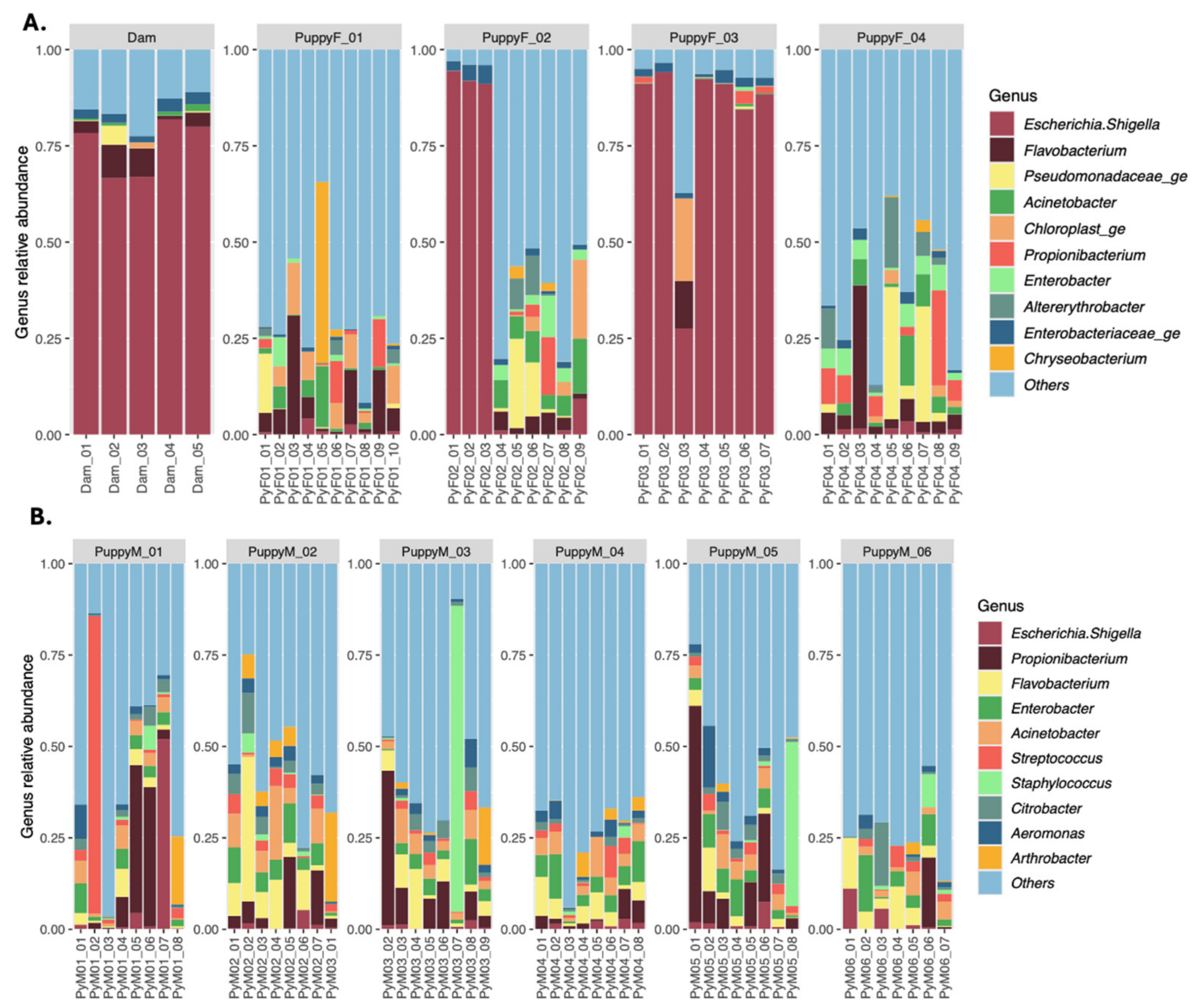
The urinary microbiota of female puppies (Figure 1A) displayed a wide diversity but also pronounced inter-individual variability. Communities were characterized by a heterogeneous composition with no single genus consistently dominating across all individuals. Unclassified low-abundance taxa were grouped as “Others”.
Across females, major bacterial populations observed belonged to the genera Flavobacterium, Acinetobacter, Propionibacterium, and the EscherichiaShigella group as well as populations from the Pseudomonadaceae family. Their relative abundances differed markedly between puppies and across time points. In one individual, EscherichiaShigella predominated in the first samples before transitioning to a more diverse community. Another puppy showed a constant EscherichiaShigella group predominance, resembling the maternal urinary profile. The other females exhibited more diverse and unstable communities with fluctuating dominant genera. Taken together, the female urinary microbiota showed high diversity but no clear convergence pattern over time.
In male puppies, the urinary microbiota (Figure 1B) also showed pronounced inter-individual and temporal variability. Communities were composed of fluctuating combinations of genera such as Flavobacterium, Propionibacterium, Enterobacter, Acinetobacter, and the EscherichiaShigella group. No single taxon was consistently dominant across all males. After exclusion of unclassified taxa, the male urinary microbiota remained characterized by instability over time and recurrent detection of a limited set of genera with variable relative abundances.
Comparison between sexes indicated that both male and female puppies harbored diverse and unstable urinary microbiota during growth (Figure 1). However, microbial community composition differed significantly between sexes, with distinct bacterial profiles and dominant taxa identified in males and females (p < 0.001).

3.2.2. Vaginal Microbiota

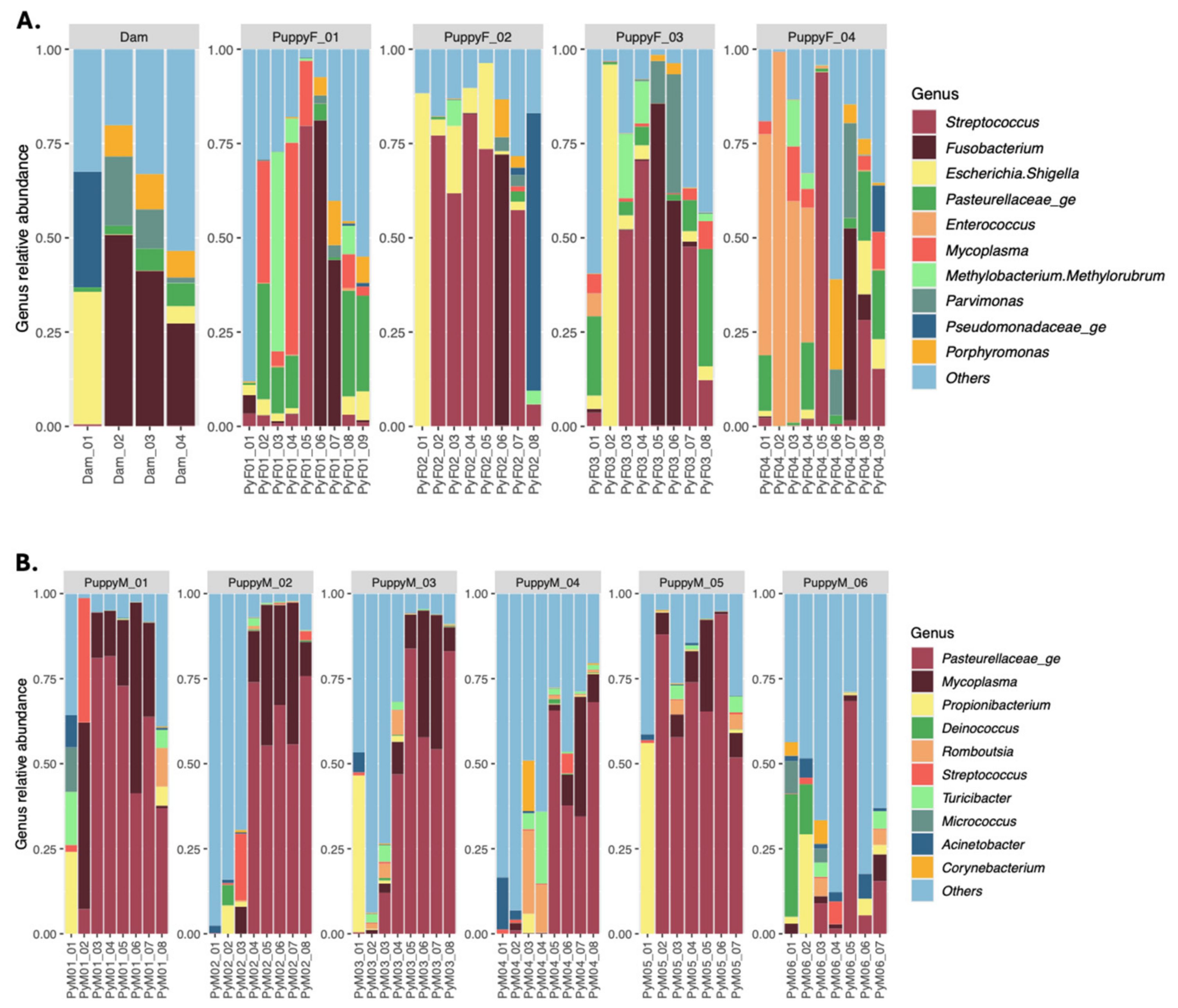
The vaginal microbiota of female puppies (Figure 2A) was heterogeneous and dynamic, with marked inter-individual differences. Communities were mainly composed of Streptococcus, Fusobacterium, and Enterococcus genera, as well as the EscherichiaShigella group. Some puppies showed alternating dominance patterns across sampling times, whereas others were characterized by repeated predominance of a single genus, such as Streptococcus or Enterococcus.

3.2.3. Prostatic Microbiota

The prostatic microbiota of male puppies (Figure 2B) was dominated by a limited number of genera. Five of the six puppies displayed relatively homogeneous profiles dominated by members of the Pasteurellaceae family, with intermittent increases in Mycoplasma. Minor taxa such as Propionibacterium and Streptococcus were sporadically detected. In contrast, one puppy showed a more heterogeneous and unstable prostatic profile.

3.3. Comparison of the Microbiota Between Urine and Vagina in Female Puppies

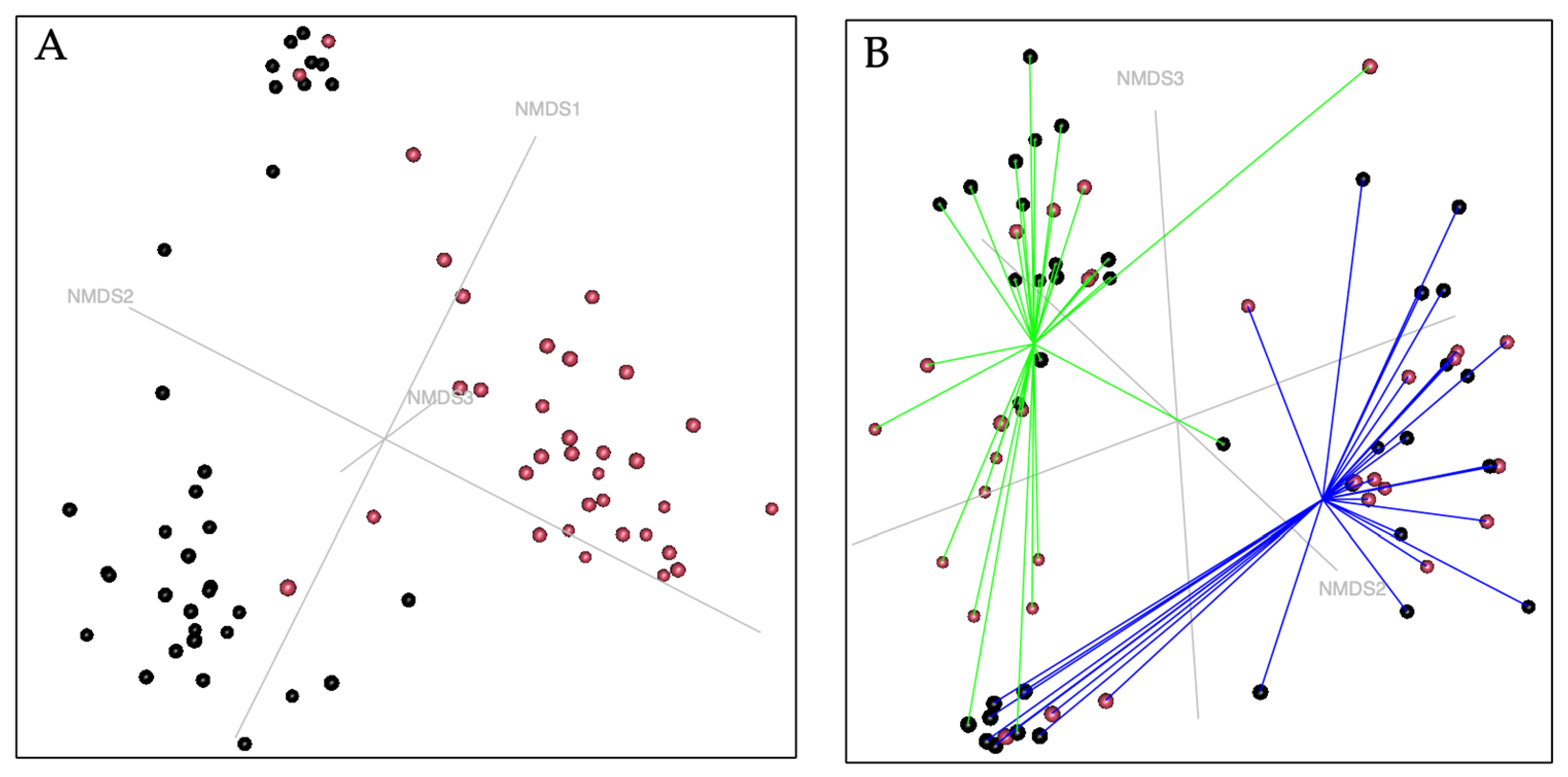
Non-metric multidimensional scaling (NMDS) analysis revealed a clear separation between urinary and vaginal microbiota in female puppies (Figure 3), indicating distinct community structures between the two anatomical sites (p = 0.001). This compartment-specific clustering was observed in both prepubertal and pubertal samples, with increased dispersion of vaginal samples after puberty, suggesting higher inter-individual variability.
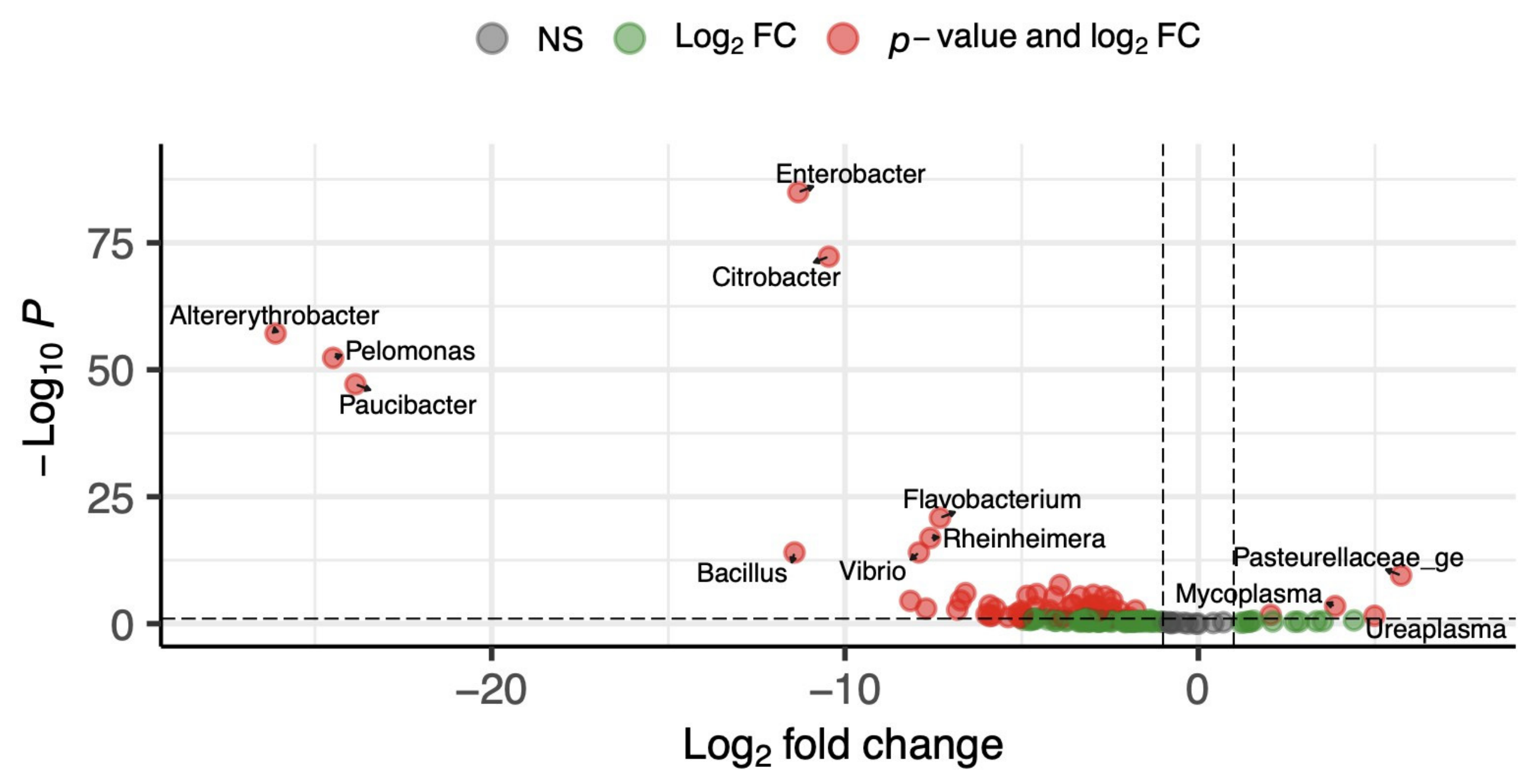
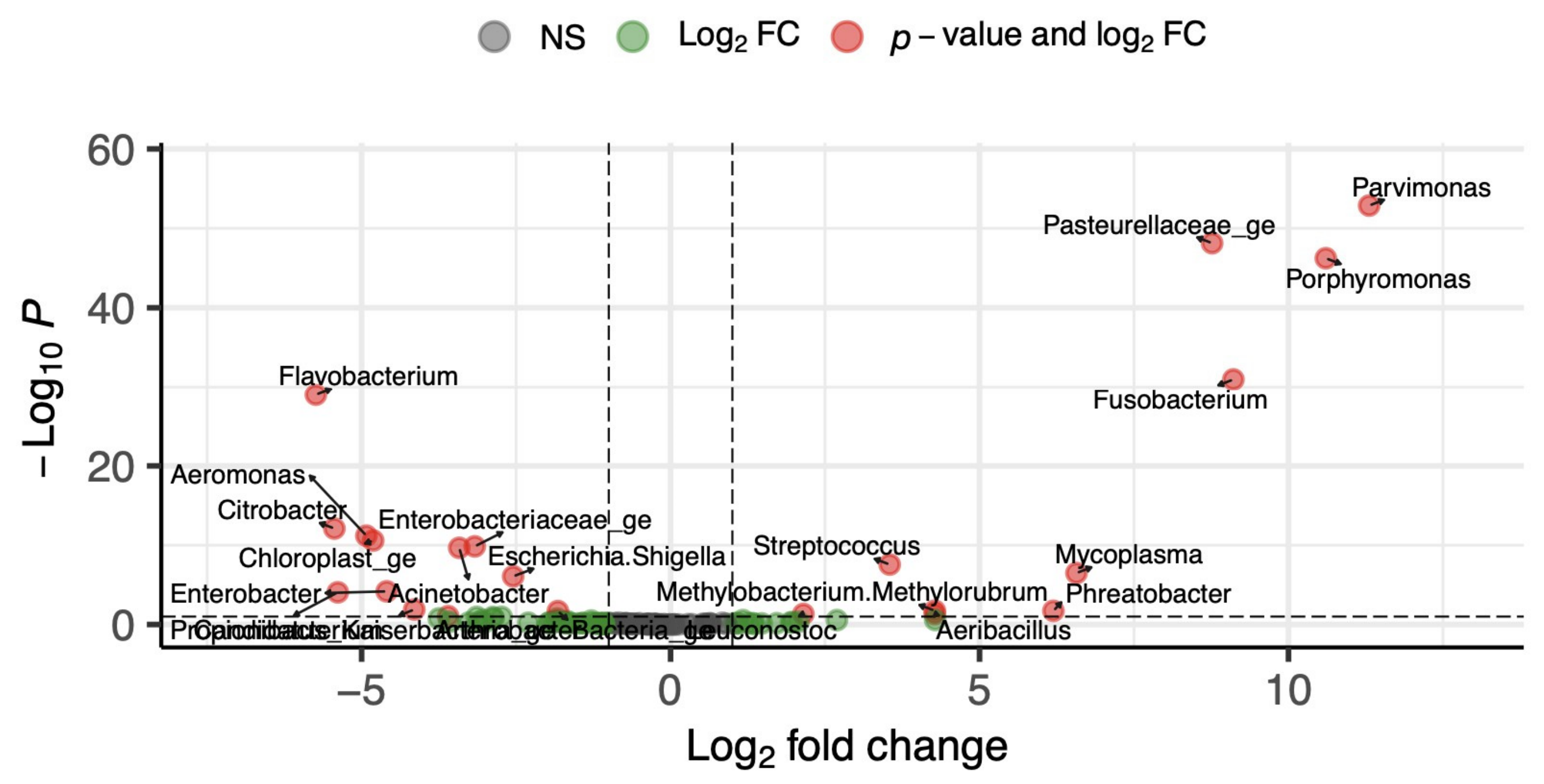
Differential abundance analysis further supports these findings (Figure 4). Vaginal samples were enriched in anaerobic genera, including Porphyromonas, Parvimonas, Fusobacterium, and members of the Pasteurellaceae family. In contrast, urinary samples were enriched in Flavobacterium, Aeromonas, Citrobacter, and Enterobacter. These results demonstrate clear site-specific microbial signatures in female puppies.

3.4. Comparison of the Microbiota Between Urine and Prostate in Male Puppies

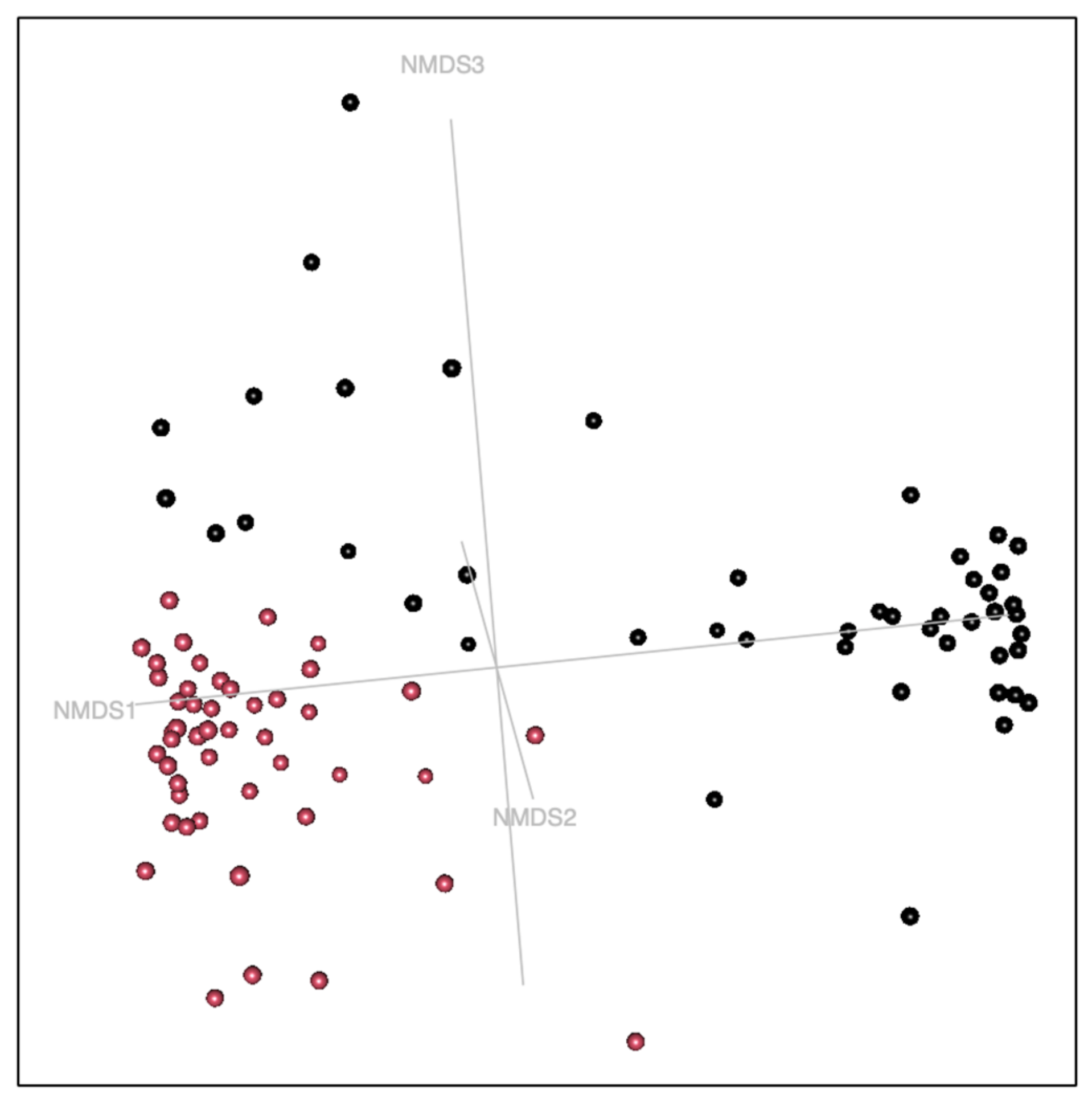
In male puppies, NMDS analysis also showed a clear separation between urinary and prostatic microbiota (Figure 5), indicating distinct bacterial community structures between the two compartments (p = 0.001). In addition, differential abundance analysis (Figure 6) identified several taxa with different relative abundances. The genera Enterobacter and Citrobacter were enriched in the prostate, whereas Ureaplasma and Mycoplasma, as well as the Pasteurellaceae family, were more abundant in urine. These findings further support the presence of compartment-specific microbiota in male dogs.

3.5. Temporal Evolution of the Microbiota During Growth

3.5.1. Urinary Microbiota

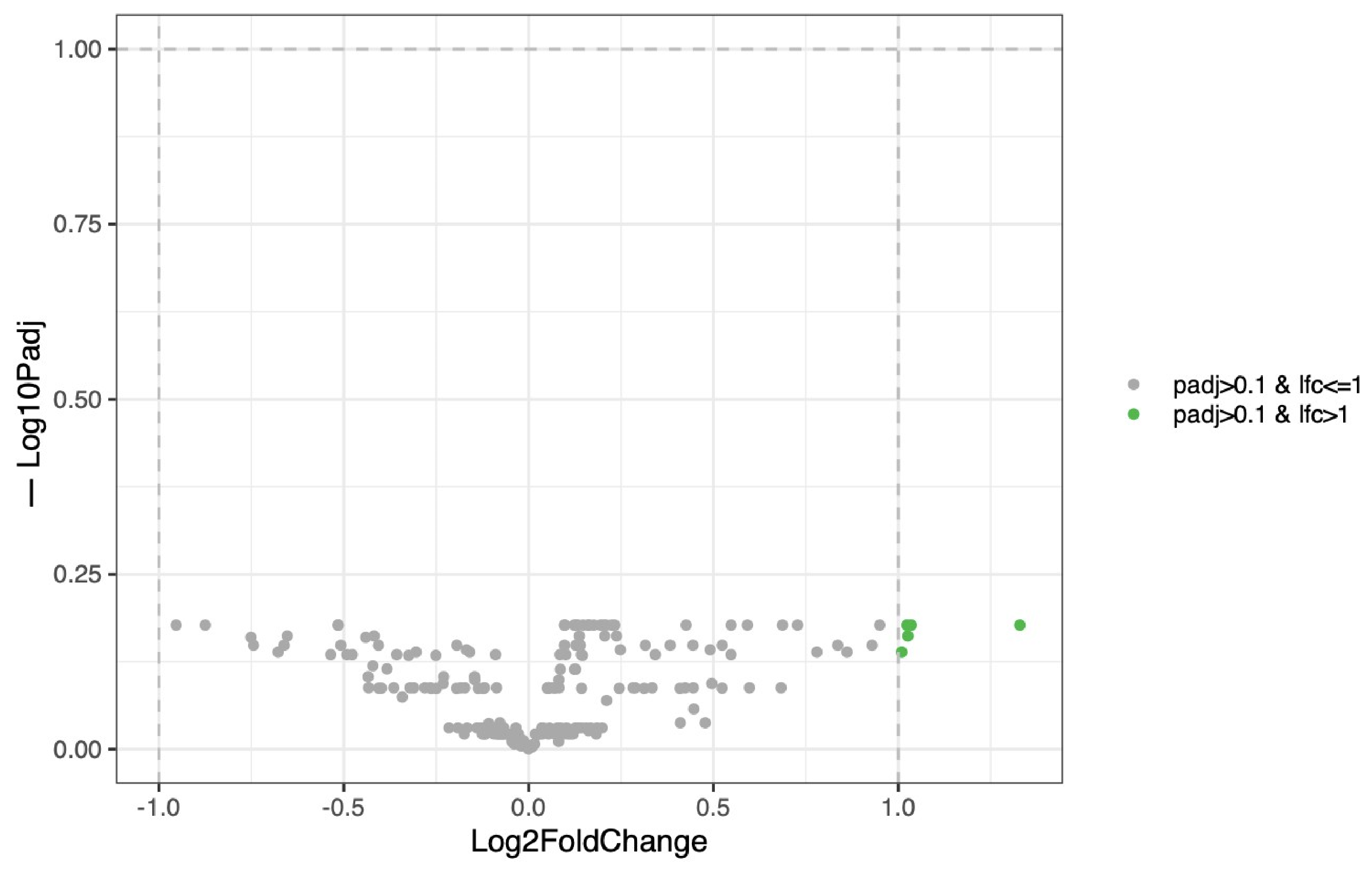
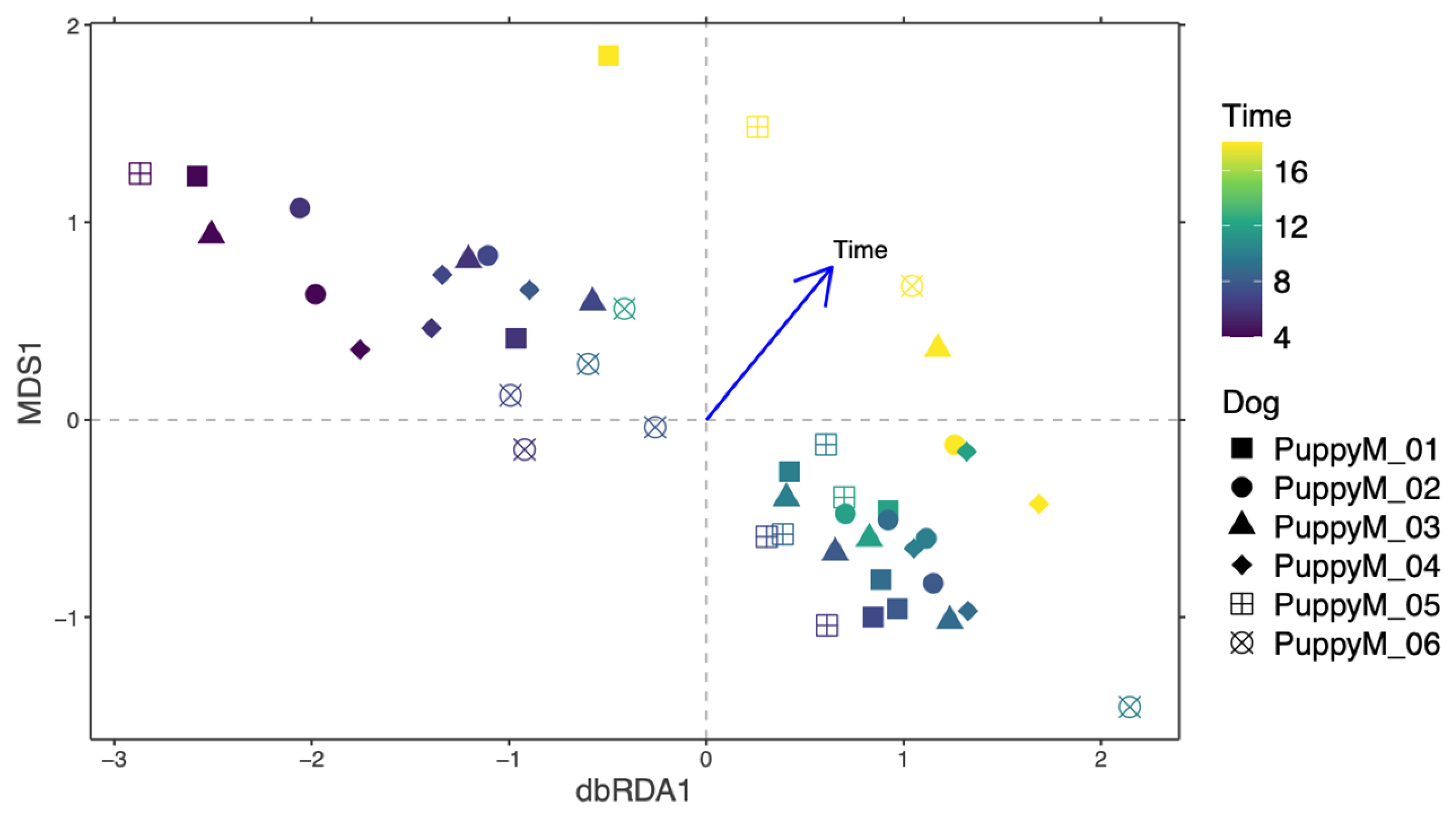
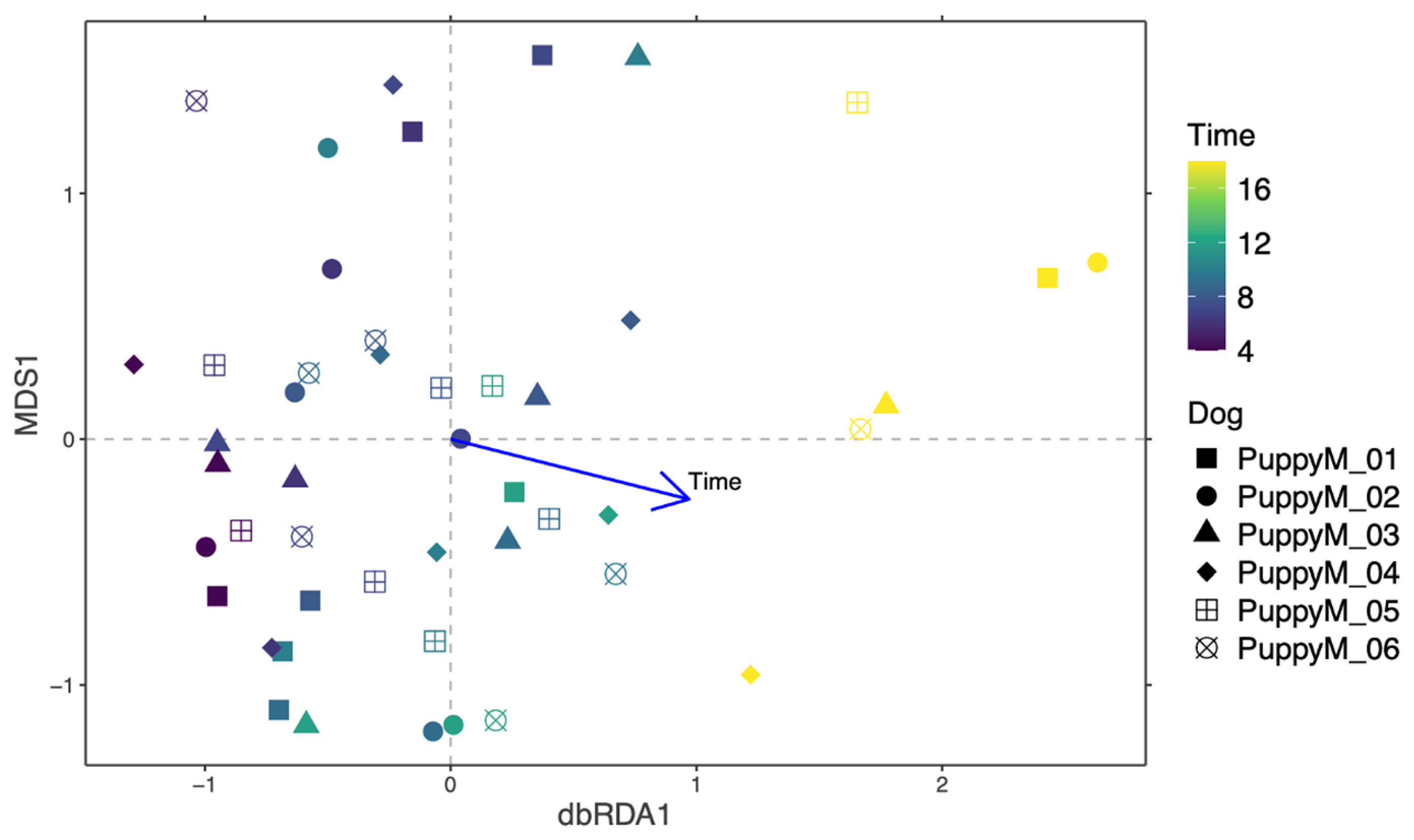
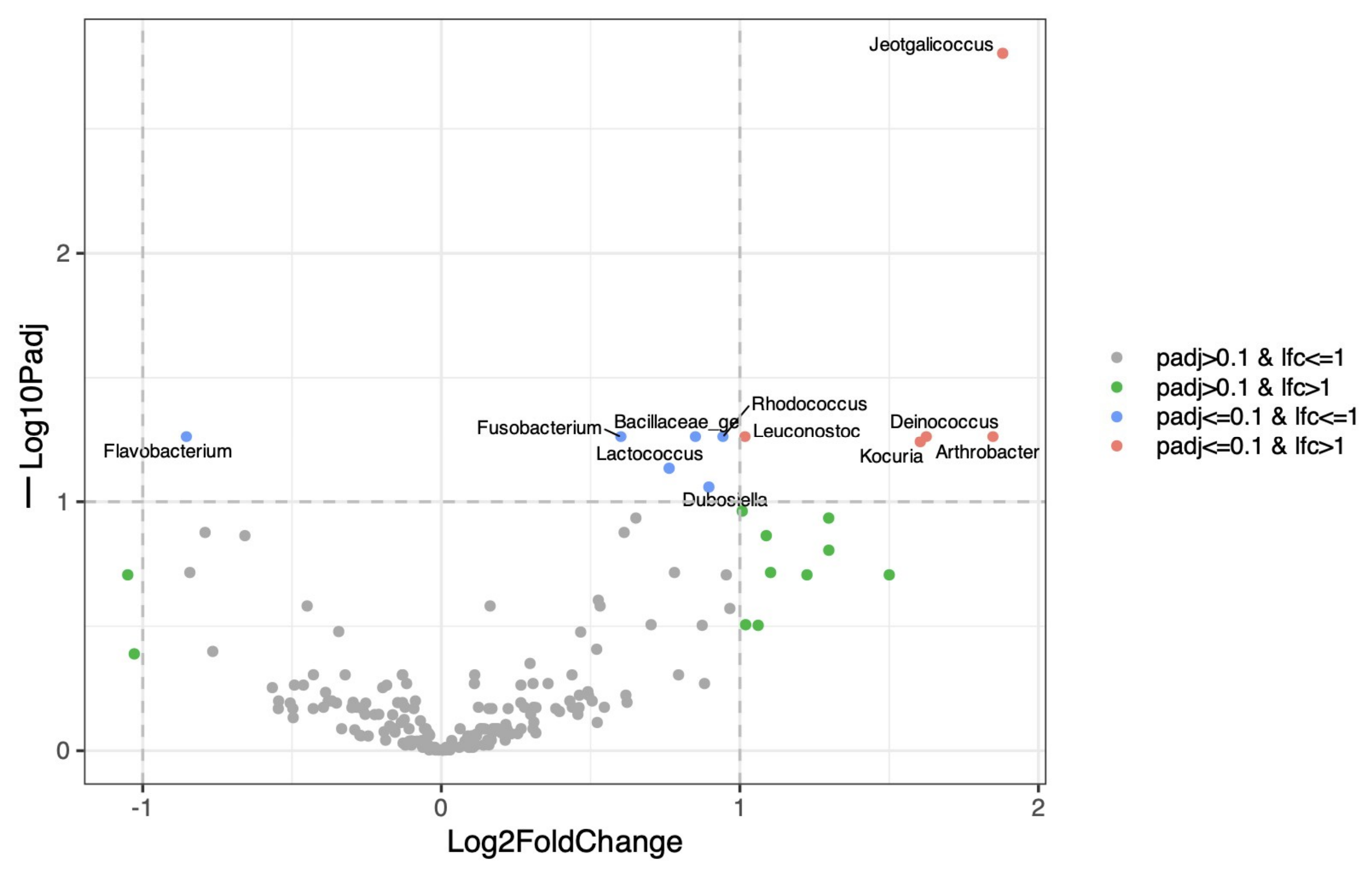
In males, distance-based redundancy analysis (dbRDA) revealed a modest but significant effect of time on the urinary structure (p = 0.001) (Figure 7). An overlap between time points and high inter-individual variability were observed, indicating heterogenous temporal dynamics. Only a limited number of taxa showed significant temporal changes (Figure 8).
For the female group, we did not find significant temporal variation across growth (p = 0.15). No taxa demonstrated significant changes in abundance over time, supporting a high degree of stability in the urinary microbiota (Figure 9).

3.5.2. Vaginal Microbiota

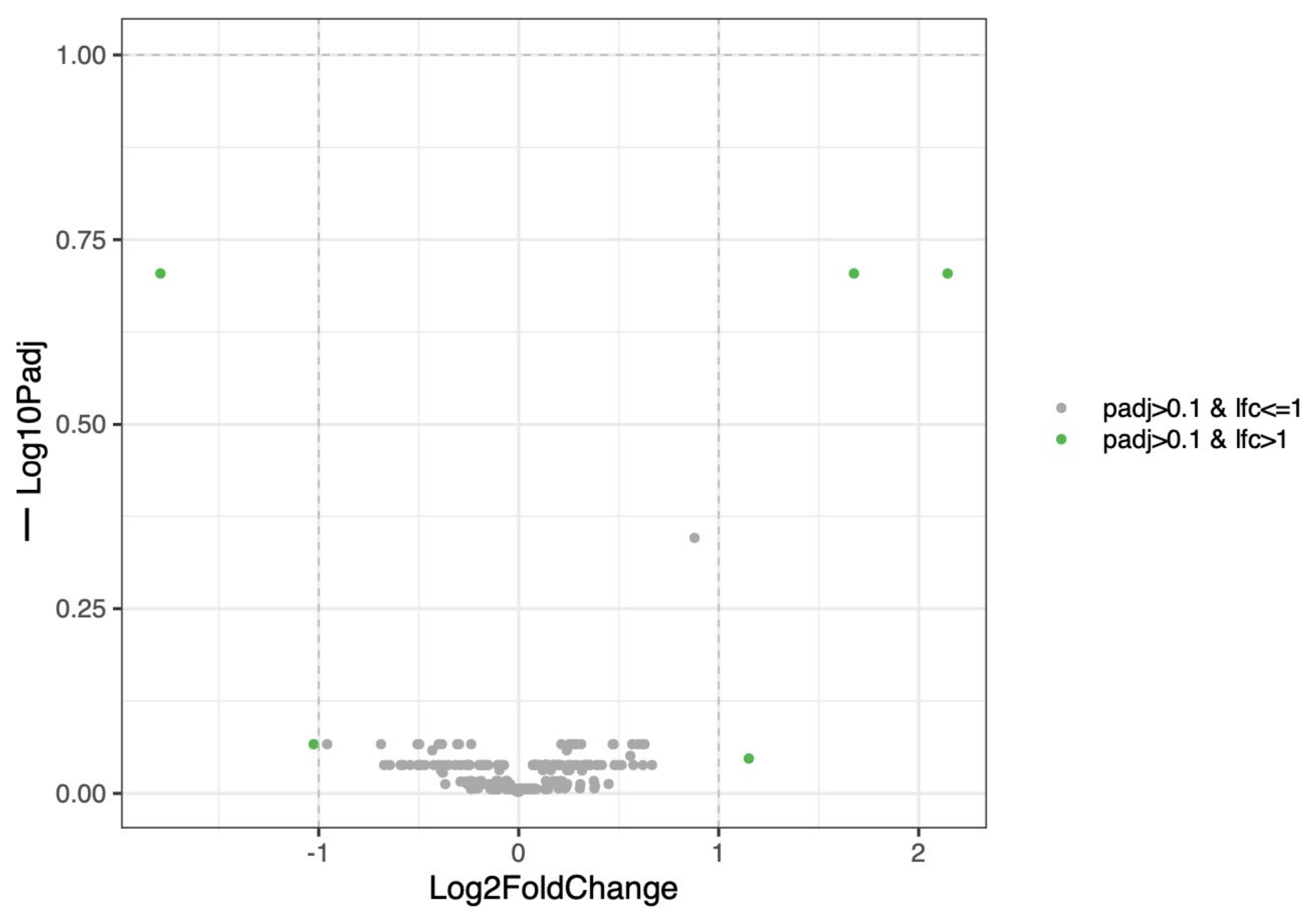
Mixed-effects modeling revealed no statistically significant time-dependent shifts in vaginal microbiota composition across the study period (p > 0.05) (Figure 10). A limited number of taxa were identified, and changes did not reach statistical significance. However, comparison between the first sampling point and the final sampling at the end of the first estrous cycle revealed significant differences in microbial composition (p = 0.001). Also, significant differences were observed depending on the cycle stage (p = 0.001), particularly between proestrus/estrus and diestrus/anestrus.

3.5.3. Prostatic Microbiota

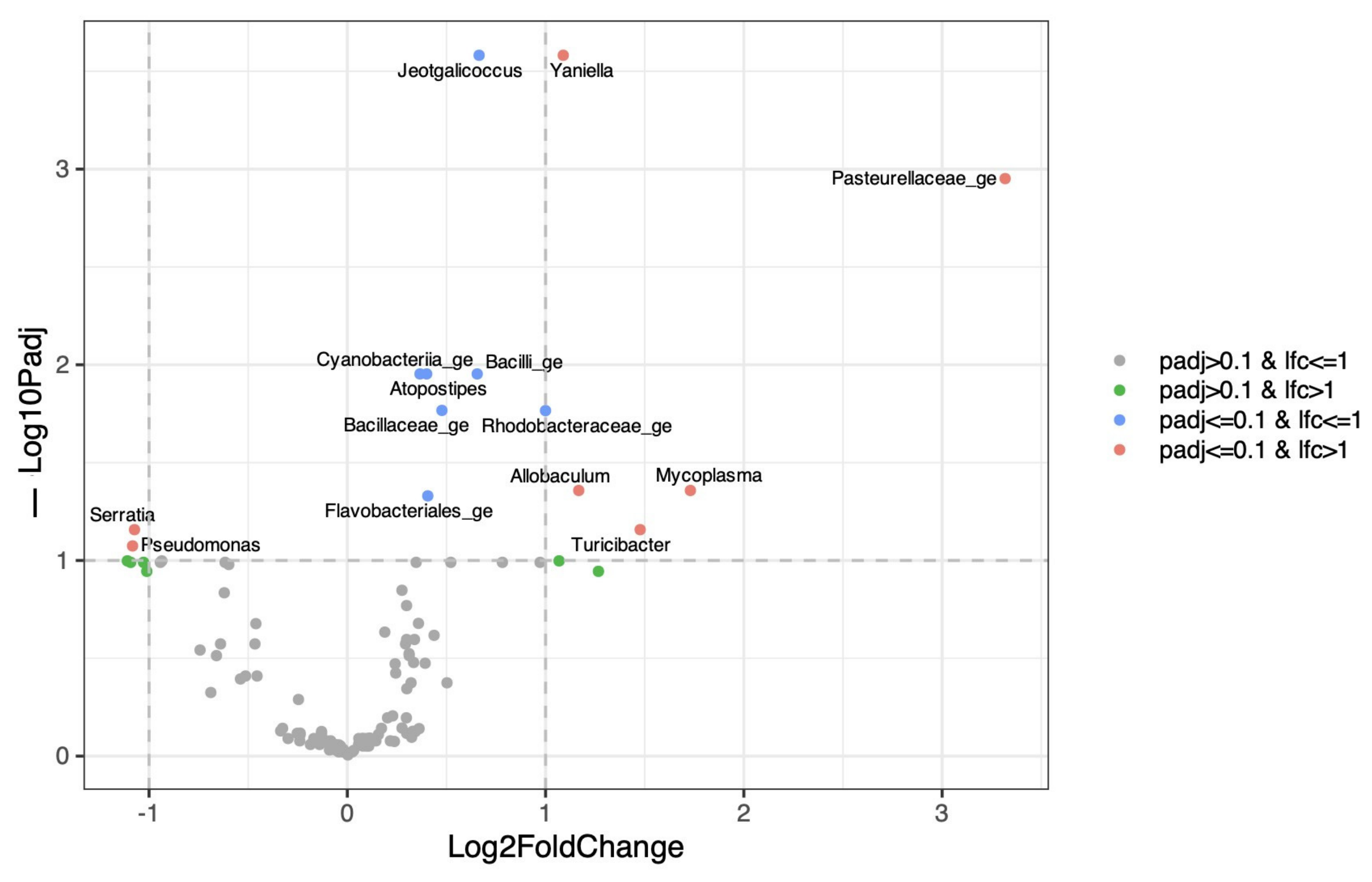
In contrast, dbRDA analysis demonstrated a significant effect of time on the structure of the prostatic microbiota in male puppies (p = 0.002) (Figure 11), which outweighed inter-individual variability. Differential abundance analysis showed that the Pasteurellaceae family, as well as Mycoplasma and Ureaplasma, increased over time, whereas environmental or opportunistic taxa such as Pseudomonas, Acinetobacter, and Enterobacter were mainly detected at earlier time points (Figure 12).

3.6. Comparison of the Urogenital Microbiota Between the Dam and Her Puppies

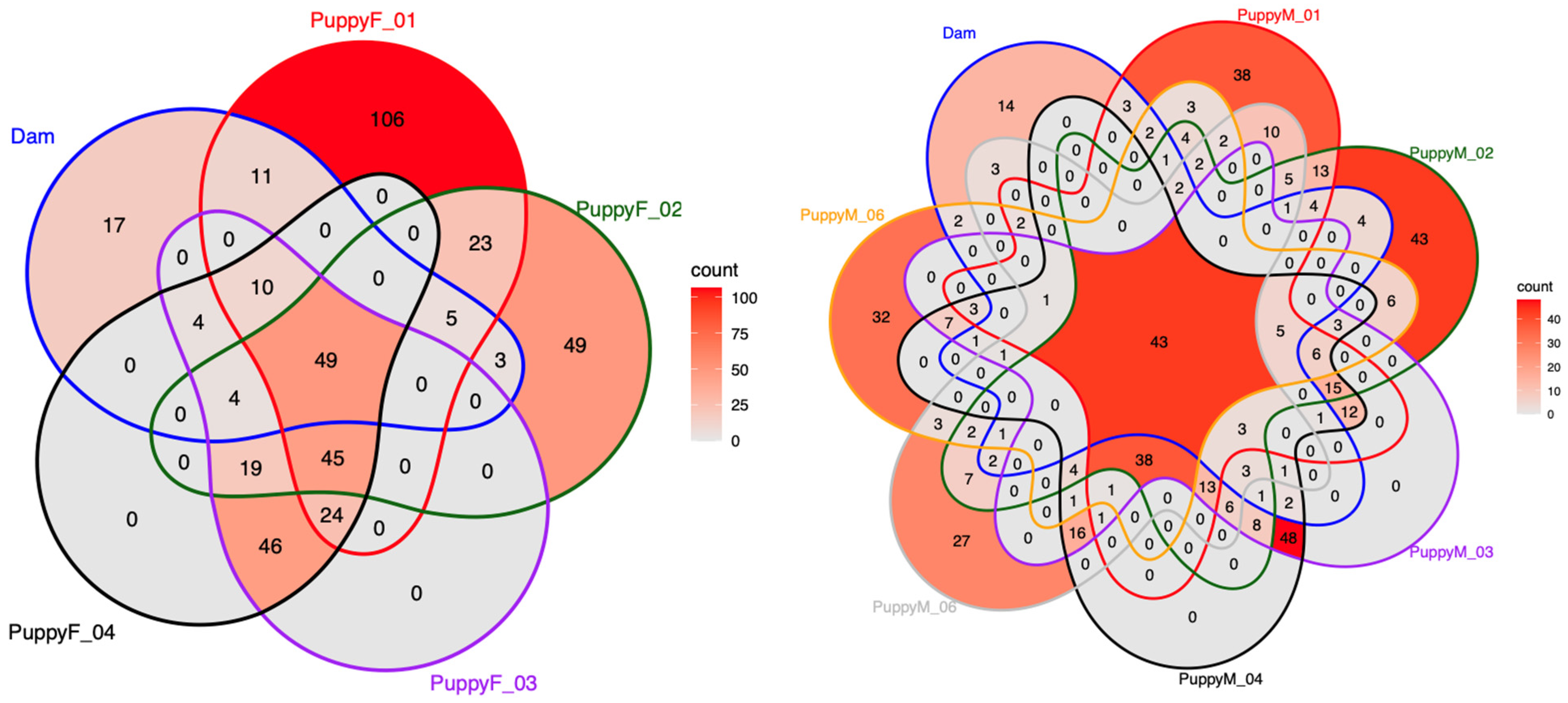
Venn diagram analyses revealed the presence of shared bacterial genera between the dam and her puppies in both urinary and genital compartments (Figure 13 and Figure 14). In urine, 50 genera were shared between the dam and female puppies and 44 between the dam and male puppies. However, each puppy also harbored a substantial number of unique taxa. The dam’s urinary microbiota was highly uniform and dominated almost exclusively by the group EscherichiaShigella across all sampling points, whereas puppies exhibited more diverse, low-abundance, and fluctuating urinary profiles (Figure 1).
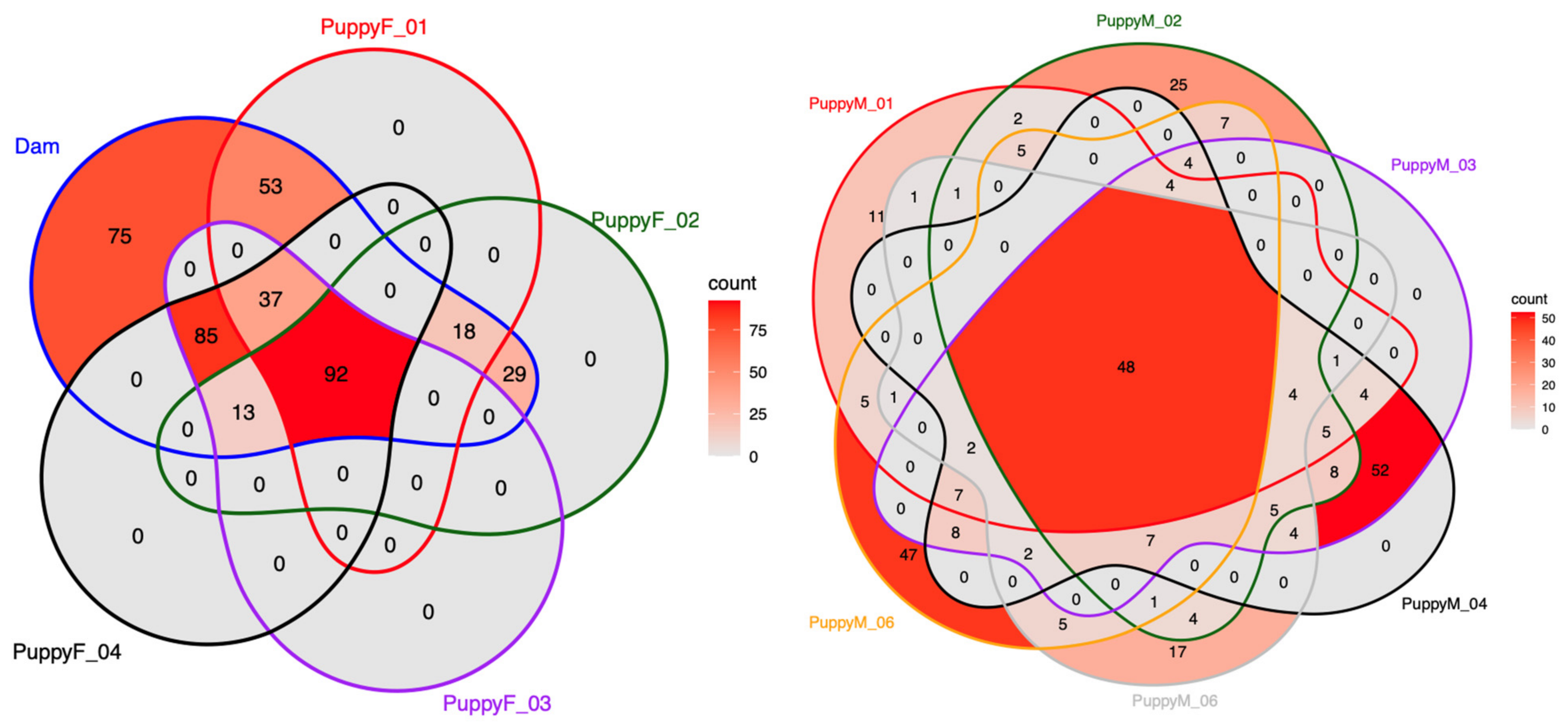
In the vaginal compartment, female puppies shared several genera with the dam, particularly during early life. Comparing the first samples of female puppies with the mother, common populations were Streptococcus, Enterobacter, and Acinetobacter. Later, increasing diversification was observed with age.
In male puppies, there was only a limited overlap in bacterial genera. A small number of taxa, including Enterobacter, Acinetobacter, and Streptococcus, were occasionally detected in both compartments, mainly at early time points. Dominant genera differed markedly between matrices, with the dam’s urine being largely dominated by the Escherichia–Shigella group, whereas the prostatic microbiota of puppies was primarily characterized by Mycoplasma and the Pasteurellaceae family (Figure 2).

4. Discussion

To the authors’ knowledge, this is the first study to longitudinally characterize the urinary, vaginal, and prostatic microbiota in healthy growing dogs, and to compare these profiles with those of their dam. We followed a controlled cohort of beagle puppies from early life to puberty and adulthood, and our results indicate that the canine urogenital microbiota is not only site-specific but also dynamically shaped by sex and developmental stage. Urinary microbiota exhibited limited maturation, with stability particularly evident in females, while males showed a modest but significant temporal effect. In contrast, genital microbiota underwent more pronounced changes during growth and around puberty. The difference in follow-up duration reflects biological differences between sexes. In females, the vaginal microbiota is influenced by hormonal fluctuations across the estrous cycle, justifying follow-up until completion of the first cycle. In males, where microbiota changes more gradually, follow-up was set at 18 months of age, corresponding to young adulthood.
The urinary microbiota of our puppies was diverse and highly variable between individuals, confirming that urine is not sterile even early in life. In both sexes, no dominant bacterial genus was detected across all individuals, and temporal fluctuations were common. Flavobacterium, Acinetobacter, Propionibacterium, EscherichiaShigella group, and Pseudomonadaceae were recurrently detected, although their relative abundances differed markedly. Our results were also partially consistent with studies from Burton et al. [33] and Hu et al. [41], describing Flavobacterium, Enterobacter, and Rheinheimera as the dominant genera, as well as EscherichiaShigella group.
The inter-individual variability is consistent with previous studies in other species, in which the urobiome was more individualized than age-related. For example, the recent study of Thassakorn et al. (2026) showed that cat’s urine was dominated by Proteobacteria, but no effect of sex was found, and minor age-related variations were observed [34]. On the other hand, human studies showed that urinary microbiota composition varies according to physiological factors such as age and sex [37,38].
Despite individual variability, the female urinary microbiota appeared remarkably stable over time, with no clear distinction between the two stages of life. No significant temporal effect was detected across growth in our study, suggesting that it may rapidly reach a steady-state configuration under physiological conditions. Similar stability has been reported in adult cycling bitches [24] and women [38], with hormonal fluctuations exerting a minor effect on urinary microbial communities.
In contrast, a modest but significant time effect was observed in male puppies, although inter-individual variability remained the predominant source of variation. Similarly, urine samples of healthy prepubescent boys did not show a clear predominance of any particular bacterial genus [8], but the microbiota differed from that described in adults, where Staphylococcus and Corynebacterium predominated [29].
The male urobiome was mainly composed of Flavobacterium, Propionibacterium, Enterobacter, and Acinetobacter in varying proportions, as well as the EscherichiaShigella group. Regarding temporal variations, only a small number of taxa, such as Jeotgalicoccus, Arthrobacter, and Kocuria, showed moderate differences. Isolated samples from the third and fifth male puppies exhibited an unusual dominance of Staphylococcus, a genus commonly associated with skin or environment microbiota. This result could reflect a sample handling or collection contamination rather than a true shift in the urinary composition given the absence of similar patterns in adjacent time points and in the other puppies.
The limited maturation observed may reflect the continuous exposure of the bladder to urine flow, together with intermittent microbial contamination from the environment and adjacent anatomical sites, including the perineal skin and enteric microbiota. Similar patterns, in which inter-individual variability outweighs age-related effects, have been reported in human pediatric cohorts [8] and in adult canine urobiome studies [33].
The method of sampling is a critical factor in microbiota studies. Given the low microbial biomass of urine, these samples are highly susceptible to contamination at every step of the analytical work, as is the vaginal tract [2,3]. Therefore, careful interpretation of detected taxa is essential, particularly for genera commonly associated with the environment or skin.
The vaginal microbiota of female puppies showed greater temporal variability than the urinary microbiota and was characterized by heterogeneous community structures across individuals. Genera recurrently detected in the canine vagina included Streptococcus, Enterococcus, Fusobacterium, Mycoplasma, the group of EscherichiaShigella, and the Pasteurellaceae family. Methylobacterium, which appeared in a single peak in only one sample, is a well-recognized environmental contaminant in low-biomass microbiota studies and is not considered a typical component of the mammalian vaginal microbiota [52].
This diversity is consistent with previous descriptions of the canine vaginal microbiota, which, unlike the human vagina, is not dominated by a single genus such as Lactobacillus [53]. A study from Spanoghe et al. [2] found Porphyromonas, Parvimonas and Fusobacterium to be the main bacteria present in the canine vagina of six healthy bitches in estrus. They also noted that microbial compositions vary between studies and hypothesized that these discrepancies are driven by differences in sampling procedures, sample storage conditions, and methodological approaches.
Although no statistically significant global time effect was identified, marked compositional changes were observed around puberty, particularly between proestrus/estrus and diestrus/anestrus. These variations are consistent with previously reported microbiota shifts associated with estrous cycle phases [24]. They were characterized by a reduction in community heterogeneity and the emergence of profiles resembling those described in adult bitches. Together, these findings suggest that puberty represents a key modulatory period, with estrogenic influence likely playing a major role in shaping the vaginal microbiota. Estrogen-driven modifications of the vaginal epithelium, mucus production, and local immune responses are well documented and could contribute to alterations in microbial composition. Similar shifts have been described in women and adolescent girls with an increase in Lactobacillus at puberty, as well as in adult cycling bitches [23,24,25,26,27,28,41]. In a study comparing non-littermate prepubescent and cycling bitches, vaginal microbiota was significantly different despite individual variations [18]. In this context, pubertal status appeared to exert a stronger influence on vaginal microbial composition than individual identity, thereby reinforcing the role of estrogen fluctuations in modulating the vaginal microbial ecosystem.
To date, data on the physiological prostatic microbiota in dogs remain scarce. In our male puppies, the prostatic microbiota was dominated by a limited number of taxa, primarily members of the Pasteurellaceae family and Mycoplasma. In contrast, one puppy exhibited a more heterogeneous and unstable prostatic profile. Members of the Weeksellaceae family are not classically described as part of the urogenital microbiota in mammals and are often associated with environmental sources, suggesting transient exposure or possible contamination.
Although notable inter-individual variability was found, the prostatic microbiota showed a more significant time effect and a consistent temporal shift during growth. Early samples were characterized by the presence of more diverse and potentially environmental or opportunistic genera, whereas later time points showed an increase in taxa previously listed. This progressive shift suggests a maturation process toward a more specialized microbial community. Similar compartment-specific microbiota and age-related changes have been described in humans [38,54].
Clear differences were observed between urinary and genital microbiota in both sexes, even at early developmental stages, as evidenced by β-diversity analyses. Microbial overlap between compartments was limited, and each site exhibited distinct temporal dynamics and compositional characteristics. In males, the prostatic microbiota was composed of a relatively small set of specific taxa, including members of the Pasteurellaceae family and Mycoplasma, whereas the bladder harbored a more diverse, dynamic microbial community. In both sexes, the bladder is regularly flushed during urination and exposed to a dynamic environment, whereas the vagina and prostate represent more stable and specialized sites. Distinct epithelial structures, pH, glandular secretions, and local immune defenses likely contribute to maintaining microbial communities in each compartment. In addition, in males, the prostate is an encapsulated gland with a relatively impermeable hemato-prostatic barrier, which may further limit microbial influx from adjacent sites [18,24,33].
These findings highlight a strong anatomical site specificity, consistent with previous canine and human studies. Taken together, these results suggest that both anatomical structure and physiological processes play a role in shaping compartment-specific microbiota, and that similar patterns of site-specific organization are observed across species [31,38,54].
Comparison of the urogenital microbiota between the dam and her puppies revealed the presence of shared bacterial genera in both urinary and genital compartments. However, each puppy also harbored a distinct set of taxa, and overall overlap was limited, indicating that early environmental exposure rapidly influences the urogenital microbiota. Also, the individual effect remained stronger than environmental factors, as differences were observed between puppies raised under identical conditions and diet.
The dam’s urinary microbiota was highly uniform and dominated by the Escherichia–Shigella group, whereas puppies exhibited more diverse and fluctuating communities. Two female puppies displayed more adult-like profiles: in one, the predominance of EscherichiaShigella was transient before transitioning toward a more diverse community, while in the other it persisted throughout the study period. Such patterns were not observed in the remaining females, whose urobiomes were already diverse by 4 months of age. This could suggest that the early predominance of the EscherichiaShigella group may be temporary and may eventually be outweighed by individual-specific and environmental factors. In contrast, EscherichiaShigella was present at low abundance in male puppies.
In the genital compartment, particularly in females, puppies shared several genera with the dam, including Streptococcus, Enterobacter, and Acinetobacter, indicating a potential maternal contribution to initial microbial exposure. In males, prostatic microbiota showed limited shared taxa and greater inter-individual variability.
Early microbial colonization occurs rapidly after birth, as reported by Perez-Muñoz et al. [55], and may even begin during fetal life [12,13,14,15,16,17,18]. Del Carro et al. [56] showed that each dam–litter unit harbored a distinct fecal microbiota at day 0, day 2, day 30 and day 60 postpartum, with greater similarity within units than between them, supporting an important maternal role in early gut colonization, in agreement with Vilson et al. [57]. However, the study did not assess microbiota evolution beyond early life. Hand et al. [58] further reported that closely related dogs shared more similar microbiota profiles than unrelated dogs of the same breed. Guard et al. [59] observed a progressive increase in fecal microbial diversity from 2 to 56 days of age, with compositions significantly differing from those of the dams. More recently, the meconium microbiota of vaginally delivered puppies was found to resemble the maternal vaginal microbiota, whereas cesarean-delivered puppies showed greater similarity to maternal oral and vaginal microbiota. Moreover, puppies without detectable microbial communities exhibited slower growth rates [19].
Such exposure could occur during parturition, nursing, or close postnatal contact. Nevertheless, increasing diversification with age and marked inter-individual variability suggest that environmental and individual-specific factors rapidly outweigh any early potential maternal influence. These observations are compatible with a possible maternal contribution but do not provide direct evidence of vertical transmission. In addition, our study was not specifically designed to investigate this question. The use of a single litter and the absence of immediate postnatal sampling limit the ability to draw firm conclusions regarding such mechanisms. The environment is known to have an early influence on puppies’ microbiota.
This study has several limitations. First, as previously underlined, the sample size was small and included a single litter, which limits the generalizability of the findings. However, this cohort of ten puppies (six males and four females) from the same dam provided a unique opportunity to investigate microbiota development under controlled conditions, thereby reducing environmental and maternal variability compared to studies involving multiple litters. This homogeneous setting, including shared genetic background, housing conditions, and diet, allowed for a consistent baseline and limited potential confounding factors. Nevertheless, such standardization may not reflect the diversity of environmental and nutritional conditions encountered in the general canine population. Previous studies in humans have shown that housing conditions and diet can significantly influence the urogenital microbiota [26,27,28]. In dogs, weaning represents a critical period for microbial shifts, as the transition from maternal milk to solid food induces predictable changes in microbial communities, including those of the urogenital tract [11,60]. Future studies including multiple litters raised under varied environmental and nutritional conditions would therefore be valuable to extend these findings. Nevertheless, the high inter-individual variability observed in this study suggests that establishing a robust baseline is an important first step.
Second, urine, vaginal, and prostatic samples are low-biomass matrices susceptible to contamination. Despite controlled conditions, our vaginal sampling method using an otoscope cone may have increased the risk of contamination from the caudal vagina, as discussed by Spanoghe et al. [2], who recommended the use of a double-guarded sterile swab reaching the cranial vagina, as well as wearing sterile gloves to minimize contamination.
In addition, birth is not a sterile process. Bacterial colonization begins immediately after exposure to the external environment [10,19], making it difficult to completely rule out environmental contamination. The study design did not assess very-early-life colonization, as sampling began at four months of age rather than immediately after parturition. The dam was sampled at one month postpartum, and one male puppy was only included from six months of age due to previous digestive surgeries. Therefore, no direct early neonatal comparison or evaluation of immediate maternal transmission was possible. Studies from birth to adulthood with the objective of identifying the healthy microbiota composition are difficult to realize due to environmental factors, individual genetic makeup, and exposure to pathogens that are confounding factors, as described in humans [10,13,55].

5. Conclusions

This longitudinal study provides reference data on the development of the urogenital microbiota in healthy growing dogs from 4 months old to adulthood. By analyzing urinary, vaginal, and prostatic compartments, we demonstrate that the canine urogenital microbiota is strongly site-specific and influenced by sex and developmental stage. While the urinary microbiota showed marked inter-individual variability and limited maturation signals, genital microbiota underwent more pronounced age-related changes, especially around puberty. Shared genera between the dam and her offspring were observed, but inter-individual variability suggests a limited maternal influence.
These findings provide a physiological baseline for future studies investigating urogenital disorders in dogs, such as urinary tract infections, incontinence, vaginitis or prostatitis, and potentially neoplastic diseases. Given that pathological microbial shifts are implicated in various disorders in humans, understanding normal microbiota development is essential to identify dysbiosis-associated patterns and improve diagnostic and therapeutic strategies in veterinary medicine. Also, these findings should be interpreted within the context of a controlled cohort of beagle dogs and may not be directly generalizable to other breeds or environmental conditions.
Future research involving larger and more diverse populations, earlier postnatal sampling, and longitudinal follow-up will be needed to clarify host–microbiota interactions, maternal influence and environmental factors.

Supplementary Materials

The following supporting information can be downloaded at: https://www.mdpi.com/article/10.3390/life16050841/s1, Excel file: Decontam.output; R file: Analysis output.

Author Contributions

Conceptualization, S.D., S.N. and M.S.; Methodology, S.N., S.D., M.S. and B.T.; Software, B.T.; Validation, S.D., S.N., A.H. and G.D.; Formal Analysis, B.T.; Investigation, M.S., V.G., S.E., F.B. and M.-L.V.d.W.; Resources, A.H. and G.D.; Data Curation, M.S., V.G., S.E., F.B. and M.-L.V.d.W.; Writing—Original Draft Preparation, M.S.; Writing—Review and Editing, S.D., S.N., B.T. and M.S.; Supervision, S.D. and S.N. All authors have read and agreed to the published version of the manuscript.

Funding

This research received no external funding.

Institutional Review Board Statement

The animal study protocol was approved by the Ethics Committee of University of Liège (protocol code 20-2250; date approbation 15 July 2020; laboratory approval number LA161012).

Informed Consent Statement

Informed consent was not applicable, as the study involved animals housed in an experimental facility. All procedures were approved by the institutional ethics committee (approval number LA161012) and complied with relevant guidelines and regulations.

Data Availability Statement

The sequencing data generated in this study are publicly available in the NCBI Sequence Read Archive (SRA) under BioProject accession numbers PRJNA1082225 (dam samples) and PRJNA1443666 (puppies’ samples).

Conflicts of Interest

The authors declare no conflicts of interest.

Abbreviations

The following abbreviations are used in this manuscript:
16S rDNA16S ribosomal DNA
dbRDAdistance-based redundancy analysis
DNAdeoxyribonucleic acid
NMDSnon-metric multidimensional scaling
OTUoperational taxonomic unit
PCRpolymerase chain reaction
RNAribonucleic acid
UVultraviolet

References

  1. Theron, J.; Cloete, T.E. Molecular techniques for determining microbial diversity and community structure in natural environments. Crit. Rev. Microbiol. 2000, 26, 37–57. [Google Scholar] [CrossRef]
  2. Spanoghe, L.; Domain, G.; Posastiuc, F.; Hettiarachchi, A.; Panattoni, A.; Theuns, S.; Van Immerseel, F.; Opsomer, G.; Van Soom, A.; Banchi, P. Toward standardized methods in canine vaginal microbiome research: Evaluation of storage, host DNA depletion, and database selection. Microbiol. Spectr. 2025, 13, e00583-25. [Google Scholar] [CrossRef]
  3. Lewis, Z.J.; Scott, A.; Madden, C.; Vik, D.; Zayed, A.A.; Smith, G.J.; Justice, S.S.; Rudinsky, A.; Hokamp, J.; Hale, V.L. Evaluating urine volume and host depletion methods to enable genome-resolved metagenomics of the urobiome. Microbiome 2025, 13, 199. [Google Scholar] [CrossRef]
  4. Gandaglia, G.; Zaffuto, E.; Fossati, N.; Cucchiara, V.; Mirone, V.; Montorsi, F.; Briganti, A. The role of prostatic inflammation in the development and progression of benign and malignant diseases. Curr. Opin. Urol. 2017, 27, 99–106. [Google Scholar] [CrossRef]
  5. Shrestha, E.; White, J.R.; Yu, S.-H.; Kulac, I.; Ertunc, O.; De Marzo, A.M.; Yegnasubramanian, S.; Mangold, L.A.; Partin, A.W.; Sfanos, K.S. Profiling the urinary microbiome in men with positive versus negative biopsies for prostate cancer. J. Urol. 2018, 199, 161–171. [Google Scholar] [CrossRef] [PubMed]
  6. Govender, Y.; Gabriel, I.; Minassian, V.; Fichorova, R. The current evidence on the association between the urinary microbiome and urinary incontinence in women. Front. Cell. Infect. Microbiol. 2019, 9, 133. [Google Scholar] [CrossRef] [PubMed]
  7. Gerber, D.; Forster, C.; Hsieh, M. The role of the genitourinary microbiome in pediatric urology: A review. Curr. Urol. Rep. 2018, 19, 13. [Google Scholar] [CrossRef] [PubMed]
  8. Kassiri, B.; Shrestha, E.; Kasprenski, M.; Antonescu, C.; Florea, L.D.; Sfanos, K.S.; Wang, M.-H. A prospective study of the urinary and gastrointestinal microbiome in prepubertal males. Urology 2019, 131, 204–210. [Google Scholar] [CrossRef]
  9. Asnicar, F.; Manara, S.; Zolfo, M.; Truong, D.T.; Scholz, M.; Armanini, F.; Ferretti, P.; Gorfer, V.; Pedrotti, A.; Tett, A.; et al. Studying vertical microbiome transmission from mothers to infants by strain-level metagenomic profiling. mSystems 2017, 2, e00164-16. [Google Scholar] [CrossRef]
  10. Dominguez-Bello, M.G.; Costello, E.K.; Contreras, M.; Magris, M.; Hidalgo, G.; Fierer, N.; Knight, R. Delivery mode shapes the acquisition and structure of initial microbiota across multiple body habitats in newborns. Proc. Natl. Acad. Sci. USA 2010, 107, 11971–11975. [Google Scholar] [CrossRef]
  11. Balouei, F.; Stefanon, B.; Sgorlon, S.; Sandri, M. Factors affecting gut microbiota of puppies from birth to weaning. Animals 2023, 13, 578. [Google Scholar] [CrossRef]
  12. Aagaard, K.; Ma, J.; Antony, K.M.; Ganu, R.; Petrosino, J.; Versalovic, J. The placenta harbors a unique microbiome. Sci. Transl. Med. 2014, 6, 237ra65. [Google Scholar] [CrossRef]
  13. Francino, M.P. Early development of the gut microbiota and immune health. Pathogens 2014, 3, 769–790. [Google Scholar] [CrossRef]
  14. Sanidad, K.Z.; Zeng, M.Y. Neonatal gut microbiome and immunity. Curr. Opin. Microbiol. 2020, 56, 30–37. [Google Scholar] [CrossRef]
  15. Stinson, L.F.; Boyce, M.C.; Payne, M.S.; Keelan, J.A. The not-so-sterile womb: Evidence that the human fetus is exposed to bacteria prior to birth. Front. Microbiol. 2019, 10, 1124. [Google Scholar] [CrossRef]
  16. He, Q.; Kwok, L.-Y.; Xi, X.; Zhong, Z.; Ma, T.; Xu, H.; Meng, H.; Zhao, F.; Zhang, H. The meconium microbiota shares more features with the amniotic fluid microbiota than the maternal fecal and vaginal microbiota. Gut Microbes 2020, 12, 1794266. [Google Scholar] [CrossRef]
  17. Karstrup, C.C.; Klitgaard, K.; Jensen, T.K.; Agerholm, J.S.; Pedersen, H.G. Presence of bacteria in the endometrium and placentomes of pregnant cows. Theriogenology 2017, 99, 41–47. [Google Scholar] [CrossRef]
  18. Lyman, C.C.; Holyoak, G.R.; Meinkoth, K.; Wieneke, X.; A Chillemi, K.; DeSilva, U. Canine endometrial and vaginal microbiomes reveal distinct and complex ecosystems. PLoS ONE 2019, 14, e0210157. [Google Scholar] [CrossRef]
  19. Pipan, M.Z.; Kajdič, L.; Kalin, A.; Plavec, T.; Zdovc, I. Do newborn puppies have their own microbiota at birth? Influence of type of birth on newborn puppy microbiota. Theriogenology 2020, 152, 18–28. [Google Scholar] [CrossRef] [PubMed]
  20. Rota, A.; Del Carro, A.; Bertero, A.; Del Carro, A.; Cucuzza, A.S.; Banchi, P.; Corrò, M. Does bacterial colonization of canine newborns start in the uterus? Animals 2021, 11, 1415. [Google Scholar] [CrossRef]
  21. Hemberg, E.; Einarsson, S.; Kútvölgyi, G.; Lundeheim, N.; Bagge, E.; Båverud, V.; Jones, B.; Morrell, J. Occurrence of bacteria and polymorphonuclear leukocytes in fetal compartments at parturition. Theriogenology 2015, 84, 163–169. [Google Scholar] [CrossRef]
  22. Lim, E.S.; Rodriguez, C.; Holtz, L.R. Amniotic fluid from healthy term pregnancies does not harbor a detectable microbial community. Microbiome 2018, 6, 87. [Google Scholar] [CrossRef]
  23. Hickey, R.J.; Zhou, X.; Settles, M.L.; Erb, J.; Malone, K.; Hansmann, M.A.; Shew, M.L.; Van Der Pol, B.; Fortenberry, J.D.; Forney, L.J. Vaginal microbiota of adolescent girls prior to the onset of menarche resemble those of reproductive-age women. mBio 2015, 6, e00097-15. [Google Scholar] [CrossRef] [PubMed]
  24. Gronsfeld, V.; Brutinel, F.; Egyptien, S.; Porsmoguer, C.; Hamaide, A.; Taminiau, B.; Daube, G.; Van de Weerdt, M.-L.; Deleuze, S.; Noel, S. Evaluation of the vaginal and urinary microbiota of healthy cycling bitches. BMC Vet. Res. 2024, 20, 315. [Google Scholar] [CrossRef] [PubMed]
  25. Shen, J.; Song, N.; Williams, C.J.; Brown, C.J.; Yan, Z.; Xu, C.; Forney, L.J. Effects of low-dose estrogen therapy on the vaginal microbiomes of women with atrophic vaginitis. Sci. Rep. 2016, 6, 34119. [Google Scholar] [CrossRef]
  26. Chen, K.L.; Madak-Erdogan, Z. Estrogen and microbiota crosstalk: Should we pay attention? Trends Endocrinol. Metab. 2016, 27, 752–755. [Google Scholar] [CrossRef]
  27. Romero, R.; Hassan, S.S.; Gajer, P.; Tarca, A.L.; Fadrosh, D.W.; Nikita, L.; Galuppi, M.; Lamont, R.F.; Chaemsaithong, P.; Miranda, J.; et al. The composition and stability of the vaginal microbiota of normal pregnant women is different from that of non-pregnant women. Microbiome 2014, 2, 4. [Google Scholar] [CrossRef]
  28. Chaban, B.; Links, M.G.; Jayaprakash, T.P.; Wagner, E.C.; Bourque, D.K.; Lohn, Z.; Albert, A.Y.; van Schalkwyk, J.; Reid, G.; Hemmingsen, S.M.; et al. Characterization of the vaginal microbiota of healthy Canadian women through the menstrual cycle. Microbiome 2014, 2, 23. [Google Scholar] [CrossRef]
  29. Forster, C.; Panchapakesan, K.; Stroud, C.; Banerjee, P.; Gordish-Dressman, H.; Hsieh, M.H. A cross-sectional analysis of the urine microbiome of children with neuropathic bladders. J. Pediatr. Urol. 2020, 16, 593.e1–593.e8. [Google Scholar] [CrossRef]
  30. Lundy, S.; Sangwan, N.; Parekh, N.V.; Selvam, M.K.P.; Gupta, S.; McCaffrey, P.; Bessoff, K.; Vala, A.; Agarwal, A.; Sabanegh, E.S.; et al. Functional and taxonomic dysbiosis of the gut, urine and semen microbiomes in male infertility. Eur. Urol. 2021, 79, 826–836. [Google Scholar] [CrossRef]
  31. Whiteside, S.A.; Razvi, H.; Dave, S.; Reid, G.; Burton, J.P. The microbiome of the urinary tract—Beyond infection. Nat. Rev. Urol. 2015, 12, 81–90. [Google Scholar] [CrossRef]
  32. Mrofchak, R.; Madden, C.; Evans, M.V.; Hale, V.L. Evaluating extraction methods to study canine urine microbiota. PLoS ONE 2021, 16, e0253989. [Google Scholar] [CrossRef]
  33. Burton, E.N.; A Cohn, L.; Reinero, C.N.; Rindt, H.; Moore, S.G.; Ericsson, A.C. Characterization of the urinary microbiome in healthy dogs. PLoS ONE 2017, 12, e0177783. [Google Scholar] [CrossRef]
  34. Thassakorn, P.; Fungbun, N.; Sukon, P.; Phuektes, P. Characterization and comparative analysis of urinary bacterial microbiome profiling in healthy cats and cats with feline idiopathic cystitis. Sci. Rep. 2026, 16, 4138. [Google Scholar] [CrossRef]
  35. Joubran, P.; Roux, F.A.; Serino, M.; Deschamps, J.-Y. Gut and urinary microbiota in cats with kidney stones. Microorganisms 2024, 12, 1098. [Google Scholar] [CrossRef]
  36. Lake, B.B.; McAdams, Z.L.; Ericsson, A.C.; Reinero, C.; Gull, T.; Lyons, B.M. Feline urethral obstruction alters the urinary microbiota and comparison to oral, preputial, and rectal microbiotas. Am. J. Vet. Res. 2025, 86, 7. [Google Scholar] [CrossRef]
  37. Li, Y.; Jin, X.; Xiang, L.; Wen, J. Alterations in vaginal and urinary microbiota among women of different ages. Res. Sq. 2023, 1–26. [Google Scholar] [CrossRef]
  38. Nickel, J.C.; Stephens, A.; Ackerman, A.L.; Anger, J.T.; Lai, H.H.; Ehrlich, G.D. The healthy urinary microbiome in asymptomatic participants in the MAPP Network Study. Can. Urol. Assoc. J. 2022, 16, E448–E454. [Google Scholar] [CrossRef]
  39. Fu, C.; Zhang, Y.; Liang, L.; Lin, H.; Shan, K.; Liu, F.; Feng, N. The microbiota in patients with interstitial cystitis/bladder pain syndrome: A systematic review. BJU Int. 2024, 134, 869–880. [Google Scholar] [CrossRef]
  40. Siddiqui, H.; Lagesen, K.; Nederbragt, A.J.; Jeansson, S.L.; Jakobsen, K.S. Alterations of microbiota in urine from women with interstitial cystitis. BMC Microbiol. 2012, 12, 205. [Google Scholar] [CrossRef]
  41. England, G.; von Heimendahl, A. (Eds.) Clinical approach to conditions of the male. In BSAVA Manual of Canine and Feline Reproduction and Neonatology, 2nd ed.; BSAVA: Gloucester, UK, 2020; p. 202. [Google Scholar] [CrossRef]
  42. Ngo, J.; Taminiau, B.; Fall, P.A.; Daube, G.; Fontaine, J. Ear canal microbiota—A comparison between healthy dogs and atopic dogs without clinical signs of otitis externa. Vet. Dermatol. 2018, 29, 425-e140. [Google Scholar] [CrossRef]
  43. Schloss, P.D.; Westcott, S.L.; Ryabin, T.; Hall, J.R.; Hartmann, M.; Hollister, E.B.; Lesniewski, R.A.; Oakley, B.B.; Parks, D.H.; Robinson, C.J.; et al. Introducing mothur: Open-source, platform-independent, community-supported software for describing and comparing microbial communities. Appl. Environ. Microbiol. 2009, 75, 7537–7541. [Google Scholar] [CrossRef]
  44. Chuvochina, M.; Gerken, J.; Frentrup, M.; Sandikci, Y.; Goldmann, R.; Freese, H.M.; Göker, M.; Sikorski, J.; Yarza, P.; Quast, C.; et al. SILVA in 2026: A global core biodata resource for rRNA within the DSMZ digital diversity. Nucleic Acids Res. 2026, 54, D334–D341. [Google Scholar] [CrossRef]
  45. Fastrès, A.; Taminiau, B.; Vangrinsven, E.; Tutunaru, A.-C.; Moyse, E.; Farnir, F.; Daube, G.; Clercx, C. Effect of an antimicrobial drug on lung microbiota in healthy dogs. Heliyon 2019, 5, e02802. [Google Scholar] [CrossRef]
  46. Davis, N.M.; Proctor, D.M.; Holmes, S.P.; Relman, D.A.; Callahan, B.J. Simple statistical identification and removal of contaminant sequences in marker-gene and metagenomics data. Microbiome 2017, 6, 226. [Google Scholar] [CrossRef] [PubMed]
  47. Oksanen, J.; Simpson, G.; Blanchet, F.; Kindt, R.; Legendre, P.; Minchin, P.R.; O’Hara, R.B.; Solymos, P.; Stevens, M.H.H. Vegan: Community Ecology Package. 2026. Available online: https://cran.r-project.org/web/packages/vegan/index.html (accessed on 1 April 2026). [CrossRef]
  48. Oksanen, J.; Kindt, R.; Simpson, G.L. Vegan3d: Static and Dynamic 3D and Editable Interactive Plots for the ‘Vegan’ Package. 2025. Available online: https://cran.r-project.org/web/packages/vegan3d/index.html (accessed on 1 April 2026).
  49. Wickham, H. Plant Pathogenic Fungi: Molecular Detection and Identification; Springer: Berlin/Heidelberg, Germany, 2016. [Google Scholar] [CrossRef]
  50. Zhang, X.; Chen, J. MicrobiomeStat: Statistical Methods for Microbiome Compositional Data. 2026. Available online: https://cran.r-project.org/web/packages/MicrobiomeStat/index.html (accessed on 1 April 2026).
  51. Mantel, N. The detection of disease clustering and a generalized regression approach. Cancer Res. 1967, 27, 209–220. [Google Scholar] [PubMed]
  52. Salter, S.J.; Cox, M.J.; Turek, E.M.; Calus, S.T.; Cookson, W.O.; Moffatt, M.F.; Turner, P.; Parkhill, J.; Loman, N.J.; Walker, A.W. Reagent and laboratory contamination can critically impact sequence-based microbiome analyses. BMC Biol. 2014, 12, 87. [Google Scholar] [CrossRef]
  53. Miller, E.A.; Beasley, D.E.; Dunn, R.R.; Archie, E.A. Lactobacilli dominance and vaginal pH: Why is the human vaginal microbiome unique? Front. Microbiol. 2016, 7, 1936. [Google Scholar] [CrossRef] [PubMed]
  54. Wolfe, A.J.; Toh, E.; Shibata, N.; Rong, R.; Kenton, K.; FitzGerald, M.; Mueller, E.R.; Schreckenberger, P.; Dong, Q.; Nelson, D.E.; et al. Evidence of uncultivated bacteria in the adult female bladder. J. Clin. Microbiol. 2012, 50, 1376–1383. [Google Scholar] [CrossRef]
  55. Perez-Muñoz, M.E.; Arrieta, M.-C.; Ramer-Tait, A.E.; Walter, J. A critical assessment of the sterile womb and in utero colonization hypotheses. Microbiome 2017, 5, 48. [Google Scholar] [CrossRef]
  56. Del Carro, A.; Corrò, M.; Bertero, A.; Colitti, B.; Banchi, P.; Bertolotti, L.; Rota, A. The evolution of dam–litter microbial flora from birth to 60 days of age. BMC Vet. Res. 2022, 18, 95. [Google Scholar] [CrossRef]
  57. Vilson, Å.; Ramadan, Z.; Li, Q.; Hedhammar, Å.; Reynolds, A.; Spears, J.; Labuda, J.; Pelker, R.; Björkstén, B.; Dicksved, J.; et al. Disentangling factors that shape the gut microbiota in German Shepherd dogs. PLoS ONE 2018, 13, e0193507. [Google Scholar] [CrossRef]
  58. Hand, D.; Wallis, C.; Colyer, A.; Penn, C.W. Pyrosequencing the canine faecal microbiota: Breadth and depth of biodiversity. PLoS ONE 2013, 8, e53115. [Google Scholar] [CrossRef] [PubMed]
  59. Guard, B.C.; Mila, H.; Steiner, J.M.; Mariani, C.; Suchodolski, J.S.; Chastant-Maillard, S. Characterization of the fecal microbiome during neonatal and early pediatric development in puppies. PLoS ONE 2017, 12, e0175718. [Google Scholar] [CrossRef] [PubMed]
  60. Garrigues, Q.; Apper, E.; Chastant, S.; Mila, H. Gut microbiota development in the growing dog: A dynamic process influenced by maternal, environmental and host factors. Front. Vet. Sci. 2022, 9, 964649. [Google Scholar] [CrossRef] [PubMed]
Figure 1. Genus relative count in (A) the urine samples from the dam (1-month postpartum, next proestrus, estrus, diestrus and anestrus) and from the female puppies (PuppyF) at 4, 6, 7, 8 and 9 months of age and at first proestrus, estrus, diestrus and anestrus, and in (B) male puppies (PuppyM) at 4, 6, 7, 8, 9, 10, 12 and 18 months of age.
Life 16 00841 g001
Figure 2. Genus relative count in (A) the vaginal samples from the dam (1-month postpartum, next proestrus, estrus, diestrus and anestrus) and from the female puppies (PuppyF) at 4, 6, 7, 8 and 9 months of age and at first proestrus, estrus, diestrus and anestrus and in (B) the prostate samples of the male puppies (PuppyM) at 4, 6, 7, 8, 9, 10, 12 and 18 months of age.
Life 16 00841 g002
Figure 3. NMDS ordination of urinary and vaginal microbiota in female puppies (k = 4, stress = 0.12). Non-metric multidimensional scaling (NMDS) model based upon a Bray–Curtis dissimilarity matrix of the female puppies microbiota. (A) Urine samples are colored in black and vagina samples are colored in red. (B) Samples are colored by pubertal status (black = prepubertal, red = pubertal). Samples are joined by vectors colored by the type of sample (blue = urine sample, green = vaginal sample) to the centroid of the group.
Life 16 00841 g003
Figure 4. Volcano plot of differential bacterial abundance analysis performed with DeSEQ2, between urine and vagina female puppies. The x-axis shows log2 fold change (urine vs. vagina) and the y-axis represents the negative value of the log10 transformed adjusted p-value. DeSEQ2 test was performed using a BH FDR with q = 0.05. log10 p. Points are colored by significance (gray: non-significant; green: log2 FC only; red: p-value and log2 FC).
Life 16 00841 g004
Figure 5. Non-metric multidimensional scaling (NMDS) model of the male puppies’ microbiota samples, based upon a Bray–Curtis dissimilarity matrix (NMDS model k = 4, stress = 0.09). Samples are colored by the nature of the sample (black = prostate, red = urine).
Life 16 00841 g005
Figure 6. Volcano plot of differential bacterial abundance analysis performed with DeSEQ2 between urine and prostate in male puppies. The x-axis shows log2 fold change (urine vs. prostate) and the y-axis represents the negative value of the log10 transformed adjusted p-value. DeSEQ2 test was performed using a BH FDR with q = 0.05. log10 p. Points are colored by significance (gray: non-significant; green: log2 FC only; red: p-value and log2 FC).
Life 16 00841 g006
Figure 7. Temporal structuring of the urine microbiota in male dogs. Bray–Curtis distance-based redundancy analysis (dbRDA) of the urine microbiota in male puppies during their growth. Each point represents one sample, colored according to sampling time and shaped by individual dog. The arrow indicates the direction and strength of the time factor, fitted to the domain.
Life 16 00841 g007
Figure 8. Limited temporal changes in the male urinary microbiota. Volcano plot of time-associated differential abundance analysis of the male urinary microbiota using linear mixed-effects models (LINDA) with dog as a random effect. The x-axis shows log2 fold change associated with time and the y-axis shows −log10 adjusted p-values. Only a small number of taxa display modest temporal changes, mainly involving environmental or skin-associated genera. This indicates a limited maturation of the male urinary microbiota during growth.
Life 16 00841 g008
Figure 9. Time-related effects on the urinary microbiota in female puppies. Volcano plot showing the effect of time on urinary bacterial taxa in female puppies, assessed using a mixed-effects model (LINDA). The x-axis indicates the log2 fold change in relative abundance over time, while the y-axis shows the −log10 adjusted p-value. No taxa exhibited statistically significant temporal variation after multiple testing correction (padj ≤ 0.1), suggesting a stable urinary microbiota throughout growth.
Life 16 00841 g009
Figure 10. Time-related effects on the vaginal microbiota in female puppies. Volcano plot of time-associated differential abundance analysis of the female vaginal microbiota using linear mixed-effects models (LINDAs). The x-axis shows log2 fold change associated with time and the y-axis shows −log10 adjusted p-values. No taxa reached statistical significance after correction for multiple testing (padj ≤ 0.1), indicating no significant time-dependent changes in vaginal microbiota composition during the study period.
Life 16 00841 g010
Figure 11. Temporal structuring of the prostatic microbiota in male dogs. Bray–Curtis distance-based redundancy analysis (dbRDA) of the prostatic microbiota in male puppies during their growth. Each point represents one sample, colored according to sampling time and shaped by individual dog. The arrow indicates the direction and strength of the time factor, fitted to the domain.
Life 16 00841 g011
Figure 12. Time-associated taxa in the male prostatic microbiota. Volcano plot showing differential abundance analysis of prostatic bacterial taxa using linear mixed-effects models with time as a fixed effect and dog as a random effect (LINDAs). The x-axis represents log2 fold change associated with time, and the y-axis represents −log10 adjusted p-values. Taxa significantly increasing or decreasing over time are highlighted, indicating bacterial groups contributing to the temporal maturation of the prostatic microbiota.
Life 16 00841 g012
Figure 13. Venn diagram showing the number of shared and unique bacterial genera detected in urine samples from the dam and her female ((left), PuppyF) and male ((right), PuppyM) puppies. Each ellipse represents one individual, and numbers indicate the count of genera unique to, or shared between, individuals. Color intensity reflects the total number of genera detected per sample.
Life 16 00841 g013
Figure 14. Venn diagrams showing the number of shared and unique bacterial genera detected in vaginal samples from the dam and her female puppies ((left), PuppyF) and in prostatic samples from male puppies ((right), PuppyM). Each ellipse represents one individual, and numbers indicate the count of genera unique to, or shared between, individuals. Color intensity reflects the total number of genera detected per sample.
Life 16 00841 g014
Disclaimer/Publisher’s Note: The statements, opinions and data contained in all publications are solely those of the individual author(s) and contributor(s) and not of MDPI and/or the editor(s). MDPI and/or the editor(s) disclaim responsibility for any injury to people or property resulting from any ideas, methods, instructions or products referred to in the content.