1. Introduction
The Atlantic Forest is a diverse biome, composed of a mosaic of forests, sandbanks, mangroves, and high-altitude fields, occurring in 17 Brazilian states. Although it currently has only 7% of its original coverage, its significant diversity of flora and fauna, especially endemic species, guarantees that it is a biodiversity hotspot [
1,
2]. Even so, anthropogenic pressure on this biome is growing alarmingly [
3,
4], causing habitat loss and fragmentation and highlighting the need to create environmental protection areas [
5,
6].
The constant anthropogenic pressure and fragmentation experienced by this biome has resulted in amplification forest fragmentation and, consequently, edge effects. Forest edges are defined as transition zones between anthropized habitats and forests, and there may be significant variability in their three-dimensional structure, such as tree stem width, shape, and density, which impacts the quantity and quality of available habitats [
7]. These edges usually have a higher incidence of light, greater thermal and wind amplitudes, and lower humidity. These local climate changes affect populations in a variety of ways, including their physiology, behavior, phenology, abundance, geographic distribution, and dispersal. Such changes are noticeable up to 500 m inland [
5,
8,
9]. As a consequence, the dispersion capacity of species decreases, causing population decline, loss of genetic variability, and invasion of exotic species, which are important causes of extinction and loss of native biodiversity [
3,
5,
7,
10,
11]. Therefore, owing to the adaptations of biota to environmental conditions, such changes can influence and even eliminate species from their habitats and increase the prevalence of other species better adapted to modified environments [
3].
The Insecta class is a group with significant diversity and great ecological relevance that occupies various ecological niches [
12]. Among them, their ability to act as environmental indicators stands out, as they are small, sensitive to change, and generally have a short and fast life cycle, occurring with high abundances [
13]. Population dynamics information of insect fauna can therefore provide data on the quality of the environment, inferring the preservation or degradation of an area caused by natural or anthropogenic sources [
3,
10,
14].
The order Diptera presents great diversity among insects and is found in practically all ecosystems [
15,
16]. Within this order, Calliphoridae, commonly called the blowfly [
17], has a global distribution and comprises more than 1000 species, organized into approximately 150 recognized genera [
18]. Maggots from this family can be responsible for both obligate and facultative myiasis, which gives these dipterans great relevance to both animal [
19] and human health [
20]. Owing to their habit of visiting contaminated substrates, adults are potential carriers of pathogenic agents [
21,
22,
23]. However, they can also be used in a beneficial way. In the medical field, larvae that feed on necrotic tissues in living hosts (necrobiontophages) are used in biotherapy or larval therapy [
24]. In the field of forensic entomology, information on their biology is used to assist in criminal investigations, such as the identification of suspects through molecular analysis, body transposition, and, especially, the determination of the postmortem interval [
25,
26].
With habits highly related to forest environments, Mesembrinellidae, previously a subfamily of Calliphoridae, has been identified as a bioindicator of preserved environments [
10,
27,
28]. Information on this family is still scarce, and even its phylogeny is still debated, having been elevated to the status of a family and ceasing to be a subfamily of Calliphoridae [
28,
29]. A recent study reorganized this family, unifying several genera with the genus Mesembrinella Giglio-Toss, 1893 [
30].
Studies in Atlantic Forest fragments in the state of Rio de Janeiro, as those from the Tijuca National Park [
27] and Tinguá Biological Reserve [
3,
10], have recorded a great amount of data of the Calliphoridae and Mesembrinellidae species that are characteristically asynanthropic, rarely recording species known for their high synanthropy [
27].
Studying the dipterans of Calliphoridae and Mesembrinellidae in this remnant of the Atlantic Forest will provide a better understanding of their diversity at this site. In addition, analysis of the responses of these insects to biotic and abiotic factors that influence their distribution could broaden our knowledge of the behavior of the species recorded in this environment. Thus, we hypothesized that (i) the diversity, composition and abundance of Calliphoridae and Mesembrinellidae vary predictably across seasons and along the forest edge–interior gradient, mediated by biotic (vegetation structure) and abiotic (climatic) factors; and (ii) forest-specialist and asynanthropic species are more strongly associated with interior forest conditions, whereas generalist or synanthropic species are favored under edge-related conditions.
2. Materials and Methods
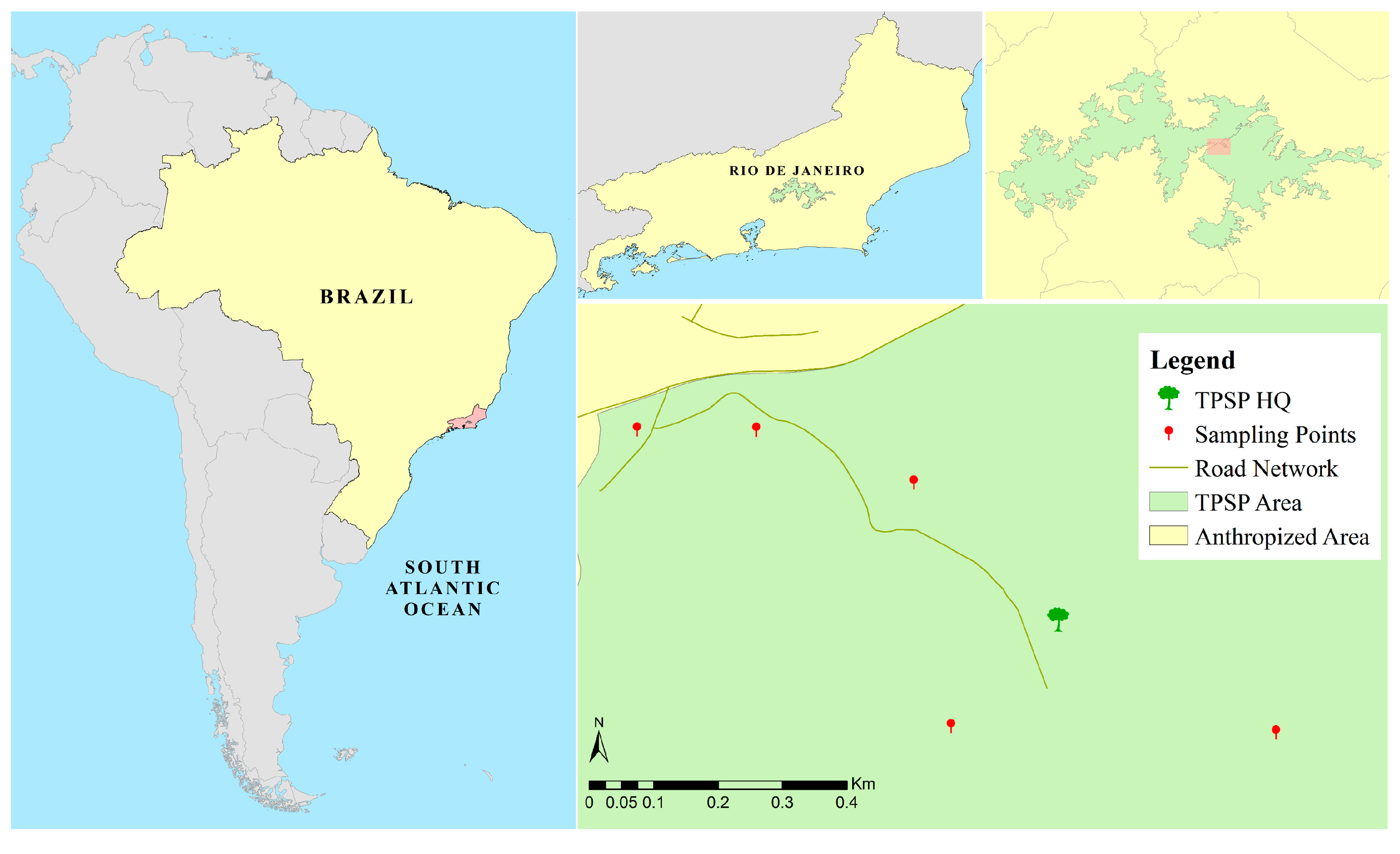
Located in Rio de Janeiro, Brazil, the Três Picos State Park (TPSP) (
Figure 1) encompasses around 58,790 ha in five cities and is the biggest conservation area in the state, composing the Atlantic Forest ecological corridor. It presents a great diversity of fauna and flora; however, it faces anthropic pressure from illegal activities, urbanization, and wildfires [
2].
2.1. Sampling Methods
Collections were carried out quarterly, starting in the winter of 2021 (June) and ongoing for two years, until the autumn of 2023 (May) to cover possible seasonality for the taxa of interest. The edge effect was assessed through collections carried out over a gradient of 1000 m from the edge toward the interior of the forest, totaling five sampling points (0, 200, 400, 700, and 1000 m,
Figure 1,
Table 1), in areas close to the town of Cachoeiras de Macacu. In order to measure the three-dimensional structure and infer the habitat quality and niche availability, the sampling points were characterized via the following vegetation parameters, considering the vegetation within a 3 m radius from each trap: circumference at breast height (CBH); density and richness of vegetation within a radius of 3 m from the traps, considering those with CBH greater than 5 cm; leaf density of shrubs, using a 1 m ruler extended at the 4 cardinal points from the trap site, at a height of 1.5 m, and quantifying how many leaves it touched; and canopy cover, using the Canopeo application (Oklahoma State University) to measure this value via photographs, which were always taken from the same height (1.5 m), oriented toward the north, and at approximately the same time.
Two traps following the model described by Mello et al. [
31] were exposed at each sampling point for 48 h, at least 5 m apart and 1.5 m away from the ground. In this way, 10 traps were used per period, totaling 80 traps. The bait used was 300 g of preserved beef liver per trap, bought from a butcher and kept frozen until 24 h before each sampling, when they were moved to the fridge to defrost. After collection, the samples were moved to polyethylene containers and properly identified. The collected specimens were euthanized using absorbent cotton soaked with ethyl alcohol + ethyl acetate solution. The containers containing the samples were transported to the Laboratory for Diptera Studies at the Universidade Federal do Estado do Rio de Janeiro (LED-UNIRIO), where they were kept at −5 °C.
For taxonomic identification, the insects were defrosted and dried using heating light and absorbent paper. The identification of the material consisted of a previous sorting to separate Calliphoridae and Mesembrinellidae from other insects on the basis of morphological characteristics. The dipterans from these families were then pinned, and the species were identified by their morphological characteristics with the aid of a stereoscope, following the taxonomic keys by Mello [
32] and Kosmann et al. [
33], with updates from Whitworth and Yussef-Venegas [
30]. The material was pinned and sent to the entomological collections of the LED and the National Museum (Universidade Federal do Rio de Janeiro) and are awaiting the assignment of voucher numbers, and the remaining material was placed in entomological envelopes and stored in the LED collection. Once confirmed, these numbers will be made publicly available and included in the
Supplementary Material, ensuring long-term preservation, traceability, and accessibility for future research. The data on abundance was tabulated using Microsoft Office Excel 2019, recording the period and site of each sample, for further analysis using RStudio (2025.09.2).
Data for the environmental parameter of temperature (°C), humidity (%), and rainfall (mm) from the sampling days were obtained from the National Institute of Meteorology’s Database (BDMEP:
http://www.inmet.gov.br/, accessed on 11 October 2023), referring to the meteorological station of Salinas, Nova Friburgo (A624), the closest station located ≅14 km from the sampling sites.
2.2. Statistical Analysis
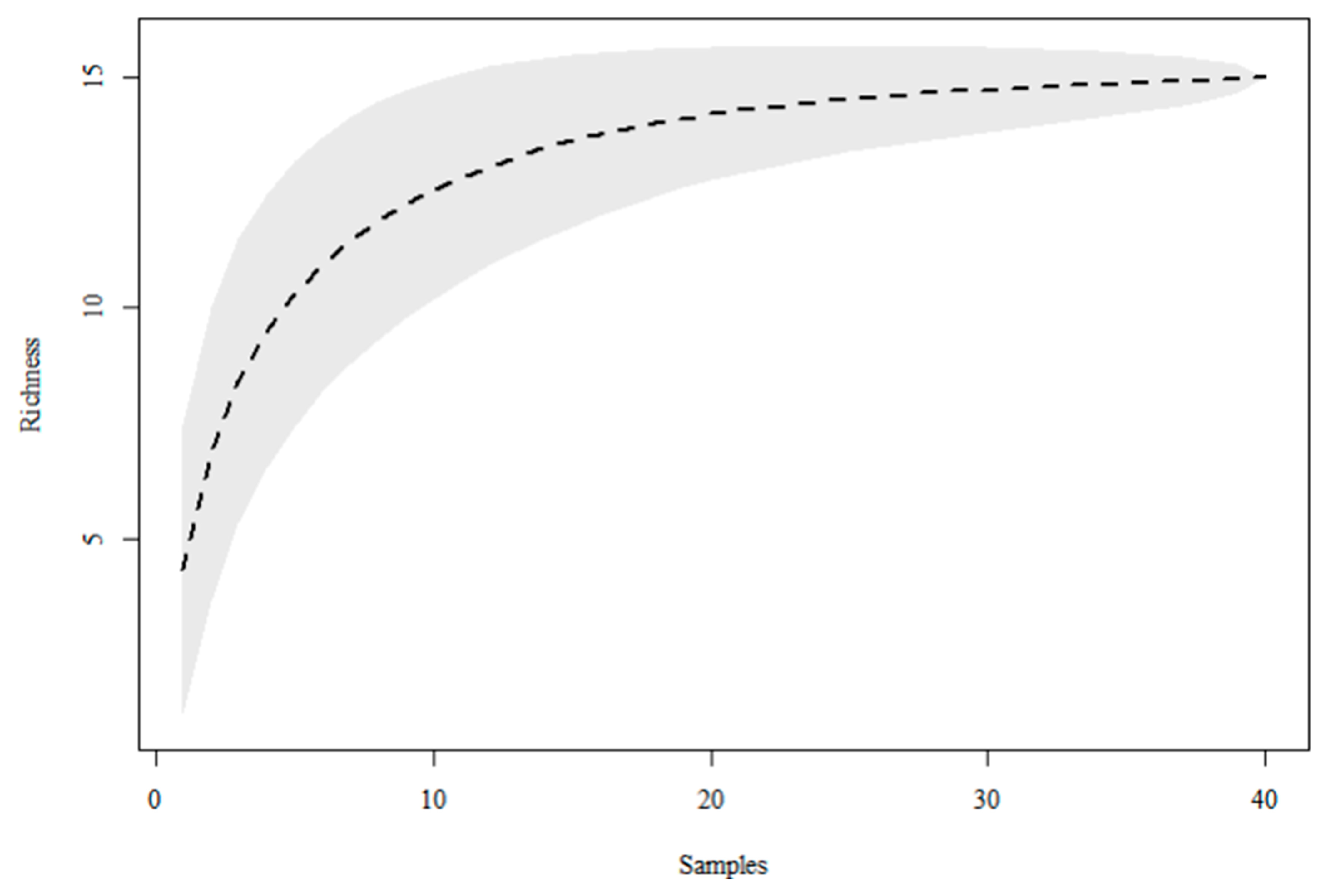
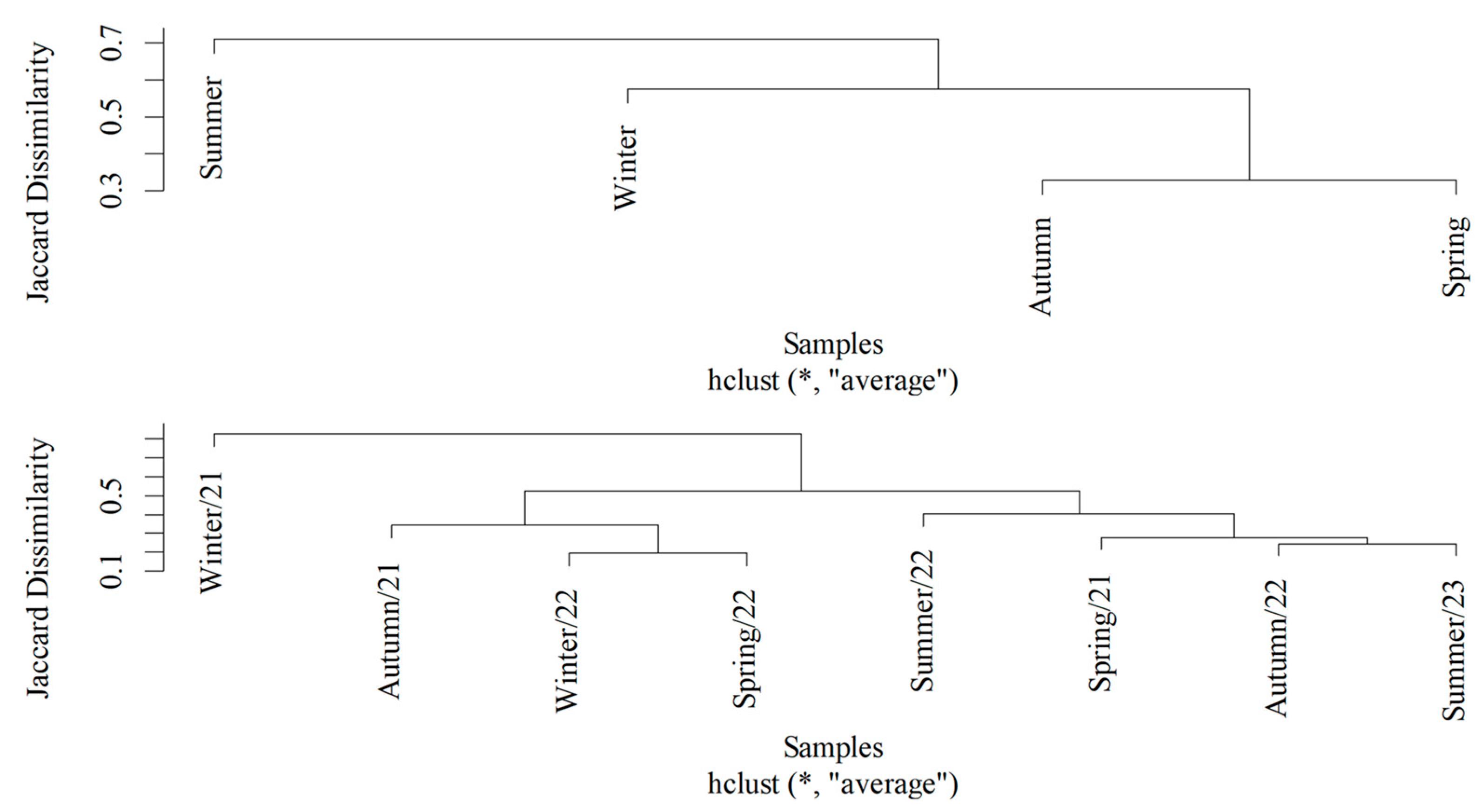
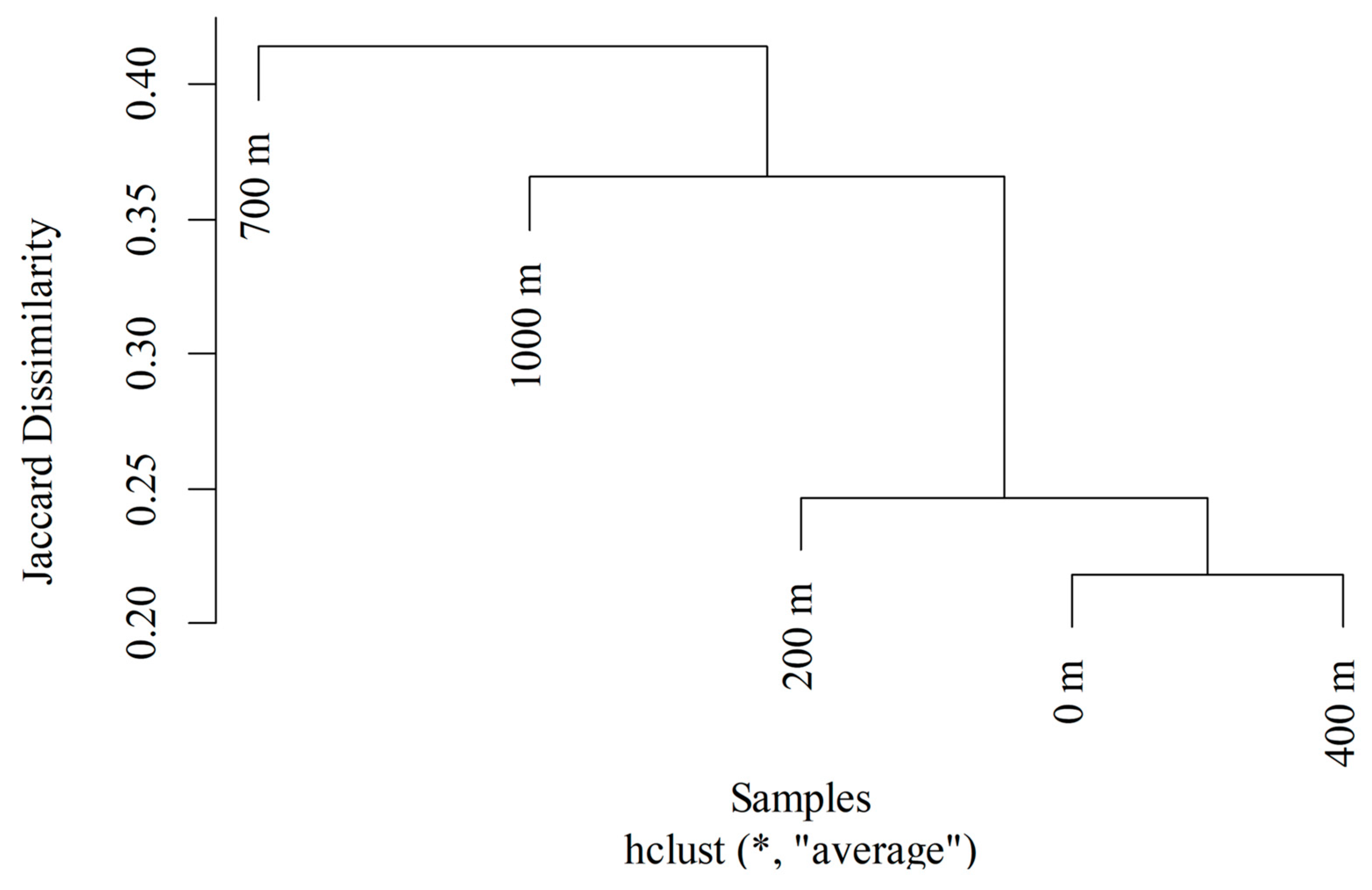
A Coleman curve was produced in order to evaluate whether the sampling effort was enough to reflect the local community. The indices of richness (S), diversity (Shannon–Wiener index, H’), dominance (inverted Simpson index, 1 − D), and evenness (Pielou index, J’) were used to describe the diversity of the species, in addition to Jaccard dissimilarity for the comparison of samples, with measurements of the effects of turnover and nestedness (beta–multi). Next, Jaccard distance (vegdist function, vegan package) cluster plots were produced to illustrate these findings.
To investigate the factors that influence fly abundance, Generalized Linear Mixed Models (GLMMs) with negative binomial distribution (glmmTMB) were adjusted. Due to the strong collinearity between seasonal, climatic, and spatial variables, the analyses were conducted in two sets of independent models. The first evaluated the spatiotemporal variation in abundance as a function of year, season, and collection point. The second evaluated the influence of environmental and structural variables of vegetation, using only continuous predictors. The models were structured in two sets to avoid severe collinearity between variables: GLMM1—spatiotemporal model, evaluating the influence of the year, season, and point of collection on the total abundance of flies, including species as a random intercept effect to control for interspecific heterogeneity: Abundance ∼ Year + Season + Point + (1∣Species). This model allowed the evaluation of seasonal and interannual patterns, as well as spatial variation between points, without the bias caused by collinearity with continuous environmental or structural variables. GLMM2—environmental and structural model, which evaluated the effects of environmental and vegetation variables on fly abundance, using only continuous predictors (temperature, relative humidity, precipitation, PAC, leaf density, tree density, and canopy cover) and again including species as a random effect: Abundance ∼ Temperature + Humidity + Rainfall + CBH + TDens + LDens + Canopy + (1∣Species). This model investigated the environmental and structural drivers of abundance, separately from spatiotemporal variation.
Finally, a diversity analysis of additive diversity partitioning and hierarchical null models (adipart) was performed to evaluate the variation in richness and diversity among the different scales sampled. For all analyses, a significance index of 5% (α = 0.05) was considered.
4. Discussion
Anthropic impacts directly impact the richness, abundance and composition of dipterans, favoring the synanthropic species, which are adapted to explore and thrive on human-made resources [
11]. Sousa et al. [
11,
34] studied several biomes impacted by cattle ranching and observed the strong influence of human impacts on Calliphoridae, Mesembrinellidae and Sarcophagidae and noted that the higher the heterogeneity of the preserved environment, the higher is the impact after anthropization, due to the diversity of niche loss. However, the authors highlight that the relation between anthropogenic impacts and diversity is not always evident, as the local extinction of forest specialists will be balanced by the arrival of more generalist taxa. When the level of impact is intermediate, it is also possible to observe the increase in richness and diversity, which may be related to the intermediate disturbance hypothesis [
35], when species from both the preserved and the impacted areas coexist in the transition area. Although the area studied is placed near the urban area of Cachoeiras de Macacu, and close to a highway, where anthropic impacts are constant and expected to impact the local communities, the community homogeneity along the forest gradient observed in our study indicates a preserved and stable state of this conservation unity. Thus, the edge effect is not acting on the communities of Calliphoridae and Mesembrinelliae in the studied sites.
Mesembrinellidae are exclusively forest-related and Neotropical, with
M. bellardiana and
La. nigripes often observed as abundant in forest areas with well-preserved characteristics [
36,
37], even when the abundance of Calliphoridae is high, indicating that this species has great plasticity [
36,
37,
38]. It is suggested that the Mesembrinellidae fauna varies in constitution from the edge of a forest remnant and that environmental variations can interfere with the capture of these dipterans [
3]. According to Gadelha et al. [
10], the edge effect results from fragmentation and habitat modifications caused by human activity, resulting in changes in the structure, composition and/or abundance of species, and can extend up to 500 m into the fragment. However, our observations along the edge gradient revealed that the abundance of the species did not vary with distance. Although a distance gradient was made, the collection points do not necessarily reflect a gradient of environmental quality, as observed through the characterization of the vegetation parameters at each point. As discussed by Orlandin et al. [
39], the absence of differences observed in our study between the sampled points can be explained by the continuity between the gradients, which does not present any physical barrier for organisms with a dispersion capacity as high as that of the muscoid dipterans. These authors also reported greater dissimilarity between marginal environments and more internal environments, which corroborates the results of this study.
Other studies indicate that the greatest richness and diversity are common in the marginal portions of the fragments, opposing our findings. When studying insect diversity along a forest gradient in Indonesia, Darsono et al. [
7] reported greater insect richness and diversity between 0 and 50 m away from the edge. When only the order Diptera was analyzed, however, no difference was observed, which the authors associated with the feeding habits of these insects being the most relevant determining factor for their distribution (presence of flowers, fruits, feces, and carcasses along the gradient). González et al. [
8], when studying a fragment of Chaco serrano in Argentina, reported greater richness and abundance at the edge of the environment for the order Diptera, since these places are accessible for resource exploitation both by forest matrices and by anthropized environments. The authors suggest that this area is preferred by these insects for “resource mapping” because along this gradient, they enjoy both forest and anthropic resources (garbage, carcasses from roadkill, among others).
Measurements of vegetation parameters help us understand the preservation and microclimate conditions of each collection point. In more preserved environments, a high degree of stability is expected, allowing some plant species to develop fully and form a denser canopy cover, protecting the area from the wind and direct sunlight. As a result, the vegetation in the lower strata receives less sunlight, which hinders its development. This scenario leads to few well-developed trees with a high CBH, while many seedlings and epiphytes develop, reducing plant and leaf density in the lower strata. In impacted environments, disturbances, such as fallen trees, are expected to create openings in the canopy, allowing more sunlight and wind to enter and the development of more seedlings to more developed stages, increasing plant and leaf density in the lower strata until this space is occupied or, if disturbances are frequent, until the environment is unable to recover [
40]. Vegetation structure may influence the composition of local fauna, since the environmental complexity observed in more preserved and heterogeneous sites offers a greater diversity of niches [
11,
41]. In addition, plant structure alters the local microclimate, such as maintaining local humidity through evapotranspiration [
6]. Therefore, by identifying the relationship between a species and the characteristics of the vegetation, we can indirectly infer this relationship to shading, warmer temperatures, and more humid environments, among other possibilities. These dipterans also act as pollinating agents, as in the case of species that have evolved to exude odors similar to decomposing organic matter, making them attractive; therefore, their distribution can be affected by the presence of this specialized flora [
6,
42,
43]. Some authors also report the preference of Mesembrinellidae for decomposing plant organic matter, which may determine their distribution on the basis of the availability of resources such as decomposing fruit [
44,
45]. However, the vegetation parameters evaluated in our study did not show significant influence on the abundance of these dipterans, which suggests that vegetation structure alone was insufficient in overriding the effects of dispersal and seasonal climatic parameters.
The analysis of diversity by collection points seems to be more related to the characteristics of each point, with greater diversity and equity at the points with greater canopy cover, characteristic of a more preserved environment, whereas the points at 200 and 1000 m presented the lowest coverage and the highest dominance. Although the altitude variation between the points is low, it may influence the distribution of these insects; however, a more in-depth study is necessary. Other factors may cause this variation, such as resource availability, but it was not possible to measure these factors during this study. Because they are exclusively forested, Mesembrinellidae are adapted to milder climates and wetter environments. On the other hand, Calliphoridae have an advantage in warmer environments. Therefore, the highest indices of richness, diversity and equity occurred in the winter climatic season. In the warmer seasons, especially during the summer, Calliphoridae presented more favorable conditions and multiplied, increasing dominance and decreasing diversity and equity. The considerable stability of the populations of M. bellardiana and La. nigripes over the years of collection is notable, indicating the adaptation of these insects to the conditions of the forest environment studied.
Seasonal variation has been reported in several studies, with the greatest capture of these dipterans occurring during the winter and the opposite occurring during the summer, opposing the results of our study. On the other hand, Azevedo et al. [
27], in a study in Tijuca National Park, reported the greatest abundance in the summer and the greatest richness and diversity during the winter and spring. When three environments in Rio de Janeiro (forest, sandbank, and mangrove) were studied, Luz et al. [
46] also reported greater abundance during the summer months. Figueiredo et al. [
47], studying the community of these dipterans in the Botanical Garden of Rio de Janeiro, reported the same pattern. For Monteiro et al. [
48], the opposite was observed, with greater abundance in the milder months. These studies suggest that abiotic factors, intrinsic to each season, are the main determinants of the abundance and diversity of Diptera.
The temperature, relative humidity, and rainfall records provided by INMET during the collection period revealed relatively stable variables, despite the high amplitude of the temperature records. As expected, the highest temperatures occurred during the summer seasons, when the highest dipteran abundances were recorded, whereas the lowest temperatures were recorded during the winter seasons [
49], when the lowest total abundances were also observed. Humidity was also fairly stable throughout the seasons, whereas rainfall was more variable. These factors are often related to the abundance of species from the Calliphoridae and Mesembrinellidae families [
27,
34,
50]. Our findings show that temperature is a factor that favors the development of these insects, especially Calliphoridae, which exhibit gregarious behavior in their larval stage and have been reported to accelerate their development at relatively high ideal temperatures, whereas relatively low temperatures slow their development [
51,
52,
53]. Humidity is an important factor, as these are organisms whose desiccation can cause death. Rainfall, in turn, has an influence because it affects the flight capacity of these insects. These last two factors can also influence the availability of food and pupation substrate, making it unusable due to a lack or excess of humidity [
54]. However, no significant effect was detected in our findings for both variables.
The analysis of diversity partitioned for richness revealed that abundance within the same set of species was the main factor responsible for the variation in diversity along the edge gradient and between seasons through the dominance of a few more abundant species. This variation is evident in the diversity γ, indicating that there is no regional loss, i.e., these patterns indicate that edge effects reorganize dominance hierarchies without eroding the regional species pool. For diversity, the same pattern is observed for the edge gradient, but there is heterogeneity between the points, which can be explained by the mosaic of characteristics of each sample point. However, between seasons, it is possible to observe that the effect of local dominance is diluted.




 ,
,