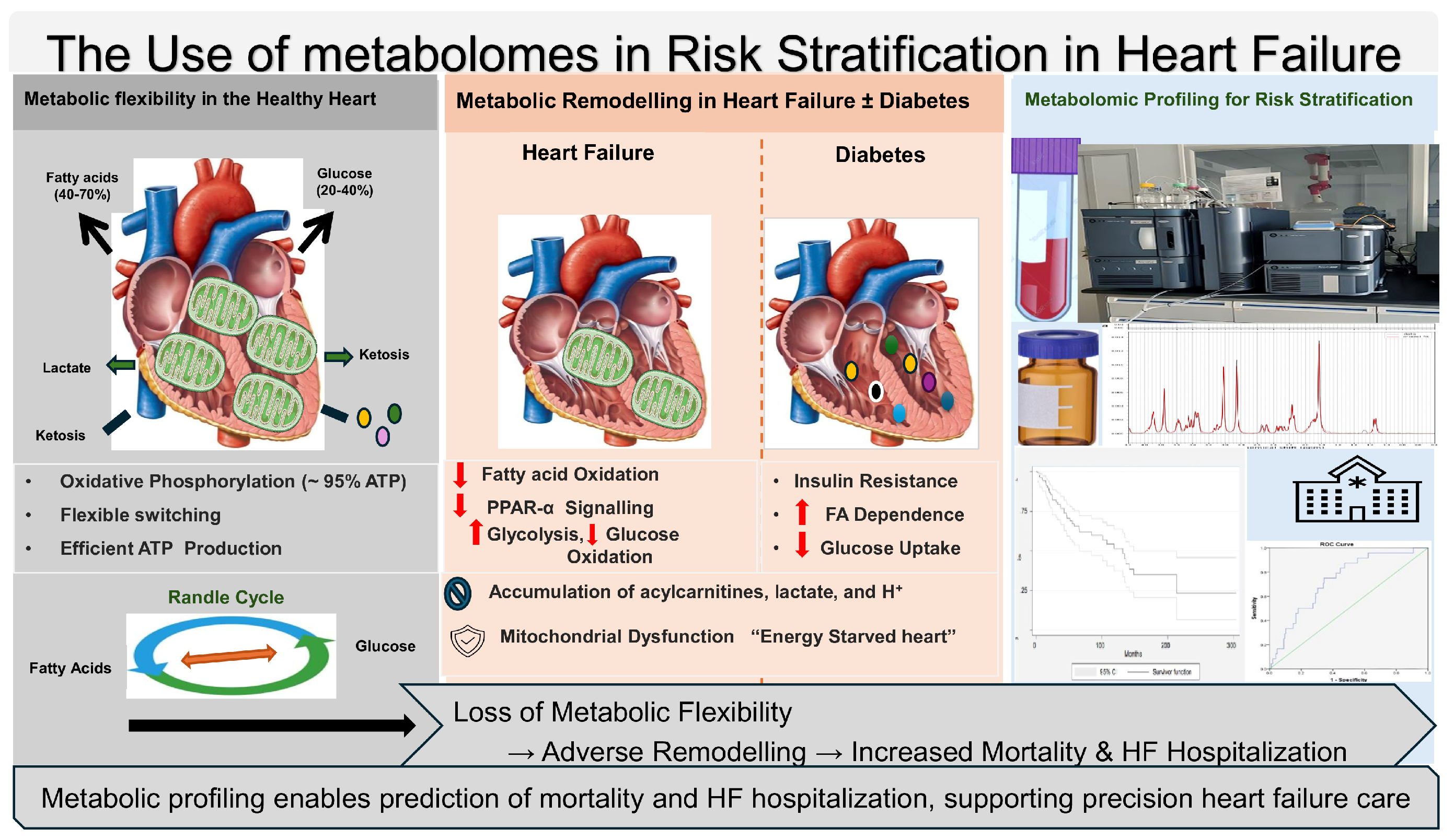
The Use of Metabolomes in Risk Stratification of Patients with Heart Failure: A Scoping Review
 , , ,
, , , 
Abstract
1. Introduction
2. Materials and Methods
2.1. Eligibility Criteria
2.1.1. Participants
2.1.2. Concept
2.1.3. Context
2.2. Types of Sources
2.3. Information Sources and Search Strategies
2.4. Study Selection
2.5. Data Extraction, Analysis, and Presentation
3. Results
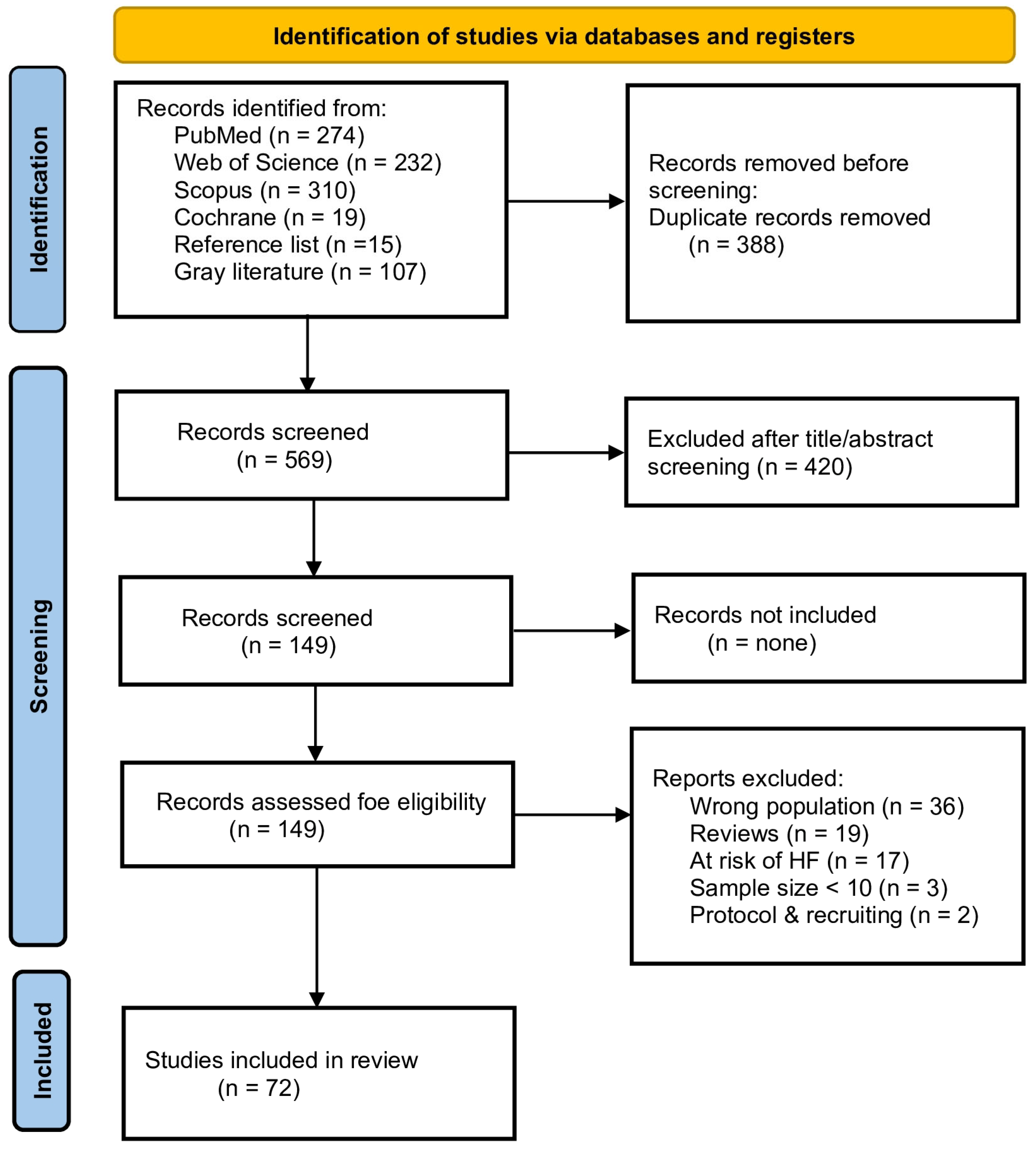
3.1. Study Inclusion
3.2. Characteristics of the Included Studies
3.3. Cardiac Energy Metabolism in Health and Disease
3.4. Analytical Platforms for Metabolomic Profiling in Heart Failure
3.5. Alterations in Energy Metabolism and Substrate Utilization
3.6. Amino Acid Metabolism
3.7. Lipidomics and Acylcarnitine Profiles
3.8. Inflammation, Oxidative Stress, and Polyamine Pathways
3.9. Gut Microbiome-Derived Metabolites
3.10. Phenotyping and Risk Stratification
3.11. Therapeutic and Mechanistic Insights
4. Discussion
5. Conclusions
6. Implications and Future Directions
Supplementary Materials
Author Contributions
Funding
Institutional Review Board Statement
Informed Consent Statement
Data Availability Statement
Acknowledgments
Conflicts of Interest
Abbreviations
| ATP | Adenosine triphosphate |
| HF | Heart failure |
| 1H-NMR | Nuclear magnetic resonance spectroscopy |
| JBI | Joanna Briggs Institute |
| LC-MS | Liquid chromatography mass spectrometry |
| NT-proBNP | N-terminal pro-B-type natriuretic peptide |
| TCA | Tricarboxylic acid |
References
- Khan, M.S.; Shahid, I.; Bennis, A.; Rakisheva, A.; Metra, M.; Butler, J. Global epidemiology of heart failure. Nat. Rev. Cardiol. 2024, 21, 717–734. [Google Scholar] [CrossRef] [PubMed]
- Virani, S.S.; Alonso, A.; Aparicio, H.J.; Benjamin, E.J.; Bittencourt, M.S.; Callaway, C.W.; Carson, A.P.; Chamberlain, A.M.; Cheng, S.; Delling, F.N.; et al. Heart Disease and Stroke Statistics-2021 Update: A Report from the American Heart Association. Circulation 2021, 143, e254–e743. [Google Scholar] [CrossRef] [PubMed]
- McDonagh, T.A.; Metra, M.; Adamo, M.; Gardner, R.S.; Baumbach, A.; Böhm, M.; Burri, H.; Butler, J.; Čelutkienė, J.; Chioncel, O.; et al. 2021 ESC Guidelines for the diagnosis and treatment of acute and chronic heart failure. Eur. Heart J. 2021, 42, 3599–3726. [Google Scholar] [CrossRef] [PubMed]
- Heidenreich, P.A.; Bozkurt, B.; Aguilar, D.; Allen, L.A.; Byun, J.J.; Colvin, M.M.; Deswal, A.; Drazner, M.H.; Dunlay, S.M.; Evers, L.R.; et al. 2022 AHA/ACC/HFSA Guideline for the Management of Heart Failure: Executive Summary. Circulation 2022, 145, e876–e894. [Google Scholar] [CrossRef]
- Shahim, B.; Kapelios, C.J.; Savarese, G.; Lund, L.H. Global Public Health Burden of Heart Failure: An Updated Review. Card. Fail. Rev. 2023, 9, e11. [Google Scholar] [CrossRef]
- Vancheri, F.; Longo, G.; Henein, M.Y. Left ventricular ejection fraction: Clinical, pathophysiological, and technical limitations. Front. Cardiovasc. Med. 2024, 11, 1340708. [Google Scholar] [CrossRef]
- Rosano, G.M.C.; Teerlink, J.R.; Kinugawa, K.; Bayes-Genis, A.; Chioncel, O.; Fang, J.; Greenberg, B.; Ibrahim, N.E.; Imamura, T.; Inomata, T.; et al. The use of left ventricular ejection fraction in the diagnosis and management of heart failure: A clinical consensus statement. Eur. J. Heart Fail. 2025, 27, 1174–1187. [Google Scholar] [CrossRef]
- Palazzuoli, A.; Ruocco, G.; Ambrosy, A.P. Heart failure and left ventricular ejection fraction: A necessary but imperfect partnership. Heart Fail. Rev. 2025, 30, 1481–1488. [Google Scholar] [CrossRef]
- Raymond, I.; A Groenning, B.; Hildebrandt, P.R.; Nilsson, J.C.; Baumann, M.; Trawinski, J.; Pedersen, F. The influence of age, sex and other variables on the plasma level of N-terminal pro brain natriuretic peptide in a large sample of the general population. Heart 2003, 89, 745–751. [Google Scholar] [CrossRef]
- Taylor, C.J.; Taylor, K.S.; Jones, N.R.; Ordóñez-Mena, J.M.; Bayes-Genis, A.; Hobbs, F.D.R. Age-adjusted natriuretic peptide thresholds for a diagnosis of heart failure in the community: Diagnostic accuracy study. ESC Heart Fail. 2025, 12, 3552–3568. [Google Scholar] [CrossRef]
- Vergaro, G.; Gentile, F.; Meems, L.M.G.; Aimo, A.; Januzzi, J.L., Jr.; Richards, A.M.; Lam, C.S.P.; Latini, R.; Staszewsky, L.; Anand, I.S.; et al. NT-proBNP for Risk Prediction in Heart Failure: Identification of Optimal Cutoffs Across Body Mass Index Categories. JACC Heart Fail. 2021, 9, 653–663. [Google Scholar] [CrossRef]
- Hahn, V.S.; Selvaraj, S.; Sharma, K.; Shah, S.H. Towards Metabolomic-Based Precision Approaches for Classifying and Treating Heart Failure. JACC Basic Transl. Sci. 2024, 9, 1144–1158. [Google Scholar] [CrossRef] [PubMed]
- Neves, L.S.; Saraiva, F.; Ferreira, R.; Leite-Moreira, A.; Barros, A.S.; Diaz, S.O. Metabolomics and Cardiovascular Risk in Patients with Heart Failure: A Systematic Review and Meta-Analysis. Int. J. Mol. Sci. 2024, 25, 5693. [Google Scholar] [CrossRef] [PubMed]
- Lopaschuk, G.D.; Karwi, Q.G.; Tian, R.; Wende, A.R.; Abel, E.D. Cardiac Energy Metabolism in Heart Failure. Circ. Res. 2021, 128, 1487–1513. [Google Scholar] [CrossRef] [PubMed]
- Culler, K.L.; Sinha, A.; Filipp, M.; Giro, P.; Allen, N.B.; Taylor, K.D.; Guo, X.; Thorp, E.; Freed, B.H.; Greenland, P.; et al. Metabolomic profiling identifies novel metabolites associated with cardiac dysfunction. Sci. Rep. 2024, 14, 20694. [Google Scholar] [CrossRef]
- Tang, H.-Y.; Wang, C.-H.; Ho, H.-Y.; Lin, J.-F.; Lo, C.-J.; Huang, C.-Y.; Cheng, M.-L. Characteristic of Metabolic Status in Heart Failure and Its Impact in Outcome Perspective. Metabolites 2020, 10, 437. [Google Scholar] [CrossRef]
- Arksey, H.; O’Malley, L. Scoping studies: Towards a methodological framework. Int. J. Soc. Res. Methodol. 2005, 8, 19–32. [Google Scholar] [CrossRef]
- Tricco, A.C.; Lillie, E.; Zarin, W.; O’Brien, K.K.; Colquhoun, H.; Levac, D.; Moher, D.; Peters, M.D.J.; Horsley, T.; Weeks, L.; et al. PRISMA Extension for Scoping Reviews (PRISMA-ScR): Checklist and Explanation. Ann. Intern. Med. 2018, 169, 467–473. [Google Scholar] [CrossRef]
- Adamu, U.G.; Badianyama, M.; Mpanya, D.; Maseko, M.; Tsabedze, N. The Use of Metabolomes in Risk Stratification of Heart Failure Patients: Protocol for a Scoping Review. JMIR Res. Protoc. 2024, 13, e53905. [Google Scholar] [CrossRef]
- Peters, M.D.J.; Marnie, C.; Tricco, A.C.; Pollock, D.; Munn, Z.; Alexander, L.; McInerney, P.; Godfrey, C.M.; Khalil, H. Updated methodological guidance for the conduct of scoping reviews. JBI Evid. Synth. 2020, 18, 2119–2126. [Google Scholar] [CrossRef]
- Abudurexiti, M.; Abuduhalike, R.; Naman, T.; Wupuer, N.; Duan, D.; Keranmu, M.; Mahemuti, A. Integrated proteomic and metabolomic profiling reveals novel insights on the inflammation and immune response in HFpEF. BMC Genom. 2024, 25, 676. [Google Scholar] [CrossRef]
- de Oliveira, R.M.; Paiva, M.U.B.; Picossi, C.R.C.; Paiva, D.V.N.; Ricart, C.A.O.; Ruperez, F.J.; Barbas, C.; Atik, F.A.; Martins, A.M.A. Metabolomic insights in advanced cardiomyopathy of chronic chagasic and idiopathic patients that underwent heart transplant. Sci. Rep. 2024, 14, 9810. [Google Scholar] [CrossRef] [PubMed]
- Yang, C.; Shi, Z.; Bao, L.; Xv, X.; Jiang, D.; You, L. Targeted metabolomic analysis of serum amino acids in heart failure patients. Amino Acids 2024, 56, 22. [Google Scholar] [CrossRef] [PubMed]
- Joo, J.; Shearer, J.J.; Wolska, A.; Remaley, A.T.; Otvos, J.D.; Connelly, M.A.; Sampson, M.; Bielinski, S.J.; Larson, N.B.; Park, H.; et al. Incremental Value of a Metabolic Risk Score for Heart Failure Mortality: A Population-Based Study. Circ. Genom. Precis. Med. 2024, 17, e004312. [Google Scholar] [CrossRef] [PubMed]
- Yang, Z.; Tian, L.; Wu, H.; Li, H.; Gu, Y.; Ren, D.; Zhuang, K.; Zhao, Y.; Zhang, H.; Yi, L.; et al. Blood Metabolomics Reveals the Metabolic Disorder in Disease Progression for Patients with Ischemic Heart Disease. J. Chin. Mass Spectr. Soc. 2024, 45, 256–268. [Google Scholar]
- Zhou, G.; Zhang, J.; Guo, H.; Hu, X.; Wang, Y.; Shi, K.; Liu, T.; Yin, S.; Liu, H.; Liu, C.; et al. Discovery and Validation of Potential Serum Biomarkers for Heart Failure by Untargeted Metabolomics. Cardiovasc. Ther. 2024, 2024, 7004371. [Google Scholar] [CrossRef]
- Bekfani, T.; Bekhite, M.; Neugebauer, S.; Derlien, S.; Hamadanchi, A.; Nisser, J.; Hilse, M.S.; Haase, D.; Kretzschmar, T.; Wu, M.-F.; et al. Metabolomic Profiling in Patients with Heart Failure and Exercise Intolerance: Kynurenine as a Potential Biomarker. Cells 2022, 11, 1674. [Google Scholar] [CrossRef]
- Ma, K.; Yang, J.; Shao, Y.; Li, P.; Guo, H.; Wu, J.; Zhu, Y.; Zhang, H.; Zhang, X.; Du, J.; et al. Therapeutic and Prognostic Significance of Arachidonic Acid in Heart Failure. Circ. Res. 2022, 130, 1056–1071. [Google Scholar] [CrossRef]
- Vignoli, A.; Fornaro, A.; Tenori, L.; Castelli, G.; Cecconi, E.; Olivotto, I.; Marchionni, N.; Alterini, B.; Luchinat, C. Metabolomics Fingerprint Predicts Risk of Death in Dilated Cardiomyopathy and Heart Failure. Front. Cardiovasc. Med. 2022, 9, 851905. [Google Scholar] [CrossRef]
- Zhao, H.; Shui, B.; Zhao, Q.; Hu, Z.; Shu, Q.; Su, M.; Zhang, Y.; Ni, Y. Quantitative Metabolomics Reveals Heart Failure With Midrange Ejection Fraction as a Distinct Phenotype of Heart Failure. Can. J. Cardiol. 2021, 37, 300–309. [Google Scholar] [CrossRef]
- Wang, Z.; Cai, Z.; Ferrari, M.W.; Liu, Y.; Li, C.; Zhang, T.; Lyu, G. The Correlation between Gut Microbiota and Serum Metabolomic in Elderly Patients with Chronic Heart Failure. Mediat. Inflamm. 2021, 2021, 5587428. [Google Scholar] [CrossRef] [PubMed]
- Oyetoro, R.O.; Conners, K.M.; Joo, J.; Turecamo, S.; Sampson, M.; Wolska, A.; Remaley, A.T.; Otvos, J.D.; Connelly, M.A.; Larson, N.B.; et al. Circulating ketone bodies and mortality in heart failure: A community cohort study. Front. Cardiovasc. Med. 2024, 11, 1293901. [Google Scholar] [CrossRef] [PubMed]
- Ahmad, A.F.; Caparrós-Martin, J.A.; Gray, N.; Lodge, S.; Wist, J.; Lee, S.; O’gAra, F.; Shah, A.; Ward, N.C.; Dwivedi, G. Insights into the associations between the gut microbiome, its metabolites, and heart failure. Am. J. Physiol. Heart Circ. Physiol. 2023, 325, H1325–H1336. [Google Scholar] [CrossRef] [PubMed]
- Belenkov, Y.N.; Ageev, A.A.; Kozhevnikova, M.V.; Khabarova, N.V.; Krivova, A.V.; Korobkova, E.O.; Popova, L.V.; Emelyanov, A.V.; Appolonova, S.A.; Moskaleva, N.E.; et al. Relationship of Acylcarnitines to Myocardial Ischemic Remodeling and Clinical Manifestations in Chronic Heart Failure. J. Cardiovasc. Dev. Dis. 2023, 10, 438. [Google Scholar] [CrossRef]
- Klobučar, I.; Vidović, L.; Arih, I.; Lechleitner, M.; Pregartner, G.; Berghold, A.; Habisch, H.; Madl, T.; Frank, S.; Degoricija, V. Low Valine Serum Levels Predict Increased 1-Year Mortality in Acute Heart Failure Patients. Biomolecules 2023, 13, 1323. [Google Scholar] [CrossRef]
- Park, J.K.; Petrazzini, B.O.; Saha, A.; Vaid, A.; Vy, H.M.T.; Márquez-Luna, C.; Chan, L.; Nadkarni, G.N.; Do, R. Machine Learning Identifies Plasma Metabolites Associated With Heart Failure in Underrepresented Populations With the TTR V122I Variant. J. Am. Heart Assoc. 2023, 12, e027736. [Google Scholar] [CrossRef]
- Hahn, V.S.; Petucci, C.; Kim, M.-S.; Bedi, K.C., Jr.; Wang, H.; Mishra, S.; Koleini, N.; Yoo, E.J.; Margulies, K.B.; Arany, Z.; et al. Myocardial Metabolomics of Human Heart Failure With Preserved Ejection Fraction. Circulation 2023, 147, 1147–1161. [Google Scholar] [CrossRef]
- Gladding, P.A.; Cooper, M.; Young, R.; Loader, S.; Smith, K.; Zarate, E.; Green, S.; Boas, S.G.V.; Shepherd, P.; Kakadiya, P.; et al. Metabolomics and a Breath Sensor Identify Acetone as a Biomarker for Heart Failure. Biomolecules 2022, 13, 13. [Google Scholar] [CrossRef]
- Zhang, H.; Wang, L.; Yin, D.; Zhou, Q.; Lv, L.; Dong, Z.; Shi, Y. Integration of proteomic and metabolomic characterization in atrial fibrillation-induced heart failure. BMC Genom. 2022, 23, 789. [Google Scholar] [CrossRef]
- Xu, M.; Cui, H.; Chen, X.; Hua, X.; Song, J.; Hu, S. Changes of Plasma Tris(hydroxymethyl)aminomethane and 5-Guanidino-3-methyl-2-oxopentanoic Acid as Biomarkers of Heart Remodeling after Left Ventricular Assist Device Support. Metabolites 2022, 12, 1068. [Google Scholar]
- Anguita, E.; Chaparro, A.; Candel, F.J.; Ramos-Acosta, C.; Martínez-Micaelo, N.; Amigó, N.; Torrejón, M.J.; Llopis-García, G.; Suárez-Cadenas, M.d.M.; Matesanz, M.; et al. Biomarkers of stable and decompensated phases of heart failure with preserved ejection fraction. Int. J. Cardiol. 2022, 361, 91–100. [Google Scholar] [CrossRef] [PubMed]
- Truby, L.K.; Regan, J.A.; Giamberardino, S.N.; Ilkayeva, O.; Bain, J.; Newgard, C.B.; O’Connor, C.M.; Felker, G.M.; Kraus, W.E.; McGarrah, R.W.; et al. Circulating long chain acylcarnitines and outcomes in diabetic heart failure: An HF-ACTION clinical trial substudy. Cardiovasc. Diabetol. 2021, 20, 161. [Google Scholar] [CrossRef] [PubMed]
- Zhou, J.; Chen, X.; Chen, W.; Zhong, L.; Cui, M. Comprehensive plasma metabolomic and lipidomic analyses reveal potential biomarkers for heart failure. Mol. Cell. Biochem. 2021, 476, 3449–3460. [Google Scholar] [CrossRef] [PubMed]
- Xu, Y.; Yingjie, C.; Weimin, B.; Shenglong, Z.; Hailin, P.; Lijie, Q. The diagnostic value of metabolomics in patients with acute heart failure. Chin. J. Emerg. Med. 2021, 30, 485–490. [Google Scholar]
- Zordoky, B.N.; Sung, M.M.; Ezekowitz, J.; Mandal, R.; Han, B.; Bjorndahl, T.C.; Bouatra, S.; Anderson, T.; Oudit, G.Y.; Wishart, D.S.; et al. Metabolomic fingerprint of heart failure with preserved ejection fraction. PLoS ONE 2015, 10, e0124844. [Google Scholar] [CrossRef]
- Mueller-Hennessen, M.; Sigl, J.; Fuhrmann, J.C.; Witt, H.; Reszka, R.; Schmitz, O.; Kastler, J.; Fischer, J.J.; Müller, O.J.; Giannitsis, E.; et al. Metabolic profiles in heart failure due to non-ischemic cardiomyopathy at rest and under exercise. ESC Heart Fail. 2017, 4, 178–189. [Google Scholar] [CrossRef]
- Marcinkiewicz-Siemion, M.; Kaminski, M.; Ciborowski, M.; Ptaszynska-Kopczynska, K.; Szpakowicz, A.; Lisowska, A.; Jasiewicz, M.; Tarasiuk, E.; Kretowski, A.; Sobkowicz, B.; et al. Machine-learning facilitates selection of a novel diagnostic panel of metabolites for the detection of heart failure. Sci. Rep. 2020, 10, 130. [Google Scholar] [CrossRef]
- Kretzschmar, T.; Westphal, J.; Neugebauer, S.; Wu, J.M.F.; Zeller, M.; Bogoviku, J.; Bekhite, M.M.; Bekfani, T.; Schlattmann, P.; Kiehntopf, M.; et al. Metabolic Profiling Identifies 1-MetHis and 3-IPA as Potential Diagnostic Biomarkers for Patients With Acute and Chronic Heart Failure With Reduced Ejection Fraction. Circ. Heart Fail. 2024, 17, e010813. [Google Scholar] [CrossRef]
- Hannemann, A.; Ameling, S.; Lehnert, K.; Dörr, M.; Felix, S.B.; Nauck, M.; Al-Noubi, M.N.; Schmidt, F.; Haas, J.; Meder, B.; et al. Integrative Analyses of Circulating Proteins and Metabolites Reveal Sex Differences in the Associations with Cardiac Function among DCM Patients. Int. J. Mol. Sci. 2024, 25, 6827. [Google Scholar] [CrossRef]
- Luan, H.; Chen, X.; Zhong, S.; Yuan, X.; Meng, N.; Zhang, J.; Fu, J.; Xu, R.; Lee, C.; Song, S.; et al. Serum metabolomics reveals lipid metabolism variation between coronary artery disease and congestive heart failure: A pilot study. Biomarkers 2013, 18, 314–321. [Google Scholar] [CrossRef]
- Liu, C.; Li, R.; Liu, Y.; Li, Z.; Sun, Y.; Yin, P.; Huang, R. Characteristics of Blood Metabolic Profile in Coronary Heart Disease, Dilated Cardiomyopathy and Valvular Heart Disease Induced Heart Failure. Front. Cardiovasc. Med. 2021, 7, 622236. [Google Scholar] [CrossRef]
- Wegermann, K.; Fudim, M.; Henao, R.; Howe, C.F.; McGarrah, R.; Guy, C.; Abdelmalek, M.F.; Diehl, A.M.; Moylan, C.A. Serum Metabolites Are Associated With HFpEF in Biopsy-Proven Nonalcoholic Fatty Liver Disease. J. Am. Heart Assoc. 2023, 12, e029873. [Google Scholar]
- Petrukhnova, M.F.; Krivova, A.V.; Zektser, V.Y.; Korobkova, E.O.; Edniev, T.N.; Ageev, A.A.; Shestakova, K.M.; Moskaleva, N.E.; Appolonova, S.A.; Belenkov, Y.N.; et al. Threonine in Different Phenotypes of Chronic Heart Failure With Preserved Ejection Fraction. Russ. Open Med. J. 2024, 13, e0304. [Google Scholar]
- Hilse, M.S.; Kretzschmar, T.; Pistulli, R.; Franz, M.; Bekfani, T.; Haase, D.; Neugebauer, S.; Kiehntopf, M.; Gummert, J.F.; Milting, H.; et al. Analysis of Metabolic Markers in Patients with Chronic Heart Failure before and after LVAD Implantation. Metabolites 2021, 11, 615. [Google Scholar] [CrossRef] [PubMed]
- Peng, Z.; Zhan, Q.; Xie, X.; Li, H.; Tu, Y.; Bai, Y.; Huang, X.; Lai, W.; Zhao, B.; Zeng, Q.; et al. Association between admission plasma 2-oxoglutarate levels and short-term outcomes in patients with acute heart failure: A prospective cohort study. Mol. Med. 2019, 25, 8. [Google Scholar] [CrossRef] [PubMed]
- Wang, J.; Li, Z.; Chen, J.; Zhao, H.; Luo, L.; Chen, C.; Xu, X.; Zhang, W.; Gao, K.; Li, B.; et al. Metabolomic identification of diagnostic plasma biomarkers in humans with chronic heart failure. Mol. Biosyst. 2013, 9, 2618–2626. [Google Scholar] [CrossRef] [PubMed]
- Du, Z.; Shen, A.; Huang, Y.; Su, L.; Lai, W.; Wang, P.; Xie, Z.; Xie, Z.; Zeng, Q.; Ren, H.; et al. 1H-NMR-based metabolic analysis of human serum reveals novel markers of myocardial energy expenditure in heart failure patients. PLoS ONE 2014, 9, e88102. [Google Scholar]
- Ahmad, T.; Kelly, J.P.; McGarrah, R.W.; Hellkamp, A.S.; Fiuzat, M.; Testani, J.M.; Wang, T.S.; Verma, A.; Samsky, M.D.; Donahue, M.P.; et al. Prognostic Implications of Long-Chain Acylcarnitines in Heart Failure and Reversibility With Mechanical Circulatory Support. J. Am. Coll. Cardiol. 2016, 67, 291–299. [Google Scholar] [CrossRef]
- Alexander, D.; Lombardi, R.; Rodriguez, G.; Mitchell, M.M.; Marian, A.J. Metabolomic distinction and insights into the pathogenesis of human primary dilated cardiomyopathy. Eur. J. Clin. Investig. 2011, 41, 527–538. [Google Scholar]
- Katano, S.; Yano, T.; Kouzu, H.; Nagaoka, R.; Numazawa, R.; Yamano, K.; Fujisawa, Y.; Ohori, K.; Nagano, N.; Fujito, T.; et al. Elevated circulating level of β-aminoisobutyric acid (BAIBA) in heart failure patients with type 2 diabetes receiving sodium-glucose cotransporter 2 inhibitors. Cardiovasc. Diabetol. 2022, 21, 285. [Google Scholar]
- Kouzu, H.; Katano, S.; Yano, T.; Ohori, K.; Nagaoka, R.; Inoue, T.; Takamura, Y.; Ishigo, T.; Watanabe, A.; Koyama, M.; et al. Plasma amino acid profiling improves predictive accuracy of adverse events in patients with heart failure. ESC Heart Fail. 2021, 8, 5045–5056. [Google Scholar] [CrossRef]
- Naeem, F.; Leone, T.C.; Petucci, C.; Shoffler, C.; Kodihalli, R.C.; Hidalgo, T.; Tow-Keogh, C.; Mancuso, J.; Tzameli, I.; Bennett, D.; et al. Targeted Quantitative Plasma Metabolomics Identifies Metabolite Signatures that Distinguish Heart Failure with Reduced and Preserved Ejection Fraction. medRxiv 2024, 2024.07.24.24310961. [Google Scholar] [CrossRef]
- Chen, Z.; Lu, D.; Qi, B.; Wu, Y.; Xia, Y.; Chen, A.; Li, S.; Tang, H.; Qian, J.; Ge, J. Quantitative Profiling of Serum Carnitines Facilitates the Etiology Diagnosis and Prognosis Prediction in Heart Failure. Molecules 2023, 28, 5345. [Google Scholar] [CrossRef] [PubMed]
- Conners, K.M.; Shearer, J.J.; Joo, J.; Park, H.; Manemann, S.M.; Remaley, A.T.; Otvos, J.D.; Connelly, M.A.; Sampson, M.; Bielinski, S.J.; et al. The Metabolic Vulnerability Index: A Novel Marker for Mortality Prediction in Heart Failure. JACC Heart Fail. 2024, 12, 290–300. [Google Scholar] [CrossRef] [PubMed]
- Teis, A.; Cediel, G.; Amigó, N.; Julve, J.; Aranyó, J.; Andrés-Cordón, J.; Puig-Jové, C.; Castelblanco, E.; Gual-Capllonch, F.; Ferrer-Sistach, E.; et al. Particle size and cholesterol content of circulating HDL correlate with cardiovascular death in chronic heart failure. Sci. Rep. 2021, 11, 3141. [Google Scholar] [CrossRef] [PubMed]
- Cheng, C.W.; Liu, M.H.; Tang, H.Y.; Cheng, M.L.; Wang, C.H. Factors associated with elevated plasma phenylalanine in patients with heart failure. Amino Acids 2021, 53, 149–157. [Google Scholar] [CrossRef]
- Chen, W.S.; Liu, M.H.; Cheng, M.L.; Wang, C.H. Decreases in Circulating Concentrations of Short-Chain Acylcarnitines are Associated with Systolic Function Improvement After Decompensated Heart Failure. Int. Heart J. 2020, 61, 1014–1021. [Google Scholar]
- Nayak, A.; Liu, C.; Mehta, A.; Ko, Y.A.; Tahhan, A.S.; Dhindsa, D.S.; Uppal, K.; Jones, D.P.; Butler, J.; Morris, A.A.; et al. N8-Acetylspermidine: A Polyamine Biomarker in Ischemic Cardiomyopathy With Reduced Ejection Fraction. J. Am. Heart Assoc. 2020, 9, e016055. [Google Scholar]
- Zhao, G.; Cheng, D.; Wang, Y.; Cao, Y.; Xiang, S.; Yu, Q. A metabolomic study for chronic heart failure patients based on a dried blood spot mass spectrometry approach. RSC Adv. 2020, 10, 19621–19628. [Google Scholar] [CrossRef]
- Guo, S.; Kong, J.; Zhou, D.; Lai, M.; Chen, Y.; Xie, D.; Wang, X.; Wang, D. Serum metabolic characteristics and biomarkers of early-stage heart failure. Biomark. Med. 2020, 14, 119–130. [Google Scholar]
- Hayashi, T.; Yamashita, T.; Watanabe, H.; Kami, K.; Yoshida, N.; Tabata, T.; Emoto, T.; Sasaki, N.; Mizoguchi, T.; Irino, Y.; et al. Gut Microbiome and Plasma Microbiome-Related Metabolites in Patients With Decompensated and Compensated Heart Failure. Circ. J. 2018, 83, 182–192. [Google Scholar] [CrossRef] [PubMed]
- Wang, C.H.; Cheng, M.L.; Liu, M.H. Amino Acid-Based Metabolic Panel Provides Robust Prognostic Value Additive to B-Natriuretic Peptide and Traditional Risk Factors in Heart Failure. Dis. Markers 2018, 2018, 3784589. [Google Scholar] [CrossRef] [PubMed]
- Du, X.; Li, Y.; Wang, Y.; You, H.; Hui, P.; Zheng, Y.; Du, J. Increased branched-chain amino acid levels are associated with long-term adverse cardiovascular events in patients with STEMI and acute heart failure. Life Sci. 2018, 209, 167–172. [Google Scholar] [CrossRef] [PubMed]
- Marcinkiewicz-Siemion, M.; Ciborowski, M.; Ptaszynska-Kopczynska, K.; Szpakowicz, A.; Lisowska, A.; Jasiewicz, M.; Waszkiewicz, E.; Kretowski, A.; Musial, W.; Kaminski, K. LC-MS-based serum fingerprinting reveals significant dysregulation of phospholipids in chronic heart failure. J. Pharm. Biomed. Anal. 2018, 154, 354–363. [Google Scholar] [CrossRef]
- Lanfear, D.E.; Gibbs, J.J.; Li, J.; She, R.; Petucci, C.; Culver, J.A.; Tang, W.W.; Pinto, Y.M.; Williams, L.K.; Sabbah, H.N.; et al. Targeted Metabolomic Profiling of Plasma and Survival in Heart Failure Patients. JACC Heart Fail. 2017, 5, 823–832. [Google Scholar] [CrossRef]
- Ruiz, M.; Labarthe, F.; Fortier, A.; Bouchard, B.; Legault, J.T.; Bolduc, V.; Rigal, O.; Chen, J.; Ducharme, A.; Crawford, P.A.; et al. Circulating acylcarnitine profile in human heart failure: A surrogate of fatty acid metabolic dysregulation in mitochondria and beyond. Am. J. Physiol. Heart Circ. Physiol. 2017, 313, H768–H781. [Google Scholar] [CrossRef]
- Hunter, W.G.; Kelly, J.P.; McGarrah, R.W., 3rd; Khouri, M.G.; Craig, D.; Haynes, C.; Ilkayeva, O.; Stevens, R.D.; Bain, J.R.; Muehlbauer, M.J.; et al. Metabolomic Profiling Identifies Novel Circulating Biomarkers of Mitochondrial Dysfunction Differentially Elevated in Heart Failure With Preserved Versus Reduced Ejection Fraction. J. Am. Heart Assoc. 2016, 5, e003190. [Google Scholar] [CrossRef]
- Deidda, M.; Piras, C.; Dessalvi, C.C.; Locci, E.; Barberini, L.; Torri, F.; Ascedu, F.; Atzori, L.; Mercuro, G. Metabolomic approach to profile functional and metabolic changes in heart failure. J. Transl. Med. 2015, 13, 297. [Google Scholar] [CrossRef]
- Cheng, M.L.; Wang, C.H.; Shiao, M.S.; Liu, M.H.; Huang, Y.Y.; Huang, C.Y.; Mao, C.T.; Lin, J.F.; Ho, H.Y.; Yang, N.I. Metabolic disturbances identified in plasma are associated with outcomes in patients with heart failure: Diagnostic and prognostic value of metabolomics. J. Am. Coll. Cardiol. 2015, 65, 1509–1520. [Google Scholar] [CrossRef]
- Padeletti, L.; Modesti, P.A.; Cartei, S.; Checchi, L.; Ricciardi, G.; Pieragnoli, P.; Sacchi, S.; Padeletti, M.; Alterini, B.; Pantaleo, P.; et al. Metabolomic does not predict response to cardiac resynchronization therapy in patients with heart failure. J. Cardiovasc. Med. 2014, 15, 295–300. [Google Scholar] [CrossRef]
- Tenori, L.; Hu, X.; Pantaleo, P.; Alterini, B.; Castelli, G.; Olivotto, I.; Bertini, I.; Luchinat, C.; Gensini, G.F. Metabolomic fingerprint of heart failure in humans: A nuclear magnetic resonance spectroscopy analysis. Int. J. Cardiol. 2013, 168, e113–e115. [Google Scholar] [CrossRef]
- Desmoulin, F.; Galinier, M.; Trouillet, C.; Berry, M.; Delmas, C.; Turkieh, A.; Massabuau, P.; Taegtmeyer, H.; Smih, F.; Rouet, P. Metabonomics analysis of plasma reveals the lactate to cholesterol ratio as an independent prognostic factor of short-term mortality in acute heart failure. PLoS ONE 2013, 8, e60737. [Google Scholar] [CrossRef] [PubMed]
- Wang, C.-H.; Cheng, M.-L.; Liu, M.-H.; Shiao, M.-S.; Hsu, K.-H.; Huang, Y.-Y.; Lin, C.-C.; Lin, J.-F. Increased p-cresyl sulfate level is independently associated with poor outcomes in patients with heart failure. Heart Vessel. 2016, 31, 1100–1108. [Google Scholar]
- Jovanovic, N.; Foryst-Ludwig, A.; Klose, C.; da Conceicao, C.R.; Alasfar, L.; Birkner, T.; Forslund, S.K.; Kintscher, U.; Edelmann, F. An altered plasma lipidome-phenome network characterizes heart failure with preserved ejection fraction. ESC Heart Fail. 2024, 11, 1553–1566. [Google Scholar] [PubMed]
- Tang, H.-Y.; Wang, C.-H.; Ho, H.-Y.; Wu, P.-T.; Hung, C.-L.; Huang, C.-Y.; Wu, P.-R.; Yeh, Y.-H.; Cheng, M.-L. Lipidomics reveals accumulation of the oxidized cholesterol in erythrocytes of heart failure patients. Redox Biol. 2018, 14, 499–508. [Google Scholar] [CrossRef]
- Selvaraj, S.; Patel, S.; Sauer, A.J.; McGarrah, R.W.; Jones, P.; Kwee, L.C.; Windsor, S.L.; Ilkayeva, O.; Muehlbauer, M.J.; Newgard, C.B.; et al. Metabolic Effects of the SGLT2 Inhibitor Dapagliflozin in Heart Failure Across the Spectrum of Ejection Fraction. Circ. Heart Fail. 2024, 17, e011980. [Google Scholar]
- Pouleur, A.-C.; Menghoum, N.; Cumps, J.; Marino, A.; Badii, M.; Lejeune, S.; Legault, J.T.; Boucher, G.; Gruson, D.; Roy, C.; et al. Plasma myo-inositol elevation in heart failure: Clinical implications and prognostic significance. eBioMedicine 2024, 107, 105264. [Google Scholar]
- Hundertmark, M.J.; Adler, A.; Antoniades, C.; Coleman, R.; Griffin, J.L.; Holman, R.R.; Lamlum, H.; Lee, J.; Massey, D.; Miller, J.J.; et al. Assessment of Cardiac Energy Metabolism, Function, and Physiology in Patients With Heart Failure Taking Empagliflozin: The Randomized, Controlled EMPA-VISION Trial. Circulation 2023, 147, 1654–1669. [Google Scholar] [CrossRef]
- Selvaraj, S.; Fu, Z.; Jones, P.; Kwee, L.C.; Windsor, S.L.; Ilkayeva, O.; Newgard, C.B.; Margulies, K.B.; Husain, M.; Inzucchi, S.E.; et al. Metabolomic Profiling of the Effects of Dapagliflozin in Heart Failure With Reduced Ejection Fraction: DEFINE-HF. Circulation 2022, 146, 808–818. [Google Scholar]
- Steffens, D.C.; Jiang, W.; Krishnan, K.R.; Karoly, E.D.; Mitchell, M.W.; O’Connor, C.M.; Kaddurah-Daouk, R. Metabolomic differences in heart failure patients with and without major depression. J. Geriatr. Psychiatry Neurol. 2010, 23, 138–146. [Google Scholar] [CrossRef]
- Wang, H.; Anstrom, K.; Ilkayeva, O.; Muehlbauer, M.J.; Bain, J.R.; McNulty, S.; Newgard, C.B.; Kraus, W.E.; Hernandez, A.; Felker, G.M.; et al. Sildenafil Treatment in Heart Failure With Preserved Ejection Fraction: Targeted Metabolomic Profiling in the RELAX Trial. JAMA Cardiol. 2017, 2, 896–901. [Google Scholar] [CrossRef]
- Neubauer, S. The failing heart-an engine out of fuel. N. Engl. J. Med. 2007, 356, 1140–1151. [Google Scholar] [CrossRef]
- Stanley, W.C.; Recchia, F.A.; Lopaschuk, G.D. Myocardial substrate metabolism in the normal and failing heart. Physiol. Rev. 2005, 85, 1093–1129. [Google Scholar] [CrossRef] [PubMed]
- Lopaschuk, G.D.; Ussher, J.R.; Folmes, C.D.; Jaswal, J.S.; Stanley, W.C. Myocardial fatty acid metabolism in health and disease. Physiol. Rev. 2010, 90, 207–258. [Google Scholar] [CrossRef] [PubMed]
- Abumrad, N.A.; Goldberg, I.J. CD36 actions in the heart: Lipids, calcium, inflammation, repair and more? Biochim. Biophys. Acta 2016, 1861, 1442–1449. [Google Scholar] [CrossRef] [PubMed]
- Bonen, A.; Campbell, S.E.; Benton, C.R.; Chabowski, A.; Coort, S.L.; Han, X.-X.; Koonen, D.P.Y.; Glatz, J.F.C.; Luiken, J.J.F.P. Regulation of fatty acid transport by fatty acid translocase/CD36. Proc. Nutr. Soc. 2004, 63, 245–249. [Google Scholar] [CrossRef]
- Abel, E.D. Glucose transport in the heart. Front. Biosci. 2004, 9, 201–215. [Google Scholar] [CrossRef]
- Brooks, G.A. Cell-cell and intracellular lactate shuttles. J. Physiol. 2009, 587, 5591–5600. [Google Scholar]
- Cotter, D.G.; Schugar, R.C.; Crawford, P.A. Ketone body metabolism and cardiovascular disease. Am. J. Physiol. Heart Circ. Physiol. 2013, 304, H1060–H1076. [Google Scholar] [CrossRef]
- Taegtmeyer, H.; Sen, S.; Vela, D. Return to the fetal gene program: A suggested metabolic link to gene expression in the heart. Ann. N. Y. Acad. Sci. 2010, 1188, 191–198. [Google Scholar]
- Randle, P.J.; Garland, P.B.; Hales, C.N.; Newsholme, E.A. The glucose fatty-acid cycle: Its role in insulin sensitivity and the metabolic disturbances of diabetes mellitus. Lancet 1963, 1, 785–789. [Google Scholar] [CrossRef] [PubMed]
- Braunwald, E. Heart failure. JACC Heart Fail. 2013, 1, 1–20. [Google Scholar] [CrossRef] [PubMed]
- van Bilsen, M.; van Nieuwenhoven, F.A.; van der Vusse, G.J. Metabolic remodelling of the failing heart: Beneficial or detrimental? Cardiovasc. Res. 2009, 81, 420–428. [Google Scholar] [PubMed]
- Abel, E.D.; O’Shea, K.M.; Ramasamy, R. Insulin resistance: Metabolic mechanisms and consequences in the heart. Arterioscler. Thromb. Vasc. Biol. 2012, 32, 2068–2076. [Google Scholar] [CrossRef]
- Mamas, M.; Dunn, W.B.; Neyses, L.; Goodacre, R. The role of metabolites and metabolomics in clinically applicable biomarkers of disease. Arch. Toxicol. 2011, 85, 5–17. [Google Scholar]
- Hajnajafi, K.; Iqbal, M.A. Mass-spectrometry based metabolomics: An overview of workflows, strategies, data analysis and applications. Proteome Sci. 2025, 23, 5. [Google Scholar] [CrossRef]
- McGarrah, R.W.; Crown, S.B.; Zhang, G.F.; Shah, S.H.; Newgard, C.B. Cardiovascular Metabolomics. Circ. Res. 2018, 122, 1238–1258. [Google Scholar] [CrossRef]
- Emwas, A.H. The strengths and weaknesses of NMR spectroscopy and mass spectrometry with particular focus on metabolomics research. Methods Mol. Biol. 2015, 1277, 161–193. [Google Scholar]
- Markley, J.L.; Brüschweiler, R.; Edison, A.S.; Eghbalnia, H.R.; Powers, R.; Raftery, D.; Wishart, D.S. The future of NMR-based metabolomics. Curr. Opin. Biotechnol. 2017, 43, 34–40. [Google Scholar] [CrossRef]
- Nicholson, J.K.; Lindon, J.C. Systems biology: Metabonomics. Nature 2008, 455, 1054–1056. [Google Scholar]
- Beckonert, O.; Keun, H.C.; Ebbels, T.M.; Bundy, J.; Holmes, E.; Lindon, J.C.; Nicholson, J.K. Metabolic profiling, metabolomic and metabonomic procedures for NMR spectroscopy of urine, plasma, serum and tissue extracts. Nat. Protoc. 2007, 2, 2692–2703. [Google Scholar] [CrossRef]


| Feature | Mass Spectrometry | Nuclear Magnetic Resonance |
|---|---|---|
| Sample preparation | Extensive; often requires extraction, derivatization | Minimal; non-destructive |
| Metabolic coverage | Broad; detects lipids, acylcarnitines, amino acids, and small polar metabolites | Moderate; optimal for abundant and aqueous metabolites/compounds |
| Typical use in HF studies | Targeted or untargeted profiling for biomarker identification | Verification, longitudinal monitoring, and metabolite quantification |
| Quantification | Primarily relative and absolute quantification requires standards | Absolute quantification is straight forward |
| Suitability for risk stratification | High sensitivity enables detection of low abundance prognostic metabolites | Suitable for longitudinal monitoring and reproducible quantification |
| Data complexity | High; may require advanced bioinformatics for metabolite identification | Moderate; spectra generally easier to interpret |
| Reproducibility | Moderate; influenced by ionization and matrix effects | High; robust across runs and longitudinal studies |
| Sensitivity | High; can detect low abundance metabolites | Lower sensitivity, limited detection of subtle changes |
| Limitations | Platform-specific variability, ion suppression, complex data analysis | limited sensitivity and metabolites coverage |
| HF Phenotype | Reported Metabolites | Pathways | Clinicopathophysiological Interpretation | Key References |
|---|---|---|---|---|
| HFrEF | LCACs, SCACs, ketone bodies, BCAAs, 2-oxoglutarate | Impaired FAO; mitochondrial dysfunction; altered TCA cycle; enhanced ketone utilization | “Energy-starved” phenotype with reduced oxidative capacity and accumulation of incomplete β-oxidation products | [24,42,48,57,60,65,77,86,88] |
| HFmrEF | Amino acid perturbations, mixed ACNs and lipid profiles | Intermediate metabolic remodelling, partial mitochondrial impairment | Metabolic profile overlapping with HFrEF and HFpEF | [30,64] |
| HFpEF | Lipid species (phospholipids, HDL alterations), myo-inositol, kynurenine, gut-derived metabolites (TMAO, indoxyl sulfate), oxidized lipid | Lipid remodelling; inflammation, oxidative stress, endothelial and microvascular dysfunction, gut–heart metabolic axis | Systemic inflammatory-metabolic phenotype with preserved EF but altered substrate handling | [21,31,37,41,53,72] |
| Shared across phenotype | ACNs, AAs (valine, phenylalanine), lactate, polyamines | Mitochondrial stress, altered substrate utilization, catabolic activation, redox imbalance | Core metabolic remodelling common across HF irrespective of EF classification | [24,35,66,73,79] |
| Metabolic Class | Direction | Outcome Association | Predominant Phenotype | Analytical Platform |
|---|---|---|---|---|
| Acylcarnitines | ↑ | Mortality, HF hospitalization | HFrEF > HFmrEF | LC-MS |
| Ketone bodies | ↑ utilization | Disease severity, clinical outcomes | HFrEF | LC-MS, 1H-NMR |
| BCAAs | ↑/↓ | Mortality, functional decline | HFrEF, HFmrEF | LC-MS |
| Aromatic amino acids | ↑ | Mortality | All phenotypes | LC-MS |
| Lipid species | Altered | Remodelling, adverse prognosis | HFpEF, HFrEF | LC-MS |
| HDL-related metabolites | Altered | Cardiovascular mortality | HFpEF | 1H-NMR |
| Lactate | ↑ | Acute HF severity | HFrEF | 1H-NMR |
| Gut-derived metabolites | ↑ | Mortality, renal dysfunction | HFpEF | LC-MS |
Disclaimer/Publisher’s Note: The statements, opinions and data contained in all publications are solely those of the individual author(s) and contributor(s) and not of MDPI and/or the editor(s). MDPI and/or the editor(s) disclaim responsibility for any injury to people or property resulting from any ideas, methods, instructions or products referred to in the content. |
© 2026 by the authors. Licensee MDPI, Basel, Switzerland. This article is an open access article distributed under the terms and conditions of the Creative Commons Attribution (CC BY) license.
Share and Cite
Adamu, U.G.; Badianyama, M.; Mayisela, M.; Amoni, J.; Tsabedze, D.; Maseko, M.; Tsabedze, N. The Use of Metabolomes in Risk Stratification of Patients with Heart Failure: A Scoping Review. Life 2026, 16, 514. https://doi.org/10.3390/life16030514
Adamu UG, Badianyama M, Mayisela M, Amoni J, Tsabedze D, Maseko M, Tsabedze N. The Use of Metabolomes in Risk Stratification of Patients with Heart Failure: A Scoping Review. Life. 2026; 16(3):514. https://doi.org/10.3390/life16030514
Chicago/Turabian StyleAdamu, Umar G., Marheb Badianyama, Minenhle Mayisela, Joel Amoni, Dineo Tsabedze, Muzi Maseko, and Nqoba Tsabedze. 2026. "The Use of Metabolomes in Risk Stratification of Patients with Heart Failure: A Scoping Review" Life 16, no. 3: 514. https://doi.org/10.3390/life16030514
APA StyleAdamu, U. G., Badianyama, M., Mayisela, M., Amoni, J., Tsabedze, D., Maseko, M., & Tsabedze, N. (2026). The Use of Metabolomes in Risk Stratification of Patients with Heart Failure: A Scoping Review. Life, 16(3), 514. https://doi.org/10.3390/life16030514