Effects of Subconjunctival Bevacizumab and Ranibizumab on Corneal and Systemic Oxidative Stress Biomarkers in an Alkali Injury Model


Abstract
1. Introduction
2. Materials and Methods
2.1. Animals and Ethical Approval
2.2. Experimental Design and Group Allocation
- Healthy control group 1 (HC) received no treatment.
- Group 2 (C): The treatment involved combined alkali injury with subsequent subconjunctival saline administration.
- Group 3 (BV): The treatment involved administering 0.5 mg/0.02 mL of bevacizumab (0.5 mg/0.02 mL) for the treatment of alkali injury through subconjunctival delivery.
- Group 4 (RN): The treatment involved administering 0.5 mg/0.02 mL of ranibizumab (0.5 mg/0.02 mL) for the treatment of alkali injury through subconjunctival delivery.
2.3. Alkali Injury Induction and Anaesthesia
2.4. Treatment Administration
2.5. Sample Collection and Processing
2.6. Biochemical Analysis
2.7. Sample Size Justification and Post Hoc Power Analysis
3. Results
3.1. Corneal Tissue Oxidiser/Antioxidant Status
3.2. Oxidant/Antioxidant Status in Blood (Erythrocytes)
3.3. Oxidative/Antioxidative Status in Plasma
3.4. Macroscopic Findings
4. Discussion
Clinical Implications
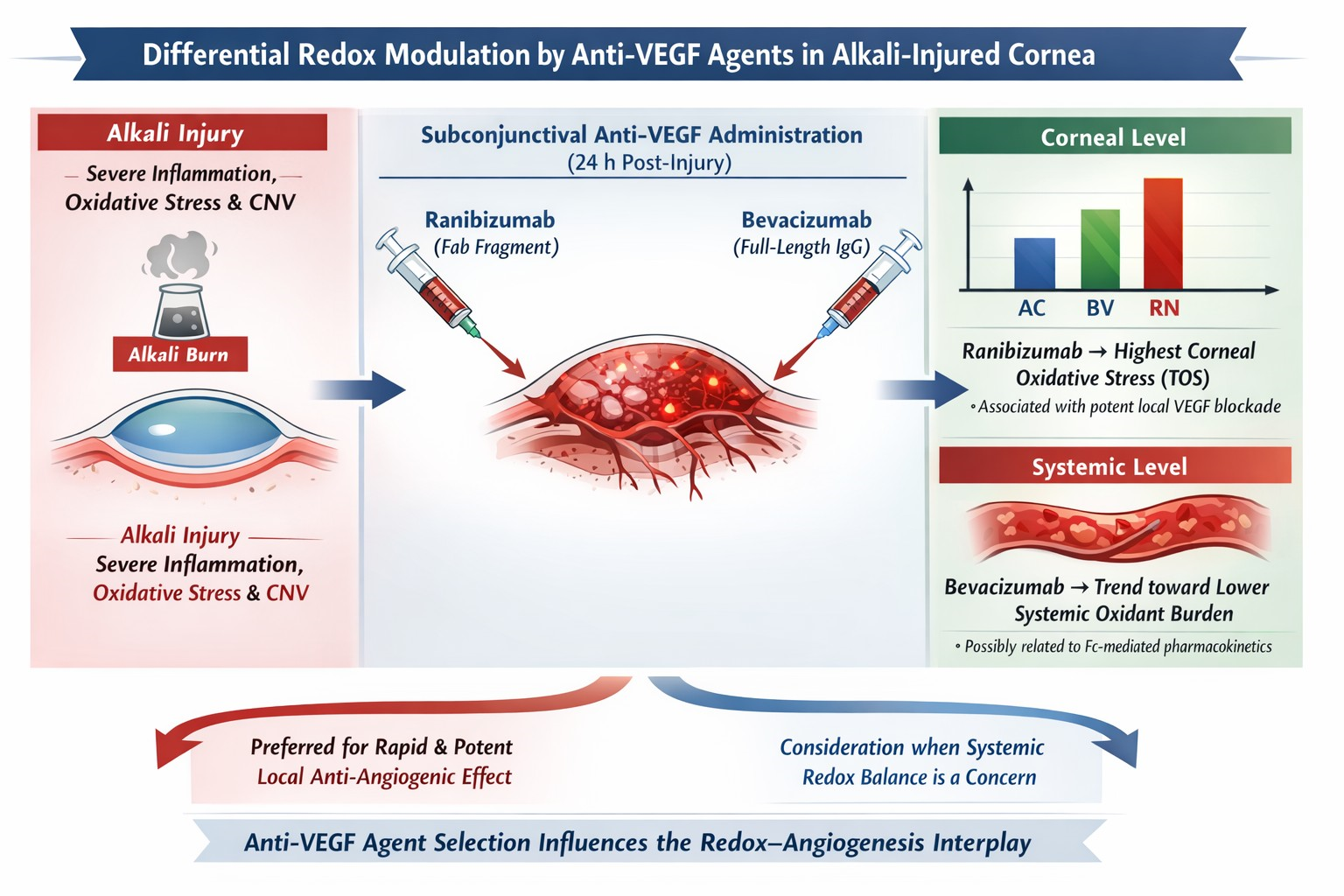
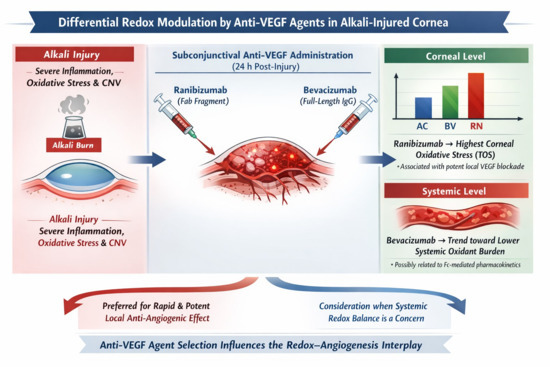
- The current results require careful interpretation because the study failed to find any statistically significant differences between the anti-VEGF-treated groups in their main oxidative stress assessments. The data do not provide evidence that any specific treatment brings better results than others or produces specific clinical benefits.
- The local and systemic trends in redox parameters should be treated as exploratory findings that create new research possibilities. The studied substances show different metabolic characteristics, which cause varying results but lead to no biologically active effects or therapeutic success. The observed patterns should not be understood as proof that either agent achieves better results while damaging redox functions.
- The research shows that oxidative stress in corneal neovascularisation develops through injury-related mechanisms, while any differences between agents occur at levels that do not reach statistical significance for this study.
- Future studies need to validate these exploratory biochemical patterns because they require larger sample sizes and longitudinal redox measurements that must be correlated with clinical and histopathological outcomes.
5. Limitations
6. Conclusions
Supplementary Materials
Author Contributions
Funding
Institutional Review Board Statement
Informed Consent Statement
Data Availability Statement
Acknowledgments
Conflicts of Interest
References
- Shoham, A.; Hadziahmetovic, M.; Dunaief, J.L.; Mydlarski, M.B.; Schipper, H.M. Oxidative stress in diseases of the human cornea. Free Radic. Biol. Med. 2008, 45, 1047–1055. [Google Scholar] [CrossRef]
- Ekinci, M.; Ulviye Yiğit, F.; Oba, M.E.; Çağatay, H.H.; Hüseyinoğlu, Ü.; Yakan, S.; Arslan, B. Inhibition of Corneal Neovascularization by Ranibizumab (Lucentis): An Experimental Study in Rabbit Cornea. Kafkas Univ. Vet. Fak. Derg. 2011, 17, 853–857. [Google Scholar] [CrossRef]
- Adamis, A.P.; Shima, D.T. The role of vascular endothelial growth factor in ocular health and disease. Retina 2005, 25, 111–118. [Google Scholar] [CrossRef]
- Gakhramanov, F.S. Effect of natural antioxidants on antioxidant activity and lipid peroxidation in eye tissue of rabbits with chemical burns. Bull. Exp. Biol. Med. 2005, 140, 289–291. [Google Scholar] [CrossRef]
- Phillips, G.D.; Stone, A.M.; Jones, B.D.; Schultz, J.C.; Whitehead, R.A.; Knighton, D.R. Vascular endothelial growth factor (rhVEGF165) stimulates direct angiogenesis in the rabbit cornea. In Vivo 1994, 8, 961–965. [Google Scholar] [PubMed]
- Toto, L.; Di Antonio, L.; Costantino, O.; Mastropasqua, R. Anti-VEGF therapy in myopic CNV. Curr. Drug Targets 2021, 22, 1054–1063. [Google Scholar] [CrossRef] [PubMed]
- Lien, S.; Lowman, H.B. Therapeutic anti-VEGF antibodies. In Therapeutic Antibodies; Springer: Berlin/Heidelberg, Germany, 2008; pp. 131–150. [Google Scholar]
- Wang, J.; Kunikata, H.; Yasuda, M.; Himori, N.; Nitta, F.; Nakazawa, T. Systemic Oxidative Stress Level as a Pathological and Prognostic Marker in Myopic Choroidal Neovascularization. Ophthalmol. Sci. 2024, 4, 100486. [Google Scholar] [CrossRef]
- Khachigian, L.M.; Liew, G.; Teo, K.Y.; Wong, T.Y.; Mitchell, P. Emerging therapeutic strategies for unmet need in neovascular age-related macular degeneration. J. Transl. Med. 2023, 21, 133. [Google Scholar] [CrossRef]
- Kuroki, M.; Voest, E.E.; Amano, S.; Beerepoot, L.V.; Takashima, S.; Tolentino, M.; Kim, R.Y.; Rohan, R.M.; Colby, K.A.; Yeo, K.T.; et al. Reactive oxygen intermediates increase vascular endothelial growth factor expression in vitro and in vivo. J. Clin. Investig. 1996, 98, 1667–1675. [Google Scholar] [CrossRef] [PubMed]
- Colavitti, R.; Pani, G.; Bedogni, B.; Anzevino, R.; Borrello, S.; Waltenberger, J. Reactive oxygen species as downstream mediators of angiogenic signaling by vascular endothelial growth factor receptor-2/KDR. J. Biol. Chem. 2002, 277, 3101–3108. [Google Scholar] [CrossRef]
- Jung, J.H.; Kim, S.S.; Chung, H.; Hejri, A.; Prausnitz, M.R. Six-month sustained delivery of anti-VEGF from in-situ forming hydrogel in the suprachoroidal space. J. Control. Release 2022, 352, 472–484. [Google Scholar] [CrossRef]
- Ekinci, M.; Çağatay, H.H.; Yazar, Z.; Bingöl, S.A.; Kaplan, A. Inhibition of Corneal Neovascularization by Subconjunctival Injection of Ranibizumab and Bevacizumab in Rabbit Cornea. Kafkas Univ. Vet. Fak. Derg. 2013, 19, A125–A132. [Google Scholar] [CrossRef]
- Wu, D.; Chan, K.E.; Lim, B.X.H.; Lim, D.K.A.; Wong, W.M.; Chai, C.; Lim, C.H.L. Management of corneal neovascularization: Current and emerging therapeutic approaches. Indian J. Ophthalmol. 2024, 72, S354–S371. [Google Scholar] [CrossRef] [PubMed]
- Erçin Akıdan, E.; Yılmaz, E.; Yılmaz, N.; Akıdan, M. Increased oxidative stress biomarkers in central serous chorioretinopathy. Sci. Rep. 2024, 14, 21099. [Google Scholar] [CrossRef]
- Kurutas, E.B. The importance of antioxidants which play the role in cellular response against oxidative/nitrosative stress: Current state. Nutr. J. 2015, 15, 71. [Google Scholar] [CrossRef] [PubMed]
- Avery, R.L.; Castellarin, A.A.; Steinle, N.C.; Dhoot, D.S.; Pieramici, D.J.; See, R.; Couvillion, S.; Nasir, M.A.; Rabena, M.D.; Le, K.; et al. Systemic pharmacokinetics following intravitreal injections of ranibizumab, bevacizumab or aflibercept in patients with neovascular AMD. Br. J. Ophthalmol. 2014, 98, 1636–1641. [Google Scholar] [CrossRef] [PubMed]
- Eski, M.T.; Teberik, K.; Oltulu, P.; Ankaralı, H.; Kaya, M.; Alpay, M. The effects of subconjunctival bevacizumab, ranibizumab, and aflibercept on corneal neovascularization. Hum. Exp. Toxicol. 2022, 41, 09603271221084674. [Google Scholar] [CrossRef] [PubMed]
- Al-Debasi, T.; Al-Bekairy, A.; Al-Katheri, A.; Al Harbi, S.; Mansour, M. Topical versus subconjunctival anti-vascular endothelial growth factor therapy (Bevacizumab, Ranibizumab and Aflibercept) for treatment of corneal neovascularization. Saudi J. Ophthalmol. 2017, 31, 99–105. [Google Scholar] [CrossRef]
- Zhu, Q.; Ziemssen, F.; Henke-Fahle, S.; Tatar, O.; Szurman, P. Aisenbrey, Vitreous levels of bevacizumab and vascular endothelial growth factor-A in patients with choroidal neovascularization. Ophthalmology 2008, 115, 1750–1755. [Google Scholar] [CrossRef]
- Freitas, L.G.; Isaac, D.L.; Tannure, W.T.; Gabriel, L.A.; Reis, R.G.; Rassi, A.R. Intravitreal bevacizumab combined with infliximab in the treatment of choroidal neovascularization secondary to age-related macular degeneration: Case report series. Arq. Bras. Oftalmol. 2013, 76, 180–184. [Google Scholar] [CrossRef]
- Cejka, C.; Cejkova, J. Oxidative stress to the cornea, changes in corneal optical properties, and advances in treatment of corneal oxidative injuries. Oxid. Med. Cell. Longev. 2015, 2015, 591530. [Google Scholar] [CrossRef]
- Ahmad, A.; Ahsan, H. Biomarkers of inflammation and oxidative stress in ophthalmic disorders. J. Immunoass. Immunochem. 2020, 41, 257–271. [Google Scholar] [CrossRef] [PubMed]
- Nethi, S.K.; Barui, A.K.; Mukherjee, S.; Patra, C.R. Engineered nanoparticles for effective redox signaling during angiogenic and antiangiogenic therapy. Antioxid. Redox Signal. 2019, 30, 786–809. [Google Scholar] [CrossRef] [PubMed]
- Cheng, R.; Li, C.; Li, C.; Wei, L.; Li, L.; Zhang, Y.; Yao, Y.; Gu, X.; Cai, W.; Yang, Z.; et al. The artemisinin derivative artesunate inhibits corneal neovascularization by inducing ROS-dependent apoptosis in vascular endothelial cells. Investig. Ophthalmol. Vis. Sci. 2013, 54, 3400–3409. [Google Scholar] [CrossRef] [PubMed]
- Ng, D.S.; Ho, M.; Iu, L.P.; Lai, T.Y. Safety review of anti-VEGF therapy in patients with myopic choroidal neovascularization. Expert Opin. Drug Saf. 2022, 21, 43–54. [Google Scholar] [CrossRef]
- Pożarowska, D.; Pożarowski, P. The era of anti-vascular endothelial growth factor (VEGF) drugs in ophthalmology, VEGF and anti-VEGF therapy. Cent. Eur. J Immunol. 2016, 41, 311–316. [Google Scholar] [CrossRef]
- Gan, L.; Fagerholm, P.; Palmblad, J. Vascular endothelial growth factor (VEGF) and its receptor VEGFR-2 in the regulation of corneal neovascularization and wound healing. Acta Ophthalmol. Scand. 2004, 82, 557–563. [Google Scholar] [CrossRef]
- Manzano, R.P.; Peyman, G.A.; Khan, P.; Carvounis, P.E.; Kivilcim, M.; Ren, M. Inhibition of experimental corneal neovascularisation by bevacizumab (Avastin). Br. J. Ophthalmol. 2007, 91, 804–807. [Google Scholar] [CrossRef]
- Murata, M.; Shimizu, S.; Horiuchi, S.; Taira, M. Inhibitory effect of triamcinolone acetonide on corneal neovascularization. Graefes Arch. Clin. Exp. 2006, 244, 205–209. [Google Scholar] [CrossRef]







| Alkali Control | Bevacizumab | Ranibizumab | Healthy Control | p | |
|---|---|---|---|---|---|
| Mean ± SD or Median (Q1–Q3) | Mean ± SD or Median (Q1–Q3) | Mean ± SD or Median (Q1–Q3) | Mean ± SD or Median (Q1–Q3) | ||
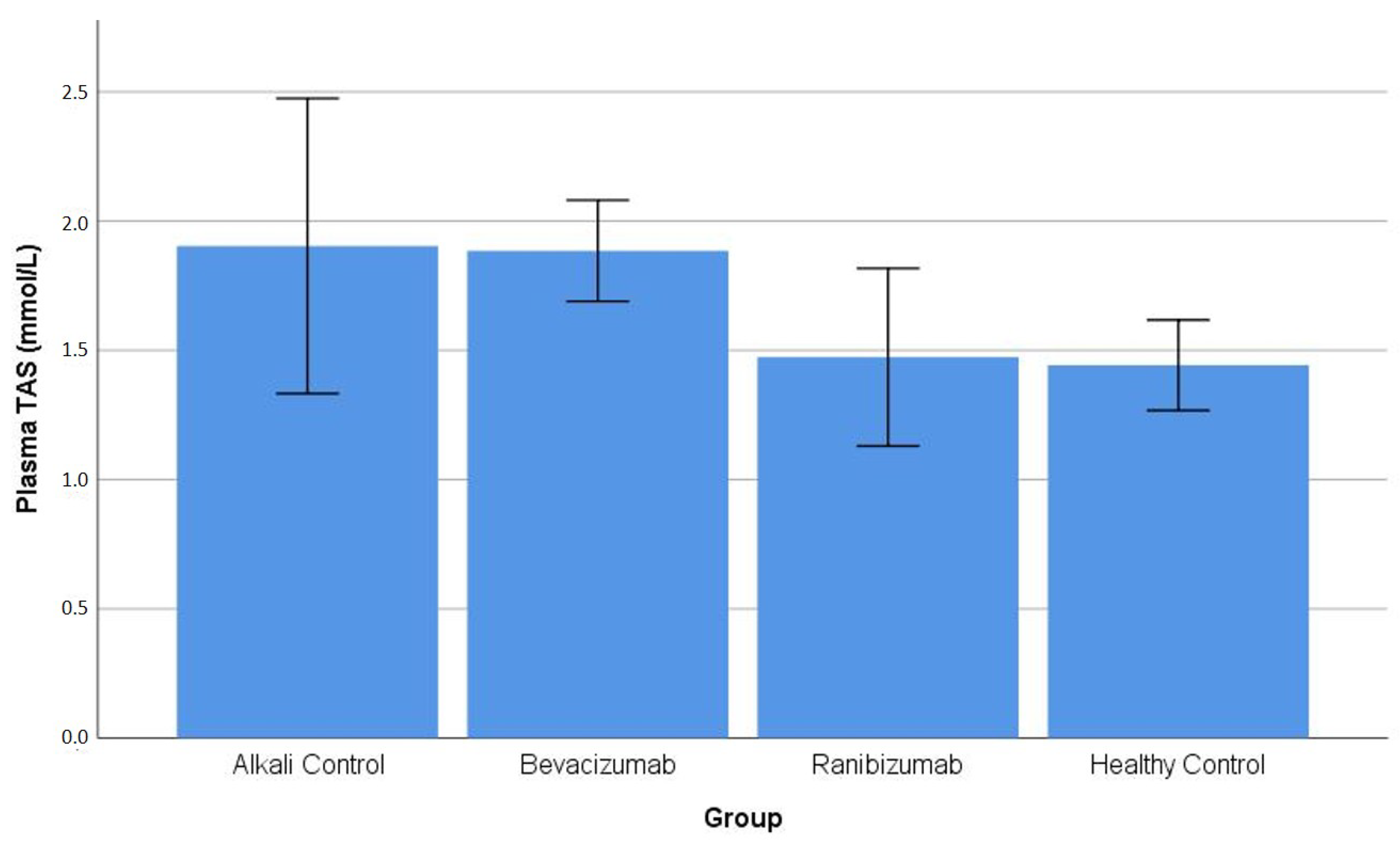
| Plasma TAS (mmol/L) | 1.904 ± 0.571 | 1.885 ± 0.196 | 1.473 ± 0.344 | 1.443 ± 0.175 | 0.056 |
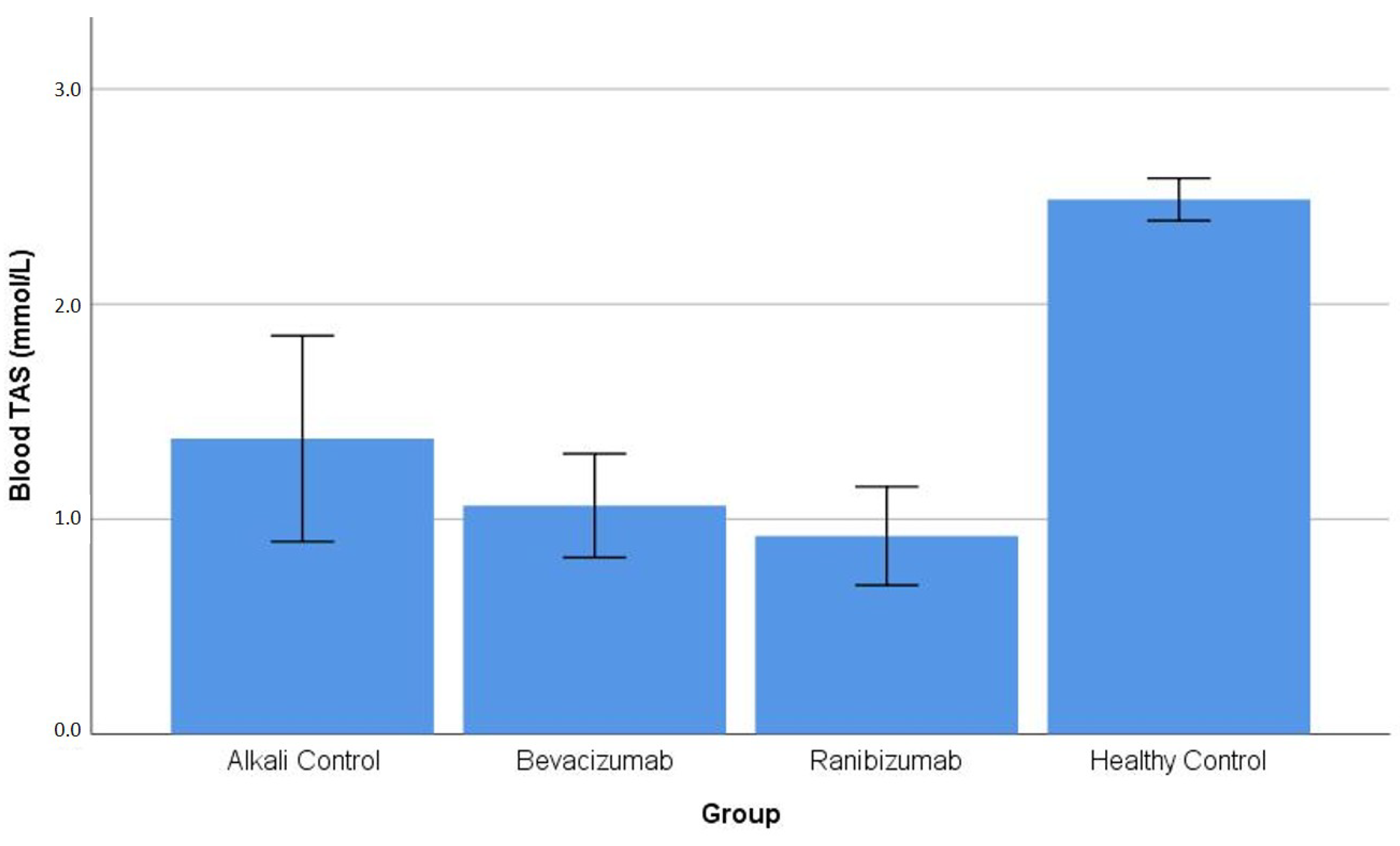
| Blood TAS (mmol/L) | 1.374 ± 0.479 | 1.063 ± 0.241 | 0.922 ± 0.229 | 2.487 ± 0.099 | <0.001 |
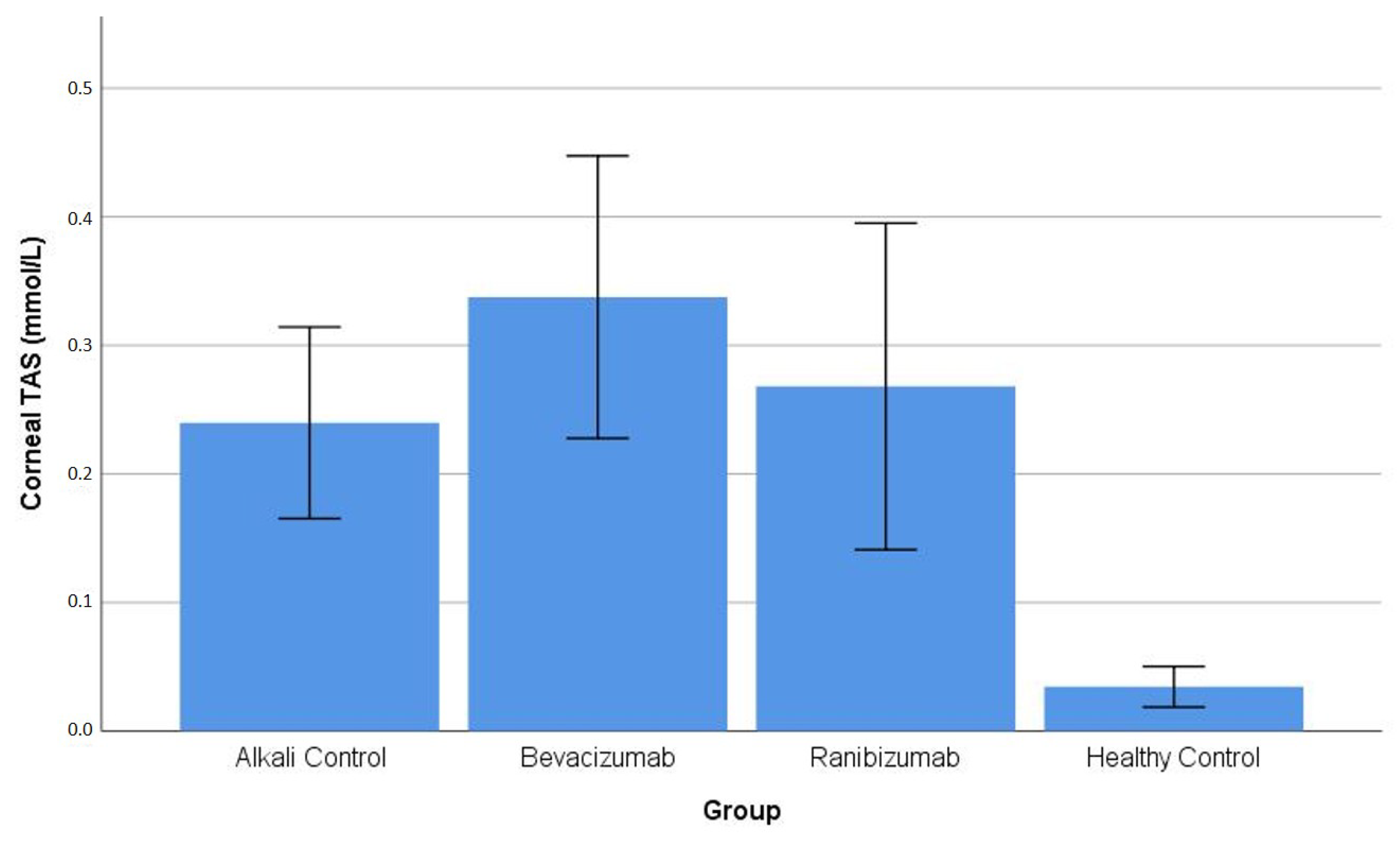
| Corneal TAS (mmol/L) | 0.23 (0.19–0.31) | 0.36 (0.29–0.42) | 0.29 (0.12–0.38) | 0.04 (0.039–0.042) | 0.002 |
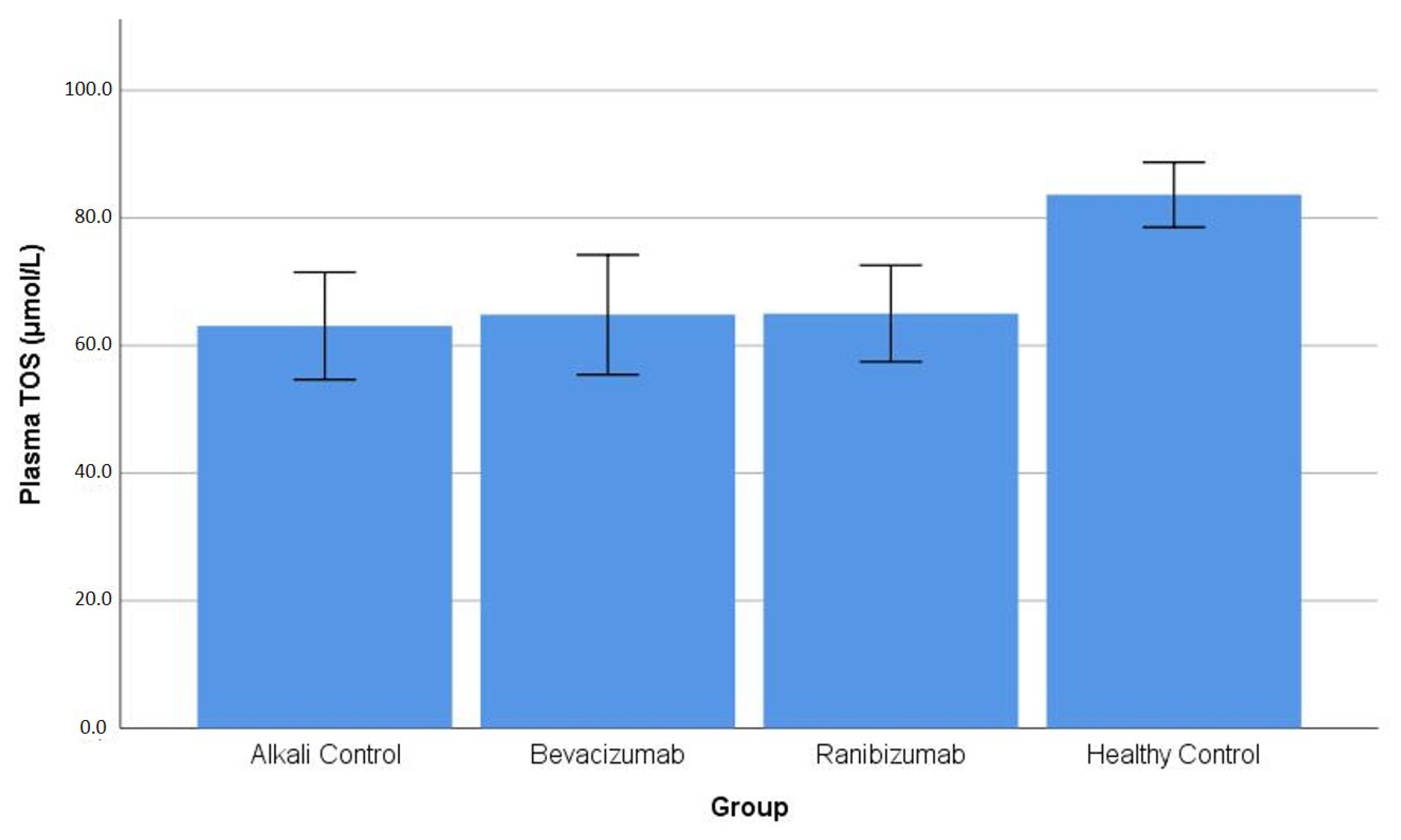
| Plasma TOS (μmol/L) | 63.078 ± 8.411 | 64.834 ± 9.392 | 65.021 ± 7.567 | 83.641 ± 5.104 | <0.001 |
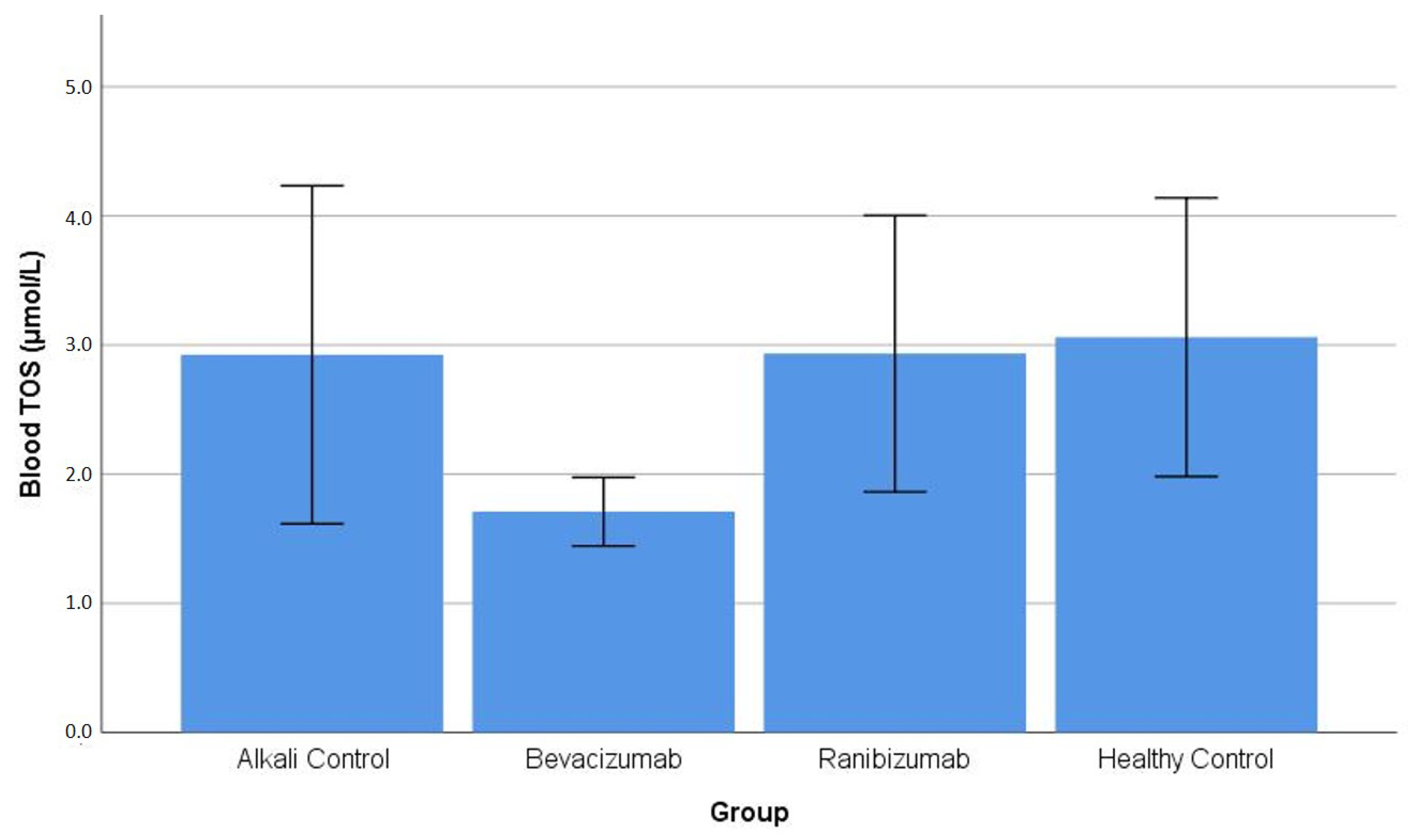
| Blood TOS (μmol/L) | 2.924 ± 1.309 | 1.709 ± 0.266 | 2.934 ± 1.07 | 3.061 ± 1.078 | 0.102 |
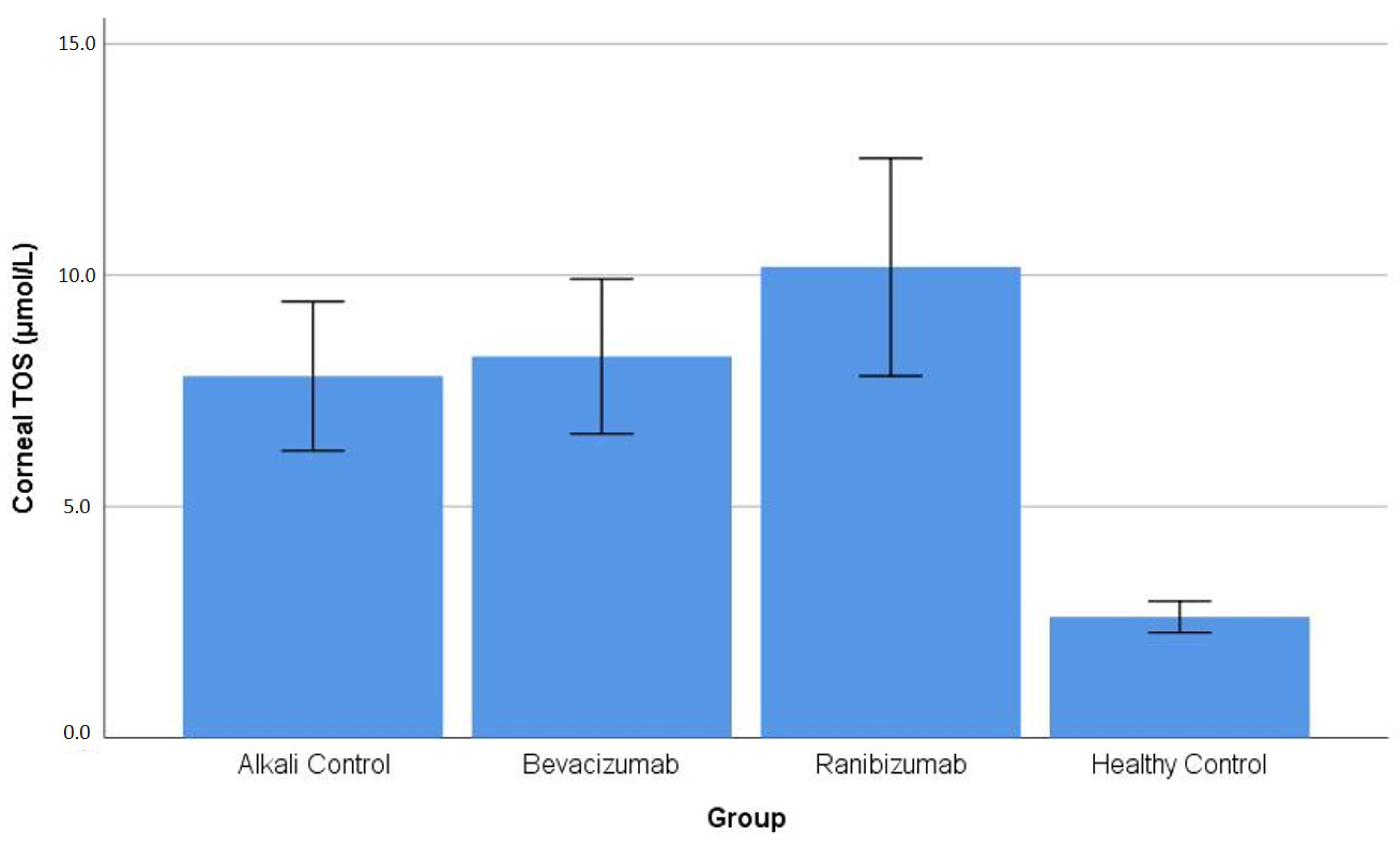
| Corneal TOS (μmol/L) | 7.815 ± 1.613 | 8.241 ± 1.673 | 10.17 ± 2.353 | 2.611 ± 0.339 | <0.001 |
Disclaimer/Publisher’s Note: The statements, opinions and data contained in all publications are solely those of the individual author(s) and contributor(s) and not of MDPI and/or the editor(s). MDPI and/or the editor(s) disclaim responsibility for any injury to people or property resulting from any ideas, methods, instructions or products referred to in the content. |
© 2026 by the authors. Licensee MDPI, Basel, Switzerland. This article is an open access article distributed under the terms and conditions of the Creative Commons Attribution (CC BY) license.
Share and Cite
Yarbağ, A.; Bardaş Özkan, E.; Ulaş, M.; Arslan, Y.K. Effects of Subconjunctival Bevacizumab and Ranibizumab on Corneal and Systemic Oxidative Stress Biomarkers in an Alkali Injury Model. Life 2026, 16, 488. https://doi.org/10.3390/life16030488
Yarbağ A, Bardaş Özkan E, Ulaş M, Arslan YK. Effects of Subconjunctival Bevacizumab and Ranibizumab on Corneal and Systemic Oxidative Stress Biomarkers in an Alkali Injury Model. Life. 2026; 16(3):488. https://doi.org/10.3390/life16030488
Chicago/Turabian StyleYarbağ, Abdulhekim, Ebru Bardaş Özkan, Mustafa Ulaş, and Yusuf Kemal Arslan. 2026. "Effects of Subconjunctival Bevacizumab and Ranibizumab on Corneal and Systemic Oxidative Stress Biomarkers in an Alkali Injury Model" Life 16, no. 3: 488. https://doi.org/10.3390/life16030488
APA StyleYarbağ, A., Bardaş Özkan, E., Ulaş, M., & Arslan, Y. K. (2026). Effects of Subconjunctival Bevacizumab and Ranibizumab on Corneal and Systemic Oxidative Stress Biomarkers in an Alkali Injury Model. Life, 16(3), 488. https://doi.org/10.3390/life16030488