Evolutionary Specializations of the Human Vertebral Body and Intervertebral Disc in Relation to Bipedalism

 ,
, 
 , ,
, ,  ,
,  and
and 
Abstract
1. Introduction
1.1. Perspectives on Human Locomotion
1.2. The Human Spine vs. The Chimpanzee and Gorilla Spines
1.3. Major Evolutionary Challenges Along the Way to Acquiring Efficient Bipedal Walking
1.4. Evolution of Bipedal Walking Viewed in Three Dimensions
2. Study Objective
3. Study Design
- The vertebral body (VB),
- The intervertebral disc (IVD),
- The apophyseal (annular) bony ring (AR),
- The annulus fibrosus (AF),
- The vertebral endplate (including subchondral bone), and
- The vascular structures supplying the IVD.
4. Working Hypotheses (H)
4.1. Enlargement of the Vertebral Body
4.2. Enlargement of the Intervertebral Disc (IVD)
4.3. Narrowing of the Apophyseal Ring
4.4. Narrow Annulus Fibrosus
4.5. Endplate Thickening and Subchondral Bone Thinning
4.6. Increased Vascularization at the Vertebral-Endplate Interface
5. Materials
5.1. Hypotheses 1b and 3a
5.2. Hypotheses 2a and 2b
5.3. Hypotheses 1a, 1d, and 1e
5.4. Hypotheses 1c, 3b, 4a, 5a, and 6a
- A 48-year-old chimpanzee,
- A 20-year-old orangutan,
- A sub-adult gibbon (exact age unknown), and
- An adult gorilla (age not available)
6. Methods
6.1. Hypotheses 1b and 3a
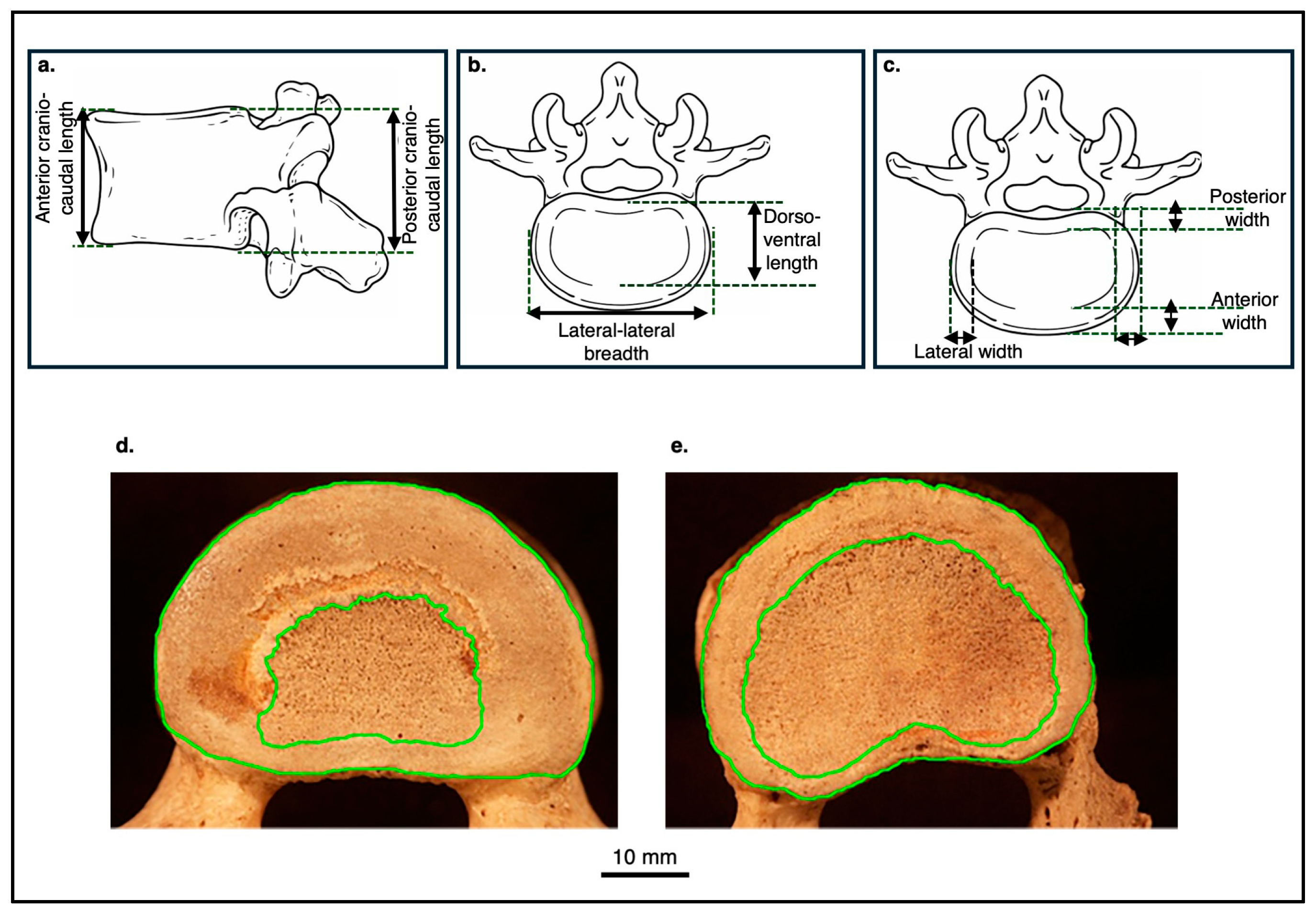
- Vertebral body dimensions: anterior and posterior height (craniocaudal length in apes); discal surface length (anterior–posterior in humans and dorsoventral in apes) and breadth (of both the superior and inferior surfaces; right–left in humans and lateral–lateral in apes).
- Apophyseal ring dimensions: anterior, posterior, and lateral (right and left) ring diameters.
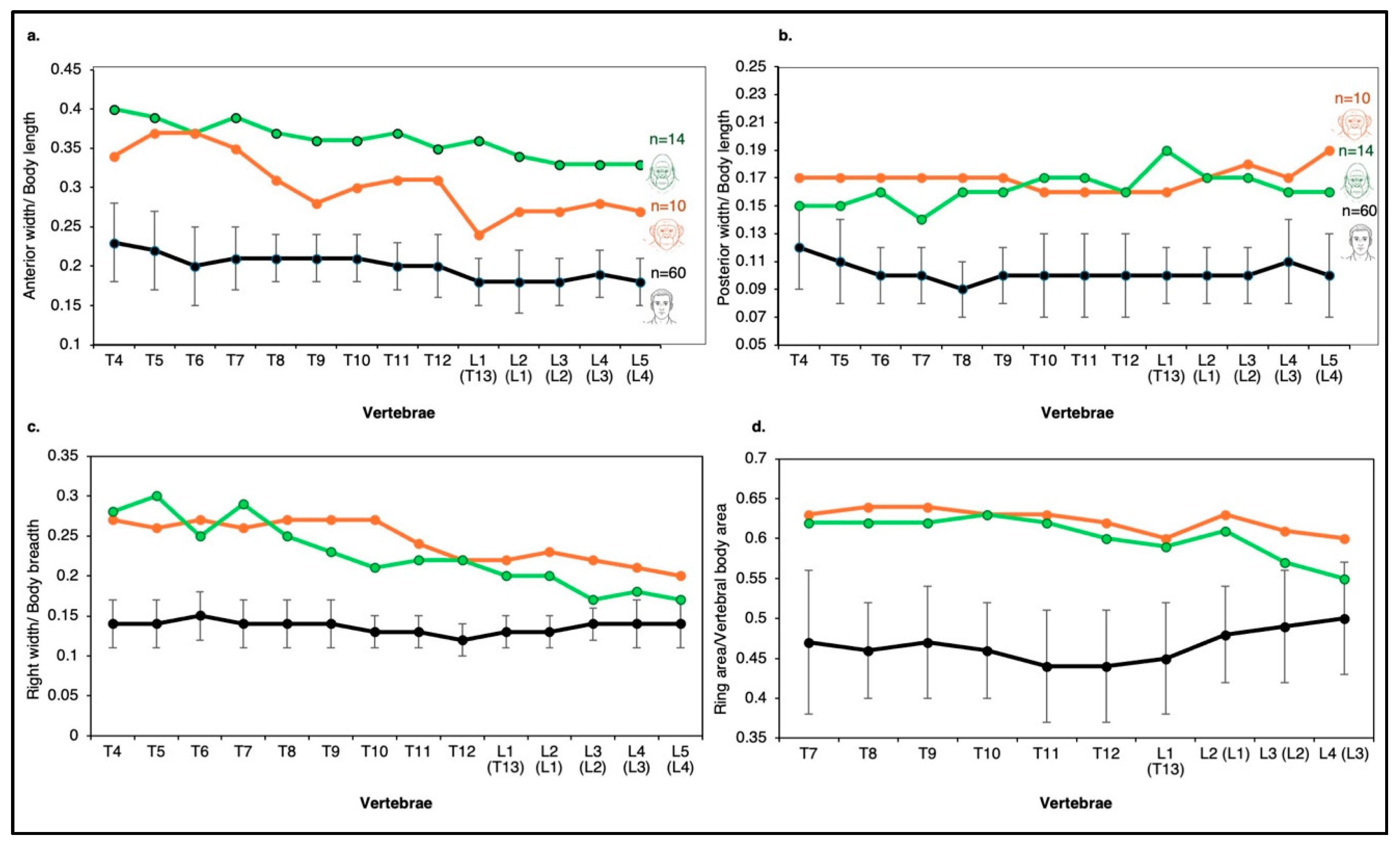
- Anterior ring diameter/vertebral body length (anterior–posterior/dorsoventral)
- Lateral ring diameter/vertebral body breadth (lateral–lateral/right–left)
- Posterior ring diameter/vertebral body length (anterior–posterior/dorsoventral)
- Ring area/total discal surface area
6.2. Hypotheses 1a, 1d, 1e, 2a, and 2b
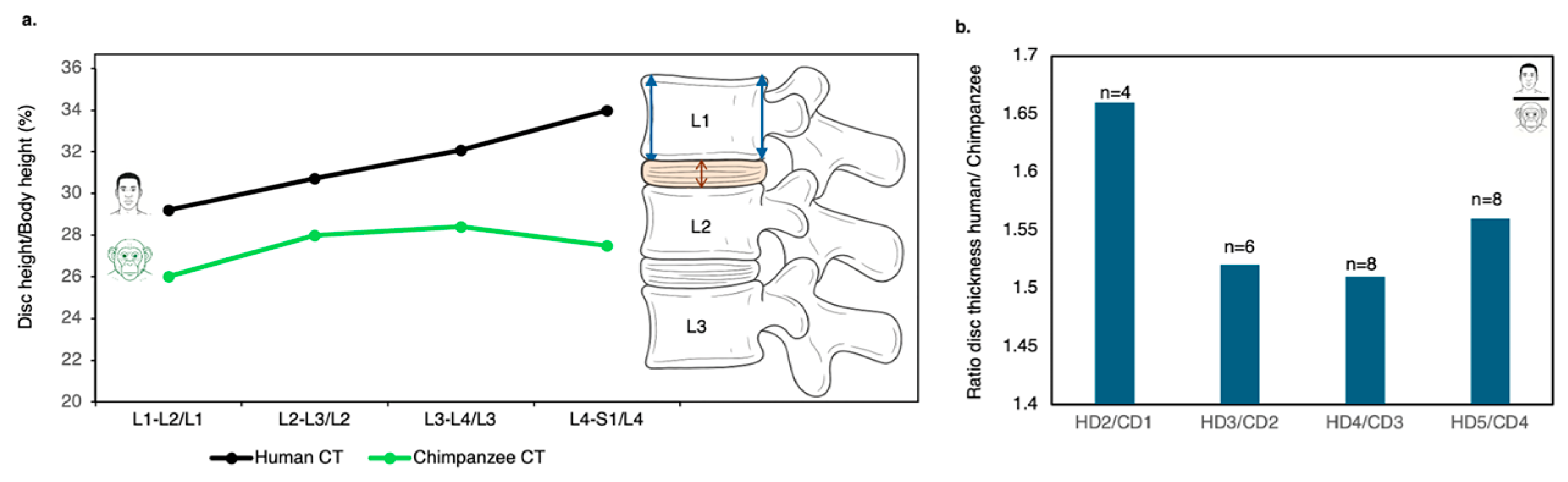
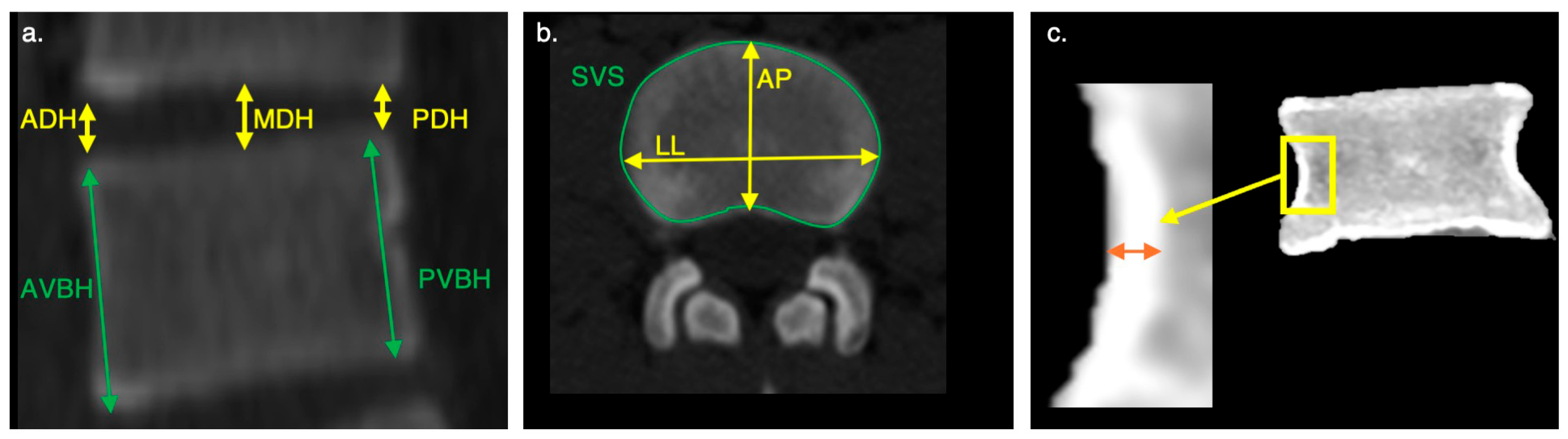
- Anterior disc height (ADH): distance between the anteroinferior and anterosuperior corners of adjacent vertebrae.
- Middle disc height (MDH): distance between the midpoints of the inferior and superior endplates.
- Posterior disc height (PDH): distance between the posteroinferior and posterosuperior corners of adjacent vertebrae.
- The mean disc height was calculated from these three values.
- Anterior (craniocaudal) vertebral body height (AVBH): the distance from the anterosuperior to anteroinferior corner.
- Posterior vertebral body height (PVBH): the distance from the posterosuperior to the posteroinferior corner.
- A mean vertebral body height (MVBH) was calculated from these two values.
- Relative disc height was computed as the ratio between disc height and vertebral body height.
- Cortical shell thickness (CST) was measured between the most lateral and the most medial aspect of the vertical wall of the vertebral body, at mid-height, on both the right and left sides.
6.3. Hypotheses 1a and 1d
6.4. Hypotheses 1c, 3b, 4a, and 5a
- apophyseal ring width as an attachment area for the AF;
- annulus fibrosus lamellar count, thickness, and organization;
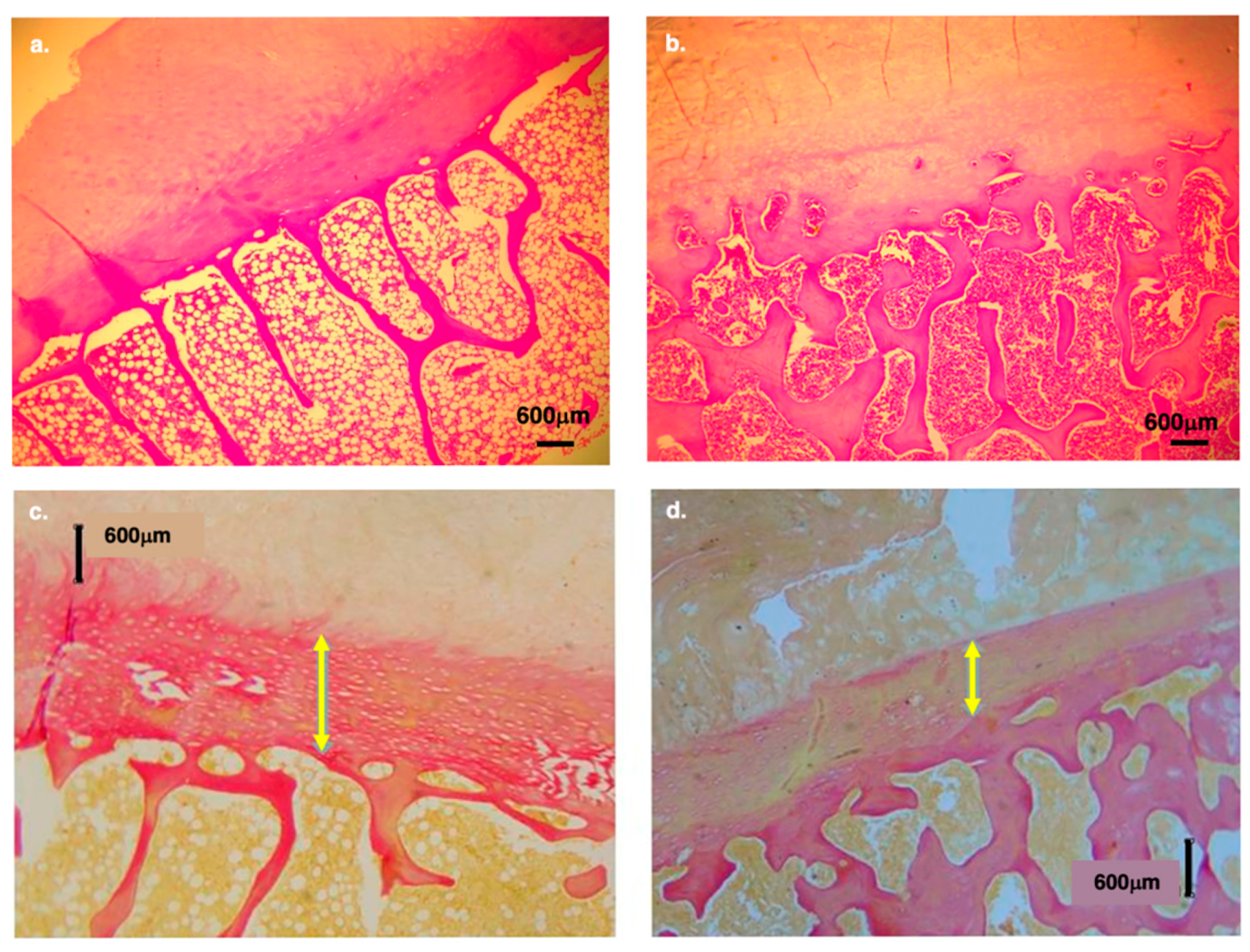
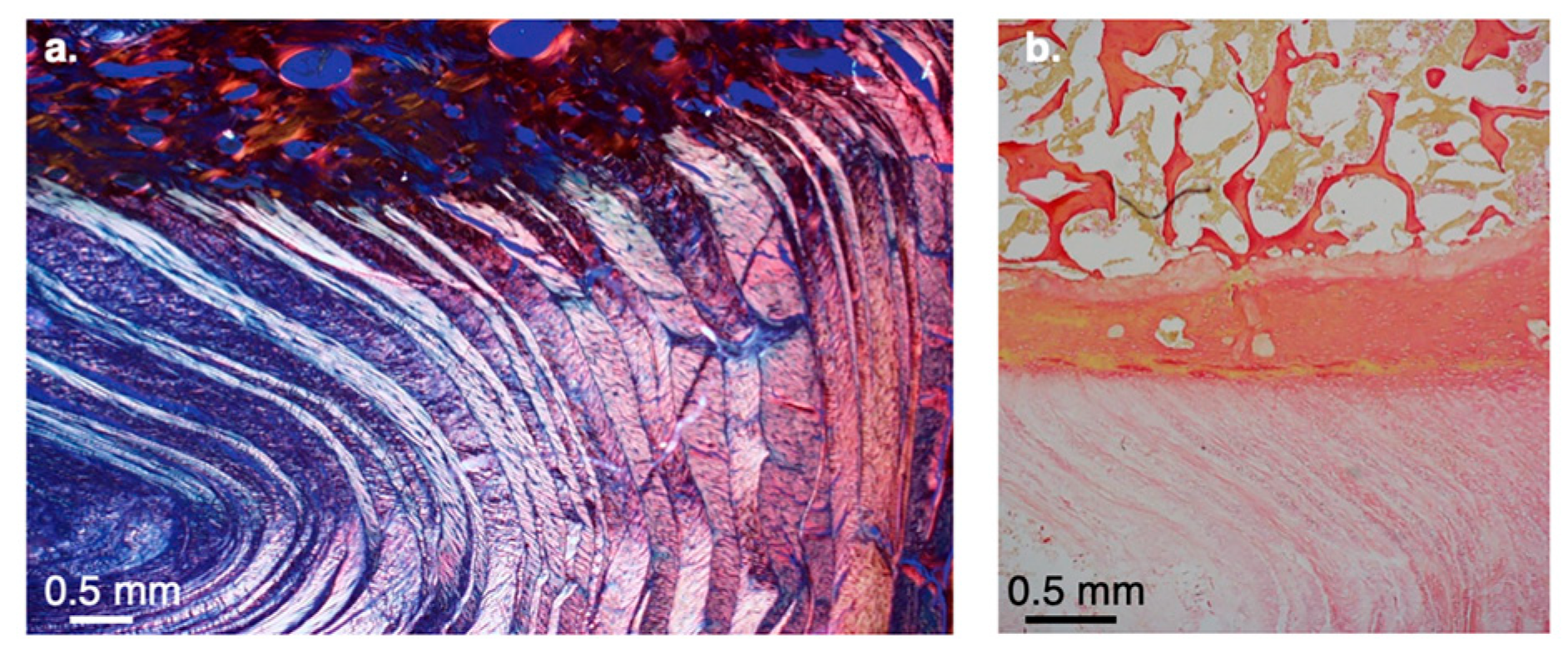
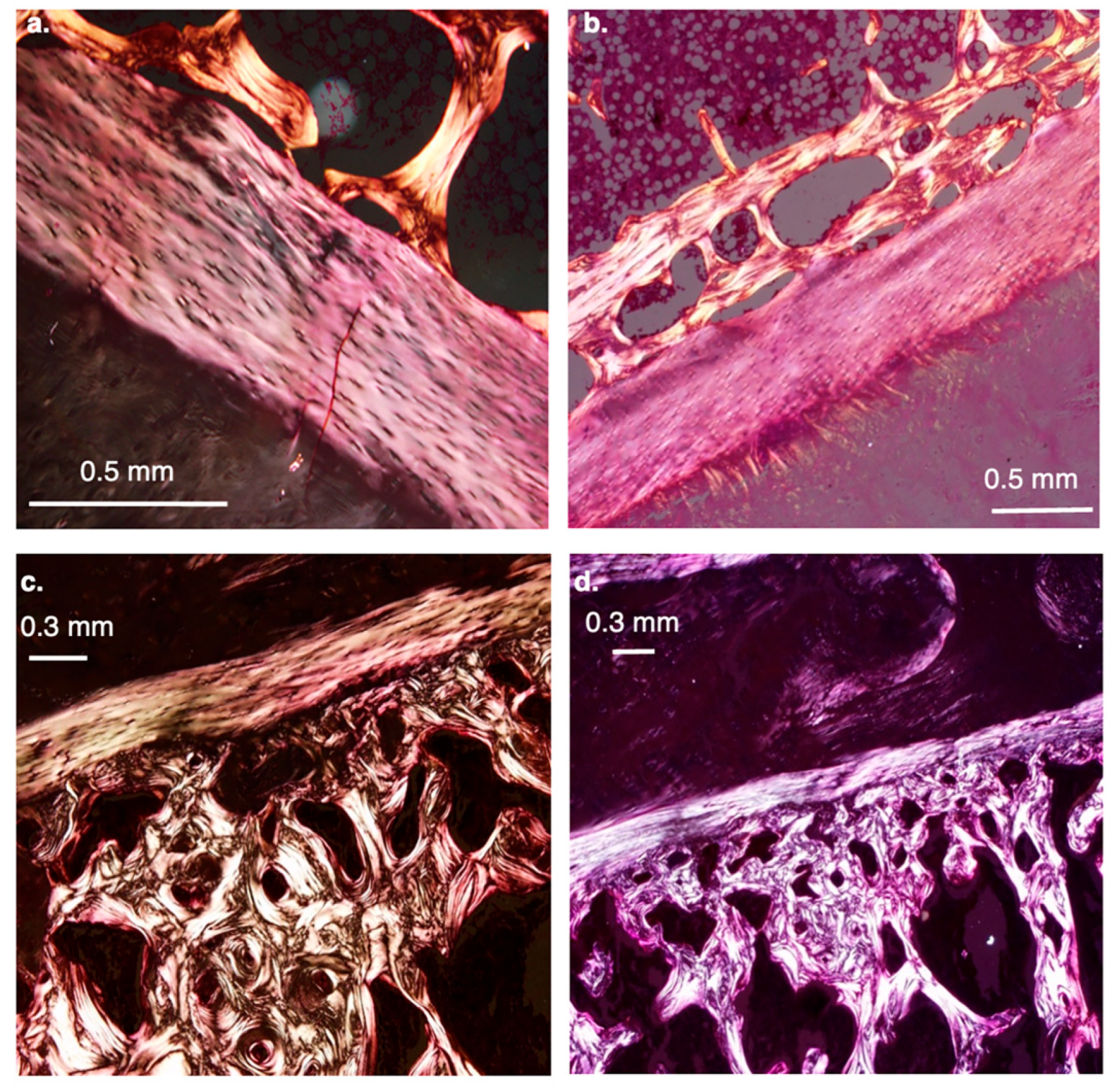
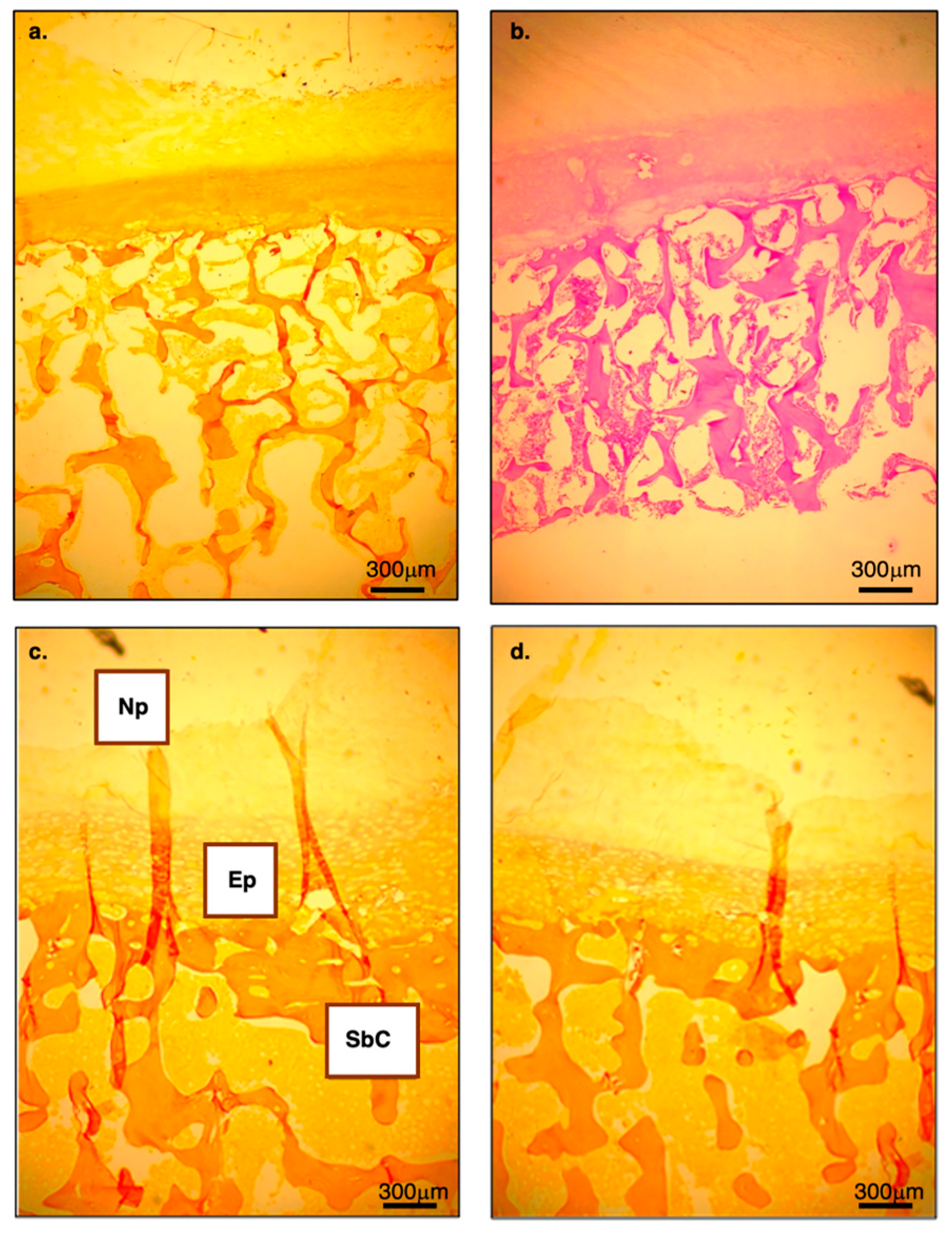
- endplate thickness in the center and periphery;
- subchondral bone structure; and
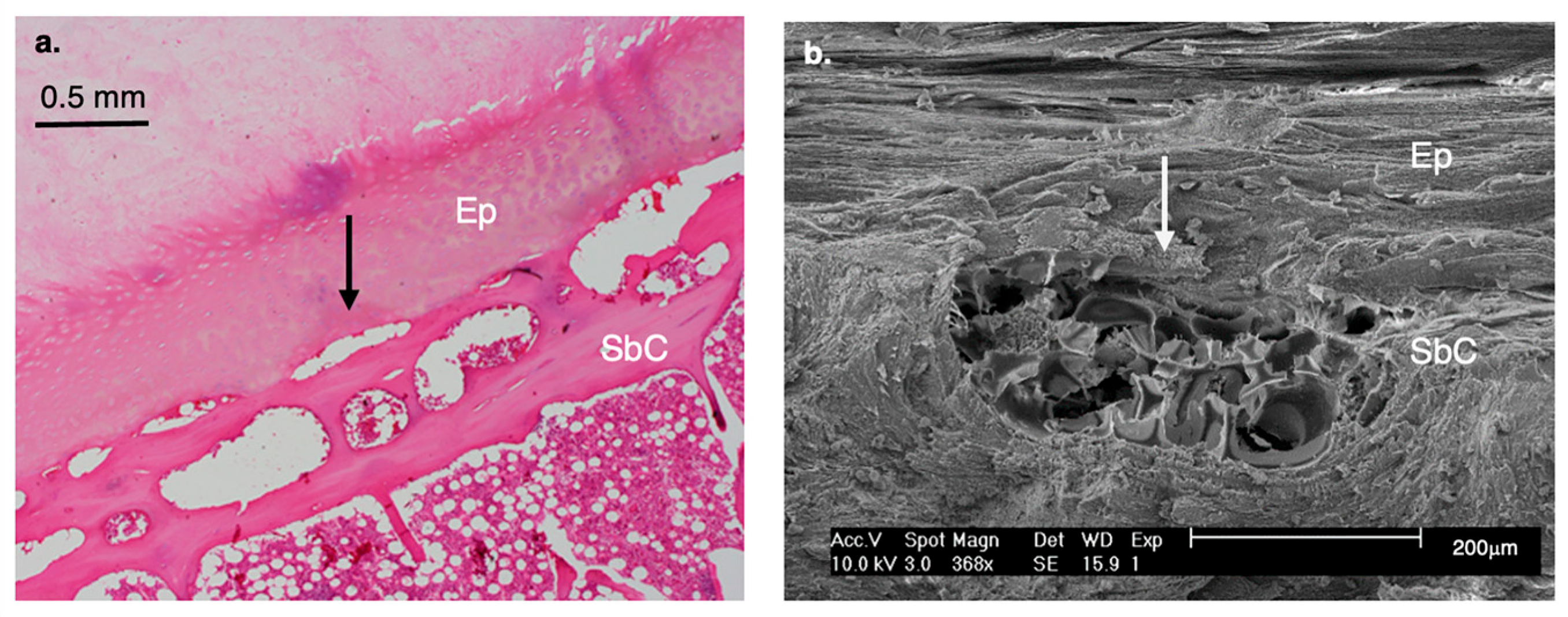
- arterial buds at the bone–endplate interface.
6.5. Reliability of Measurements
6.6. Statistical Analyses
6.7. Terminology
7. Results
7.1. Reliability of Measurements
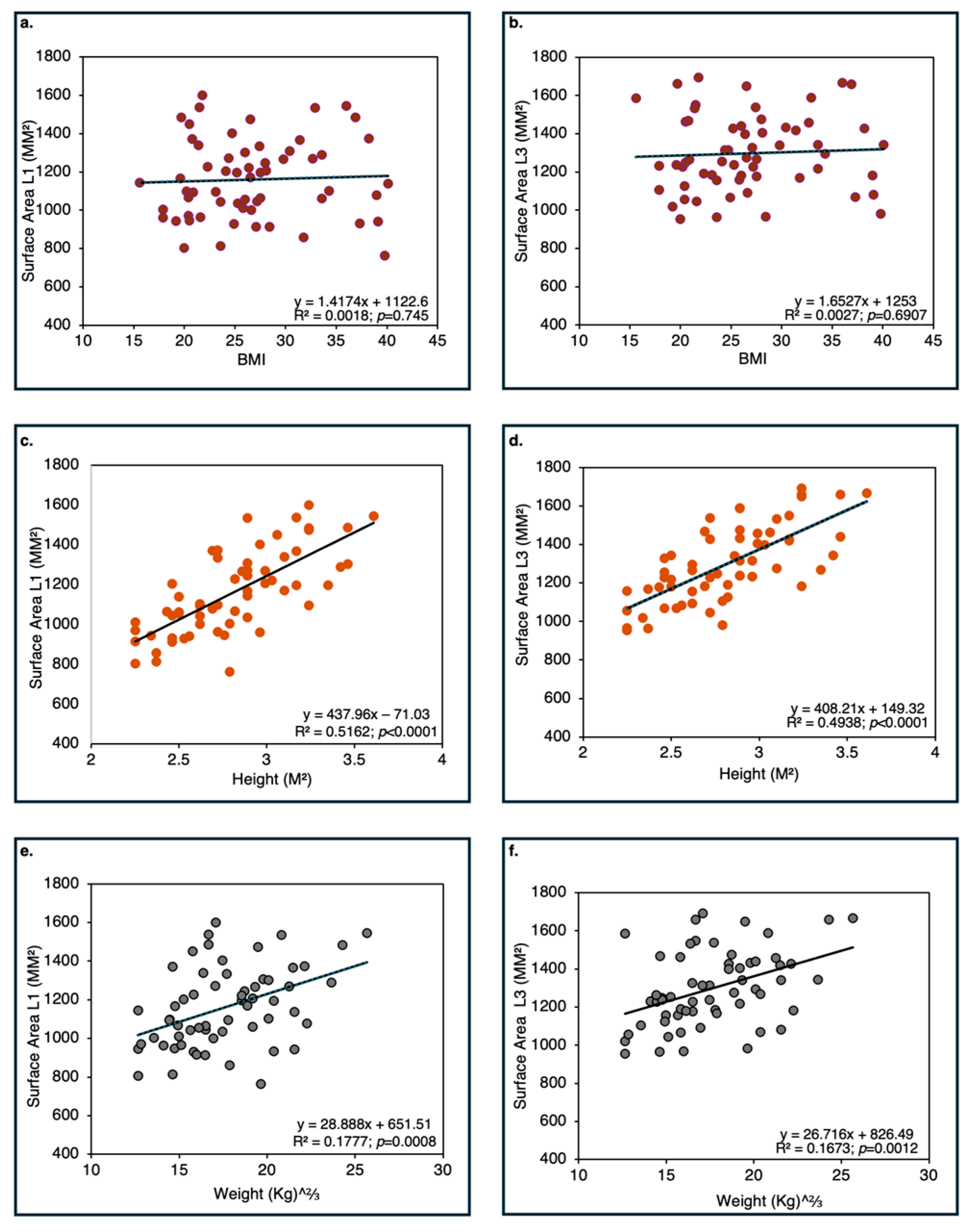
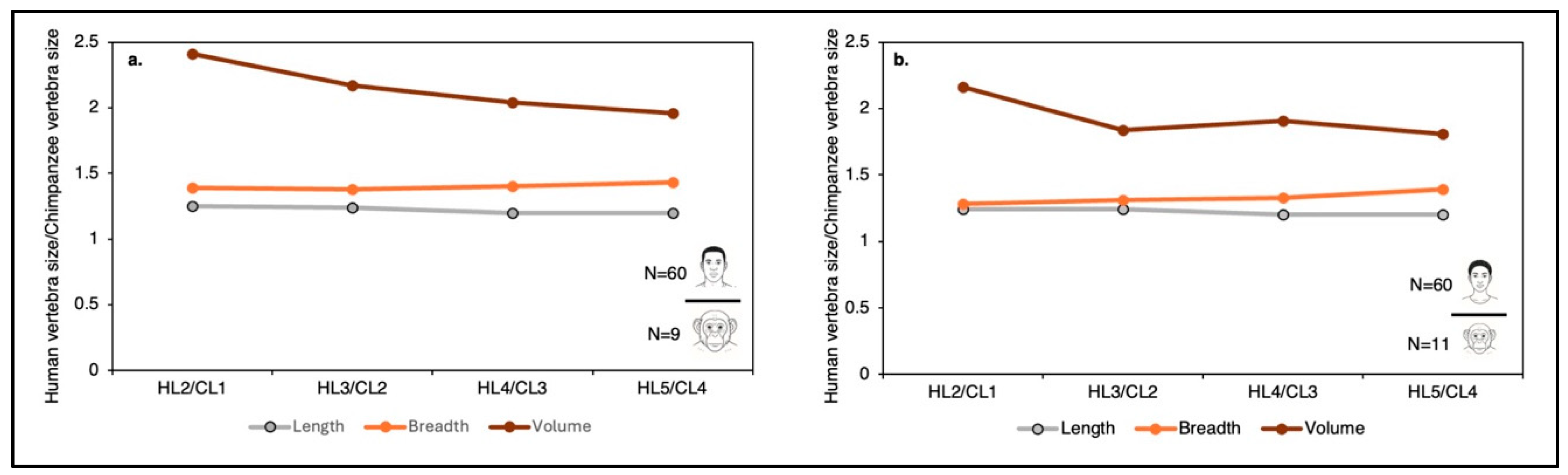
7.2. Enlargement of the Vertebral Body
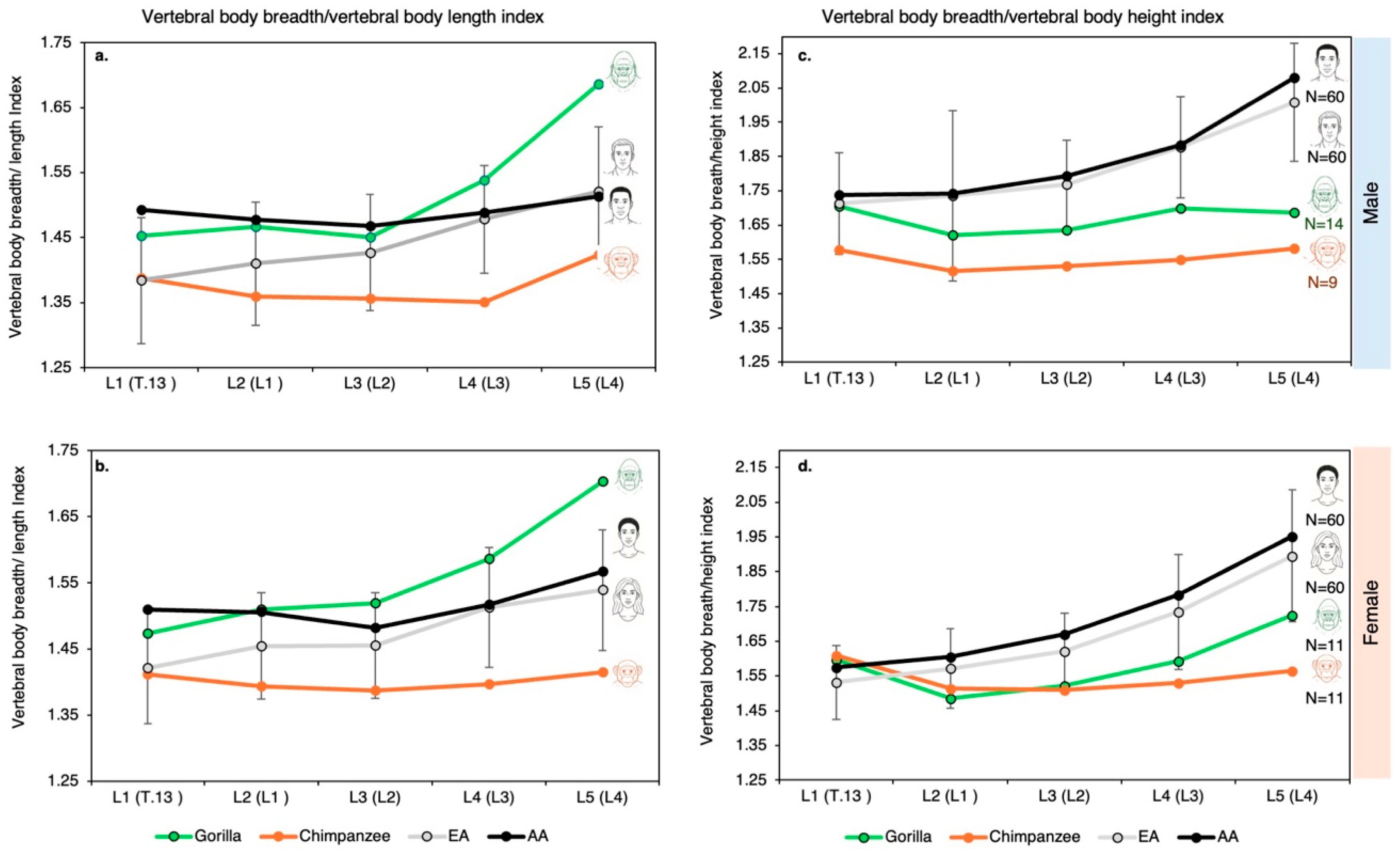
- Gorillas show the largest craniocaudal change in this index, with vertebral bodies becoming progressively more oval in shape along the lumbar spine.
- Chimpanzees exhibit minimal fluctuation across the lumbar region and possess the most circular vertebral bodies.
- Humans fall between the two ape species, although minor population-level differences are observed (e.g., African Americans vs. European Americans).
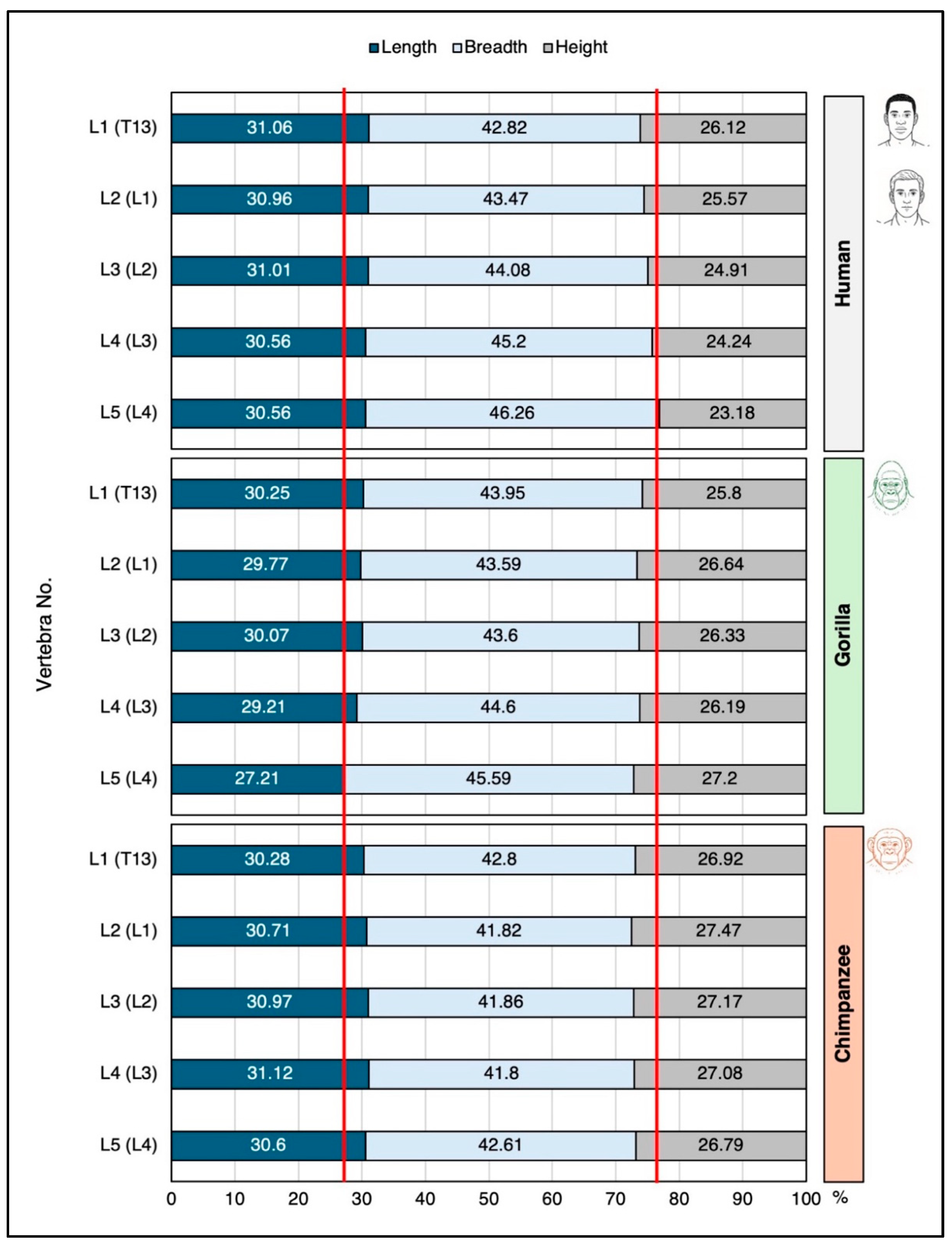
- In humans, the anteroposterior (AP) length contribution remains constant throughout the lumbar spine;
- the breadth contribution increases caudally;
- the height contribution decreases.
- Chimpanzees show virtually no change in dimensional contributions from L1 to L5, indicating very limited shape variation.
- Gorillas exhibit slight increases in breadth and height contributions, accompanied by a modest decrease in AP length (Figure 5).
7.3. Enlargement of the Intervertebral Disc (IVD)
7.4. Narrowing of the Apophyseal Bony Ring
7.5. Endplate Thickening and Subchondral Bone Thinning
7.6. Increased Vascularization at the Vertebral Endplate Interface
8. Discussion
8.1. Part I: Main Modifications and Their Benefits
8.1.1. Enlargement of the Vertebral Body
8.1.2. Enlargement of the IVD
8.1.3. Increase in the Transverse Dimension of the Vertebral Body
8.1.4. Narrowing of the Annulus Fibrosus
8.1.5. Shrinkage of the Apophyseal Ring
8.1.6. Thickening of the End Plate
8.1.7. Double-Layer Subchondral Bone and Organization of the Trabecular Bone
8.1.8. Multiple Arterial Buds
8.1.9. Thin Cortical Shell
8.2. Part II: Main Modifications: Implications for Human Health
8.3. Alternative Hypotheses
8.4. Study Limitations
8.5. Summary
9. Conclusions
Supplementary Materials
Author Contributions
Funding
Institutional Review Board Statement
Informed Consent Statement
Data Availability Statement
Acknowledgments
Conflicts of Interest
References
- Ackermann, R.R.; Smith, R.J. The Macroevolution of our Ancient Lineage: What We Know (or Think We Know) about Early Hominin Diversity. Evol. Biol. 2007, 34, 72–85. [Google Scholar] [CrossRef]
- Harcourt-Smith, W.E.H. The Origins of Bipedal Locomotion. In Handbook of Paleoanthropology; Henke, W., Tattersall, I., Eds.; Springer: Berlin/Heidelberg, Germany, 2007; pp. 1483–1518. [Google Scholar] [CrossRef]
- Schultz, A.H. Notes on diseases and healed fractures of wild apes and their bearing on the antiquity of pathological conditions in man. Bull. Hist. Med. 1939, 7, 571–582. [Google Scholar]
- Schultz, A.H. The occurrence and frequency of pathological and teratological conditions and of twinning among non-human primates. Primatologia 1956, 1, 965–1014. [Google Scholar]
- Rothschild, B.M.; Woods, R.J. Spondyloarthropathy in gorillas. Semin. Arthritis Rheum. 1989, 18, 267–276. [Google Scholar] [CrossRef] [PubMed]
- Rothschild, B.M.; Woods, R.J. Osteoarthritis, calcium pyrophosphate deposition disease, and osseous infection in old world primates. Am. J. Phys. Anthropol. 1992, 87, 341–347. [Google Scholar] [CrossRef]
- Rothschild, B.M.; Woods, R.J. Inflammatory arthritis in Pongo. J. Med. Primatol. 1996, 25, 414–418. [Google Scholar] [CrossRef]
- Jurmain, R. Degenerative joint disease in African great apes: An evolutionary perspective. J. Hum. Evol. 2000, 39, 185–203. [Google Scholar] [CrossRef]
- Ward, C.V.; Latimer, B. Human Evolution and the Development of Spondylolysis. Spine 2005, 30, 1808–1814. [Google Scholar] [CrossRef]
- Poe, D.J. The Prevalence of Osteoarthritis in Wild vs. Captive Great Ape Skeletons. Ph.D. Thesis, Anthropology, University of New Mexico, Albuquerque, NM, USA, 2009. Available online: https://digitalrepository.unm.edu/anth_etds/53 (accessed on 1 December 2009).
- Latimer, B. The perils of being bipedal. Ann. Biomed. Eng. 2005, 33, 3–6. [Google Scholar] [CrossRef]
- Bramble, D.M.; Lieberman, D.E. Endurance running and the evolution of Homo. Nature 2004, 432, 345–352. [Google Scholar] [CrossRef]
- Lovejoy, O.C. The natural history of human gait and posture: Part 1. Spine and Pelvis. Gait Posture 2005, 21, 95–112. [Google Scholar] [CrossRef]
- Williams, S.A.; Russo, G.A. Evolution of the hominoid vertebral column: The long and the short of it. Evol. Anthropol. 2015, 24, 15–32. [Google Scholar] [CrossRef] [PubMed]
- Senevirathne, G.; Fernandopulle, S.C.; Richard, D.; Baumgart, S.L.; Christensen, A.L.; Fabbri, M.; Höppner, J.; Jüppner, H.; Li, P.; Bothe, V.; et al. The evolution of hominin bipedalism in two steps. Nature 2025, 645, 952–963. [Google Scholar] [CrossRef]
- Tardieu, C.; Hasegawa, K.; Haeusler, M. How Did the Pelvis and Vertebral Column Become a Functional Unit during the Transition from Occasional to Permanent Bipedalism? Anat. Rec. 2017, 300, 912–931. [Google Scholar] [CrossRef] [PubMed]
- Peleg, S.; Dar, G.; Medlej, B.; Steinberg, N.; Masharawi, Y.; Latimer, B.; Jellema, L.; Peled, N.; Arensburg, B.; Hershkovitz, I. Orientation of the human sacrum: Anthropological perspectives and methodological approaches. Am. J. Phys. Anthropol. 2007, 133, 967–977. [Google Scholar] [CrossRef]
- Plomp, K.A.; Dobney, K.; Collard, M. Spondylolysis and spinal adaptations for bipedalism: The overshoot hypothesis. Evol. Med. Public Health 2020, 2020, 35–44. [Google Scholar] [CrossRef]
- Plomp, K.A.; Viðarsdóttir, U.S.; Weston, D.A.; Dobney, K.; Collard, M. The ancestral shape hypothesis: An evolutionary explanation for the occurrence of intervertebral disc herniation in humans. BMC Evol. Biol. 2015, 15, 68. [Google Scholar] [CrossRef]
- Abitbol, M.M. Lateral view of Australopithecus afarensis: Primitive aspects of bipedal positional behavior in the earliest hominids. J. Hum. Evol. 1995, 28, 211–229. [Google Scholar] [CrossRef]
- Plomp, K.A.; Viðarsdóttir, U.S.; Dobney, K.; Weston, D.; Collard, M. Potential adaptations for bipedalism in the thoracic and lumbar vertebrae of Homo sapiens: A 3D comparative analysis. J. Hum. Evol. 2019, 137, 102693. [Google Scholar] [CrossRef] [PubMed]
- Plomp, K.A.; Dobney, K.; Weston, D.A.; Strand Viðarsdóttir, U.; Collard, M. 3D shape analyses of extant primate and fossil hominin vertebrae support the ancestral shape hypothesis for intervertebral disc herniation. BMC Evol. Biol. 2019, 19, 226. [Google Scholar] [CrossRef]
- Spear, J.K.; Grabowski, M.; Sekhavati, Y.; Costa, C.E.; Goldstein, D.M.; Petrullo, L.A.; Peterson, A.L.; Lee, A.B.; Shattuck, M.R.; Gómez-Olivencia, A.; et al. Evolution of vertebral numbers in primates, with a focus on hominoids and the last common ancestor of hominins and panins. J. Hum. Evol. 2023, 179, 103359. [Google Scholar] [CrossRef]
- Boszczyk, B.M.; Boszczyk, A.A.; Putz, R. Comparative and functional anatomy of the mammalian lumbar spine. Anat. Rec. 2001, 264, 157–168. [Google Scholar] [CrossRef]
- Cotter, M.M.; Loomis, D.A.; Simpson, S.W.; Latimer, B.; Hernandez, C.J. Human eolution and osteoporosis-related spinal fractures. PLoS ONE 2011, 6, e26658. [Google Scholar] [CrossRef] [PubMed]
- Hernandez, C.J.; Loomis, D.A.; Cotter, M.M.; Schifle, A.L.; Anderson, L.C.; Elsmore, L.; Kunos, C.; Latimer, B. Biomechanical allometry in hominoid thoracic vertebrae. J. Hum. Evol. 2009, 56, 462–470. [Google Scholar] [CrossRef] [PubMed]
- Silva, M.J.; Wang, C.; Keaveny, T.M.; Hayes, W.C. Direct and computed tomography thickness measurements of the human, lumbar vertebral shell and endplate. Bone 1994, 15, 409–414. [Google Scholar] [CrossRef]
- Edwards, W.T.; Zheng, Y.; Ferrara, L.A.; Yuan, H.A. Structural features and thickness of the vertebral cortex in the thoracolumbar spine. Spine 2001, 26, 218–225. [Google Scholar] [CrossRef]
- Schultz, A.H. The relative length of the regions of the spinal column in Old World primates. Am. J. Phys. Anthropol. 1938, 24, 1–22. [Google Scholar] [CrossRef]
- Schultz, A.H. Vertebral Column and Thorax; Karger AG: Frankfurt, Germany, 1961. [Google Scholar]
- Rose, M.D. Functional proportions of primate lumbar vertebral bodies. J. Hum. Evol. 1975, 4, 21–38. [Google Scholar] [CrossRef]
- Shapiro, L.J. Evaluation of “unique” aspects of human vertebral bodies and pedicles with a consideration of Australopithecus africanus. J. Hum. Evol. 1993, 25, 433–470. [Google Scholar] [CrossRef]
- Shapiro, L.J. Functional morphology of indrid lumbar vertebrae. Am. J. Phys. Anthropol. 1995, 98, 323–342. [Google Scholar] [CrossRef]
- Whitcome, K.K.; Shapiro, L.J.; Lieberman, D.E. Fetal load and the evolution of lumbar lordosis in bipedal hominins. Nature 2007, 450, 1075–1078. [Google Scholar] [CrossRef]
- Loomis, D.A. A Biomechanical Analysis of Ape and Human Thoracic Vertebrae Using Quantitative Computed Tomography Based Finite Element Models. Master’s Thesis, Case Western Reserve University School of Graduate Studies, Portland, OR, USA, 2009. [Google Scholar]
- Haeusler, M.; Frater, N.; Bonneau, N. The transition from thoracic to lumbar facet joint orientation at T11:Functional implications of a more cranially positioned transitional vertebra in early hominids. In Proceedings of the 83rd Annual Meeting of the American Association of Physical Anthropologists, Calgary, AB, Canada, 8–12 April 2014; p. 133. [Google Scholar]
- Haeusler, M.; Martelli, S.A.; Boeni, T. Vertebrae numbers of the early hominid lumbar spine. J. Hum. Evol. 2002, 43, 621–643. [Google Scholar] [CrossRef]
- Been, E.; Gómez-Olivencia, A.; Kramer, P.A. Brief Communication: Lumbar lordosis in extinct hominins: Implications of the pelvic incidence. Am. J. Phys. Anthropol. 2014, 154, 307–314. [Google Scholar] [CrossRef]
- Ward, C.V. Interpreting the posture and locomotion of Australopithecus afarensis: Where do we stand? Am. J. Phys. Anthropol. 2002, 119, 185–215. [Google Scholar] [CrossRef]
- Aryan, H.E.; Jandial, R.; Nakaji, P.; Greenberg, M.S.; Janssen, D.L.; Huang, J.; Taylor, W.R. Lumbar diskectomy in a human-habituated mountain gorilla (Gorilla beringei beringei). Clin. Neurol. Neurosurg. 2006, 108, 205–210. [Google Scholar] [CrossRef]
- Panjabi, M.M. The stabilizing system of the spine. Part II. Neutral zone and instability hypothesis. J. Spinal Disord. 1992, 5, 390–397. [Google Scholar] [CrossRef] [PubMed]
- White, A.A.; Panjabi, M.M. Clinical Biomechanics of the Spine, 2nd ed.; Lippincott Williams & Wilkins: Headquarters, PA, USA, 1990. [Google Scholar]
- Shirazi-Adl, A. Analysis of large compression loads on lumbar spine in flexion and in torsion using a novel wrapping element. J. Biomech. 2006, 39, 267–275. [Google Scholar] [CrossRef] [PubMed]
- Williams, S.A.; Middleton, E.R.; Villamil, C.I.; Shattuck, M.R. Vertebral numbers and human evolution. Am. J. Phys. Anthropol. 2016, 159, 19–36. [Google Scholar] [CrossRef]
- Farfan, H.F.; Cossette, J.W.; Robertson, G.H.; Wells, R.V.; Kraus, H. The effects of torsion on the lumbar intervertebral joints: The role of torsion in the production of disc degeneration. J. Bone Jt. Surg. 1970, 52, 468–497. [Google Scholar] [CrossRef]
- Izzo, R.; Guarnieri, G.; Guglielmi, G.; Muto, M. Biomechanics of the spine. Part I: Spinal stability. Eur. J. Radiol. 2013, 82, 118–126. [Google Scholar] [CrossRef]
- McGill, S.M. Distribution of tissue loads in the low back during a variety of daily and rehabilitation tasks. J. Rehabil. Res. Dev. 1997, 34, 448–458. [Google Scholar]
- Cotter, M.M.; Simpson, S.W.; Latimer, B.M.; Hernandez, C.J. Trabecular Microarchitecture of Hominoid Thoracic Vertebrae. Anat. Rec. 2009, 292, 1098–1106. [Google Scholar] [CrossRef]
- Korpinen, N. Differences in vertebral bone density between African apes. Am. J. Biol. Anthropol. 2024, 184, e24937. [Google Scholar] [CrossRef]
- Latimer, B.; Ward, C.V. The thoracic and lumbar vertebrae. In The Nariokotome Homo Erectus Skeleton; Alan, W., Leakey, R.E.F., Eds.; Harvard University Press: Cambridge, MA, USA, 1993; pp. 266–293. [Google Scholar]
- Bastir, M.; García-Martínez, D.; Williams, S.A.; Recheis, W.; Torres-Sánchez, I.; García Río, F.; Oishi, M.; Ogihara, N. 3D geometric morphometrics of thorax variation and allometry in Hominoidea. J. Hum. Evol. 2017, 113, 10–23. [Google Scholar] [CrossRef]
- Williams, S.A. Evolution of the Hominoid Vertebral Column. Ph.D. Thesis, University of Illinois at Urbana-Champaign, Urbana, IL, USA, 2011. [Google Scholar]
- McGill, S.M. Electromyographic activity of the abdominal and low back musculature during the generation of isometric and dynamic axial trunk torque: Implications for lumbar mechanics. J. Orthop. Res. 1991, 9, 91–103. [Google Scholar] [CrossRef]
- Kapandji, I.A. The Physiology of the Joints, Volume 3: The Trunk and the Vertebral Column; Churchill Livingstone: Edinburgh, UK, 1974. [Google Scholar]
- Bogduk, N. A reappraisal of the anatomy of the human lumbar erector spinae. J. Anat. 1980, 131, 525–540. [Google Scholar] [PubMed]
- Ferguson, S.J.; Steffen, T. Biomechanics of the aging spine. Eur. Spine J. 2003, 12, S97–S103. [Google Scholar] [CrossRef] [PubMed]
- Schilling, N.; Hackert, R.M. Sagittal spine movements of small therian mammals during asymmetrical gaits. J. Exp. Biol. 2006, 209, 3925–3939. [Google Scholar] [CrossRef]
- Schilling, N. Evolution of the axial system in craniates: Morphology and function of the perivertebral musculature. Front. Zool. 2011, 8, 4. [Google Scholar] [CrossRef] [PubMed]
- Tardieu, C.; Haeusler, M. The Acquisition of Human Vertically. In Sagittal Balance of the Spine. From Normal to Pathology: A Key for Treatment Strategy; Roussouly, P., Pinheiro-Franco, J.L., Labelle, H., Gehrchen, M., Eds.; Thieme: New York, NY, USA, 2019; pp. 13–22. [Google Scholar]
- Roussouly, P.; Pinheiro-Franco, J.L.; Labelle, H.; Gehrchen, M. Sagittal Balance of the Spine. From Normal to Pathology: A Key for Treatment Strategy; Thieme: New York, NY, USA, 2019. [Google Scholar]
- Shapiro, L.J.; Jungers, W.L. Electromyography of back muscles during quadrupedal and bipedal walking in primates. Am. J. Phys. Anthropol. 1994, 93, 491–504. [Google Scholar] [CrossRef]
- Negishi, T.; Ogihara, N. Regulation of whole-body angular momentum during human walking. Sci. Rep. 2023, 13, 8000. [Google Scholar] [CrossRef]
- Lovejoy, C.O. Evolution of Human Walking. Sci. Am. 1988, 259, 118–125. [Google Scholar] [CrossRef]
- Kharb, A.; Saini, V.; Jain, Y.; Dhiman, S. A review of gait cycle and its parameters. Int. J. Comput. Eng. Manag. 2011, 13, 78–83. [Google Scholar]
- Adams, M.A.; Dolan, P. Spine biomechanics. J. Biomech. 2005, 38, 1972–1983. [Google Scholar] [CrossRef] [PubMed]
- Lewis, C.L.; Laudicina, N.M.; Khuu, A.; Loverro, K.L. The Human Pelvis: Variation in Structure and Function During Gait. Anat. Rec. 2017, 300, 633–642. [Google Scholar] [CrossRef] [PubMed]
- Whittle, M.W.; Levine, D. Three-dimensional relationships between the movements of the pelvis and lumbar spine during normal gait. Hum. Mov. Sci. 1999, 18, 681–692. [Google Scholar] [CrossRef]
- Patwardhan, A.G.; Meade, K.P.; Gavin, T.M. Biomechanics of the Spine. In AAOS Atlas of Orthoses and Assistive Devices; Hsu, J.D., Michael, J.W., Fisk, J.R., Eds.; MOSBY, Elsevier: Philadelphia, PA, USA, 2008; pp. 83–88. [Google Scholar]
- Herr, H.; Popovic, M. Angular momentum in human walking. J. Exp. Biol. 2008, 211, 467–481. [Google Scholar] [CrossRef]
- Bruijn, S.M.; Meijer, O.G.; van Dieën, J.H.; Kingma, I.; Lamoth, C.J.C. Coordination of leg swing, thorax rotations, and pelvis rotations during gait: The organisation of total body angular momentum. Gait Posture 2008, 27, 455–462. [Google Scholar] [CrossRef]
- Collins, S.H.; Adamczyk, P.G.; Kuo, A.D. Dynamic arm swinging in human walking. Proc. Biol. Sci. B 2009, 276, 3679–3688. [Google Scholar] [CrossRef]
- Thomas, S.A.; Vega, D.; Arellano, C.J. Do humans exploit the metabolic and mechanical benefits of arm swing across slow to fast walking speeds? J. Biomech. 2021, 115, 110181. [Google Scholar] [CrossRef]
- Stern, J.T.J.; Susman, R.L. The locomotor anatomy of Australopithecus afarensis. Am. J. Phys. Anthropol. 1983, 60, 279–317. [Google Scholar] [CrossRef]
- Inman, V.T.; Ralston, H.J.; Todd, F.; Lieberman, J.C. Human Walking; Williams & Wilkins: Baltimore, MD, USA, 1981. [Google Scholar]
- Lamoth, C.J.C.; Beek, P.J.; Meijer, O.G. Pelvis–thorax coordination in the transverse plane during gait. Gait Posture 2002, 16, 101–114. [Google Scholar] [CrossRef]
- Crosbie, J.; Vachalathiti, R.; Smith, R. Patterns of spinal motion during walking. Gait Posture 1997, 5, 6–12. [Google Scholar] [CrossRef]
- Auger, J.D.; Frings, N.; Wu, Y.; Marty, A.G.; Morgan, E.F. Trabecular Architecture and Mechanical Heterogeneity Effects on Vertebral Body Strength. Curr. Osteoporos. Rep. 2020, 18, 716–726. [Google Scholar] [CrossRef]
- Dar, G.; Masharawi, Y.; Peleg, S.; Steinberg, N.; May, H.; Medlej, B.; Peled, N.; Hershkovitz, I. The Epiphyseal Ring: A Long Forgotten Anatomical Structure with Significant Physiological Function. Spine 2011, 36, 850–856. [Google Scholar] [CrossRef] [PubMed]
- Moore, R.J. The vertebral end-plate: What do we know? Eur. Spine J. 2000, 9, 92–96. [Google Scholar] [CrossRef]
- Cassidy, J.J.; Hiltner, A.; Baer, E. Hierarchical Structure of the Intervertebral Disc. Connect. Tissue Res. 1989, 23, 75–88. [Google Scholar] [CrossRef] [PubMed]
- Meyer, M.R.; Williams, S.A. Earliest axial fossils from the genus Australopithecus. J. Hum. Evol. 2019, 132, 189–214. [Google Scholar] [CrossRef] [PubMed]
- Taylor, J.R. Growth of human intervertebral discs and vertebral bodies. J. Anat. 1975, 120, 49–68. [Google Scholar]
- Moens, A.J.B.W.D.; Magré, J.; Kruyt, M.C.; Castelein, R.M.; de Reuver, S. Morphologic Changes of the Intervertebral Disk During Growth. Spine 2024, 49, 956–963. [Google Scholar] [CrossRef]
- Been, E.; Barash, A.; Marom, A.; Kramer, P.A. Vertebral Bodies or Discs: Which Contributes More to Human-like Lumbar Lordosis? Clin. Orthop. Relat. Res. 2010, 468, 1822–1829. [Google Scholar] [CrossRef]
- Kaiser, J.; Allaire, B.; Fein, P.M.; Lu, D.; Jarraya, M.; Guermazi, A.; Demissie, S.; Samelson, E.J.; Bouxsein, M.L.; Morgan, E.F. Correspondence between bone mineral density and intervertebral disc degeneration across age and sex. Arch. Osteoporos. 2018, 13, 123. [Google Scholar] [CrossRef]
- Schmorl, G.; Junghanns, H. The Human Spine in Health and Disease, 2nd ed.; Grune and Stratton: New York, NY, USA, 1971. [Google Scholar]
- Mazess, R.B. On aging bone loss. Clin. Orthop. Relat. Res. 1982, 165, 239–252. [Google Scholar] [CrossRef]
- Roberts, S.; Menage, J.; Urban, J.P. Biochemical and structural properties of the cartilage end-plate and its relation to the intervertebral disc. Spine 1989, 14, 166–174. [Google Scholar] [CrossRef]
- Bach, K.; Ford, J.; Foley, R.; Januszewski, J.; Murtagh, R.; Decker, S.; Uribe, J.S. Morphometric Analysis of Lumbar Intervertebral Disc Height: An Imaging Study. World Neurosurg. 2019, 124, e106–e118. [Google Scholar] [CrossRef]
- O’Connell, G.D.; Vresilovic, E.J.; Elliott, D.M. Human intervertebral disc internal strain in compression: The effect of disc region, loading position, and degeneration. J. Orthop. Res. 2011, 29, 547–555. [Google Scholar] [CrossRef] [PubMed]
- Sun, Z.; Pan, J.; Liang, W.; Mi, C.; Yin, P. Lumbar intervertebral disc biomechanics: Geometry and collagen fiber orientation configurations effects. Biocybern. Biomed. Eng. 2025, 45, 496–506. [Google Scholar] [CrossRef]
- Humzah, M.D.; Soames, R.W. Human intervertebral disc: Structure and function. Anat. Rec. 1988, 220, 337–356. [Google Scholar] [CrossRef]
- Bogduk, N. Clinical Anatomy of the Lumbar Spine and Sacrum, 4th ed.; Elsevier Health Sciences: Philadelphia, PA, USA, 2005. [Google Scholar]
- Newell, N.; Little, J.P.; Christou, A.; Adams, M.A.; Adam, C.J.; Masouros, S.D. Biomechanics of the human intervertebral disc: A review of testing techniques and results. J. Mech. Behav. Biomed. Mater. 2017, 69, 420–434. [Google Scholar] [CrossRef] [PubMed]
- Iatridis, J.C.; Setton, L.A.; Weidenbaum, M.; Mow, V.C. Alterations in the mechanical behavior of the human lumbar nucleus pulposus with degeneration and aging. J. Orthop. Res. 1997, 15, 318–322. [Google Scholar] [CrossRef]
- Urban, J.P.G.; Roberts, S. Degeneration of the intervertebral disc. Arthritis Res. Ther. 2003, 5, 120. [Google Scholar] [CrossRef]
- Pollintine, P.; Przybyla, A.S.; Dolan, P.; Adams, M.A. Neural arch load-bearing in old and degenerated spines. J. Biomech. 2004, 37, 197–204. [Google Scholar] [CrossRef]
- Marchand, F.; Ahmed, A.M. Investigation of the laminate structure of lumbar disc anulus fibrosus. Spine 1990, 15, 402–410. [Google Scholar] [CrossRef]
- Iatridis, J.C.; Weidenbaum, M.; Setton, L.A.; Mow, V.C. Is the Nucleus Pulposus a solid or a fluid? Mechanical behaviors of the Nucleus Pulposus of the human intervertebral disc. Spine 1996, 21, 1174–1184. [Google Scholar] [CrossRef]
- Nerurkar, N.L.; Elliott, D.M.; Mauck, R.L. Mechanical design criteria for intervertebral disc tissue engineering. J. Biomech. 2010, 43, 1017–1030. [Google Scholar] [CrossRef] [PubMed]
- Adam, C.; Rouch, P.; Skalli, W. Inter-lamellar shear resistance confers compressive stiffness in the intervertebral disc: An image-based modelling study on the bovine caudal disc. J. Biomech. 2015, 48, 4303–4308. [Google Scholar] [CrossRef] [PubMed]
- Hsu, E.W.; Setton, L.A. Diffusion tensor microscopy of the intervertebral disc anulus fibrosus. Magn. Reson. Med. 1999, 41, 992–999. [Google Scholar] [CrossRef]
- Hanson, R. On the development of spinal vertebrae, as seen on skiagrams, from late foetal life to the age of fourteen. Acta Radiol. 1926, 5, 112–126. [Google Scholar] [CrossRef]
- Coventry, M.B.; Ghormley, R.K.; Krnham, J.W. The intervertebral disc: Its microscopic anatomy and pathology Part II. Changes in the Intervertebral Disc Concomitant with Age. J. Bone Jt. Surg. 1945, 27, 233–247. [Google Scholar]
- Stewart, T.D. Essentials of Forensic Anthropology: Especially as Developed in the United States; Charles C. Thomas: Springfield, IL, USA, 1979. [Google Scholar]
- Bick, E.M.; Copel, J.W. The ring apophysis of the human vertebra: Contribution to Human Osteogeny. II. J. Bone Jt. Surg. 1951, 13, 783–787. [Google Scholar] [CrossRef]
- Scoles, P.V.; Latimer, B.M.; DiGiovanni, B.F.; Vargo, E.; Bauza, S.; Jellema, L.M. Vertebral alterations in Scheuermann’s Kyphosis. Spine 1991, 16, 509–515. [Google Scholar] [CrossRef]
- Crock, H.V.; Goldwasser, M. Anatomic Studies of the Circulation in the Region of the Vertebral End-Plate in Adult Greyhound Dogs. Spine 1984, 9, 702–706. [Google Scholar] [CrossRef] [PubMed]
- Haberl, H.; Cripton, P.A.; Orr, T.-E.; Beutler, T.; Frei, H.; Lanksch, W.R.; Nolte, L.P. Kinematic response of lumbar functional spinal units to axial torsion with and without superimposed compression and flexion/extension. Eur. Spine J. 2004, 13, 560–566. [Google Scholar] [CrossRef] [PubMed][Green Version]
- Gillespie, K.A.; Dickey, J.P. Biomechanical role of lumbar spine ligaments in flexion and extension: Determination using a parallel linkage robot and a porcine model. Spine 2004, 29, 1208–1216. [Google Scholar] [CrossRef]
- Stein, D.; Assaf, Y.; Dar, G.; Cohen, H.; Slon, V.; Kedar, E.; Medlej, B.; Abbas, J.; Hay, O.; Barazany, D.; et al. 3D virtual reconstruction and quantitative assessment of the human intervertebral disc’s annulus fibrosus: A DTI tractography study. Sci. Rep. 2021, 11, 6815. [Google Scholar] [CrossRef] [PubMed]
- Roberts, S.; McCall, I.W.; Menage, J.; Haddaway, M.J.; Eisenstein, S.M. Does the thickness of the vertebral subchondral bone reflect the composition of the intervertebral disc? Eur. Spine J. 1997, 6, 385–389. [Google Scholar] [CrossRef]
- Zehra, U.; Robson-Brown, K.; Adams, M.A.; Dolan, P. Porosity and Thickness of the Vertebral Endplate Depend on Local Mechanical Loading. Spine 2015, 40, 1173–1180. [Google Scholar] [CrossRef]
- Rodrigues, S.A.; Wade, K.R.; Thambyah, A.; Broom, N.D. Micromechanics of annulus–end plate integration in the intervertebral disc. Spine J. 2012, 12, 143–150. [Google Scholar] [CrossRef]
- Scoles, P.V.; LIinton, A.E.; Latimer, B.; Levy, M.E.; Digiovanni, B.F. Vertebral body and posterior element morphology: The normal spine in middle life. Spine 1988, 13, 1082–1086. [Google Scholar] [CrossRef]
- Grant, J.P.; Oxland, T.R.; Dvorak, M.F. Mapping the structural properties of the lumbosacral vertebral endplates. Spine 2001, 26, 889–896. [Google Scholar] [CrossRef]
- Eswaran, S.K.; Bayraktar, H.H.; Adams, M.F.; Gupta, A.; Hoffmann, P.F.; Lee, D.C.; Papadopoulos, P.; Keaveny, T.M. The micro-mechanics of cortical shell removal in the human vertebral body. Comput. Methods Appl. Mech. Eng. 2007, 196, 3025–3032. [Google Scholar] [CrossRef]
- Yeni, Y.N.; Dix, M.R.; Xiao, A.; Oravec, D.J.; Flynn, M.J. Measuring the thickness of vertebral endplate and shell using digital tomosynthesis. Bone 2022, 157, 116341. [Google Scholar] [CrossRef]
- Bailey, J.F.; Fields, A.J.; Liebenberg, E.; Mattison, J.A.; Lotz, J.C.; Kramer, P.A. Comparison of vertebral and intervertebral disc lesions in aging humans and rhesus monkeys. Osteoarthr. Cartil. 2014, 22, 980–985. [Google Scholar] [CrossRef]
- Lavignolle, B. The Intervertebral Disc. In Spinal Anatomy: Modern Concepts; Vital, J.M., Cawley, D.T., Eds.; Springer International Publishing: Cham, Switzerland, 2020; pp. 207–216. [Google Scholar] [CrossRef]
- Stoeckelhuber, M.; Brueckner, S.; Spohr, G.; Welsch, U. Proteoglycans and collagen in the intervertebral disc of the rhesus monkey (Macaca mulatta). Ann. Anat. 2005, 187, 35–42. [Google Scholar] [CrossRef]
- Keller, T.S.; Weisberger, A.M.; Ray, J.L.; Hasan, S.S.; Shiavi, R.G.; Spengler, D.M. Relationship between vertical ground reaction force and speed during walking, slow jogging, and running. Clin. Biomech. 1996, 11, 253–259. [Google Scholar] [CrossRef]
- Jurmain, R. Trauma, degenerative disease, and other pathologies among the gombe chimpanzees. Am. J. Phys. Anthropol. 1989, 80, 229–237. [Google Scholar] [CrossRef] [PubMed]
- Aiello, L.; Dean, C. An Introduction to Human Evolutionary Anatomy; Elsevier Academic Press: San Diego, CA, USA, 1990. [Google Scholar]
- Murphy, K.; Lufkin, T.; Kraus, P. Development and Degeneration of the Intervertebral Disc—Insights from Across Species. Vet. Sci. 2023, 10, 540. [Google Scholar] [CrossRef] [PubMed]
- Gradisnik, L.; Kocivnik, N.; Maver, U.; Velnar, T. Degenerative Disease of Intervertebral Disc: A Narrative Review of Pathogenesis, Clinical Implications and Therapies. Bioengineering 2026, 13, 40. [Google Scholar] [CrossRef] [PubMed]
- Adams, M.A.; Dolan, P. Intervertebral disc degeneration: Evidence for two distinct phenotypes. J. Anat. 2012, 221, 497–506. [Google Scholar] [CrossRef]
- Abbas, J.; Hamoud, K.; Peled, N.; Hershkovitz, I. Lumbar Schmorl’s Nodes and Their Correlation with Spine Configuration and Degeneration. BioMed Res. Int. 2018, 2018, 1574020. [Google Scholar] [CrossRef]
- Dar, G.; Peleg, S.; Masharawi, Y.; Steinberg, N.; May, H.; Hershkovitz, I. Demographical Aspects of Schmorl Nodes: A Skeletal Study. Spine 2009, 34, E3112–E3315. [Google Scholar] [CrossRef]
- Dar, G.; Masharawi, Y.; Peleg, S.; Steinberg, N.; May, H.; Medlej, B.; Peled, N.; Hershkovitz, I. Schmorl’s nodes distribution in the human spine and its possible etiology. Eur. Spine J. 2010, 19, 670–675. [Google Scholar] [CrossRef] [PubMed]
- Wade, K.R.; Robertson, P.A.; Thambyah, A.; Broom, N.D. How healthy discs herniate: A biomechanical and microstructural Sstudy Investigating the combined effects of compression rate and flexion. Spine 2014, 39, 1018–1028. [Google Scholar] [CrossRef] [PubMed]
- Wade, K.R.; Robertson, P.A.; Thambyah, A.; Broom, N.D. “Surprise” loading in flexion increases the risk of disc herniation due to annulus-endplate junction failure: A mechanical and microstructural investigation. Spine 2015, 40, 891–901. [Google Scholar] [CrossRef]
- Creighton, D.; Fausone, D.; Swanson, B.; Young, W.; Nolff, S.; Ruble, A.; Hassan, N.; Soley, E. Myofascial and discogenic origins of lumbar pain: A critical review. J. Man. Manip. Ther. 2023, 31, 435–448. [Google Scholar] [CrossRef]
- Kimura, M. The neutral theory of molecular evolution and the world view of the neutralists. Genome 1989, 31, 24–31. [Google Scholar] [CrossRef] [PubMed]
- Isbell, L.A.; Young, T.P. The evolution of bipedalism in hominids and reduced group size in chimpanzees: Alternative responses to decreasing resource availability. J. Hum. Evol. 1996, 30, 389–397. [Google Scholar] [CrossRef][Green Version]








| Vertebra | Discal Surface Area (cm2) (Mean ± SD) | ||
|---|---|---|---|
| Number | Human | Gorilla | Chimpanzee |
| T7 | 7.02 ± 0.85 | 7.34 ± 1.3 | 3.47 ± 0.42 |
| T8 | 8.14 ± 0.90 | 7.82 ± 1.43 | 3.67 ± 0.39 |
| T9 | 8.77 ± 1.09 | 8.83 ± 1.33 | 4.08 ± 0.26 |
| T10 | 9.44 ± 1.23 | 9.06 ± 1.22 | 4.4 ± 0.35 |
| T11 | 10.89 ± 1.67 | 10.16 ± 1.50 | 4.94 ± 0.36 |
| T12 | 12.19 ± 1.63 | 11.62 ± 1.82 | 5.71 ± 0.62 |
| L1 (T13) | 13.03 ± 1.72 | 13.01 ± 1.97 | 6.4 ± 0.67 |
| L2 (L1) | 13.79 ± 1.60 | 15.21 ± 2.14 | 7.21 ± 0.74 |
| L3 (L2) | 14.59 ± 1.77 | 15.88 ± 2.27 | 7.85 ± 0.81 |
| L4 (L3) | 15.29 ± 1.83 | 16.65 ± 1.91 | 8.65 ± 1.14 |
| Vertebra Number | Apophyseal Ring Area (cm2) (Mean ± SD) | ||
|---|---|---|---|
| Human | Gorilla | Chimpanzee | |
| T7 | 3.34 ± 0.68 | 4.71 ± 0.60 | 2.32 ± 0.53 |
| T8 | 3.79 ± 0.61 | 5.08 ± 0.73 | 2.51 ± 0.65 |
| T9 | 4.14 ± 0.66 | 5.93 ± 0.91 | 2.67 ± 0.63 |
| T10 | 4.4 ± 0.72 | 5.93 ± 0.91 | 2.75 ± 0.66 |
| T11 | 4.87 ± 1.06 | 6.78 ± 1.06 | 2.86 ± 0.75 |
| T12 | 5.42 ± 1.25 | 7.36 ± 1.30 | 3.41 ± 0.96 |
| L1 (T13) | 5.96 ± 1.10 | 8.08 ± 1.72 | 3.69 ± 0.81 |
| L2 (L1) | 6.67 ± 1.18 | 9.83 ± 1.20 | 4.22 ± 0.98 |
| L3 (L2) | 7.3 ± 1.51 | 10.02 ± 1.44 | 4.19 ± 0.74 |
| L4 (L3) | 7.67 ± 1.57 | 10.24 ± 1.26 | 4.46 ± 1.01 |
| Spine Element | Characteristics | Humans | Apes |
|---|---|---|---|
| Vertebral bodies | Bone volume fraction | Low | High |
| Size | Large broad bodies | Smaller, more rounded vertebral bodies | |
| Shape | Trapezoidal (width of superior discal surface < width of inferior discal surface), wedged (anteroposterior) lumbar bodies, presence of pronounced, narrow waist (mid area narrower than superior and inferior areas) | Cylinder-like, no or slight wedging, mid-waist less marked | |
| Discal surface shape | Oval, heart-shaped | Round/oval | |
| Shell | Thin | Thick | |
| Subchondral bone | Thin | Thick | |
| Trabeculae | Thin | Thick | |
| Vertically oriented with interconnecting struts | Mesh-like | ||
| The central region of the vertebral body exhibits lower density and a sparser microstructure compared to the peripheral regions, with the highest density posteriorly | Density is similar in all regions of the body | ||
| Intervertebral disc | Size | Large relative to body weight Correlate with stature | Correlate with body weight |
| Thickness | Thicker lumbar discs | Thinner lumbar discs | |
| Shape | Wedge-shaped in the lumbar region | More uniform along the lumbar spine | |
| Apophyseal bony ring | Narrow | Wide | |
| The anterior part is wider than the lateral and posterior parts, the posterior being the narrowest Increase in width from vertebra L1 to L4 | Similar pattern, less marked differences between parts Decrease in width from vertebra L1 to L3 | ||
| Annulus fibrosus | Thin (fewer yet longer lamellae) | Thick | |
| Inserted into the bony (apophyseal) ring and mostly into the cartilage endplate | Most are inserted into the bony ring | ||
| Endplate (Hyaline cartilage only) | Size | Thick | Thin |
| Area | Covers ~62% of discal surface area | Covers ~47% of discal surface area | |
| Thickness | Thin in the middle, thick in the periphery | More uniform in thickness throughout | |
| Chondrocytes | Flat | Rounded | |
| Blood supply | Numerous arterial buds | Fewer arterial buds |
Disclaimer/Publisher’s Note: The statements, opinions and data contained in all publications are solely those of the individual author(s) and contributor(s) and not of MDPI and/or the editor(s). MDPI and/or the editor(s) disclaim responsibility for any injury to people or property resulting from any ideas, methods, instructions or products referred to in the content. |
© 2026 by the authors. Licensee MDPI, Basel, Switzerland. This article is an open access article distributed under the terms and conditions of the Creative Commons Attribution (CC BY) license.
Share and Cite
Hershkovitz, I.; Latimer, B.; Abbas, J.; Hejja, M.; Medlej, B.; Rapoport, H.; Kedar, E.; Ezra, D.; Rybak, I.; Sella Tunis, T.; et al. Evolutionary Specializations of the Human Vertebral Body and Intervertebral Disc in Relation to Bipedalism. Life 2026, 16, 466. https://doi.org/10.3390/life16030466
Hershkovitz I, Latimer B, Abbas J, Hejja M, Medlej B, Rapoport H, Kedar E, Ezra D, Rybak I, Sella Tunis T, et al. Evolutionary Specializations of the Human Vertebral Body and Intervertebral Disc in Relation to Bipedalism. Life. 2026; 16(3):466. https://doi.org/10.3390/life16030466
Chicago/Turabian StyleHershkovitz, Israel, Bruce Latimer, Janan Abbas, Mila Hejja, Bahaa Medlej, Hanan Rapoport, Einat Kedar, David Ezra, Ian Rybak, Tatiana Sella Tunis, and et al. 2026. "Evolutionary Specializations of the Human Vertebral Body and Intervertebral Disc in Relation to Bipedalism" Life 16, no. 3: 466. https://doi.org/10.3390/life16030466
APA StyleHershkovitz, I., Latimer, B., Abbas, J., Hejja, M., Medlej, B., Rapoport, H., Kedar, E., Ezra, D., Rybak, I., Sella Tunis, T., Zohar, I., & Dar, G. (2026). Evolutionary Specializations of the Human Vertebral Body and Intervertebral Disc in Relation to Bipedalism. Life, 16(3), 466. https://doi.org/10.3390/life16030466