Frontal-to-Parietal Theta Interactions Mediate Tactile Decision-Making



Abstract
1. Introduction
2. Materials and Methods
2.1. Participants
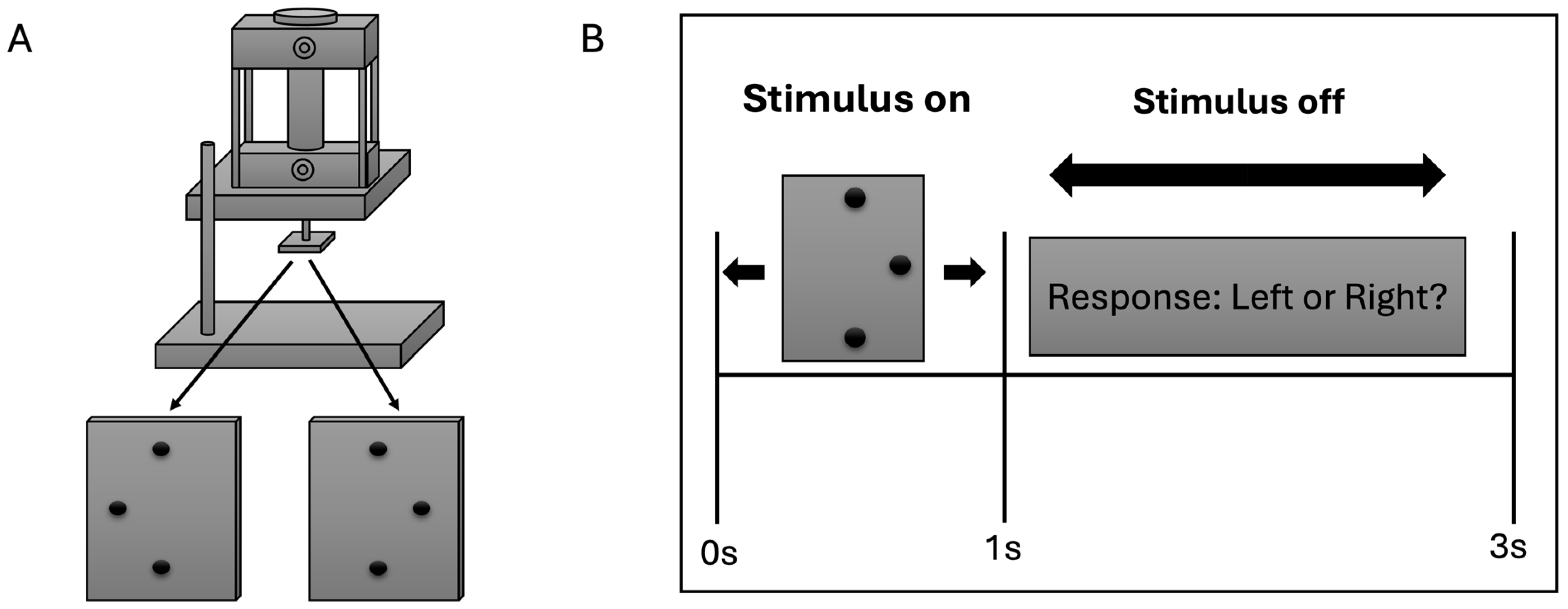
2.2. Tactile Stimulation
2.3. Data Acquisition and Preprocessing
2.4. Data Analysis
2.5. Event-Related Potentials (ERPs)
2.6. Spatiotemporal Visualization of Oscillatory Dynamics
2.7. Time Frequency Analysis of Oscillatory Power
2.8. Frequency Band Power Extraction
2.9. Statistical Analysis Using Linear Mixed-Effects Models
2.10. Block Granger Causality and Coherence Analysis
3. Results
3.1. Group-Level Average Event-Related Potentials (ERPs)
3.2. Time-Frequency Analysis
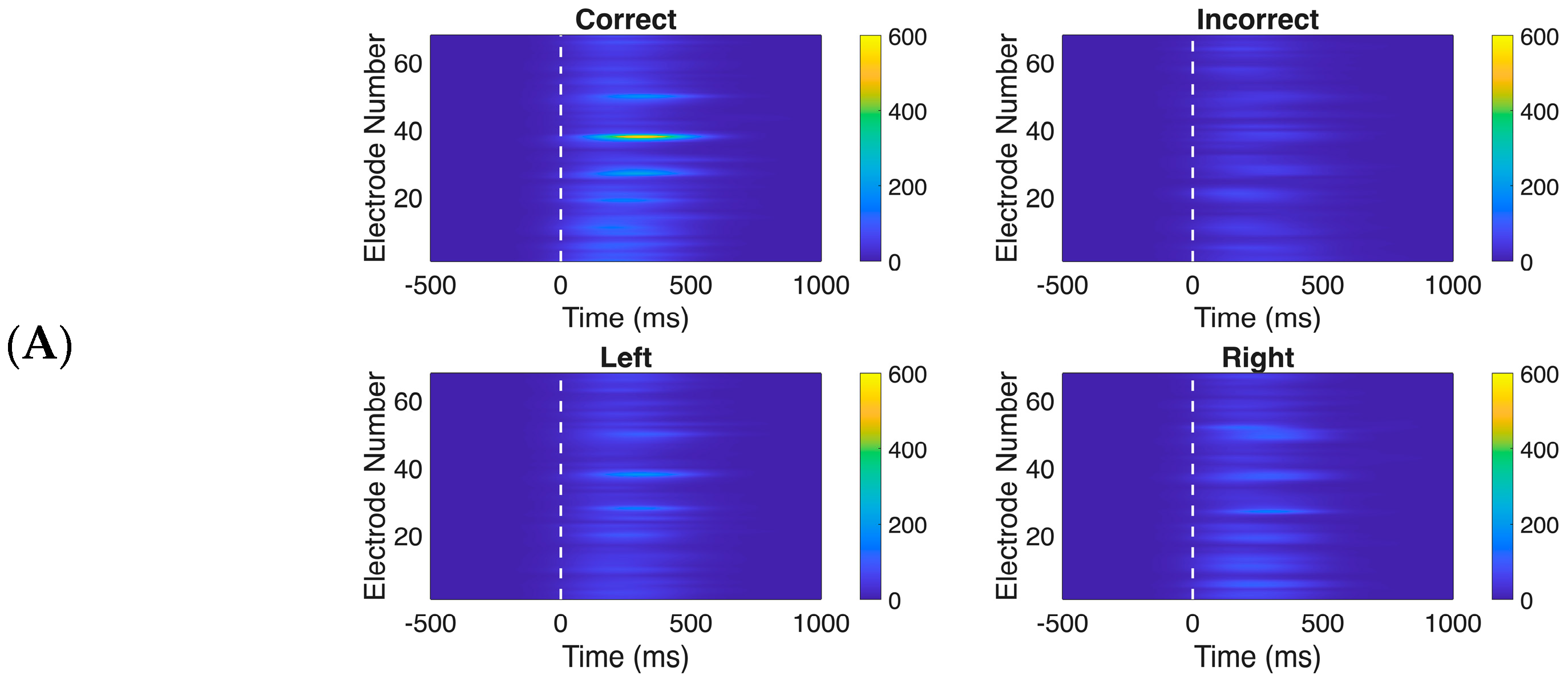
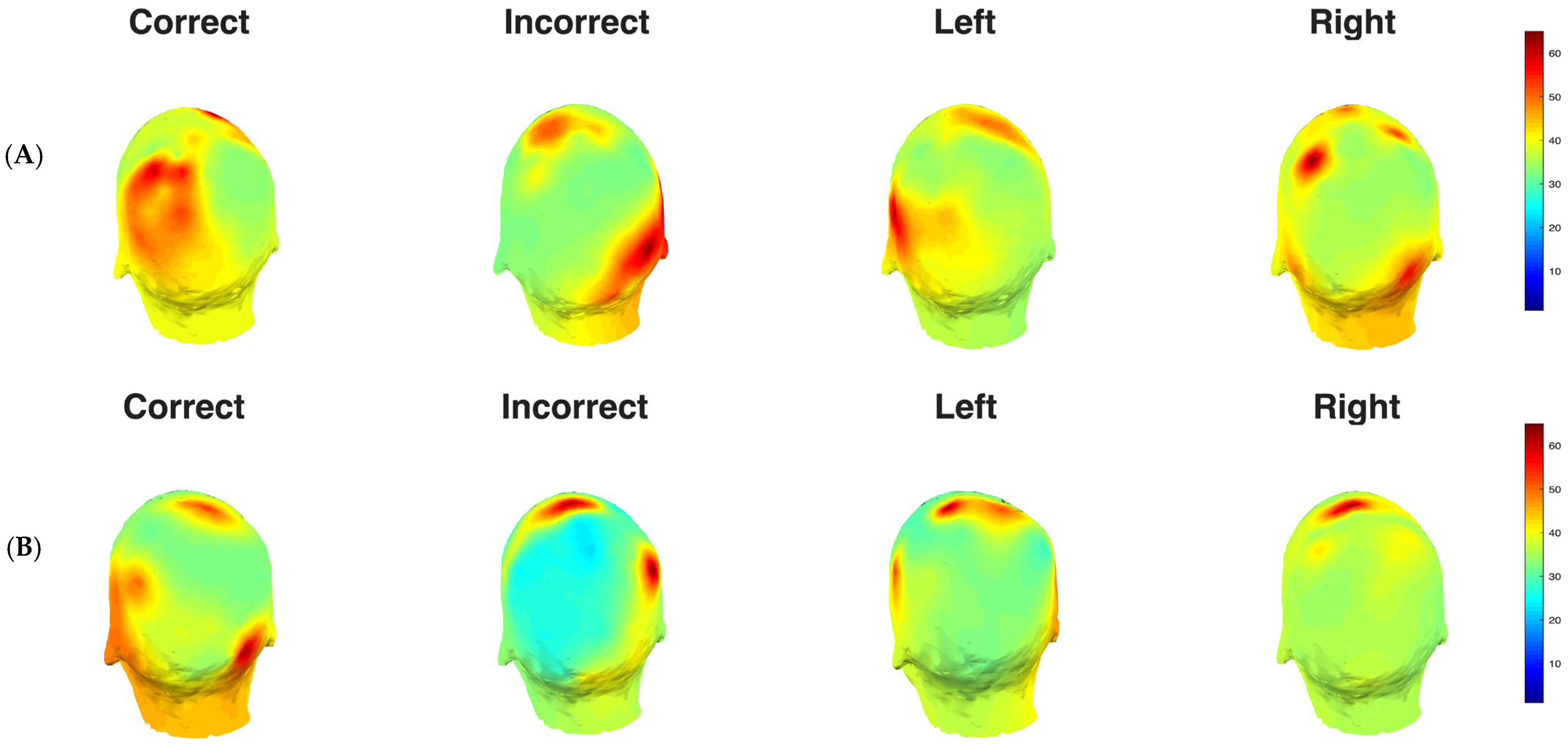
3.3. Spatiotemporal Distribution of Oscillatory Power
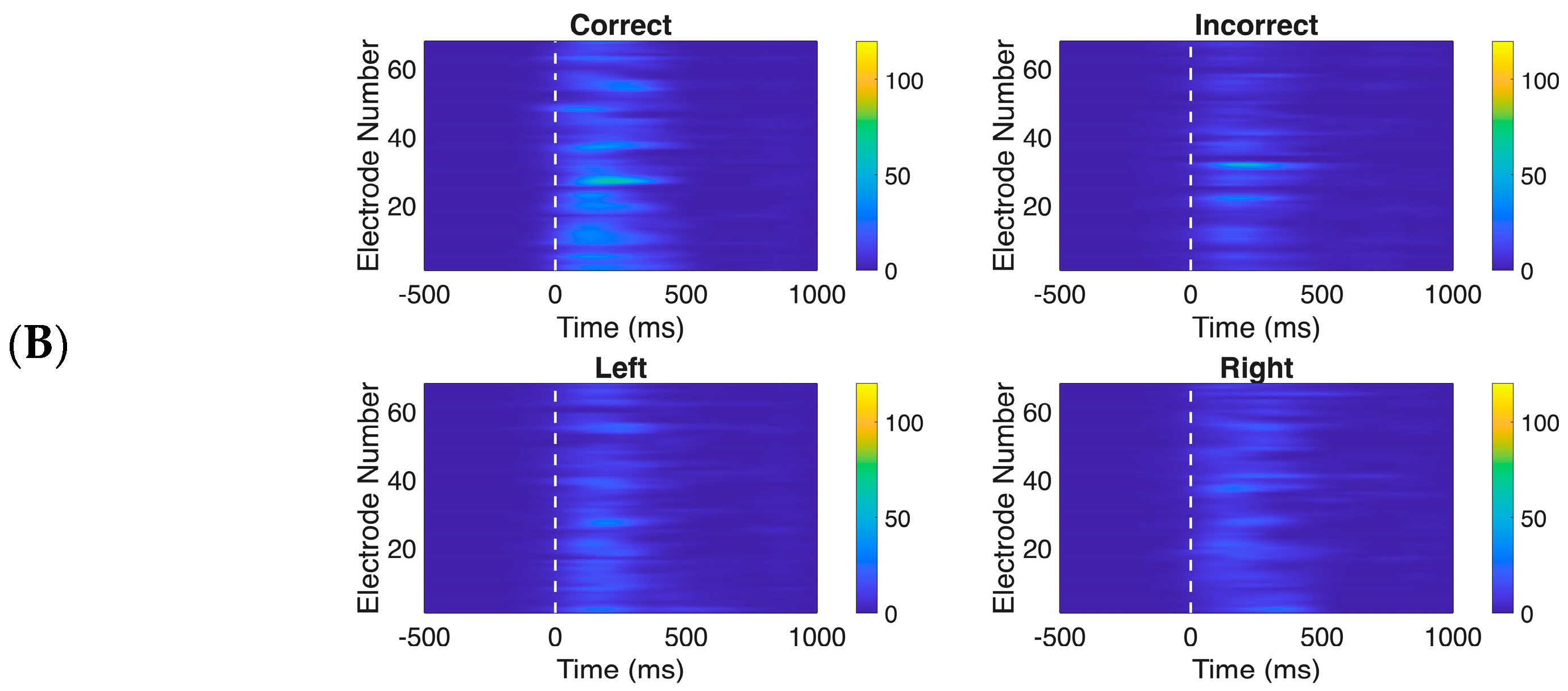
3.4. Baseline Spatiotemporal Power Distribution
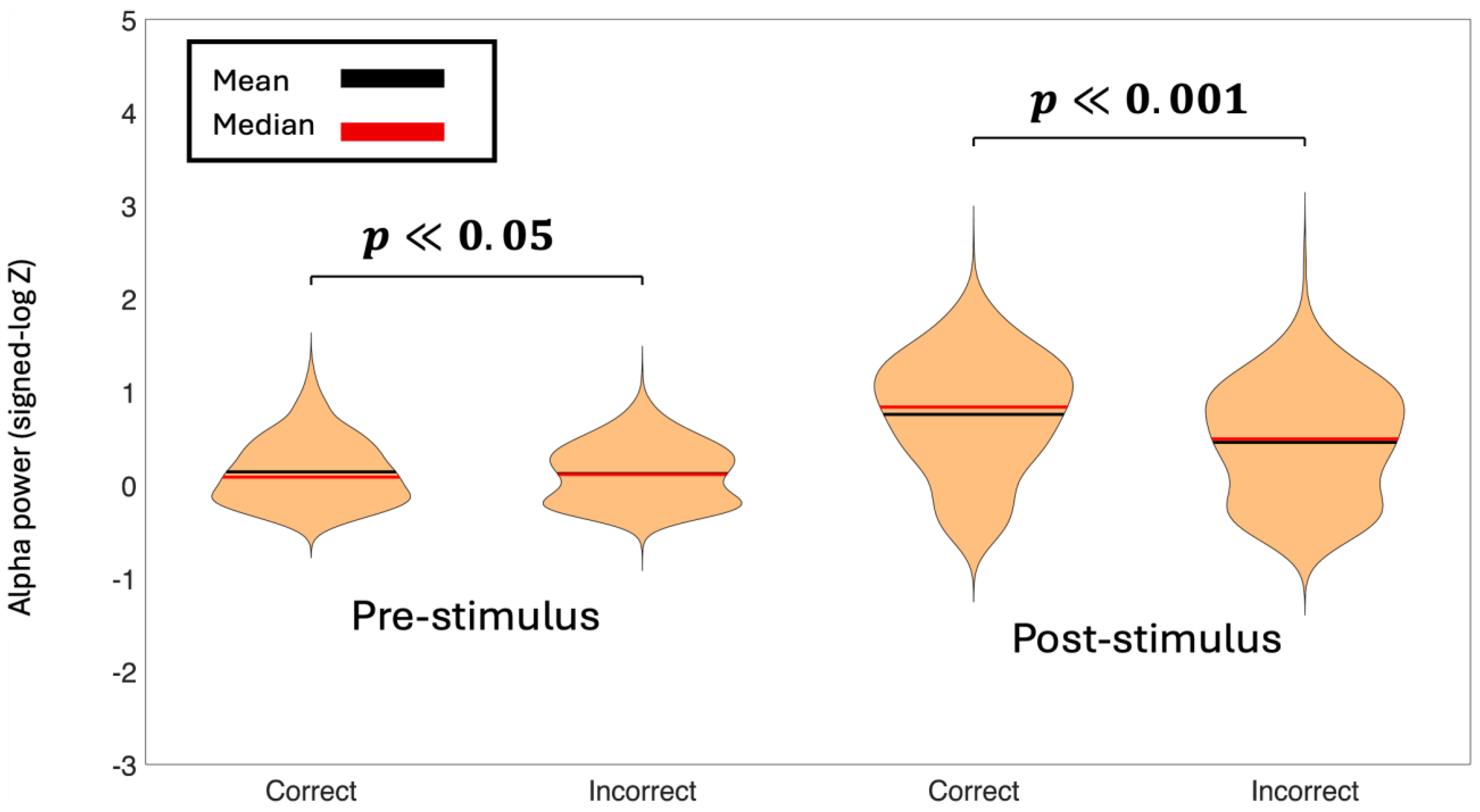
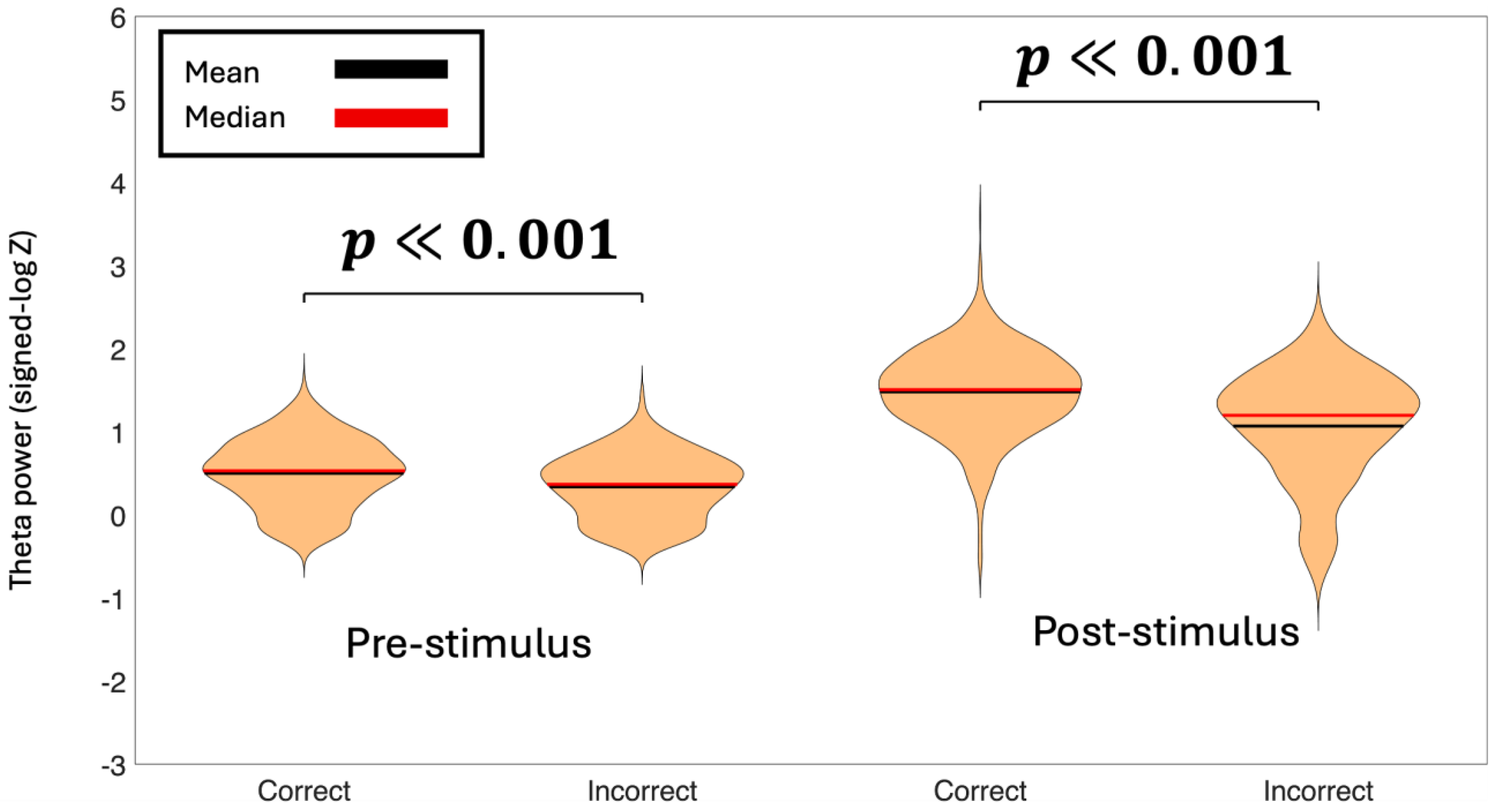
3.5. Statistical Analysis of Frequency-Band Power
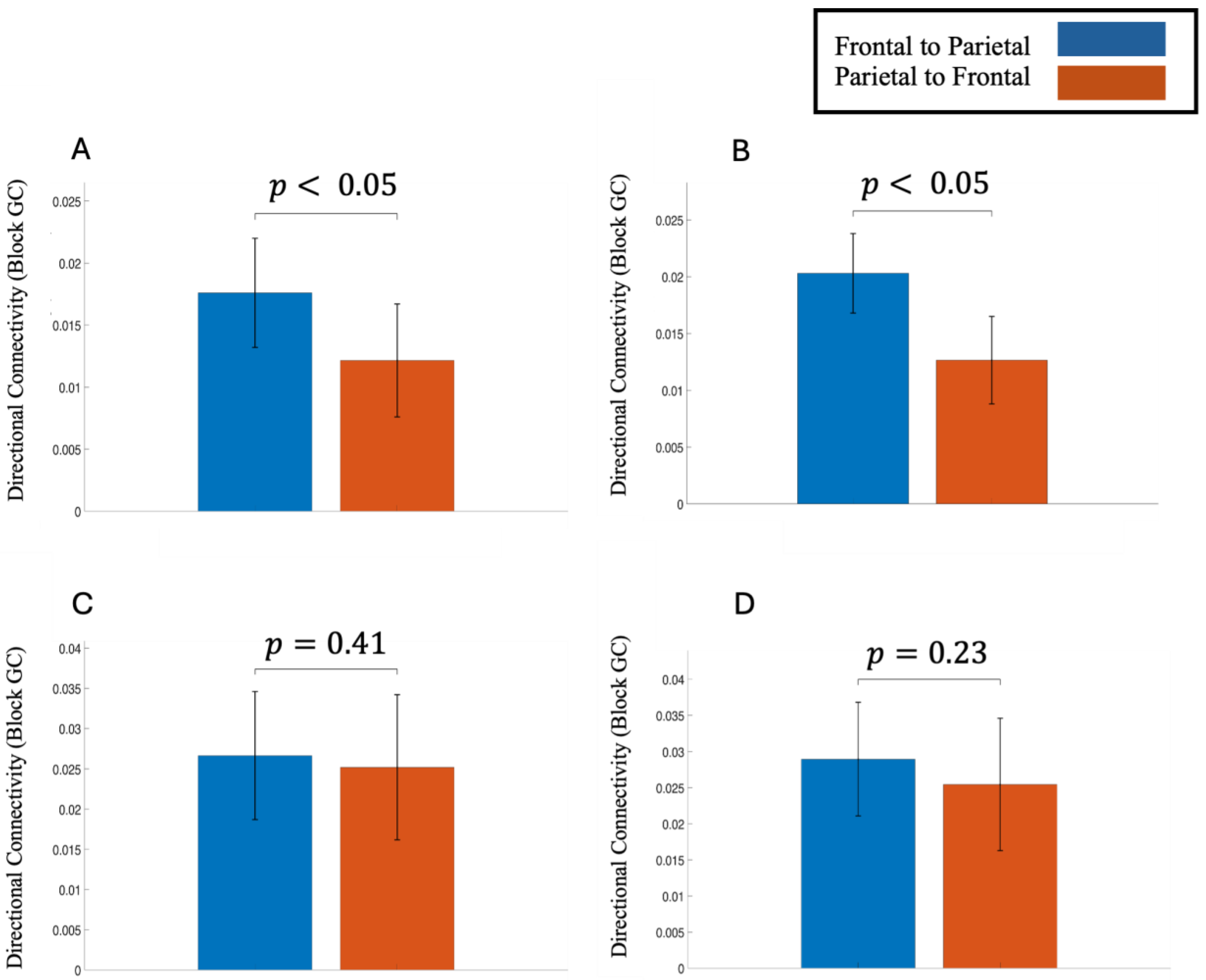
3.6. Analysis of Fronto-Parietal Network Activity
4. Discussion
5. Conclusions
Supplementary Materials
Author Contributions
Funding
Institutional Review Board Statement
Informed Consent Statement
Data Availability Statement
Acknowledgments
Conflicts of Interest
References
- Gold, J.I.; Shadlen, M.N. The neural basis of decision making. Annu. Rev. Neurosci. 2007, 30, 535–574. [Google Scholar] [CrossRef]
- Schall, J.D. Neural basis of deciding, choosing and acting. Nat. Rev. Neurosci. 2001, 2, 33–42. [Google Scholar] [CrossRef]
- Platt, M.L. Neural correlates of decisions. Curr. Opin. Neurobiol. 2002, 12, 141–148. [Google Scholar] [CrossRef]
- Ding, L.; Gold, J.I. The basal ganglia’s contributions to perceptual decision making. Neuron 2013, 79, 640–649. [Google Scholar] [CrossRef]
- Adhikari, B.M.; Sathian, K.; Epstein, C.M.; Lamichhane, B.; Dhamala, M. Oscillatory activity in neocortical networks during tactile discrimination near the limit of spatial acuity. NeuroImage 2014, 91, 300–310. [Google Scholar] [CrossRef]
- Diekhof, E.K.; Falkai, P.; Gruber, O. Functional neuroimaging of reward processing and decision-making: A review of aberrant motivational and affective processing in addiction and mood disorders. Brain Res. Rev. 2008, 59, 164–184. [Google Scholar] [CrossRef]
- Dom, G.; Sabbe, B.; Hulstijn, W.; Van Den Brink, W. Substance use disorders and the orbitofrontal cortex: Systematic review of behavioural decision-making and neuroimaging studies. Br. J. Psychiatry 2005, 187, 209–220. [Google Scholar] [CrossRef]
- DeSalvo, M.N.; Douw, L.; Takaya, S.; Liu, H.; Stufflebeam, S.M. Task-dependent reorganization of functional connectivity networks during visual semantic decision making. Brain Behav. 2014, 4, 877–885. [Google Scholar] [CrossRef]
- Li, X.; Lu, Z.L.; D’Argembeau, A.; Ng, M.; Bechara, A. The Iowa gambling task in fMRI images. Hum. Brain Mapp. 2010, 31, 410–423. [Google Scholar] [CrossRef]
- Kaiser, J.; Lennert, T.; Lutzenberger, W. Dynamics of oscillatory activity during auditory decision making. Cereb. Cortex 2007, 17, 2258–2267. [Google Scholar] [CrossRef]
- Napoli, J.L.; Camalier, C.R.; Brown, A.-L.; Jacobs, J.; Mishkin, M.M.; Averbeck, B.B. Correlates of auditory decision-making in prefrontal, auditory, and basal lateral amygdala cortical areas. J. Neurosci. 2021, 41, 1301–1316. [Google Scholar] [CrossRef]
- Hein, G.; Alink, A.; Kleinschmidt, A.; Müller, N.G. Competing neural responses for auditory and visual decisions. PLoS ONE 2007, 2, e320. [Google Scholar] [CrossRef]
- Si, Y.; Li, F.; Duan, K.; Tao, Q.; Li, C.; Cao, Z.; Zhang, Y.; Biswal, B.; Li, P.; Yao, D. Predicting individual decision-making responses based on single-trial EEG. NeuroImage 2020, 206, 116333. [Google Scholar] [CrossRef]
- Cortes, P.M.; García-Hernández, J.P.; Iribe-Burgos, F.A.; Hernández-González, M.; Sotelo-Tapia, C.; Guevara, M.A. Temporal division of the decision-making process: An EEG study. Brain Res. 2021, 1769, 147592. [Google Scholar] [CrossRef]
- Cohen, M.X.; Elger, C.E.; Fell, J. Oscillatory activity and phase–amplitude coupling in the human medial frontal cortex during decision making. J. Cogn. Neurosci. 2008, 21, 390–402. [Google Scholar] [CrossRef]
- Nácher, V.; Ledberg, A.; Deco, G.; Romo, R. Coherent delta-band oscillations between cortical areas correlate with decision making. Proc. Natl. Acad. Sci. USA 2013, 110, 15085–15090. [Google Scholar] [CrossRef]
- Siegel, M.; Engel, A.K.; Donner, T.H. Cortical network dynamics of perceptual decision-making in the human brain. Front. Hum. Neurosci. 2011, 5, 21. [Google Scholar] [CrossRef]
- Sadaghiani, S.; Kleinschmidt, A. Brain networks and α-oscillations: Structural and functional foundations of cognitive control. Trends Cogn. Sci. 2016, 20, 805–817. [Google Scholar] [CrossRef]
- Cavanagh, J.F.; Frank, M.J. Frontal theta as a mechanism for cognitive control. Trends Cogn. Sci. 2014, 18, 414–421. [Google Scholar] [CrossRef]
- Belchior, H.; Lopes-dos-Santos, V.; Tort, A.B.; Ribeiro, S. Increase in hippocampal theta oscillations during spatial decision making. Hippocampus 2014, 24, 693–702. [Google Scholar] [CrossRef]
- Klimesch, W. Alpha-band oscillations, attention, and controlled access to stored information. Trends Cogn. Sci. 2012, 16, 606–617. [Google Scholar] [CrossRef]
- Cruz, G.; Melcón, M.; Sutandi, L.; Palva, J.M.; Palva, S.; Thut, G. Oscillatory brain activity in the canonical alpha-band conceals distinct mechanisms in attention. J. Neurosci. 2025, 45, e0918242024. [Google Scholar] [CrossRef]
- Wianda, E.; Ross, B. The roles of alpha oscillation in working memory retention. Brain Behav. 2019, 9, e01263. [Google Scholar] [CrossRef]
- Haegens, S.; Pathak, Y.J.; Smith, E.H.; Mikell, C.B.; Banks, G.P.; Yates, M.; Bijanki, K.R.; Schevon, C.A.; McKhann, G.M.; Schroeder, C.E. Alpha and broadband high-frequency activity track task dynamics and predict performance in controlled decision-making. Psychophysiology 2022, 59, e13901. [Google Scholar] [CrossRef]
- Lou, B.; Li, Y.; Philiastides, M.G.; Sajda, P. Prestimulus alpha power predicts fidelity of sensory encoding in perceptual decision making. NeuroImage 2014, 87, 242–251. [Google Scholar] [CrossRef]
- Wolff, A.; Gomez-Pilar, J.; Nakao, T.; Northoff, G. Interindividual neural differences in moral decision-making are mediated by alpha power and delta/theta phase coherence. Sci. Rep. 2019, 9, 4432. [Google Scholar] [CrossRef]
- Becerra, L.; Pendse, G.; Chang, P.-C.; Bishop, J.; Borsook, D. Robust reproducible resting state networks in the awake rodent brain. PLoS ONE 2011, 6, e25701. [Google Scholar] [CrossRef]
- Power, J.D.; Cohen, A.L.; Nelson, S.M.; Wig, G.S.; Barnes, K.A.; Church, J.A.; Vogel, A.C.; Laumann, T.O.; Miezin, F.M.; Schlaggar, B.L. Functional network organization of the human brain. Neuron 2011, 72, 665–678. [Google Scholar] [CrossRef]
- Deco, G.; Jirsa, V.K.; McIntosh, A.R. Emerging concepts for the dynamical organization of resting-state activity in the brain. Nat. Rev. Neurosci. 2011, 12, 43–56. [Google Scholar] [CrossRef]
- McEvoy, L.K.; Pellouchoud, E.; Smith, M.E.; Gevins, A. Neurophysiological signals of working memory in normal aging. Cogn. Brain Res. 2001, 11, 363–376. [Google Scholar] [CrossRef]
- Sauseng, P.; Klimesch, W.; Doppelmayr, M.; Hanslmayr, S.; Schabus, M.; Gruber, W.R. Theta coupling in the human electroencephalogram during a working memory task. Neurosci. Lett. 2004, 354, 123–126. [Google Scholar] [CrossRef]
- Diwadkar, V.A.; Carpenter, P.A.; Just, M.A. Collaborative activity between parietal and dorso-lateral prefrontal cortex in dynamic spatial working memory revealed by fMRI. NeuroImage 2000, 12, 85–99. [Google Scholar] [CrossRef]
- Matsui, T.; Hattori, Y.; Tsumura, K.; Aoki, R.; Takeda, M.; Nakahara, K.; Jimura, K. Executive control by fronto-parietal activity explains counterintuitive decision behavior in complex value-based decision-making. NeuroImage 2022, 249, 118892. [Google Scholar] [CrossRef]
- Keuken, M.C.; Müller-Axt, C.; Langner, R.; Eickhoff, S.B.; Forstmann, B.U.; Neumann, J. Brain networks of perceptual decision-making: An fMRI ALE meta-analysis. Front. Hum. Neurosci. 2014, 8, 445. [Google Scholar] [CrossRef]
- Stilla, R.; Deshpande, G.; LaConte, S.; Hu, X.; Sathian, K. Posteromedial Parietal Cortical Activity and Inputs Predict Tactile Spatial Acuity. J. Neurosci. 2007, 27, 11091–11102. [Google Scholar] [CrossRef]
- Dhamala, M.; Rangarajan, G.; Ding, M. Analyzing information flow in brain networks with nonparametric Granger causality. NeuroImage 2008, 41, 354–362. [Google Scholar] [CrossRef] [PubMed]
- Torrence, C.; Compo, G.P. A Practical Guide to Wavelet Analysis. Bull. Am. Meteorol. Soc. 1998, 79, 61–78. [Google Scholar] [CrossRef]
- Tallon-Baudry, C.; Bertrand, O.; Wienbruch, C.; Ross, B.; Pantev, C. Combined EEG and MEG recordings of visual 40 Hz responses to illusory triangles in human. NeuroReport 1997, 8, 1103–1107. [Google Scholar] [CrossRef] [PubMed]
- Grandchamp, R.; Delorme, A. Single-trial normalization for event-related spectral decomposition reduces sensitivity to noisy trials. Front. Psychol. 2011, 2, 236. [Google Scholar] [CrossRef]
- Barr, D.J.; Levy, R.; Scheepers, C.; Tily, H.J. Random effects structure for confirmatory hypothesis testing: Keep it maximal. J. Mem. Lang. 2013, 68, 255–278. [Google Scholar] [CrossRef]
- Nedungadi, A.G.; Ding, M.; Rangarajan, G. Block coherence: A method for measuring the interdependence between two blocks of neurobiological time series. Biol. Cybern. 2011, 104, 197–207. [Google Scholar] [CrossRef] [PubMed]
- Rajagovindan, R.; Ding, M. Decomposing neural synchrony: Toward an explanation for near-zero phase-lag in cortical oscillatory networks. PLoS ONE 2008, 3, e3649. [Google Scholar] [CrossRef] [PubMed]
- Wang, X.; Chen, Y.; Bressler, S.L.; Ding, M. Granger causality between multiple interdependent neurobiological time series: Blockwise versus pairwise methods. Int. J. Neural Syst. 2007, 17, 71–78. [Google Scholar] [CrossRef]
- Granger, C.W. Investigating causal relations by econometric models and cross-spectral methods. Econometrica 1969, 37, 424–438. [Google Scholar] [CrossRef]
- Seth, A.K.; Barrett, A.B.; Barnett, L. Granger causality analysis in neuroscience and neuroimaging. J. Neurosci. 2015, 35, 3293–3297. [Google Scholar] [CrossRef] [PubMed]
- Ding, M.; Chen, Y.; Bressler, S.L. Granger causality: Basic theory and application to neuroscience. In Handbook of Time Series Analysis: Recent Theoretical Developments and Applications; Wiley-VCH: Weinheim, Germany, 2006; pp. 437–460. [Google Scholar]
- Geweke, J. Measurement of linear dependence and feedback between multiple time series. J. Am. Stat. Assoc. 1982, 77, 304–313. [Google Scholar] [CrossRef]
- Berger, H. Über das elektroenkephalogramm des menschen. Arch. Psychiatr. Nervenkrankh. 1929, 87, 527–570. [Google Scholar] [CrossRef]
- Pfurtscheller, G.; Stancak, A., Jr.; Neuper, C. Event-related synchronization (ERS) in the alpha band—An electrophysiological correlate of cortical idling: A review. Int. J. Psychophysiol. 1996, 24, 39–46. [Google Scholar] [CrossRef]
- Klimesch, W.; Sauseng, P.; Hanslmayr, S. EEG alpha oscillations: The inhibition–timing hypothesis. Brain Res. Rev. 2007, 53, 63–88. [Google Scholar] [CrossRef]
- Jensen, O.; Mazaheri, A. Shaping functional architecture by oscillatory alpha activity: Gating by inhibition. Front. Hum. Neurosci. 2010, 4, 186. [Google Scholar] [CrossRef]
- Jensen, O.; Bonnefond, M.; VanRullen, R. An oscillatory mechanism for prioritizing salient unattended stimuli. Trends Cogn. Sci. 2012, 16, 200–206. [Google Scholar] [CrossRef]
- Min, B.-K.; Herrmann, C.S. Prestimulus EEG alpha activity reflects prestimulus top-down processing. Neurosci. Lett. 2007, 422, 131–135. [Google Scholar] [CrossRef] [PubMed]
- Angelakis, E.; Lubar, J.F.; Stathopoulou, S.; Kounios, J. Peak alpha frequency: An electroencephalographic measure of cognitive preparedness. Clin. Neurophysiol. 2004, 115, 887–897. [Google Scholar] [CrossRef]
- Foxe, J.; Simpson, G.; Ahlfors, S. Parieto-occipital–10 Hz activity reflects anticipatory state of visual attention mechanisms. NeuroReport 1998, 9, 3929–3933. [Google Scholar] [CrossRef] [PubMed]
- Pfurtscheller, G. Event-related synchronization (ERS): An electrophysiological correlate of cortical areas at rest. Electroencephalogr. Clin. Neurophysiol. 1992, 83, 62–69. [Google Scholar] [CrossRef]
- Min, B.-K.; Park, J.Y.; Kim, E.J.; Kim, J.I.; Kim, J.-J.; Park, H.-J. Prestimulus EEG alpha activity reflects temporal expectancy. Neurosci. Lett. 2008, 438, 270–274. [Google Scholar] [CrossRef] [PubMed]
- Min, B.-K.; Park, H.-J. Task-related modulation of anterior theta and posterior alpha EEG reflects top-down preparation. BMC Neurosci. 2010, 11, 79. [Google Scholar] [CrossRef]
- Guderian, S.; Schott, B.H.; Richardson-Klavehn, A.; Düzel, E. Medial temporal theta state before an event predicts episodic encoding success in humans. Proc. Natl. Acad. Sci. USA 2009, 106, 5365–5370. [Google Scholar] [CrossRef]
- Singh, V.A.V.; Kumar, V.G.; Banerjee, A.; Roy, D. Prestimulus Periodic and Aperiodic Neural Activity Shapes McGurk Perception. eNeuro 2025, 12, ENEURO.0431-24.2025. [Google Scholar] [CrossRef]
- Jensen, O.; Gelfand, J.; Kounios, J.; Lisman, J.E. Oscillations in the alpha band (9–12 Hz) increase with memory load during retention in a short-term memory task. Cereb. Cortex 2002, 12, 877–882. [Google Scholar] [CrossRef]
- Klimesch, W.; Doppelmayr, M.; Schwaiger, J.; Auinger, P.; Winkler, T. ‘Paradoxical’ alpha synchronization in a memory task. Cogn. Brain Res. 1999, 7, 493–501. [Google Scholar] [CrossRef]
- Schack, B.; Klimesch, W. Frequency characteristics of evoked and oscillatory electroencephalic activity in a human memory scanning task. Neurosci. Lett. 2002, 331, 107–110. [Google Scholar] [CrossRef]
- Gevins, A.; Smith, M.E.; McEvoy, L.; Yu, D. High-resolution EEG mapping of cortical activation related to working memory: Effects of task difficulty, type of processing, and practice. Cereb. Cortex 1997, 7, 374–385. [Google Scholar] [CrossRef] [PubMed]
- Jensen, O.; Tesche, C.D. Frontal theta activity in humans increases with memory load in a working memory task. Eur. J. Neurosci. 2002, 15, 1395–1399. [Google Scholar] [CrossRef] [PubMed]
- Klimesch, W.; Doppelmayr, M.; Russegger, H.; Pachinger, T. Encoding of new. NeuroReport 1996, 7, 1235–1240. [Google Scholar] [CrossRef]
- Klimesch, W.; Doppelmayr, M.; Schimke, H.; Ripper, B. Theta synchronization and alpha desynchronization in a memory task. Psychophysiology 1997, 34, 169–176. [Google Scholar] [CrossRef]
- Sederberg, P.B.; Kahana, M.J.; Howard, M.W.; Donner, E.J.; Madsen, J.R. Theta and gamma oscillations during encoding predict subsequent recall. J. Neurosci. 2003, 23, 10809–10814. [Google Scholar] [CrossRef]
- Nyhus, E.; Curran, T. Functional role of gamma and theta oscillations in episodic memory. Neurosci. Biobehav. Rev. 2010, 34, 1023–1035. [Google Scholar] [CrossRef]
- Von Stein, A.; Sarnthein, J. Different frequencies for different scales of cortical integration: From local gamma to long range alpha/theta synchronization. Int. J. Psychophysiol. 2000, 38, 301–313. [Google Scholar] [CrossRef]
- Gulbinaite, R.; van Rijn, H.; Cohen, M.X. Fronto-parietal network oscillations reveal relationship between working memory capacity and cognitive control. Front. Hum. Neurosci. 2014, 8, 761. [Google Scholar] [CrossRef]
- Sauseng, P.; Klimesch, W.; Gruber, W.R.; Birbaumer, N. Cross-frequency phase synchronization: A brain mechanism of memory matching and attention. NeuroImage 2008, 40, 308–317. [Google Scholar] [CrossRef] [PubMed]
- Liu, Y.; Hong, X.; Bengson, J.J.; Kelley, T.A.; Ding, M.; Mangun, G.R. Deciding where to attend: Large-scale network mechanisms underlying attention and intention revealed by graph-theoretic analysis. NeuroImage 2017, 157, 45–60. [Google Scholar] [CrossRef] [PubMed]




Disclaimer/Publisher’s Note: The statements, opinions and data contained in all publications are solely those of the individual author(s) and contributor(s) and not of MDPI and/or the editor(s). MDPI and/or the editor(s) disclaim responsibility for any injury to people or property resulting from any ideas, methods, instructions or products referred to in the content. |
© 2026 by the authors. Licensee MDPI, Basel, Switzerland. This article is an open access article distributed under the terms and conditions of the Creative Commons Attribution (CC BY) license.
Share and Cite
Mukherjee, P.; Apraku, S.; Dhamala, M. Frontal-to-Parietal Theta Interactions Mediate Tactile Decision-Making. Life 2026, 16, 390. https://doi.org/10.3390/life16030390
Mukherjee P, Apraku S, Dhamala M. Frontal-to-Parietal Theta Interactions Mediate Tactile Decision-Making. Life. 2026; 16(3):390. https://doi.org/10.3390/life16030390
Chicago/Turabian StyleMukherjee, Pritom, Sydney Apraku, and Mukesh Dhamala. 2026. "Frontal-to-Parietal Theta Interactions Mediate Tactile Decision-Making" Life 16, no. 3: 390. https://doi.org/10.3390/life16030390
APA StyleMukherjee, P., Apraku, S., & Dhamala, M. (2026). Frontal-to-Parietal Theta Interactions Mediate Tactile Decision-Making. Life, 16(3), 390. https://doi.org/10.3390/life16030390