Explaining Productivity Differences Among Tree Species via Biotic and Abiotic Factors

 and
and
Abstract
1. Introduction
2. Materials and Methods
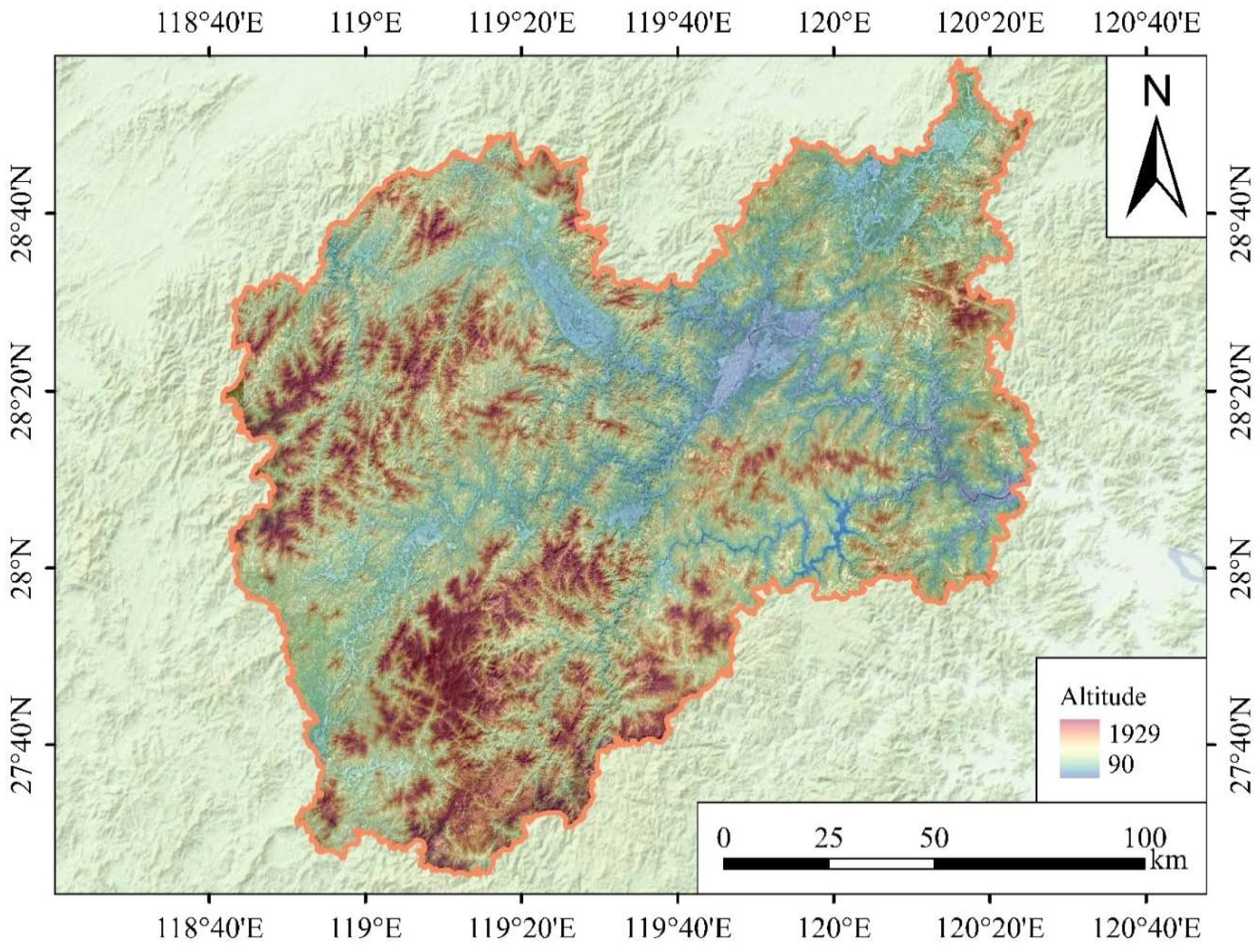
2.1. Study Area and Field Work
2.2. Biomass and Diversity Indices
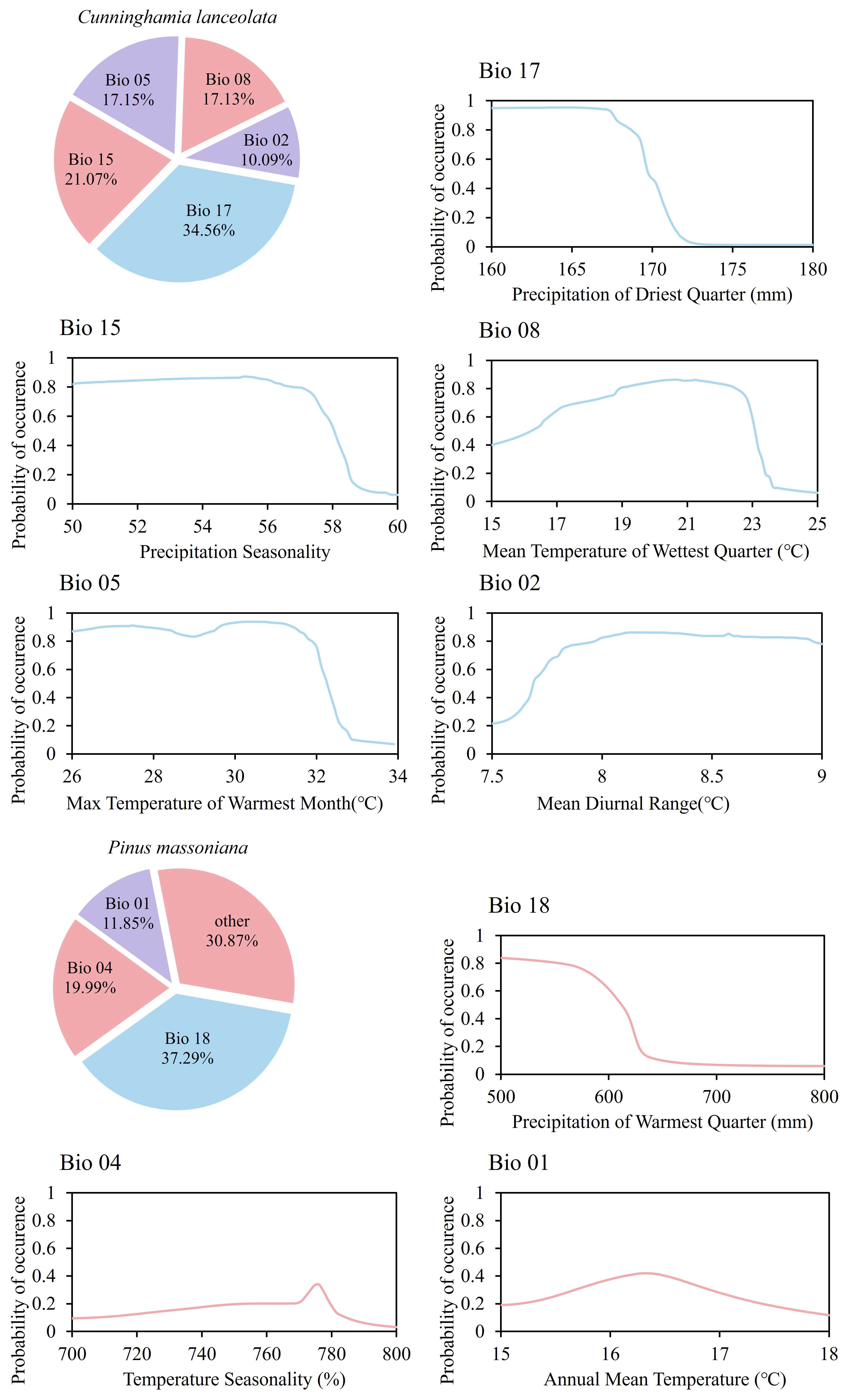
2.3. Climate Variable Screening and Topographic Factors
2.4. Statistical Analysis and Structural Equation Model
3. Results
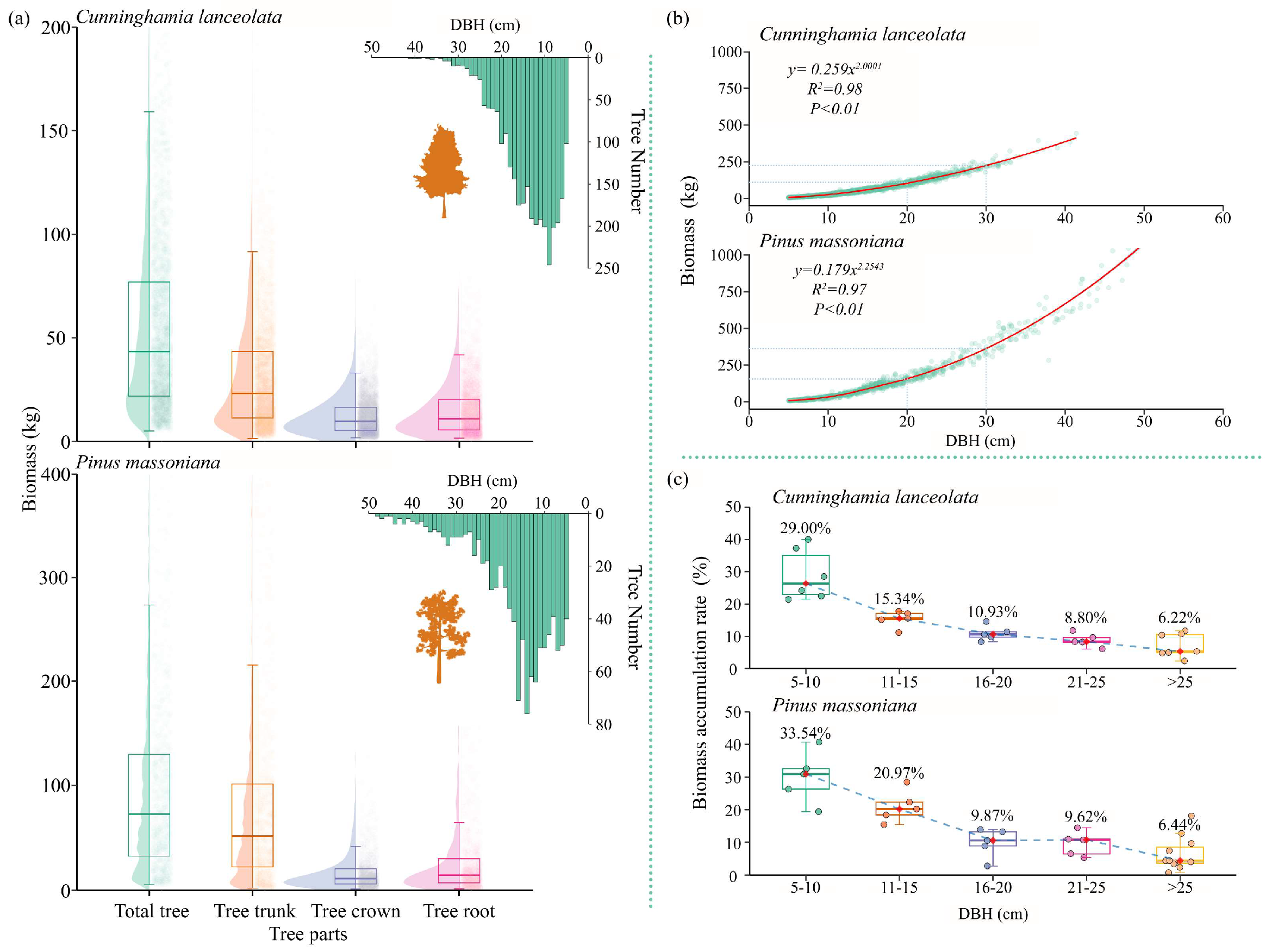
3.1. Forest Biomass
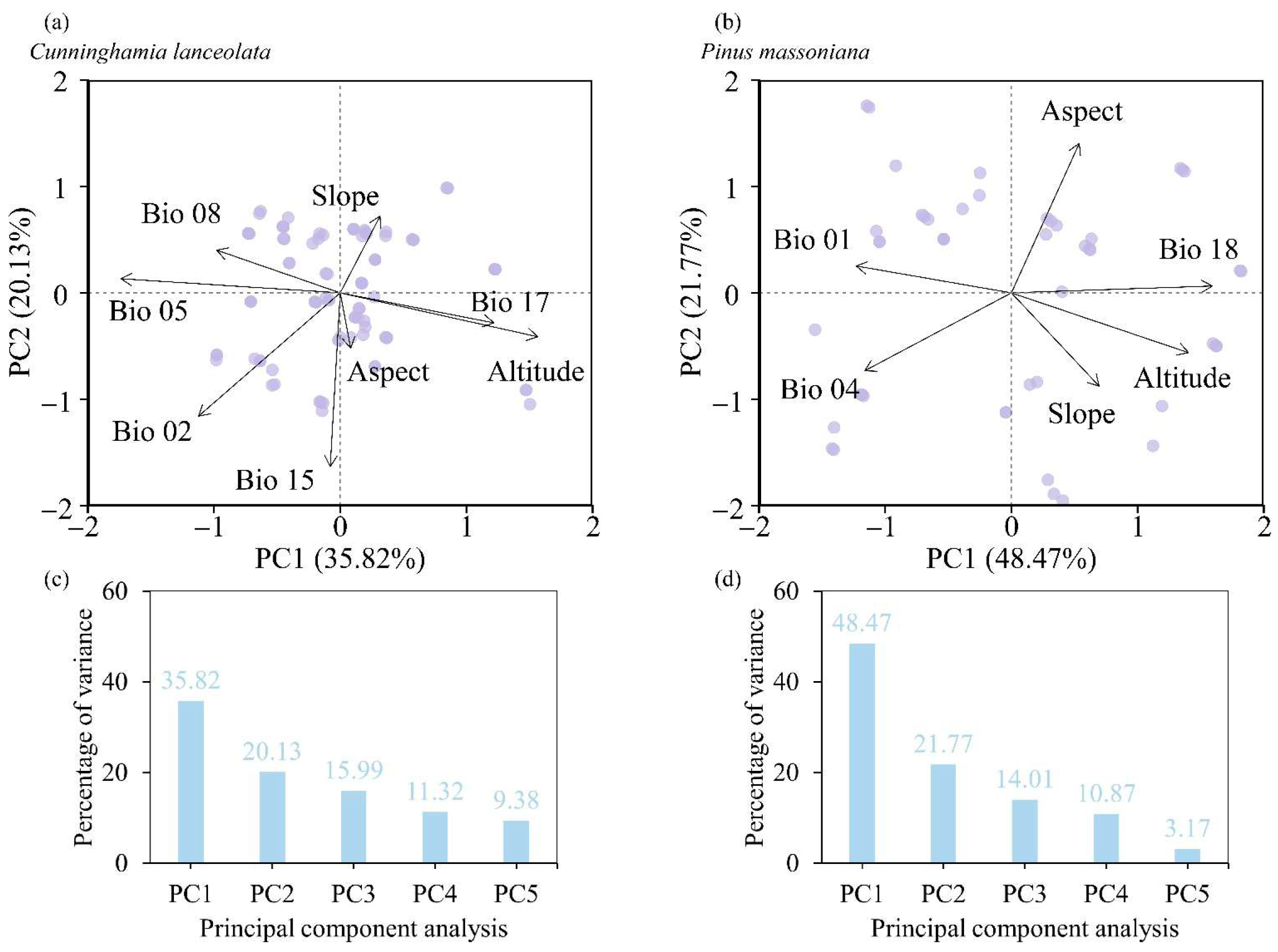
3.2. Environmental Factors and Forest Diversity
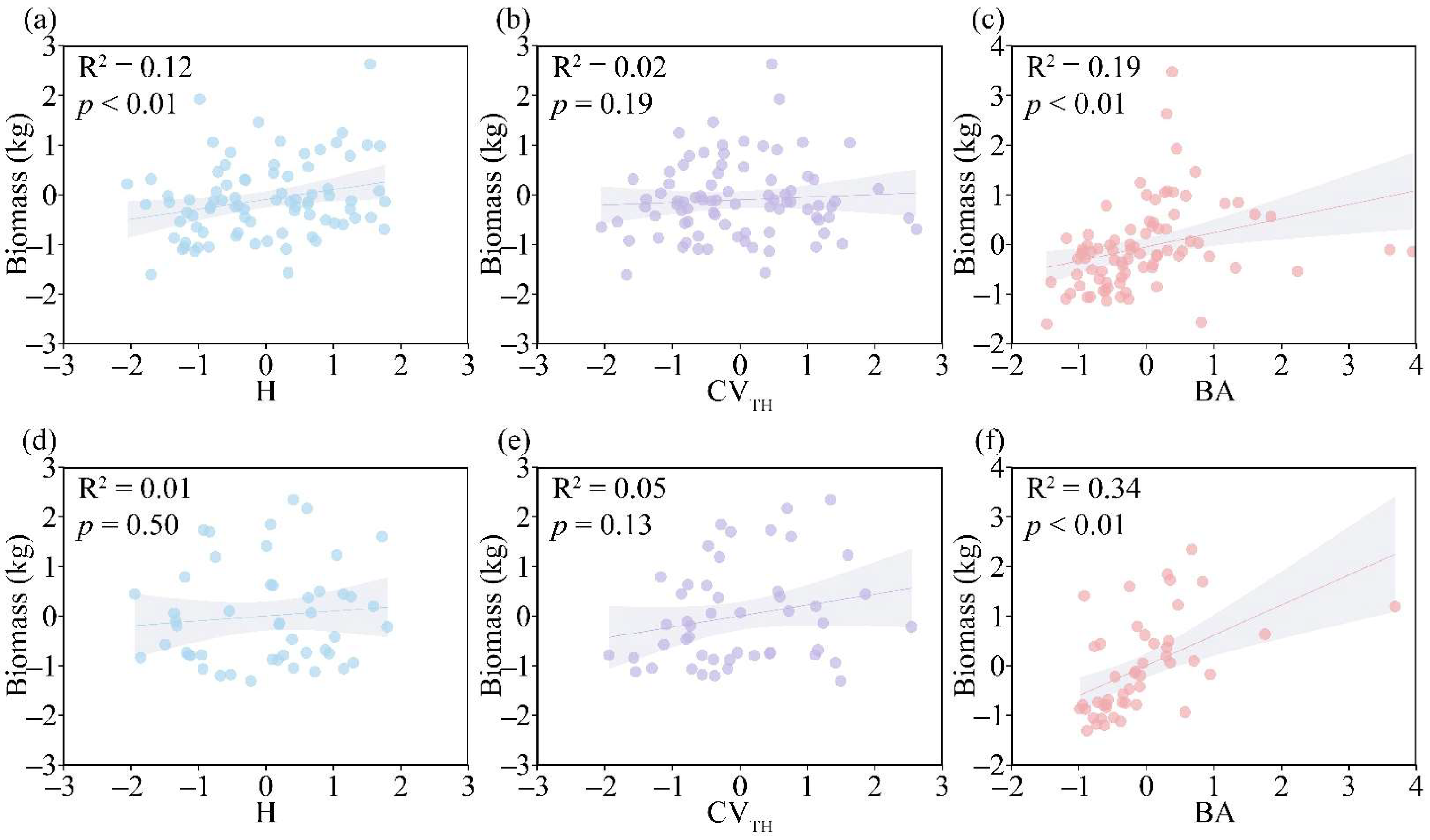
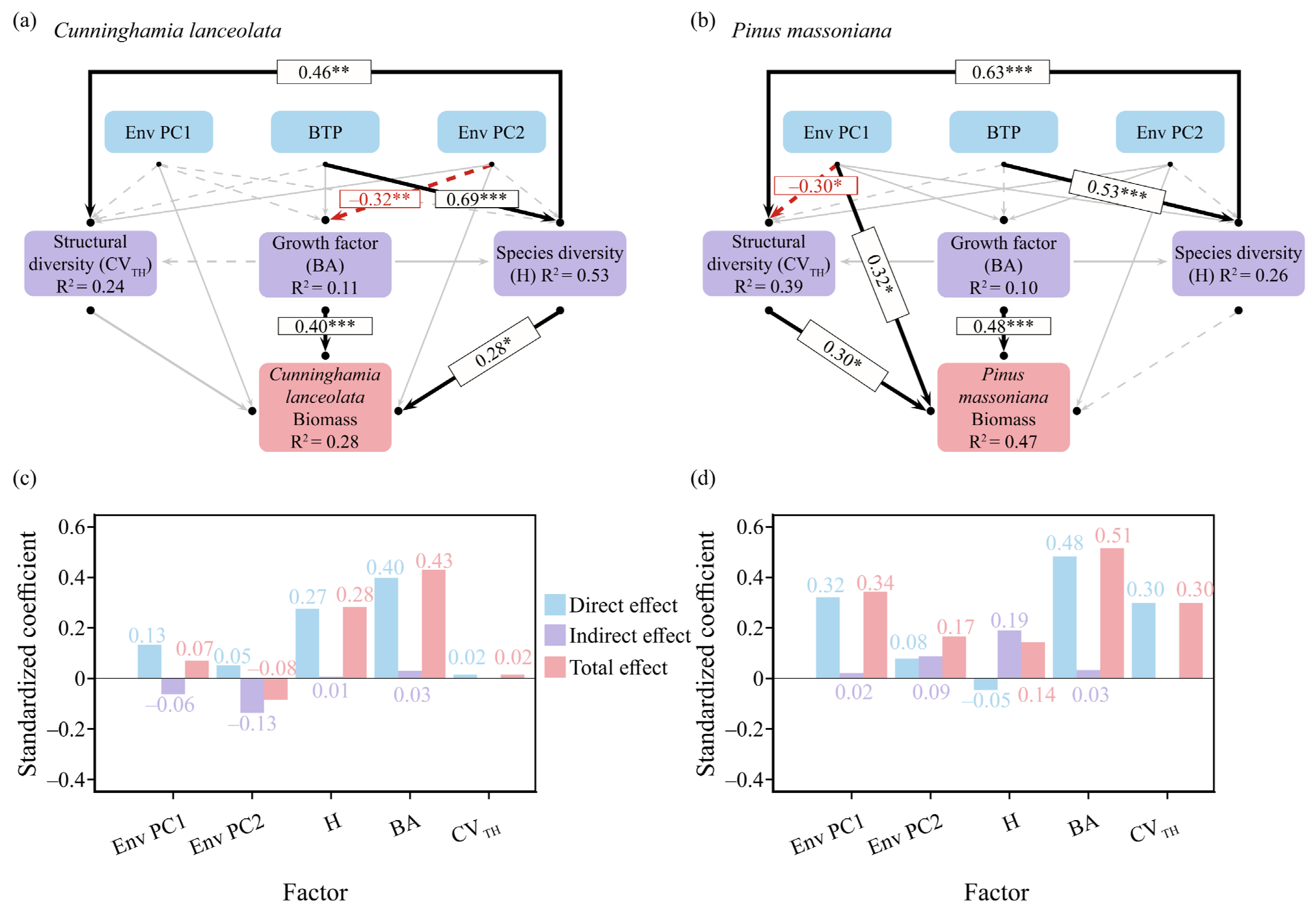
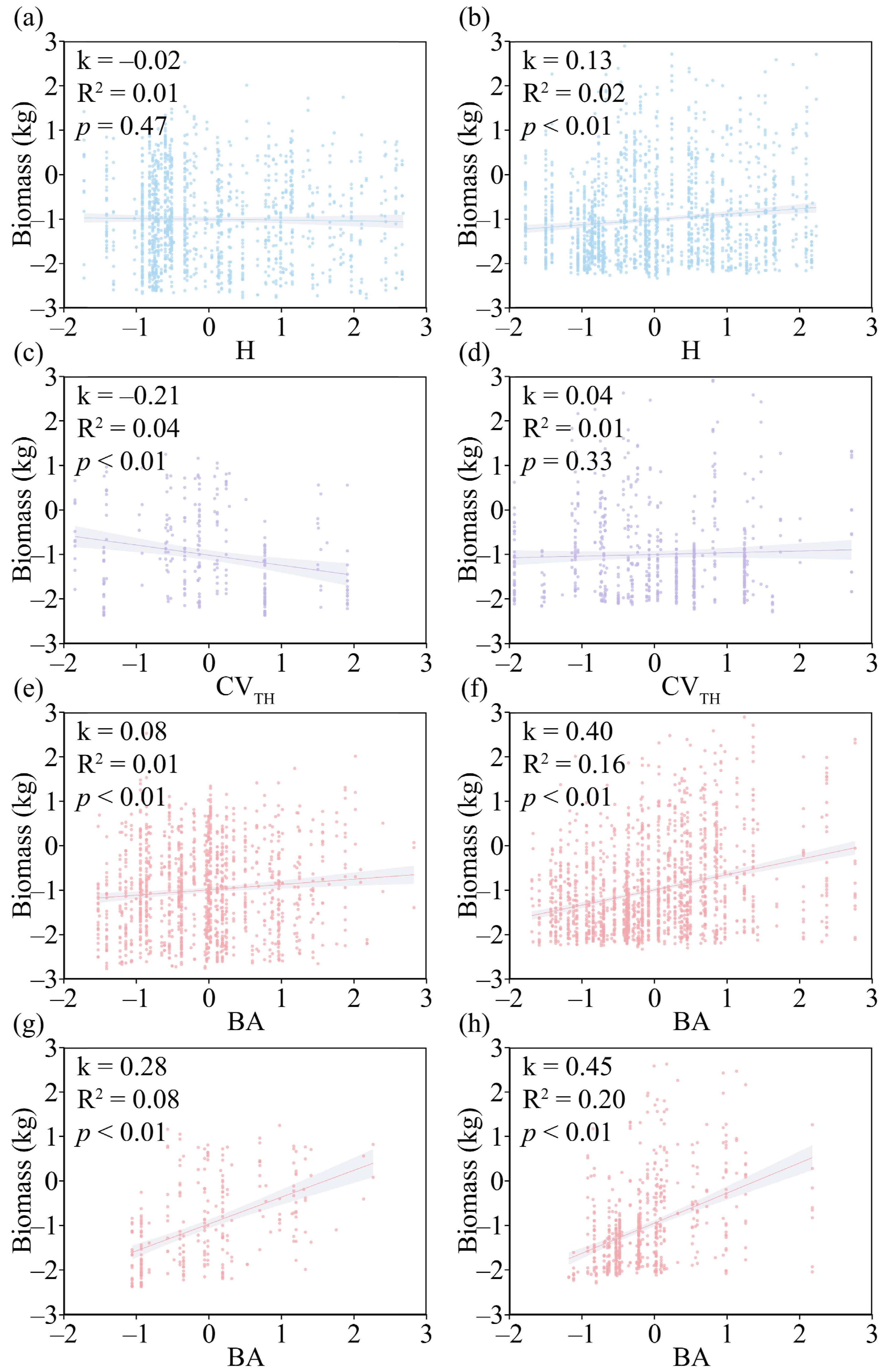
3.3. Driving Factor Analysis of Forest Biomass
4. Discussion
4.1. Difference Analysis of Growth of C. lanceolata and P. massoniana
4.2. The Model Optimization, and Effects of Environmental Factors on the Biomass of C. lanceolata and P. massoniana
4.3. The Effects of Forest Factors on the Biomass of C. lanceolata and P. massoniana
5. Conclusions
Supplementary Materials
Author Contributions
Funding
Institutional Review Board Statement
Informed Consent Statement
Data Availability Statement
Acknowledgments
Conflicts of Interest
References
- Schneider, S.H. The greenhouse effect: Science and policy. Science 1989, 243, 771–781. [Google Scholar] [CrossRef] [Scilit]
- Friedlingstein, P.; O’Sullivan, M.; Jones, M.W.; Andrew, R.M.; Gregor, L.; Hauck, J.; Le Quéré, C.; Luijkx, I.T.; Olsen, A.; Peters, G.P. Global carbon budget 2022. Earth Syst. Sci. Data 2022, 14, 4811–4900. [Google Scholar] [CrossRef] [Scilit]
- Wu, Y.; Zheng, J.; Gao, J.; He, X.; Liu, X.; Chen, Y.; Liu, J.; Li, C. Functional diversity explains ecosystem carbon storage in subtropical forests. Glob. Change Biol. 2025, 31, e70120. [Google Scholar] [CrossRef] [Scilit]
- Pan, Y.; Birdsey, R.A.; Fang, J.; Houghton, R.; Kauppi, P.E.; Kurz, W.A.; Phillips, O.L.; Shvidenko, A.; Lewis, S.L.; Canadell, J.G. A large and persistent carbon sink in the world’s forests. Science 2011, 333, 988–993. [Google Scholar] [CrossRef] [Scilit]
- Bai, Y.; Ding, G. Estimation of changes in carbon sequestration and its economic value with various stand density and rotation age of Pinus massoniana plantations in China. Sci. Rep. 2024, 14, 16852. [Google Scholar] [CrossRef] [Scilit] [PubMed]
- MacDicken, K.G. Global forest resources assessment 2015: What, why and how? For. Ecol. Manag. 2015, 352, 3–8. [Google Scholar] [CrossRef] [Scilit]
- Yu, Z.; Liu, S.; Wang, J.; Wei, X.; Schuler, J.; Sun, P.; Harper, R.; Zegre, N. Natural forests exhibit higher carbon sequestration and lower water consumption than planted forests in China. Glob. Change Biol. 2019, 25, 68–77. [Google Scholar] [CrossRef] [Scilit]
- Cavender-Bares, J.; Keen, A.; Miles, B. Phylogenetic structure of Floridian plant communities depends on taxonomic and spatial scale. Ecology 2006, 87, S109–S122. [Google Scholar] [CrossRef] [Scilit]
- Slingsby, J.; Verboom, G. Phylogenetic relatedness limits co-occurrence at fine spatial scales: Evidence from the Schoenoid Sedges (Cyperaceae: Schoeneae). S. Afr. J. Bot. 2007, 73, 313. [Google Scholar] [CrossRef] [Scilit]
- Yang, J.; Zhang, G.; Ci, X.; Swenson, N.G.; Cao, M.; Sha, L.; Li, J.; Baskin, C.C.; Slik, J.F.; Lin, L. Functional and phylogenetic Assembly in a Chinese tropical tree community across size classes, spatial scales and habitats. Funct. Ecol. 2014, 28, 520–529. [Google Scholar] [CrossRef] [Scilit]
- Ameray, A.; Cavard, X.; Bergeron, Y. Climate change may increase Quebec boreal forest productivity in high latitudes by shifting its current composition. Front. For. Glob. Change 2023, 6, 1020305. [Google Scholar] [CrossRef] [Scilit]
- Zhang, L.; Qi, S.; Li, P.; Zhou, P. Influence of stand and environmental factors on forest productivity of Platycladus orientalis plantations in Beijing’s mountainous areas. Ecol. Indic. 2024, 158, 111385. [Google Scholar] [CrossRef] [Scilit]
- Gao, J.; Ji, Y.; Zhang, X. Net primary productivity exhibits a stronger climatic response in planted versus natural forests. For. Ecol. Manag. 2023, 529, 120722. [Google Scholar] [CrossRef] [Scilit]
- Sun, J.; Jiao, W.; Wang, Q.; Wang, T.; Yang, H.; Jin, J.; Feng, H.; Guo, J.; Feng, L.; Xu, X. Potential habitat and productivity loss of Populus deltoides industrial forest plantations due to global warming. For. Ecol. Manag. 2021, 496, 119474. [Google Scholar] [CrossRef] [Scilit]
- Li, L.; Yan, X.; Tian, Y.; Zhao, Z.; Wu, S.; Farooq, T.H.; Li, M.; Ma, X.; Wu, P. Root spatial distribution and architectural formation of Chinese fir plantations: Changes in soil water and nutrients based on different slope positions. Eur. J. For. Res. 2025, 144, 1645–1657. [Google Scholar] [CrossRef] [Scilit]
- Torres, A.B.; Lovett, J.C. Using basal area to estimate aboveground carbon stocks in forests: La Primavera Biosphere’s Reserve, Mexico. Forestry 2013, 86, 267–281. [Google Scholar] [CrossRef] [Scilit]
- Zhai, L.; Will, R.E.; Zhang, B. Structural diversity is better associated with forest productivity than species or functional diversity. Ecology 2024, 105, e4269. [Google Scholar] [CrossRef] [Scilit] [PubMed]
- Gogoi, R.R.; Adhikari, D.; Upadhaya, K.; Barik, S. Tree diversity and carbon stock in a subtropical broadleaved forest are greater than a subtropical pine forest occurring in similar elevation of Meghalaya, north-eastern India. Trop. Ecol. 2020, 61, 142–149. [Google Scholar] [CrossRef] [Scilit]
- Ouyang, S.; Gou, M.; Lei, P.; Liu, Y.; Chen, L.; Deng, X.; Zhao, Z.; Zeng, Y.; Hu, Y.; Peng, C. Plant functional trait diversity and structural diversity co-underpin ecosystem multifunctionality in subtropical forests. For. Ecosyst. 2023, 10, 100093. [Google Scholar] [CrossRef] [Scilit]
- Mensah, S.; du Toit, B.; Seifert, T. Diversity–biomass relationship across forest layers: Implications for niche complementarity and selection effects. Oecologia 2018, 187, 783–795. [Google Scholar] [CrossRef] [Scilit]
- Rodríguez-Hernández, D.I.; Deane, D.C.; Wang, W.; Chen, Y.; Li, B.; Luo, W.; Chu, C. Direct effects of selection on aboveground biomass contrast with indirect structure-mediated effects of complementarity in a subtropical forest. Oecologia 2021, 196, 249–261. [Google Scholar] [CrossRef] [Scilit]
- Ge, X.; Yang, Z.; Zhou, B.; Cao, Y.; Xiao, W.; Wang, X.; Li, M.-H. Biochar fertilization significantly increases nutrient levels in plants and soil but has no effect on biomass of Pinus massoniana (Lamb.) and Cunninghamia lanceolata (Lamb.) Hook Saplings during the first growing season. Forests 2019, 10, 612. [Google Scholar] [CrossRef] [Scilit]
- Xiang, W.; Xu, L.; Lei, P.; Ouyang, S.; Deng, X.; Chen, L.; Zeng, Y.; Hu, Y.; Zhao, Z.; Wu, H. Rotation age extension synergistically increases ecosystem carbon storage and timber production of Chinese fir plantations in southern China. J. Environ. Manag. 2022, 317, 115426. [Google Scholar] [CrossRef] [Scilit]
- Qin, G. Maweisong Peiyu Ji Liyong (Masson Pine Cultivation and Utilization); Beijing Jindun Publishing Company: Beijing, China, 1997. [Google Scholar]
- Nie, K.; Xu, M.; Zhang, J. Changes in soil carbon, nitrogen, and phosphorus in Pinus massoniana forest along altitudinal gradients of subtropical karst mountains. PeerJ 2023, 11, e15198. [Google Scholar] [CrossRef] [Scilit]
- Zhao, Y.; Xu, L.; Zhang, Y.; Wen, Y.; Zhang, D. Climate-change impacts on distribution, habitats, sustainability and cultivation planning of two economically and ecologically important forest trees (China fir and Masson pine) in China. Glob. Ecol. Conserv. 2025, 57, e03349. [Google Scholar] [CrossRef] [Scilit]
- Wang, J.; Ji, B.; Wang, Z.; Zhu, C. Influence of Subtropical Forest Landscape Pattern on Forest Carbon Density in Lishui City of Zhejiang Province. J. Zhejiang A&F Univ. 2024, 41, 30–40. [Google Scholar]
- Yan, S.; Hong, W.; Wu, C. Population Structure and Spatial Pattern of Celtis sinensis on Langqi Island of Minjiang Estuary. China J. Ecol. 2011, 30, 221. [Google Scholar]
- Jiang, C. Structure and Spatial Distribution of Natural Regeneration Casuarina equisetifolia Population in Coastal Shelter Forest. J. Fujian For. Sci. Technol. 2021, 48, 39–44. [Google Scholar]
- Tong, L.; Wang, Y.; Zhu, Z.; Chen, Z.; Tang, S.; Zhao, X.; Chen, K.; Wang, L. Effects of Species and Structural Diversity on Carbon Storage in Subtropical Forests. Biology 2025, 15, 79. [Google Scholar] [CrossRef] [Scilit]
- Lu, S.; Zhang, D.; Wang, L.; Dong, L.; Liu, C.; Hou, D.; Chen, G.; Qiao, X.; Wang, Y.; Guo, K. Comparison of plant diversity-carbon storage relationships along altitudinal gradients in temperate forests and shrublands. Front. Plant Sci. 2023, 14, 1120050. [Google Scholar] [CrossRef] [Scilit]
- Bettinger, P.; Boston, K.; Siry, J.P.; Grebner, D.L. Forest Management and Planning; Academic Press: San Diego, CA, USA, 2016. [Google Scholar]
- Chen, K.; Shao, W.; Li, Y.; Wang, L.; Lin, Z.; Guo, L.; Wei, L. Biomod2 Modeling for Predicting Suitable Distribution of Bamboo Bat (Tylonycteris pachypus) Under Climate Change. Animals 2025, 15, 1164. [Google Scholar] [CrossRef] [Scilit] [PubMed]
- Li, F.; Shi, Z.; Liu, S.; Chen, M.; Xu, G.; Chen, J.; Xing, H. Stand structural diversity and edaphic properties regulate aboveground biomass of Abies fargesii var. faxoniana primary forest on the eastern Qinghai-Tibetan Plateau. Eur. J. For. Res. 2024, 143, 1401–1410. [Google Scholar] [CrossRef] [Scilit]
- Su, R.; Wu, Q.; Yang, Y.; Hu, T. Relationship between diameter at breast height and tree age in populations of a rare and endangered plant, Davidia involucrata. Pol. J. Ecol. 2021, 69, 84–95. [Google Scholar] [CrossRef] [Scilit]
- Xiang, W.; Li, L.; Ouyang, S.; Xiao, W.; Zeng, L.; Chen, L.; Lei, P.; Deng, X.; Zeng, Y.; Fang, J. Effects of stand age on tree biomass partitioning and allometric equations in Chinese fir (Cunninghamia lanceolata) plantations. Eur. J. For. Res. 2021, 140, 317–332. [Google Scholar] [CrossRef] [Scilit]
- Hu, Y.; Kang, X.; Zhao, J. Variable Relationship between Tree Age and Diameter at Breast Height for Natural Forests in Changbai Mountains. J. Northeast. For. Univ. 2009, 37, 38–42. [Google Scholar]
- Zhang, X.; Chen, X.; Ji, Y.; Wang, R.; Gao, J. Forest age drives the resource utilization indicators of trees in planted and natural forests in China. Plants 2024, 13, 806. [Google Scholar] [CrossRef] [Scilit] [PubMed]
- Tsen, E.W.; Sitzia, T.; Webber, B.L. To core, or not to core: The impact of coring on tree health and a best-practice framework for collecting dendrochronological information from living trees. Biol. Rev. 2016, 91, 899–924. [Google Scholar]
- Chen, Y.; Chai, Z. Comparative analysis of volume growth processes of Masson pine and Chinese fir forests in different regions of southern China. PeerJ 2025, 13, e18706. [Google Scholar] [CrossRef] [Scilit]
- Ming, A.; Yang, Y.; Liu, S.; Nong, Y.; Li, H.; Tao, Y.; Sun, D.; Lei, L.; Zeng, J.; An, N. The impact of near natural forest management on the carbon stock and sequestration potential of Pinus massoniana (Lamb.) and Cunninghamia lanceolata (Lamb.) Hook. plantations. Forests 2019, 10, 626. [Google Scholar] [CrossRef] [Scilit]
- Ye, J.; Yue, C.; Hu, Y.; Ma, H. Spatial patterns of global-scale forest root-shoot ratio and their controlling factors. Sci. Total Environ. 2021, 800, 149251. [Google Scholar] [CrossRef] [Scilit]
- He, Y.; Ma, J.; Chen, G. Potential geographical distribution and its multi-factor analysis of Pinus massoniana in China based on the maxent model. Ecol. Indic. 2023, 154, 110790. [Google Scholar] [CrossRef] [Scilit]
- Li, Y.; Li, M.; Li, C.; Liu, Z. Optimized maxent model predictions of climate change impacts on the suitable distribution of Cunninghamia lanceolata in China. Forests 2020, 11, 302. [Google Scholar] [CrossRef] [Scilit]
- Chen, K.; Ma, L.; Jiang, W.; Wang, L.; Wei, L.; Zhang, H.; Yang, R. Anthropogenic Disturbance and Climate Change Impacts on the Suitable Habitat of Sphenomorphus incognitus in China. Ecol. Evol. 2025, 15, e70848. [Google Scholar] [CrossRef] [Scilit]
- Liu, Q.; Huang, Z.; Zou, X.; Ma, X.; Liu, B. Adaptation strategies of Cunninghamia lanceolata seedlings to light intensity gradients based on morpho-physiological trade-offs. Front. Plant Sci. 2025, 16, 1646842. [Google Scholar] [CrossRef] [Scilit]
- Chen, Y.; Helliker, B.R.; Tang, X.; Li, F.; Zhou, Y.; Song, X. Stem water cryogenic extraction biases estimation in deuterium isotope composition of plant source water. Proc. Natl. Acad. Sci. USA 2020, 117, 33345–33350. [Google Scholar] [CrossRef] [Scilit]
- Liu, Z.; Wang, X.; Jia, G.; Jiang, J.; Liao, B. Introduction of broadleaf tree species can promote the resource use efficiency and gross primary productivity of pure forests. Plant Cell Environ. 2024, 47, 5252–5264. [Google Scholar] [CrossRef] [Scilit]
- Loreau, M. Biodiversity and ecosystem functioning: A mechanistic model. Proc. Natl. Acad. Sci. USA 1998, 95, 5632–5636. [Google Scholar] [CrossRef] [Scilit] [PubMed]
- Tetzlaff, D.; Buttle, J.; Carey, S.K.; Kohn, M.J.; Laudon, H.; McNamara, J.P.; Smith, A.; Sprenger, M.; Soulsby, C. Stable isotopes of water reveal differences in plant–soil water relationships across northern environments. Hydrol. Process. 2021, 35, e14023. [Google Scholar] [CrossRef] [Scilit]
- Mathias, J.M.; Thomas, R.B. Global tree intrinsic water use efficiency is enhanced by increased atmospheric CO2 and modulated by climate and plant functional types. Proc. Natl. Acad. Sci. USA 2021, 118, e2014286118. [Google Scholar] [CrossRef] [Scilit] [PubMed]
- Ali, A.; Yan, E.-R.; Chen, H.Y.; Chang, S.X.; Zhao, Y.-T.; Yang, X.-D.; Xu, M.-S. Stand structural diversity rather than species diversity enhances aboveground carbon storage in secondary subtropical forests in Eastern China. Biogeosciences 2016, 13, 4627–4635. [Google Scholar] [CrossRef] [Scilit]
- Wen, G.; Ma, J.; Xu, W.; Wang, J.; He, W.; Wang, Y.; Wang, X.; Li, T.; Ye, M.; Chen, G. Response of understory plant functional groups to changes in stand spatial structure in Masson pine (Pinus massoniana Lamb.) plantations depends on thinning mode and intensity. J. Environ. Manag. 2025, 376, 124441. [Google Scholar] [CrossRef] [Scilit]
- Wang, H.; Wu, F.; Li, M.; Zhu, X.; Shi, C.; Ding, G. Morphological and physiological responses of Pinus massoniana seedlings to different light gradients. Forests 2021, 12, 523. [Google Scholar] [CrossRef] [Scilit]
- Kovács, B.; Tinya, F.; Ódor, P. Stand structural drivers of microclimate in mature temperate mixed forests. Agric. For. Meteorol. 2017, 234, 11–21. [Google Scholar] [CrossRef] [Scilit]
- Cheng, F.; Zhao, X.; Luo, Y.; Tian, J.; Sun, Y.; Wang, H.; Wang, Q.; Zhu, J.; Yang, C.; He, H. Effects of thinning on canopy structure, forest productivity, and productivity stability in mixed conifer-broadleaf forest: Insights from a LiDAR survey. J. Environ. Manag. 2025, 385, 125707. [Google Scholar] [CrossRef] [Scilit] [PubMed]
- Clark, D.B.; Clark, D.A. Landscape-scale variation in forest structure and biomass in a tropical rain forest. For. Ecol. Manag. 2000, 137, 185–198. [Google Scholar] [CrossRef] [Scilit]
- Gama, M.; Crespo, D.; Dolbeth, M.; Anastácio, P.M. Ensemble forecasting of Corbicula fluminea worldwide distribution: Projections of the impact of climate change. Aquat. Conserv. 2017, 27, 675–684. [Google Scholar] [CrossRef] [Scilit]
- Coetzee, B.W.; Robertson, M.P.; Erasmus, B.F.; Van Rensburg, B.J.; Thuiller, W. Ensemble models predict Important Bird Areas in southern Africa will become less effective for conserving endemic birds under climate change. Glob. Ecol. Biogeogr. 2009, 18, 701–710. [Google Scholar] [CrossRef] [Scilit]



| Study Site | C. lanceolata | P. massoniana |
|---|---|---|
| Number of sample plots | 85 | 54 |
| Number of trees | 3029 | 1013 |
| Longitude (°) | 118.80–120.28 | 118.80–120.28 |
| Latitude (°) | 27.58–28.71 | 27.78–28.71 |
| Altitude (m) | 136–1141 | 136–667 |
| Mean annual temperature (°C) | 13.24–17.59 | 15.15–17.59 |
| Mean annual precipitation (mm) | 1478–1947 | 1478–1758 |
| Species | DBH (cm) | Average Biomass | Total Biomass CV (%) | Tree Number | |||
|---|---|---|---|---|---|---|---|
| Trunk (kg) | Crown (kg) | Root (kg) | Total (kg) | ||||
| Cunninghamia lanceolata | 5–10 | 9.42 | 4.37 | 4.54 | 18.34 | 38.71 | 1114 |
| 11–15 | 25.42 | 10.14 | 11.70 | 47.26 | 24.06 | 907 | |
| 16–20 | 46.25 | 17.69 | 21.96 | 85.90 | 17.83 | 641 | |
| 21–25 | 74.14 | 27.44 | 36.11 | 137.69 | 13.80 | 268 | |
| 25–30 | 111.72 | 41.37 | 57.98 | 211.07 | 12.36 | 95 | |
| >30 | 194.35 | 72.15 | 110.27 | 376.77 | / | 4 | |
| Pinus massoniana | 5–10 | 12.21 | 3.81 | 4.18 | 20.21 | 54.06 | 278 |
| 11–15 | 44.85 | 9.52 | 12.32 | 66.69 | 30.55 | 301 | |
| 16–20 | 86.87 | 16.43 | 23.12 | 126.43 | 18.83 | 196 | |
| 21–25 | 138.68 | 25.42 | 41.05 | 205.15 | 17.04 | 104 | |
| 25–30 | 264.89 | 42.56 | 77.21 | 384.67 | 15.73 | 92 | |
| >30 | 481.02 | 74.67 | 155.48 | 711.17 | / | 42 | |
| Species | Environmental Factors | Env PC1 | Env PC2 |
|---|---|---|---|
| Cunninghamia lanceolata | Altitude (m) | 0.51 | −0.18 |
| Slope (°) | 0.10 | 0.32 | |
| Aspect (°) | 0.03 | −0.23 | |
| Bio 02 | −0.37 | −0.51 | |
| Bio 05 | −0.57 | 0.06 | |
| Bio 08 | −0.32 | 0.18 | |
| Bio 15 | −0.03 | −0.71 | |
| Bio 17 | 0.40 | −0.12 | |
| Cumulative proportion explained | 35.82 | 55.95 | |
| Pinus massoniana | Altitude (m) | 0.49 | −0.29 |
| Slope (°) | 0.24 | −0.46 | |
| Aspect (°) | 0.19 | 0.73 | |
| Bio 01 | −0.43 | 0.13 | |
| Bio 04 | −0.41 | −0.38 | |
| Bio 18 | 0.56 | 0.03 | |
| Cumulative proportion explained | 48.47 | 70.25 |
Disclaimer/Publisher’s Note: The statements, opinions and data contained in all publications are solely those of the individual author(s) and contributor(s) and not of MDPI and/or the editor(s). MDPI and/or the editor(s) disclaim responsibility for any injury to people or property resulting from any ideas, methods, instructions or products referred to in the content. |
© 2026 by the authors. Licensee MDPI, Basel, Switzerland. This article is an open access article distributed under the terms and conditions of the Creative Commons Attribution (CC BY) license.
Share and Cite
Tong, L.; Chen, K.; Zhan, X.; Wang, K.; Song, H.; Ma, L.; Wang, L. Explaining Productivity Differences Among Tree Species via Biotic and Abiotic Factors. Life 2026, 16, 277. https://doi.org/10.3390/life16020277
Tong L, Chen K, Zhan X, Wang K, Song H, Ma L, Wang L. Explaining Productivity Differences Among Tree Species via Biotic and Abiotic Factors. Life. 2026; 16(2):277. https://doi.org/10.3390/life16020277
Chicago/Turabian StyleTong, Liyang, Kai Chen, Xiahuan Zhan, Kai Wang, Huajing Song, Li Ma, and Lijin Wang. 2026. "Explaining Productivity Differences Among Tree Species via Biotic and Abiotic Factors" Life 16, no. 2: 277. https://doi.org/10.3390/life16020277
APA StyleTong, L., Chen, K., Zhan, X., Wang, K., Song, H., Ma, L., & Wang, L. (2026). Explaining Productivity Differences Among Tree Species via Biotic and Abiotic Factors. Life, 16(2), 277. https://doi.org/10.3390/life16020277