

Article

The Effect of Turnera diffusa Leaf Supplementation in Diet on the Qualitative and Quantitative Characteristics of Boar Semen


1
Agricultural Institute, 9700 Shumen, Bulgaria
2
Agricultural Academy, 1373 Sofia, Bulgaria
3
Department of General Animal Husbandry, Trakia University, 6000 Stara Zagora, Bulgaria
4
Department of Ecology and Animal Hygiene, Trakia University, 6000 Stara Zagora, Bulgaria
*
Author to whom correspondence should be addressed.
Life 2026, 16(1), 83; https://doi.org/10.3390/life16010083
Submission received: 5 December 2025 / Revised: 1 January 2026 / Accepted: 4 January 2026 / Published: 6 January 2026
(This article belongs to the Section Animal Science)

Abstract

The present study aimed to investigate the effect of Turnera diffusa supplementation on the quantitative and qualitative characteristics of semen in Duroc boars (n = 4). The experiment was divided into two periods, each corresponding to the duration of one spermatogenic cycle: a control period (40 days) (CP) and an experimental period (40 days) (EP). Nutrition and environmental conditions were kept constant throughout both periods. During the experimental period, each boar received a daily supplement of 7 g of Turnera diffusa extract. In each period, five ejaculates were collected from each boar included in the study. The ejaculates were evaluated for volume, sperm concentration, motility, agglutination, number of insemination doses obtained per ejaculate after dilution, and sperm viability after 24, 48, and 72 h of storage. The results of a two-way repeated measures ANOVA showed that the combined effect of boar × treatment significantly influenced ejaculate volume (p < 0.01) and viability after 48 h of storage (p < 0.05). The results of the two-way repeated measures ANOVA showed that treatment with the tested additive T. diffusa significantly affected sperm survival during storage for 24 h (p < 0.01), 48 h (p < 0.001), and 72 h (p < 0.05). Bonferroni post hoc analysis indicated that T. diffusa significantly affected only the parameters related to sperm viability, namely survival rates at 24 h (p < 0.001), 48 h (p < 0.01), and 72 h (p < 0.01). The findings of this study demonstrate that the application of the tested supplement, at the specified dose and duration, has a positive effect on semen quality in boars.

1. Introduction

Fertility in female pigs has a more pronounced influence on reproductive efficiency in swine production compared to the fertility of boars [1]. However, a considerable replacement rate is also observed among boars, primarily due to the deterioration of semen quality [2]. Artificial insemination is a fundamental biotechnological method in pig reproduction [3], and its effectiveness depends largely on semen quality [4,5]. In recent years, alongside conventional additives [6,7,8], the swine industry has increasingly sought natural plant-based alternatives to enhance the reproductive performance of boars. Various plant extracts are used for this purpose, aiming to improve reproductive capacity and sperm production in animals [9,10].
Turnera diffusa, a plant commonly known as Damiana, has an ancient origin. Studies evaluating the effects of T. diffusa on testicular function under conditions of toxic exposure have demonstrated beneficial outcomes, including reduced lipid peroxidation, enhanced antioxidant activity, and improved hormonal status in treated animals [11,12]. Some studies indicate that T. diffusa extract exerts a positive influence on male reproductive function and semen quality. Parra-Naranjo et al. [13] describe the bioactive properties of plants from the Turnera genus. Experimental models show that the plant reduces the latency to ejaculation and shortens the post-ejaculatory interval in male rats, which is associated with increased sexual activity and improved androgenic functional balance [14]. The main active compounds—flavonoids (including apigenin and its glycosides)—exhibit vasodilatory effects on the smooth muscle of the penile corpus cavernosum through activation of nitric oxide (NO) and cyclic guanosine monophosphate (cGMP) signaling pathways [14].
Furthermore, T. diffusa extract has demonstrated protective effects on the testes against toxic damage induced by pesticides (such as fenitrothion) [11] and drugs such as amitriptyline [12]. These effects are attributed to the plant’s pronounced antioxidant potential, which neutralizes reactive oxygen species (ROS) and protects sperm cell membranes and DNA from oxidative stress.
Estrada-Reyes et al. [15] reported that in an experiment with mice exhibiting induced obesity and impotence, oral administration of an aqueous extract of T. diffusa led to increased libido and restoration of copulatory ability. According to Chevallier [16], the α-sitosterol contained in the plant may exert an effect similar to that of testosterone, stimulating hormonal secretion, influencing metabolism, and supporting growth, reproductive processes, sexual behavior, and the development of the male gonads [17,18]. Oral administration of 50 mg/kg T. diffusa extract to rats exposed to fenitrothion and potassium dichromate resulted in the restoration of testicular structure and an increased sperm count, indicating a protective effect of T. diffusa against induced testicular toxicity [11,19].
Palacios et al. [20] reported that the injection of lyophilized T. diffusa in 60-day-old male piglets at a dose of 20 mg/2 mL distilled water resulted in a statistically significant increase in testicular circumference and weight, as well as epididymal length. Another positive effect reported by the authors is the increase in ejaculate volume, sperm concentration, and sperm motility in the treated pigs.
Turnera diffusa extract has been supplemented among laboratory animals, primarily rats, as well as in humans, focusing on its aphrodisiac, antioxidant, and hormone-regulating properties. To date, research specifically examining the effects of T. diffusa leaf on reproductive function in swine is limited. This observation motivated our initiative to conduct further experiments aimed at determining the potential impact of this bioactive supplement on both the qualitative and quantitative characteristics of boar semen. On the Bulgarian market, T. diffusa is available in the form of dried leaf material, capsules, and tincture.
The aim of the present study was to determine the effect of including leaf (Turnera diffusa) in the diets for boars on semen quantity and quality, assessed through a number of reproductive parameters.

2. Materials and Methods

2.1. Animals, Experimental Design, and Feeding

This study was conducted at “Farma Kapitanova” Ltd., in the town of Ignatievo, Varna. Four boars were randomly assigned to treatments as a sample from a population of a synthetic (terminal) Duroc line, with an average live weight of 288.5 ± 14 kg and an average age of 18.75 ± 1.75 months, over a period of 80 days. All boars included in the study exhibited excellent reproductive health status. The experiment was divided into two sub-periods, each corresponding to the duration of a single spermatogenic cycle: a control period (40 days), referred to in the study as CP, and an experimental period (40 days), referred to as EP. During both sub-periods, the boars were fed a compound feed with a defined ingredient composition and nutrient profile adjusted to their physiological requirements presented in Table 1.
Feeds were analyzed using wet chemistry methods for dry matter, crude protein, crude fiber, ether extract, calcium and phosphorus as described by AOAC International (2007) [21]. Amino acid profiles were analyzed by using the HPLC/ULPC (High-Performance Liquid Chromatography/Ultra-Performance Liquid Chromatography) method with derivatization.
During the experimental period, each boar received a daily hand-administered supplement of 7 g/head/day of dried T. diffusa leaf material. These dried leaves were purchased from a human dietary supplement drugstore, origin from Mexico. The supplemented amount was based on the dosage reported by Estrada-Reyes et al. [14], corresponding to 25 mg/kg body weight. Since, in the present study, two of the boars weighed just over 300 kg, one weighed 296 kg, and only one weighed 280 kg, a uniform dosing approach was adopted, whereby all boars received the same daily supplementation of 7 g. Its chemical composition includes triacontane, β-sitosterol, hexaconazole, and 5-hydroxy-7,3,4-trimethoxyflavone (0.4–0.5%) [22], as well as α- and β-pinene, p-cymene, and 1,8-cineole (0.5–0.9%), tannins (4%), resins (7%), and cyanogenic glycosides. The daily amount of compound feed per boar was (Boar No. 1—3.1 kg, No. 2—3.3 kg, No. 3—3.0 kg, No. 4—3.2 kg), with an average of 3.15 ± 0.1 kg, adjusted to the age (Boar No. 1—20 months; No. 2—18 months; No. 3—21 months; No. 4—16 months) and live weight (Boar No. 1—305 kg; No. 2—300 kg; No. 3—296 kg; No. 4—280 kg) of the animals. The addition of T. diffusa leaf to the ration was carried out in the morning between 8:00 and 9:00 a.m. The microclimate in the boar housing facility remained unchanged during both periods and was regulated by an automated electronic control system manufactured by BIG DUTCHMAN (Vechta, Lower Saxony, Germany).

2.2. Semen Collection and Quantitative and Qualitative Analyses

To ensure comparable workload during the control period (CP) and the experimental period (EP), five ejaculates were collected from each boar in both periods at 7-day intervals, resulting in a total of 40 ejaculates. Semen collection was performed in a designated collection room using the manual “gloved-hand” technique according to Admal [23]. The ejaculate was collected into disposable collection bags fitted with filter paper. After removal of the mucinous fraction, the filtered semen was transferred into a sterile beaker pre-warmed to 37 °C and graduated for the determination of ejaculate volume. An organoleptic assessment was performed, including evaluation of color, density, and odor. The assessment of sperm viability at 24, 48 and 72 h was carried out via microscopic assessment at the respective hour. After this the parameters sperm motility and agglutination were examined also microscopically. Sperm concentration was determined using a sperm counter (Ibersan—Materials and Equipment for Artificial Insemination, Santiago do Cacém, Portugal). Sperm concentration was evaluated before dilution. Based on the reading obtained from the device, the corresponding sperm concentration (million/mL) was calculated using the conversion table provided with the equipment (Supplementary Table S1). The ejaculate was diluted using the semen extender MS Dilufert—Gold (manufacturer: MS Schippers—Hapert, Noord Brabant, The Netherlands) at a 1:1 ratio. Sperm motility and agglutination were evaluated under a PRO-Biolar 12036 microscope at 10×/25× magnification (Warsaw, Poland). If no changes were observed in the already 1:1 diluted semen, complete dilution of the ejaculate was performed to prepare insemination doses, using the data on volume, density, and motility. A final microscopic assessment was conducted on the semen ready for insemination. The diluted semen was stored in a dedicated refrigerated cabinet (Liebherr, Germany) at 15–16 °C. Prior to use, the semen underwent another microscopic evaluation to determine sperm motility and the presence of agglutination.
During the experiment, the following parameters were monitored:
-
Ejaculate volume (mL);
-
Sperm concentration (million/mL);
-
Sperm motility (%);
-
Sperm agglutination (%);
-
Number of insemination doses obtained from one ejaculate;
-
Sperm viability at 24, 48, and 72 h.
The number of insemination doses obtained from a single ejaculate was calculated using a formula ensuring 3.5 billion motile sperm cells per dose, as proposed by Trevor Evans (Pig International, 1994) [24]:
N = (d × v)/D × m/10 × c/100;
-
N—number of doses;
-
D—number of sperm cells required per dose;
-
d—sperm concentration (million/mL);
-
v—ejaculate volume (mL);
-
m—motility coefficient expressed as a fraction (e.g., 70% motility = 0.7);
-
c—coefficient representing the percentage of morphologically normal sperm, expressed analogously to the motility coefficient.

2.3. Statistical Analysis

The normality of data distribution for each semen parameter was assessed using the Shapiro–Wilk test. For parametric data, a T-test was applied, and for nonparametric data, the Wilcoxon test was applied. To evaluate the effects of the studied factors—T. diffusa leaf supplementation and boar identity—as well as their combined interaction (boar × treatment) on the semen parameters, a two-way repeated measures ANOVA followed by the Bonferroni post hoc test. Differences were considered significant at p < 0.05. was performed. Statistical analyses were conducted using GraphPad Prism, version 10.6.1. (GraphPad Software, San Diego, CA, USA).

3. Results

Table 2 presents the results of the Shapiro–Wilk test assessing the normality of data distribution for the studied semen parameters in boars. The analysis showed that only ejaculate volume and the number of doses per ejaculate followed a normal distribution, whereas the remaining parameters did not meet the criteria for normality.
Figure 1 presents a comparative analysis of the investigated semen parameters in boars (n = 4) during the control period (CP) and the experimental period (EP), along with the corresponding significance levels.
In the present study, ejaculate volume and sperm concentration increased during the experimental period by 4.21% and 9.46%, respectively, and these changes may have potential biological significance. Regarding the effect of the tested supplement on sperm motility, the difference was minimal, with only a 0.55% increase in the experimental period compared to the control; however, this change may still indicate a potential biological benefit. For sperm agglutination, the difference amounted to 28.57%, with lower values observed during the experimental period. Agglutination represents the adhesion of spermatozoa to one another at various structural points, which subsequently reduces their fertilizing capacity. Therefore, although the lower agglutination rate observed in the experimental period was not statistically significant, it still indicates a potentially beneficial effect on sperm fertilizing ability.
For the parameter “number of insemination doses per ejaculate,” 4.60 more doses were obtained during the experimental period compared to the control, representing an increase of 14.1%. For sperm viability at 24 h, the difference between periods was 6.25 percentage points, representing an approximately 8% increase during the experimental period, with a significance level of p < 0.001. A similar trend was observed for viability at 48 h, where the value was 4.75 percentage points higher an increase of 6.35%—in the experimental period (p < 0.01). For 72 h sperm viability, the difference between the control and experimental periods was 8.21%, with a significance level of p < 0.01. To determine the influence of the T. diffusa supplement on the studied semen parameters, as well as the effect of the factor “Boar”, a factorial two-way repeated measures ANOVA was performed. The results of this analysis are presented in Table 3. The findings indicate that the “Boar” factor significantly affected ejaculate volume, sperm concentration, number of doses per ejaculate, and sperm viability at 24, and 72 h, all with a high level of significance (p < 0.001). Assessment of the combined Boar × Treatment interaction showed significant effects on ejaculate volume (p < 0.01) and viability at 48 h (p < 0.05). With respect to the treatment factor alone, significant effects were observed for sperm viability at 24 h (p < 0.01) and 48 h (p < 0.001), as well as for 72 h viability (p < 0.05).

4. Discussion

In the present study, increases in ejaculate volume, sperm concentration, the number of insemination doses per ejaculate, and sperm viability at 24, 48, and 72 h were observed during the experimental period compared with the control (Figure 1). These results may be attributed to several biological effects associated with T. diffusa leaves. Sperm motility, indicating the ability of spermatozoa to move actively, and sperm agglutination, representing the tendency of spermatozoa to cluster together, were assessed as key indicators of semen quality and fertilizing potential in boars. High motility and low agglutination are associated with improved reproductive performance. Previous studies have shown that this supplement enhances testosterone, follicle-stimulating hormone (FSH), luteinizing hormone, and prolactin levels after four weeks of administration [12]. In another four-week study, significant improvements in the Johnsen score, the blood–testis protein barrier, sperm motility, viability, and sperm count were reported in treated animals [19]. These findings support the results of the current study, in which increases in ejaculate volume and a reduction in sperm agglutination were also observed. Other studies have similarly demonstrated the protective effects of T. diffusa against oxidative stress and various testicular insults [12,13]. The positive influence of T. diffusa is often attributed to its protective and supportive role on Sertoli cells, which are essential for the development and maturation of spermatozoa [19].
In the current study, sperm agglutination decreased by 28.57% during the experimental period, while the number of doses per ejaculate increased by 14.1%. Similar findings were reported by Palacios et al. [20], who demonstrated that treatment with T. diffusa improved sperm morphological abnormalities in boars by approximately 14%. This is consistent with—and helps to explain—the lower agglutination values observed in our study. It should be noted, however, that the trial conducted by Palacios et al. [20] lasted only 21 days, whereas the present experiment was carried out over 40 days. This indicates that further research is needed to clarify the effects of dosage and treatment duration when using T. diffusa as a biostimulant for improving boar semen quality. Importantly, statistically significant differences between the control and experimental periods were found for sperm viability at 24, 48, and 72 h.
During storage, boar sperm typically undergo several detrimental changes, including reductions in motility, viability, and membrane integrity, due to their high sensitivity to peroxidative damage [25]. According to the authors, these changes result from the relatively high proportion of polyunsaturated fatty acids in the phospholipid membrane of boar spermatozoa. Another contributing factor to reduced sperm survival during storage is the comparatively low antioxidant activity of boar seminal plasma [26]. These negative changes, however, were not observed in the present study. Instead, the data demonstrate that T. diffusa supplementation markedly improved sperm viability at 24, 48, and 72 h of storage.
This outcome is supported by the well-documented pharmacological properties of T. diffusa, one of which is its ability to enhance antioxidant activity [13]. Furthermore, the supplement demonstrates oxygen radical absorbance capacity (ORAC), allowing it to neutralize free radicals effectively [27]. Together, these mechanisms explain the significant improvements in sperm viability during storage observed in the current study. Table 3 presents the results of the two-way repeated measures ANOVA assessing the effects of the factors boar, treatment, and their interaction (boar × treatment) on the examined semen parameters. The data show that the boar factor exerted a significant influence on nearly all evaluated parameters, with the exception of agglutination. These traits are directly associated with the ability of sperm cells to reach the oocyte and achieve fertilization. As sperm motility increases, the farrowing rate—expressed as the percentage of sows that successfully farrow—also increases [28]. Sperm motility is influenced by the intracellular production of cyclic adenosine monophosphate (cAMP) [29]. To date, no studies have demonstrated a direct effect of T. diffusa supplementation on cAMP levels. Whether T. diffusa supplementation directly influences intracellular cAMP production will be addressed in future research. However, some natural supplements have been shown to affect mechanisms such as antioxidant activity and hormone regulation, thereby exerting a stimulatory effect on spermatozoa [30]. It is plausible that T. diffusa may have a similar stimulatory influence on motility, although further research is needed to confirm this hypothesis.
The ANOVA results also revealed that the combined boar × treatment interaction significantly affected ejaculate volume (p < 0.01) and sperm viability at 48 h (p < 0.05). Ejaculate volume is influenced by factors related to the individual developmental trajectory of each boar [31], which are unlikely to be modified by the tested supplement. Ambient temperature is another key determinant of ejaculate volume. In the present study, all boars were kept under identical climatic conditions during both the control and experimental periods. Therefore, it can be concluded that ejaculate volume was determined primarily by the boar factor and was not related to T. diffusa supplementation.
The results of the two-way repeated measures ANOVA (Table 3) showed that treatment with the tested additive T. diffusa significantly affected sperm survival during storage at 24 h (p < 0.01), 48 h (p < 0.001), and 72 h (p < 0.05).
The results of the Bonferroni post hoc test for the effect of the tested additive are presented in Figure 1. The data show that T. diffusa significantly affected only the parameters related to sperm viability. Specifically, sperm viability was significantly higher in the T. diffusa–treated group at 24 h (p < 0.001), 48 h (p < 0.01), and 72 h (p < 0.01) (Figure 1). These parameters are known to be affected by factors such as semen collection frequency, bacterial or viral contamination, and semen handling procedures following collection. In the present study, all such factors were carefully controlled through the selection of animals, the structure of the study periods, and the environmental conditions. Therefore, the observed improvements in sperm viability are attributed to the dietary supplementation with T. diffusa. It has been demonstrated that boar semen quality can be modulated through nutritional strategies aimed at reducing oxidative stress, thereby extending sperm storage longevity [32], which aligns with the findings of the present study.
Supplementation with T. diffusa has been shown to improve lipid peroxidation, enzymatic activity, and hormonal status, all of which contribute to enhanced semen quality and increased sperm survival [11]. These mechanisms are consistent with the significant improvements in viability observed in this study.

5. Limitations

The relatively small number of animals (four boars) is considered a limitation of the present study. This limitation arises from the fact that the study was conducted on a private commercial farm, where the demand for boars of the same breed, age, and body weight is limited. Another limitation is the use of a uniform dosage of the tested supplement for all boars. This approach was adopted because the supplement was administered manually by animal caretakers. To minimize the risk of dosing errors across different work shifts, a standardized dosage of 7 g per animal per day was applied to all boars.

6. Conclusions

The present study demonstrated that supplementation with T. diffusa (Damiana) for a period of 40 days exerts a positive effect on semen quality in Duroc boars. The most pronounced benefit was the significant improvement in sperm viability during storage at 24, 48, and 72 h. Although no statistically significant differences were observed for some of the remaining semen parameters, clear positive trends were evident across all evaluated traits. These findings suggest that T. diffusa may have broader biological effects on boar reproductive performance. Further research is warranted to elucidate the underlying biological mechanisms through which T. diffusa influences semen characteristics in boars.

Supplementary Materials

The following supporting information can be downloaded at: https://www.mdpi.com/article/10.3390/life16010083/s1, Table S1: Conversion Table (million/mL).

Author Contributions

Conceptualization, M.P. and G.Y.; methodology, G.Y. and K.E.; software, T.P.; validation, K.N. and T.P.; formal analysis, R.N.; investigation, M.P., R.N. and G.Y.; resources, G.Y. and K.E.; data curation, T.P.; writing—original draft preparation, M.P., G.Y., K.E. and R.N.; writing—review and editing, T.P. and K.N.; visualization, T.P. and R.N.; supervision, T.P.; project administration, K.N.; funding acquisition, K.N. and T.P. All authors have read and agreed to the published version of the manuscript.

Funding

This research was funded by the Bulgarian Ministry of Education and Science (MES) in the frames of the Bulgarian National Recovery and Resilience Plan, Component “Innovative Bulgaria,” the Project № BG-RRP-2.004-0006-C02 “Development of research and innovation at Trakia University in service of health and sustainable well-being”.

Institutional Review Board Statement

Not applicable. No invasive methods were performed in the study other than routine sperm collection.

Data Availability Statement

The original contributions presented in this study are included in the article.

Acknowledgments

The implementation of the present work entitled “Effect of the addition of Turnera diffusa leaf extract in the compound feed on the qualitative and quantitative characteristics of boar semen” was possible thanks to Project Zh-182 on the topic: “Predicting productivity by assessing the degree of heterozygosity and testing the influence of alternative nutritional factors in farm animals” at the Agricultural Academy-Sofia, base organization Agricultural Institute—Shumen. Head of the working group: Radka Nedeva. The authors express their gratitude to Petya Kapitanova, owner of Farm “Kapitanova” LTD—town of Ignatievo, Varna region, for the assistance and technological base provided, as well as for providing the working boars from the main herd used in the experiment with Damiana leaf (Turnera diffusa). Without her assistance and professionalism, the implementation of this study would not have been possible. The authors would like to express their gratitude to Elena Stancheva for her technical assistance.

Conflicts of Interest

The authors declare no conflicts of interest.

References

  1. Lin, C.L.; Ponsuksili, S.; Tholen, E.; Jennen, D.G.; Schellander, K.; Wimmers, K. Candidate gene markers for sperm quality and fertility of boar. Anim. Reprod. Sci. 2006, 92, 349–363. [Google Scholar] [CrossRef] [Scilit]
  2. Robinson, J.A.; Buhr, M.M. Impact of genetic selection on management of boar replacement. Theriogenology 2005, 63, 668–678. [Google Scholar] [CrossRef] [Scilit]
  3. Waberski, D.; Riesenbeck, A.; Schulze, M.; Weitze, K.F.; Johnson, L. Application of preserved boar semen for artificial insemination: Past, present and future challenges. Theriogenology 2019, 137, 2–7. [Google Scholar] [CrossRef] [Scilit]
  4. Bortolozzo, F.; Menegat, M.; Mellagi, A.; Bernardi, M.; Wentz, I. New artificial insemination technologies for swine. Reprod. Domest. Anim. 2015, 50, 80–84. [Google Scholar] [CrossRef] [Scilit] [PubMed]
  5. Knox, R.V. Artificial insemination in pigs today. Theriogenology 2016, 85, 83–93. [Google Scholar] [CrossRef] [Scilit] [PubMed]
  6. Galić, I.; Dragin, S.; Stanĉić, I.; Maletić, M.; Apić, J.; Kladar, N.; Spasojević, J.; Grba, J.; Kovaĉević, Z. Effect of an antioxidant supplement combination on boar sperm. Animals 2022, 12, 1301. [Google Scholar] [CrossRef] [Scilit]
  7. Horky, P.; Urbankova, L.; Bano, I.; Kopec, T.; Nevrkla, P.; Pribilova, M.; Baholet, D.; Chilala, P.; Slama, P.; Skalickova, S. Selenium nanoparticles as potential antioxidants to improve semen quality in boars. Animals 2023, 13, 2460. [Google Scholar] [CrossRef] [Scilit]
  8. Blagojević, J.; Stanimirović, Z.; Glavinić, U.; Vakanjac, S.; Radukić, Ž.; Mirilović, M.; Maletić, M. Impact of supplemented nutrition on semen quality, epigenetic-related gene expression, and oxidative status in boars. Animals 2024, 14, 3297. [Google Scholar] [CrossRef] [Scilit]
  9. Carson, C.C., 3rd. Erectile dysfunction: Diagnosis and management with newer oral agents. Proc. Baylor. Univ. Med. Cent. 2000, 13, 356–360. [Google Scholar] [CrossRef] [Scilit] [PubMed]
  10. Mundey, M.K.; Blaylock, N.A.; Mason, R.; Glick, S.D.; Maisonneuve, I.M.; Wilson, V.G. Pharmacological comparison of the effect of ibogaine and 18-methoxycoronaridine on isolated smooth muscle from the rat and guinea-pig. Br. J. Pharmacol. 2000, 129, 1561–1568. [Google Scholar] [CrossRef] [Scilit]
  11. El-Demerdash, F.M.; Jebur, A.B.; Nasr, H.M.; Hamid, H.M. Modulatory effect of Turnera diffusa against testicular toxicity induced by fenitrothion and/or hexavalent chromium in rats. Environ. Toxicol. 2019, 34, 330–339. [Google Scholar] [CrossRef] [Scilit]
  12. Tousson, E.; Hafez, E.; Zaki, S.; Gad, A.; Elgharabawy, R.M. Evaluation of the testicular protection conferred by Damiana (Turnera diffusa Willd) against amitriptyline-induced testicular toxicity, DNA damage and apoptosis in rats. Biomed. Pharmacother. 2020, 132, 110819. [Google Scholar] [CrossRef] [Scilit]
  13. Parra-Naranjo, A.; Delgado-Montemayor, C.; Salazar-Aranda, R.; Waksman-Minsky, N. Bioactivity of the genus Turnera: A review of the last 10 years. Pharmaceuticals 2023, 16, 1573. [Google Scholar] [CrossRef] [Scilit]
  14. Estrada-Reyes, R.; Carro-Juárez, M.; Martínez-Mota, L. Pro-sexual effects of Turnera diffusa Wild (Turneraceae) in male rats involves the nitric oxide pathway. J. Ethnopharmacol. 2013, 146, 164–172. [Google Scholar] [CrossRef] [Scilit]
  15. Estrada-Reyes, R.; Ortiz-López, P.; Gutiérrez-Ortíz, J.; Martínez-Mota, L. Turnera diffusa Wild (Turneraceae) recovers sexual behavior in sexually exhausted males. J. Ethnopharmacol. 2009, 123, 423–429. [Google Scholar] [CrossRef] [Scilit]
  16. Chevallier, A. The Encyclopedia of Medicinal Plants; Dorling Kindersley: New York, NY, USA, 1996. [Google Scholar]
  17. Hafez, E.S.E.; Hafez, B. Reproducción e Inseminación Artificial en Animales, 7th ed.; MH Interamericana: Columbus, OH, USA, 2002; Available online: https://www.scribd.com/document/394898878/Reproduccion-e-Inseminiacion-Artificial-Hafez (accessed on 22 December 2025).
  18. Martínez, M. Las Plantas Medicinales de México, 7th ed.; Ediciones Botas: Mexico, Mexico, 2005. [Google Scholar]
  19. Kumar, G.G.; Kilari, E.K.; Nelli, G.; Bin Salleh, N. Oral administration of Turnera diffusa Willd. exSchult. extract ameliorates steroidogenesis and spermatogenesis impairment in the testes of rats with type-2 diabetes mellitus. J. Ethnopharmacol. 2023, 314, 116638. [Google Scholar] [CrossRef] [Scilit] [PubMed]
  20. Palacios, N.N.M.; Domínguez, J.A.G.; Flores, F.V.; Cardoso, G.R.P.; Palacios, N.M.; Mendoza, M.M. Characteristics of the ejaculate when using different doses of freeze-dried Damiana de California (Turnera diffusa Willd) in stallions. BJHR 2025, 8, e79360. [Google Scholar] [CrossRef] [Scilit]
  21. AOAC International. Official Methods of Analysis of AOAC International, 18th ed.; Oxford University Press: Oxford, UK, 2007; Available online: https://www.scirp.org/reference/referencespapers?referenceid=1753366 (accessed on 22 December 2025).
  22. Domínguez, J.A. Métodos de Investigación Fitoquímica. In Plantas Investigación Quimica, 1st ed.; Centro Regional de Ayuda Técnica, LIMUSA: Mexico City, Mexico, 1973; p. 281. [Google Scholar]
  23. Amdal, H.; Hogset, H. Artificial insemination in swine. J. Am. Vet. Med. Assoc. 1956, 131, 59–64. [Google Scholar]
  24. Evans, T. Number of Insemination Doses Formula for Boar Semen; Pig International, Watt Publishing Co.: Rockford, IL, USA, 1994; Volume 22, p. 4. 568p. [Google Scholar]
  25. Cerolini, S.; Maldjian, A.; Pizzi, F.; Gliozzi, T.M. Changes in sperm quality and lipid composition during cryopreservation of boar semen. Reproduction 2001, 121, 395–401. [Google Scholar] [CrossRef] [Scilit] [PubMed]
  26. Brezezinska-Slevbodzinska, E.; Slebodzinski, A.B.; Prietas, B.; Wieezorek, G. Antioxidant effect of vitamin E and glutathione on lipid peroxidation in boar seminal plasma. Biol. Trace Elem. Res. 1995, 47, 69–74. [Google Scholar] [CrossRef] [Scilit]
  27. Stashenko, E.; Cordoba, Y.; Martinez, J. Oxygen radical absorption capacity of Lippia origanoides (thymol and phellandrene chemotypes) and Turnera diffusa essential oils and extracts. Planta Med. 2015, 81, PW_199. [Google Scholar] [CrossRef] [Scilit]
  28. Savić, R.; Radojković, D.; Gogić, M.; Popovac, M.; Petrović, A.; Radović, Č. Do Motility and Sperm Dose Count Affect In Vivo Fertility in Boar? Chem. Proc. 2022, 10, 10. [Google Scholar] [CrossRef] [Scilit]
  29. Hackerova, L.; Pilsova, A.; Pilsova, Z.; Zelenkova, N.; Tymich Hegrova, P.; Klusackova, B.; Chmelikova, E.; Sedmikova, M.; Simonik, O.; Postlerova, P. Boar Sperm Motility Assessment Using Computer-Assisted Sperm Analysis: Current Practices, Limitations, and Methodological Challenges. Animals 2025, 15, 305. [Google Scholar] [CrossRef] [Scilit] [PubMed]
  30. Rosselli, M.; Cometti, B.P.S.; Leeners, B.; Szutkowska, M.E.; Jackson, E.K.; Dubey, R.K. Modulation of Cyclic AMP Levels in Fallopian Tube Cells by Natural and Environmental Estrogens. Cells 2021, 10, 1250. [Google Scholar] [CrossRef] [Scilit]
  31. Flowers, W.L. Factors affecting the production of quality ejaculates from boars. Anim. Reprod. Sci. 2022, 246, 106840. [Google Scholar] [CrossRef] [Scilit]
  32. Lopez Rodriguez, A.; Van Soom, A.; Arsenakis, I.; Maes, D. Boar management and semen handling factors affect the quality of boar extended semen. Porc. Health Manag. 2017, 3, 15. [Google Scholar] [CrossRef] [Scilit]
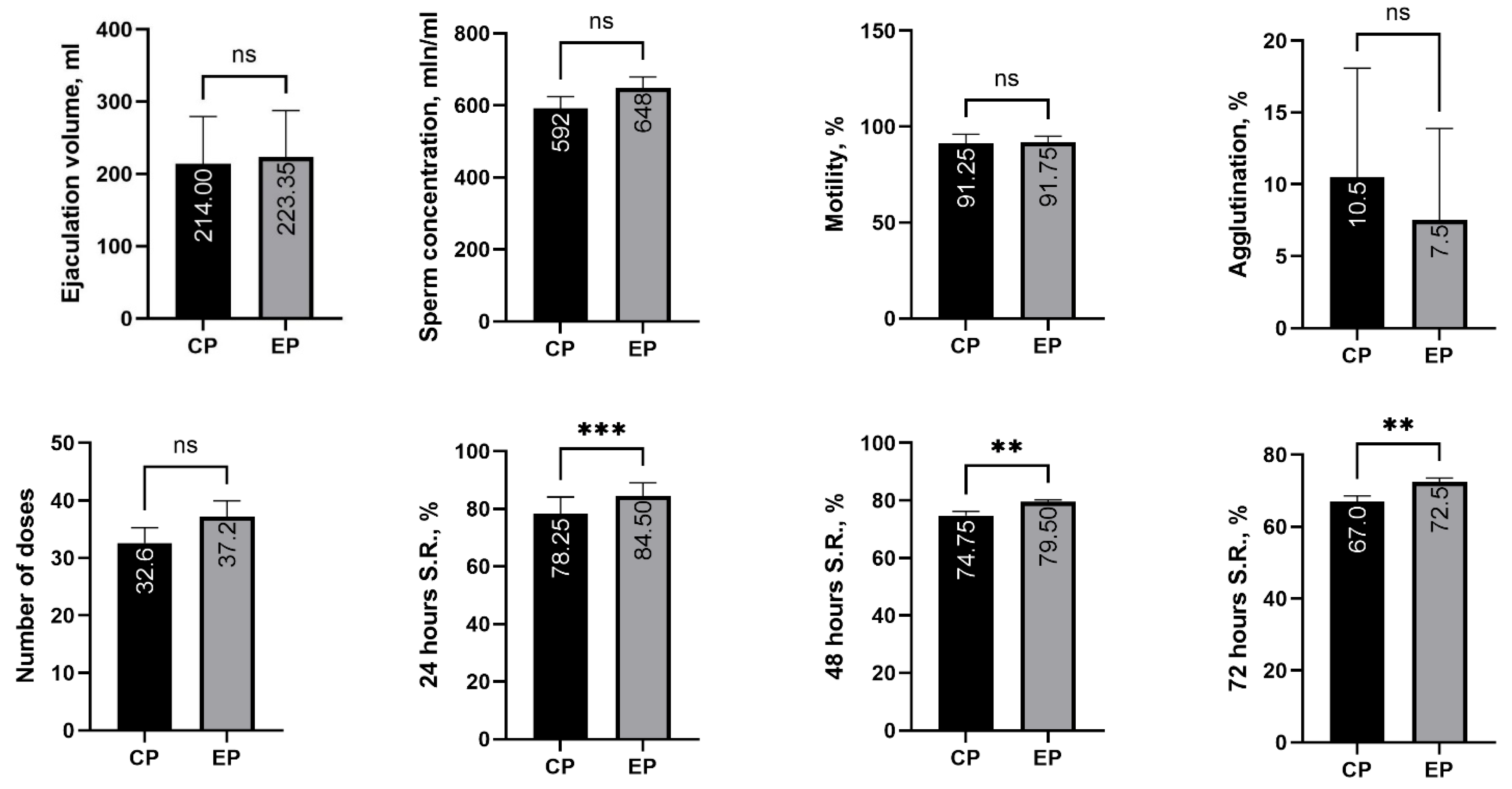
Figure 1. Comparative analysis of the investigated parameters across the study period. Note: ** p < 0.01; *** p < 0.001, n.s—non significance; CP—Control Period; EP—Experimental Period; S.R.—Survaival Rate.
Life 16 00083 g001
Table 1. Ingredient and chemical composition of the diet fed in the experiment.
ItemDiet
Ingredient, % of diet
Corn21.0
Wheat31.0
Barley30.0
Sunflower meal, 34%12.0
Wheat bran4.0
Mineral–vitamin premix 12.0
Composition, % of DM unless otherwise noted
DM, %88.3
MEs, Mcal/kg 23.07
NEs, Mcal/kg 22.37
CP17.0
CF3.63
Crude fiber5.11
Lysine0.78
Methionine + Cystine0.73
Threonine0.71
Tryptophan0.22
Calcium0.84
Phosphorus, total0.76
Digestible phosphorus0.53
Vit A, IU/kg12,000
Vit D3, kg2000
Vit E, mg/kg100
DM—dry matter; ME—metabolizable energy; NE—net energy; 1 The mineral–vitamin premix (Bulsou gesto 2%) contained (Crude protein (CP)—10.6%; Crude fat (CF)—0.60%; Crude fiber—1.10%; Crude ash—68.70%; Calcium—14.70%; Phosphorus—4.46%; Sodium—8.33%; Lysine—6.54%; Methionine—0.01%; Vitamin A—10.000 IU (from 500.000 IU); Vitamin D3—2.000 IU (from 100.000 IU); Vitamin E—50 mg/kg (from 2.500 mg/kg); Iron—6.000 mg/kg; Copper—600 mg/kg; Zinc—4.000 mg/kg; Manganese—2.000 mg/kg; Iodine—100 mg/kg; Selenium—15 mg/kg). 2 Values calculated using the chemical analysis of individual feed ingredients of the diet.
Table 2. Shapiro–Wilk test for normality of data distribution.
IndicatorPeriodW Valuep ValueNormality
Ejaculation volume Control 0.92750.138Yes
Experimental 0.94600.311Yes
Sperm concentrationControl 0.88660.023 *No
Experimental 0.88980.027 *No
Motility, % Control 0.7176<0.001 ***No
Experimental 0.7964<0.001 ***No
Agglutination, %Control 0.81590.002 **No
Experimental 0.7795<0.001 ***No
Number of doses Control 0.97350.826Yes
Experimental 0.96000.543Yes
24 h S.R., %Control 0.7546<0.001 ***No
Experimental 0.83630.003 **No
48 h S.R., %Control 0.8004<0.001 ***No
Experimental 0.6238<0.001 ***No
72 h S.R. %Control 0.81510.001 **No
Experimental 0.7052<0.001 ***No
Significance: * p < 0.05; ** p < 0.01; *** p < 0.001.
Table 3. Two-way repeated measures ANOVA showing the effects of boar, treatment, and their interaction on semen parameters in boars (n = 4).
Indicators
Ejaculation Volume
SourceSS (Sum of Squares)df
(Degrees of Freedom)
MS (Mean Square)Fp-Value
Boar111,761337,25458.87p < 0.001
Treatment 874.21874.20.5564p = 0.497
Boar × Treatment 17,265357556.487p = 0.007
Subject × Boar 759412632.8
Subject × Treatment628541571
Subject680641701
Residual10,64712887.2
Sperm concentration
Boar512,6403170,88030.08p < 0.001
Treatment 31,360131,3603.087p = 0.154
Boar × Treatment 5760319200.3038p = 0.822
Subject × Boar 68,160125680
Subject × Treatment40,640410,160
Subject56,000414,000
Residual75,840126320
Motility, %
Boar95.00331.677.795p = 0.004
Treatment 2.50012.5000.06015p = 0.818
Boar × Treatment 72.50324.172.667p = 0.095
Subject × Boar 48.75124.063
Subject × Treatment166.3441.56
Subject166.3441.56
Residual108.8129.062
Agglutination, %
Boar20.0036.6670.1758p = 0.911
Treatment 90.00190.000.6729p = 0.458
Boar × Treatment 90.00330.000.6154p = 0.618
Subject × Boar 455.01237.92
Subject × Treatment535.04133.8
Subject185.0446.25
Residual585.01248.75
Number of doses
Boar344731149 48.63p < 0.001
Treatment 211.61211.61.773p = 0.254
Boar × Treatment 230.6376.871.434p = 0.282
Subject × Boar 283.51223.63
Subject × Treatment477.44119.4
Subject458.14114.5
Residual643.41253,62
24 h S.R., %
Boar456.93152.318,99p = 0.001
Treatment 390.61390.627,78p = 0.006
Boar × Treatment 61.88320.630.9754p = 0.411
Subject × Boar 96.25128.021
Subject × Treatment56.25414.06
Subject133.8433.44
Residual253.81221.15
48 h S.R., %
Boar396.93132.313.37p = 0.003
Treatment 225.61225.6103.1p < 0.001
Boar × Treatment 241.9380.637.101p = 0.021
Subject × Boar 118.8129.896
Subject × Treatment8.75042.188
Subject66.25416.56
Residual136.31211.35
72 h S.R., %
Boar547.53182.521.37p < 0.001
Treatment 302.51302.59.878p = 0.035
Boar × Treatment 187.5362.502.609p = 0.137
Subject × Boar 102.5128.542
Subject × Treatment122.5430.63
Subject147.5436.88
Residual287.51223.96
Disclaimer/Publisher’s Note: The statements, opinions and data contained in all publications are solely those of the individual author(s) and contributor(s) and not of MDPI and/or the editor(s). MDPI and/or the editor(s) disclaim responsibility for any injury to people or property resulting from any ideas, methods, instructions or products referred to in the content.


