
Microbiological and Infection-Source Predictors of Mortality in Severe Sepsis Patients Undergoing Polymyxin B Hemoperfusion: A Seven-Year Real-World Cohort Study

Abstract
1. Introduction
2. Materials and Methods
2.1. Study Design and Setting
2.2. Patient Population
2.2.1. Inclusion Criteria
- Age ≥ 20 years.
- Diagnosis of severe sepsis or septic shock, based on contemporaneous Surviving Sepsis Campaign definitions:
- ○
- Severe sepsis (pre–2016): sepsis with ≥1 organ dysfunction.
- ○
- Septic shock (post–2016): vasopressor requirement to maintain mean arterial pressure ≥ 65 mmHg and lactate > 2 mmol/L despite adequate fluid resuscitation.
- Receipt of at least one PMX-HP session during ICU admission.
2.2.2. Exclusion Criteria
- Age < 20 years.
- Pregnancy.
- Known HIV infection or hemophilia.
- Solid-organ transplantation within 1 year.
- Cardiopulmonary resuscitation within 4 weeks prior to ICU admission.
- Anticipated survival < 30 days (e.g., terminal malignancy).
- Do-not-resuscitate (DNR) status at admission.
- End-stage liver failure (Child-Pugh class C).
- Allergy to polymyxin B, heparin, or extracorporeal circuits.
- Receipt of extracorporeal blood purification (CRRT, hemofiltration, or plasma exchange) within 24 h prior to PMX-HP initiation.
2.3. Definitions of Infection Source and Microbiological Categories
- Pneumonia
- Intra-abdominal infection (e.g., peritonitis, hepatobiliary infection, intra-abdominal abscess)
- Urinary tract infection (UTI)/urosepsis
- Skin and soft tissue infection (SSTI)
- Liver abscess
- Primary bacteremia
- Other/undetermined sources
- Gram-negative bacteria (E. coli, K. pneumoniae, A. baumannii, P. aeruginosa, etc.)
- Gram-positive bacteria (S. aureus, streptococci, enterococci)
- Fungal pathogens (Candida, Aspergillus)
- No growth (negative cultures)
- Multidrug-resistant (MDR) as per international consensus: non-susceptibility to ≥1 agent in ≥3 antimicrobial categories.
2.4. PMX-HP Intervention
2.5. Organ Support and Hemodynamic Parameters
- Continuous renal replacement therapy (CRRT)
- ○
- Indications: severe AKI (KDIGO stage 3), anuria/oliguria, metabolic acidosis, or fluid overload.
- ○
- Timing: early CRRT defined as initiation within 24 h of shock onset.
- Extracorporeal membrane oxygenation (ECMO)
- ○
- Initiated for refractory hypoxemia or circulatory collapse.
- Vasoactive–inotropic score (VIS), calculated using the standard formula:
× milrinone + 10,000 × vasopressin VIS = dopamine + dobutamine + 100 ×
(epinephrine + norepinephrine) + 10 × milrinone + 10,000 × vasopressin VIS
= dopamine + dobutamine + 100 × (epinephrine + norepinephrine) + 10 ×
milrinone + 10,000 × vasopressin
+ 100 × epinephrine (μg/kg/min) + 100 × norepinephrine (μg/kg/min)
+ 10 × milrinone (μg/kg/min) + 10,000 × vasopressin (U/min).
2.6. Microbiological and Infection-Source Variables
- Pathogen species (culture-confirmed);
- MDR status;
- Infection source classification;
- Polymicrobial vs. monomicrobial infections;
- Culture-negative sepsis.
2.7. Outcomes
2.7.1. Primary Outcome
- 28-day all-cause mortality.
2.7.2. Secondary Outcomes
- ICU mortality;
- Hospital mortality;
- ICU length of stay (LOS);
- Hospital LOS;
- Requirement for CRRT (including early vs. late CRRT);
- Requirement for ECMO;
- Hemodynamic response (ΔVIS).
2.8. Statistical Analysis
- Student’s t-test (parametric continuous variables);
- Mann–Whitney U test (nonparametric continuous variables);
- Chi-square or Fisher’s exact test (categorical variables).
2.9. Missing Data Handling
2.10. Ethical Approval
3. Results
3.1. Baseline Characteristics
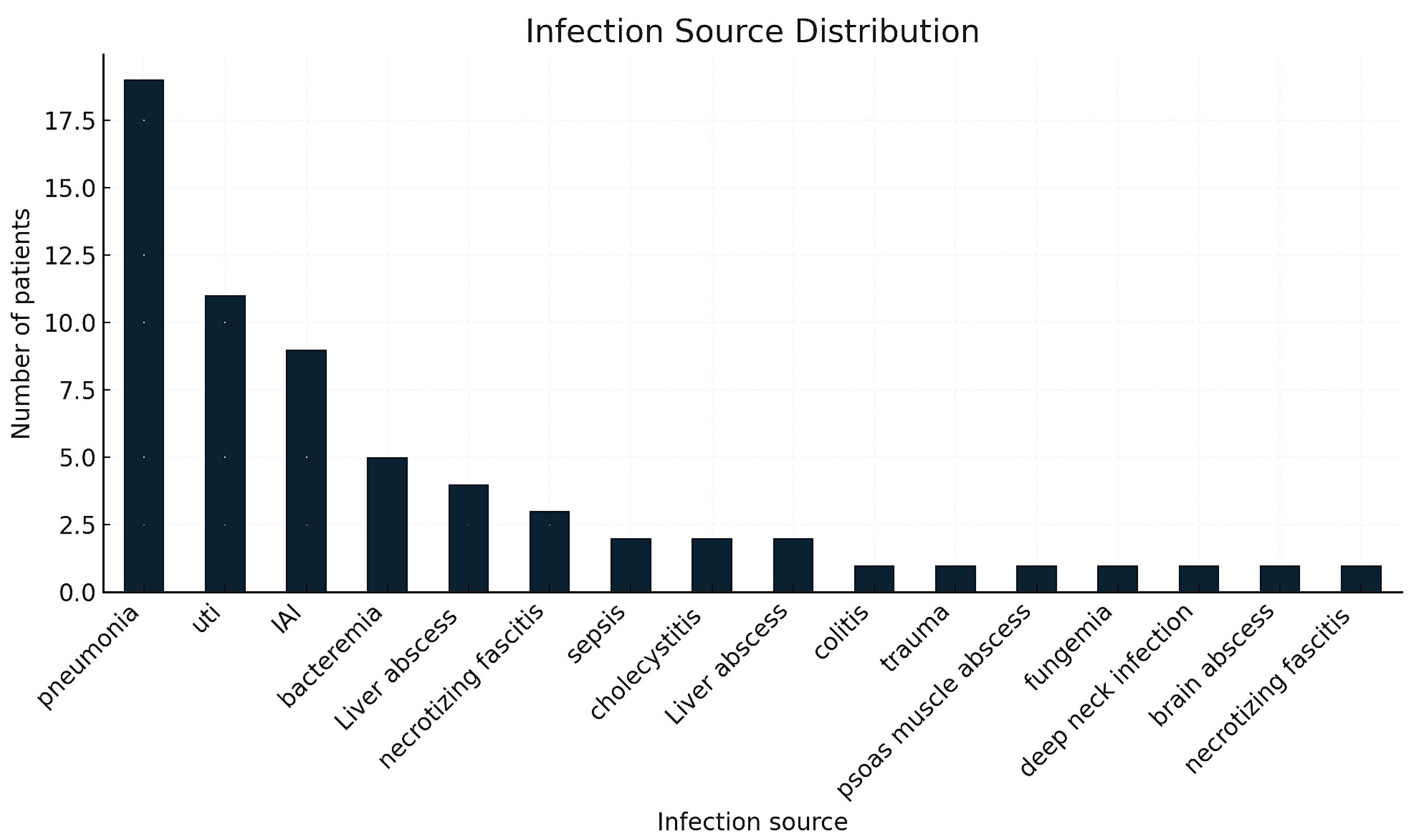
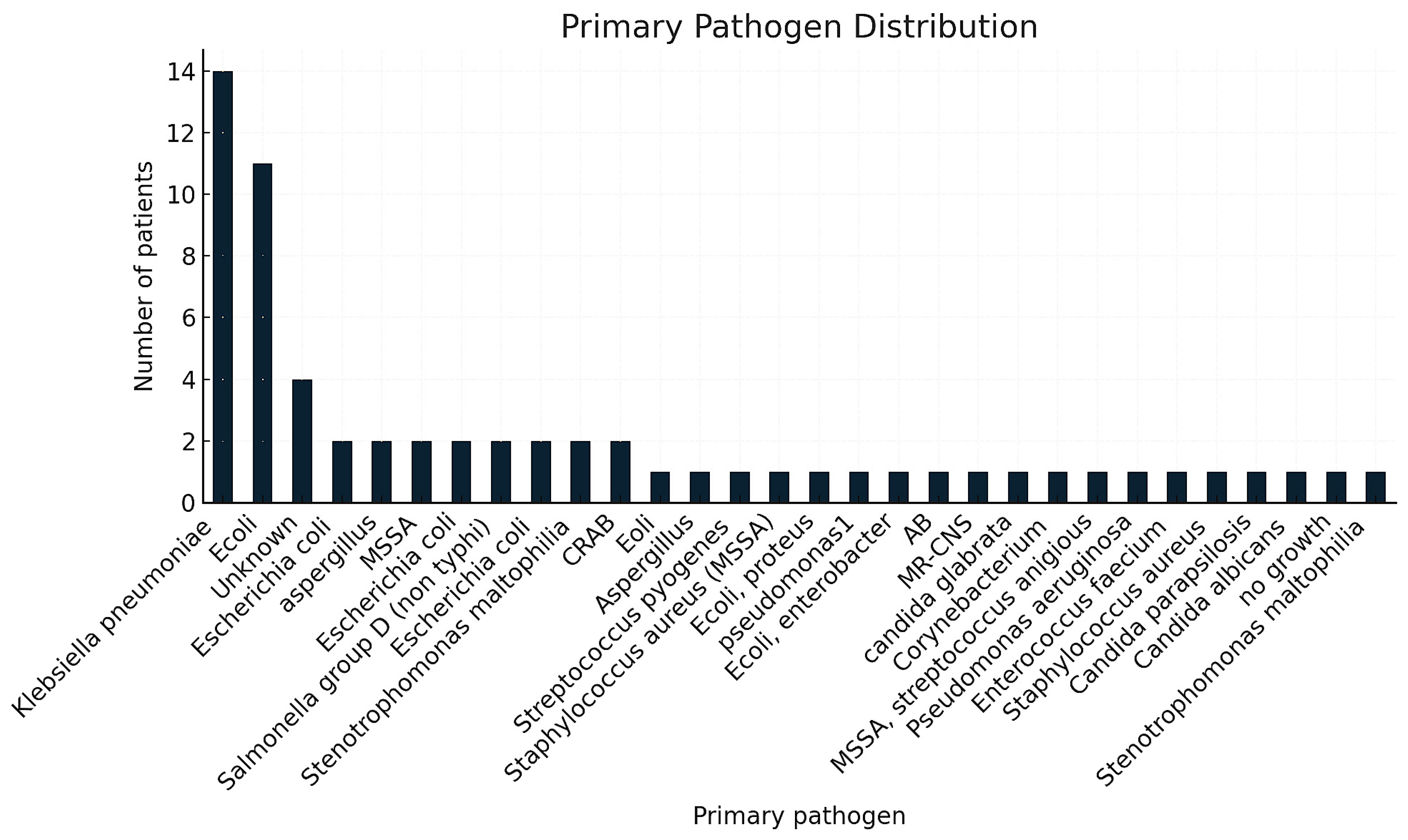
3.2. Infection Sources and Pathogen Distribution
3.3. Clinical Outcomes and Organ Support
- CRRT within 24 h of shock onset: 45.3%
- CRRT at any time during the ICU stay: 67.2%
- ECMO support: 4.7%
3.4. Infection Source and Organ Dysfunction
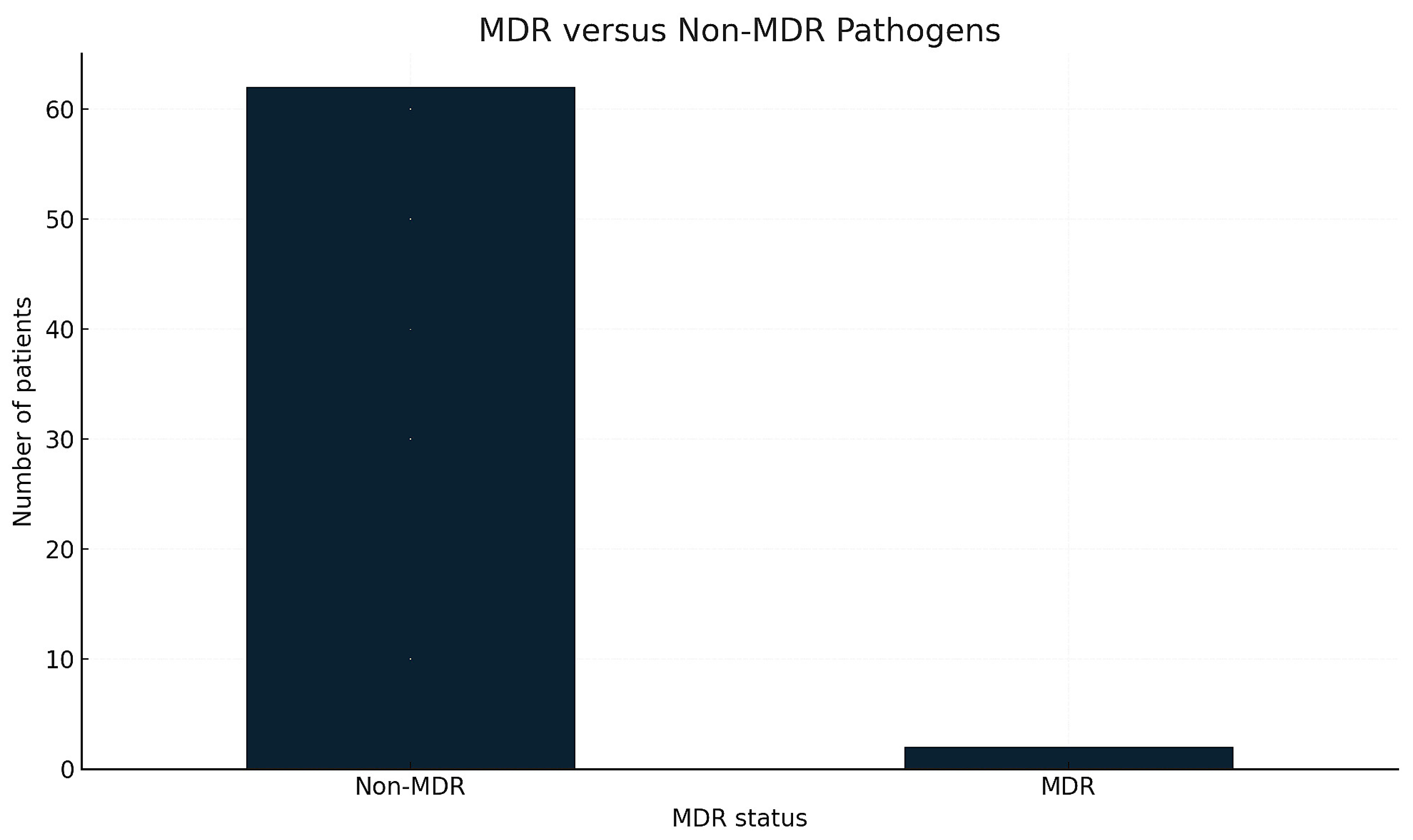
3.5. Pathogen Category, MDR Status, and Outcomes
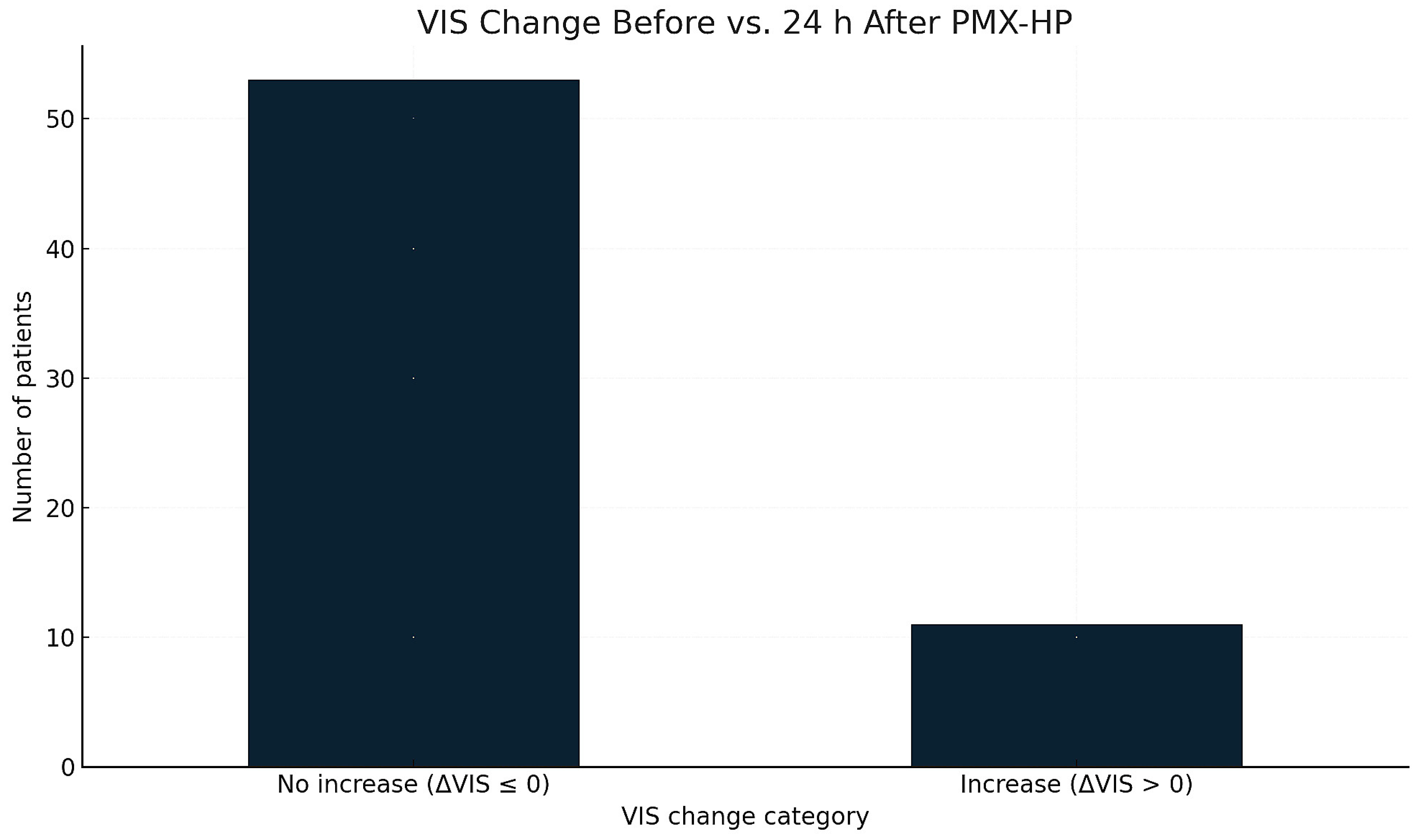
3.6. Hemodynamic Response Based on VIS Change
- Increase in VIS: 31.3%;
- No increase: 68.7%.
3.7. Multivariate Predictors of 28-Day Mortality
- APACHE II;
- CRRT (any time within 28 days);
- VIS change;
- Infection source;
- Pathogen category;
- MDR status.
- 1.
- APACHE II score (p = 0.02);
- 2.
- CRRT requirement (p = 0.01);
- 3.
- Positive VIS change (p = 0.006).
4. Discussion
Implications for Nursing Practice
5. Conclusions
Author Contributions
Funding
Institutional Review Board Statement
Informed Consent Statement
Data Availability Statement
Acknowledgments
Conflicts of Interest
References
- Rudd, K.E.; Johnson, S.C.; Agesa, K.M.; Shackelford, K.A.; Tsoi, D.; Kievlan, D.R.; Colombara, D.V.; Ikuta, K.S.; Kissoon, N.; Finfer, S.; et al. Global, regional, and national sepsis incidence and mortality, 1990-2017: Analysis for the Global Burden of Disease Study. Lancet 2020, 395, 200–211. [Google Scholar] [CrossRef]
- Evans, L.; Rhodes, A.; Alhazzani, W.; Antonelli, M.; Coopersmith, C.M.; French, C.; Machado, F.R.; McIntyre, L.; Ostermann, M.; Prescott, H.C.; et al. Surviving Sepsis Campaign: International guidelines for management of sepsis and septic shock 2021. Intensive Care Med. 2021, 47, 1181–1247. [Google Scholar] [CrossRef]
- Singer, M.; Deutschman, C.S.; Seymour, C.W.; Shankar-Hari, M.; Annane, D.; Bauer, M.; Bellomo, R.; Bernard, G.R.; Chiche, J.D.; Coopersmith, C.M.; et al. The Third International Consensus Definitions for Sepsis and Septic Shock (Sepsis-3). JAMA 2016, 315, 801–810. [Google Scholar] [CrossRef] [PubMed]
- Hotchkiss, R.S.; Moldawer, L.L.; Opal, S.M.; Reinhart, K.; Turnbull, I.R.; Vincent, J.L. Sepsis and septic shock. Nat. Rev. Dis. Primers 2016, 2, 16045. [Google Scholar] [CrossRef] [PubMed]
- Shumba, P.; Mairpady Shambat, S.; Siemens, N. The Role of Streptococcal and Staphylococcal Exotoxins and Proteases in Human Necrotizing Soft Tissue Infections. Toxins 2019, 11, 332. [Google Scholar] [CrossRef]
- Song, J.; Cho, H.; Park, D.W.; Moon, S.; Kim, J.Y.; Ahn, S.; Lee, S.-G.; Park, J. Vasoactive-inotropic score as an early predictor of mortality in adult patients with sepsis. J. Clin. Med. 2021, 10, 495. [Google Scholar] [CrossRef]
- Meyhoff, T.S.; Hjortrup, P.B.; Moller, M.H.; Haase, N.; Perner, A.; Wetterslev, J.; Sivapalan, P.; Laake, J.H.; Cronhjort, M.; Jakob, S.M.; et al. Restriction of intravenous fluid in ICU patients with septic shock (CLASSIC trial). N. Engl. J. Med. 2022, 386, 2459–2470. [Google Scholar] [CrossRef]
- Russell, J.A.; Walley, K.R.; Singer, J.; Gordon, A.C.; Hebert, P.C.; Cooper, D.J.; Holmes, C.L.; Mehta, S.; Granton, J.T.; Storms, M.M. Vasopressin versus norepinephrine infusion in patients with septic shock. N. Engl. J. Med. 2008, 358, 877–887. [Google Scholar] [CrossRef] [PubMed]
- Seymour, C.W.; Kennedy, J.N.; Wang, S.; Chang, C.-C.H.; Elliott, C.F.; Xu, Z.; Berry, S.; Clermont, G.; Cooper, G.; Gomez, H.; et al. Derivation, validation, and potential treatment implications of novel clinical phenotypes of sepsis. JAMA 2019, 321, 2003–2017. [Google Scholar] [CrossRef]
- Vincent, J.L.; Opal, S.M.; Marshall, J.C.; Tracey, K.J. Sepsis definitions: Time for change. Lancet 2013, 381, 774–775. [Google Scholar] [CrossRef]
- Cecconi, M.; Evans, L.; Levy, M.; Rhodes, A. Sepsis and septic shock. Lancet 2018, 392, 75–87. [Google Scholar] [CrossRef]
- Schmidt, M.; Pham, T.; Arcadipane, A.; Hajage, D.; Lebreton, G.; Monsel, A.; Voiriot, G.; Levy, D.; Muller, G.; Hekimian, G.; et al. Extracorporeal membrane oxygenation for severe acute respiratory distress syndrome associated with COVID-19: A retrospective cohort study. Lancet Respir. Med. 2020, 8, 1121–1131. [Google Scholar] [CrossRef]
- Brechot, N.; Luyt, C.-E.; Schmidt, M.; Leprince, P.; Trouillet, J.-L.; Leger, P.; Pavie, A.; Chastre, J.; Legrand, M.; Combes, A. Venoarterial extracorporeal membrane oxygenation support for refractory cardiovascular dysfunction during severe bacterial septic shock. Crit. Care Med. 2013, 41, 1616–1626. [Google Scholar] [CrossRef] [PubMed]
- Aubron, C.; Cheng, A.C.; Pilcher, D.; Leong, T.; Magrin, G.; Cooper, D.J. Factors associated with outcomes of patients on extracorporeal membrane oxygenation support: A 5-year cohort study. Crit. Care 2013, 17, R73. [Google Scholar] [CrossRef] [PubMed]
- Schlapbach, L.J.; Schlapbach, H.R.; Biclard, K.; Danton, M.; Poryo, M.; Agha, M.; Henderson, N.; Broman, L.M.; MacLaren, G. Defining benefit threshold for extracorporeal membrane oxygenation in children with sepsis-a binational multicenter cohort study. Crit. Care 2019, 23, 429. [Google Scholar] [CrossRef]
- Chen, Y.-C.; Chang, S.-C.; Pu, C.; Tang, G.-J. The impact of nationwide education program on clinical practice in sepsis care and mortality of severe sepsis: A population-based study in Taiwan. PLoS ONE 2013, 8, e77414. [Google Scholar] [CrossRef]
- Chang, W.-H.; Yang, S.H.; Shen, H.-F.; Hu, T.-Y.; Wu, W.-J. Impact of continuous renal replacement therapy on outcomes in septic shock patients receiving polymyxin B hemoperfusion: A retrospective cohort study. Biomedicines 2025, 13, 2904. [Google Scholar] [CrossRef] [PubMed]
- Nishida, O.; Ogura, H.; Egi, M.; Fujimi, S.; Jinzaki, M.; Nakamura, M.; Iba, T.; Iriyama, H.; Ito, N.; Uchida, M.; et al. The Japanese clinical practice guidelines for management of sepsis and septic shock 2020. J. Intensive Care 2021, 9, 53. [Google Scholar] [CrossRef]
- Cutuli, S.L.; Artigas, A.; Fumagalli, R.; Monti, G.; Ranieri, V.M.; Ronco, C.; Antonelli, M. The EUPHAS 2 Collaborative Group. Polymyxin-B hemoperfusion in septic patients: Analysis of a multicenter registry. Ann. Intensive Care 2016, 6, 77. [Google Scholar] [CrossRef]
- Chang, W.-H.; Hu, T.-Y.; Kuo, L.-K. Real-world outcomes and prognostic factors of polymyxin B hemoperfusion in severe sepsis and septic shock: A seven-year single-center cohort study from Taiwan. Life 2025, 15, 1317. [Google Scholar] [CrossRef]
- Chang, W.-H.; Hu, T.-Y.; Kuo, L.-K. Sequential Versus Non-Sequential Polymyxin B Hemoperfusion in Severe Sepsis and Septic Shock: A Real-World Cohort Analysis of Survival in an Asian ICU. Diagnostics 2026, 16, 173. [Google Scholar] [CrossRef] [PubMed]
- Dellinger, R.P.; Bagshaw, S.M.; Antonelli, M.; Foster, D.M.; Klein, D.J.; Marshall, J.C.; Palevsky, P.M.; Weisberg, L.S.; Schorr, C.A.; Trzeciak, S.; et al. Effect of targeted polymyxin B hemoperfusion on 28-day mortality in patients with septic shock and elevated endotoxin level: The EUPHRATES randomized clinical trial. JAMA 2018, 320, 1455–1463. [Google Scholar] [CrossRef] [PubMed]
- Payen, D.; Guilhot, J.; Launey, Y.; Lukaszewicz, A.-C.; Joannes-Boyau, O.; Joffre, J.; Mira, J.-P.; Perny, A.; Rousseau, C.; Reignier, J.; et al. Early use of polymyxin B hemoperfusion in abdominal septic shock: The ABDOMIX randomized clinical trial. Intensive Care Med. 2015, 41, 975–984. [Google Scholar] [CrossRef]
- Cruz, D.N.; Antonelli, M.; Fumagalli, R.; Foltran, F.; Brienza, N.; Donati, A.; Malcangi, V.; Petrini, F.; Volta, G.; Ronco, C.; et al. Early use of polymyxin B hemoperfusion in abdominal septic shock: The EUPHAS randomized controlled trial. JAMA 2009, 301, 2445–2452. [Google Scholar] [CrossRef]
- Shoji, H. Therapeutic rationale for endotoxin removal with polymyxin B immobilized fiber column (Toraymyxin). Int. J. Mol. Sci. 2021, 22, 2228. [Google Scholar] [CrossRef] [PubMed]
- Li, X.; Liu, C.; Mao, Z.; Qi, S.; Song, R.; Zhou, F. Effectiveness of polymyxin B-immobilized hemoperfusion against sepsis and septic shock: A systematic review and meta-analysis. J. Crit. Care 2021, 63, 187–195. [Google Scholar] [CrossRef]
- Chen, J.J.; Lai, P.C.; Lee, T.H.; Huang, Y.T. Blood purification for adult patients with severe infection or sepsis: A network meta-analysis of randomized controlled trials. Crit. Care Med. 2023, 51, 1777–1789. [Google Scholar] [CrossRef]
- Chen, N.; Zhou, M.; Dong, X.; Qu, J.; Gong, F.; Han, Y.; Qiu, Y.; Wang, J.; Liu, Y.; Wei, Y.; et al. Epidemiological and clinical characteristics of 99 cases of 2019 novel coronavirus pneumonia in Wuhan, China: A descriptive study. Lancet 2020, 395, 507–513. [Google Scholar] [CrossRef]
- Wiersinga, W.J.; Rhodes, A.; Cheng, A.C.; Peacock, S.J.; Prescott, H.C. Pathophysiology, transmission, diagnosis, and treatment of coronavirus disease 2019 (COVID-19): A review. JAMA 2020, 324, 782–793. [Google Scholar] [CrossRef]
- Angus, D.C.; van der Poll, T. Severe sepsis and septic shock. N. Engl. J. Med. 2013, 369, 840–851. [Google Scholar] [CrossRef]
- Broman, L.M.; Dubrovskaja, O.; Balik, M. Extracorporeal membrane oxygenation for septic shock in adults and children: A narrative review. J. Clin. Med. 2023, 12, 6661. [Google Scholar] [CrossRef] [PubMed]
- Aubron, C.; Cheng, A.C.; Pilcher, D.; Pellegrino, V.; Davies, A.; Cooper, D.J. Infections acquired by adults who receive extracorporeal membrane oxygenation: Risk factors and outcome. Infect. Control Hosp. Epidemiol. 2013, 34, 24–30. [Google Scholar] [CrossRef] [PubMed]
- Beretta-Piccoli, X.; Biarent, D.; De Bels, D.; Honore, P.M.; Redant, S. ECMO in paediatric septic shock: An urgent need for prospective trial. Crit. Care 2020, 24, 88. [Google Scholar] [CrossRef] [PubMed]
- Reinhart, K.; Daniels, R.; Kissoon, N.; Machado, F.R.; Schachter, R.D.; Finfer, S. Recognizing sepsis as a global health priority-A WHO resolution. N. Engl. J. Med. 2017, 377, 414–417. [Google Scholar] [CrossRef]
- Deinhardt-Emmer, S.; Chousterman, B.G.; Schefold, J.C.; Flohe, S.B.; Skirecki, T.; Kox, M.; Winkler, M.S.; Cossarizza, A.; Wiersinga, W.J.; van der Poll, T.; et al. Sepsis in patients who are immunocompromised: Diagnostic challenges and future therapies. Lancet Respir. Med. 2025, 13, 623–637. [Google Scholar] [CrossRef]



| Variable | Value |
|---|---|
| Age, years, mean ± SD | 66.1 ± 12.3 |
| Male sex, n (%) | 43 (67.2%) |
| Body weight, kg, mean ± SD | 66.5 ± 15.2 |
| APACHE II score, median (IQR) | 26 (21–32) |
| A. Infection Source Distribution | |
|---|---|
| Infection source category | n (%) |
| Pneumonia | 19 (29.7%) |
| Intra-abdominal infection | 12 (18.8%) |
| Urinary tract infection | 11 (17.2%) |
| Skin/soft tissue infection | 7 (10.9%) |
| Liver abscess | 6 (9.4%) |
| Other/undetermined | 9 (14.1%) |
| Total | 64 (100%) |
| B. Pathogen category distribution | |
| Pathogen category | n (%) |
| Gram-negative bacteria | 45 (70.3%) |
| Gram-positive bacteria | 8 (12.5%) |
| Fungal pathogens | 5 (7.8%) |
| Other bacteria | 1 (1.6%) |
| No growth/unknown | 5 (7.8%) |
| Total | 64 (100%) |
| Outcome/Organ Support | Value |
|---|---|
| ICU length of stay, median (IQR) | 9.3 (4.4–21.1) |
| Hospital length of stay, median (IQR) | 20.5 (8.0–34.3) |
| 28-day mortality | 30 (46.9%) |
| ICU mortality | 33 (51.6%) |
| Hospital mortality | 34 (53.1%) |
| CRRT within 24 h | 29 (45.3%) |
| CRRT within 28 days | 43 (67.2%) |
| ECMO use | 3 (4.7%) |
| Infection Source | n | CRRT Any Time | 28-Day Mortality |
|---|---|---|---|
| Pneumonia | 19 | 14 (73.7%) | 12 (63.2%) |
| Intra-abdominal infection | 12 | 11 (91.7%) | 6 (50.0%) |
| Urinary tract infection | 11 | 2 (18.2%) | 1 (9.1%) |
| Skin/soft tissue infection | 7 | 4 (57.1%) | 4 (57.1%) |
| Liver abscess | 6 | 4 (66.7%) | 0 (0.0%) |
| Other/undetermined | 9 | 8 (88.9%) | 7 (77.8%) |
| Total | 64 | 43 (67.2%) | 30 (46.9%) |
| Pathogen Category | n | 28-Day Mortality | CRRT Any Time |
|---|---|---|---|
| Gram-negative bacteria | 45 | 16 (35.6%) | 28 (62.2%) |
| Non–Gram-negative/others | 19 | 14 (73.7%) | 15 (78.9%) |
| Total | 64 | 30 (46.9%) | 43 (67.2%) |
Disclaimer/Publisher’s Note: The statements, opinions and data contained in all publications are solely those of the individual author(s) and contributor(s) and not of MDPI and/or the editor(s). MDPI and/or the editor(s) disclaim responsibility for any injury to people or property resulting from any ideas, methods, instructions or products referred to in the content. |
© 2026 by the authors. Licensee MDPI, Basel, Switzerland. This article is an open access article distributed under the terms and conditions of the Creative Commons Attribution (CC BY) license.
Share and Cite
Chang, W.-H.; Kuo, L.-K.; Yu, K.-P.; Hu, T.-Y. Microbiological and Infection-Source Predictors of Mortality in Severe Sepsis Patients Undergoing Polymyxin B Hemoperfusion: A Seven-Year Real-World Cohort Study. Life 2026, 16, 121. https://doi.org/10.3390/life16010121
Chang W-H, Kuo L-K, Yu K-P, Hu T-Y. Microbiological and Infection-Source Predictors of Mortality in Severe Sepsis Patients Undergoing Polymyxin B Hemoperfusion: A Seven-Year Real-World Cohort Study. Life. 2026; 16(1):121. https://doi.org/10.3390/life16010121
Chicago/Turabian StyleChang, Wei-Hung, Li-Kuo Kuo, Kuan-Pen Yu, and Ting-Yu Hu. 2026. "Microbiological and Infection-Source Predictors of Mortality in Severe Sepsis Patients Undergoing Polymyxin B Hemoperfusion: A Seven-Year Real-World Cohort Study" Life 16, no. 1: 121. https://doi.org/10.3390/life16010121
APA StyleChang, W.-H., Kuo, L.-K., Yu, K.-P., & Hu, T.-Y. (2026). Microbiological and Infection-Source Predictors of Mortality in Severe Sepsis Patients Undergoing Polymyxin B Hemoperfusion: A Seven-Year Real-World Cohort Study. Life, 16(1), 121. https://doi.org/10.3390/life16010121