EMG-Spectrogram-Empowered CNN Stroke-Classifier Model Development

Abstract
1. Introduction
2. Materials and Methods
2.1. Data Collection
2.1.1. Subjects
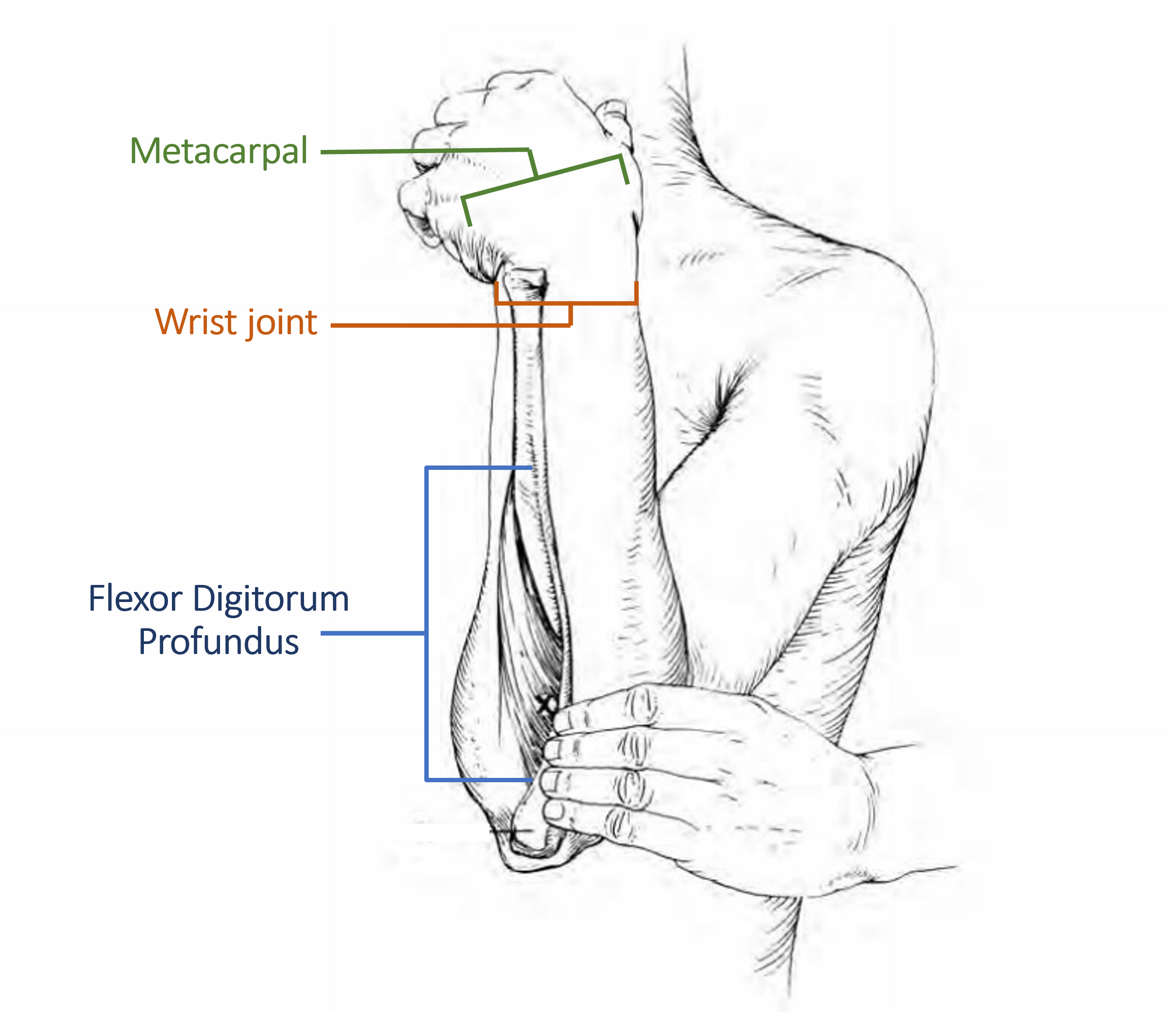
2.1.2. Muscle Selection
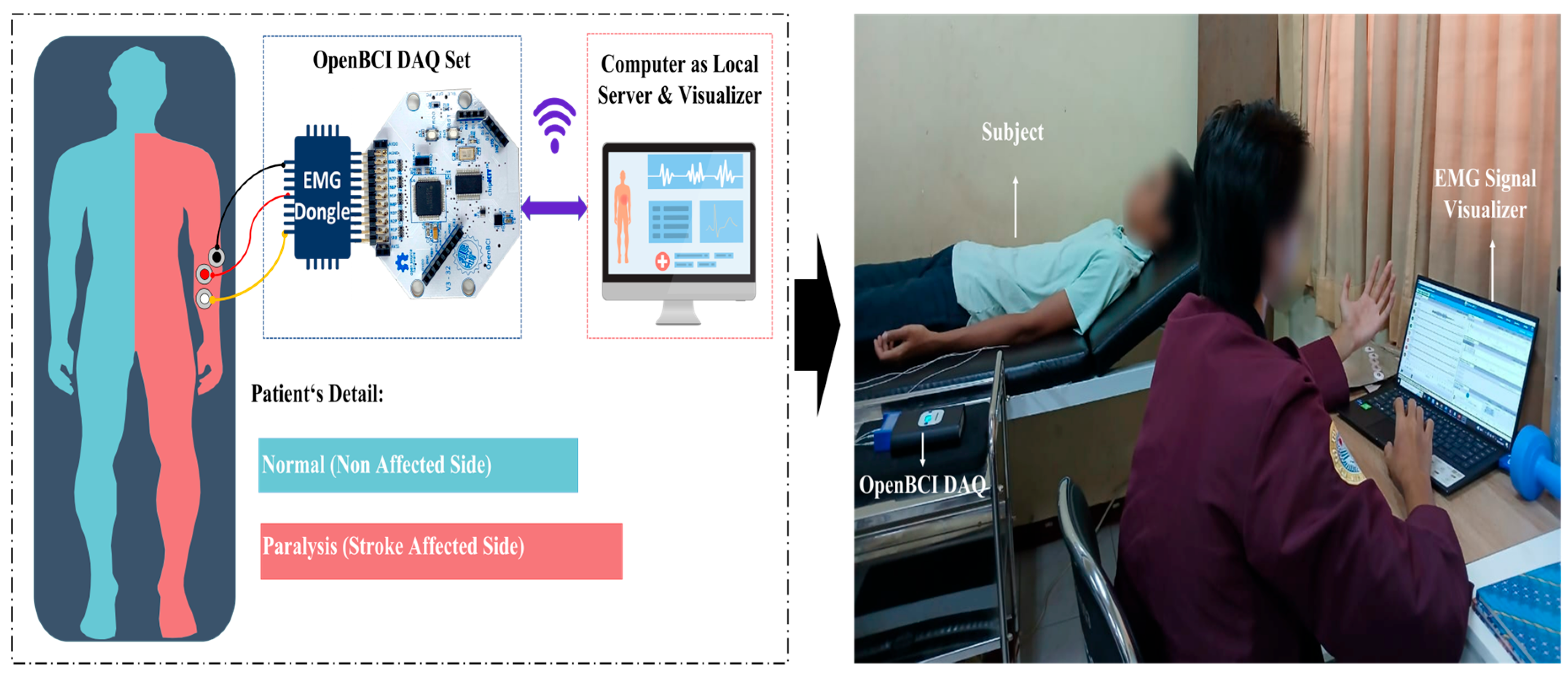
2.1.3. Experimental Protocol
2.2. Dataset Preparation

2.2.1. Pre-Processing
2.2.2. Segmentation
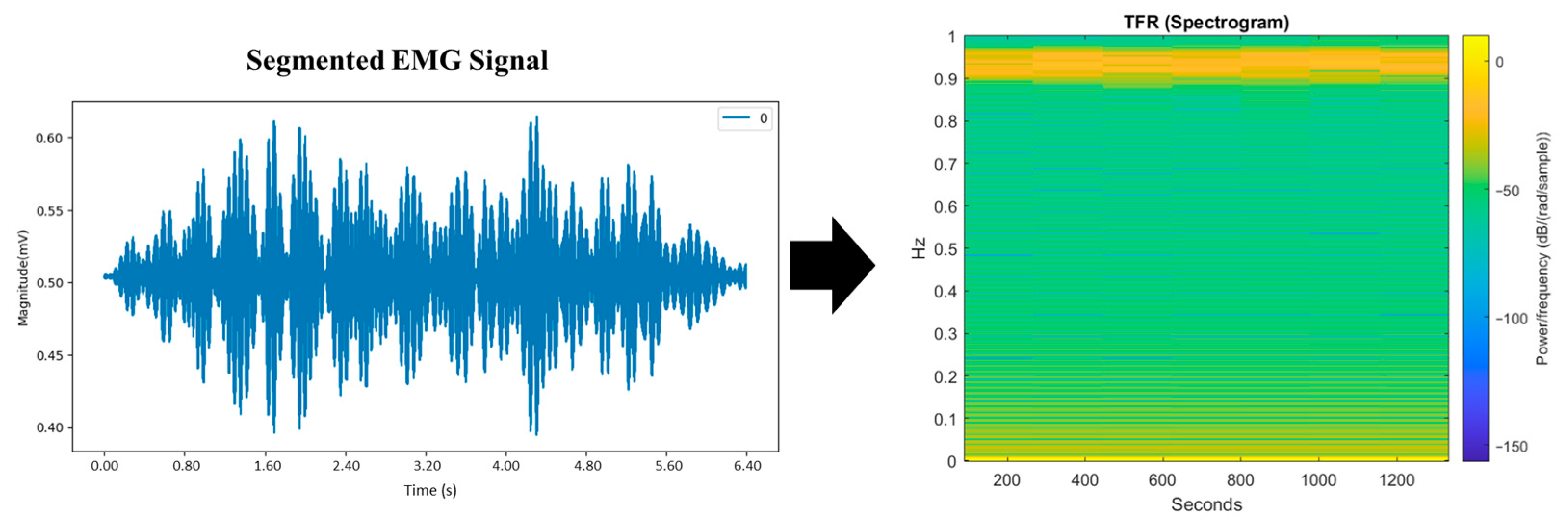
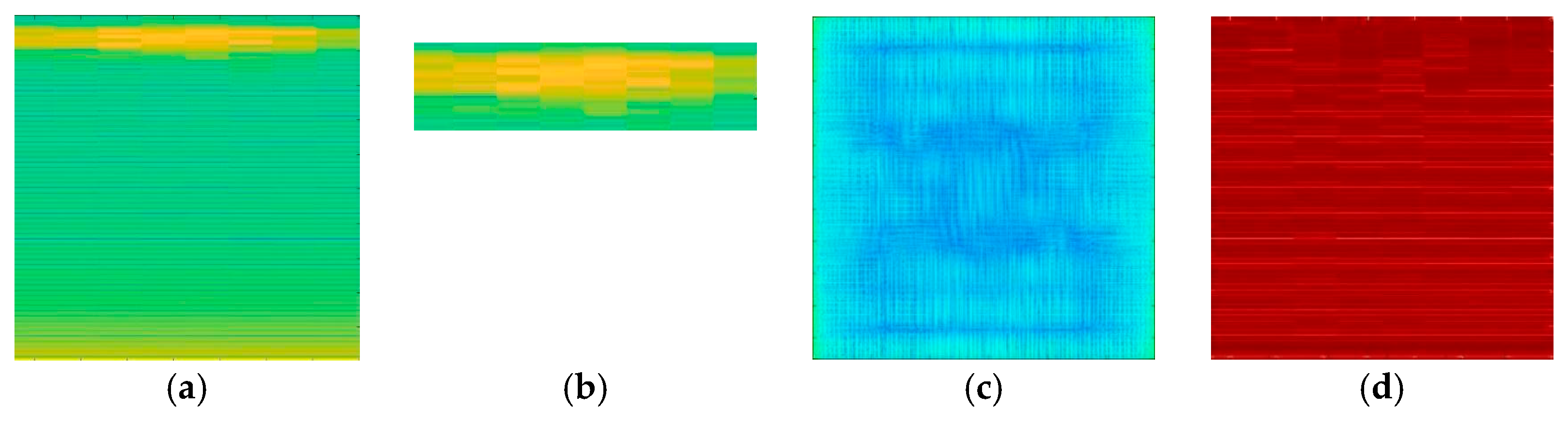
2.2.3. Time–Frequency Representation (TFR)
2.3. Data Classification
- Training Techniques and Stopping Criteria
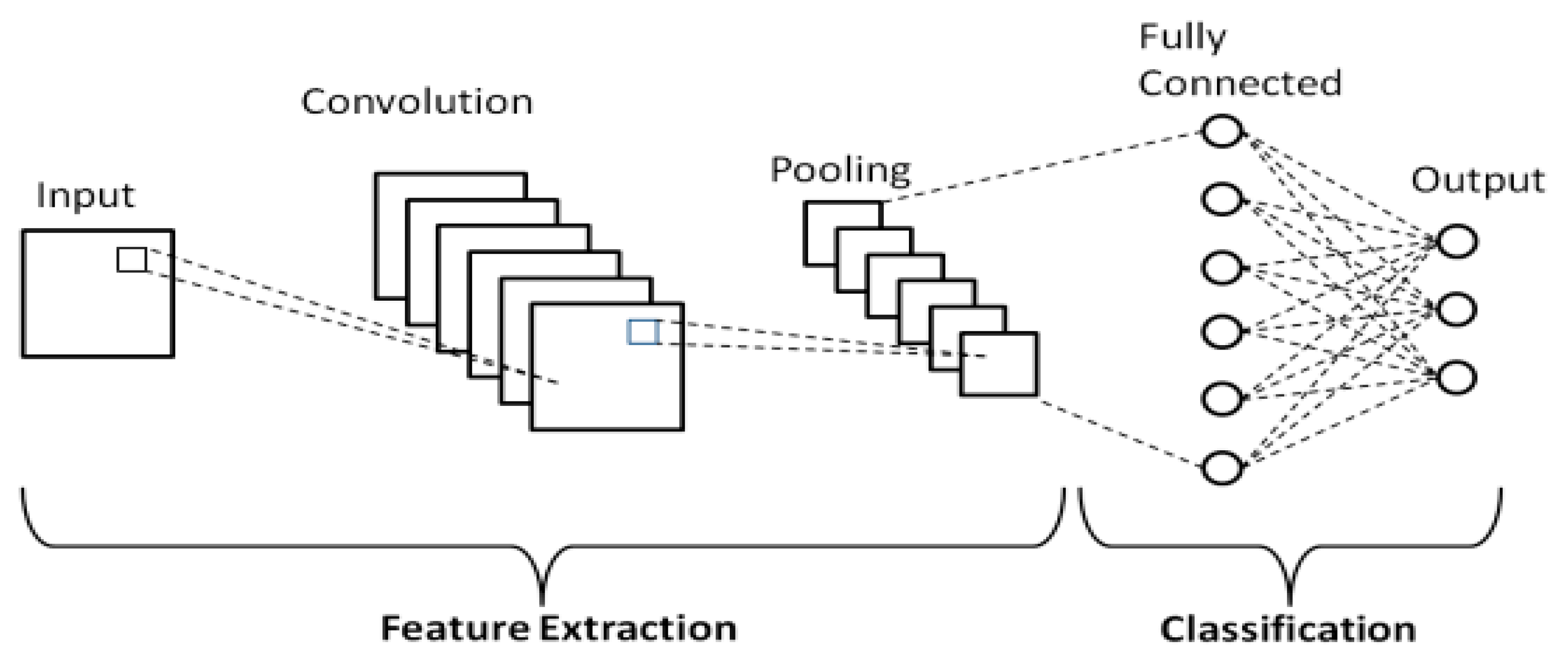
2.3.1. Basic Architecture of CNN
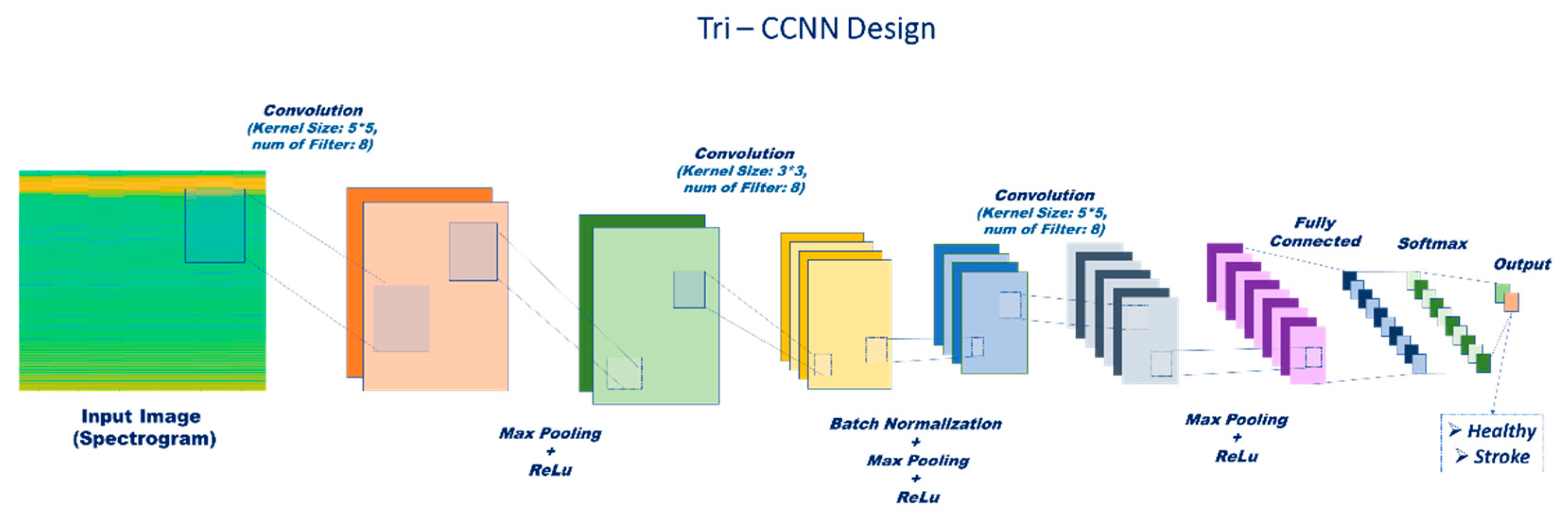
2.3.2. Proposed Architecture: Tri-CCNN
2.4. Performance Evaluation
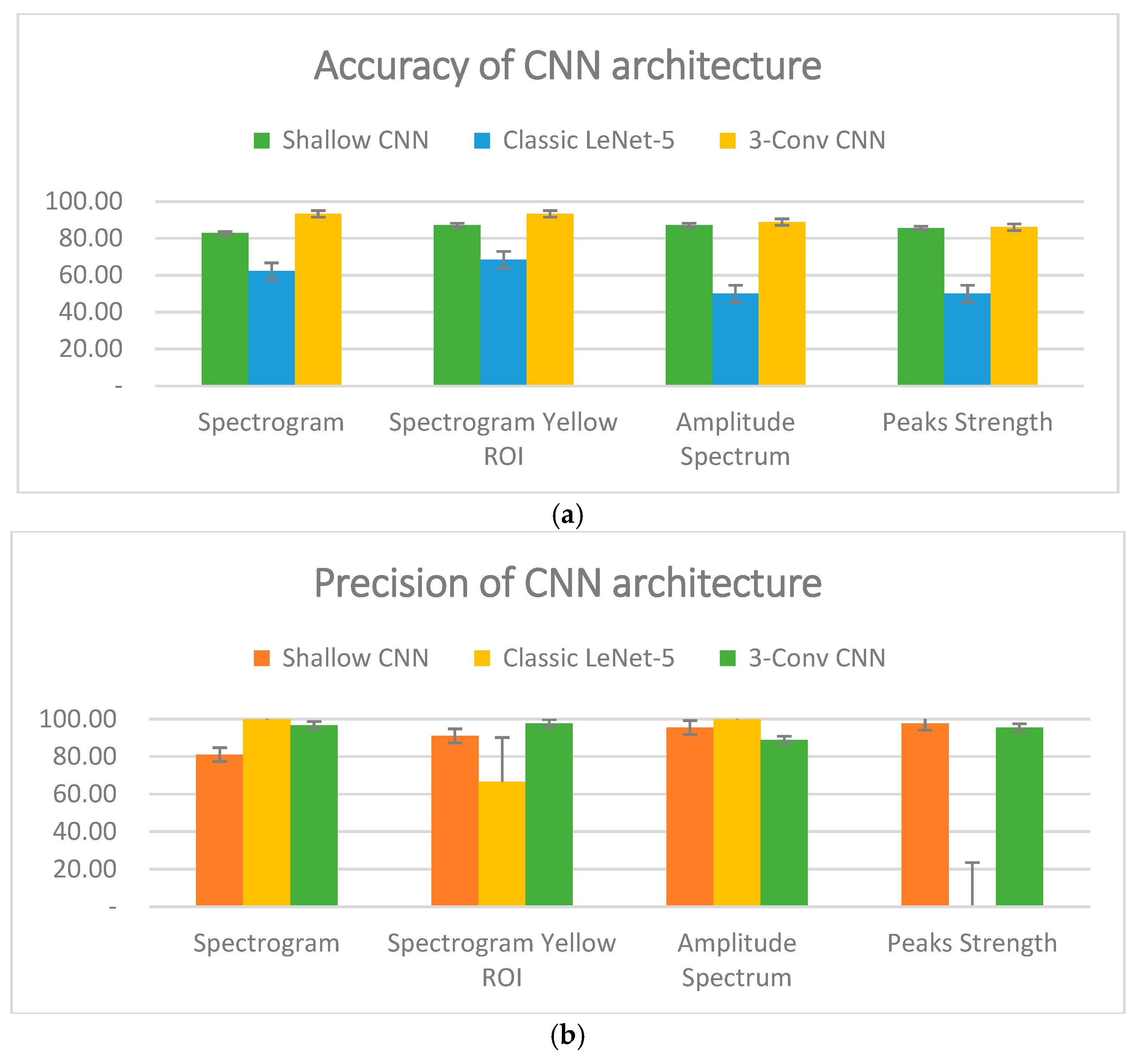
- Accuracy: Classification accuracy represents the extent to which instances are correctly classified as a proportion of the total number of instances. Equation (3) expresses the accuracy of the percentage term:
- 2.
- Precision: Precision is defined as the ratio of positive predictive values to positive outcomes, where Equation (4) represents precision:
- 3.
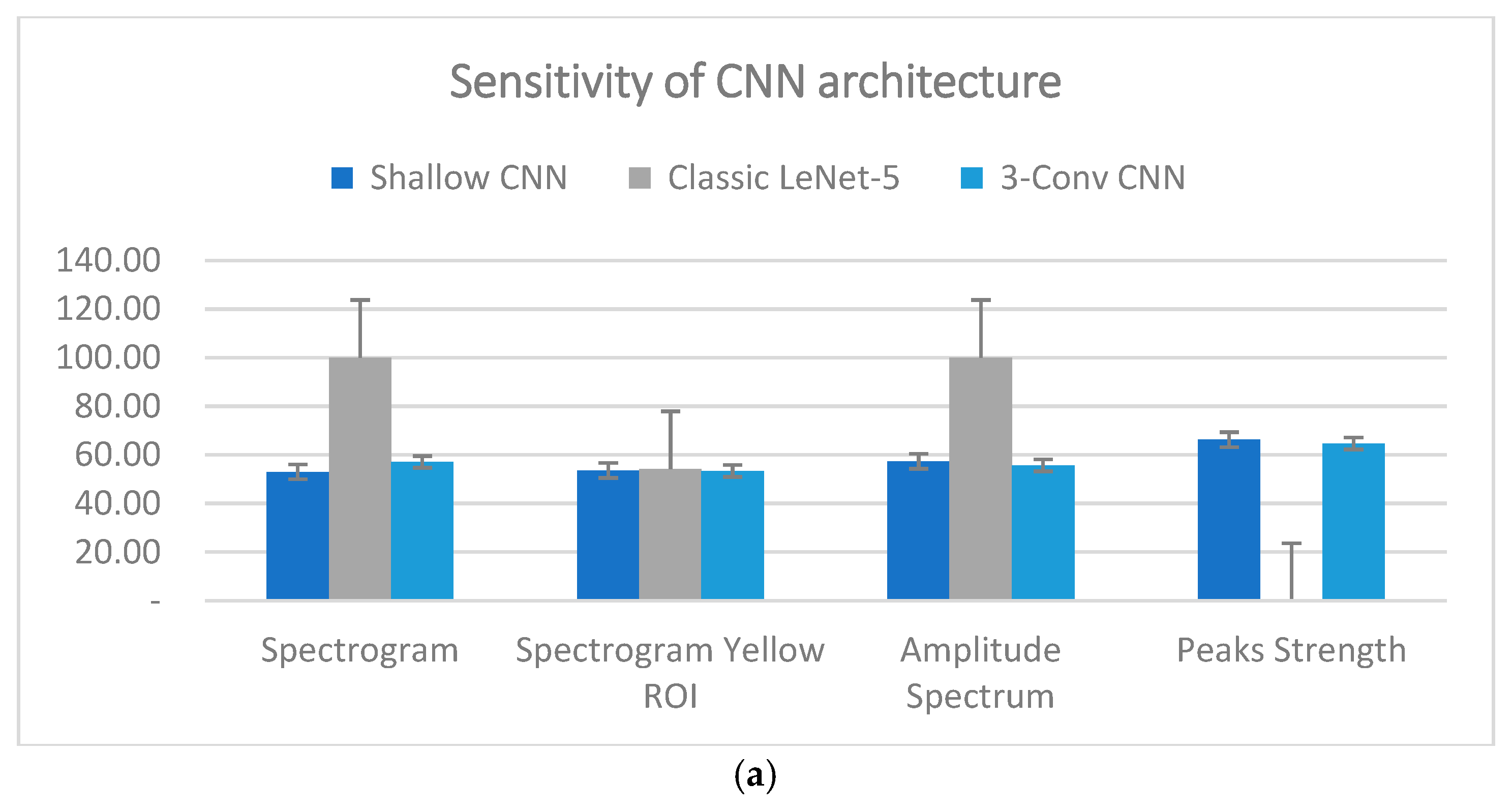
- Sensitivity/Recall: Recall refers to the ratio of the true positive values to the total positive data, as represented by Equation (5).
- 4.
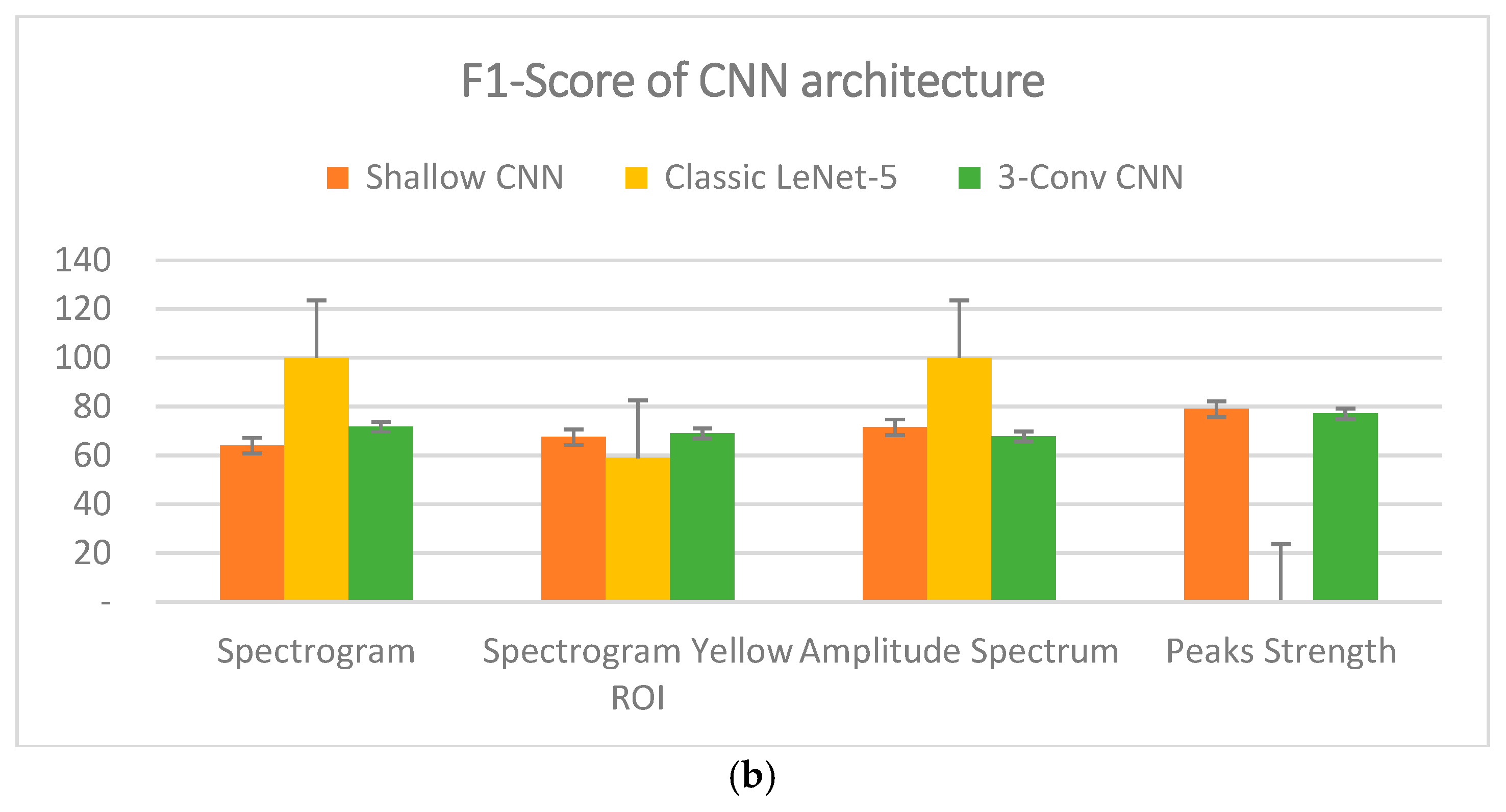
- F1-Score: The F1 score is determined as a weighted average of precision and recall, as represented by Equation (6).
3. Results
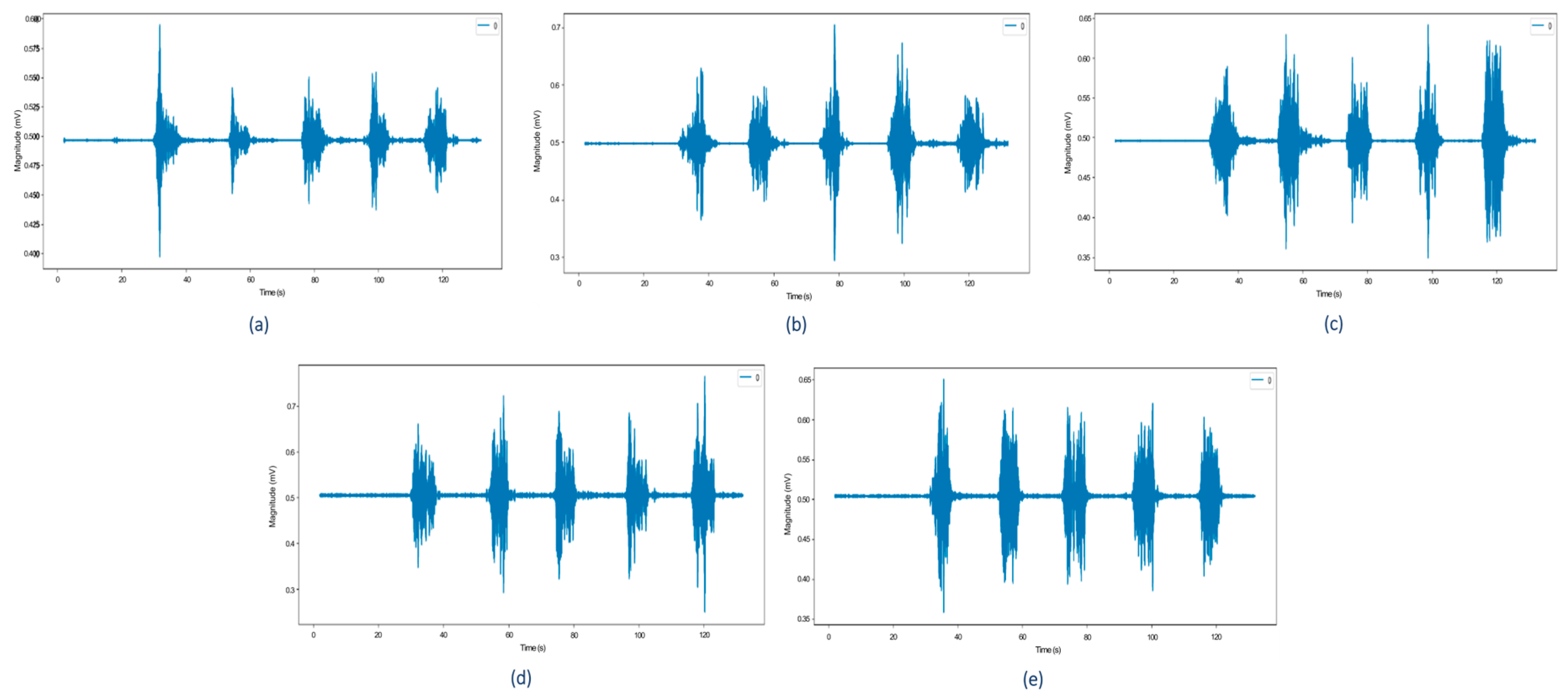
3.1. Data Descriptive Analysis
3.2. Features Extraction and Image Generator
3.3. CNN Model Development and Classification Performance
4. Discussion
5. Conclusions
Author Contributions
Funding
Institutional Review Board Statement
Informed Consent Statement
Data Availability Statement
Acknowledgments
Conflicts of Interest
References
- Feigin, V.L.; Stark, B.A.; Johnson, C.O.; Roth, G.A.; Bisignano, C.; Abady, G.G.; Abbasifard, M.; Abbasi-Kangevari, M.; Abd-Allah, F.; Abedi, V.; et al. Global, regional, and national burden of stroke and its risk factors, 1990–2019: A systematic analysis for the Global Burden of Disease Study 2019. Lancet Neurol. 2021, 20, 795–820. [Google Scholar] [CrossRef] [PubMed]
- Feigin, V.L.; Brainin, M.; Norrving, B.; Martins, S.; Sacco, R.L.; Hacke, W.; Fisher, M.; Pandian, J.; Lindsay, P. World Stroke Organization (WSO): Global Stroke Fact Sheet 2022. Int. J. Stroke 2022, 17, 18–29. [Google Scholar] [CrossRef] [PubMed]
- Feigin, V.L.; Owolabi, M.O. Pragmatic solutions to reduce the global burden of stroke: A World Stroke Organization–Lancet Neurology Commission. Lancet Neurol. 2023, 22, 1160–1206. [Google Scholar] [CrossRef] [PubMed]
- Cramer, S.C.; Dodakian, L.; Le, V.; See, J.; Augsburger, R.; McKenzie, A.; Zhou, R.J.; Chiu, N.L.; Heckhausen, J.; Cassidy, J.M.; et al. Efficacy of Home-Based Telerehabilitation vs In-Clinic Therapy for Adults After Stroke. JAMA Neurol. 2019, 76, 1079. [Google Scholar] [CrossRef]
- Kang, B.-S.; Choi, B.-Y.; Kho, A.-R.; Lee, S.-H.; Hong, D.-K.; Park, M.-K.; Lee, S.-H.; Lee, C.-J.; Yang, H.-W.; Woo, S.-Y.; et al. Effects of Pyruvate Kinase M2 (PKM2) Gene Deletion on Astrocyte-Specific Glycolysis and Global Cerebral Ischemia-Induced Neuronal Death. Antioxidants 2023, 12, 491. [Google Scholar] [CrossRef]
- Mane, R.; Chouhan, T.; Guan, C. BCI for stroke rehabilitation: Motor and beyond. J. Neural Eng. 2020, 17, 041001. [Google Scholar] [CrossRef]
- Rahmatillah, A.; Rahma, O.N.; Amin, M.; Wicaksana, S.I.; Ain, K.; Rulaningtyas, R. Post-Stroke Rehabilitation Exoskeleton Movement Control using EMG Signal. Int. J. Adv. Sci. Eng. Inf. Technol. 2018, 8, 616. [Google Scholar]
- Young, B.M.; Holman, E.A.; Cramer, S.C. Rehabilitation Therapy Doses Are Low After Stroke and Predicted by Clinical Factors. Stroke 2023, 54, 831–839. [Google Scholar] [CrossRef]
- Intercollegiate Stroke Working Party. National Clinical Guideline for Stroke for the UK and Ireland; Royal College of Physicians: London, UK, 2023; Available online: www.strokeguideline.org (accessed on 23 September 2024).
- Shirazikhah, M.; Roshanfekr, P.; Takian, A.; Zarei, M.A.; Shirazikhah, A.; Joghataei, M.T. Availability of Physical Rehabilitation Facilities for People with Disabilities in Iran: A Comparative Study on Universal Health Coverage. Arch. Iran. Med. 2022, 25, 698–705. [Google Scholar] [CrossRef]
- Tao, J.; Yu, S. Developing Conceptual PSS Models of Upper Limb Exoskeleton based Post-stroke Rehabilitation in China. Procedia CIRP 2019, 80, 750–755. [Google Scholar] [CrossRef]
- Nam, D.; Cha, J.M.; Park, K. Next-Generation Wearable Biosensors Developed with Flexible Bio-Chips. Micromachines 2021, 12, 64. [Google Scholar] [CrossRef] [PubMed]
- Chae, S.H.; Kim, Y.; Lee, K.-S.; Park, H.-S. Development and Clinical Evaluation of a Web-Based Upper Limb Home Rehabilitation System Using a Smartwatch and Machine Learning Model for Chronic Stroke Survivors: Prospective Comparative Study. JMIR mHealth uHealth 2020, 8, e17216. [Google Scholar] [CrossRef] [PubMed]
- Brown, M.; Hislop, H.; Avers, D. Daniels and Worthingham’s Muscle Testing: Techniques of Manual Examination and Performance Testing, 10th ed.; Elsevier: St. Louis, IN, USA, 2019. [Google Scholar]
- Cho, K.H.; Park, S.J. Effects of joint mobilization and stretching on the range of motion for ankle joint and spatiotemporal gait variables in stroke patients. J. Stroke Cerebrovasc. Dis. 2020, 29, 104933. [Google Scholar] [CrossRef] [PubMed]
- Roman, N.A.; Miclaus, R.S.; Nicolau, C.; Sechel, G. Customized Manual Muscle Testing for Post-Stroke Upper Extremity Assessment. Brain Sci. 2022, 12, 457. [Google Scholar] [CrossRef]
- Pediyanti, M.C.; Rulaningtyas, R.; Rahmatillah, A.; Katherine. Range of motion measurement of Articulatio cubiti based on Hough transformation. AIP Conf. Proc. 2021, 2329, 050020. [Google Scholar] [CrossRef]
- Yu, L.; Xiong, D.; Guo, L.; Wang, J. A remote quantitative Fugl-Meyer assessment framework for stroke patients based on wearable sensor networks. Comput. Methods Programs Biomed. 2016, 128, 100–110. [Google Scholar] [CrossRef]
- Wang, Y.; Wu, Q.; Dey, N.; Fong, S.; Ashour, A.S. Deep back propagation–long short-term memory network based upper-limb sEMG signal classification for automated rehabilitation. Biocybern. Biomed. Eng. 2020, 40, 987–1001. [Google Scholar] [CrossRef]
- CChaytor, P.; Forman, D.; Byrne, J.; Loucks-Atkinson, A.; Power, K.E. Changes in muscle activity during the flexion and extension phases of arm cycling as an effect of power output are muscle-specific. PeerJ 2020, 8, e9759. [Google Scholar] [CrossRef]
- Al-Ayyad, M.; Owida, H.A.; De Fazio, R.; Al-Naami, B.; Visconti, P. Electromyography Monitoring Systems in Rehabilitation: A Review of Clinical Applications, Wearable Devices and Signal Acquisition Methodologies. Electronics 2023, 12, 1520. [Google Scholar] [CrossRef]
- Kim, D.; Min, J.; Ko, S.H. Recent Developments and Future Directions of Wearable Skin Biosignal Sensors. Adv. Sens. Res. 2023, 3, 2300118. [Google Scholar] [CrossRef]
- Chen, C.; Ma, S.; Sheng, X.; Farina, D.; Zhu, X. Adaptive Real-Time Identification of Motor Unit Discharges from Non-Stationary High-Density Surface Electromyographic Signals. IEEE Trans. Biomed. Eng. 2020, 67, 3501–3509. [Google Scholar] [CrossRef] [PubMed]
- Clarke, A.K.; Atashzar, S.F.; Del Vecchio, A.; Barsakcioglu, D.; Muceli, S.; Bentley, P. Deep Learning for Robust Decomposition of High-Density Surface EMG Signals. IEEE Trans. Biomed. Eng. 2021, 68, 526–534. [Google Scholar] [CrossRef] [PubMed]
- Konstantin, A.; Yu, T.; Carpentier, E.L.; Aoustin, Y.; Farina, D. Simulation of Motor Unit Action Potential Recordings from Intramuscular Multichannel Scanning Electrodes. IEEE Trans. Biomed. Eng. 2020, 67, 2005–2014. [Google Scholar] [CrossRef] [PubMed]
- Sugiarto, T.; Hsu, C.-L.; Sun, C.-T.; Hsu, W.-C.; Ye, S.-H.; Lu, K.-T. Surface EMG vs. High-Density EMG: Tradeoff Between Performance and Usability for Head Orientation Prediction in VR Application. IEEE Access 2021, 9, 45418–45427. [Google Scholar] [CrossRef]
- Jung, M.K.; Muceli, S.; Rodrigues, C.; Megía-García, Á.; Pascual-Valdunciel, A.; del-Ama, A.J. Intramuscular EMG-Driven Musculoskeletal Modelling: Towards Implanted Muscle Interfacing in Spinal Cord Injury Patients. IEEE Trans. Biomed. Eng. 2022, 69, 63–74. [Google Scholar] [CrossRef]
- Karnam, N.K.; Dubey, S.R.; Turlapaty, A.C.; Gokaraju, B. EMG HandNet: A hybrid CNN and Bi-LSTM architecture for hand activity classification using surface EMG signals. Biocybern. Biomed. Eng. 2022, 42, 325–340. [Google Scholar]
- del Olmo, M.; Domingo, R. EMG Characterization and Processing in Production Engineering. Materials 2020, 13, 5815. [Google Scholar] [CrossRef]
- Zhou, H.; Zhang, Q.; Zhang, M.; Shahnewaz, S.; Wei, S.; Ruan, J.; Zhang, X.; Zhang, L. Toward Hand Pattern Recognition in Assistive and Rehabilitation Robotics Using EMG and Kinematics. Front. Neurorobot. 2021, 15, 26. [Google Scholar] [CrossRef]
- Simpetru, R.C.; Arkudas, A.; Braun, D.I.; Osswald, M.; de Oliveira, D.S.; Eskofier, B. Learning a Hand Model from Dynamic Movements Using High-Density EMG and Convolutional Neural Networks. IEEE Trans. Bio-Med. Eng. 2024, 71, 3556–3568. [Google Scholar] [CrossRef]
- Yu, J.; Park, S.; Kwon, S.-H.; Ho, C.M.B.; Pyo, C.-S.; Lee, H. AI-Based Stroke Disease Prediction System Using Real-Time Electromyography Signals. Appl. Sci. 2020, 10, 6791. [Google Scholar] [CrossRef]
- Loopez-Larraz, E.; Birbaumer, N.; Ramos-Murguialday, A. A hybrid EEG-EMG BMI improves the detection of movement intention in cortical stroke patients with complete hand paralysis. In Proceedings of the 2018 40th Annual International Conference of the IEEE Engineering in Medicine and Biology Society (EMBC); Honolulu, HI, USA, 18–21 July 2018, IEEE: New York, NY, USA, 2018; pp. 2000–2003. [Google Scholar]
- Tigrini, A.; Mobarak, R.; Mengarelli, A.; Khushaba, R.N.; Al-Timemy, A.H.; Verdini, F.; Gambi, E.; Fioretti, S.; Burattini, L. Phasor-Based Myoelectric Synergy Features: A Fast Hand-Crafted Feature Extraction Scheme for Boosting Performance in Gait Phase Recognition. Sensors 2024, 24, 5828. [Google Scholar] [CrossRef] [PubMed]
- Anastasiev, A.; Kadone, H.; Marushima, A.; Watanabe, H.; Zaboronok, A.; Watanabe, S.; Matsumura, A.; Suzuki, K.; Matsumaru, Y.; Ishikawa, E. Supervised Myoelectrical Hand Gesture Recognition in Post-Acute Stroke Patients with Upper Limb Paresis on Affected and Non-Affected Sides. Sensors 2022, 22, 8733. [Google Scholar] [CrossRef] [PubMed]
- Bao, T.; Lu, Z.; Zhou, P. Deep Learning Based Post-stroke Myoelectric Gesture Recognition: From Feature Construction to Network Design. IEEE Trans. Neural Syst. Rehabil. Eng. 2024, 33, 191–200. [Google Scholar] [CrossRef] [PubMed]
- Stefanou, T.; Chance, G.; Assaf, T.; Dogramadzi, S. Tactile Signatures and Hand Motion Intent Recognition for Wearable Assistive Devices. Front. Robot. AI 2019, 6, 124. [Google Scholar] [CrossRef]
- Mardiansyah, A.; Djamal, E.C.; Nugraha, F. Multivariate EEG Signal Using PCA and CNN in Post-Stroke Classification. In Proceedings of the 2020 FORTEI-International Conference on Electrical Engineering (FORTEI-ICEE); Bandung, Indonesia, 23–24 September 2020, IEEE: New York, NY, USA, 2020; pp. 113–118. [Google Scholar]
- Djamal, E.C.; Ramadhan, R.I.; Mandasari, M.I.; Djajasasmita, D. Identification of Post-Stroke EEG Signal Using Wavelet and Convolutional Neural Networks. Bull. Electr. Eng. Inform. 2020, 9, 1890–1898. [Google Scholar] [CrossRef]
- Sheng, B.; Lei, X.; Cheng, J.; Xie, Q.; Tao, J.; Chen, Y. Novel Digital Assessment System for Upper-Limb Movement in Stroke Patients Using Markless-Sensing Technology and Deep Learning Algorithms. J. Shanghai Jiaotong Univ. (Sci.) 2024, 2024, 1–13. [Google Scholar] [CrossRef]
- Algaba-Vidoy, M.; Gómez-García, J.A.; Barroso, F.O.; Molina-Rueda, F.; Torricelli, D.; Moreno, J.C. Gait Analysis of Electromyographic Spectral Differences in Stroke Survivors and Healthy Controls; IFMBE Proceedings; Springer: Cham, Switzerland, 2024; pp. 110–119. [Google Scholar] [CrossRef]
- Nordin, K.M.; Chellappan, K.; Sahathevan, R. Upper Limb Rehabilitation in Post Stroke Patients: Clinical Observation. In Proceedings of the IEEE Conference on Biomedical Engineering and Sciences; Kuala Lumpur, Malaysia, 8–10 December 2014, IEEE: New York, NY, USA, 2014; pp. 700–704. Available online: https://ieeexplore.ieee.org/document/7047597 (accessed on 23 September 2023).
- Hartawan, D.R.; Purboyo, T.W.; Setianingsih, C. Disaster Victims Detection System Using Convolutional Neural Network (CNN) Method. In Proceedings of the 2019 Chinese Control and Decision Conference (CCDC); Bali, Indonesia, 1–3 July 2019, IEEE: New York, NY, USA, 2019; pp. 105–111. Available online: https://ieeexplore.ieee.org/abstract/document/8784782 (accessed on 23 September 2023).
- Ozdemir, M.A.; Kisa, D.H.; Guren, O.; Akan, A. Dataset for Multi-Channel Surface Electromyography (sEMG) Signals of Hand Gestures. Data Brief 2022, 41, 107921. [Google Scholar] [CrossRef]
- Lee, S.; Kim, M.-O.; Kang, T.; Park, J.; Choi, Y. Knit Band Sensor for Myoelectric Control of Surface EMG-Based Prosthetic Hand. IEEE Sens. J. 2018, 18, 8578–8586. [Google Scholar] [CrossRef]
- Perotto, A.O. Anatomical Guide for the Electromyographer: The Limbs and Trunk; Charles C Thomas Publisher: Springfield, IL, USA, 2011. [Google Scholar]
- Carson, R.G. Get a Grip: Individual Variations in Grip Strength Are a Marker of Brain Health. Neurobiol. Aging 2018, 71, 189–222. [Google Scholar] [CrossRef]
- Katherine; Putra, A.P.; Kurniawan, A.S.; Istiqomah, D.Z.; Sholihah, N.; Al-Salehi, K.A.S.; Ain, K.; Sapuan, I.; Andarini, E. Entropy-Based Analysis of Electromyography Signal Complexity During Flexion of the Flexor Carpi Radialis Muscle Under Varied Load Conditions; Lecture Notes in Electrical Engineering; Springer: Singapore, 2024; pp. 545–557. [Google Scholar] [CrossRef]
- Lara, J.; Cheng, L.K.; Röhrle, O.; Paskaranandavadivel, N. Muscle-Specific High-Density Electromyography Arrays for Hand Gesture Classification. IEEE Trans. Biomed. Eng. 2022, 69, 1758–1766. [Google Scholar] [CrossRef]
- Xu, Y.; Wang, K.; Jin, Y.; Qiu, F.; Yao, Y.; Xu, L. Influence of Electrode Configuration on Muscle-Fiber-Conduction-Velocity Estimation Using Surface Electromyography. IEEE Trans. Biomed. Eng. 2022, 69, 2414–2422. [Google Scholar] [CrossRef]
- Ng, C.L.; Reaz, M.B.I.; Crespo, M.L.; Cicuttin, A.; Chowdhury, M.E.H. Characterization of capacitive electromyography biomedical sensor insulated with porous medical bandages. Sci. Rep. 2020, 10, 14891. [Google Scholar] [CrossRef] [PubMed]
- Strzecha, K.; Krakós, M.; Więcek, B.; Chudzik, P.; Tatar, K.; Lisowski, G.; Mosorov, V.; Sankowski, D. Processing of EMG Signals with High Impact of Power Line and Cardiac Interferences. Appl. Sci. 2021, 11, 4625. [Google Scholar] [CrossRef]
- Roland, T.; Amsuess, S.; Russold, M.F.; Baumgartner, W. Ultra-Low-Power Digital Filtering for Insulated EMG Sensing. Sensors 2019, 19, 959. [Google Scholar] [CrossRef]
- Lu, W.; Gao, L.; Li, Z.; Wang, D.; Cao, H. Prediction of Long-Term Elbow Flexion Force Intervals Based on the Informer Model and Electromyography. Electronics 2021, 10, 1946. [Google Scholar] [CrossRef]
- Wang, Y.; Zhang, M.; Wu, R.; Gao, H.; Yang, M.; Luo, Z.; Li, G. Silent Speech Decoding Using Spectrogram Features Based on Neuromuscular Activities. Brain Sci. 2020, 10, 442. [Google Scholar] [CrossRef]
- Kim, B.; Yuvaraj, N.; Preethaa, K.R.S.; Pandian, R.A. Surface Crack Detection Using Deep Learning with Shallow CNN Architecture for Enhanced Computation. Neural Comput. Appl. 2021, 33, 9289–9305. [Google Scholar] [CrossRef]
- Lin, C.-J.; Lin, C.-H.; Lin, F. Bearing Fault Diagnosis Using a Vector-Based Convolutional Fuzzy Neural Network. Appl. Sci. 2023, 13, 3337. [Google Scholar] [CrossRef]
- Wang, G.; Gong, J. Facial Expression Recognition Based on Improved LeNet-5 CNN. In Proceedings of the 2019 Chinese Control and Decision Conference (CCDC); Nanchang, China, 3–5 June 2019, IEEE: New York, NY, USA, 2019; pp. 5655–5660. [Google Scholar] [CrossRef]
- Ray, S.; Alshouiliy, K.; Agrawal, D.P. Dimensionality Reduction for Human Activity Recognition Using Google Colab. Information 2020, 12, 6. [Google Scholar] [CrossRef]
- Low, W.S.; Chan, C.K.; Chuah, J.H.; Tee, Y.K.; Hum, Y.C.; Salim, M.I.M.; Lai, K.W. A Review of Machine Learning Network in Human Motion Biomechanics. J. Grid Comput. 2021, 20, 4. [Google Scholar] [CrossRef]
- Banerjee, C.; Mukherjee, T.; Pasiliao, E. An Empirical Study on Generalizations of the ReLU Activation Function. In Proceedings of the 2019 ACM Southeast Conference, New York, NY, USA, 18–20 April 2019. [Google Scholar] [CrossRef]
- Dankers, F.J.W.M.; Traverso, A.; Wee, L.; van Kuijk, S.M.J. Prediction Modeling Methodology. In Fundamentals of Clinical Data Science; Springer: Cham, Switzerland, 2018; pp. 101–120. [Google Scholar] [CrossRef]
- Dalianis, H. Evaluation Metrics and Evaluation. In Clinical Text Mining; Springer: Cham, Switzerland, 2018; pp. 45–53. [Google Scholar] [CrossRef]
- Smyrnis, N.; Protopapa, F.; Tsoukas, E.; Balogh, A.; Siettos, C.I.; Evdokimidis, I. Amplitude Spectrum EEG Signal Evidence for the Dissociation of Motor and Perceptual Spatial Working Memory in the Human Brain. Exp. Brain Res. 2013, 232, 659–673. [Google Scholar] [CrossRef] [PubMed]
- Reaz, M.B.I.; Hussain, M.S.; Mohd-Yasin, F. Techniques of EMG Signal Analysis: Detection, Processing, Classification and Applications. Biol. Proced. Online 2006, 8, 11–35. [Google Scholar] [CrossRef] [PubMed]
- Abdoli-Eramaki, M.; Damecour, C.; Christenson, J.; Stevenson, J. The Effect of Perspiration on the sEMG Amplitude and Power Spectrum. J. Electromyogr. Kinesiol. 2012, 22, 908–913. [Google Scholar] [CrossRef] [PubMed]
- Biagetti, G.; Crippa, P.; Curzi, A.; Orcioni, S.; Turchetti, C. Analysis of the EMG Signal During Cyclic Movements Using Multicomponent AM–FM Decomposition. IEEE J. Biomed. Health Inform. 2015, 19, 1672–1681. [Google Scholar] [CrossRef]
- Afzal, T.; Lai, A.; Hu, X.; Rymer, W.Z.; Suresh, N.L. Quantifying the Peak Amplitude Distributions of Electromyogram in Bicep Brachii Muscle After Stroke. In Proceedings of the 2020 42nd Annual International Conference of the IEEE Engineering in Medicine & Biology Society (EMBC); Montreal, QC, Canada, 20–24 July 2020, IEEE: New York, NY, USA, 2020. [Google Scholar] [CrossRef]
- Li, X.; Suresh, A.; Zhou, P.; Rymer, W.Z. Alterations in the Peak Amplitude Distribution of the Surface Electromyogram Poststroke. IEEE Trans. Biomed. Eng. 2013, 60, 845–852. [Google Scholar]
- Pradhan, A.; He, J.; Jiang, N. Performance Optimization of Surface Electromyography Based Biometric Sensing System for Both Verification and Identification. IEEE Sens. J. 2021, 21, 21718–21729. [Google Scholar] [CrossRef]
- Phinyomark, A.; Scheme, E.; Phukpattaranont, V.; Phinyomark, P. Comparisons of machine learning techniques for EMG signal classification in clinical applications. IEEE Rev. Biomed. Eng. 2021, 14, 229–252. [Google Scholar]
- Xiong, H.; Li, Y.; Xu, J. Deep learning for identifying pathological gait patterns in stroke survivors using wearable EMG sensors. IEEE Trans. Neural Syst. Rehabil. Eng. 2021, 29, 2104–2113. [Google Scholar]
- Wahid, A.; Ullah, K.; Irfan Ullah, S.; Amin, M.; Almutairi, S.; Abohashrh, M. sEMG-Based Upper Limb Elbow Force Estimation Using CNN, CNN-LSTM, and CNN-GRU Models. IEEE Access 2024, 12, 128979–128991. [Google Scholar] [CrossRef]
- Mugler, E.; Tomic, G.; Singh, A.; Hameed, S.; Lindberg, E.; Gaide, J.; Alqadi, M.; Robinson, E.; Dalzotto, K.; Limoli, C.; et al. Myoelectric Computer Interface Training for Reducing Co-Activation and Enhancing Arm Movement in Chronic Stroke Survivors: A Randomized Trial. Neurorehabilit. Neural Repair 2019, 33, 284–295. [Google Scholar] [CrossRef]
- Munoz-Novoa, M.; Kristoffersen, M.; Sunnerhagen, K.; Naber, A.; Murphy, M.; Ortiz-Catalan, M. Upper Limb Stroke Rehabilitation Using Surface Electromyography: A Systematic Review and Meta-Analysis. Front. Hum. Neurosci. 2022, 16, 897870. [Google Scholar] [CrossRef]
- Hussain, I.; Park, S. Prediction of Myoelectric Biomarkers in Post-Stroke Gait. Sensors 2021, 21, 5334. [Google Scholar] [CrossRef]
- Boyd, L.; Hayward, K.; Ward, N.; Stinear, C.; Rosso, C.; Fisher, R.; Carter, A.R.; Leff, A.P.; Copland, D.A.; Carey, L.M.; et al. Biomarkers of Stroke Recovery: Consensus-Based Core Recommendations from the Stroke Recovery and Rehabilitation Roundtable. Neurorehabilit. Neural Repair 2017, 31, 864–876. [Google Scholar] [CrossRef]
- Kwok, F.; Pan, R.; Ling, S.; Dong, C.; Xie, J.; Chen, H.; Cheung, V.C.K. Can EMG-Derived Upper Limb Muscle Synergies Serve as Markers for Post-Stroke Motor Assessment and Prediction of Rehabilitation Outcome? Sensors 2025, 25, 3170. [Google Scholar] [CrossRef]
- Maura, R.M.; Rueda Parra, S.; Stevens, R.E.; Weeks, D.L.; Wolbrecht, E.T.; Perry, J.C. Literature review of stroke assessment for upper-extremity physical function via EEG, EMG, kinematic, and kinetic measurements and their reliability. J. Neuroeng. Rehabil. 2023, 20, 21. [Google Scholar] [CrossRef]
- De Luca, C.J. The use of surface electromyography in biomechanics. J. Appl. Biomech. 1997, 13, 135–163. [Google Scholar] [CrossRef]
- Merletti, R.; Farina, D. Surface EMG Physiology, Signal Processing and Applications; IEEE Reviews in Biomedical Engineering; IEEE: New York, NY, USA, 2020. [Google Scholar]
- Enoka, R.M. Neuromechanics of Human Movement, 5th ed.; Human Kinetics: Champaign, IL, USA, 2015. [Google Scholar]
- Ng, M.C.; Jing, J.; Westover, M.B. A Primer on EEG Spectrograms. J. Clin. Neurophysiol. 2021, 39, 177–183. [Google Scholar] [CrossRef] [PubMed]
- Maitra, S.; Ojha, R.K.; Ghosh, K. Impact of Convolutional Neural Network Input Parameters on Classification Performance. In Proceedings of the 2018 4th International Conference for Convergence in Technology (I2CT); Mangalore, India, 27–28 October 2018, IEEE: New York, NY, USA, 2018; pp. 1–5. [Google Scholar] [CrossRef]





| Room temperature | 25–28 °C |
| Patient’s position | Supine (lie down) |
| Skin preparation | Cleaned with alcohol swab |
| Electrode’s placement | Three in total, include:
|
| Movement | Grasp for 6 s |
| Relaxation period | 15 s |
| Data recorded | 5 cycles of grasp followed by relaxation |
| Segment | Subject | |
|---|---|---|
| Control (XX) | Patient (YY) | |
| Segment 1 | H0XX_01 | P0YY_01 |
| Segment 2 | H0XX_02 | P0YY_02 |
| Segment 3 | H0XX_03 | P0YY_03 |
| Segment 4 | H0XX_04 | P0YY_04 |
| Segment 5 | H0XX_05 | P0YY_05 |
| Hyperparameters | Values |
|---|---|
| Optimizers | SGDM |
| Learning Rate | 0.0001 |
| Mini Batch Size | 4 |
| Epochs | 10 |
| Loss function | Cross-Entropy |
| Activation functions | ReLu, softmax |
| Level | Name | Convolution Kernel Size | Num of Filter | Num of Channel |
|---|---|---|---|---|
| Input | Input layer | |||
| Layer1 | Convolutional layer | 5 * 5 | 8 | 3 |
| Layer2 | MaxPooling2D | |||
| Layer3 | ReLuLayer | |||
| Layer4 | Convolutional layer | 3 * 3 | 8 | 4 |
| Layer5 | Batch Normalization | |||
| Layer6 | MaxPooling2D | |||
| Layer7 | ReLuLayer | |||
| Layer8 | Convolutional layer | 2 * 2 | 4 | 2 |
| Layer9 | MaxPooling2D | |||
| Layer10 | ReLuLayer | |||
| Layer11 | Fully Connected | |||
| Layer 12 | Softmax | |||
| Output | Output layer |
| Post-Stroke Patients (n = 10) | Healthy Controls (n = 10) | |
|---|---|---|
| Ageon admission (years) | ||
| Mean (SD) | 54 (10.93) | 30 (8.65) |
| Range | 37–71 | 21–50 |
| Gender | ||
| Male | 5 (50%) | 5 (50%) |
| Female | 5 (50%) | 5 (50%) |
| BMI (Kg/m2) | ||
| Underweight (<18.5) | 0 (0%) | 1 (10%) |
| Normal weight (18.5–24.9) | 7 (70%) | 4 (40%) |
| Overweight (25.0–29.9) | 3 (30%) | 3 (30%) |
| Obese (≥30) | 0 (0%) | 2 (20%) |
| Smoking | 3 (30%) | 1 (10%) |
| Family history of stroke | 1 (10%) | 0 (0%) |
| Medical history | ||
| Hypertension | 8 (80%) | 0 (0%) |
| Diabetes mellitus | 3 (30%) | 0 (0%) |
| Hypercholesterolemia | 7 (70%) | 1 (10%) |
| Blood pressure (mmHg) | ||
| Mean SBP (SD) | 139 (16.67) | 127 (16.95) |
| Mean DBP (SD) | 85 (8.16) | 81 (10.35) |
| MMT | ||
| 0 | 2 (20%) | 0 (0%) |
| 1 | 0 (0%) | 0 (0%) |
| 2 | 4 (40%) | 0 (0%) |
| 3 | 2 (20%) | 0 (0%) |
| 4 | 2 (20%) | 0 (0%) |
| 5 | 0 (0%) | 10 (100%) |
| Model | Input Feature Type | Conv Layers | Kernel Sizes | Acc (%) | Notes |
|---|---|---|---|---|---|
| Tri-CCNN (Proposed method) | Spectrogram (Yellow ROI) | 3 | 5 × 5 → 3 × 3 → 2 × 2 | 93.33 | Optimized for EMG; reduced kernel size to retain locality |
| Shallow CNN | Spectrogram (Yellow ROI) | 1 | 5 × 5 | 87.2% | Simple CNN; limited generalization |
| LeNet-5 | Spectrogram (Yellow ROI) | 3 | 5 × 5 → 5 × 5 → 5 × 5 | 68.33% | Classical architecture; not domain-tuned |
| Application Scenario | Purpose | Model Output Use |
|---|---|---|
| RemoteRehabilitation Monitoring | Track changes in EMG classification over time to infer recovery status | Observe transitions toward control-like EMG patterns |
| Home-Based Screening | Classify stroke severity early using simple motor tasks and EMG sensors | Support diagnosis or triage in low-access areas |
| Therapy Adaptation | Tailor rehabilitation protocols based on neuromuscular feedback | Guide intensity/frequency adjustments based on classification results |
| Relapse Detection | Detect EMG pattern regressions that may indicate stroke recurrence | Trigger alerts for follow-up or urgent evaluation |
Disclaimer/Publisher’s Note: The statements, opinions and data contained in all publications are solely those of the individual author(s) and contributor(s) and not of MDPI and/or the editor(s). MDPI and/or the editor(s) disclaim responsibility for any injury to people or property resulting from any ideas, methods, instructions or products referred to in the content. |
© 2026 by the authors. Licensee MDPI, Basel, Switzerland. This article is an open access article distributed under the terms and conditions of the Creative Commons Attribution (CC BY) license.
Share and Cite
Katherine; Rulaningtyas, R.; Chellappan, K. EMG-Spectrogram-Empowered CNN Stroke-Classifier Model Development. Life 2026, 16, 114. https://doi.org/10.3390/life16010114
Katherine, Rulaningtyas R, Chellappan K. EMG-Spectrogram-Empowered CNN Stroke-Classifier Model Development. Life. 2026; 16(1):114. https://doi.org/10.3390/life16010114
Chicago/Turabian StyleKatherine, Riries Rulaningtyas, and Kalaivani Chellappan. 2026. "EMG-Spectrogram-Empowered CNN Stroke-Classifier Model Development" Life 16, no. 1: 114. https://doi.org/10.3390/life16010114
APA StyleKatherine, Rulaningtyas, R., & Chellappan, K. (2026). EMG-Spectrogram-Empowered CNN Stroke-Classifier Model Development. Life, 16(1), 114. https://doi.org/10.3390/life16010114