Article

Mechanisms Involved in Cell Wall Remodeling in Etiolated Rice Shoots Grown Under Osmotic Stress

1
Department of Biological Sciences, Graduate School of Science, Osaka Metropolitan University, Sumiyoshi-ku, Osaka 558-8585, Japan
2
Department of Biology, Faculty of Science, Osaka City University, Sumiyoshi-ku, Osaka 558-8585, Japan
3
Department of Biological Sciences, Graduate School of Science, Osaka City University, Sumiyoshi-ku, Osaka 558-8585, Japan
*
Author to whom correspondence should be addressed.
Life 2025, 15(2), 196; https://doi.org/10.3390/life15020196
Submission received: 22 July 2024 / Revised: 20 January 2025 / Accepted: 21 January 2025 / Published: 28 January 2025
(This article belongs to the Special Issue Plant Biotic and Abiotic Stresses 2024)

Abstract

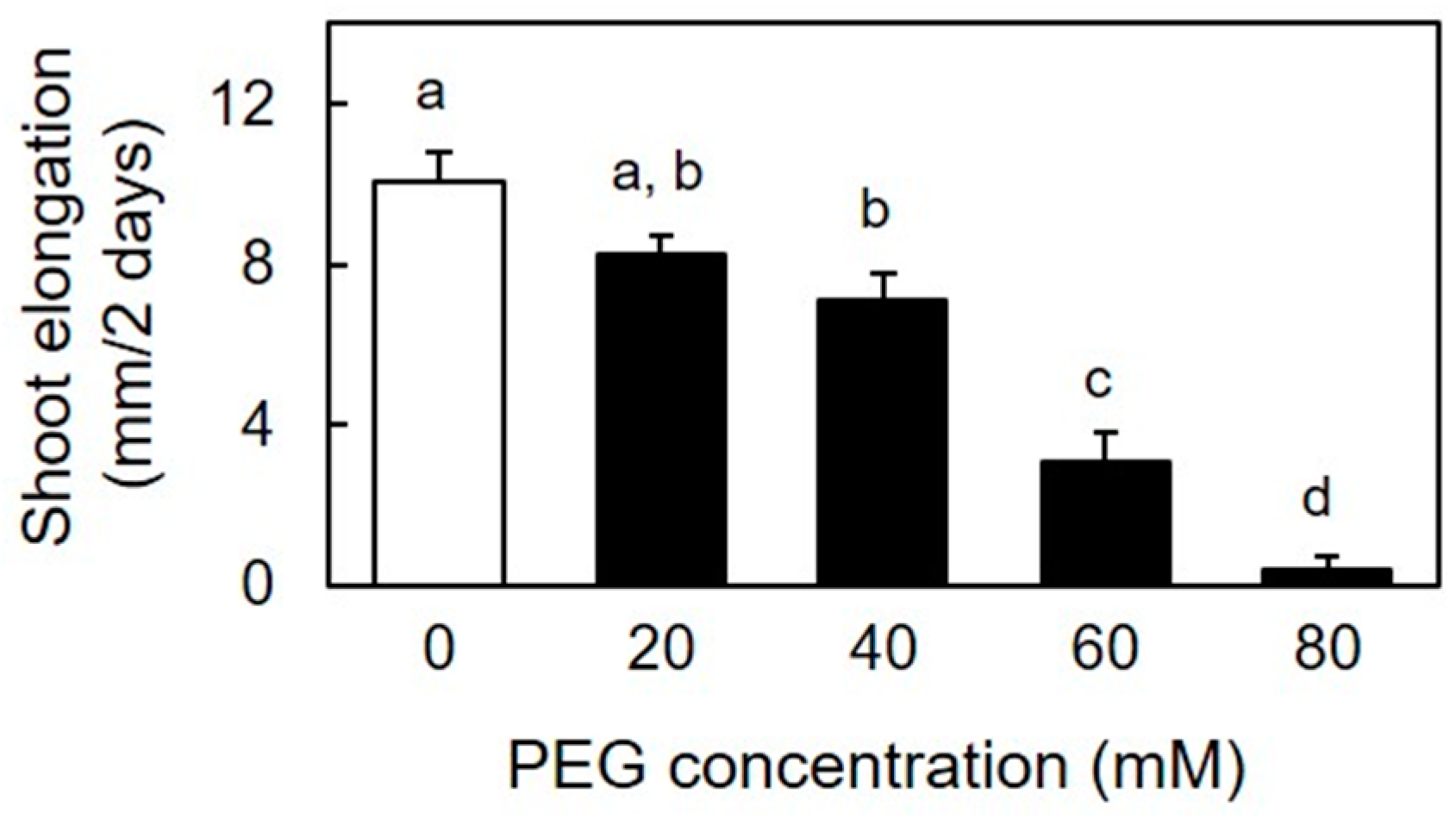
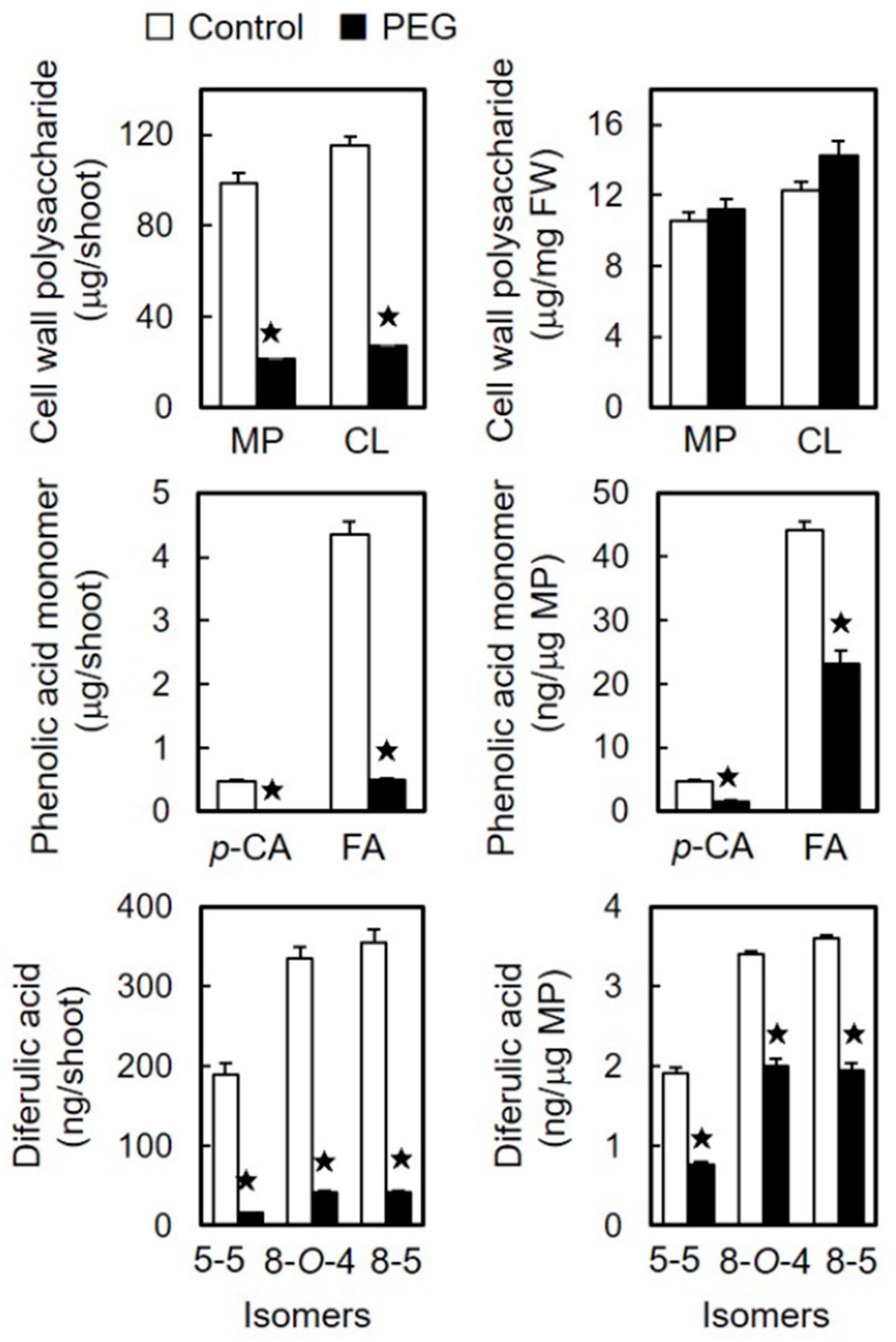
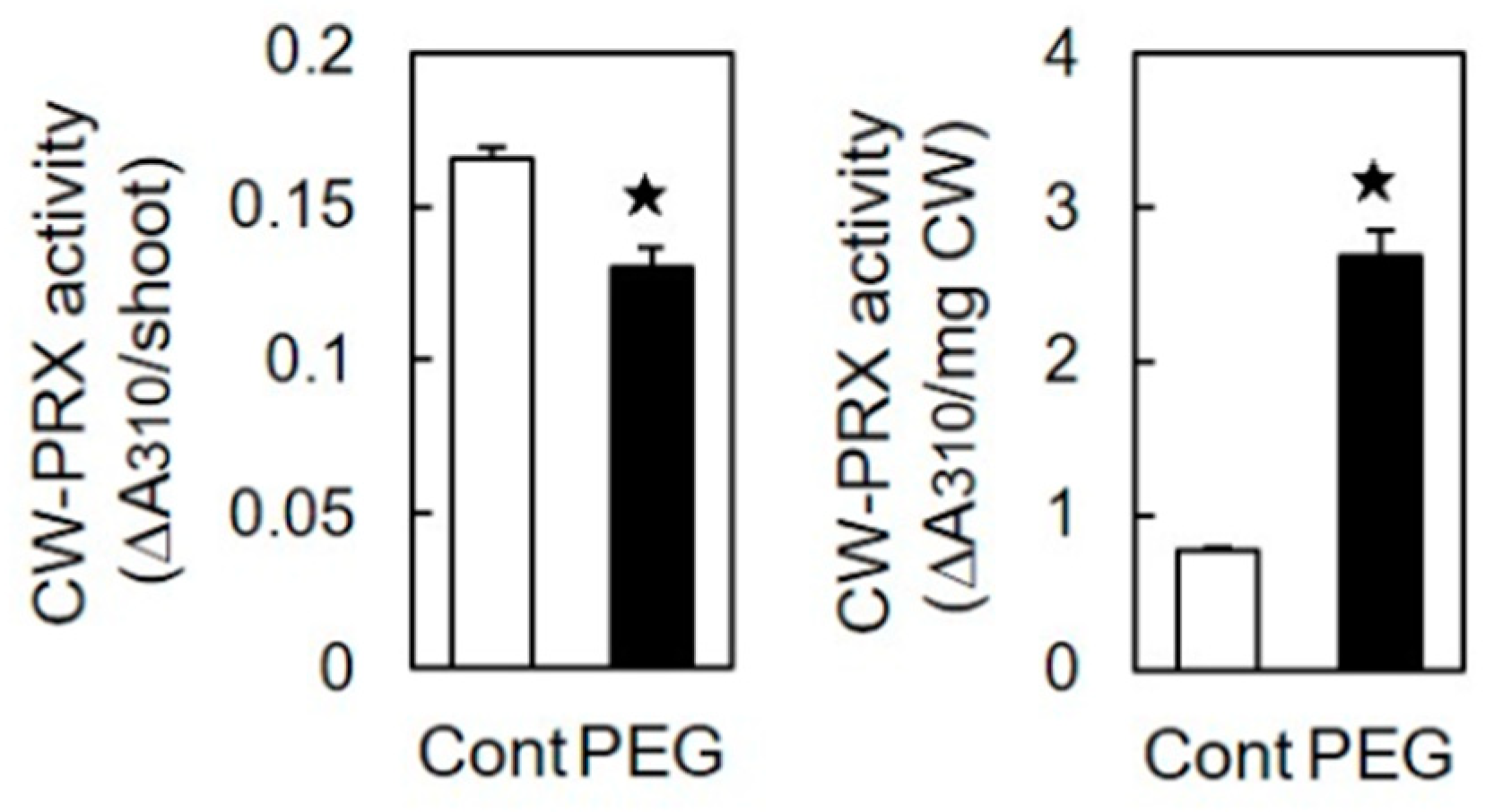
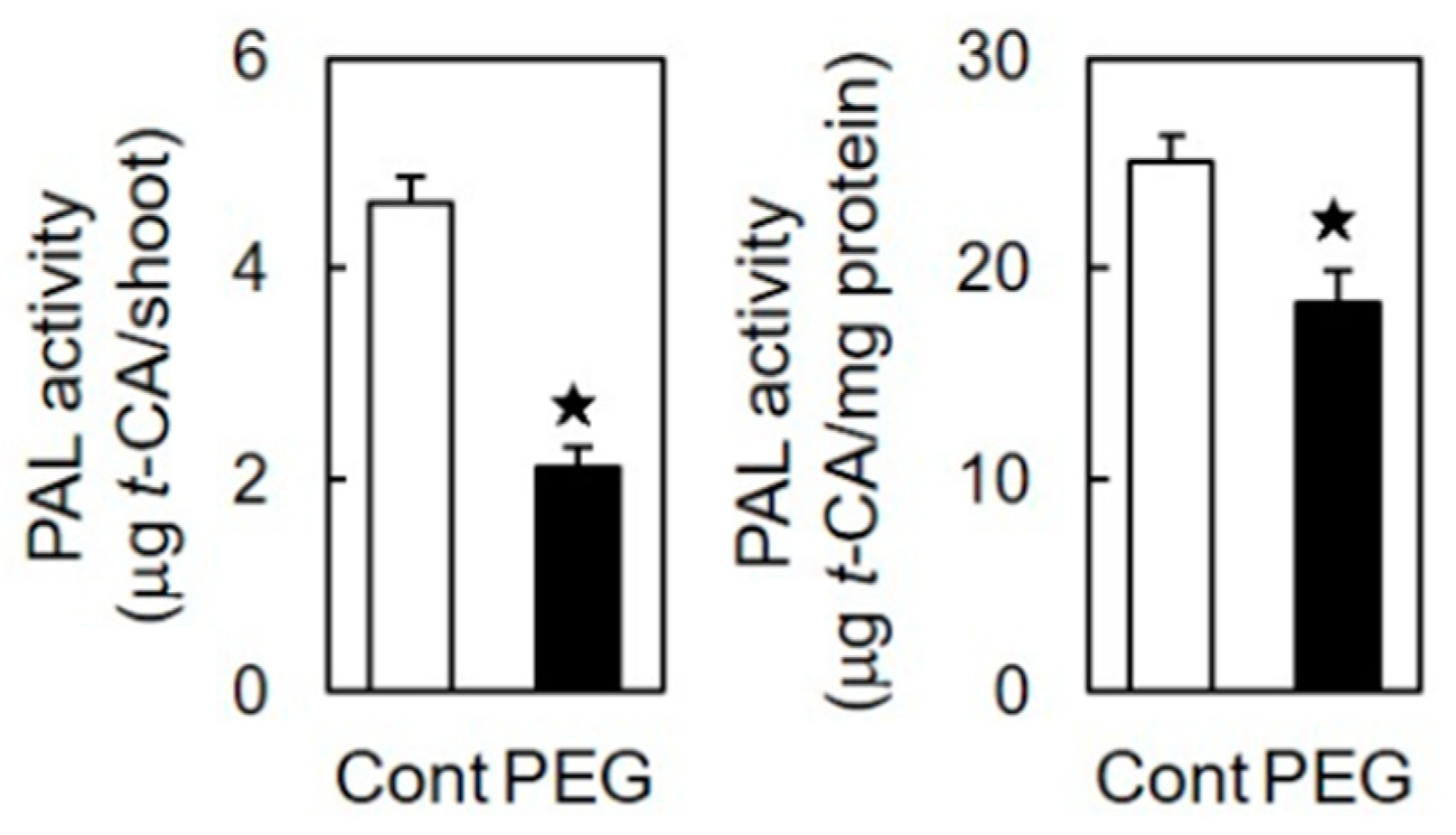
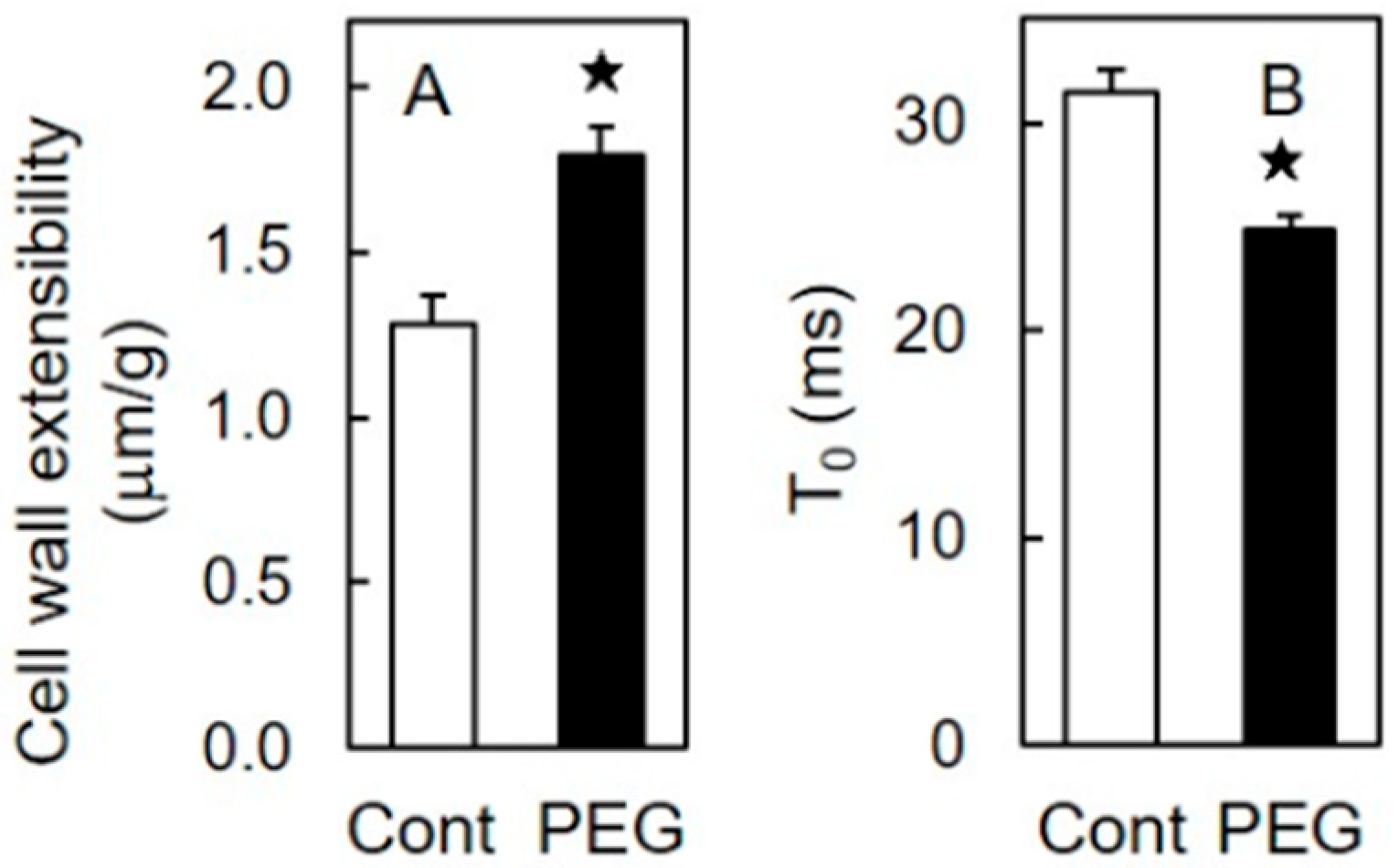
Osmotic stress impacts the cell wall properties in plants. This study aimed to elucidate the mechanisms involved in cell wall remodeling in etiolated (dark-grown) rice (Oryza sativa L.) shoots grown under polyethylene glycol (PEG)-induced osmotic stress conditions. Shoot growth was inhibited by 70% by the treatment with 60 mM PEG for 2 days. However, when the stressed seedlings were transferred to a solution without PEG, their shoot growth rate increased significantly. A measurement of the cell wall mechanical properties revealed that the cell walls of the stressed shoots became looser and more extensible than those of unstressed shoots. Among the cell wall constituents, the amounts of cell wall-bound phenolic acids, such as ferulic acid (FA), p-coumaric acid (p-CA), and diferulic acid (DFA), per shoot and per unit of matrix polysaccharide content were significantly reduced in the stressed shoots compared to those in the unstressed shoots. Concerning the formation of cell wall-bound phenolic acids, the activity of cell wall-bound peroxidase (CW-PRX) per unit of cell wall content, which is responsible for the coupling reaction of FA to produce DFA, was 3.5 times higher in stressed shoots than in unstressed shoots, while the activity was reduced by 20% on a shoot basis in stressed shoots compared to that in unstressed shoots. The expression levels of the major class III peroxidase genes in stressed shoots were either comparable to or slightly lower than those in unstressed shoots. Conversely, the phenylalanine ammonia-lyase (PAL) activity, which contributes to the biosynthesis of FA and p-CA, was reduced by 55% and 30% on a shoot and unit-of-protein-content basis, respectively, in stressed shoots compared to that in unstressed shoots. The expression levels of abundantly expressed PAL genes decreased by 14–46% under osmotic stress. Moreover, the gene expression levels of specific BAHD acyltransferases, which are responsible for the addition of FA and p-CA to form ester-linked moieties on cell wall constituents, decreased by 15–33% under osmotic stress. These results suggest that the downregulation of the expression of specific PAL and BAHD acyltransferase genes in osmotically stressed rice shoots is responsible for a reduction in the formation of cell wall-bound phenolic acid monomers. This, in turn, may result in a decrease in the levels of DFAs. The reduction in the formation of DFA-mediated cross-linking structures within the cell wall may contribute to an increase in the mechanical extensibility of the cell wall. The remodeling of cell walls in an extensible and loosened state could assist in maintaining the growth capacity of etiolated rice shoots grown under osmotic stress and contribute to rapid growth recovery following the alleviation of osmotic stress.
Keywords: BAHD acyltransferase; cell wall-bound phenolic acids; cell wall peroxidase; mechanical properties of the cell wall; Oryza sativa; phenylalanine ammonia-lyase; polyethylene glycol BAHD acyltransferase; cell wall-bound phenolic acids; cell wall peroxidase; mechanical properties of the cell wall; Oryza sativa; phenylalanine ammonia-lyase; polyethylene glycol