Review

NAFLD Fibrosis Progression and Type 2 Diabetes: The Hepatic–Metabolic Interplay

by
Simona Cernea
1,2
1
Department M3, Internal Medicine I, George Emil Palade University of Medicine, Pharmacy, Science, and Technology of Târgu Mureş, 540142 Târgu Mureş, Romania
2
Diabetes, Nutrition and Metabolic Diseases Outpatient Unit, Emergency County Clinical Hospital, 540136 Târgu Mureş, Romania
Life 2024, 14(2), 272; https://doi.org/10.3390/life14020272
Submission received: 15 January 2024 / Revised: 13 February 2024 / Accepted: 14 February 2024 / Published: 18 February 2024

Abstract

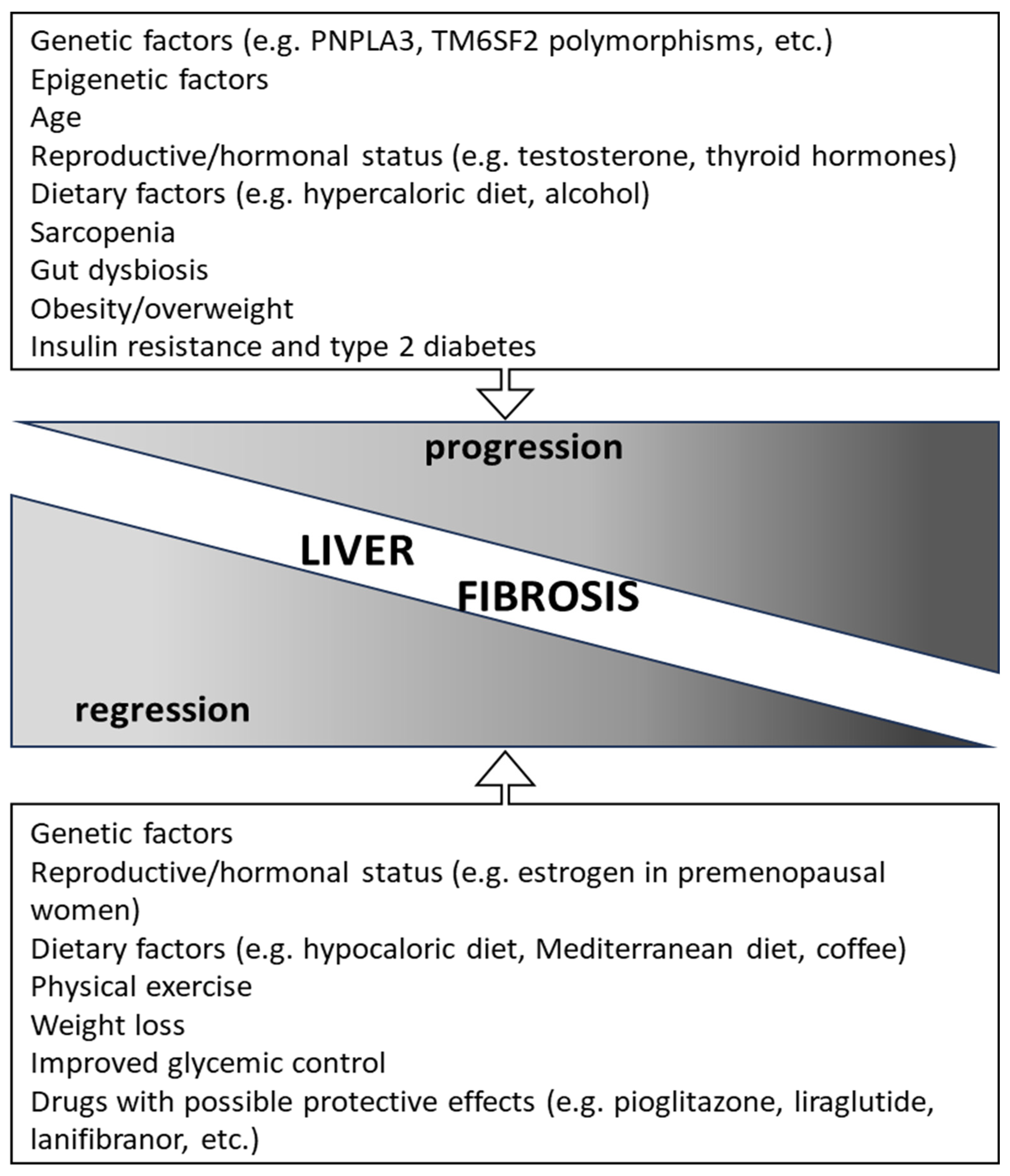
The bidirectional relationship between type 2 diabetes and (non-alcoholic fatty liver disease) NAFLD is indicated by the higher prevalence and worse disease course of one condition in the presence of the other, but also by apparent beneficial effects observed in one, when the other is improved. This is partly explained by their belonging to a multisystemic disease that includes components of the metabolic syndrome and shared pathogenetic mechanisms. Throughout the progression of NAFLD to more advanced stages, complex systemic and local metabolic derangements are involved. During fibrogenesis, a significant metabolic reprogramming occurs in the hepatic stellate cells, hepatocytes, and immune cells, engaging carbohydrate and lipid pathways to support the high-energy-requiring processes. The natural history of NAFLD evolves in a variable and dynamic manner, probably due to the interaction of a variable number of modifiable (diet, physical exercise, microbiota composition, etc.) and non-modifiable (genetics, age, ethnicity, etc.) risk factors that may intervene concomitantly, or subsequently/intermittently in time. This may influence the risk (and rate) of fibrosis progression/regression. The recognition and control of the factors that determine a rapid progression of fibrosis (or its regression) are critical, as the fibrosis stages are associated with the risk of liver-related and all-cause mortality.
Keywords: liver fibrosis; type 2 diabetes; NAFLD liver fibrosis; type 2 diabetes; NAFLD