Review

Role of Vitamin E in Neonatal Neuroprotection: A Comprehensive Narrative Review

1
Division of Neonatology, Department of Pediatrics, University of Washington, Seattle, WA 98195, USA
2
Center on Human Development and Disability, University of Washington, Seattle, WA 98195, USA
*
Author to whom correspondence should be addressed.
Life 2022, 12(7), 1083; https://doi.org/10.3390/life12071083
Submission received: 30 June 2022 / Revised: 15 July 2022 / Accepted: 18 July 2022 / Published: 20 July 2022
(This article belongs to the Section Medical Research)

Abstract

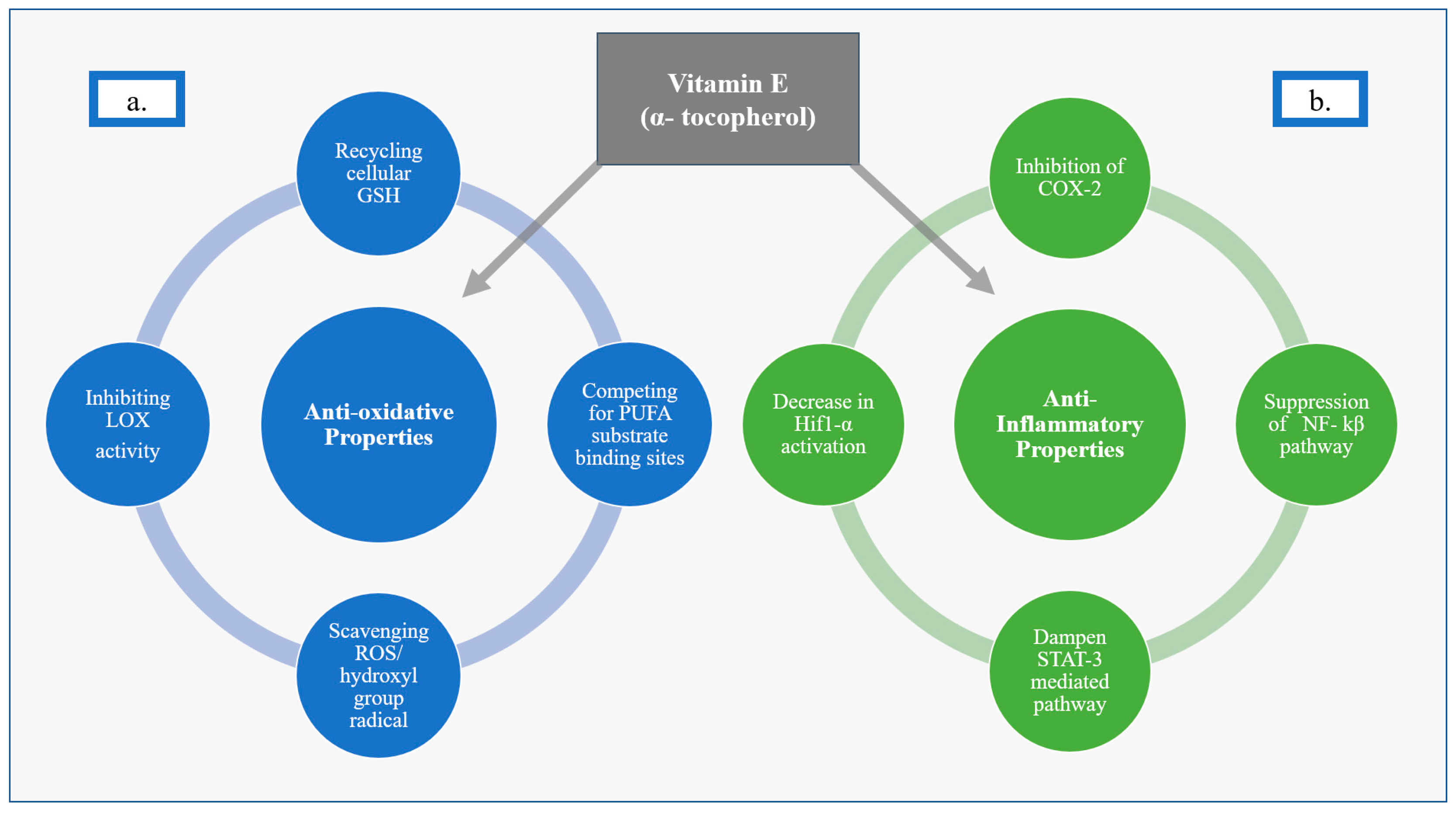
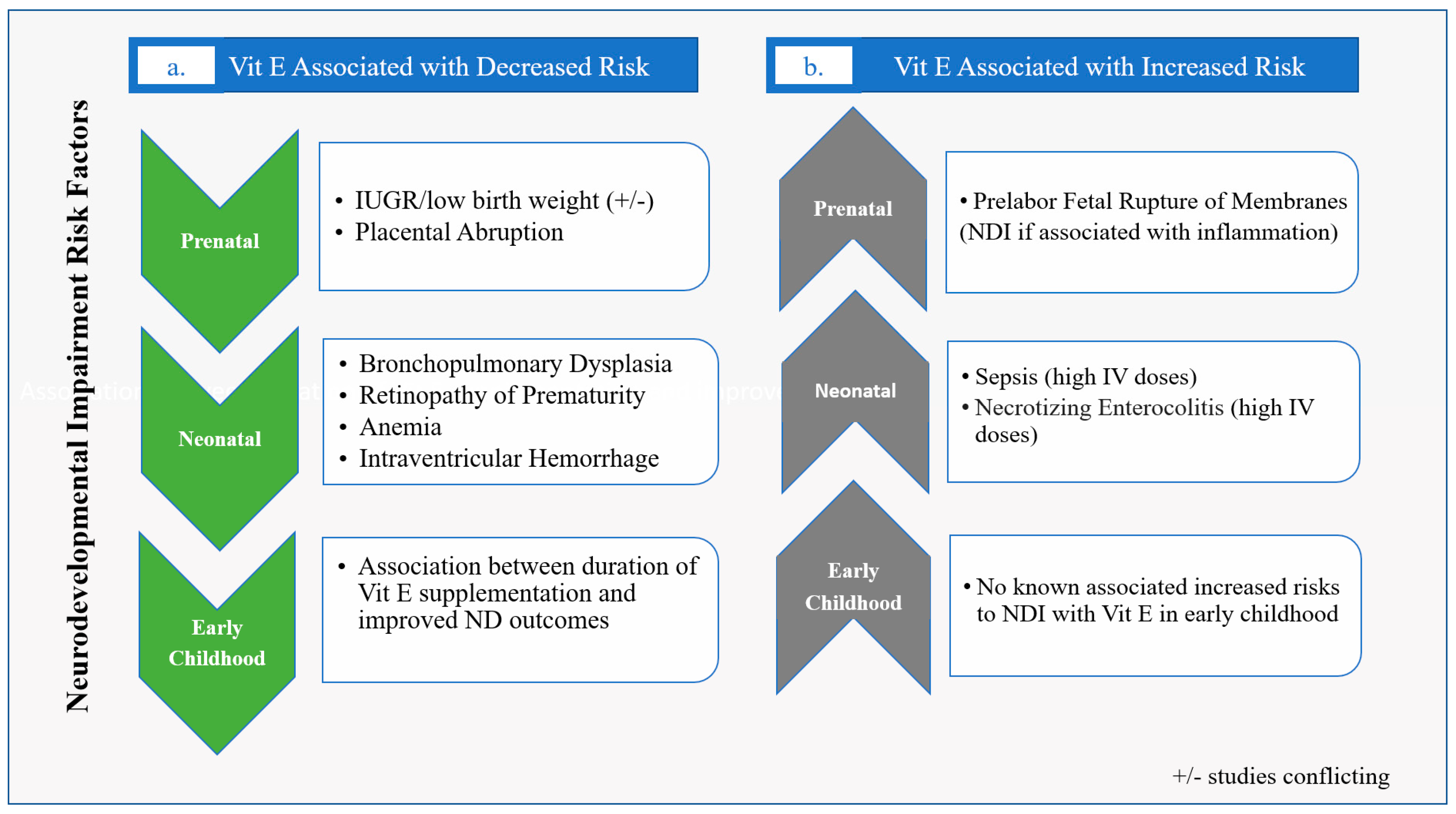
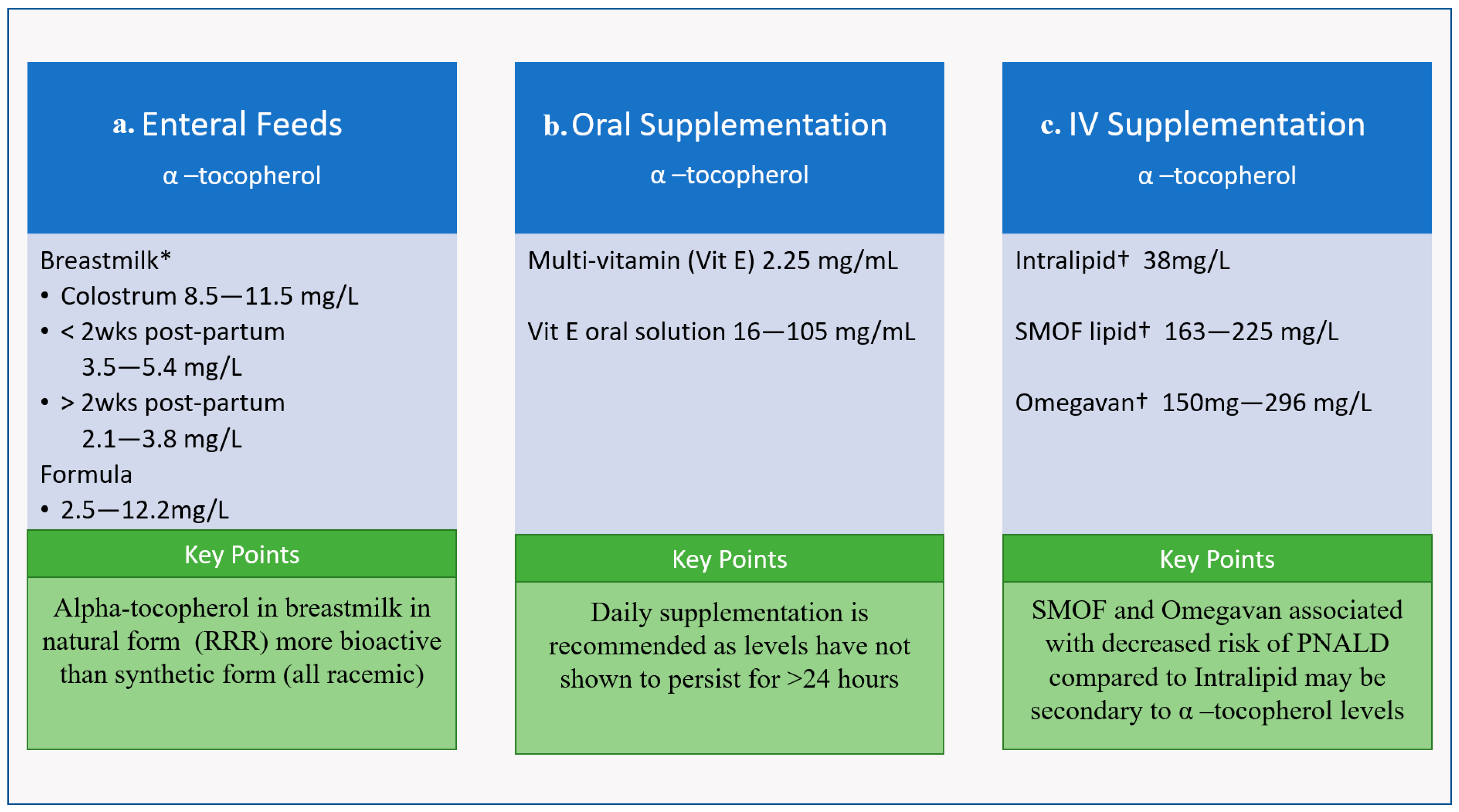
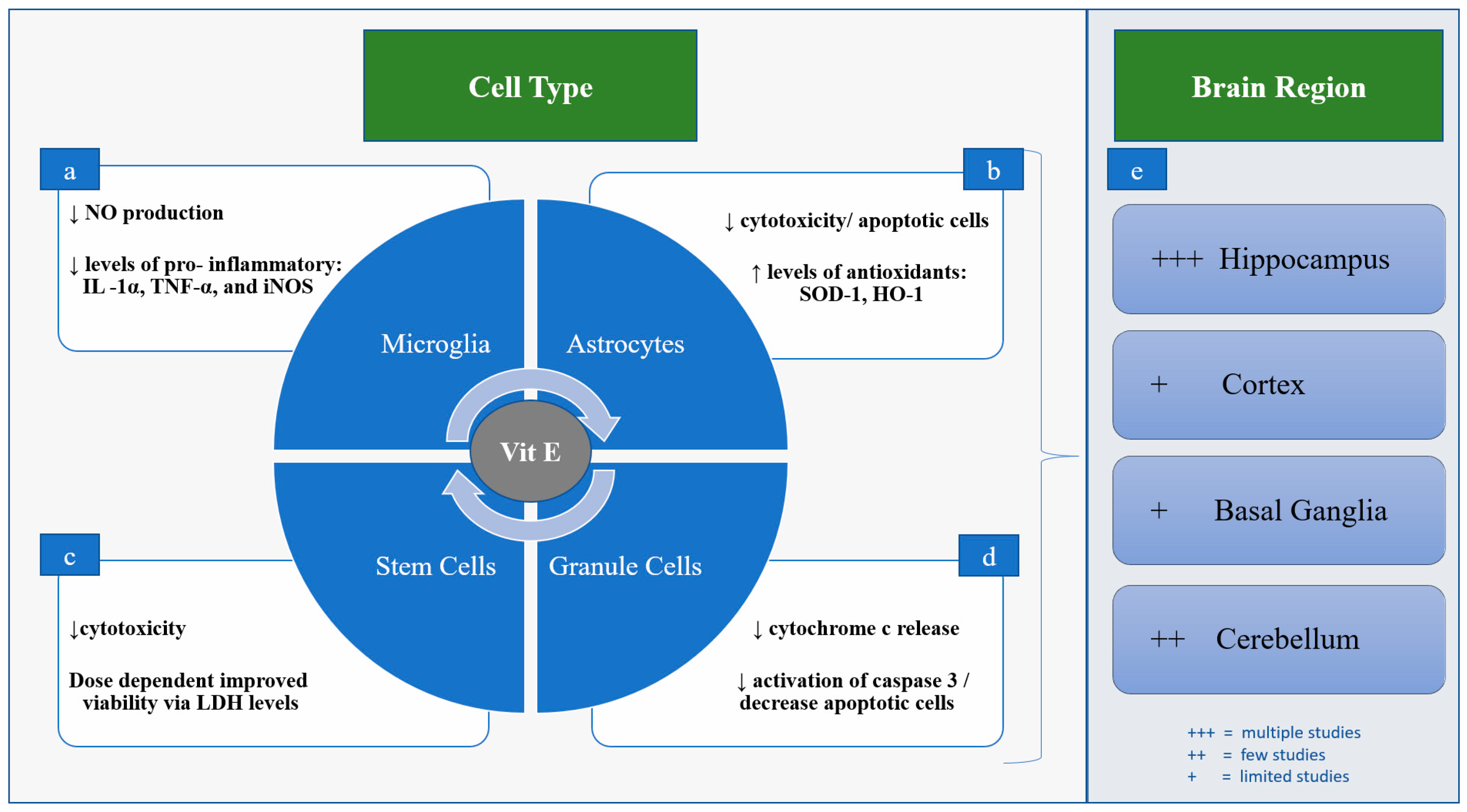
Vitamin E (Vit E) is an essential lipophilic antioxidant and anti-inflammatory agent that has potential as a neuroprotectant in newborn infants with brain injury. Vit E has shown promise in many in vitro studies, but success in translation to in vivo animal studies and the clinical setting has been mixed, with concern of adverse effects at high intravenous doses in preterm infants. However, a recent rise in knowledge of the beneficial effects of fat emulsions containing higher levels of Vit E, along with associated improved outcomes in some neonatal co-morbidities, has led many to reconsider Vit E administration as a potential therapeutic modality to improve neurological outcomes in the setting of neonatal brain injury. This narrative review discusses Vit E’s structure, mechanism(s) of action, evidence in animal models, and association with health outcomes in neonates, including both dietary and supplemental Vit E and their bioavailability and pharmacokinetics as it relates to the brain. Lastly, long-term neurodevelopmental outcomes along with gaps in current knowledge are critiqued, which to date suggests that additional translational studies in larger animal models and assessment of safety profiles of different routes and doses of administration should be explored prior to large clinical trials. Importantly, a greater understanding of the brain region(s) and cell type(s) affected by Vit E may help to target the use of Vit E as a beneficial neuroprotective agent to specific populations or types of injury seen in newborns.
Keywords: vitamin E; neuroprotection; neonatal; hypoxia-ischemia vitamin E; neuroprotection; neonatal; hypoxia-ischemia