Article

Novel Integration of CAPP in a G-Code Generation Module Using Macro Programming for CNC Application

1
School of Mechanical Engineering, Hanoi University of Science and Technology, No.1 DaiCoViet Rd, Hanoi 10000, Vietnam
2
College of Systems Engineering and Science, Shibaura Institute of Technology, Tokyo 135-8548, Japan
*
Authors to whom correspondence should be addressed.
Machines 2020, 8(4), 61; https://doi.org/10.3390/machines8040061

Submission received: 7 September 2020 / Revised: 29 September 2020 / Accepted: 29 September 2020 / Published: 12 October 2020
(This article belongs to the Section Advanced Manufacturing)

Abstract

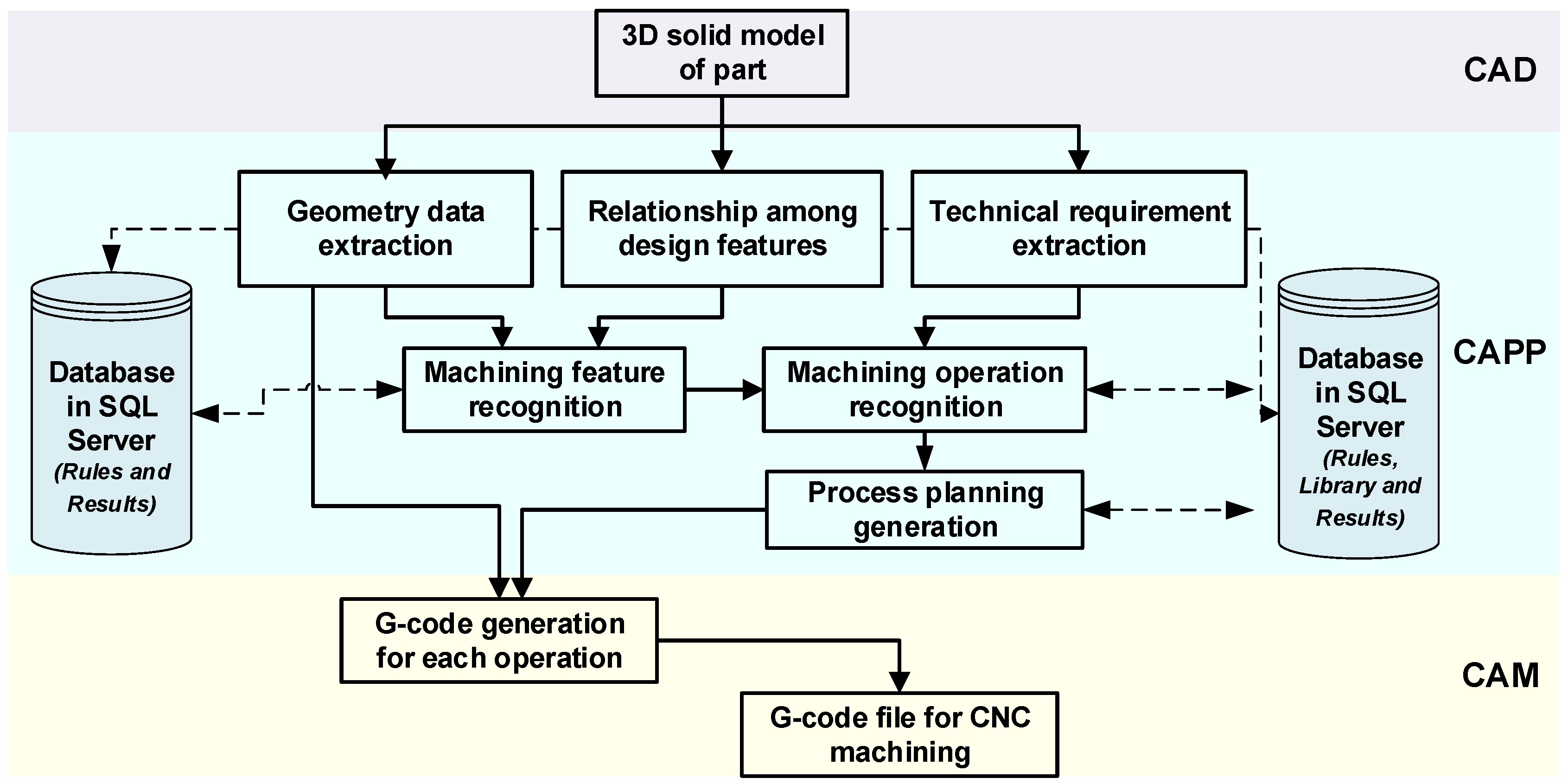
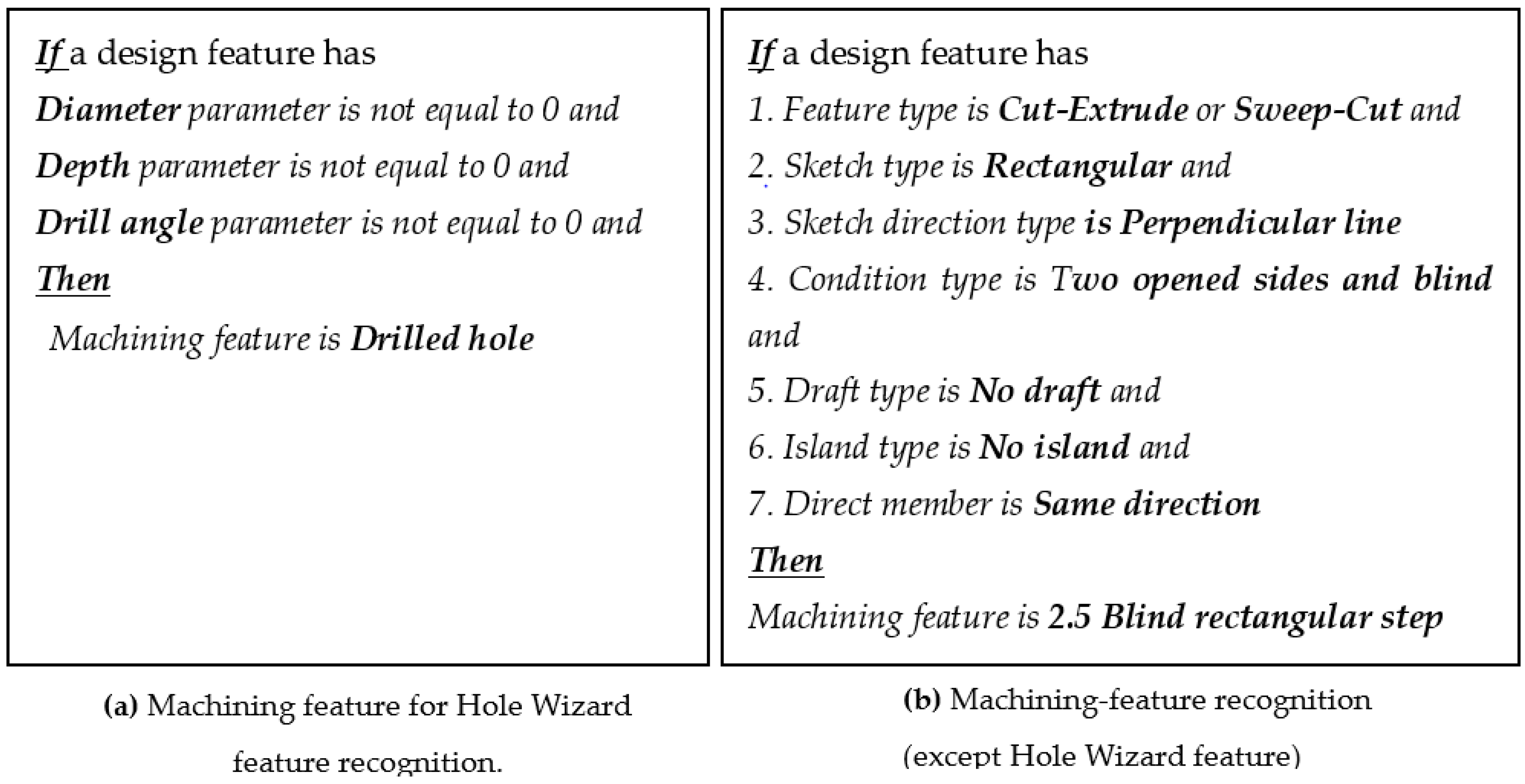
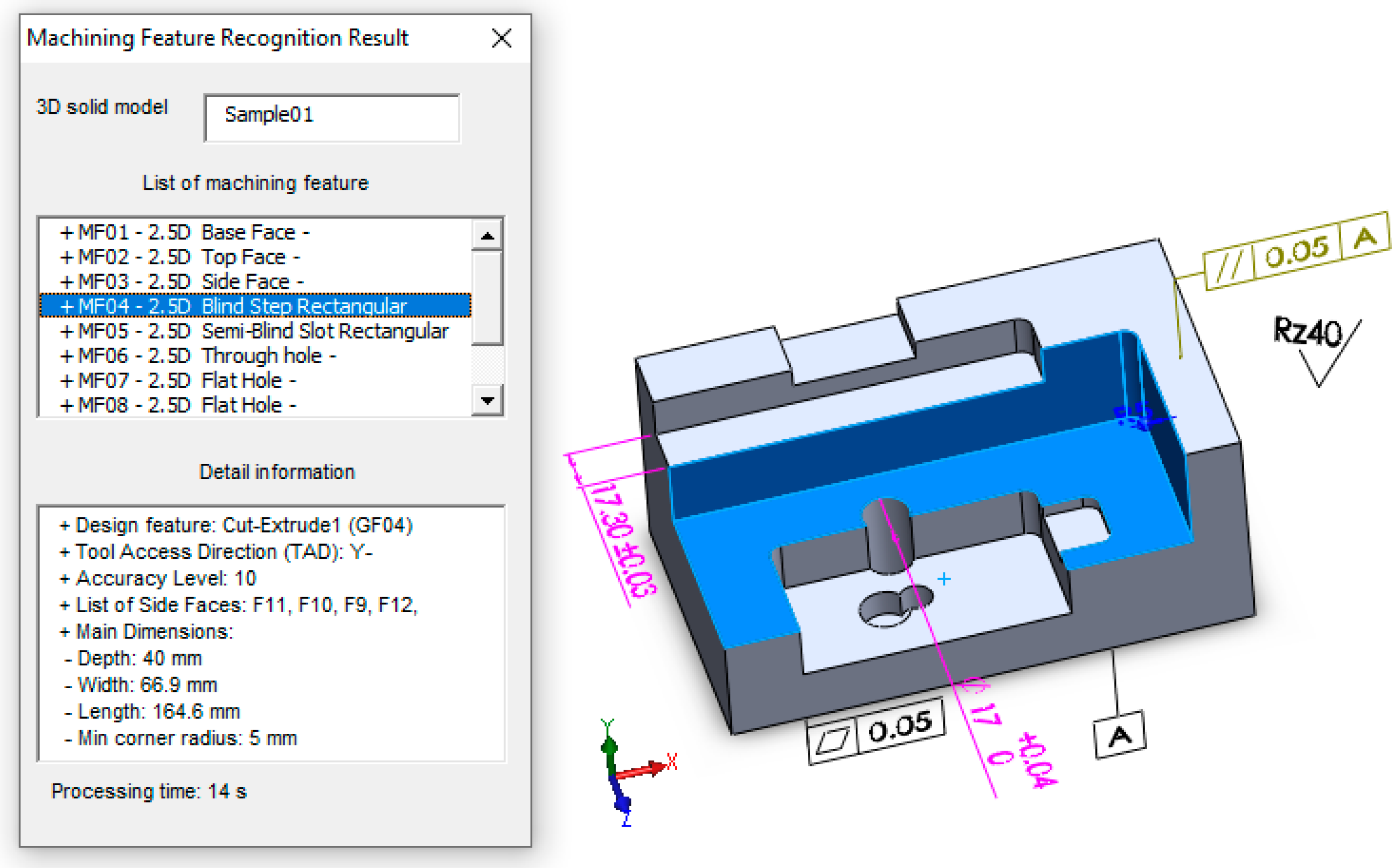
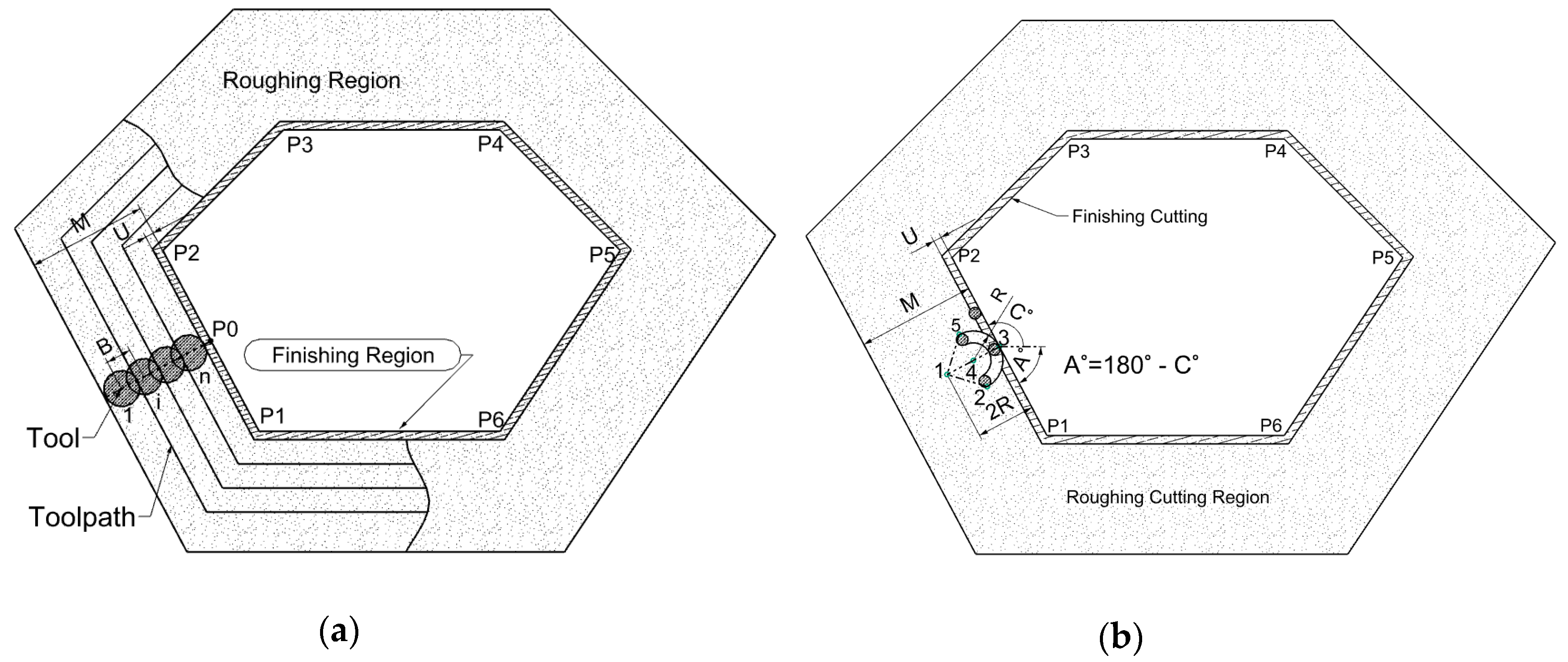
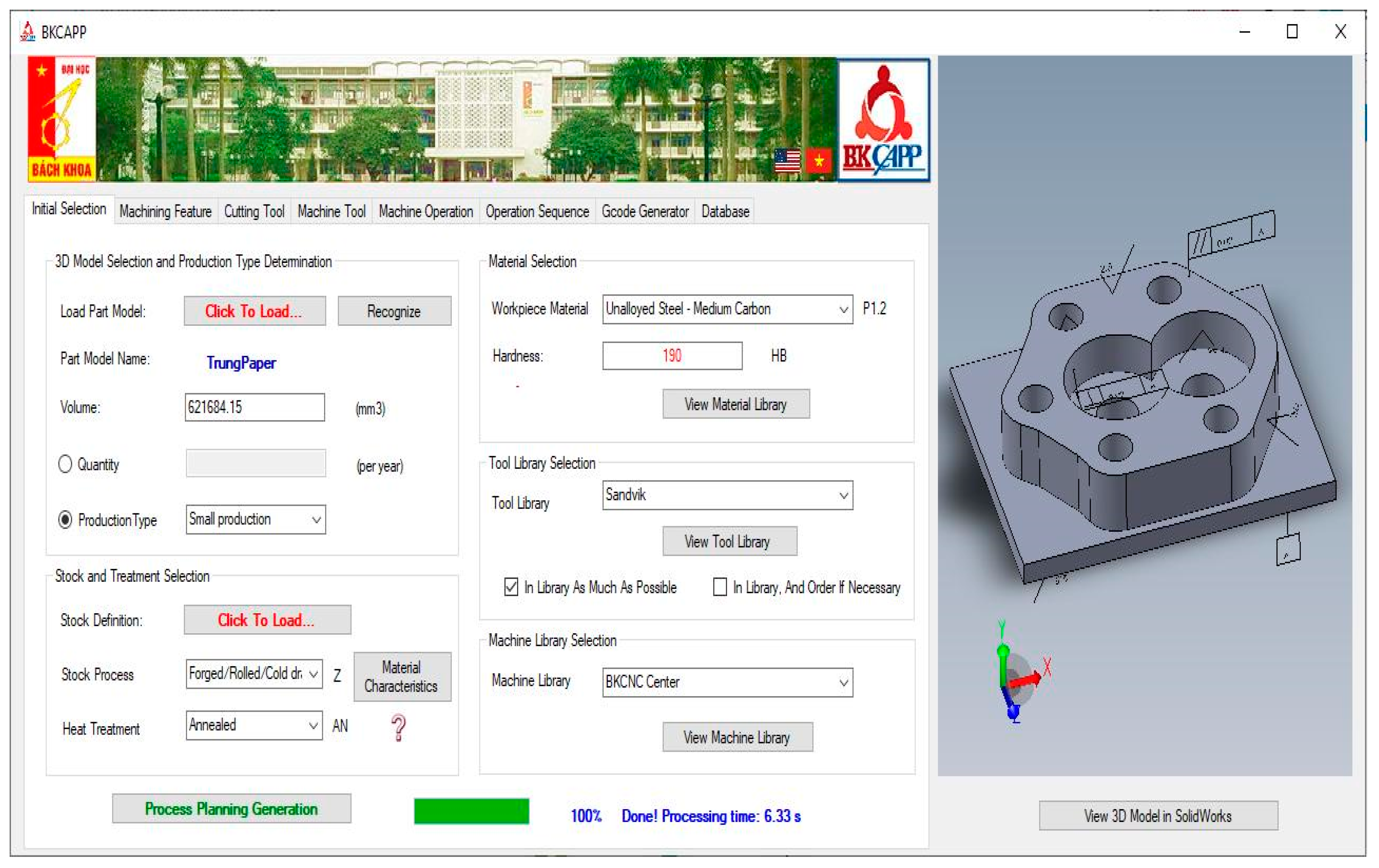
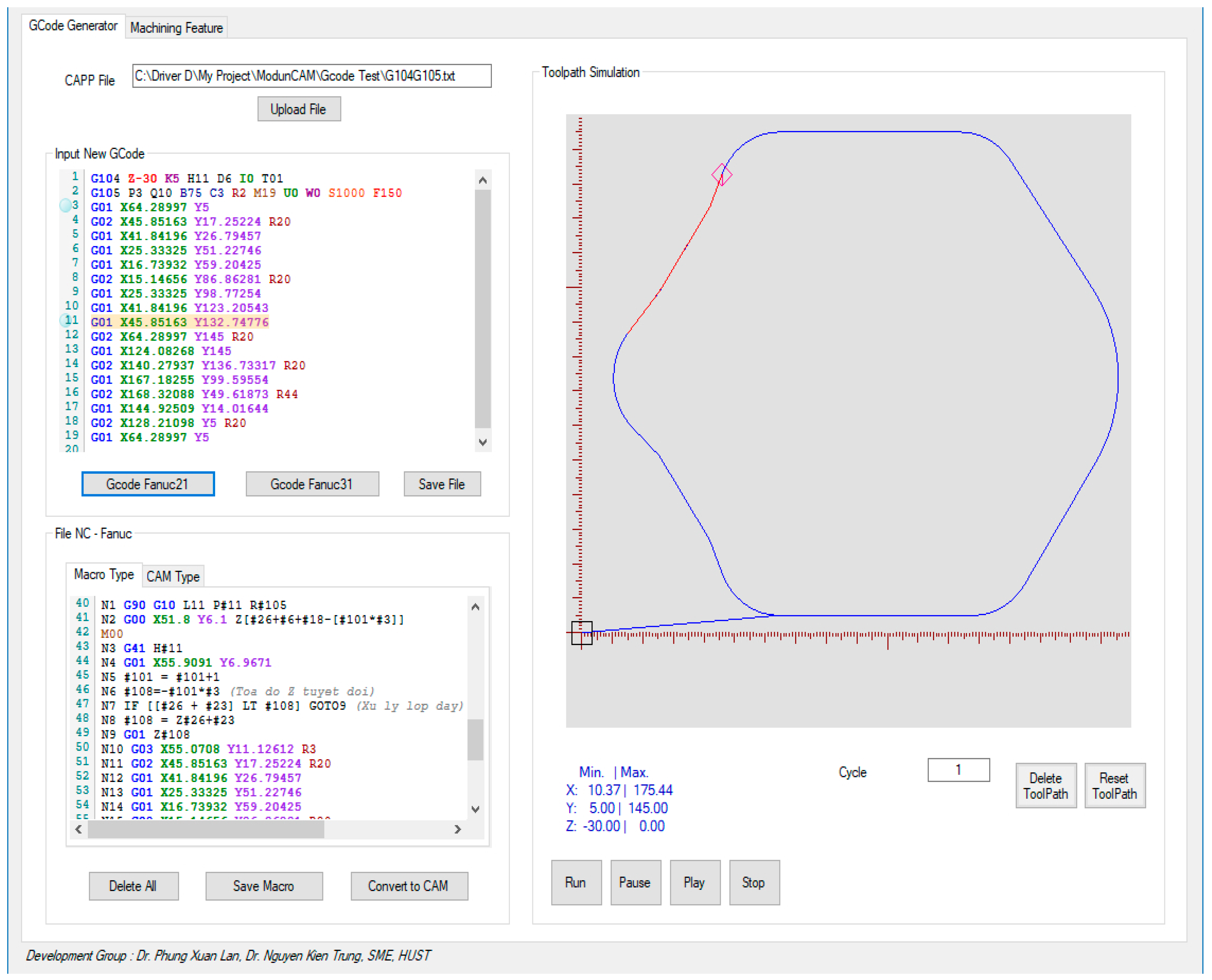
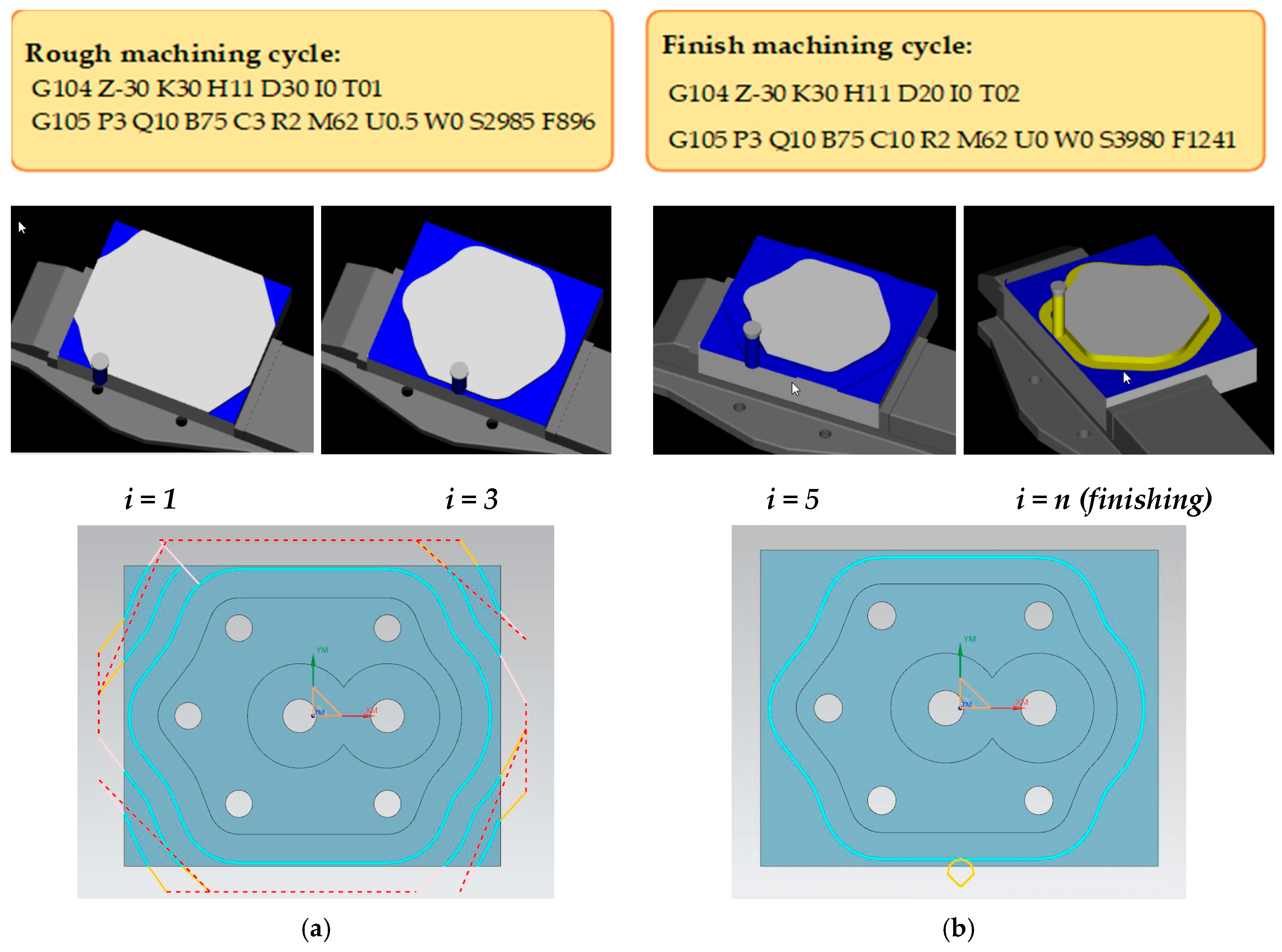
In the modern manufacturing industry, the role of computer-aided process planning (CAPP) is becoming increasingly crucial. Through the application of new technologies, experience, and intelligence, CAPP is contributing to the automation of manufacturing processes. In this article, the integration of a proposed CAPP system that is named as BKCAPP and G-code generation module provides a completed CAD–CAPP–CNC system that does not involve any manual processing in the CAM modules. The BKCAPP system is capable of automatically performing machining feature and operation recognition processes from design features in three-dimensional (3D) solid models, incorporating technical requirements such as the surface roughness, geometric dimensions, and tolerance in order to provide process planning for machining processes, including information on the machine tools, cutting tools, machining conditions, and operation sequences. G-code programs based on macro programming are automatically generated by the G-code generation module on the basis of the basic information for the machining features, such as the contour shape, basic dimensions, and cutting information obtained from BKCAPP. The G-code generation module can be applied to standard machining features, such as faces, pockets, bosses, slots, holes, and contours. This novel integration approach produces a practical CAPP method enabling end users to generate operation consequences and G-code files and to customize specific cutting tools and machine tool data. In this paper, a machining part consisting of basic machining features was used in order to describe the method and verify its implementation.
Keywords: CAPP; G-code generation; macro programming; machining feature; CNC machining CAPP; G-code generation; macro programming; machining feature; CNC machining