Article

A Magnetic–Inductive Dual-Channel Inspection Method with Spatial Registration for Defect Characterization in Ferromagnetic Materials


1
Department of Measurement and Control Technology and Instrumentation, Northeastern University, Shenyang 110819, China
2
Department of Electrical Engineering, Northeastern University, Shenyang 110819, China
*
Author to whom correspondence should be addressed.
Machines 2026, 14(8), 867; https://doi.org/10.3390/machines14080867

Submission received: 25 June 2026 / Revised: 23 July 2026 / Accepted: 30 July 2026 / Published: 1 August 2026
(This article belongs to the Section Machines Testing and Maintenance)

Abstract

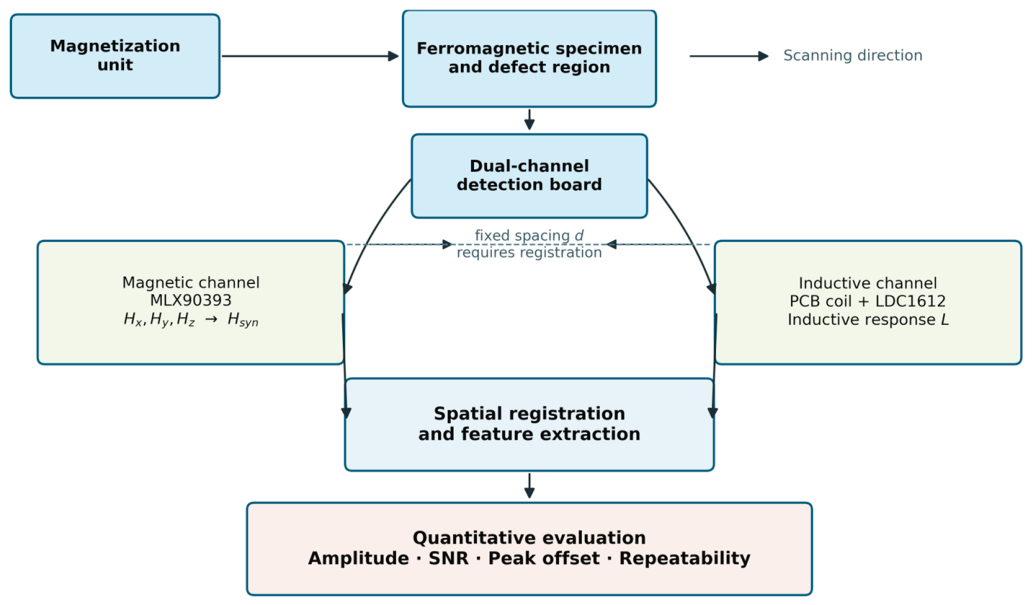
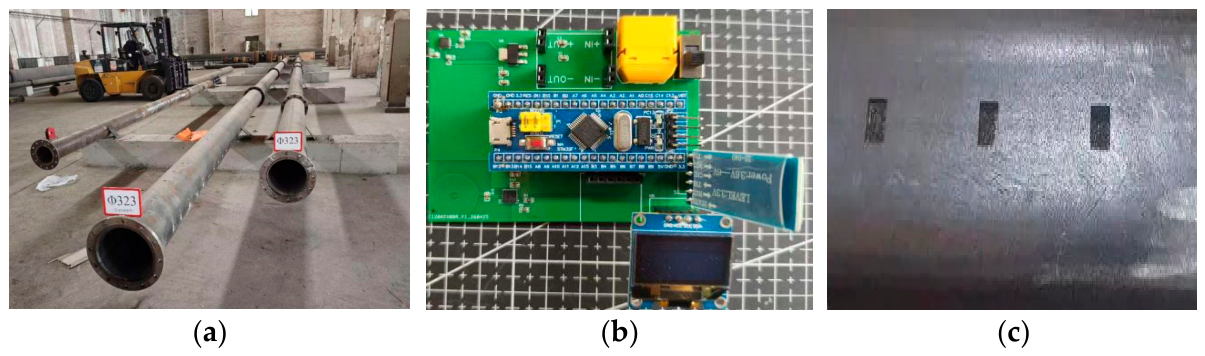
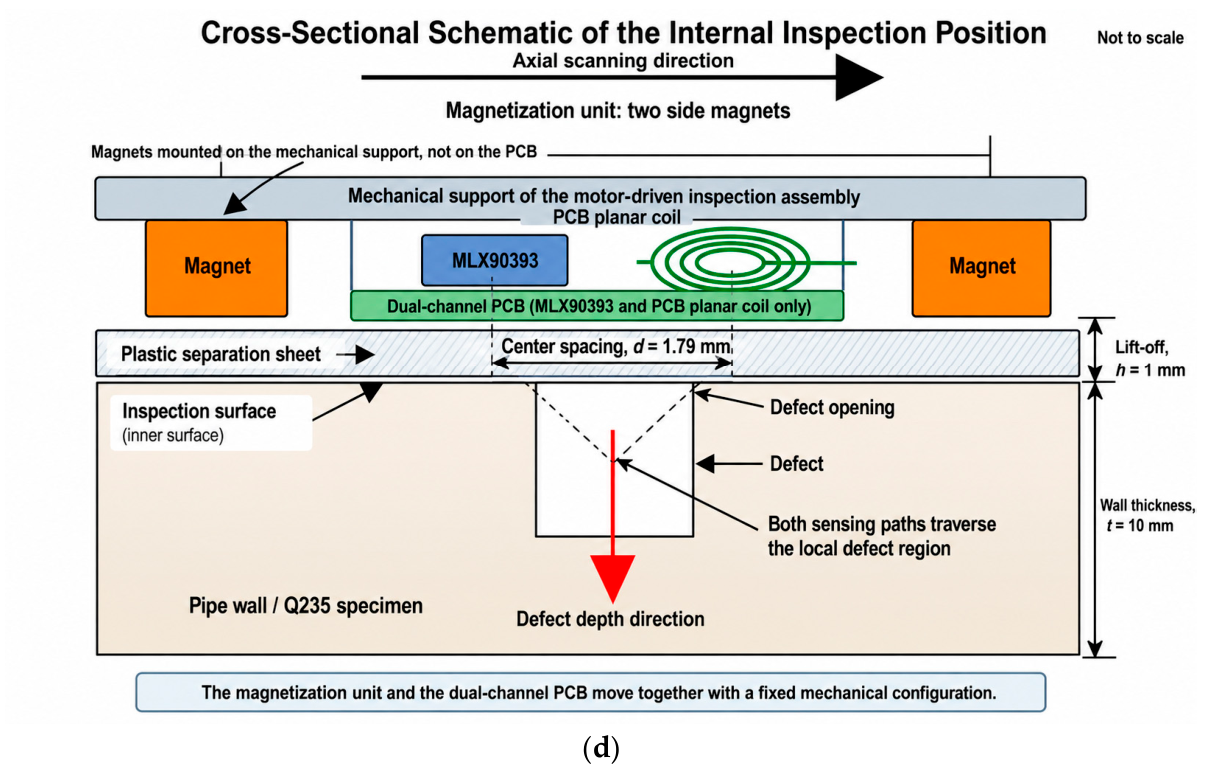
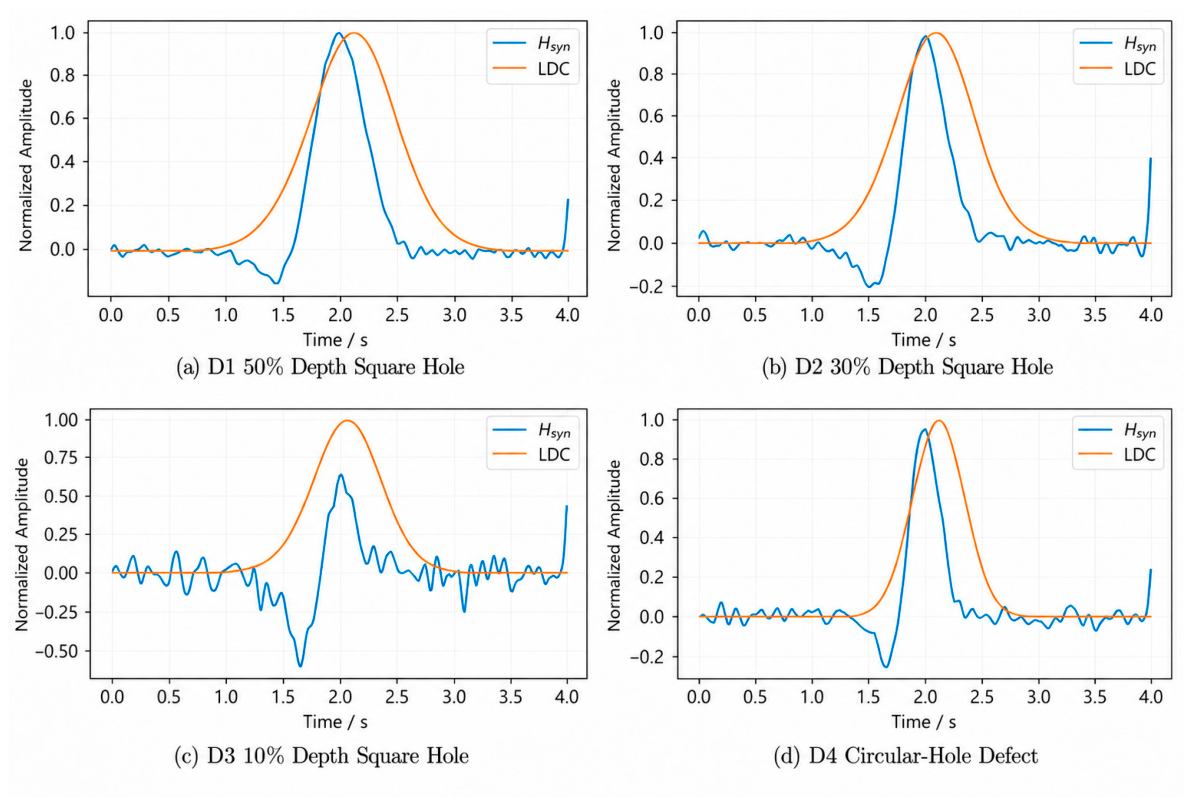
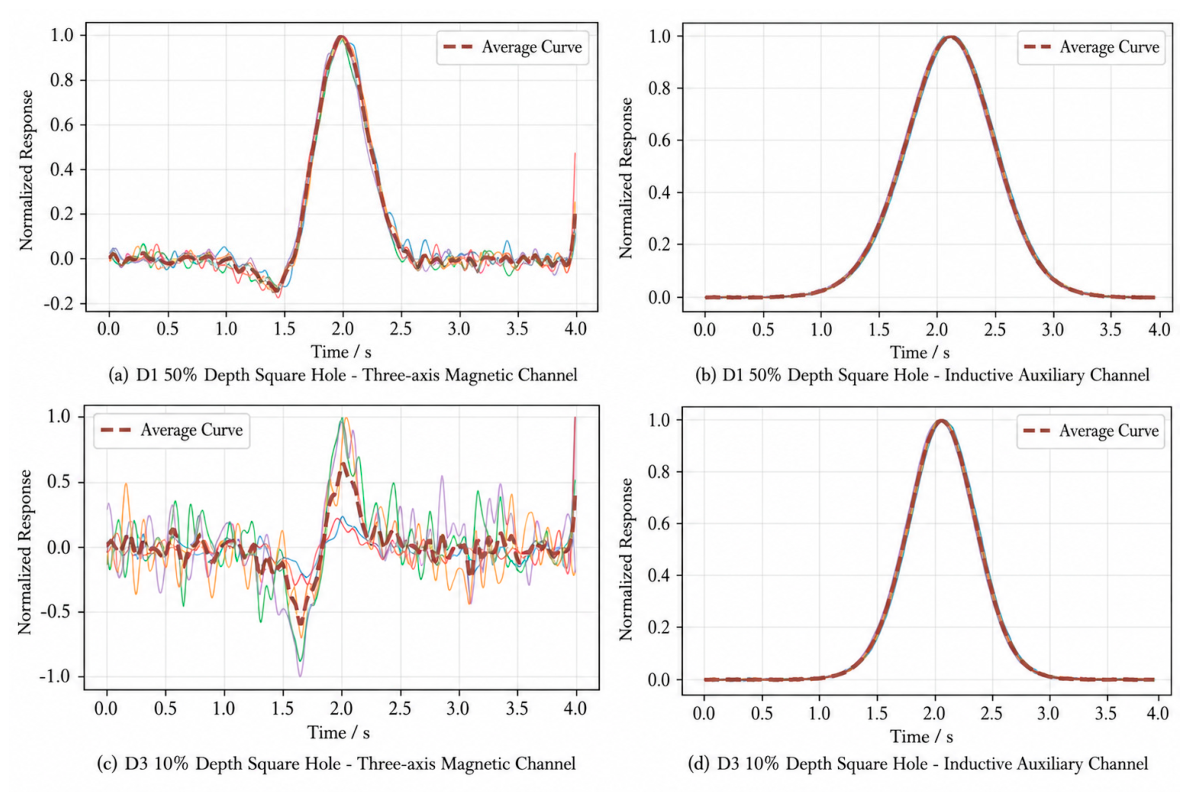
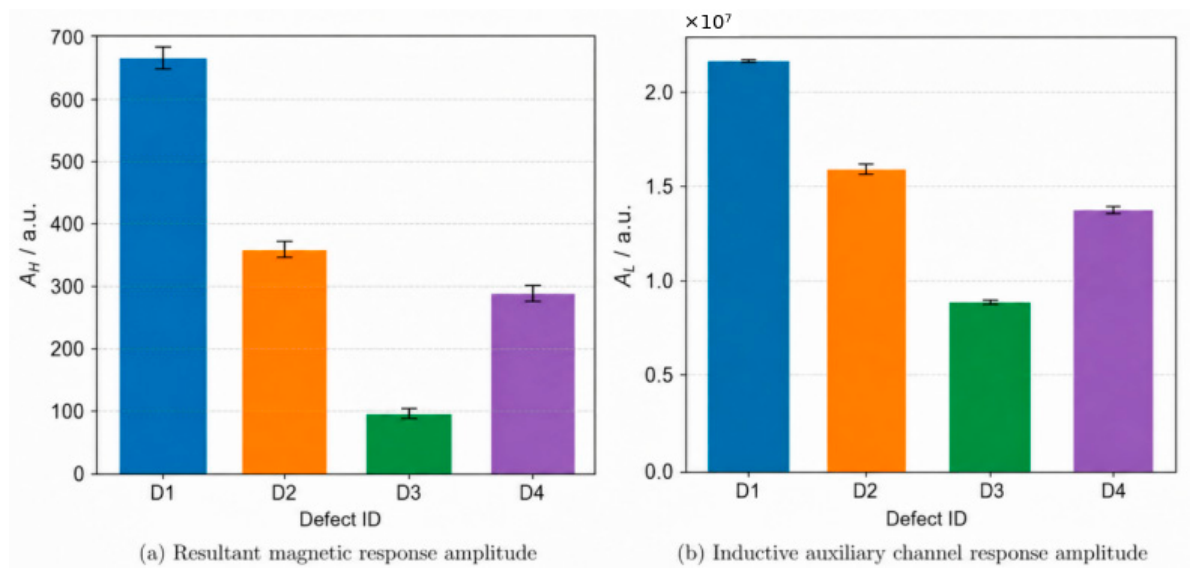
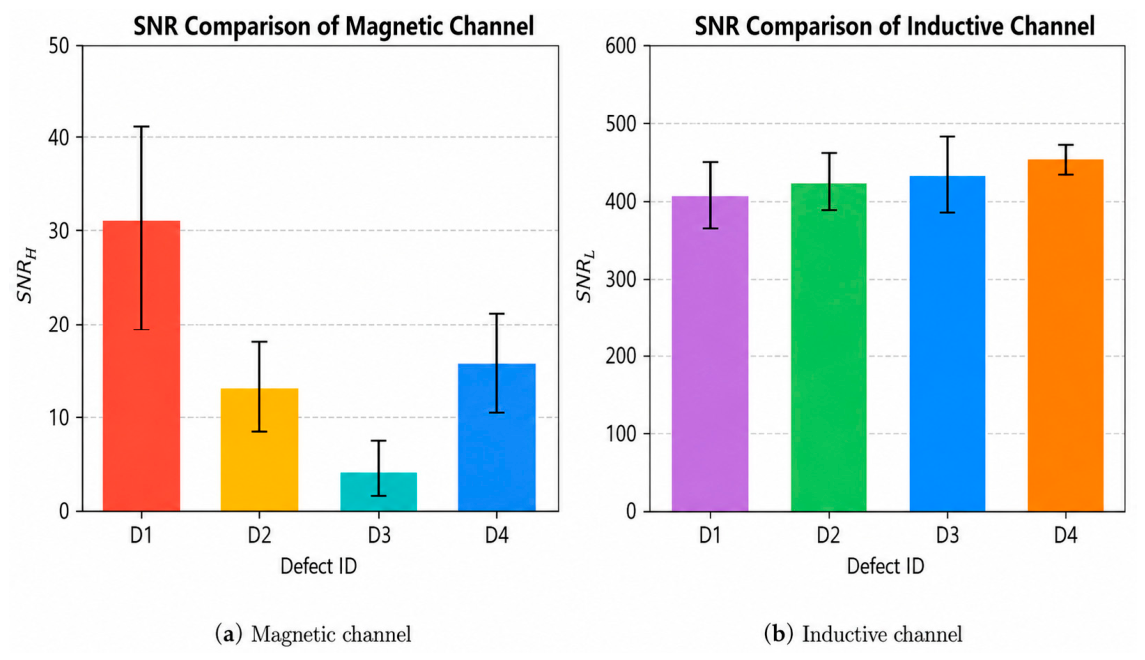
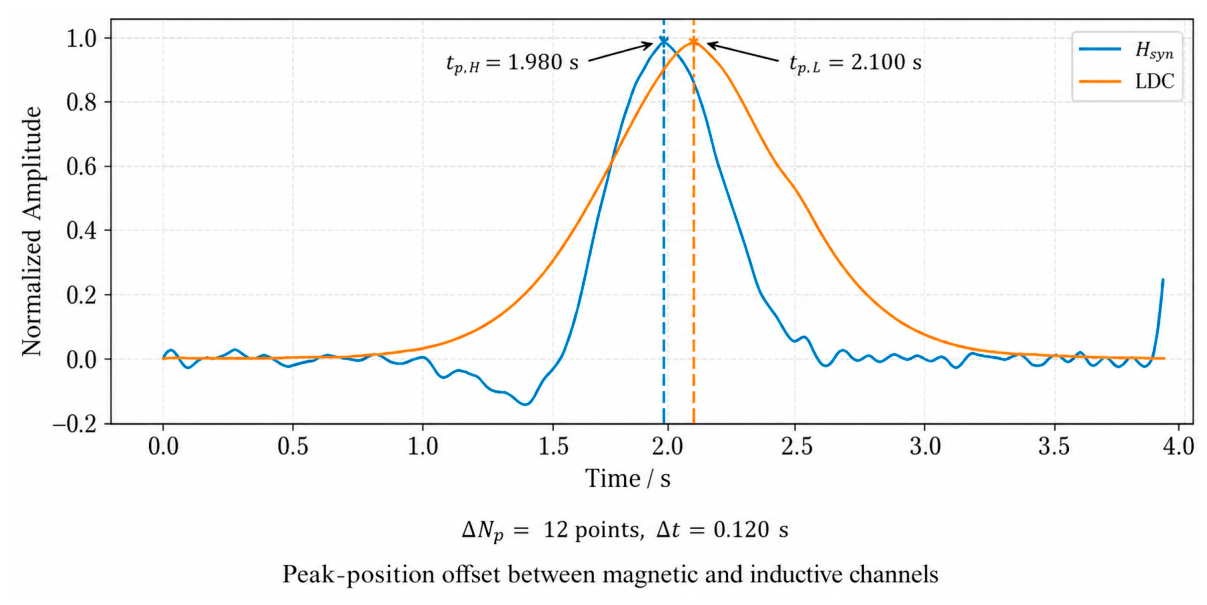
Shallow defects in ferromagnetic components may produce weak and unstable magnetic flux leakage responses in compact inspection devices, whereas an inductive response alone does not provide the same depth-related magnetic information. To obtain complementary defect information, this study proposes a magnetic–inductive dual-channel inspection method that integrates an MLX90393 three-axis digital magnetic sensor with a PCB planar spiral coil and an LDC1612 inductance-to-digital converter. Because the two sensing units are physically separated on the detection board, peak-position offset analysis and spatial registration were introduced to associate their responses to the same defect region. Controlled experiments were conducted on a laboratory pipeline inspection platform using a Q235 defect specimen installed at the internal inspection position of the pipe. The defects were machined on the inner surface, which was also the inspection surface. For each defect, five motor-driven axial scans were performed at 10 mm/s, with 400 samples acquired at 100 Hz during each 4 s scan. Response amplitude, signal-to-noise ratio, peak position, and repeatability were evaluated. For the square-hole defects, the magnetic response amplitude decreased from 675.0 to 98.5 a.u. as the depth ratio decreased from 50% to 10%, while the magnetic-channel SNR decreased from 30.5 to 4.7. For the 10% depth defect, the inductive channel retained an average SNR of 434.4 and a coefficient of variation of 0.23%, providing a stable auxiliary response. However, the pre-registration peak-position offset measured for this shallow defect was 21.2±20.9 sampling points, indicating substantial uncertainty in using a single magnetic extremum for scan-specific registration when the magnetic response was weak. These results demonstrate that the two channels provide different and complementary information under controlled laboratory conditions, while further validation is required for irregular corrosion, other ferromagnetic components, and practical inspection conditions.
Keywords: magnetic flux leakage; inductive sensing; dual-channel inspection; spatial registration; ferromagnetic materials; shallow defects; defect characterization; nondestructive testing magnetic flux leakage; inductive sensing; dual-channel inspection; spatial registration; ferromagnetic materials; shallow defects; defect characterization; nondestructive testing