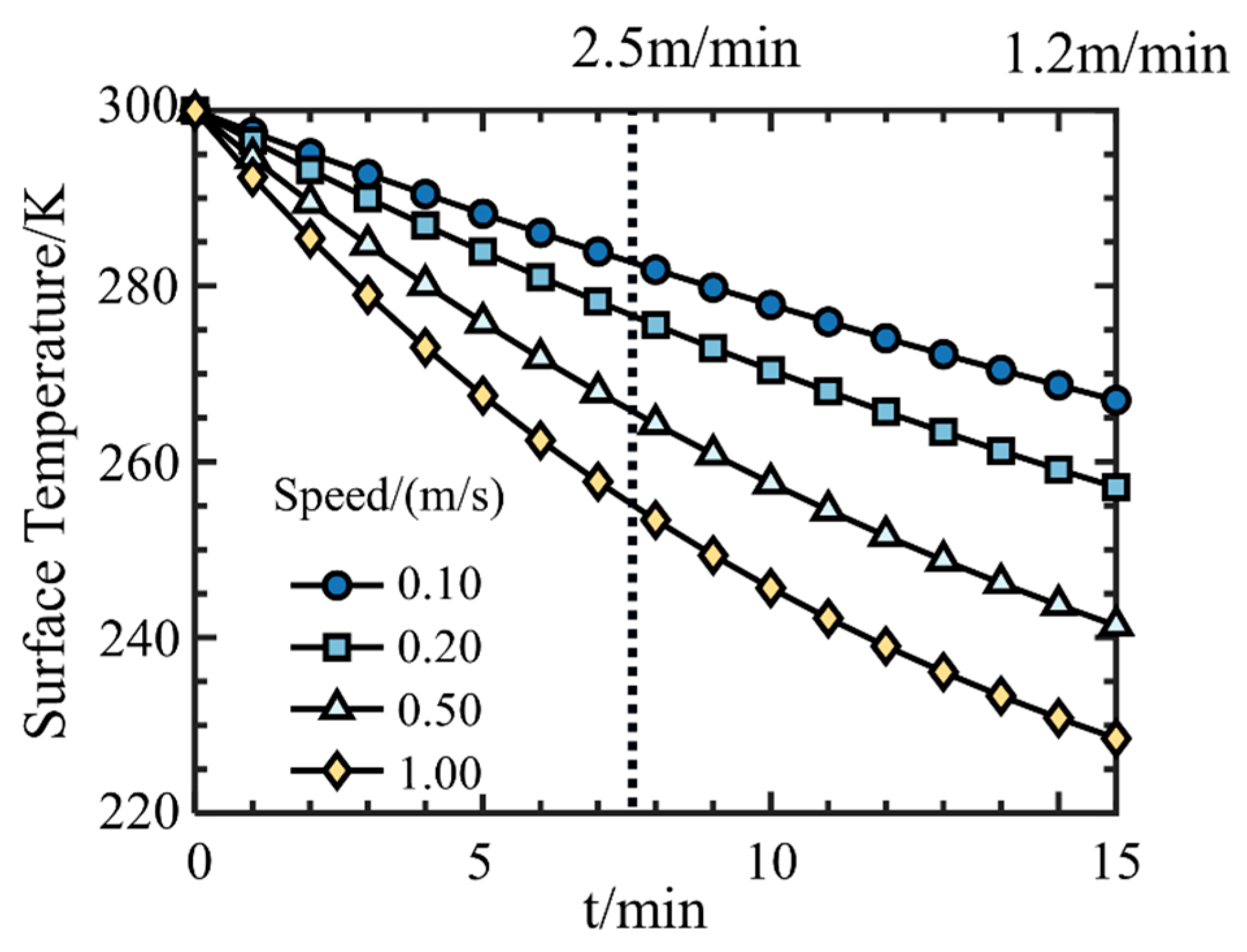

Cryogenic Model Transfer Across Zones: Transient Thermal Shock Behavior and Dry Environment Preservation
 ,
,
Abstract
1. Introduction
2. System Layout and Simplification
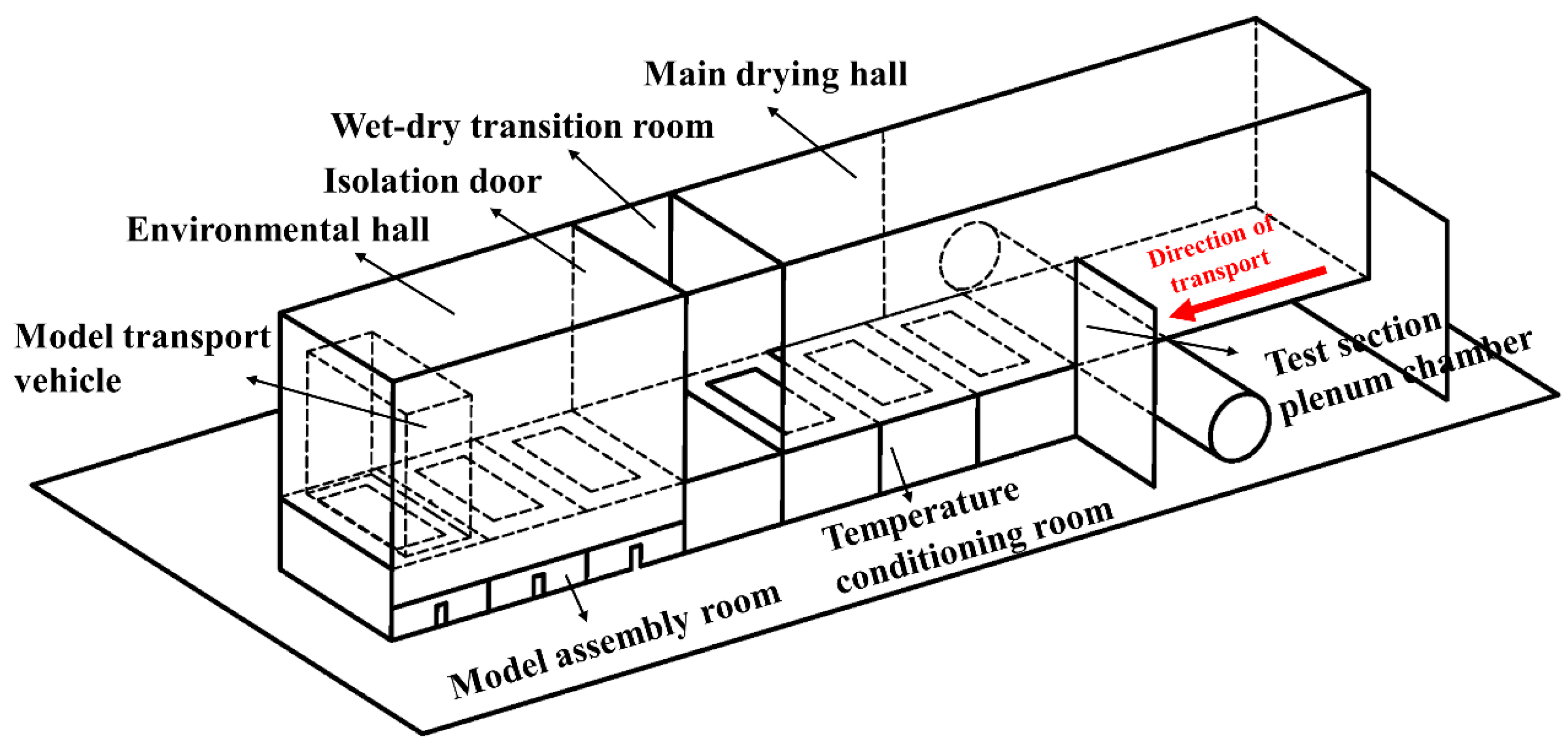
2.1. System Composition
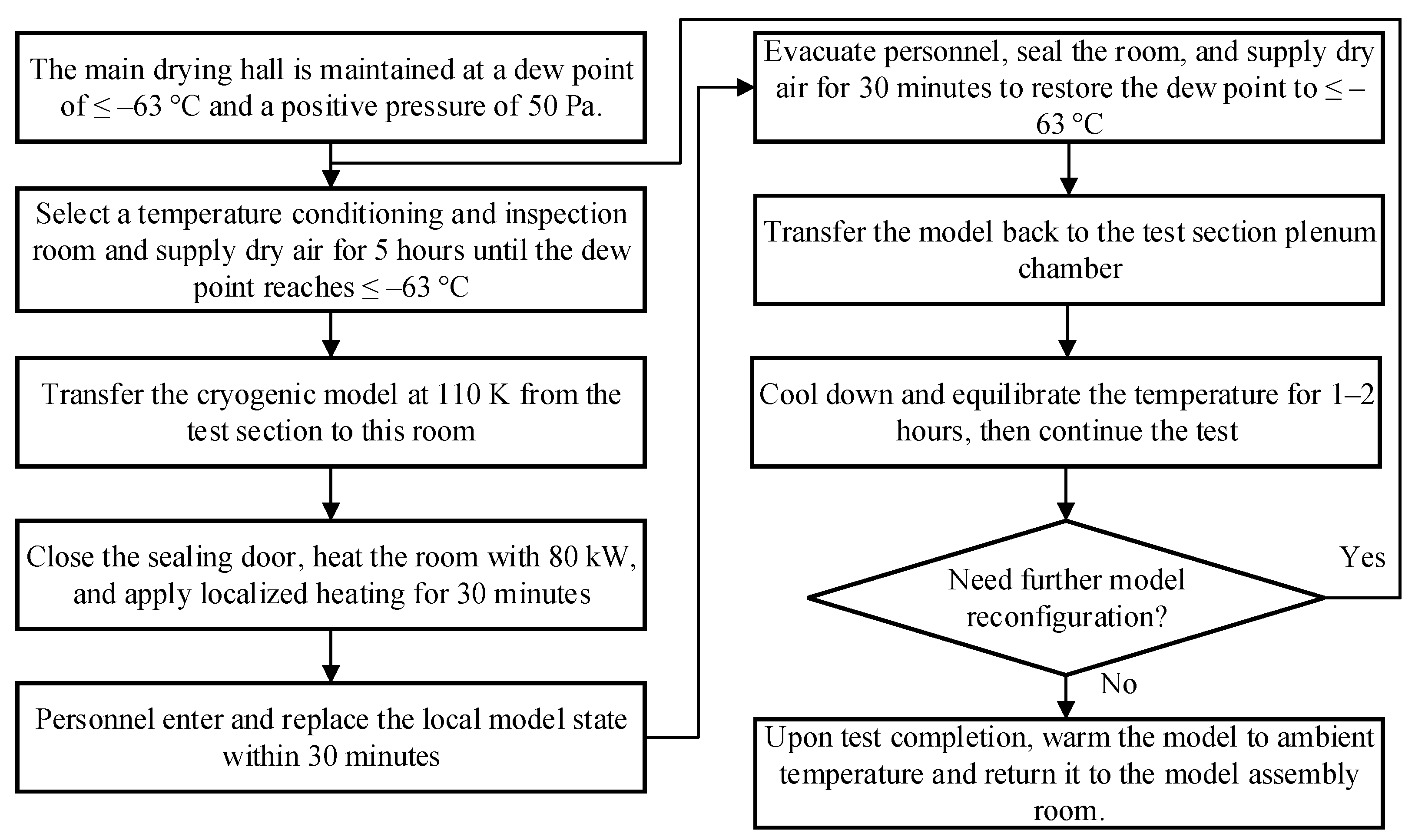
2.2. Cryogenic Model Carrier Transfer Procedure
2.3. Theoretical Analysis and Simplification Principles
3. Physical Model and Operating Condition Design
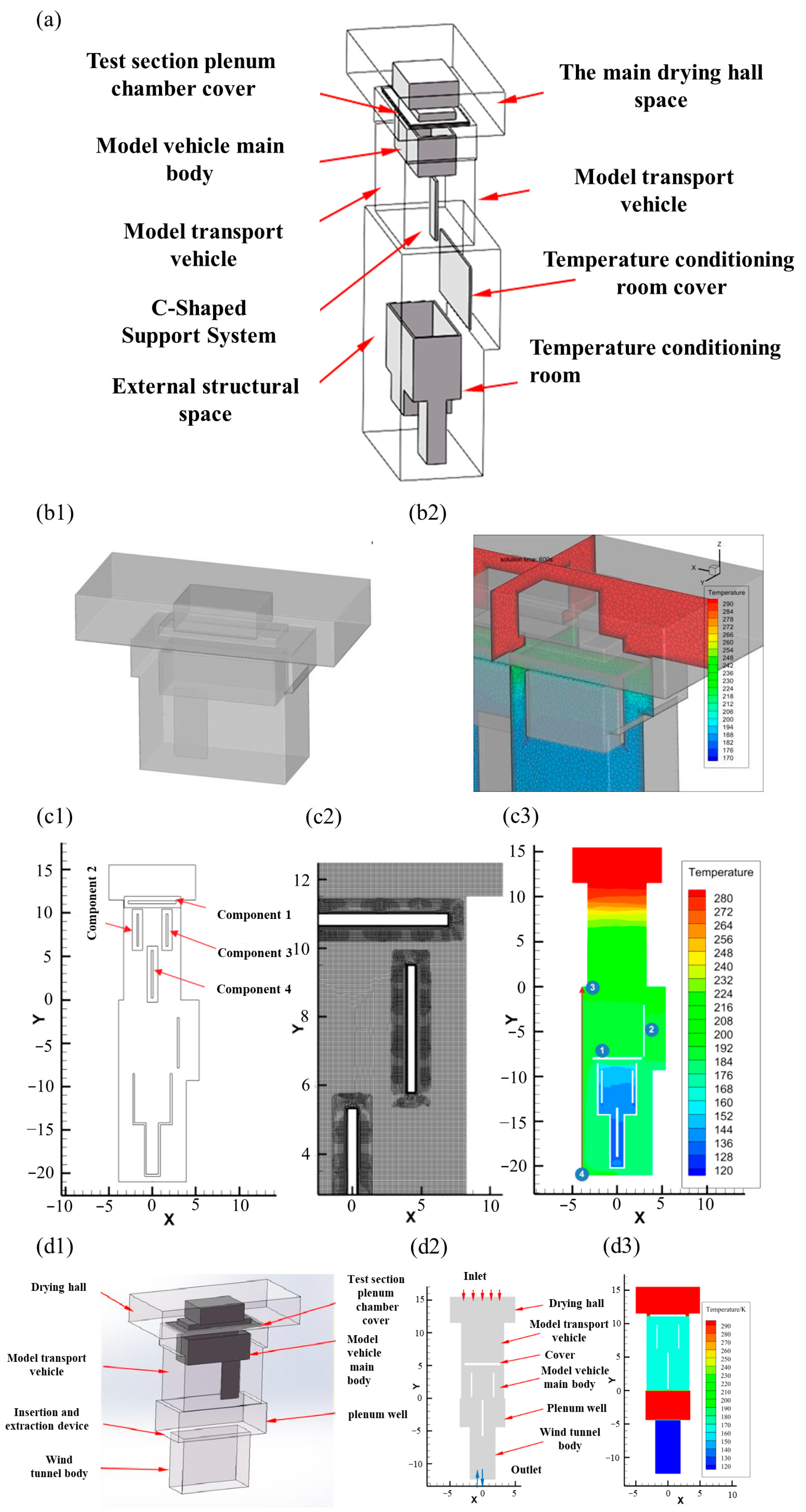
3.1. Geometric Modeling and Mesh Generation
3.2. Boundary Conditions and Solver Settings
3.2.1. Model Carrier Transfer Process in the Dry Hall
3.2.2. Model Carrier Descent into the Temperature-Conditioning Room
3.2.3. Model Carrier Descent into the Test Section Plenum
3.3. Operating Condition Design for Dynamic Descent
3.3.1. Model Carrier Descent into the Temperature-Conditioning Room
3.3.2. Model Carrier Descent into the Test Section Plenum
4. Results and Discussion
4.1. Thermal Effects of the Model Carrier Transfer Process in the Dry Hall (Static Suspension Condition)
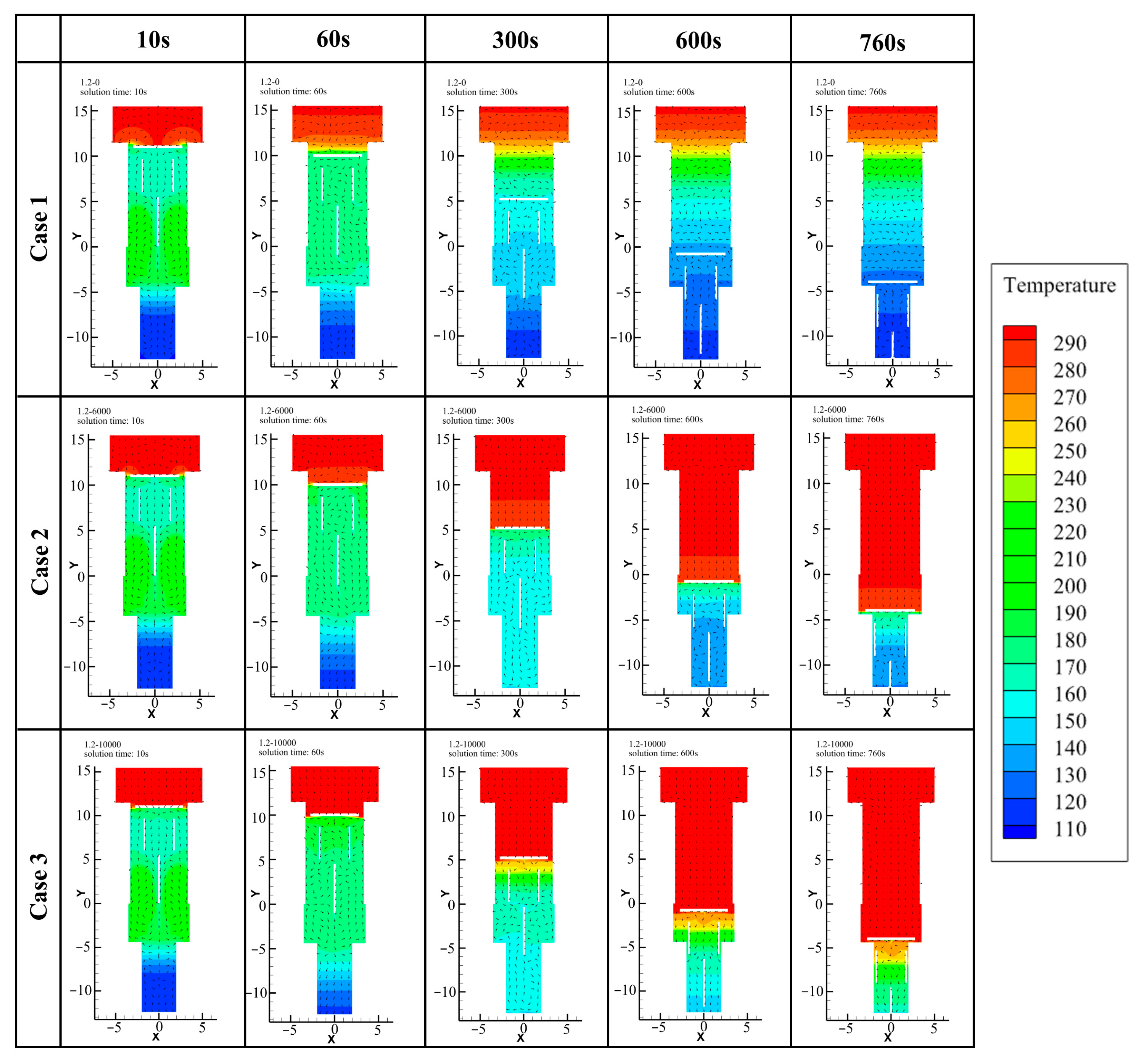
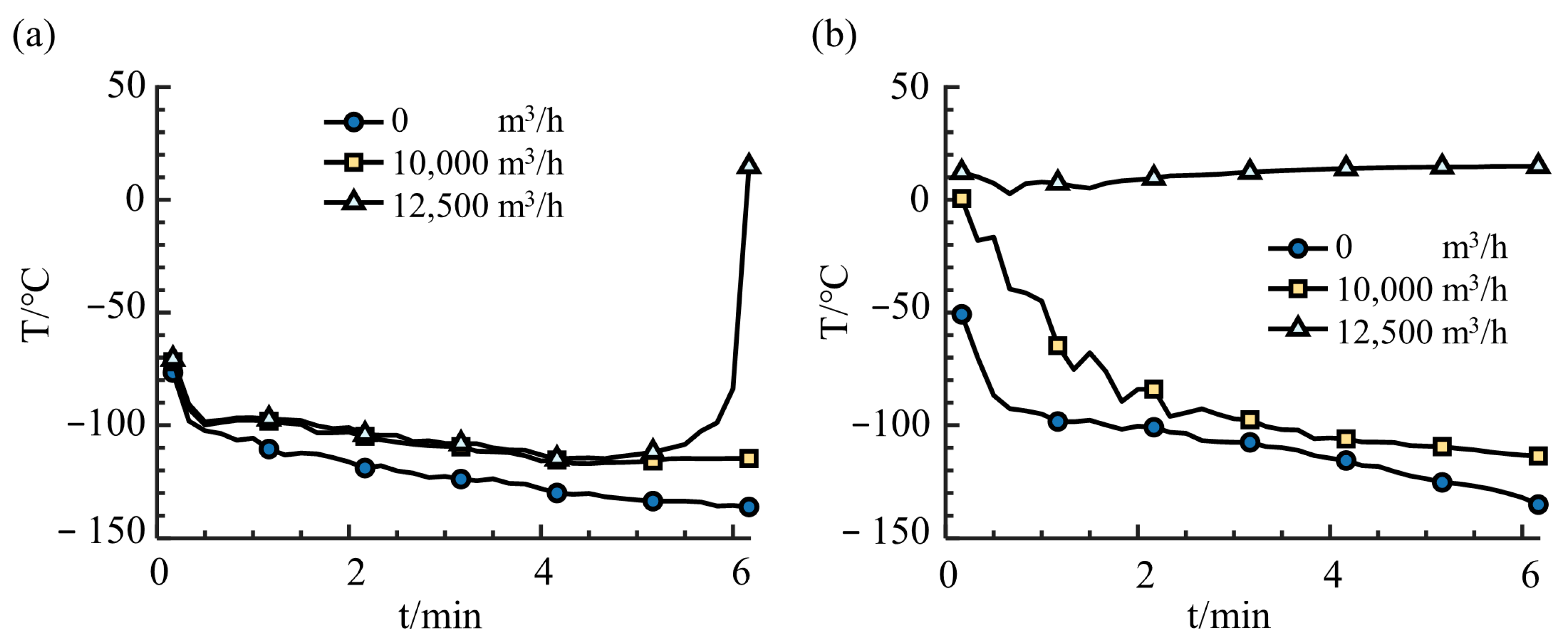
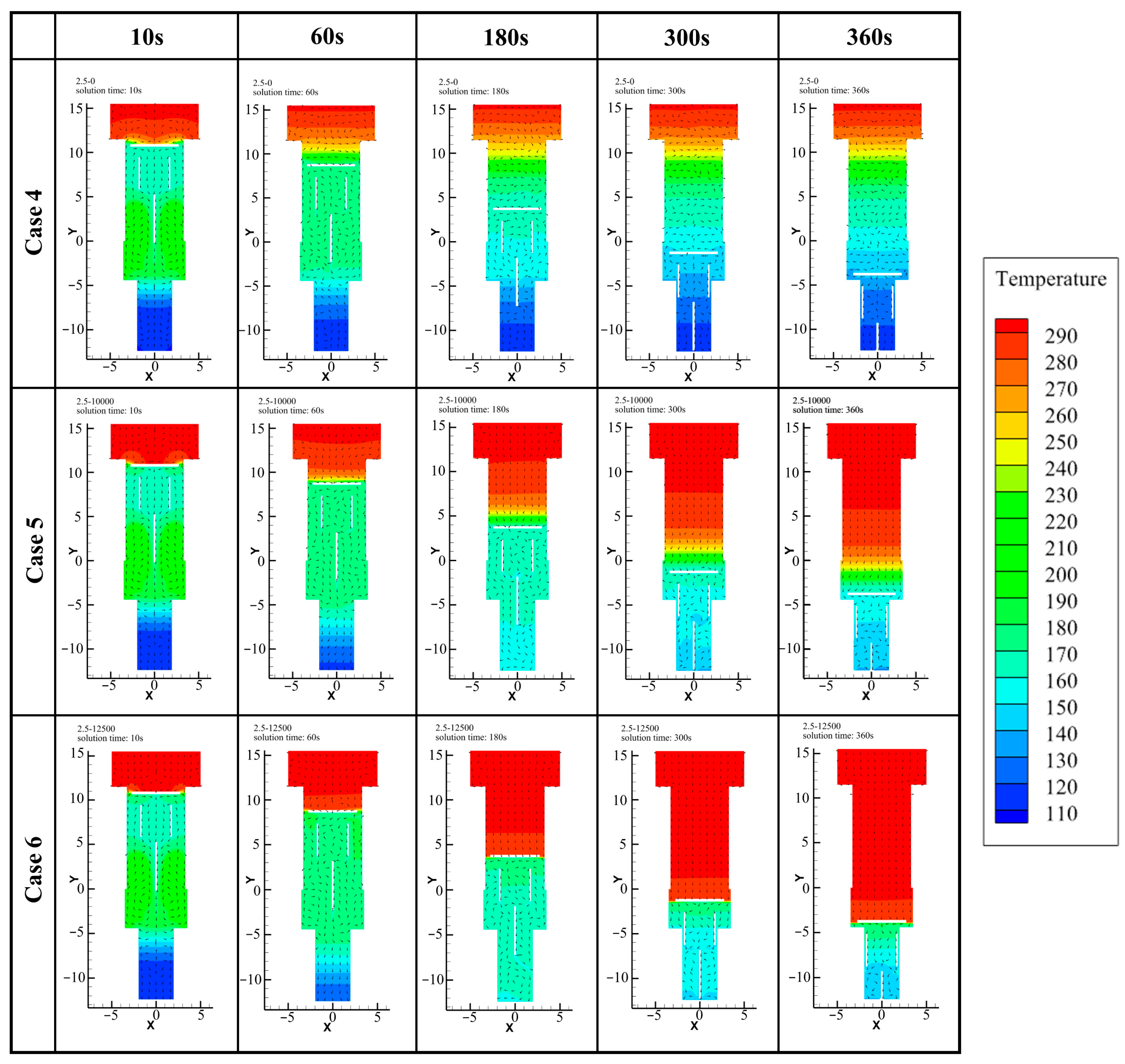
4.2. Thermal Shock Effects During Dynamic Descent
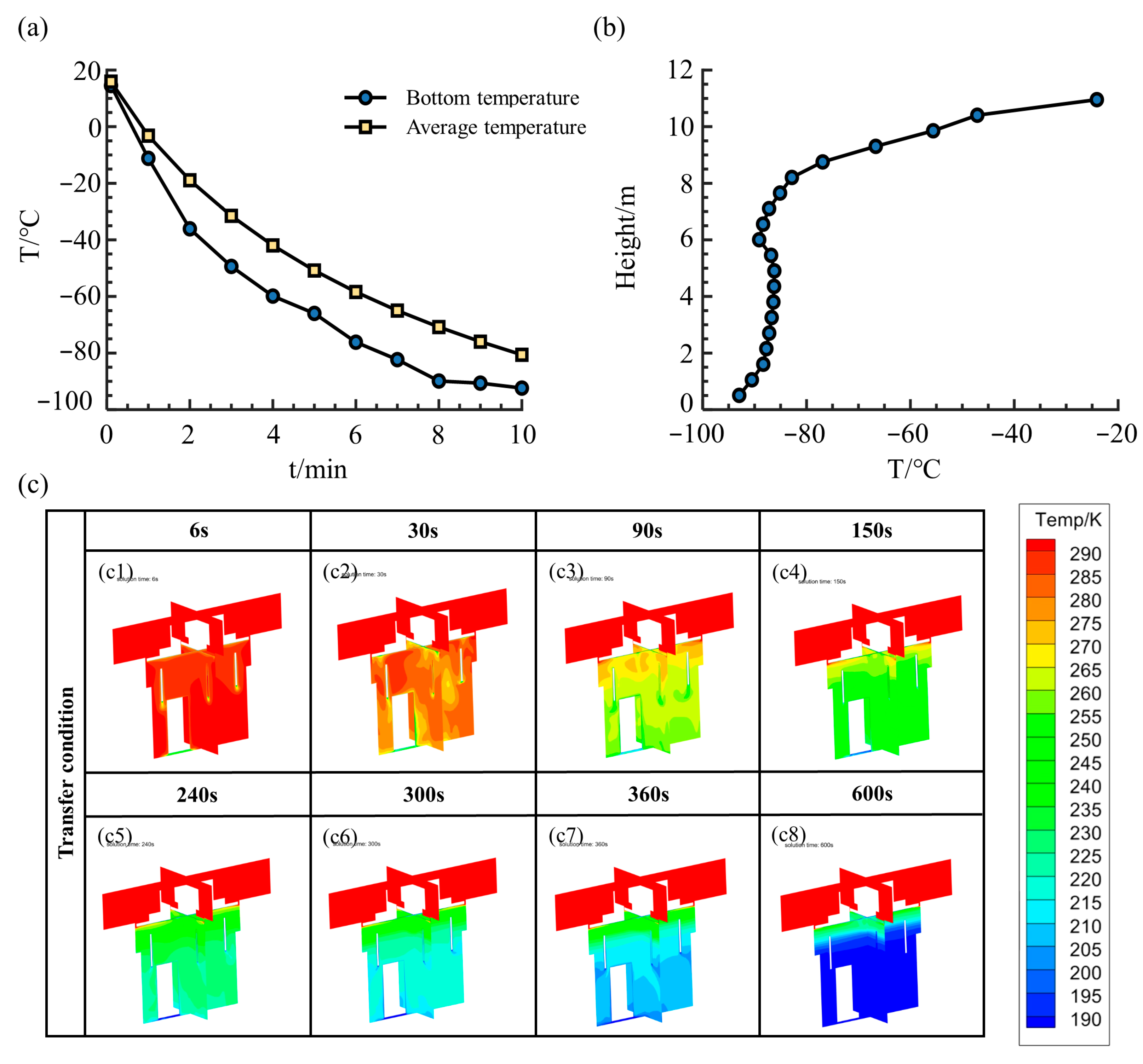
4.2.1. Model Carrier Descent into the Temperature-Conditioning Room
4.2.2. Model Carrier Descent into the Test Section Plenum
4.3. Heat Transfer Analysis of the Steel Cable
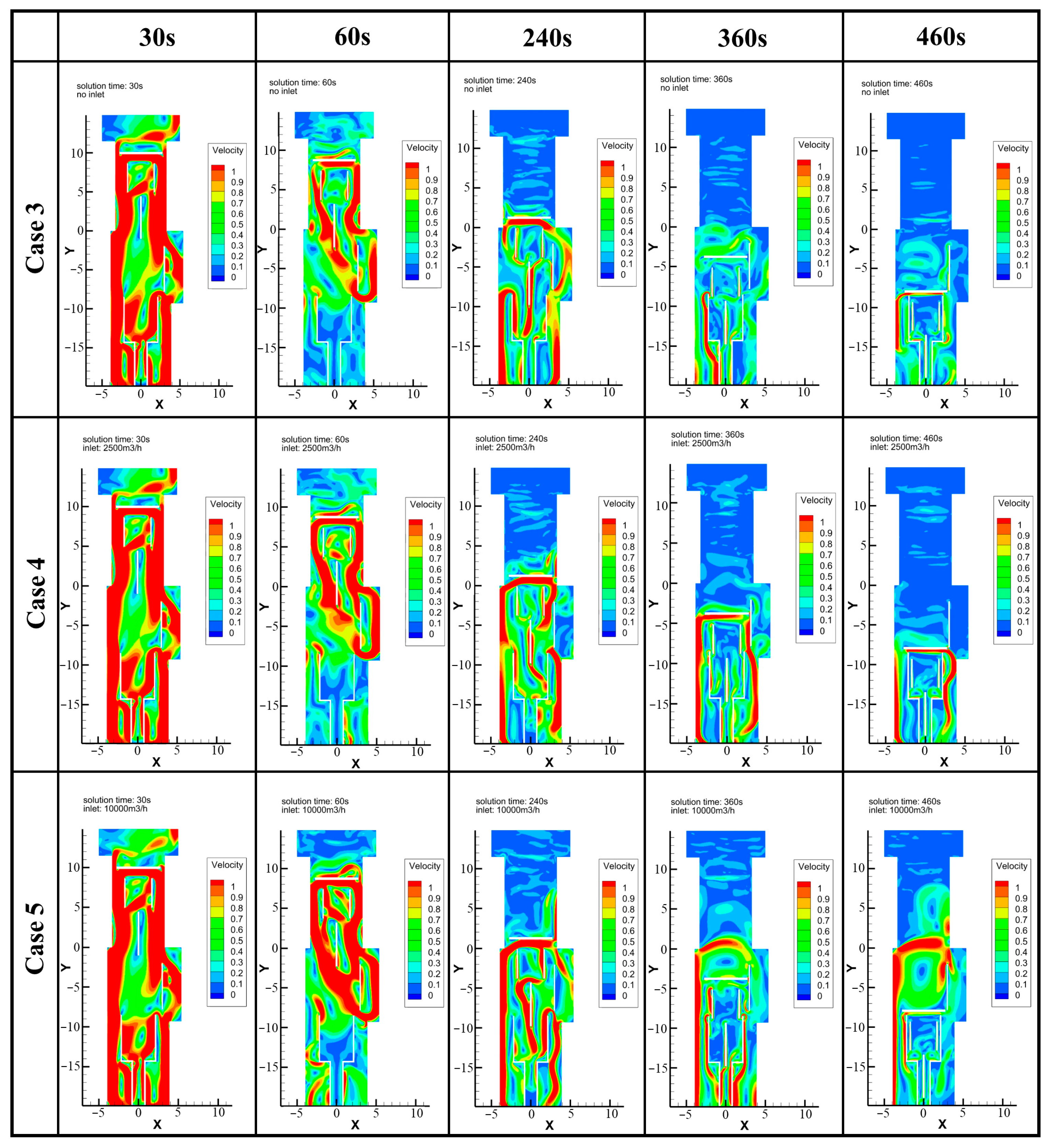
4.3.1. Airflow Velocity Across the Steel Cable
4.3.2. Heat Transfer Coefficient and Cable Temperature Drop
5. Conclusions
Supplementary Materials
Author Contributions
Funding
Data Availability Statement
Conflicts of Interest
References
- Chen, J.; Liu, B.; Chen, W.; Liao, D.; Lai, H. Key technology for model access system in cryogenic wind tunnel. J. Exp. Fluid Mech. 2022, 36, 37–43. [Google Scholar] [CrossRef]
- Green, J.; Quest, J. A short history of the European Transonic Wind Tunnel ETW. Prog. Aerosp. Sci. 2011, 47, 319–368. [Google Scholar] [CrossRef] [Scilit]
- Fehrs, M.; Helm, S. Transonic High Reynolds Number Transition Model Validation Based on ETW Cryogenic Wind Tunnel Data. In Proceedings of the AIAA Scitech 2025 Forum; AIAA: Reston, VA, USA, 2025. [Google Scholar]
- Hou, J.X.; Xie, J.L.; Pan, X.; Chen, J.Y. Numerical investigation of the operating conditions affecting nitrogen condensation on a three-dimensional wing in the cryogenic wind tunnel. Eng. Appl. Comput. Fluid Mech. 2024, 18, 2387055. [Google Scholar] [CrossRef] [Scilit]
- Hou, J.X.; Xiao, X.; Xie, J.L.; Chen, J.Y. Numerical investigation of nitrogen spontaneous condensation over airfoils in cryogenic wind tunnel. Case Stud. Therm. Eng. 2024, 59, 104524. [Google Scholar] [CrossRef] [Scilit]
- Gao, Y.; Lai, T.; Yang, S.; Yan, S.; Liu, M.; Hou, Y. Experimental study of frosting characteristics of trace water vapor under cryogenic wind tunnel conditions. Appl. Therm. Eng. 2024, 241, 122354. [Google Scholar] [CrossRef] [Scilit]
- Wang, J.; Wang, J.; Xie, L.Z.; Peng, F.S.; Shi, L.Y. Analysis of frost layer growth behavior on cryogenic surfaces in ultralow dew point environments by experimental tests and numerical simulations. Int. Commun. Heat Mass Transf. 2024, 154, 107415. [Google Scholar] [CrossRef] [Scilit]
- Price, I.; Schimanski, D. Development of testing techniques and cryogenic model handling at ETW. In Proceedings of the Advanced Measurement and Ground Testing Conference, New Orleans, LA, USA, 17–20 June 1996; p. 2256. [Google Scholar]
- Goodyer, M.J. The cryogenic wind tunnel. Prog. Aerosp. Sci. 1992, 29, 193–220. [Google Scholar] [CrossRef] [Scilit]
- Peng, Y.; Wang, G.; Zhu, Z.; Chang, X.; Lu, H.; Tang, W.; Jiang, F.; Chen, G. Effect of low temperature on tribological characteristics and wear mechanism of wire rope. Tribol. Int. 2021, 164, 107231. [Google Scholar] [CrossRef] [Scilit]
- Huerta, F.; Vesovic, V. CFD modelling of the isobaric evaporation of cryogenic liquids in storage tanks. Int. J. Heat Mass Transf. 2021, 176, 121419. [Google Scholar] [CrossRef] [Scilit]
- Huerta, F.; Vesovic, V. CFD modelling of the non-isobaric evaporation of cryogenic liquids in storage tanks. Appl. Energy 2024, 356, 122420. [Google Scholar] [CrossRef] [Scilit]
- Wan, C.C.; Zhu, S.L.; Shi, C.Y.; Bao, S.R.; Zhi, X.Q.; Qiu, L.M.; Wang, K. Numerical simulation on pressure evolution process of liquid hydrogen storage tank with active cryogenic cooling. Int. J. Refrig. 2023, 150, 47–58. [Google Scholar] [CrossRef] [Scilit]
- Niu, W.C.; Ju, Y.L. System design and experimental verification of an internal insulation panel system for large-scale cryogenic wind tunnel. Cryogenics 2021, 115, 103279. [Google Scholar] [CrossRef] [Scilit]
- Johnson, W.; Balasubramaniam, R.; Grotenrath, R. Analysis of heat transfer from a local heat source at cryogenic temperatures. IOP Conf. Ser. Mater. Sci. Eng. 2022, 1240, 012013. [Google Scholar] [CrossRef] [Scilit]
- Mahony, C.P.; Marchetta, J.G.; Swanger, A.M. Simulations of large-scale zero boiloff, densification, and solidification of hydrogen. Results Eng. 2025, 25, 104182. [Google Scholar] [CrossRef] [Scilit]
- Zhang, Z.; Chen, Z.; Nie, X.; Yao, C. Thermodynamic characteristic analysis of the cryogenic wind tunnel diffuser section based on fluid-thermal-structural coupling. J. Exp. Fluid Mech. 2016, 30, 18–25. [Google Scholar]
- Orozco, S.; Zamora, C.L.R.; Hossain, M.A.; Choudhuri, A. FEA-Based Thermo-Structural Modeling of Cryogenic Storage Tanks in Liquid Propulsion Systems. Aerospace 2025, 12, 479. [Google Scholar] [CrossRef] [Scilit]
- Li, J.; Wang, K.; Gu, C.; Qiu, L. Exhaust process of cryogenic nitrogen gas from a cryogenic wind tunnel with an inclined exit. J. Zhejiang Univ.-Sci. A 2023, 24, 419–431. [Google Scholar] [CrossRef] [Scilit]
- Huang, Z.; Wang, N.; Shi, Z.; Liao, D. Real-gas effects research associated with cryogenic transonic wind tunnel. J. Natl. Univ. Def. Technol. 2023, 45, 110–116. [Google Scholar]
- Brazhenko, V.; Qiu, Y.B.; Cai, J.C.; Wang, D.Y. Thermal Evaluation of Multilayer Wall with a Hat-Stringer in Aircraft Design. Stroj. Vestn.-J. Mech. Eng. 2022, 68, 635–641. [Google Scholar] [CrossRef] [Scilit]
- Lin, Z.; Chow, T.T.; Fong, K.F.; Wang, Q.W.; Li, Y. Comparison of performances of displacement and mixing ventilations. Part I: Thermal comfort. Int. J. Refrig. 2005, 28, 276–287. [Google Scholar] [CrossRef] [Scilit]
- Hernández-Jiménez, F.; Pérez-Alvarez, R.; López-Quesada, G.; García-Gutiérrez, L.M. Effect of Biot number on the thermocline evolution of a packed bed TES system. J. Energy Storage 2025, 110, 115272. [Google Scholar] [CrossRef] [Scilit]
- Valencia-Santana, J.; Ramos-Martín, A.; Henríquez-Concepción, V. Upgrading the dynamic mathematical model of temperature sensors in gaseous media for low Biot number (Bi < 0.1). Measurement 2024, 237, 115185. [Google Scholar] [CrossRef] [Scilit]
- Ke, J.H.; Williamson, N.; Armfield, S.W.; Komiya, A.; Norris, S.E. High Grashof number turbulent natural convection on an infinite vertical wall. J. Fluid Mech. 2021, 929, A15. [Google Scholar] [CrossRef] [Scilit]
- Shah, N.A.; Animasaun, I.L.; Ibraheem, R.O.; Babatunde, H.A.; Sandeep, N.; Pop, I. Scrutinization of the effects of Grashof number on the flow of different fluids driven by convection over various surfaces. J. Mol. Liq. 2018, 249, 980–990. [Google Scholar] [CrossRef] [Scilit]
- Brykina, I.G.; Egorova, L.A. Approximation Formulas for the Radiative Heat Flux at High Velocities. Fluid Dyn. 2019, 54, 562–574. [Google Scholar] [CrossRef] [Scilit]
- Krasuski, A.; Wischhusen, S.; Ozóg, P.; Kowalski, W. CFD-modeling of the radiative heat flux from CO/CO2 steel mill’s converter. Fuel 2026, 405, 136538. [Google Scholar] [CrossRef] [Scilit]
- Xie, J.; Zhao, X.Q.; Yan, J.B. Mechanical properties of high strength steel strand at low temperatures: Tests and analysis. Constr. Build. Mater. 2018, 189, 1076–1092. [Google Scholar] [CrossRef] [Scilit]
- Bekaert. Use of Steel Wire Rope in Low Temperatures. Available online: https://ropes.bekaert.com/us/en/home/knowledge-center/podcasts/use-of-steel-wire-rope-in-low-temperatures (accessed on 26 July 2026).
- Lienhard, J.H. Heat Transfer in Flat-Plate Boundary Layers: A Correlation for Laminar, Transitional, and Turbulent Flow. J. Heat Transf.-Trans. Asme 2020, 142, 061805. [Google Scholar] [CrossRef] [Scilit]
- Le, P.M.; Papavassiliou, D.V. On temperature prediction at low Re turbulent flows using the Churchill turbulent heat flux correlation. Int. J. Heat Mass Transf. 2006, 49, 3681–3690. [Google Scholar] [CrossRef] [Scilit]
- Taler, D.; Taler, J. Prediction of heat transfer correlations in a low-loaded plate-fin-and-tube heat exchanger based on flow-thermal tests. Appl. Therm. Eng. 2019, 148, 641–649. [Google Scholar] [CrossRef] [Scilit]





| Parameter | Setting |
|---|---|
| Pressure-velocity coupling | Coupled |
| Gradient | Least Square Cell Based |
| Pressure discretization | Body Force Weighted |
| Density | Second Order Upwind |
| Momentum | Second Order Upwind |
| Turbulent Kinetic Energy | Second Order Upwind |
| Turbulent Kinetic Dissipation | Second Order Upwind |
| Energy | Second Order Upwind |
| Turbulence model | Realizable k-ε with enhanced wall treatment |
| Near-wall treatment | Ten prism layers, y+ < 5 |
| Transient Formulation | First Order Implicit |
| Time Steps | 0.1 s |
| Scenario | Boundary | Type | Temperature | Pressure/Velocity |
|---|---|---|---|---|
| Static suspension | Top surface | Pressure outlet | 293.15 K (backflow) | 0 Pa |
| Carrier cover & sidewalls | Isothermal wall | 110 K | — | |
| Other walls | Adiabatic wall | — | — | |
| Descent to conditioning room | Bottom inlets | Velocity inlet | 293.15 K | Prescribed by flow rate |
| Upper surface | Pressure outlet | 293.15 K (backflow) | 0 Pa | |
| Carrier cover & surfaces | Isothermal wall | 110 K | — | |
| Other walls | Adiabatic wall | — | — | |
| Descent to plenum | Upper surface | Velocity inlet | 293.15 K | Prescribed by flow rate |
| Lower surface | Pressure outlet | 110 K (backflow) | 0 Pa | |
| Carrier cover & surfaces | Isothermal wall | 110 K | — | |
| Other walls | Adiabatic wall | — | — |
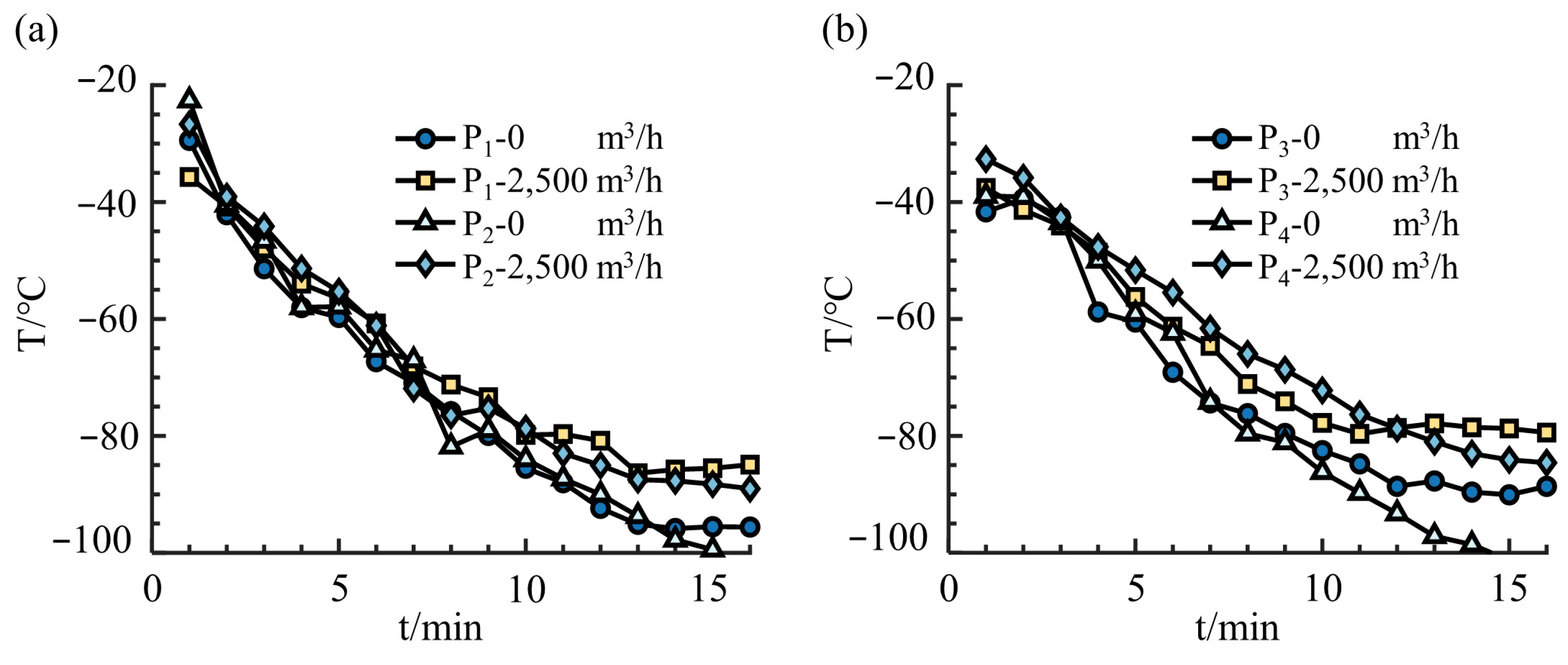
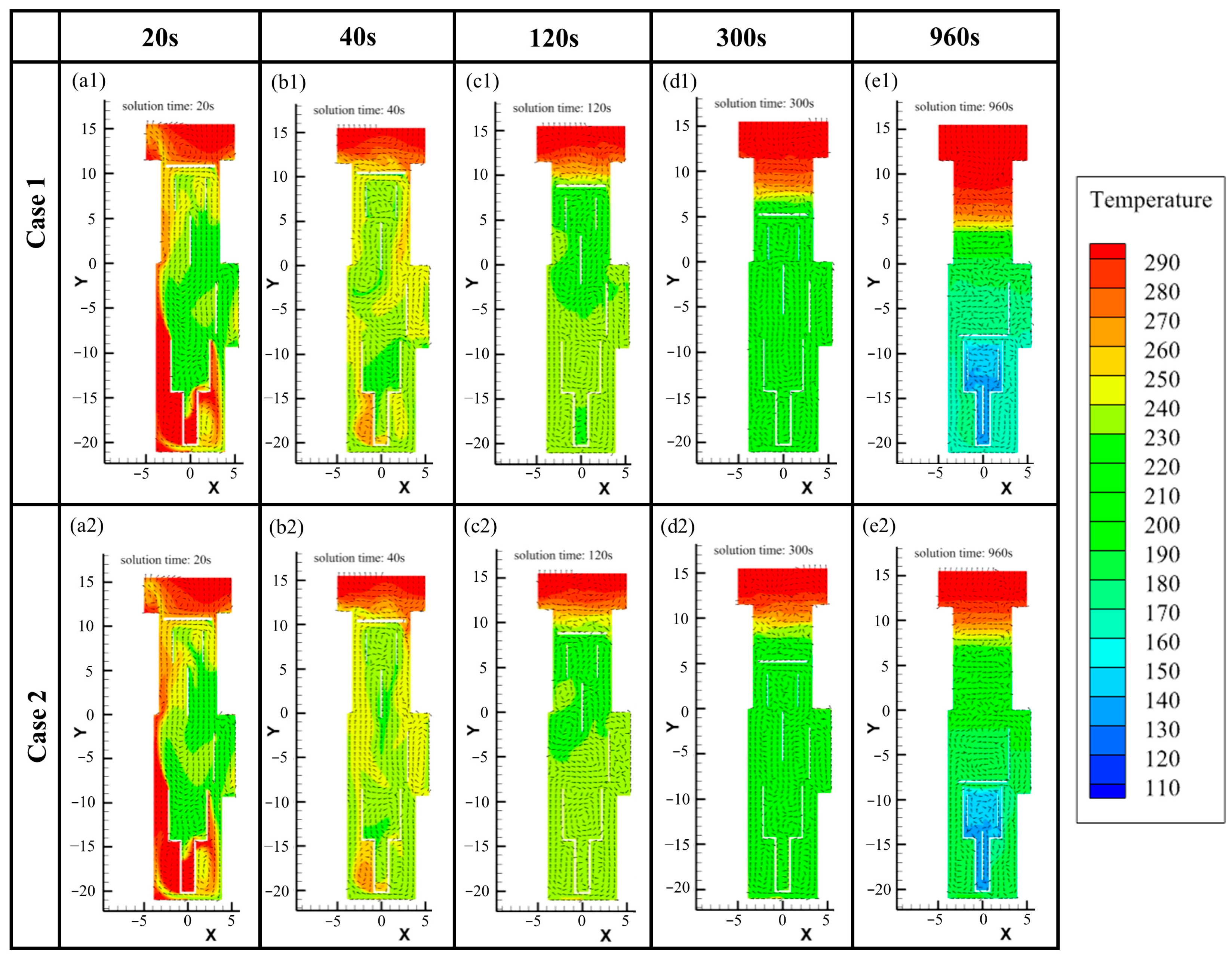
| Makeup Air Flow Rate (m3/h)\Model Carrier Speed (m/min) | 1.2 | 2.5 |
|---|---|---|
| 0 | Case 1 | Case 3 |
| 2500 | Case 2 | Case 4 |
| 10,000 | / | Case 5 |
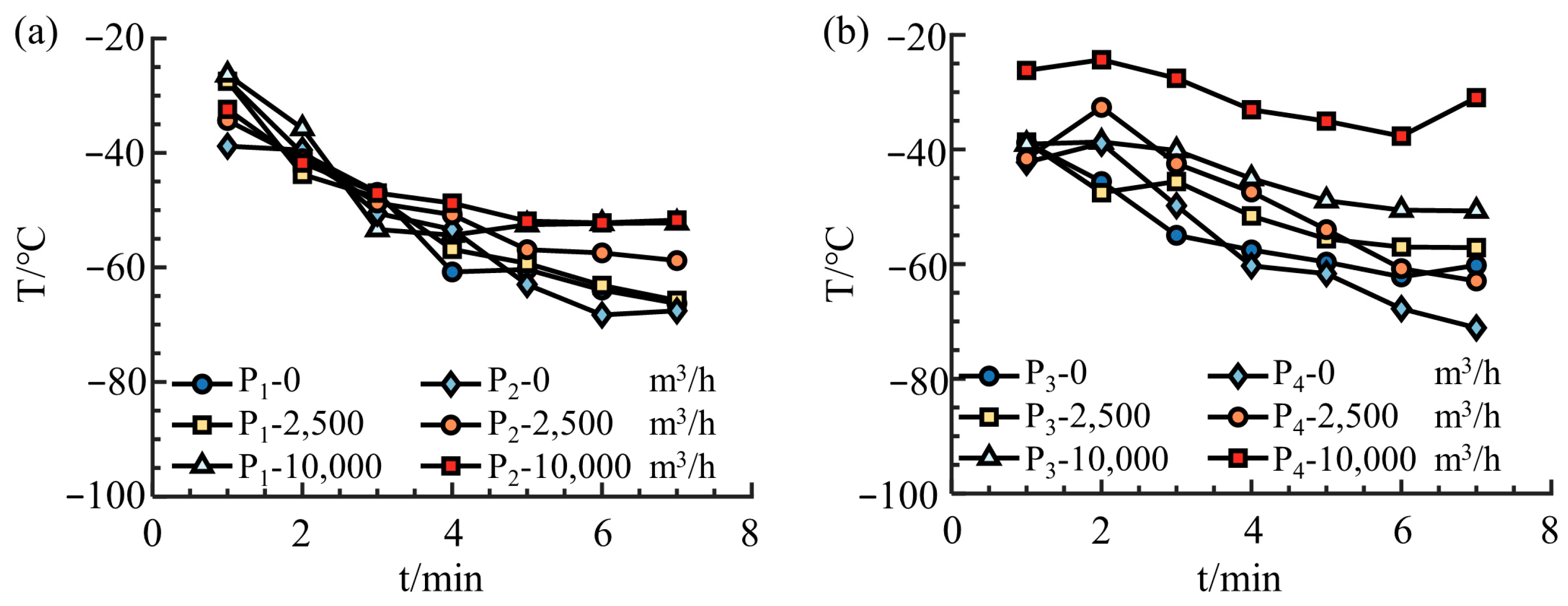
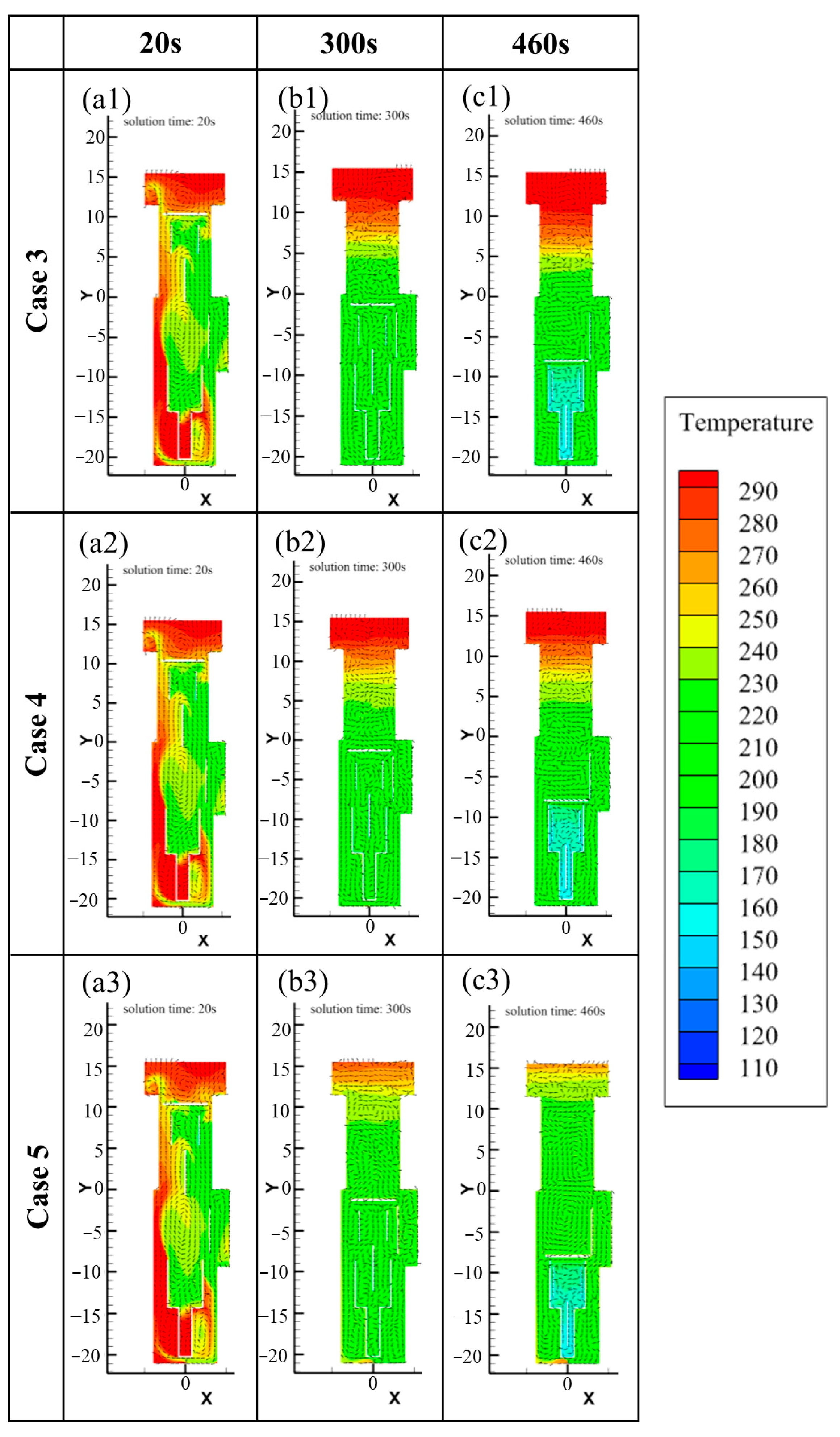
| Makeup Air Flow Rate (m3/h)\Model Carrier Speed (m/min) | 1.2 | 2.5 |
|---|---|---|
| 0 | Case 1 | Case 4 |
| 6000 | Case 2 | |
| 10,000 | Case 3 | Case 5 |
| 12,500 | Case 6 |
Disclaimer/Publisher’s Note: The statements, opinions and data contained in all publications are solely those of the individual author(s) and contributor(s) and not of MDPI and/or the editor(s). MDPI and/or the editor(s) disclaim responsibility for any injury to people or property resulting from any ideas, methods, instructions or products referred to in the content. |
© 2026 by the authors. Licensee MDPI, Basel, Switzerland. This article is an open access article distributed under the terms and conditions of the Creative Commons Attribution (CC BY) license.
Share and Cite
He, Y.; Zhao, F.; Fang, L.; Liao, M.; Wang, B.; Huang, J.; Hong, X. Cryogenic Model Transfer Across Zones: Transient Thermal Shock Behavior and Dry Environment Preservation. Machines 2026, 14, 859. https://doi.org/10.3390/machines14080859
He Y, Zhao F, Fang L, Liao M, Wang B, Huang J, Hong X. Cryogenic Model Transfer Across Zones: Transient Thermal Shock Behavior and Dry Environment Preservation. Machines. 2026; 14(8):859. https://doi.org/10.3390/machines14080859
Chicago/Turabian StyleHe, Yuanping, Feifei Zhao, Liang Fang, Ming Liao, Bowen Wang, Jingdong Huang, and Xingfu Hong. 2026. "Cryogenic Model Transfer Across Zones: Transient Thermal Shock Behavior and Dry Environment Preservation" Machines 14, no. 8: 859. https://doi.org/10.3390/machines14080859
APA StyleHe, Y., Zhao, F., Fang, L., Liao, M., Wang, B., Huang, J., & Hong, X. (2026). Cryogenic Model Transfer Across Zones: Transient Thermal Shock Behavior and Dry Environment Preservation. Machines, 14(8), 859. https://doi.org/10.3390/machines14080859