1. Introduction
Torsional vibrations represent a significant dynamic phenomenon in rotating mechanical systems and are among the most critical issues in the field of drivetrain dynamics. They are characterized by angular oscillations of rotating components about their axis of rotation, arising because of time-varying torque excitation or dynamic loading of the system. Excessive torsional vibrations increase the dynamic stresses acting on shafts, couplings, and transmission elements, which may result in accelerated wear, fatigue crack initiation, and reduced operational reliability of mechanical equipment [
1,
2,
3].
In rotating drivetrains, torsional oscillations are transmitted through the mechanical connections between individual components, while their characteristics are strongly influenced by the inertia properties of the system, the torsional stiffness of the connections, and the damping mechanisms present within the drivetrain. When the excitation frequency coincides with one of the natural frequencies of the mechanical system, resonance may occur, leading to a substantial amplification of vibration amplitudes, and consequently, potential damage to mechanical components [
1]. Major sources of torsional vibrations include internal combustion engines, reciprocating compressors, and other rotating machines characterized by non-uniform torque generation [
4,
5,
6].
In recent years, the issue of torsional vibrations has gained increasing attention due to ongoing developments in drivetrain design. Current requirements for reducing energy consumption, emissions, and overall system weight have led to the extensive optimization of mechanical structures. Although such measures improve the overall energy efficiency of mechanical systems, they often alter the torsional stiffness of the drivetrain and increase its sensitivity to dynamic excitations. A significant contributing factor is the widespread implementation of engine downsizing and cylinder deactivation technologies, where the number of cylinders and engine displacement are reduced while maintaining high power output. As a result, larger torque fluctuations and higher levels of torsional vibration are generated throughout the power transmission chain [
7,
8,
9].
Conventional vibration mitigation techniques are predominantly based on linear passive devices such as flexible couplings, torsional dampers, and dual-mass flywheels. However, the effectiveness of these solutions is generally limited to a relatively narrow frequency range, whereas modern drivetrains operate under highly variable operating conditions covering a broad spectrum of excitation frequencies [
9]. Consequently, increasing attention has been devoted over the last decades to the development of nonlinear vibration mitigation approaches.
A particularly promising concept is represented by targeted energy transfer (TET) systems, which exploit the redistribution of vibratory energy between a primary mechanical system and a secondary nonlinear subsystem [
10,
11,
12,
13,
14,
15]. These systems are commonly implemented in the form of nonlinear energy sinks (NESs), whose principal advantage lies in their ability to absorb vibrational energy efficiently over a broad frequency range without requiring precise tuning to a specific excitation frequency [
16,
17,
18,
19,
20,
21]. The TET mechanism is based on nonlinear dynamic interactions between coupled subsystems, enabling an essentially irreversible transfer of energy from the primary structure to the nonlinear absorber, where the energy is subsequently dissipated [
10,
21,
22,
23,
24,
25,
26].
One of the most recent directions in the development of TET systems involves the implementation of variable-stiffness elements. Variable stiffness enables adaptive modification of the dynamic properties of the system according to current operating conditions, thereby enhancing the efficiency of energy transfer and dissipation. Such solutions extend the effective operating frequency range and improve the capability of the system to respond to changing dynamic loading conditions [
13]. Compared with conventional linear or fixed-parameter nonlinear vibration mitigation systems, variable-stiffness TET systems offer considerable potential for application in modern rotating machinery and drivetrain systems [
27,
28,
29,
30].
Despite extensive research on nonlinear vibration mitigation technologies, the application of TET mechanisms to torsional vibration suppression in rotating systems remains relatively underexplored. Most existing studies focus primarily on translational or simplified mechanical systems, while the mitigation of torsional vibrations in power transmission systems continues to represent an open research area with significant practical relevance for rotating machinery applications [
31,
32,
33,
34].
Therefore, this paper presents the development of a novel variable-stiffness targeted energy transfer system designed for the mitigation of torsional vibrations in rotating mechanical systems. A novel variable-stiffness targeted energy transfer system was designed from the theoretical study and mathematical model presented in [
16]. The primary aim of the study was to design a variable-stiffness targeted energy transfer system prototype and experimentally investigate the dynamic behavior of the proposed system, experimentally verify the redistribution of oscillating energy through the TET mechanism, and evaluate the potential of variable stiffness as a means of enhancing the effectiveness of torsional vibration suppression.
2. Variable-Stiffness Targeted Energy Transfer Design
The proposed variable-stiffness targeted energy transfer (VS-TET) system with variable stiffness was conceived as a novel solution combining the functionality of an adaptive tuning element for torsional vibration control with the capability of efficiently redistributing vibratory energy through modification of the system’s dynamic properties. The primary objective of the proposed concept is the implementation of a variable-stiffness element capable of actively influencing the dynamic behavior of a torsional mechanical system over a broad operating frequency range.
The stiffness variation is achieved by regulating the air pressure within pneumatic bellows that serve as the compliant elements of the mechanism. Changes in the internal pressure directly affect the effective torsional stiffness of the system, thereby altering its natural frequencies, resonance conditions, and the overall mechanism of vibratory energy transfer. Such an approach enables not only the tuning of the torsional vibration characteristics of the mechanical system, but also the creation of favorable conditions for the efficient redistribution of unwanted vibratory energy.
A key advantage of the proposed design is its ability to adapt to varying excitation frequency ranges. Unlike conventional linear vibration absorbers, whose effectiveness is generally restricted to a narrow frequency band, the VS-TET system extends the operational frequency range and enhances the robustness of the vibration mitigation process under changing operating conditions. Furthermore, the adjustable stiffness enables continuous optimization of the targeted energy transfer mechanism between the primary mechanical system and the nonlinear energy absorber.
The proposed concept is particularly suitable for rotating mechanical systems operating under variable dynamic loading conditions, where excitation frequencies and vibration levels continuously change during operation. By adaptively modifying its stiffness characteristics, the TET system can maintain favorable energy transfer conditions over a wider range of operating regimes, thereby improving the overall effectiveness of torsional vibration mitigation.
2.1. Presentation of the Variable-Stiffness TET
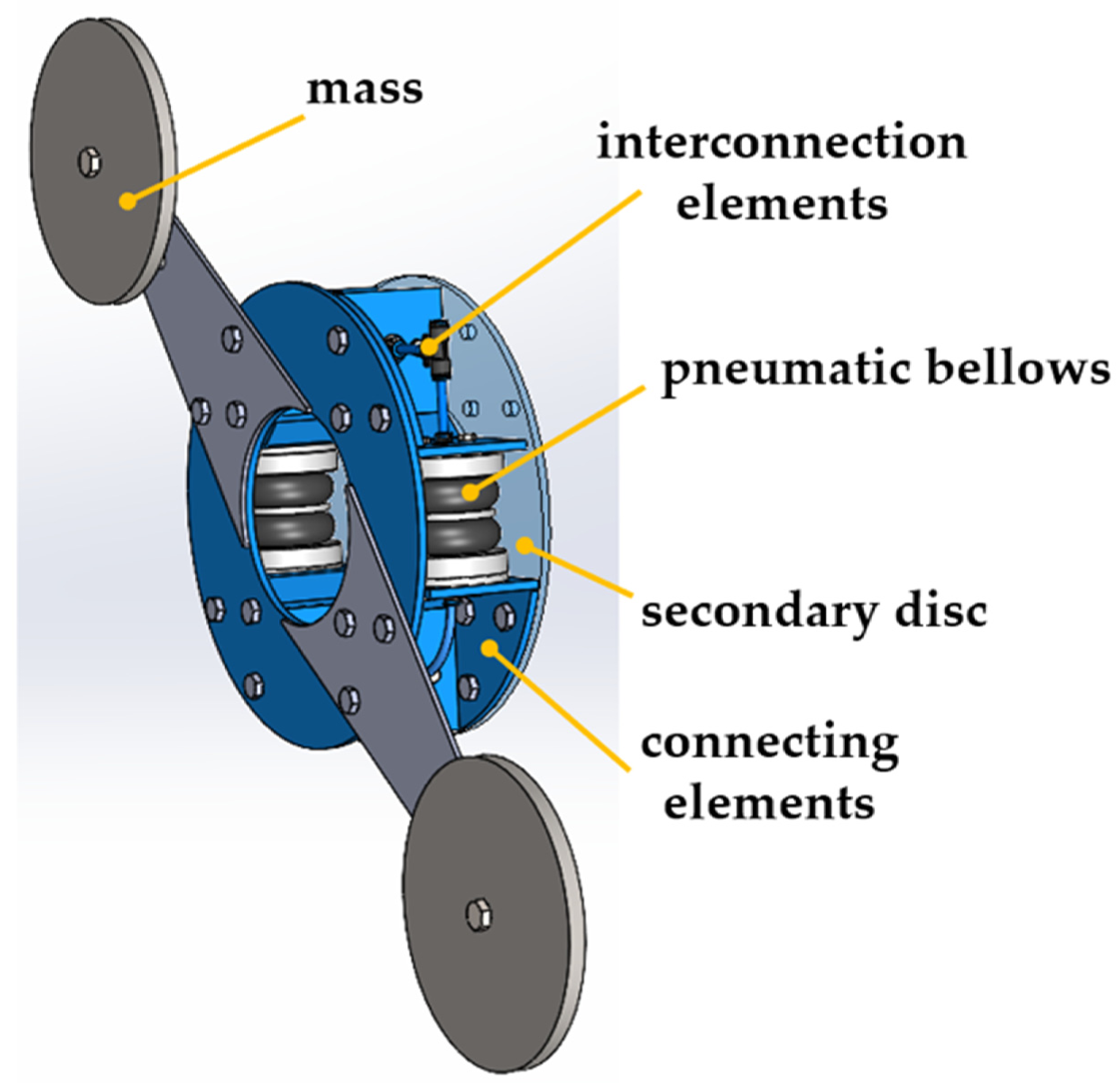
The main structural components of the proposed VS-TET system are illustrated in
Figure 1.
Secondary disc represents the primary inertial component of the system and serves as the secondary mass responsible for the targeted energy transfer process. Its dynamic interaction with the primary mechanical system enables the redistribution of vibratory energy, thereby contributing to the reduction in torsional vibration amplitudes.
Rigid connecting elements provide the mechanical linkage between the individual components of the system while simultaneously forming the supporting structure for the pneumatic elements. Their geometric configuration significantly influences the overall torsional stiffness and dynamic characteristics of the TET system.
Set of pneumatic bellows through which the variable stiffness functionality is achieved. Variations in the pressure of the working medium within the bellows modify their deformation characteristics, and consequently, the effective torsional stiffness of the mechanical system. This principle enables adaptive tuning of the system according to current operating conditions and dynamic loading requirements.
Pneumatic interconnecting elements ensure the distribution of the working medium between the individual pneumatic components and allow for precise regulation of the pressure within the bellows. Proper design of the pneumatic network is essential for maintaining the stability of the system’s dynamic response and maximizing the efficiency of the targeted energy transfer mechanism.
Additional masses for adjustment of the TET subsystem mass moment of inertia. The VS-TET includes a dedicated place that allows additional mass to be attached. This feature was incorporated to support an investigation of the VS-TET, including an assessment of the effects of varying the ratio between the mass moments of inertia of the VS-TET and the output arm. For the purposes of the present article, one specific ratio of the mass moments of inertia was analyzed.
Figure 1.
Components of variable-stiffness targeted energy transfer prototype.
Figure 1.
Components of variable-stiffness targeted energy transfer prototype.
The proposed design concept establishes the foundation for an adaptive TET system capable of operating effectively over a wide range of excitation frequencies. As such, it represents a promising solution for torsional vibration mitigation in modern rotating machinery and drivetrain applications.
2.2. Characteristics of Variable-Stiffness TET
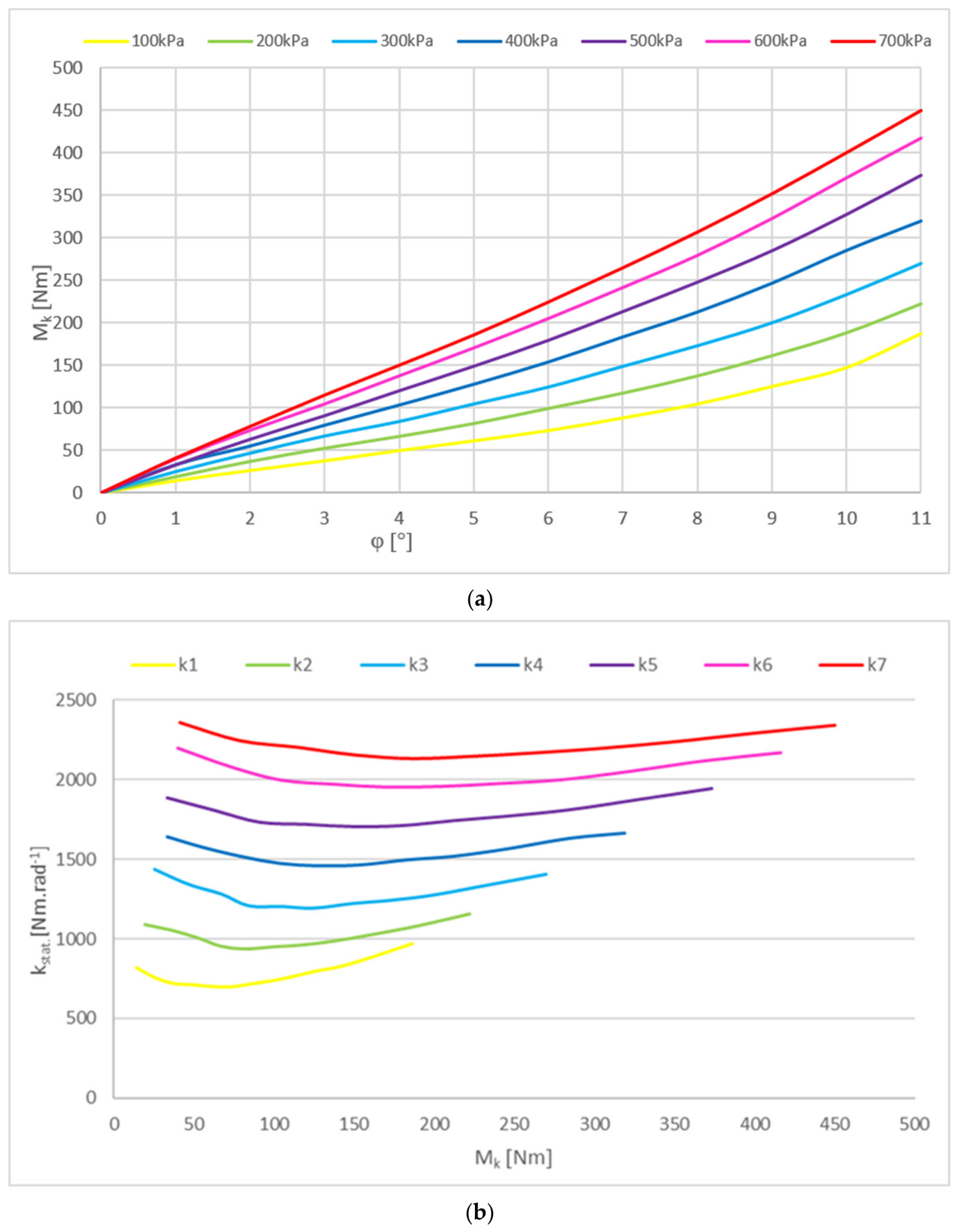
Figure 2 illustrates the basic load characteristic and characteristic of the static torsional stiffness k
stat on the applied torque M
k for different pressure levels within the VS-TET. The stiffness characteristics denoted as k
1–k
7 correspond to seven distinct pressure levels of the working medium in the pneumatic bellows.
The obtained characteristics reveal that the static torsional stiffness varies nonlinearly with the applied torque. At lower torque levels, a slight decrease in torsional stiffness can be observed, followed by a gradual increase as the applied torque rises. This behavior reflects the nonlinear elastic properties of the pneumatic elements employed in the proposed TET system.
A significant observation is the systematic increase in static torsional stiffness across the entire torque range with increasing pressure of the working medium. The lowest stiffness values were recorded for characteristic k1, whereas characteristic k7, corresponding to the highest bellows pressure, exhibited the highest torsional stiffness. These results confirm the capability of the proposed system to adaptively modify its dynamic properties through pneumatic pressure regulation.
From the perspective of mechanical system dynamics, this feature represents a considerable advantage, as it enables continuous tuning of the natural frequencies of the torsional system and optimization of the conditions required for effective targeted energy transfer. Consequently, the variable torsional stiffness provides the potential for efficient vibration mitigation over a significantly broader frequency range compared to conventional linear vibration absorbers.
Furthermore, the shape of the stiffness characteristics indicates a progressive stiffness behavior at higher torque levels. Such a nonlinear stiffness profile may contribute to improved stability of the energy transfer process and reduce the likelihood of undesirable dynamic regimes occurring at elevated amplitudes of torsional oscillation. This behavior is particularly beneficial for practical applications involving variable operating conditions and high dynamic loading levels, where maintaining a stable vibration mitigation performance is essential.
The damping coefficient b decreases markedly with increasing frequency f [Hz]. Over the frequency range from 1 to 8 Hz, the damping coefficient is described by the relationship b = 14.2 − 2.3f + 0.1f2. At frequencies above 8 Hz, the damping coefficient remains constant at b = 2 [Nms].
3. Experimental Study
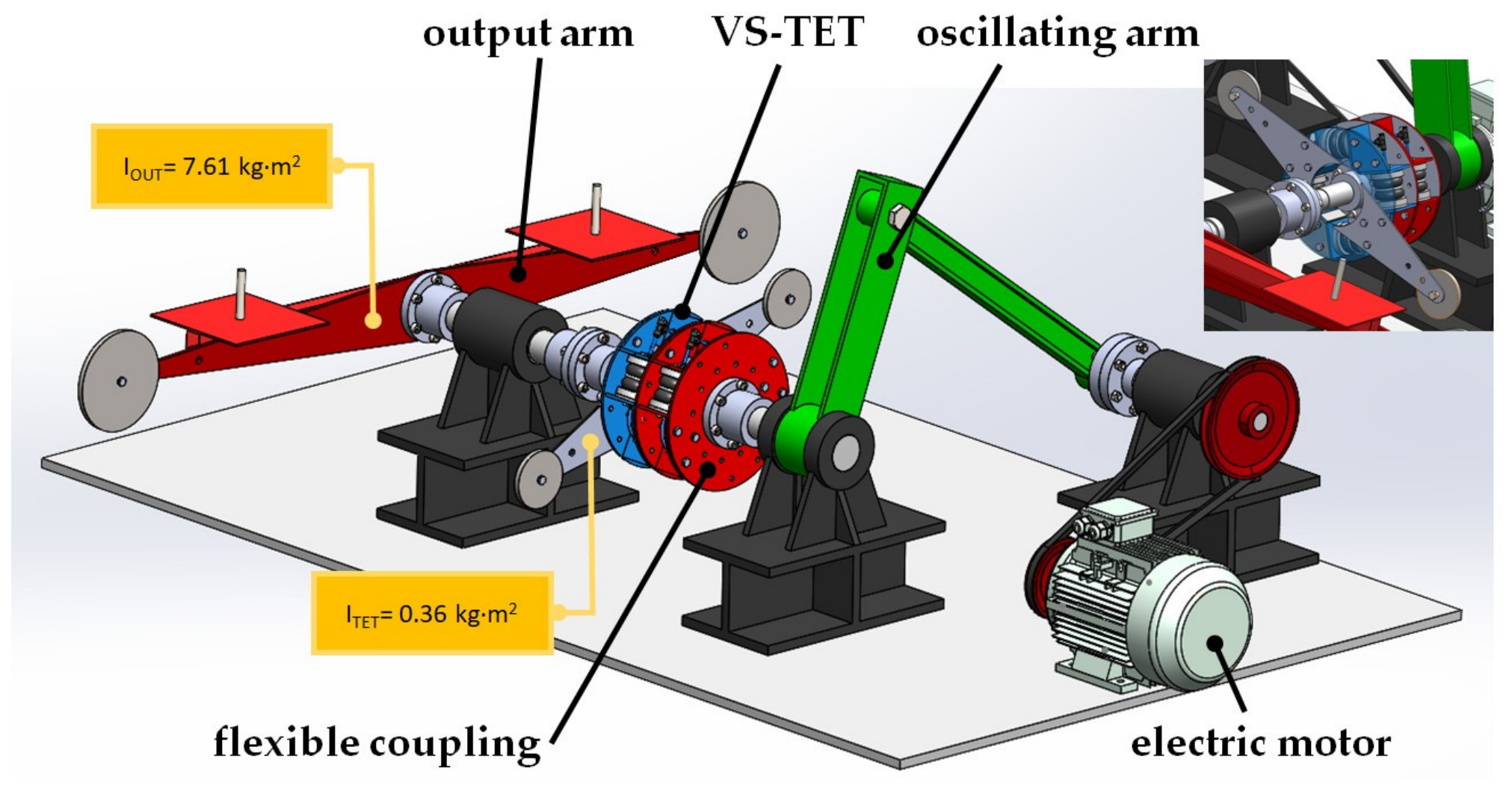
Figure 3 presents the conceptual design of the experimental test rig developed to evaluate the functionality of the variable-stiffness targeted energy transfer (VS-TET) and investigate its influence on the dynamic behavior of a torsional vibration system. The rig was designed as a modular experimental platform capable of simulating dynamic loading in the form of a fluctuating torque component while simultaneously providing the means for experimental verification of the targeted energy transfer mechanism.
The primary source of excitation is an electric motor located on the right-hand side of the test rig. The motor drives the primary mechanical system through a belt transmission and a driving crank shaft. The crank shaft is connected to an oscillating arm by a connecting rod. This crank mechanism generates the harmonic oscillating motion required for the experiment.
Unlike conventional power transmission test benches, the proposed experimental rig is specifically designed to simulate the dynamic component of torque rather than the transmission of high mechanical power. The objective of the experimental investigation is not to transfer substantial power levels, but rather to generate torsional vibrations representative of those encountered in real drivetrain systems. Dynamic excitation is produced on a kinematic basis by means of the oscillating arm mechanism. This mechanism generates a periodic variation of the load, thereby producing a time-varying torque component within the mechanical system.
The excitation mechanism enables precise control of both the amplitude and frequency of the imposed oscillations, creating suitable conditions for a detailed experimental investigation of torsional vibration phenomena. The generated dynamic load is subsequently transmitted through a flexible coupling to the output arm of the system.
The TET subsystem is positioned in the central part of the test rig and mechanically connected to the flexible coupling. This arrangement enables the transfer of torsional vibratory energy between the primary energy transmission path and the secondary vibration-absorbing subsystem. At the same time, the flexible coupling serves as the platform for implementing variable torsional stiffness through pressure regulation within the pneumatic bellows. Consequently, the stiffness characteristics of the system can be continuously adjusted, allowing for an investigation of the influence of variable stiffness on the efficiency of targeted energy transfer and torsional vibration mitigation.
The secondary inertial element of the TET subsystem is characterized by the following mass moment of inertia:
The mass moment of inertia associated with the primary energy transmission path of the experimental rig is:
The inertia ratio between the secondary TET subsystem and the primary energy transmission path was selected to ensure the efficient transfer of vibratory energy between the two coupled subsystems. The selection of the inertia ratio is one of the key design parameters of a TET system, as it directly influences the effectiveness of the targeted energy transfer mechanism, the stability of the dynamic response, and the vibration absorption capability of the secondary subsystem.
The supporting structure of the experimental rig was designed with particular emphasis on achieving sufficient structural rigidity and minimizing undesirable deformations during operation. All rotating components are mounted on bearing supports, which ensure stable operation of the mechanical system and an accurate realization of torsional motion throughout the experimental investigations.
The proposed experimental test rig enables a systematic investigation of the dynamic response of the system under various operating conditions, including different levels of torsional stiffness, excitation frequencies, and dynamic load amplitudes. Furthermore, it provides suitable conditions for the experimental validation of the VS-TET concept and for assessing its effectiveness in mitigating torsional vibrations in rotating mechanical systems.
The modular design of the test rig also allows for the future implementation of advanced control strategies and adaptive stiffness adjustment algorithms, making it a versatile platform for further research on targeted energy transfer mechanisms and their application in practical drivetrain systems.
3.1. Vibration Measurement Apparatus
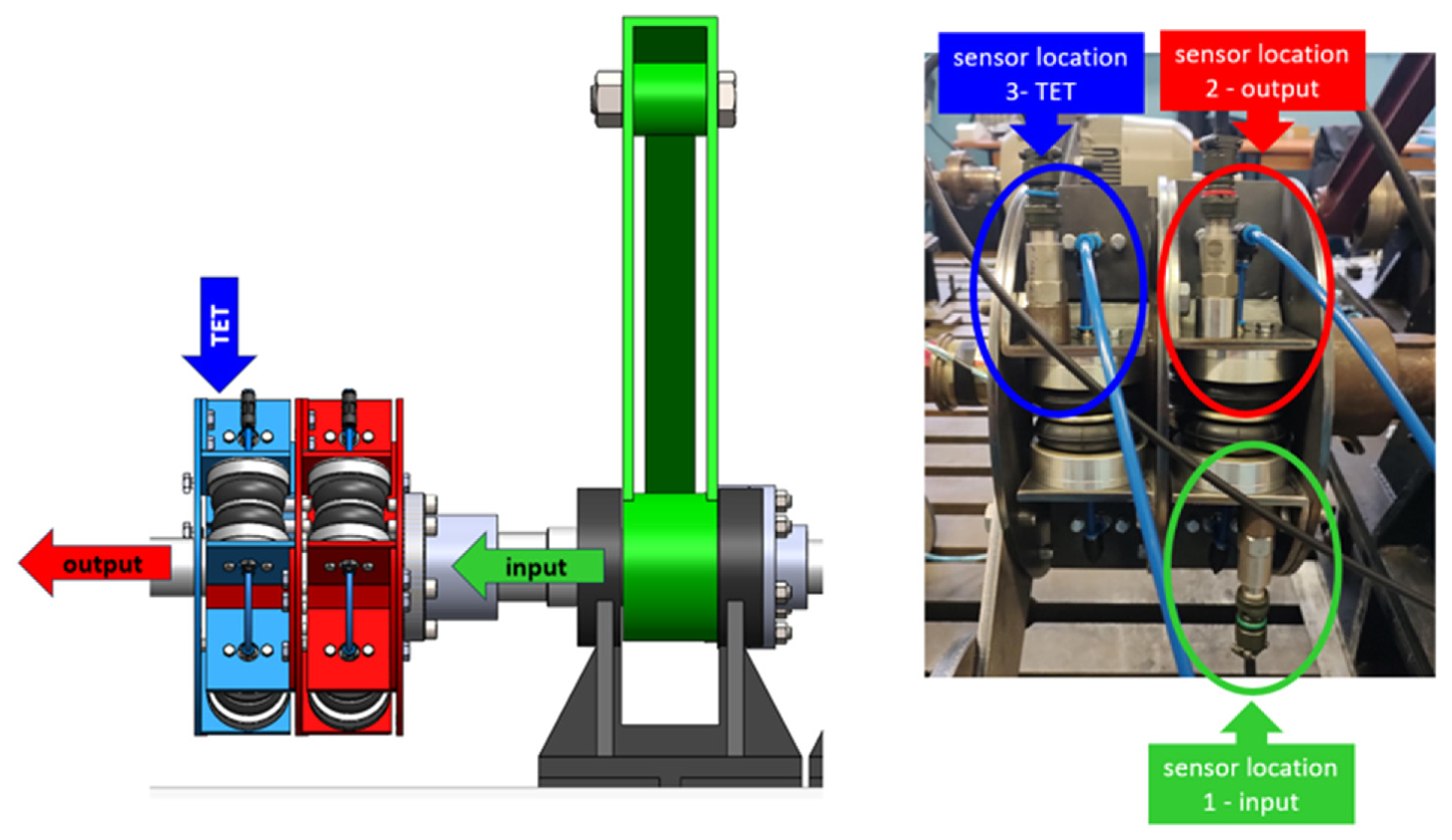
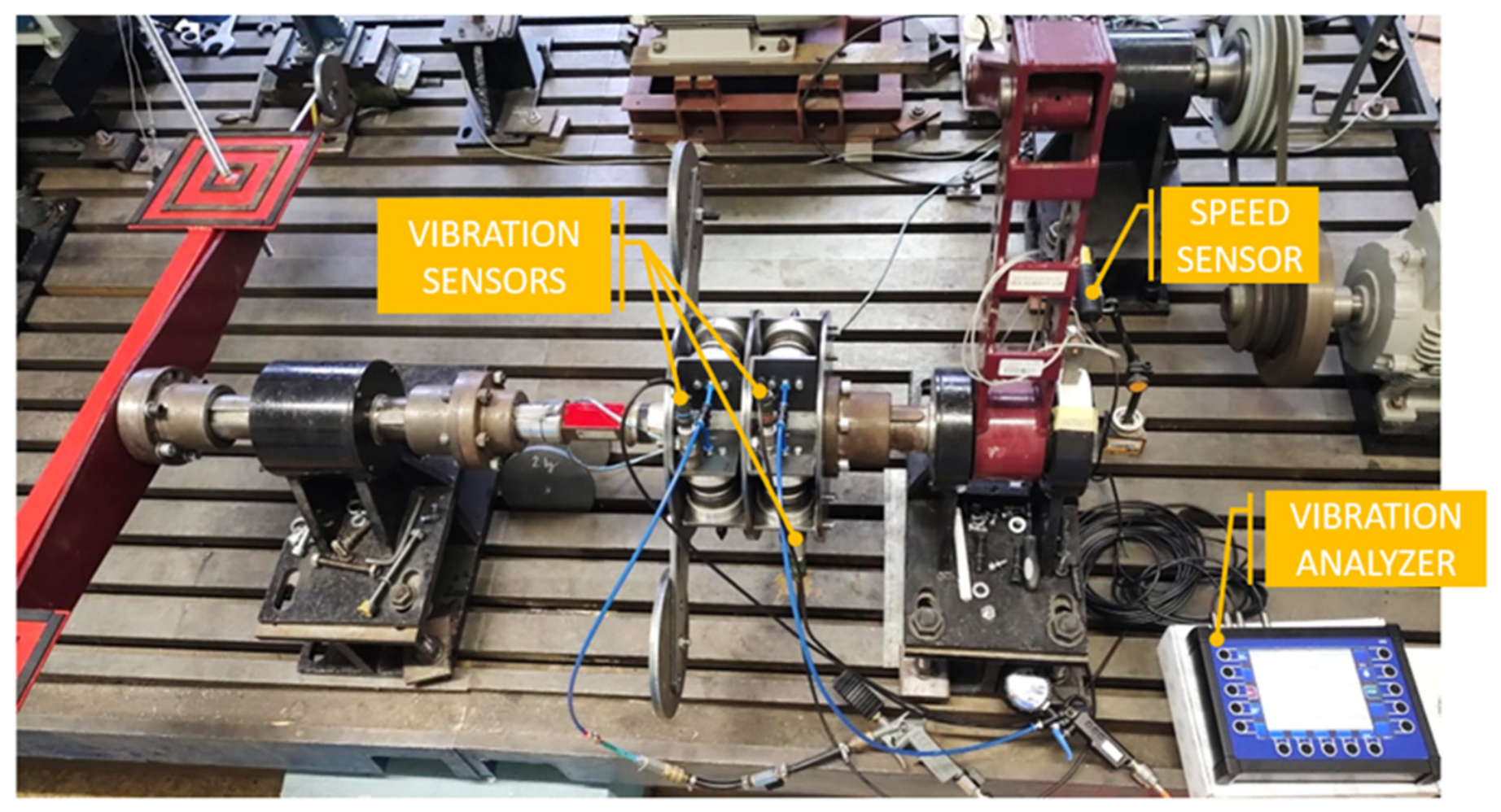
Several measurement sensors in the form of accelerometers were installed on the mechanical system to capture its dynamic response during experimental testing. The accelerometers were positioned at predefined measurement locations to monitor the vibration behavior of the individual components of the torsional system. The locations of the sensors are shown in
Figure 4.
The sensors measure acceleration signals, which can subsequently be processed through numerical integration to obtain the vibration velocity or displacement amplitudes. This approach enables a comprehensive evaluation of the dynamic behavior of the system and facilitates detailed analysis of the torsional vibration levels at selected locations within the mechanical structure.
Measured signals are acquired and processed using a multi-channel data acquisition system capable of synchronous measurement from all accelerometers. Synchronous data acquisition is essential for the accurate evaluation of phase relationships and energy transfer mechanisms between individual components of the mechanical system. Furthermore, it enables a direct comparison of the dynamic responses recorded at different measurement locations and provides reliable information regarding the propagation and redistribution of vibratory energy throughout the system.
The acquired vibration data are subsequently analyzed in both the time and frequency domains, allowing for the identification of dominant excitation frequencies, assessment of vibration amplitudes, and evaluation of the effectiveness of the proposed variable-stiffness TET system in mitigating torsional vibrations.
For the evaluation of the dynamic response of the mechanical system, the root mean square (RMS) vibration velocity was selected as the primary assessment parameter, as it directly correlates with the amount of vibrational energy transmitted through the mechanical system.
The experimental measurements were performed using the instrumentation shown in
Figure 5. The measurement system comprised an Adash A4400 VA4 Pro portable vibration analyzer (Adash, Ostrava, Czech Republic), accelerometers, and a rotational speed sensor. The analyzer provides a frequency measurement range of up to 90 kHz and enables synchronous acquisition of vibration signals from four measurement channels. Accelerometers were installed at selected measurement points to capture the dynamic response of both the primary mechanical system and the TET subsystem. The rotational speed sensor was used to monitor the operating speed of the excitation mechanism and to ensure accurate synchronization of the recorded vibration data with the corresponding excitation frequency.
3.2. Vibration Measurement Operating Modes
To evaluate the influence of the proposed TET system on the dynamic behavior of the mechanical system and its effectiveness in reducing torsional vibrations, it was first necessary to characterize the system response prior to the activation of the targeted energy transfer mechanism. For this reason, a series of reference measurements was conducted on the experimental test rig with the TET system disabled.
To preserve the overall inertia properties of the mechanical system and ensure an objective comparison between the investigated operating modes, all experiments were performed under identical operating conditions to those used during the tests with the active TET system. The difference between the measurement configurations was solely related to the mechanical state of the TET subsystem:
FIX mode—the TET subsystem was mechanically locked to the pneumatic coupling using a bolted connection, thereby preventing any relative motion and eliminating its ability to perform targeted energy transfer.
FLEX mode—the TET subsystem remained fully operational, allowing unrestricted dynamic motion and interaction with the primary mechanical system.
In the FLEX configuration, the TET subsystem was free to dynamically interact with the primary drivetrain, enabling the targeted energy transfer mechanism to occur. Consequently, vibratory energy could be redistributed from the primary system to the secondary nonlinear subsystem, where it could be effectively absorbed and dissipated.
The arrangement of the measurement sensors remained identical for both operating modes, ensuring consistency and comparability of the acquired data. The only exception was sensor No. 3, which was installed directly on the TET subsystem and therefore was not used during the FIX-mode measurements due to the mechanical immobilization of the TET unit.
This experimental methodology enabled a direct comparison of the dynamic responses obtained with and without the active TET mechanism, providing a reliable basis for evaluating the effectiveness of the proposed variable-stiffness TET system in mitigating torsional vibrations.
In the FLEX mode, additional parameters of the mechanical system were also varied to evaluate the dynamic behavior of the TET subsystem and identify its performance under different operating modes:
- (a)
Variation of Excitation Frequency
One of the primary parameters investigated during the experimental measurements was the excitation frequency of the mechanical system. A preliminary dynamic analysis of the test rig revealed that the system operates within its resonance region at excitation frequencies below 7 Hz. Since most practical drivetrain systems operate predominantly in the super-resonant region, the experimental investigation was focused primarily on excitation frequencies above the resonance range.
To facilitate the identification of the operating conditions of the experimental rig,
Table 1 summarizes the relationship between the excitation frequency generated by the frequency inverter and the corresponding rotational speed of the mechanical system downstream of the kinematic excitation mechanism. The selected excitation frequencies were chosen to cover a representative range of operating conditions while avoiding prolonged operation within the resonance region.
The rotational speed corresponding to each excitation frequency was measured using a laser tachometer directed at the crank pin of the excitation mechanism, as illustrated in
Figure 5. This measurement arrangement enabled accurate determination of the operating conditions and ensured precise synchronization between the imposed excitation and the acquired vibration data.
The selected excitation frequencies were subsequently used throughout the experimental investigation to evaluate the influence of the variable-stiffness TET system on the dynamic response of the mechanical system under different operating conditions. By varying the excitation frequency, it was possible to assess the effectiveness of the targeted energy transfer mechanism over a broad frequency range and to identify operating conditions under which the TET system exhibited the highest vibration mitigation performance.
- (b)
Variation of Stiffness of the VS-TET
Another parameter investigated during the experimental campaign was the torsional stiffness of the VS-TET in combination with a constant stiffness of the flexible coupling. The variable stiffness functionality was achieved by adjusting the air pressure within the pneumatic elastic elements of the VS-TET. By modifying the pressure of the working medium from 100 kPa to 700 kPa, which corresponds to the torsional stiffness from k1 to k7, consequently, the dynamic characteristics of the mechanical system could be continuously adjusted. Constant pressure in elastic elements of VS-TET is maintained by a pressure control system.
This approach enabled a systematic investigation of the influence of torsional stiffness on the effectiveness of the targeted energy transfer mechanism and on the overall dynamic response of the system. Changes in stiffness directly affected the natural frequencies of the coupled mechanical system, the conditions for energy exchange between the primary and secondary subsystems, and the efficiency of vibration mitigation.
The ability to continuously regulate the pneumatic pressure provided a flexible means of modifying the system parameters without requiring any structural changes to the experimental setup. This feature created favorable conditions for a comprehensive experimental evaluation of the relationship between torsional stiffness and the performance of the TET mechanism under different operating conditions.
Furthermore, the variable-stiffness concept allowed for the identification of optimal stiffness configurations corresponding to individual excitation frequencies. Such adaptability is particularly important for practical applications, where operating conditions frequently change and fixed-parameter vibration absorbers may exhibit reduced effectiveness. The experimental investigation therefore focused on determining how the adjustment of torsional stiffness influences the dynamic behavior of the mechanical system and the efficiency of targeted energy transfer over a wide range of excitation frequencies.
4. Results and Discussion
To evaluate the influence of the proposed TET system on torsional vibration levels, the root mean square (RMS) vibration velocity was selected as the primary evaluation parameter. RMS velocity is widely recognized as an effective indicator of vibration severity, as it directly reflects the amount of vibratory energy transmitted through a mechanical system. Consequently, variations in RMS values provide valuable insight into the dynamic behavior of the system and the efficiency of vibration mitigation mechanisms.
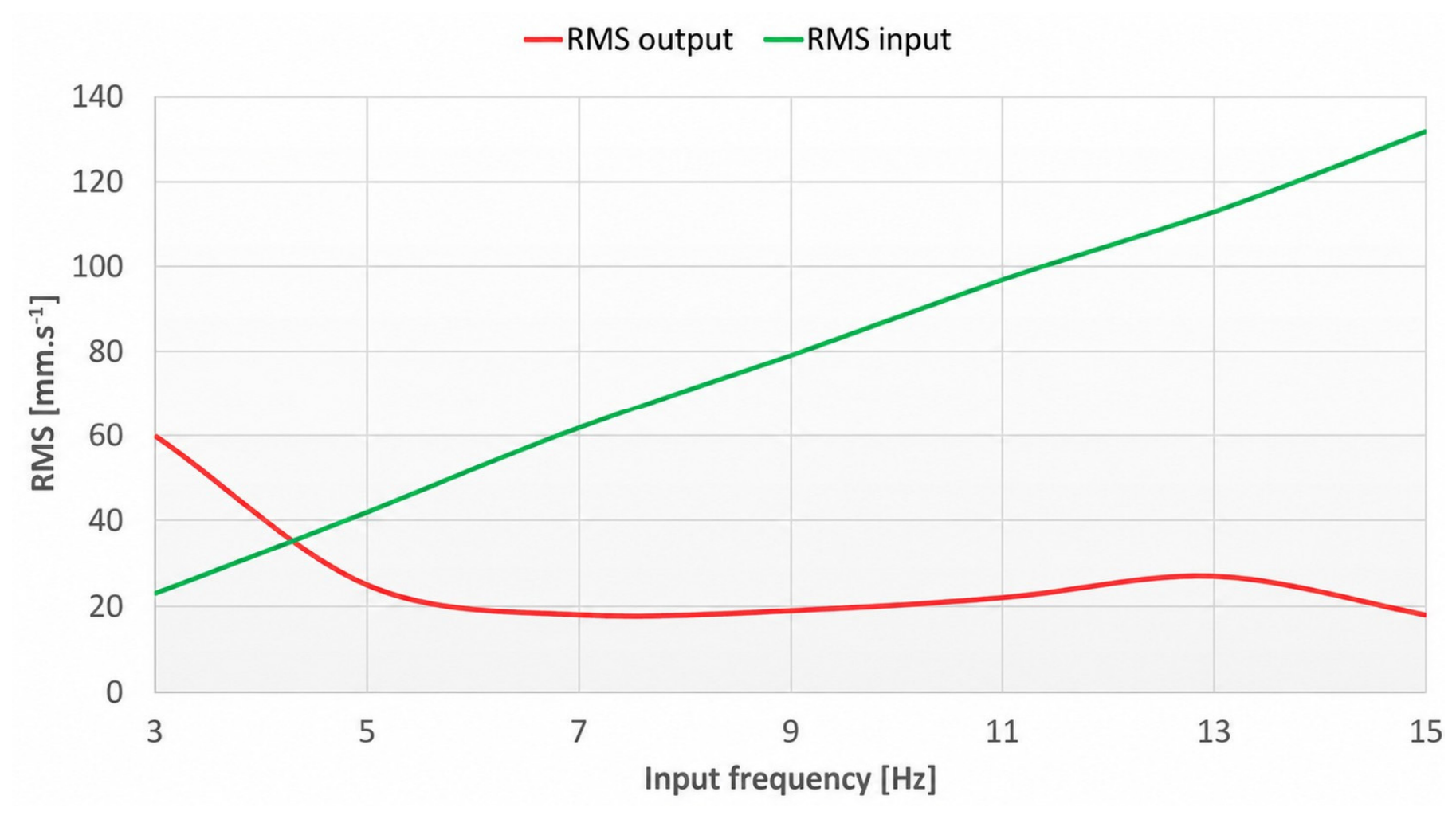
Figure 6 presents the measurement results obtained in FIX mode, where the TET subsystem was mechanically locked and therefore unable to participate in the targeted energy transfer process. The figure shows the RMS vibration velocity measured at both the input and output of the mechanical system as a function of excitation frequency. The green curve represents the RMS values of the excitation source (RMS input), while the red curve corresponds to the RMS vibration velocity measured at the output of the mechanical system (RMS output).
The input characteristic exhibits an almost linear increase in RMS velocity with increasing excitation frequency. At an excitation frequency of 3 Hz, the RMS vibration velocity reaches approximately 23 mm·s−1, whereas at the maximum investigated frequency of 15 Hz, it increases to approximately 132 mm·s−1. This trend indicates the continuously increasing level of dynamic excitation introduced into the mechanical system as the excitation frequency rises.
In contrast, the output characteristic demonstrates significantly different behavior. At low excitation frequencies, the RMS vibration velocity at the output reaches approximately 60 mm·s−1. However, a pronounced decrease is observed in the frequency range between 5 and 7 Hz, where the RMS value drops to approximately 18–20 mm·s−1. This behavior indicates a substantial reduction in the dynamic response of the system within this frequency range.
For excitation frequencies above approximately 7 Hz, the output RMS values remain relatively stable, exhibiting only a moderate increase with increasing frequency. This trend confirms that the primary mechanical system is tuned such that excitation frequencies above 7 Hz correspond to operation in the super-resonant region. Under these conditions, the dynamic response of the system becomes significantly less sensitive to increasing excitation levels.
A local increase in the RMS vibration level can be observed near an excitation frequency of 13 Hz, suggesting the presence of a secondary dynamic effect or a localized resonance phenomenon. As the excitation frequency continues to increase beyond this point, the RMS output values decrease again, indicating that the system maintains stable dynamic behavior even at elevated excitation frequencies.
A comparison of the input and output characteristics clearly demonstrates that the mechanical system in the FIX configuration is tuned such that its primary resonance region is shifted toward very low frequencies. Consequently, although the vibratory energy introduced into the system increases continuously with excitation frequency, the dynamic response at the output remains substantially lower over a wide frequency range. This behavior confirms that the mechanical system exhibits favorable vibration isolation characteristics in the super-resonant operating region and provides a suitable baseline for evaluating the effectiveness of the proposed variable-stiffness TET system.
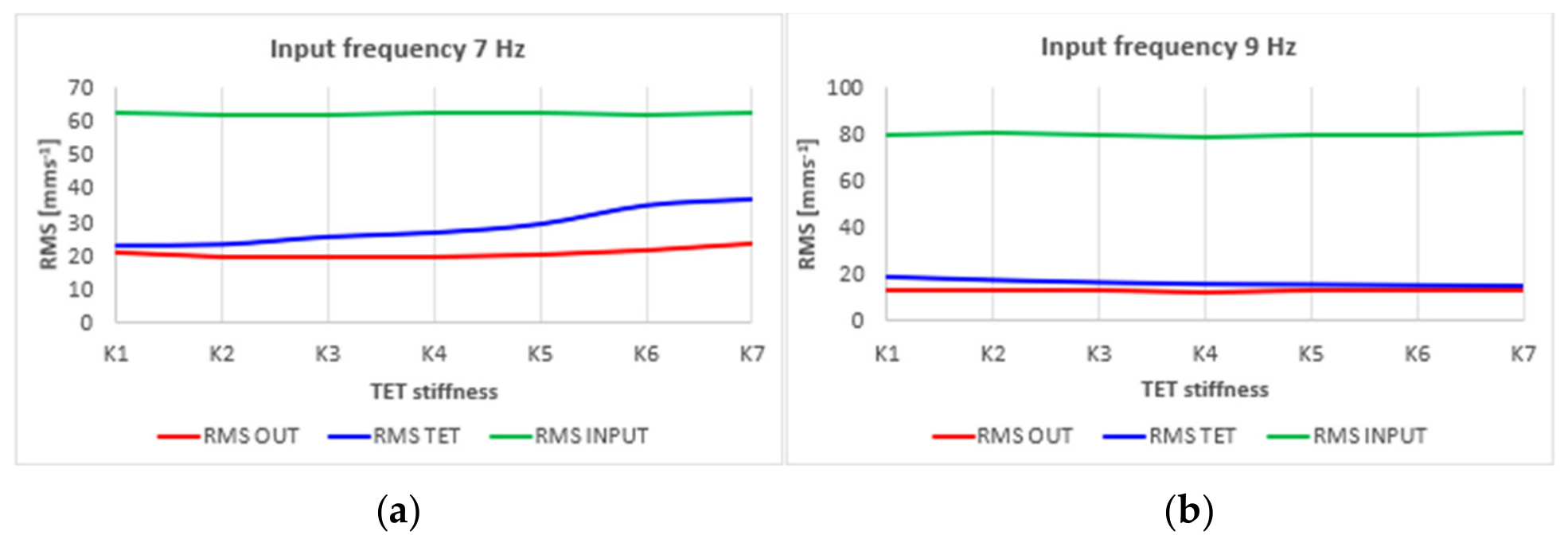
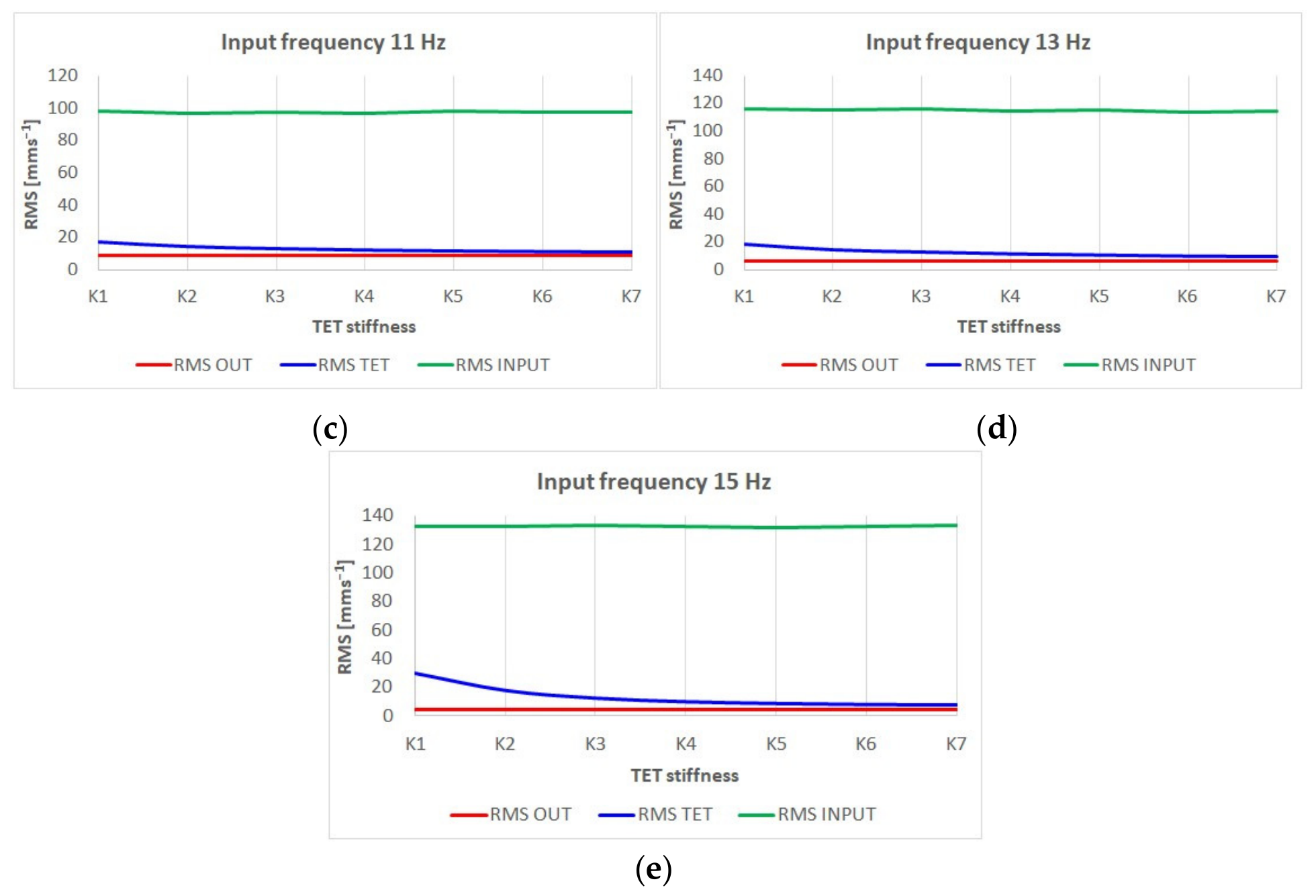
Figure 7 presents the experimental results obtained in FLEX mode, where the TET subsystem was allowed to move freely and actively participate in the targeted energy transfer process. The graphs show the RMS vibration velocity measured at three locations within the mechanical system: the excitation side (INPUT RMS), the output side of the mechanical system (RMS OUT), and directly on the TET subsystem (RMS TET). The measurements were performed for different excitation frequencies and for seven levels of torsional stiffness denoted by characteristics K
1–K
7.
Excitation Frequency of 7 Hz
At an excitation frequency of 7 Hz, the mechanical system operates in a frequency range close to its resonance region, which is reflected by elevated RMS vibration levels at the system output. The RMS value of the excitation input reaches approximately:
For lower torsional stiffness configurations of the TET subsystem (K1–K3), the RMS vibration velocity measured on the TET system remains within the range of approximately 25–30 mm·s−1, while the RMS value measured at the output remains relatively stable at approximately 22–24 mm·s−1.
As the torsional stiffness of the TET subsystem increases, a significant increase in the RMS vibration level of the TET unit can be observed. For stiffness configurations K
5–K
7, the RMS vibration velocity measured on the TET subsystem reaches approximately:
Excitation Frequency of 9 Hz
At an excitation frequency of 9 Hz, the RMS vibration velocity of the excitation input reaches approximately:
The RMS vibration velocity measured directly on the TET subsystem varies between approximately 18 and 24 mm·s−1. As the torsional stiffness increases from configuration K1 to K7, a slight decrease in the RMS vibration level of the TET subsystem is observed. This behavior suggests that the energy transfer mechanism remains active over the entire stiffness range, while the distribution of vibratory energy between the primary and secondary subsystems gradually changes as the stiffness is modified.
The RMS vibration velocity measured at the output of the mechanical system remains nearly constant throughout the experiment, reaching approximately:
Excitation Frequency of 11 Hz
At an excitation frequency of 11 Hz, the level of dynamic excitation increases further, with the RMS vibration velocity of the input reaching approximately:
Despite the increased excitation energy introduced into the mechanical system, the dynamic response remains well-controlled due to the action of the TET subsystem. The RMS vibration velocity measured on the TET unit reaches approximately 18 mm·s−1 for the lower stiffness configurations and gradually decreases with increasing torsional stiffness, reaching values close to 12 mm·s−1 for the highest stiffness settings.
This trend suggests that the energy transfer process remains effective throughout the investigated stiffness range, while the amount of energy absorbed by the TET subsystem becomes less dependent on stiffness at higher excitation frequencies. The decrease in RMS levels observed on the TET subsystem may also indicate that the coupled system approaches a dynamically favorable operating regime in which vibration amplitudes are reduced throughout the entire structure.
The RMS vibration velocity measured at the output of the mechanical system remains remarkably low and stable, reaching approximately:
Excitation Frequency of 13 Hz
At an excitation frequency of 13 Hz, the RMS vibration velocity of the excitation input further increases approximately to:
Activation of the TET subsystem results in a further reduction in the vibration levels measured at the system output. This behavior confirms the ability of the proposed TET mechanism to maintain effective vibration mitigation even under elevated excitation conditions.
The RMS vibration velocity measured on the TET subsystem decreases progressively with increasing torsional stiffness, ranging from approximately 20 mm·s−1 for stiffness configuration K1 to approximately 10 mm·s−1 for configuration K7. This trend indicates that the dynamic interaction between the primary mechanical system and the TET subsystem evolves as stiffness increases, leading to a redistribution of vibratory energy under increasingly favorable conditions.
The RMS vibration velocity measured at the output of the mechanical system remains very low throughout the investigated stiffness range and reaches approximately:
Excitation Frequency of 15 Hz
At the highest investigated excitation frequency of 15 Hz, the RMS vibration velocity of the excitation input reaches approximately:
This operating condition represents the highest level of dynamic excitation applied during the experimental investigation. Nevertheless, the proposed TET system continues to exhibit highly effective vibration mitigation performance.
For lower torsional stiffness configurations, the RMS vibration velocity measured on the TET subsystem reaches approximately 35 mm·s−1. As the torsional stiffness increases, a pronounced reduction in the vibration level of the TET subsystem can be observed, with RMS values decreasing to approximately 8–10 mm·s−1 for the highest stiffness configurations. This behavior indicates that the dynamic interaction between the primary and secondary subsystems changes significantly with increasing stiffness, resulting in more favorable energy redistribution conditions.
Despite the substantial increase in excitation energy, the RMS vibration velocity measured at the output of the mechanical system remains exceptionally low throughout the entire stiffness range, reaching approximately:
Furthermore, the results reveal that the effectiveness of the energy transfer process depends strongly on both the excitation frequency and the torsional stiffness of the TET subsystem. Different excitation frequencies require different stiffness configurations to achieve the maximum vibration mitigation performance. This observation highlights the importance of adaptive stiffness tuning and confirms the advantages of implementing a VS-TET system compared to conventional fixed-parameter vibration absorbers.
Overall, the FLEX mode measurements demonstrate that the proposed VS-TET system is capable of actively modifying the distribution of vibratory energy within the mechanical system and significantly reducing the vibration levels transmitted to the output. These findings experimentally validate the functionality of the proposed concept and confirm its potential for torsional vibration mitigation in rotating mechanical systems.
4.1. Efficiency of VS-TET
To quantify the vibration mitigation performance of the proposed VS-TET system, a comparative analysis of the RMS vibration velocity measured at the output of the primary mechanical system was performed for both the reference (FIX) and active (FLEX) operating configurations. The vibration reduction efficiency was evaluated using the normalized decrease in RMS vibration velocity according to the following expression:
where
RMSFIX denotes the RMS vibration measured at the output of the primary mechanical system with the TET subsystem mechanically constrained,
RMSFLEX represents the corresponding RMS vibration velocity measured with the VS-TET operating in its active state, and
η is the vibration attenuation efficiency expressed as a percentage.
Table 2 summarizes the vibration reduction efficiency obtained using the VS-TET for the investigated excitation frequencies.
A negative attenuation efficiency (η = −26%) indicates that the activation of the TET subsystem resulted in a slight increase in the measured vibration level rather than vibration suppression. This phenomenon can be attributed to the system operating near the resonance region, where the conditions required for effective targeted energy transfer had not yet been fully established.
Based on the experimental results, it can be concluded that the proposed VS-TET system provides effective torsional vibration mitigation over a broad frequency range. Unlike conventional vibration absorbers, whose performance is typically limited to a narrow frequency band, the proposed system demonstrated a robust ability to suppress vibrations under varying excitation conditions.
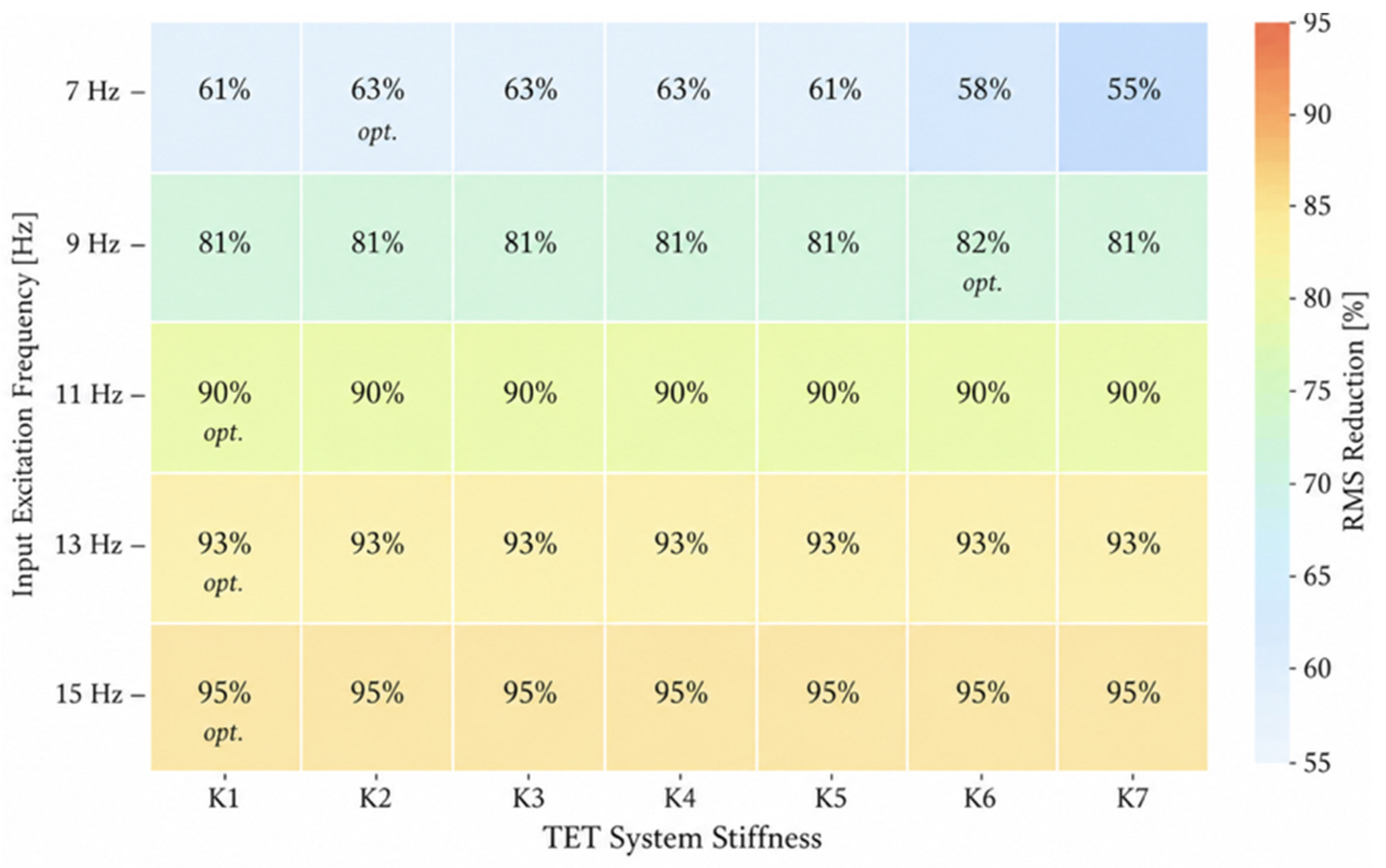
Figure 8 shows a map of the optimal TET operating regions based on RMS percentage reduction.
4.2. Ideal Energy Transfer
The graph (
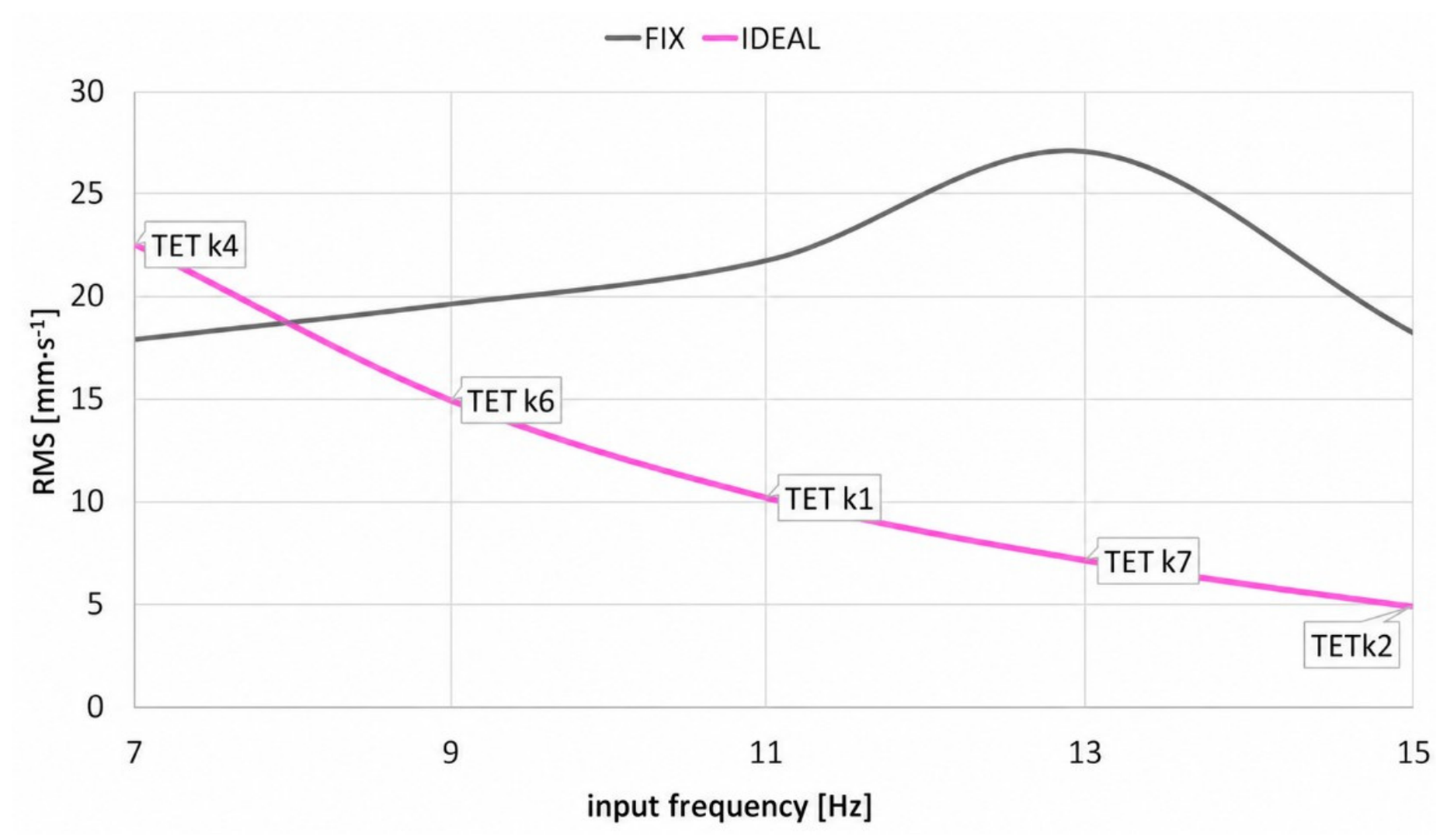
Figure 9) shows the dependence of the RMS vibration velocity on the excitation frequency within the range of 7–15 Hz. The grey curve represents the dynamic response of the mechanical system in FIX mode, whereas the pink curve illustrates the response obtained with the activated TET mechanism and optimally selected torsional stiffness.
The individual points on the pink curve also indicate the optimal torsional stiffness configuration of the VS-TET system for each excitation frequency:
7 Hz → TET K4,
9 Hz → TET K6,
11 Hz → TET K1,
13 Hz → TET K7,
15 Hz → TET K2.
Thus, the graph clearly demonstrates the importance of adaptive variable stiffness in optimizing the performance of the TET mechanism. The proposed system proves capable of effectively reducing torsional vibrations over a broad range of operating frequencies and confirms the potential of VS-TET systems for practical application in rotating mechanical systems.
5. Conclusions
The experimental investigation confirmed that the proposed VS-TET significantly influences the dynamic behavior of a torsional vibration system. The obtained results demonstrated the capability of the proposed concept to effectively mitigate torsional vibrations over a broad range of excitation frequencies within the super-resonant operating region.
One of the most important findings of the study is the clear experimental verification of the targeted energy transfer mechanism. Following activation of the TET subsystem, a substantial reduction in RMS vibration levels was observed at the output of the primary mechanical system, accompanied by increased vibration amplitudes within the TET subsystem itself. This behavior is characteristic of targeted energy transfer, where vibratory energy is redistributed from the primary structure to a secondary nonlinear subsystem. The observed energy redistribution confirms that the proposed TET mechanism operates as intended and is capable of effectively extracting vibration energy from the primary drivetrain.
A significant advantage of the proposed solution is its ability to provide vibration mitigation over a broad frequency range without requiring precise tuning to a single dominant excitation frequency. Unlike conventional linear vibration absorbers, whose effectiveness is typically limited to a narrow frequency band, the VS-TET system exhibited stable vibration reduction performance throughout the investigated frequency range from 7 Hz to 15 Hz. The highest mitigation efficiency was achieved at excitation frequencies of 13 Hz and 15 Hz, where the reduction in RMS vibration amplitudes exceeded 70%.
The experimental results also highlighted the importance of adaptive stiffness adjustment. Different excitation frequencies required different optimal stiffness configurations of the TET subsystem, confirming that the dynamic properties of the absorber should be continuously adapted to current operating conditions. This adaptive capability represents one of the key advantages of the proposed design, as it allows for optimization of the energy transfer process according to both the excitation frequency and the dynamic state of the mechanical system.
Another important observation is the stabilization of the overall dynamic response following activation of the TET subsystem. In the reference FIX configuration, elevated RMS amplitudes were observed, particularly at lower frequencies close to the resonance region, indicating increased dynamic sensitivity of the mechanical system. In contrast, the active TET system significantly suppressed these vibration levels and prevented further amplification of the dynamic response. These findings suggest that the proposed system does not merely act as a vibration energy absorber but also contributes to the stabilization of the dynamic behavior of the entire mechanical structure.
From a physical perspective, it is noteworthy that the vibration energy introduced into the system increased continuously with excitation frequency, while the RMS vibration levels measured at the output remained low or even decreased. This observation demonstrates the ability of the TET subsystem to maintain effective energy absorption and redistribution even under high excitation levels. The targeted energy transfer mechanism therefore became increasingly effective in the super-resonant operating region, where conventional passive vibration mitigation approaches often experience a reduction in performance.
The experiments further confirmed the suitability of pneumatic variable-stiffness elements for adaptive vibration mitigation applications. By regulating the pressure within the pneumatic bellows, the torsional stiffness of the system could be continuously adjusted, enabling direct modification of the dynamic characteristics of the coupled mechanical system. Such a solution provides a foundation for future implementation of intelligent control strategies capable of automatically adapting system parameters in real-time according to changing operating conditions.
From this perspective, the proposed VS-TET system offers considerable potential for application in rotating machinery, drivetrain systems, energy-generation equipment, and transportation technologies. The observed reduction in torsional vibration amplitudes can contribute to a lower dynamic loading of mechanical components, reduced fatigue damage accumulation, decreased noise and vibration emissions, extended service life, and improved operational reliability. These benefits may ultimately result in lower maintenance requirements and reduced life cycle costs of mechanical systems.
Overall, the experimental results demonstrate that the proposed VS-TET system represents a promising approach for torsional vibration mitigation in modern rotating mechanical systems. The ability to efficiently redistribute vibratory energy, adapt its dynamic characteristics, and stabilize the system response under varying operating conditions highlights its potential as a next-generation adaptive vibration mitigation technology.