


Abstract
High friction composite brake shoes containing reinforced steel fibers are now widely used in freight train tread braking systems. With the demand for higher transportation efficiency on railway lines with long steep slopes, it is necessary to explore the braking capabilities of existing general freight train high friction composite brake shoes under continuous braking conditions. In this paper, continuous braking tests at different speed levels were conducted using a friction and wear test rig. Through material characterization and interface damage analysis, it was found that reinforced steel fibers can exist as a contact platform at the brake shoe friction interface. Due to the strip-like morphology and high strength features of steel fibers, even after the steel fiber layer is fragmented, it can still promote the formation of a continuous contact platform with complex material composition on the surface, maintaining the progress of the braking process. For existing general freight train high friction composite brake shoes, at speeds up to 80 km/h, although the friction coefficient decreases to some extent, the wear rate maintains a relatively low range. When the speed increases to 100 km/h, the friction coefficient of the braking interface deteriorates severely, and the wear rate of the brake shoe increases sharply, seriously endangering braking safety. The research results reveal the evolution of wear behavior of high friction composite brake shoes containing reinforced steel fibers at different speed levels, providing theoretical support for exploring the braking capabilities and design optimization of brake shoes.
1. Introduction
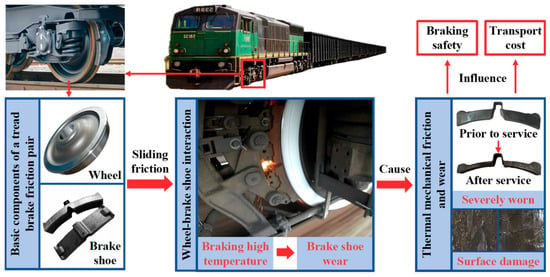
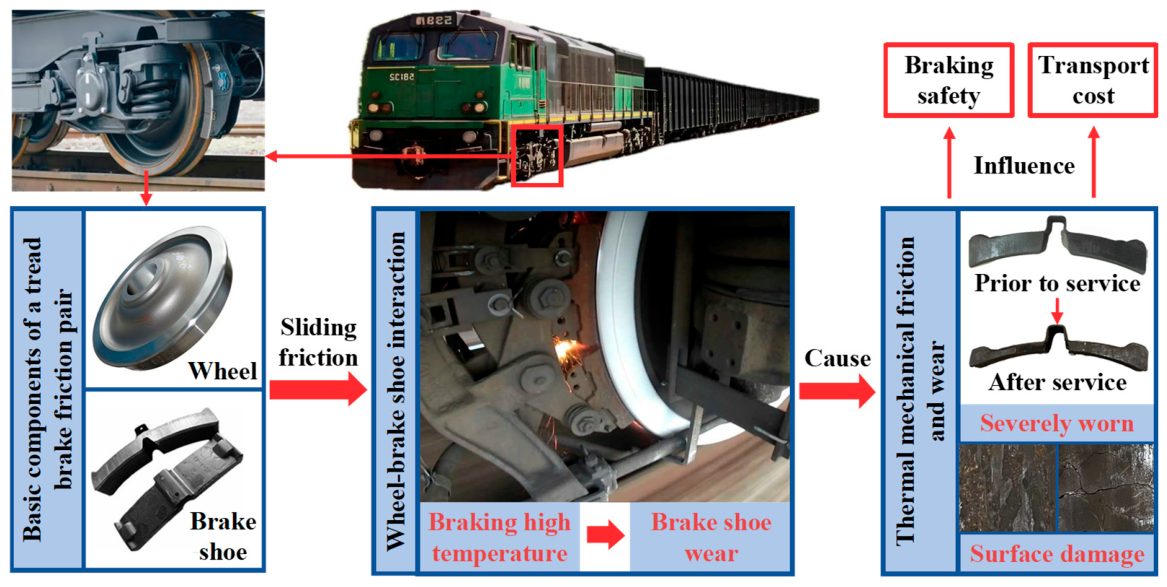
The braking system is an important guarantee for the safe and stable operation of the train. As one of the most common braking modes for railway vehicles, tread braking is widely used in freight trains and subway vehicles [1,2]. As a key component of the tread brake system [3], the brake shoe has undergone multiple iterations from a cast iron brake shoe, medium phosphorus brake shoe, high phosphorus brake shoe, to a composite brake shoe [4]. At present, high friction composite (HFC) brake shoes are widely used in the braking system of general freight trains. During the service, HFC brake shoes often have abnormal wear, slag and block fall, crack initiation, metal inlay and other damage problems, as shown in Figure 1. This seriously affects the transportation cost and braking safety of freight trains. In addition, the operating speed of general freight trains is 80 km/h, but for special routes such as long and steep slopes, the speed may need to be reduced to below 60 km/h. However, with the increase in the number and mileage of routes, the demand for transportation efficiency is also increasing, which requires improving the operating speed of general freight trains on long and steep slopes. This further puts forward higher performance requirements of brake shoes [5]. Therefore, analyzing the performance of HFC brake shoes on freight trains under continuous braking conditions at different speed levels, revealing the evolution process of brake shoe friction and wear behavior, and exploring the braking ability of existing general freight train HFC brake blades under continuous braking on long steep slopes at higher speeds are of great significance for reducing railway transportation costs and ensuring the safety of freight train operation.
Figure 1.
Brake shoes damage during the tread braking process.
At present, scholars from various countries pay more attention to the influence of different materials and components on the friction performance of brake shoes. Wasilewski [6] tested two kinds of organic composite friction materials containing quartz and petroleum coke, respectively, analyzed the variation in instantaneous and average dynamic friction coefficients with initial speed, contact force and temperature, and studied the influence of quartz and petroleum coke on the mechanical properties and tribological behavior of friction materials. Nidhi et al. [7,8] focused on the influence of resin percentage in synthetic materials on the decline and recovery behavior of the friction coefficient, and found that with the increase in resin content, the decline degree of the friction coefficient increased, but most of the mechanical properties and wear conditions were improved with the increase in resin percentage. Bijwe et al. [9] studied the influence of resin chemical properties on friction braking, investigated the material properties of a variety of resins, and deeply evaluated the strength and friction properties of different resin materials. It was found that the friction and wear properties of synthetic brake shoes would change with the change in resin type, and resin modification could not effectively improve various performance indicators. Monreal-Pérez et al. [10,11,12] conducted friction tests on a full-scale test bench, analyzed the brake shoe wear surface with optical microscope and scanning electron microscope, and studied the influence of various types of fibers, including steel fiber, glass fiber, cashmere fiber, etc., on the brake shoe friction performance. At the same time, Wasilewski [13] also compared the effects of glass fiber and steel fiber on the friction properties of composite materials. By measuring the thermal diffusivity of the two materials, it was found that using steel fiber instead of glass fiber can significantly improve the friction coefficient and effectively improve the thermal conductivity of friction materials.
In addition, some scholars have explored the service performance of the tread brake system under different braking conditions through experiments, but they mainly focus on the wheel tread wear and temperature changes, and less on the analysis of brake shoe wear behavior. Mazzù et al. [14,15] studied the complex damage behavior of the wheel rail/brake shoe interface under the action of thermal mechanical load through a double disk test, and analyzed the main wear forms and causes of the wheel under different test conditions. Su et al. [16] explored the impact of brake shoe pressure on wheel damage through a small brake shoe wheel rail test device. It is found that the wheel wear and braking temperature increase significantly with the increase in brake shoe pressure. Luo et al. [17] established a three-dimensional transient heat transfer model to calculate the tread braking response for freight trains on grades. They investigated the effects of braking parameters on the temperature of the wheel and brake shoe. The study demonstrated that a combination of low brake shoe pressure, high speed, and a wide speed range can significantly reduce thermal damage to the wheels.
Regarding the formation of the third body layer and its influence on the friction coefficient, research has been conducted by some scholars. He et al. [18] conducted braking tests on composite brake shoes using a full-scale dynamometer. They performed a comprehensive analysis of the surface morphology of the layered third body formed on the brake shoe surface. They found differences in the morphology of the third body under different initial speeds, and that the third body could significantly alter the contact conditions at the sliding interface and directly reduce the friction coefficient. However, in the field of railway vehicles, there is less research on the impact of the third body of the brake shoe, while there is more analysis on the third body between the wheel and rail, which can provide some reference for the research in this article. Faccoli et al. [19,20] studied the evolution of the microstructure and mechanical properties of various wheel steels under thermal load during different braking conditions, and proved that the high temperature of drag braking may cause phase transformation, while the typical temperature of parking braking only causes slight changes in materials. In addition, it is also found that the brake shoe sample is transferred to the wheel sample. A discontinuous “third body” layer will be formed on the wheel surface during braking. When the transferred brake material layer is removed, steel peeling will occur on the wheel surface. Meierhofer et al. [21] discovered through twin-disk tests that a “third body layer” forms at the wheel–rail contact interface. A surface layer composed of compacted particles developed on all wheel disks, which influences the initial gradient of traction characteristics. They proposed a third body model that significantly improved the prediction accuracy of wheel and rail wear damage.
To sum up, although scholars have conducted extensive research on the friction and wear of brake shoes, analyzing the effects of composition, operating conditions, and the third body, they have not analyzed the morphological changes in reinforced steel fibers (RSFs) during the friction and wear process, as well as the impact mechanisms on the third body layer and the friction and wear performance. Therefore, this article conducted friction and wear behavior tests and material characteristic analysis on HFC brake shoes of freight trains at different speed levels, explored the performance of existing HFC brake shoes under continuous braking conditions, and studied the role of RSFs in the braking friction process. This work aims to provide support for improving the speed of general freight trains on long and steep slope lines and ensuring braking safety.
2. Experiment Description
2.1. Test Device
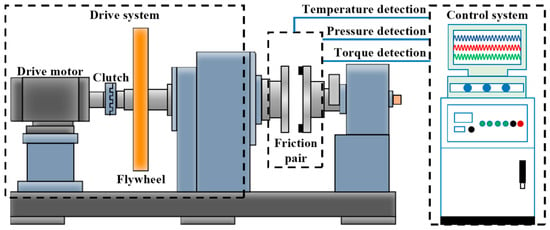
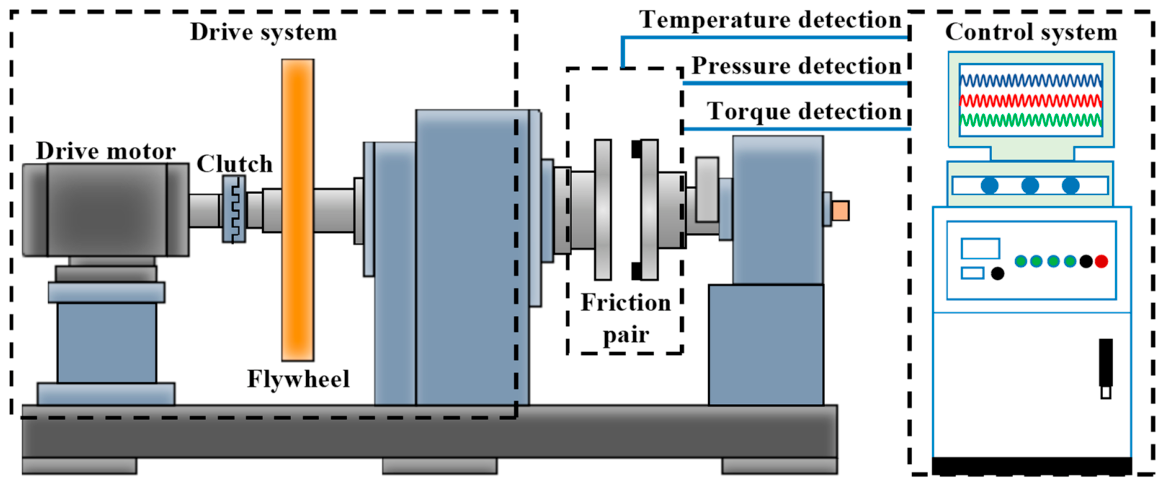
The friction and wear behavior of the brake shoe was studied using a brake material service performance test bench. The test bench is composed of a power system, an automatic control system, an inertia system, a brake friction pair, etc., as shown in Figure 2. Among them, the brake friction pair is composed of a rotating disk sample made of wheel tread material and a sample block made of brake shoe material. The rotating disk is clamped in the rotating fixture disk, and the brake shoe sample block is clamped on the static disk and installed in the static fixture disk. During the test, the motor drives the rotating disk to rotate. After the rotating disk reaches the given speed and rotates stably, the pressure is applied to the static disk through the cylinder to make the wheel tread sample and brake shoe sample block contact each other and start friction, simulating the tread braking process.
Figure 2.
Friction and wear test bench.
During the test, the data is collected by sensors, and the instantaneous value of each parameter is collected. In terms of speed, the speed measuring disk rotates with the spindle, which is equipped with a high-speed photoelectric sensor, which can realize real-time speed measurement, and can control the speed at the set target speed through the feedback adjustment system. In terms of pressure, the pressure sensor and self-compensating pressure system arranged at the end of the cylinder of the test bench are used to accurately set the pressure value, and the solenoid valve is used to control the intake and exhaust process to simulate the application and removal of braking force. In terms of braking torque, the braking torque during the braking process is detected in real time by the torque sensor on the transmission shaft, and the real-time friction coefficient of the braking friction pair can be further calculated from the braking torque. In addition, the temperature sensor and high-precision balance are used to measure the temperature and wear mass loss of the friction pair during the test. It should be pointed out that due to limitations in temperature measurement methods, it is not possible to directly measure the temperature at the friction interface. Here, a thermocouple is used to measure the temperature at a distance of 3 mm from the friction surface. There is a certain difference between this temperature and the actual interface temperature, mainly due to thermal hysteresis, thermocouple response time, and heat dissipation. To avoid the impact of other errors, the same type of thermocouple is used, and the consistent measurement positions are maintained in all tests, in order to make meaningful comparisons of temperature results under different operating conditions.
2.2. Test Materials
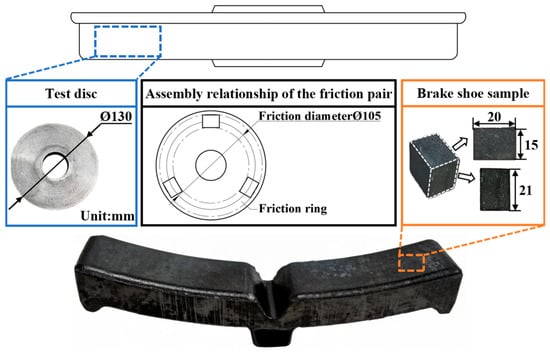
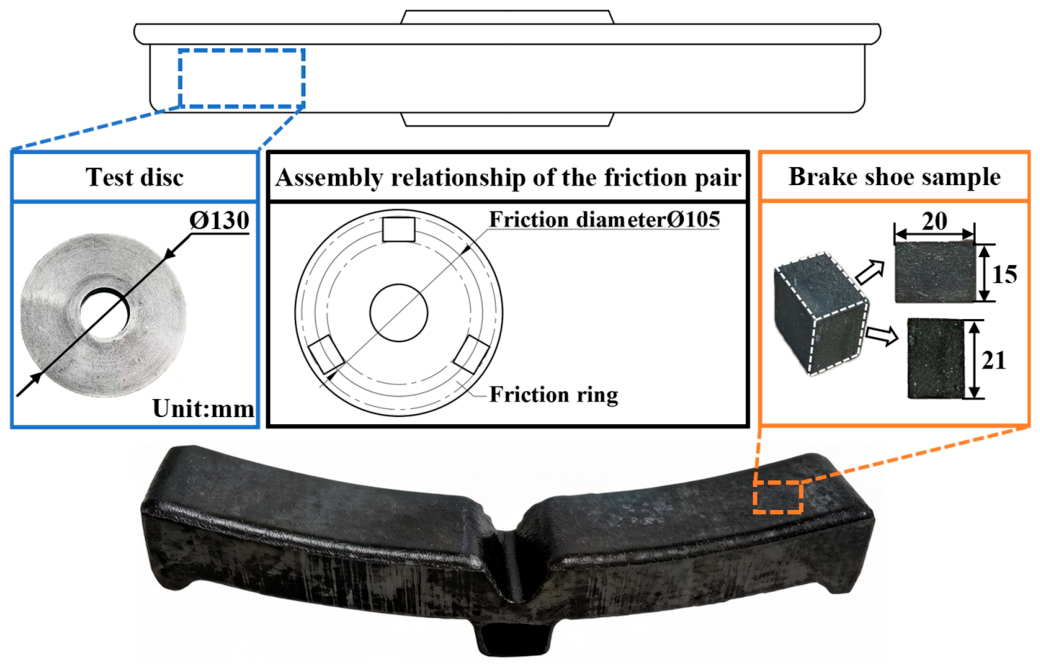
The friction pairs used in the test were taken from the wheel tread materials and the brake shoe materials containing RSF. The main performance parameters of the RSF in this brake shoe are as follows: diameter 30–75 μm, density 7.8 g/cm3, length 2–5 mm, tensile strength 340 MPa, elastic modulus 220 GPa, and a content of approximately 3~8%. According to the size requirements of the test bench, the wheel tread material is processed into a test disk with a diameter of 130 mm. The brake shoe is cut into cube test samples with a length, width and height of 20 mm × 15 mm × 21 mm, respectively. The average friction ring diameter between the wheel tread sample and the brake shoe sample is 105 mm. The specific size and assembly relationship of the test brake friction pair are shown in Figure 3. During the test, in order to ensure the uniform contact pressure on the brake friction pair and maintain the stable establishment of the friction interface between the wheel tread sample and the brake shoe sample block during the test, three brake shoe samples are uniformly arranged along the circumferential direction.
Figure 3.
Dimensions and assembly relationship of the test friction pair.
2.3. Experimental Procedure
Before the formal test, the friction pair is subjected to a running-in process under low-pressure and low-speed test conditions, with the temperature during the running-in process maintained at a low level. During the running-in process, due to wear, the contact surface of the brake shoe sample can be clearly distinguished. Specifically, there are notable differences in both the state and color of the brake shoe sample surface between the fully run-in area and the non-fully run-in area. Generally, when the contact area of the brake shoe sample reaches 85% of its nominal area, running-in is considered complete. However, to avoid the influence of human factors, in this test, running-in is deemed fully accomplished when the contact area of the brake shoe sample reaches approximately 90% of its nominal contact area [22]. For the definition of contact area, the friction surface of the brake shoe sample used in the test is a 15 × 20 mm rectangle. When the length of the running-in area along the friction direction reaches 18 mm, we consider that the contact area has reached 90% of the nominal contact area.
After running in, the formal continuous braking test was conducted. In order to explore the difference in brake shoe friction and wear behavior and the change law of surface morphology under different speed levels, the parameters were set with the vehicle running speed as the variable in this study. The continuous braking force applied in the experiment was selected according to the standard TB/T 3104.1-2020 [23], which is 8 kN. The duration of the test is determined based on the friction state of the brake shoe sample, and it is necessary to ensure that the friction interface has sufficient time to establish stable contact and friction. Based on the pre-test results, the test duration has been selected as 500 s. This is because the design maximum running speed of general freight trains in China is 120 km/h, but the brake shoe will be seriously worn when the speed is high, so the running speed of general freight trains is generally 80 km/h. In order to explore the braking capacity of the brake shoe, in this study, the surface state of the brake shoe sample is used as the evaluation standard. When the surface of the brake shoe sample is seriously damaged, and the wear rate increases significantly, it is considered that the brake shoe is difficult to continuously provide braking capability, and the running speed will not be increased. According to the pre-test results, when the test speed reaches 100 km/h, the brake shoe sample surface has been seriously damaged and broken. Therefore, in order to ensure the test safety, the upper limit of the test speed level is determined to be 100 km/h, and the experimental parameters are shown in Table 1.
Table 1.
Experimental parameters.
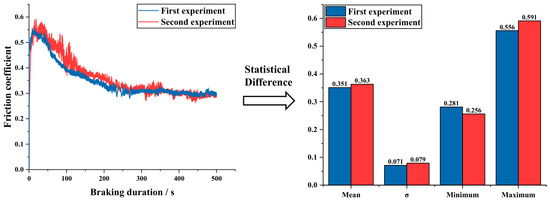
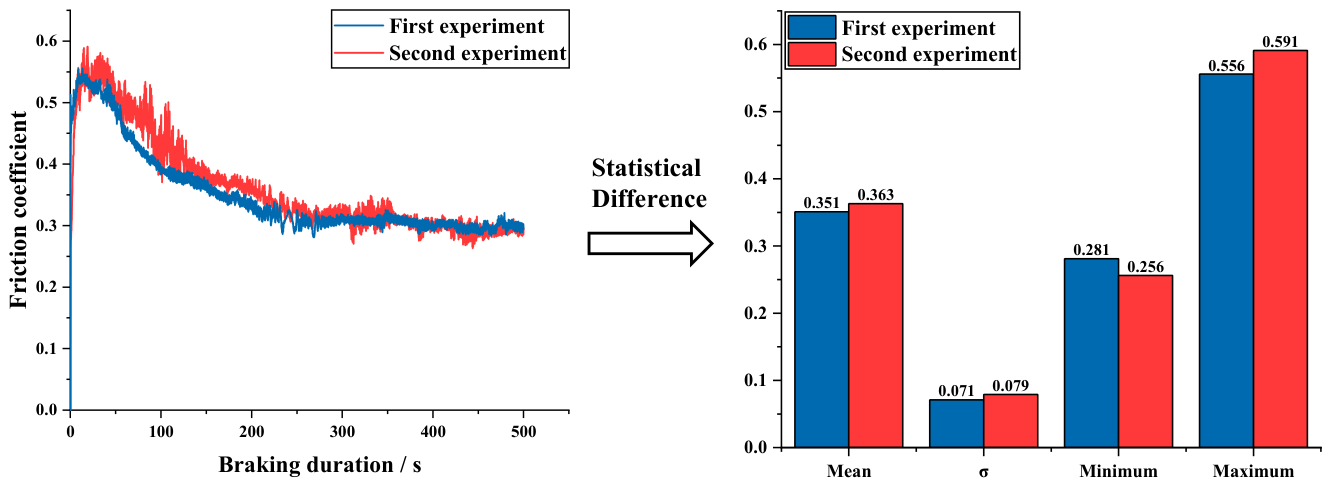
In order to avoid the measurement error caused by temperature residual, after each braking, wait until all parts of the test bench are fully cooled to room temperature before the next braking. At the same time, in order to ensure the repeatability of test results, two parallel tests are carried out for each group of test parameters. Due to the fact that the friction coefficient is a comprehensive indicator reflecting the friction and wear process, here, taking the result of 40 km/h as an example, as shown in Figure 4, the friction coefficient curves of two parallel tests are provided, as well as the statistical differences between the two sets of data, including the average value (represented by Mean), the standard deviation (represented by σ), the minimum value (represented by Minimum) and the maximum value (represented by Maximum). It can be observed that the results have good consistency.
Figure 4.
Friction coefficient curve of two parallel tests at 40 km/h.
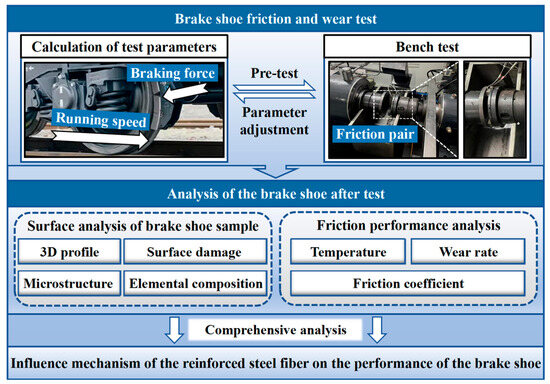
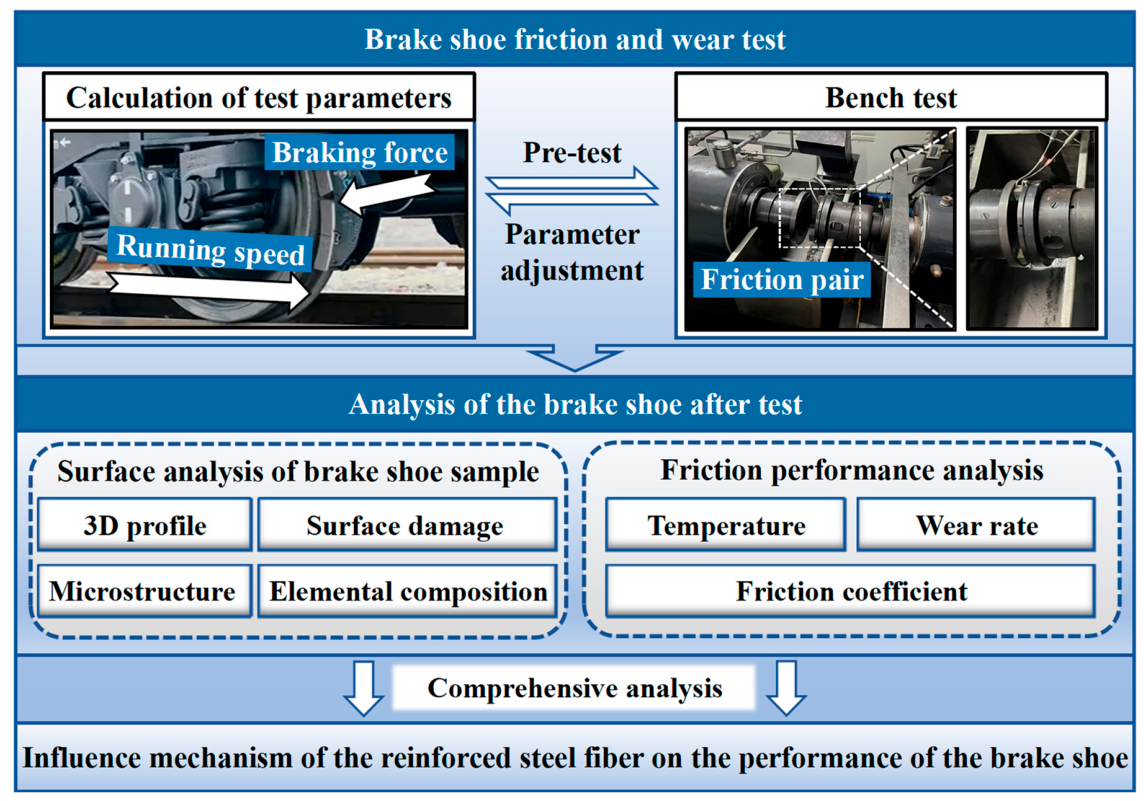
Due to the high consistency of parallel test results, the last test data is selected for subsequent analysis. After the test, the electronic balance was used to measure the wear quality of the brake shoe samples, and the micro damage analysis of the friction and wear surface of the brake shoe samples was carried out to reveal the influence mechanism of the RSF on the service performance of the brake shoe, and the friction and wear behavior of the HFC brake shoe of freight trains was analyzed. The technical route of this paper is shown in Figure 5.
Figure 5.
Technical route.
3. Experimental Results and Discussion
3.1. Overall Morphology of Brake Shoe Sample
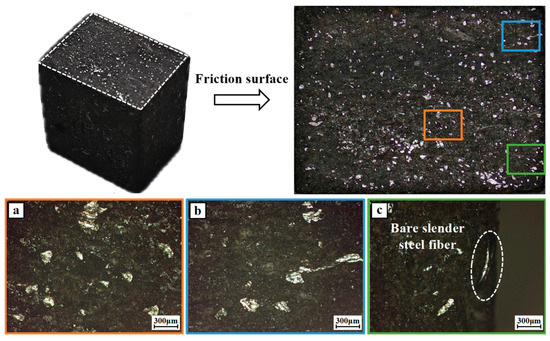
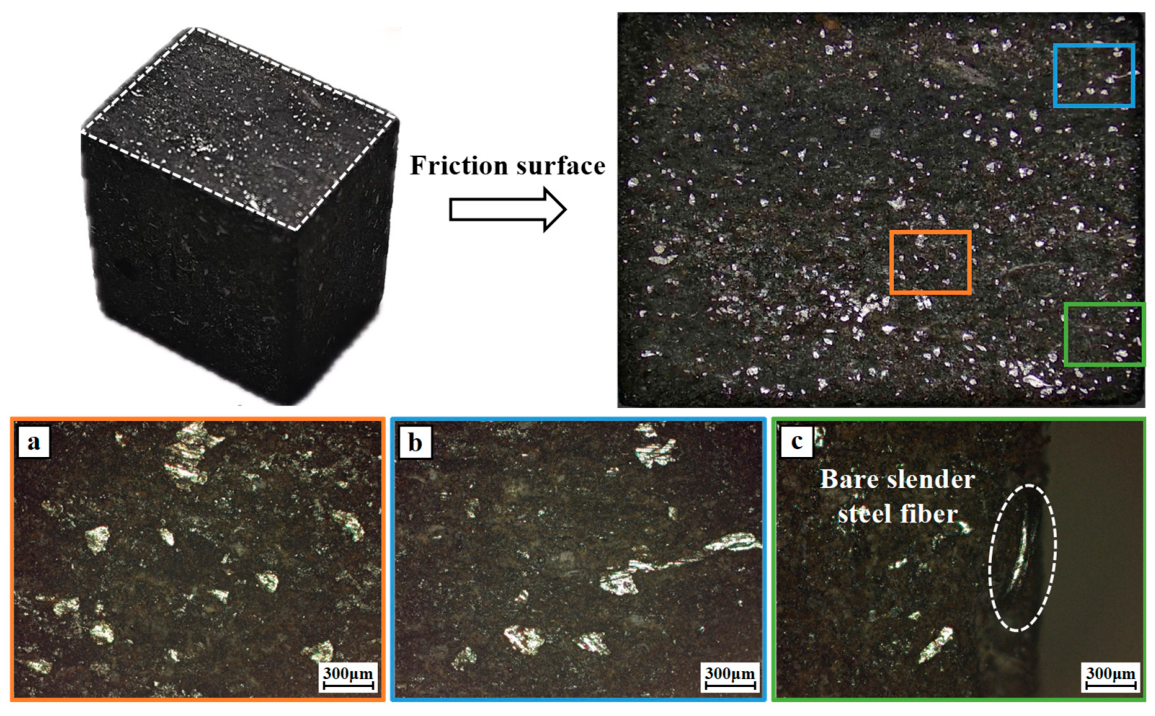
First, the original surface state of the brake shoe sample is given to provide a reference for subsequent analysis of surface state changes, as shown in Figure 6. It can be observed that the original surface of the analyzed brake shoe material exhibits a dull appearance with dispersed bright white spots. These spots correspond to the RSF phases within the friction material, showing randomly distributed discrete or clustered features. There are two different morphologies of RSF in the visible part of the friction surface. One is the end section of the RSF, which is shown as fine white spots, as shown in Figure 6a. The other is the section along the length of the RSF, which is shown as a slender white strip, as shown in Figure 6b. Furthermore, an obvious bare, slender steel fiber can be observed at the edge of the sample block, as shown in Figure 6c. The slender structure of RSF helps to make most of them participate only in wear at one end, and the other end is deeply buried in the friction surface.
Figure 6.
Distribution of steel fibers on the original surface of the brake shoe sample. (a) Location a, (b) Location b, (c) Location c.
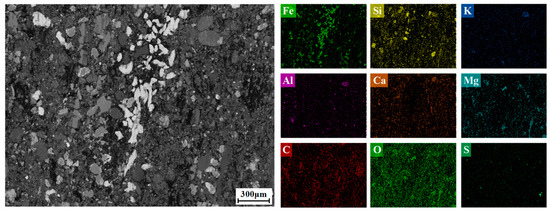
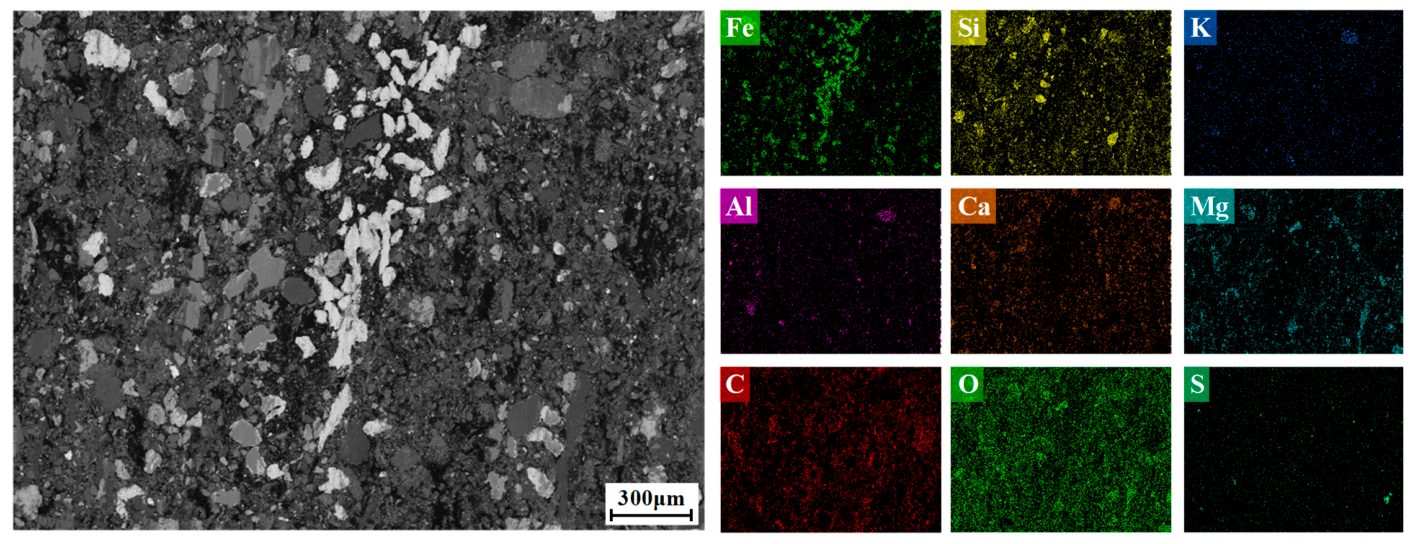
The elemental composition of the micro-area in the brake shoe sample is shown in Figure 7. It is evident that the HFC brake shoe studied in this study contains not only RSF, but also solid lubricant graphite, friction-modifying fillers such as bauxite, friction coefficient-regulating potassium feldspar powder, as well as binders, indicating a complex composition.
Figure 7.
Elemental composition of brake shoe sample.
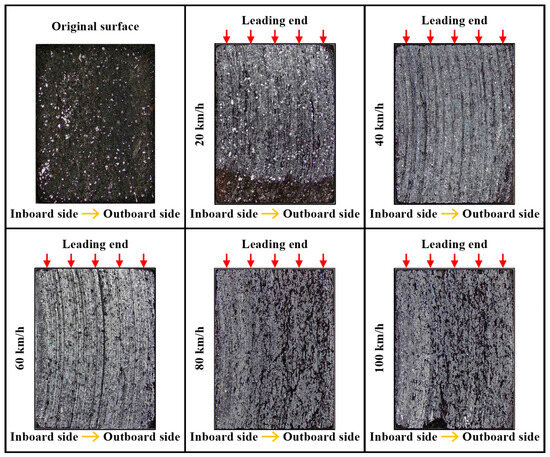
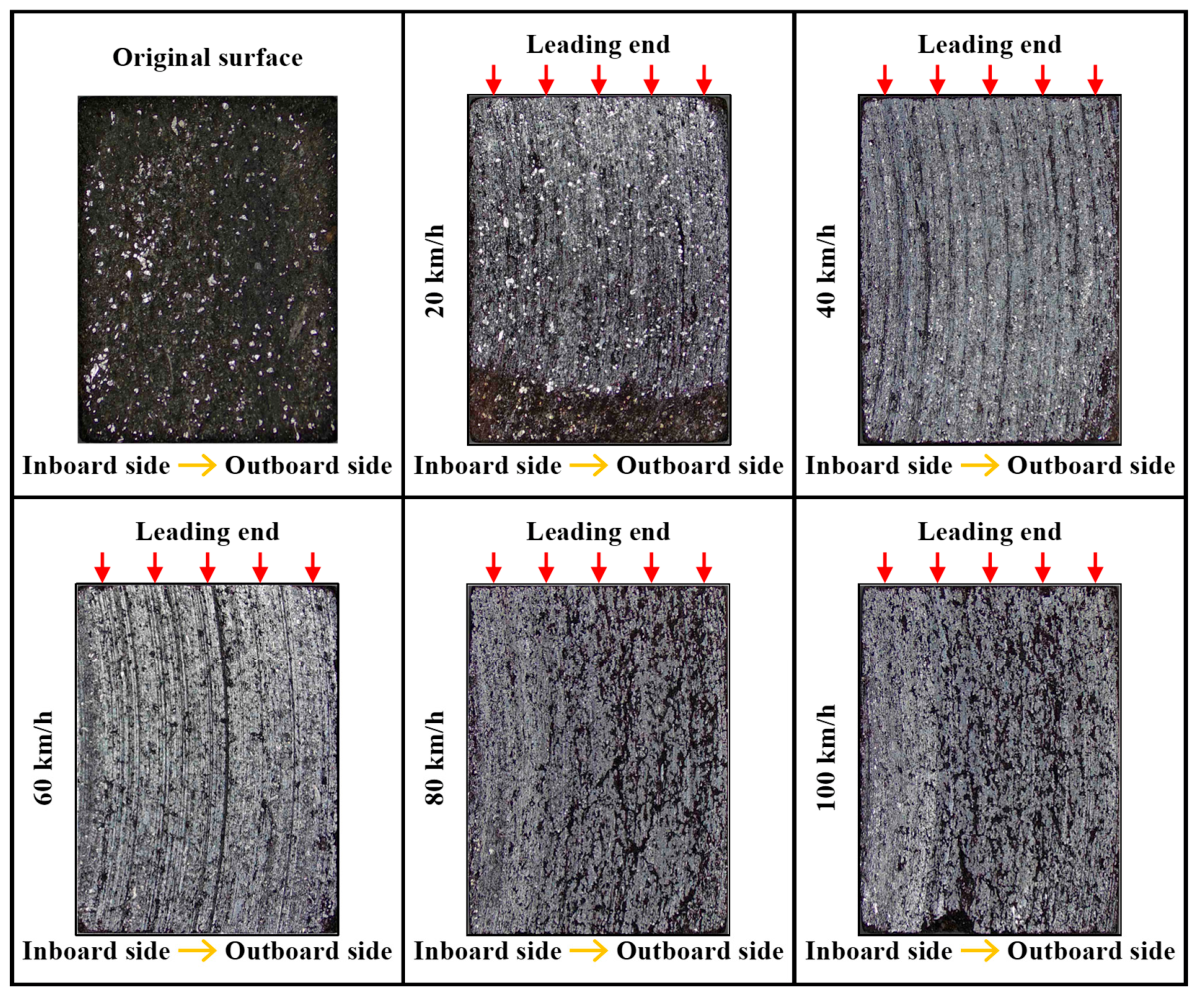
The overall surface morphology of the brake shoe sample after testing is shown in Figure 8. In the figure, the red arrow represents the leading end to trailing end along the friction direction, and the yellow arrow represents the inboard side to outboard side along the friction radius. It is evident that compared to the pre-test sample, distinct friction and wear marks have appeared on the post-test surface. At a lower speed of 20 km/h, the wear degree was relatively light, and the friction contact surface of the brake shoe was insufficient to cover the entire sample surface. As the speed continuously increased, the friction contact area gradually expanded across the entire sample surface. With a further increase in speed, the wear intensified. When the speed reached 100 km/h, edge spalling of the brake shoe sample was observed.
Figure 8.
Overall surface morphology of the brake shoe sample after testing.
3.2. Morphology of Surface Damage
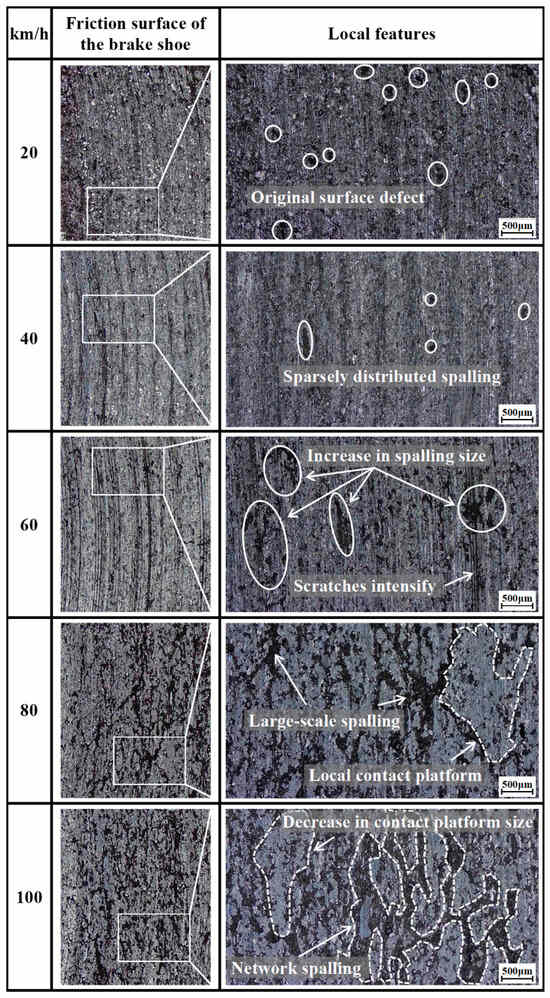
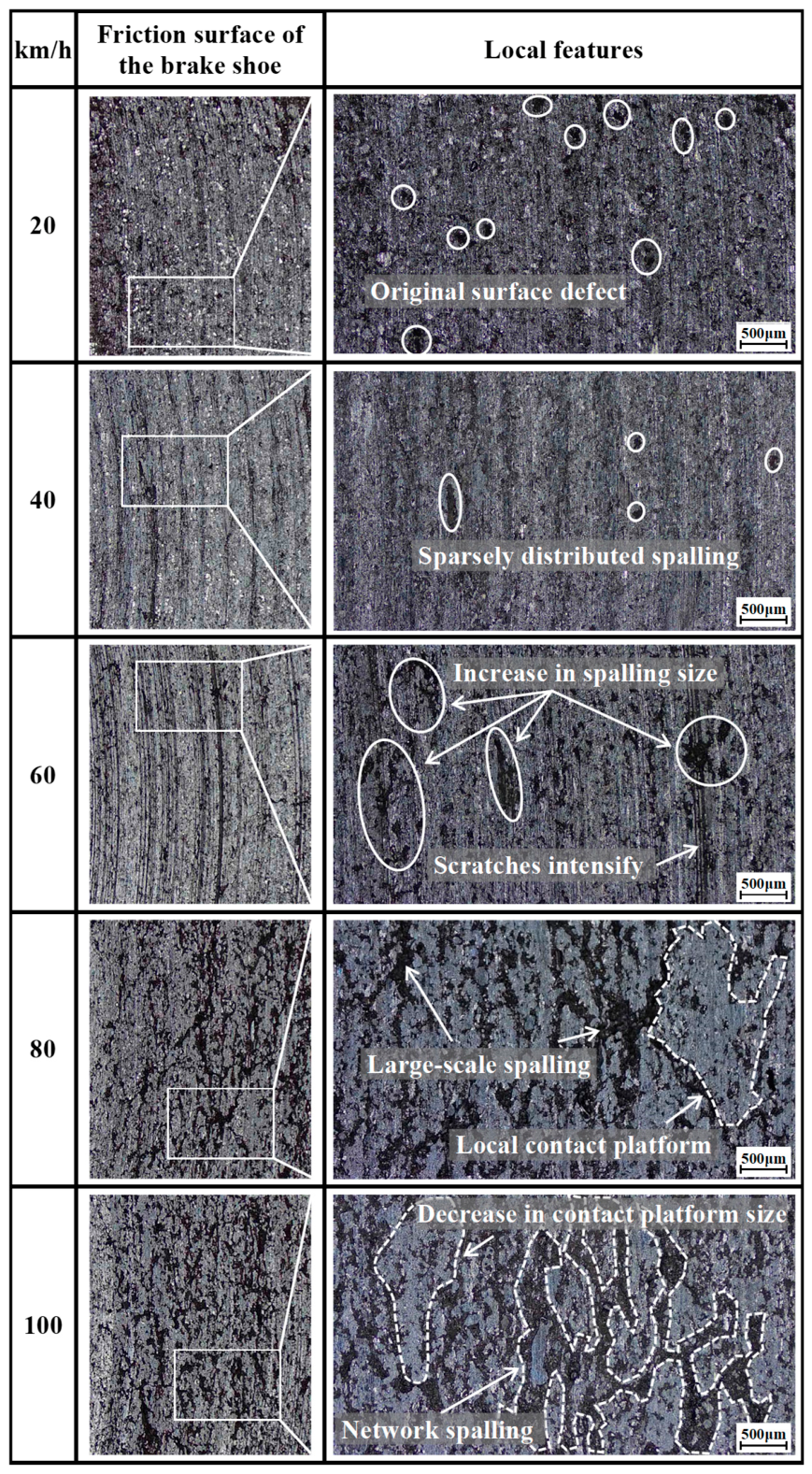
To compare the typical surface features of the worn brake shoe samples, a relatively macroscopic characterization analysis was first conducted. The differences in typical damage features, such as contact platform and spalling, on the friction surface of the brake shoe samples at different speed levels are shown in Figure 9. As shown in the figure, at the speed level of 20 km/h, due to the relatively mild operating conditions, a large number of original surface defects were retained on the brake shoe friction surface. When the speed increased to 40 km/h, the original surface defects on the brake shoe sample were gradually worn away, and the friction surface began to exhibit sparsely distributed small-sized spalling and slight scratches. At the speed level of 60 km/h, the scratches on the friction surface of the brake shoe sample intensified, and the size of the spalling also increased. The more severe scratch areas were mainly located near the spalling sites. This is possibly because the wear debris generated from material spalling participated in the interfacial friction process, and the hard particles within the debris scratched the sample surface, leading to the appearance of more severe scratches on the brake shoe friction surface. When the test speed was raised to 80 km/h, surface cracks began to appear on the friction surface of the brake shoe sample. The spalling size further increased with a tendency to interconnect, but simultaneously, a relatively large local contact platform also emerged. As the speed continued to increase to 100 km/h, both the quantity and size of the spalling on the brake shoe sample surface increased significantly. The surface spalling extended to form a network-like pattern, and the size of the contact platform decreased. Evidently, the increase in speed led to significant changes in the wear behavior of the brake shoe.
Figure 9.
Surface features of brake shoe samples at different speed levels.
3.3. Influence of RSF
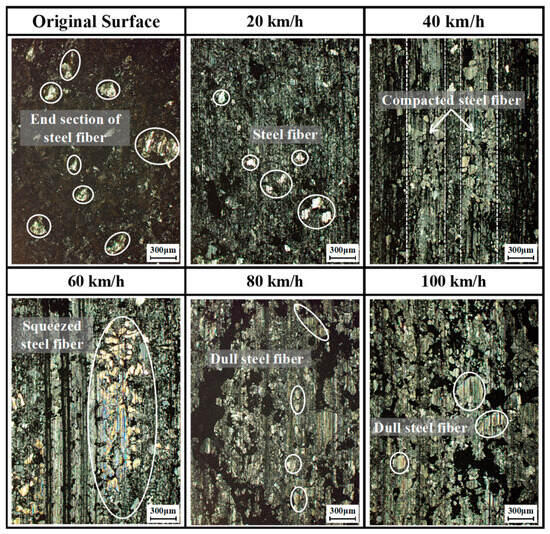
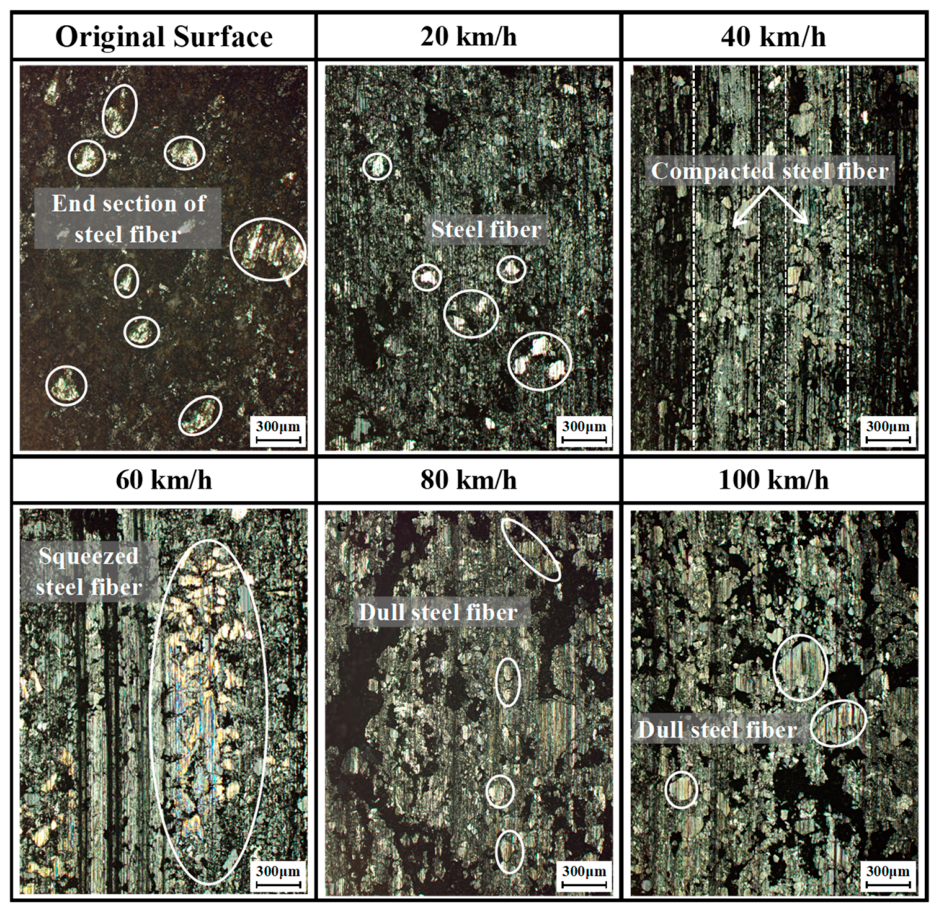
In order to analyze the effect of RSF on the friction and wear of brake shoes, Figure 10 presents the features of morphological changes in the RSF structure at different speed levels. In the original brake shoe sample, the steel fibers on the surface exhibit typical end section features. Due to their high strength, the steel fibers exposed at the friction surface can act as the primary friction structure to be consumed during the friction process. At the speed level of 20 km/h, distinct end section features of the steel fibers are still observable on the friction surface of the brake shoe sample. When the speed increases to 40 km/h, the RSF begin to be compacted, forming a contact platform. As the speed reaches 60 km/h, the increase in friction interface temperature intensifies the oxidation of the steel fibers, and the fibers on the friction surface of the brake shoe sample are gradually flattened. With a further speed increase to 80 km/h and 100 km/h, intensified wear causes a marked attenuation, or even the complete disappearance, of the polished and smooth appearance of the steel fiber on the friction surface. At this stage, the high friction temperature softens the surface material of the brake shoe. The plastically deformed matrix material mixes with the steel fibers to form a larger contact platform. The high strength of the steel fibers prevents large-scale collapse of the friction surface, thereby helping to maintain the friction and wear performance of the brake shoe to a certain extent.
Figure 10.
Structural morphology of RSF at different speed levels.
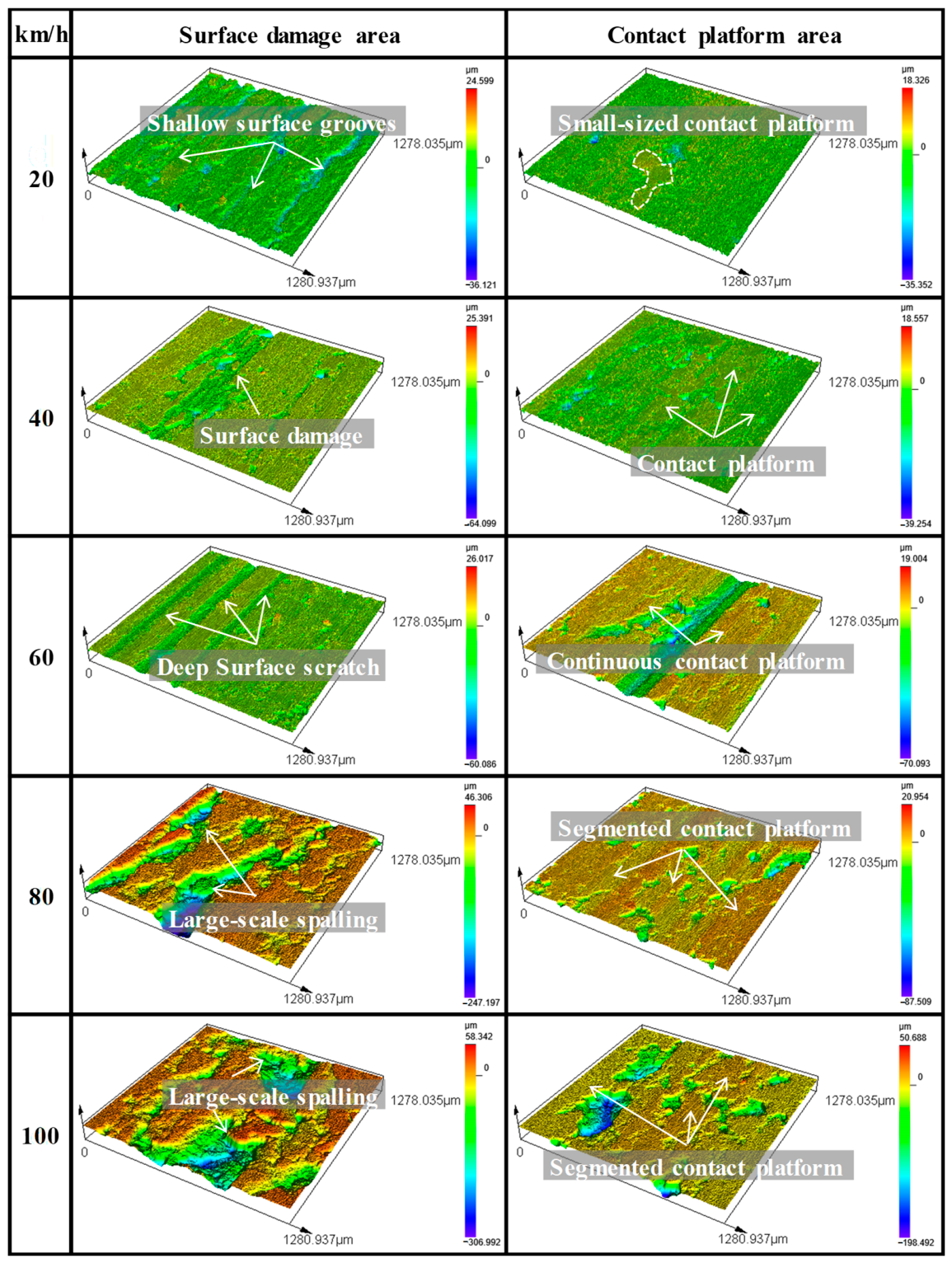
3.4. 3D Topography of the Damage
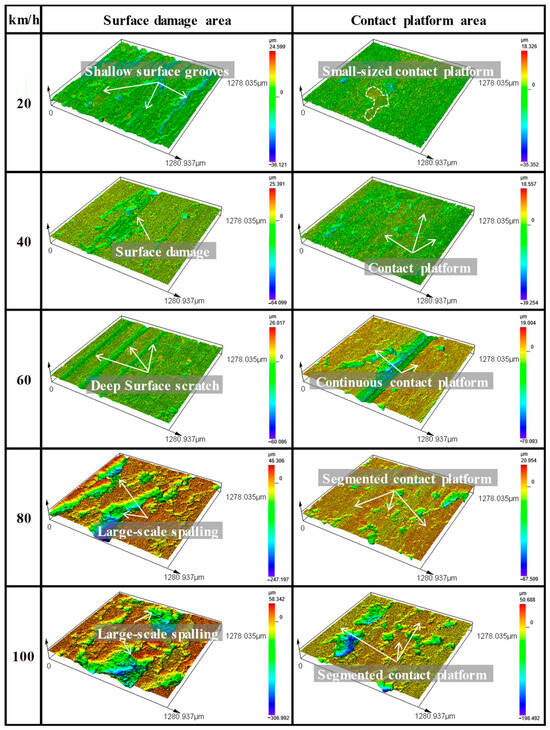
Following a comprehensive understanding of the surface damage features of the brake shoe samples and the functional behavior of the RSF during braking, 3D profilometry scanning was further conducted on the typical damaged area and contact platform area, as shown in Figure 11. At the speed level of 20 km/h, the surface damage on the brake shoe sample was mild and shallow. No continuous contact platforms were formed on the friction surface; instead, small-sized contact platforms were isolated and sporadically distributed. When the speed increased to 40 km/h, contact platforms began to form progressively, and the depth of local surface damage increased. At 60 km/h, a relatively deep and large scratch, aligned parallel to the sliding direction, formed on the friction surface of the brake shoe sample. The contact platforms in this stage were relatively flat and continuous. As the speed continued to increase to 80 km/h and 100 km/h, the state of the friction surface became similar. Although locally large contact platforms were present, the continuity has decreased to some extent. The size and depth of spalling increased significantly, and surface damage tended to connect, segmenting the contact platforms.
Figure 11.
3D surface topography of brake shoe samples at different speed levels.
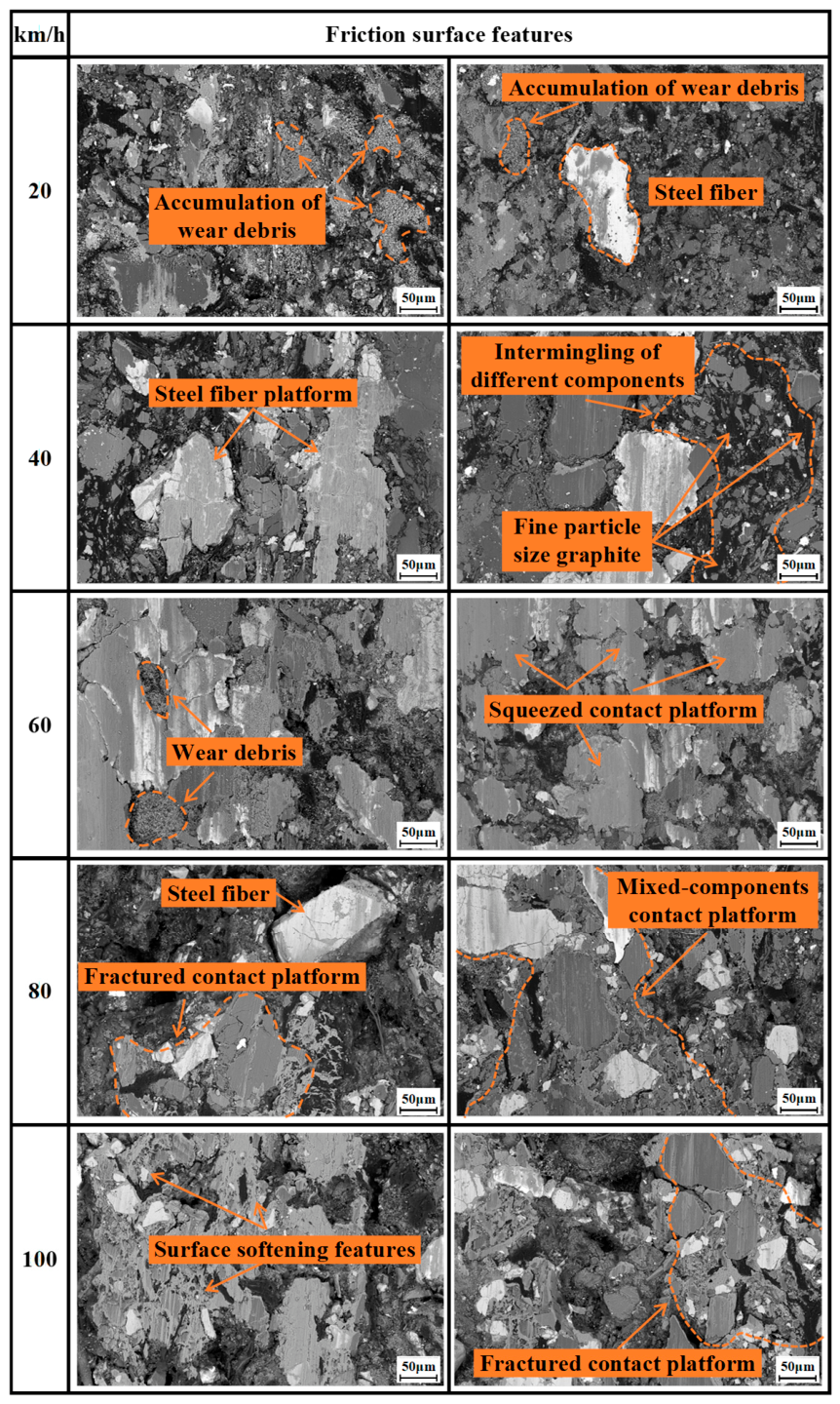
3.5. Micro-Damage Morphology
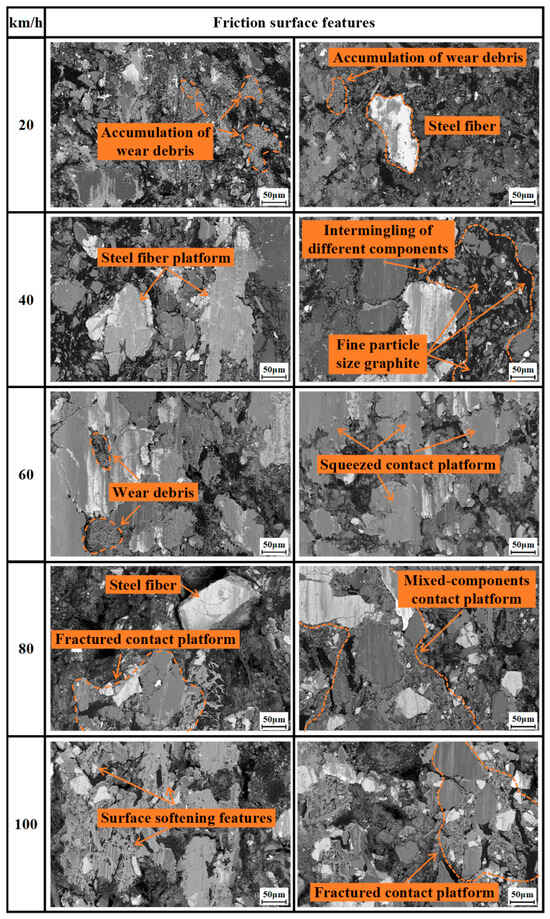
The micro-damage morphology of the HFC brake shoes at different speed levels is shown in Figure 12. At the 20 km/h speed level, the surface wear of the brake shoe was relatively mild. A significant amount of wear debris was present, accumulating within small-sized spalling pits. When the speed increased to 40 km/h, the amount of surface wear debris decreased notably. The generated debris tended to detach from the friction surface. The steel fibers functioned as contact platforms, while the matrix components surrounding the steel fibers also formed contact platforms. Furthermore, the different components at the friction interface became intermixed and interwoven, effectively trapping the surface wear debris. The graphite filled within the gaps between these components acted as an effective lubricant. Its fine particle size prevented it from being compacted into lumps or causing large-scale spalling. As the speed increased to 60 km/h, the steel fibers were gradually squeezed, forming larger contact platforms. Flake-like spalling was sporadically generated on these squeezed steel fiber platforms, with wear debris filling the resulting spalling pits. These flake-like spalls could not be effectively retained on the surface; their hard nature caused surface scratching, and they eventually detached from the friction interface as the friction process continued. When the speed rose to 80 km/h, the flattened steel fiber contact platforms could not maintain their larger size. They progressively fractured and became intermixed with the brake shoe matrix, forming contact platforms with a more complex material composition. At the speed of 100 km/h, the elevated friction temperature caused the binder to soften and undergo plastic flow. Consequently, the contact platforms, composed of a mixture of steel fibers and matrix material, could not maintain their original structural morphology. The contact platforms fractured, leading to severe spalling.
Figure 12.
Micro-damage morphology of brake shoe samples at different speed levels.
3.6. Friction Performance
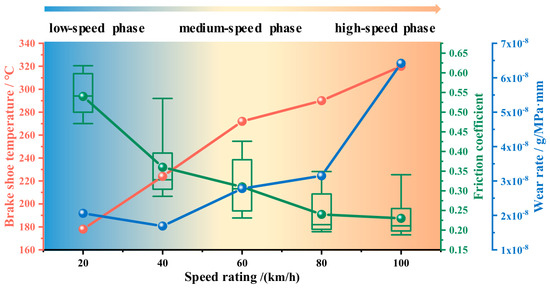
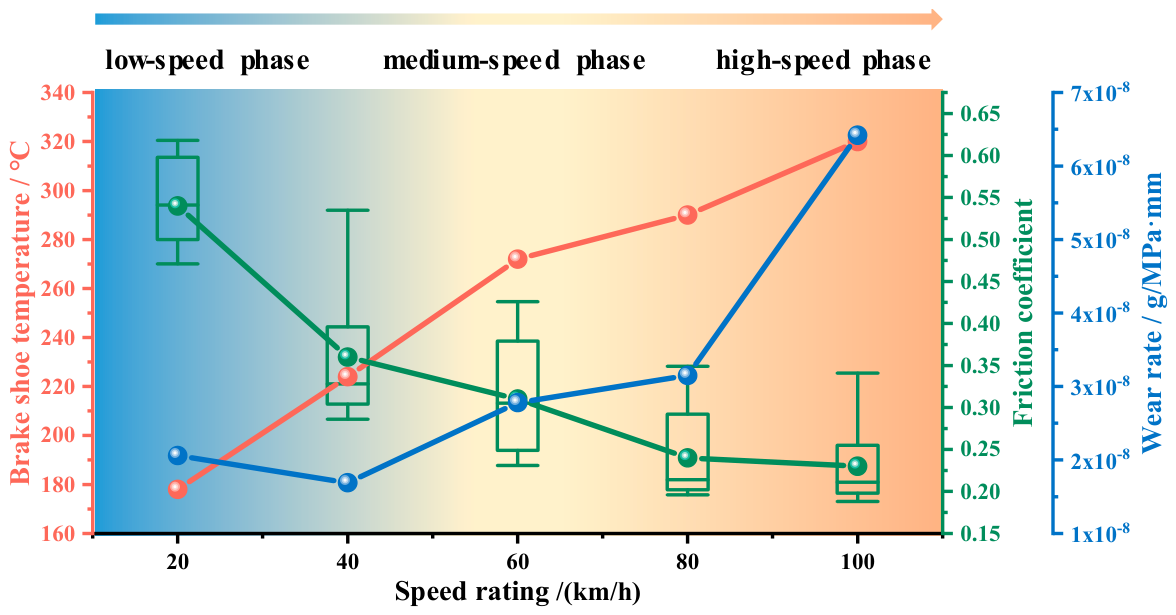
Since the temperature at the brake shoe friction interface cannot be measured directly, the brake shoe temperature was obtained via thermocouples placed in holes 3 mm from the friction surface. The wear rate was calculated from the mass loss and braking energy. The friction coefficient was derived from the friction torque sensor data and the applied braking force. Due to the fluctuation of the friction coefficient during the friction process, we have provided a box plot of the friction coefficient. Meanwhile, as the average value effectively reflects the overall changes in the entire friction process, it will be used for explanation in subsequent analysis and comparison. The friction performance results of the HFC brake shoes for freight trains at different speed levels are shown in Figure 13. It can be observed that as the test speed increased, the temperature of the brake shoe sample continuously rose, the friction coefficient continuously declined, and the wear rate showed an increasing trend after initial fluctuation. At 20 km/h, as analyzed in the previous section, the friction surface contained a significant amount of wear debris, and the fine debris was embedded in the surface. Furthermore, the low wear rate and initial surface damage resulted in relatively high surface roughness, which collectively contributed to the higher friction coefficient at this stage. When the speed increases to 40 km/h, the original surface defects are worn off, and the contact platform begins to form stably. Fine graphite particles are pressed into these platforms to provide lubrication. At the same time, the amount of wear debris on the friction surface decreases. The synergistic effect of these factors leads to a significant decrease in the friction coefficient. The increased energy input due to the increase in speed is offset by the decrease in the friction coefficient, thereby preventing severe spalling of the friction surface. This results in a slight decrease in wear rate at this speed. At 60 km/h, the higher speed introduced more frictional heat input, further raising the brake shoe temperature. The contact platforms on the surface expanded and experienced partial spalling, leading to an increase in the wear rate. The generated wear debris entered the friction interface and participated in the friction process, which slowed the declining trend of the friction coefficient. As the speed continued to rise to 80 km/h, the brake shoe temperature and wear rate increased slightly further, and the friction coefficient decreased further. Ultimately, at 100 km/h, the severe operating conditions of high speed and high temperature caused organic components in the brake shoe, particularly the binder, to soften or even decompose at high temperatures. This led to a further decrease in the friction coefficient and made it difficult for the brake shoe to maintain a stable friction surface, resulting in severe damage such as large-scale spalling and surface cracks. This dramatically accelerated brake shoe wear, causing the wear rate to surge rapidly. Therefore, for the existing HFC brake shoes containing RSF for general freight trains, reaching 100 km/h results in the simultaneous occurrence of a low friction coefficient and a high wear rate, making it difficult to ensure braking safety. Any further increase in speed would significantly impair the braking performance and operational safety of the freight train.
Figure 13.
Friction and wear performance of brake shoes at different speed levels.
4. Analysis and Discussion
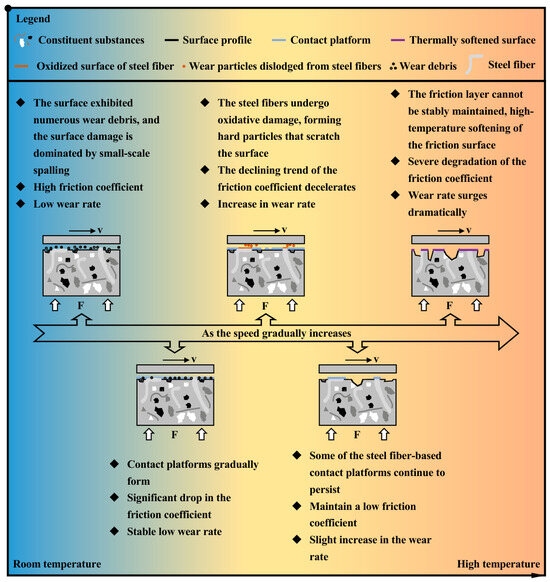
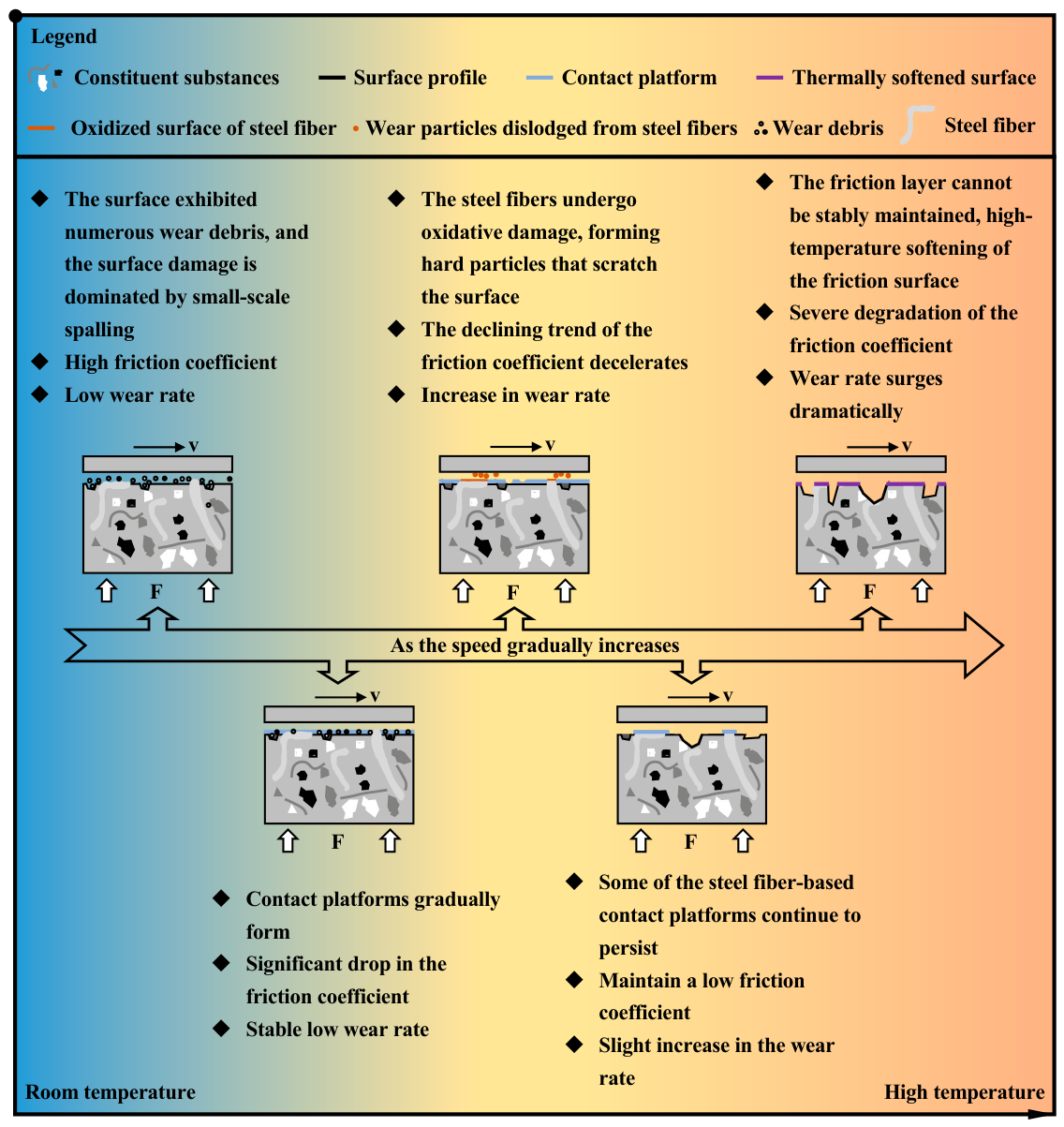
For the currently used HFC brake shoes for general freight trains, the state of the brake shoe friction surface undergoes a process progressing from a rough texture to a smooth and flat state, and finally to extensive damage as the speed level gradually increases, as shown in Figure 14. At lower speeds, the surface damage is dominated by small-scale spalling. The presence of numerous wear debris on the friction surface increases surface roughness, maintaining a relatively high friction coefficient. Concurrently, the friction interface remains relatively stable, resulting in the overall wear rate of the brake shoe being within a low range. As speed increases, the friction interface temperature rises. Contact platforms, primarily based on the RSF, gradually form, and the surface begins to exhibit smooth and flat features, leading to a significant drop in the friction coefficient. With a continued increase in speed, the amount of fine wear debris begins to rise, and larger spalling starts to occur. Under the combined action of high friction temperature and speed, the steel fibers, which play a primary load-bearing role, undergo oxidation. Worn steel fiber material enters the friction surface as hard particles, causing surface scratching and thereby slowing the rate of decline in the friction coefficient. Under high-speed conditions, the steel fiber platforms begin to fracture and break down. However, due to their inherently high strength, the steel fibers partially retain their structural form. Some of the steel fiber-based contact platforms continue to persist, maintaining the friction process. At this stage, the wear rate of the brake shoe increases slightly further, and the high interface temperature drives the friction coefficient even lower. Subsequently, as speed increases further, the flat friction layer on the brake shoe surface cannot be stably maintained. This inevitably leads to severe surface damage, characterized by a high density of cracks. The wear rate of the brake shoe surges dramatically. High-temperature softening causes severe degradation of the friction coefficient. The simultaneous occurrence of a low friction coefficient and a high wear rate poses a threat to braking safety.
Figure 14.
Evolution of brake shoe friction and wear behavior with speed level.
In summary, for the currently used HFC brake shoes containing RSF, during the friction process, the scattered steel fiber on the friction surface serves a dual function. Firstly, they act as primary contact platforms, around which various components can aggregate. Their high hardness provides sufficient support and mechanical strength to the friction surface. Secondly, some of the wear debris generated is retained within the interstices of these primary platforms, promoting the formation of secondary contact platforms. These primary and secondary platforms gradually coalesce and expand, ultimately forming a continuous friction layer. However, as the main component responsible for maintaining the structural integrity of the brake shoe, when the steel fibers undergo wear, severe surface damage progressively manifests. Therefore, the structural stability of the steel fibers has a significant influence on maintaining the friction performance of the brake shoe.
It should be pointed out that due to practical limitations, this study only focused on a specific brake shoe material that has already been maturely used. The key feature of this brake shoe is the addition of steel fibers to enhance mechanical strength and wear resistance. Through the analysis of the friction surface morphology, it can be seen that these steel fibers have undergone significant structural changes under different experimental conditions. It needs to be noted that the material composition of the brake shoe is complex. In addition to steel fibers, there are also matrix, filler, graphite, adhesive and other components. Therefore, although it is inferred that the differences in braking performance at different speeds may be attributed to the structural evolution of steel fibers, there may be certain limitations in not distinguishing the influence of steel fibers and other components on the friction and wear process.
5. Conclusions
As the core component of the tread brake system for railway freight trains, HFC brake shoes have a decisive influence on the braking efficiency and operational stability of general freight trains. Through continuous braking tests conducted on HFC brake shoes, this study analyzed the role of RSFs in the braking friction process, explored the performance of the currently used brake shoes, and investigated the braking performance at different speed levels. Under the research conditions of this work, the main conclusions are as follows:
(1) The presence of steel fibers reinforces the strength of the brake shoe friction body. The RSFs facilitate the formation of continuous contact platforms. Due to the unique elongated, strip-like morphology of the fibers, although oxidation, wear, and gradual deterioration of the contact surface occur, the remaining section embedded within the substrate can continue to support the existence of the contact platform and maintain the progression of the friction process.
(2) During the low-speed stage, contact platforms gradually developed on the brake shoe friction surface, and the amount of wear debris decreased, which resulted in a significant plummet in the friction coefficient, while the wear rate underwent minor fluctuations. In the medium-speed stage, the RSF began to oxidize and was gradually worn into hard debris. This caused surface scratching and simultaneously slowed the declining trend of the friction coefficient. Under high-speed conditions, the elevated temperature caused the friction surface to soften and undergo plastic flow, making it difficult to maintain stability. The occurrence of large-scale spalling increased, leading to a substantial surge in the wear rate.
(3) Under the continuous braking conditions analyzed in this article, for the currently used HFC brake shoes for general freight trains, at speeds up to 80 km/h, although the friction coefficient decreases to some extent, the wear rate maintains a relatively low range. When the speed increases to 100 km/h, the friction coefficient deteriorates significantly, and the wear rate of the brake shoes increases sharply, which may endanger braking safety.
(4) Based on the analysis in the article, it is found that the braking performance of the composite brake shoes is closely related to the RSF during continuous braking, especially under high-speed braking conditions. Therefore, adjusting the parameters of the steel fibers, such as length, diameter, volume fraction, and tensile strength, could optimize the braking performance of the composite brake shoes, which can be studied in the future.
Author Contributions
Conceptualization, C.L. and J.M.M.-E.; methodology, C.L. and H.W.; software, H.W. and X.Z.; validation, C.L., H.W. and X.Z.; formal analysis, H.W. and J.S.; investigation, H.W.; resources, C.L.; data curation, H.W. and G.C.; writing—original draft preparation, H.W.; writing—review and editing, C.L. and J.M.M.-E.; visualization, H.W. and X.Z.; supervision, C.L.; project administration, C.L.; funding acquisition, C.L. All authors have read and agreed to the published version of the manuscript.
Funding
The work is financially supported by the Natural Science Foundation of Sichuan Province (2025ZNSFSC0386) and the Fundamental Research Funds for the Central Universities (2682025GH009).
Data Availability Statement
The raw data supporting the conclusions of this article will be made available by the authors on request.
Conflicts of Interest
The authors declare no conflict of interest.
References
- Chen, S.; Zhao, G.; Wang, H.; Tao, G.; Wen, Z.; Wu, L. Study of Wheel Wear Influenced by Tread Temperature Rising during Tread Braking. Wear 2019, 438–439, 203046. [Google Scholar] [CrossRef] [Scilit]
- Faccoli, M.; Provezza, L.; Petrogalli, C.; Ghidini, A.; Mazzù, A. Effects of Full-Stops on Shoe-Braked Railway Wheel Wear Damage. Wear 2019, 428–429, 64–75. [Google Scholar] [CrossRef] [Scilit]
- Günay, M.; Korkmaz, M.E.; Özmen, R. An Investigation on Braking Systems Used in Railway Vehicles. Eng. Sci. Technol. Int. J. 2020, 23, 421–431. [Google Scholar] [CrossRef] [Scilit]
- Ferrer, C.; Pascual, M.; Busquets, D.; Rayón, E. Tribological Study of Fe–Cu–Cr–Graphite Alloy and Cast Iron Railway Brake Shoes by Pin-on-Disc Technique. Wear 2010, 268, 784–789. [Google Scholar] [CrossRef] [Scilit]
- Zhang, J.; Zuo, J.; Ding, J. A Wave-Based Heat Source Model for Predicting Frictional Temperature Rise in Wheel–Brake Shoe Contacts on Long Downhill Slopes. Case Stud. Therm. Eng. 2025, 73, 106528. [Google Scholar] [CrossRef] [Scilit]
- Wasilewski, P. Experimental Study on the Effect of Formulation Modification on the Properties of Organic Composite Railway Brake Shoe. Wear 2017, 390–391, 283–294. [Google Scholar] [CrossRef] [Scilit]
- Nidhi; Bijwe, J.; Mazumdar, N. Influence of Amount and Modification of Resin on Fade and Recovery Behavior of Non-Asbestos Organic (NAO) Friction Materials. Tribol. Lett. 2006, 23, 215–222. [Google Scholar] [CrossRef] [Scilit]
- Nidhi; Bijwe, J. NBR-Modified Resin in Fade and Recovery Module in Non-Asbestos Organic (NAO) Friction Materials. Tribol. Lett. 2007, 27, 189–196. [Google Scholar] [CrossRef] [Scilit]
- Bijwe, J.; Nidhi; Majumdar, N.; Satapathy, B.K. Influence of Modified Phenolic Resins on the Fade and Recovery Behavior of Friction Materials. Wear 2005, 259, 1068–1078. [Google Scholar] [CrossRef] [Scilit]
- Monreal-Pérez, P.; López, D.; Sola, I.; Erroz, P. The Role of Glass Fiber Morphology on the Friction Behavior and Wear Mechanism of Low Steel-NAO Hybrid Railway Brake Shoes. Tribol. Int. 2023, 178, 108079. [Google Scholar] [CrossRef] [Scilit]
- Monreal-Pérez, P.; González, J.; Iraizoz, A.; Bilbao, U.; Clavería, I. Effect of the Steel Fiber Length on the Friction Performance and Wear Mechanism of Railway Brake Shoes. Tribol. Int. 2022, 172, 107589. [Google Scholar] [CrossRef] [Scilit]
- Monreal-Perez, P.; Elduque, D.; López, D.; Sola, I.; Yaben, J.; Clavería, I. Full-Scale Dynamometer Tests of Composite Railway Brake Shoes Including Latxa Sheep Wool Fibers. J. Clean. Prod. 2022, 379, 134533. [Google Scholar] [CrossRef] [Scilit]
- Wasilewski, P. Full-Scale Dynamometer Test of Composite Railway Brake Shoes-Study on the Effect of the Reinforcing Fibre Type. Acta Mech. Autom. 2018, 12, 204–208. [Google Scholar] [CrossRef] [Scilit]
- Mazzù, A.; Provezza, L.; Zani, N.; Petrogalli, C.; Ghidini, A.; Faccoli, M. Effect of Shoe Braking on Wear and Fatigue Damage of Various Railway Wheel Steels for High Speed Applications. Wear 2019, 434–435, 203005. [Google Scholar] [CrossRef] [Scilit]
- Mazzù, A.; Ghidini, A.; Provezza, L.; Petrogalli, C.; Faccoli, M. Study of the Damage Induced by Thermomechanical Load in ER7 Tread Braked Railway Wheels. Procedia Struct. Integr. 2019, 18, 170–182. [Google Scholar] [CrossRef] [Scilit]
- Su, J.; Ding, H.; Wang, W.; Huang, X.; Zhang, S.; Lewis, R.; Meli, E.; Liu, Q.; Zhou, Z. Experimental Study on the Effect of Brake Shoe Pressure on Wheel Wear and Fatigue Damage Behavior during Tread Braking. Wear 2025, 571, 205840. [Google Scholar] [CrossRef] [Scilit]
- Luo, Y.; Tao, G.; Su, J.; Wen, Z.; Wang, W.; Liu, K. Frictional Temperature Prediction of Freight Wagon Wheel-Brake Shoe during Non-Steady Tread Braking on Long and Steep Slope Considering Real-Time Temperature Monitoring. Appl. Therm. Eng. 2026, 288, 129638. [Google Scholar] [CrossRef] [Scilit]
- He, C.; Ji, Y.; Pei, D.; Gao, M.; Chen, C.; Zhao, J.; Wang, W. Morphology and Composition of the Third Body on the Friction Surface of an Organic Composite Railway Brake Shoe. Coatings 2023, 13, 952. [Google Scholar] [CrossRef] [Scilit]
- Faccoli, M.; Ghidini, A.; Mazzù, A. Experimental and Numerical Investigation of the Thermal Effects on Railway Wheels for Shoe-Braked High-Speed Train Applications. Metall. Mater. Trans. A 2018, 49, 4544–4554. [Google Scholar] [CrossRef] [Scilit]
- Faccoli, M.; Ghidini, A.; Mazzù, A. Changes in the Microstructure and Mechanical Properties of Railway Wheel Steels as a Result of the Thermal Load Caused by Shoe Braking. Metall. Mater. Trans. A 2019, 50, 1701–1714. [Google Scholar] [CrossRef] [Scilit]
- Meierhofer, A.; Hardwick, C.; Lewis, R.; Six, K.; Dietmaier, P. Third Body Layer—Experimental Results and a Model Describing Its Influence on the Traction Coefficient. Wear 2014, 314, 148–154. [Google Scholar] [CrossRef] [Scilit]
- Lu, C.; Jiang, X.; Chen, X.; Mo, J. Experimental Study on the Evolution of Friction and Wear Behaviours of Railway Friction Block during Temperature Rise under Extreme Braking Conditions. Eng. Fail. Anal. 2022, 141, 106621. [Google Scholar] [CrossRef] [Scilit]
- TB/T 3104.1; Brake Shoes for Rolling Stock-Part 1: Composite Brake Shoes. China Railway: Beijing, China, 2020.

Disclaimer/Publisher’s Note: The statements, opinions and data contained in all publications are solely those of the individual author(s) and contributor(s) and not of MDPI and/or the editor(s). MDPI and/or the editor(s) disclaim responsibility for any injury to people or property resulting from any ideas, methods, instructions or products referred to in the content. |
© 2026 by the authors. Licensee MDPI, Basel, Switzerland. This article is an open access article distributed under the terms and conditions of the Creative Commons Attribution (CC BY) license.