Study on Thermal–Fluid–Solid Coupling Characteristics of a Scroll Compressor in an Oil–Gas Waste Heat Recovery Heat Pump System


Abstract
1. Introduction
2. Materials and Methods
2.1. Physical Model
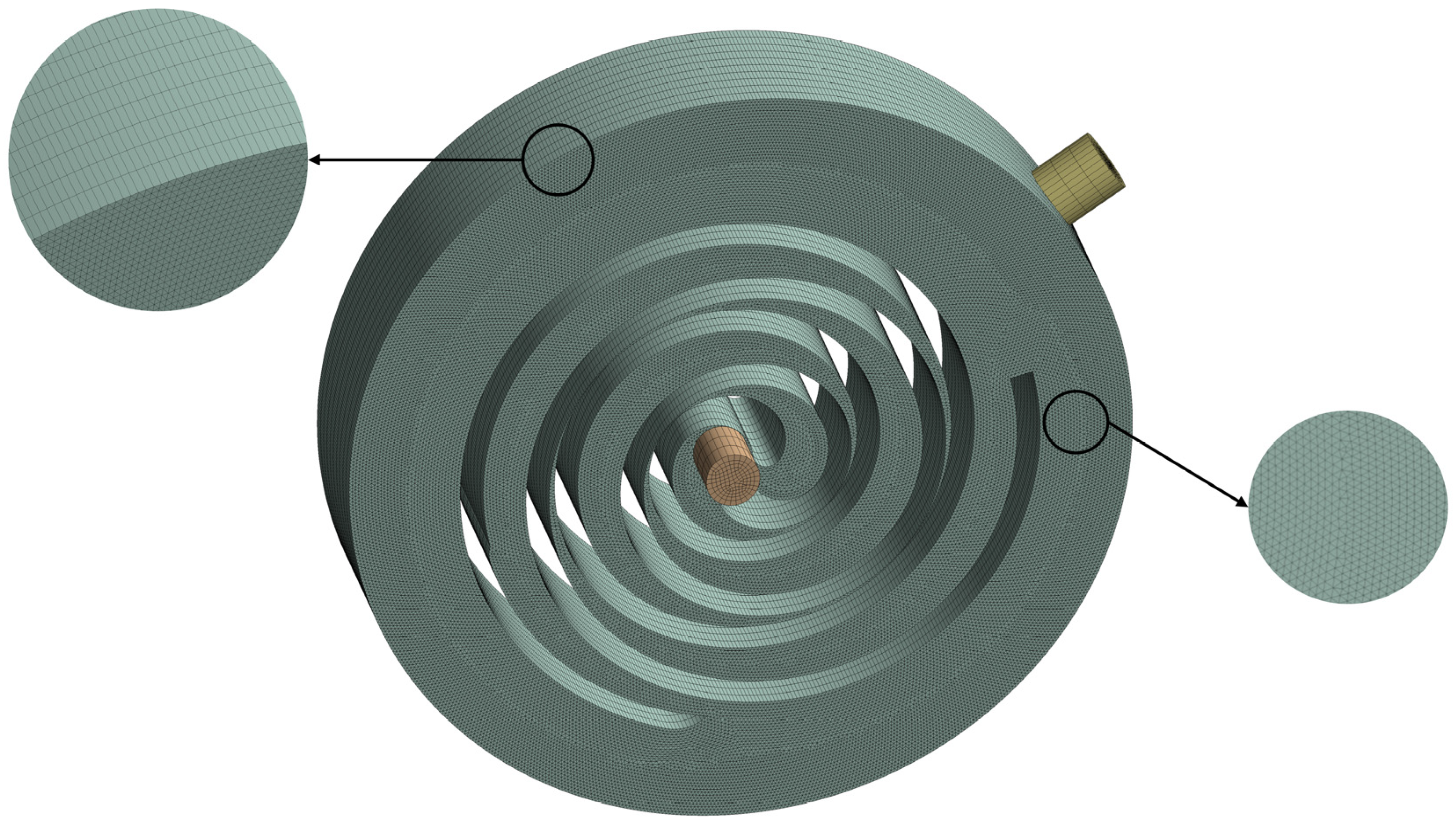
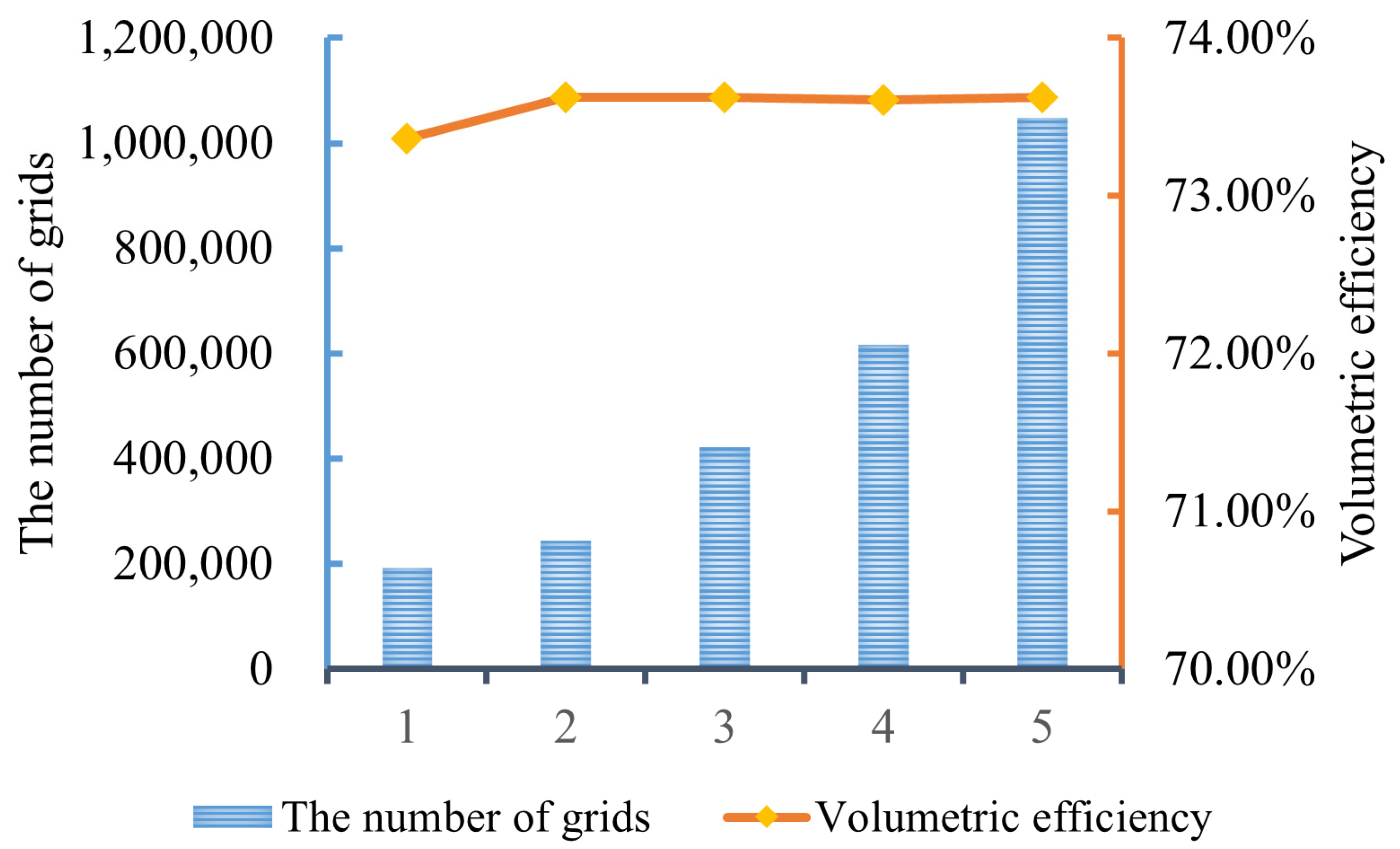
2.2. Grid Division and Independence Verification
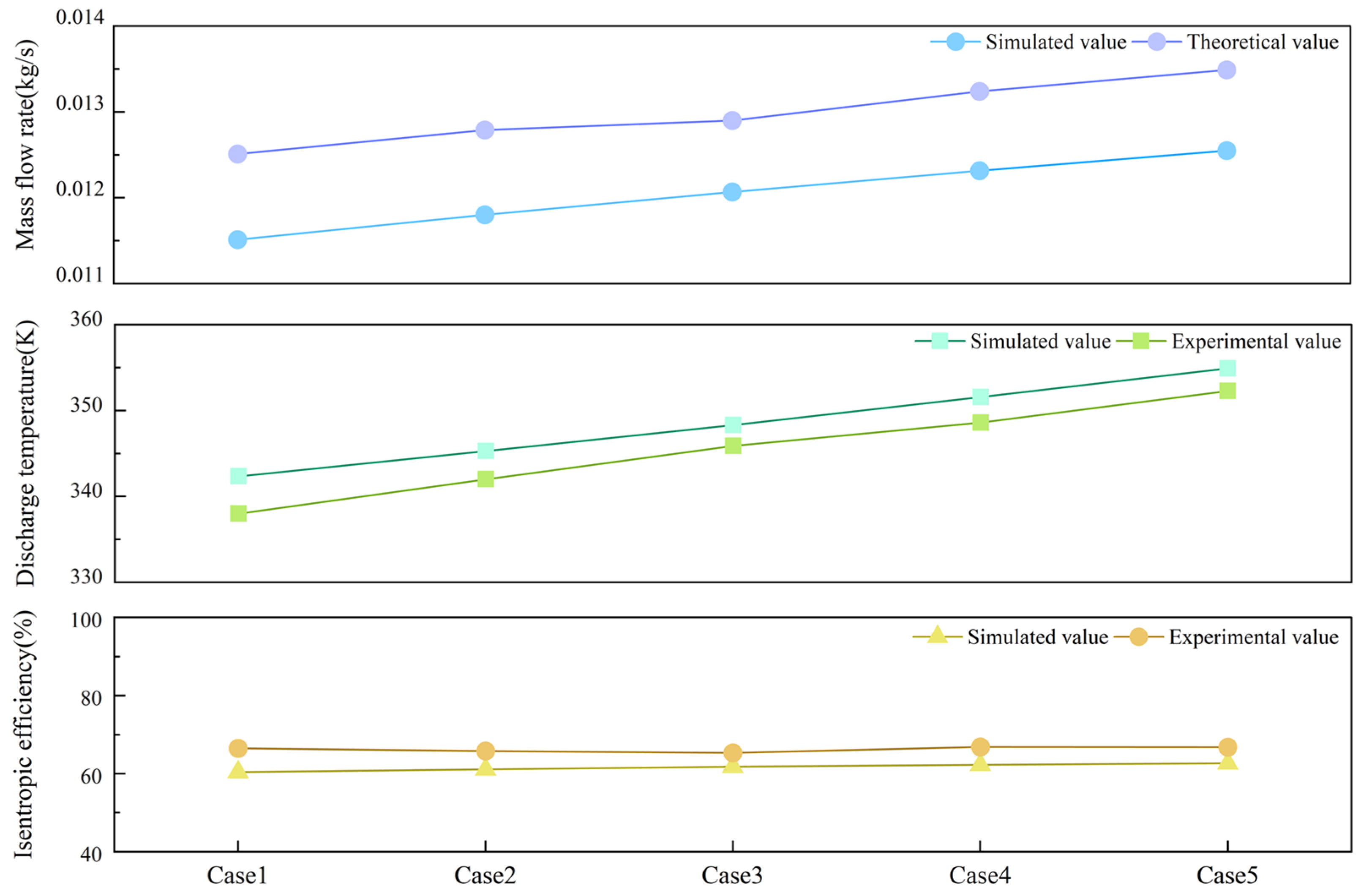
2.3. Experimental Validation
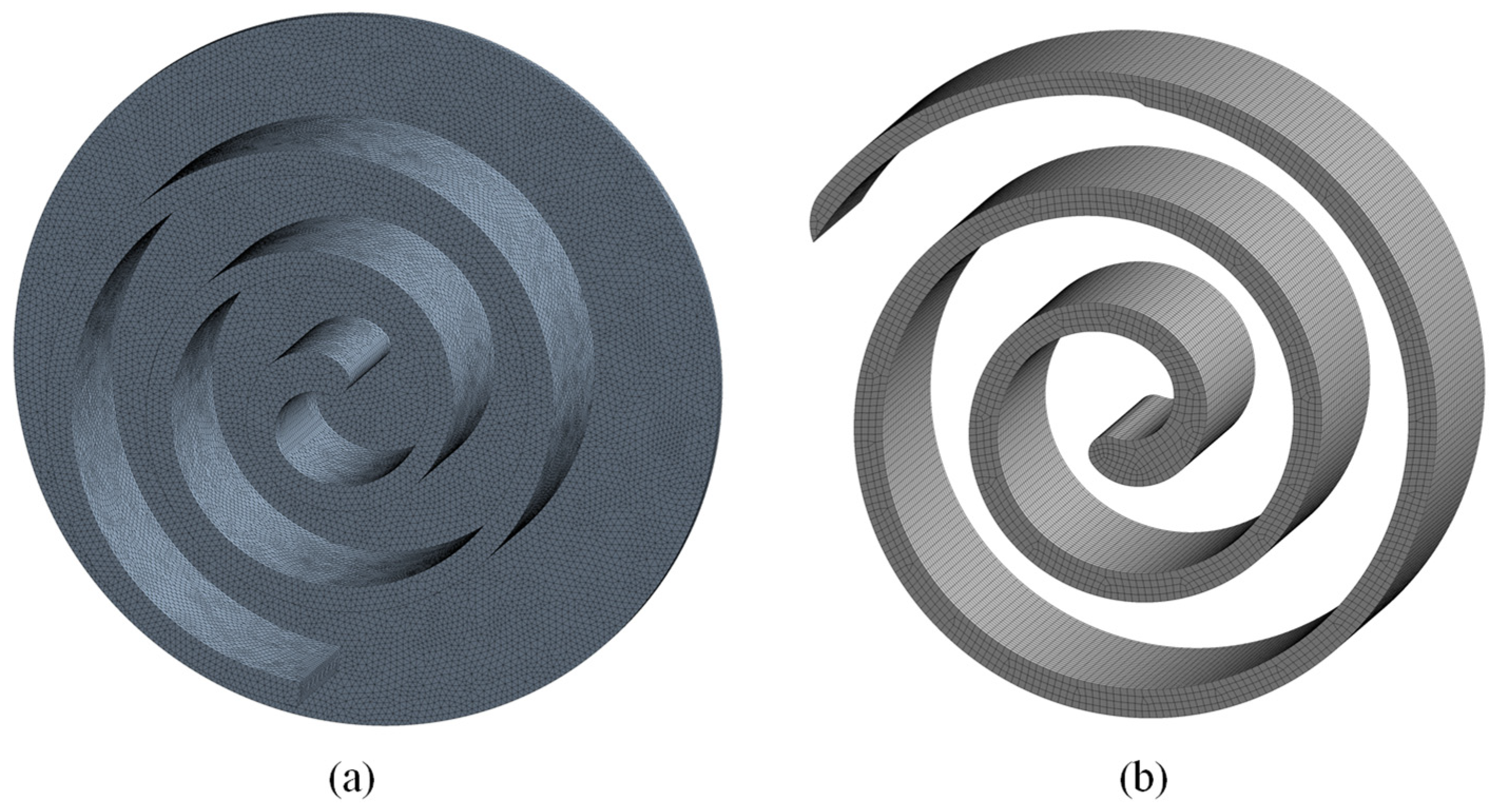
2.4. Data Transfer Method at Fluid–Solid Interfaces
- Restrict the full-directional displacement of the side wall of the orbiting scroll end plate;
- Restrict the X- and Y-direction displacements of the inner wall surface of the orbiting scroll bearing hole;
- Restrict the Z-direction displacement of the bottom surface of the orbiting scroll end plate;
- Restrict the Z-direction displacement of the inner bottom surface of the orbiting scroll bearing hole;
- Restrict the full-directional displacement of the fixed scroll plate.
3. Results
3.1. Flow Field Energy Conversion Characteristics
3.2. Analysis of Heat–Fluid–Solid Coupling Characteristics
3.2.1. Strain Characteristics of Scroll Wraps Under Pressure Load
3.2.2. Strain Characteristics of Scroll Wraps Under Temperature Load
3.2.3. Strain Characteristics of Scroll Wraps Under the Combined Action of Pressure and Temperature Loads
4. Conclusions
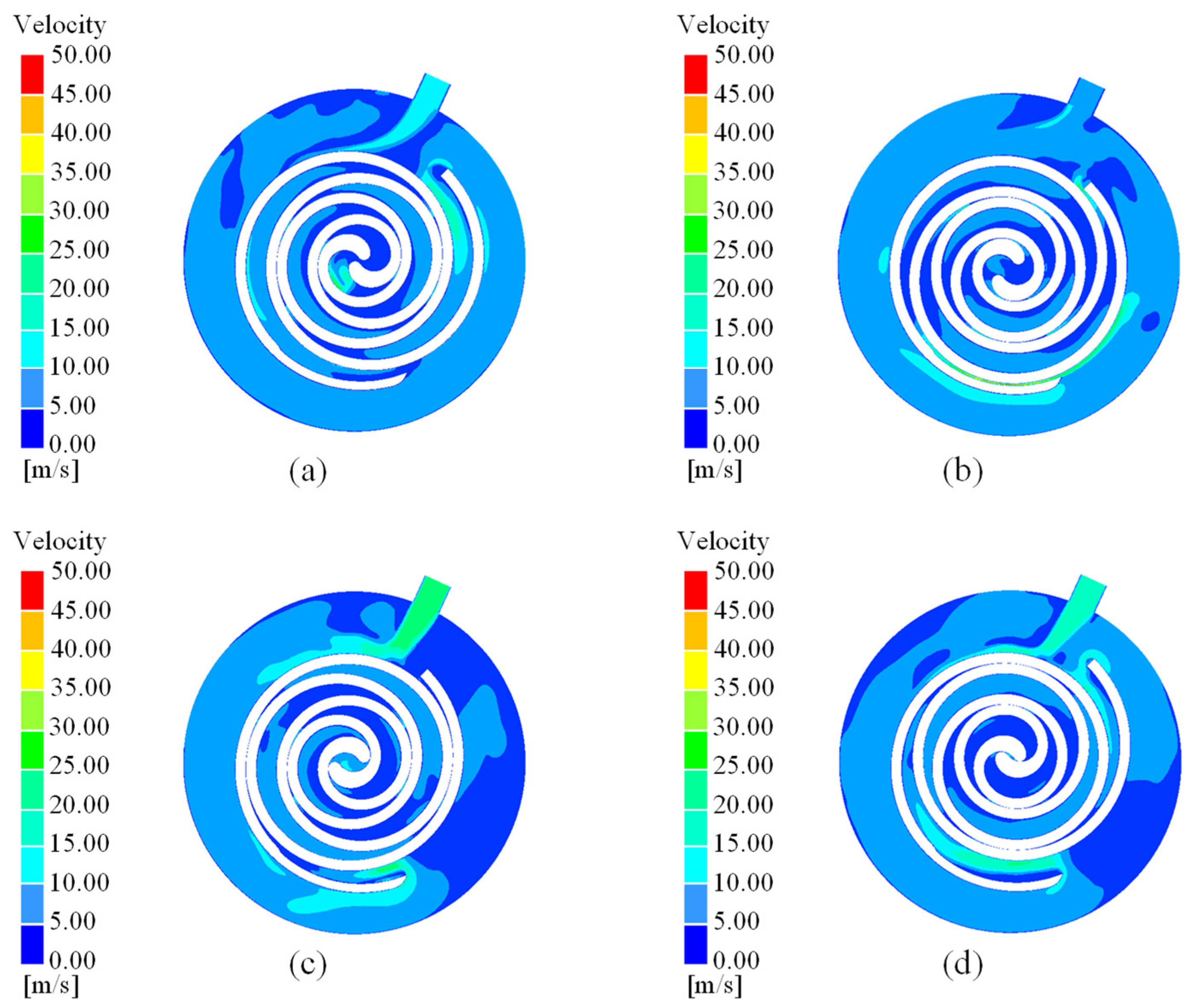
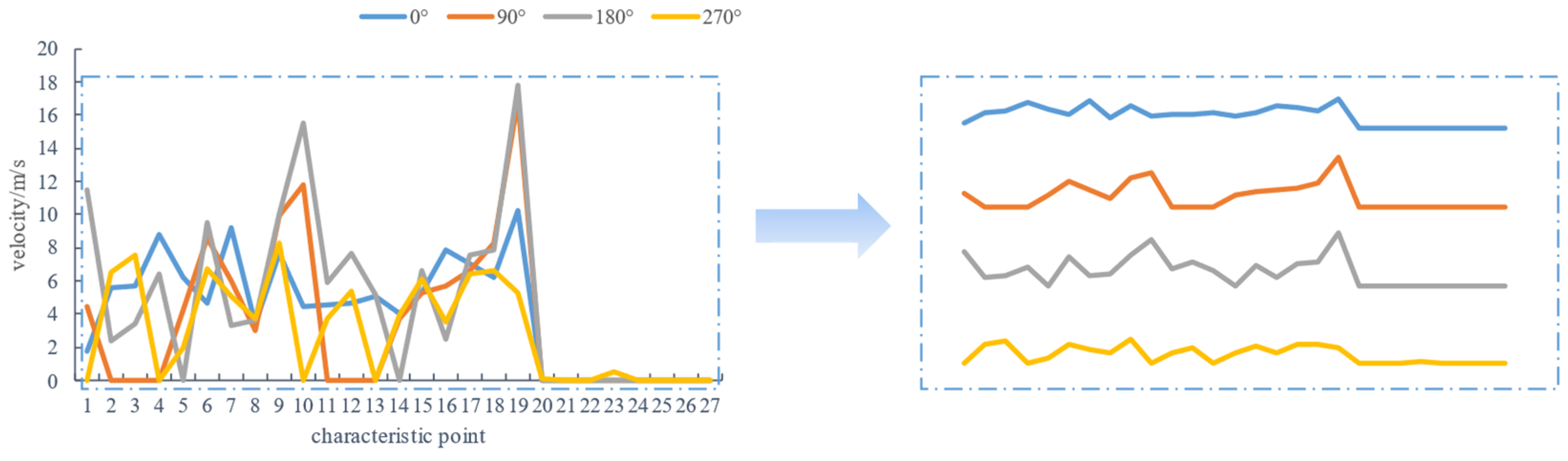
- The velocity distribution of the flow field inside the orbiting and fixed scroll plates is uneven. The velocity cloud diagrams and velocity vector diagrams at different spindle rotation angles reveal two typical flows. The tangential main flow along the involute profile and the radial secondary flow induced by centrifugal force. The velocity spatial distribution is directly related to the geometric constraint characteristics of the number of scroll turns.
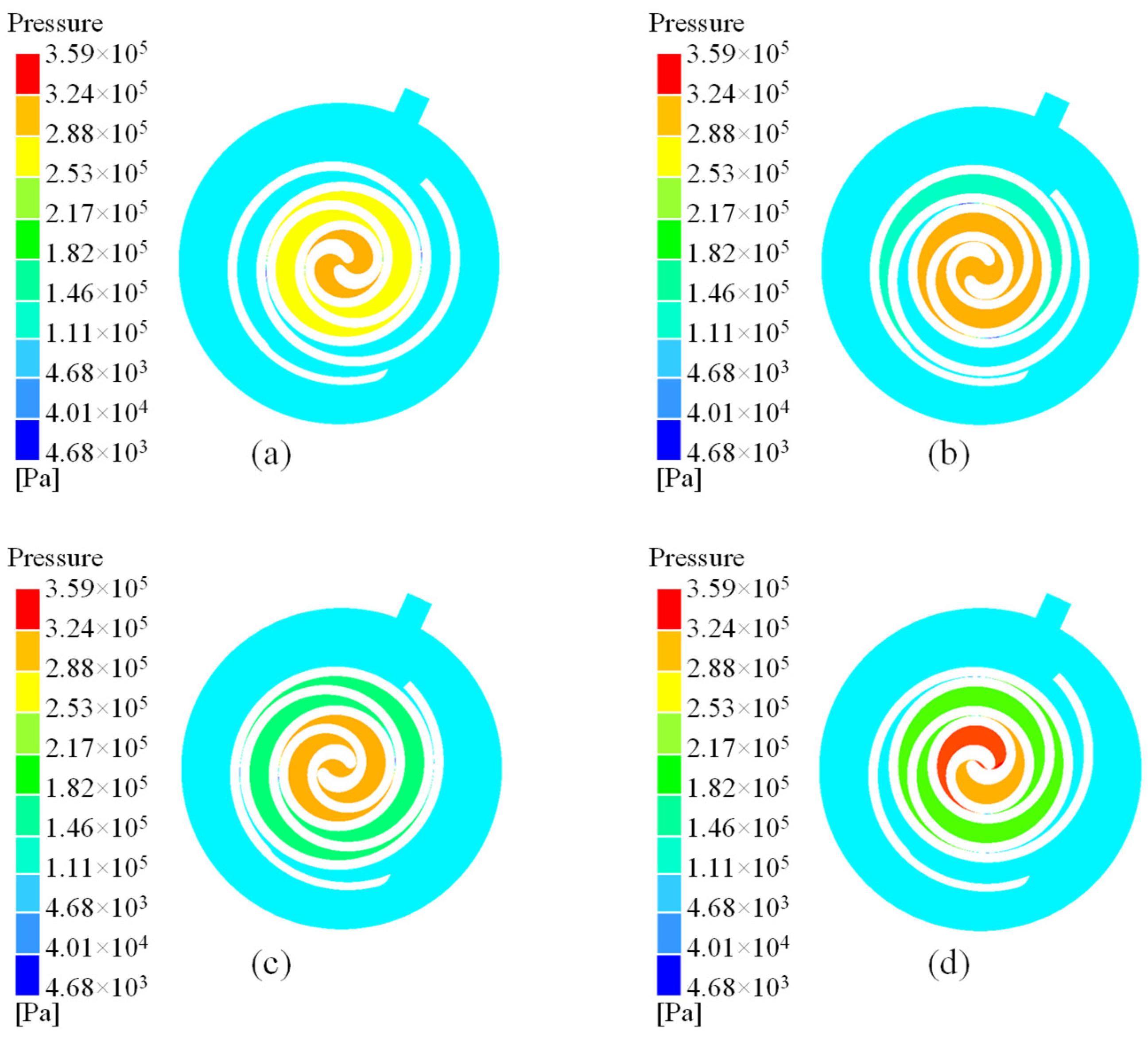
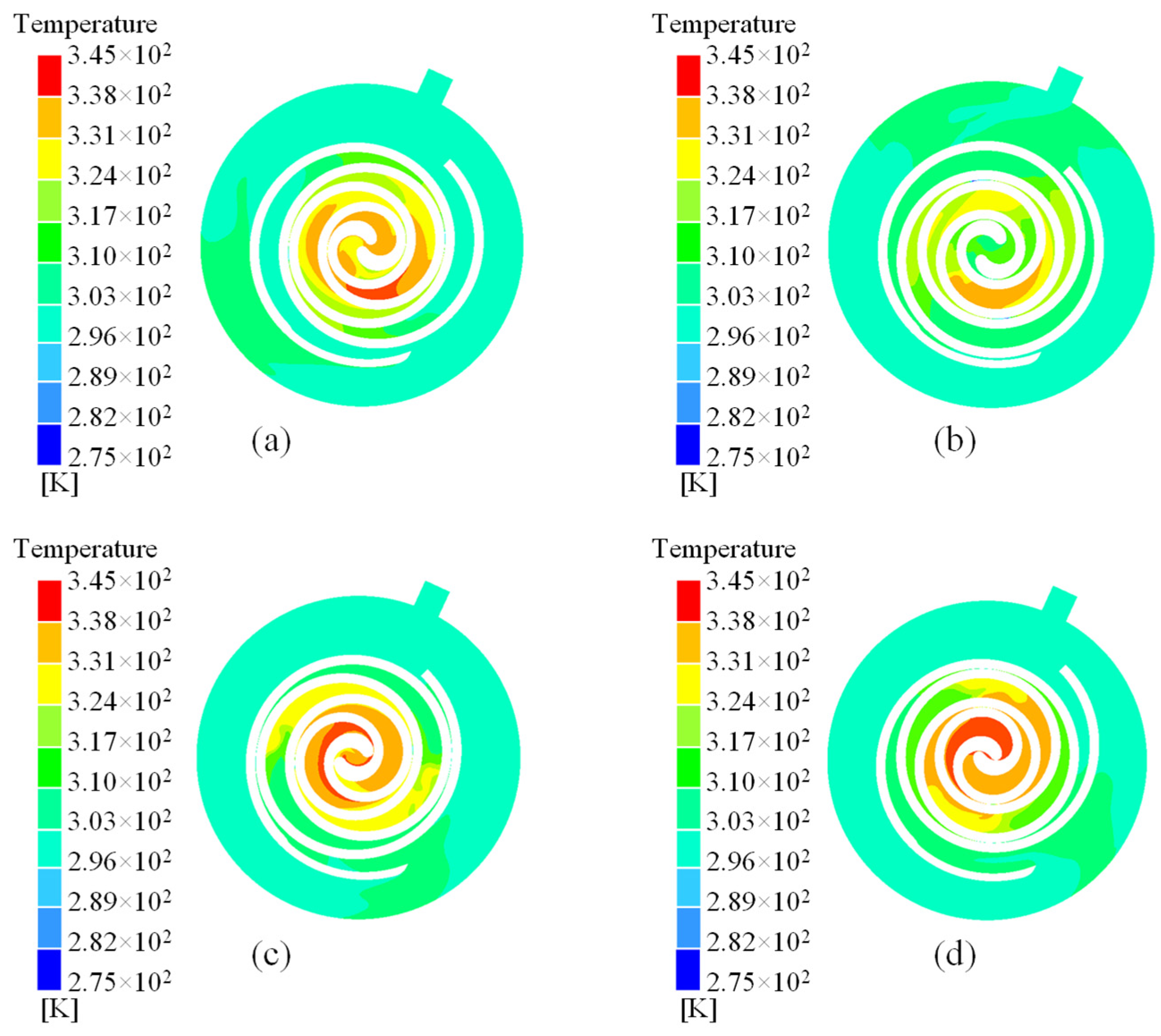
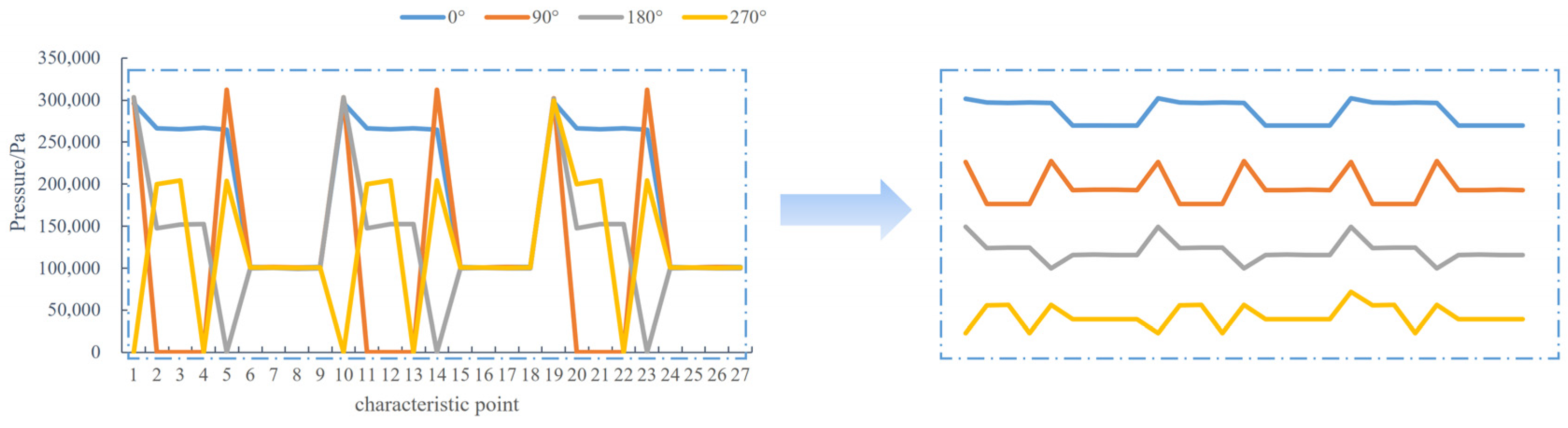
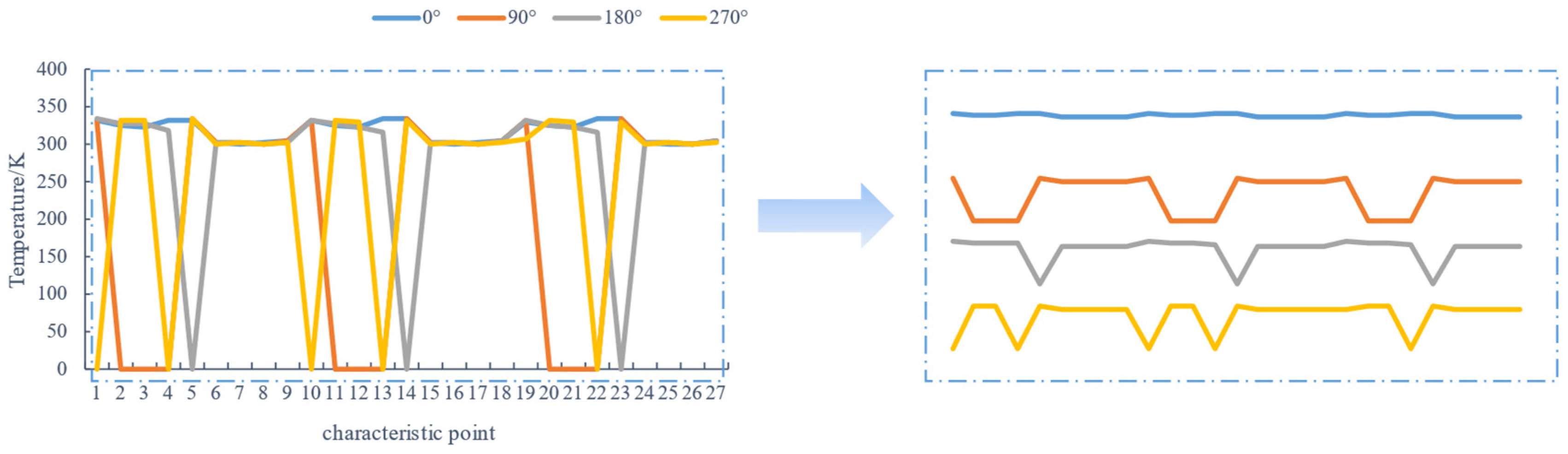
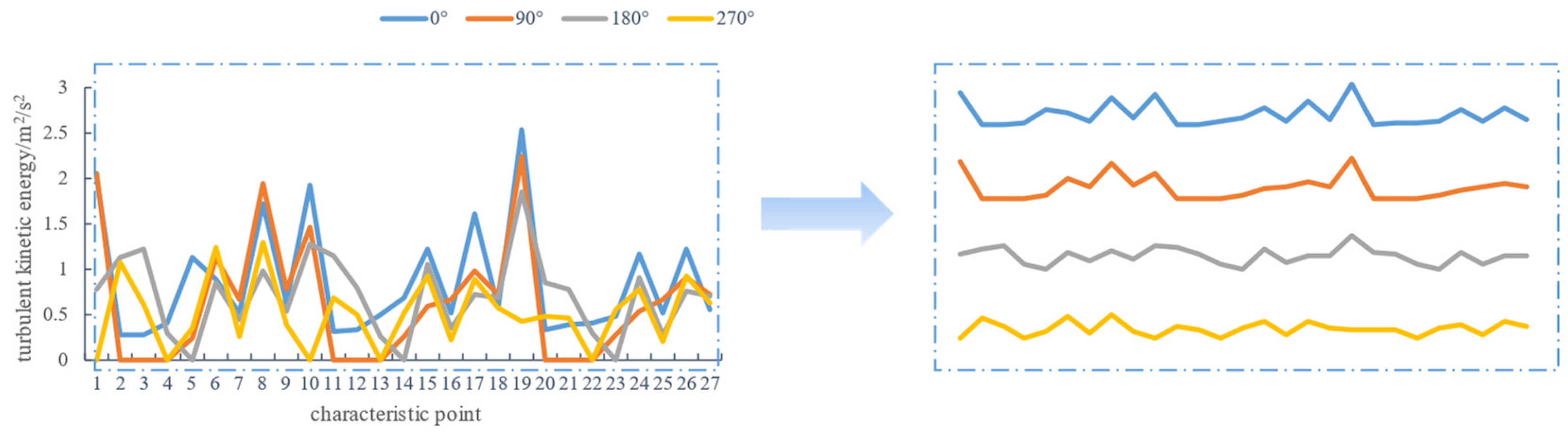
- Under any spindle rotation angle, the pressure field and temperature field of the internal flow field of the scroll compressor both show a distribution feature of being higher at the center and lower around the periphery. The pressure field is uniformly distributed, while the turbulent kinetic energy and velocity distribution inside the working chamber are similar to the temperature field distribution, both showing non-uniform distribution. The distribution laws of the four are jointly governed by the decreasing effect of the curvature radius of the involute profile and the gradual compression mechanism of the volume. Meanwhile, it is revealed that due to the symmetrical design of the scroll compressor, its internal flow field has the characteristic of axial uniformity.
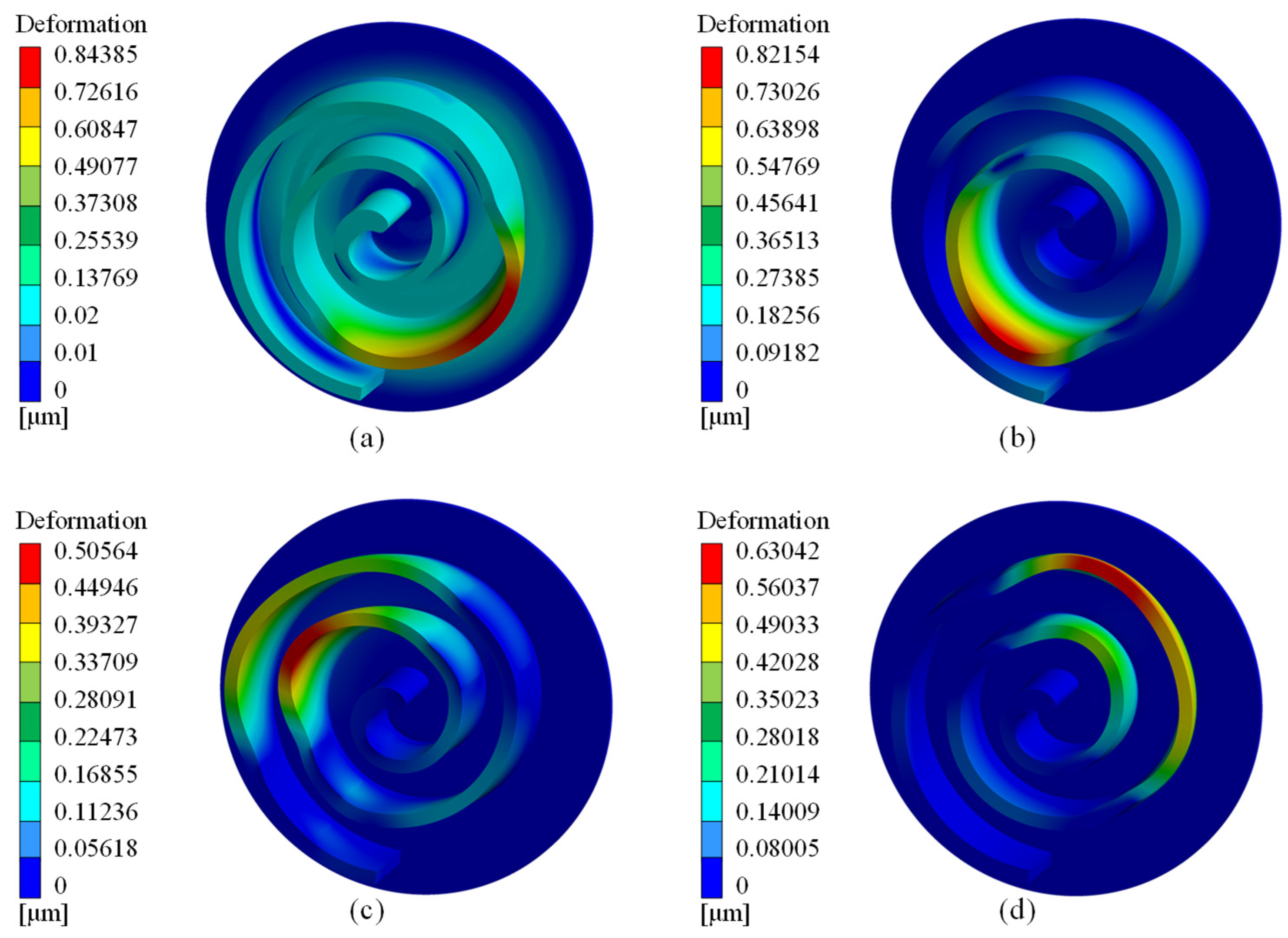
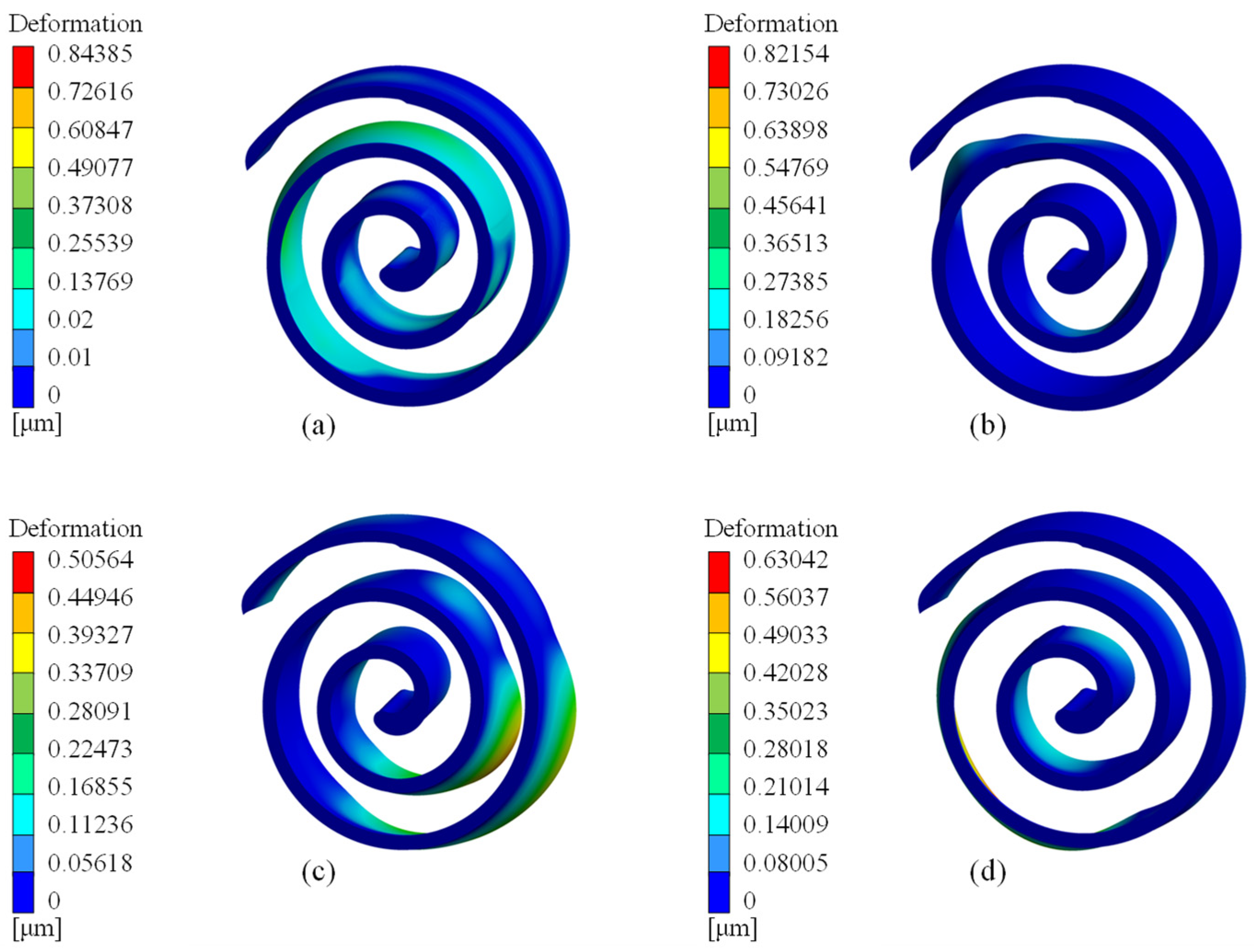
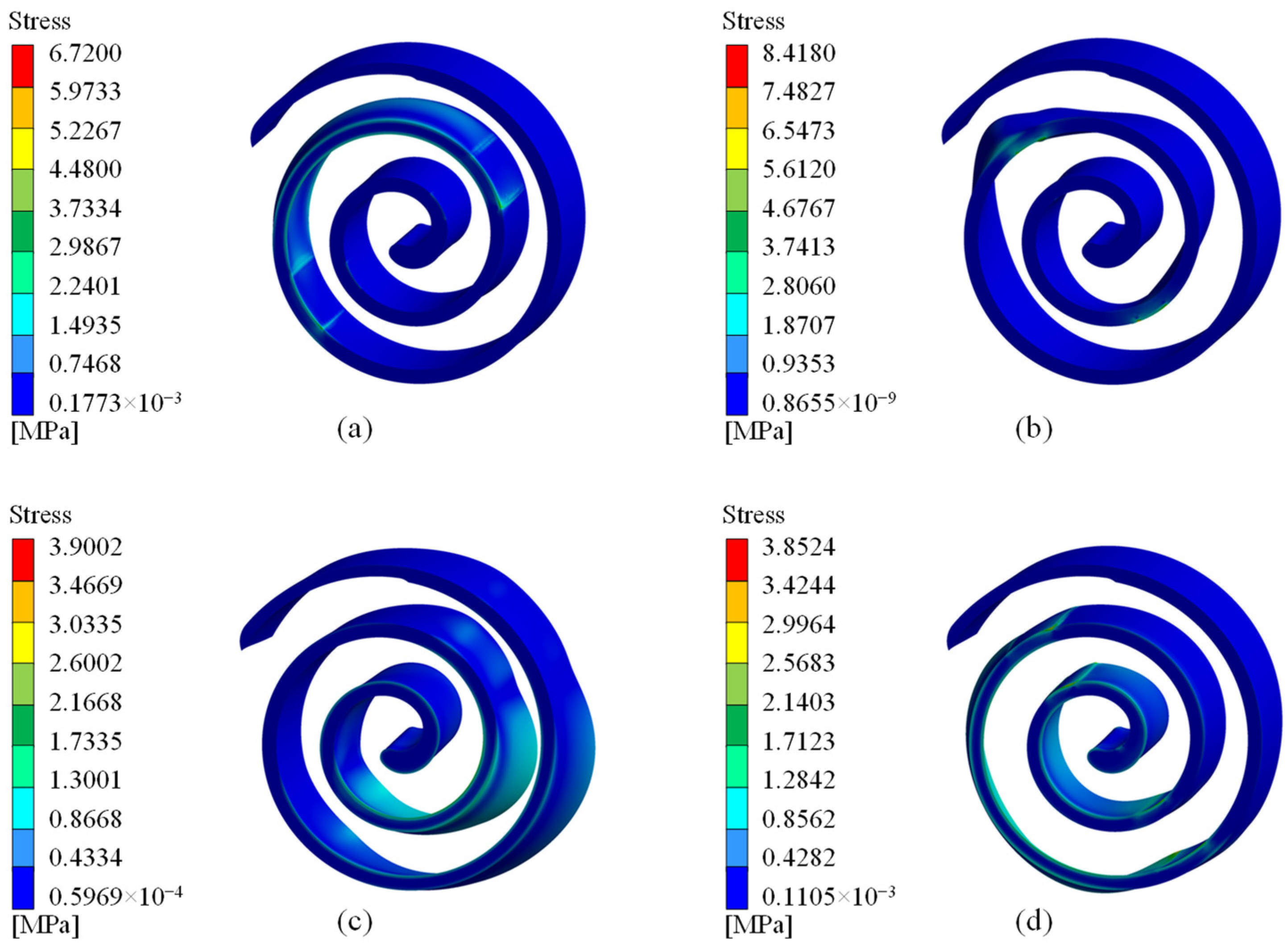
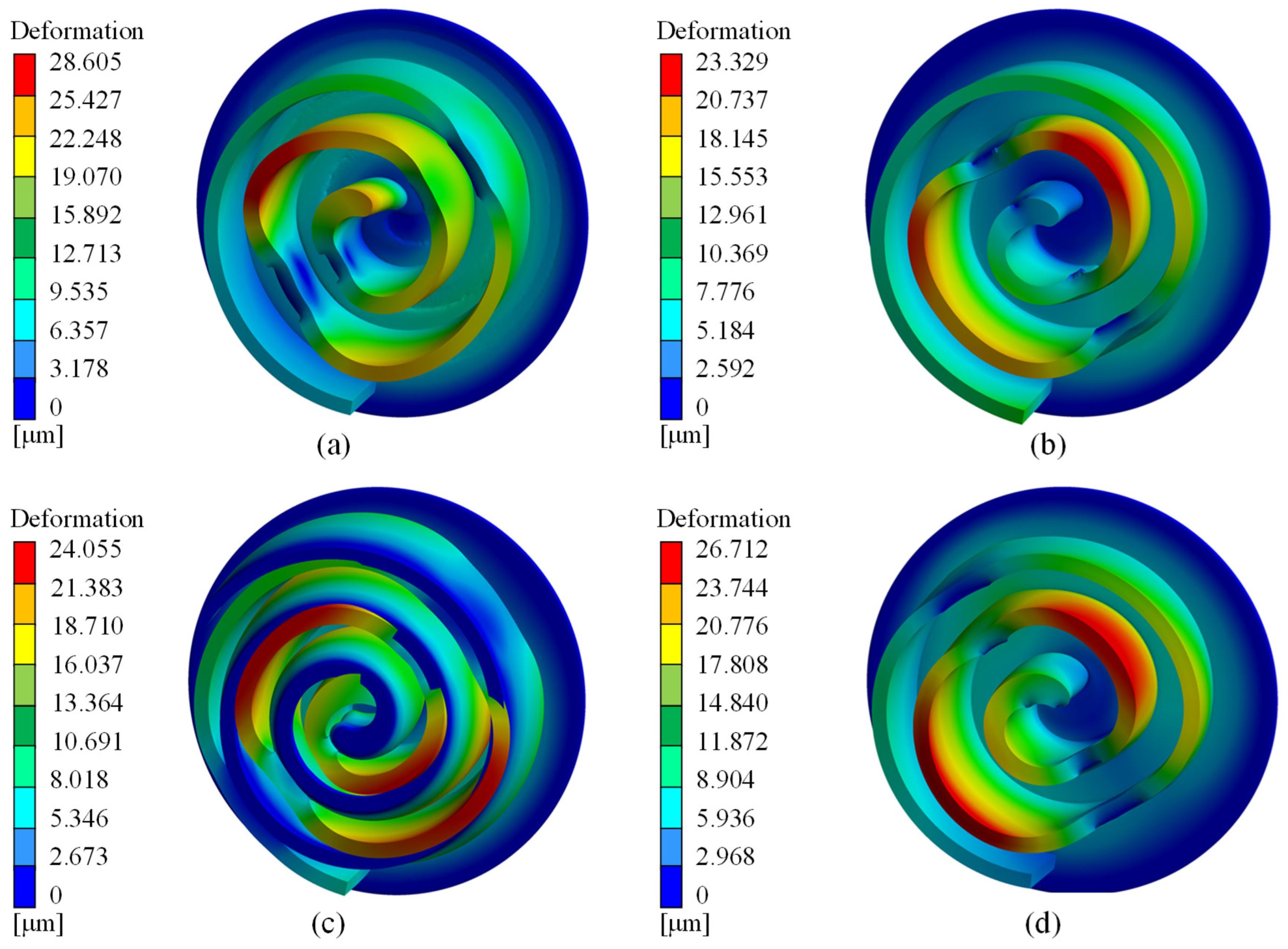
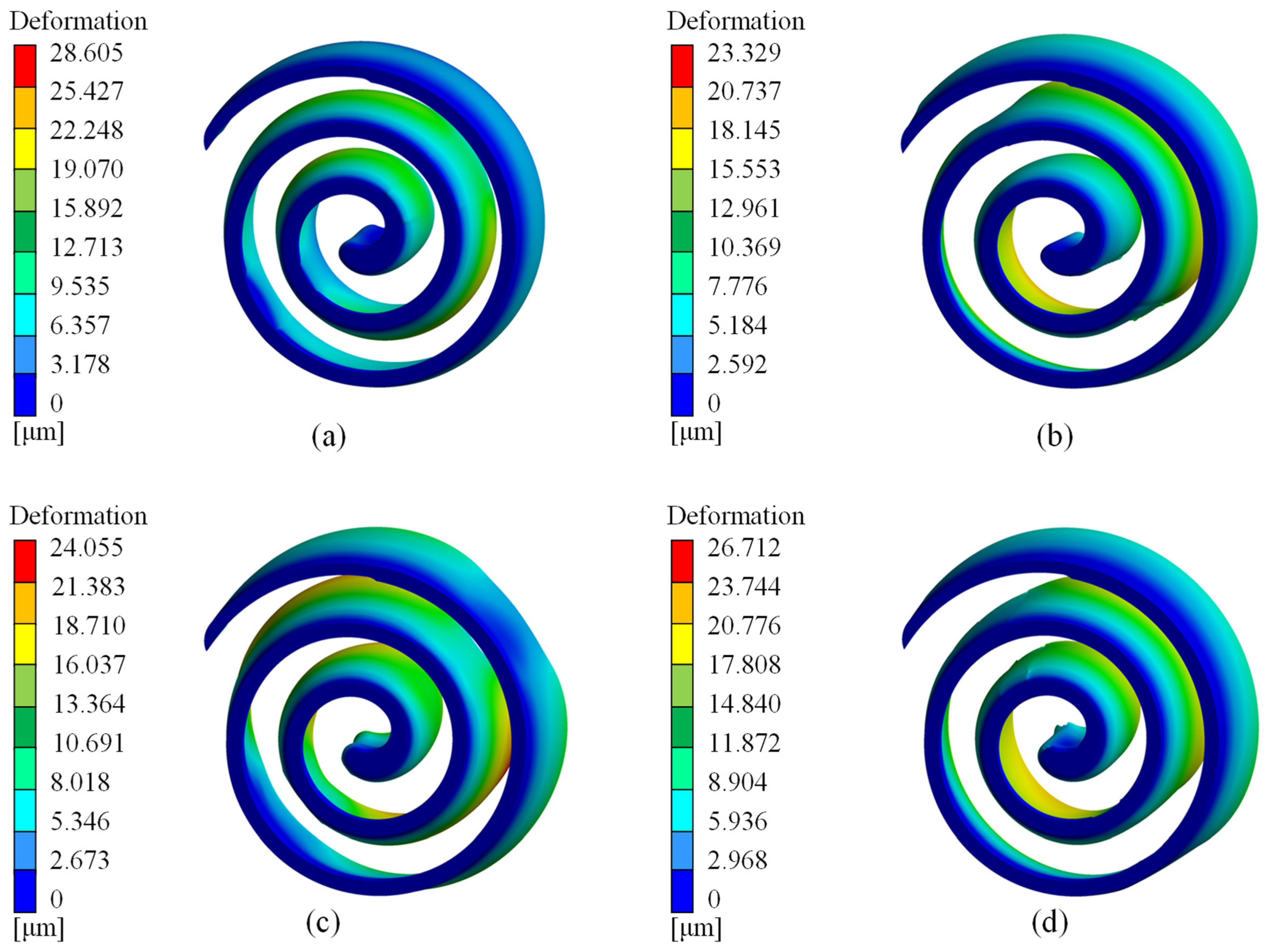
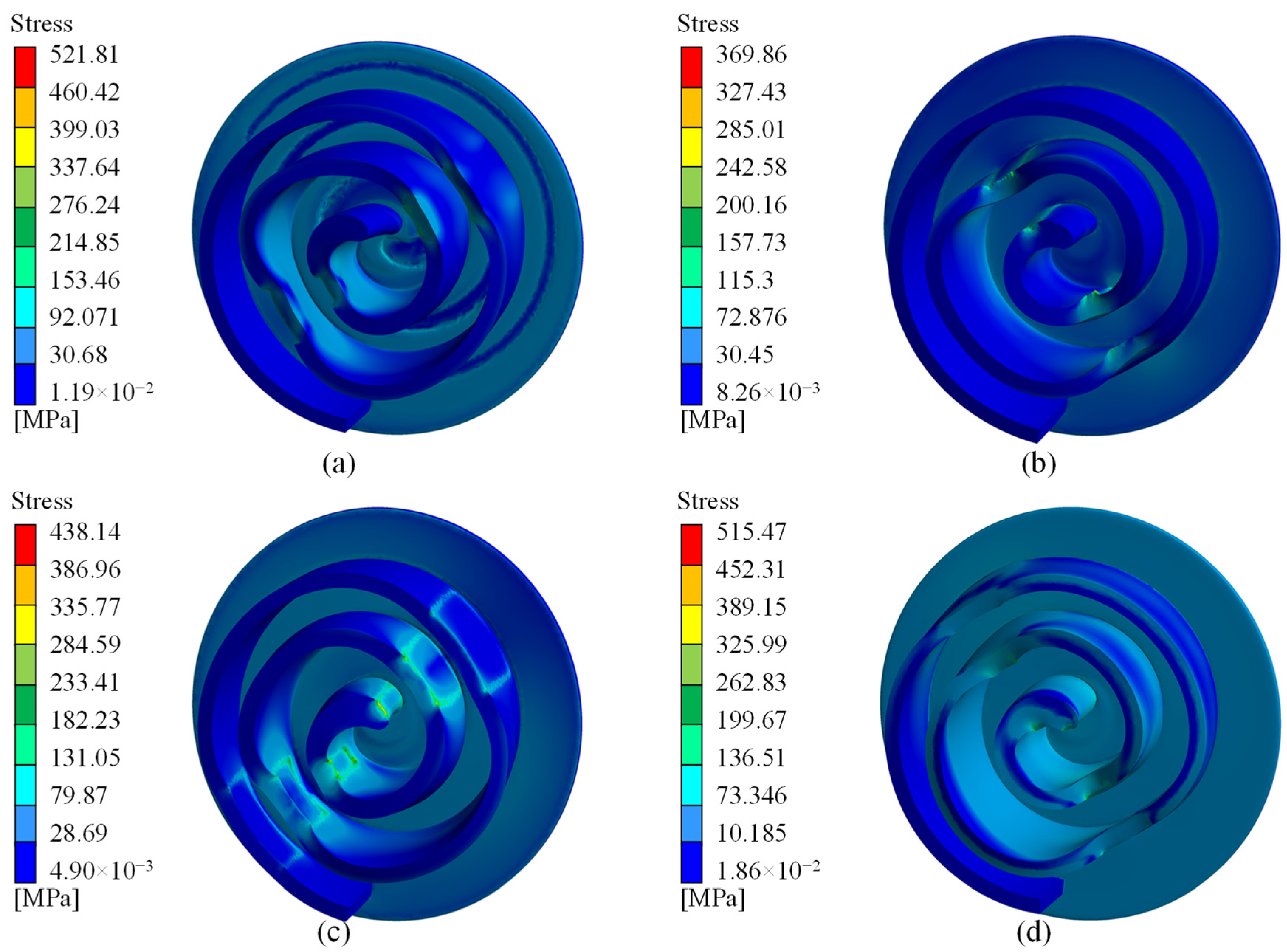
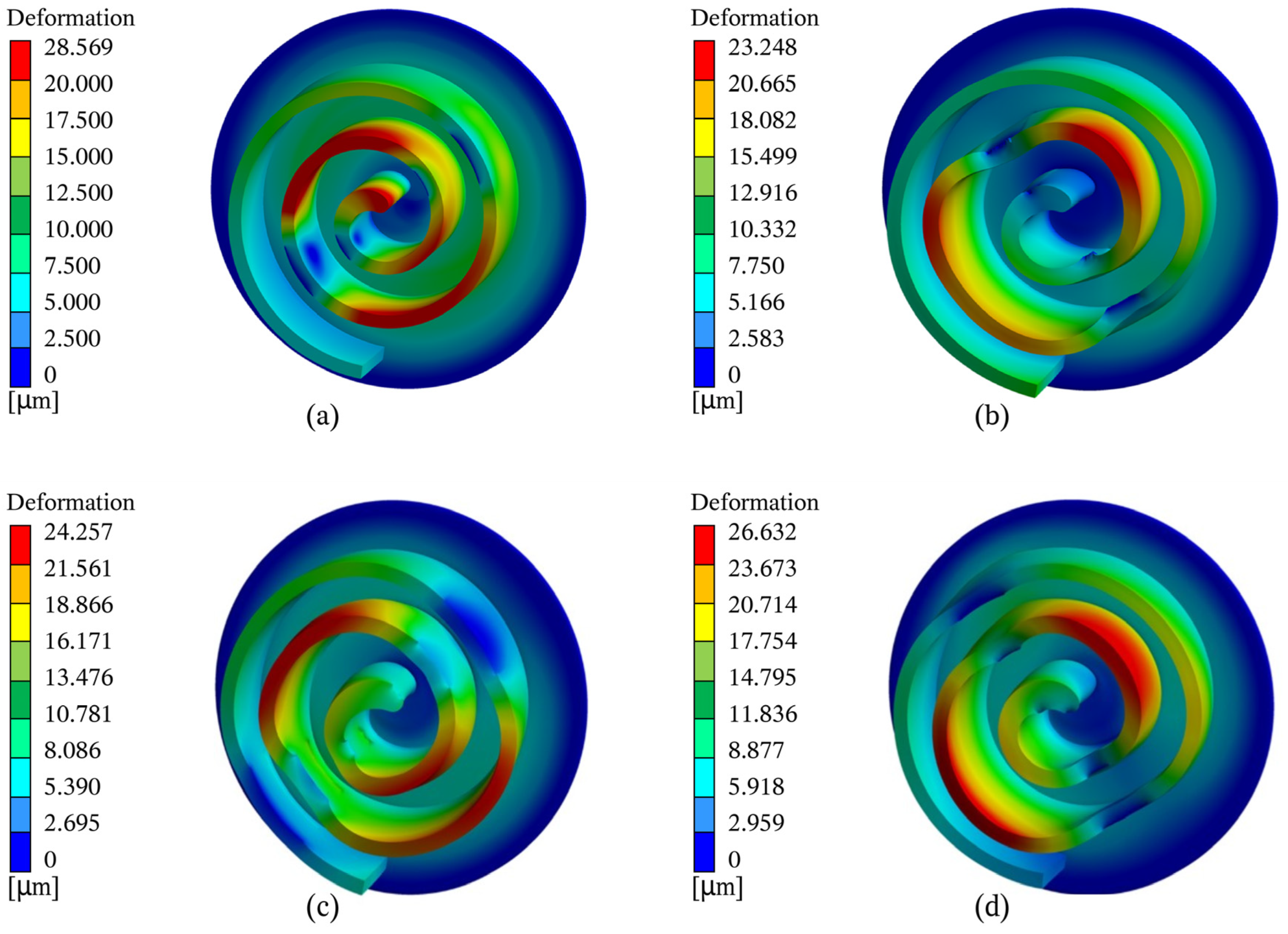
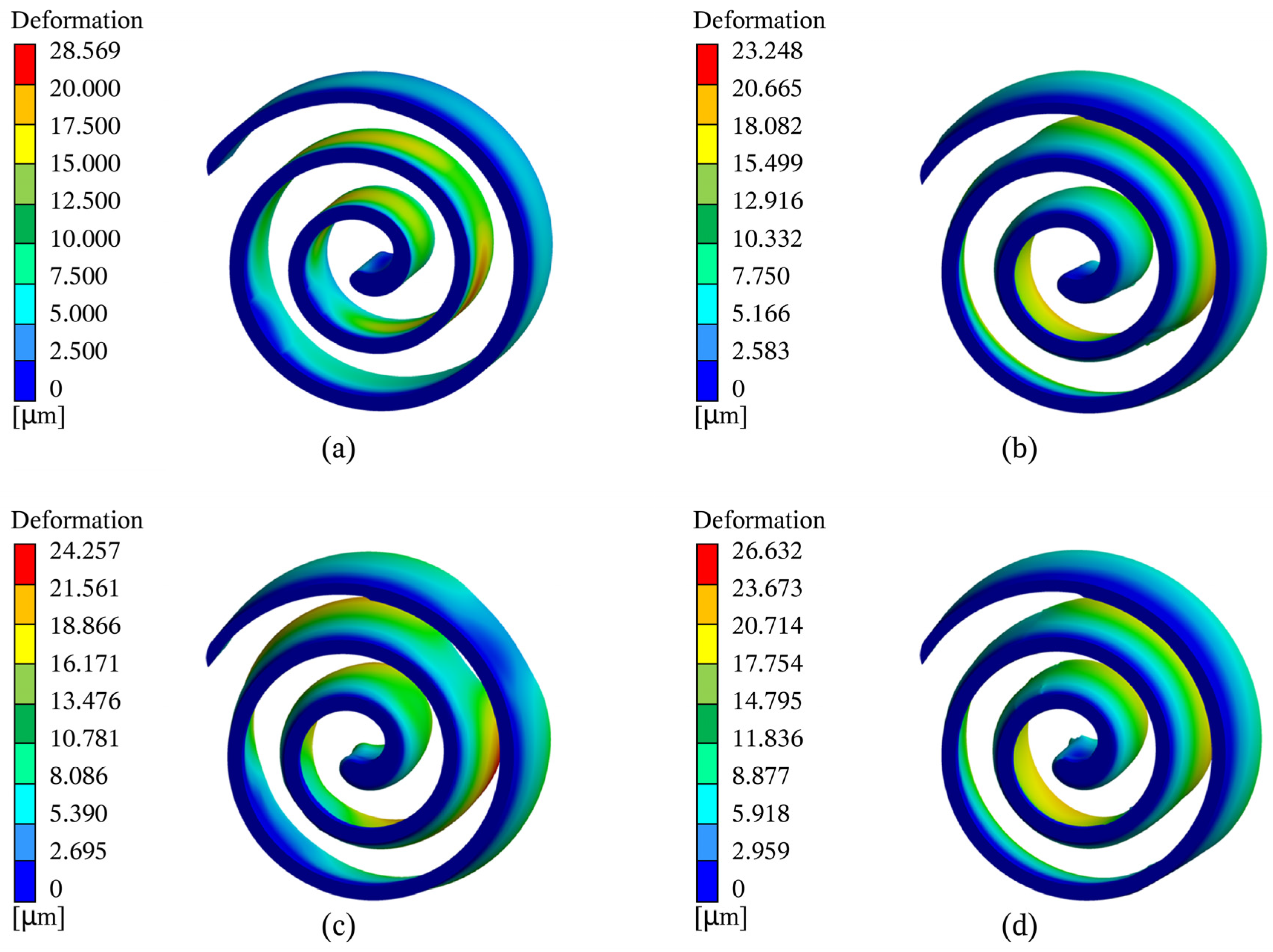
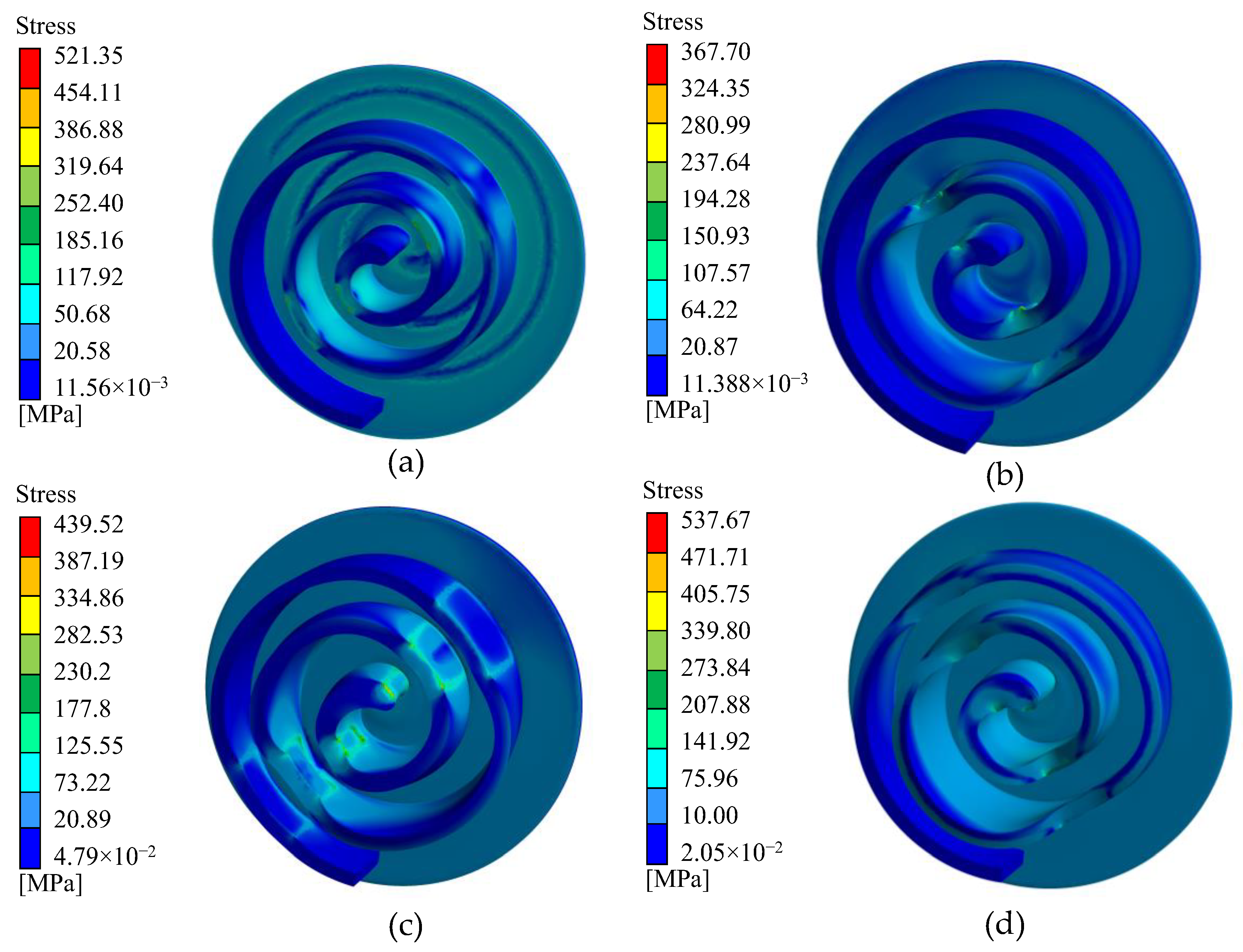
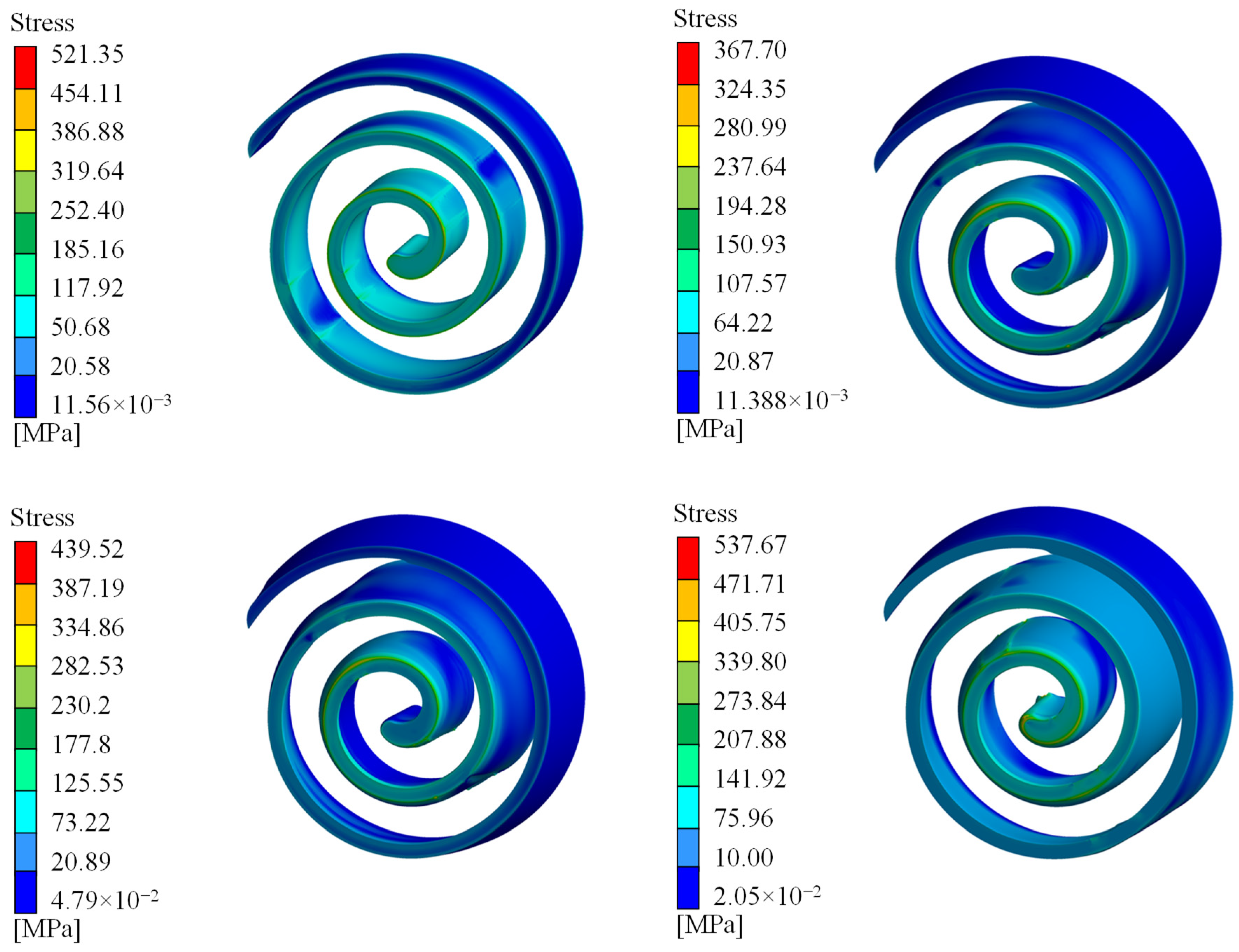
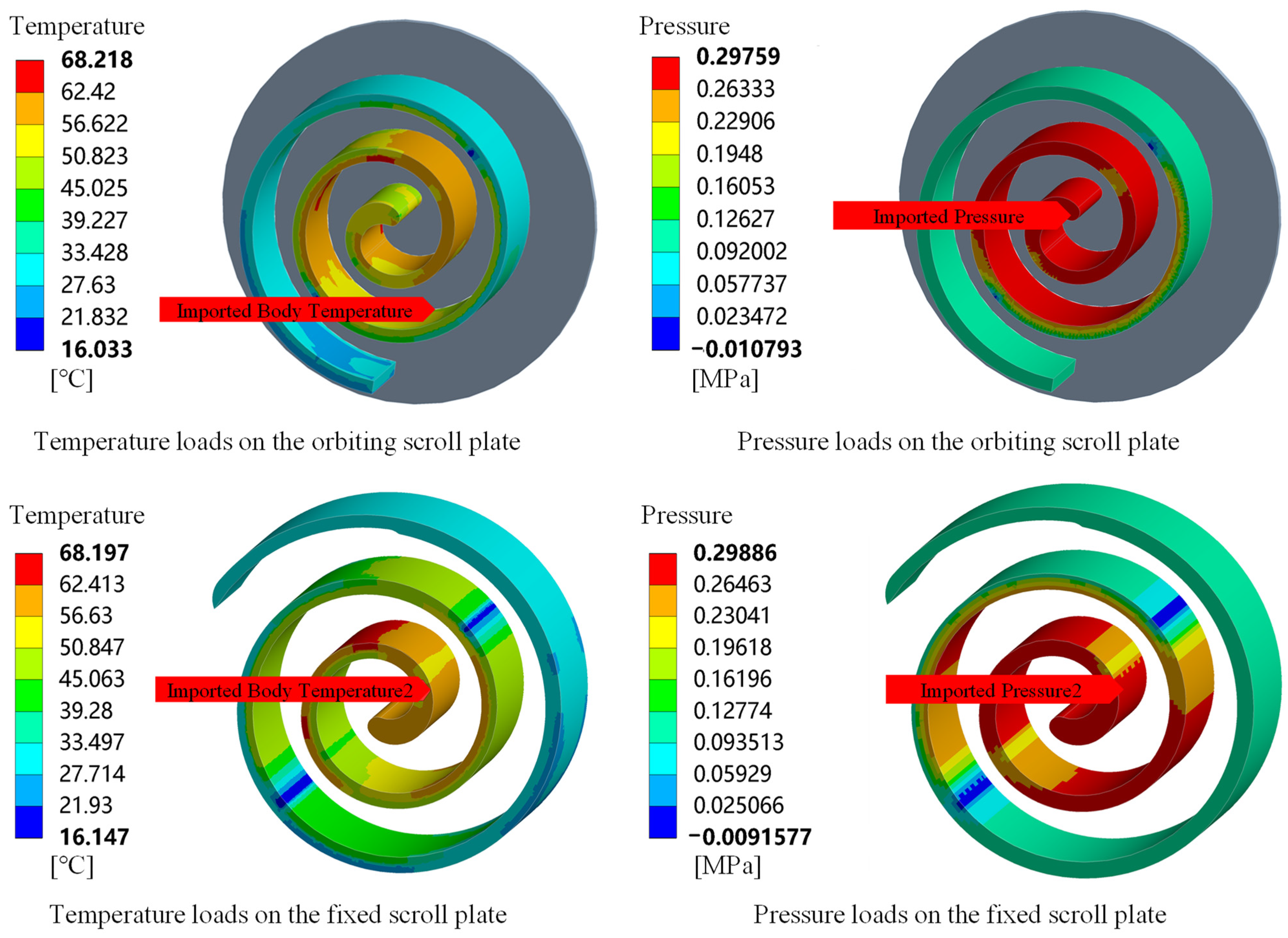
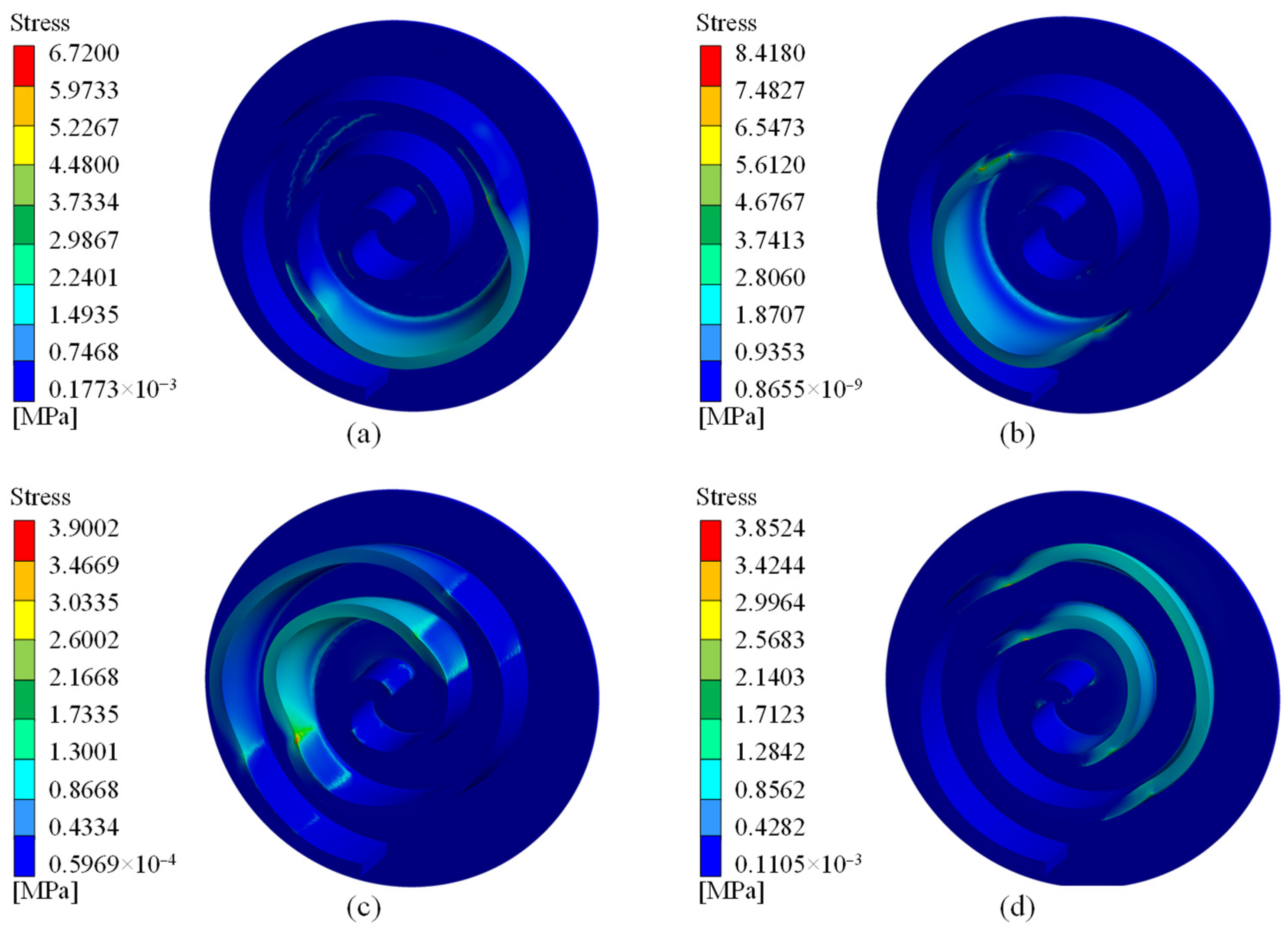
- Due to the difference in constraint conditions between the orbiting and fixed scroll wraps, the orbiting scroll wrap exhibits more significant stress distribution and deformation under pressure loading, temperature loading, and their combined coupling effect compared with the fixed scroll wrap. The reasons why the deformation of the fixed scroll wrap is less obvious than that of the orbiting scroll wrap, as well as why thermal loading plays a dominant role in the deformation of both orbiting and fixed scroll wraps, are investigated.
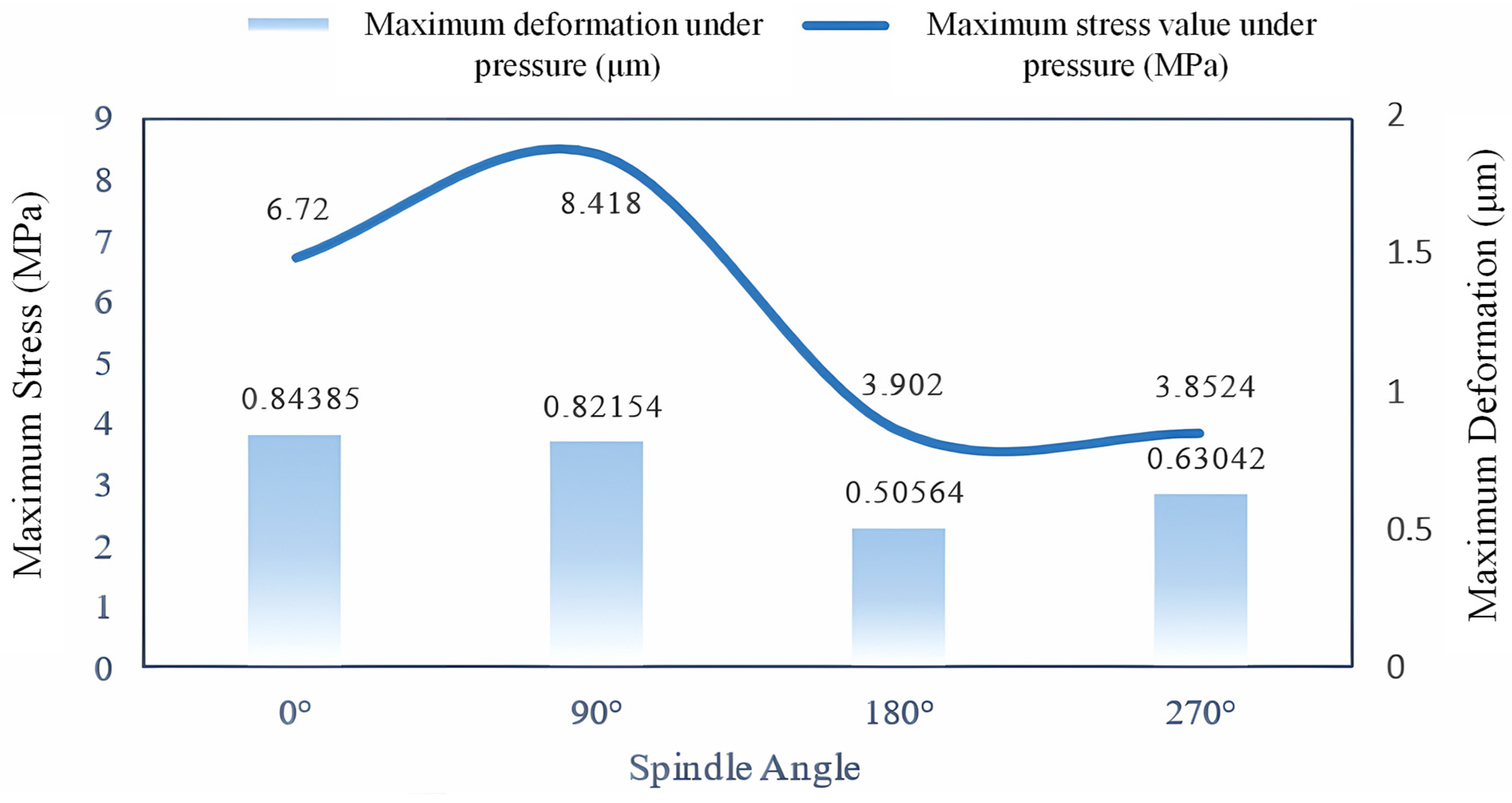
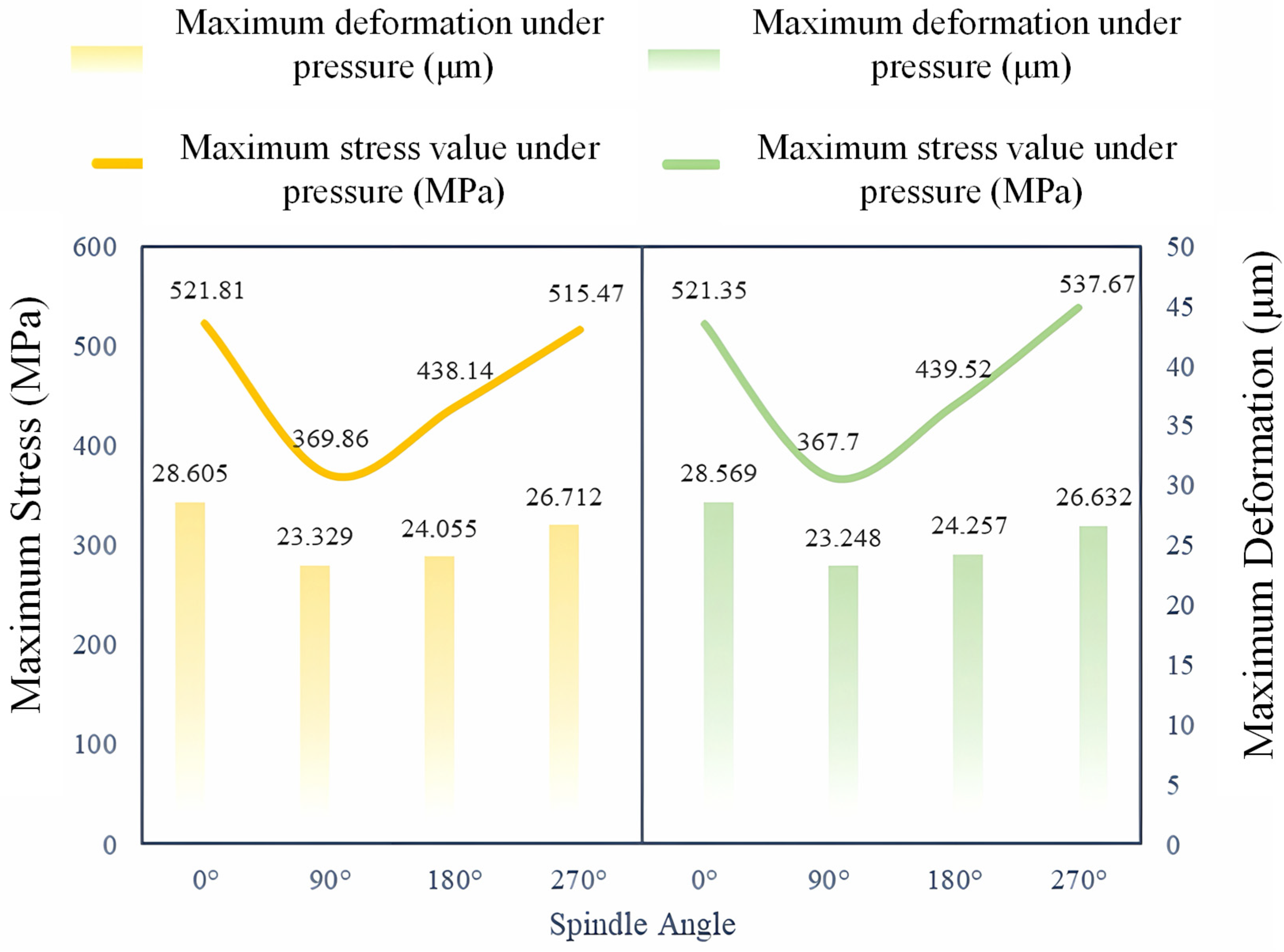
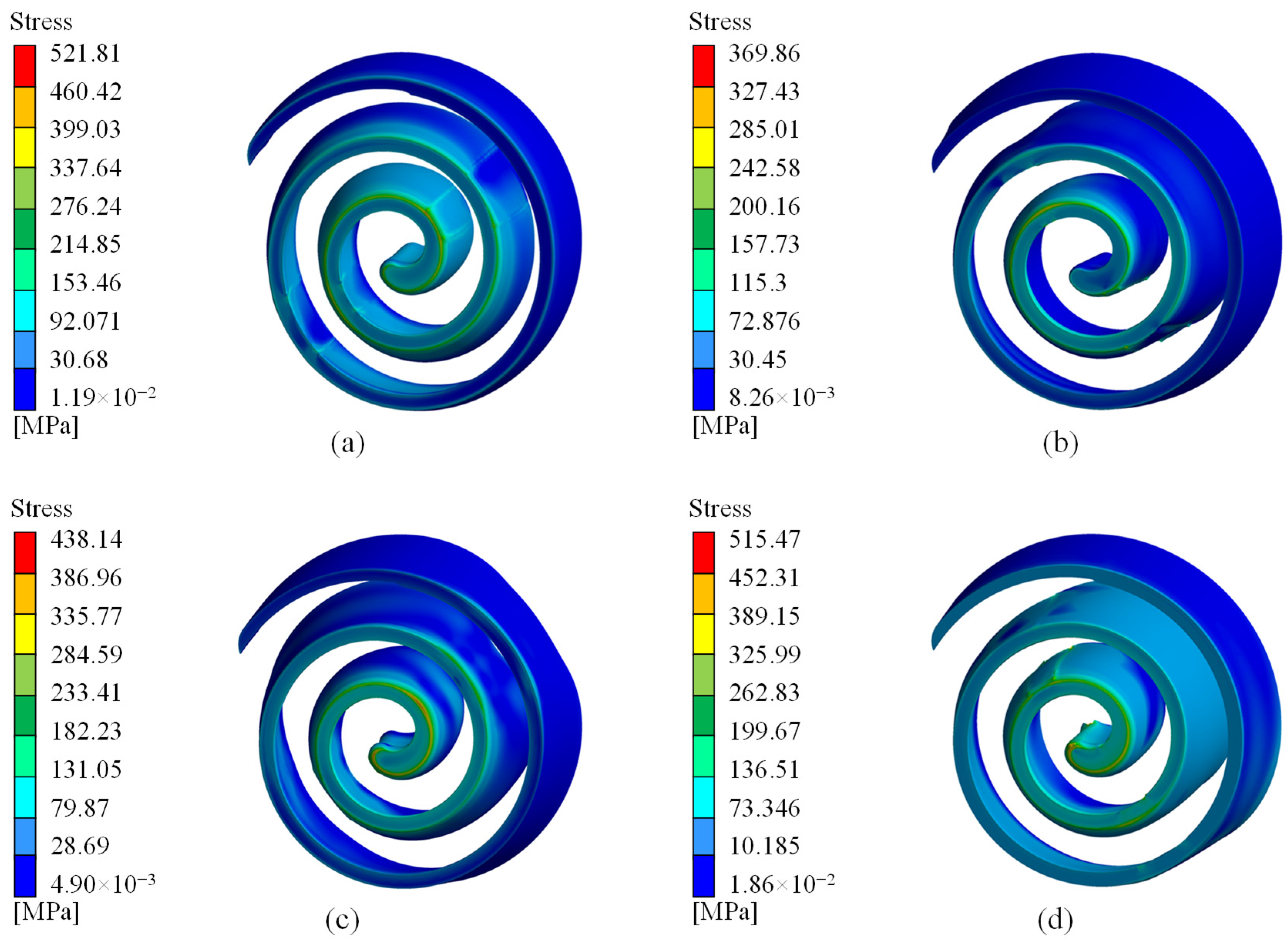
- Multi-field coupling analysis shows that under the combined action of pressure and temperature loading, the stress distribution and deformation characteristics of the scroll wraps are closer to those under temperature loading alone, confirming that temperature loading dominates the structural response of the scroll wraps. Specifically, under the combined loadings, the maximum deformation of the scroll wrap is 28.509 μm and the peak stress is 537.67 MPa. Under temperature loading alone, the maximum deformation is 28.605 μm and the maximum stress is 521.81 MPa. While under pressure loading alone, the maximum deformation is only 0.84385 μm and the peak stress is 8.418 MPa. The above data fully verify the reliability of this conclusion.
- The total deformation and stress distribution under the combined action of temperature and pressure loading are not a linear superposition of the effects of the two loadings applied separately. Taking the spindle rotation angle of 0° as an example, the maximum deformation of the orbiting scroll wrap is 0.84385 μm under pressure loading alone and 28.605 μm under temperature loading alone, while the actual deformation under the coupled loadings is 28.509 μm with a deviation of 0.938 μm, proving that the deformation under coupling is not a simple sum of the deformations under individual loadings. Similarly, at a spindle rotation angle of 0°, the maximum stress of the orbiting scroll wrap is 6.72 MPa under pressure loading alone and 521.81 MPa under temperature loading alone, whereas the maximum stress under coupled loadings is 521.35 MPa with a deviation of 7.18 MPa, indicating that the stress under coupling is not a simple superposition of the stresses under individual loadings.
Author Contributions
Funding
Data Availability Statement
Conflicts of Interest
Glossary
| Nomenclature | Greek symbols | ||
| Fa | Axial aerodynamic force acting perpendicular to the axis of the eccentric shaft on the orbiting scroll (N) | ρ | Density (kg/m3) |
| Fr | Radial aerodynamic force in the direction of the connecting line between the centres of the orbiting scroll and the fixed scroll (N) | η | Volume efficiency |
| Ft | Tangential aerodynamic force applied to the orbiting scroll in the direction of the tangent to the eccentric axis (N) | ||
| h | Enthalpy (J/mol) | Subscripts | |
| Keff | Thermal conductivity (W/(m·K)) | f | Fixed scroll |
| m | Mass flow (kg/s) | o | Orbiting scroll |
| N | Count of cells | s | Solid domain |
| q | Heat flux (W/m2) | Acronyms | |
| t | Wall thickness (mm) | ORC | Organic Rankine Cycle |
| v | Fluid velocity vector (m/s) | NIST | National Institute of Standards and Technology |
| Vs | Suction volume (m3) | ||
| Hamiltonian operator | |||
Appendix A


References
- Hamid, K.; Sajjad, U.; Ahrens, M.U.; Ren, S.; Ganesan, P.; Tolstorebrov, I.; Arshad, A.; Said, Z.; Hafner, A.; Wang, C.-C.; et al. Potential evaluation of integrated high temperature heat pumps: A review of recent advances. Appl. Therm. Eng. 2023, 230, 120720. [Google Scholar] [CrossRef]
- Gangar, N.; Macchietto, S.; Markides, C.N. Recovery and utilization of low-grade waste heat in the oil-refining industry using heat engines and heat pumps: An international technoeconomic comparison. Energies 2020, 13, 2560. [Google Scholar] [CrossRef]
- Zhao, Z.Y. Waste Heat Utilization and Boiler Energy Saving; Ningxia People’s Publishing House: Yinchuan, China, 1984. [Google Scholar]
- Feng, H.S.; Xu, F.F.; Liu, Y.F.; Shan, C. Review of waste heat utilization technologies for industry processes. Chem. Ind. Eng. 2012, 1, 57–64. [Google Scholar] [CrossRef]
- Chen, Y. Research on waste heat recovery technology of oil field. Energy Conserv. Pet. Petrochem. Ind. 2021, 9, 7–9. [Google Scholar] [CrossRef]
- Chen, Y.; Halm, N.P.; Braun, J.E.; Groll, E.A. Mathematical modeling of scroll compressors—Part II: Overall scroll compressor modeling. Int. J. Refrig. 2002, 25, 751–764. [Google Scholar] [CrossRef]
- Chen, Y.; Halm, N.P.; Groll, E.A.; Braun, J.E. Mathematical modeling of scroll compressors—Part I: Compression process modeling. Int. J. Refrig. 2002, 25, 731–750. [Google Scholar] [CrossRef]
- Cui, M.M. Comparative study of the impact of the dummy port in a scroll compressor. Int. J. Refrig. 2007, 30, 912–925. [Google Scholar] [CrossRef]
- Cui, M.M. Investigation of the scroll compressor porting process. Part I: Global flow physics and behaviour of gas pockets. Proc. Inst. Mech. Eng. Part A J. Power Energy 2006, 220, 37–53. [Google Scholar] [CrossRef]
- Blunier, B.; Cirrincione, G.; Hervé, Y.; Miraoui, A. A new analytical and dynamical model of a scroll compressor with experimental validation. Int. J. Refrig. 2009, 32, 874–891. [Google Scholar] [CrossRef]
- Hiwata, A.; Futagami, Y.; Morimoto, T.; Murakami, H.; Ishii, N. Deformation control of scroll compressor for CO2 refrigerant. Trans. Jpn. Soc. Refrig. Air Cond. Eng. 2011, 27, 1–9. [Google Scholar]
- Lin, C.; Chang, Y.; Liang, K.; Hung, C. Temperature and thermal deformation analysis on scrolls of scroll compressor. Appl. Therm. Eng. 2005, 25, 1724–1739. [Google Scholar] [CrossRef]
- Zha, H.; Jiang, Y.; Wang, J.; Qiu, X.Q. One-way fluid-structure interaction method of scroll compressor and analysis on the deformation of the wrap. Fluid Mach. 2015, 43, 22–27. [Google Scholar] [CrossRef]
- Yang, X.H.; Pan, J.Z.; Wang, J.D.; Zhang, Z. Numerical simulation research on the interior flow field of scroll expander. Fluid Mach. 2013, 41, 15–18. [Google Scholar] [CrossRef]
- Xiao, G.F.; Liu, G.P.; Wang, J.T.; Song, H.G. Numerical simulation for transient flow in a scroll compressor using dynamic mesh technique. Mach. Tool Hydraul. 2013, 41, 146–149. [Google Scholar] [CrossRef]
- Wu, K.B.; Li, H.S.; Chen, Y.H.; Zhang, X.W.; Wang, J.S. Study on load distribution of the scroll compressor teeth seal. Fluid Mach. 2014, 42, 38–42,12. [Google Scholar] [CrossRef]
- Wang, J.; Song, Y.X.; Zha, H.B.; Li, Q. 3D Numerical simulation and study of discharge process for scroll compressors. J. Eng. Thermophys 2016, 37, 766–769. [Google Scholar]
- Zhang, D.H.; Zhang, X.H.; Wang, Z.B. 3D Numerical simulation technique of volumetric compressor based on scroll compressor. Fluid Mach. 2016, 3, 18–21. [Google Scholar] [CrossRef]
- Peng, B.; Zhao, S.X.; Li, Y.H. Research on leakage characteristics of oil-free scroll compressors. Fluid Mach. 2018, 46, 35–40. [Google Scholar]
- Wu, Z.; Feng, Z.G.; Su, Y.F. Simulation and analysis of internal flow field in scroll compressor with circular involute profile. Mech. Sci. Technol. Aerosp. Eng. 2019, 38, 1840–1846. [Google Scholar] [CrossRef]
- Emhardt, S.; Song, P.; Tian, G.; Chew, J.; Wei, M. CFD analysis of variable wall thickness scroll expander integrated into small scale ORC systems. Energy Procedia 2019, 158, 2272–2277. [Google Scholar] [CrossRef]
- Bo, B.Z.; Ren, H.D. Finite element analysis on oxide film strength of orbiting scroll in scroll compressor. Cryog. Supercond. 2018, 46, 78–84. [Google Scholar]
- Li, G.X.; Chen, Y.; Li, Y.M.; Wang, Y.; Xu, M.; Liu, H. Finite element analysis of variable tooth thickness for electric vehicle scroll compressor. Fluid Mach. 2019, 47, 18–22+12. [Google Scholar]
- Peng, B.; Xue, C. Stress and Deformation analysis of variable cross-section orbiting scroll of scroll compressor with different materials. Compress. Technol. 2019, 5, 1–4+24. [Google Scholar]
- Zhao, R.C.; Li, W.H.; Zhuge, W.L. Unsteady characteristic and flow mechanism of a scroll compressor with novel discharge port for electric vehicle air conditioning. Int. J. Refrig. 2020, 118, 403–414. [Google Scholar] [CrossRef]
- Wang, C.; Zhang, S.; Cheng, J.M.; Lei, B.W.; Du, Y.J.; Wu, J.H. Simulation of the deformation and contact of scrolls in the scroll compressor. IOP Conf. Ser. Mater. Sci. Eng. 2021, 1180, 012013. [Google Scholar] [CrossRef]
- Zhang, Y.-L.; Yue, X.-J.; Ba, D.-C.; Yang, F. Thermal field and scroll deformation analysis study of a multi-stage dry scroll vacuum pump based on fluid-solid coupling numerical simulation. Vacuum 2025, 233, 113971. [Google Scholar] [CrossRef]
- Li, C.; Liu, J.Z.; Wang, H.H. Stress and strain analysis of orbiting scroll of scroll compressor under coupled action of multiple loads. Fluid Mach. 2020, 48, 30–35,75. [Google Scholar]
- Li, Z.; Liu, Z.; Xie, D.S. Stress and deformation analysis of scroll disk of a scroll expander for waste heat recovery of vehicle. J. Chongqing Univ. Technol. Nat. Sci. 2022, 36, 93–100. [Google Scholar] [CrossRef]
- Dong, X.F.; Yan, W.G.; Wang, Z.; Qi, Z.; Gao, B. Fluid-solid coupled analysis in meshing condition and structure improvement for scroll. Mach. Tool Hydraul. 2022, 50, 145–151. [Google Scholar] [CrossRef]
- Luo, Y.; Li, Z.; Li, Q. Finite element analysis on scroll of a scroll compressor for electric-driven vehicle air-conditioner. In Proceedings of the 28th International Cryogenic Engineering Conference and International Cryogenic Materials Conference 2022, Hangzhou, China, 25–29 April 2022; pp. 379–386. [Google Scholar] [CrossRef]
- Yang, B.; Li, A.; Yuan, M.; Wu, J.; Gao, F.; Ge, M. Thermodynamic study on the vortex teeth of electric scroll compressors based on gradient tooth height. Appl. Sci. 2024, 14, 5977. [Google Scholar] [CrossRef]
- Liu, Z.; Wei, M.; Song, P.; Emhardt, S.; Tian, G.; Huang, Z. The fluid-thermal-solid coupling analysis of a scroll expander used in an ORC waste heat recovery system. Appl. Therm. Eng. 2018, 138, 72–82. [Google Scholar] [CrossRef]
- Jin, D.; Chen, X.; Tian, T. Stress and deformation analysis of the orbiting scroll plate in a scroll compressor under non-uniform temperature field. Fluid Mach. 2003, 31, 11–13. [Google Scholar] [CrossRef]
- Wang, J.; Zhang, N.; Liu, K.; Xu, S.; Zhang, D. Stress and deformation analysis of scroll wraps in a scroll compressor based on flow field simulation. J. Eng. Thermophys. 2012, 33, 1334–1337. [Google Scholar]
- Han, K.; Tang, J.C.; Gao, C. Thermoelastic coupling analysis of the orbiting scroll plate in a scroll compressor. J. Hefei Univ. Technol. Nat. Sci. 2013, 36, 769–772. [Google Scholar]
- Wang, J.; Liu, Q.; Jiang, Y.; Wang, Z.L.; Zha, H.B. Research on temperature distribution and deformation of scroll wraps in a scroll compressor. J. Eng. Thermophys. 2016, 37, 2344–2348. [Google Scholar]
- Wang, J.J.; Liu, T.; Hu, T.L. Strength analysis of variable cross-section scroll wraps based on flow field analysis. Fluid Mach. 2021, 48, 31–37. [Google Scholar] [CrossRef]
- Arifin, A.; Wu, Y.-R.; Sasongko, B.T.; Majid, A. Analytical design of scroll rotor with varying tooth-wall thickness and its mechanical investigation concerning deformation and stress on the tooth wall. Results Eng. 2025, 28, 107131. [Google Scholar] [CrossRef]









| Property | Value |
|---|---|
| Density (kg/m3) | 2.68 × 10³ |
| Elasticity modulus (GPa) | 79 |
| Poisson’s ratio | 0.33 |
| Coefficient of expansion (K−1) | 1.95 × 10⁻⁵ |
| Thermal conductivity (W/(m·K)) | 141 |
| Specific heat (J/(kg·K)) | 864 |
| Parameter | Value |
|---|---|
| Base circle radius (mm) | 2.29997 |
| Orbit diameter (mm) | 7.30852 |
| Wrap height (mm) | 24 |
| Wall thickness (mm) | 3.56103 |
| Number of turns | 2.625 |
| Involute generating angle (rad) | 0.774147 |
| Case | Suction Temperature (K) | Suction Pressure (MPa) | Discharge Pressure (MPa) | Pressure Ratio |
|---|---|---|---|---|
| Case 1 | 283 | 1.9 | 6.5 | 3.42 |
| Case 2 | 288 | 1.975 | 3.29 | |
| Case 3 | 293 | 2.05 | 3.17 | |
| Case 4 | 298 | 2.125 | 3.05 | |
| Case 5 | 303 | 2.2 | 2.95 |
| Parameters | 0° | 90° | 180° | 270° |
|---|---|---|---|---|
| Maximum pressure (Pa) | 300,432 | 312,445 | 311,450 | 359,069 |
| Minimum pressure (Pa) | −8464.09 | −37,339.6 | 4677.31 | 52,703.1 |
| Parameters | 0° | 90° | 180° | 270° |
|---|---|---|---|---|
| Maximum temperature (K) | 341.248 | 339.483 | 342.411 | 344.753 |
| Minimum temperature (K) | 289.354 | 275.914 | 292.891 | 299.132 |
| Parameter | 0° | 90° | 180° | 270° |
|---|---|---|---|---|
| Maximum Deformation (μm) | 0.84385 | 0.82154 | 0.50564 | 0.63042 |
| Maximum Stress (MPa) | 6.72 | 8.418 | 3.902 | 3.8524 |
| Parameter | 0° | 90° | 180° | 270° |
|---|---|---|---|---|
| Location of the maximum deformation of the orbiting scroll | The middle section of the compression chamber of the scroll wrap | |||
| Location of the maximum deformation of the fixed scroll | The middle section of the compression chamber of the scroll wrap | |||
| Location of the maximum stress value of the orbiting scroll | The scroll wrap root | |||
| Location of the maximum stress value of the fixed scroll | The scroll wrap root | |||
| Parameter | 0° | 90° | 180° | 270° |
|---|---|---|---|---|
| Maximum Deformation (μm) | 28.605 | 23.329 | 24.055 | 26.712 |
| Maximum Stress (MPa) | 521.81 | 369.86 | 438.14 | 515.47 |
| Parameter | 0° | 90° | 180° | 270° |
|---|---|---|---|---|
| Location of the maximum deformation of the orbiting scroll | The middle section of the compression chamber of the scroll wrap | |||
| Location of the maximum deformation of the fixed scroll | The middle section of the compression chamber of the scroll wrap | |||
| Location of the maximum stress value of the orbiting scroll | The wrap root region from the start of the scroll wrap to the compression chamber | |||
| Location of the maximum stress value of the fixed scroll | The wrap root region from the start of the scroll wrap to the compression chamber | |||
| Parameter | 0° | 90° | 180° | 270° |
|---|---|---|---|---|
| Maximum Deformation (μm) | 28.569 | 23.248 | 24.257 | 26.632 |
| Maximum Stress (MPa) | 521.35 | 367.70 | 439.52 | 537.67 |
| Parameter | 0° | 90° | 180° | 270° |
|---|---|---|---|---|
| Location of the maximum deformation of the orbiting scroll | The middle section of the compression chamber of the scroll wrap | |||
| Location of the maximum deformation of the fixed scroll | The middle section of the compression chamber of the scroll wrap | |||
| Location of the maximum stress value of the orbiting scroll | The wrap root region from the start of the scroll wrap to the compression chamber | |||
| Location of the maximum stress value of the fixed scroll | The wrap root region from the start of the scroll wrap to the compression chamber | |||
Disclaimer/Publisher’s Note: The statements, opinions and data contained in all publications are solely those of the individual author(s) and contributor(s) and not of MDPI and/or the editor(s). MDPI and/or the editor(s) disclaim responsibility for any injury to people or property resulting from any ideas, methods, instructions or products referred to in the content. |
© 2026 by the authors. Licensee MDPI, Basel, Switzerland. This article is an open access article distributed under the terms and conditions of the Creative Commons Attribution (CC BY) license.
Share and Cite
Pei, Y.; Zeng, J.; Zeng, L.; Kou, L.; Luo, X.; Liu, Y. Study on Thermal–Fluid–Solid Coupling Characteristics of a Scroll Compressor in an Oil–Gas Waste Heat Recovery Heat Pump System. Machines 2026, 14, 569. https://doi.org/10.3390/machines14050569
Pei Y, Zeng J, Zeng L, Kou L, Luo X, Liu Y. Study on Thermal–Fluid–Solid Coupling Characteristics of a Scroll Compressor in an Oil–Gas Waste Heat Recovery Heat Pump System. Machines. 2026; 14(5):569. https://doi.org/10.3390/machines14050569
Chicago/Turabian StylePei, Yingju, Jingxian Zeng, Lei Zeng, Li Kou, Xu Luo, and Yangqi Liu. 2026. "Study on Thermal–Fluid–Solid Coupling Characteristics of a Scroll Compressor in an Oil–Gas Waste Heat Recovery Heat Pump System" Machines 14, no. 5: 569. https://doi.org/10.3390/machines14050569
APA StylePei, Y., Zeng, J., Zeng, L., Kou, L., Luo, X., & Liu, Y. (2026). Study on Thermal–Fluid–Solid Coupling Characteristics of a Scroll Compressor in an Oil–Gas Waste Heat Recovery Heat Pump System. Machines, 14(5), 569. https://doi.org/10.3390/machines14050569