Review

A Comprehensive Review of Robotic Grinding Technology

1
Shandong Key Laboratory of CNC Machine Tool Functional Components, Shandong Key Laboratory of Key Technologies and Systems for Humanoid Robots, School of Mechanical Engineering, Qilu University of Technology (Shandong Academy of Sciences), Jinan 250353, China
2
Jinan Juneng Hydraulic and Mechanical Engineering Co., Ltd., Jinan 250306, China
*
Author to whom correspondence should be addressed.
Machines 2026, 14(5), 520; https://doi.org/10.3390/machines14050520
Submission received: 27 March 2026 / Revised: 5 May 2026 / Accepted: 6 May 2026 / Published: 8 May 2026
(This article belongs to the Section Robotics, Mechatronics and Intelligent Machines)

Abstract

Integrated die-cast components reduce machining/assembly steps and improve mechanical dynamic characteristics, eliminating joint loosening/fracture risks after long-term use. However, the highly variable geometries and random spatial distributions of burrs, flash, parting lines, and risers in castings invalidate pre-programmed or teach-in robotic grinding methods. This paper reviews recent progress and future trends in robotic grinding, analyzing four core aspects: force control stability/adaptability (e.g., adaptive impedance control can reduce average force-tracking error to 0.38 N), trajectory planning/path generation (e.g., error-driven compensation can lower contour error by 34.2–55.1%), process parameter optimization, and challenges of sensing latency/quality evaluation (e.g., deep learning models achieve 97.64% accuracy in identifying abrasive belt wear states). The key enabling technologies are summarized, including active/passive compliant force control, model-/data-driven adaptive trajectory planning, intelligent process parameter optimization integrating physical mechanisms and data-driven approaches, and multi-modal state monitoring with online quality assessment. Representative applications (metal castings, aero-engine blades, thin-walled components, weld seams) are presented, and prospective research directions are proposed. This paper provides a comprehensive reference for theoretical research and engineering practice in this field.

1. Introduction

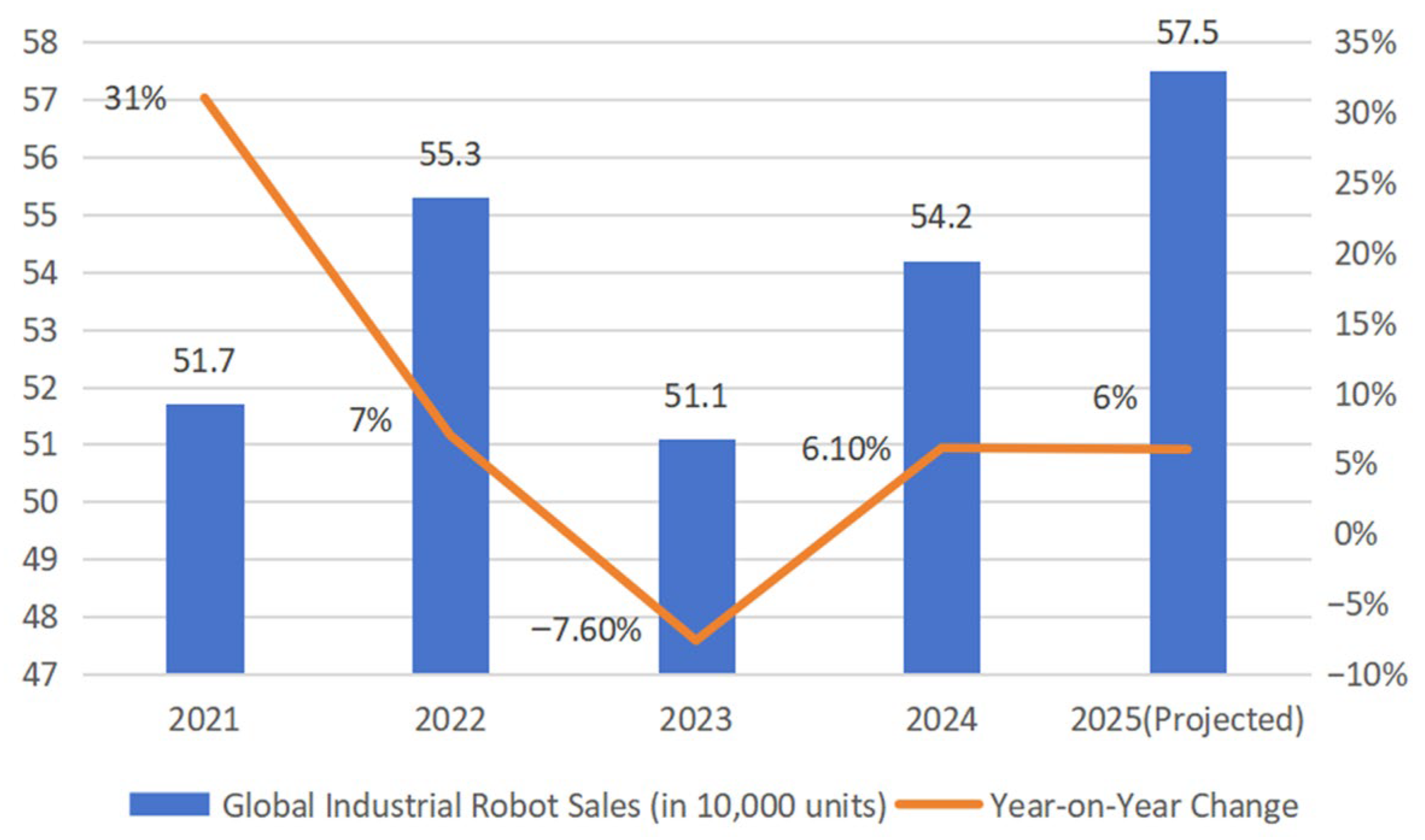
As robotic manufacturing transforms to flexibly and intelligently respond to global market demand, robotic grinding technologies for the precision grinding of casting surfaces and edges, specifically, have increasingly played a pivotal role in the realization of higher-quality products as well as lower human factor reliance towards intelligent manufacturing. As shown in Figure 1, global industrial robot sales, reported by the International Federation of Robotics, exhibited stable growth during 2021–2025. Within automotive, aerospace, and energy equipment manufacturing industries, grinding operations on sophisticated, monolithic components with complicated free-form surfaces have been in rapidly increasing demand. However, existing approaches utilizing hand-held tools or inflexible CNC machines can barely meet recent demands for small-lot, multiple-variant, and high-accuracy manufacturing processes. Therefore, the development of novel methodologies featuring compliance, precision, and intelligent adaptation becomes highly urgent.
Robotic grinding technology, owing to its high flexibility, strong adaptability, and excellent potential for human–robot collaboration, has gradually replaced conventional approaches and become an indispensable component in high-end manufacturing [1,2]. As summarized in Table 1, robotic grinding demonstrates significant advantages over CNC-based grinding methods [3,4,5] in terms of its workspace envelope, changeover efficiency, adaptability to complex geometries, and capability for automated integration. Particularly when processing non-regular workpieces such as free-form surfaces, weld seams, and irregular castings, robots can achieve adaptive surface conformity through offline programming, vision-guided positioning, and force control strategies, effectively mitigating challenges arising from fixture-induced errors and geometric deformations of the workpiece.
In the current application of robot grinding, different robot configurations show significantly different applicability and influence grinding quality due to their structural characteristics. Six-axis articulated industrial robots have become the absolute mainstream due to their excellent flexibility and versatility and can handle complex three-dimensional surfaces. However, their overall stiffness is low, and the influence of robot posture is obviously the core bottleneck affecting the grinding quality, which can easily cause machining deviation, such as trajectory deviation, surface ripple and geometric inaccuracy. As a lightweight joint-type representative, although the built-in force control and flexible deployment are suitable for light-load fine grinding, its lower stiffness limits its application in contexts with a high material removal rate or in hard-material processing, and the grinding stability is relatively weak. In contrast, the parallel robot has the advantages of high stiffness and high speed, which can effectively suppress deformation and improve surface consistency. However, its limited workspace and attitude adjustment ability make it suitable only for specific scenarios such as plane or shallow surface grinding. The gantry robot provides the highest stiffness and accuracy and is an ideal choice for high-demand grinding tasks (e.g., aviation blades, large molds), ensuring excellent grinding quality. However, its high cost, poor flexibility and large footprint make it difficult to popularize in general scenarios. Therefore, although articulated robots (including traditional six-axis and collaborative robots) dominate the market due to flexibility, the stiffness challenge brought by their configurations is always a key factor restricting high-quality and high-consistency grinding, while other configurations are used as supplementary solutions in specific high-stiffness-demand scenarios.
The main difficulties associated with robotic grinding are the stable and controllable output of normal force, high-accuracy adaptive trajectory calculation, smart process parameter optimization, and online assessment of surface quality in dynamic contact under uncertainty. Many scientists and engineers have investigated these problems extensively. According to Table 2, several review papers published between 2021 and 2025 reviewed the advances in this area from different aspects, like path reconstruction using 3D point clouds, compliance compensation during machining of lightweight materials, performance improvement of serial robots for milling tasks, and surface quality management for abrasive belt grinding of aero-engine blades. This paper reviews and integrates recent advances in robotic grinding across four core technical dimensions: force control stability/adaptability, trajectory planning/path generation, process parameter optimization, and grinding-state monitoring/quality evaluation.
In this paper, we review the state-of-the-art research findings, main technology innovations, and typical application scenarios of robotic grinding to shed light on the central dilemmas that are still limiting the field, as well as the directions for future work.
Section 2 focuses on the central problems faced by robotic grinding. Aiming at solving the problem of insufficient stability and adaptability of force control, the phenomenon of difficult-to-maintain contact force stability under complex surface, uneven material and workpiece deformation conditions is analyzed alongside its causes. The path mismatch problem caused by the geometric deviation between the CAD model and the actual workpiece in trajectory planning and path generation, and the adverse effects of noise, curvature mutation of point cloud data and missing data on the motion smoothness and trajectory continuity, are discussed. We outline the inadequacies in process parameter optimization with inadequate physical models and heavy dependence on trial-and-error and point out the absence of real-time sensing and assessment of machining quality, preventing real-time reporting of essential data (e.g., material removal rate, surface roughness).
Section 3 reviews the technical solutions to these challenges. For force control, active and passive compliance strategies are surveyed, with a focus on their dynamic environmental adaptability. In trajectory planning, adaptive methods integrating 3D point cloud reconstruction and curvature-guided techniques are introduced. For process optimization, material removal models based on single-abrasive mechanics and energy conversion principles are summarized, along with their applications in intelligent parameter tuning. Regarding state perception, advances in multi-modal sensing combined with deep learning and signal processing for online monitoring and quality assessment are critically evaluated.
Section 4 presents practical industrial applications, including metal castings, aero-engine blades, thin-walled components, and weld seams, to demonstrate the tangible performance improvements of the reviewed technologies in real-world scenarios.
Section 5 concludes the paper and forecasts future trends, arguing that intelligence, autonomy, and full closed-loop control will be pivotal to advancing robotic grinding toward higher precision, robustness, and adaptability.
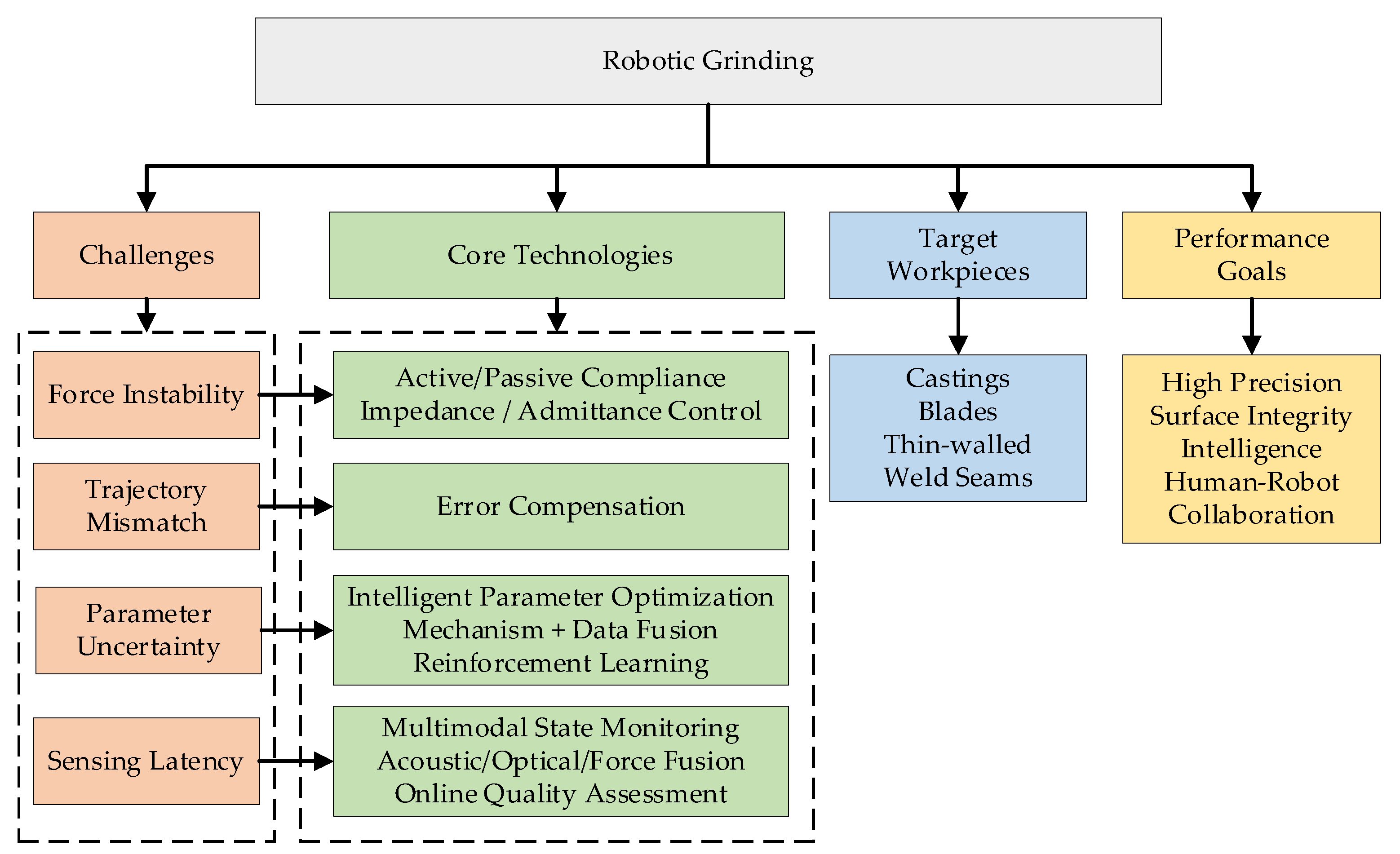
To present the research context and content organization of this paper, Figure 2 illustrates the review framework. Centered on the core theme of “robotic grinding,” the framework expands into four dimensions from left to right: the challenges, which reveal the key bottlenecks currently restricting technological implementation; the core technologies, which propose four representative solutions correspondingly, reflecting the “problem–method” mapping relationship; the typical applications, which focus on industrial practice scenarios to verify technical feasibility; and the future development trends, which point toward frontier directions such as high precision, intelligence, and human–robot collaboration. The dashed box emphasizes the strong coupling between challenges and technologies, highlighting the main logical thread of this review, namely a “problem-driven technology organization” approach.

2. Core Challenges and Technical Difficulties in Robotic Grinding

2.1. Challenges in Force Control Stability and Adaptability

Robotic grinding demands stable contact force control under complex surface constraints. However, workpiece geometric deviations, fixture-induced positioning errors, and abrupt surface curvature changes introduce highly uncertain contact states. Conventional trajectory-tracking control fails to maintain constant normal force [20], causing over-grinding, under-grinding, or contact loss, which leads to uneven material removal and poor surface quality. Essentially, grinding is a constrained-motion task whose performance depends not only on pose accuracy but more critically on the system’s adaptability to dynamic-contact mechanical environments. In practice, material inhomogeneity, thin-walled structural deformation, and abrasive tool wear render contact stiffness time-varying and difficult to model accurately. While traditional impedance/admittance control enables compliant interaction via equivalent stiffness and damping tuning, its effectiveness is heavily dependent on prior knowledge of environmental stiffness and contact location. Consequently, in unknown or dynamically changing environments, such approaches often suffer from force-tracking errors or even instability [21,22]. This issue is particularly pronounced in regions with rapidly varying curvature, where the contact normal direction changes abruptly; without online adaptation, the controller exhibits significant dynamic overshoot and response lag. High-stiffness actuation systems offer fast response but lack compliance, posing a risk of workpiece damage. Passive compliance mechanisms, while structurally simple, provide limited compensation stroke and fixed stiffness, resulting in poor adaptability. Even when series elastic actuators are employed to enhance compliance, their elastic elements can excite residual vibrations during high-frequency operation, degrading force control accuracy and thereby creating a multi-objective trade-off among compliance, stability, and response speed. Moreover, strong coupling exists between the normal contact force and tangential motion: pose adjustments induced by surface curvature variations directly perturb the contact force. In the absence of an effective decoupling mechanism, this coupling can induce oscillations in the force control loop, compromising process stability. For thin-walled, easily deformable components, the lack of online deformation estimation [23] and trajectory self-correction mechanisms [24] causes the robot to persistently apply suboptimal contact forces, exacerbating deformation risks. An ideal force control system should embody a closed-loop “sense–decide–adjust” capability, enabling real-time estimation of surface topography and local stiffness from force feedback, and adaptively tuning the control strategy to achieve intelligent compliant interaction. Nevertheless, high-performance force control imposes stringent requirements on sensing accuracy, signal processing, and computational real-time performance. Force/torque sensors are susceptible to noise and disturbances, and control latency may introduce phase lag, further degrading system performance. The above force control problems are further amplified in real industrial scenarios. The laboratory environment often assumes that the stiffness of the workpiece is constant and the geometry is perfect, while the castings on the production line have random burr positions and uneven wall thickness, resulting in drastic time-varying contact stiffness. In addition, sensor noise, communication delay and actuator nonlinearity can seriously degrade control performance. Therefore, force control research needs to go beyond the ideal trajectory-tracking index and focus on robustness under strong interference and workpiece uncertainty and incorporate performance such as residual stress and fatigue life into the control objectives.

2.2. Challenges in Trajectory Planning and Path Generation

Trajectory planning and path generation are pivotal to robotic grinding, determining machining accuracy, surface consistency, and robustness. However, conventional offline path planning based solely on CAD models faces critical bottlenecks in real-world scenarios with complex surfaces and dynamic uncertainties, severely limiting system intelligence and adaptability. A primary issue is a path mismatch caused by geometric deviations between actual workpiece morphology and nominal CAD models. Manufacturing tolerances, fixture-induced deformations, and material inhomogeneities make pre-defined trajectories unable to accurately conform to the target machining region, leading to local over-grinding/under-grinding, uneven material removal, and contour distortion. Even geometrically smooth paths may trigger force control instability due to contact state mismatches, compromising process stability. This highlights the inadequacy of pure model-driven approaches and the urgent need for real-time path correction based on in situ measurement data. While 3D point cloud scanning enables path reconstruction, inherent data quality issues pose new challenges. Scanned point clouds are often contaminated by noise, suffer from local data loss [25,26], and drift in high-curvature regions (notably deep cavities and edges). Direct path generation from such imperfect data can cause abrupt tool orientation changes, discontinuous joint motion, sudden acceleration spikes, and mechanical vibrations, endangering system safety. Additionally, tool pose optimization must balance geometric conformity and task stiffness (resistance to normal deflection and in-plane slippage). Neglecting contact mechanics in pose planning may result in insufficient local stiffness, leading to unstable grinding forces and degraded surface quality even with precise geometric paths. A fundamental challenge is the physical non-uniformity of material removal. Traditional strategies prioritize geometric optimality and motion smoothness while ignoring time-varying contact interface characteristics (e.g., evolving contact area, dynamic pressure distribution, and abrasive wear). Thus, even uniformly distributed trajectories may cause spatial inconsistencies in material removal, failing to meet high-precision requirements (e.g., aerodynamic components). Path generation must therefore shift from a purely geometry-driven paradigm to a “physics-aware” framework integrating contact mechanics and material removal models [27].
Furthermore, conventional optimization algorithms demonstrate low search efficiency when applied to high-dimensional and nonlinear spaces and they face difficulties in generating Pareto-optimal solution sets that are both well-converged and uniformly distributed [28,29].
Furthermore, intrinsic kinematic errors, joint clearances, and structural compliance will lead to trajectory errors of robotic end-effectors, especially at high speed and long stroke; accordingly, the real process precision of a high-precision path cannot be guaranteed fully. More importantly, conventional path planning approaches operate in an open-loop fashion and cannot automatically adapt to changes in workpieces, unexpected process disturbances, and even dynamic deformations. Without multi-modal sensory feedback like force and vision data, such adaptive online correction capabilities are inherently limited.
Most of the current trajectory planning methods rely on high-precision CAD models or clean point clouds, which are far from the actual production-line environment. The workpieces in the industrial field are often accompanied by oil pollution, reflection or occlusion, resulting in missing scanning data and large noise. More importantly, the planning objective should not be limited to the degree of agreement of the geometric contours. For key components such as aviation blades, the residual stress distribution and micro-crack density after grinding directly determine the service life, which requires that trajectory planning must integrate the material removal mechanism and the surface integrity model, moving from “geometry-driven” to “performance-driven”.

2.3. Challenges in Process Parameters

Process parameters are defined as the core operating variables responsible for determining grinding quality, efficiency, and stability in robotic grinding. They involve tool properties, spindle speed, contact position, feed distance, feed speed, and normal force. Process parameters control the interface between the robot and workpiece surface, and their variations have immediate impacts on grinding quality metrics such as the surface finish, material removal rate, throughput rate, and tool wear rate. The interplay between the process parameters and grinding performance is distinctly nonlinear, highly interactive, and dynamically varying. Consequently, when encountering new workpieces, it is often infeasible to directly apply prior empirical knowledge or analytical formulas. Grinding belongs to a specific class of unquantified milling problems where multi-physics and boundary uncertainties add extra challenges to model fidelity. Conventional approximation models, including the Preston equation [30] or Hertzian contact approach [31], can hardly replicate material removal responses during actual grinding when confronted with free-form shapes, flexible parts, or unconventional materials. The modeling errors lead to tedious trial-and-error searches for parameter values with slow convergence and poor adaptivity. Furthermore, interactions between process parameters and toolpaths are often neglected. When process parameters remain unchanged, excessive/insufficient grinding tends to occur at sharp transition zones or start/end stages of the toolpaths, which reduces the contour conformity and the finish grade.
Moreover, the grinding process is inherently time-varying and subject to perturbations such as abrasive belt wear and robotic stiffness drift, adding to the difficulty of optimization. Conventional open-loop optimization algorithms are insensitive to the environment and incapable of regulation, resulting in inadequate robustness. In addition, completely data-driven models have poor generalization and explanation, and completely physics-based models tend to be overly simplistic and challenging to parameterize, resulting in low prediction accuracy. In consequence, there remains a significant hurdle in constructing an intelligent optimization algorithm that can intelligently combine mechanisms and data to achieve high-accuracy, generalizable, and explainable process decisions that would thus constitute a major breakthrough towards future robotic grinding systems.
Most of the existing process optimization studies take surface roughness or material removal rate as a single objective, which has certain limitations. In real engineering applications, excessive pursuit of low roughness may lead to harmful tensile stress or even microcracks, which will reduce the fatigue resistance of components. Therefore, the selection of process parameters must comprehensively consider geometric accuracy, surface integrity and service life. The future parameter optimization framework should construct a multi-objective and cross-scale evaluation system to transform the “optimal parameters” of the laboratory into a truly reliable “robust process” on the production line.

2.4. Challenges in Grinding Sensing Latency and Quality Assessment

There exist severe challenges in state perception and quality evaluation in robotic grinding processes because the process is highly nonlinear and dynamic and subject to complicated environmental perturbations. The existing “separation” pattern of machining and inspection leads to time delay in state feedback and thus poses obstacles to achieving real-time process control. Current practice does not offer real-time state monitoring of tool states like tool wear [32] and blunting. Instead, the use of human experience or offline examination frequently triggers process defects like over-grinding and thermal injuries, leading to unstable process states and shortening tool life. Despite being a repository of valuable state information, the multi-source data, including force, vibration, and acoustic emission, are noisy, nonstationary, and multi-modal in nature. These characteristics render precise feature extraction, computational cost, and real-time performance difficult to achieve, and this, in turn, restricts its application to high-precision perception. Compliant tools are also commonly used for starting or cornering operations to overcome the restrictions brought by rigid ones, yet they have relatively low stiffness, exhibit a lagging transient response, and fail to guarantee desired contact forces, contributing to local under-grinding as well as visible marks from tool paths. Existing control schemes do not build dynamical models for material removal [33], and therefore it is difficult to perform anticipation-based compensation. For geometric quality evaluation, offline measurements suffer from poor efficiency and a long turnaround time. Extreme operation environments with lots of dust accumulation and severe vibration make in-process 3D surface topography sensing susceptible to sensor pollution and point cloud deformation, thus reducing sensing accuracy. In general, the perception delays, fusion difficulties of multi-modal signals, lack of transient-state-aware control, and disconnection between processing and quality evaluation constitute formidable barriers for the intelligence of robot grinding. It is necessary and imperative to construct an integrated online-monitoring system incorporating multi-modal perception, intelligent state realization, and closing of control loops to realize transparent and precise grinding. The current quality assessment methods are lagging and one-sided. Offline measurement cannot be used for closed-loop control, while online monitoring focuses more on geometric quantities, ignoring the inherent quality indicators that determine the long-term reliability of components. In industrial environments, dust, coolant and strong vibrations make high-precision sensing difficult. Therefore, it is necessary to develop a pragmatic, service life-oriented online assessment method. This method should be able to indirectly but reliably infer key indicators such as residual stress and fatigue limit through easily accessible multi-modal signals (e.g., force, sound, heat), thereby narrowing the gap between laboratory research and industrial applications.

3. Key Technologies in Robotic Grinding

In response to the multifactorial issues of flexibility, surface uniformity, smart decision-making, cost containment, etc., encountered within the aforementioned robotic grinding systems, academics/researchers, as well as engineers/hands-on practitioners, have explored and deployed several pivotal enabling technologies. In this chapter, we will introduce these essential technological strategies from four aspects, namely force control, trajectory planning and path creation, process parameter optimization, and state observation of grinding and quality evaluation, and identify how they contribute to alleviating those issues.

3.1. Force Control Techniques

Force control approaches can be roughly classified into two categories according to their implementation mechanisms. First are active force controls that focus on the active variations in system output to ensure accurate control of the contact force. Examples are hybrid force/position control, impedance control, and admittance control. Second are passive compliance controls that mainly depend upon elastic properties or intrinsically compliant structural units to ensure automatic surface-following through structure adaptation when contacting the workpiece to offer inherent force absorption and adjustability.

3.1.1. Active Force Control

Hybrid force/position control is one of the most basic methods for realizing active compliance in high-precision robotic grinding. Marc H. Raibert and John J Craig [34] built up their theory during the 1980s. The technique divides the task space into orthogonal subspaces wherein the former is responsible for force control and the latter for position control so that the robot can control both contact force and motion trajectory simultaneously, contributing to the theoretical basis for active compliance control. Raibert’s research reduced the deficiencies of traditional stiff robots in adapting to uncertain environments. Due to the computational ability and sensor accuracy of the time, most prior works depended mainly on assumed-environment models. They were not stable and accurate enough for use in complicated machining applications.
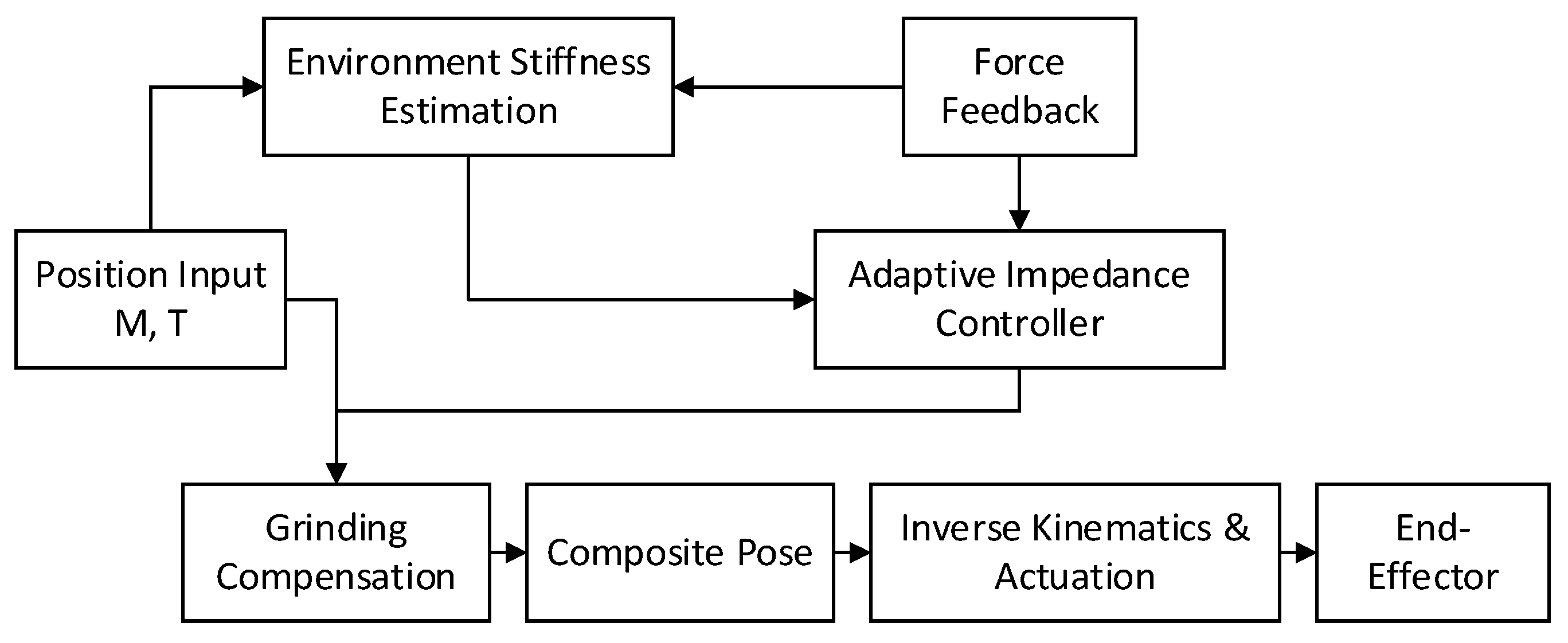
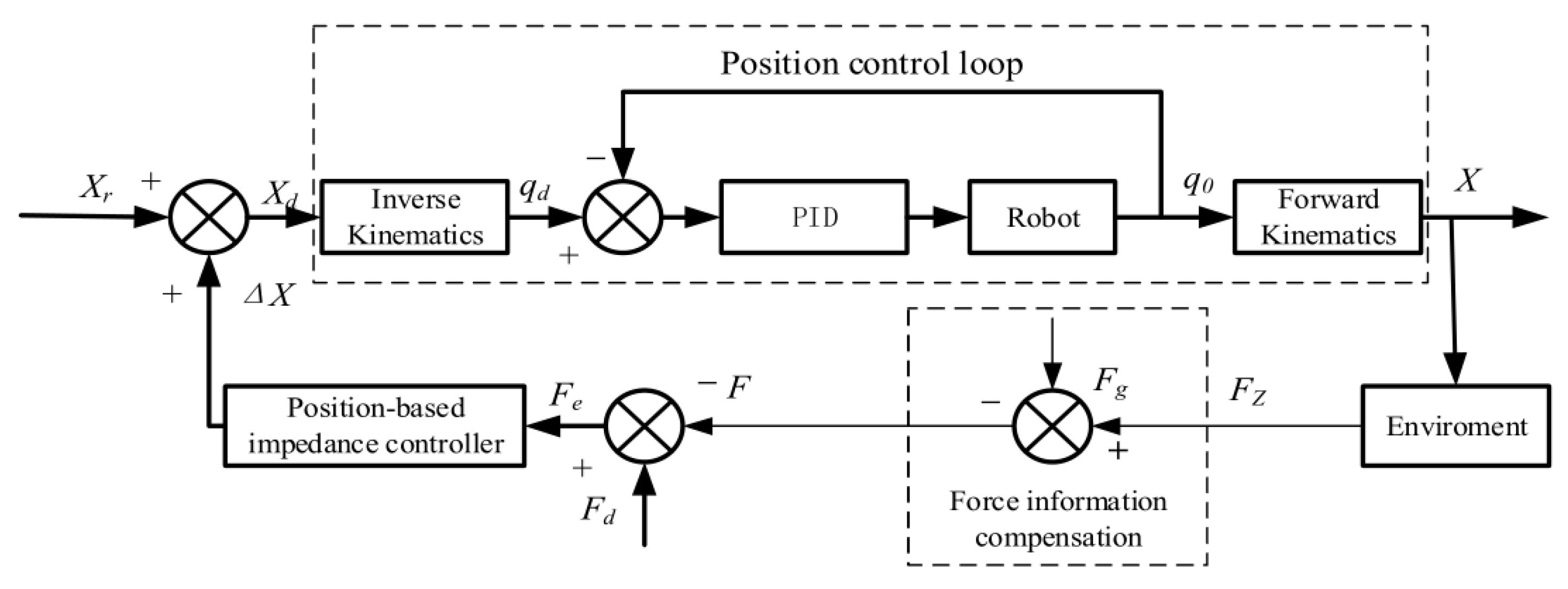
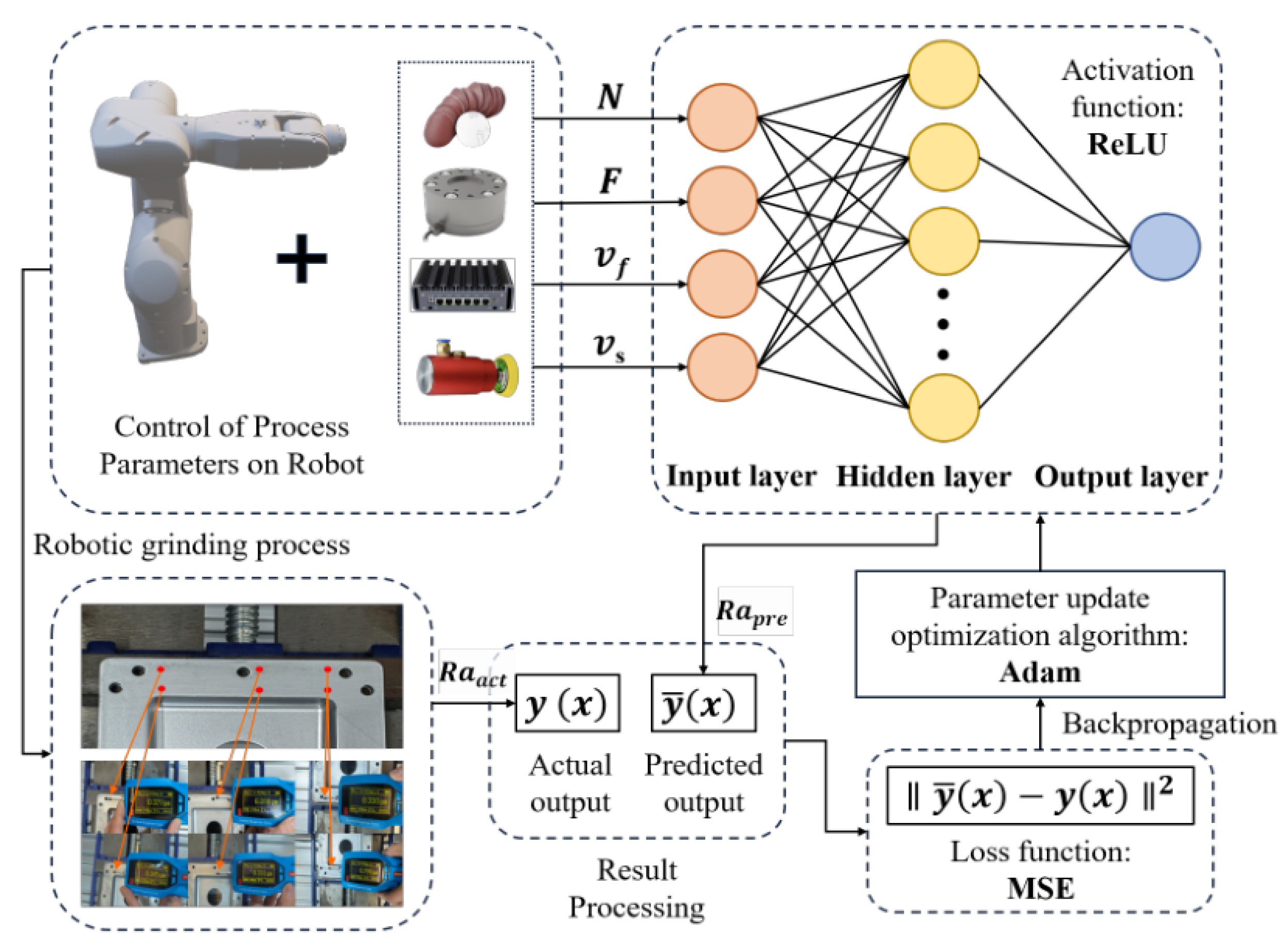
With the emergence of precise six-axis force/torque sensors, real-time controllers, and breakthroughs in smart materials, hybrid force/position control has evolved steadily from academic investigation to symbiotic innovation of mechatronic configurations and controllers. In response to the natural limitation of conventional rigid robots with respect to their adaptability to variances in surface geometry and properties, some hybrid force control methods employing variable-stiffness elements and intelligent techniques were presented. For example, Tang et al. [35] presented a novel parallel electromagnetic variable-stiffness manipulator (PEVSM), which is embedded with an online stiffness estimation procedure and a novel enhanced fractional-order adaptive impedance controller (EFOAIC) algorithm. The overall system varies the end-effector’s equivalent stiffness in real time for better tracking performance of the contact force upon grinding execution. A novel stiffness controller based on deep deterministic policy (SCDDPG) was also presented to better synchronize the stiffness adjustment and the grinding trajectory so that precise and reliable adaptive grinding operation can be achieved under a complicated and unstructured environment. In Figure 3 the architecture diagram of the control system is shown. Their work lowered the average absolute force-tracking error and the average absolute material-removed error by 82.76% and 78.39% compared to that implemented with conventional impedance control.
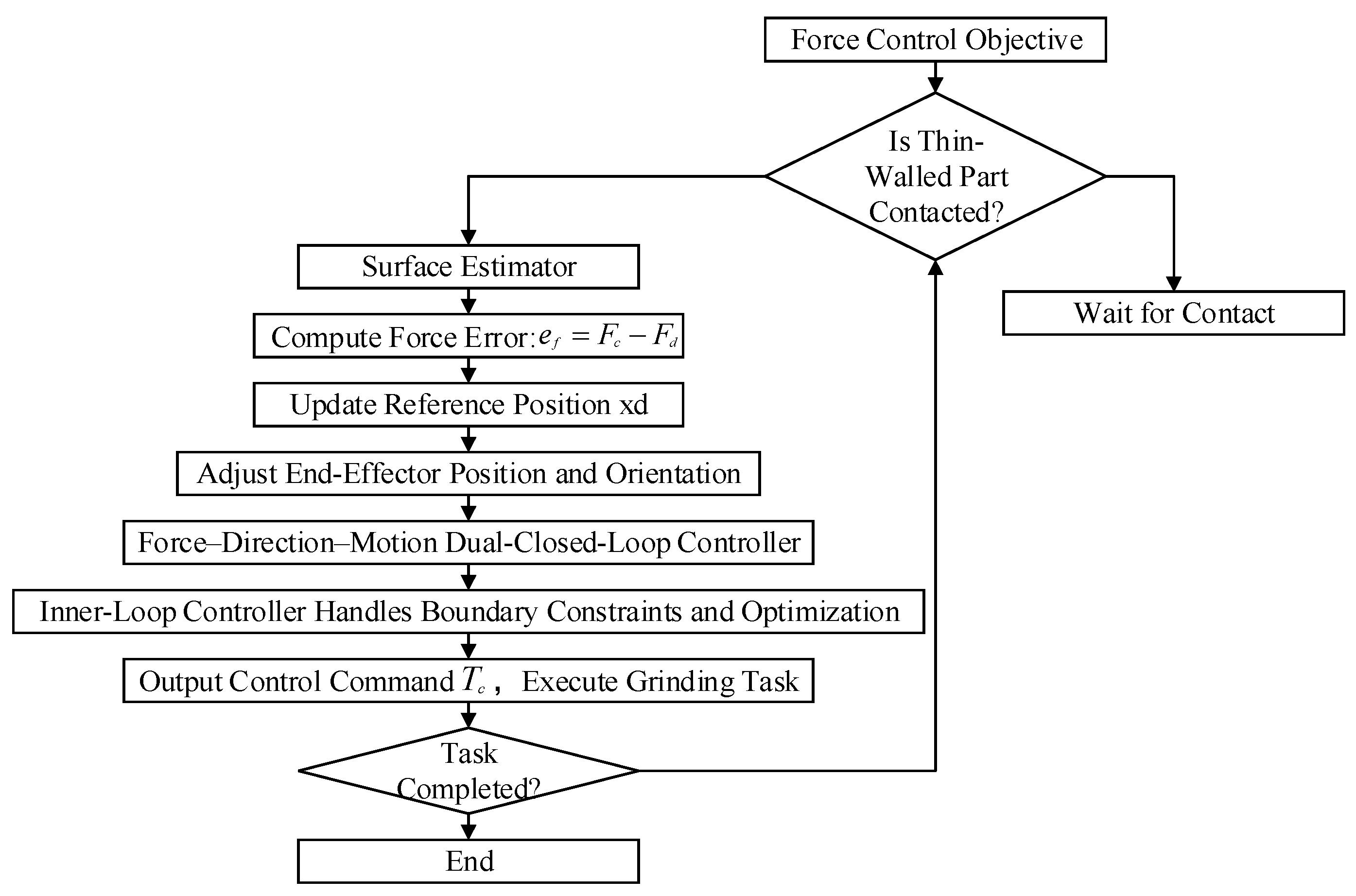
In contact force planning, Li et al. [36] put forward a method in the form of a “goal-oriented” process, directly focusing on the accuracy of material removal and incorporating it into hybrid force/position control. Their hybrid force–position control algorithm reached a force error of less than ±1 N and a tangential tool-tip position error of less than ±0.03 mm under stable grinding conditions and obtained a post-grinding surface roughness (Ra) of 0.454 μm on average. Xu et al. [37] made advancements in this line by synthesizing active and passive compliance control approaches. By applying dual signal fusion using Kalman filtering and segment-based switch control, they decreased the standard deviation of normal force fluctuation to 0.37 N and increased force control accuracy and resulting surface quality during complex curved-surface grinding. On the system architecture side, Chen et al. [38,39] presented two complementary schemes: the macro–micro-actuator-integrated structure and the two-degree-of-freedom end-effector. The former can achieve a normal force control accuracy of ±0.4 N and trajectory-tracking error of 0.04 mm based on the generalized predictive decoupling control (GPDC) strategy. The latter can decrease the normal force error by approximately 60% based on decoupling control and overcome the challenging problem due to the coupling nature of forces and positions. Subsequently, Li et al. [40] developed a dual-loop compliant control scheme suitable for the grinding of thin-walled parts with unknown workpiece surface geometry. The adaptive grinding control flowchart is shown in Figure 4. The controller structure keeps force errors within ±2 N over the whole period of stable grinding and contributes to more consistent force control in the cases of adaptive grinding. These contributions have led force control in robotic grinding applications to evolve from simple force-tracking control to multi-level coordination control. Specifically, a macro–micro-actuator and actively compliant actuators were adopted structurally to gain adjustable stiffness; task-level dynamical forces as targets were planned out considering models in terms of grinding material removal; control-level coordination between impedance tuning and force feedback was carried out to gain active and passive compliance; normal force was taken off tangential movement and processed separately under operation with two-degree-of-freedom end-arm effectors and general predictive controls; and online adjustments of force–position errors were perceived to make control adaptable to workpiece deformation and trajectory disturbances. They formed an effective 5D, hybrid controlling scheme in robotic grinding applications.
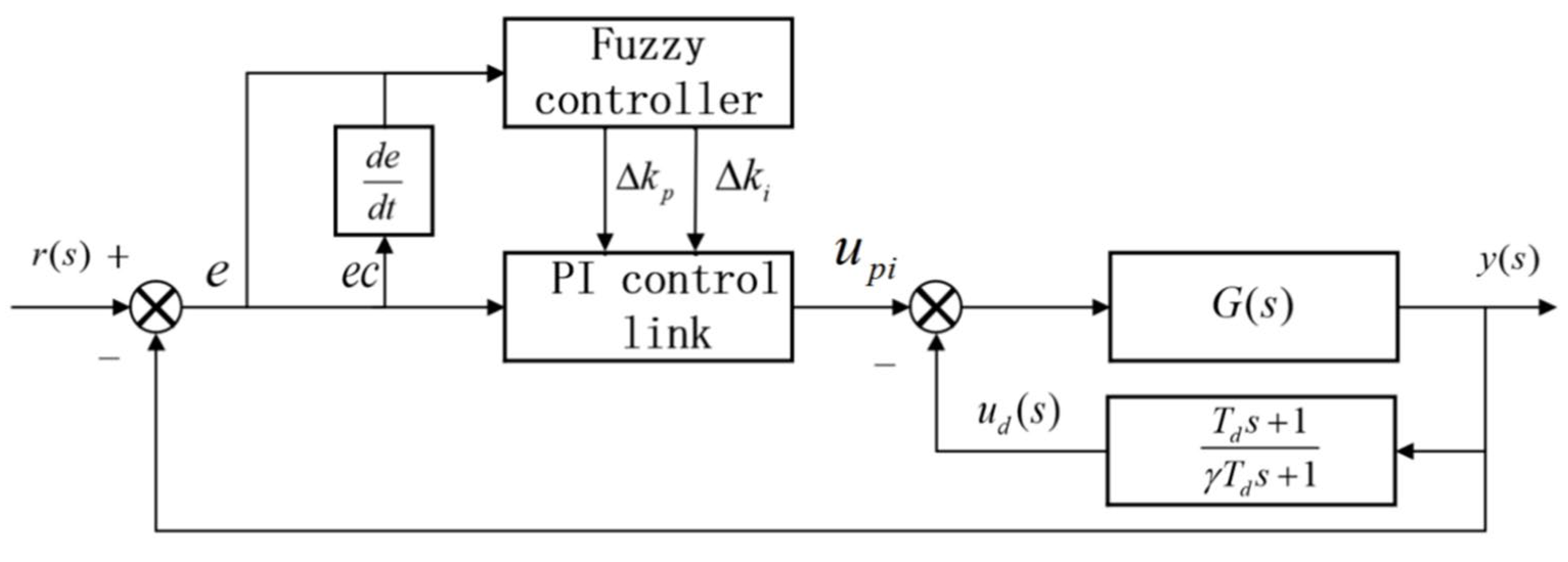
As shown in Figure 5, Li et al. [41] proposed a hybrid force–position control method based on fuzzy derivative-leading PID for robotic floating grinding and rust removal. This approach does not require an accurate workpiece model and utilizes force/position sensing to compensate for surface deviations in real time, reducing grinding force fluctuations (by 37.4% at a feed rate of 40 mm/s) and achieving a rust removal rate of 99.73%.
Impedance/admittance control was first articulated by Neville Hogan in his seminal papers, published in 1985 [42,43,44]. This approach regulates the equivalent stiffness and damping characteristics of the robot end-effector to emulate a spring–damper system, enabling adaptive pose adjustment in response to contact interaction forces and thus achieving compliant interaction [45,46]. To address the issue of inconsistent machining quality caused by unstable contact forces, researchers have adopted variable or adaptive impedance control architectures, often integrated with specialized end-effectors and advanced sensors. For instance, Xu et al. [23] developed a low-inertia grinding head incorporating a voice coil motor and proposed an online grinding force estimation method based on generalized momentum. By fusing joint current and velocity information, they achieved high-precision virtual force sensing and implemented a variable impedance controller that adaptively tunes damping gains according to force-tracking errors. In aerospace blade grinding applications, this approach reduced the average Ra by 38%. Similarly, Li et al. [47] presented a method combining sensor compensation with adaptive impedance control. They enhanced the accuracy of a six-axis force/torque sensor by refining zero-drift and gravity compensation models and designed an adaptive impedance controller that dynamically adjusts damping parameters based on force-tracking errors. In a grinding task targeting a contact force of −15 N, the average force-tracking error was reduced to within 0.38 N. Furthermore, Min et al. [48] introduced a nonlinear tracking differentiator to generate smooth force trajectories and implement a filtering observer module. This effectively mitigated force overshoot and fluctuations in belt grinding processes, enabling consistent Ra < 0.8 μm on complex blades.
A region-partitioned force selection control approach was presented by Wang et al. [49], wherein they adjusted the normal reference according to the local curvature and material removal allowance dynamically. Benefitting from online compensation based on neural networks within adaptive impedance control, force control precision was enhanced by 50.58–82.65%, while contour accuracy was increased by 35.67–66.90% for varying zones of the blade surface. In consideration of curvature, Mu et al. [50] developed an adaptive impedance, observer-based controller that uses zone-dependent force references as well as dynamic parameter adaptation via adaptive laws. An error between 0.193 and 0.244 mm was obtained experimentally for contouring tasks compared to the use of regular constant-force control strategies, where this resulted in an enhancement of 53.7–79.57%.
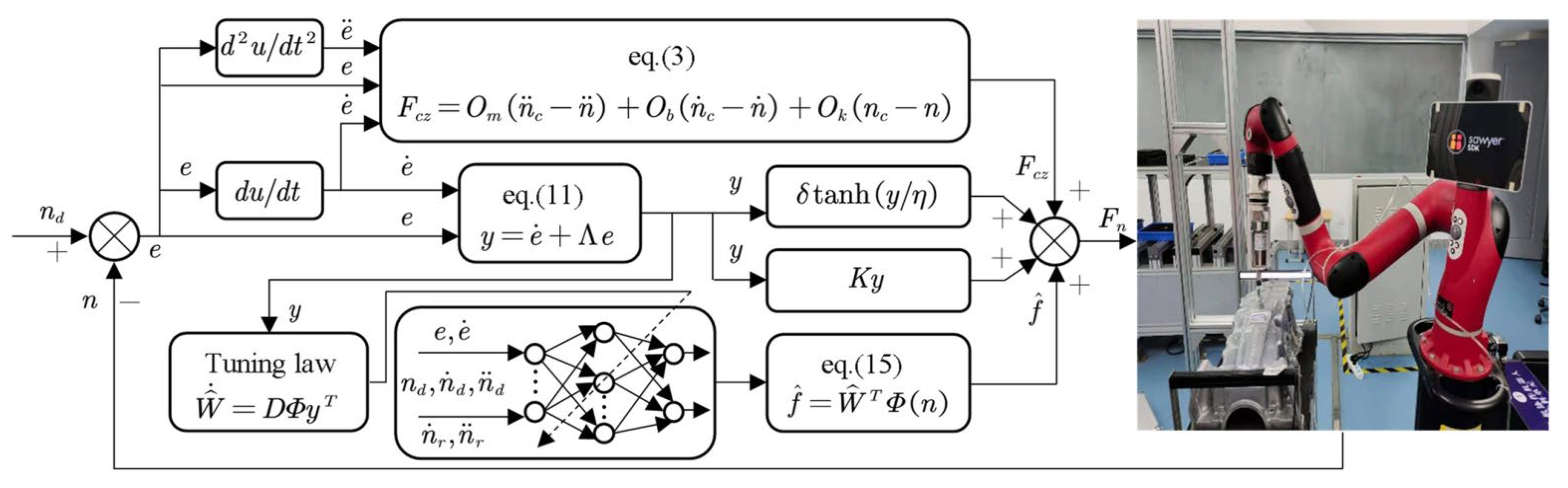
Jia et al. [51] proposed an adaptive robust impedance control method based on a Radial Basis Function Neural Network and an exponential reaching law, as illustrated in Figure 6, achieving compliant force control while ensuring high-precision trajectory tracking.
To address the challenges posed by variations in workpiece stiffness, Yang et al. [52] developed an electromagnetic variable-stiffness end-effector capable of online stiffness modulation to match the mechanical characteristics of the workpiece. Combined with a nonlinear PID controller and a stiffness-adaptive coordination scheme, an average absolute force error of 0.0216 N was found for the grinding of thin-walled curved surfaces. Inspired by this control method, Li et al. [53] came up with a bounded variable impedance control technique which adapts both stiffness and damping parameters together based on hyperbolic functions such that parameter variations can be limited in a predetermined range. As a result, an Ra value of 0.4 μm on important areas of aero-engine blades was reported and most sections met the demand of ±0.05 mm in terms of profile accuracy. Meanwhile, Wang et al. [54] incorporated the admittance model into the model predictive control system, which improved coordinated force/trajectory control via optimization in joint velocity compensation. They also put forward a trajectory interpolation algorithm with jerk limitation which led to a grinding process targeting turbine blades with a force error of 1.934 N and position error of 0.132 mm. These errors were more than 38% and 37% less than those produced by typical motion/force controllers.
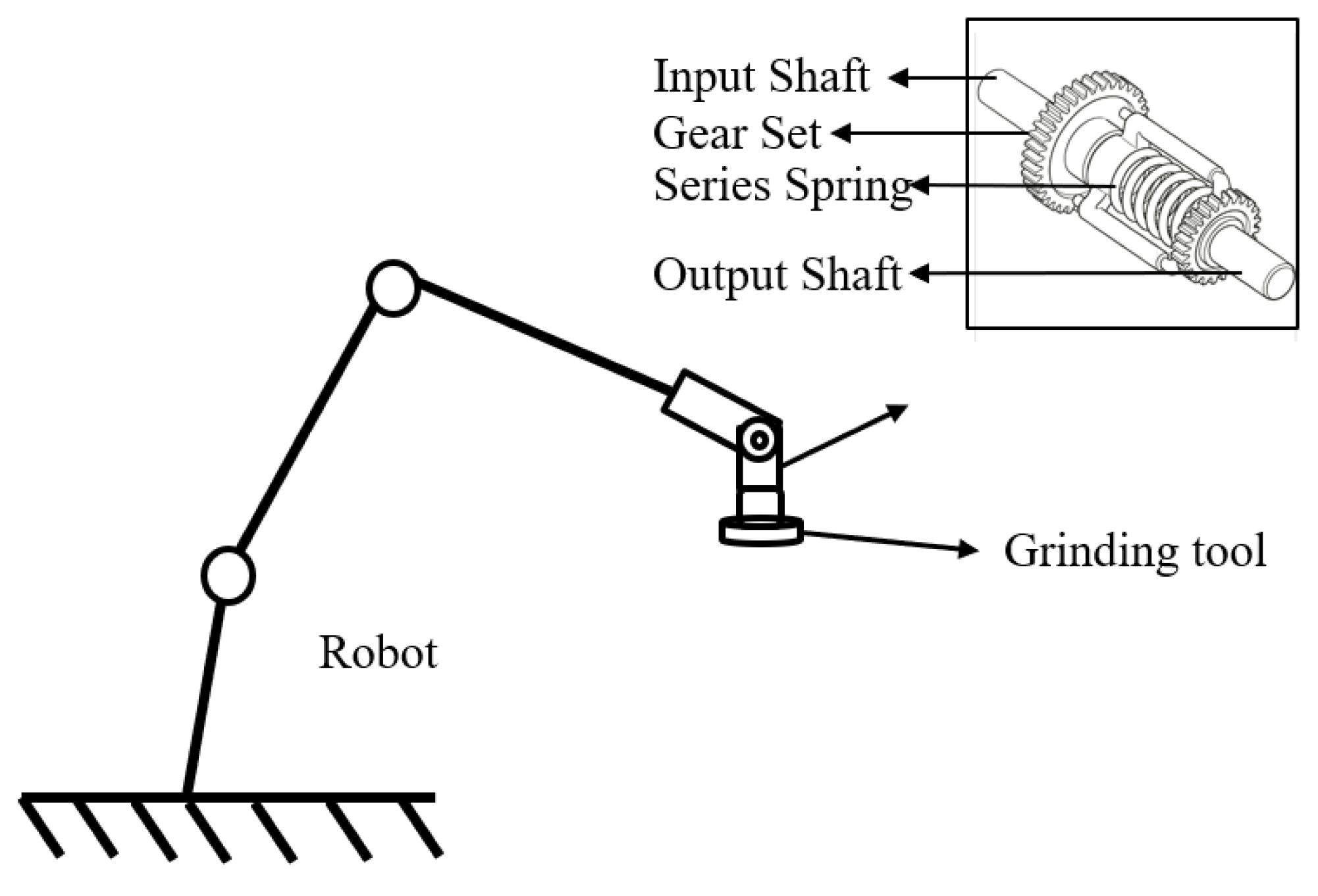
Benefiting from their built-in mechanical compliance and enhanced accuracy of force control, series elastic actuators (SEAs) have made much advancement in robotic grinding systems, as shown in Figure 7. On one hand, by tuning the stiffness of an elastic element, Chen et al. [55] used force PID feedback and force feedforward control and successfully minimized the overshot of force control and reduced the peak force-tracking error by 70%, the grinding depth tracking error by 58%, and the Ra by 19.2%. On the other hand, to combat its vulnerability to vibrations, Tang et al. [56] introduced a multi-feedforward strategy, namely the shifted instruction reconstruction–hybrid optimized input shaper (CSIR-HOIS), incorporating command smoothing, input shaping, as well as Stribeck friction compensation to minimize the force-tracking error, the grinding depth tracking error, and the Ra by 26.6%, 22.5%, and 21.5% and reduce the amplitude of the resonant vibration by 48.13%. In addition, Hsueh et al. [57] introduced a miniature SEA system using planar springs with closed-loop force control, reaching 0.06 N root mean square (RMS) force-tracking error within a 10 Hz bandwidth, as well as a compliant hollow shaft design that allows sensor-less torque sensing and adaptable stiffness control. Altogether, these efforts form a holistic approach linking the “structure–control–system” of grinders based on SEAs, providing a reliable means for high-quality automated finishing of complex-shaped surfaces.
Furthermore, some novel active force control algorithms have been proposed independently of traditional hybrid force/position or variable impedance control schemes. Shen et al. [58] presented a filtered Smith–active disturbance rejection control (Smith–ADRC) as a solution to contact force oscillations caused by time delays. The technique combines the Smith predictor to tackle the time delay, the ADRC to attenuate the disturbances, and the model-mismatch filter to improve robustness. For example, when used in aero-engine blade grinding, the methodology reached an Ra of 0.3503 μm, indicating that it can be used for submicron grinding accuracy.
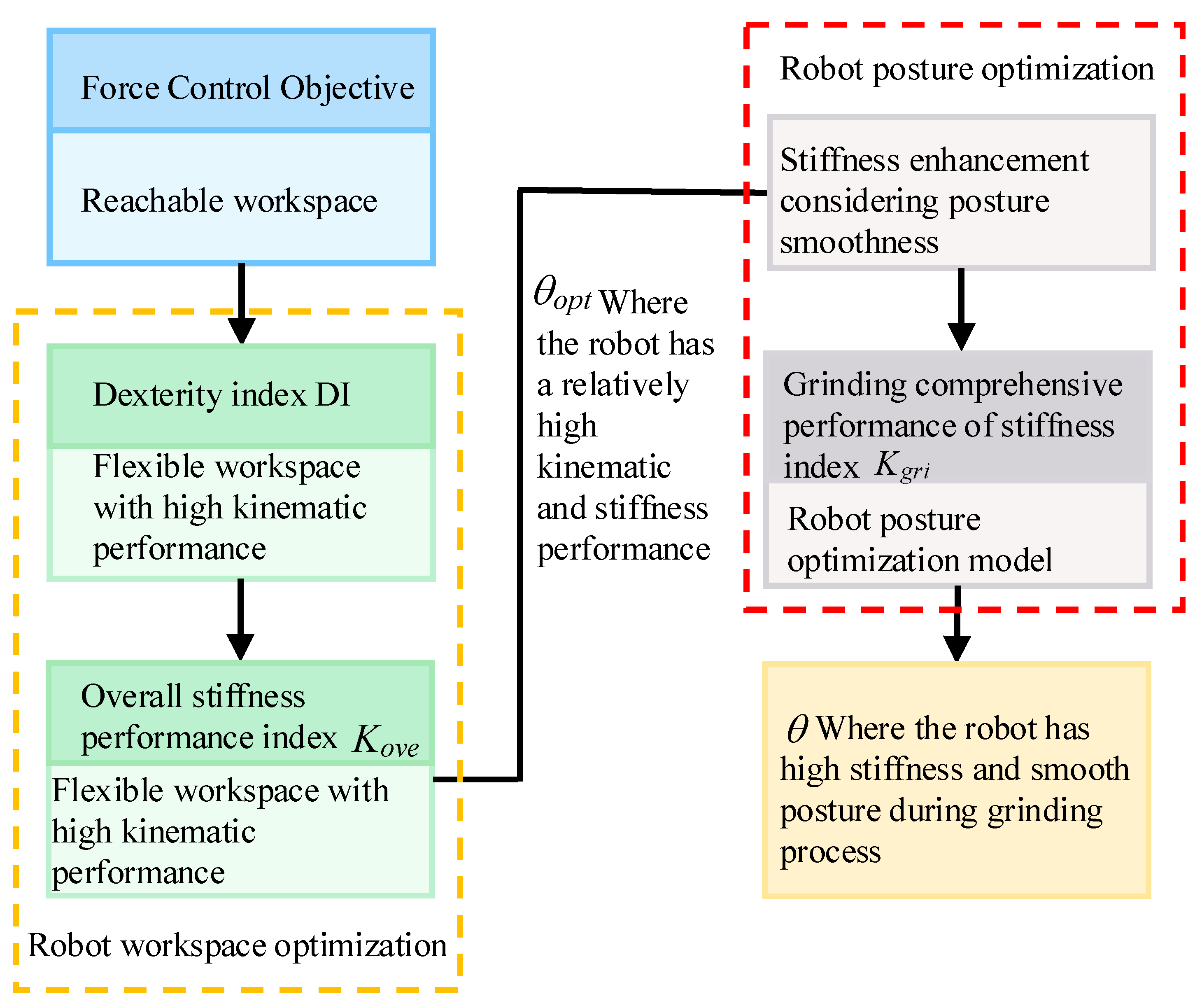
The lack of stiffness of the robot will lead to deformation due to cutting force during processing, which will directly affect the surface quality and accuracy. Zhang et al. [59] pointed out that the stiffness of the robot changes significantly with the working posture, and proposed to improve the comprehensive stiffness performance index by optimizing the redundant degrees of freedom. Finally, the global optimal solution is found at −30°. In this posture, the robot’s ability to resist cutting-force deformation is the strongest, thus effectively reducing the displacement error of the end-effector and providing a physical basis for ensuring the processing quality. Liao et al. [60] proposed a region-based tool path generation method. By dividing the free-form surface into multiple sub-regions and optimizing the robot pose and tool feed direction in each region, the robot always works in a high-stiffness configuration. The range of the compliance coefficient in the normal direction is reduced to 1.665 to 8.949(×10−3 mm/N). This method can significantly reduce the trajectory deviation and surface error caused by insufficient stiffness.
The aforementioned studies represent recent innovations in robotic grinding force control, each addressing distinct challenges across various application scenarios. To organize the experimental outcomes and applicability of these techniques, Table 3 summarizes the specific methodologies, key performance metrics, and validation contexts reported in the literature. This compilation aims to provide a quantitative foundation and reference for future advancements in force control strategies for robotic grinding systems.
It can be seen from the data in Table 3 that force control technology is undergoing a profound transformation from single-index optimization to multi-objective coordination. Early research mainly focused on reducing the force-tracking error, while recent work emphasizes the joint optimization of force control–displacement–mass. For example, Li et al. [53] with bounded variable impedance control not only achieved high surface quality with Ra < 0.4 μm, but also guaranteed contour accuracy of ±0.05 mm; Xu et al. [37], who combined active and passive strategies, effectively suppressed grinding marks by reducing the standard deviation of force fluctuation to 0.37 N. It is worth noting that extreme force control accuracy (e.g., 0.0216 N of Yang et al. [52]) often depends on customized end-effectors, at the expense of versatility. This shows that future research should not blindly pursue the limit of a single indicator, but should seek the best balance between accuracy, robustness and cost according to specific applications.

3.1.2. Passive Compliance

Passive compliance mechanisms use a compliant structure and mechanical design to counteract position errors and provide a constant contact force. In this section, recent progress in passive compliant force control is discussed with a focus on reducing transient overcutting and handling uncertainties in the positioning of workpieces.
Torres-Izu et al. [61] presented a compensation method for feed trajectory based on process–mechanism modeling to eliminate transient overcutting for robotic belt grinding, in which passive compliant tools generate an overcut on engagement. They established a correspondence between the tool–workpiece interaction geometry and material removal rate to create a varying feed velocity that keeps the contact force times feed speed product constant. Tests showed that the overcut area was reduced by 60% to 89%, leading to better edge uniformity. To deburr thin workpieces with uncertain positioning, Xu et al. [62] applied a hybrid positive–negative stiffness to fabricate a parallel constant-force end-effector. Employing multi-layer flexible beams and pretilt buckling beams, the mechanism has nearly zero effective stiffness. Without needing force sensors, it can operate such that contact force fluctuations do not exceed ±5% throughout a 4.5 mm travel distance, even at ±2 mm position perturbations. It minimizes force overshooting and increases robustness to uncertainties in positioning.
In order to compare the current mainstream robotic force control methods, this paper comprehensively sorts out their performance characteristics, applicable scenarios and technical maturity. The results are summarized in Table 4.

3.2. Trajectory Planning and Path Generation

Trajectory planning for more flexible and intelligent robot grinding applications will move away from manual teaching/offline programming-intensive processes, which use model-based predefined path methods, towards model-assisted adaptive path control with sensory feedback.

3.2.1. Model-Driven Offline Path Planning

The challenges related to grinding a small-radius fillet (e.g., for grinding a large forged part) were studied by Chaoui et al. [63] through simplifying the grinding force model to implement offline tool paths. By iteratively solving material removal areas crossing neighboring tool paths as a toolpath updating method, they reached a simulation precision of <0.0001 in roundness error for a 4 mm radius fillet in simulations. Based on these results, Lv et al. [64] extended offline computation by adopting the Hertzian contact theory together with the Preston equation, which modeled a material removal profile (MRP) incorporating elastic deformation. By this approach, they were able to realize adaptive grinding of curved leading and trailing edges of aero-engine blades, avoiding overcut and keeping profile error below 0.0194 mm. Likewise, Li et al. [65] introduced a uniform trajectory planning method following the Preston model, considering time-varying contact conditions, which focused on the interactive mechanism between the time-varying pose of compliant tools and local curvature of the workpiece. A uniform coverage pattern reduced the standard deviation of the material removal depth to 0.01 mm. Together, these examples show that path planning based on understanding process mechanics and contact dynamics will contribute as an effective route for replicable grinding quality on complex parts. Meanwhile, given cases where specific physics models are unavailable or fast prototyping tasks are desired, researchers are exploring geometry-driven approaches to adaptive discretization. In this regard, by applying a chord-height error-based technique on the NX platform, Song et al. [66] presented adaptive path distribution along the curved surface feature. By this algorithm, the number of path points can be adaptively changed depending on local workpiece features for a more rational point cloud. In addition, the tool center point (TCP) coordinate system is created by referring to surface normals to ensure an appropriate grinding position. Even though the resulting surface roughness of this technique can be relatively large (Ra = 2.049 μm), it is an effective CAD-based strategy that simulates its feasibility on Tecnomatix. It also offers an engineering closed-loop solution with good applicability.
In multi-objective collaborative optimization, Zhou and Tian [67] developed a multi-objective optimization model for grinding nuclear reactor coolant pump housings based on the path planning schematic in Figure 8. The model optimizes machining time, grind force stability, surface quality, and tool uniform wear jointly. Also, the proposed S-curve acceleration/deceleration profile with jerk limitations makes the trajectory fit to the real dynamic performance of robotic machines, achieving a grinding error of less than 0.6 mm. In addition, Li et al. [68] dealt with the problem of grinding thin-walled blade components, such as blade edges of compressors. An iterative subdivision approach using clamped B-splines was used to adaptively divide toolpath points in highly varying curvature areas to make the average profile error lower (0.0143 mm) and decrease the average profile error compared to other methods (>30%).
For chamfer grinding of gears, Zhu et al. [69] introduced a multi-objective cooperative genetic algorithm (MocGA) for identifying the Pareto-optimal set of trajectory points. When compared with the multi-subpopulation-based genetic algorithm (MsGA) and conventional GA, the resulting grinding trajectories obtained using MocGA saved 14.1% and 25.0% turning points, respectively, along with improvements of 7.3% and 12.7% in average turning smoothness. Quintic B-spline interpolation was used to guarantee the continuity of position, velocity, and acceleration for the robot joint trajectories. The chamfer-grinding robot’s joint velocities and accelerations were lowered by 21.3% and 27.3%, respectively, leading to improved start–stop stability. Chen et al. [70] approached the issue of trajectory optimization through simultaneous maximization of task-space stiffness and minimization of joint angle fluctuation. The compliance ellipsoid model was used to optimize the end-effector’s path along the whole path at once. Consequently, the Ra was optimized from 0.93 to 0.62 μm. An overview of their approach (full-path pose optimization method) is shown in Figure 9.
For process disturbances and model imperfections present in actual machining, Lv et al. [71] presented an error-compensation closed-loop technique based on the error signal. With titanium alloy tests, a regression equation between the residual height versus process parameters was fitted for online step-over control. A bisection algorithm was also utilized to automatically redistribute cutter contact points. Together, they decreased machining contour errors between 34.2% and 55.1%. In short, robotic grinding trajectory design has formed a multiple-layered multi-dimensional technology ecology by itself: model-driven techniques guarantee forming accuracy at high-curvature zones; geometry-adaptive techniques ensure better trajectory conformity on complex curved-surface regions; multi-objective optimization frameworks trade-off process requirements versus robot kinematics limitations; and error-compensation techniques strengthen the robustness of the grinding system. Their synergetic fusion pushes robotic grinding forward for better accuracy, adaptation, and applicability.

3.2.2. Data-Driven Adaptive Path Planning

Manufacturing processes such as robotic component finishing for complex geometric workpieces or low structural stiffness more often adopt data-driven adaptive planning strategies to reduce the heavy dependence of traditional model-driven methods on accurate CAD models, accurate mechanical models, or fast-reacting force control systems. To this end, several intelligent, offline programming techniques have been proposed which can automatically generate model-independent and online-adjustable trajectories based on measured point clouds or contact response data instead of existing geometry/mechanics models.
In response to robotic grinding deformation in low-stiffness workpieces, Zhou et al. [72] presented an approach for constructing workpiece deformation compensation through time-varying isobaric surface (TVIS)-based trajectory planning. During active sensing of workpiece deformation at a target contact force, the workpiece deformation was virtually reproduced as a TVIS, which can keep the contact force unchanged, and then the grinding trajectory was calculated on it. This transforms the “constant-force control” into a geometric reconstruction and offline path planning approach with data-driven characteristics, making the system more robust and capable of generalization. For high-value complex curved-surface parts with model mismatch due to manufacturing variance, Wang et al. [73,74] put forward a model-unneeded, “point-driven” trajectory planning technique. The orientation of tools was first determined directly on point clouds, followed by the formulation of a Tool-Axis Surface Energy model together with a Tool-Axis Uniformity constraint to obtain globally smooth orientation fields, resulting in a 27% enhancement in the continuity of the blade profile. Then the cutter contact points on the point cloud were fit to cubic B-spline curves forming a spatial path. Local geometric information and projection constraints were used to revise the grinding path, and an energy-based model was used to make the orientation field smoother, leading to a greater than 20% rise in surface profile smoothing. Extending this paradigm to confined internal environments, Lan et al. [75] undertook inner circumference welding grinding on thin-wall conical tubes. Based on real-time line-laser-scanning-obtained point clouds, inner circumference welding boundaries were detected via iterative operations relying on gradient properties. With equidistance section processing and B-spline interpolating, grinding paths were obtained and perspective projection optimization reduced overcut. Grinding residual error stayed lower than 0.08 mm in experiments, verifying the feasibility of such an approach in actual engineering applications without CAD support, even with high uncertainty.
As shown in Figure 10, Luo et al. [76] proposed a method combining adaptive impedance control with dynamic trajectory planning, which achieves precise tracking of the normal grinding force by online estimation of the workpiece position and stiffness and dynamic correction of the current point while compensating for the next target point. This approach achieved a surface roughness of approximately 0.5146 μm and a grinding efficiency of 0.89 cm2/s.
Data-driven approaches to grinding trajectory generation are progressing logically towards model-free, geometrically adaptable, smoothed-pose, and decoupled-force-controlled methods through TVIS-based reconstruction, smoothed tool axes, and point-guided path construction, towards adaptive cavity-aware planning, and so on.

3.2.3. Other Trajectory Planning Approaches

Robotic grinding has evolved from traditional CAD model-based offline programming to intelligent trajectory optimization scenarios integrating perception, human–robot collaboration, and self-adaptive compensation due to the urgent necessity of surface quality requirements for precise complex surface parts for aircraft and other sectors. Considering this transition, Chi et al. [77] presented a human–robot collaborative programming paradigm with adaptive virtual fixtures integrated into a six-degree-of-freedom haptic interface. Specifically, after establishing a VR environment using a laser scanner consistent with a real working space where the operator can exhibit the grinding track, the system will provide online contact force information and instant visualization for the material removal effect. The flexible virtual fixtures attached to the nominal CAD trajectory will apply adaptive constraint forces that will ensure the avoidance of any collision while still offering some parameter-tuning flexibility. Experimentally, the proposed strategy achieved a programming efficiency gain of 64.7% and a higher surface roughness uniformity with Ra dropping from 0.117 μm to 0.073 μm, comparing favorably with purely manual grinding, showing the benefit of the “human-in-the-loop” paradigm. Xiao et al. [78] reported a novel error-driven trajectory optimization approach based on inverse trajectory compensation. The full-field geometric deviation between the as-measured point cloud from scanning and the nominal CAD model is calculated. Curvature-adaptive variable steps, along with optimal toolpath spacing, are integrated into this error map to reverse-correct the initial grinding path. Applied to the Ti6Al4V blisks, this resulted in an average reduction in the contour error of 33.5%, as well as obtaining Ra 0.30 μm and Ra 0.31 μm on their concave areas and convex areas, respectively, thereby overcoming the challenges of over-grinding/under-grinding.
These are the recent technical advances in the robot grinding processes of path trajectory and planning. The details of the methods used and their respective test results are outlined in Table 5.
Table 4 clearly shows the evolution of trajectory planning from model-driven to data-driven and then to hybrid intelligence. The method based on the CAD model can achieve sub-millimeter contour accuracy under known geometry, but it is very sensitive to workpiece deviation. In contrast, although the pure data-driven method gets rid of the dependence on CAD and is suitable for model-free or strong-uncertainty scenarios, its planning results lack theoretical basis. The current cutting-edge trend is to combine the advantages of the two, such as the error-driven compensation method of Lv et al. [71]. By establishing a regression model of process parameters and residual height, the contour error is reduced by 34.2%~55.1%, showing the potential of the data correction model. In addition, the rise of multi-objective optimization indicates that the core of planning is no longer limited to the single constraint of workpiece geometric accuracy, but turns to the comprehensive decision-making problem of seeking the best balance between machining efficiency, robot motion stability and tool wear control.
In order to compare the current mainstream robot trajectory planning methods, this paper comprehensively sorts out their performance characteristics, applicable scenarios and technical maturity. The results are summarized in Table 6.

3.3. Process Parameter Optimization

Stable and predictable grinding quality necessitates solving the difficult modeling problem of the complicated nonlinear mapping relation between process parameters and process results. Although the design of experimental methods relying upon empirical formulas is relatively systematic, they often require lengthy tuning cycles, lack adaptivity and generalization ability, and thus are not suitable for high-precision manufacturing in complex and dynamic operating conditions. Recently, hybrid intelligent optimization incorporating data-driven and model-driven concepts has become the main research direction. Hybrid intelligent optimization methods can help change the existing practice of trial-and-error process parameter tuning into a closed loop of prediction, optimization, and control, such that the uncertainties in process modeling are alleviated, and stable product quality is guaranteed.

3.3.1. Process Modeling

Existing models of robotic grinding/polishing processes emphasize the aspects of material removal, grinding force, and surface quality. The development trend ranges from simple empirical formulas, complex mechanistic models, and more recently, hybrid models combining physical mechanisms with data-driven methods.
Process modeling mainly aims at predicting material removal behaviors, which serve as the premise of machining accuracy and cycle efficiency control. Previous works focused on classical modeling (e.g., Preston’s equation, Hertzian contact theory), although these cannot achieve satisfactory prediction accuracy for the complicated working process of compliant contact tools used in robotic flexible systems. Hence, people improved models based on the multi-scale-modeling concept. On a micro scale, Yang et al. [79] and Li et al. [80] both started with the interactions of a single abrasive but highlighted different points. Yang et al. created a spherical single-abrasive model, proposed using a dimensionality reduction method to solve the problem of pressure distribution in flexible-contact wheels with a large deformation, and reduced the average absolute percentage error of material removal rate (MRR) prediction to 14.942% as in Equation (1). Li et al. split the force involved in the interactions of single abrasive into three cases (friction, plowing, cutting), and proposed the relationship between force change and MRR. The following MRR model they proposed had a maximal prediction error of 14.4%, as given by Equation (2).
Q w = K E b π H B v s α v w ( v s ± v w ) 0 T arcsin 8 a v w t 4 ( v w t ) 2 R 2 4 ( v w t a ) 2 d t
where K is the model coefficient, E is the equivalent contact modulus, b is the effective width of the contact zone, H B is the Brinell hardness of the workpiece, v s is the abrasive belt linear velocity, α is the velocity influence coefficient, v w is the feed speed, R is the actual radius of the contact wheel, a is the half-width of the contact area, T is the contact duration between a single abrasive grain and the workpiece, and t is the time variable.
MRR = i = 1 n V i p t
where V i is the volume removed by the i-th cutting particle, n 0 is the number of cutting particles, ρ is the workpiece density, t is the grinding time, v is the grinding speed, r is the radius of the abrasive grain’s worn flat surface, d i is the indentation depth of the i-th particle, and α is the half-apex angle of the abrasive grain.
Macroscopically, inspired by microscopic contact mechanics as well as particle distribution statistics, Zhang et al. [81] established a mechanistic model for material removal depth through energy transformation, the accuracy of which is superior to the conventional Preston model; for extreme dual flexibilities including tool and workpiece, Xu et al. [82] derived a dual-flexibility contact model by addressing the deficiencies of conventional tool-deformation-only models and illustrated that the workpiece flexibility has substantial influence on the contact status and material removal; their material removal depth model (Equation (3)) decreased error by an additional 29.31%.
d i = β p i v a i t
where d i is the material removal depth at the discrete point i, β is the wear coefficient, p i is the contact pressure at the discrete point i, v a i is the relative sliding velocity at the discrete point i, and t is the dwell time.
Material removal control accuracy is highly correlated to the grinding forces, whose dynamics directly influence machining stability and edge quality. Yan et al. [83] proposed a segmental force model taking into account tool engaging and disengaging behaviors as depicted in Equation (4), explaining the cause of edge over-grind/under-grind issue due to contact wheel elastic deformation despite constant-force control, which solves an important weakness in traditional uniform material removal models.
Q w 1 = b v r h + 1 2 h d 1 Q w 2 = h v r b Q w 3 = b v r h 1 2 h d 2
where Q w 1 , Q w 2 , Q w 3 denote the material removal rates during the engagement, normal, and disengagement phases, respectively, b is the contact width, v r is the feed speed of the robot, h is the grinding depth along the normal path, and h d 1 , h d 2 are the differences in grinding depth between the engagement and disengagement paths relative to the normal path, respectively.
With the incorporation of the force model, the above models together contribute to the overall final product surface roughness prediction. A major contribution to the field is made by Qi et al. [84], who propose an integrated prediction framework for the surface roughness of the combined grinding–burnishing process. This framework successfully consolidates the important aspects addressed by previous research such as the condition of the abrasive grains, the removal rate, and the contact mechanism while also applying a burnishing model. As such, this proposed framework manages to accurately predict the surface roughness of the hard-to-machine superalloy Inconel 718 with accuracies of over 95% for average roughness and over 90% for maximum height roughness.
For advanced composite materials with complex microstructures, it is very important to construct a mechanism model reflecting their intrinsic heterogeneity. Qu et al. [85] established a theoretical and numerical simulation model for unidirectional C-SiC. By explicitly constructing the fiber, matrix and interface layer in the NSM, the microscopic removal mechanisms such as fiber pull-out and matrix cracking were successfully revealed, and the periodic fluctuation of grinding force was effectively explained, which provided a scientific basis for high-quality grinding. The study by Joshi et al. [86] adopts a system-level view focusing on how the compliance of a robotic manipulator greatly affects the machining cycle time. Via building a cycle-time model considering robot stiffness and grinding forces and via performing experimental tests, findings revealed substantial reductions in the cycle time when increasing the speed of the grinding wheel and feed rate, while indicating the superiority of hard wheels over soft ones. Studies show that, subject to the limitations imposed by the fixture load capacity, the maximum possible grinding wheel speed, feed rate, and hardness should be selected in order to improve grinding efficiency, so as to ensure higher productivity and efficacy in robotic grinding processes. To handle the inherent complexity and model uncertainties in physics-based models, Yang et al.’s [87] solution to applying a knowledge-embedding approach is presented as a viable path toward achieving model–data fusion. It blends mechanistic physical models with data in a Bayesian fashion. The model stays interpretable and gains the benefits of data-driven adjustments for the handling of model uncertainties. It shows better prediction accuracy and generalization compared to fully data-driven models.
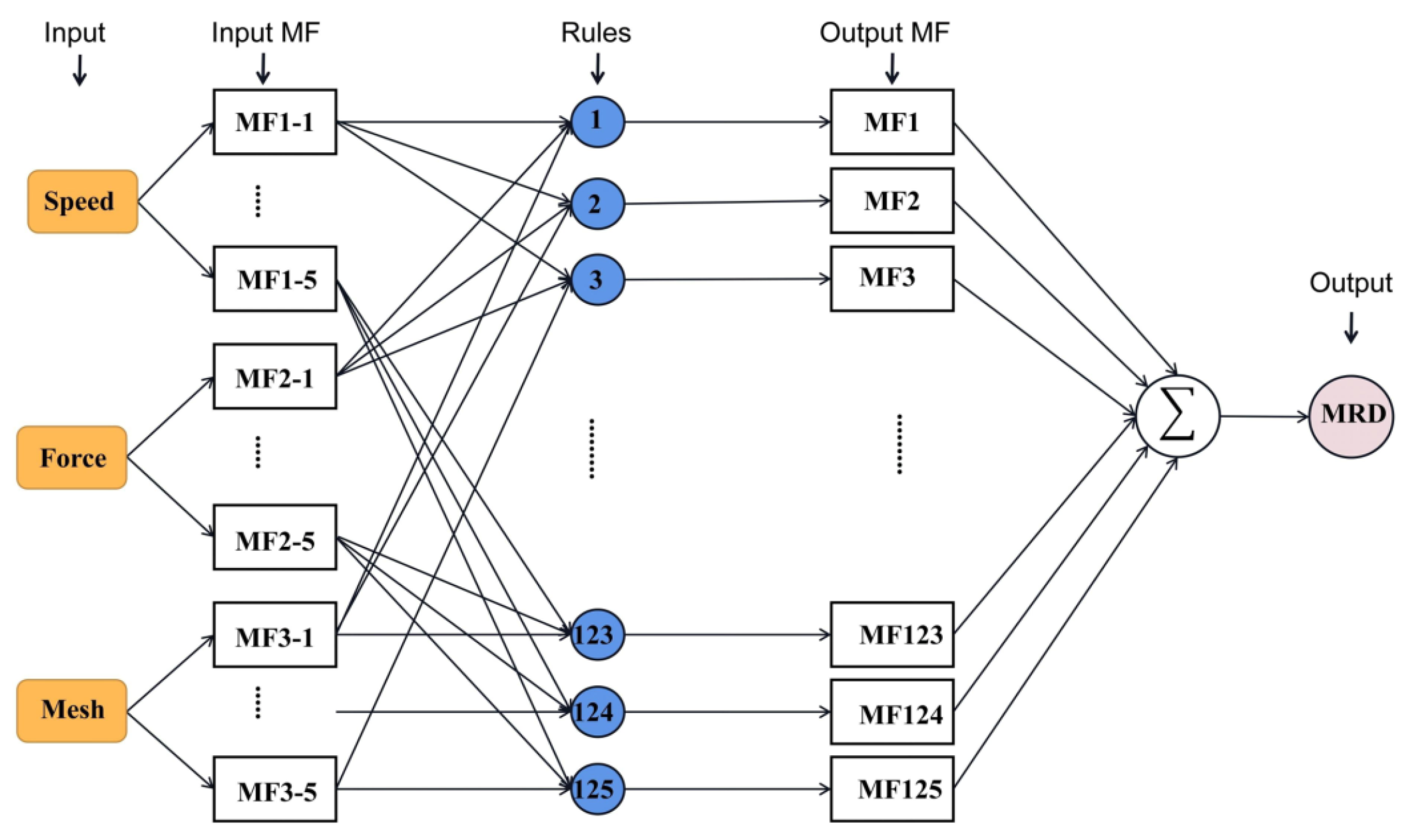
Jia et al. [88] developed a material removal depth prediction model based on an Adaptive Neuro-Fuzzy Inference System (ANFIS), as illustrated in Figure 11, for robotic belt grinding of turbine blades. The study analyzed the effects of abrasive belt grit size, belt speed, and grinding force. Analysis of variance indicated that the significance ranking of these parameters is: grit size > force > speed. The constructed ANFIS model achieved a Mean Absolute Percentage Error of 3.976%.

3.3.2. Process Parameter Optimization and Control

In response to the need for high precision and high consistency in finished surfaces of casting, robotic grinding parameter optimization moves from empirical trial-and-error towards the fusion of model-driven and intelligent decision-making.
For intelligent adaptive control, Pan et al. [89] incorporated meta-reinforcement learning into the grinding process and presented novel MML-PPOBE which supports the online joint optimization of important parameters like contact force, spindle speed, and tool travel velocity. The method can rapidly adapt to coating variation, grit size changes, or tool degradation using a small amount of sampling. On 16 tasks, they reached a standard variation in material removal of 0.025 mm, improving the post-grinding remaining coating thickness non-uniformity. However, completely data-driven methods are not physically interpretable.
A hybrid model combining elastic contact theory with material removal mechanics was proposed by Li et al. [90,91] where the major grinding parameters were directly correlated, such as contact pressure, grit size, speed, and dwell time, in order to realize contour error within ±0.025 mm of the leading edge of transonic compressor blades. Based on this model, the dwelling time was then transformed into a convex quadratic constraint optimization problem by his group, using as the input conditions a Semi-Hertzian contact model and the micro-cut properties of the belt grindings, leading to a mean line-profile error value of 0.019 mm for the blade leading edge and a 32% reduction in the standard deviation of the surface profile over traditional force control techniques. A stable force interaction environment is essential for precise control. A grinding force model including sliding, plowing, and cutting terms was formulated by Zhu et al. [92], explaining how the extra sliding force deteriorates machining performance. Moreover, active constant-force control improved the Ra of aerospace blades from 0.6 μm to 0.35–0.37 μm, fulfilling the engineering necessity of Ra < 0.4 μm.
Considering the limitations of spatial restrictions, Li et al. [93] presented multi-indicator optimization (MIO) with a convolutional material removal strategy to grind the narrow slots on blisk roots. The proposed procedure simultaneously determines grinding directions and dwell time and uses an adaptive differential evolution algorithm to calculate collision-less grinding trajectories. Experiments show that the proposed procedure decreased the joint jerk in the grinding motion from 0.81 rad/s 3 to 0.04 rad/s 3 with material removal errors ranging 0.013–0.016 mm.
As well as geometric accuracy, the aim of process optimization can also be the improvement of surface quality. Qi et al. [94] used robotic rotary grinding applied on a ground Inconel 718 alloy surface with a controlled force of 200 N and not only decreased the roughness, but achieved a residual compressive stress larger than 1000 MPa and a surface-hardened layer deeper than 500 μm. This work proves again the importance of active force control to achieve high surface-quality performance.
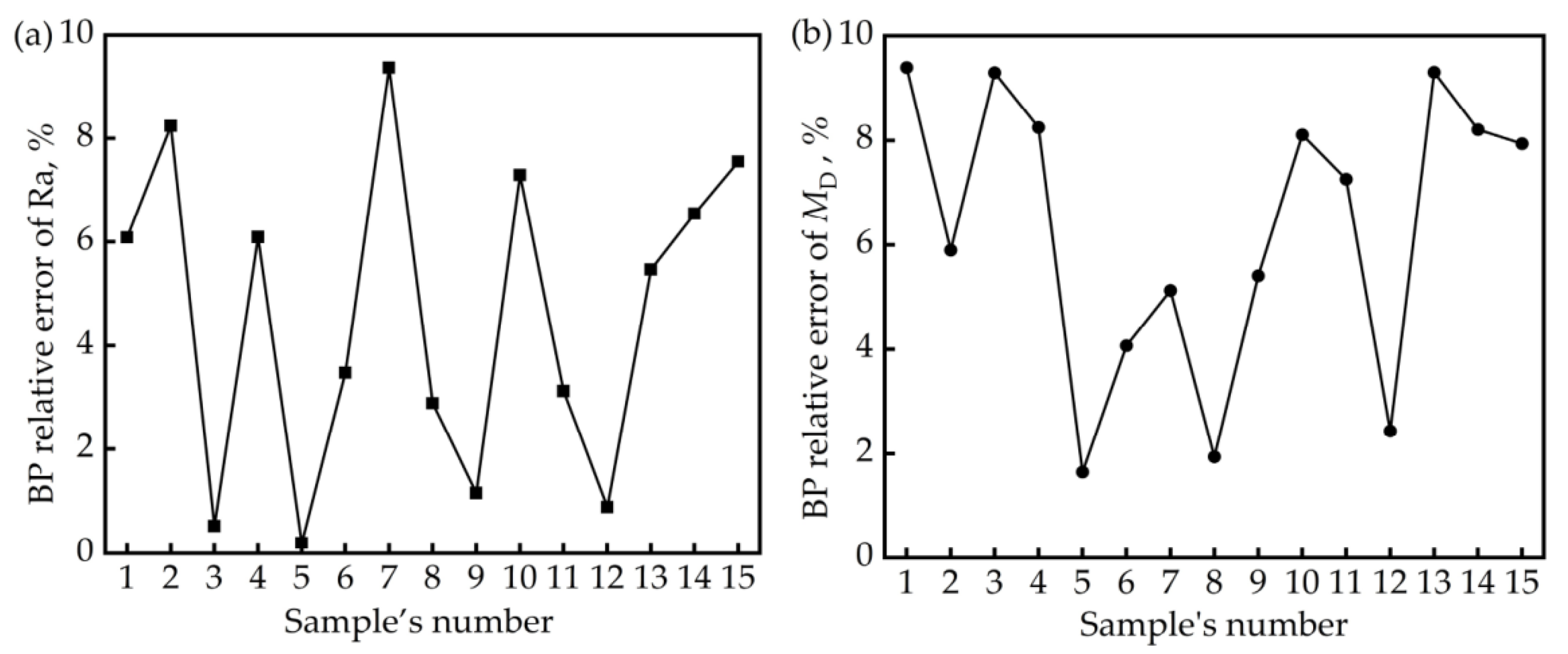
Xiao et al. [95] proposed an adaptive hybrid model that integrates Response Surface Methodology with a Back Propagation Neural Network (BPNN). Depending on the sample size, the model dynamically selects either RSM or BPNN and combines it with parameter screening and optimization algorithms, achieving an average reduction of approximately 30% in surface roughness. Figure 12 illustrates the BPNN-based parameter optimization process.
In addition to the conventional parameters such as grinding force and speed, the structural stiffness of the robot itself also significantly affects the grinding quality. Huang et al. [96] improved the rigidity of the system by optimizing its structural size for the polishing task of the dual-arm robot. The polishing deformation index is proposed to measure the deformation of the robot during the grinding process, and the optimization is carried out with the goal of minimizing the index. Experiments show that the surface roughness of the blade is reduced by more than 25% after the stiffness is improved, which verifies that enhancing the rigidity of the robot is an effective means to improve the grinding quality.
In order to compare the current mainstream robot process modeling and parameter optimization methods, this paper comprehensively sorts out the performance characteristics, applicable scenarios and technical maturity. The results are summarized in Table 7.

3.4. Grinding-State Monitoring and Quality Assessment

In robotic grinding, the process’s nonlinear and time-varying characteristics present key challenges to real-time monitoring and quality evaluation. Recently, monitoring strategies that fuse multi-physical signals with intelligent algorithms have advanced rapidly, delivering robust solutions for closed-loop control and consistent product quality.
Grinding tool wear is one of the key topics of grinding process monitoring since it significantly affects grinding material removal rate, surface quality, and geometry precision. The work done to solve this problem can be classified as direct measurement or indirect monitoring. Tao et al. [97] used line-structured light scanning to construct a 3D point cloud of the abrasive belt and proposed a volumetric wear parameter for accurate quantitative wear estimation, setting an example of wear measurement. Unfortunately, those direct optical approaches are too limited in harsh grinding conditions, and most of the work focuses on indirect monitoring via physical signals. One of the most widely studied signals is the acoustic emission (AE) signal for its high-frequency response to material changes and friction. Xu et al. [98] built a physics-based quantitative relationship between AE signal energy and abrasive belt wear height (Equation (5)) and conducted grinding experiments with a TC4 titanium alloy to predict abrasive belt wear online.
δ ( t ) = P A E a F n v b v
where δ ( t ) denotes the average wear height of the abrasive belt, P A E is the acoustic emission signal power, F n represents the normal grinding force, v is the belt linear velocity, a, b are comprehensive coefficients.
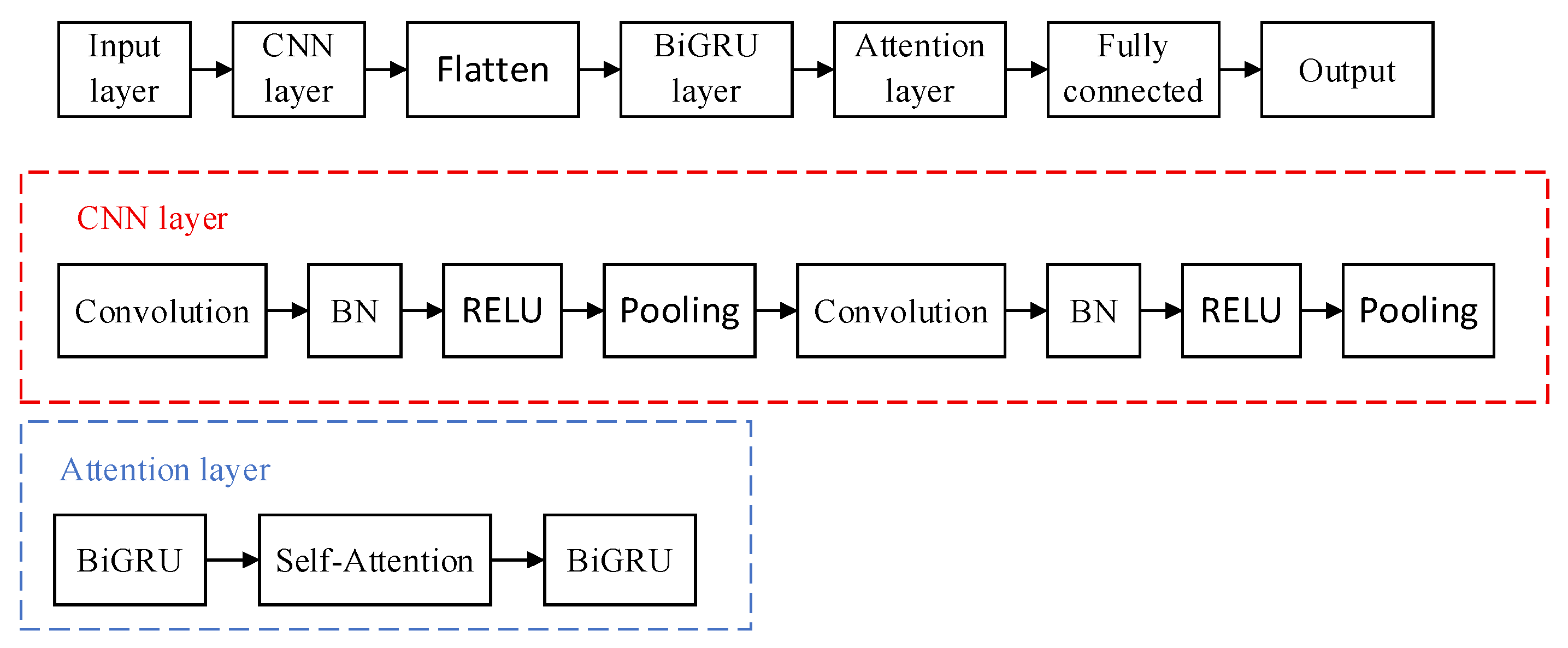
For higher intelligence and generalization capacity, Chen et al. [99] combined audio and AE signals, extracted acoustic features, applied 1D-CNN and LSTM models for high-performance classification on abrasive belt wear conditions, and obtained an accuracy rate of 97.64%. Likewise, Ge et al. [100] merged grinding force and vibration signals on weld seam grinding and used a CNN-GRU improvement model to recognize grinding wheel wear. Figure 13 demonstrates that the model reached a recognition accuracy of 97.78% and has good transferability when the process parameters change.
Apart from tool wear, vibrations generated during the manufacturing process have been pointed out as another major contributor to the reduction in surface quality. Wu et al. [101] used an integrated six-axis accelerometer to derive the linear and angular acceleration at the end-effector of the robot, avoiding the noisy differentiation of traditional encoders. Using this approach, a structural mode has been detected around 18 Hz, while active vibration control allowed for minimization of the variation in contact force, which consequently had a positive impact on the workpiece’s surface roughness.
The thermal effects of grinding in difficult-to-machine materials like nickel-based superalloys and the related risk of thermal damage need stringent control. A method was proposed by Ren et al. [102] to monitor thermal inputs during robotic belt grinding of Inconel 718 using machine learning and multi-sensor fusion. Simultaneous measurement of grinding forces and acoustic emission data, and the use of a Bayesian adaptive direct research–least squares support vector machine model allowed accurate real-time tracking of the thermal inputs to the workpiece surfaces, with the averaged prediction accuracy being higher than 96.7%. The thermal input estimation errors were kept below ±6 °C.

4. Application Fields and Typical Cases

4.1. Grinding of Metal Castings

In recent years, robotic grinding for multi-scale metal castings has achieved systematic advancements. Wang et al. [103] proposed a five-degree-of-freedom hybrid grinding/cutting robotic architecture and subsequently developed three equipment configurations, namely workpiece-centered, conveyor-based, and tool-centered, tailored respectively for small, medium, and large castings, thereby establishing a versatile hardware foundation for efficient processing across varying casting scales. To address the challenges posed by large castings, characterized by low batch volumes and low geometric precision, the same research group further developed a master–slave teleoperated grinding system, which integrates mechanisms such as a virtual rigid fixture (VRF), variable motion mapping (VMM), and elastic compensation (EC) to enable safe and efficient human–robot collaborative machining, achieving a residual feature removal rate exceeding 98% [104].
To achieve high-precision machining for medium–small castings, Dai et al. [105] proposed combining an extended state observer and a backstepping controller for robustness in contact force control and achieved an amplitude of force within ±0.3 N to ensure good surface quality. Regarding motion planning, Wu et al. [106] proposed robot posture design for robotic machining systems to enhance the stiffness characteristics to achieve quality milling for irregular surfaces. Also, Zhang et al. [107] proposed an adaptive weighting method formulated in Equation (6) which can balance both machining efficiency and stability in deburring path planning with a machining surface uniformity improvement of 59.2%. From a hierarchy of work focusing on robotic configuration, operating modes, strategies for force control, and path optimization in robot machining operations, a multi-level, smart grinding architecture for metal castings with consideration of multi-scale and multi-process needs is being established.
w j = 0.5 β + 0.5 φ w i = 0.5 γ
where w j denotes the weight of the machining stability objective function, w i represents the weight of the machining efficiency objective function, β is the rate of change within the interval, φ denotes the LS gradient, and γ indicates the robot stiffness performance index.
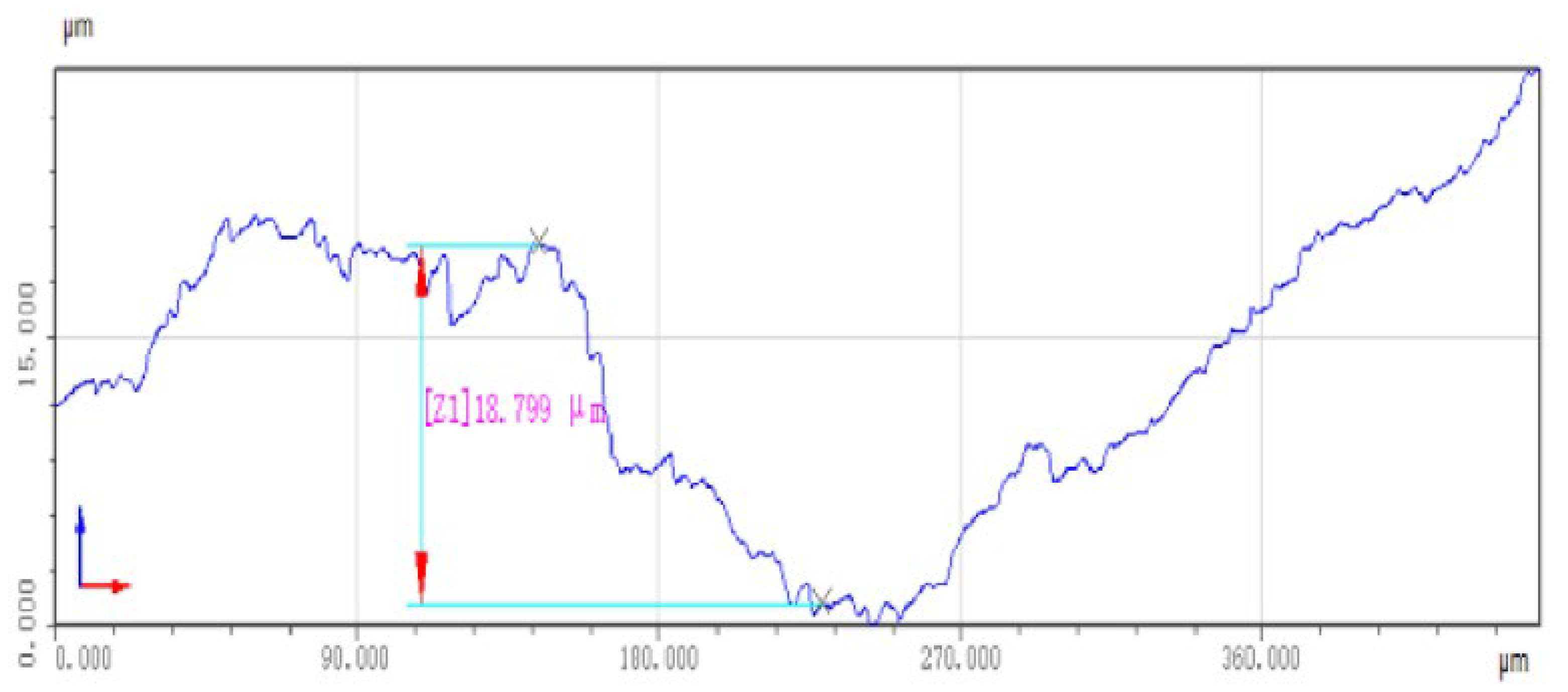
Meng et al. [108] proposed a force-tracking and compensation method based on a deep genetic algorithm. By integrating impedance control with a genetic algorithm and utilizing force feedback to dynamically optimize the grinding trajectory, the method successfully stabilizes the grinding force near the target value. As shown in Table 8, when the desired grinding force was set to 5 N, the surface roughness of the polished workpiece was significantly reduced from 18.799 µm to 1.299 µm.
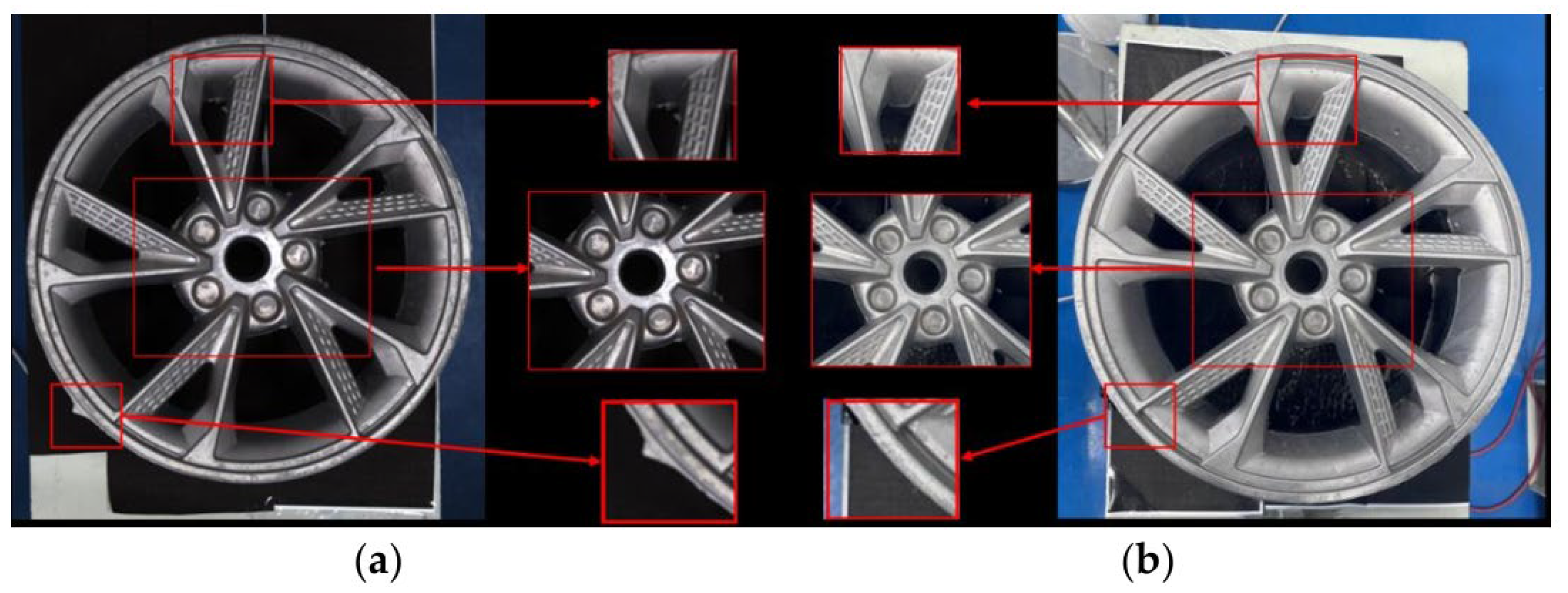
Li et al. [109] proposed a vision-guided grinding robot system for automatic burr detection and path optimization on wheel hub castings, improving positioning accuracy through image processing and height compensation, and planning an efficient grinding trajectory using an improved ant colony algorithm. As shown in Figure 14, with a cutting depth of 0.03 mm and a spindle speed of 800 rpm, the surface roughness decreased from an average of 6 µm to approximately 1 µm.

4.2. Grinding of Aero-Engine Blades

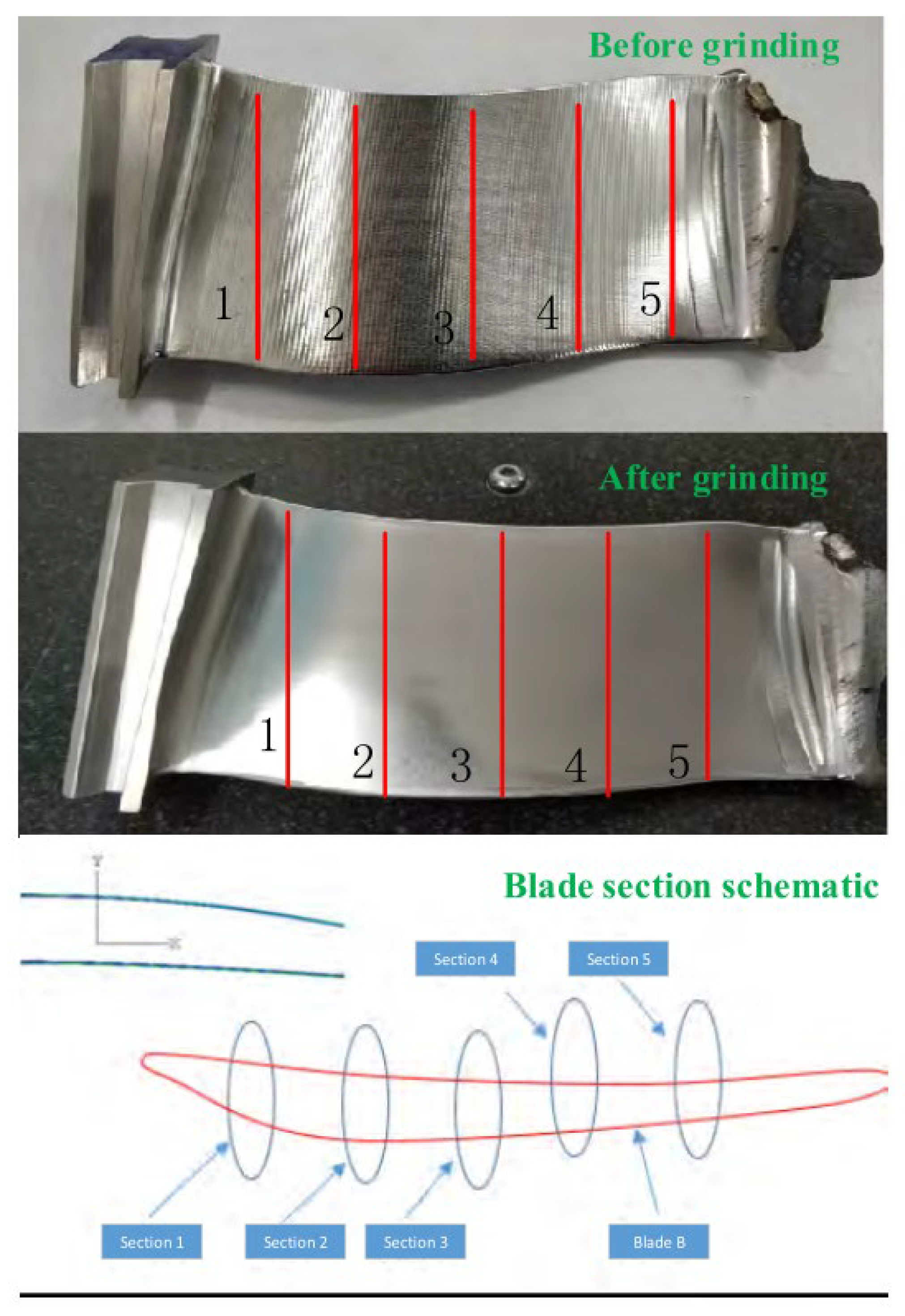
Robot-assisted grinding and grinding technologies have shown great promise in aero-engine blade manufacturing. Xu et al. [110] presented hybrid force–position PI/PD control with zero-drift compensation and gravity compensation. They employed a six-axis force sensor for dynamic-contact force control in robot-assisted belt grinding, thereby improving the uniformity and surface quality of complex blade surfaces. Considering that thin-walled nickel-based superalloy blades tend to be deformable and normal grinding forces vary greatly in robot-assisted belt grinding, Wang et al. [111] designed a passive compliance mechanism incorporating an elastic damper and showed that it resulted in increased normal force control accuracy: the increase was 64.81% and the contour accuracy achieved was 0.103 mm and Ra < 0.8 μm. Wang et al. [112] built a highly accurate model for surface roughness prediction in robot-assisted belt grinding of aero-engine blades. They modeled time-varying contact deformation and simultaneously took into account actual abrasive belt topography in finite-element analysis, achieving an average prediction accuracy of only 4% errors in Ra. Zhang et al. [113] formulated a nonlinear removal-depth model taking Hertzian contact theory and Preston’s equation together and made the contact force adaptive according to the local blade curvature and material removal so as to implement precise point-wise removal. This approach reduced the average geometric error to 5.44% and improved surface roughness from 2.6 μm to 0.346 μm. To remove low stiffness-related vibrations in robots, Zhu et al. [114] built a pose–stiffness–vibration mapping relation and fed vibrations into path planning for active suppression. All these studies indicate a future integrated intelligent grinding approach that can seamlessly integrate vibration cancelation, precise removal, compliant interaction, intelligent path planning, and quality prediction and drive robot blade finishing towards better quality, speed, and stability. Huang et al. [115] proposed the use of XML technology to uniformly describe and exchange heterogeneous data in the blade machining process to address the issue of poor data interoperability among equipment in adaptive grinding. As shown in Figure 15, after integrating the grinding process, the measurement profile accuracy of three cross-sections was improved, with the contour accuracy of the blade sections meeting the required tolerance range of –0.03 to +0.05 mm.
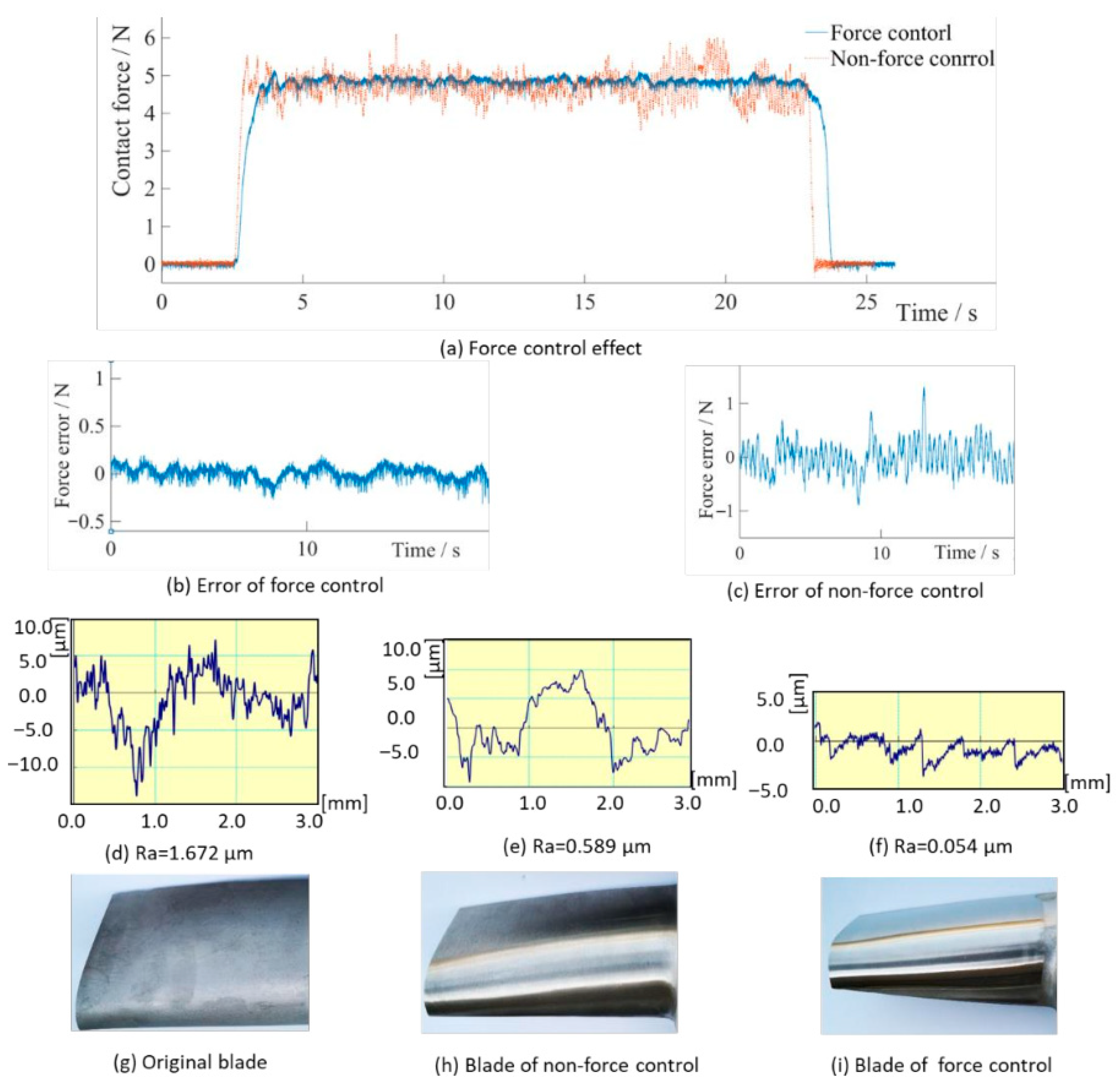
Zhou et al. [116] proposed an adaptive force control method based on fuzzy PID for robotic grinding of complex curved blades. As shown in Figure 16, this method can keep the actual contact force fluctuation within 0.5 N and reduce the blade surface roughness from 0.589 μm (without force control) to 0.054 μm.

4.3. Grinding of Thin-Walled Metallic Components

Low structural stiffness on a thin-walled workpiece easily causes deformation and vibration, resulting in variations in wall thickness and degradation in surface quality in robotic grinding. Gu et al. [117] presented a compliant error-compensation control based on the force sensor. A mapping model is formed between contact force and material removal volume and then positional and geometrical information can be used to update the grinding trajectory so as to close the loop of error compensation and improve contour accuracy. Dynamic vibration cannot be eliminated only by compliant control. Xu et al. [118] added six controllable magnetorheological dampers to form a parallel magnetorheological mount to tune the stiffness and damping of the system in real time. An adaptive variable impedance algorithm combined with decoupling the cutting tool and workpiece reduced the peak contact force by 60% and enhanced the surface finish by 48.1%. For machining large thin-walled shells, Wang et al. [119] designed a force-controlled end-effector embedded with pneumatic artificial muscles for large thin-walled shells. Through tuning contact force to attach a “subsystem”, the system equivalent mass and damping are raised, causing a vibration reduction of 75%, and an efficient surface finish of ±0.1 mm depth error and Ra = 0.762 μm is obtained. Regarding the polishing of thin-walled components such as aircraft skins, Shi et al. [120] optimized the key process parameters—including grinding force and spindle speed—through experiments and modeling, and developed predictive models for both material removal depth and surface roughness, providing an effective approach for achieving efficient and high-quality robotic polishing. Figure 17 shows the error plots for surface roughness and material removal depth, with relative errors for both below 9.5%.

4.4. Weld Seam Grinding

The technology of robotic weld seam grinding is developing from the existing smart systems towards advanced intelligent processes with integrated perception, planning, and adaptive control functions. Evolutionary progress from dealing with single separated problems to providing overall end-to-end integrated solutions can be observed from recent studies on this subject. On process perception, Pandiyan et al. [121] applied deep learning for weld seam grinding and realized a fast and reliable perception method for online semantic segmentation and status analysis of grinding material removal. The parameterless process supervision provides a very robust intelligent process control method. When interference is very severe, such as strong spark splashing, online vision processing will break down. To eliminate this problem, Zhu et al. [122] presented the idea of “scan-then-grind” in a two-phase process, applying semi-closed-loop motion control for separating motion planning from actuation based on a prescanned weld seam trajectory. This process control strategy guarantees that the robot follows the desired grinding trajectory regardless of interfering influences and also compensates for the lack of absolute position accuracy inherent to the robot used to some extent.
Accurate motion tracking only serves as the basis of high-quality grinding. The consistency in grinding quality is fundamentally determined by precision in controlling the depth of grinding. To overcome difficulties, a comprehensive closed-loop process control was provided by a series of papers by Ge et al. [123,124]. First, they modeled the depth of grinding mathematically according to Equation (7). The physical linkage between processing parameters and grinding depths became explicit. Based on this model, they formulated a corresponding adaptive parameter optimization method. Using a laser sensor, the geometry of the grinding area can be measured online in real time. Then, the processing parameters can be changed adaptively, leading to precise control of the volume of grinding and resulting in more consistent surface-finish quality.
z = k V s π H B ( v w ± v s ) β 0 t 3 F n 8 a l 1 x 2 a 2 + Δ z
where k is the model coefficient, V s is the abrasive particle concentration, H B is the Brinell hardness of the workpiece material, v w is the feed speed of the robot, v s is the belt linear velocity, β is the velocity exponent, F n is the normal grinding force, a is the half-length of the contact zone, l is the reference length, x is the spatial coordinate within the contact region, t is time, and Δ z is the error compensation in the depth direction of robotic grinding.
Zhong et al. [125] proposed a method combining 3D vision and deep learning that can automatically identify complex weld seams and plan robotic grinding trajectories. As shown in Figure 18, which presents two comparisons before and after grinding, the maximum height differences between the ground surface and the base material are 0.36 mm and 0.40 mm, respectively.
In summary, the present work has constructed a systematic technical architecture including visual perception, offline path planning, modeling-based control, and upstream process optimization. Further progress in this area will depend upon the deep integration of these technologies to form a complete closed intelligent grinding system with intelligence for self-perception, decision-making, and execution, which will be an important breakthrough for the domain.

5. Summary and Future Trends

5.1. Summary

This paper is a review of the progress in this technical system on several fronts: force control, trajectory planning, process parameter optimization and condition monitoring. Through selected industrial examples, it sheds light on this technology development’s journey from “substituting humans” to smart, flexible and precise manufacturing.
In terms of force control, active compliance control and passive compliance structure are developed together, forming a variety of technical paths such as hybrid force/position control, impedance/admittance control, series elastic actuators and so on. The research shows that the advanced force control strategy can reduce the standard deviation of normal force fluctuation to 0.37 N and even control the average absolute force error within 0.0216 N, which significantly improves the force control accuracy and stability of the system in complex curved surfaces and dynamic environments. In terms of trajectory planning, it has gradually evolved from an offline preset path based on CAD to an adaptive planning paradigm that integrates point cloud data, physical models, and multi-objective optimization. For example, adaptive planning based on the material removal model can control the contour error within 0.0194 mm, and the data-driven “point-driven” method can improve the surface contour smoothness by more than 20%, which effectively copes with the challenges of workpiece geometric deviation and process inhomogeneity. In terms of process parameter optimization, the deep integration of the mechanism model and data-driven method promotes the intelligent evolution of process decision-making from empirical trial-and-error to a prediction–optimization–control closed loop. The fusion model can not only achieve high contour accuracy control of ±0.025 mm but also improve the surface roughness prediction accuracy to more than 95%. In terms of condition monitoring and quality assessment, the combination of multi-modal sensing and intelligent algorithms provides a reliable means for tool wear identification (accuracy > 97%), vibration suppression (vibration amplitude reduction of 75%) and thermal damage warning (prediction accuracy > 96.7%), which strongly supports the transparency and controllability of the grinding process.
Nevertheless, the major flaw of most previous research is that it tends to exaggerate performance optimization in an ideal environment but ignores many industrial issues (sensor noise, workpiece variability, environmental disturbances) that cannot guarantee a repeatable replication from the lab to the plant floor. In addition, most current research work in grinding quality control only focuses on surface roughness or select geometric profile deviations without sufficiently considering the service life-related parameters (residual stresses, fatigue performance). Meanwhile, modern intelligent methods depend on vast training sets, without any physical boundaries, which can hardly generalize into different scenarios for high-added-value parts due to the inability for any try-and-fail process. Such findings necessitate a movement of focus from seeking algorithm intricacy/intelligence to robustness, transparency, and engineer-friendliness in the future. As such, it is urgent to integrate physical knowledge, data-driven methods, and human expertise to develop robust and adaptive human–machine collaborative grinding paradigms for practical manufacturing.

5.2. Future Development Trends

Aiming at solving the problem that the contact force is difficult to stably control during the grinding process, the preset stiffness/damping parameters can easily fail in the face of a sudden change in workpiece curvature or a non-uniform material, resulting in force overshoot or oscillation. Therefore, future research needs to build a closed-loop system that can sense the environment online and adjust the control law autonomously. A hybrid controller combining the prior knowledge of contact mechanics and real-time sensing data is designed. The lightweight online learning algorithm is used to identify the local environmental stiffness in real time, dynamically reconstruct the impedance model parameters, suppress the force overshoot and oscillation, and improve the force control adaptability and grinding stability.
Aiming at solving the problem that the CAD-based method has high geometric accuracy but is sensitive to deviation, the pure data-driven method is robust but lacks physical interpretability, and it is difficult to guarantee the process quality. Future research needs to establish a joint optimization mechanism for geometric trajectory generation and process performance prediction. A differential prediction model embedded in the material removal mechanism could be established, taking the robot pose, grinding force and tool state as input, the predicted surface roughness Ra and contour error as output, and as the core module of the optimizer, iteratively correcting the initial trajectory: the collaborative optimization of geometric accuracy and surface quality is realized.
In view of the lack of theoretical basis support for process parameter optimization and excessive dependence on trial-and-error experience, the existing pure data-driven methods can achieve self-adaptation, but the generalization ability is weak. The pure theoretical model is too idealistic and insufficient in accuracy. Future research needs to develop a framework that integrates material removal mechanisms and deep learning. The virtual data generated by finite-element simulation can be used as a priori to guide the neural network to learn the mapping relationship of “force–velocity–roughness” under the real data of small samples, so as to provide process decision support without trial-and-error or less trial-and-error for small-batch and multi-variety grinding scenes.
Aiming at solving the problem of feedback delay caused by the lag of grinding perception and the lack of quality evaluation methods, although multi-modal sensing technology has been used for condition monitoring, it is difficult to synchronize the data of each sensor in time and space, and the processing flow is long, which cannot meet the needs of real-time closed-loop control. Future work should design a hierarchical fusion strategy: the bottom layer uses high-bandwidth force and torque signals for millisecond-cracks and response to suppress local jitter and the upper layer combines visual and acoustic emission signals to identify macroscopic defects such as grinding wheel wear and workpiece cracks, and triggers a global re-planning of the grinding scheme. The core task of this architecture is to align information from different sources and different speeds in time and space, dynamically judge the confidence of each data point, and finally build a polishing-state awareness system with high real-time performance and high semantic understanding ability.
Current research focuses on full automation, but the experience of human experts is irreplaceable when dealing with extremely complex surfaces or high-value prototypes. In view of this, future research should quantify the value of human–machine collaboration and turn it into an operable collaboration model. The specific tasks include: identifying the key features of expert decision-making through eye tracking and operational force analysis, and encoding them into machine-executable heuristic rules; at the same time, AR interactive interface can be developed, so that the operator can efficiently modify the robot planning trajectory with gestures or voices, so that the human experience and the efficiency of the machine can truly complement each other, forming a set of human–machine cooperation schemes that can be promoted.

Author Contributions

Conceptualization, S.Y., Z.L. and N.L.; methodology, N.L.; software, S.Z.; validation, Z.L., R.Z. and S.Y.; formal analysis, R.Z.; investigation, S.Z.; resources, Z.L.; data curation, X.W.; writing—original draft preparation, X.W.; writing—review and editing, J.Q. and S.Y.; visualization, R.Z.; supervision, N.L.; project administration, S.Z.; funding acquisition, J.Q., S.Y. and N.L. All authors have read and agreed to the published version of the manuscript.

Funding

This research was funded by the Key Research and Development Plan of Shandong Province (Grant No. 2023CXGC010208), Major Innovation Project of Qilu University of Technology (Shandong Academy of Sciences) (No. 2025ZDZX04), the Shandong Province Science and Technology Small and Medium-sized Enterprises Innovation Ability Improvement Project (2024TSGC0060), the Shandong Provincial Technology Innovation Guidance Plan (YDZX2024139), the Major Scientific and Technological Innovation Projects in Dezhou City in 2024, and the Natural Science Fund of Shandong Province of China (ZR2024MA093).

Data Availability Statement

No new data were created or analyzed in this study.

Acknowledgments

This work is supported by the Key Research and Development Plan of Shandong Province (Grant No. 2023CXGC010208), Major Innovation Project of Qilu University of Technology (Shandong Academy of Sciences) (No. 2025ZDZX04), the Shandong Province Science and Technology Small and Medium-sized Enterprises Innovation Ability Improvement Project (2024TSGC0060), the Shandong Provincial Technology Innovation Guidance Plan (YDZX2024139), the Major Scientific and Technological Innovation Projects in Dezhou City in 2024, and the Natural Science Fund of Shandong Province of China (ZR2024MA093).

Conflicts of Interest

Author Shoujian Yu was employed by the company Jinan Juneng Hydraulic and Mechanical Engineering Co., Ltd. The remaining authors declare that the research was con-ducted in the absence of any commercial or financial relationships that could be construed as a potential conflict of interest.

References

  1. Kunz, W.H.; Sajtos, L.; Flavián, C. Beyond replacement: Human-machine collaboration in the age of AI. J. Serv. Manag. 2025, 36, 477–494. [Google Scholar] [CrossRef]
  2. Semeraro, F.; Griffiths, A.; Cangelosi, A. Human–robot collaboration and machine learning: A systematic review of recent research. Robot. Comput.-Integr. Manuf. 2023, 79, 102432. [Google Scholar] [CrossRef]
  3. Tang, Z.; Zhou, Y.; Wang, S.; Zhu, J.; Tang, J. An innovative geometric error compensation of the multi-axis CNC machine tools with non-rotary cutters to the accurate worm grinding of spur face gears. Mech. Mach. Theory 2022, 169, 104664. [Google Scholar] [CrossRef]
  4. Li, G.; Bao, Y.; Wang, H.; Dong, Z.; Guo, X.; Kang, R. An online monitoring methodology for grinding state identification based on real-time signal of CNC grinding machine. Mech. Syst. Signal Proc. 2023, 200, 110540. [Google Scholar] [CrossRef]
  5. Sun, J.; Wang, D.; Liu, Z.; Qiu, C.; Liu, H.; Sa, G.; Tan, J. Tool digital twin based on knowledge embedding for precision CNC machine tools: Wear prediction for collaborative multi-tool. J. Manuf. Syst. 2025, 80, 157–175. [Google Scholar] [CrossRef]
  6. Yu, C.; Qiao, J.; Liu, N.; Hu, X.; Yang, Z.; Zhou, S.; Shi, Y.; Li, Z.; Yu, S.; Yuan, H. Robotic grinding technology of multi-scale complex components based on 3D point clouds: A review. Measurement 2025, 257, 118663. [Google Scholar] [CrossRef]
  7. Li, Y.; Wang, Z.; Zhu, X.; Cai, W.; Chen, D.; Ma, J.; Xu, X.; Yang, Z.; Song, H.; Wang, W. State-of-the-art in mobile robot-assisted grinding technologies for large-scale complex components. Robot. Comput.-Integr. Manuf. 2026, 101, 103297. [Google Scholar] [CrossRef]
  8. Pedroso, A.F.; Sebbe, N.P.; Silva, F.J.; Campilho, R.D.; Sales-Contini, R.C.; Costa, R.D.; Sánchez, I.I. An overview on the recent advances in robot-assisted compensation methods used in machining lightweight materials. Robot. Comput.-Integr. Manuf. 2025, 91, 102844. [Google Scholar] [CrossRef]
  9. Gao, Y.; Qiu, T.; Song, C.; Ma, S.; Liu, Z.; Liang, Z.; Wang, X. Optimizing the performance of serial robots for milling tasks: A review. Robot. Comput.-Integr. Manuf. 2025, 94, 102977. [Google Scholar] [CrossRef]
  10. Ding, X.; Qiao, J.; Liu, N.; Yang, Z.; Zhang, R. Robotic grinding based on point cloud data: Developments, applications, challenges, and key technologies. Int. J. Adv. Manuf. Technol. 2024, 131, 3351–3371. [Google Scholar] [CrossRef]
  11. Zhang, B.; Wu, S.; Wang, D.; Yang, S.; Jiang, F.; Li, C. A review of surface quality control technology for robotic abrasive belt grinding of aero-engine blades. Measurement 2023, 220, 113381. [Google Scholar] [CrossRef]
  12. Ren, X.; Huang, X.; Gao, K.; Xu, L.; Li, L.; Feng, H.; Zhang, X.; Chen, H.; Chai, Z.; Chen, X. A review of recent advances in robotic belt grinding of superalloys. Int. J. Adv. Manuf. Technol. 2023, 127, 1447–1482. [Google Scholar] [CrossRef]
  13. Zeng, X.; Zhu, G.; Gao, Z.; Ji, R.; Ansari, J.; Lu, C. Surface polishing by industrial robots: A review. Int. J. Adv. Manuf. Technol. 2023, 125, 3981–4012. [Google Scholar] [CrossRef]
  14. Kishore, K.; Sinha, M.K.; Singh, A.; Archana; Gupta, M.K.; Korkmaz, M.E. A comprehensive review on the grinding process: Advancements, applications and challenges. Proc. Inst. Mech. Eng. Part C J. Mech. Eng. Sci. 2022, 236, 10923–10952. [Google Scholar] [CrossRef]
  15. Wang, W.; Guo, Q.; Yang, Z.; Jiang, Y.; Xu, J. A state-of-the-art review on robotic milling of complex parts with high efficiency and precision. Robot. Comput.-Integr. Manuf. 2023, 79, 102436. [Google Scholar] [CrossRef]
  16. Ke, X.; Yu, Y.; Li, K.; Wang, T.; Zhong, B.; Wang, Z.; Kong, L.; Guo, J.; Huang, L.; Idir, M.; et al. Review on robot-assisted polishing: Status and future trends. Robot. Comput.-Integr. Manuf. 2023, 80, 102482. [Google Scholar]
  17. Pervez, M.R.; Ahamed, M.H.; Ahmed, M.A.; Takrim, S.M.; Dario, P. Autonomous grinding algorithms with future prospect towards SMART manufacturing: A comparative survey. J. Manuf. Syst. 2022, 62, 164–185. [Google Scholar] [CrossRef]
  18. Tang, D.; Li, F.; Jiang, J.; Song, S.; Zeng, Y. A Review on End-effectors of Robotic Grinding. Recent Pat. Eng. 2023, 17, 85–101. [Google Scholar]
  19. Zerun, Z.; Xiaowei, T.; Chen, C.; Fangyu, P.; Rong, Y.; Lin, Z.; Zepeng, L.; Jiawei, W. High precision and efficiency robotic milling of complex parts: Challenges, approaches and trends. Chin. J. Aeronaut. 2022, 35, 22–46. [Google Scholar] [CrossRef]
  20. Tsai, H.-H.; Chang, J.-Y. An adaptive disturbance compensation method for force-sensorless control systems applied to robotic milling. Robot. Comput.-Integr. Manuf. 2026, 97, 103082. [Google Scholar] [CrossRef]
  21. Li, L.; Lu, B.; Jiang, M.; Gao, L.; Sun, Y. Robotic normal constant force polishing of unknown-model workpieces using variable impedance control. J. Manuf. Process. 2025, 153, 268–279. [Google Scholar] [CrossRef]
  22. Wahballa, H.; Ahmed, A.; Duan, J.; Chen, X.; Lei, W. Force tracking in robotic control systems using an online work object stiffness hybrid impedance PI control approach. Results Eng. 2025, 26, 105520. [Google Scholar] [CrossRef]
  23. Xu, D.; Yin, L.; Wang, J. Grinding force estimation and control of grinding robot with variable impedance control strategy. Int. J. Adv. Manuf. Technol. 2025, 137, 2011–2027. [Google Scholar] [CrossRef]
  24. Han, F.; Tam, S.; Cao, Z.; Zhao, X.; Tao, B.; Ding, H. Nonlinear impedance control with trajectory adaptation for collaborative robotic grinding. Sci. China-Technol. Sci. 2023, 66, 1928–1936. [Google Scholar] [CrossRef]
  25. Yue, H.; Wang, Q.; Yan, Y.; Huang, G. Deep learning-based point cloud completion for MEP components. Autom. Constr. 2025, 175, 106218. [Google Scholar] [CrossRef]
  26. Zhang, K.; Zhang, A.; Wang, X.; Li, W. Deep-learning-based point cloud completion methods: A review. Graph. Model. 2024, 136, 101233. [Google Scholar] [CrossRef]
  27. Li, C.; Dun, X.; Li, L.; Nan, R. Vision-guided robot application for metal surface edge grinding. SN Appl. Sci. 2023, 5, 236. [Google Scholar] [CrossRef]
  28. Zadeh, L. Optimality and non-scalar-valued performance criteria. IEEE Trans. Autom. Control 1963, 8, 59–60. [Google Scholar] [CrossRef]
  29. Haimes, Y. On a bicriterion formulation of the problems of integrated system identification and system optimization. IEEE Trans. Syst. Man. Cybern. 1971, SMC-1, 296–297. [Google Scholar]
  30. Preston, F. The theory and design of plate glass polishing machines. J. Soc. Glass Technol. 1927, 11, 214. [Google Scholar]
  31. Hertz, H. Ueber die Berührung fester elastischer Körper. J. Reine Angew. Math. 1882, 92, 156–171. [Google Scholar] [CrossRef]
  32. Sun, M.; Zhang, P.; Guo, K.; Sun, J.; Li, D.; Huang, T. Tool wear status monitoring in robotic milling of GFRP under variable robot postures and cutting parameters. J. Manuf. Process. 2025, 152, 789–804. [Google Scholar] [CrossRef]
  33. Ni, C.; Yang, J.; Ding, H. Physical knowledge embedded sparse Bayesian regression model for contour error prediction and compensation of robotic surface milling. Mech. Syst. Signal Proc. 2025, 241, 113509. [Google Scholar] [CrossRef]
  34. Raibert, M.H.; Craig, J.J. Hybrid position/force control of manipulators. J. Dyn. Syst. Meas. Control 1981, 103, 126–133. [Google Scholar] [CrossRef]
  35. Tang, X.; Yang, J.; Ding, H. Design and control of a parallel electromagnetic variable stiffness manipulator for robotic compliant grinding. Robot. Comput.-Integr. Manuf. 2026, 98, 103158. [Google Scholar] [CrossRef]
  36. Li, D.; Yang, J.; Zhao, H.; Ding, H. Contact force plan and control of robotic grinding towards ensuring contour accuracy of curved surfaces. Int. J. Mech. Sci. 2022, 227, 107449. [Google Scholar] [CrossRef]
  37. Xu, X.; Chen, W.; Zhu, D.; Yan, S.; Ding, H. Hybrid active/passive force control strategy for grinding marks suppression and profile accuracy enhancement in robotic belt grinding of turbine blade. Robot. Comput.-Integr. Manuf. 2021, 67, 102047. [Google Scholar] [CrossRef]
  38. Chen, H.; Yang, J.; Ding, H. Robotic grinding of curved parts with two degrees of freedom active compliant force-controlled end-effector using decoupling control algorithm. Robot. Comput.-Integr. Manuf. 2025, 93, 102935. [Google Scholar] [CrossRef]
  39. Chen, H.; Yang, J.; Ding, H. Integrated approach to robotic grinding of curved parts with macro-and micro-actuators guaranteeing high-precision force and trajectory control. Mech. Syst. Signal Proc. 2025, 239, 113295. [Google Scholar] [CrossRef]
  40. Li, Y.; Xu, Z.; Li, S.; Liao, Z.; Li, S.; Zhou, X. Robot compliance control framework for grinding thin-walled parts with unknown surface: Deformation and orientation adaptation. Robot. Comput.-Integr. Manuf. 2026, 98, 103147. [Google Scholar] [CrossRef]
  41. Li, T.; Sun, Q.; Wang, C.; Yuan, X.; Wang, K. A robot floating grinding and rust removal approach based on composite force-position fuzzy control. Sensors 2025, 25, 2204. [Google Scholar] [CrossRef]
  42. Hogan, N. Impedance control: An approach to manipulation. In American Control Conference; IEEE: New York, NY, USA, 1984; pp. 304–313. [Google Scholar]
  43. Hogan, N. Impedance Control: An Approach to Manipulation: Part II—Implementation. J. Dyn. Syst. Meas. Control 1985, 107, 8–16. [Google Scholar] [CrossRef]
  44. Hogan, N. Impedance Control: An Approach to Manipulation: Part III—Applications. J. Dyn. Syst. Meas. Control 1985, 107, 17–24. [Google Scholar] [CrossRef]
  45. Chen, F.; Zhao, H.; Li, D.; Chen, L.; Tan, C.; Ding, H. Contact force control and vibration suppression in robotic polishing with a smart end effector. Robot. Comput.-Integr. Manuf. 2019, 57, 391–403. [Google Scholar] [CrossRef]
  46. Hong, J.; Wang, D.; Guan, Y. Synergistic integrated design of an electrochemical mechanical polishing end-effector for robotic polishing applications. Robot. Comput.-Integr. Manuf. 2019, 55, 65–75. [Google Scholar]
  47. Li, T.; Zhou, M.; Liu, J.; Jia, X.; Zhang, S.; Wu, Y. Application of robot stable contact force control in wall grinding within the construction field. Int. J. Intell. Robot. 2025, 10, 177–188. [Google Scholar] [CrossRef]
  48. Min, K.; Ni, F.; Liu, H. Robotic abrasive belt grinding of complex curved blades based on a novel force control architecture integrating smooth trajectories. J. Manuf. Process. 2023, 107, 447–458. [Google Scholar] [CrossRef]
  49. Wang, Z.; Zou, L.; Luo, G.; Lv, C.; Huang, Y. A novel selected force controlling method for improving robotic grinding accuracy of complex curved blade. ISA Trans. 2022, 129, 642–658. [Google Scholar] [CrossRef] [PubMed]
  50. Mu, Y.; Zou, L.; Wang, Z.; Li, H.; Yan, S.; Wang, W. A novel dynamic observer-based contact force control strategy in robotic grinding to improve blade profile accuracy. Robot. Comput.-Integr. Manuf. 2025, 94, 102966. [Google Scholar] [CrossRef]
  51. Jia, L.; Chen, K.; Liao, Z.; Qiu, A.; Cao, M. Adaptive Robust Impedance Control of Grinding Robots Based on an RBFNN and the Exponential Reaching Law. Actuators 2025, 14, 393. [Google Scholar] [CrossRef]
  52. Yang, J.; Tang, X.; Ding, H.; Yin, Y. A novel electromagnetic end-effector with adaptive force-stiffness coordinated control for robotic grinding with variable workpiece stiffness. CIRP Ann.-Manuf. Technol. 2025, 74, 541–545. [Google Scholar] [CrossRef]
  53. Li, X.; Zhao, H.; Zhou, H.; Cai, Y.; Yin, Y.; Ding, H. Robotic grinding and polishing of complex aeroengine blades based on new device design and variable impedance control. Robot. Comput.-Integr. Manuf. 2025, 92, 102875. [Google Scholar] [CrossRef]
  54. Wang, Z.; Zou, L.; Li, J.; Zhang, J.; Wang, W. Model predictive motion/force control in robotic grinding system for turbine blade. ISA Trans. 2025, 162, 256–271. [Google Scholar] [CrossRef]
  55. Chen, H.; Yang, J.; Ding, H. Robotic compliant grinding of curved parts based on a designed active force-controlled end-effector with optimized series elastic component. Robot. Comput.-Integr. Manuf. 2024, 86, 102646. [Google Scholar] [CrossRef]
  56. Tang, X.; Xun, T.; Yang, J.; Ding, H. Vibration suppression of series elastic actuator used for robotic grinding based on reconstructed hybrid optimized input shaper. Mech. Syst. Signal Proc. 2025, 223, 111817. [Google Scholar] [CrossRef]
  57. Hsueh, I.-C.; Lan, Y.-H.; Lin, D.-H.; Huang, C.-H.; Lan, C.-C. A compact compliant robot for the grinding of spherical workpieces with high force control accuracy. Robot. Comput.-Integr. Manuf. 2025, 91, 102856. [Google Scholar] [CrossRef]
  58. Shen, K.; Dai, S.; Ji, W.; Wang, R. Study on the constant force control of aero-engine blade grinding robot considering time delay. Int. J. Adv. Manuf. Technol. 2024, 131, 1427–1447. [Google Scholar] [CrossRef]
  59. Zhang, J.; Yang, J.; Yue, Y.; Wen, K.; Zhou, Y. Optimization of comprehensive stiffness performance index for industrial robot in milling process. In 2019 IEEE 10th International Conference on Mechanical and Aerospace Engineering (ICMAE), 2019; IEEE: New York, NY, USA, 2019; pp. 544–549. [Google Scholar]
  60. Liao, Z.-Y.; Li, J.-R.; Xie, H.-L.; Wang, Q.-H.; Zhou, X.-F. Region-based toolpath generation for robotic milling of freeform surfaces with stiffness optimization. Robot. Comput. Integr. Manuf. 2020, 64, 101953. [Google Scholar] [CrossRef]
  61. Torres-Izu, R.; Iriarte, X.; Mata, S.; Aginaga, J.; Barrenetxea, D. Compensation strategy to minimize over-cut effects in robotic belt grinding with passive-compliant tools. J. Manuf. Process. 2025, 141, 1433–1443. [Google Scholar] [CrossRef]
  62. Xu, D.; Mo, H.; Zhong, Z.; Yin, L. Investigation of a Parallel Contact Force Robotic End-effector for Thin-Walled Parts Grinding and Deburring with Uncertain Position. Precis. Eng. 2025, 96, 587–599. [Google Scholar] [CrossRef]
  63. Chaoui, M.D.; Léonard, F.; Abba, G. Path planning for robotic grinding on a large forged workpiece. IFAC-PapersOnLine 2019, 52, 1162–1167. [Google Scholar] [CrossRef]
  64. Lv, Y.; Peng, Z.; Qu, C.; Zhu, D. An adaptive trajectory planning algorithm for robotic belt grinding of blade leading and trailing edges based on material removal profile model. Robot. Comput.-Integr. Manuf. 2020, 66, 101987. [Google Scholar] [CrossRef]
  65. Li, M.; Wang, W.; Zhang, J.; Wang, C.; Zou, L.; Huang, Y. Robotic accurate grinding of complex surfaces with 3D-printed compliant tool featuring internal-blade structure. J. Manuf. Process. 2025, 148, 375–385. [Google Scholar] [CrossRef]
  66. Song, H.; Ye, R.; Xie, M. Research on complex surface grinding path planning of grinding robot based on NX and Tecnomatix. Int. J. Adv. Manuf. Technol. 2024, 133, 1961–1971. [Google Scholar] [CrossRef]
  67. Zhou, B.; Tian, T. Robotic disc grinding path planning method based on multi-objective optimization for nuclear reactor coolant pump casing. J. Manuf. Syst. 2024, 77, 810–833. [Google Scholar] [CrossRef]
  68. Li, H.; Zou, L.; Lv, C.; Wang, Z.; Wang, W. An optimization framework for enhancing profile accuracy in robotic grinding of compressor blade edge. Chin. J. Aeronaut. 2025, 38, 103228. [Google Scholar] [CrossRef]
  69. Zhu, Y.; Wang, X.; Wang, Y.; Zhuo, X.; Zhang, H.; Wan, Y. Robot trajectory planning for gear chamfer grinding based on multi-objective collaborative optimization and quintic B-spline interpolation algorithm. Int. J. Adv. Manuf. Technol. 2025, 138, 4397–4414. [Google Scholar] [CrossRef]
  70. Chen, B.; Wang, Y.; Hu, S.; Tao, Z.; Qi, J. A whole-path posture optimization method of robotic grinding based on multi-performance evaluation indices. Robot. Comput.-Integr. Manuf. 2024, 89, 102787. [Google Scholar] [CrossRef]
  71. Lv, C.; Zou, L.; Huang, Y.; Liu, X.; Li, Z.; Gong, M.; Li, H. A trajectory planning method on error compensation of residual height for aero-engine blades of robotic belt grinding. Chin. J. Aeronaut. 2022, 35, 508–520. [Google Scholar] [CrossRef]
  72. Zhou, P.; Zhao, X.; Tao, B.; Ding, H. Time-varying isobaric surface reconstruction and path planning for robotic grinding of weak-stiffness workpieces. Robot. Comput.-Integr. Manuf. 2020, 64, 101945. [Google Scholar] [CrossRef]
  73. Wang, Z.; Zou, L.; Zhang, J.; Li, H.; Wang, W.; Huang, Y. Tool axis vector optimization for robotic grinding based on measured point cloud of complex curved blade. Adv. Eng. Inf. 2024, 62, 102716. [Google Scholar] [CrossRef]
  74. Wang, Z.; Zou, L.; Li, J.; Zhang, J.; Wang, W. Point-driven toolpath curve and orientation smoothing in robotic belt grinding for turbine blade. Robot. Comput.-Integr. Manuf. 2025, 96, 103046. [Google Scholar] [CrossRef]
  75. Lan, T.; Li, T.; Liu, H.; Tian, S.; Liu, K.; Wang, Y. Accurate localization and girth weld grinding planning for an in-pipe machining robot of thin-walled conical pipe. Robot. Comput.-Integr. Manuf. 2026, 98, 103124. [Google Scholar] [CrossRef]
  76. Luo, L.; Qiu, K.; Huang, C. Dynamic Trajectory Planning for Automatic Grinding of Large-Curved Forgings Based on Adaptive Impedance Control Strategy. Actuators 2025, 14, 487. [Google Scholar] [CrossRef]
  77. Chi, Z.-P.; Wang, Q.-H.; Xie, H.-L.; Ni, J.-L.; Nee, A.; Ong, S. Human-robot collaborative programming for robotic polishing of impeller using adaptive virtual fixtures and haptic interface. Robot. Comput.-Integr. Manuf. 2026, 98, 103166. [Google Scholar] [CrossRef]
  78. Xiao, G.; Chen, S.; Song, K.; Liu, X.; Huang, Y. A novel trajectory planning method based on reverse compensation of profile error for robotic belt grinding of blisk. J. Manuf. Process. 2022, 84, 508–521. [Google Scholar] [CrossRef]
  79. Yang, Z.; Chu, Y.; Xu, X.; Huang, H.; Zhu, D.; Yan, S.; Ding, H. Prediction and analysis of material removal characteristics for robotic belt grinding based on single spherical abrasive grain model. Int. J. Mech. Sci. 2021, 190, 106005. [Google Scholar] [CrossRef]
  80. Li, L.; Ren, X.; Feng, H.; Chen, H.; Chen, X. A novel material removal rate model based on single grain force for robotic belt grinding. J. Manuf. Process. 2021, 68, 1–12. [Google Scholar] [CrossRef]
  81. Zhang, W.; Gong, Y.; Xu, Y.; Zhao, X.; Liang, C.; Yin, G.; Zhao, J. Modeling of material removal depth in robot abrasive belt grinding based on energy conversion. J. Manuf. Process. 2023, 97, 76–86. [Google Scholar] [CrossRef]
  82. Xu, B.; Zhang, X.; Yang, Z.; Wang, J.; Yan, S.; Ding, H. Dual flexible contact material removal model for robotic disk grinding. J. Manuf. Process. 2024, 124, 867–876. [Google Scholar] [CrossRef]
  83. Yan, S.; Xu, X.; Yang, Z.; Zhu, D.; Ding, H. An improved robotic abrasive belt grinding force model considering the effects of cut-in and cut-off. J. Manuf. Process. 2019, 37, 496–508. [Google Scholar] [CrossRef]
  84. Qi, B.; Huang, X.; Guo, W.; Ren, X.; Chen, H.; Chen, X. A novel comprehensive framework for surface roughness prediction of integrated robotic belt grinding and burnishing of Inconel 718. Tribol. Int. 2024, 195, 109574. [Google Scholar] [CrossRef]
  85. Qu, S.; Yao, P.; Gong, Y.; Yang, Y.; Chu, D.; Zhu, Q. Modelling and grinding characteristics of unidirectional C–SiCs. Ceram. Int. 2022, 48, 8314–8324. [Google Scholar] [CrossRef]
  86. Joshi, K.; Melkote, S.N.; Anderson, M.; Chaudhari, R. Investigation of cycle time behavior in the robotic grinding process. CIRP J. Manuf. Sci. Technol. 2021, 35, 315–322. [Google Scholar] [CrossRef]
  87. Yang, Z.; Xu, X.; Li, J.; Zhu, D.; Yan, S.; Ge, S.S.; Ding, H. Knowledge-wrapping method for prediction and evaluation of material removal behavior in robotic belt grinding. Mech. Syst. Signal Proc. 2024, 208, 110914. [Google Scholar] [CrossRef]
  88. Jia, H.; Lu, X.; Cai, D.; Xiang, Y.; Chen, J.; Bao, C. Predictive modeling and analysis of material removal characteristics for robotic belt grinding of complex blade. Appl. Sci. 2023, 13, 4248. [Google Scholar] [CrossRef]
  89. Pan, J.; Chen, F.; Han, D.; Ke, S.; Wei, Z.; Ding, H. Adaptive process parameters decision-making in robotic grinding based on meta-reinforcement learning. J. Manuf. Process. 2025, 137, 376–396. [Google Scholar] [CrossRef]
  90. Li, H.; Zou, L.; Lv, C.; Wang, W.; Huang, Y. Data and mechanism hybrid-driven robust optimization for leading edge of transonic compressor blade in robotic grinding operation. Aerosp. Sci. Technol. 2025, 168, 110733. [Google Scholar] [CrossRef]
  91. Li, H.; Zou, L.; Lv, C.; Gui, L.; Wang, W.; Huang, Y. Collaborative improvement of profile accuracy and aerodynamic performance in robotic grinding of transonic compressor blade leading edge. Aerosp. Sci. Technol. 2024, 146, 108937. [Google Scholar] [CrossRef]
  92. Zhu, D.; Xu, X.; Yang, Z.; Zhuang, K.; Yan, S.; Ding, H. Analysis and assessment of robotic belt grinding mechanisms by force modeling and force control experiments. Tribol. Int. 2018, 120, 93–98. [Google Scholar] [CrossRef]
  93. Li, M.; Wang, W.; Zou, L.; Lv, C.; Zhang, J.; Huang, Y. Robotic grinding of complex surfaces with an internal structured compliant tool: Multi-performance optimization in confined spaces. Robot. Comput.-Integr. Manuf. 2025, 94, 102974. [Google Scholar] [CrossRef]
  94. Qi, B.; Chai, Z.; Huang, X.; Guo, W.; Ren, X.; Chen, H.; Chen, X. Surface integrity improvement of the ground surface of Inconel 718 fabricated by forging and additive manufacturing using a robotic rotational burnishing method. J. Manuf. Process. 2024, 125, 566–579. [Google Scholar] [CrossRef]
  95. Xiao, Y.N.; Wen, K.; Qu, Y.; Mao, Y.; Pan, Y. Surface-Roughness Prediction Based on Small-Batch Workpieces for Smart Manufacturing: An Aerospace Robotic Grinding Case Study. Appl. Sci. 2025, 15, 1349. [Google Scholar] [CrossRef]
  96. Huang, S.; Yang, J.; Wu, H.; Ning, X.; Pan, B. Dimension optimisation of a Dual-Arm robot for enhanced stiffness in task-dependent polishing operations. Precis. Eng. 2025, 96, 692–705. [Google Scholar] [CrossRef]
  97. Tao, Z.; Hou, Z.; Wang, Y.; Sun, Y.; Qi, J.; Zhang, D. On-machine measurement and quantitative evaluation of belt wear in robotic grinding using line structured light scanning. J. Manuf. Process. 2025, 150, 555–569. [Google Scholar] [CrossRef]
  98. Xu, X.; Yang, Z.; Liu, Q.; Yan, S.; Ding, H. Condition monitoring and mechanism analysis of belt wear in robotic grinding of TC4 workpiece using acoustic emissions. Mech. Syst. Signal Proc. 2023, 188, 109979. [Google Scholar] [CrossRef]
  99. Chen, P.; Fan, C.; Dai, F.; Brown, L.J.; Liu, Y. Online tool condition monitoring based on optimized multi-sensor acoustic features for robotic abrasive belt grinding. Mech. Syst. Signal Proc. 2025, 238, 113154. [Google Scholar] [CrossRef]
  100. Ge, J.; Cao, D.; Liu, W.; Deng, Z.; Wu, J.; Wu, S.; Lv, L.; Wang, X. An online monitoring approach of grinding wheel wear condition for robotic weld grinding based on enhanced CNN-GRU model. Mech. Syst. Signal Proc. 2025, 241, 113483. [Google Scholar] [CrossRef]
  101. Wu, C.; Guo, K.; Sun, J.; Liu, Y.; Zheng, D. Active vibration control in robotic grinding using six-axis acceleration feedback. Mech. Syst. Signal Proc. 2024, 214, 111379. [Google Scholar] [CrossRef]
  102. Ren, X.; Chai, Z.; Xu, J.; Zhang, X.; He, Y.; Chen, H.; Chen, X. A new method to achieve dynamic heat input monitoring in robotic belt grinding of Inconel 718. J. Manuf. Process. 2020, 57, 575–588. [Google Scholar] [CrossRef]
  103. Wang, M.; Song, Y.; Wang, P.; Chen, Y.; Sun, T. Grinding/cutting technology and equipment of multi-scale casting parts. Chin. J. Mech. Eng. 2022, 35, 97. [Google Scholar] [CrossRef]
  104. Wang, M.; Chen, K.; Wang, P.; Song, Y.; Sun, T. Teleoperation mode and control strategy for the machining of large casting parts. Robot. Comput.-Integr. Manuf. 2024, 86, 102690. [Google Scholar] [CrossRef]
  105. Dai, S.; Zhao, Y.; Ji, W.; Mu, J.; Hu, F. Constant force control for aluminum wheel hub grinding based on ESO+ backstepping. Ind. Robot. 2022, 49, 824–834. [Google Scholar] [CrossRef]
  106. Wu, H.; Wang, Y.; Wei, X.; Zhu, D. Spatial path planning for robotic milling of automotive casting components based on optimal machining posture. Metals 2022, 12, 1271. [Google Scholar] [CrossRef]
  107. Zhang, Y.; Liu, H.; Cheng, W.; Hua, L.; Zhu, D. A novel trajectory planning method for robotic deburring of automotive castings considering adaptive weights. Robot. Comput.-Integr. Manuf. 2024, 86, 102677. [Google Scholar] [CrossRef]
  108. Meng, M.; Zhou, C.; Lv, Z.; Zheng, L.; Feng, W.; Wu, T.; Zhang, X. Research on a method of robot grinding force tracking and compensation based on deep genetic algorithm. Machines 2023, 11, 1075. [Google Scholar] [CrossRef]
  109. Li, C.; Nan, R.; Wei, Y.; Li, L.; Liang, J.; Li, N. Application research of vision-guided grinding robot for wheel hub castings. Processes 2025, 13, 238. [Google Scholar] [CrossRef]
  110. Xu, X.; Zhu, D.; Yan, S.; Ding, H. Application of novel force control strategies to enhance robotic abrasive belt grinding quality of aero-engine blades. Chin. J. Aeronaut. 2019, 32, 2368–2382. [Google Scholar] [CrossRef]
  111. Wang, Z.; Zou, L.; Duan, L.; Liu, X.; Lv, C.; Gong, M.; Huang, Y. Study on passive compliance control in robotic belt grinding of nickel-based superalloy blade. J. Manuf. Process. 2021, 68, 168–179. [Google Scholar] [CrossRef]
  112. Wang, T.; Zou, L.; Wan, Q.; Zhang, X.; Li, Y.; Huang, Y. A high-precision prediction model of surface roughness in abrasive belt flexible grinding of aero-engine blade. J. Manuf. Process. 2021, 66, 364–375. [Google Scholar] [CrossRef]
  113. Zhang, H.; Li, L.; Zhao, J.; Zhao, J.; Gong, Y. Theoretical investigation and implementation of nonlinear material removal depth strategy for robot automatic grinding aviation blade. J. Manuf. Process. 2022, 74, 441–455. [Google Scholar] [CrossRef]
  114. Zhu, G.; Zeng, X.; Gao, Z.; Gong, Z.; Duangmu, W.; Zeng, Y.; Lu, C. Study on vibration stability of aircraft engine blades polished by robot controlled pneumatic grinding wheel. J. Manuf. Process. 2023, 99, 636–651. [Google Scholar] [CrossRef]
  115. Huang, Y.; Xiao, G.; Liu, Y.; Meng, F. Interactive strategy for adaptive belt grinding heterogeneous data for an aero-engine blade. IEEE Access 2019, 7, 84637–84648. [Google Scholar] [CrossRef]
  116. Zhou, P.; Zhou, Y.; Xie, Q.; Zhao, H. Adaptive force control for robotic grinding of complex blades. IOP Conf. Ser. Mater. Sci. Eng. 2019, 692, 012008. [Google Scholar] [CrossRef]
  117. Gu, Q.; Liu, S.; Jin, S.; Liu, D. Force-sensing-based compliant error compensation control for robotic milling of weak-stiffness thin-walled components. Robot. Comput.-Integr. Manuf. 2026, 98, 103121. [Google Scholar] [CrossRef]
  118. Xu, D.; Zhong, Z.G.; Mo, H.; Bai, Y.; Chen, G.; Yin, L. Vibration control for thin-walled parts grinding through parallel magnetorheological absorber. Mech. Syst. Signal Proc. 2025, 237, 113130. [Google Scholar] [CrossRef]
  119. Wang, Q.; Wang, W.; Zheng, L.; Yun, C. Force control-based vibration suppression in robotic grinding of large thin-wall shells. Robot. Comput.-Integr. Manuf. 2021, 67, 102031. [Google Scholar] [CrossRef]
  120. Shi, D.; Wang, X.; Yu, W.; Zhang, H. Process Parameter Optimization and Removal Depth Prediction for Robotic Adaptive Hydraulically Controlled Grinding of Aircraft Skin Primer. Technologies 2025, 13, 498. [Google Scholar] [CrossRef]
  121. Pandiyan, V.; Murugan, P.; Tjahjowidodo, T.; Caesarendra, W.; Manyar, O.M.; Then, D.J.H. In-process virtual verification of weld seam removal in robotic abrasive belt grinding process using deep learning. Robot. Comput.-Integr. Manuf. 2019, 57, 477–487. [Google Scholar] [CrossRef]
  122. Zhu, Y.; He, X.; Liu, Q.; Guo, W. Semiclosed-loop motion control with robust weld bead tracking for a spiral seam weld beads grinding robot. Robot. Comput.-Integr. Manuf. 2022, 73, 102254. [Google Scholar] [CrossRef]
  123. Ge, J.; Deng, Z.; Li, Z.; Liu, W.; Zhuo, R.; Wan, L.; Nie, J. Quantitative grinding depth model for robotic weld seam grinding systems. J. Manuf. Process. 2023, 89, 397–409. [Google Scholar] [CrossRef]
  124. Ge, J.; Deng, Z.; Li, Z.; Liu, T.; Zhuo, R.; Chen, X. Adaptive parameter optimization approach for robotic grinding of weld seam based on laser vision sensor. Robot. Comput.-Integr. Manuf. 2023, 82, 102540. [Google Scholar] [CrossRef]
  125. Zhong, P.; Xue, L.; Huang, J.; Zou, Y.; Han, F. Intelligent Recognition and Trajectory Planning for Welds Grinding Based on 3D Visual Guidance. Machines 2026, 14, 393. [Google Scholar] [CrossRef]
Figure 1. Global industrial robot sales from 2021 to 2025. (Executive summary of World Robotics 2024: Industrial Robots).
Machines 14 00520 g001
Figure 2. Review framework.
Machines 14 00520 g002
Figure 3. Architecture of the control system.
Machines 14 00520 g003
Figure 4. Adaptive grinding control flowchart.
Machines 14 00520 g004
Figure 5. Structure of fuzzy differential prior PID controller [41].
Machines 14 00520 g005
Figure 6. Control algorithm block diagram [51].
Machines 14 00520 g006
Figure 7. Robotic SEA grinding system.
Machines 14 00520 g007
Figure 8. Grinding path optimization workflow.
Machines 14 00520 g008
Figure 9. The process of the posture optimization method for robotic grinding.
Machines 14 00520 g009
Figure 10. Position-based impedance control model [76].
Machines 14 00520 g010
Figure 11. Topological structure of ANFIS [88].
Machines 14 00520 g011
Figure 12. BPNN construction method and backpropagation parameter optimization process [95].
Machines 14 00520 g012
Figure 13. ICNN-GRU model structure.
Machines 14 00520 g013
Figure 14. (a) Diagram before burr grinding; (b) diagram of burr grinding after grinding [109].
Machines 14 00520 g014
Figure 15. Aero-engine blade before and after grinding and the positions of the blade sections [115].
Machines 14 00520 g015
Figure 16. Comparison of experimental results [116].
Machines 14 00520 g016
Figure 17. Error diagrams of BP neural network model prediction results: (a) surface roughness; (b) material removal depth [120].
Machines 14 00520 g017
Figure 18. Welds before and after grinding. (a) Planar weld; (b) curved-surface weld [125].
Machines 14 00520 g018
Table 1. Comparison between robotic grinding and CNC grinding.
IndicatorRobotic GrindingCNC Grinding
Core CharacteristicsFlexibility, high adaptabilityRigidity, high precision, excellent consistency
Position Accuracy RepeatabilityTypically ±0.05 mm to ±0.1 mmTypically less than ±0.002 mm
Absolute Position AccuracyRelatively low, typically ±0.1 mmVery high, typically less than ±0.005 mm
WorkspaceLarge workspace, commonly ranging from 1.5 m to 3.5 mLimited workspace, determined by machine travel, usually <2 m × 1 m
Workpiece Complexity SuitabilityCapable of processing complex geometries such as free-form surfaces, weld seams, and irregular castingsPrimarily suitable for regular geometric shapes
Automation Integration CapabilityMature integration, compatible with AGV, vision guidance, etc.Complex integration, requires custom interfaces
Force Control in MachiningAchieved through active/passive force controlNo active force control; relies on machine rigidity
Unit Cost AdvantageExtremely low unit cost in small-batch, multi-variety productionExtremely low unit cost in large-scale production
Safety and Human–Robot CollaborationOptional collaborative robots; no safety fence required; supports human–robot collaborationMust be enclosed in a safety cell; no human–robot coexistence allowed
Technological Evolution SpeedRapid iteration; AI-based path optimization, digital twin, etc.Mature technology but slower update pace; lower level of intelligence
Table 2. Comparison of the review literature.
YearTitleResearch Content and Achievements
Under review“A Comprehensive Review of Robotic Grinding Technology”Focusing on the core challenges and key technological advances in robotic grinding concerning force control, trajectory planning, process parameter optimization, state perception, and quality evaluation
2025 [6]“Robotic grinding technology of multi-scale complex components based on 3D point clouds: a review”Utilized 3D point cloud technology to improve precision in robotic grinding of complex components through fine-scale high-accuracy optimization and coarse-scale collaborative enhancement
2026 [7]“State-of-the-art in mobile robot-assisted grinding technologies for large-scale complex components”Research achievements in high-precision surface inspection, robot grinding trajectory planning, end-effector compliant force control, and surface quality monitoring/control for large-part robotic machining
2025 [8]“An overview on the recent advances in robot-assisted compensation methods used in machining lightweight materials”Integrated flexible compensation techniques to enhance robotic machining accuracy during processing of lightweight materials
2025 [9]“Optimizing the performance of serial robots for milling tasks: A review”Reviewed key factors affecting the performance of serial robots in milling operations and proposed optimization strategies, focusing on stiffness modeling, pose optimization, error compensation, and vibration control
2024 [10]“Robotic grinding based on point cloud data: developments, applications, challenges, and key technologies”Focused on robotic grinding technologies based on point cloud data, covering critical aspects such as point cloud acquisition and alignment, error modeling, adaptive control, path planning, and force regulation
2023 [11]“A review of surface quality control technology for robotic abrasive belt grinding of aero-engine blades”Highlighted key technologies for surface quality control during robotic abrasive belt grinding of aero-engine blades, including force control strategies, real-time monitoring, path optimization, and error compensation
2023 [12]“A review of recent advances in robotic belt grinding of superalloys”Analyzed process characteristics, material removal mechanisms, surface integrity, and intelligent control methods in robotic belt grinding of high-temperature alloys
2023 [13]“Surface polishing by industrial robots: a review”Summarized key technologies and research progress in robotic surface polishing, focusing on trajectory planning, force control, and processing of complex curved surfaces
2022 [14]“A comprehensive review on the grinding process: Advancements, applications and challenges”Comprehensively covers the history, current status, and future of grinding, focusing on sustainable technologies, advanced methods (e.g., ultrasonic-assisted grinding, 3D-printed wheels), and AI applications
2022 [15]“A state-of-the-art review on robotic milling of complex parts with high efficiency and precision”Analysis of stiffness distribution and pose planning based on robot workspace, pose-dependent dynamic characteristic analysis and trajectory planning, mechanism analysis and suppression of robotic milling chatter, and dynamic deformation response prediction and machining error compensation
2022 [16]“Review on robot-assisted polishing: Status and future trends”Focused on key technologies in robot-assisted polishing, including force control strategies, trajectory planning, vibration suppression, modeling, and intelligent control
2021 [17]“Autonomous grinding algorithms with future prospect towards SMART manufacturing: A comparative survey”Focuses on the development and application of algorithms in intelligent grinding and their integration challenges and prospects under Industry 4.0.
2021 [18]“A Review on End-effectors of Robotic Grinding”Reviewed recent advances in end-effector design for robotic grinding applications, with emphasis on structural design, force control strategies, compliance mechanisms, and vibration suppression techniques
2021 [19]“High precision and efficiency robotic milling of complex parts: Challenges, approaches and trends”The research focuses on processing planning and control technologies, including robot workspace analysis, robot trajectory planning, vibration monitoring and control, as well as deformation monitoring and compensation
Table 3. Comparison of robot grinding force control methods, accuracy, and application scenarios.
ResearcherMethod/SystemExperimental ResultsValidation Scenario
Tang et al. [35]Parallel electromagnetic variable-stiffness manipulatorAverage absolute force-tracking error reduced by 82.76%; average absolute material removal error reduced by 78.39%Variable-stiffness thin-walled aluminum alloy
Li et al. [36]Force/position hybrid control + contact force planningForce error: <±1 N; tangential position tracking error: <±0.03 mm; Ra = 0.454 μmFree-form surfaces with significant curvature variation
Xu et al. [37]Active–passive fusion + Kalman filter-based dual-source force fusionNormal force fluctuation standard deviation reduced to 0.37 NTurbine blades
Chen et al. [38]Two-degree-of-freedom compliant end-effectorNormal force error reduced by approximately 60%Bending workpieces
Chen et al. [39]Macro–micro-actuator + GPDC strategyNormal force control accuracy: ±0.4 N; trajectory error: 0.04 mmTC4 titanium alloy blade disks
Li et al. [40]Dual-loop compliant control frameworkStable-phase force error: <±2 NThin-walled parts
Li et al. [41]Fuzzy derivative-leading PID hybrid force–position controlGrinding force fluctuation reduced by 37.4%; rust removal rate: 99.73%Bent steel plate
Xu et al. [23]Voice coil motor
polishing tool + virtual force sensor
Average Ra reduced by 38%Aero-engine turbine blades
Li et al. [47]Sensor compensation + adaptive impedance controlIn tasks with target contact force of −15 N, average force-tracking error range reduced to 0.38 NBuilding walls
Min et al. [48]Nonlinear tracking differentiatorRa ≤ 0.8 μmComplex curved blades
Wang et al. [49]Region-based force control + online neural network compensation algorithmForce control accuracy improved by 50.58–82.65%; contour precision improved by 35.67–66.90%Complex curved blade
Mu et al. [50]Dynamic observer-based adaptive impedanceContour error reduced to 0.193–0.244 mm; force control performance improved by 53.7–79.57% compared to conventional constant-force methodsTurbine blades
Jia et al. [51]RBFNN-based adaptive robust impedance control with exponential reaching law sliding mode controlX-direction position tracking error: 3.27 mm, Y-direction position tracking error: 1.67 mmCylinder block
Yang et al. [52]Electromagnetic variable-stiffness end-effectorAverage absolute force error: 0.0216 NThin-walled curved components
Li et al. [53]Bounded variable impedance controlRa < 0.4 μm; contour accuracy met ±0.05 mm (in most regions)Complex aero-engine blades
Wang et al. [54]Admittance model + model predictive control frameworkForce error: 1.934 N; position error: 0.132 mm; both improved by 38% and 37%, respectively, over traditional methodsTurbine blades
Chen et al. [55]Series elastic actuator + PI feedback + feedforward force controlMaximum force error reduced by 70%; grinding depth error reduced by 58%; Ra decreased by 19.2%Curved parts
Tang et al. [56]CSIR-HOIS multi-feedforward controlForce-tracking error, grinding depth error, and Ra reduced by 26.6%, 22.5%, and 21.5%, respectivelyCurved components
Hsueh et al. [57]Compact SEA + planar spring + closed-loop force controlAchieved 0.06 N RMS force error at 10 Hz bandwidthHelmet hardshell
Shen et al. [58]Smith prediction algorithm with active disturbance rejection controlRa = 0.3503 μmAero-engine turbine blades
Table 4. Comparison of force control methods.
MethodAdvantagesDisadvantagesApplicable ScenariosTechnology Maturity
Hybrid Force/Position ControlEnables simultaneous precise control of contact force and motion trajectory; exhibits good active compliance; achieves high control accuracyHighly dependent on environmental modeling; stability and robustness may be insufficient in complex or unknown environments; system design and control algorithms are relatively complexSuitable for workpieces with significant curvature variation, free-form surfaces, thin-walled parts, etc., requiring coordinated control of force and positionPrimarily validated in laboratory settings.
Impedance/Admittance ControlAchieves compliant interaction by tuning the robot’s apparent stiffness/damping, enabling effective handling of uncertain environments; when combined with adaptive strategies, significantly improves force control accuracy and surface-finish qualityPerformance heavily relies on sensor precision and bandwidth; parameter tuning is relatively complex; inappropriate parameters may cause system instability or response delaysApplied in aerospace (e.g., turbine blades, propeller blades), architectural components, large-size workpieces requiring grinding/polishing, etc.Near production-line deployment.
Control Based on Dedicated End-Effector ActuatorsProvides intrinsic compliance or tunable stiffness via mechanical structures; effectively isolates impacts, suppresses vibrations, and enables high-precision force trackingSystem structure is complex, increasing design and manufacturing costs; some actuators may exhibit low natural frequency and be prone to resonanceRequired for highly precise machining tasks demanding exceptional force control stability, such as complex free-form parts, burr removal, thin-walled component polishing, etc.Laboratory stage transitioning toward production line.
Passive Compliant ControlSimple structure, low cost, fast responses; independent of external sensors and complex real-time computation; high reliabilityCompliance is mechanically fixed and cannot be adjusted online; unable to adapt to varying task requirements; only compensates for positional errors, incapable of actively regulating contact force magnitudeApplicable to scenarios with low force control accuracy requirements, e.g., rough machining tasks, workpieces with irregular shapes or non-standard geometriesPartially deployed in production lines.
Table 5. Methods and experimental results of robot grinding path planning and trajectory generation.
Data SourceResearchersMethodExperimental Results
CAD ModelMohamed et al. [63]Simplified grinding force model + iterative material removal zone intersection-based path updateCircularity error ≤ 0.0001 for a 4 mm grinding radius
Lv et al. [64]Integration of Hertz contact theory and Preston equation to construct MRP modelContour error controlled within 0.0194 mm
Li et al. [65]Uniform trajectory planning considering time-varying contact based on the Preston modelStandard deviation of material removal depth was reduced to 0.01 mm
Song et al. [66]Equal chord-height error algorithm + surface normal TCP constructionRa reduced to 2.049 μm; adaptive curvature-based point distribution achieved
Zhou et al. [67]Multi-objective optimization (time, force stability, surface quality, tool wear) + S-shaped acceleration/decelerationGrinding error controlled within 0.6 mm
Li et al. [68]Clamping-type B-spline recursive subdivision methodAverage contour error reduced to 0.0143 mm
Zhu et al. [69]Multi-objective cooperative genetic algorithm + fifth-order B-spline interpolationCompared to MsGA, GA reduced grinding trajectory inflection points by 14.1% and 25.0%, improved turning performance by 7.3% and 12.7%; robot joint angular velocity decreased by 21.3%, angular acceleration reduced by 27.3%
Chen et al. [70]Full-path pose optimizationRa reduced from 0.93 μm to 0.62 μm
Lv et al. [71]Error-driven closed-loop compensation, establishing a regression model between residual height and process parametersContour error reduced by 34.2–55.1%
Force sensor contact sampling and virtual surface reconstructionZhou et al. [72]Constant-force trajectory generation via time-varying equal-pressure surface reconstructionTransformed constant-force control into a geometric reconstruction problem; enhanced robustness and generalization capability
Point cloudWang et al. [73,74]“Point-driven” trajectory: TASE energy model + TAI constraint + cubic B-spline fittingImproved contour continuity >27%; surface smoothness increased by >20%
Point cloudLan et al. [75]Gradient feature-based weld seam boundary detection + equidistant cross-section method + B-spline interpolation + perspective projection optimizationResidual weld height ≤0.08 mm; suitable for scenarios without CAD models and under strong uncertainty
Force sensor and encoder signalsLuo et al. [76]Adaptive impedance control and dynamic trajectory planningSurface roughness: 0.5146 μm
High-precision 3D model (reconstructed from the laser-scanned point cloud of a physical workpiece)Chi et al. [77]Adaptive virtual fixture + haptic interface-guided human–robot collaborative programmingImproved programming efficiency; high repeatability; applicable to complex free-form surfaces
Point cloud + CAD modelXiao et al. [78]Trajectory correction method based on reverse compensation of contour errorSignificantly improved overall contour accuracy; effectively suppressed cumulative systematic errors
Table 6. Comparison of trajectory planning methods.
MethodAdvantagesDisadvantagesApplicable ScenariosTechnology Maturity
Model-based Offline Trajectory PlanningHigh accuracy; can suppress chatter, integrate process kinematics with contact dynamics, and improve consistency.Relies on precise physical models and CAD data; sensitive to model inaccuracies or workpiece deformation; difficult to compensate for manufacturing errors or weak rigidity-induced uncertainties.Large-scale forging parts with complex curved surfaces requiring high form accuracy (e.g., turbine blade root/fillet machining, aerospace engine blades); thin-walled structure milling.Mostly in laboratory simulation or small-scale experimental validation stage.
Multi-objective Collaborative OptimizationIntegrates robot dynamics and process performance; improves trajectory smoothness and startup stability; reduces joint velocity/acceleration fluctuations.High optimization complexity; relies on preset target weights; may fail under strong disturbances; lacks online feedback mechanisms.Nuclear reactor coolant pump casings and other heavy components; compression machine blades and other thin-walled structures.Most methods are in a laboratory or medium-scale testing phase.
Data-driven Adaptive PlanningNo need for CAD models or precise mechanics models; adapts to manufacturing errors, weak rigidity deformations, and other uncertainties; strong applicability.Requires high-quality sensors; computationally intensive; sensitive to noise.Weak-rigidity, easily deformed workpieces; complex curved surfaces with missing CAD models; internal cavities, weld seams, and other spatially constrained grinding tasks.Some methods have demonstrated engineering feasibility, but most are still at the pilot-line implementation stage.
Human–Robot Collaboration with Feedback CompensationHigh programming efficiency; good surface quality consistency; leverages point-cloud inverse compensation to correct errors and mitigate tool wear.Depends on high-precision scanning setup; low automation level; requires manual compensation for field error data; relatively high cost.High-precision, small-batch, multi-variety, high surface-quality requirements in aerospace applications; rapid prototyping of prototypes or spare parts.At the advanced manufacturing lab or demonstration-line stage; not yet widely deployed in large-scale production lines.
Table 7. Comparison of robotic grinding process modeling and parameter optimization methods.
MethodAdvantagesDisadvantagesApplicable ScenariosTechnology Maturity
Preston Equation/Hertz Contact TheorySimple form, low computational costPoor accuracy under compliant contact or complex curved surfaces; limited generalization capabilityPreliminary process design, rough machiningWidely adopted in industrial practice
Microscopic Mechanistic ModelsClear physical meaning; superior prediction accuracy over classical modelsComplex model construction; strong dependence on microscopic parameters; difficult experimental validationPrecision polishing of high-value, hard-to-machine materialsPrimarily confined to laboratory validation stage
Macroscopic/System-Level ModelsCapable of handling complex system issues (e.g., dual flexibility of tool and workpiece)Requires extensive calibration experiments; empirical coefficients dominate; weaker physical interpretability than microscopic modelsBatch production of large thin-walled components (e.g., aircraft blades, impeller disks)Some models show engineering potential; approaching pilot-line deployment
Model-Driven OptimizationWell-defined objectives, predictable outcomes; enables simultaneous optimization of geometric accuracy, surface quality, and motion smoothnessRelies heavily on accuracy of underlying models; unmodeled dynamics or disturbances require further verificationHigh-precision, high-value component machining (e.g., aircraft blades, impeller root passages)Successfully validated in specific high-value applications; nearing production-line implementation
Table 8. Surface quality of polished workpieces before and after optimization with a desired force of 5 N [108].
Working ConditionContour Analysis ImageSurface Roughness Trend Graph
Unpolished workpiece surfaceMachines 14 00520 i001Machines 14 00520 i002
Teaching trajectory
grinding
Machines 14 00520 i003Machines 14 00520 i004
Optimization of
grinding trajectories
Machines 14 00520 i005Machines 14 00520 i006
Disclaimer/Publisher’s Note: The statements, opinions and data contained in all publications are solely those of the individual author(s) and contributor(s) and not of MDPI and/or the editor(s). MDPI and/or the editor(s) disclaim responsibility for any injury to people or property resulting from any ideas, methods, instructions or products referred to in the content.