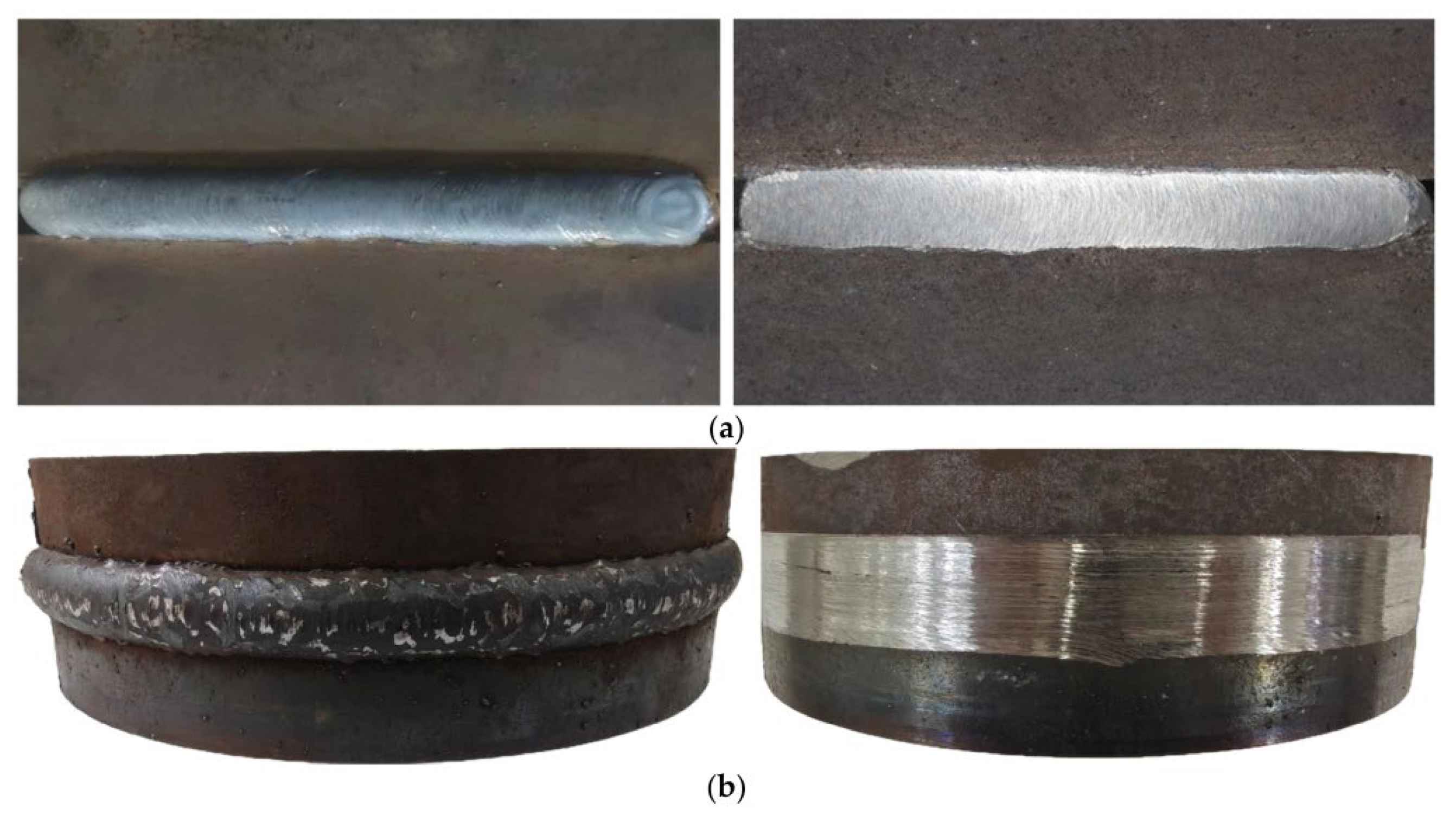
A Comprehensive Review of Robotic Grinding Technology

 ,
,
Abstract
1. Introduction
2. Core Challenges and Technical Difficulties in Robotic Grinding
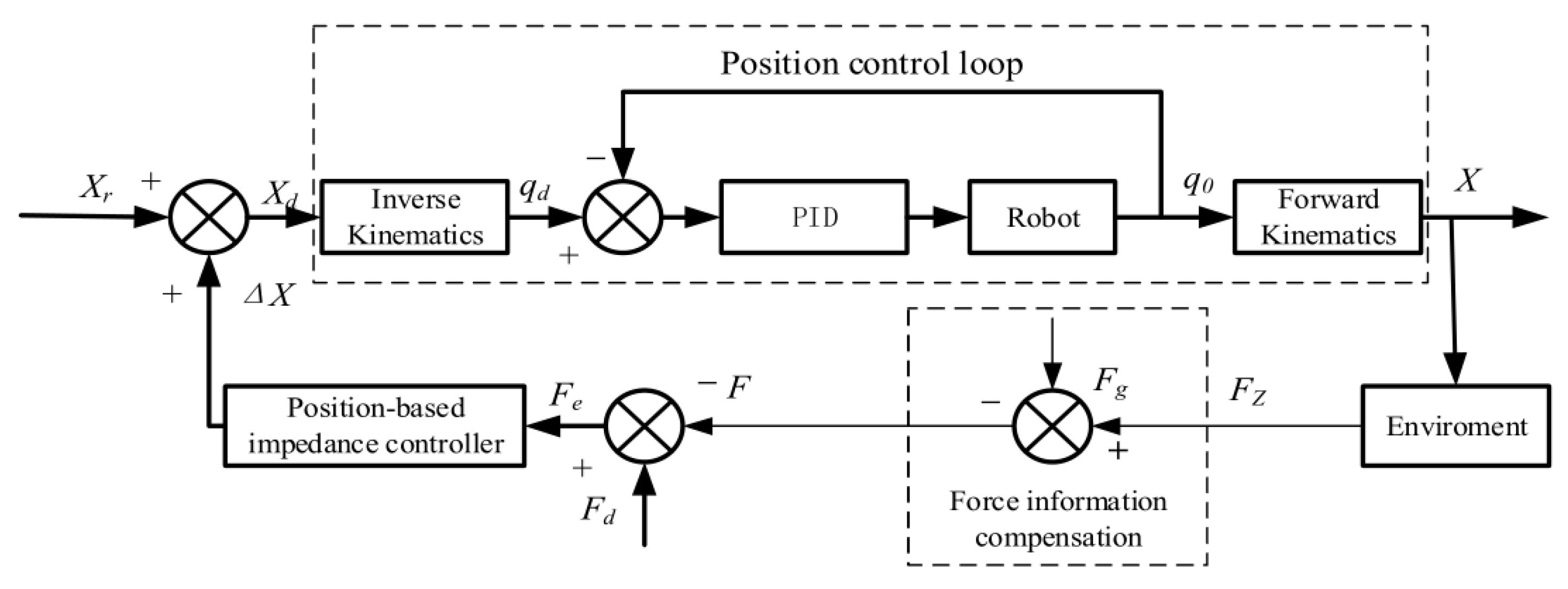
2.1. Challenges in Force Control Stability and Adaptability
2.2. Challenges in Trajectory Planning and Path Generation
2.3. Challenges in Process Parameters
2.4. Challenges in Grinding Sensing Latency and Quality Assessment
3. Key Technologies in Robotic Grinding
3.1. Force Control Techniques
3.1.1. Active Force Control
3.1.2. Passive Compliance
3.2. Trajectory Planning and Path Generation
3.2.1. Model-Driven Offline Path Planning
3.2.2. Data-Driven Adaptive Path Planning
3.2.3. Other Trajectory Planning Approaches
3.3. Process Parameter Optimization
3.3.1. Process Modeling
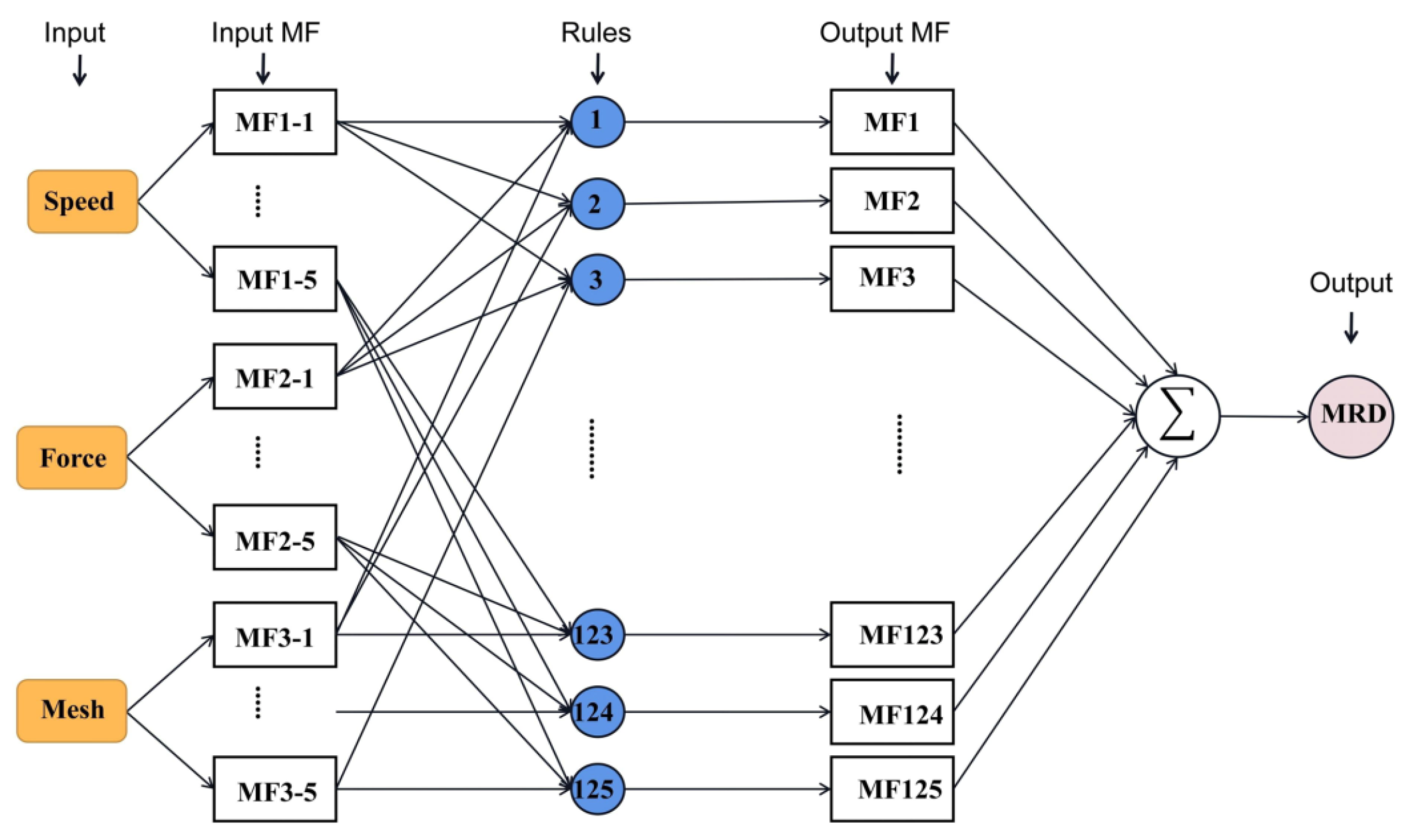
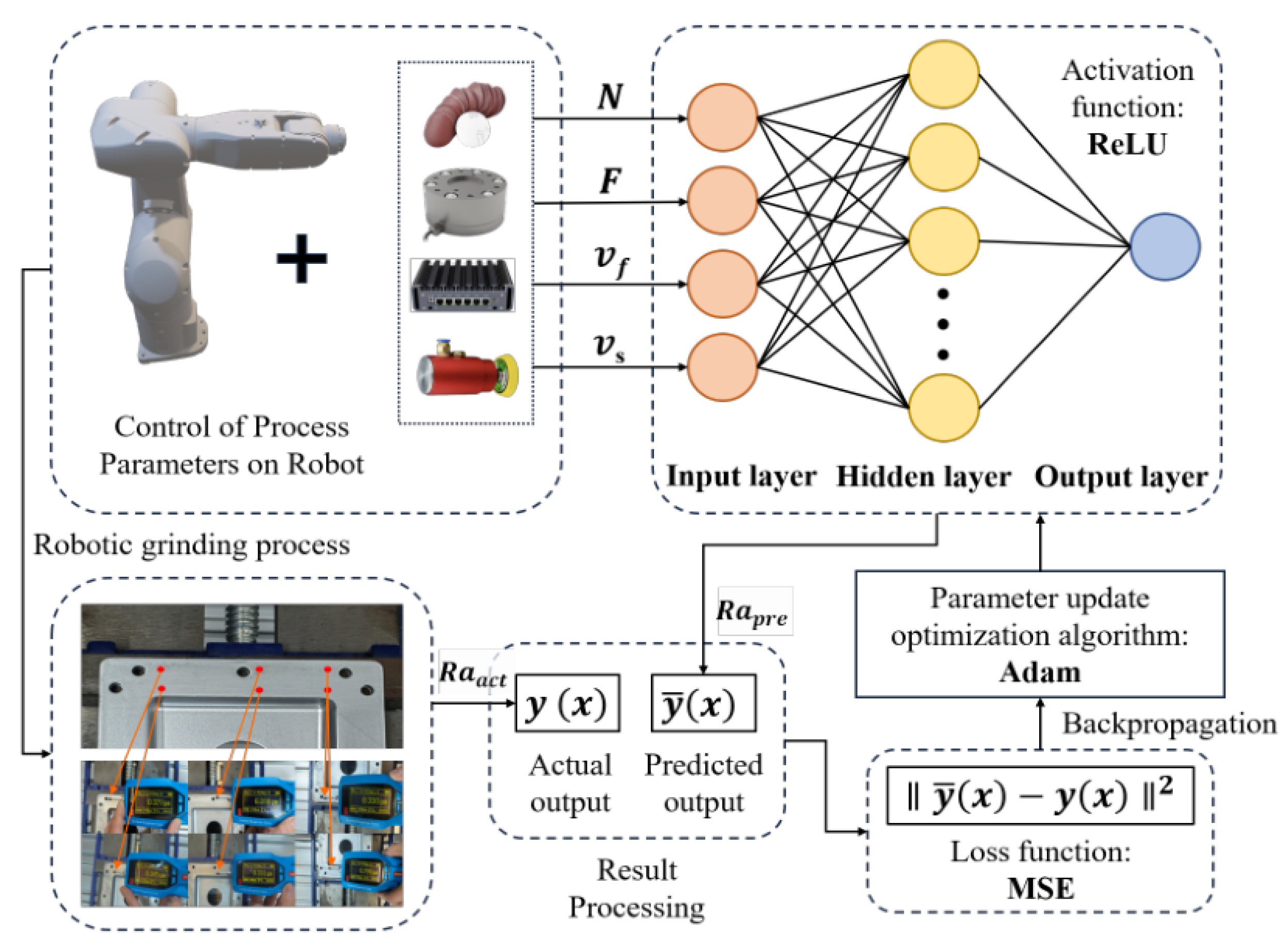
3.3.2. Process Parameter Optimization and Control
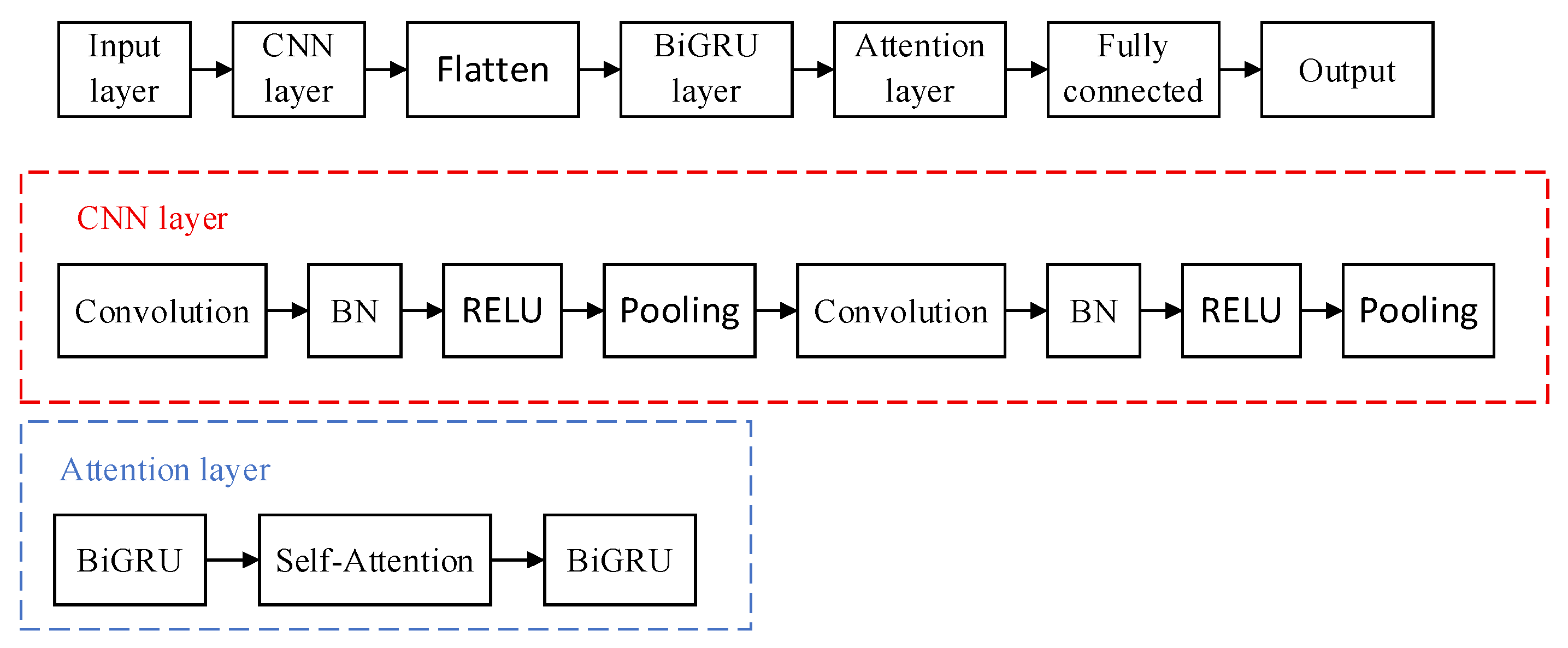
3.4. Grinding-State Monitoring and Quality Assessment
4. Application Fields and Typical Cases
4.1. Grinding of Metal Castings
4.2. Grinding of Aero-Engine Blades
4.3. Grinding of Thin-Walled Metallic Components
4.4. Weld Seam Grinding
5. Summary and Future Trends
5.1. Summary
5.2. Future Development Trends
Author Contributions
Funding
Data Availability Statement
Acknowledgments
Conflicts of Interest
References
- Kunz, W.H.; Sajtos, L.; Flavián, C. Beyond replacement: Human-machine collaboration in the age of AI. J. Serv. Manag. 2025, 36, 477–494. [Google Scholar] [CrossRef]
- Semeraro, F.; Griffiths, A.; Cangelosi, A. Human–robot collaboration and machine learning: A systematic review of recent research. Robot. Comput.-Integr. Manuf. 2023, 79, 102432. [Google Scholar] [CrossRef]
- Tang, Z.; Zhou, Y.; Wang, S.; Zhu, J.; Tang, J. An innovative geometric error compensation of the multi-axis CNC machine tools with non-rotary cutters to the accurate worm grinding of spur face gears. Mech. Mach. Theory 2022, 169, 104664. [Google Scholar] [CrossRef]
- Li, G.; Bao, Y.; Wang, H.; Dong, Z.; Guo, X.; Kang, R. An online monitoring methodology for grinding state identification based on real-time signal of CNC grinding machine. Mech. Syst. Signal Proc. 2023, 200, 110540. [Google Scholar] [CrossRef]
- Sun, J.; Wang, D.; Liu, Z.; Qiu, C.; Liu, H.; Sa, G.; Tan, J. Tool digital twin based on knowledge embedding for precision CNC machine tools: Wear prediction for collaborative multi-tool. J. Manuf. Syst. 2025, 80, 157–175. [Google Scholar] [CrossRef]
- Yu, C.; Qiao, J.; Liu, N.; Hu, X.; Yang, Z.; Zhou, S.; Shi, Y.; Li, Z.; Yu, S.; Yuan, H. Robotic grinding technology of multi-scale complex components based on 3D point clouds: A review. Measurement 2025, 257, 118663. [Google Scholar] [CrossRef]
- Li, Y.; Wang, Z.; Zhu, X.; Cai, W.; Chen, D.; Ma, J.; Xu, X.; Yang, Z.; Song, H.; Wang, W. State-of-the-art in mobile robot-assisted grinding technologies for large-scale complex components. Robot. Comput.-Integr. Manuf. 2026, 101, 103297. [Google Scholar] [CrossRef]
- Pedroso, A.F.; Sebbe, N.P.; Silva, F.J.; Campilho, R.D.; Sales-Contini, R.C.; Costa, R.D.; Sánchez, I.I. An overview on the recent advances in robot-assisted compensation methods used in machining lightweight materials. Robot. Comput.-Integr. Manuf. 2025, 91, 102844. [Google Scholar] [CrossRef]
- Gao, Y.; Qiu, T.; Song, C.; Ma, S.; Liu, Z.; Liang, Z.; Wang, X. Optimizing the performance of serial robots for milling tasks: A review. Robot. Comput.-Integr. Manuf. 2025, 94, 102977. [Google Scholar] [CrossRef]
- Ding, X.; Qiao, J.; Liu, N.; Yang, Z.; Zhang, R. Robotic grinding based on point cloud data: Developments, applications, challenges, and key technologies. Int. J. Adv. Manuf. Technol. 2024, 131, 3351–3371. [Google Scholar] [CrossRef]
- Zhang, B.; Wu, S.; Wang, D.; Yang, S.; Jiang, F.; Li, C. A review of surface quality control technology for robotic abrasive belt grinding of aero-engine blades. Measurement 2023, 220, 113381. [Google Scholar] [CrossRef]
- Ren, X.; Huang, X.; Gao, K.; Xu, L.; Li, L.; Feng, H.; Zhang, X.; Chen, H.; Chai, Z.; Chen, X. A review of recent advances in robotic belt grinding of superalloys. Int. J. Adv. Manuf. Technol. 2023, 127, 1447–1482. [Google Scholar] [CrossRef]
- Zeng, X.; Zhu, G.; Gao, Z.; Ji, R.; Ansari, J.; Lu, C. Surface polishing by industrial robots: A review. Int. J. Adv. Manuf. Technol. 2023, 125, 3981–4012. [Google Scholar] [CrossRef]
- Kishore, K.; Sinha, M.K.; Singh, A.; Archana; Gupta, M.K.; Korkmaz, M.E. A comprehensive review on the grinding process: Advancements, applications and challenges. Proc. Inst. Mech. Eng. Part C J. Mech. Eng. Sci. 2022, 236, 10923–10952. [Google Scholar] [CrossRef]
- Wang, W.; Guo, Q.; Yang, Z.; Jiang, Y.; Xu, J. A state-of-the-art review on robotic milling of complex parts with high efficiency and precision. Robot. Comput.-Integr. Manuf. 2023, 79, 102436. [Google Scholar] [CrossRef]
- Ke, X.; Yu, Y.; Li, K.; Wang, T.; Zhong, B.; Wang, Z.; Kong, L.; Guo, J.; Huang, L.; Idir, M.; et al. Review on robot-assisted polishing: Status and future trends. Robot. Comput.-Integr. Manuf. 2023, 80, 102482. [Google Scholar]
- Pervez, M.R.; Ahamed, M.H.; Ahmed, M.A.; Takrim, S.M.; Dario, P. Autonomous grinding algorithms with future prospect towards SMART manufacturing: A comparative survey. J. Manuf. Syst. 2022, 62, 164–185. [Google Scholar] [CrossRef]
- Tang, D.; Li, F.; Jiang, J.; Song, S.; Zeng, Y. A Review on End-effectors of Robotic Grinding. Recent Pat. Eng. 2023, 17, 85–101. [Google Scholar]
- Zerun, Z.; Xiaowei, T.; Chen, C.; Fangyu, P.; Rong, Y.; Lin, Z.; Zepeng, L.; Jiawei, W. High precision and efficiency robotic milling of complex parts: Challenges, approaches and trends. Chin. J. Aeronaut. 2022, 35, 22–46. [Google Scholar] [CrossRef]
- Tsai, H.-H.; Chang, J.-Y. An adaptive disturbance compensation method for force-sensorless control systems applied to robotic milling. Robot. Comput.-Integr. Manuf. 2026, 97, 103082. [Google Scholar] [CrossRef]
- Li, L.; Lu, B.; Jiang, M.; Gao, L.; Sun, Y. Robotic normal constant force polishing of unknown-model workpieces using variable impedance control. J. Manuf. Process. 2025, 153, 268–279. [Google Scholar] [CrossRef]
- Wahballa, H.; Ahmed, A.; Duan, J.; Chen, X.; Lei, W. Force tracking in robotic control systems using an online work object stiffness hybrid impedance PI control approach. Results Eng. 2025, 26, 105520. [Google Scholar] [CrossRef]
- Xu, D.; Yin, L.; Wang, J. Grinding force estimation and control of grinding robot with variable impedance control strategy. Int. J. Adv. Manuf. Technol. 2025, 137, 2011–2027. [Google Scholar] [CrossRef]
- Han, F.; Tam, S.; Cao, Z.; Zhao, X.; Tao, B.; Ding, H. Nonlinear impedance control with trajectory adaptation for collaborative robotic grinding. Sci. China-Technol. Sci. 2023, 66, 1928–1936. [Google Scholar] [CrossRef]
- Yue, H.; Wang, Q.; Yan, Y.; Huang, G. Deep learning-based point cloud completion for MEP components. Autom. Constr. 2025, 175, 106218. [Google Scholar] [CrossRef]
- Zhang, K.; Zhang, A.; Wang, X.; Li, W. Deep-learning-based point cloud completion methods: A review. Graph. Model. 2024, 136, 101233. [Google Scholar] [CrossRef]
- Li, C.; Dun, X.; Li, L.; Nan, R. Vision-guided robot application for metal surface edge grinding. SN Appl. Sci. 2023, 5, 236. [Google Scholar] [CrossRef]
- Zadeh, L. Optimality and non-scalar-valued performance criteria. IEEE Trans. Autom. Control 1963, 8, 59–60. [Google Scholar] [CrossRef]
- Haimes, Y. On a bicriterion formulation of the problems of integrated system identification and system optimization. IEEE Trans. Syst. Man. Cybern. 1971, SMC-1, 296–297. [Google Scholar]
- Preston, F. The theory and design of plate glass polishing machines. J. Soc. Glass Technol. 1927, 11, 214. [Google Scholar]
- Hertz, H. Ueber die Berührung fester elastischer Körper. J. Reine Angew. Math. 1882, 92, 156–171. [Google Scholar] [CrossRef]
- Sun, M.; Zhang, P.; Guo, K.; Sun, J.; Li, D.; Huang, T. Tool wear status monitoring in robotic milling of GFRP under variable robot postures and cutting parameters. J. Manuf. Process. 2025, 152, 789–804. [Google Scholar] [CrossRef]
- Ni, C.; Yang, J.; Ding, H. Physical knowledge embedded sparse Bayesian regression model for contour error prediction and compensation of robotic surface milling. Mech. Syst. Signal Proc. 2025, 241, 113509. [Google Scholar] [CrossRef]
- Raibert, M.H.; Craig, J.J. Hybrid position/force control of manipulators. J. Dyn. Syst. Meas. Control 1981, 103, 126–133. [Google Scholar] [CrossRef]
- Tang, X.; Yang, J.; Ding, H. Design and control of a parallel electromagnetic variable stiffness manipulator for robotic compliant grinding. Robot. Comput.-Integr. Manuf. 2026, 98, 103158. [Google Scholar] [CrossRef]
- Li, D.; Yang, J.; Zhao, H.; Ding, H. Contact force plan and control of robotic grinding towards ensuring contour accuracy of curved surfaces. Int. J. Mech. Sci. 2022, 227, 107449. [Google Scholar] [CrossRef]
- Xu, X.; Chen, W.; Zhu, D.; Yan, S.; Ding, H. Hybrid active/passive force control strategy for grinding marks suppression and profile accuracy enhancement in robotic belt grinding of turbine blade. Robot. Comput.-Integr. Manuf. 2021, 67, 102047. [Google Scholar] [CrossRef]
- Chen, H.; Yang, J.; Ding, H. Robotic grinding of curved parts with two degrees of freedom active compliant force-controlled end-effector using decoupling control algorithm. Robot. Comput.-Integr. Manuf. 2025, 93, 102935. [Google Scholar] [CrossRef]
- Chen, H.; Yang, J.; Ding, H. Integrated approach to robotic grinding of curved parts with macro-and micro-actuators guaranteeing high-precision force and trajectory control. Mech. Syst. Signal Proc. 2025, 239, 113295. [Google Scholar] [CrossRef]
- Li, Y.; Xu, Z.; Li, S.; Liao, Z.; Li, S.; Zhou, X. Robot compliance control framework for grinding thin-walled parts with unknown surface: Deformation and orientation adaptation. Robot. Comput.-Integr. Manuf. 2026, 98, 103147. [Google Scholar] [CrossRef]
- Li, T.; Sun, Q.; Wang, C.; Yuan, X.; Wang, K. A robot floating grinding and rust removal approach based on composite force-position fuzzy control. Sensors 2025, 25, 2204. [Google Scholar] [CrossRef]
- Hogan, N. Impedance control: An approach to manipulation. In American Control Conference; IEEE: New York, NY, USA, 1984; pp. 304–313. [Google Scholar]
- Hogan, N. Impedance Control: An Approach to Manipulation: Part II—Implementation. J. Dyn. Syst. Meas. Control 1985, 107, 8–16. [Google Scholar] [CrossRef]
- Hogan, N. Impedance Control: An Approach to Manipulation: Part III—Applications. J. Dyn. Syst. Meas. Control 1985, 107, 17–24. [Google Scholar] [CrossRef]
- Chen, F.; Zhao, H.; Li, D.; Chen, L.; Tan, C.; Ding, H. Contact force control and vibration suppression in robotic polishing with a smart end effector. Robot. Comput.-Integr. Manuf. 2019, 57, 391–403. [Google Scholar] [CrossRef]
- Hong, J.; Wang, D.; Guan, Y. Synergistic integrated design of an electrochemical mechanical polishing end-effector for robotic polishing applications. Robot. Comput.-Integr. Manuf. 2019, 55, 65–75. [Google Scholar]
- Li, T.; Zhou, M.; Liu, J.; Jia, X.; Zhang, S.; Wu, Y. Application of robot stable contact force control in wall grinding within the construction field. Int. J. Intell. Robot. 2025, 10, 177–188. [Google Scholar] [CrossRef]
- Min, K.; Ni, F.; Liu, H. Robotic abrasive belt grinding of complex curved blades based on a novel force control architecture integrating smooth trajectories. J. Manuf. Process. 2023, 107, 447–458. [Google Scholar] [CrossRef]
- Wang, Z.; Zou, L.; Luo, G.; Lv, C.; Huang, Y. A novel selected force controlling method for improving robotic grinding accuracy of complex curved blade. ISA Trans. 2022, 129, 642–658. [Google Scholar] [CrossRef] [PubMed]
- Mu, Y.; Zou, L.; Wang, Z.; Li, H.; Yan, S.; Wang, W. A novel dynamic observer-based contact force control strategy in robotic grinding to improve blade profile accuracy. Robot. Comput.-Integr. Manuf. 2025, 94, 102966. [Google Scholar] [CrossRef]
- Jia, L.; Chen, K.; Liao, Z.; Qiu, A.; Cao, M. Adaptive Robust Impedance Control of Grinding Robots Based on an RBFNN and the Exponential Reaching Law. Actuators 2025, 14, 393. [Google Scholar] [CrossRef]
- Yang, J.; Tang, X.; Ding, H.; Yin, Y. A novel electromagnetic end-effector with adaptive force-stiffness coordinated control for robotic grinding with variable workpiece stiffness. CIRP Ann.-Manuf. Technol. 2025, 74, 541–545. [Google Scholar] [CrossRef]
- Li, X.; Zhao, H.; Zhou, H.; Cai, Y.; Yin, Y.; Ding, H. Robotic grinding and polishing of complex aeroengine blades based on new device design and variable impedance control. Robot. Comput.-Integr. Manuf. 2025, 92, 102875. [Google Scholar] [CrossRef]
- Wang, Z.; Zou, L.; Li, J.; Zhang, J.; Wang, W. Model predictive motion/force control in robotic grinding system for turbine blade. ISA Trans. 2025, 162, 256–271. [Google Scholar] [CrossRef]
- Chen, H.; Yang, J.; Ding, H. Robotic compliant grinding of curved parts based on a designed active force-controlled end-effector with optimized series elastic component. Robot. Comput.-Integr. Manuf. 2024, 86, 102646. [Google Scholar] [CrossRef]
- Tang, X.; Xun, T.; Yang, J.; Ding, H. Vibration suppression of series elastic actuator used for robotic grinding based on reconstructed hybrid optimized input shaper. Mech. Syst. Signal Proc. 2025, 223, 111817. [Google Scholar] [CrossRef]
- Hsueh, I.-C.; Lan, Y.-H.; Lin, D.-H.; Huang, C.-H.; Lan, C.-C. A compact compliant robot for the grinding of spherical workpieces with high force control accuracy. Robot. Comput.-Integr. Manuf. 2025, 91, 102856. [Google Scholar] [CrossRef]
- Shen, K.; Dai, S.; Ji, W.; Wang, R. Study on the constant force control of aero-engine blade grinding robot considering time delay. Int. J. Adv. Manuf. Technol. 2024, 131, 1427–1447. [Google Scholar] [CrossRef]
- Zhang, J.; Yang, J.; Yue, Y.; Wen, K.; Zhou, Y. Optimization of comprehensive stiffness performance index for industrial robot in milling process. In 2019 IEEE 10th International Conference on Mechanical and Aerospace Engineering (ICMAE), 2019; IEEE: New York, NY, USA, 2019; pp. 544–549. [Google Scholar]
- Liao, Z.-Y.; Li, J.-R.; Xie, H.-L.; Wang, Q.-H.; Zhou, X.-F. Region-based toolpath generation for robotic milling of freeform surfaces with stiffness optimization. Robot. Comput. Integr. Manuf. 2020, 64, 101953. [Google Scholar] [CrossRef]
- Torres-Izu, R.; Iriarte, X.; Mata, S.; Aginaga, J.; Barrenetxea, D. Compensation strategy to minimize over-cut effects in robotic belt grinding with passive-compliant tools. J. Manuf. Process. 2025, 141, 1433–1443. [Google Scholar] [CrossRef]
- Xu, D.; Mo, H.; Zhong, Z.; Yin, L. Investigation of a Parallel Contact Force Robotic End-effector for Thin-Walled Parts Grinding and Deburring with Uncertain Position. Precis. Eng. 2025, 96, 587–599. [Google Scholar] [CrossRef]
- Chaoui, M.D.; Léonard, F.; Abba, G. Path planning for robotic grinding on a large forged workpiece. IFAC-PapersOnLine 2019, 52, 1162–1167. [Google Scholar] [CrossRef]
- Lv, Y.; Peng, Z.; Qu, C.; Zhu, D. An adaptive trajectory planning algorithm for robotic belt grinding of blade leading and trailing edges based on material removal profile model. Robot. Comput.-Integr. Manuf. 2020, 66, 101987. [Google Scholar] [CrossRef]
- Li, M.; Wang, W.; Zhang, J.; Wang, C.; Zou, L.; Huang, Y. Robotic accurate grinding of complex surfaces with 3D-printed compliant tool featuring internal-blade structure. J. Manuf. Process. 2025, 148, 375–385. [Google Scholar] [CrossRef]
- Song, H.; Ye, R.; Xie, M. Research on complex surface grinding path planning of grinding robot based on NX and Tecnomatix. Int. J. Adv. Manuf. Technol. 2024, 133, 1961–1971. [Google Scholar] [CrossRef]
- Zhou, B.; Tian, T. Robotic disc grinding path planning method based on multi-objective optimization for nuclear reactor coolant pump casing. J. Manuf. Syst. 2024, 77, 810–833. [Google Scholar] [CrossRef]
- Li, H.; Zou, L.; Lv, C.; Wang, Z.; Wang, W. An optimization framework for enhancing profile accuracy in robotic grinding of compressor blade edge. Chin. J. Aeronaut. 2025, 38, 103228. [Google Scholar] [CrossRef]
- Zhu, Y.; Wang, X.; Wang, Y.; Zhuo, X.; Zhang, H.; Wan, Y. Robot trajectory planning for gear chamfer grinding based on multi-objective collaborative optimization and quintic B-spline interpolation algorithm. Int. J. Adv. Manuf. Technol. 2025, 138, 4397–4414. [Google Scholar] [CrossRef]
- Chen, B.; Wang, Y.; Hu, S.; Tao, Z.; Qi, J. A whole-path posture optimization method of robotic grinding based on multi-performance evaluation indices. Robot. Comput.-Integr. Manuf. 2024, 89, 102787. [Google Scholar] [CrossRef]
- Lv, C.; Zou, L.; Huang, Y.; Liu, X.; Li, Z.; Gong, M.; Li, H. A trajectory planning method on error compensation of residual height for aero-engine blades of robotic belt grinding. Chin. J. Aeronaut. 2022, 35, 508–520. [Google Scholar] [CrossRef]
- Zhou, P.; Zhao, X.; Tao, B.; Ding, H. Time-varying isobaric surface reconstruction and path planning for robotic grinding of weak-stiffness workpieces. Robot. Comput.-Integr. Manuf. 2020, 64, 101945. [Google Scholar] [CrossRef]
- Wang, Z.; Zou, L.; Zhang, J.; Li, H.; Wang, W.; Huang, Y. Tool axis vector optimization for robotic grinding based on measured point cloud of complex curved blade. Adv. Eng. Inf. 2024, 62, 102716. [Google Scholar] [CrossRef]
- Wang, Z.; Zou, L.; Li, J.; Zhang, J.; Wang, W. Point-driven toolpath curve and orientation smoothing in robotic belt grinding for turbine blade. Robot. Comput.-Integr. Manuf. 2025, 96, 103046. [Google Scholar] [CrossRef]
- Lan, T.; Li, T.; Liu, H.; Tian, S.; Liu, K.; Wang, Y. Accurate localization and girth weld grinding planning for an in-pipe machining robot of thin-walled conical pipe. Robot. Comput.-Integr. Manuf. 2026, 98, 103124. [Google Scholar] [CrossRef]
- Luo, L.; Qiu, K.; Huang, C. Dynamic Trajectory Planning for Automatic Grinding of Large-Curved Forgings Based on Adaptive Impedance Control Strategy. Actuators 2025, 14, 487. [Google Scholar] [CrossRef]
- Chi, Z.-P.; Wang, Q.-H.; Xie, H.-L.; Ni, J.-L.; Nee, A.; Ong, S. Human-robot collaborative programming for robotic polishing of impeller using adaptive virtual fixtures and haptic interface. Robot. Comput.-Integr. Manuf. 2026, 98, 103166. [Google Scholar] [CrossRef]
- Xiao, G.; Chen, S.; Song, K.; Liu, X.; Huang, Y. A novel trajectory planning method based on reverse compensation of profile error for robotic belt grinding of blisk. J. Manuf. Process. 2022, 84, 508–521. [Google Scholar] [CrossRef]
- Yang, Z.; Chu, Y.; Xu, X.; Huang, H.; Zhu, D.; Yan, S.; Ding, H. Prediction and analysis of material removal characteristics for robotic belt grinding based on single spherical abrasive grain model. Int. J. Mech. Sci. 2021, 190, 106005. [Google Scholar] [CrossRef]
- Li, L.; Ren, X.; Feng, H.; Chen, H.; Chen, X. A novel material removal rate model based on single grain force for robotic belt grinding. J. Manuf. Process. 2021, 68, 1–12. [Google Scholar] [CrossRef]
- Zhang, W.; Gong, Y.; Xu, Y.; Zhao, X.; Liang, C.; Yin, G.; Zhao, J. Modeling of material removal depth in robot abrasive belt grinding based on energy conversion. J. Manuf. Process. 2023, 97, 76–86. [Google Scholar] [CrossRef]
- Xu, B.; Zhang, X.; Yang, Z.; Wang, J.; Yan, S.; Ding, H. Dual flexible contact material removal model for robotic disk grinding. J. Manuf. Process. 2024, 124, 867–876. [Google Scholar] [CrossRef]
- Yan, S.; Xu, X.; Yang, Z.; Zhu, D.; Ding, H. An improved robotic abrasive belt grinding force model considering the effects of cut-in and cut-off. J. Manuf. Process. 2019, 37, 496–508. [Google Scholar] [CrossRef]
- Qi, B.; Huang, X.; Guo, W.; Ren, X.; Chen, H.; Chen, X. A novel comprehensive framework for surface roughness prediction of integrated robotic belt grinding and burnishing of Inconel 718. Tribol. Int. 2024, 195, 109574. [Google Scholar] [CrossRef]
- Qu, S.; Yao, P.; Gong, Y.; Yang, Y.; Chu, D.; Zhu, Q. Modelling and grinding characteristics of unidirectional C–SiCs. Ceram. Int. 2022, 48, 8314–8324. [Google Scholar] [CrossRef]
- Joshi, K.; Melkote, S.N.; Anderson, M.; Chaudhari, R. Investigation of cycle time behavior in the robotic grinding process. CIRP J. Manuf. Sci. Technol. 2021, 35, 315–322. [Google Scholar] [CrossRef]
- Yang, Z.; Xu, X.; Li, J.; Zhu, D.; Yan, S.; Ge, S.S.; Ding, H. Knowledge-wrapping method for prediction and evaluation of material removal behavior in robotic belt grinding. Mech. Syst. Signal Proc. 2024, 208, 110914. [Google Scholar] [CrossRef]
- Jia, H.; Lu, X.; Cai, D.; Xiang, Y.; Chen, J.; Bao, C. Predictive modeling and analysis of material removal characteristics for robotic belt grinding of complex blade. Appl. Sci. 2023, 13, 4248. [Google Scholar] [CrossRef]
- Pan, J.; Chen, F.; Han, D.; Ke, S.; Wei, Z.; Ding, H. Adaptive process parameters decision-making in robotic grinding based on meta-reinforcement learning. J. Manuf. Process. 2025, 137, 376–396. [Google Scholar] [CrossRef]
- Li, H.; Zou, L.; Lv, C.; Wang, W.; Huang, Y. Data and mechanism hybrid-driven robust optimization for leading edge of transonic compressor blade in robotic grinding operation. Aerosp. Sci. Technol. 2025, 168, 110733. [Google Scholar] [CrossRef]
- Li, H.; Zou, L.; Lv, C.; Gui, L.; Wang, W.; Huang, Y. Collaborative improvement of profile accuracy and aerodynamic performance in robotic grinding of transonic compressor blade leading edge. Aerosp. Sci. Technol. 2024, 146, 108937. [Google Scholar] [CrossRef]
- Zhu, D.; Xu, X.; Yang, Z.; Zhuang, K.; Yan, S.; Ding, H. Analysis and assessment of robotic belt grinding mechanisms by force modeling and force control experiments. Tribol. Int. 2018, 120, 93–98. [Google Scholar] [CrossRef]
- Li, M.; Wang, W.; Zou, L.; Lv, C.; Zhang, J.; Huang, Y. Robotic grinding of complex surfaces with an internal structured compliant tool: Multi-performance optimization in confined spaces. Robot. Comput.-Integr. Manuf. 2025, 94, 102974. [Google Scholar] [CrossRef]
- Qi, B.; Chai, Z.; Huang, X.; Guo, W.; Ren, X.; Chen, H.; Chen, X. Surface integrity improvement of the ground surface of Inconel 718 fabricated by forging and additive manufacturing using a robotic rotational burnishing method. J. Manuf. Process. 2024, 125, 566–579. [Google Scholar] [CrossRef]
- Xiao, Y.N.; Wen, K.; Qu, Y.; Mao, Y.; Pan, Y. Surface-Roughness Prediction Based on Small-Batch Workpieces for Smart Manufacturing: An Aerospace Robotic Grinding Case Study. Appl. Sci. 2025, 15, 1349. [Google Scholar] [CrossRef]
- Huang, S.; Yang, J.; Wu, H.; Ning, X.; Pan, B. Dimension optimisation of a Dual-Arm robot for enhanced stiffness in task-dependent polishing operations. Precis. Eng. 2025, 96, 692–705. [Google Scholar] [CrossRef]
- Tao, Z.; Hou, Z.; Wang, Y.; Sun, Y.; Qi, J.; Zhang, D. On-machine measurement and quantitative evaluation of belt wear in robotic grinding using line structured light scanning. J. Manuf. Process. 2025, 150, 555–569. [Google Scholar] [CrossRef]
- Xu, X.; Yang, Z.; Liu, Q.; Yan, S.; Ding, H. Condition monitoring and mechanism analysis of belt wear in robotic grinding of TC4 workpiece using acoustic emissions. Mech. Syst. Signal Proc. 2023, 188, 109979. [Google Scholar] [CrossRef]
- Chen, P.; Fan, C.; Dai, F.; Brown, L.J.; Liu, Y. Online tool condition monitoring based on optimized multi-sensor acoustic features for robotic abrasive belt grinding. Mech. Syst. Signal Proc. 2025, 238, 113154. [Google Scholar] [CrossRef]
- Ge, J.; Cao, D.; Liu, W.; Deng, Z.; Wu, J.; Wu, S.; Lv, L.; Wang, X. An online monitoring approach of grinding wheel wear condition for robotic weld grinding based on enhanced CNN-GRU model. Mech. Syst. Signal Proc. 2025, 241, 113483. [Google Scholar] [CrossRef]
- Wu, C.; Guo, K.; Sun, J.; Liu, Y.; Zheng, D. Active vibration control in robotic grinding using six-axis acceleration feedback. Mech. Syst. Signal Proc. 2024, 214, 111379. [Google Scholar] [CrossRef]
- Ren, X.; Chai, Z.; Xu, J.; Zhang, X.; He, Y.; Chen, H.; Chen, X. A new method to achieve dynamic heat input monitoring in robotic belt grinding of Inconel 718. J. Manuf. Process. 2020, 57, 575–588. [Google Scholar] [CrossRef]
- Wang, M.; Song, Y.; Wang, P.; Chen, Y.; Sun, T. Grinding/cutting technology and equipment of multi-scale casting parts. Chin. J. Mech. Eng. 2022, 35, 97. [Google Scholar] [CrossRef]
- Wang, M.; Chen, K.; Wang, P.; Song, Y.; Sun, T. Teleoperation mode and control strategy for the machining of large casting parts. Robot. Comput.-Integr. Manuf. 2024, 86, 102690. [Google Scholar] [CrossRef]
- Dai, S.; Zhao, Y.; Ji, W.; Mu, J.; Hu, F. Constant force control for aluminum wheel hub grinding based on ESO+ backstepping. Ind. Robot. 2022, 49, 824–834. [Google Scholar] [CrossRef]
- Wu, H.; Wang, Y.; Wei, X.; Zhu, D. Spatial path planning for robotic milling of automotive casting components based on optimal machining posture. Metals 2022, 12, 1271. [Google Scholar] [CrossRef]
- Zhang, Y.; Liu, H.; Cheng, W.; Hua, L.; Zhu, D. A novel trajectory planning method for robotic deburring of automotive castings considering adaptive weights. Robot. Comput.-Integr. Manuf. 2024, 86, 102677. [Google Scholar] [CrossRef]
- Meng, M.; Zhou, C.; Lv, Z.; Zheng, L.; Feng, W.; Wu, T.; Zhang, X. Research on a method of robot grinding force tracking and compensation based on deep genetic algorithm. Machines 2023, 11, 1075. [Google Scholar] [CrossRef]
- Li, C.; Nan, R.; Wei, Y.; Li, L.; Liang, J.; Li, N. Application research of vision-guided grinding robot for wheel hub castings. Processes 2025, 13, 238. [Google Scholar] [CrossRef]
- Xu, X.; Zhu, D.; Yan, S.; Ding, H. Application of novel force control strategies to enhance robotic abrasive belt grinding quality of aero-engine blades. Chin. J. Aeronaut. 2019, 32, 2368–2382. [Google Scholar] [CrossRef]
- Wang, Z.; Zou, L.; Duan, L.; Liu, X.; Lv, C.; Gong, M.; Huang, Y. Study on passive compliance control in robotic belt grinding of nickel-based superalloy blade. J. Manuf. Process. 2021, 68, 168–179. [Google Scholar] [CrossRef]
- Wang, T.; Zou, L.; Wan, Q.; Zhang, X.; Li, Y.; Huang, Y. A high-precision prediction model of surface roughness in abrasive belt flexible grinding of aero-engine blade. J. Manuf. Process. 2021, 66, 364–375. [Google Scholar] [CrossRef]
- Zhang, H.; Li, L.; Zhao, J.; Zhao, J.; Gong, Y. Theoretical investigation and implementation of nonlinear material removal depth strategy for robot automatic grinding aviation blade. J. Manuf. Process. 2022, 74, 441–455. [Google Scholar] [CrossRef]
- Zhu, G.; Zeng, X.; Gao, Z.; Gong, Z.; Duangmu, W.; Zeng, Y.; Lu, C. Study on vibration stability of aircraft engine blades polished by robot controlled pneumatic grinding wheel. J. Manuf. Process. 2023, 99, 636–651. [Google Scholar] [CrossRef]
- Huang, Y.; Xiao, G.; Liu, Y.; Meng, F. Interactive strategy for adaptive belt grinding heterogeneous data for an aero-engine blade. IEEE Access 2019, 7, 84637–84648. [Google Scholar] [CrossRef]
- Zhou, P.; Zhou, Y.; Xie, Q.; Zhao, H. Adaptive force control for robotic grinding of complex blades. IOP Conf. Ser. Mater. Sci. Eng. 2019, 692, 012008. [Google Scholar] [CrossRef]
- Gu, Q.; Liu, S.; Jin, S.; Liu, D. Force-sensing-based compliant error compensation control for robotic milling of weak-stiffness thin-walled components. Robot. Comput.-Integr. Manuf. 2026, 98, 103121. [Google Scholar] [CrossRef]
- Xu, D.; Zhong, Z.G.; Mo, H.; Bai, Y.; Chen, G.; Yin, L. Vibration control for thin-walled parts grinding through parallel magnetorheological absorber. Mech. Syst. Signal Proc. 2025, 237, 113130. [Google Scholar] [CrossRef]
- Wang, Q.; Wang, W.; Zheng, L.; Yun, C. Force control-based vibration suppression in robotic grinding of large thin-wall shells. Robot. Comput.-Integr. Manuf. 2021, 67, 102031. [Google Scholar] [CrossRef]
- Shi, D.; Wang, X.; Yu, W.; Zhang, H. Process Parameter Optimization and Removal Depth Prediction for Robotic Adaptive Hydraulically Controlled Grinding of Aircraft Skin Primer. Technologies 2025, 13, 498. [Google Scholar] [CrossRef]
- Pandiyan, V.; Murugan, P.; Tjahjowidodo, T.; Caesarendra, W.; Manyar, O.M.; Then, D.J.H. In-process virtual verification of weld seam removal in robotic abrasive belt grinding process using deep learning. Robot. Comput.-Integr. Manuf. 2019, 57, 477–487. [Google Scholar] [CrossRef]
- Zhu, Y.; He, X.; Liu, Q.; Guo, W. Semiclosed-loop motion control with robust weld bead tracking for a spiral seam weld beads grinding robot. Robot. Comput.-Integr. Manuf. 2022, 73, 102254. [Google Scholar] [CrossRef]
- Ge, J.; Deng, Z.; Li, Z.; Liu, W.; Zhuo, R.; Wan, L.; Nie, J. Quantitative grinding depth model for robotic weld seam grinding systems. J. Manuf. Process. 2023, 89, 397–409. [Google Scholar] [CrossRef]
- Ge, J.; Deng, Z.; Li, Z.; Liu, T.; Zhuo, R.; Chen, X. Adaptive parameter optimization approach for robotic grinding of weld seam based on laser vision sensor. Robot. Comput.-Integr. Manuf. 2023, 82, 102540. [Google Scholar] [CrossRef]
- Zhong, P.; Xue, L.; Huang, J.; Zou, Y.; Han, F. Intelligent Recognition and Trajectory Planning for Welds Grinding Based on 3D Visual Guidance. Machines 2026, 14, 393. [Google Scholar] [CrossRef]


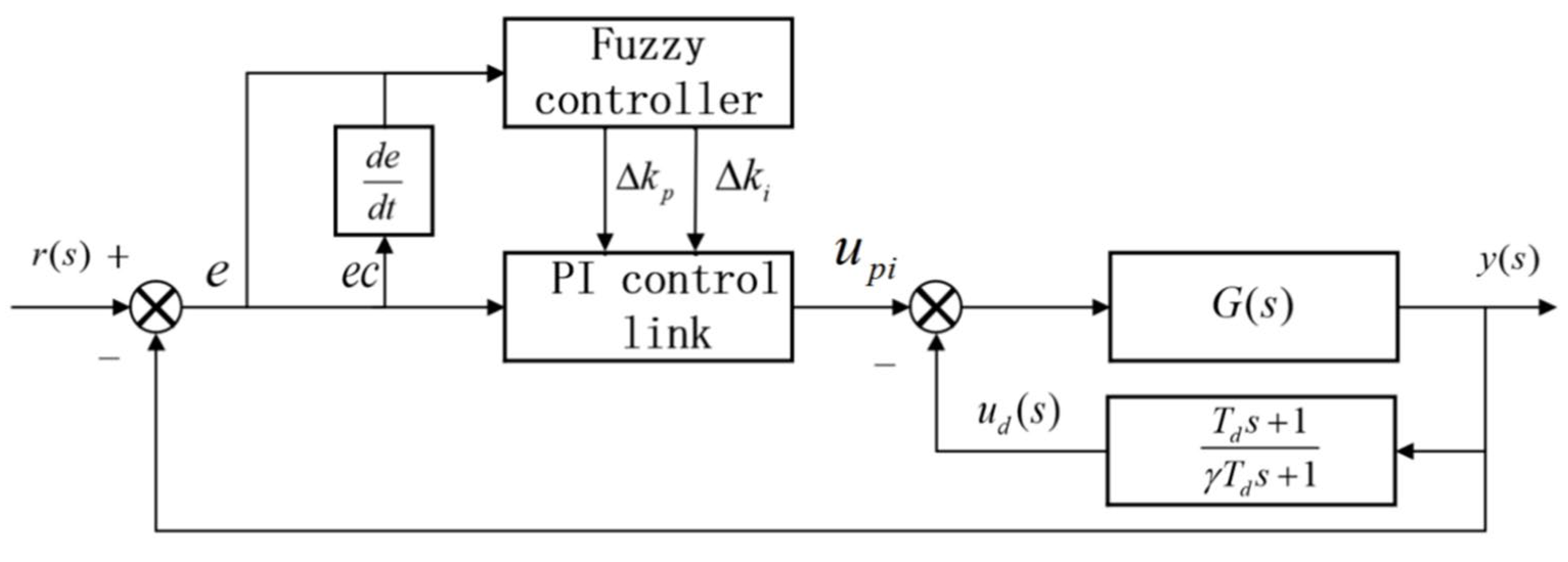



| Indicator | Robotic Grinding | CNC Grinding |
|---|---|---|
| Core Characteristics | Flexibility, high adaptability | Rigidity, high precision, excellent consistency |
| Position Accuracy Repeatability | Typically ±0.05 mm to ±0.1 mm | Typically less than ±0.002 mm |
| Absolute Position Accuracy | Relatively low, typically ±0.1 mm | Very high, typically less than ±0.005 mm |
| Workspace | Large workspace, commonly ranging from 1.5 m to 3.5 m | Limited workspace, determined by machine travel, usually <2 m × 1 m |
| Workpiece Complexity Suitability | Capable of processing complex geometries such as free-form surfaces, weld seams, and irregular castings | Primarily suitable for regular geometric shapes |
| Automation Integration Capability | Mature integration, compatible with AGV, vision guidance, etc. | Complex integration, requires custom interfaces |
| Force Control in Machining | Achieved through active/passive force control | No active force control; relies on machine rigidity |
| Unit Cost Advantage | Extremely low unit cost in small-batch, multi-variety production | Extremely low unit cost in large-scale production |
| Safety and Human–Robot Collaboration | Optional collaborative robots; no safety fence required; supports human–robot collaboration | Must be enclosed in a safety cell; no human–robot coexistence allowed |
| Technological Evolution Speed | Rapid iteration; AI-based path optimization, digital twin, etc. | Mature technology but slower update pace; lower level of intelligence |
| Year | Title | Research Content and Achievements |
|---|---|---|
| Under review | “A Comprehensive Review of Robotic Grinding Technology” | Focusing on the core challenges and key technological advances in robotic grinding concerning force control, trajectory planning, process parameter optimization, state perception, and quality evaluation |
| 2025 [6] | “Robotic grinding technology of multi-scale complex components based on 3D point clouds: a review” | Utilized 3D point cloud technology to improve precision in robotic grinding of complex components through fine-scale high-accuracy optimization and coarse-scale collaborative enhancement |
| 2026 [7] | “State-of-the-art in mobile robot-assisted grinding technologies for large-scale complex components” | Research achievements in high-precision surface inspection, robot grinding trajectory planning, end-effector compliant force control, and surface quality monitoring/control for large-part robotic machining |
| 2025 [8] | “An overview on the recent advances in robot-assisted compensation methods used in machining lightweight materials” | Integrated flexible compensation techniques to enhance robotic machining accuracy during processing of lightweight materials |
| 2025 [9] | “Optimizing the performance of serial robots for milling tasks: A review” | Reviewed key factors affecting the performance of serial robots in milling operations and proposed optimization strategies, focusing on stiffness modeling, pose optimization, error compensation, and vibration control |
| 2024 [10] | “Robotic grinding based on point cloud data: developments, applications, challenges, and key technologies” | Focused on robotic grinding technologies based on point cloud data, covering critical aspects such as point cloud acquisition and alignment, error modeling, adaptive control, path planning, and force regulation |
| 2023 [11] | “A review of surface quality control technology for robotic abrasive belt grinding of aero-engine blades” | Highlighted key technologies for surface quality control during robotic abrasive belt grinding of aero-engine blades, including force control strategies, real-time monitoring, path optimization, and error compensation |
| 2023 [12] | “A review of recent advances in robotic belt grinding of superalloys” | Analyzed process characteristics, material removal mechanisms, surface integrity, and intelligent control methods in robotic belt grinding of high-temperature alloys |
| 2023 [13] | “Surface polishing by industrial robots: a review” | Summarized key technologies and research progress in robotic surface polishing, focusing on trajectory planning, force control, and processing of complex curved surfaces |
| 2022 [14] | “A comprehensive review on the grinding process: Advancements, applications and challenges” | Comprehensively covers the history, current status, and future of grinding, focusing on sustainable technologies, advanced methods (e.g., ultrasonic-assisted grinding, 3D-printed wheels), and AI applications |
| 2022 [15] | “A state-of-the-art review on robotic milling of complex parts with high efficiency and precision” | Analysis of stiffness distribution and pose planning based on robot workspace, pose-dependent dynamic characteristic analysis and trajectory planning, mechanism analysis and suppression of robotic milling chatter, and dynamic deformation response prediction and machining error compensation |
| 2022 [16] | “Review on robot-assisted polishing: Status and future trends” | Focused on key technologies in robot-assisted polishing, including force control strategies, trajectory planning, vibration suppression, modeling, and intelligent control |
| 2021 [17] | “Autonomous grinding algorithms with future prospect towards SMART manufacturing: A comparative survey” | Focuses on the development and application of algorithms in intelligent grinding and their integration challenges and prospects under Industry 4.0. |
| 2021 [18] | “A Review on End-effectors of Robotic Grinding” | Reviewed recent advances in end-effector design for robotic grinding applications, with emphasis on structural design, force control strategies, compliance mechanisms, and vibration suppression techniques |
| 2021 [19] | “High precision and efficiency robotic milling of complex parts: Challenges, approaches and trends” | The research focuses on processing planning and control technologies, including robot workspace analysis, robot trajectory planning, vibration monitoring and control, as well as deformation monitoring and compensation |
| Researcher | Method/System | Experimental Results | Validation Scenario |
|---|---|---|---|
| Tang et al. [35] | Parallel electromagnetic variable-stiffness manipulator | Average absolute force-tracking error reduced by 82.76%; average absolute material removal error reduced by 78.39% | Variable-stiffness thin-walled aluminum alloy |
| Li et al. [36] | Force/position hybrid control + contact force planning | Force error: <±1 N; tangential position tracking error: <±0.03 mm; Ra = 0.454 μm | Free-form surfaces with significant curvature variation |
| Xu et al. [37] | Active–passive fusion + Kalman filter-based dual-source force fusion | Normal force fluctuation standard deviation reduced to 0.37 N | Turbine blades |
| Chen et al. [38] | Two-degree-of-freedom compliant end-effector | Normal force error reduced by approximately 60% | Bending workpieces |
| Chen et al. [39] | Macro–micro-actuator + GPDC strategy | Normal force control accuracy: ±0.4 N; trajectory error: 0.04 mm | TC4 titanium alloy blade disks |
| Li et al. [40] | Dual-loop compliant control framework | Stable-phase force error: <±2 N | Thin-walled parts |
| Li et al. [41] | Fuzzy derivative-leading PID hybrid force–position control | Grinding force fluctuation reduced by 37.4%; rust removal rate: 99.73% | Bent steel plate |
| Xu et al. [23] | Voice coil motor polishing tool + virtual force sensor | Average Ra reduced by 38% | Aero-engine turbine blades |
| Li et al. [47] | Sensor compensation + adaptive impedance control | In tasks with target contact force of −15 N, average force-tracking error range reduced to 0.38 N | Building walls |
| Min et al. [48] | Nonlinear tracking differentiator | Ra ≤ 0.8 μm | Complex curved blades |
| Wang et al. [49] | Region-based force control + online neural network compensation algorithm | Force control accuracy improved by 50.58–82.65%; contour precision improved by 35.67–66.90% | Complex curved blade |
| Mu et al. [50] | Dynamic observer-based adaptive impedance | Contour error reduced to 0.193–0.244 mm; force control performance improved by 53.7–79.57% compared to conventional constant-force methods | Turbine blades |
| Jia et al. [51] | RBFNN-based adaptive robust impedance control with exponential reaching law sliding mode control | X-direction position tracking error: 3.27 mm, Y-direction position tracking error: 1.67 mm | Cylinder block |
| Yang et al. [52] | Electromagnetic variable-stiffness end-effector | Average absolute force error: 0.0216 N | Thin-walled curved components |
| Li et al. [53] | Bounded variable impedance control | Ra < 0.4 μm; contour accuracy met ±0.05 mm (in most regions) | Complex aero-engine blades |
| Wang et al. [54] | Admittance model + model predictive control framework | Force error: 1.934 N; position error: 0.132 mm; both improved by 38% and 37%, respectively, over traditional methods | Turbine blades |
| Chen et al. [55] | Series elastic actuator + PI feedback + feedforward force control | Maximum force error reduced by 70%; grinding depth error reduced by 58%; Ra decreased by 19.2% | Curved parts |
| Tang et al. [56] | CSIR-HOIS multi-feedforward control | Force-tracking error, grinding depth error, and Ra reduced by 26.6%, 22.5%, and 21.5%, respectively | Curved components |
| Hsueh et al. [57] | Compact SEA + planar spring + closed-loop force control | Achieved 0.06 N RMS force error at 10 Hz bandwidth | Helmet hardshell |
| Shen et al. [58] | Smith prediction algorithm with active disturbance rejection control | Ra = 0.3503 μm | Aero-engine turbine blades |
| Method | Advantages | Disadvantages | Applicable Scenarios | Technology Maturity |
|---|---|---|---|---|
| Hybrid Force/Position Control | Enables simultaneous precise control of contact force and motion trajectory; exhibits good active compliance; achieves high control accuracy | Highly dependent on environmental modeling; stability and robustness may be insufficient in complex or unknown environments; system design and control algorithms are relatively complex | Suitable for workpieces with significant curvature variation, free-form surfaces, thin-walled parts, etc., requiring coordinated control of force and position | Primarily validated in laboratory settings. |
| Impedance/Admittance Control | Achieves compliant interaction by tuning the robot’s apparent stiffness/damping, enabling effective handling of uncertain environments; when combined with adaptive strategies, significantly improves force control accuracy and surface-finish quality | Performance heavily relies on sensor precision and bandwidth; parameter tuning is relatively complex; inappropriate parameters may cause system instability or response delays | Applied in aerospace (e.g., turbine blades, propeller blades), architectural components, large-size workpieces requiring grinding/polishing, etc. | Near production-line deployment. |
| Control Based on Dedicated End-Effector Actuators | Provides intrinsic compliance or tunable stiffness via mechanical structures; effectively isolates impacts, suppresses vibrations, and enables high-precision force tracking | System structure is complex, increasing design and manufacturing costs; some actuators may exhibit low natural frequency and be prone to resonance | Required for highly precise machining tasks demanding exceptional force control stability, such as complex free-form parts, burr removal, thin-walled component polishing, etc. | Laboratory stage transitioning toward production line. |
| Passive Compliant Control | Simple structure, low cost, fast responses; independent of external sensors and complex real-time computation; high reliability | Compliance is mechanically fixed and cannot be adjusted online; unable to adapt to varying task requirements; only compensates for positional errors, incapable of actively regulating contact force magnitude | Applicable to scenarios with low force control accuracy requirements, e.g., rough machining tasks, workpieces with irregular shapes or non-standard geometries | Partially deployed in production lines. |
| Data Source | Researchers | Method | Experimental Results |
|---|---|---|---|
| CAD Model | Mohamed et al. [63] | Simplified grinding force model + iterative material removal zone intersection-based path update | Circularity error ≤ 0.0001 for a 4 mm grinding radius |
| Lv et al. [64] | Integration of Hertz contact theory and Preston equation to construct MRP model | Contour error controlled within 0.0194 mm | |
| Li et al. [65] | Uniform trajectory planning considering time-varying contact based on the Preston model | Standard deviation of material removal depth was reduced to 0.01 mm | |
| Song et al. [66] | Equal chord-height error algorithm + surface normal TCP construction | Ra reduced to 2.049 μm; adaptive curvature-based point distribution achieved | |
| Zhou et al. [67] | Multi-objective optimization (time, force stability, surface quality, tool wear) + S-shaped acceleration/deceleration | Grinding error controlled within 0.6 mm | |
| Li et al. [68] | Clamping-type B-spline recursive subdivision method | Average contour error reduced to 0.0143 mm | |
| Zhu et al. [69] | Multi-objective cooperative genetic algorithm + fifth-order B-spline interpolation | Compared to MsGA, GA reduced grinding trajectory inflection points by 14.1% and 25.0%, improved turning performance by 7.3% and 12.7%; robot joint angular velocity decreased by 21.3%, angular acceleration reduced by 27.3% | |
| Chen et al. [70] | Full-path pose optimization | Ra reduced from 0.93 μm to 0.62 μm | |
| Lv et al. [71] | Error-driven closed-loop compensation, establishing a regression model between residual height and process parameters | Contour error reduced by 34.2–55.1% | |
| Force sensor contact sampling and virtual surface reconstruction | Zhou et al. [72] | Constant-force trajectory generation via time-varying equal-pressure surface reconstruction | Transformed constant-force control into a geometric reconstruction problem; enhanced robustness and generalization capability |
| Point cloud | Wang et al. [73,74] | “Point-driven” trajectory: TASE energy model + TAI constraint + cubic B-spline fitting | Improved contour continuity >27%; surface smoothness increased by >20% |
| Point cloud | Lan et al. [75] | Gradient feature-based weld seam boundary detection + equidistant cross-section method + B-spline interpolation + perspective projection optimization | Residual weld height ≤0.08 mm; suitable for scenarios without CAD models and under strong uncertainty |
| Force sensor and encoder signals | Luo et al. [76] | Adaptive impedance control and dynamic trajectory planning | Surface roughness: 0.5146 μm |
| High-precision 3D model (reconstructed from the laser-scanned point cloud of a physical workpiece) | Chi et al. [77] | Adaptive virtual fixture + haptic interface-guided human–robot collaborative programming | Improved programming efficiency; high repeatability; applicable to complex free-form surfaces |
| Point cloud + CAD model | Xiao et al. [78] | Trajectory correction method based on reverse compensation of contour error | Significantly improved overall contour accuracy; effectively suppressed cumulative systematic errors |
| Method | Advantages | Disadvantages | Applicable Scenarios | Technology Maturity |
|---|---|---|---|---|
| Model-based Offline Trajectory Planning | High accuracy; can suppress chatter, integrate process kinematics with contact dynamics, and improve consistency. | Relies on precise physical models and CAD data; sensitive to model inaccuracies or workpiece deformation; difficult to compensate for manufacturing errors or weak rigidity-induced uncertainties. | Large-scale forging parts with complex curved surfaces requiring high form accuracy (e.g., turbine blade root/fillet machining, aerospace engine blades); thin-walled structure milling. | Mostly in laboratory simulation or small-scale experimental validation stage. |
| Multi-objective Collaborative Optimization | Integrates robot dynamics and process performance; improves trajectory smoothness and startup stability; reduces joint velocity/acceleration fluctuations. | High optimization complexity; relies on preset target weights; may fail under strong disturbances; lacks online feedback mechanisms. | Nuclear reactor coolant pump casings and other heavy components; compression machine blades and other thin-walled structures. | Most methods are in a laboratory or medium-scale testing phase. |
| Data-driven Adaptive Planning | No need for CAD models or precise mechanics models; adapts to manufacturing errors, weak rigidity deformations, and other uncertainties; strong applicability. | Requires high-quality sensors; computationally intensive; sensitive to noise. | Weak-rigidity, easily deformed workpieces; complex curved surfaces with missing CAD models; internal cavities, weld seams, and other spatially constrained grinding tasks. | Some methods have demonstrated engineering feasibility, but most are still at the pilot-line implementation stage. |
| Human–Robot Collaboration with Feedback Compensation | High programming efficiency; good surface quality consistency; leverages point-cloud inverse compensation to correct errors and mitigate tool wear. | Depends on high-precision scanning setup; low automation level; requires manual compensation for field error data; relatively high cost. | High-precision, small-batch, multi-variety, high surface-quality requirements in aerospace applications; rapid prototyping of prototypes or spare parts. | At the advanced manufacturing lab or demonstration-line stage; not yet widely deployed in large-scale production lines. |
| Method | Advantages | Disadvantages | Applicable Scenarios | Technology Maturity |
|---|---|---|---|---|
| Preston Equation/Hertz Contact Theory | Simple form, low computational cost | Poor accuracy under compliant contact or complex curved surfaces; limited generalization capability | Preliminary process design, rough machining | Widely adopted in industrial practice |
| Microscopic Mechanistic Models | Clear physical meaning; superior prediction accuracy over classical models | Complex model construction; strong dependence on microscopic parameters; difficult experimental validation | Precision polishing of high-value, hard-to-machine materials | Primarily confined to laboratory validation stage |
| Macroscopic/System-Level Models | Capable of handling complex system issues (e.g., dual flexibility of tool and workpiece) | Requires extensive calibration experiments; empirical coefficients dominate; weaker physical interpretability than microscopic models | Batch production of large thin-walled components (e.g., aircraft blades, impeller disks) | Some models show engineering potential; approaching pilot-line deployment |
| Model-Driven Optimization | Well-defined objectives, predictable outcomes; enables simultaneous optimization of geometric accuracy, surface quality, and motion smoothness | Relies heavily on accuracy of underlying models; unmodeled dynamics or disturbances require further verification | High-precision, high-value component machining (e.g., aircraft blades, impeller root passages) | Successfully validated in specific high-value applications; nearing production-line implementation |
| Working Condition | Contour Analysis Image | Surface Roughness Trend Graph |
|---|---|---|
| Unpolished workpiece surface |  | 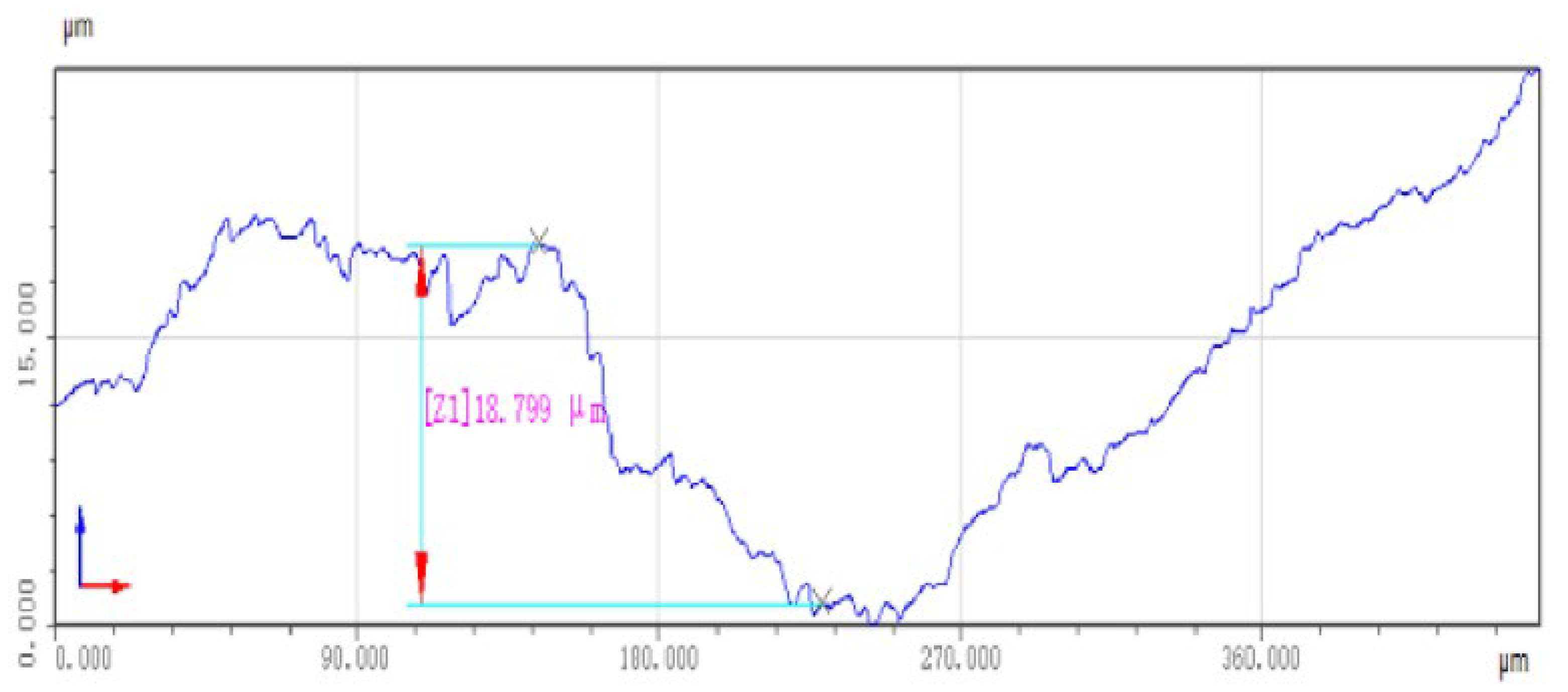 |
| Teaching trajectory grinding |  |  |
| Optimization of grinding trajectories |  |  |
Disclaimer/Publisher’s Note: The statements, opinions and data contained in all publications are solely those of the individual author(s) and contributor(s) and not of MDPI and/or the editor(s). MDPI and/or the editor(s) disclaim responsibility for any injury to people or property resulting from any ideas, methods, instructions or products referred to in the content. |
© 2026 by the authors. Licensee MDPI, Basel, Switzerland. This article is an open access article distributed under the terms and conditions of the Creative Commons Attribution (CC BY) license.
Share and Cite
Qiao, J.; Wang, X.; Yu, S.; Liu, N.; Zhou, S.; Li, Z.; Zhang, R. A Comprehensive Review of Robotic Grinding Technology. Machines 2026, 14, 520. https://doi.org/10.3390/machines14050520
Qiao J, Wang X, Yu S, Liu N, Zhou S, Li Z, Zhang R. A Comprehensive Review of Robotic Grinding Technology. Machines. 2026; 14(5):520. https://doi.org/10.3390/machines14050520
Chicago/Turabian StyleQiao, Jinwei, Xue Wang, Shoujian Yu, Na Liu, Shasha Zhou, Zhenyu Li, and Rongmin Zhang. 2026. "A Comprehensive Review of Robotic Grinding Technology" Machines 14, no. 5: 520. https://doi.org/10.3390/machines14050520
APA StyleQiao, J., Wang, X., Yu, S., Liu, N., Zhou, S., Li, Z., & Zhang, R. (2026). A Comprehensive Review of Robotic Grinding Technology. Machines, 14(5), 520. https://doi.org/10.3390/machines14050520