
New Trends and Challenges in Electric and Hybrid Electric Vehicles: Powertrain Configurations, Traction Motors and Drive Control Techniques



Abstract
1. Introduction
2. Classification of Vehicles
2.1. Hybrid Electric Vehicle
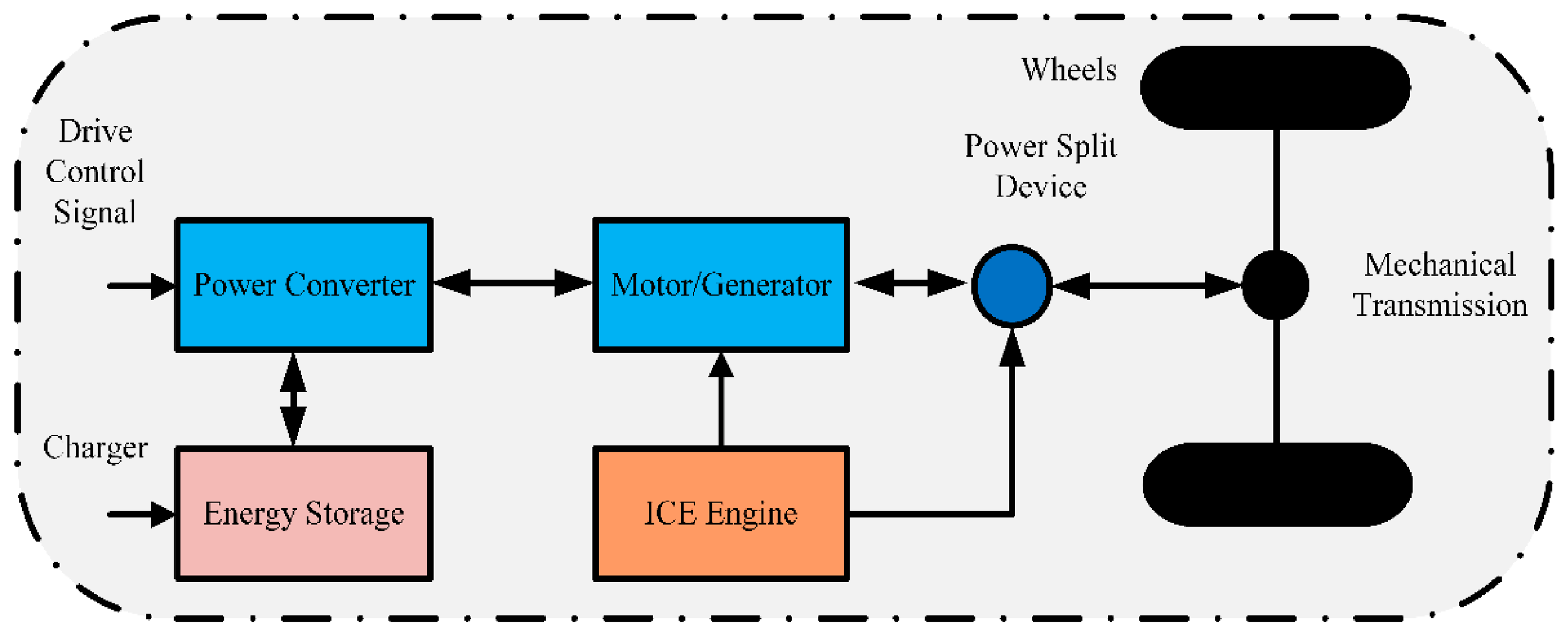
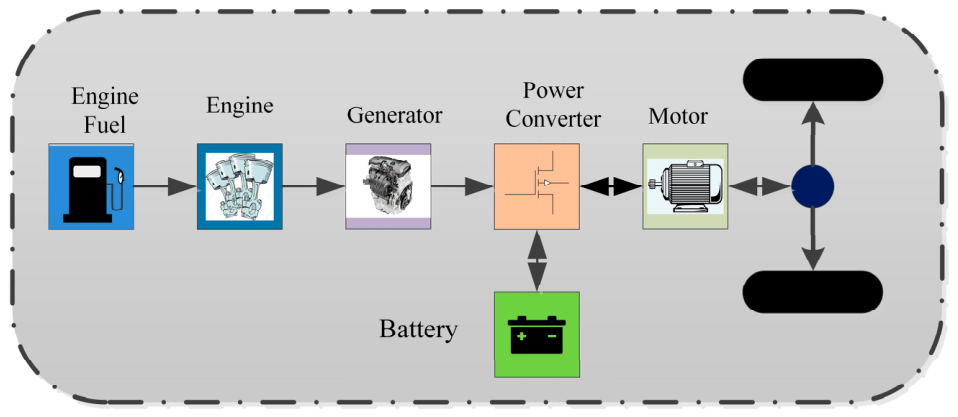
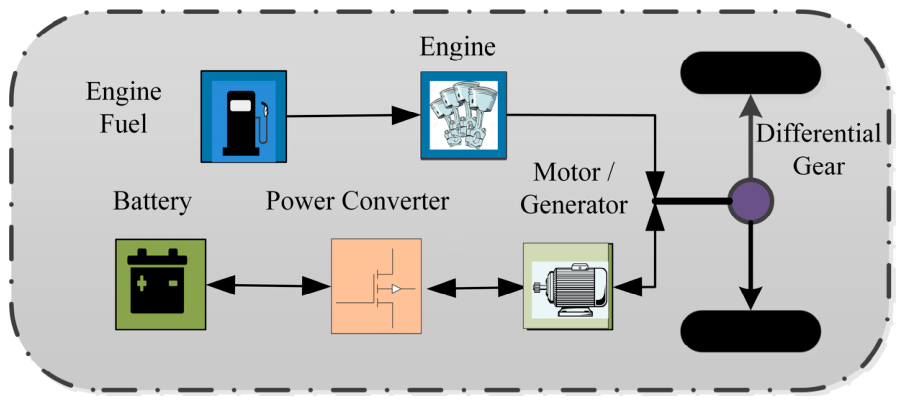
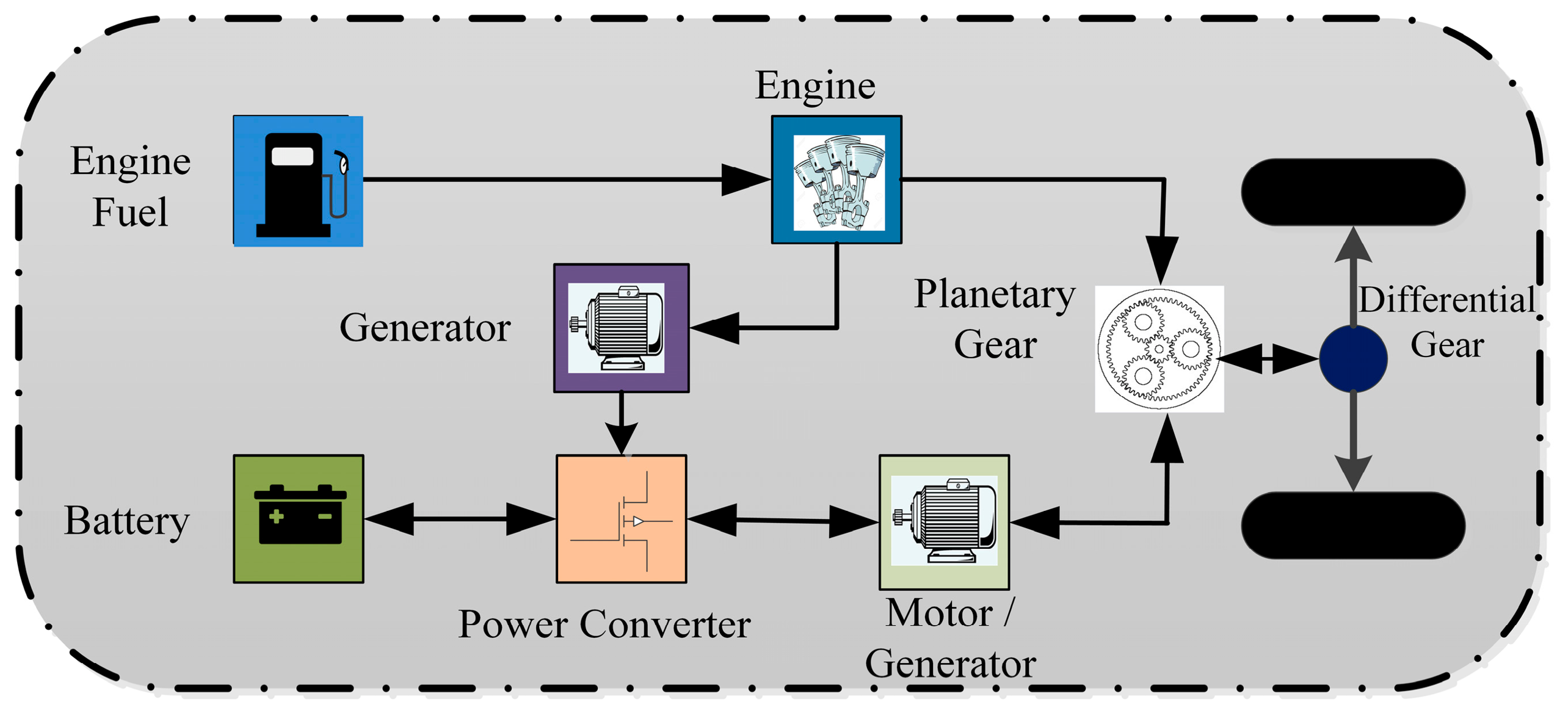
2.1.1. Series HEV Systems
2.1.2. Parallel HEV Systems
2.1.3. Series–Parallel (SP-HEV)
2.1.4. Plug-in HEV
2.2. Pure Electric Vehicle
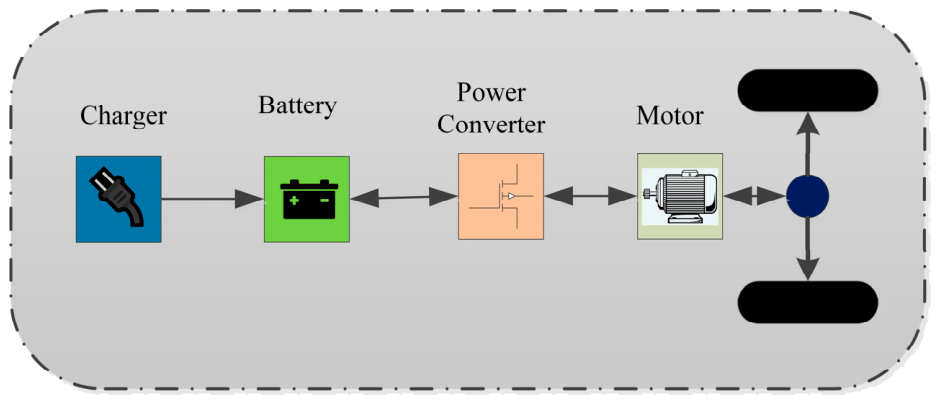
2.2.1. Battery Electric Vehicle
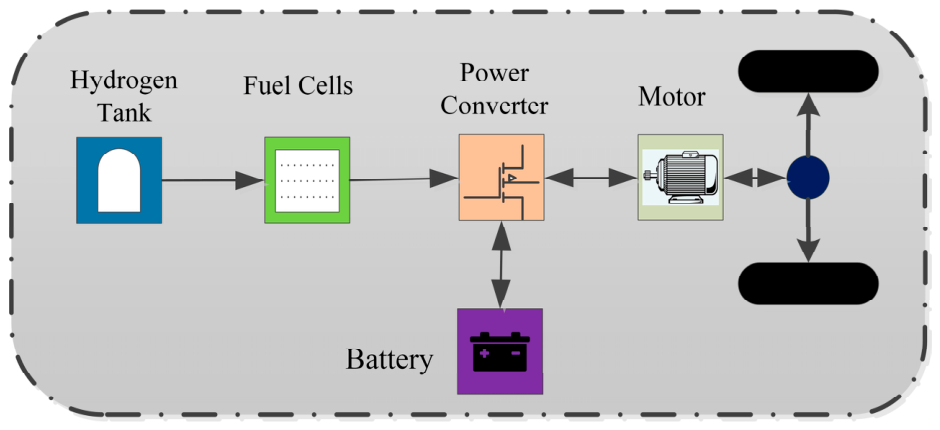
2.2.2. Fuel Cell Electric Vehicle
2.3. Batteries in Electric Vehicles
2.3.1. Role of Batteries in EV Powertrain
2.3.2. Battery Chemistries for EV Applications
- Lithium Nickel Manganese Cobalt Oxide (NMC): Offers a balanced combination of energy density, power capability, and durability, making it suitable for a wide range of EVs.
- Lithium Iron Phosphate (LFP): Characterized by superior thermal stability, enhanced safety, and longer cycle life, though with comparatively lower energy density.
- Lithium Nickel Cobalt Aluminum Oxide (NCA): Provides high specific energy and is commonly used in long-range EVs, albeit with stricter thermal management requirements.
2.3.3. Key Performance Metrics for EV Batteries
- Energy Density (Wh/kg): Directly influences driving range and vehicle weight.
- Power Density (W/kg): Determines acceleration capability and regenerative braking performance.
- Life Cycle: Reflects durability and long-term cost-effectiveness.
- Charging Rate Capability: Defines the feasibility of fast charging without excessive degradation.
- Thermal Stability: Ensures safe operation across varying environmental conditions.
- Cost ($/kWh): A key factor affecting commercial viability and large-scale adoption.
2.3.4. Challenges in EV Battery Technologies
- Performance Degradation: Battery aging mechanisms, including solid electrolyte interphase (SEI) growth, lithium plating, and electrode degradation, lead to capacity fade and increased internal resistance over time.
- Thermal Management: Maintaining uniform temperature distribution is critical for performance and safety. Non-uniform thermal profiles can accelerate degradation and increase the likelihood of thermal runaway.
- Safety Risks: Lithium-ion batteries are susceptible to thermal runaway under mechanical, electrical, or thermal abuse conditions, necessitating robust monitoring and fault mitigation strategies.
- Fast Charging Limitations: High charging rates can induce excessive heat generation and accelerate degradation, requiring optimized charging protocols.
- Material Constraints: The reliance on critical raw materials such as lithium, cobalt, and nickel introduces concerns related to cost, availability, and environmental impact.
- End-of-Life Management: Efficient recycling and second-life utilization remain essential for improving sustainability and reducing environmental burden [88].
2.3.5. Emerging Trends and Research Directions
3. Classification of Traction Motors
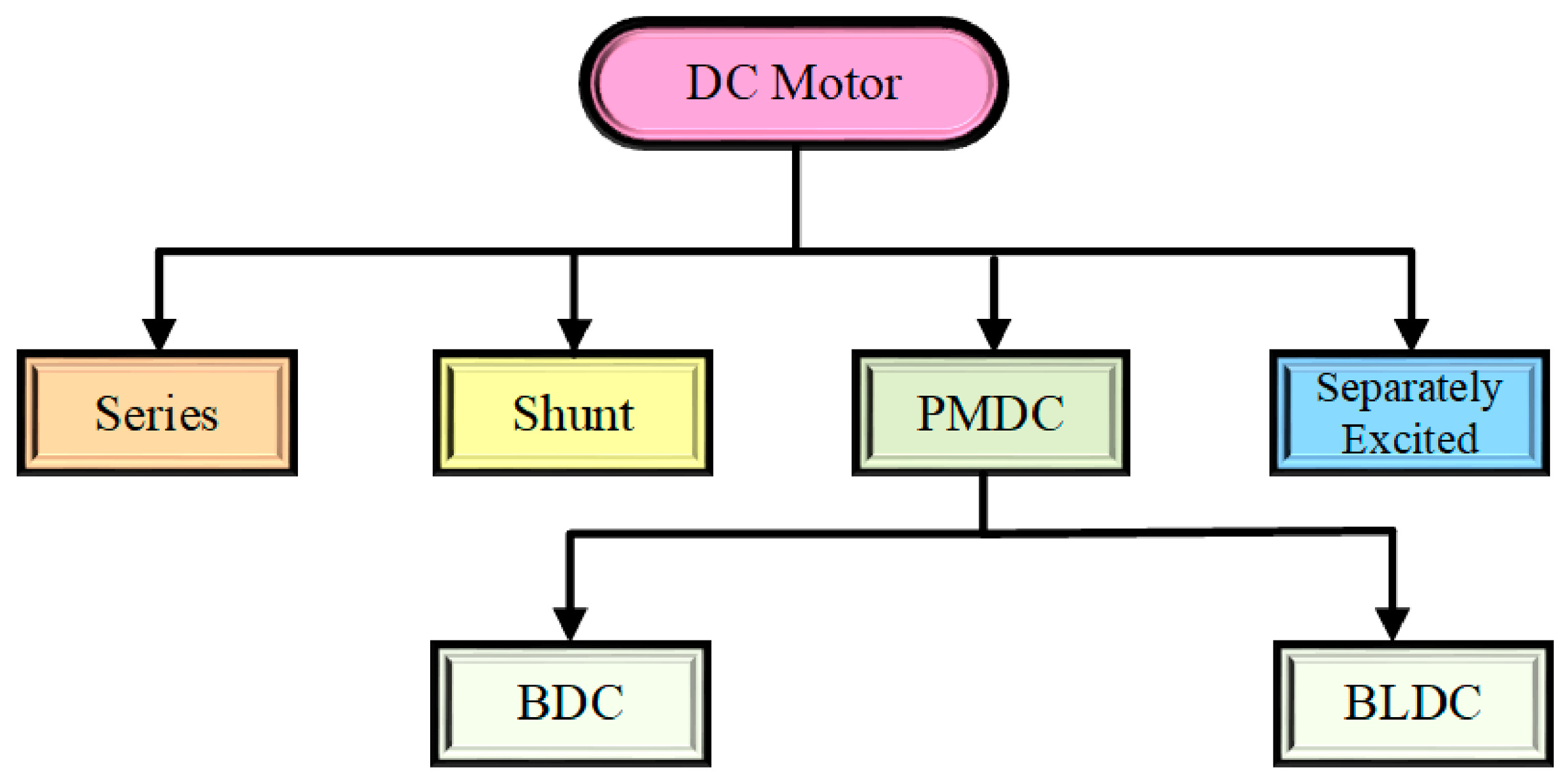
3.1. DC Motor
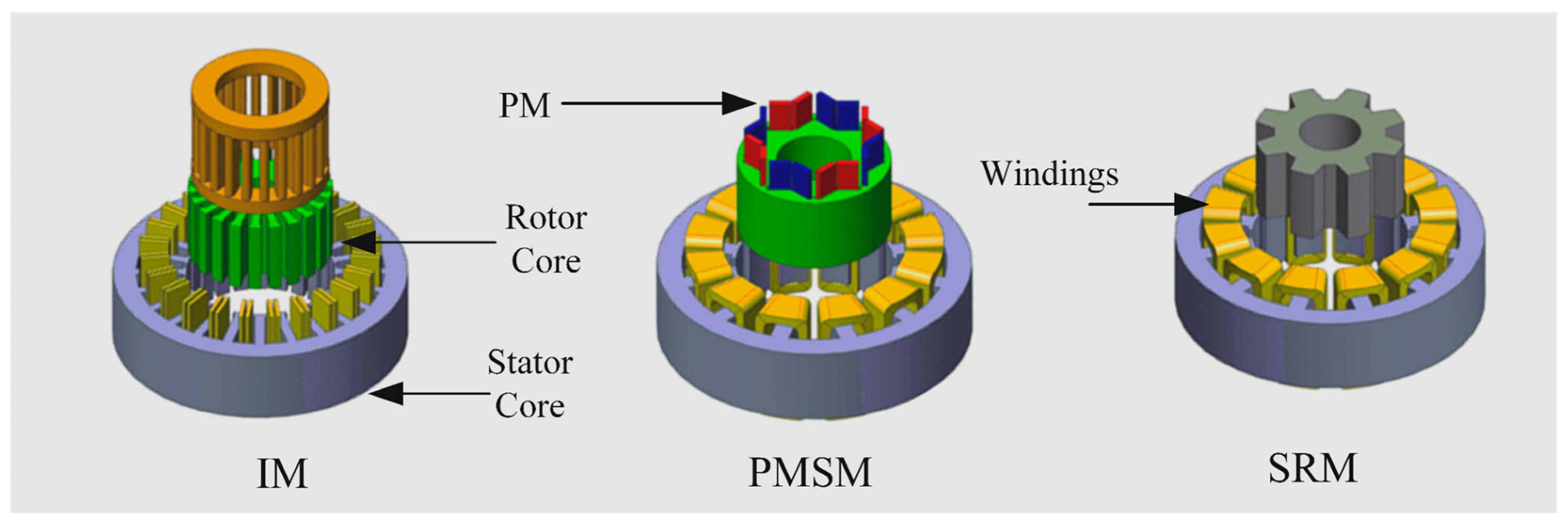
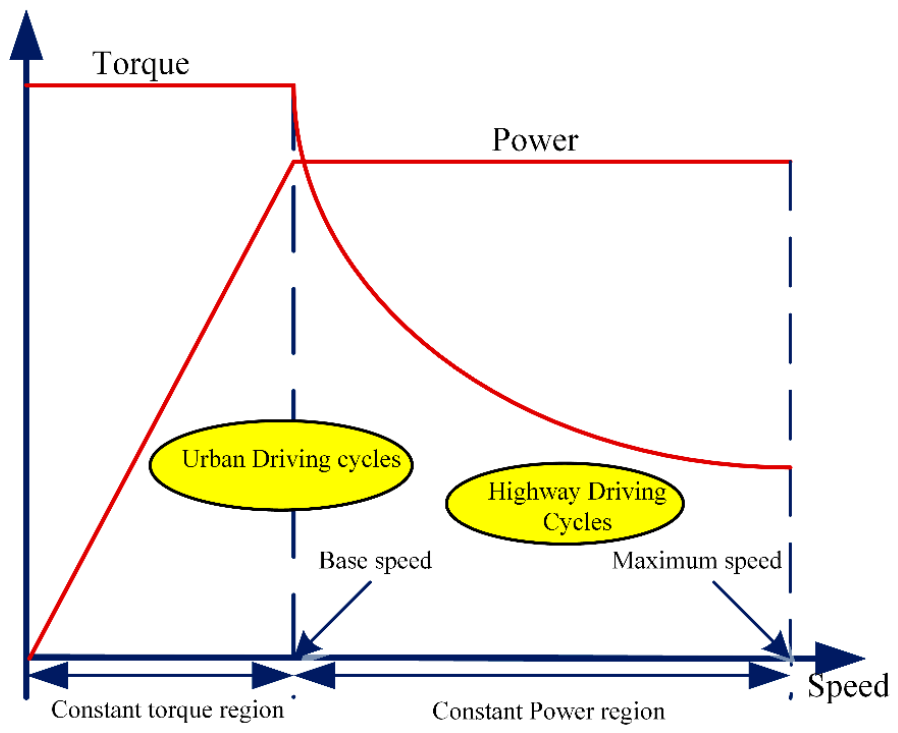
3.2. Induction Motor
3.3. PMSM
3.4. BLDC Motors
3.5. Switched Reluctance Motor (SRM)
3.6. Advanced Motor for EVs and HEVs
4. Control Techniques of Traction Motor
4.1. Scalar Control
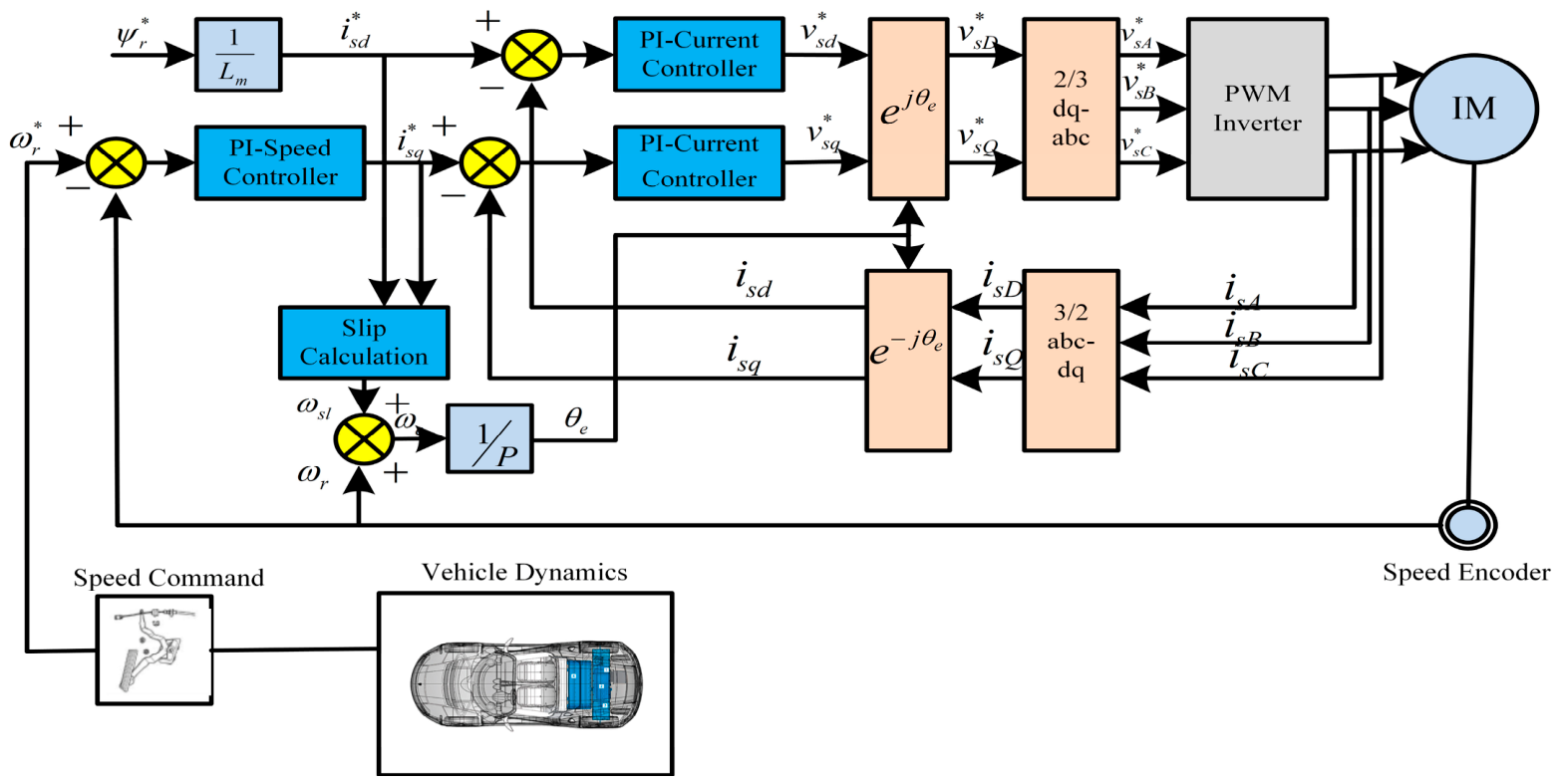
4.2. Vector Control
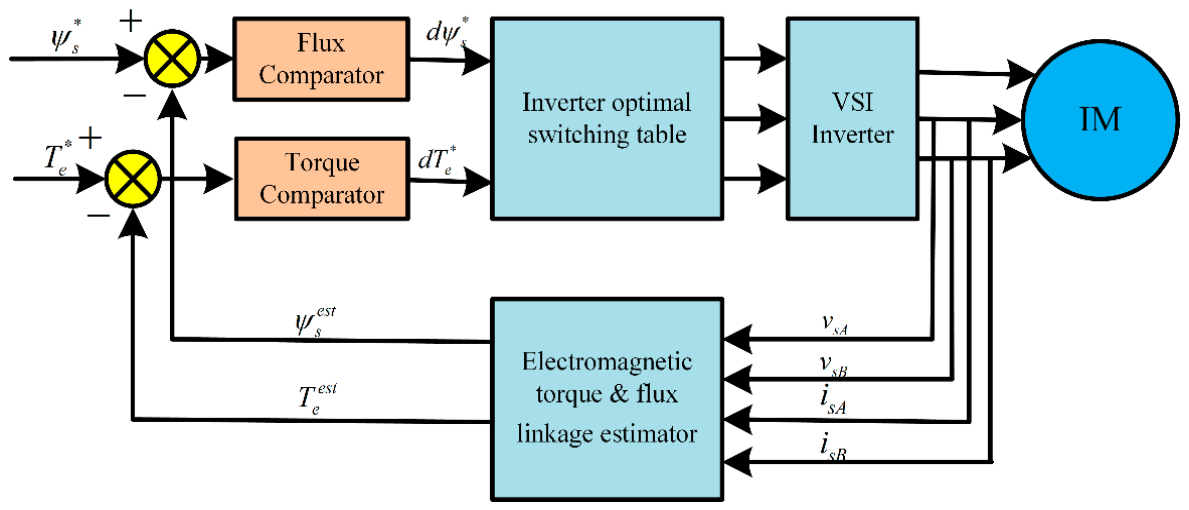
4.3. Direct Torque Control
5. Artificial Intelligence Controllers
5.1. MPC Controller
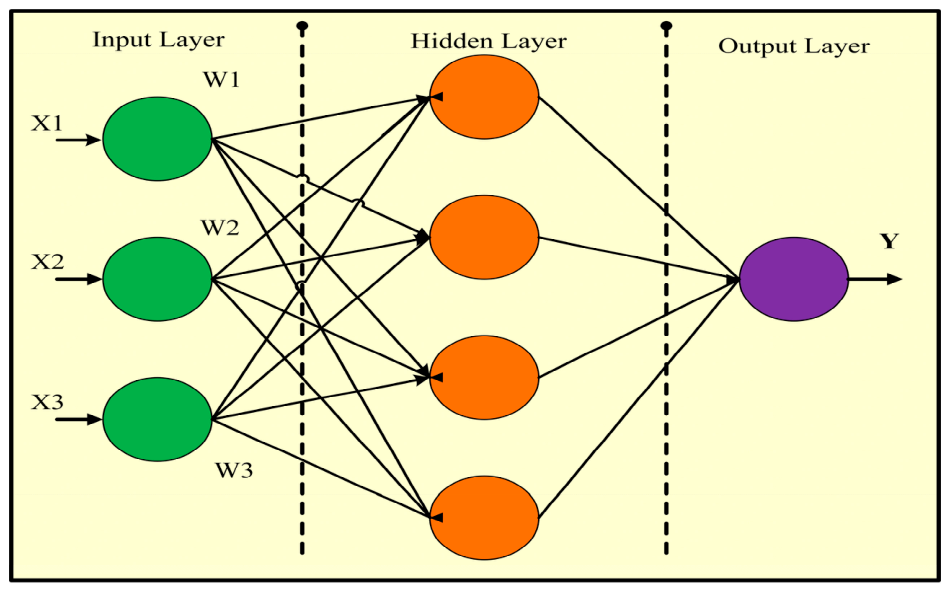
5.2. ANN Controller
5.3. ANFIS Controller
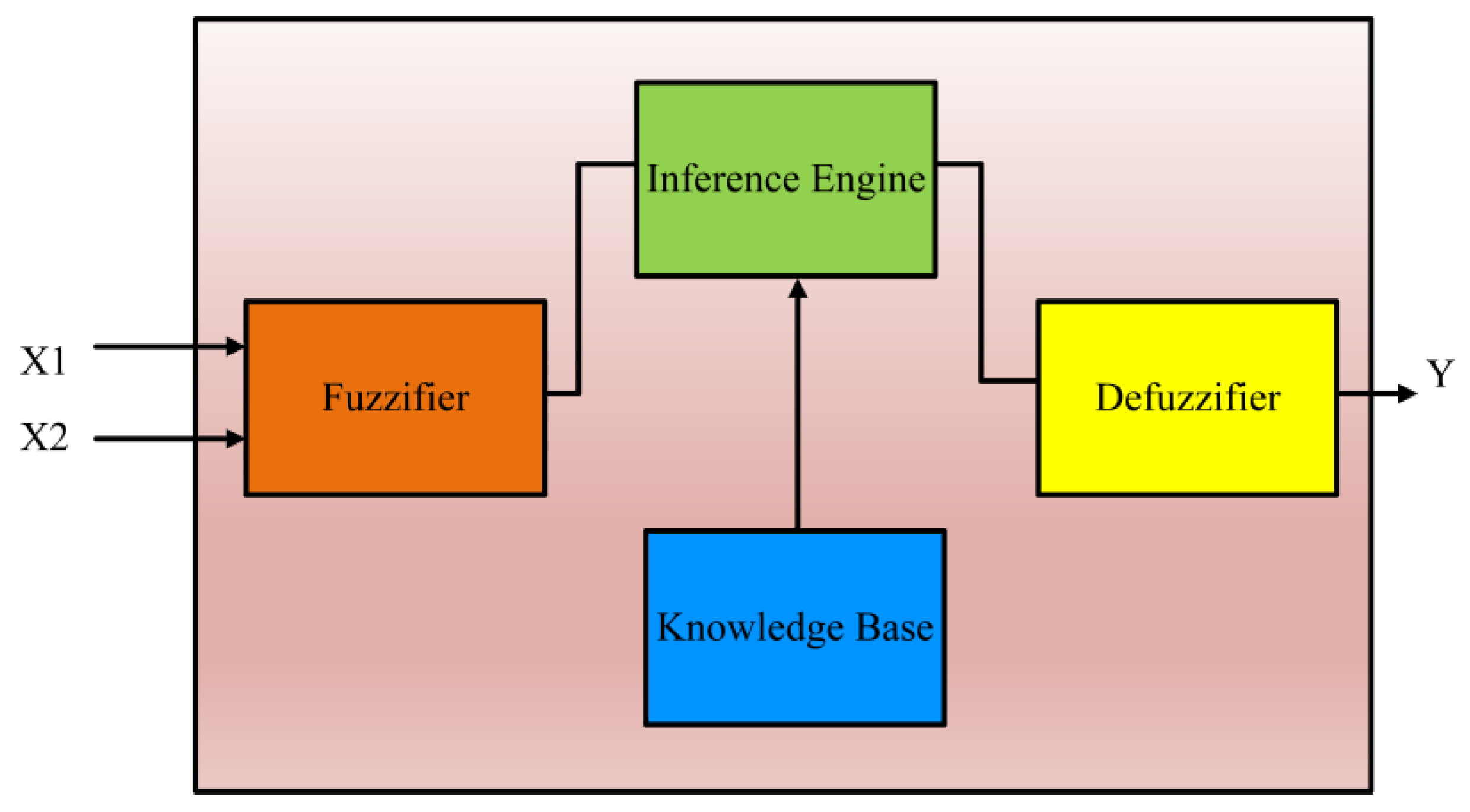
5.4. FLC
6. Present Challenges and Recommendations
6.1. EV and HEV Powertrain Architectures
6.1.1. Present Challenges
- High System production cost, weight optimization and complexity due to multi-source systems, such as engine, battery, power converters and generator integration, are still persistent issues.
- Limited energy density of current batteries results in restricted driving range and frequent recharging requirements.
- Limited battery capacity, cost-effective energy storage and charging infrastructure limitations remain key challenges for pure EVs.
- Energy management and packaging constraints in compact vehicle designs.
- Limited energy storage capability and inefficient energy management under highly dynamic driving conditions.
- Reliability and durability concerns in commercial fleets with high utilization rates.
6.1.2. Recommendations
- Development of an optimized lightweight design of modular and scalable architectures approach, which integrates renewable energy sources and is easier to implement both on light-duty and heavy-duty vehicles.
- Integration of advanced solid-state batteries, supercapacitors, and hybrid energy storage systems for improved driving range and lifecycle.
- Application of predictive energy management strategies using artificial intelligence.
- Enhanced energy management strategies using predictive and data-driven models can further optimize fuel economy and reduce emissions in hybrid power-split configurations.
- Research on power electronics with wide-bandgap semiconductors (SiC, GaN) to improve efficiency and reduce system losses.
6.2. Traction Motors
6.2.1. Present Challenges
- Dependence on rare-earth permanent magnets for PMSMs increases the overall system cost and supply chain vulnerability.
- IMs suffer from relatively high losses at low load and limited efficiency at high speeds.
- BLDC motors and SRMs offer potential alternatives but require further refinement in noise reduction, efficiency, and control mechanism complexity.
- Thermal limitations reduce lifespan and reliability in high-power applications.
- Packaging and weight constraints limit the adoption of large machines in compact EV design.
6.2.2. Recommendations
- Advancement and development of rare-earth-free designs such as SRMs and advanced induction motor topologies.
- Exploration of axial flux and transverse flux machines offering higher torque density and compact design.
- Improved cooling strategies, such as direct liquid cooling and advanced thermal interface materials, for better heat dissipation.
- Design of fault-tolerant motor architectures to ensure reliability in safety-critical applications.
- Optimization of multi-motor propulsion systems (e.g., in-wheel motors) for distributed drive and enhanced control flexibility.
- Integration of novel materials, additive manufacturing, and fault-tolerant designs is expected to play a key role
6.3. Motor Control Techniques
6.3.1. Present Challenges
- Conventional methods such as vector control and DTC are sensitive to parameter variations during operation and disturbances.
- Both aforementioned methods are employed for high-performance applications such as in EVs and HEVs, but suffer under dynamic and uncertain driving conditions, torque ripple and high efficiency across wide operating ranges.
- High computational demands in real-time control for nonlinear and multi-variable systems are required.
- Face challenges in ensuring robustness under variable driving conditions, limited robustness in handling motor faults, inverter faults, and grid interaction scenarios.
- Cybersecurity risks in intelligent and connected control systems are becoming increasingly important for safety and reliability in autonomous and connected EVs.
6.3.2. Recommendations
- Incorporation of artificial intelligence, machine learning, and adaptive control for predictive torque control, less computational burden and efficiency optimization.
- Development of self-tuning algorithms that can adjust controller parameters automatically under changing load and environmental conditions.
- Advanced sensor-less control techniques are also important to reduce hardware costs and improve reliability.
- Integration of fault-diagnosis and fault-tolerant control techniques for enhanced safety.
- Research into distributed and cooperative control strategies for multi-motor EV architectures.
- Enabling motor controllers to support vehicle-to-grid (V2G) operations, including bidirectional power flow and grid stabilization.
7. Conclusions
Author Contributions
Funding
Data Availability Statement
Conflicts of Interest
References
- Nordelöf, A.; Grunditz, E.; Lundmark, S.; Tillman, A.M.; Alatalo, M.; Thiringer, T. Life cycle assessment of permanent magnet electric traction motors. Transp. Res. D Transp. Environ. 2019, 67, 263–274. [Google Scholar] [CrossRef]
- Kumar, R.R.; Alok, K. Adoption of electric vehicle: A literature review and prospects for sustainability. J. Clean. Prod. 2020, 253, 119911. [Google Scholar] [CrossRef]
- Available online: https://iea.blob.core.windows.net/assets/ed5f4484-f556-4110-8c5c-4ede8bcba637/GlobalEVOutlook2021.pdf (accessed on 22 July 2022).
- Yong, J.Y.; Ramachandaramurthy, V.K.; Tan, K.M.; Mithulananthan, N. A review on the state-of-the-art technologies of electric vehicle, its impacts and prospects. Renew. Sustain. Energy Rev. 2015, 49, 365–385. [Google Scholar] [CrossRef]
- Richardson, D.B. Electric vehicles and the electric grid: A review of modeling approaches, Impacts, and renewable energy integration. Renew. Sustain. Energy Rev. 2013, 19, 247–254. [Google Scholar] [CrossRef]
- Patel. Fuel Economy Model 2022. 2022.
- Maroti, P.K.; Padmanaban, S.; Bhaskar, M.S.; Ramachandaramurthy, V.K.; Blaabjerg, F. The state-of-the-art of power electronics converters configurations in electric vehicle technologies. Power Electron. Devices Compon. 2022, 1, 100001. [Google Scholar] [CrossRef]
- Mei, J.; Zuo, Y.; Lee, C.H.T.; Kirtley, J.L. Modeling and Optimizing Method for Axial Flux Induction Motor of Electric Vehicles. IEEE Trans. Veh. Technol. 2020, 69, 12822–12831. [Google Scholar] [CrossRef]
- EV-Volumes-The Electric Vehicle World Sales Database. Available online: https://www.ev-volumes.com/country/total-world-plug-in-vehicle-volumes (accessed on 5 July 2023).
- Propfe, B.; Redelbach, M.; Santini, D.J.; Friedrich, H. Cost analysis of Plug-in Hybrid Electric Vehicles including Maitenance & Repair Costs and Resale Values. World Electr. Veh. J. 2012, 5, 886–895. [Google Scholar] [CrossRef]
- Electric Vehicle Sales Review Q2 2025 Foresight to Drive the Industry. 2025. Available online: https://www.pwc.com/hu/hu/kiadvanyok/assets/pdf/strategyand-electric-vehicle-sales-review-q2-2025.pdf (accessed on 12 October 2025).
- Graham, E. The EV Leapfrog-How Emerging Markets Are Driving a Global EV Boom. Ember. Available online: https://ember-energy.org/latest-insights/the-ev-leapfrog-how-emerging-markets-are-driving-a-global-ev-boom/ (accessed on 24 March 2026).
- Wimmer, H.; Neuhausen, J. “Electric Vehicle Sales Review Q4-2025|PwC and Strategy&,” January 2026. Available online: https://www.strategyand.pwc.com/de/en/industries/automotive/electric-vehicle-sales-review-q4-2025.html (accessed on 11 February 2026).
- ‘Despite Q4 Collapse, 2025 EV Sales Decline Only 2% Versus 2024; Policy Shifts, New Product Set Stage for Next Chapter-Cox Automotive Inc.’ Cox Automotive Inc. 13 January 2026. Available online: https://www.coxautoinc.com/insights-hub/q4-2025-ev-sales-report-commentary/ (accessed on 24 February 2026).
- Singh, K.V.; Bansal, H.O.; Singh, D. A Comprehensive Review on Hybrid Electric Vehicles: Architectures and Components; Springer: Berlin/Heidelberg, Germany, 2019. [Google Scholar] [CrossRef]
- Prasanthi, A.; Shareef, H.; Errouissi, R.; Asna, M.; Mohamed, A. Energy Conversion and Management: X Hybridization of battery and ultracapacitor for electric vehicle application with dynamic energy management and non-linear state feedback controller. Energy Convers. Manag. X 2022, 15, 100266. [Google Scholar] [CrossRef]
- Baskar, S.; Vijayan, V.; Premkumar, I.J.I.; Arunkumar, D.; Thamaran, D. Design and material characteristics of hybrid electric vehicle. Mater. Today Proc. 2020, 37, 351–353. [Google Scholar] [CrossRef]
- Mahmoud, M.; Garnett, R.; Ferguson, M.; Kanaroglou, P. Electric buses: A review of alternative powertrains. Renew. Sustain. Energy Rev. 2016, 62, 673–684. [Google Scholar] [CrossRef]
- Wang, N.; Tang, L.; Pan, H. A global comparison and assessment of incentive policy on electric vehicle promotion. Sustain. Cities Soc. 2019, 44, 597–603. [Google Scholar] [CrossRef]
- El, M.; Benbouzid, H.; Diallo, D.; Zeraoulia, M. Advanced Fault-Tolerant Control of Induction-Motor Drives for EV / HEV Traction Applications: From Conventional to Modern and Intelligent Control Techniques. IEEE Trans. Veh. Technol. 2007, 56, 519–528. [Google Scholar] [CrossRef]
- Cha, K.S.; Kim, D.M.; Jung, Y.H.; Lim, M.S. Wound field synchronous motor with hybrid circuit for neighborhood electric vehicle traction improving fuel economy. Appl. Energy 2020, 263, 114618. [Google Scholar] [CrossRef]
- Ehsani, M.; Gao, Y.; Miller, J.M. Hybrid electric vehicles: Architecture and motor drives. Proc. IEEE 2007, 95, 719–728. [Google Scholar] [CrossRef]
- Hannan, M.A.; Azidin, F.A.; Mohamed, A. Hybrid electric vehicles and their challenges: A review. Renew. Sustain. Energy Rev. 2014, 29, 135–150. [Google Scholar] [CrossRef]
- Salman, W.; Zhang, X.; Li, H.; Wu, X.; Li, N.; Azam, A.; Zhang, Z. A novel energy regenerative shock absorber for in-wheel motors in electric vehicles. Mech. Syst. Signal Process. 2022, 181, 109488. [Google Scholar] [CrossRef]
- Tie, S.F.; Wei, C. A review of energy sources and energy management system in electric vehicles. Renew. Sustain. Energy Rev. 2013, 20, 82–102. [Google Scholar] [CrossRef]
- Cuma, M.U.; Koroglu, T. A comprehensive review on estimation strategies used in hybrid and battery electric vehicles. Renew. Sustain. Energy Rev. 2015, 42, 517–531. [Google Scholar] [CrossRef]
- Sabri, M.F.M.; Danapalasingam, K.A.; Rahmat, M.F. A review on hybrid electric vehicles architecture and energy management strategies. Renew. Sustain. Energy Rev. 2016, 53, 1433–1442. [Google Scholar] [CrossRef]
- Wang, J.; Wang, F.; Wang, G. Based Robust Finite Control Set Predictive Current Control for Induction Motor Systems with Time-Varying Disturbances. IEEE Trans. Ind. Inform. 2018, 14, 4159–4168. [Google Scholar] [CrossRef]
- Podder, A.K.; Chakraborty, O.; Member, S. Control Strategies of Different Hybrid Energy Storage Systems for Electric Vehicles Applications. IEEE Access 2021, 9, 51865–51895. [Google Scholar] [CrossRef]
- Lv, Z.; Member, S.; Qiao, L.; Member, G.S.; Cai, K.; Wang, Q. Big Data Analysis Technology for Electric Vehicle Networks in Smart Cities. IEEE Trans. Intell. Transp. Syst. 2021, 22, 1807–1816. [Google Scholar] [CrossRef]
- Akhtar, M.A.; Saha, S. Positive Current Reference Generation based Current Control Technique for BLDC Motor Drives Applications. In Proceedings of the 2019 5th International Conference on Advanced Computing and Communication Systems, ICACCS 2019; IEEE: Piscataway, NJ, USA, 2019. [Google Scholar] [CrossRef]
- Barroso, D.G.; Yang, Y.; Member, S.; Emadi, A. Electrified Automotive Propulsion Systems: State-of-the-Art Review. IEEE Trans. Transp. Electrif. 2022, 8, 2898–2914. [Google Scholar] [CrossRef]
- Gao, B.; Liang, Q.; Xiang, Y.; Guo, L.; Chen, H. Gear ratio optimization and shift control of 2-speed I-AMT in electric vehicle. Mech. Syst. Signal Process. 2015, 50–51, 615–631. [Google Scholar] [CrossRef]
- Emadi, A.; Lee, Y.J.; Rajashekara, K. Power electronics and motor drives in electric, hybrid electric, and plug-in hybrid electric vehicles. IEEE Trans. Ind. Electron. 2008, 55, 2237–2245. [Google Scholar] [CrossRef]
- Altun, Y.E.; Kutlar, O.A. Energy Management Systems’ Modeling and Optimization in Hybrid Electric Vehicles. Energies 2024, 17, 1696. [Google Scholar] [CrossRef]
- Chen, S.Y.; Wu, C.H.; Hung, Y.H.; Chung, C.T. Optimal strategies of energy management integrated with transmission control for a hybrid electric vehicle using dynamic particle swarm optimization. Energy 2018, 160, 154–170. [Google Scholar] [CrossRef]
- Hu, X.; Member, S.; Han, J.; Tang, X.; Lin, X. Powertrain Design and Control in Electrified Vehicles: A Critical Review. IEEE Transp. Electrif. 2021, 7, 1990–2009. [Google Scholar] [CrossRef]
- Munir, M.F.; Ahmad, I.; Siffat, S.A.; Qureshi, M.A.; Armghan, H.; Ali, N. Non-linear control for electric power stage of fuel cell vehicles. ISA Trans. 2020, 102, 117–134. [Google Scholar] [CrossRef]
- Saponara, S.; Lee, C.H.T.; Wang, N.X.; Kirtley, J.L. Electric Drives and Power Chargers: Recent Solutions to Improve Performance and Energy Efficiency for Hybrid and Fully Electric Vehicles. IEEE Veh. Technol. Mag. 2020, 15, 73–83. [Google Scholar] [CrossRef]
- Williamson, S.S.; Emadi, A.; Rajashekara, K. Comprehensive Efficiency Modeling of Electric Traction Motor Drives for Hybrid Electric Vehicle Propulsion Applications. IEEE Trans. Veh. Technol. 2007, 56, 1561–1572. [Google Scholar] [CrossRef]
- Ezugwu, E.O.; Bhattacharya, I.; Ayomide, A.I.; Dhason, M.V.A.; Soyoye, B.D.; Banik, T. Powertrain in Battery Electric Vehicles (BEVs): Comprehensive Review of Current Technologies and Future Trends Among Automakers. World Electr. Veh. J. 2025, 16, 573. [Google Scholar] [CrossRef]
- Kim, D.M.; Lee, S.G.; Kim, D.K.; Park, M.R.; Lim, M.S. Sizing and optimization process of hybrid electric propulsion system for heavy-duty vehicle based on Gaussian process modeling considering traction motor characteristics. Renew. Sustain. Energy Rev. 2022, 161, 112286. [Google Scholar] [CrossRef]
- Rind, S.J.; Ren, Y.; Hu, Y.; Wang, J.; Jiang, L. Configurations and Control of Traction Motors for Electric Vehicles: A Review. Chin. J. Electr. Eng. 2017, 3, 1–17. [Google Scholar] [CrossRef]
- Mohammad, S.F.; Bakhsh, F.I.; Ibrahim, M.; Mumtaz, N.; Hameed, S. Detailed modelling and performance analysis of power flow topology in a hybrid electric vehicle having series-parallel architecture. Renew. Energy Focus 2024, 49, 100579. [Google Scholar] [CrossRef]
- Qin, Y.; Tang, X.; Jia, T.; Duan, Z.; Zhang, J.; Li, Y.; Zheng, L. Noise and vibration suppression in hybrid electric vehicles: State of the art and challenges. Renew. Sustain. Energy Rev. 2020, 124, 109782. [Google Scholar] [CrossRef]
- Moutafidis, I. Architecture and Impacts of Electric Vehicles Architecture and Impacts of Electric Vehicles; International Hellenic University: Thessaloniki, Greece, 2011. [Google Scholar]
- Ieee, L.F.; Ieee, S.M.; Ieee, M. State of the Art and Trends in Electric and Hybrid Electric Vehicles. Proc. IEEE 2021, 109, 967–984. [Google Scholar] [CrossRef]
- López, I.; Ibarra, E.; Matallana, A.; Andreu, J.; Kortabarria, I. Next generation electric drives for HEV/EV propulsion systems: Technology, trends and challenges. Renew. Sustain. Energy Rev. 2019, 114, 109336. [Google Scholar] [CrossRef]
- El-refaie, A.; Osama, M. High Specific Power Electrical Machines: A System Perspective. CES Trans. Electr. Mach. Syst. 2019, 3, 88–93. [Google Scholar] [CrossRef]
- Types of Hybrid Electric Vehicles (HEV)–X-Engineer.org. Available online: https://x-engineer.org/types-hybrid-electric-vehicles-hev/ (accessed on 5 December 2025).
- Vehicles, P.P.H.E.; Liu, T.; Hu, X.; Member, S.; Hu, W.; Member, S. A Heuristic Planning Reinforcement Learning-Based Energy Management for Power-Split Plug-in Hybrid Electric Vehicles. IEEE Trans. Ind. Inform. 2019, 15, 6436–6445. [Google Scholar] [CrossRef]
- Wirasingha, S.G.; Emadi, A. Classification and review of control strategies for plug-in hybrid electric vehicles. IEEE Trans. Veh. Technol. 2011, 60, 111–122. [Google Scholar] [CrossRef]
- Abdelkareem, M.A.; Maghrabie, H.M.; Abo-Khalil, A.G.; Adhari, O.H.K.; Sayed, E.T.; Radwan, A.; Rezk, H.; Jouhara, H.; Olabi, A. Thermal management systems based on heat pipes for batteries in EVs/HEVs. J. Energy Storage 2022, 51, 104384. [Google Scholar] [CrossRef]
- Wirasingha, S.G.; Gremban, R.; Emadi, A.; Member, S. Source-to-Wheel (STW) Analysis of Plug-in Hybrid Electric Vehicles. IEEE Transection Smart Grid 2012, 3, 316–331. [Google Scholar] [CrossRef]
- Al-Sahlawi, A.A.K.; Ayob, S.M.; Tan, C.W.; Ridha, H.M.; Hachim, D.M. Optimal Design of Grid-Connected Hybrid Renewable Energy System Considering Electric Vehicle Station Using Improved Multi-Objective Optimization: Techno-Economic Perspectives. Sustainability 2024, 16, 2491. [Google Scholar] [CrossRef]
- Malozyomov, B.V.; Martyushev, N.V.; Kukartsev, V.V.; Konyukhov, V.Y.; Oparina, T.A.; Sevryugina, N.S.; Gozbenko, V.E.; Kondratiev, V.V. Determination of the Performance Characteristics of a Traction Battery in an Electric Vehicle. World Electr. Veh. J. 2024, 15, 64. [Google Scholar] [CrossRef]
- Mwasilu, F.; Justo, J.J.; Kim, E.K.; Do, T.D.; Jung, J.W. Electric vehicles and smart grid interaction: A review on vehicle to grid and renewable energy sources integration. Renew. Sustain. Energy Rev. 2014, 34, 501–516. [Google Scholar] [CrossRef]
- Manzetti, S.; Mariasiu, F. Electric vehicle battery technologies: From present state to future systems. Renew. Sustain. Energy Rev. 2015, 51, 1004–1012. [Google Scholar] [CrossRef]
- He, H.; Han, M.; Liu, W.; Cao, J.; Shi, M.; Zhou, N. MPC-based longitudinal control strategy considering energy consumption for a dual-motor electric vehicle. Energy 2022, 253, 124004. [Google Scholar] [CrossRef]
- Zhang, Y.; Ai, Z.; Chen, J. Energy-Saving Optimization and Control of Autonomous Electric Vehicles with Considering Multiconstraints. IEEE Transection Cybern. 2021, 52, 10869–10881. [Google Scholar] [CrossRef]
- Types of Electric Vehicles: BEVs, PHEVs, HEVs-What’s the Difference? Available online: https://www.evgo.com/ev-drivers/types-of-evs/#bevs (accessed on 22 October 2024).
- ‘Global Electric Vehicle Market Share Quarterly’. 8 December 2025. Available online: https://counterpointresearch.com/en/insights/global-electric-vehicle-market-share-quarterly (accessed on 11 February 2026).
- Fathabadi, H. Novel fuel cell/battery/supercapacitor hybrid power source for fuel cell hybrid electric vehicles. Energy 2018, 143, 467–477. [Google Scholar] [CrossRef]
- Liu, L.; Kong, F.; Liu, X.; Peng, Y.; Wang, Q. A review on electric vehicles interacting with renewable energy in smart grid. Renew. Sustain. Energy Rev. 2015, 51, 648–661. [Google Scholar] [CrossRef]
- Sachs, C.; Neuburger, M. A data-based review of battery electric vehicle and traction inverter trends. In Proceedings of the IECON 2025–51st Annual Conference of the IEEE Industrial Electronics Society; IEEE: Piscataway, NJ, USA, 2025; pp. 1–8. [Google Scholar]
- Mousavi, M.H.; Moradi, H.; Rouzbehi, K. Transition of DC Link Voltage from 400V to 800V in Electric Vehicles: Performance, Trade-Offs, and Technical Insights. In Proceedings of the 2025 10th International Conference on Technology and Energy Management (ICTEM); IEEE: Piscataway, NJ, USA, 2025; pp. 1–7. [Google Scholar] [CrossRef]
- Manoj, V.; Pilla, R.; Sura, S.R. A Comprehensive Analysis of Power Converter Topologies and Control Methods for Extremely Fast Charging of Electric Vehicles. J. Phys. Conf. Ser. 2023, 2570, 012017. [Google Scholar] [CrossRef]
- Safayatullah, M.; Elrais, M.T.; Ghosh, S.; Rezaii, R.; Batarseh, I. A Comprehensive Review of Power Converter Topologies and Control Methods for Electric Vehicle Fast Charging Applications. IEEE Access 2022, 10, 40753–40793. [Google Scholar] [CrossRef]
- Li, Y.; Yang, J.; Song, J. Design principles and energy system scale analysis technologies of new lithium-ion and aluminum-ion batteries for sustainable energy electric vehicles. Renew. Sustain. Energy Rev. 2017, 71, 645–651. [Google Scholar] [CrossRef]
- Poullikkas, A. Sustainable options for electric vehicle technologies. Renew. Sustain. Energy Rev. 2015, 41, 1277–1287. [Google Scholar] [CrossRef]
- Fathabadi, H. Combining a proton exchange membrane fuel cell (PEMFC) stack with a Li-ion battery to supply the power needs of a hybrid electric vehicle. Renew. Energy 2019, 130, 714–724. [Google Scholar] [CrossRef]
- Kumar, L.; Jain, S. Electric propulsion system for electric vehicular technology: A review. Renew. Sustain. Energy Rev. 2014, 29, 924–940. [Google Scholar] [CrossRef]
- Pan, G.; Bai, Y.; Song, H.; Qu, Y.; Wang, Y.; Wang, X. Hydrogen Fuel Cell Power System—Development Perspectives for Hybrid Topologies. Energies 2023, 16, 2680. [Google Scholar] [CrossRef]
- Hames, Y.; Kaya, K.; Baltacioglu, E.; Turksoy, A. Analysis of the control strategies for fuel saving in the hydrogen fuel cell vehicles. Int. J. Hydrog. Energy 2018, 43, 10810–10821. [Google Scholar] [CrossRef]
- Lukic, S.M.; Member, S. Topological Overview of Hybrid Electric and Fuel Cell Vehicular Power System Architectures and Configurations. IEEE Trans. Veh. Technol. 2005, 54, 763–770. [Google Scholar] [CrossRef]
- Ihm, J.; Amghar, B.; Chun, S.; Park, H. Optimum Design of an Electric Vehicle Charging Station Using a Renewable Power Generation System in South Korea. Sustainability 2023, 15, 9931. [Google Scholar] [CrossRef]
- Qayyum, N.; Khan, L.; Wahab, M.; Mumtaz, S.; Ali, N.; Khan, B.S. Fractional-Order Swarming Intelligence Heuristics for Nonlinear Sliding-Mode Control System Design in Fuel Cell Hybrid Electric Vehicles. World Electr. Veh. J. 2025, 16, 351. [Google Scholar] [CrossRef]
- Cha, K.S.; Jung, Y.H.; Park, S.H.; Park, M.R. Optimal Design Considering AC Copper Loss of Traction Motor Applied HSFF Coil for Improving Electric Bus Fuel Economy. Mathematics 2025, 13, 1509. [Google Scholar] [CrossRef]
- Zhang, Y.; Huang, X.; Liu, J.; Zhuge, C. The potential uptake and climate impacts of Hydrogen-Fuel-Cell vehicles in Beijing. Transp. Res. D Transp. Environ. 2026, 154, 105253. [Google Scholar] [CrossRef]
- Chan, C.C. The State of the Art of Electric and Hybrid Vehicles; IEEE: Piscataway, NJ, USA, 2002; Volume 90, pp. 245–246. [Google Scholar]
- Armenta-Déu, C. Improving Sustainability in Urban and Road Transportation: Dual Battery Block and Fuel Cell Hybrid Power System for Electric Vehicles. Sustainability 2024, 16, 2110. [Google Scholar] [CrossRef]
- Lee, C.H.T.; Member, S.; Hua, W.E.I.; Member, S. A Critical Review of Emerging Technologies for Electric and Hybrid Vehicles. IEEE Open J. Veh. Technol. 2022, 2, 471–485. [Google Scholar] [CrossRef]
- Yuvaraj, T.; Suresh, T.D.; Christy, A.A.; Babu, T.S.; Nastasi, B. Modelling and Allocation of Hydrogen-Fuel-Cell-Based Distributed Generation to Mitigate Electric Vehicle Charging Station Impact and Reliability Analysis on Electrical Distribution Systems. Energies 2023, 16, 6869. [Google Scholar] [CrossRef]
- Enescu, F.M.; Birleanu, F.G.; Raboaca, M.S.; Raceanu, M.; Bizon, N.; Thounthong, P. Electric Vehicle Charging Station Based on Photovoltaic Energy with or without the Support of a Fuel Cell–Electrolyzer Unit. Energies 2023, 16, 762. [Google Scholar] [CrossRef]
- Bashir, H.; Yaqoob, A.; Jawaid, I.; Khalid, W.; Javed, M.Y.; Sultan, W. A Review of Battery Management System and Modern State Estimation Approaches in Lithiumion Batteries for Electric Vehicle. In Proceedings of the 2022 5th International Conference on Energy Conservation and Efficiency, ICECE 2022-Proceedings; Institute of Electrical and Electronics Engineers Inc.: Piscataway, NJ, USA, 2022. [Google Scholar] [CrossRef]
- Dannier, A.; Brando, G.; Ribera, M.; Spina, I. Li-Ion Batteries for Electric Vehicle Applications: An Overview of Accurate State of Charge/State of Health Estimation Methods. Energies 2025, 18, 786. [Google Scholar] [CrossRef]
- Suganya, R.; Joseph, L.M.I.L.; Kollem, S. Understanding lithium-ion battery management systems in electric vehicles: Environmental and health impacts, comparative study, and future trends: A review. Results Eng. 2024, 24, 103047. [Google Scholar] [CrossRef]
- Ali, M.U.; Zafar, A.; Nengroo, S.H.; Hussain, S.; Alvi, M.J.; Kim, H.J. Towards a smarter battery management system for electric vehicle applications: A critical review of lithium-ion battery state of charge estimation. Energies 2019, 12, 446. [Google Scholar] [CrossRef]
- Aruchamy, K.; Ramasundaram, S.; Divya, S.; Chandran, M.; Yun, K.; Oh, T.H. Gel Polymer Electrolytes: Advancing Solid-State Batteries for High-Performance Applications. Gels 2023, 9, 585. [Google Scholar] [CrossRef]
- Sang, V.T.D.; Duong, Q.H.; Zhou, L.; Arranz, C.F.A. Electric Vehicle Battery Technologies and Capacity Prediction: A Comprehensive Literature Review of Trends and Influencing Factors. Batteries 2024, 10, 451. [Google Scholar] [CrossRef]
- Wang, Z.; Zhou, J.; Rizzoni, G. A review of architectures and control strategies of dual-motor coupling powertrain systems for battery electric vehicles. Renew. Sustain. Energy Rev. 2022, 162, 112455. [Google Scholar] [CrossRef]
- Zhu, Z.Q.; Howe, D. Electrical machines and drives for electric, hybrid, and fuel cell vehicles. Proc. IEEE 2007, 95, 746–765. [Google Scholar] [CrossRef]
- de Santiago, J.; Bernhoff, H.; Ekergård, B.; Eriksson, S.; Ferhatovic, S.; Waters, R.; Leijon, M. Electrical motor drivelines in commercial all-electric vehicles: A review. IEEE Trans. Veh. Technol. 2012, 61, 475–484. [Google Scholar] [CrossRef]
- Saidur, R.; Mekhilef, S.; Ali, M.B.; Safari, A.; Mohammed, H.A. Applications of variable speed drive (VSD) in electrical motors energy savings. Renew. Sustain. Energy Rev. 2012, 16, 543–550. [Google Scholar] [CrossRef]
- Wang, H.; Yang, Y.; Chen, D.; Ge, X.; Li, S.; Zuo, Y. Speed-Sensorless Control of Induction Motors with an Open-Loop Synchronization Method. IEEE J. Emerg. Sel. Top. Power Electron. 2022, 10, 1963–1977. [Google Scholar] [CrossRef]
- Mir, T.N.; Member, S.; Singh, B.; Bhat, A.H. FS-MPC-Based Speed Sensorless Control of Matrix Converter Fed Induction Motor Drive with. IEEE Trans. Ind. Electron. 2021, 68, 9185–9195. [Google Scholar] [CrossRef]
- Zeraoulia, M.; Benbouzid, M.E.H.; Diallo, D. Electric motor drive selection issues for HEV propulsion systems: A comparative study. IEEE Trans. Veh. Technol. 2006, 55, 1756–1764. [Google Scholar] [CrossRef]
- Salem, A.; Narimani, M. A Review on Multiphase Drives for Automotive Traction Applications. IEEE Trans. Transp. Electrif. 2019, 5, 1329–1348. [Google Scholar] [CrossRef]
- Ding, X.; Wang, Z.; Zhang, L.; Wang, C. Longitudinal Vehicle Speed Estimation for Four-Wheel-Independently-Actuated Electric Vehicles Based on Multi-Sensor Fusion. IEEE Trans. Veh. Technol. 2020, 69, 12797–12806. [Google Scholar] [CrossRef]
- Odhano, S.A.; Pescetto, P.; Awan, H.A.A.; Hinkkanen, M.; Pellegrino, G.; Bojoi, R. Parameter Identification and Self-Commissioning in AC Motor Drives: A Technology Status Review. IEEE Trans. Power Electron. 2019, 34, 3603–3614. [Google Scholar] [CrossRef]
- Kodkin, V.; Anikin, A.; Baldenkov, A. Optimization of Traction Electric Drive with Frequency Control. World Electr. Veh. J. 2025, 16, 139. [Google Scholar] [CrossRef]
- Kano, Y.; Matsui, N. Rotor Geometry Design of Saliency-Based Sensorless Controlled Distributed-Winding IPMSM for Hybrid Electric Vehicles. IEEE Trans. Ind. Appl. 2018, 54, 2336–2348. [Google Scholar] [CrossRef]
- Pellegrino, G.; Vagati, A.; Boazzo, B.; Guglielmi, P. Comparison of Induction and PM Synchronous Motor Drives for EV Application Including Design Examples. IEEE Trans. Ind. Appl. 2012, 48, 2322–2332. [Google Scholar] [CrossRef]
- Sun, X.; Member, S.; Zhang, Y.; Tian, X.; Cao, J. Speed Sensorless Control for IPMSMs Using a Modified MRAS with Gray Wolf Optimization Algorithm. IEEE Trans. Transp. Electrif. 2022, 8, 1326–1337. [Google Scholar] [CrossRef]
- Ding, X.; Guo, H.; Xiong, R.; Chen, F.; Zhang, D.; Gerada, C. A new strategy of efficiency enhancement for traction systems in electric vehicles. Appl. Energy 2017, 205, 880–891. [Google Scholar] [CrossRef]
- Widmer, J.D.; Martin, R.; Kimiabeigi, M. Electric vehicle traction motors without rare earth magnets. Sustain. Mater. Technol. 2015, 3, 7–13. [Google Scholar] [CrossRef]
- Sawma, J.; Seferian, V.; Khatounian, F.; Monmasson, E.; Ghosn, R. An improved anti-rollback control algorithm for gearless traction motor in elevator applications. Mechatronics 2021, 79, 102659. [Google Scholar] [CrossRef]
- Kommuri, S.K.; Defoort, M.; Karimi, H.R.; Veluvolu, K.C. A Robust Observer-Based Sensor Fault-Tolerant Control for PMSM in Electric Vehicles. IEEE Trans. Ind. Electron. 2016, 63, 7671–7681. [Google Scholar] [CrossRef]
- Popsi, N.R.S.; Anik, A.; Verma, R.; Viana, C.; Iyer, K.L.V.; Kar, N.C. Influence of Electric Motor Manufacturing Tolerances on End-of-Line Testing: A Review. Multidiscip. Digit. Publ. Inst. 2024, 17, 1913. [Google Scholar] [CrossRef]
- Sun, X.; Cao, J.; Lei, G.; Guo, Y.; Zhu, J. Speed Sensorless Control for Permanent Magnet Synchronous Motors Based on. IEEE Trans. Ind. Electron. 2020, 67, 6089–6100. [Google Scholar] [CrossRef]
- Usman, A.; Saxena, A. Technical Roadmaps of Electric Motor Technology for Next Generation Electric Vehicles. Multidiscip. Digit. Publ. Inst. 2025, 13, 156. [Google Scholar] [CrossRef]
- Jahns, T. Getting Rare-Earth Magnets Out of EV Traction Machines; IEEE: Piscataway, NJ, USA, 2017; pp. 6–18. [Google Scholar] [CrossRef]
- Wang, Z.; Ching, T.Z.E.W.; Member, S.; Huang, S.; Wang, H.; Xu, T. Challenges Faced by Electric Vehicle Motors and Their Solutions. IEEE Access 2021, 9, 5228–5249. [Google Scholar] [CrossRef]
- Sarlioglu, B.; Morris, C.T.; Han, D.; Li, S. Driving Toward Accessibility: A Review of Technological Improvements for Electric Machines, Power Electronics, and Batteries for Electric and Hybrid Vehicles. IEEE Trans. Ind. Appl. 2017, 23, 14–25. [Google Scholar] [CrossRef]
- Tadeus, D.Y.; Winarno, H.; Sasmoko, P. Variable time delay switching to enable stepper control of brushless traction motor. Mater. Today Proc. 2022, 63, S255–S261. [Google Scholar] [CrossRef]
- Konijeti, M.S.N.K.; Bharathi, M. Extraction of maximum power from solar with BLDC motor driven electric vehicles based HHO algorithm. Adv. Eng. Softw. 2022, 170, 103137. [Google Scholar] [CrossRef]
- Tseng, C.Y.; Yu, C.H. Advanced shifting control of synchronizer mechanisms for clutchless automatic manual transmission in an electric vehicle. Mech. Mach. Theory 2015, 84, 37–56. [Google Scholar] [CrossRef]
- Qian, Z.; Gong, S.; Xiao, S.; Lin, Z.; Li, X. Online Monitoring Method for Capacitor Lifetime in Brushless DC Motor Drive Systems with DC-Link Series Switch. World Electr. Veh. J. 2025, 16, 330. [Google Scholar] [CrossRef]
- Zhou, D. Four-Quadrant Position Sensorless Operation of Switched Reluctance Machine for Electric Vehicles over a Wide Speed Range. IEEE Trans. Transp. Electrif. 2021, 7, 2835–2847. [Google Scholar] [CrossRef]
- Riba, J.R.; López-Torres, C.; Romeral, L.; Garcia, A. Rare-earth-free propulsion motors for electric vehicles: A technology review. Renew. Sustain. Energy Rev. 2016, 57, 367–379. [Google Scholar] [CrossRef]
- Gan, C.; Wu, J. A Review on Machine Topologies and Control Techniques for Low-Noise Switched Reluctance Motors in Electric Vehicle Applications. IEEE Access 2018, 6, 31430–31443. [Google Scholar] [CrossRef]
- Xiao, D.; Filho, S.R.; Fang, G.; Ye, J.; Member, S.; Emadi, A. Position-Sensorless Control of Switched Reluctance Motor Drives: A Review. IEEE Trans. Transp. Electrif. 2022, 8, 1209–1227. [Google Scholar] [CrossRef]
- Davarpanah, G.; Mohammadi, S. Connected C-core hybrid SRMs for EV applications. In Proceedings of the 2025 IEEE International Electric Machines & Drives Conference (IEMDC); IEEE: Piscataway, NJ, USA, 2025; pp. 501–505. [Google Scholar]
- Liu, C.; Chau, K.T.; Lee, C.H.T.; Song, Z. A Critical Review of Advanced Electric Machines and Control Strategies for Electric Vehicles. Proc. IEEE 2021, 109, 1004–1028. [Google Scholar] [CrossRef]
- Benbouya, B.; Cheghib, H.; Chrenko, D.; Delgado, M.T.; Hamoudi, Y.; Rodriguez, J.; Abdelrahem, M. Sliding Mode Control of an Electric Vehicle Driven by a New Powertrain Technology Based on a Dual-Star Induction Machine. World Electr. Veh. J. 2024, 15, 155. [Google Scholar] [CrossRef]
- Liu, H.C. Design, Analysis, and Comparison of Electric Vehicle Electric Oil Pump Motor Rotors Using Ferrite Magnet. World Electr. Veh. J. 2025, 16, 50. [Google Scholar] [CrossRef]
- Kinoti, E.; Mosetlhe, T.C.; Yusuff, A.A. Multi-Criteria Analysis of Electric Vehicle Motor Technologies: A Review. World Electr. Veh. J. 2024, 15, 541. [Google Scholar] [CrossRef]
- Shao, L.; Karci, A.E.H.; Tavernini, D.; Sorniotti, A.; Cheng, M. Design Approaches and Control Strategies for Energy-Efficient Electric Machines for Electric Vehicles-A Review. IEEE Access 2020, 8, 116900–116913. [Google Scholar] [CrossRef]
- Ramesh, P.; Lenin, N.C. High Power Density Electrical Machines for Electric Vehicles—Comprehensive Review Based on Material Technology. IEEE Trans. Magn. 2019, 55, 0900121. [Google Scholar] [CrossRef]
- Wang, W.; Chen, X.; Wang, J.; Member, S. Motor / Generator Applications in Electrified Vehicle Chassis—A Survey. IEEE Trans. Transp. Electrif. 2019, 5, 584–601. [Google Scholar] [CrossRef]
- Loukas. Different Types of Electric Motors Used in EVs. Available online: https://www.arenaev.com/different_types_of_electric_motors_used_in_evs-news-214.php (accessed on 5 December 2025).
- EV Database. 2024. Available online: https://ev-database.org/compare/newest-upcoming-electric-vehicle#sort:path~type~order=.id~number~desc (accessed on 10 October 2025).
- Amin, M.; Member, S.; Aziz, G.A.A.; Durkin, J.; Member, S.; Mohammed, O.A. A Hardware-in-the-Loop Realization of Speed Sensorless Control of PMa-SynRM with Performances Enhancement. IEEE Trans. Ind. Appl. 2019, 55, 5331–5342. [Google Scholar] [CrossRef]
- Poorfakhraei, A.; Narimani, M.; Emadi, A. A Review of Modulation and Control Techniques for Multilevel Inverters in Traction Applications. IEEE Access 2021, 9, 24187–24204. [Google Scholar] [CrossRef]
- Haque, T.S.; Rahman, H.; Islam, R.; Razzak, A.; Badal, F.R.; Ahamed, H.; Moyeen, S.I.; Das, S.K.; Ali, F.; Tasneem, Z.; et al. A Review on Driving Control Issues for Smart Electric Vehicles. IEEE Access 2021, 9, 135440–135472. [Google Scholar] [CrossRef]
- Hannan, M.A.; Ali, J.A.; Mohamed, A.; Hussain, A. Optimization techniques to enhance the performance of induction motor drives: A review. Renew. Sustain. Energy Rev. 2018, 81, 1611–1626. [Google Scholar] [CrossRef]
- IUzhno-Ural’skii Gosudarstvennyi Universitet and Institute of Electrical and Electronics Engineers. Proceedings of the 2017 International Conference on Industrial Engineering, Applications and Manufacturing (ICIEAM), Chelyabinsk, Russia, 16–19 May 2017; IEEE: Piscataway, NJ, USA, 2017. [Google Scholar]
- Taa, S.; Mokhtari, B. Proposal of an Optimal Control of an Electric Vehicle by Combined FOC and DTC Techniques. Electrica 2024, 24, 660–669. [Google Scholar] [CrossRef]
- Zhang, X. Sensorless Induction Motor Drive Using Indirect Vector Controller and Sliding-Mode Observer for Electric Vehicles. IEEE Trans. Veh. Technol. 2013, 62, 3010–3018. [Google Scholar] [CrossRef]
- Loop, P. Speed Sensorless Control of SPMSM Drives for EVs with a Binary Search Algorithm-Based. IEEE Trans. Veh. Technol. 2020, 69, 4968–4978. [Google Scholar] [CrossRef]
- Oubelaid, A.; Taib, N.; Nikolovski, S.; Alharbi, T.E.A.; Rekioua, T.; Flah, A.; Ghoneim, S.S.M. Intelligent Speed Control and Performance Investigation of a Vector Controlled Electric Vehicle Considering Driving Cycles. Electronics 2022, 11, 1925. [Google Scholar] [CrossRef]
- Mohanraj, D.; Gopalakrishnan, J. Critical Aspects of Electric Motor Drive Controllers and Mitigation of Torque Ripple—Review. IEEE Access 2022, 10, 73635–73674. [Google Scholar] [CrossRef]
- Ali, S.M.N.; Hossain, M.J.; Wang, D.; Lu, K.; Rasmussen, P.O.; Sharma, V.; Kashif, M. Robust Sensorless Control Against Thermally Degraded Speed Performance in an IM Drive Based Electric Vehicle. IEEE Trans. Energy Convers. 2020, 35, 896–907. [Google Scholar] [CrossRef]
- Mapelli, F.L.; Tarsitano, D.; Cheli, F. MRAS rotor resistance estimators for EV vector controlled induction motor traction drive: Analysis and experimental results. Electr. Power Syst. Res. 2017, 146, 298–307. [Google Scholar] [CrossRef]
- De Klerk, M.L.; Saha, A.K. A Comprehensive Review of Advanced Traction Motor Control Techniques Suitable for Electric Vehicle Applications. IEEE Access 2021, 9, 125080–125108. [Google Scholar] [CrossRef]
- Tazerart, F.; Mokrani, Z.; Rekioua, D.; Rekioua, T. ScienceDirect Direct torque control implementation with losses minimization of induction motor for electric vehicle applications with high operating life of the battery. Int. J. Hydrogen Energy 2015, 40, 13827–13838. [Google Scholar] [CrossRef]
- Bose, B.K. Modern Power Electronics and AC Drives; Phi Learning PP: New Delhi, India, 2012. [Google Scholar]
- Lee, J.; Kim, J.; Park, B. Fast Anti-Slip Traction Control for Electric Vehicles Based on Direct Torque Control with Load Torque Observer of Traction Motor. In Transportation Electrification Conference & Expo; IEEE: Piscataway, NJ, USA, 2021; pp. 321–326. [Google Scholar] [CrossRef]
- Sutikno, T.; Idris, N.R.N.; Jidin, A. A review of direct torque control of induction motors for sustainable reliability and energy efficient drives. Renew. Sustain. Energy Rev. 2014, 32, 548–558. [Google Scholar] [CrossRef]
- Aktas, M.; Awaili, K.; Ehsani, M.; Arisoy, A. Direct torque control versus indirect field-oriented control of induction motors for electric vehicle applications. Eng. Sci. Technol. Int. J. 2020, 23, 1134–1143. [Google Scholar] [CrossRef]
- Salem, F.B.; Almousa, M.T.; Derbel, N. Direct Torque Control with Space Vector Modulation (DTC-SVM) with Adaptive Fractional-Order Sliding Mode: A Path Towards Improved Electric Vehicle Propulsion. World Electr. Veh. J. 2024, 15, 563. [Google Scholar] [CrossRef]
- Chinthakunta, U.R.; Prabhakar, K.K.; Singh, A.K.; Kumar, P. Direct torque control induction motor drive performance evaluation based on torque error status selection methods. IET Electr. Syst. Transp. 2019, 9, 113–127. [Google Scholar] [CrossRef]
- Lekshmi, S.; Lal Priya, P.S. Hierarchical predictive optimal control for range extension of EV with ANN based torque control for IPMSM drives. e-Prime-Adv. Electr. Eng. Electron. Energy 2024, 10, 100772. [Google Scholar] [CrossRef]
- Sangar, B.; Singh, M.; Sreejeth, M. An improved ANFIS model predictive current control approach for minimizing torque and current ripples in PMSM-driven electric vehicle. Electr. Eng. 2024, 106, 5897–5907. [Google Scholar] [CrossRef]
- Wang, S.; Zheng, Z.; Zhao, X.; Li, Z.; Tian, J. Hybrid model predictive control-based integration of handling stability control for distributed drive electric vehicles. J. Traffic Transp. Eng. (Engl. Ed.) 2025, 12, 795–811. [Google Scholar] [CrossRef]
- Hassan, A.M.; Metwally, M.E. Improving performance of electric vehicle drive system based a five-phase PMSM under fault using ANN and MPC. Sci. Rep. 2025, 15, 42943. [Google Scholar] [CrossRef]
- Banda, G.; Kolli, S.G. An intelligent adaptive neural network controller for a direct torque controlled ecar propulsion system. World Electr. Veh. J. 2021, 12, 44. [Google Scholar] [CrossRef]
- Saleeb, H.; Kassem, R.; Sayed, K. Artificial neural networks applied on induction motor drive for an electric vehicle propulsion system. Electr. Eng. 2022, 104, 1769–1780. [Google Scholar] [CrossRef]
- Fadil, N.D.B.M.; Zaidi, A.F.A.; Leong, J.H.; Azalan, M.S.Z.; Azmi, S.A.; Wahab, S.P.A. Assessing Torque-Ripple Mitigation Strategies for BLDC Motors in Electric Vehicles. In Proceedings of the 2025 9th International Conference on Man-Machine Systems (ICoMMS); IEEE: Piscataway, NJ, USA, 2025; pp. 216–221. [Google Scholar] [CrossRef]
- Joshi, G.; Pius, A.P. ANFIS controller for vector control of three phase induction motor. Indones. J. Electr. Eng. Comput. Sci. 2020, 19, 1177–1185. [Google Scholar] [CrossRef]
- Hannan, M.A.; Ali, J.A.; Ker, P.J.; Mohamed, A.; Lipu, M.S.H.; Hussain, A. Switching techniques and intelligent controllers for induction motor drive: Issues and recommendations. IEEE Access 2018, 6, 47489–47510. [Google Scholar] [CrossRef]
- Araria, R.; Negadi, K.; Marignetti, F. Design and Analysis of the Speed and Torque Control of IM with DTC Based ANN Strategy for Electric Vehicle Application. Tec. Ital.-Ital. J. Eng. Sci. 2019, 63, 181–188. [Google Scholar] [CrossRef]
- Fatemimoghadam, A.; Yan, Y.; Iyer, L.V.; Kar, N.C. Permanent Magnet Synchronous Motor Drive Using Deep-Neural-Network-Based Vector Control for Electric Vehicle Applications. In Proceedings of the 2022 International Conference on Electrical Machines, ICEM 2022; Institute of Electrical and Electronics Engineers Inc.: Piscataway, NJ, USA, 2022; pp. 2358–2364. [Google Scholar] [CrossRef]
- Suhail, M.; Akhtar, I.; Kirmani, S.; Jameel, M. Development of Progressive Fuzzy Logic and ANFIS Control for Energy Management of Plug-In Hybrid Electric Vehicle. IEEE Access 2021, 9, 62219–62231. [Google Scholar] [CrossRef]
- Islam, A.; Singh, J.A.I.G.; Member, S.; Jahan, I.; Lipu, M.S.H.; Jamal, T. Modeling and Performance Evaluation of ANFIS Controller-Based Bidirectional Power Management Scheme in Plug-In Electric Vehicles Integrated with Electric Grid. IEEE Access 2021, 9, 166762–166780. [Google Scholar] [CrossRef]
- George, M.A.; Kamat, D.V.; Kurian, C.P. Electric vehicle speed tracking control using an ANFIS-based fractional order PID controller. J. King Saud Univ.-Eng. Sci. 2022, 36, 256–264. [Google Scholar] [CrossRef]
- Subbarao, M.; Dasari, K.; Duvvuri, S.S.; Prasad, K.R.K.V.; Narendra, B.K.; Krishna, V.B.M. Design, control and performance comparison of PI and ANFIS controllers for BLDC motor driven electric vehicles. Meas. Sens. 2024, 31, 101001. [Google Scholar] [CrossRef]
- Intidam, A.; El Fadil, H.; Housny, H.; El Idrissi, Z.; Lassioui, A.; Nady, S.; Laafou, A.J. Development and Experimental Implementation of Optimized PI-ANFIS Controller for Speed Control of a Brushless DC Motor in Fuel Cell Electric Vehicles. Energies 2023, 16, 4395. [Google Scholar] [CrossRef]
- Yin, H.; Zhou, W.; Li, M.; Ma, C.; Zhao, C. An adaptive fuzzy logic-based energy management strategy on battery/ultracapacitor hybrid electric vehicles. IEEE Trans. Transp. Electrif. 2016, 2, 300–311. [Google Scholar] [CrossRef]
- Paulo, S.; Aktaş, T.Ö.M. Research on Control Strategy and Energy Consumption for Electric Vehicles. In Proceedings of the 11th IFAC Workshop on Intelligent Manufacturing Systems; The International Federation of Automatic Control: Sao Paulo, Brazil, 2013; pp. 444–449. [Google Scholar] [CrossRef]
- Shenbagalakshmi, R.; Mittal, S.K.; Subramaniyan, J.; Vengatesan, V.; Manikandan, D.; Ramaswamy, K. Adaptive speed control of BLDC motors for enhanced electric vehicle performance using fuzzy logic. Sci. Rep. 2025, 15, 12579. [Google Scholar] [CrossRef]
- Kassem, R.; Sayed, K.; Kassem, A.; Mostafa, R. Power optimisation scheme of induction motor using FLC for electric vehicle. IET Electr. Syst. Transp. 2020, 10, 275–284. [Google Scholar] [CrossRef]
- Guler, N.; Ismail, Z.M.; Hazem, Z.B.; Naik, N. Adaptive Fuzzy Logic Controller-Based Intelligent Energy Management System Scheme for Hybrid Electric Vehicles. IEEE Access 2024, 12, 173441–173454. [Google Scholar] [CrossRef]
- Tian, H.; Wang, X.; Lu, Z.; Huang, Y.; Tian, G. Adaptive Fuzzy Logic Energy Management Strategy Based on Reasonable SOC Reference Curve for Online Control of Plug-in Hybrid Electric City Bus. In IEEE Transactions on Intelligent Transportation Systems; Institute of Electrical and Electronics Engineers Inc.: Piscataway, NJ, USA, 2018; pp. 1607–1617. [Google Scholar] [CrossRef]
- Hou, S.; Chen, H.; Liu, X.; Cui, J.; Zhao, J.; Gao, J. Hierarchical model predictive control for energy management and lifespan protection in fuel cell electric vehicles. Energy 2025, 319, 134968. [Google Scholar] [CrossRef]
- Guo, Z.; Chen, H.; Xu, F.; Kong, X.; Lin, J. Learning-based Model Predictive Control for Four-Wheel Drive Electric Vehicle Stability under Environmental Disturbance. IFAC-PapersOnLine 2024, 58, 421–426. [Google Scholar] [CrossRef]
- Kasri, A.; Ouari, K.; Belkhier, Y.; Bajaj, M.; Zaitsev, I. Optimizing electric vehicle powertrains peak performance with robust predictive direct torque control of induction motors: A practical approach and experimental validation. Sci. Rep. 2024, 14, 14977. [Google Scholar] [CrossRef]
- Li, Y.; Zhao, C.; Zhou, Y.; Qin, Y. Model predictive torque control of PMSM based on data drive. Energy Rep. 2020, 6, 1370–1376. [Google Scholar] [CrossRef]


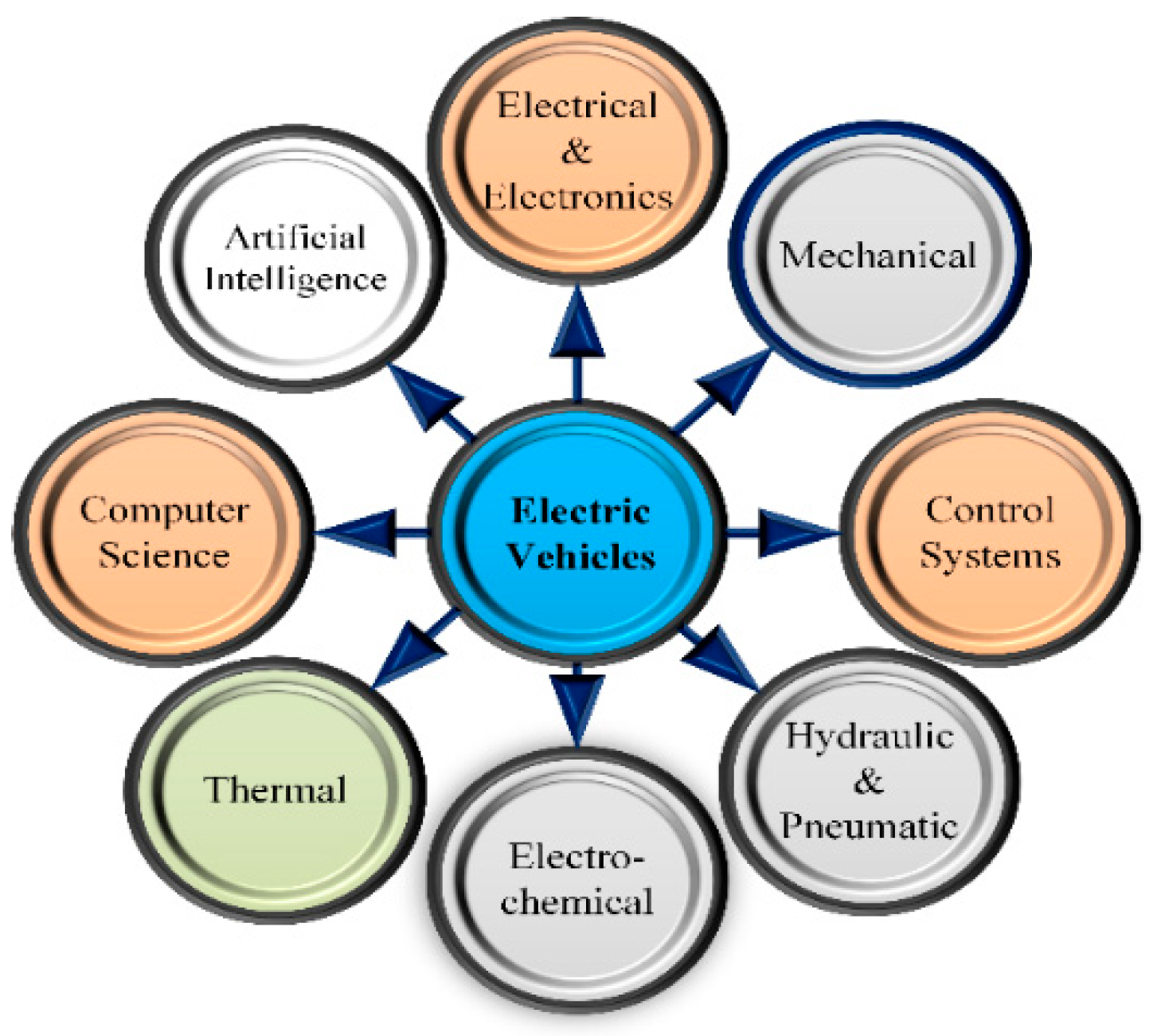


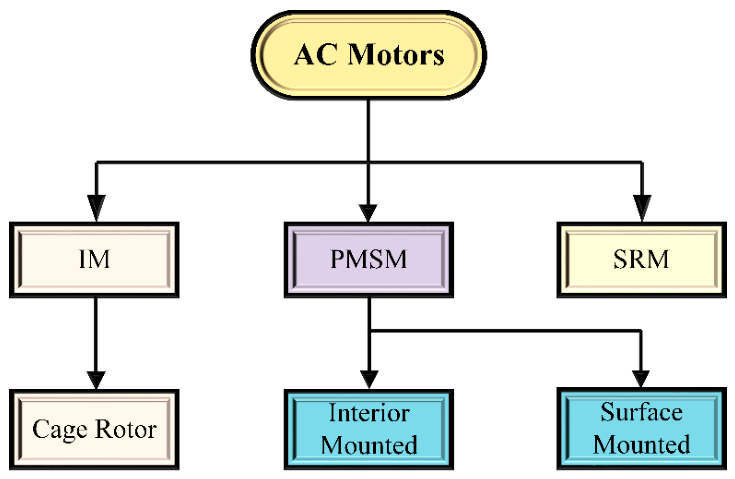


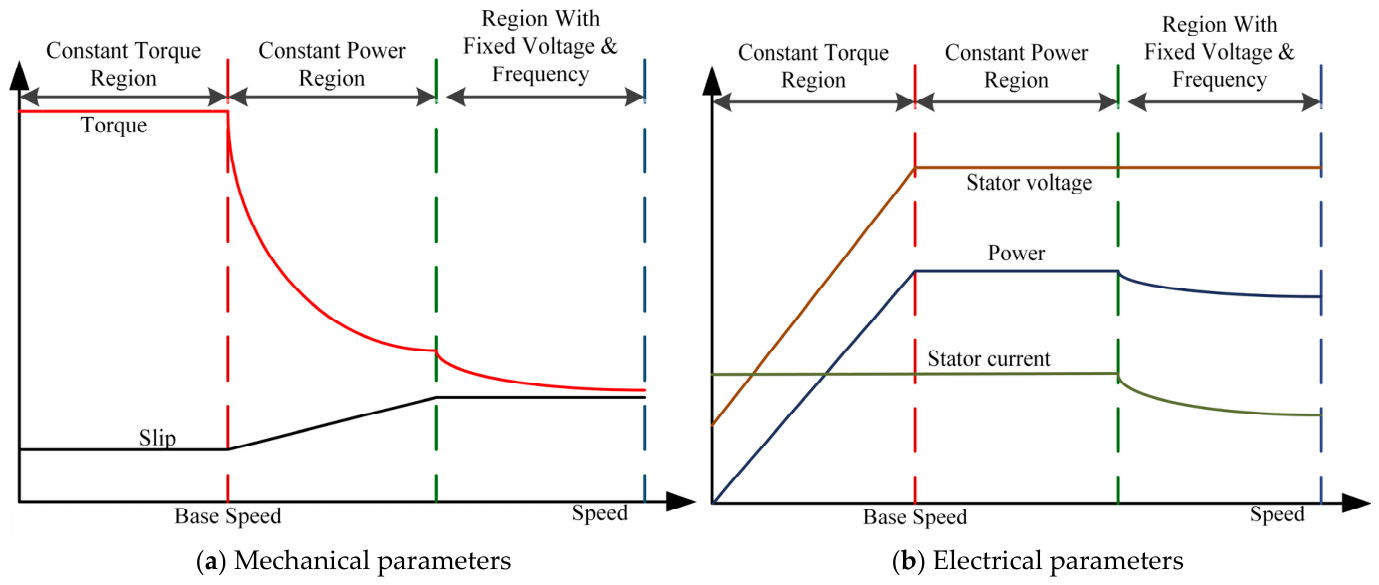
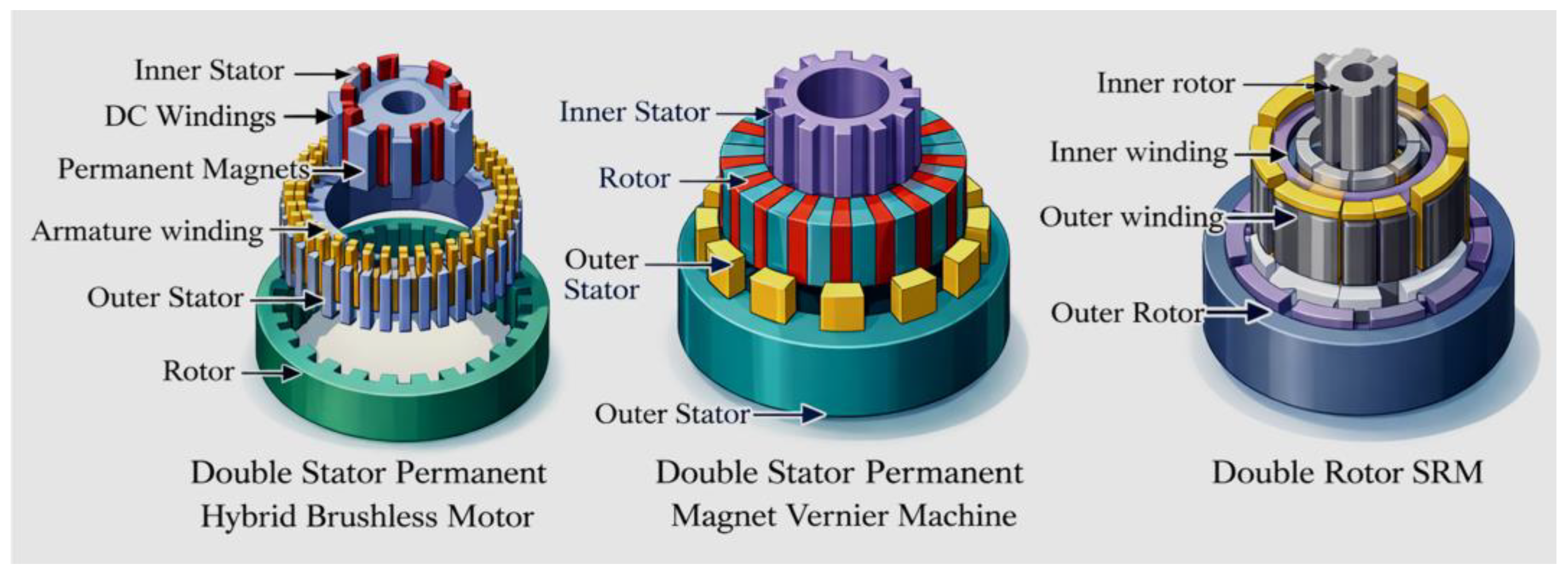




| Advantages | Disadvantages | System Application |
|---|---|---|
| The traction drive line is optimized and efficient. Small and efficient engine. Zero-emission operation is possible. The installation flexibility of machines. No multi-step transmission. | Energy loss due to multiple energy conversions. Large traction motor drive. Increased cost because of the additional generator. | BMW i3 Fisker Kerma Tesla Buses Mercedes Citaro bus Tesla ultra-light rail |
| Advantages | Disadvantages | System Application |
|---|---|---|
| Increased efficiency as a result of less power conversion. No additional generator. High speed due to two power sources. Zero emission is possible. One machine is required for hybrid operation. Less space is required for additional installation. | Complex space packaging. Expensive system. Complex control. | Ford Escape Hybrid SUV Honda insight Mercedes-Benz 400 Honda Civic Hybrid. Honda Accord. Lexus Hybrid SUV. |
| Advantages | Disadvantages | System Application |
|---|---|---|
| Vehicle power capability is improved. Torque is transmitted directly to the drive wheel. Better fuel efficiency. Zero emission is possible. Multi-step conversion is not required. It can be switched b/w series and parallel. | Two motors are required Cost increases System complexity | Toyota Prius. Toyota Camry Hybrid Hyundai Ioniq |
| Modes | ICE Dominating | EM Dominating |
|---|---|---|
| Starting phase | Electric motor and battery, then ICE | Electric motor and battery, then ICE |
| Full throttle acceleration | Both active, but ICE provides dominant power | Both active, but EM provides dominant power |
| Normal drive | ICE | EM |
| Braking/Deceleration | EM acts as a generator to recharge batteries | EM acts as a generator to recharge batteries |
| Charging during driving | ICE + generator charge batteries | ICE + generator charge batteries |
| Vehicle at rest | ICE drives the generator to charge batteries | ICE drives the generator to charge batteries |
| Advantages | Disadvantage | System Application |
|---|---|---|
| Low emission Low fuel consumption Extended electric drive range | Dependent on the grid High initial cost Complex structure | Hyundai Ioniq Plug-in Volvo XC90 T8 Mini Countryman PHEV Porsche Cayenne e-Hybrid Volkswagen Phideon |
| Global EV Market Share Up to Q3 2025 | |||||||
|---|---|---|---|---|---|---|---|
| Brands | Q1 2024 | Q2 2024 | Q3 2024 | Q4 2024 | Q1 2025 | Q2 2025 | Q3 2025 |
| BYD Auto | 15% | 17% | 16% | 16% | 15% | 18% | 16% |
| Tesla | 20% | 17% | 17% | 14% | 12% | 12% | 13% |
| Geely Holdings | 8% | 8% | 9% | 9% | 11% | 11% | 10% |
| Others | 57% | 58% | 59% | 61% | 61% | 60% | 61% |
| Advantages | Disadvantages | System Application |
|---|---|---|
| Zero emission. Good fuel efficiency. Reasonably high-power density. | Bigger in size and high cost. Battery dependency. Immature charging infrastructure. | Audi e-tron BMW i3, i7 Cadillac Lyriq Chevrolet Bolt EV Ford Mustang Mach-e |
| Compound | Fuel Type | Power Density (W/m3) | Temperature (°C) | Efficiency (%) |
|---|---|---|---|---|
| DMFC | Methanol | 1500–3500 | <100 | 30–40 |
| PAFC | Hydrogen | 800–2500 | 150–220 | 40–55 |
| AFC | Hydrogen | 1000–3000 | 50–150 | 40–60 |
| PEMFC | Hydrogen | 3500–6500 | 50–100 | 45–60 |
| Advantages | Disadvantages | System Application |
|---|---|---|
| Low emission. Good fuel efficiency. Hydrogen as fuel | Additional chemicals are required. Low starting performance. Lack of infrastructure to produce pure hydrogen. | Toyota Mirai BMW i8 Audi H-tron quattro Mercedes-Benz GLC F-cell |
| Characteristics | ICEV | BEV | HEV | PHEV | FCEV |
|---|---|---|---|---|---|
| Propulsion System | IC engine | Electric Motor | Electric Motor and IC engine | Electric Motor and IC engine | Electric Motor |
| Energy Storage | Fuel tank Gas cylinder | Battery Super Capacitor Flywheel | Fuel tank, Battery Super Capacitor Flywheel | Fuel tank, Battery Super Capacitor Flywheel | Fuel cell Super Capacitor Battery |
| Energy Source Infrastructure | Fuel Station | Electric grid charging station | Electrical charging station Fuel pump | Electrical charging station (optional) Fuel pump | Hydrogen PEMFC, AFC, DMFC, SOFC |
| Advantages | Fully matured High performance Reliable Availability of refueling infrastructure | Zero emission. High efficiency Low noise Independent of gasoline Commercialized | High performance Reliable Low emission Two sources of energy Higher fuel economy Durability Commercialized | Low emission Low fuel consumption Extended Electric drive range Smooth operation Capability of V2G or G2V | Ultralow emission. High energy efficiency Independent of gasoline Reliable |
| Disadvantages | Harmful emission Poor fuel economy Less efficient Comparatively bulk | High cost Poor dynamic response Long charging time Immature charging infrastructure Limited driving range | More complex due to two energy sources Bulky High cost Size and weight increased | Dependent on the grid High initial cost Complex structure Charging station infrastructure Battery technology Size and weight increased due to batteries and ICE | Pure hydrogen availability Slow dynamic response High cost Immature charging infrastructure Sophisticated electronic controller Conditioning, refilling and storage of hydrogen |
| Comparison 2021 vs. 2022 2023 vs. 2022 2024 vs. 2023 2025 vs. 2024 | Still most dominant Sales declined by 16% ICE also increased +15% Decreased by 9% Decline by 18.7% | Attracting users BEVs grew by 75% BEV increased by 49% BEV increased by 9% globally Increased by 17% | Trending Full Hybrids grew by 14% HEVs increased 33% Increased by up to 30% Increased by 9.8% | Most trending EV PHEVs grew by 37%. PHEVs increased by 55% About 25% increases Increased by 20% | Decreasing trend FCEV declined by 9% FCEV decreased by 30% in Q1 2023 FCEV degrowth by 36.4% Declined by 27.2% |
| Parameters | Li-Ion | LFP | NMC | Solid State Battery |
|---|---|---|---|---|
| Energy Density (Wh/kg) | 150–250 | 120–200 | 200–300 | 400–500 (target) |
| Power Density (W/kg) | 1800 | 1000–1500 | 1500–4000 | 2000–5000 |
| Charging Speed | Moderate–fast | Moderate | Fast | Very fast (future potential) |
| Life Cycle | 500–1000 | 1500–3000 | 500–1250 | 1000– 3000 (expected) |
| Thermal Stability | Moderate | Very high | Moderate–low | Very high |
| Key Materials | Graphite + Li-metal oxides | Iron, phosphate | Nickel, cobalt, manganese | Lithium metal + solid electrolyte |
| Cost ($/kWh) | Medium | Low | High | Very high (currently) |
| EV Application | General EVs | Buses, entry EVs | Long-range EVs | Future EVs |
| Types of Losses | Proposed Method | Adopted Technology | Advantage | |
|---|---|---|---|---|
| Copper loss | Increase conductivity | Replacement of an aluminum conductor with a copper conductor | Copper loss reduced Efficiency improved | |
| Iron losses | Improve model calculation | 3D finite element analysis | Calculation efficiency improved | |
| A combination of vector control and the Fe loss model | Independent control of torque and speed Fe loss reduced | |||
| Develop a controller on the basis of a stationary coordinate system | Fe loss reduced Less calculation Simplified model | |||
| Fe loss model-based control technology | Combination of DTC and Fe loss model | Fe loss reduced Torque response is faster | ||
| Combination of sliding mode control and Fe loss model | Robustness improved | |||
| Search method | Iterative flux for input power reduction | Fe loss reduced Motor parameters are not sensitive | ||
| Combine search and model | Initially, use the Fe loss model for the calculation of the magnetic flux approximate value, then go for the optimal value | Fe loss reduced Comparatively high accuracy Calculation speed increased | ||
| Structure losses | Employed Method | Efficiency (%) | Torque Density (Nm/L) | Advantage |
| Prove the structure design | Increase axial length | 88 | Not given | Efficiency improved Implementation is easy |
| Skew rotor structure | 87.3 86.4 | 33.17 36.17 | Efficiency improved Torque performance improved | |
| Multi-objective optimization | 89 86.5–87.7 | 22.4–39.1 | To maximize efficiency, other performances are taken into account | |
| Property (Symbol, Unit) | Alnico | Ferrites (Ceramic) | Samarium Cobalt | Neodymium |
|---|---|---|---|---|
| Coercive Force (Hc, kA/m) | 37–143 | 0.23–0.41 | 480–840 | 760–1030 |
| Density (d, g/cm3) | 6.8–7.3 | 4.9 | 8.4 | 7.4 |
| Electric resistivity (r, Ω cm) | (50–75) × 10−6 | 10−6 | (53–86) × 10−6 | 160 × 10−6 |
| Max. Service Temperature (Tmax, °C) | 450–550 | 800 | 300–350 | 150 |
| Max. energy Product ((BH)max, kJ/m3) | 10.7–71.6 | 8.35–31.8 | 130–240 | 220–336 |
| Price, USD/k | 58 | 7.1 | 100 | 75 |
| Remanence (BR, T) | 0.7–1.28 | 0.23–0.1 | 0.83–1.16 | 1.00–1.41 |
| Method | Employed Techniques | Advantages | Disadvantage |
|---|---|---|---|
| Increase the number of rotor poles | Increased number of poles of the rotor | Average torque increased Torque ripple reduced Copper loss reduced | Complicated rotor configuration. Rotor material increased |
| Pole shape | Modification in rotor shapes, pole arc, pole shoe and air gap | Torque ripple reduced Efficiency increased High-speed performance | Complicated optimization for offline calculation |
| Modulation in current and angle | Turn-on and -off angles are optimized | Efficiency improved Torque–speed capability enhanced Torque ripple reduced | Limited current and torque control Large memory required to store current profiles |
| ATC and DTC | The hysteresis controller regulates the torque with online estimation | Torque ripple reduced Direct control of the instantaneous torque | Machine parameters prior knowledge required |
| Torque sharing function (TSF) method | TSF profile definition Implement hysteresis control with current reference from torque reference | Controlled torque easily Torque waveforms determined Smooth torque over a broad speed range | i-T-θ characteristics needed offline designed torque waveform |
| Feedback Loop (FBL) control | Transformation of a non-linear model into a linear model | Torque ripple reduced FBL is free from the non-linear term Provide the required decoupling of the current | Complex linearization algorithm. No-adaptability of uncertain parameters changes |
| Iterative learning control (ILC) | Current compensation to the phase current reference is added for current tracking | System parameter identification not needed Perfect current tracking on different conditions is achieved | Degraded performance to transient Complex learning control law Iteration cycle restricted |
| Intelligent Control | Offline and Online optimization of phase current | Strong self- learning Torque ripple reduced Adaptive ability Independent of machine parameters | Complex computational algorithm |
| Characteristics | IM | PMSM | SRM | DC-M |
|---|---|---|---|---|
| Manufacturability | 5 | 3 | 4 | 3 |
| Controllability | 5 | 4 | 3 | 5 |
| Cost | 5 | 3 | 4 | 3.5 |
| Robustness | 5 | 4 | 4.5 | 3.5 |
| Reliability | 5 | 4 | 4.5 | 3 |
| Lifetime | 5 | 4 | 4.5 | 3.5 |
| Torque ripple/noise | 4.5 | 4 | 3 | 3.5 |
| Technical maturity | 4.5 | 4 | 3.5 | 5 |
| Efficiency | 4 | 5 | 4.5 | 3 |
| Size and weight | 4 | 4.5 | 4 | 3 |
| Power Density | 4 | 5 | 3.5 | 3 |
| Overload capability | 4 | 4.5 | 4 | 3 |
| Speed range | 4 | 5 | 5 | 2.5 |
| Torque density | 3.5 | 5 | 4 | 3 |
| Potential for improvement | 3 | 4.5 | 5 | 2.5 |
| Trend | 2 | 5 | 3 | 1 |
| Total Score | 67.5 | 68.5 | 64 | 51 |
| EV Model | Motor Employed | Power kW | Year |
|---|---|---|---|
| Rivian R2 | PMSM | 220 | 2026 |
| Toyota Land Cruiser Se Volkswagen ID. GTI | PMSM PMSM | 400 210 | 2026 2026 |
| Lucid Gravity | PMSM | 600 | 2025 |
| BYD Seal | PMSM | 150 | 2025 |
| Tesla Model Y long range RWD BYD Seagull Tesla Model 3 Standard Range | IPM-SynRM PMSM PMSM | 250 55 239 | 2024 2024 2023 |
| Tesla Model Y long range RWD BYD Seagull Tesla Model 3 Standard Range | IPM-SynRM PMSM PMSM | 250 55 239 | 2024 2024 2023 |
| Renault Megane E-Tech | PMSM | 96 | 2022 |
| Porsche Taycan ST | PMSM | 300 | 2022 |
| Mercedes-Benz EQS | PMSM | 265 | 2022 |
| Kia Niro EV | IM | 150 | 2022 |
| Tesla Model Y SR | IM | 150 | 2022 |
| Tesla Model 3 long range | IPM-SynRM | 258 | 2021 |
| BYD Tang | PMSM | 380 | 2021 |
| Hyundai Ioniq 5 | PMSM | 125 | 2021 |
| Tata Nexon | PM | 85 | 2020 |
| Volkswagen id.3 | PM | 100 | 2020 |
| Kia e-Soul | PM | 100 | 2020 |
| Mercedes EQC | IM + IM | 300 | 2019 |
| Smart EQ Fortwo | PM | 60 | 2019 |
| BYD S2 | PM | 70 | 2019 |
| Issues | Proposed Techniques/Method | Advantages | Disadvantages |
|---|---|---|---|
| Assessment of suitability | IFOC for asynchronous traction motor drives for EVs | Suitability of IFOC is verified. | No additional improvement suggested. |
| Degradation of speed performance due to thermal effects | LPV controller–observer is employed | Low current and supply voltage are required. Noise rejection improved. Better tracking performance. | More complicated than the conventional scheme. |
| Motor parameter variation impact on the performance. | MRAS estimator based on back EMF is proposed | Robust against inverter nonlinearity and control mechanism. Independent of stator inductance and resistance. | The results presented consider only 50% change in the stator parameter. |
| Comparison of conventional PI and Fuzzy logic controller. | Use of the ECE-15 drive cycle | Improved speed performance. Tracking performance, energy consumption and recovery. | Improvement in IFOC is not considered. |
| Analysis of drivetrain efficiency. | FOC PMSM. Three-phase inverters, battery connected with a DC-DC converter. | Improved power factor and efficiency. Reduced voltage distortion. | The energy optimization technique is not considered a variation in motor flux. |
| Issues | Proposed Method | Advantages | Disadvantages |
|---|---|---|---|
| Minimization of issues in conventional DTC | Utilization of a multi-level neural network instead of a conventional switching table | Torque and current ripples were reduced significantly | Efficiency improvement is not investigated. A simulation study on the common drive cycle has not been done. |
| Efficiency improvement of DTC | Variable flux reference selection | Efficiency improved | A very small-scale model based on simulation is employed but without using recognized drive cycles. |
| Control method for a four-in-wheel EV drive | An additional electronic differential system provides speed references to in-wheel motors. | Handling improved. Good dynamic and steady-state speed tracking. | High torque ripple is observed |
| Reduction in torque ripple in CDTC | Modified torque hysteresis controller. The MRAS estimator is employed for rotor speed and stator resistance. | Torque error, torque ripple, current THD and flux error improved. | Optimal bandwidth is employed, which may be difficult to achieve in large-scale systems for EVs. |
| Improved integral time- weighted absolute error (ITAE) and speed response | Fractional order PI controller. | ITEA is reduced as compared to the PI controller. | Issues associated with CDTC have still not improved. |
| Efficiency improvement in DTC | Stator current minimization technique. DC link voltage is employed. | Lower energy requirement. Improved efficiency. Excessive computational resources are not required. No convergence issues. Not sensitive to parameter variation. | Maximum torque/ampere is allowed during operation but below base speed. |
| Aspects | MPC | ANN | ANFIS | FLC |
|---|---|---|---|---|
| Concept | Model-based optimization using a prediction horizon | Data-driven learning to approximate nonlinear system behavior | A hybrid of fuzzy logic + neural networks for adaptive rule-based learning | Rule-based control using linguistic variables and expert knowledge |
| Advantages | Handles multiple constraints Optimal control performance Fast dynamic response Suitable for multi-motor coordination | High adaptability Strong nonlinear approximation Fault tolerance Self-learning capability | Combines interpretability + learning Effective for nonlinear systems Adaptive parameter tuning More robust than pure FLC | Simple implementation No mathematical model required Robust to uncertainties Low computational cost |
| Limitations | High computational complexity Requires an accurate model Difficult real-time implementation at high speed | Needs large training data Lacks interpretability Generalization issues No guaranteed stability | Rule explosion problem High computational cost Complex training Scalability issues | Heuristic design No optimality guarantee Limited adaptability Performance depends on rule tuning |
| Applications | Torque control in PMSM drives Multi-motor coordination Stability and energy optimization | Fault diagnosis and tolerant control Parameter estimation Adaptive torque control | Adaptive speed control Hybrid EV control systems Nonlinear drive control | Low-cost EV controllers Basic speed and torque control Real-time embedded systems |
Disclaimer/Publisher’s Note: The statements, opinions and data contained in all publications are solely those of the individual author(s) and contributor(s) and not of MDPI and/or the editor(s). MDPI and/or the editor(s) disclaim responsibility for any injury to people or property resulting from any ideas, methods, instructions or products referred to in the content. |
© 2026 by the authors. Licensee MDPI, Basel, Switzerland. This article is an open access article distributed under the terms and conditions of the Creative Commons Attribution (CC BY) license.
Share and Cite
Imam, S.H.; Rind, S.J.; Javed, S.; Jamil, M. New Trends and Challenges in Electric and Hybrid Electric Vehicles: Powertrain Configurations, Traction Motors and Drive Control Techniques. Machines 2026, 14, 489. https://doi.org/10.3390/machines14050489
Imam SH, Rind SJ, Javed S, Jamil M. New Trends and Challenges in Electric and Hybrid Electric Vehicles: Powertrain Configurations, Traction Motors and Drive Control Techniques. Machines. 2026; 14(5):489. https://doi.org/10.3390/machines14050489
Chicago/Turabian StyleImam, Syed Hassan, Saqib Jamshed Rind, Saba Javed, and Mohsin Jamil. 2026. "New Trends and Challenges in Electric and Hybrid Electric Vehicles: Powertrain Configurations, Traction Motors and Drive Control Techniques" Machines 14, no. 5: 489. https://doi.org/10.3390/machines14050489
APA StyleImam, S. H., Rind, S. J., Javed, S., & Jamil, M. (2026). New Trends and Challenges in Electric and Hybrid Electric Vehicles: Powertrain Configurations, Traction Motors and Drive Control Techniques. Machines, 14(5), 489. https://doi.org/10.3390/machines14050489