


Abstract
High-speed operation is a key pathway to higher power density in modern EV traction systems, and multi-parameter optimization is essential for enhancing its high-speed performance. This study investigates a 20,000 r/min interior double-V permanent-magnet flat-wire motor via finite-element simulations to systematically examine the effects of multiple interacting parameters—including flat-wire layer number, stator slot geometry, magnet grade, and rotor magnetic barrier angle—on the electromagnetic performance under high-speed operating conditions. The results indicate that increasing winding layers significantly reduces high-speed torque; an eight-layer design decreases torque by about 50% compared to a four-layer one, while a six-layer arrangement offers a favorable torque-loss trade-off. Wider slots lower the average torque but reduce torque ripple by approximately 27%, whereas deeper slots increase tooth flux density and reduce efficiency. Higher-grade magnets enhance air-gap flux and torque at elevated cost. Rotor magnet angle optimization reveals a trade-off between peak torque and ripple, with a symmetric 100°/100° design achieving balanced performance. These findings clarify structural–control interactions and support the multi-objective design of high-speed flat-wire permanent-magnet motors.
1. Introduction
Against the backdrop of the global “dual-carbon” strategy, new energy vehicles are rapidly developing toward higher efficiency, higher power density, and a higher level of system integration. As the core component of electric drive systems, high-speed permanent-magnet synchronous motors (PMSMs) have become a mainstream technical solution owing to their excellent torque response, wide high-efficiency operating range, and compact structure. In recent years, with the maximum speed of traction motors exceeding 20,000 r/min, flat-wire windings have been increasingly adopted in high-end new energy vehicles because of their advantages such as high slot fill factor, shortened end windings, and improved heat dissipation capability. However, the continuous increase in operating speed also leads to a sharp rise in electromagnetic losses under high-frequency conditions, a more severe temperature rise, and increasingly complex multi-physics coupling effects, which together impose significant constraints on further performance improvement of these motors [1,2,3].
At present, most studies on high-speed flat-wire motors primarily focus on the influence of a single parameter on torque, efficiency, or losses. However, the underlying mechanisms of several critical design parameters with strong impacts on motor performance—such as the number of flat-wire winding layers, stator slot dimensions, permanent magnet material, and magnet pole angle design—have not yet been systematically investigated. Although increasing the number of flat-wire layers can improve winding space utilization, it may significantly intensify proximity effects and aggravate AC losses. Moreover, the winding layer configuration must be coordinated with the stator slot dimensions to balance magnetic saturation and leakage flux. From the perspective of permanent magnet design, both the magnet grade and the pole angle configuration in a double-V rotor can regulate the air-gap flux distribution, thereby affecting torque capability, torque ripple, and iron loss.
With regard to winding structures, high-frequency losses in flat-wire windings have been predicted through an integration of analytical modeling and finite element simulations, which also examines the influences of slot–pole–phase combinations, the conductor layer number, and the fill factor on AC loss mechanisms [4]. Recent benchmark studies on high-speed heavy-duty traction motors further show that the choice between stranded and hairpin windings should be made jointly with thermal management and loss distribution, since continuous-operation performance can be limited by AC loss and temperature rise [5]. In addition to analytical/FE loss modeling for hairpin windings [6,7], practical mitigation measures such as coil transposition have been demonstrated to effectively suppress AC copper loss in high-speed machines [8,9].
In addition, removing conductors near the slot opening was shown to significantly reduce losses in the frequency range of 500 Hz to 1.3 kHz. The influence of flat-wire dimensions, the number of winding layers, and parallel paths on AC losses in permanent-magnet synchronous motors with maximum speeds of up to 12,000 r/min has been analyzed [10,11]. However, owing to the relatively low operating speeds considered, these studies did not fully reveal the evolution characteristics of high-frequency losses under ultra-high-speed conditions exceeding 20,000 r/min.
In terms of stator slot design, a combined approach of analytical modeling and two-dimensional finite-element simulations has been employed to investigate the effects of geometric parameters—such as slot opening width, tooth width, and slot depth-to-width ratio—on skin and proximity effects [12]. Current harmonics and slotting effects can substantially increase copper, core, sleeve, and magnet eddy-current losses; hybrid modeling with experimental verification has been reported as an effective way to quantify these contributions [13,14,15].
The permanent magnet material is another key factor determining the air-gap flux density, demagnetization resistance, iron losses, and high-temperature stability. The air-gap flux density distribution and cogging torque characteristics were comparatively analyzed using four different permanent magnet materials [16]. The results demonstrated that appropriate optimization of magnet materials significantly contributes to reducing the cogging torque and enhancing the overall performance of PMSMs.
Regarding rotor topology, the performance of “U+1”, “double-V”, and “V+1” rotors was compared through simulation [17]. For a 150 kW flat copper wire motor exhibiting limitations in rated torque, torque ripple, and efficiency, the analysis indicated that a double-V rotor combined with an eight-layer winding offers superior overall performance. A V-type interior PMSM with a rated speed of 2865 r/min was examined, and a parametric model with the permanent magnet pole angle as a design variable was developed [18]. Finite-element simulations were conducted to reveal the influence of this angle on the cogging torque, output torque, and torque ripple. However, under high-speed operating conditions, systematic investigations into the effects of the permanent magnet pole angles in double-V rotors on various electromagnetic performance indices remain limited. Beyond conventional V and double-V rotors, recent works on commercial IPMSMs also indicate that the rotor barrier reconfiguration and local notching can simultaneously improve torque capability and reduce ripple, highlighting the value of systematic topology optimization for traction applications [19,20].
Although previous studies on individual parameters have established a solid foundation, for high-speed flat-wire motors with maximum speeds exceeding 20,000 r/min, the coupled influence mechanisms of several key design parameters—including the winding layer number, stator slot dimensions, permanent magnet grade, and magnet pole angle configuration in the double-V rotor—have not yet been systematically clarified. Therefore, this study focuses on an interior double-V-type high-speed permanent-magnet flat-wire motor with a maximum speed of 20,000 r/min. Based on finite element simulations and experimental validation, the effects of the winding layer number, stator slot dimensions, permanent magnet grade, and permanent magnet pole angles on electromagnetic performance are systematically investigated under multiple operating conditions, providing a theoretical basis for the engineering design of high-reliability permanent-magnet flat-wire motors.
2. High-Speed Flat-Wire Permanent-Magnet Drive Motor Model
2.1. Basic Parameters of the Motor
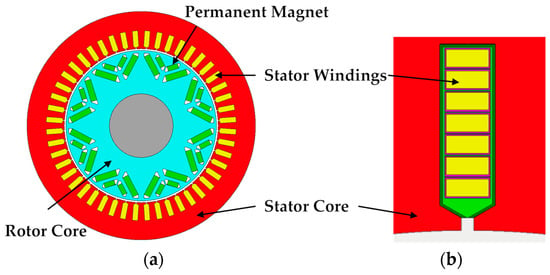
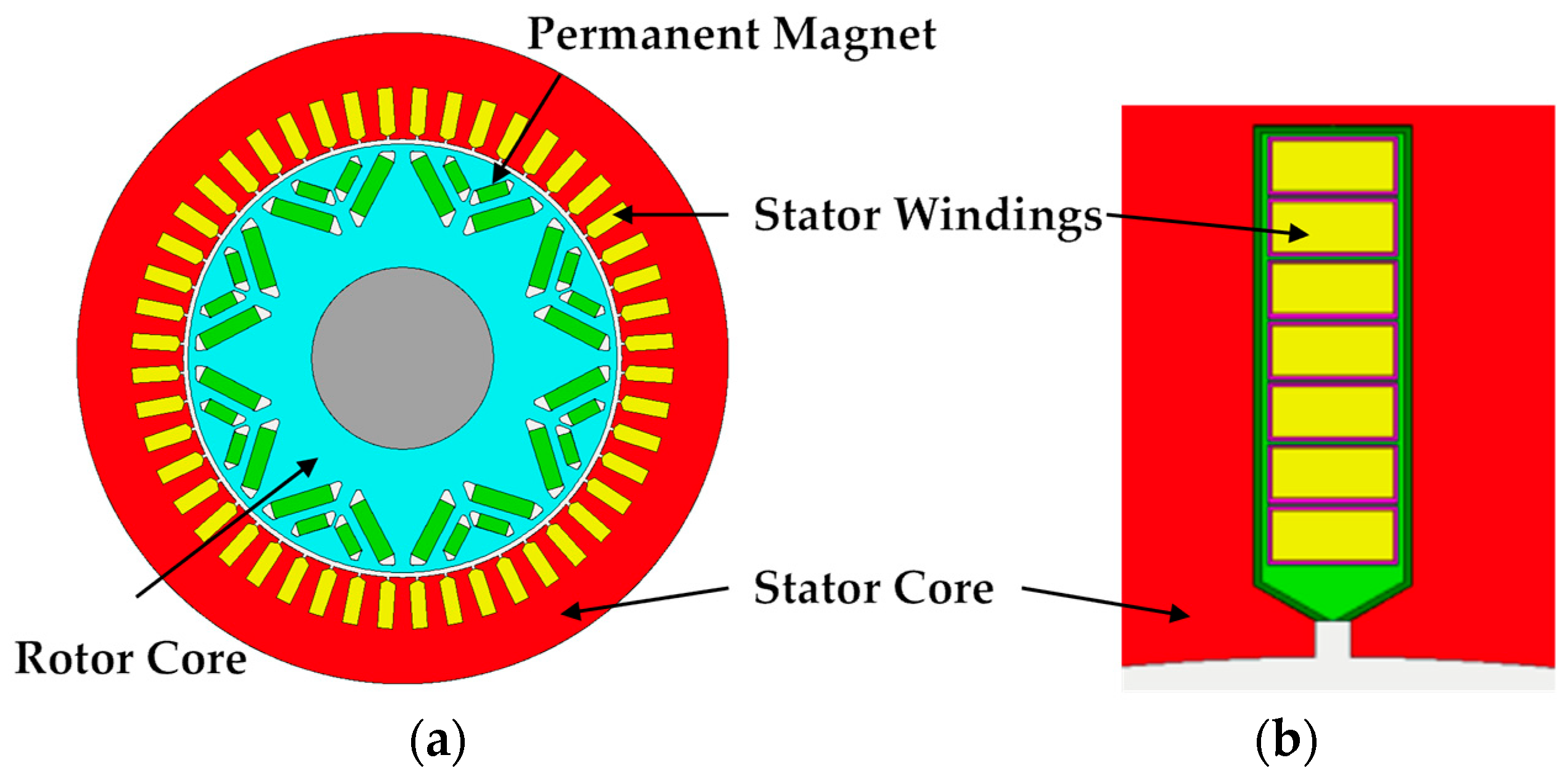
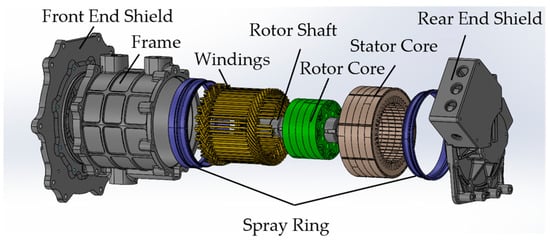
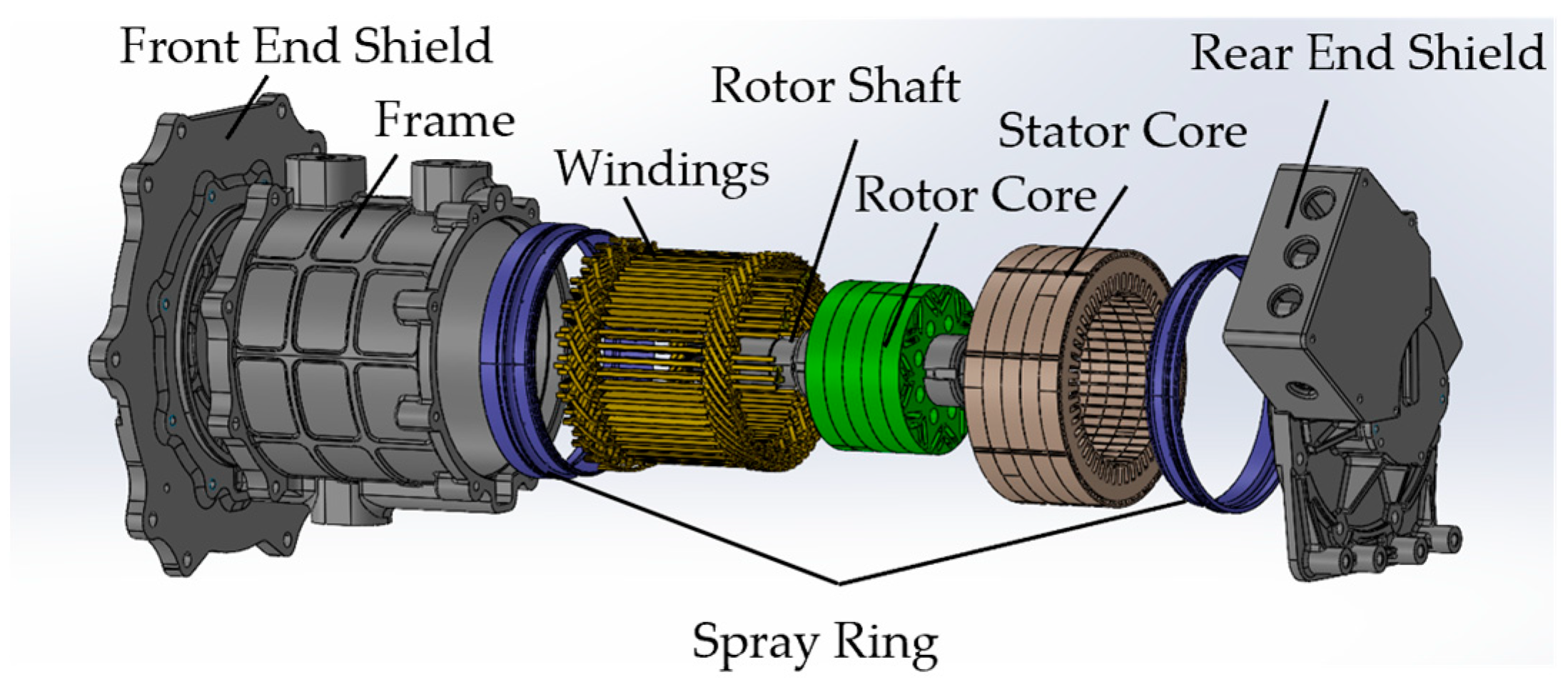
The key design parameters of the permanent-magnet flat-wire drive motor are listed in Table 1. Based on these parameters, a two-dimensional electromagnetic model of the motor was established, and the overall motor configuration is shown in Figure 1. To improve the slot fill factor and power density, the stator winding adopts a seven-layer distributed arrangement with a coil pitch of five; the corresponding stator slot structure is also illustrated in Figure 1. In addition, a three-dimensional topological model was constructed in SolidWorks 2021, as shown in Figure 2, to provide a more intuitive visualization of the motor structure.
Table 1.
Key motor parameters.
Figure 1.
Cross section of the proposed PMSM: (a) motor structure; (b) stator slot winding.
Figure 2.
The proposed PMSM topology schematic.
On this basis, a two-dimensional transient finite-element model was developed for the 8-pole/48-slot motor to carry out the electromagnetic analysis. Considering both computational efficiency and solution accuracy, a one-eighth periodic model was adopted according to the structural symmetry. Mesh refinement was applied in the air-gap and tooth-tip regions, and a five-layer mapped mesh was arranged in the air gap to accurately capture the slotting-induced air-gap permeance distortion. The nonlinear magnetic properties of the silicon–steel laminations were considered, with local saturation taken into account up to 2.0 T. Simulations were performed under both the rated operating condition (4500 r/min) and the peak operating condition (6000 r/min). At each operating point, the current advance angle was adjusted to realize the maximum torque per ampere (MTPA) control strategy.
2.2. No-Load Electromagnetic Response Analysis
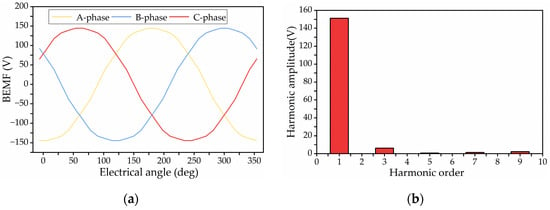
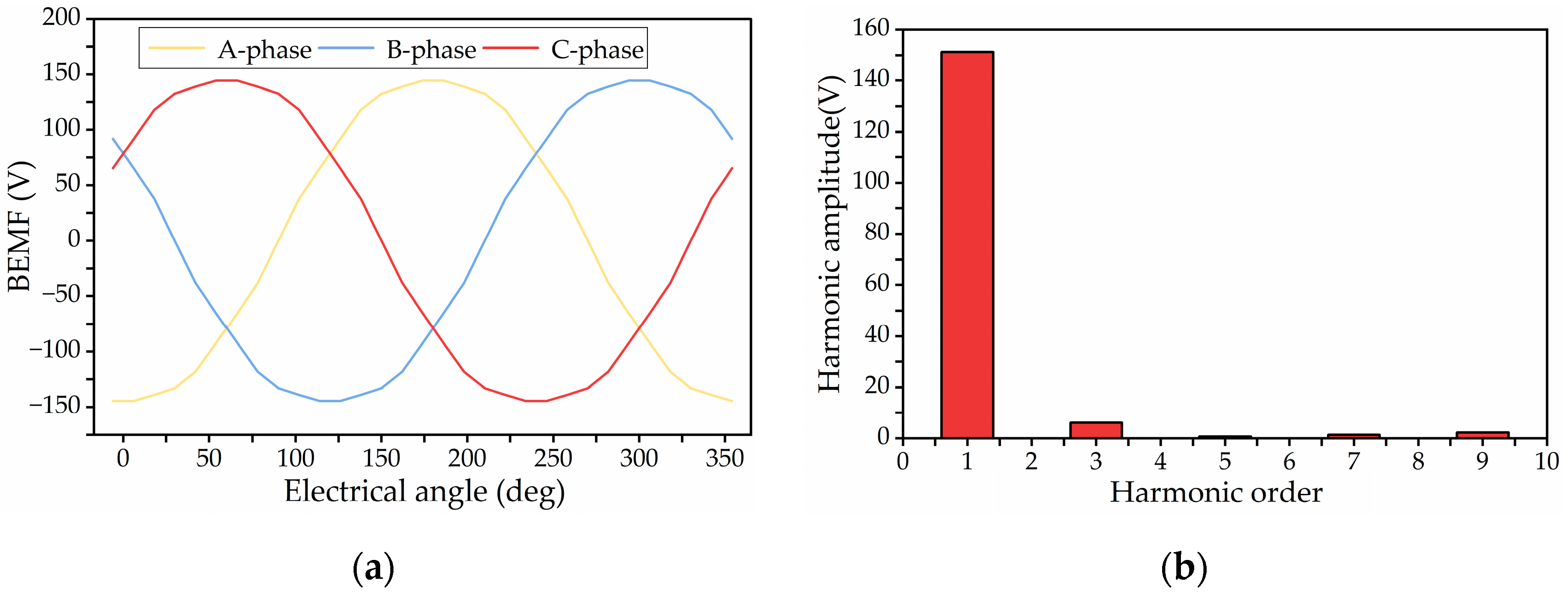
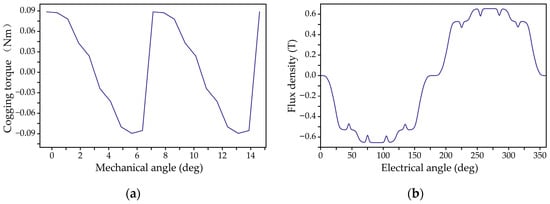
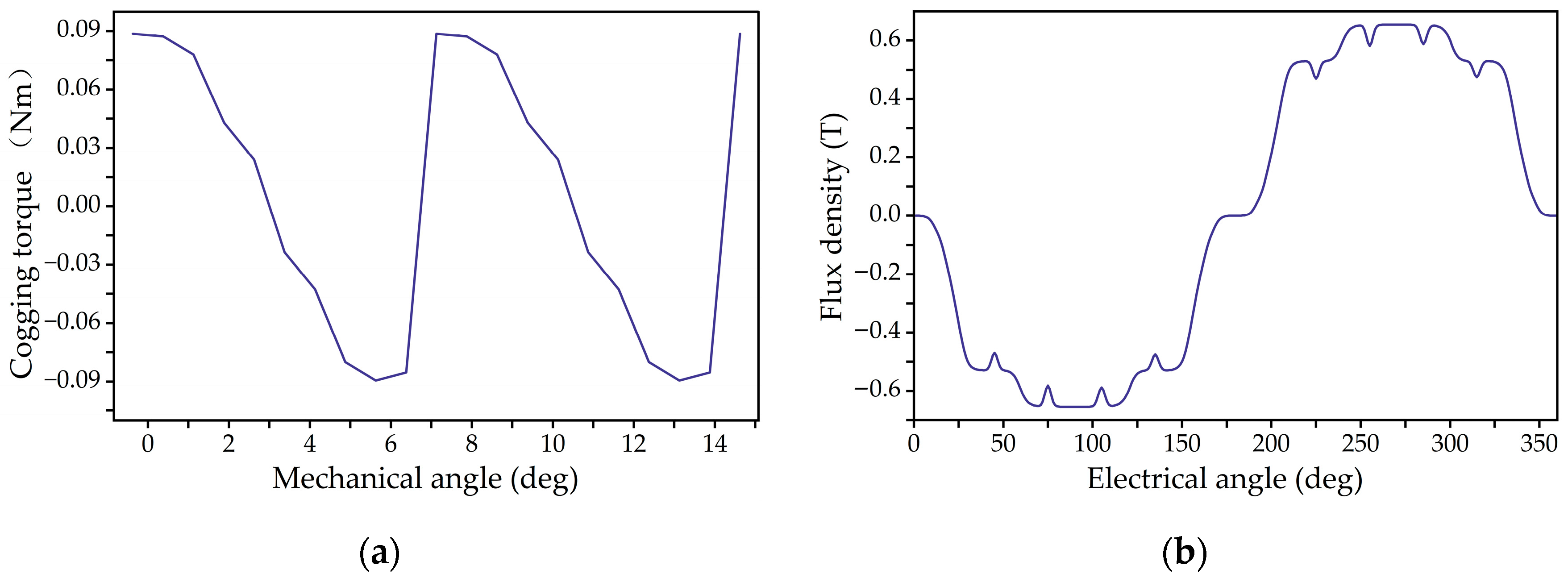
The no-load back electromotive force (BEMF) and its harmonic analysis obtained from the one-eighth model simulation are shown in Figure 3. The results indicate that the sinusoidal waveform of the no-load back BEMF is well-formed, with a low total harmonic distortion (THD). The cogging torque waveform under no-load conditions is presented in Figure 4a. The peak cogging torque reaches 0.089 N·m, with a relatively low ripple amplitude. Figure 4b shows the air-gap flux density distribution under no-load conditions. The waveform exhibits localized sawtooth-like distortion, which is mainly attributed to slotting effects and periodic variation in air-gap permeance. The peak air-gap flux density is 0.68 T, with no local saturation observed.
Figure 3.
No-load back EMF characteristics: (a) back EMF; (b) harmonic content.
Figure 4.
Electromagnetic characteristics under no-load conditions: (a) cogging torque versus mechanical angle; (b) air-gap flux density versus electrical angle.
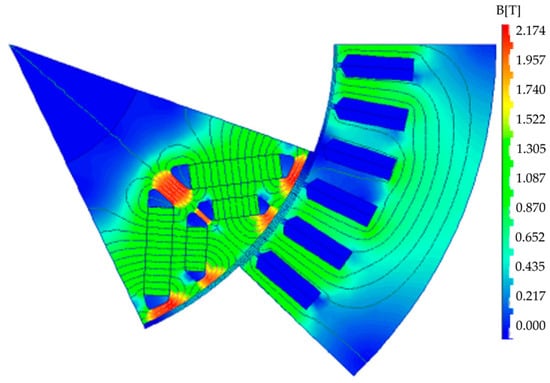
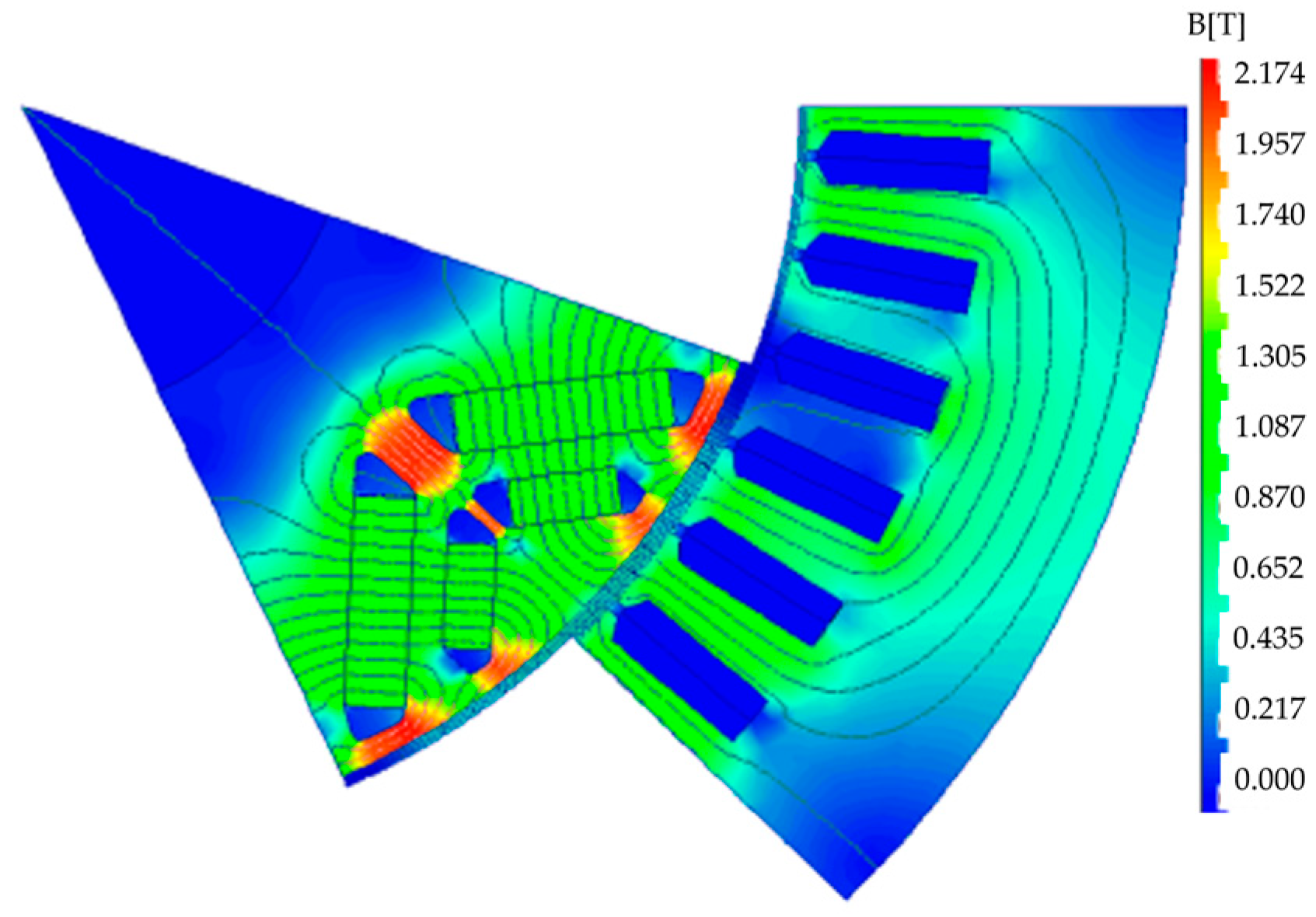
Further magnetic field analysis is shown in Figure 5. The magnetic flux lines are symmetrically and continuously distributed. The stator tooth magnetic flux density reaches 1.08 T, which remains below the saturation limit of silicon steel (2.0 T). However, the magnetic flux density in the rotor flux barrier region reaches 2.17 T, indicating deep saturation that increases the magnetic reluctance of the bridges, thereby suppressing leakage flux and guiding the main flux along the intended path.
Figure 5.
No-load magnetic flux lines and flux density distribution.
2.3. Performance Analysis Under Load Conditions
2.3.1. Rated Operating Condition
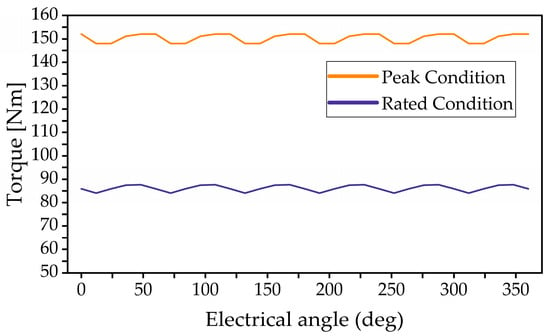
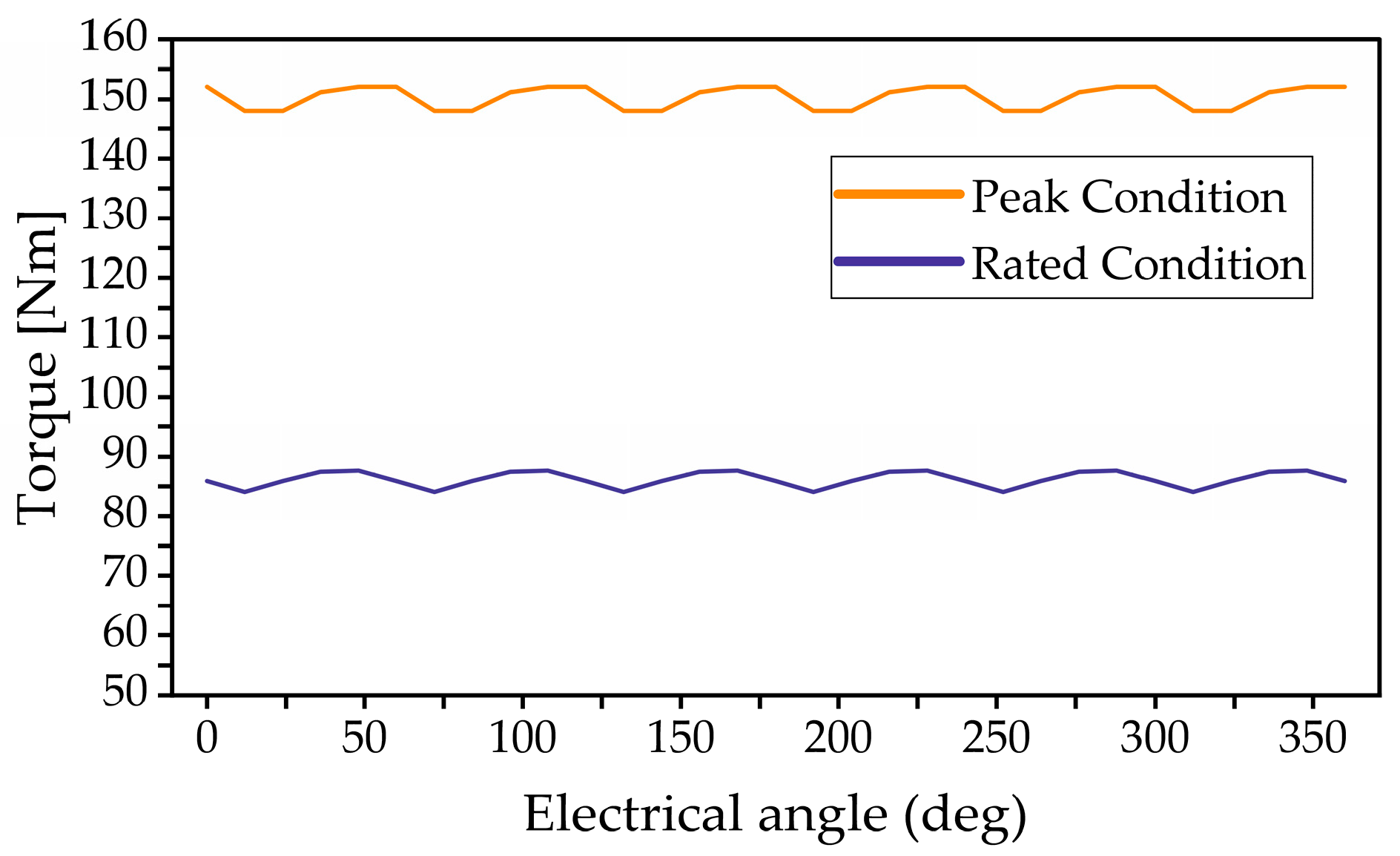
To evaluate the motor’s performance under rated operation, simulations were conducted under a rated speed of 4500 rpm and a rated power of 40 kW, where the rated torque was achieved by adjusting the current advance angle. As shown in Figure 6, within one electrical period, the motor exhibits an average output torque of 85.6 N·m and a peak torque of 87.9 N·m, resulting in a torque ripple ratio of 2.7% (below the ISO 21782 [21] limit of 5%), indicating excellent torque smoothness and meeting the requirements for low-noise drive applications.
Figure 6.
Torque characteristics under peak and rated conditions.
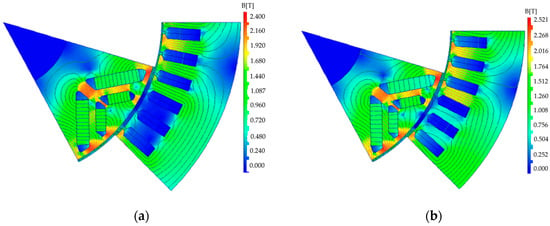
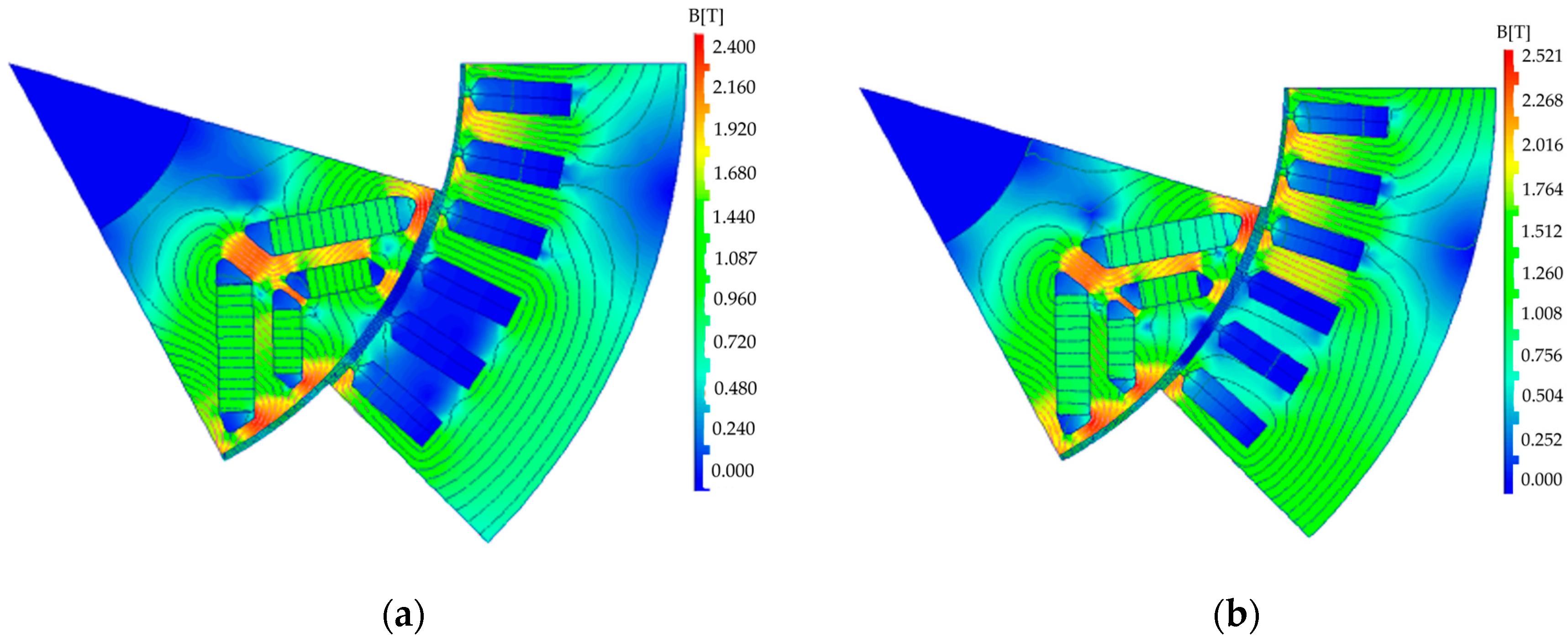
The magnetic field distribution under rated operating conditions is shown in Figure 7a. Compared with the no-load condition, armature reaction further enhances magnetic saturation in the rotor flux barrier, raising the local flux density to 2.4 T. Nevertheless, the overall distribution of magnetic flux lines remains uniform, and no significant flux leakage is observed at the ends.
Figure 7.
Magnetic flux lines and flux density distribution under different operating conditions: (a) rated condition at 4500 rpm; (b) peak condition at 6000 rpm.
2.3.2. Peak Operating Condition
At the peak operating condition of 95.8 kW and 6000 r/min, the motor delivers an average output torque of 152.4 N·m and a peak torque of 154.45 N·m while maintaining a relatively low torque ripple, as shown in Figure 6.
The magnetic field distribution under peak operating conditions is illustrated in Figure 7b. Compared with the rated operating condition, the armature reaction strengthens further. The flux density in the rotor flux barrier increases to 2.5 T, while the stator tooth flux density reaches 2.0 T, approaching the saturation limit.
The strong armature magnetic field generated by the q-axis current superimposes on the permanent magnet field, causing the main air-gap flux direction to deviate from the direct axis under peak-load conditions. This reflects the enhanced armature reaction and the redistribution of magnetic flux paths at high current loading. In addition, local saturation can be observed mainly in the stator teeth, which increases the local magnetic reluctance and contributes to the distortion of the magnetic field distribution.
3. Experimental Validation
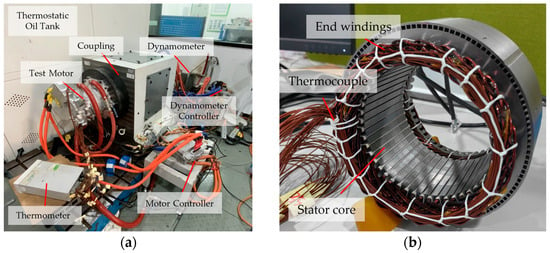
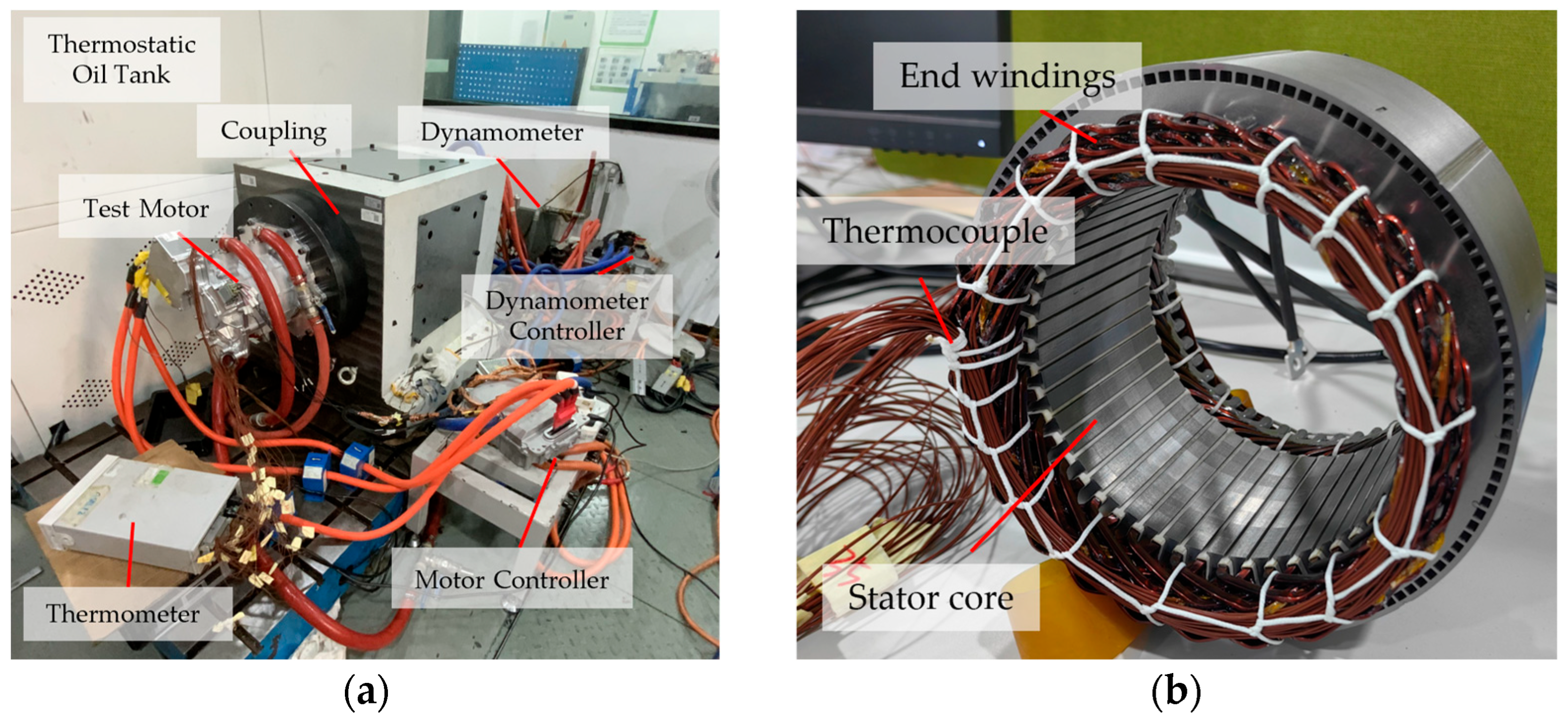
An experimental platform for the PMSM analysis under multiphysics coupling conditions was established, as shown in Figure 8a. The platform consists of the test motor, a dynamometer, a controller, a power analyzer, and a data acquisition system, while the technical specifications of the core test equipment are listed in Table 2.
Figure 8.
Electromagnetic–thermal performance test platform: (a) photograph of the electromagnetic–thermal performance test platform; (b) stator assembly with thermocouple arrangement on the end winding and stator core.
Table 2.
Technical specifications of core test equipment.
3.1. Electromagnetic Performance Analysis Under Multiple Conditions
3.1.1. No-Load BEMF
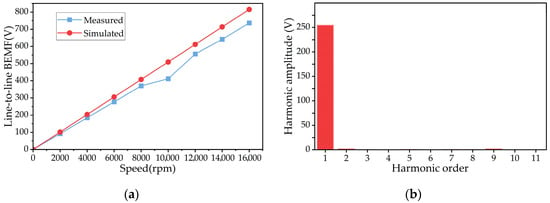
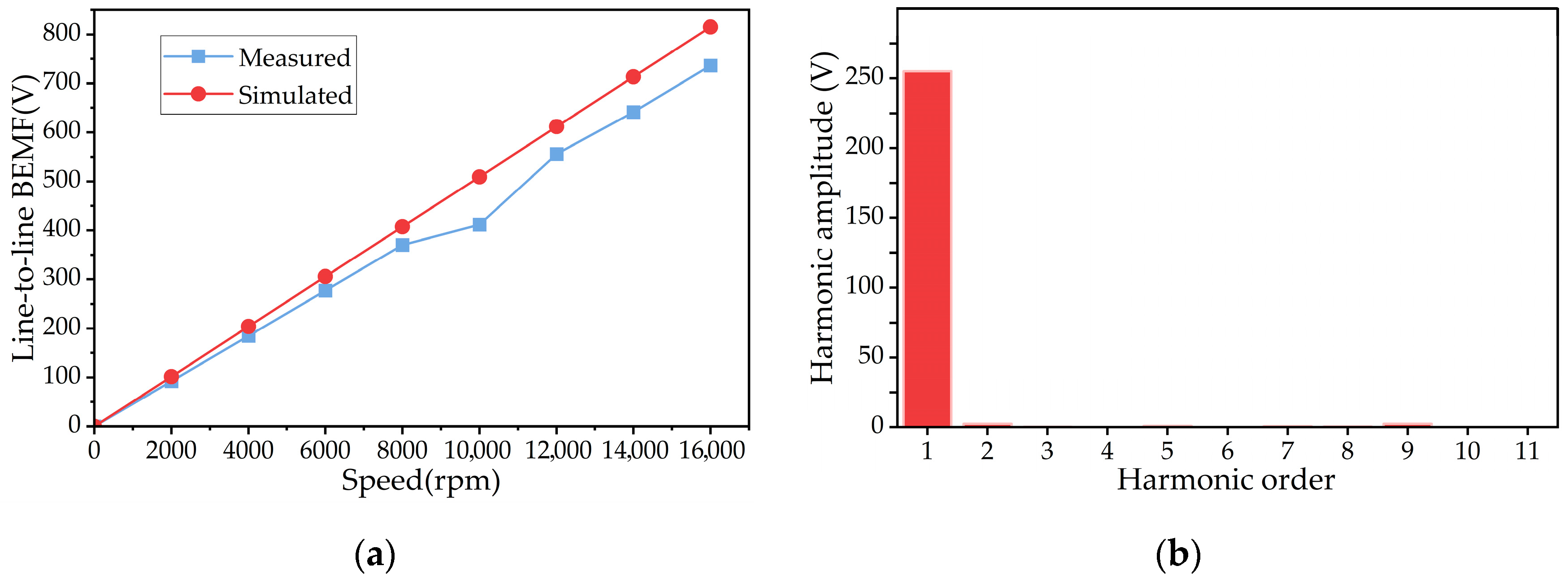
The line-to-line BEMF was measured at intervals of 2000 r/min from 0 to 16,000 r/min and compared with the simulation results, as shown in Figure 9a. The measured BEMF increases linearly with speed (slope = 0.0173 V/r/min), closely matching the simulated trend. Above 4000 r/min, however, the measured values fall below the simulated ones, with a maximum deviation of 4.8% (815.25 V simulated vs. 736.74 V measured at 16,000 r/min). This discrepancy is primarily attributed to the reduction in permanent magnet remanence caused by the temperature rise, as well as the fact that eddy-current losses in the silicon–steel laminations were not fully accounted for in the finite-element model, leading to an 8.7% increase in the measured iron loss at 12,000 r/min. The harmonic spectrum of the no-load BEMF at 6000 r/min is presented in Figure 9b, demonstrating good sinusoidal fidelity and low harmonic distortion at this operating point.
Figure 9.
Analysis of no-load back electromotive force: (a) comparison curve of simulated and measured no-load BEMF; (b) harmonic voltage of the no-load BEMF at 6000 rpm.
3.1.2. Thermal Operating Characteristics
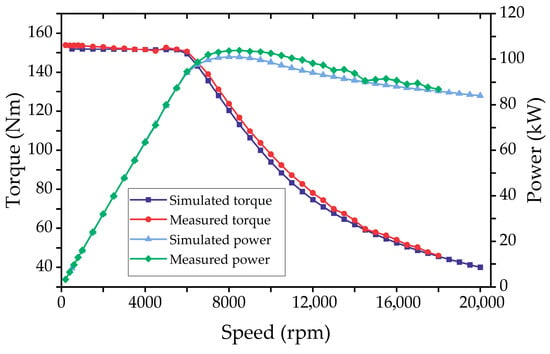
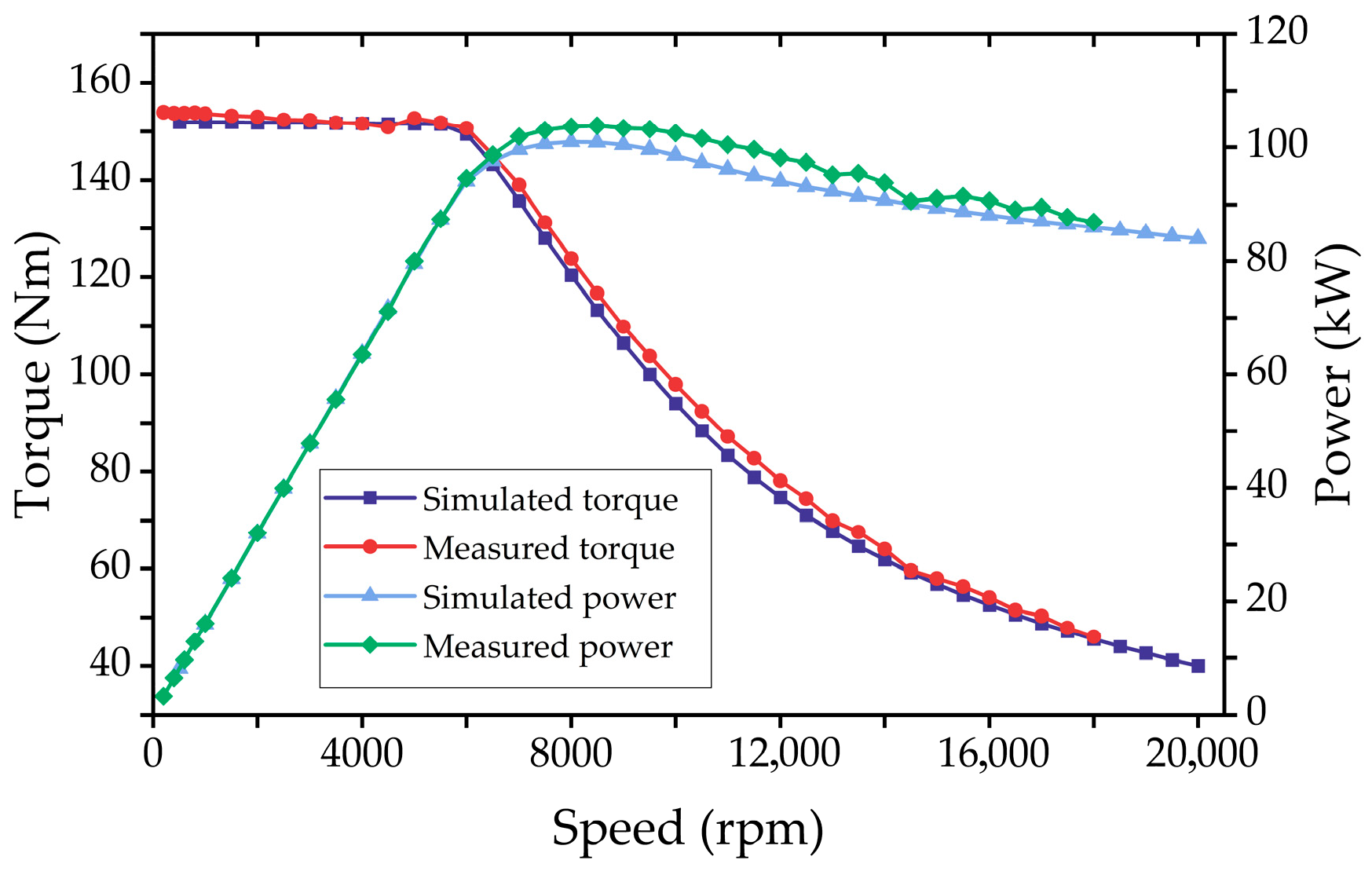
The thermal steady-state external characteristic test is essential for evaluating the motor’s performance under practical operating conditions. As shown in Figure 10, under the rated DC bus voltage of 630 V, the motor achieves a peak torque of 153 N·m, a base speed of 6000 rpm, and a peak power of 103 kW. The simulated and measured external characteristic curves exhibit a high level of consistency at this voltage level.
Figure 10.
Comparison of simulated and measured external characteristics under the rated voltage.
At 12,000 r/min, the measured torque is 4.46% higher than the simulated value (78.12 N:m vs. 74.78 N:m), primarily due to the actual magnet operating temperature being lower than the assumed value in the simulation, resulting in higher magnet remanence and thus higher torque. At 11,000 rpm, the measured power exceeds the simulation by 4.35% (100.5 kW vs. 96.14 kW), a discrepancy attributable to unmodeled inverter switching losses, resulting in a 12.8% increase in measured losses.
3.1.3. Motor Efficiency
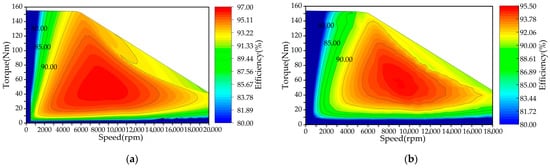
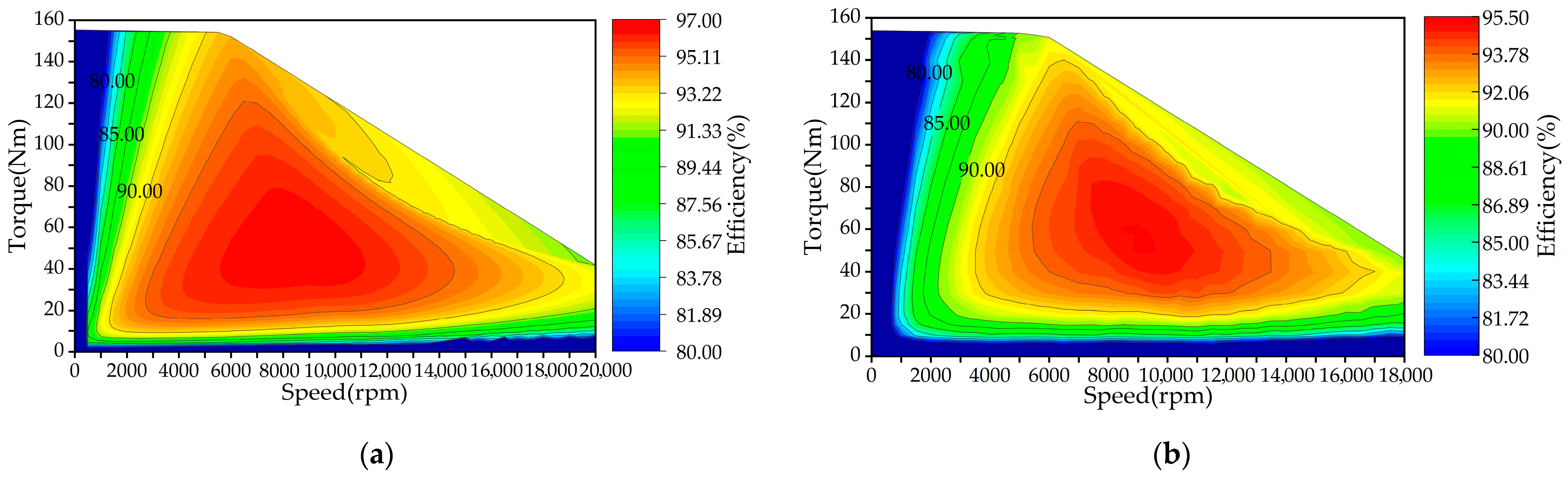
Figure 11 compares the simulated and measured motor efficiency maps. The measured peak efficiency is 95.5% at 80 N·m and 4000 r/min, slightly lower than the simulated peak efficiency of 97%, resulting in a difference of approximately 1.5%. At the peak power point (153 N·m, 6000 r/min), the measured efficiency of 93.2% is slightly below the simulated 94.1%. This discrepancy can be mainly attributed to several factors: the winding temperature rise increasing copper losses (measured ΔT ≈ 15 °C), additional experimental losses not fully accounted for in the simulation (e.g., high-frequency iron losses and inverter switching losses), and measurement uncertainties, including voltage, current, torque, and speed deviations. Simplifications in material properties and loss coefficients in the simulation model may also contribute to small deviations. This high-efficiency region covers 88.12% of the speed–torque operating plane, exceeding the 85% requirement of GB/T 18488-2024 [22]. In contrast, the low-efficiency region (efficiency < 80%) is concentrated under high-speed, low-torque conditions (>14,000 r/min, <20 N·m), mainly due to increased iron losses under field-weakening control. The measured efficiency data at rated voltage are summarized in Table 3.
Figure 11.
Comparison of simulated and measured motor efficiency maps: (a) simulated efficiency map; (b) measured efficiency map.
Table 3.
Motor efficiency test data at rated voltage.
The simulated and measured efficiency maps demonstrate good agreement in the high-efficiency region, validating the model’s predictive capability. A local discrepancy is observed at the peak power operating point (153 N·m, 6000 r/min), where the measured efficiency of 93.2% is 0.9% lower than the simulated 94.1%. This difference is primarily due to experimental copper loss increases from the rise in winding temperature (ΔT ≈ 15 °C versus a simulated constant) and the demagnetization effect of the permanent magnets.
4. Investigation of Key Factors Affecting Motor Electromagnetic Performance
4.1. Effect of the Number of Flat-Wire Winding Layers
4.1.1. Mechanism
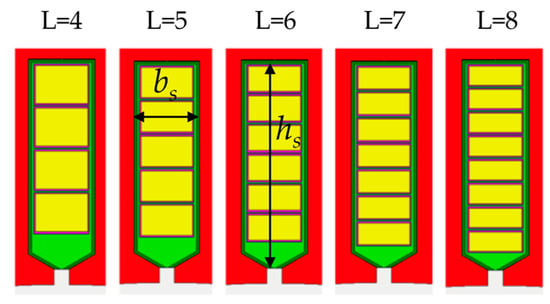
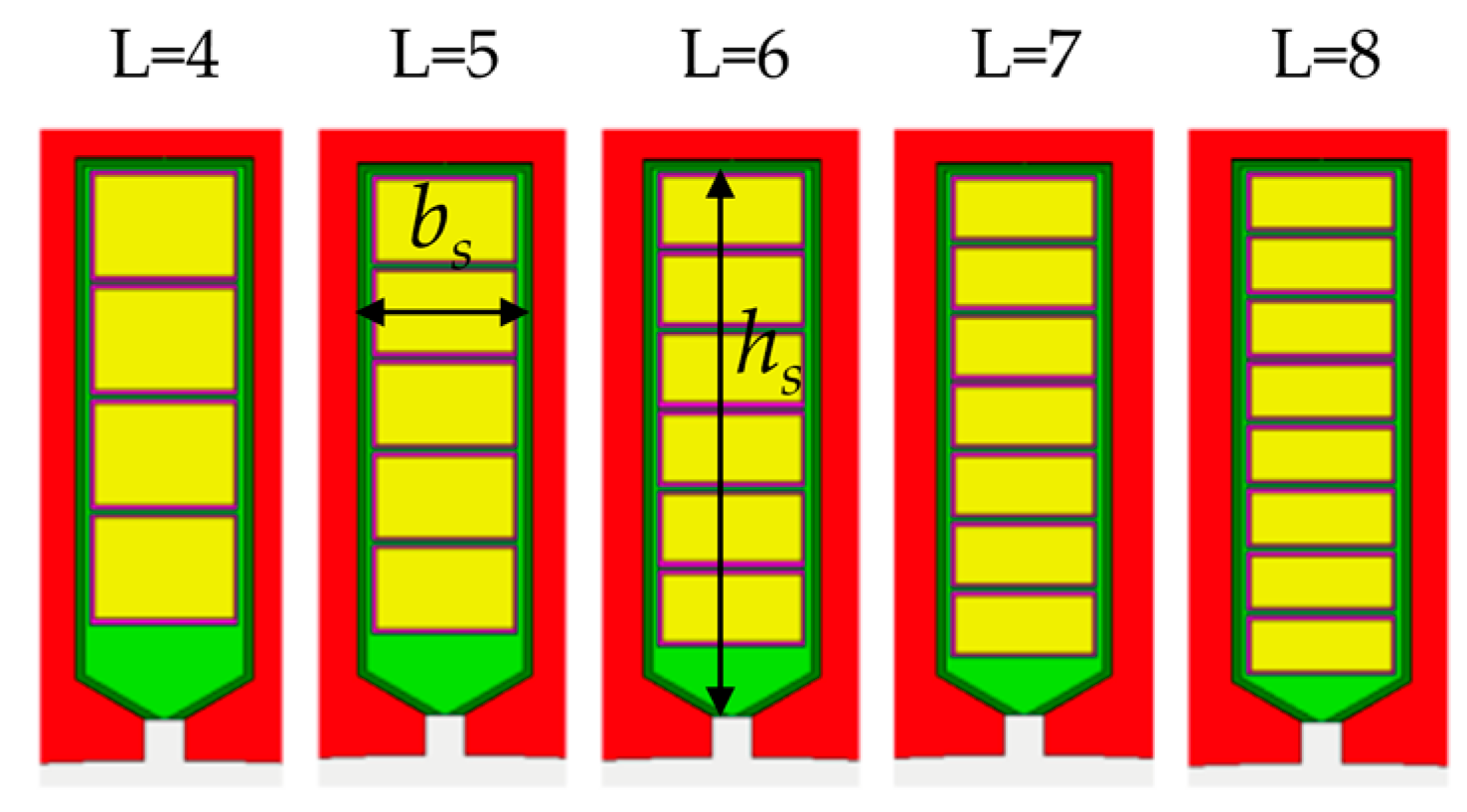
To investigate the influence of the number of flat-wire winding layers on the electromagnetic performance of the high-speed flat-wire motor, the stator slot dimensions and slot fill factor were fixed. The number of winding layers varied from four to eight, as shown in Figure 12. The conductor thickness and interlayer spacing were adjusted for each case while maintaining a current density of 17.5 A/mm2, ensuring consistent electrical loading across all designs. Corresponding winding parameters are provided in Table 4.
Figure 12.
Winding parameters for varying layer configurations, where L denotes the number of winding layers.
Table 4.
Winding parameters for different layers.
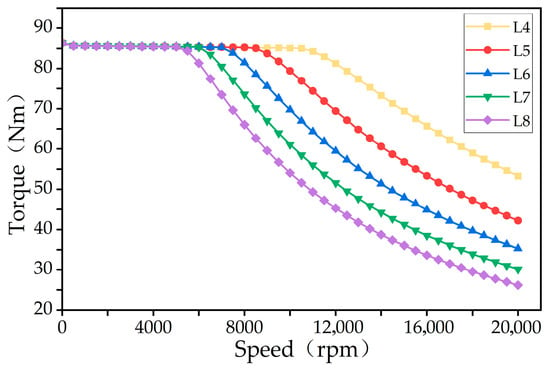
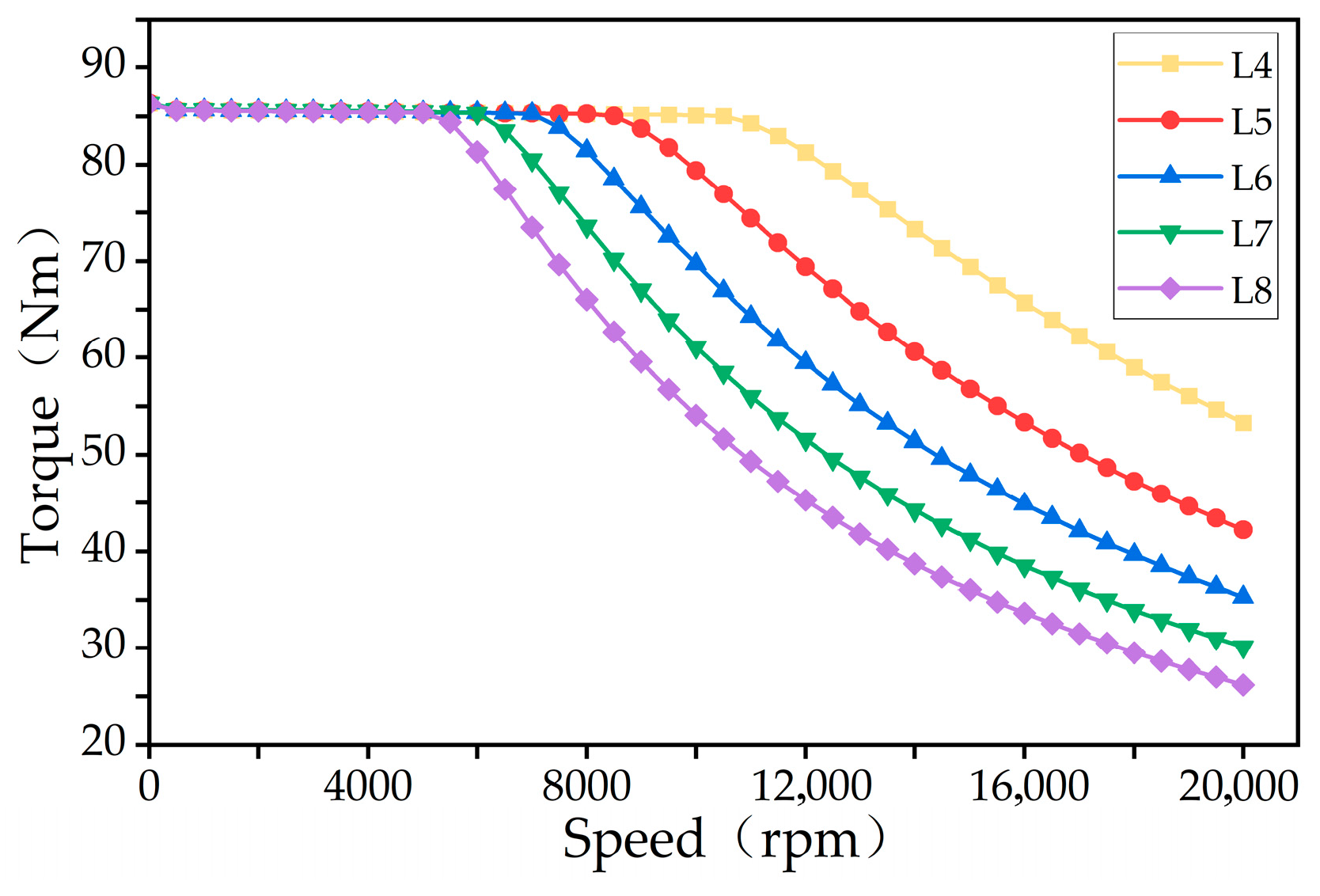
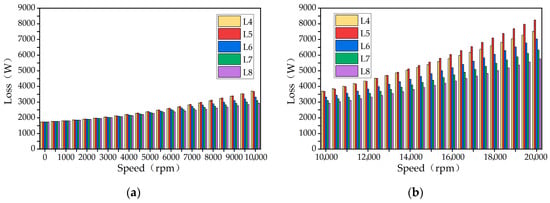
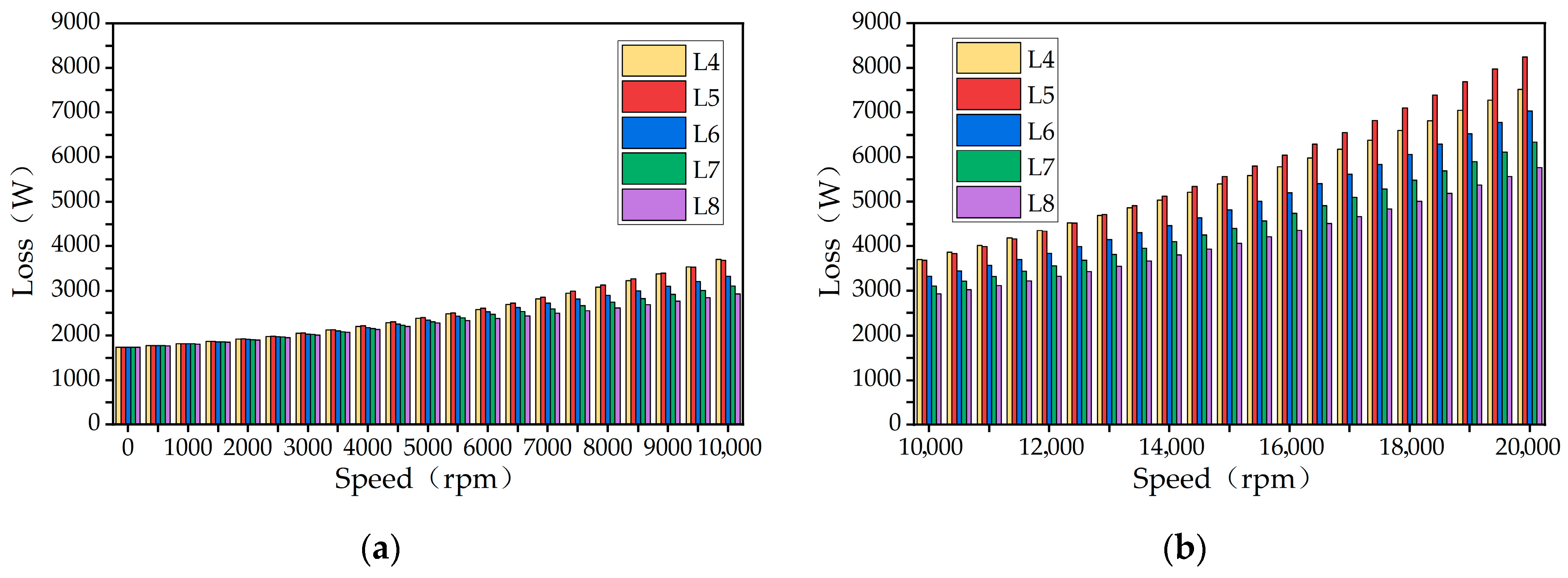
Changing the layer count alters the electromagnetic behavior of the motor. As shown in Figure 13, the torque output in the high-speed constant-power region decreases significantly with increasing winding layers. Figure 14 further shows that the electromagnetic loss is minimally affected by the layer number below 4000 r/min but becomes much more sensitive above 5000 r/min, where high-frequency effects are more pronounced. These results indicate that layer count variation modifies the air-gap field distribution and conductor magnetic coupling, which in turn affects the torque ripple, AC resistance, and loss distribution.
Figure 13.
Speed–torque curves with different flat-wire winding layer numbers.
Figure 14.
Speed–electromagnetic loss curves for different numbers of flat-wire winding layers: (a) low-speed constant-torque region; (b) high-speed constant-power region.
4.1.2. Speed–Torque Characteristic Analysis
Figure 13 presents the speed–torque characteristics of the motor with different numbers of flat-wire winding layers.
Below base speed, the torque output remains largely unaffected by layer variation, as the torque in this region is regulated by closed-loop control, which dynamically compensates for electromagnetic parameter changes such as inductance and flux linkage. Moreover, AC losses are minimal in the low-speed constant-torque region (below about 4000 r/min), further reducing the influence of the layer number on the steady-state torque. Therefore, in the design of the constant-torque operating region, the selection of the number of winding layers should primarily focus on optimizing loss, thermal management, and cost, rather than altering the torque output capability.
In the high-speed constant-power region, the output torque decreases significantly as the number of winding layers increases. At 20,000 r/min, the torque of the eight-layer winding is approximately 50.87% lower than that of the four-layer winding. This behavior is attributed to increased magnetic saturation within the slots due to multi-layer windings, which reduces the effective air-gap flux density. Under field-weakening control, higher current is required to compensate for the reduced flux linkage. However, the elevated inductance limits the current response, while sharply increased high-frequency AC losses further constrain the torque capability in the high-speed region.
4.1.3. Speed–Electromagnetic Loss Characteristic Analysis
Figure 14 shows the variation in total electromagnetic loss with motor speed for different winding layer configurations. Below 4000 r/min, the influence of the layer number is limited. Above 5000 r/min, the loss increases significantly, and the differences among the configurations become more pronounced. This is due to the combined increase in AC copper loss and core loss at higher speeds. Enhanced skin and proximity effects mainly increase the winding AC loss, while the core loss rises with speed for all configurations. Therefore, the differences among the layer configurations are mainly determined by the copper loss component.
Electromagnetic losses initially rise then fall with increasing layers, peaking at five layers. Compared to the five-layer design, losses decrease by 14.73% for the six-layer configuration. Considering both the torque characteristics in Figure 13 and the electromagnetic loss characteristics in Figure 14, the six-layer winding provides a relatively balanced compromise among the investigated configurations.
4.2. Coupled Effects of Stator Slot Dimensions
The stator slot geometry—width, depth, and shape—is critical to the motor’s electromagnetic, thermal, and power density performance. The slot area governs the conductor cross-section, current density, and copper losses. Enlarging the slot reduces copper loss but extends the magnetic path, raising iron loss and distorting the air-gap field. A narrow slot opening suppresses the cogging torque yet increases leakage flux, while a deeper slot improves space utilization but risks local saturation. Thus, the slot width-to-depth ratio requires multi-objective optimization to balance electromagnetic and thermal performance.
To study the coupling effects of the stator slot geometry, the flat-wire dimensions and slot fill factor were fixed, while the slot depth hs and slot width bs were varied. The values for hs were 14.5, 15.0, 15.5, 16.0, and 16.5 mm, and those for bs were 4.3–5.0 mm in 0.1 mm increments, resulting in 40 simulation cases.
4.2.1. Torque and Torque Ripple Correlation Analysis
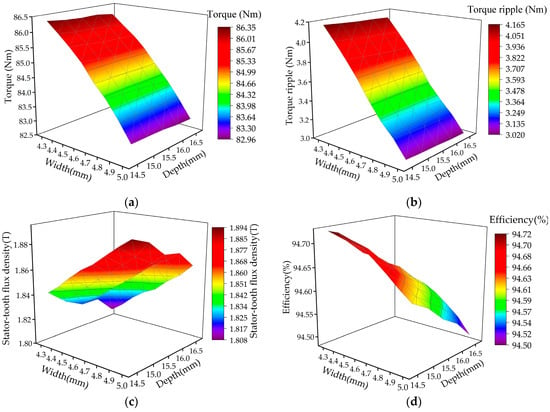
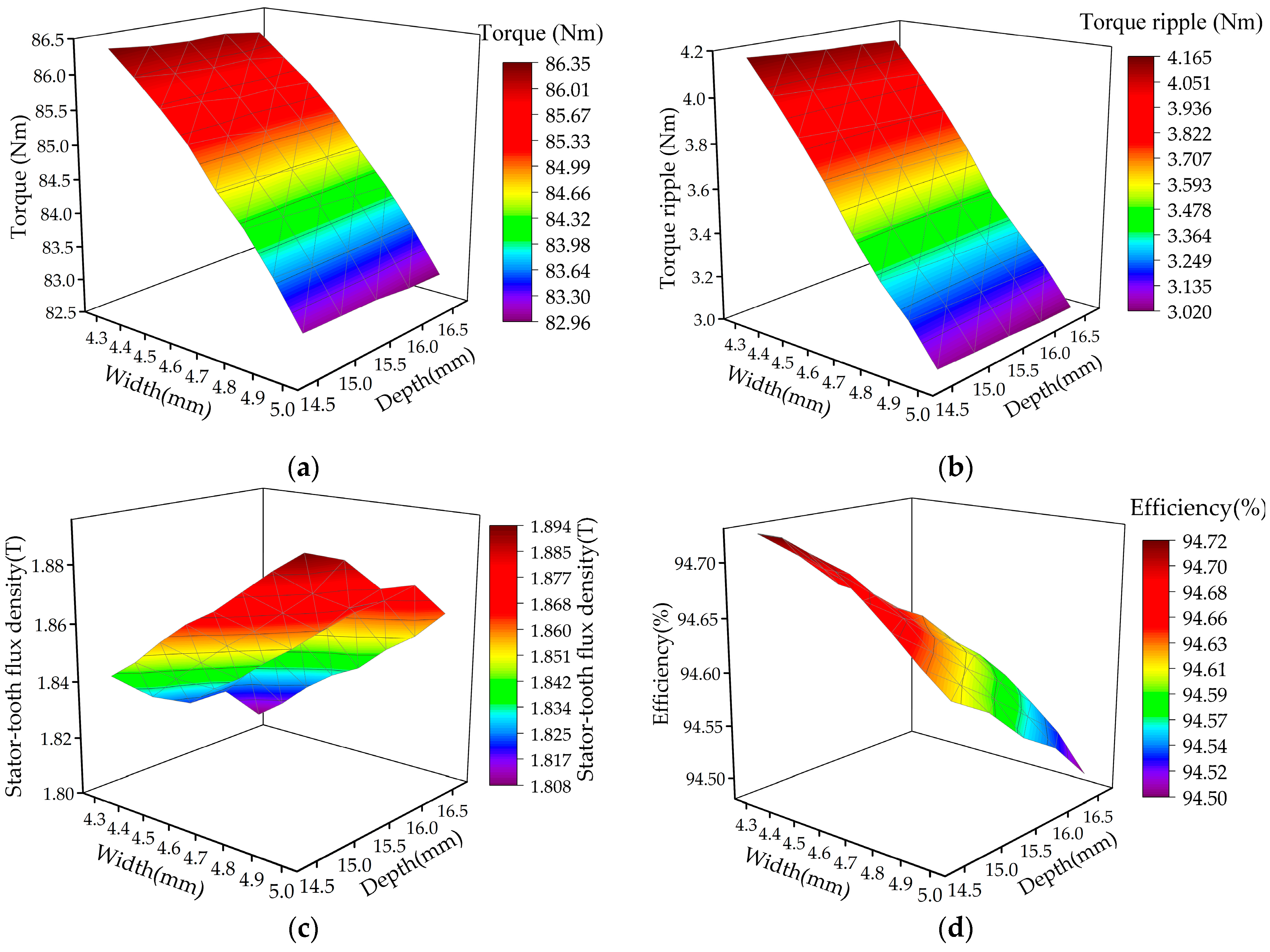
Figure 15a illustrates the variation in average torque with the stator slot depth and width under rated conditions. The simulation results show that while the torque fluctuates only slightly with slot depth (14.5–16.5 mm), it decreases notably from 86.35 N·m to 82.96 N·m as the slot width increases from 4.3 mm to 5.0 mm. This reduction stems from the lower magnetic reluctance at wider slot openings, which enhances leakage flux, diverts effective flux from the main magnetic path, weakens the air-gap field, and ultimately reduces the electromagnetic torque output.
Figure 15.
Effects of stator slot dimensions on key electromagnetic performance indices under rated operating conditions: (a) average output torque; (b) torque ripple; (c) peak stator tooth flux density; (d) motor efficiency.
Figure 15b further illustrates how the torque ripple varies with the stator slot depth and width. Under rated conditions, the torque ripple remains relatively low, in the range of 3–4 N·m. Increasing the slot depth leads to only a slight reduction in torque ripple, whereas increasing the slot width suppresses it more effectively, from 4.165 N·m to 3.02 N·m. This trend is mainly attributed to the fact that a wider slot opening modifies the local air-gap permeance distribution and weakens slotting-related harmonic components. Although the associated increase in leakage flux reduces the average torque, it also contributes to smoother air-gap field distribution and lower local magnetic saturation, thereby reducing both cogging torque and torque ripple. In addition, the multi-layer arrangement of the hairpin winding helps improve the magnetomotive force (MMF) distribution, and this combined effect further mitigates harmonic components and reduces torque pulsation. Wider slots also provide greater flexibility for the flat-wire winding layout, which is beneficial for suppressing slotting effects.
4.2.2. Correlation Analysis of Flux Density Distribution
The flux density in stator teeth is a key indicator of magnetic circuit design rationality and saturation risk. As shown in Figure 15c, under rated conditions, the peak stator tooth flux density shows no clear monotonic trend with slot width. In contrast, it exhibits a positive correlation with slot depth, increasing steadily from 1.80 T to 1.89 T as depth grows from 14.5 mm to 16.5 mm. This rise is attributed to the reduced cross-sectional area of the tooth flux path caused by deeper slots. Excessive flux density may induce local saturation, significantly increasing iron loss, reducing efficiency, and aggravating the rise in winding temperature due to prolonged heat dissipation paths, thereby raising thermal risks.
4.2.3. Correlation Analysis of Efficiency and Slot Dimensions
Figure 15d shows the efficiency versus stator slot dimensions. Increasing both the slot width and depth reduces overall efficiency, with depth having a stronger effect: efficiency falls from 94.2% to 92.1% (a reduction of 2.1%) as depth increases from 14.5 mm to 16.5 mm, while widening the slot from 4.3 mm to 5.0 mm decreases efficiency from 94.5% to 93.0% (a reduction of 1.5%). This difference occurs because a greater slot depth raises the stator tooth flux density more directly, pushing local operation toward saturation and increasing iron losses nonlinearly, thereby affecting efficiency more significantly.
Thus, stator slot design constitutes a multi-objective optimization involving the average torque, torque ripple, flux density, and efficiency. The results indicate that wider slots suppress torque ripple but reduce the average torque and efficiency, while deeper slots offer little torque improvement yet intensify saturation and efficiency loss. Following trade-off analysis, the optimal design (point A in Figure 14) adopts a slot width of 4.5 mm and depth of 15.0 mm, balancing high torque output, low torque ripple, and controlled saturation under rated conditions.
4.3. Effect of Permanent Magnet Materials
PM properties, notably the maximum energy product and thermal stability, directly govern the achievable air-gap flux density and motor demagnetization resistance. Higher remanence enhances torque density yet requires a joint optimization of temperature performance and cost relative to operating conditions and economic constraints. To quantify the influence of magnet materials, five grades of NdFeB were selected for comparison. Generally, higher grades feature greater remanence and coercivity.
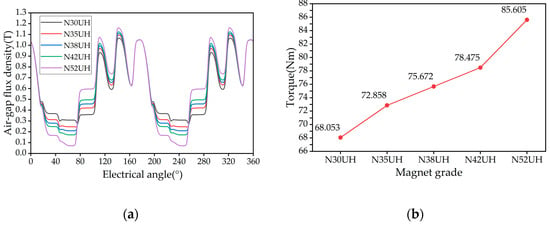
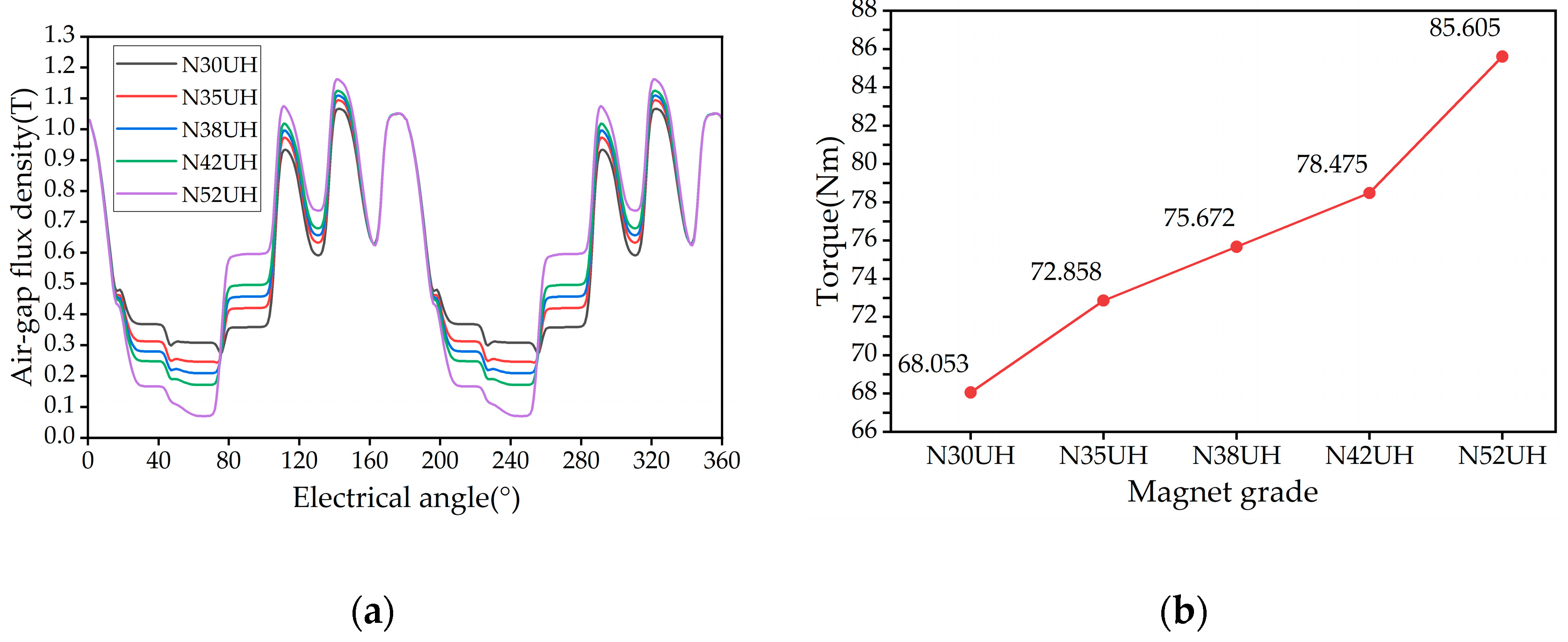
Figure 16a illustrates the variation in air-gap flux density over one electrical period for different magnet materials under the rated operating condition. A higher magnet grade results in a greater flux density amplitude, primarily due to its increased remanence. In PMSMs, this directly enhances the average electromagnetic torque, as shown in Figure 16b. Among the evaluated materials, N52UH achieves the highest flux density amplitude (1.16 T) and average torque (85.605 N·m), delivering the best overall performance.
Figure 16.
Influence of PM materials on electromagnetic performance under rated operating conditions: (a) air-gap flux density distribution; (b) average electromagnetic torque.
4.4. Effect of Permanent Magnet Pole Angle
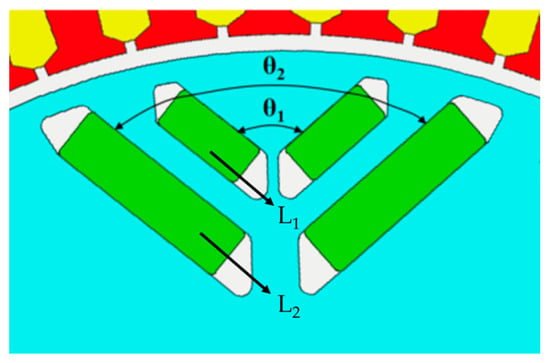
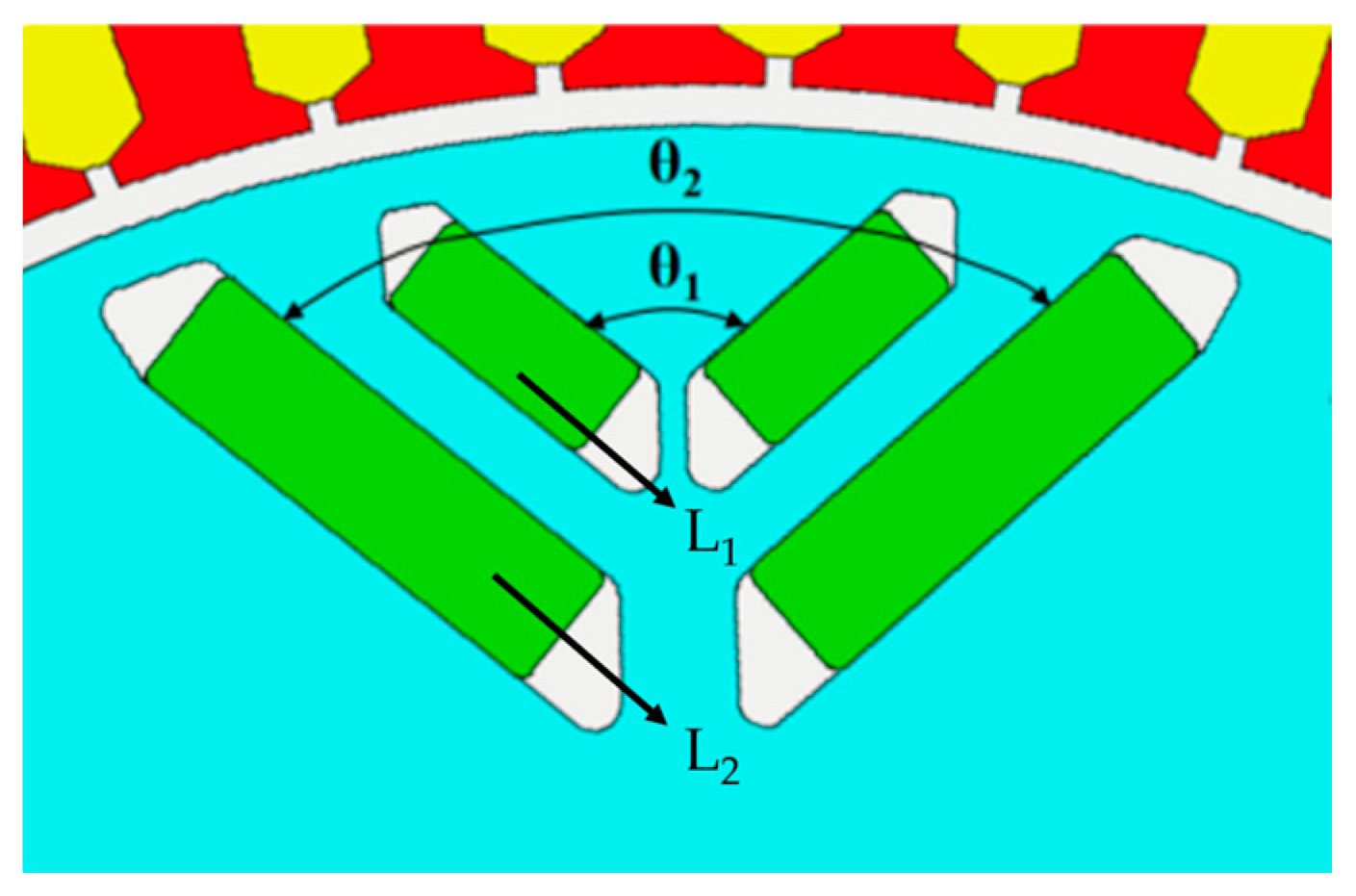
In PMSM rotor design, the magnet pole angle is a key parameter for optimizing the magnetic field distribution. Adjusting the pole angles of different layers enhances BEMF sinusoidality and reduces torque ripple, as specific combinations can suppress targeted air-gap field harmonics. However, excessive segmentation may increase leakage flux and introduce new harmonic issues. To investigate this waveform optimization mechanism in a dual-layer V-type configuration, the pole angles of layers L1 and L2 are defined as θ1 and θ2, respectively, as shown in Figure 17.
Figure 17.
Definition of PM pole angle.
Under the constraint of fixed PM dimensions, θ1 and θ2 were varied to examine their coupled effects on electromagnetic performance. Specific pole angle combinations are listed in Table 5, resulting in a total of 20 simulation cases (the case with θ1 = 120° was excluded due to geometric interference).
Table 5.
Permanent magnet pole angle parameters.
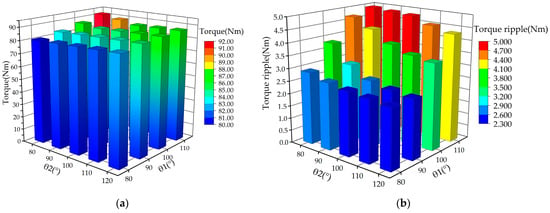
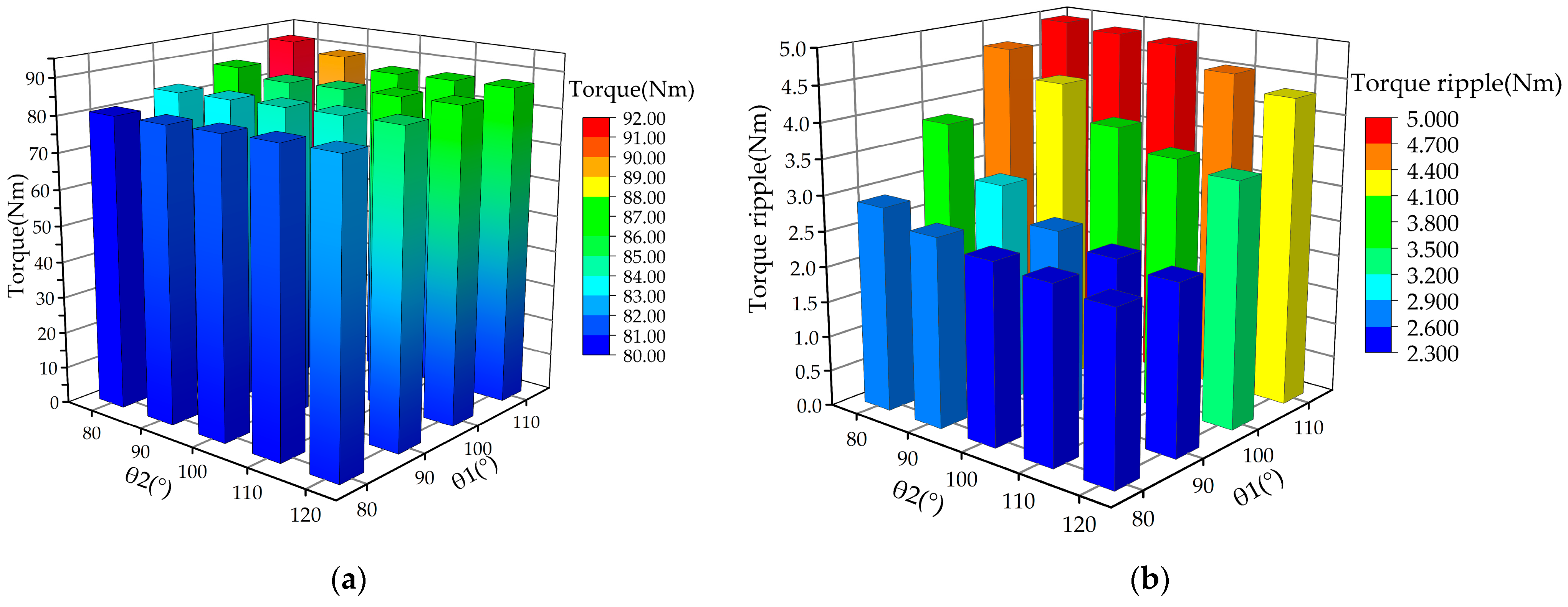
Figure 18a illustrates the average torque variation with the magnet pole angles under rated conditions. Increasing θ1 from 80° to 110° expands the pole coverage of the L1 layer and reduces the main flux-path reluctance, raising the air-gap flux density and thus the torque. For relatively small θ1 (80–90°), increasing θ2 enhances the auxiliary excitation from the L2 layer, further boosting torque. For larger θ1 (100–110°), further increases in θ2 can induce inter-layer magnetic field interaction, causing local saturation and a transient torque dip; torque later recovers somewhat as the field redistributes and saturation eases.
Figure 18.
Influence of PM pole angles on torque characteristics under rated operating conditions: (a) average torque; (b) torque ripple.
Figure 18b shows the influence of pole angles on torque ripple. Increasing θ2 improves the symmetry of the L2-layer poles, suppressing low-order air-gap harmonics and reducing torque ripple. In contrast, increasing θ1 raises pole-edge leakage flux and excites higher-order harmonics, thereby increasing torque ripple.
The simulation data further indicate that a maximum torque of 91.62 N·m is achieved at θ1 = 110° and θ2 = 80°, though the efficiency decreases by 3.2% due to severe magnetic leakage. Conversely, the minimum torque ripple of 2.38 N·m occurs at θ1 = 80° and θ2 = 120°, despite a 14.5% torque reduction. While equal angles are conventionally used for simplicity, a differentiated design offers higher performance. Considering trade-offs between torque, ripple, efficiency, and manufacturability, the balanced design θ1 = θ2 = 100° provides 85.61 N·m of torque (6.5% lower than maximum) and 3.85 N·m of torque ripple, with favorable efficiency and manufacturability.
5. Conclusions
This study investigates the electromagnetic performance of a 20,000 r/min IPM motor with a dual V-shaped rotor through finite-element analysis, supported by experimental validation of the baseline prototype. Excessive winding layers degrade inductance and limit high-speed torque, while an intermediate layer configuration offers the optimal balance between torque and loss. Increasing the stator slot width reduces torque ripple by improving field uniformity, whereas deeper slots lower efficiency due to saturation. Optimized slot dimensions achieve the best efficiency–smoothness trade-off. High-grade magnets enhance torque at increased cost, necessitating a cost–performance evaluation. Symmetric pole angles provide balanced torque and smoothness, while asymmetric angles favor either maximum torque or minimum ripple.
Future research will prioritize stator slot dimensions and winding layers based on parameter weighting, conducting electromagnetic–thermal–mechanical co-design. The coupled effects of rotor topology and magnet materials under high-efficiency and extreme conditions will also be explored.
Author Contributions
Conceptualization, L.Z. and L.Y.; methodology, L.Z. and L.Y.; software, J.Y. and L.Y.; validation, L.Y. and J.Y.; formal analysis, J.Y.; investigation, A.L. and L.Y.; resources, A.L.; data curation, L.Y. and J.Y.; writing—original draft preparation, L.Y.; writing—review and editing, L.Z.; visualization, A.L.; supervision, L.Z.; project administration, L.Z.; funding acquisition, L.Z. All authors have read and agreed to the published version of the manuscript.
Funding
This research was funded by the National Key Research and Development Program, grant number 2022YFB2502702, and the Beijing Natural Science Foundation, grant number L247005.
Data Availability Statement
The original contributions presented in this study are included in the article. Further inquiries can be directed to the corresponding author.
Conflicts of Interest
Authors Jianghaoyu Yan were employed by the company Shanghai Huawei Technologies Co., Ltd. The remaining authors declare that the research was conducted in the absence of any commercial or financial relationships that could be construed as a potential conflict of interest.
Nomenclature
The following abbreviations are used in this manuscript:
| Abbreviations | ||
| PMSM | Permanent-magnet synchronous motor | |
| EV | Electric vehicle | |
| PM | Permanent magnet | |
| BEMF | Back electromotive force | |
| Symbols | ||
| B | Magnetic flux density | T |
| H | Magnetic field strength | A/m |
| Bg | Air-gap magnetic flux density | T |
| L | Inductance | H |
| id | d-axis current | A |
| iq | q-axis current | A |
| UDC | DC bus voltage | V |
| IDC | DC bus current | A |
| n | Rotational speed | r/min |
| Te | Electromagnetic torque | N·m |
| η | Efficiency | % |
| θ1 | First rotor skew angle | ° |
| θ2 | Second rotor skew angle | ° |
References
- Yao, X.; Wang, Y.; Chen, S. Research on Cogging Torque of a V-Type Interior Permanent Magnet Synchronous Motor. Micromotors 2020, 53, 28–32. [Google Scholar] [CrossRef]
- Tenconi, A.; Vaschetto, S.; Vigliani, A. Electrical machines for high-speed applications: Design considerations and tradeoffs. IEEE Trans. Ind. Electron. 2014, 61, 3022–3029. [Google Scholar] [CrossRef] [Scilit]
- Popescu, M.; Goss, J.; Staton, D.A.; Hawkins, D.; Chong, Y.C.; Boglietti, A. Electrical Vehicles-Practical Solutions for Power Traction Motor Systems. IEEE Trans. Ind. Appl. 2018, 54, 2751–2762. [Google Scholar] [CrossRef] [Scilit]
- Preci, E.; Gerada, D.; Degano, M.; Buticchi, G.; Gerada, C.; Nuzzo, S.; Barater, D. Hairpin Windings: Sensitivity Analysis and Guidelines to Reduce AC Losses. In Proceedings of the 2021 IEEE Workshop on Electrical Machines Design, Control and Diagnosis (WEMDCD), Virtual, 8–9 April 2021. [Google Scholar] [CrossRef] [Scilit]
- Wrobel, R.; Mellor, P.H.; Popescu, M.; Staton, D.A. Power Loss Analysis in Thermal Design of Permanent-Magnet Machines—A Review. IEEE Trans. Ind. Appl. 2016, 52, 1359–1368. [Google Scholar] [CrossRef] [Scilit]
- Jiang, J.; Zou, T.; La Rocca, S.; Huang, H.; Ren, X.; La Rocca, A.; Prystupa, D.; Chen, D.; Gerada, D.; Zhu, S.; et al. Comparative Study of Stranded and Hairpin Windings for 250 kW Continuous Operation of High-Speed Heavy-Duty EV Traction Motor. IEEE Trans. Ind. Appl. 2025, 61, 9254–9268. [Google Scholar] [CrossRef] [Scilit]
- Choi, M.; Choi, G. Modeling, Investigation, and Mitigation of AC Losses in IPM Machines with Hairpin Windings for EV Applications. Energies 2021, 14, 8034. [Google Scholar] [CrossRef] [Scilit]
- Ismaeel, S.M.; Ibrahim, M.N.; Rashad, E.M.; Sergeant, P. Asymmetric Hairpin Winding Design for Losses Reduction with Thermal Analysis for an Electric Vehicle Case Study. Energies 2024, 17, 6494. [Google Scholar] [CrossRef] [Scilit]
- Liu, J.; Fan, X.; Li, D.; Qu, R.; Fang, H. Minimization of AC Copper Loss in Permanent Magnet Machines by Transposed Coil Connection. IEEE Trans. Ind. Appl. 2021, 57, 2460–2470. [Google Scholar] [CrossRef] [Scilit]
- Han, C.; Zhao, N.; Xu, M.; Yang, Y.; Chen, G. Loss Analysis and Optimal Design of Stator Windings in Hairpin Motors for Electric Vehicles. Qiche Jishu (Automob. Technol.) 2023, 1, 29–36. [Google Scholar] [CrossRef]
- Chen, L.; Yan, Y. Power Loss Analysis and Cooling Design of Flat Wire Motor Winding for Vehicle Electrical Motor. J. Shanghai Univ. Eng. Sci. 2023, 37, 155–163. [Google Scholar] [CrossRef]
- Bianchini, C.; Vogni, M.; Torreggiani, A.; Nuzzo, S.; Barater, D.; Franceschini, G. Slot Design Optimization for Copper Losses Reduction in Electric Machines for High Speed Applications. Appl. Sci. 2020, 10, 7425. [Google Scholar] [CrossRef] [Scilit]
- Chen, X.; Fang, H.; Fan, X.; Hu, H.; Li, D.; Qu, R. Suppression of Winding AC Copper Loss in High-Speed Electrical Machines by a Practical Transposition Technique. IEEE Trans. Ind. Appl. 2022, 58, 7121–7130. [Google Scholar] [CrossRef] [Scilit]
- Schwager, L.; Tuysuz, A.; Zwyssig, C.; Kolar, J.W. Modeling and Comparison of Machine and Converter Losses for PWM and PAM in High-Speed Drives. IEEE Trans. Ind. Appl. 2014, 50, 995–1006. [Google Scholar] [CrossRef] [Scilit]
- Lee, J.-H.; Sung, S.; Cho, H.-W.; Choi, J.-Y.; Shin, K.-H. Investigation of Electromagnetic Losses Considering Current Harmonics in High-Speed Permanent Magnet Synchronous Motor. Energies 2022, 15, 9213. [Google Scholar] [CrossRef] [Scilit]
- Wang, X.; Fan, Y.; Chen, J.; Lei, Y.; Chen, Q.; Lee, C.H.T. The Current Region Control Strategy with Wide Speed Range of Radial-Axial Consequent Pole Hybrid Excitation Machine for Electric Vehicles. IEEE Trans. Transp. Electrif. 2024, 10, 1377–1387. [Google Scholar] [CrossRef] [Scilit]
- Yildirim, M.; Oksuztepe, E. Effect of Permanent Magnet Material Properties on Cogging Torque of PMSM. In Proceedings of the 2025 7th Global Power, Energy and Communication Conference (GPECOM), Bochum, Germany, 11–13 June 2025. [Google Scholar] [CrossRef] [Scilit]
- Chen, Y. Optimization Design of Flat Wire Permanent Magnet Synchronous Motor for Electric Vehicles. In Proceedings of the 2023 3rd International Conference on Electrical Engineering and Mechatronics Technology (ICEEMT), Nanjing, China, 21–23 July 2023. [Google Scholar] [CrossRef] [Scilit]
- Lin, H.; Seangwong, P.; Fernando, N.; Siritaratiwat, A.; Khunkitti, P. Torque capability enhancement of commercial interior permanent magnet motors using t-shaped notching and merged barrier rotor topology. Results Eng. 2025, 26, 105108. [Google Scholar] [CrossRef] [Scilit]
- Niu, L.; Zhang, M. The optimal design and research of interior permanent magnet synchronous motors for electric vehicle applications. J. Eng. 2023, 2023, 12258. [Google Scholar] [CrossRef] [Scilit]
- ISO 21782-5; Electrically Propelled Road Vehicles—Test Specification for Electric Propulsion Components—Part 5: Operating Load Testing of the Motor System. International Organization for Standardization: Geneva, Switzerland, 2021.
- GB/T 18488-2024; Drive Motor System for Electric Vehicles. State Administration for Market Regulation and Standardization Administration of the People’s Republic of China: Beijing, China, 2024.

Disclaimer/Publisher’s Note: The statements, opinions and data contained in all publications are solely those of the individual author(s) and contributor(s) and not of MDPI and/or the editor(s). MDPI and/or the editor(s) disclaim responsibility for any injury to people or property resulting from any ideas, methods, instructions or products referred to in the content. |
© 2026 by the authors. Licensee MDPI, Basel, Switzerland. This article is an open access article distributed under the terms and conditions of the Creative Commons Attribution (CC BY) license.