Optimization Design of Pneumatic Heat-Generating Blower Impeller Based on Kriging Model and NSGA-II


Abstract
1. Introduction
2. Materials and Methods
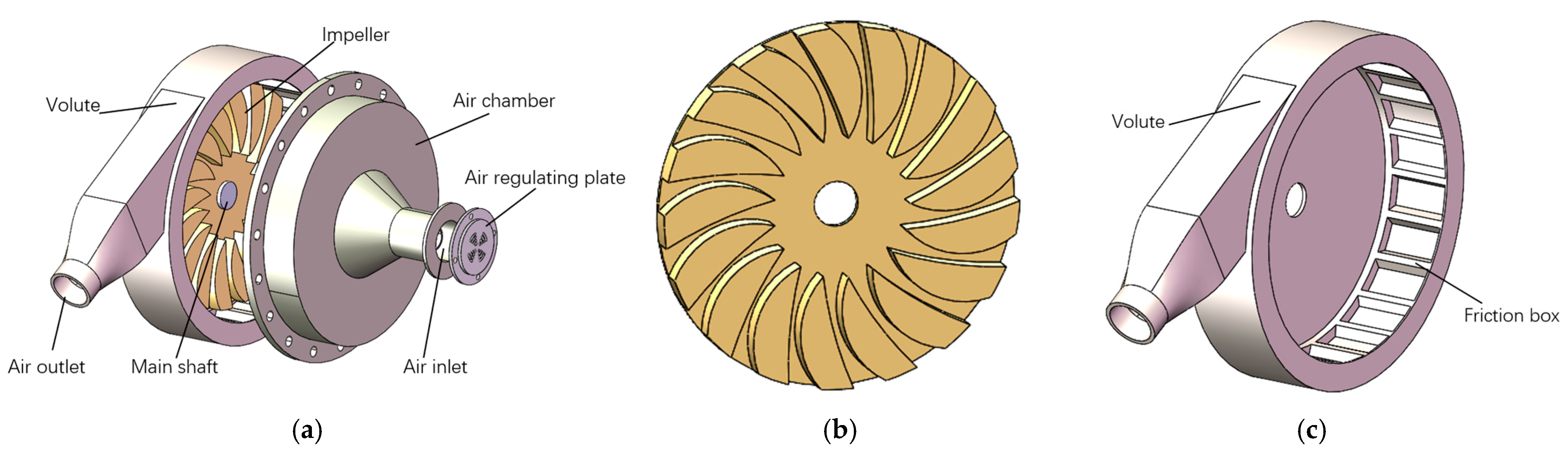
2.1. Component Structure
2.2. Working Principle and Features
- (1)
- No additional heat sources or heat transfer media are required; the heating process can be accomplished solely via mechanical energy. Consequently, it is particularly suitable for fire- and explosion-prone environments, such as the petroleum and chemical industries.
- (2)
- Both heat generation efficiency and heat transfer efficiency are high, allowing for rapid air heating within a short timeframe.
- (3)
- The equipment utilizes electrical energy as its energy source and generates no pollutants, thereby exhibiting environmental friendliness.
2.3. Impeller Structural Design
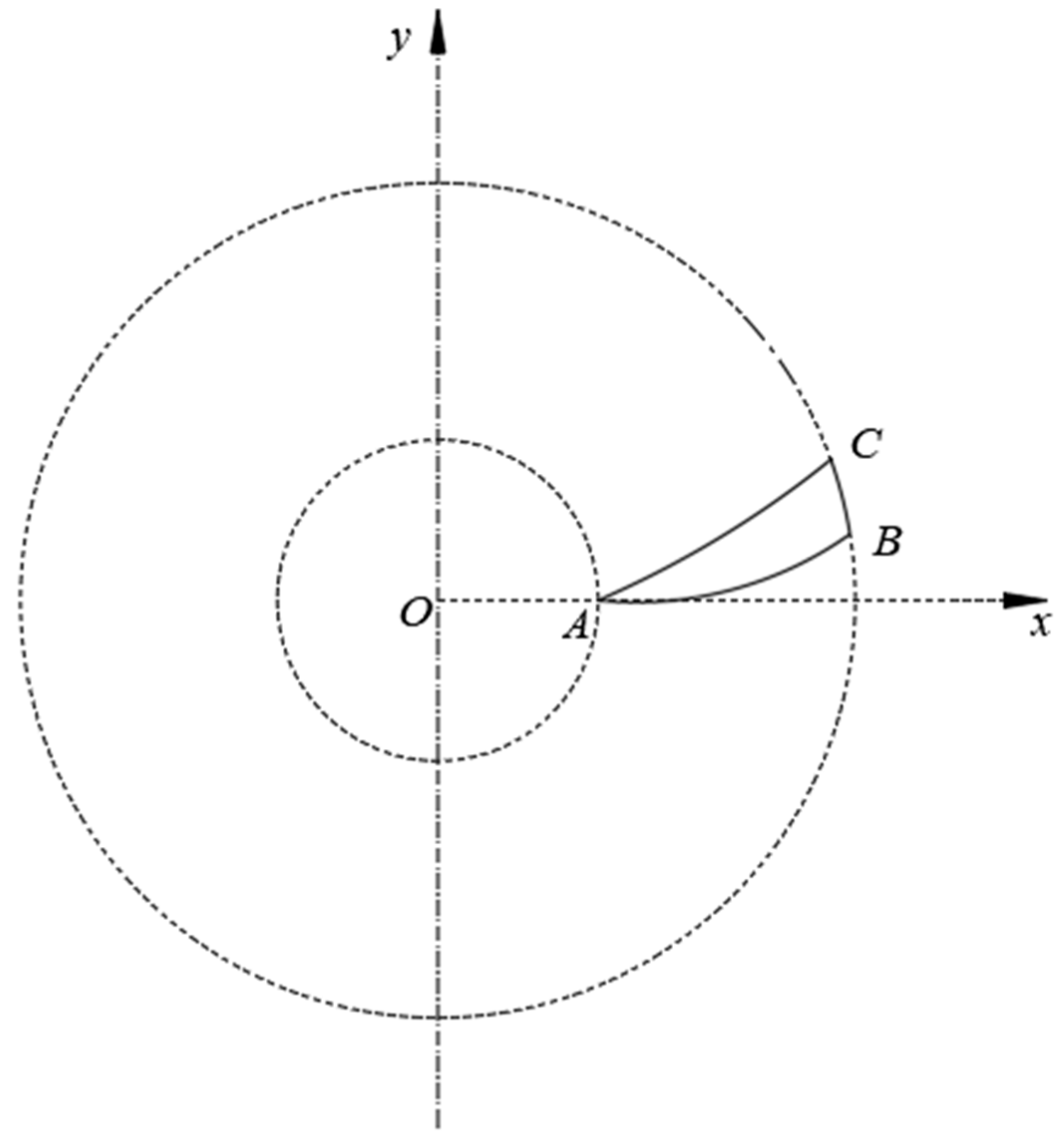
2.3.1. Establishment of a Blade Mathematical Model
- (1)
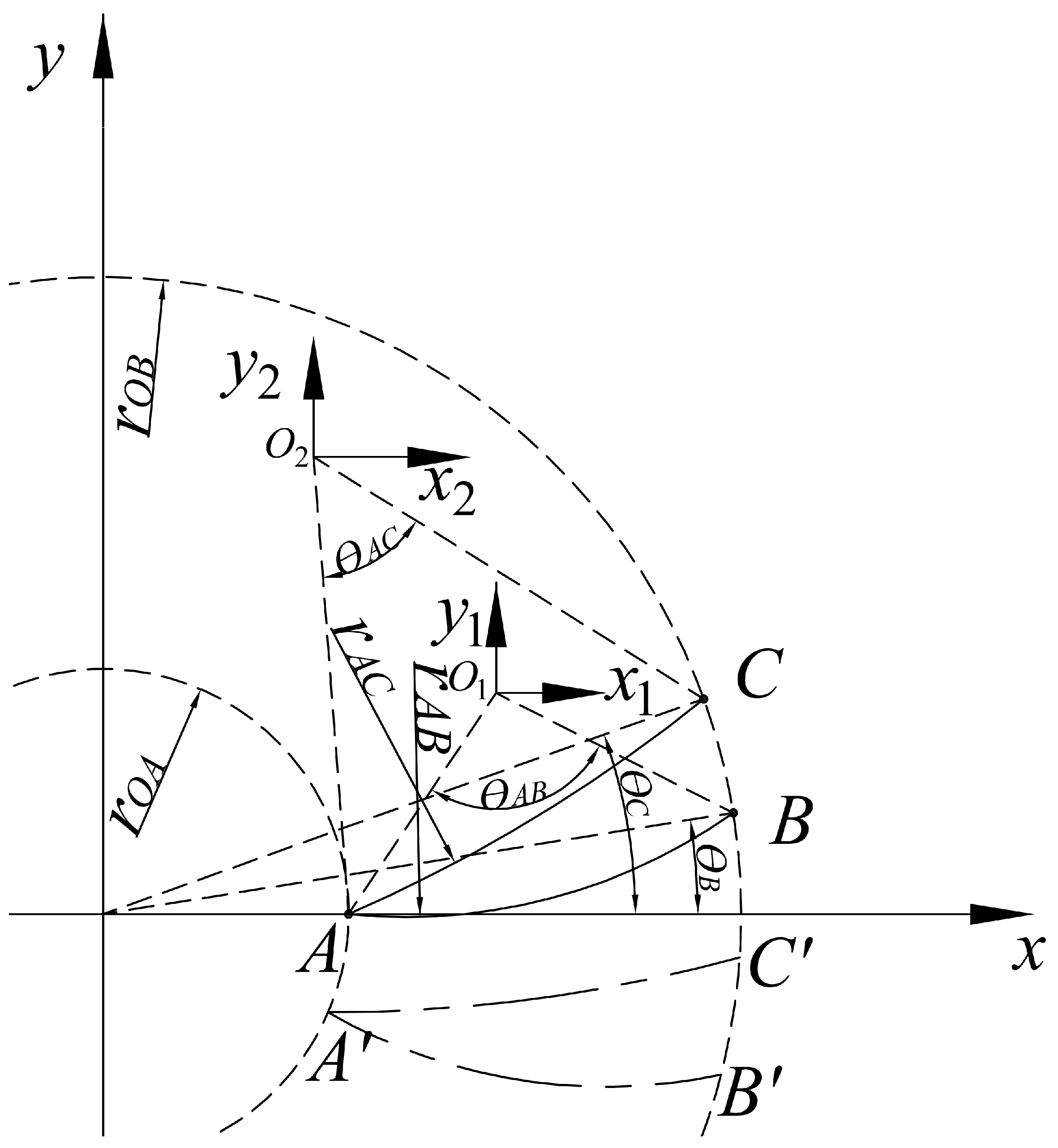
- mathematical model. In the local Cartesian coordinate system x1O1y1, the equation for arc is as follows:
- (2)
- mathematical model. In the local Cartesian coordinate system x2O2y2, the equation for arc is as follows:
- (3)
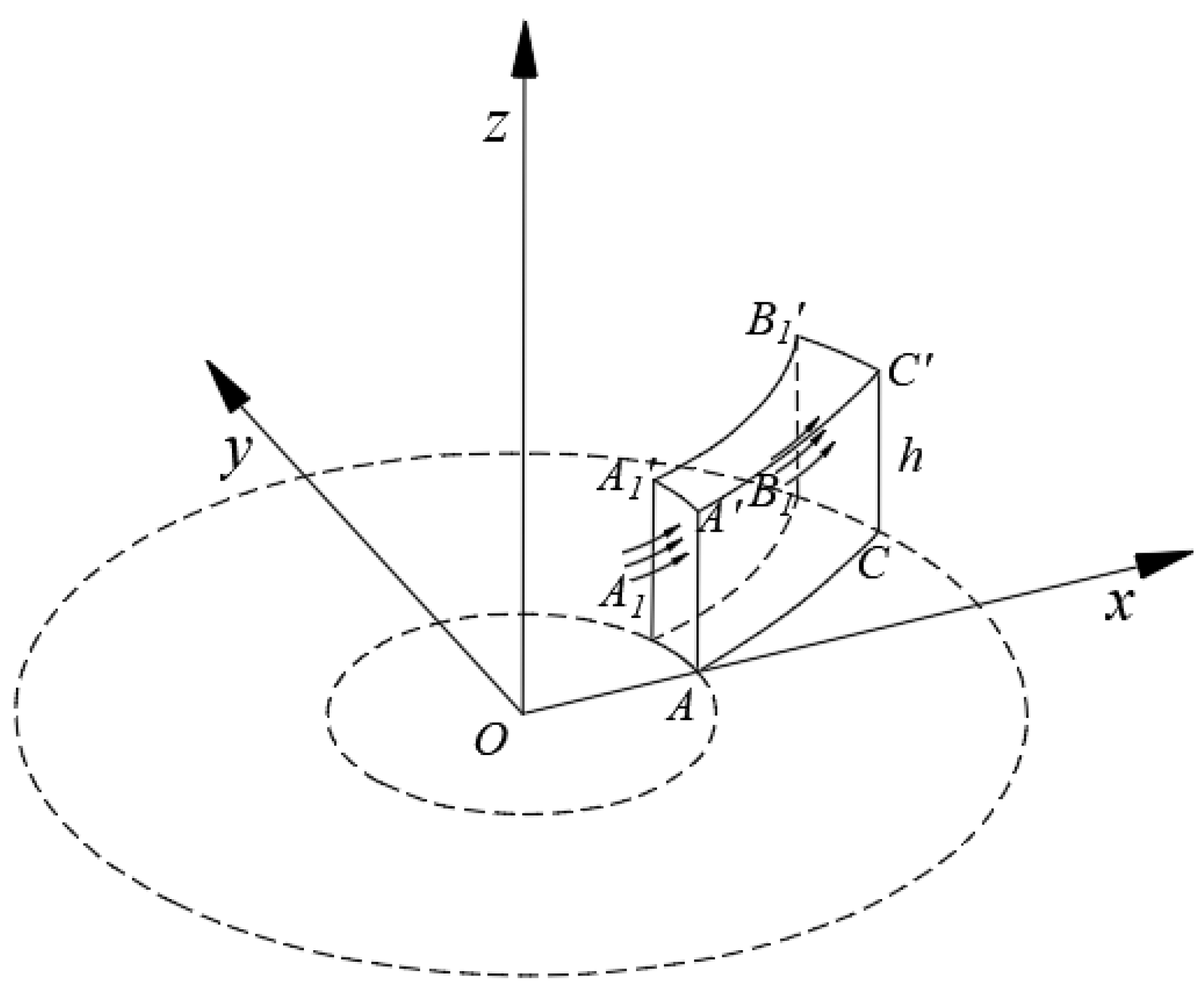
- mathematical model. In the global Cartesian coordinate system xOy, the equation for arc is as follows:
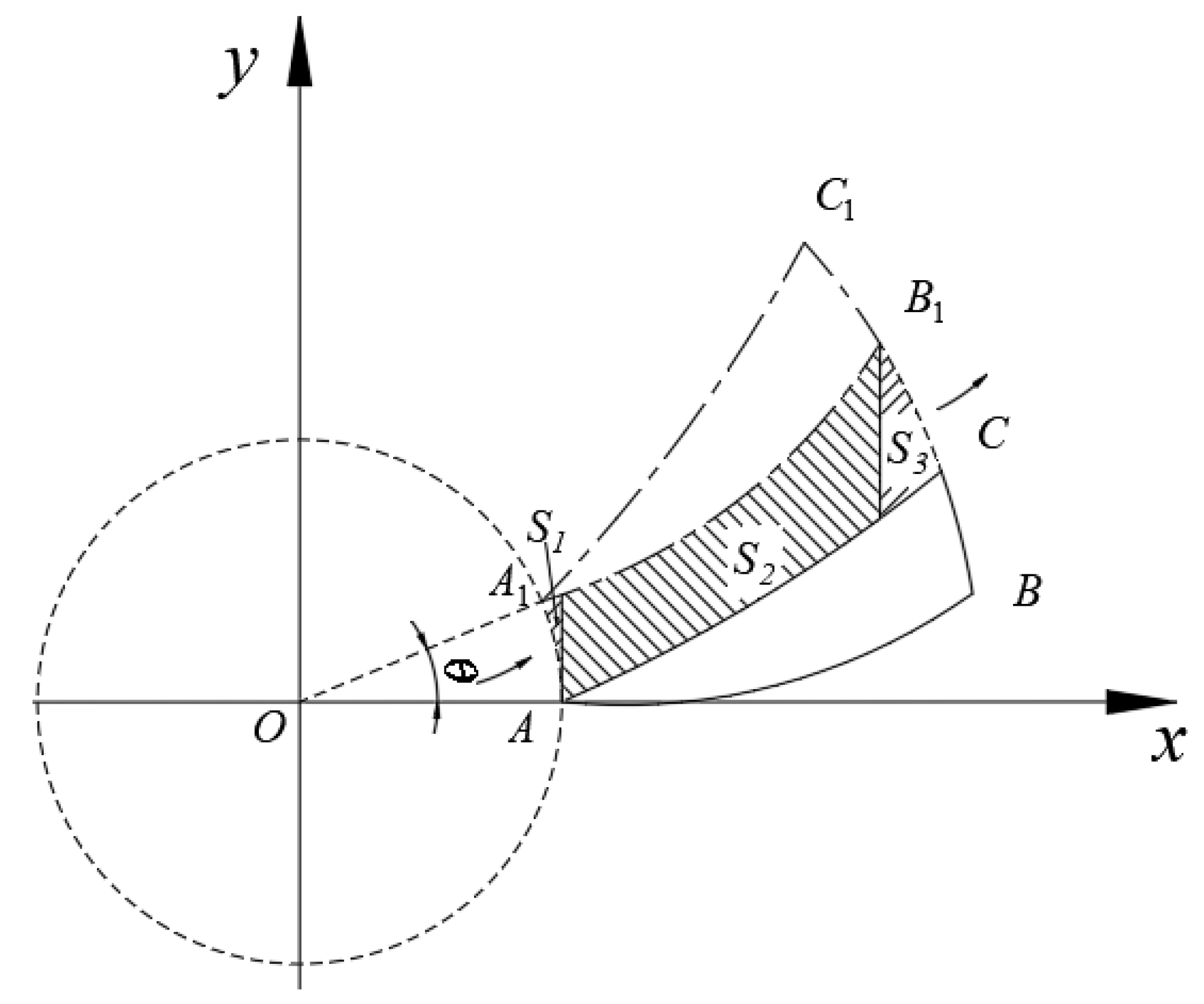
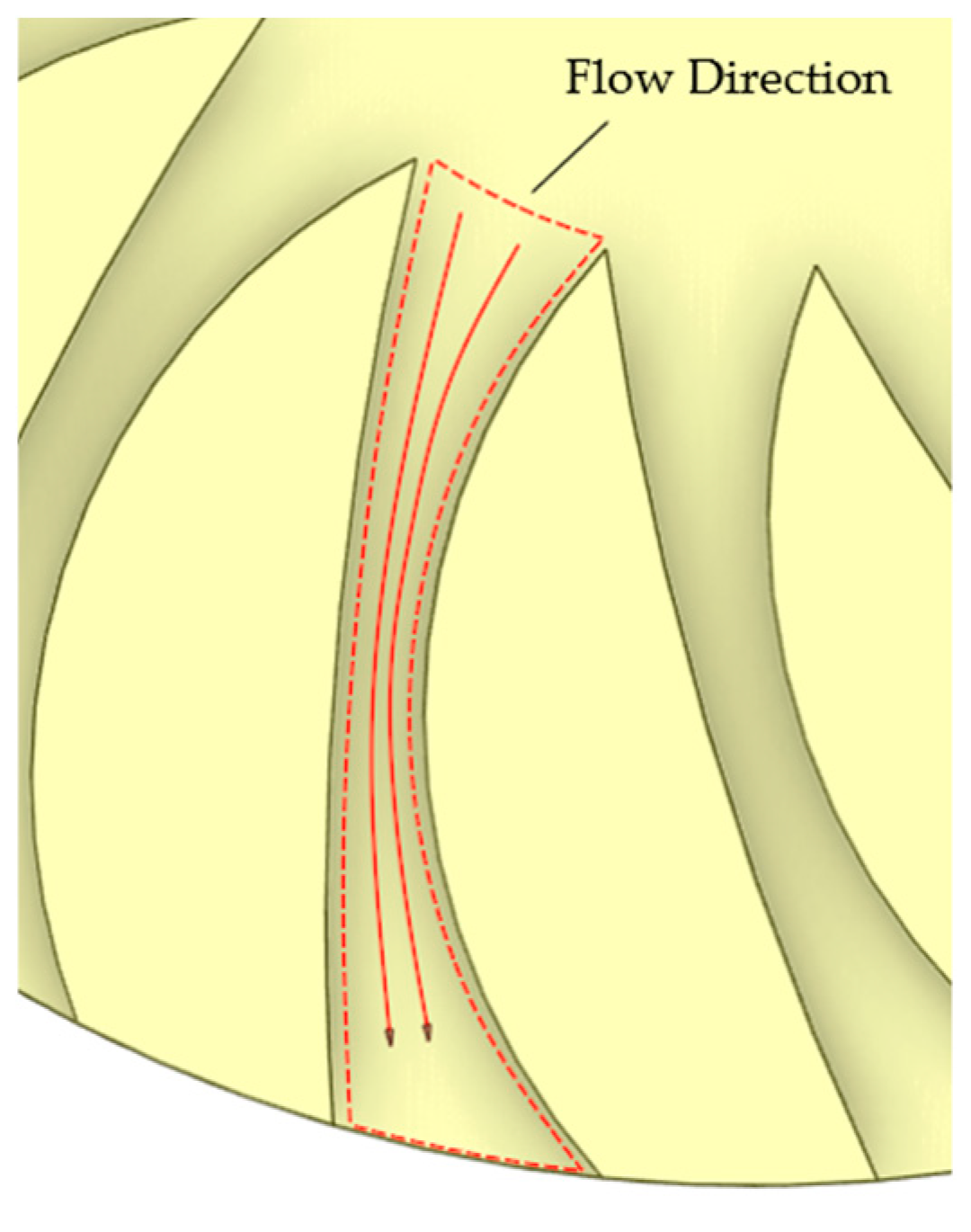
2.3.2. Analysis on Flow Channel Structure
2.4. Optimization of Impeller Parameters
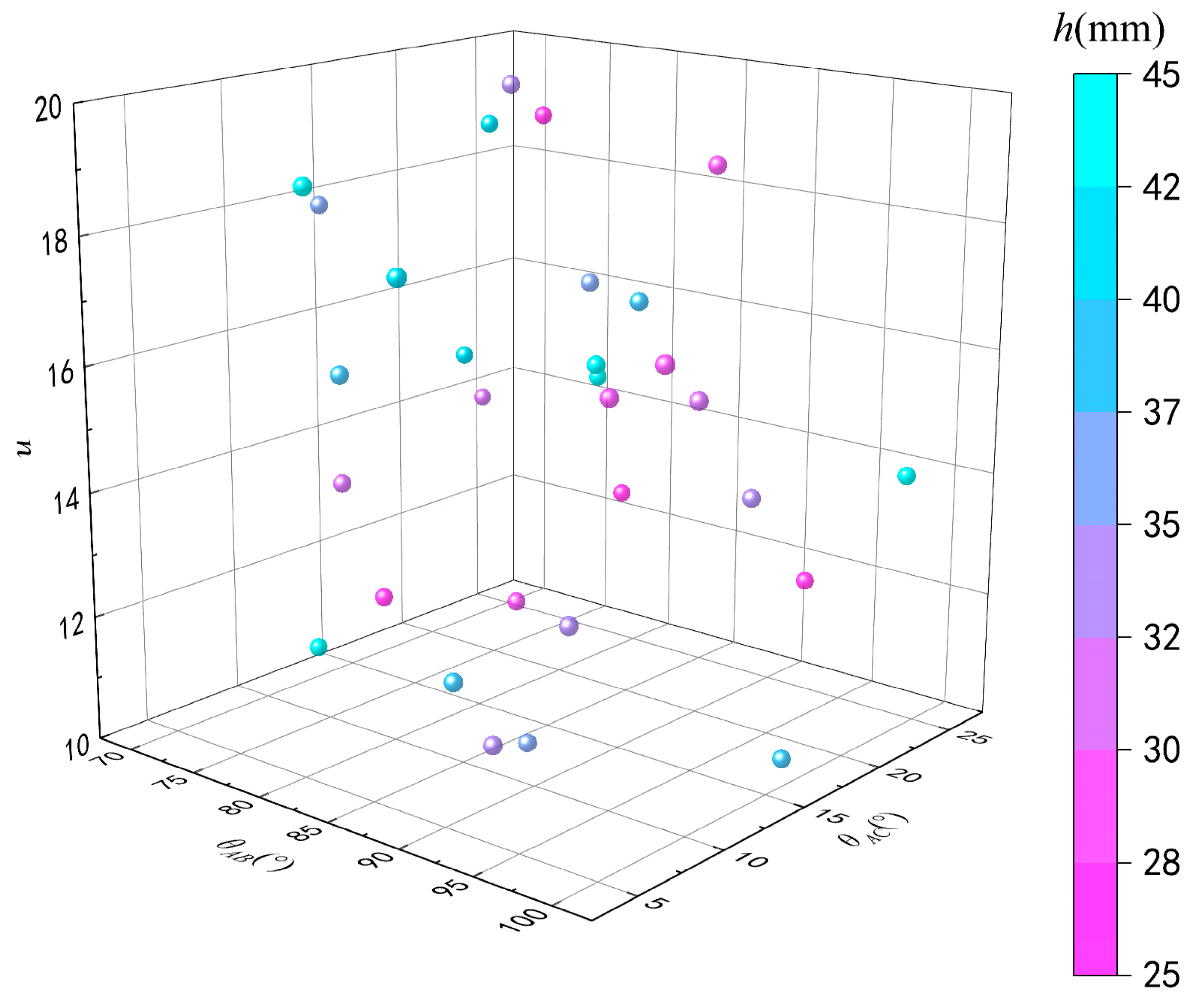
2.4.1. Optimization Parameters and Objective Parameters
2.4.2. Optimization Algorithm
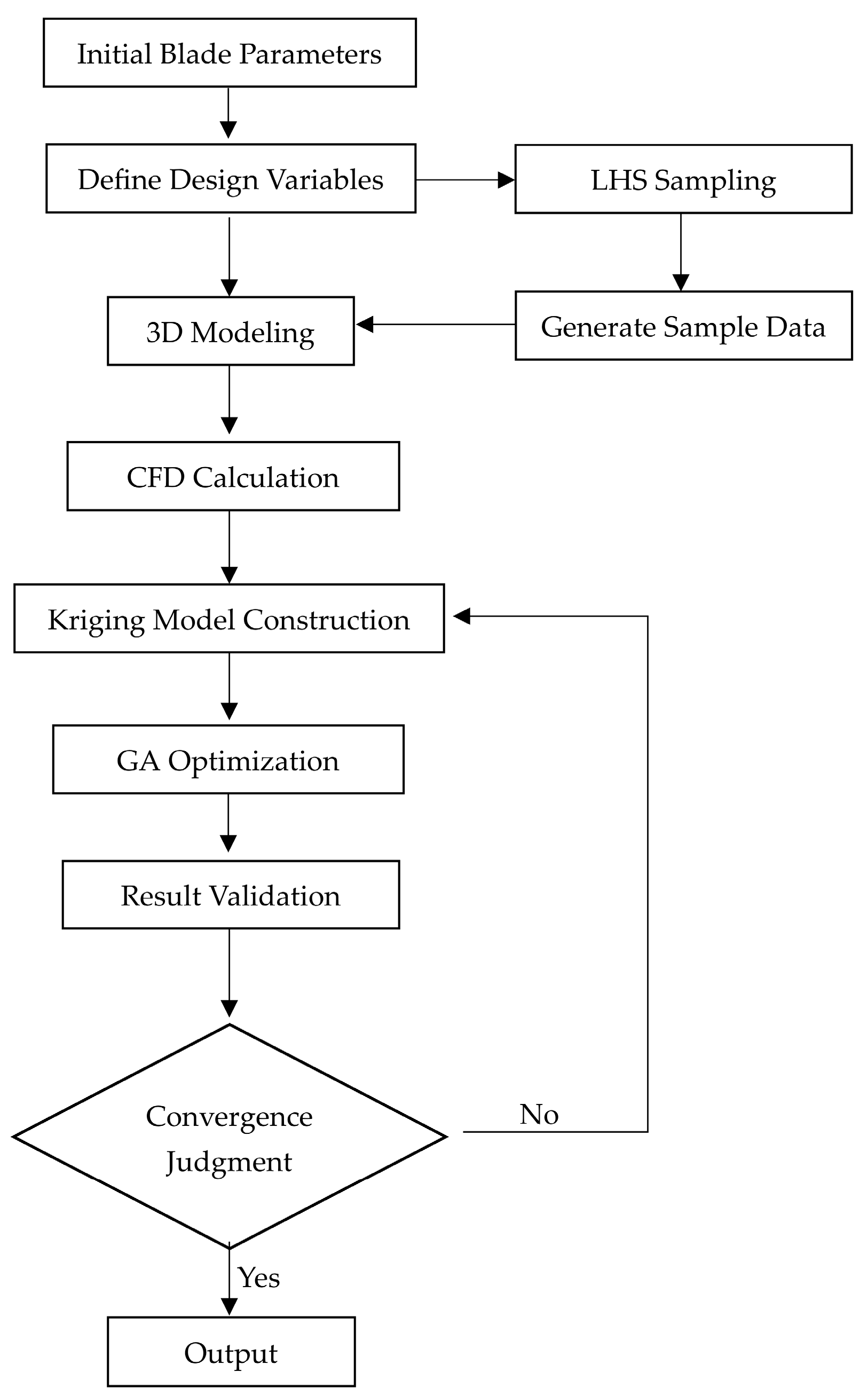
- (1)
- Latin Hypercube Sampling (LHS)
- (2)
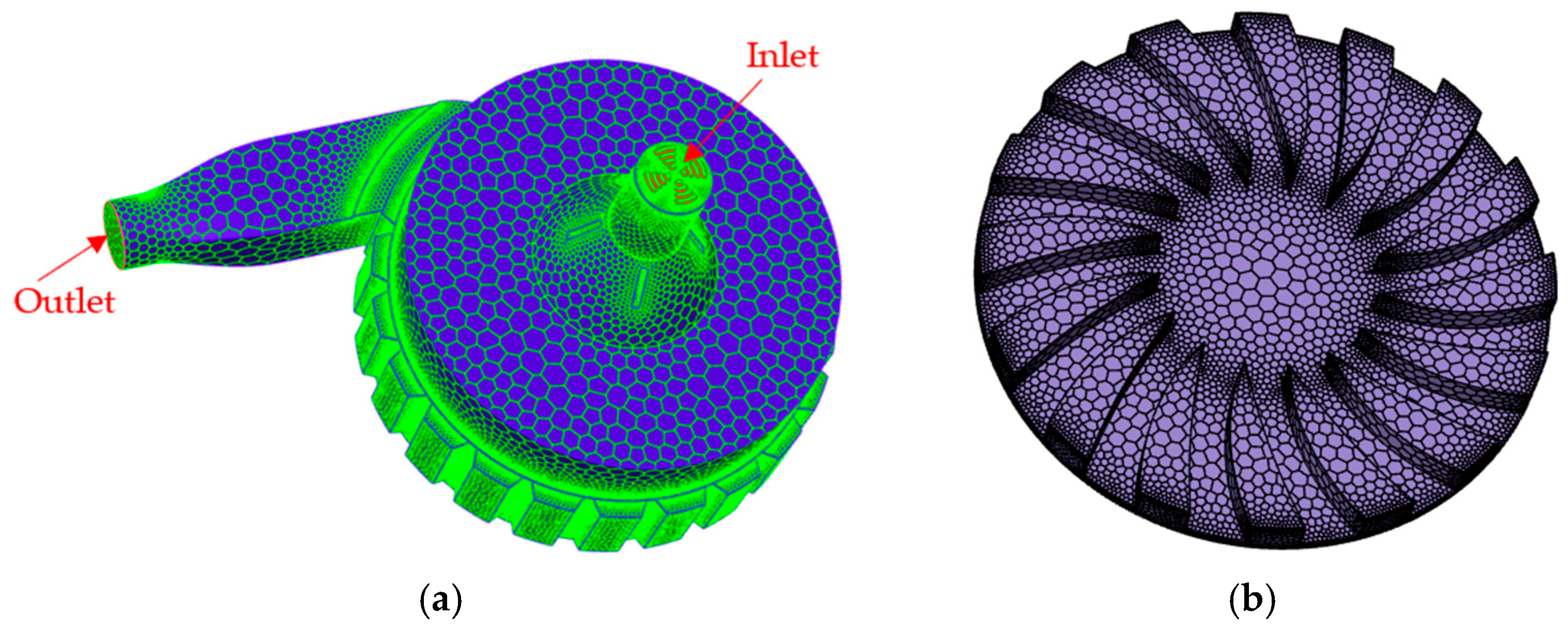
- CFD settings
- (3)
- Mesh independence verification and experimental validation
- (4)
- Kriging model
- (5)
- Genetic Algorithm
3. Results and Discussion
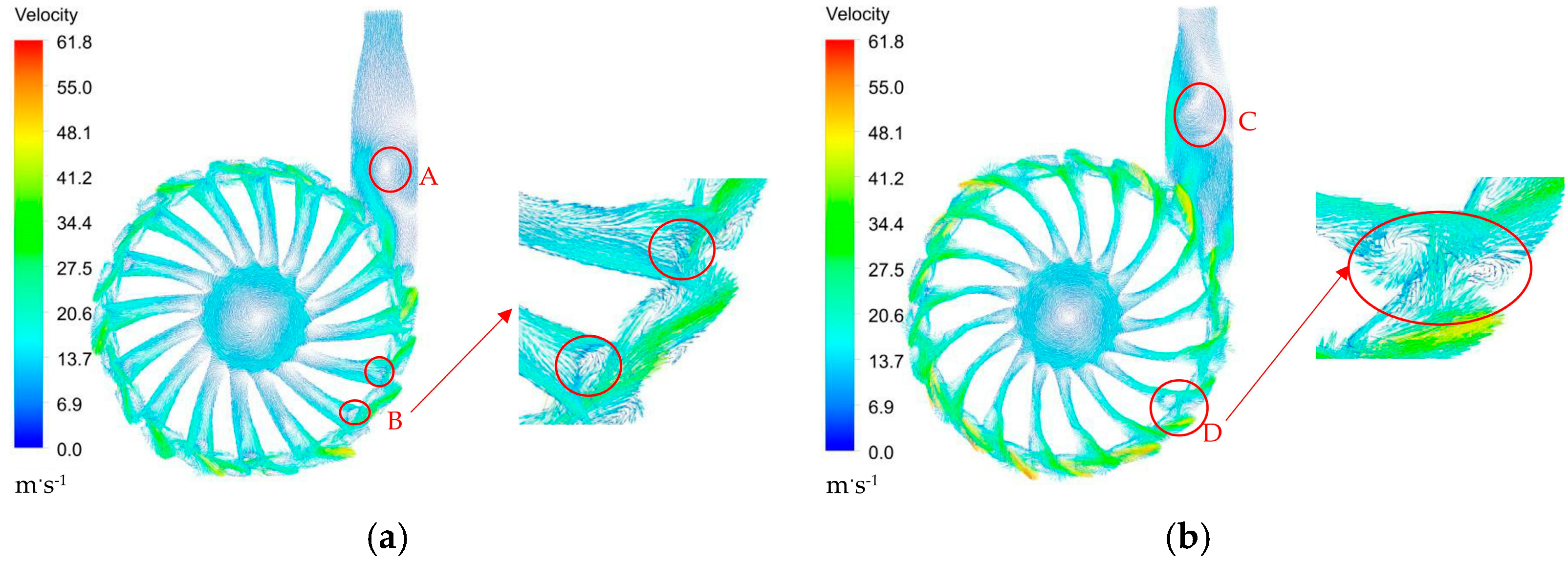
3.1. Analysis of the Velocity Flow Field
3.2. Analysis of the Pressure Field
3.3. Analysis of the Flow Channel Temperature Field
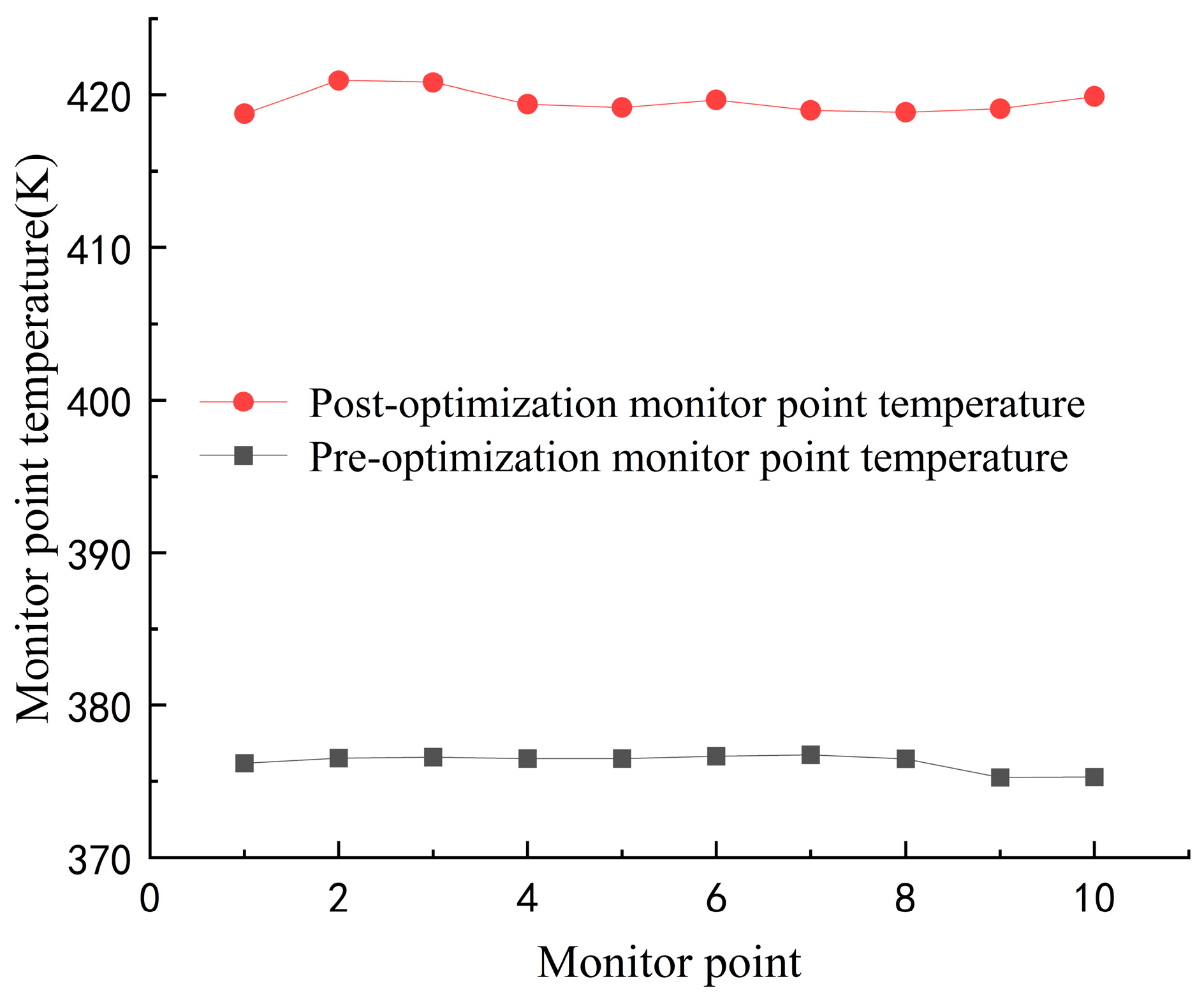
3.4. Analysis of the Outlet Pipe Temperature and Velocity Fields
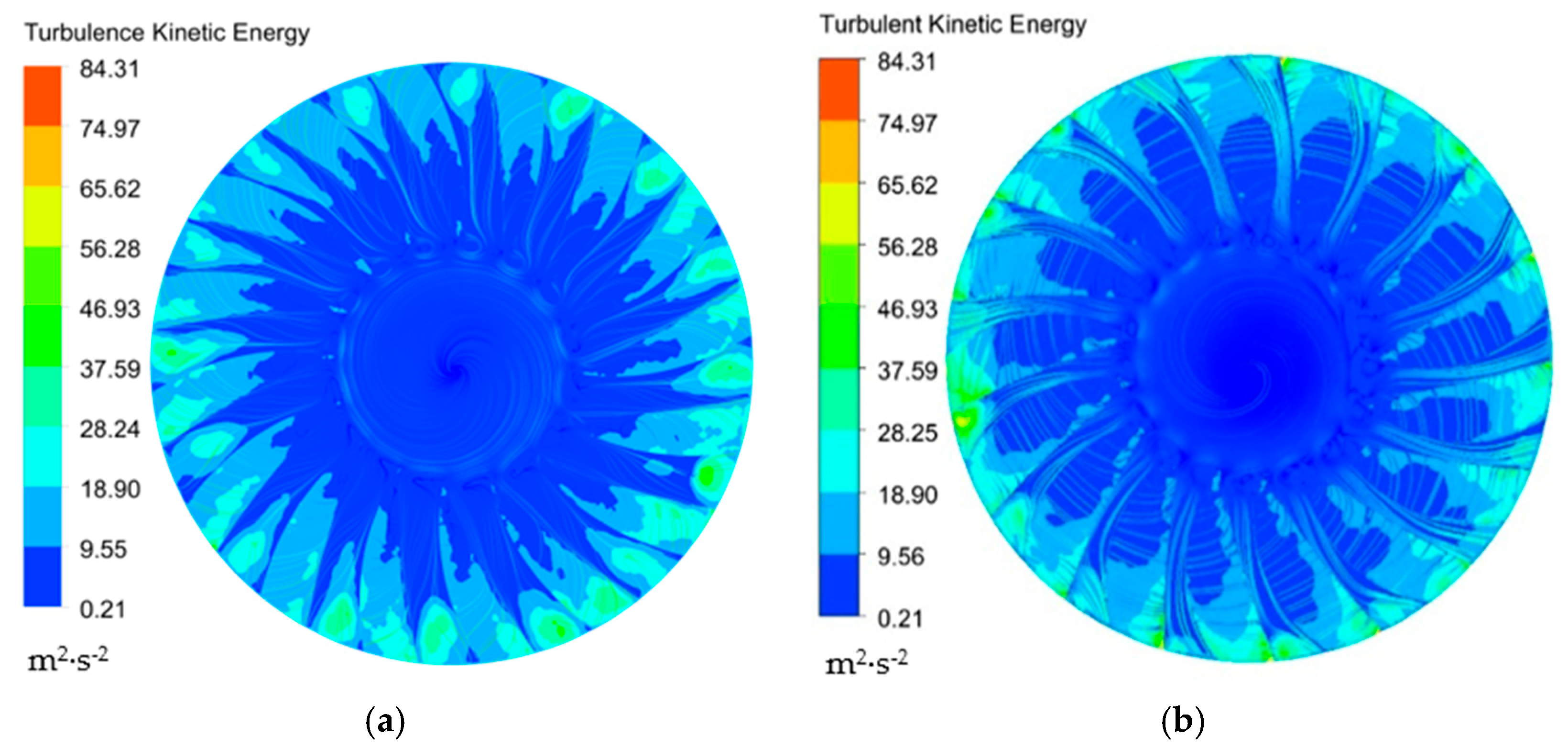
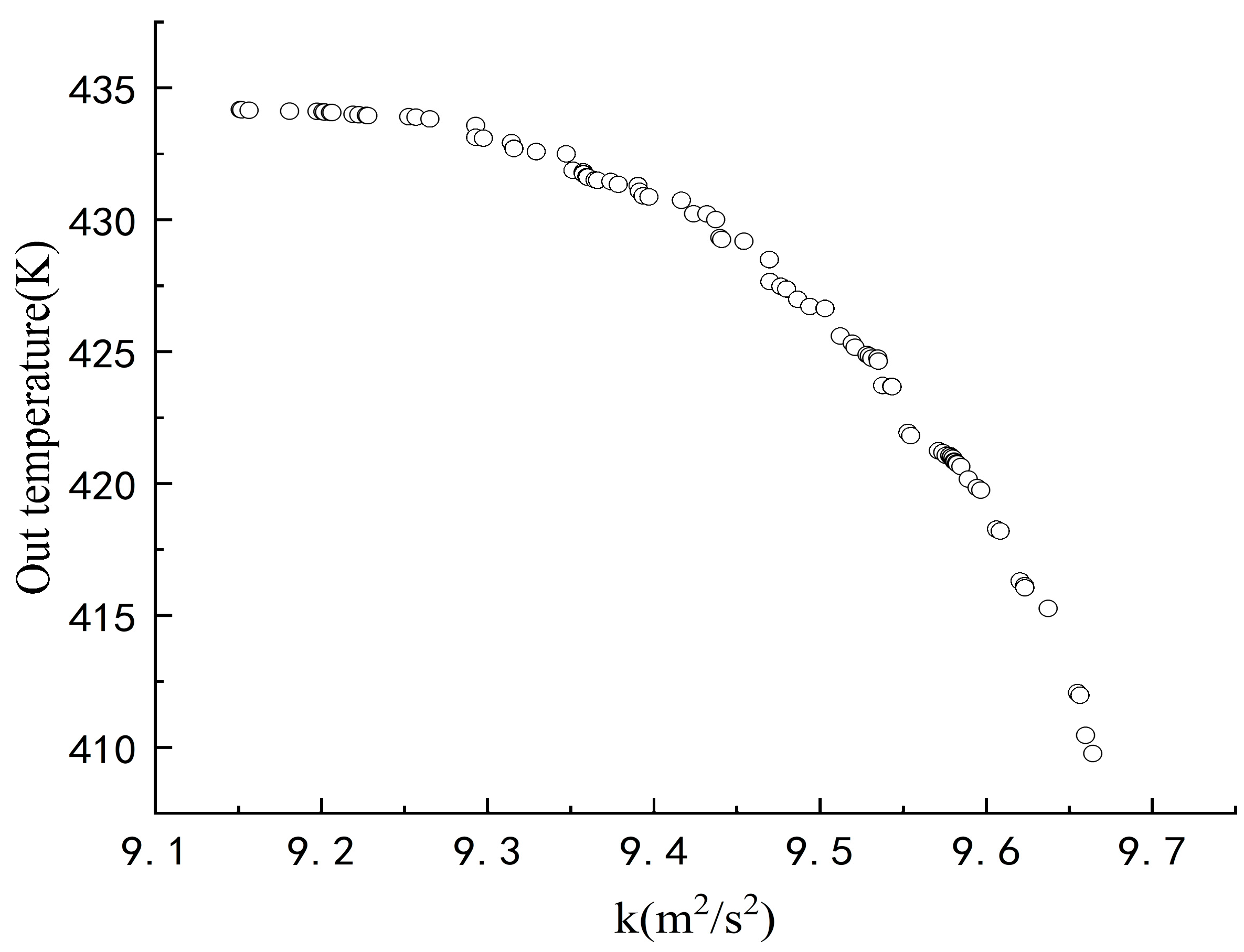
3.5. Analysis of the Turbulent Kinetic Energy
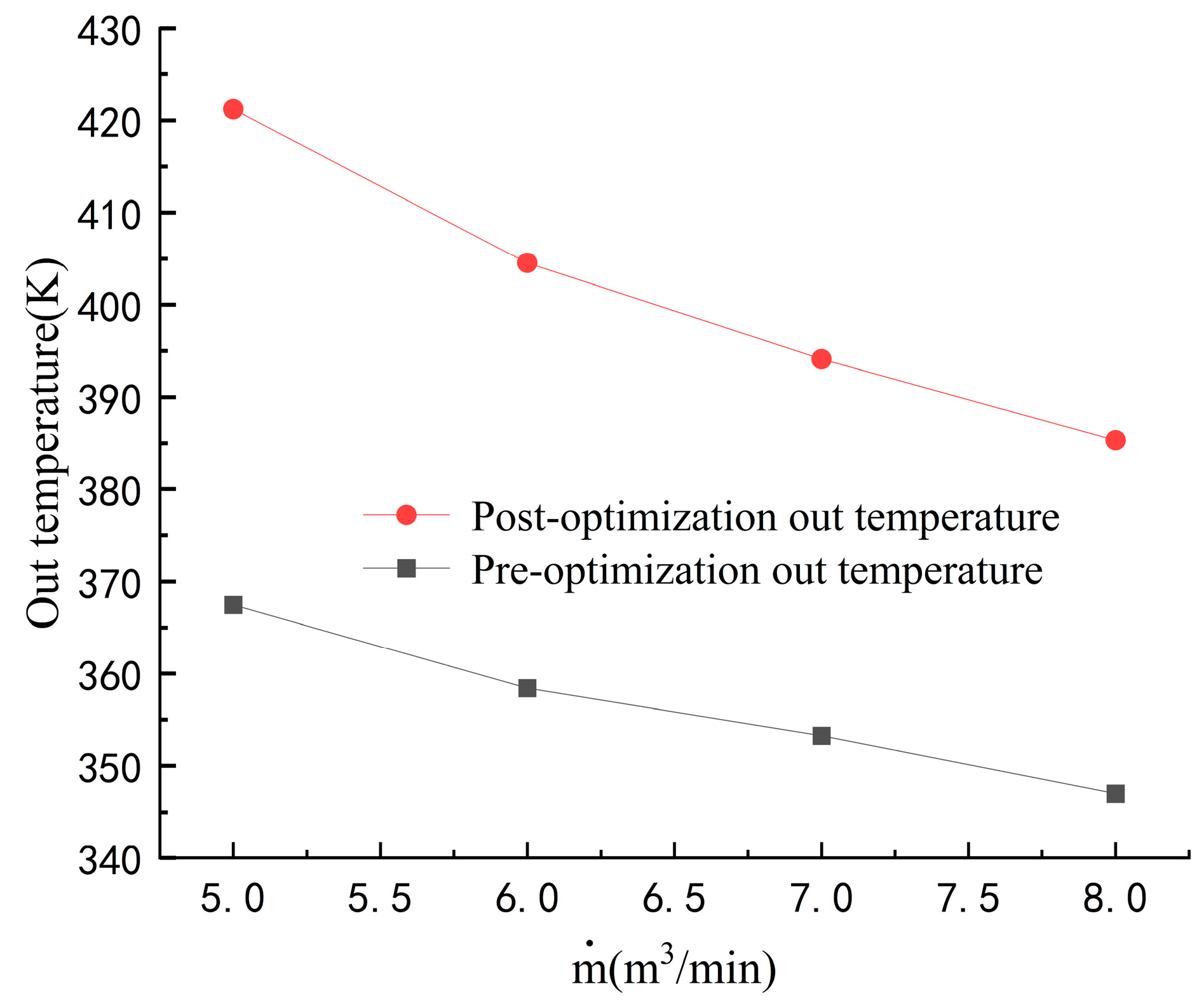
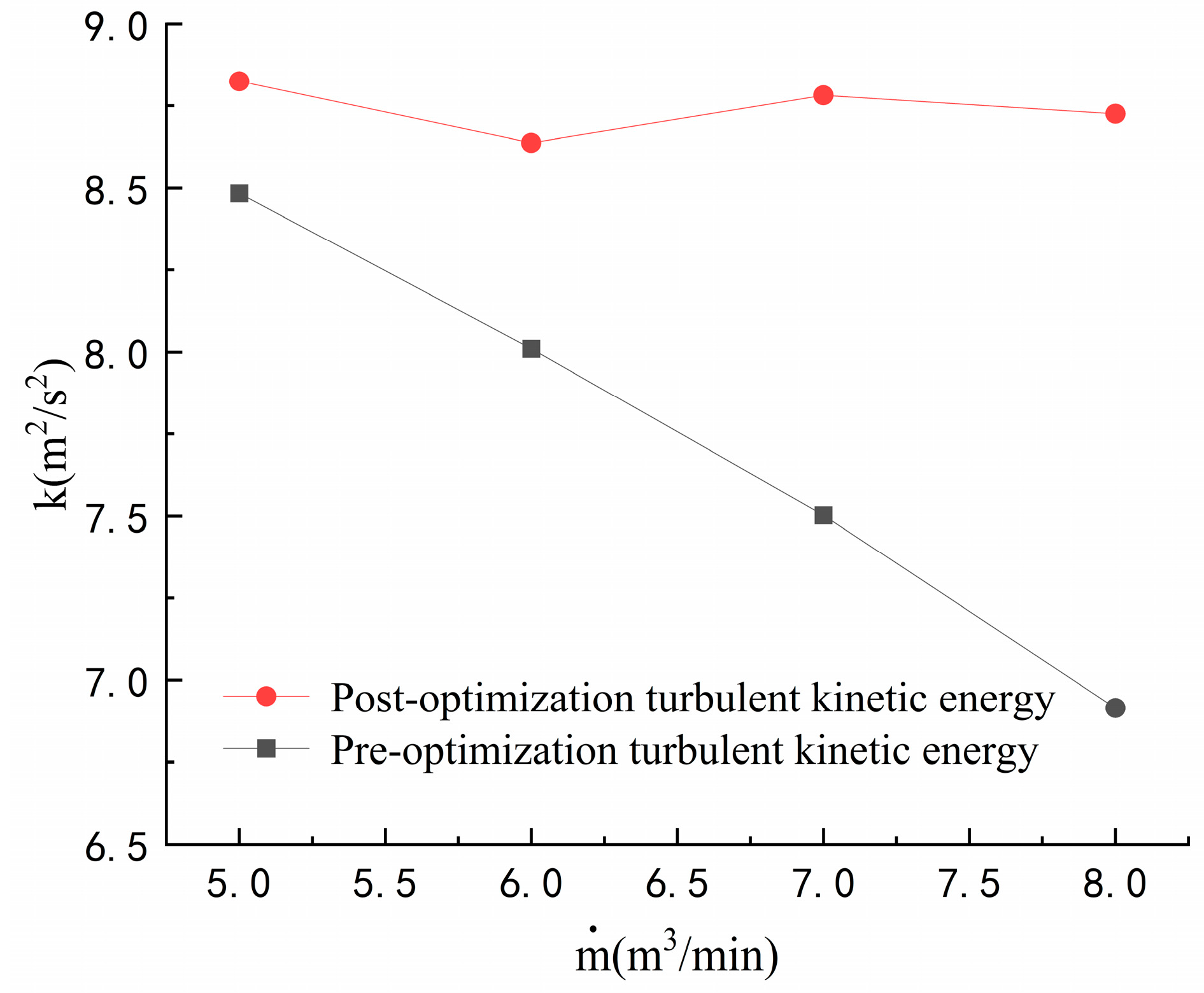
3.6. Analysis of Volume Flow Rate Optimization Comparison
4. Conclusions
Author Contributions
Funding
Data Availability Statement
Acknowledgments
Conflicts of Interest
References
- Cai, X.; Pan, P.; Zhu, J.; Gu, R. The Analysis of the Aerodynamic Character and Structural Response of Large-Scale Wind Turbine Blades. Energies 2013, 6, 3134–3148. [Google Scholar] [CrossRef]
- Li, H.; Chen, Y.; Bai, L.; Shi, W.; Zhou, L. Assessing Energy Loss and Entropy Production in a Centrifugal Pump with Various Impeller Blade Trailing Edges. J. Appl. Fluid Mech. 2024, 18, 518–534. [Google Scholar] [CrossRef]
- Zhu, F.; Jin, D.; Gui, X. Corner flow control in high through-flow axial commercial fan/booster using blade 3-D optimization. J. Therm. Sci. 2012, 21, 32–41. [Google Scholar] [CrossRef]
- Kim, J.-H.; Choi, J.-H.; Husain, A.; Kim, K.-Y. Performance enhancement of axial fan blade through multi-objective optimization techniques. J. Mech. Sci. Technol. 2010, 24, 2059–2066. [Google Scholar] [CrossRef]
- Kim, J.-H.; Kim, J.-H.; Kim, K.-Y.; Yoon, J.-Y.; Yang, S.-H.; Choi, Y.-S. High-efficiency design of a tunnel ventilation jet fan through numerical optimization techniques. J. Mech. Sci. Technol. 2012, 26, 1793–1800. [Google Scholar] [CrossRef]
- Jia, X.; Huang, X.; Jiang, S.; Wang, D.; Firrone, C.M. Inverse Design of Compressor/Fan Blade Profiles Based on Conditional Invertible Neural Networks. J. Turbomach. 2025, 147, 101014. [Google Scholar] [CrossRef]
- Joly, M.M.; Verstraete, T.; Paniagua, G. Multidisciplinary design optimization of a compact highly loaded fan. Struct. Multidiscip. Optim. 2014, 49, 471–483. [Google Scholar] [CrossRef]
- Yang, Z.; Gu, Z.; Wang, Y.; Yan, J.; Yang, X. Prediction and optimization of aerodynamic noise in an automotive air conditioning centrifugal fan. J. Cent. South Univ. 2013, 20, 1245–1253. [Google Scholar] [CrossRef]
- Ji, X.; Lu, X.; Li, H.; Ma, P.; Xu, S. Blade optimization design of Savonius hydraulic turbine based on radial basis function surrogate model and L-SHADE algorithm. Ocean Eng. 2023, 286, 0029–8018. [Google Scholar] [CrossRef]
- Heo, M.-W.; Kim, J.-H.; Seo, T.-W.; Kim, K.-Y. Aerodynamic and aeroacoustic optimization for design of a forward-curved blades centrifugal fan. Proc. Inst. Mech. Eng. Part A-J. Power Energy 2016, 230, 154–174. [Google Scholar] [CrossRef]
- Song, P.; Sun, J. Blade shape optimization for transonic axial flow fan. J. Mech. Sci. Technol. 2015, 29, 931–938. [Google Scholar] [CrossRef]
- Chen, Y.; Wang, Z.; Zhang, X. HCF Weak Link Optimization for Wide-Chord Fan Blades Based on Circumferential Stacking Line Design. Int. J. Aeronaut. Space Sci. 2021, 22, 845–856. [Google Scholar] [CrossRef]
- Kong, C.; Wang, M.; Jin, T.; Liu, S. An optimization on the stacking line of low-pressure axial-flow fan using the surrogate-assistant optimization method. J. Mech. Sci. Technol. 2021, 35, 4997–5005. [Google Scholar] [CrossRef]
- Wang, X.; Li, H.; Baoyin, H.; Han, S.; Bao, C. Aerodynamic optimization of wind turbine blades via surrogate-assisted deep reinforcement learning. Phys. Fluids 2025, 37, 047141. [Google Scholar] [CrossRef]
- Kim, J.T.; Yang, J.S.; Kallath, H.; Min, J.K. Multi-stage optimization of centrifugal fan and casing with preliminary design and mesh morphing method. J. Mech. Sci. Technol. 2023, 37, 4065–4080. [Google Scholar] [CrossRef]
- Li, H.; Li, X.; Zhan, J.; Chen, W.; Zong, W. Study of Turbulent Kinetic Energy and Dissipation Based on Fractal Impeller. Sustainability 2023, 15, 7772. [Google Scholar] [CrossRef]
- Xu, Z.; Yu, Z.; Ning, X.; Wan, X.; Qu, Z.; Zhao, C. Hybrid of non-dominated sorting genetic algorithm II and invasive weed optimization for fan duct surface heat exchanger configuration optimization design. Case Stud. Therm. Eng. 2024, 61, 105149. [Google Scholar] [CrossRef]
- Xing, Z.; Sun, J.; Liu, W.; Zhao, L. Experimental Study on a New Type of Pneumatic Heating Fan. J. Mech. Eng. 2024, 1, 46–49+57. [Google Scholar]
- Zhang, Z.; Guo, Q.; Ma, G.; Li, Y.; Chen, H. Simulation Study on Improving the Safety of Heat Exchanger by Adding Thermal Insulation Layer at the Pipe End. J. Liaoning Univ. Pet. Chem. Technol. 2023, 43, 67. [Google Scholar] [CrossRef]
- Sun, J.; Yang, S.; Guo, K.; Yu, J. Simulation Study of Single-Bubble Ultrasonic Cavitation Dynamics. J. Liaoning Univ. Pet. Chem. Technol. 2025, 45, 76. [Google Scholar] [CrossRef]
- Wang, F.; Ji, H.; Chen, H.; Chen, X.; Wang, M.; Shi, X. Neural network model for fast prediction of infrared radiation of turbofan engine with axisymmetric exhaust system in preliminary design phase. Case Stud. Therm. Eng. 2025, 73, 106641. [Google Scholar] [CrossRef]
- Xiao, Q.; Wang, J.; Jiang, B.; Yang, W.; Yang, X. Multi-objective optimization of squirrel cage fan for range hood based on Kriging model. Proc. Inst. Mech. Eng. Part C-J. Eng. Mech. Eng. Sci. 2022, 236, 219–232. [Google Scholar] [CrossRef]
- Zhao, H.; Li, X.; Chen, J. Distributed Load Identification for Uncertain Structure Based on LHS-GA and Improved L-Curve Method. Int. J. Comput. Methods 2021, 18, 2050022. [Google Scholar] [CrossRef]
- Xi, K.; Xie, Z.; Wang, C.; Meng, F.; Lu, Z.; Chen, X. Stepwise iterative multi-objective optimization design of airfoil fin channel printed circuit regenerators based on deep neural network and NSGA-II. Int. Commun. Heat Mass Transf. 2025, 169, 109685. [Google Scholar] [CrossRef]










| Mesh Quantity | Simulation Value T (K) | Experimental Value T (K) | Relative Error e (%) |
|---|---|---|---|
| 1,743,841 | 355.2 | 371.7 | 4.65 |
| 2,270,620 | 361.9 | 371.7 | 2.71 |
| 3,633,247 | 376.2 | 371.7 | −1.20 |
| 4,558,916 | 376.7 | 371.7 | −1.33 |
| 5,745,965 | 376.6 | 371.7 | −1.30 |
| 7,014,285 | 376.4 | 371.7 | −1.25 |
| Parameters | Pre-Optimization | Post-Optimization |
|---|---|---|
| Central angle θAB (°) | 41.34 | 78.57 |
| Central angle θAC (°) | 15.56 | 12.04 |
| Number of blades n | 16 | 17 |
| Blade thickness h (mm) | 40.00 | 38.13 |
| Outlet temperature Tout (K) | 376.2 | 434.1 |
| Turbulent Kinetic Energy k (m2/s2) | 8.16 | 9.20 |
Disclaimer/Publisher’s Note: The statements, opinions and data contained in all publications are solely those of the individual author(s) and contributor(s) and not of MDPI and/or the editor(s). MDPI and/or the editor(s) disclaim responsibility for any injury to people or property resulting from any ideas, methods, instructions or products referred to in the content. |
© 2026 by the authors. Licensee MDPI, Basel, Switzerland. This article is an open access article distributed under the terms and conditions of the Creative Commons Attribution (CC BY) license.
Share and Cite
Huangfu, J.; Xu, T.; Zhao, L.; Liu, Z. Optimization Design of Pneumatic Heat-Generating Blower Impeller Based on Kriging Model and NSGA-II. Machines 2026, 14, 379. https://doi.org/10.3390/machines14040379
Huangfu J, Xu T, Zhao L, Liu Z. Optimization Design of Pneumatic Heat-Generating Blower Impeller Based on Kriging Model and NSGA-II. Machines. 2026; 14(4):379. https://doi.org/10.3390/machines14040379
Chicago/Turabian StyleHuangfu, Jinpeng, Tao Xu, Lei Zhao, and Zhixia Liu. 2026. "Optimization Design of Pneumatic Heat-Generating Blower Impeller Based on Kriging Model and NSGA-II" Machines 14, no. 4: 379. https://doi.org/10.3390/machines14040379
APA StyleHuangfu, J., Xu, T., Zhao, L., & Liu, Z. (2026). Optimization Design of Pneumatic Heat-Generating Blower Impeller Based on Kriging Model and NSGA-II. Machines, 14(4), 379. https://doi.org/10.3390/machines14040379