1. Introduction
Worldwide, the prevalence of limb amputation has increased steadily over recent decades, driven by trauma, vascular disease, cancer, and congenital conditions. Recent global estimates indicate that tens of millions of individuals are living with limb loss, with traumatic events remaining one of the leading causes worldwide, particularly in low- and middle-income regions [
1,
2,
3]. These amputations are commonly classified into two principal categories, lower-limb (LL) and upper-limb (UL) amputations, each associated with distinct anatomical levels, functional demands, and rehabilitation challenges [
4]. While lower-limb amputations primarily compromise mobility and gait, upper-limb amputation has a uniquely profound impact on an individual’s ability to interact with the surrounding environment. The upper limb, and in particular the hand, plays a central role in object manipulation, self-care, communication, and social interaction [
5,
6].
This paper presents the design, implementation, and experimental validation of a complete EMG-driven robotic hand system capable of independent per-finger actuation in real time. The proposed system integrates a custom analog and digital signal conditioning pipeline for surface electromyography (sEMG), a computationally efficient state-machine control framework, and a fully assembled tendon-driven mechanical hand platform, all deployed on resource-constrained embedded hardware. While the system is motivated by and evaluated in the context of prosthetic hand replacement, the underlying framework is broadly applicable to any domain requiring intuitive, myoelectric-driven multi-finger control. In teleoperation, replicating fine hand movements remotely is highly valuable for tasks in hazardous environments, remote surgery, and dexterous manipulation, where the availability of greater computational resources further relaxes the constraints inherent to embedded prosthetic platforms [
7]. Rehabilitation robotics represents a further application domain, where EMG-driven devices can support motor relearning and assist patients with residual neuromuscular function [
8,
9].
Despite the clear functional relevance of prosthetic devices, prosthesis abandonment and non-use remain significant challenges within the upper-limb amputee population. Reviews of long-term acceptance indicate that approximately 20–50% of upper-limb amputees ultimately reject or discontinue prosthetic use, commonly citing limited functionality, lack of intuitive control, physical discomfort, and insufficient relevance to everyday tasks [
10]. Cosmetic prostheses, which prioritize appearance over function, are particularly prone to rejection, whereas functional solutions, especially body-powered and myoelectric devices, tend to achieve higher acceptance rates when they provide meaningful improvements in task performance and usability [
11,
12,
13]. The consequences of upper-limb loss are not limited to physical impairment alone. Amputation frequently triggers a cascade of psychological and social challenges, including disruption of body image, reduced self-esteem, and diminished perceived autonomy [
14,
15]. Elevated rates of anxiety, depression, and social withdrawal have been reported among upper-limb amputees, particularly in cases where prosthetic devices fail to meet functional expectations or are abandoned altogether [
16,
17,
18]. The visibility of the upper limb during social interaction further amplifies these psychosocial effects, often leading to perceived stigma and reduced participation in social and occupational environments [
19,
20,
21,
22].
The primary contribution of this work is the design, implementation, and experimental validation of a complete, low-cost EMG-driven prosthetic hand system capable of independent per-finger actuation in real time. This is achieved through the integration of a custom analog and digital signal conditioning pipeline, a computationally efficient state-machine control framework, and a fully assembled tendon-driven mechanical platform, all deployed on resource-constrained embedded hardware. Unlike approaches relying on pattern recognition or deep learning, the proposed deterministic architecture enables predictable, low-latency multi-finger control without the computational overhead that typically limits deployment on embedded prosthetic devices. It is worth noting that the necessity of independent multi-finger control for the manipulation of everyday objects remains an open question in the prosthetics literature. While many common grasping tasks can be accomplished with simplified two or three degree-of-freedom systems, independent finger actuation becomes particularly relevant for precision tasks such as pinch grasps, keyboard interaction, and fine object manipulation, where dexterity and adaptability are paramount. Moreover, the psychosocial benefits of a more biomimetic hand, in terms of body image, perceived autonomy, and social acceptance, provide additional motivation beyond purely functional considerations [
14,
15].
The remainder of this paper is organized as follows.
Section 2 reviews the relevant state of the art in myoelectric prosthetic control, mechanical design, and embedded implementation.
Section 3 describes the methods adopted for signal acquisition, conditioning, and processing.
Section 4 presents the system overview, detailing the control architecture and mechanical platform.
Section 5 reports the experimental results and discusses the performance of the proposed system. Finally,
Section 6 draws conclusions and outlines directions for future work.
2. State of the Art
This section reviews the current state of research in EMG-driven prosthetic hand control, with a focus on three interconnected challenges: the acquisition and conditioning of surface myoelectric signals, the control architectures used to translate these signals into coordinated finger movements, and the mechanical design considerations that influence actuation performance and wearability. Together, these aspects define the technical landscape within which the present work is situated.
Among the various human–machine interfaces explored in the literature, surface electromyography (sEMG) remains one of the most widely adopted approaches due to its non-invasive nature and its capacity to capture voluntary neuromuscular activity [
23,
24]. By translating muscle activation into control commands, myoelectric control systems aim to provide intuitive interaction between the user and the prosthetic device. Nevertheless, achieving reliable and responsive control continues to present significant technical challenges, particularly in the presence of signal variability, noise, and real-time processing constraints [
25,
26,
27,
28]. In recognition of these limitations, recent research has explored the integration of onboard vision systems into prosthetic platforms as a complementary or alternative control modality [
29,
30,
31]. By assessing environmental context, vision-based approaches can reduce the physical and cognitive demands placed on the user and mitigate performance degradation associated with prolonged sEMG use, such as muscle fatigue and perspiration-induced electrode impedance changes [
32]. Nevertheless, sEMG-based control remains the most widely adopted interface in both research and clinical settings due to its non-invasive nature, direct correspondence with neuromuscular intent, and established integration with embedded prosthetic hardware [
33].
Several control strategies have been proposed to expand the functional capabilities of myoelectric prostheses, each presenting distinct trade-offs between dexterity, robustness, and computational complexity [
34,
35]. Pattern-recognition approaches combine feature extraction with classification algorithms to identify intended gestures, enabling a broader repertoire of movements and more natural interaction [
34,
36,
37]. However, their performance is often sensitive to electrode displacement, muscle fatigue, perspiration, and variations in skin impedance, frequently requiring recalibration and structured user training [
38,
39,
40,
41]. Deep learning models further enhance predictive capability by automatically capturing complex relationships within EMG signals and reducing reliance on handcrafted features, often achieving higher classification accuracy [
42,
43]. Despite these advantages, their deployment in embedded prosthetic platforms remains constrained by substantial computational demands, increased power consumption, and potential latency. Consequently, deterministic signal-processing pipelines remain attractive for resource-constrained systems due to their predictable behavior, reduced processing overhead, and implementation simplicity, even if they provide fewer controllable states [
44]. Control architectures for EMG-driven robotic hands are commonly categorized as continuous or discrete. Continuous approaches map EMG features directly to joint trajectories or actuator forces, promoting smooth and proportional motion but remaining susceptible to instability caused by inter-muscle crosstalk and overlapping activation patterns, especially in systems with multiple degrees of freedom [
45]. Discrete methods instead rely on the detection of predefined activation states associated with specific finger movements or grasp configurations, typically offering greater robustness at the expense of motion expressiveness [
46]. State-based control models extend the discrete paradigm by structuring system behavior as a finite set of operational states with defined transitions triggered by neuromuscular events. This deterministic framework supports predictable timing, facilitates verification, and enables coordinated multi-finger actuation while maintaining modest computational requirements, making it particularly suitable for embedded assistive devices [
47]. Mechanical design also influences prosthetic performance, particularly in multi-finger hands where actuator placement, transmission mechanisms, and structural weight affect responsiveness and wearability. Multibody modeling approaches have proven valuable in this context, enabling simulation-based evaluation of mechanical behavior, contact dynamics, and control performance prior to physical prototyping, with model reliability further enhanced through experimental validation [
48,
49,
50]. Tendon-driven mechanisms are widely adopted for their ability to emulate biological motion while supporting lightweight structures, and servo-based actuation continues to be favored in research prototypes due to its compactness and ease of control [
51,
52].
Despite significant progress across these areas, several gaps remain [
26,
53,
54,
55,
56]. Pattern recognition and deep learning approaches achieve high gesture classification accuracy but introduce computational overhead and sensitivity to signal variability that limit their deployment on embedded hardware. Continuous control methods offer smooth actuation but struggle with crosstalk and instability in multi-finger configurations. Existing deterministic approaches, while computationally efficient, have rarely been demonstrated in fully integrated systems capable of independent per-finger actuation validated on a physical platform. Furthermore, the majority of embedded prosthetic systems reported in the literature either limit the number of independently controlled fingers or rely on simplified grasp modes rather than individual digit control, leaving a gap between the dexterity achievable in laboratory conditions and what is deployable in a low-cost embedded system.
To address these limitations, this work proposes a computationally efficient, state-machine-based control framework aimed at enabling precise, real-time, independent multi-finger actuation on resource-constrained embedded hardware. The framework is integrated with a custom sEMG signal conditioning pipeline and validated on a fully assembled tendon-driven robotic hand. Beyond prosthetics, the proposed approach is applicable to teleoperation and rehabilitation robotics, where replicating fine hand movements is valuable and the availability of greater computational resources further relaxes the constraints inherent to embedded prosthetic platforms.
3. Methods
Surface electromyography (sEMG) is a non-invasive technique used to measure the electrical potentials generated by muscle fibers during contraction. Unlike quasi-periodic biosignals such as electrocardiographic activity, sEMG exhibits a stochastic nature and continuously varies according to factors such as contraction intensity, muscle fatigue, electrode placement, and inter-subject variability.
These signals are primarily characterized by their amplitude and frequency content. The amplitude typically ranges between 0 and 10 mV peak-to-peak [
57,
58]. During contractions with lesser force, amplitudes may remain below 4 mV, which complicates their detection, requiring amplification circuitry. Due to their inherently low amplitude, sEMG signals are highly susceptible to environmental interference such as the 50 Hz power-line noise or motion artifacts caused by electrode-skin displacement [
59,
60], necessitating multiple filtering stages to attenuate unwanted frequency components.
The second key characteristic of sEMG signals is the frequency content. The signal commonly presents a spectrum ranging between 20 Hz and 500 Hz, with most power concentrated between 20 Hz and 150 Hz. However, depending on electrode configuration, filtering strategy, and amplification stages, usable frequency components may extend further [
57,
58,
61].
In this work, independent control of the bionic hand requires reliable detection of intended finger movements. For individuals with upper-limb loss, control commands can be derived from sEMG signals generated by residual forearm musculature. Finger motion is primarily controlled by flexor and extensor muscle groups located within the anterior and posterior compartments of the forearm. The anterior compartment includes the flexor digitorum superficialis, flexor digitorum profundus, and flexor pollicis longus, while the posterior compartment contains the extensor digitorum and related extensor muscles. These muscles are anatomically dense, layered, and partially overlapping. Due to volume conduction through biological tissues, electrical activity from deeper or adjacent muscles propagates to the skin surface, limiting spatial selectivity. As a result, isolating the activation of a single finger using surface electrodes becomes inherently challenging.
This anatomical proximity introduces crosstalk. Electrodes positioned over a target muscle may detect activity originating from adjacent muscles, particularly during synergistic finger movements [
62,
63]. Crosstalk magnitude depends on electrode size, inter-electrode distance, muscle depth, and subcutaneous tissue thickness. Although reducing electrode spacing improves spatial selectivity, it also decreases signal amplitude, creating a trade-off between resolution and signal strength.
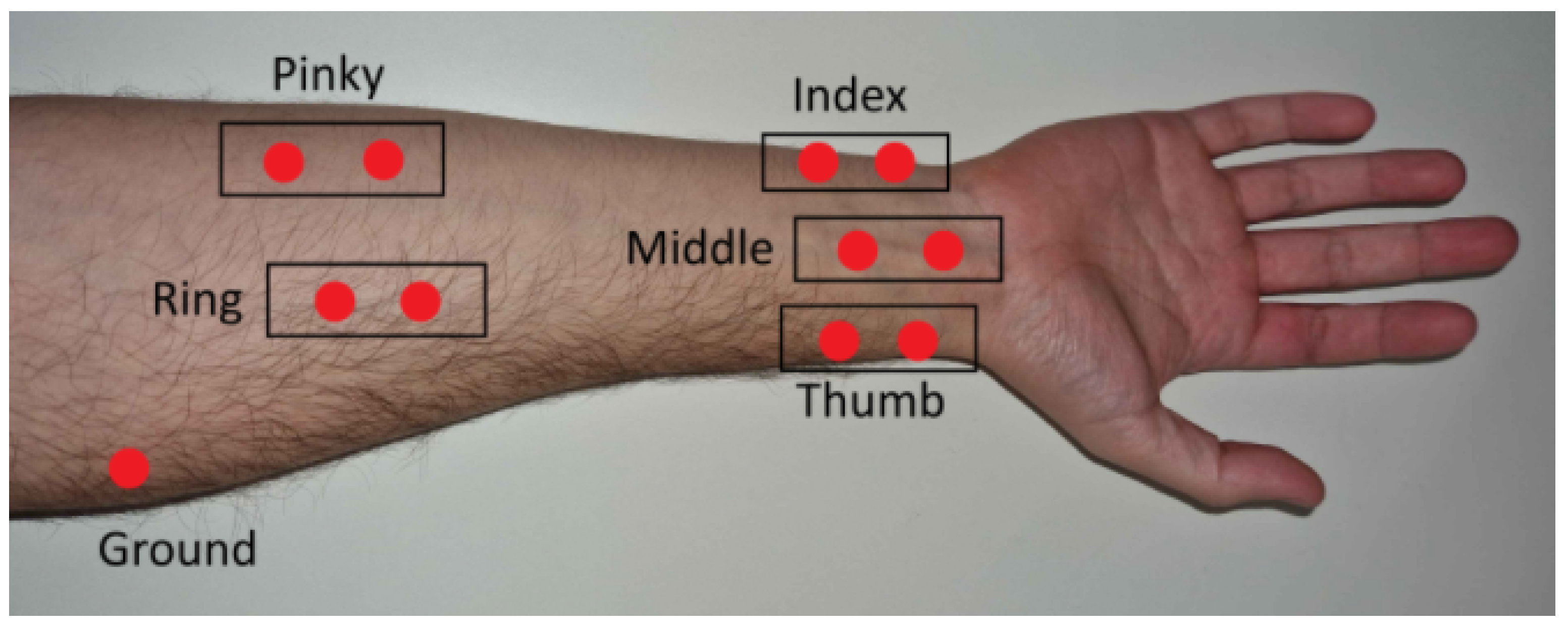
To mitigate these limitations, five surface electrodes were distributed over major forearm muscle regions associated with individual fingers, as shown in
Figure 1. Electrode positions were determined experimentally to maximize signal amplitude while keeping crosstalk at a manageable level. Rather than attempting strict anatomical isolation, finger activation was inferred based on relative amplitude differences across channels. Although crosstalk remains present, the electrode exhibiting the highest amplitude during contraction provides a practical indicator of the predominantly activated finger. This amplitude-based selection strategy offers a robust and computationally simple approach for distinguishing finger activation despite overlapping muscle activity.
4. System Overview
The following subsections detail the three main components of the bionic hand system: signal conditioning, power circuitry, and the microcontroller-driven servo interface.
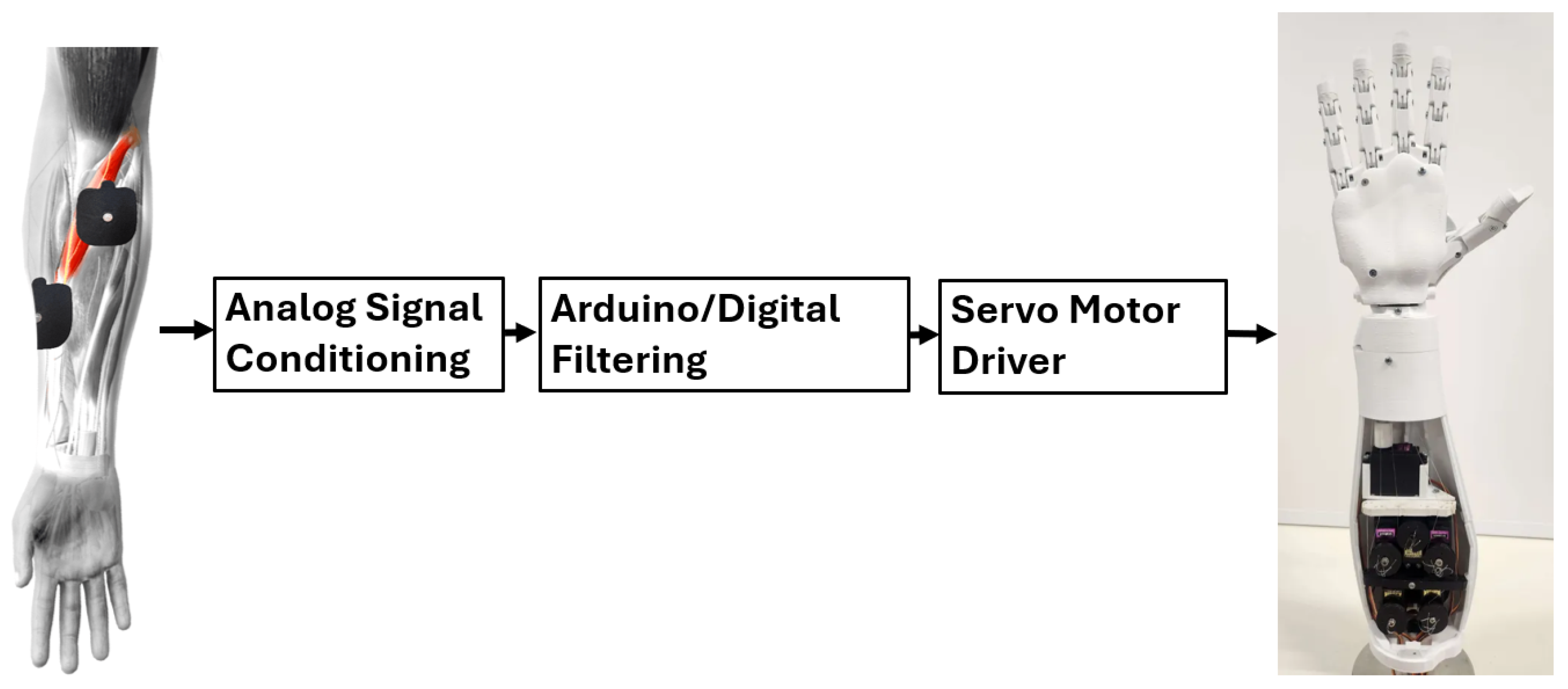
Following electrode placement and signal acquisition considerations, the complete signal processing and actuation pipeline is illustrated in
Figure 2. This high-level diagram summarizes the transformation of raw sEMG signals into controlled mechanical motion of the bionic hand.
The system design integrates carefully tuned analog and digital signal conditioning with finite-state machine-based control algorithms. This combination enables reliable capture and interpretation of sEMG signals on a compact microcontroller platform, allowing independent multi-finger actuation with near real-time response. By relying on deterministic, low-complexity algorithms instead of computationally intensive approaches such as neural networks, the proposed design achieves precise finger movements while maintaining minimal hardware requirements. These design choices address common challenges in the literature, including signal noise, latency, and the difficulty of implementing robust control on small embedded platforms.
The acquired surface EMG signals first pass through the analog signal conditioning stage, which includes instrumentation amplification, band-pass filtering, notch suppression, and envelope detection. This stage increases signal amplitude and attenuates noise components prior to digitization. The conditioned analog signals are then sampled by the Arduino Nano’s ADC, where digital filtering and real-time processing are performed. The processed signals are evaluated using a state-based control algorithm that determines intended finger activation. Finally, control commands are transmitted via the I2C interface to a PCA9685 PWM driver, which generates precise hardware-based control signals for the servo motors, actuating the tendon-driven bionic hand.
4.1. EMG Signal Conditioning Circuitry
Surface electromyography (sEMG) signals acquired from forearm electrodes are inherently low in amplitude, typically ranging from 50 μV, when at rest, to 5 mV, with higher-level contraction, and are highly susceptible to external interference, motion artifacts, and electrode-skin impedance variations. Consequently, an analog front-end with high noise immunity and adequate amplification is required prior to digital processing.
The first stage consists of an operational-amplifier instrumentation amplifier (INA125), selected for its high input impedance, excellent common-mode rejection ratio (CMRR), and precise gain control. High input impedance minimizes signal attenuation caused by the electrode-skin interface, while the elevated CMRR is essential for suppressing common-mode disturbances such as power-line coupling and electromagnetic interference. Additionally, the INA125 gain can be calculated with the following equation,
Since the value chosen for
is of 60 k
, represented in
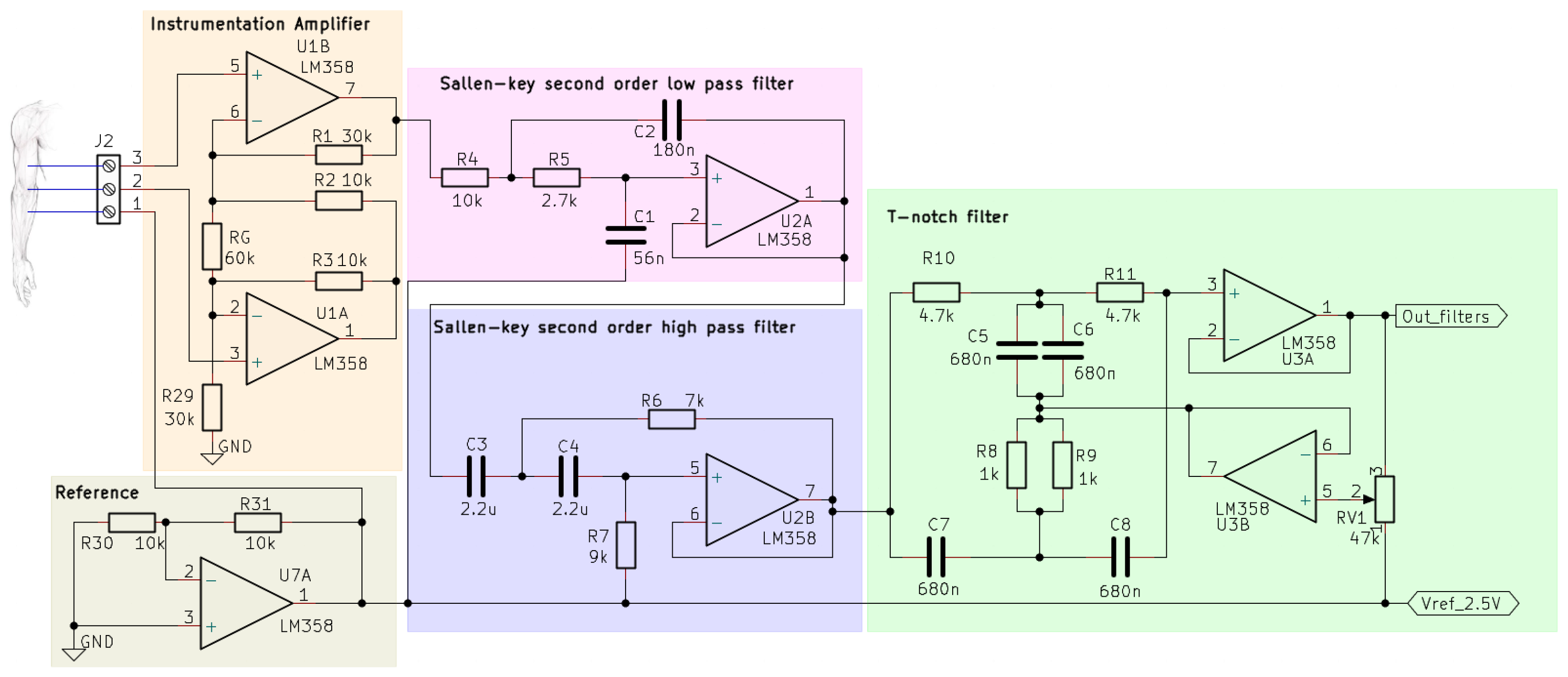
Figure 3, the gain of the INA125 is five, preventing saturation in the presence of noise and motion artifacts, with the remaining amplification applied downstream following signal conditioning.
Figure 3 illustrates the active filtering stages implemented after the instrumentation amplifier. A cascaded second-order Sallen-Key low-pass and high-pass topology was adopted to realize an active band-pass filter with a passband from 12 Hz to 300 Hz. This frequency range captures the dominant spectral components of myoelectric signals while attenuating motion artifacts and high-frequency electronic noise.
The low-pass stage was designed using a Butterworth approximation due to its maximally flat magnitude response in the passband (
Figure 3). This characteristic prevents artificial attenuation of relevant EMG components and preserves the overall signal amplitude, which is particularly important for reliable envelope extraction and muscle activation detection.
The transfer function of the adopted low-pass topology is expressed as:
where
represents the angular cutoff frequency.
The resistor values for the second-order Butterworth low-pass filter were obtained from:
where
and
, corresponding to the normalized coefficients of a second-order Butterworth response, and
denotes the cutoff frequency.
To complement the amplitude-flat response of the low-pass stage, the high-pass filter was implemented using a Bessel approximation (
Figure 3). The Bessel response was selected for its nearly linear phase characteristic and minimal group delay distortion, which helps preserve the temporal structure of the EMG waveform. Maintaining waveform morphology is advantageous for downstream processing, particularly when timing information is relevant for gesture onset detection.
The transfer function of the adopted high-pass topology is expressed as:
The design parameters are defined as:
The cascade of both filters results in a fourth-order band-pass response, providing sufficient roll-off to suppress out-of-band interference while maintaining stability and low implementation complexity.
Following band-pass filtering, an active notch filter centered at the power-line frequency of 50 Hz was introduced to attenuate mains interference (
Figure 3). Power-line contamination is one of the dominant noise sources in biopotential acquisition and can significantly degrade signal quality if not properly suppressed.
A second-order active notch topology was selected to provide narrowband attenuation while preserving adjacent spectral components of the EMG signal. Excessively wide rejection bands may remove physiologically relevant information, particularly because portions of the EMG spectrum overlap the power-line frequency.
The notch filter transfer function is expressed as:
where
and
Q is the quality factor controlling the selectivity of the filter. Higher values of
Q produce a narrower rejection band, enabling targeted suppression of mains interference with minimal distortion to the remaining signal bandwidth.
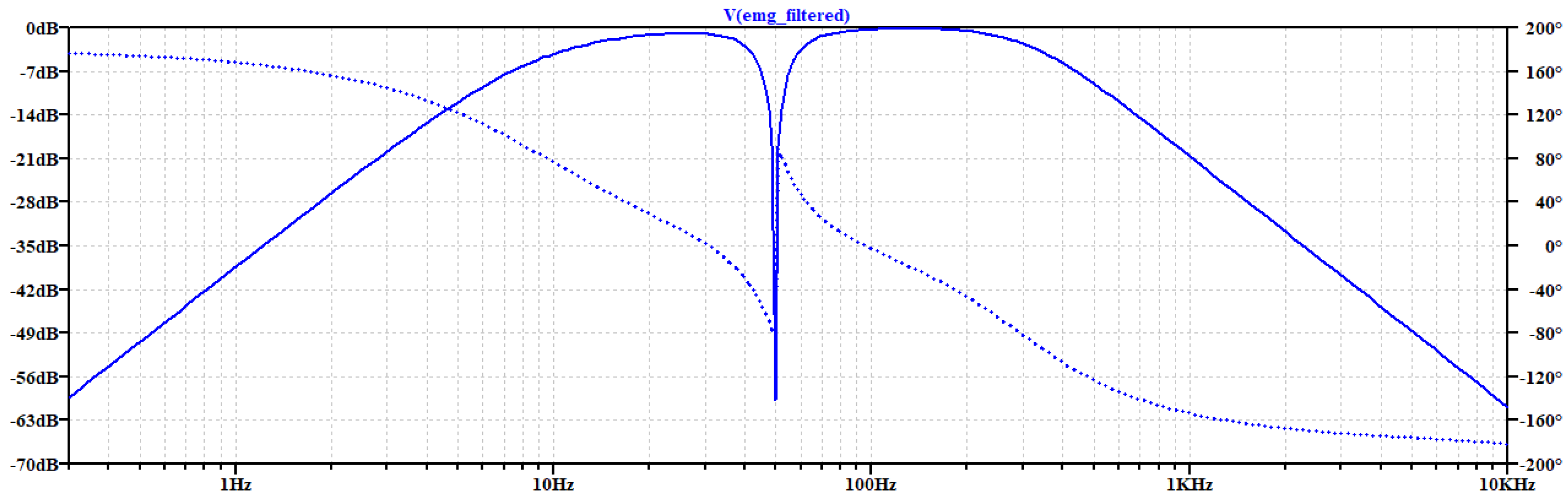
The frequency response of the implemented filtering chain is shown in
Figure 4. The cascaded second-order low-pass and high-pass stages produce a fourth-order band-pass characteristic spanning 12 Hz to 300 Hz, effectively constraining the bandwidth to the spectral region of myoelectric signals.
After filtering, the signal is further amplified using two cascaded non-inverting operational amplifier stages with gains of 11 and a variable gain, since is a potentiometer, meaning the gain of the second non-inverting amplifier can be up to 11, yielding a maximum gain of 121. Distributing the gain across multiple stages helps prevent saturation while preserving bandwidth.
To mitigate DC offsets originating from the instrumentation amplifier reference and component mismatches, each stage is preceded by an RC high-pass network that blocks the DC component prior to high amplification. This prevents offset propagation that could otherwise drive the amplifiers into saturation.
A final RC coupling stage is placed after the last amplifier to remove any residual offset introduced during amplification. The chain is terminated with a unity-gain buffer to isolate the amplification block from subsequent stages and maintain gain stability (
Figure 5).
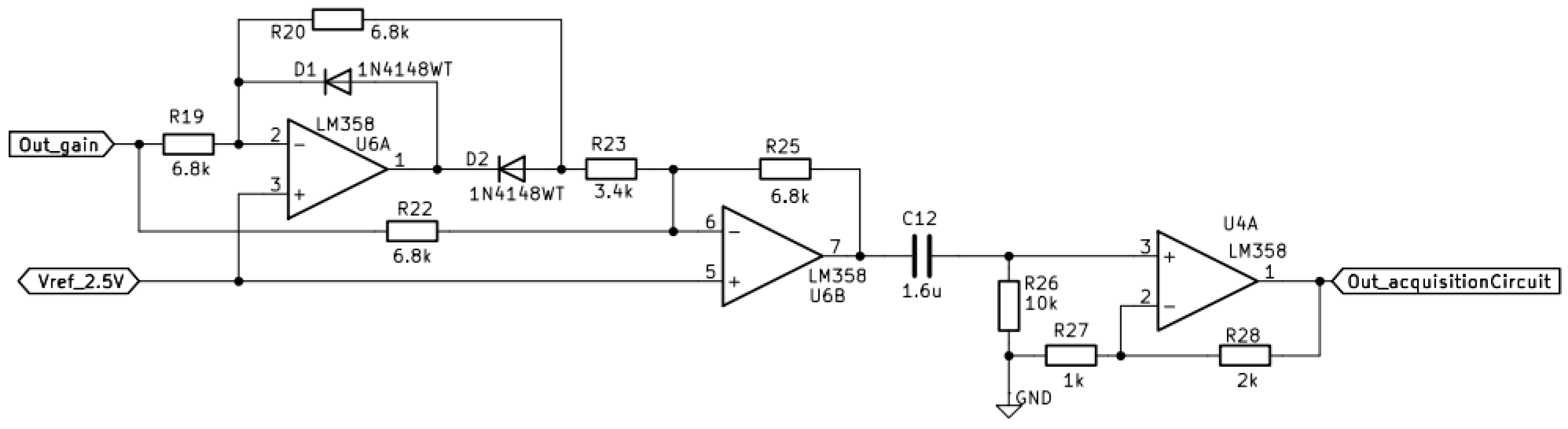
After amplification, the conditioned sEMG signal is full-wave rectified using a precision rectifier based on a dual-op-amp topology (
Figure 6). This configuration ensures accurate rectification of the signal relative to the instrumentation amplifier reference, avoiding the voltage drops associated with diode-based rectifiers.
Following rectification, the signal is scaled using a non-inverting amplifier with a gain of three to match the input range of the microcontroller ADC, resulting in a total circuit maximum gain of 1851, assuming that the
potentiometer is 10 k
. At this stage, the reference for the non-inverting amplifier is the supply ground rather than the instrumentayion amplifier reference (
Figure 6). This adjustment shifts the fully rectified signal into a range compatible with the ADC while maintaining signal integrity. The buffer provided by this stage also isolates the rectifier from the ADC input, minimizing loading effects.
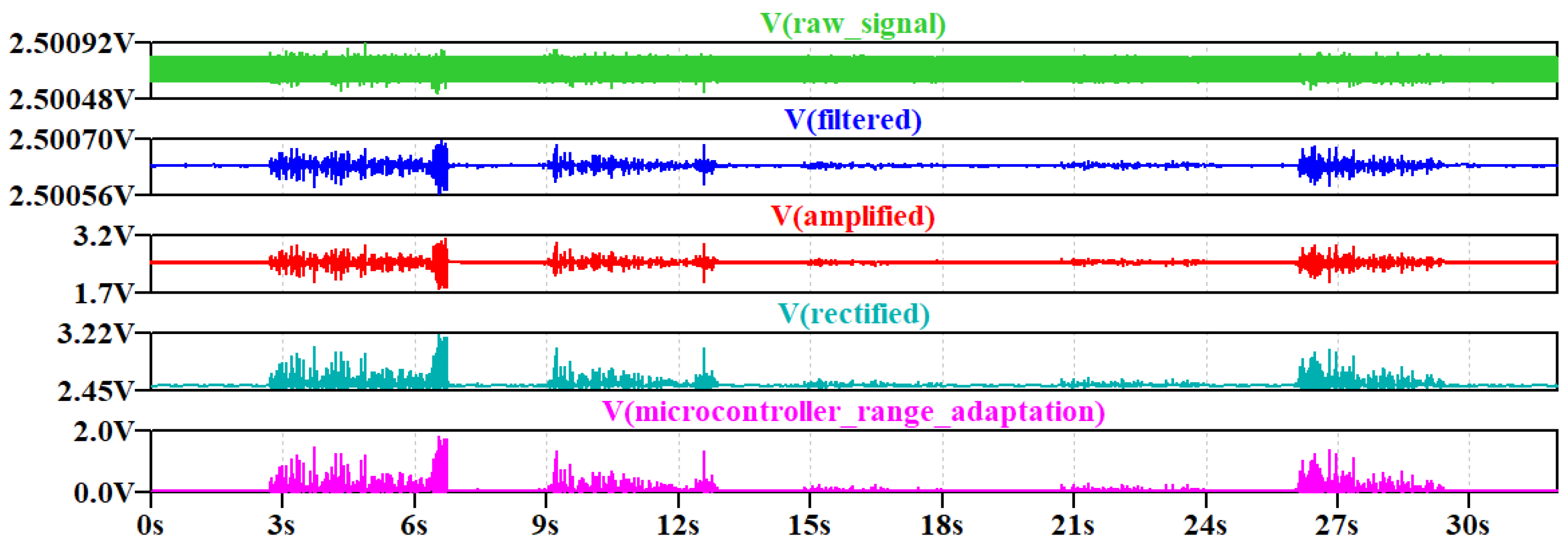
Figure 7 presents a simulation of the sEMG signal as it passes through the complete analog front-end, from raw acquisition to the ADC-ready output. The figure highlights how the signal is conditioned, amplified, rectified, and scaled for digital conversion. The simulation of the full 30-s signal required approximately 1 min and 13 s of computation time.
4.2. Power Management and Regulation
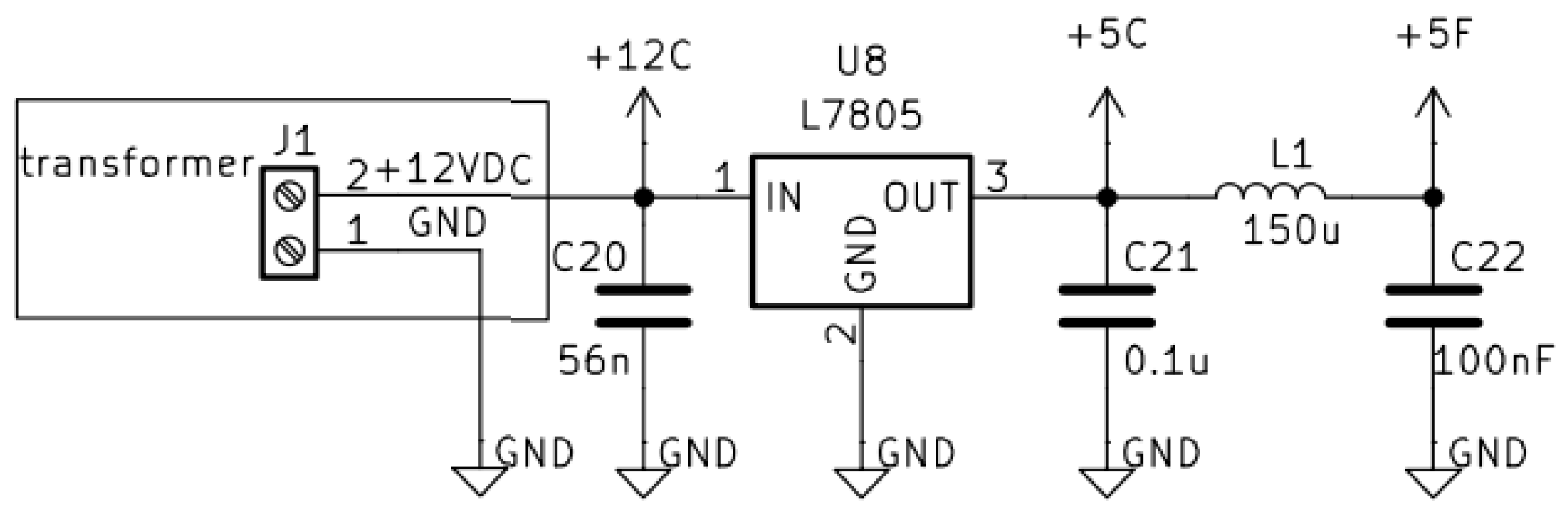
A dedicated multi-stage power distribution system was implemented to provide stable and electrically isolated supply rails for actuation, digital control, and sensitive analog signal conditioning, presented in
Figure 8. The system is powered through a transformer-based supply that provides a regulated 12 V rail, which is used primarily to drive the MG996R servo motors through the PCA9685 driver module. Supplying the servos from a dedicated higher-voltage rail ensures adequate torque availability while preventing excessive current draw from lower-voltage circuitry. Given the high transient currents associated with servo startup and load variations, the 12 V rail was dimensioned to tolerate peak demands without significant voltage sag, thereby reducing disturbances that could propagate into the signal acquisition stages.
A 7805 linear regulator derived a stable 5 V supply from the 12 V rail for low-voltage subsystems, including the Arduino Nano and analog conditioning circuitry. To minimize noise coupling between digital components and millivolt-level sEMG signals, the 5 V output was split into separate branches for analog and digital loads. The analog branch includes an LC filter to attenuate high-frequency switching noise, and careful grounding practices further reduce common-impedance interference, ensuring stable operation and clean signals for the instrumentation amplifier and subsequent analog stages.
4.3. Digital Control and Actuation Architecture
The digital control subsystem converts processed sEMG signals into coordinated motion of the bionic hand. An Arduino Nano samples the conditioned signals through its ADC, evaluates activation thresholds, and executes a state-based control algorithm in real time.
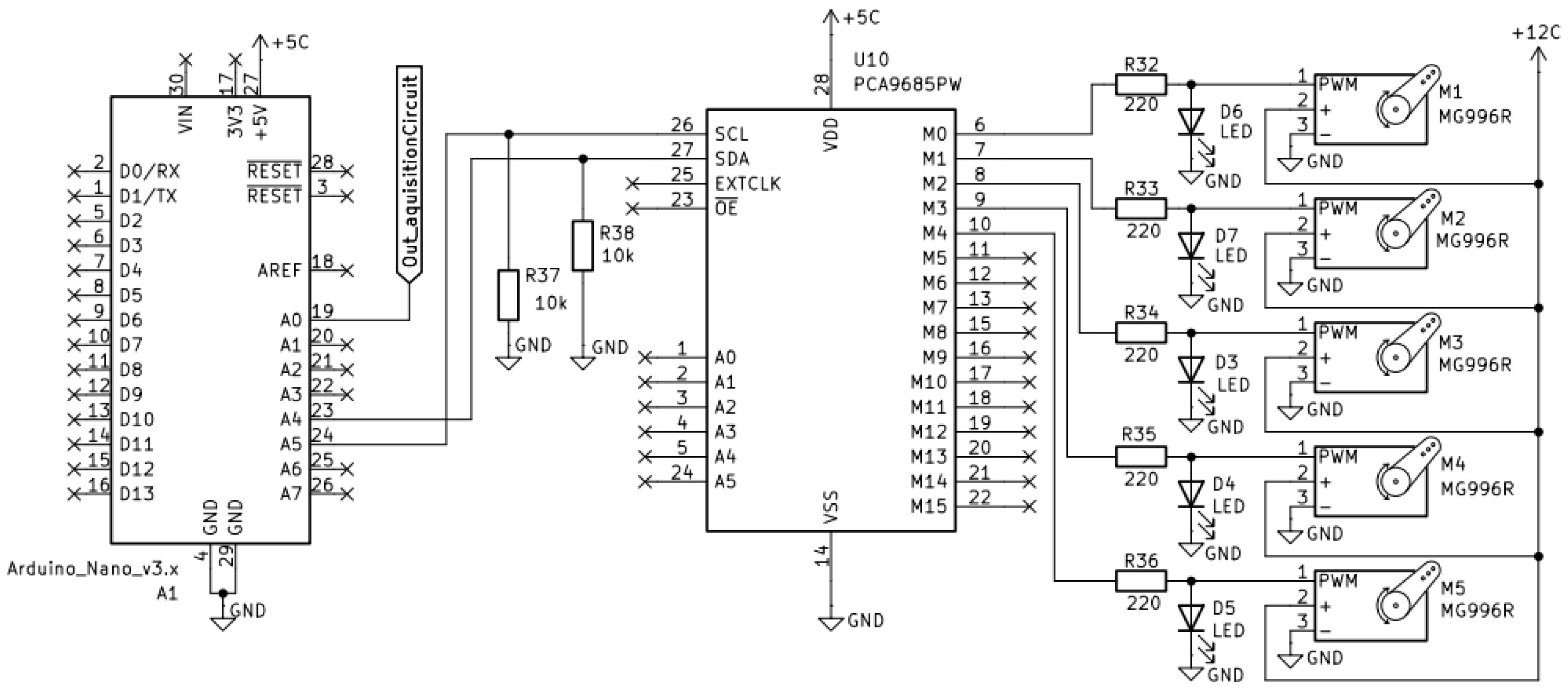
Servo actuation is handled by a PCA9685 16-channel PWM driver (
Figure 9), which offloads PWM generation from the Arduino, minimizing timing jitter and processor overhead. Five MG996R high-torque servo motors, with a torque of approximately 9–11 kg·cm at 6 V [
64], actuate the tendon-driven fingers. Independent PWM channels allow precise angular positioning and synchronized multi-finger movements, ensuring adequate tendon tension while maintaining responsive and accurate motion under load.
Communication between the Arduino Nano and PCA9685 occurs over the I2C bus, providing a scalable and modular architecture that decouples control logic from actuation timing, improves reliability, and facilitates future expansions of the system.
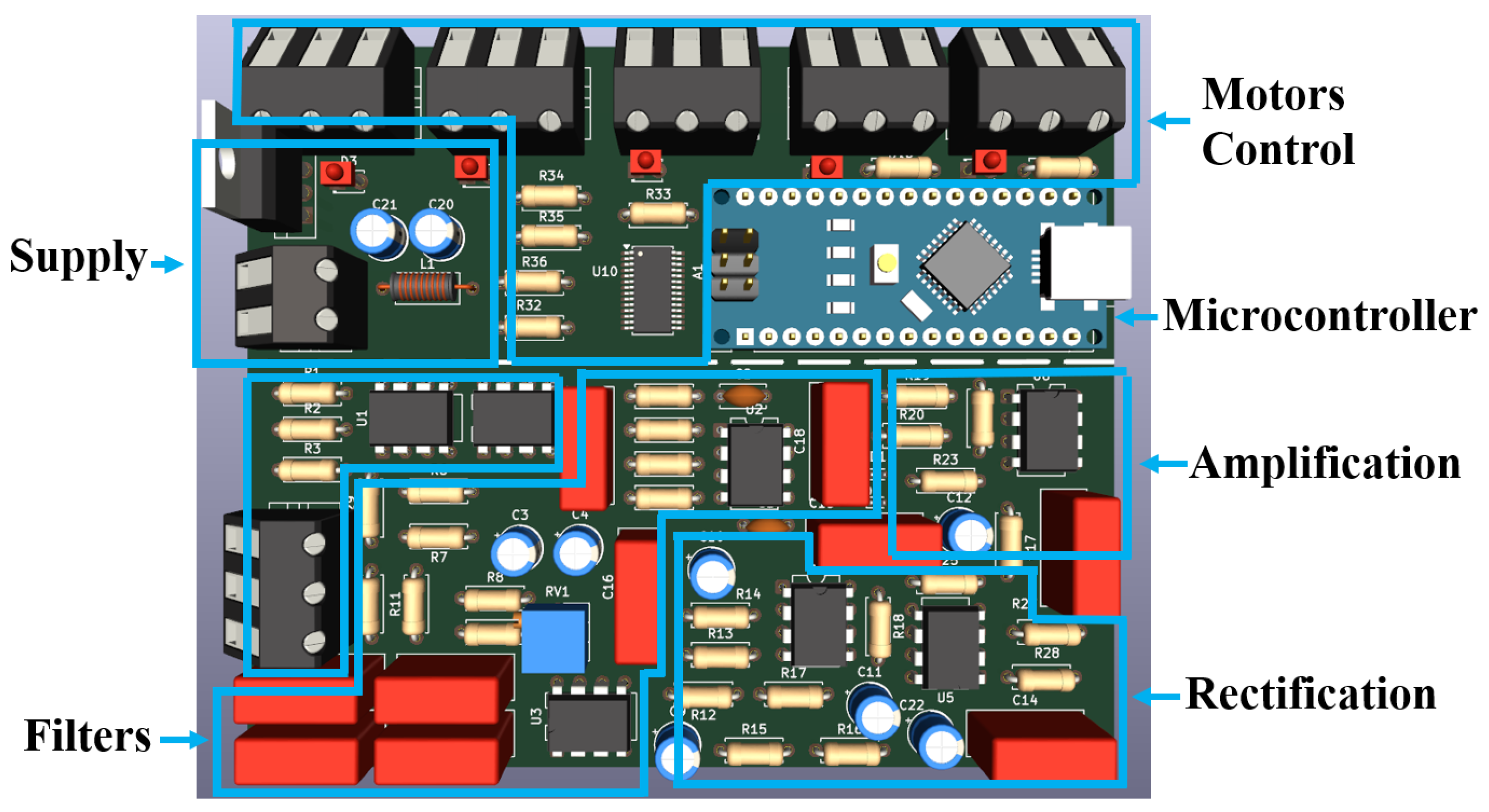
The complete electronic system, integrating power distribution, analog signal conditioning, and digital control, was implemented on a single custom PCB.
Figure 10 shows the layout, illustrating the separation of analog and digital domains to minimize interference and ensure signal integrity.
4.4. Software Implementation
The software architecture responsible for processing EMG signals and translating them into motor commands is organized into three distinct layers, each with a well-defined role. This separation ensures that time-critical operations remain lean and predictable, while more complex processing is handled without strict timing constraints.
The first layer is the ISR routine, triggered by a hardware timer at a fixed frequency of 1 kHz. Every millisecond, the ISR reads the raw analog value from the ADC pin corresponding to a given finger and writes it into a circular ring buffer. It then sets a flag to notify the system that a new sample is available.
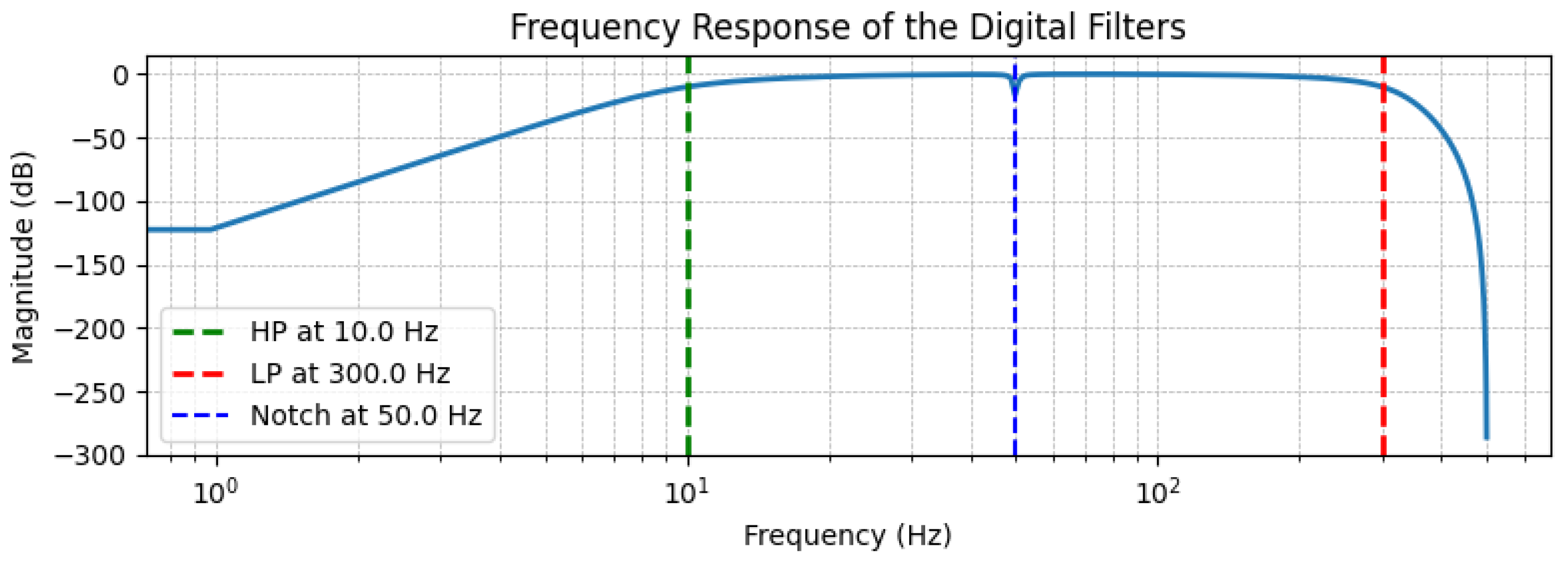
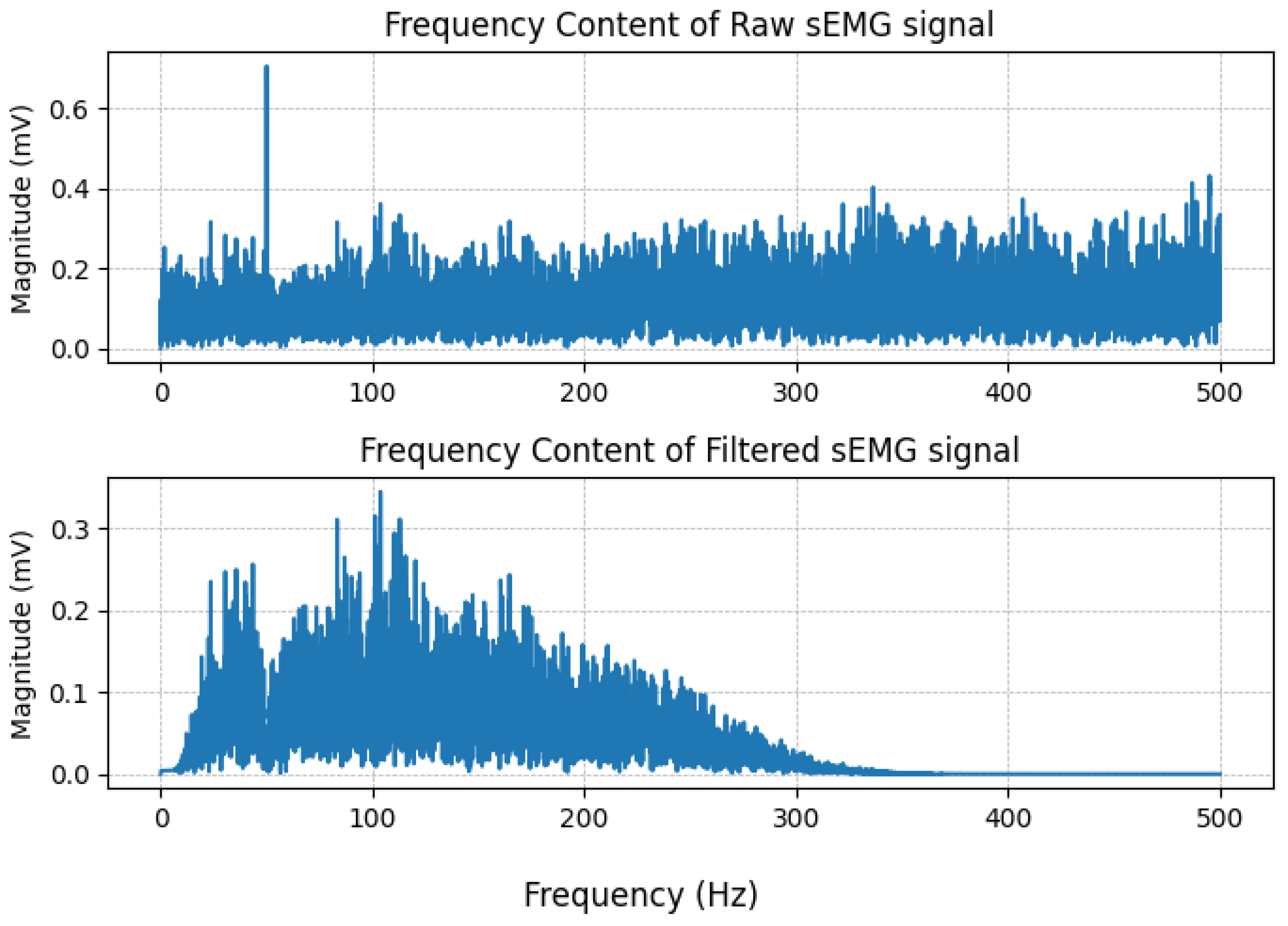
Once the ISR deposits a raw sample and raises the flag, the main loop handles the second layer. This layer retrieves the raw value from the buffer and passes it through a digital signal processing pipeline. Two filtering stages are applied sequentially. First, a sixth-order band-pass filter with the same cutoff frequencies as the analog filter, 10 Hz and 300 Hz, to isolate the EMG frequency range, and secondly, a notch filter to suppress power-line interference centered at 50 Hz.
Figure 11 shows the frequency response of both filters, illustrating the frequencies effectively attenuated, while
Figure 12 presents the frequency content of a real sEMG signal through FFT, and the corresponding frequency content after filtering, demonstrating that both digital filters will ensure minimal noise, readying the samples for usage.
The resulting signal is then processed over a sliding window to compute its root mean square value. RMS is preferred over a simple moving average for EMG signals because it reflects the signal’s energy rather than its amplitude, making it more sensitive to genuine muscle contractions and more resilient to slow baseline drift. The computed RMS value, representing the current state of the muscle, is stored in a shared variable for the next layer to access.
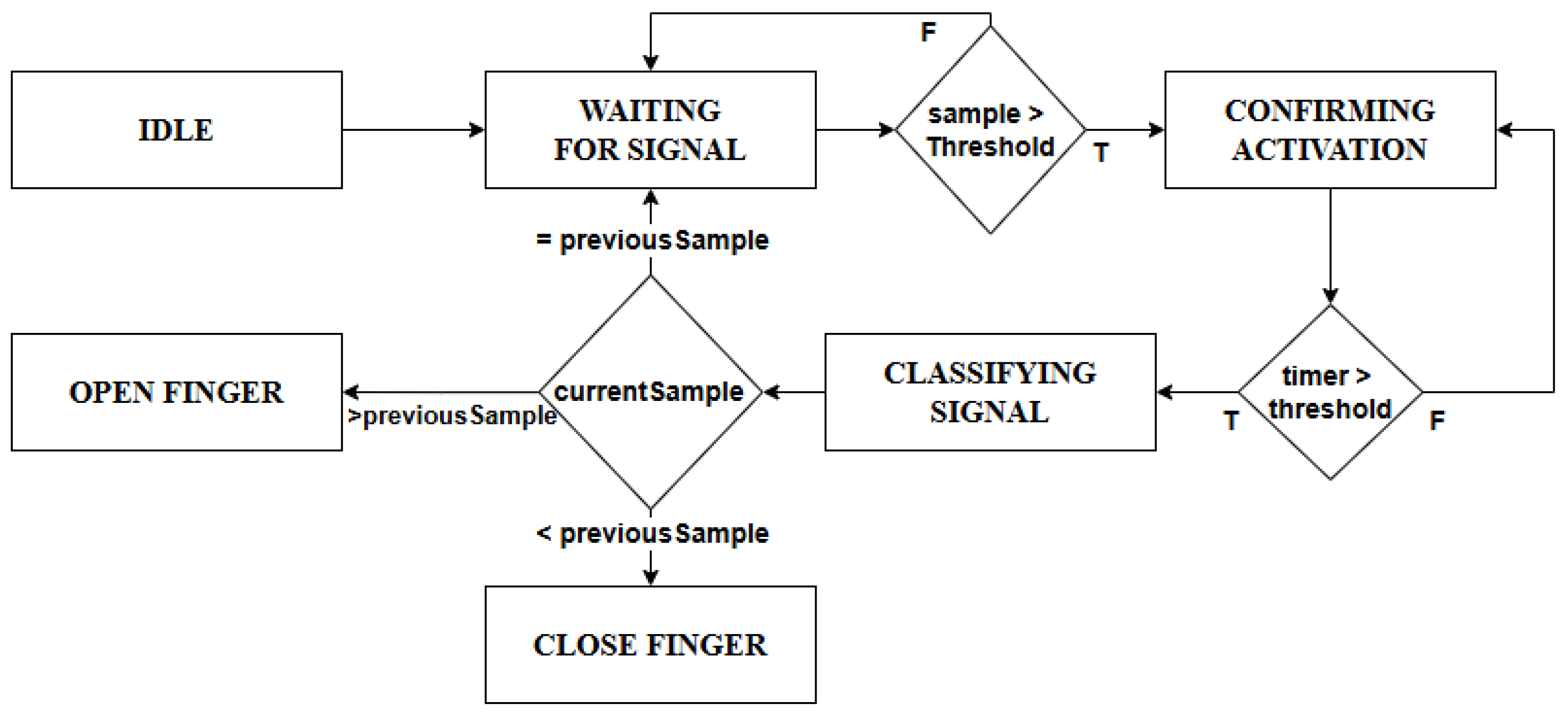
The third layer consists of a non-blocking finite state machine, with one instance running independently for each finger, enabling parallelization and making sure all fingers can be activated simultaneously. Its operation relies on the clean, processed values from the pipeline and is entirely decoupled from raw ADC data, filter internals, or timing concerns. Its purpose is to interpret the signal as intentional user input and issue the corresponding motor command. Each FSM transitions through four states (IDLE, WAITING_FOR_SIGNAL, CONFIRMING_ACTIVATION, and CLASSIFYING_SIGNAL) based on whether the processed signal crosses a predefined threshold, the duration of that crossing, and the signal’s trend.
Figure 13 presents the corresponding state machine diagram.
5. Results and Discussion
This section presents the mechanical platform used to validate the electronic hardware and control strategies described in the previous sections. The results reported in this chapter therefore reflect the combined performance of the signal acquisition, processing, and actuation architectures when deployed on a physical robotic hand.
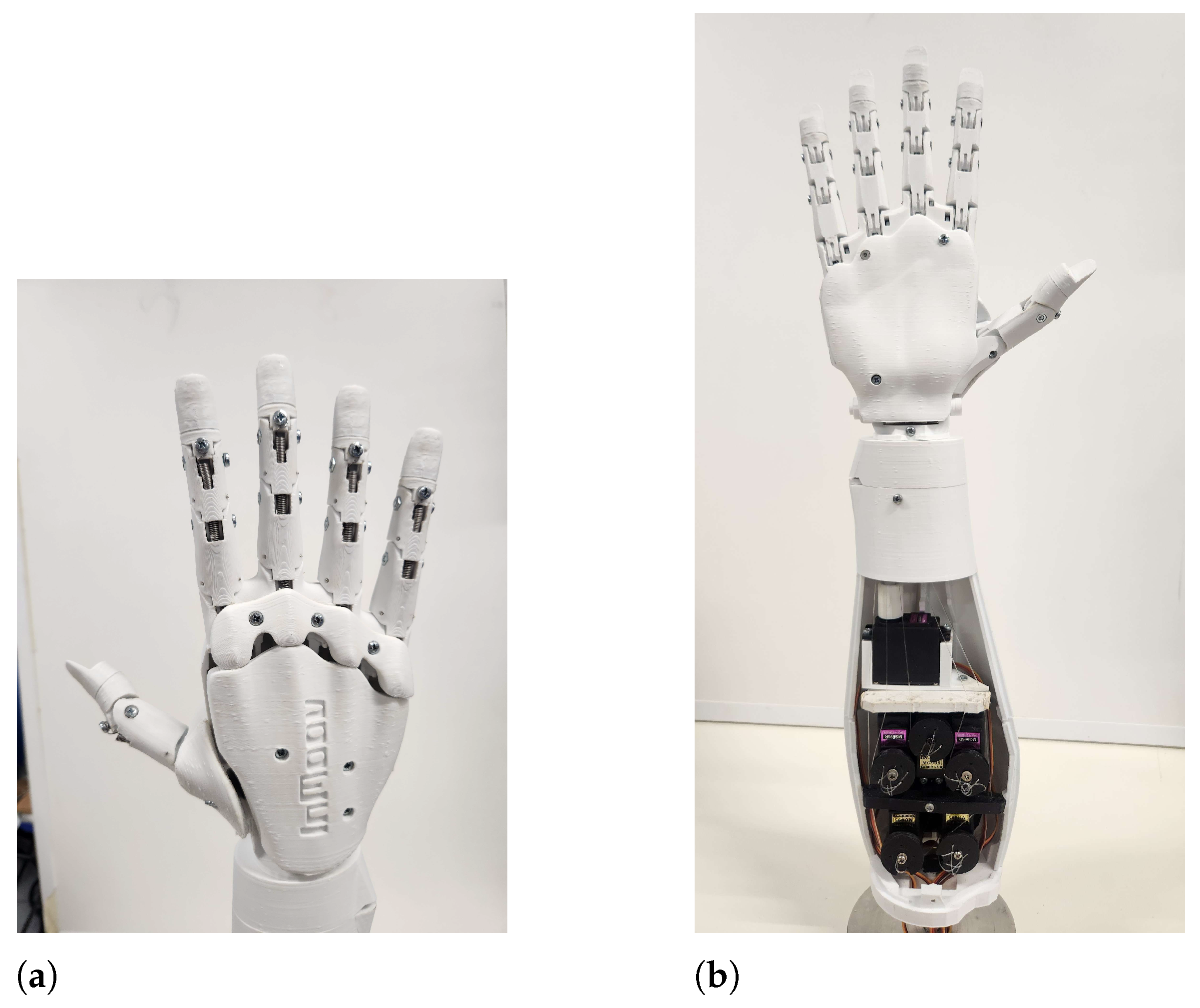
To enable experimental validation, a multi-finger robotic hand was manufactured and assembled as part of this work (
Figure 14). The mechanical design is based on the open-source InMoov hand, originally developed by Gaël Langevin within the InMoov project [
65]. The original design was adopted as a structural reference due to its well-documented geometry, tendon-driven architecture, and suitability for low-cost, reproducible fabrication.
The assembled hand comprises five independently actuated fingers, each driven by a single MG996R servo motor (TowerPro, Shenzhen, China) mounted in the hand base. Motion is transmitted from the servo horns to the finger joints via fishing line tendons, which were selected over textile cord to minimize friction and elastic compliance. Each finger is returned to its open position by a passive spring mechanism, resulting in a normally-open configuration that closes upon servo actuation. Power and control signals are routed from the embedded electronics to the servo motors via direct wiring, with the Arduino Nano generating PWM signals to command each servo independently.
All hand components were fully 3D printed and mechanically assembled by the authors, and the complete electronic system and embedded software were developed independently and integrated into the hand structure. Several practical adaptations were introduced relative to the original design to accommodate the developed actuation system and experimental constraints. These include the use of fishing line instead of textile tendon cord to reduce friction and elastic compliance, modifications to the hand base due to the absence of the forearm structure, and adjustments to the motor mounting and tendon routing to improve force transmission between the servo motors and the fingers.
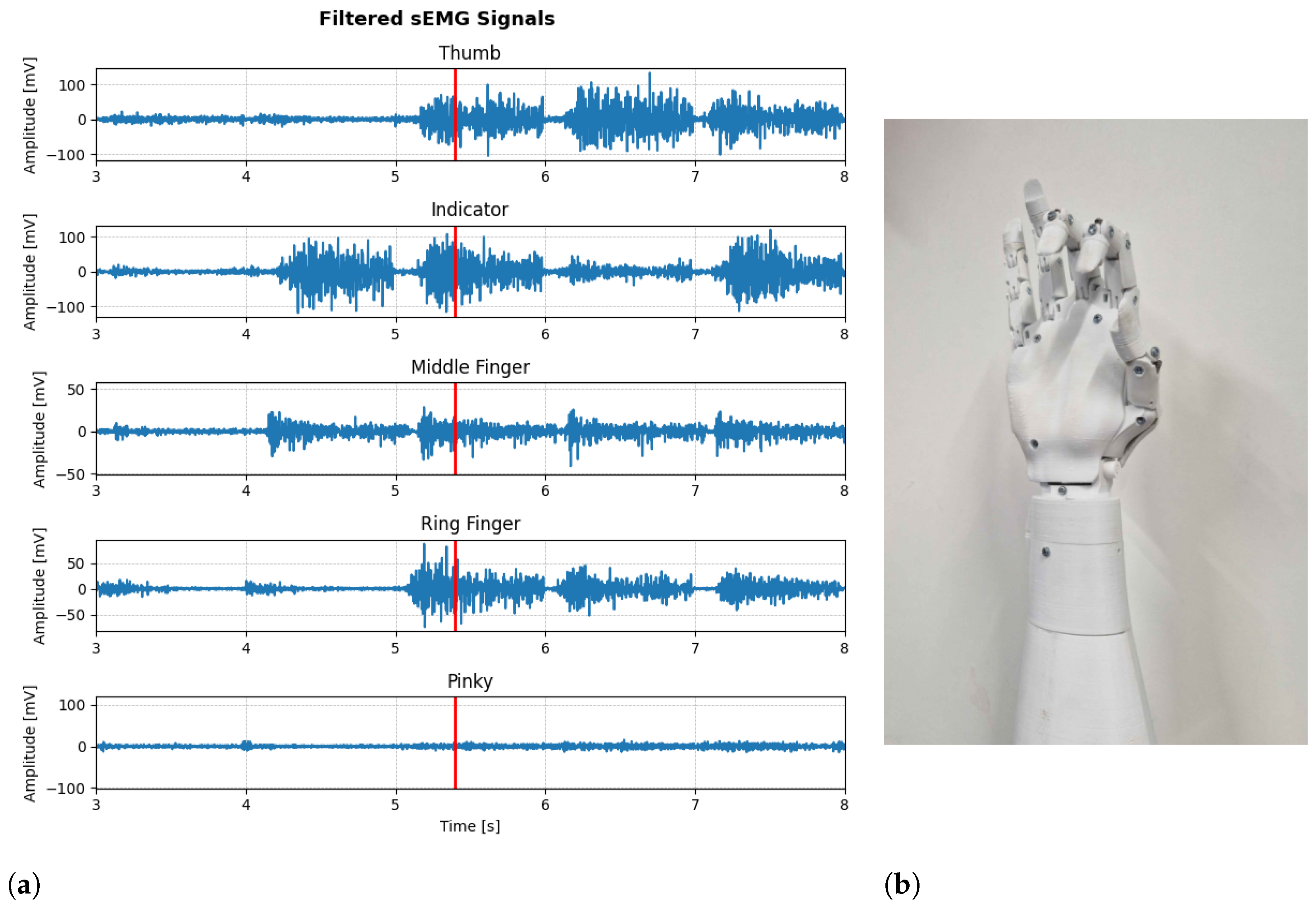
In order to test the correct operation of the robotic hand, five pre-recorded EMG signals—one for each finger—were processed through the analog and digital filters (
Figure 15b). In the resulting traces, higher amplitudes indicate active finger closure, while lower amplitudes correspond to no effort, meaning the finger is open. Amplitude levels vary between fingers due to differences in EMG signal strength and electrode placement.
The red vertical line in the graph (
Figure 15a) marks the instant when the processed signals were sent to the hand, and an accompanying image captures the hand at that precise moment. At this instant, the pinky remains open, consistent with its signal never closing; the index and middle fingers are already fully closed, reflecting signals that had been in the closed state for approximately 1.3 s. The thumb and ring fingers show shorter closure durations (0.3 s), so they appear partially closed, just beginning to move.
In addition to using pre-recorded signals, the system is capable of acquiring and processing EMG signals in real time. As demonstrated in
Video S1 (Supplementary Materials), the robotic hand responds near-instantaneously to the user’s myoelectric activity, performing coordinated finger closures and openings in synchrony with the recorded signals.
Experimental evaluation was conducted on five able-bodied participants, namely the authors of this work. While this represents a limited sample, the primary objective of the evaluation was to validate the correct operation of the signal acquisition, processing, and actuation pipeline rather than to assess generalization across a broader population. Each participant was instructed to reproduce a standardized sequence of finger movements, including individual finger flexion, combined finger motions, and full-hand opening and closing.
Table 1 presents the results of several metrics measured for each finger. The results were obtained through a combination of mechanical, electrical, and software-based tests. Mechanical evaluations included measuring the minimum gripping distance and maximum holding strength using digital calipers with a ±0.01 mm resolution (Digikey, Thief River Falls, MN, USA) and a handheld newton force gauge with a range of 0.1–5 N (ATO, Golden Springs, CA, USA). Additionally, programming and electrical tests captured the delay between receiving the signal and actuating the fingers of the hand, as well as the peak motor currents each servo consumed.
Across the fingers, minimum gripping distances ranged from 22 mm for the thumb to 49 mm for the pinky, while maximum holding strength varied from 1.75 N to 4.07 N. The thumb and pinky represent slight outliers in these measurements, which can be attributed to differences in finger design, tendon routing, and spring tension. The peak motor current remained well below 1 A for all fingers, indicating that the selected MG996R servos provide sufficient torque without excessive electrical demand. Again, the thumb and pinky exhibited slightly higher currents, consistent with the additional torque required due to their positions on the extremities of the hand. These fingers experience more bending in the tendons as they pass through the wrist, whereas the middle three fingers sit more directly above the wrist, allowing more direct routing.
Actuation delay, measured from signal acquisition to finger movement, ranged from 314 ms to 650 ms. This delay includes approximately 20 ms attributable to the signal conditioning filters and the Arduino Nano’s internal ADC sampling. Variation between fingers is primarily due to differences in motor range settings. After testing, some motors would draw excessive current without improving gripping performance, so the range for each finger was adjusted to optimize efficiency.
It is of note that each test was repeated ten times to account for minor trial-to-trial variations, and the values reported in
Table 1 represent the average across these tests.
Finally, several limitations of the proposed system should be acknowledged in the context of practical application. First, the inherent challenge of isolating individual finger activations from surface EMG electrodes introduces crosstalk, particularly during synergistic finger movements, which may reduce the reliability of independent finger control in unconstrained use. Second, the measured maximum holding strength, ranging from 1.75 to 4.07 N across fingers, and the minimum gripping distance, ranging from 22 to 49 mm, impose practical constraints on the range of objects and tasks the hand can accommodate. Third, the robustness of the system to real-world signal variability, such as electrode displacement, muscle fatigue, perspiration, and inter-subject differences, was not evaluated in this work, and performance degradation under these conditions remains an open question. Furthermore, the electrode placement strategy adopted in this work targets specific anatomical landmarks on the intact forearm, which may not be directly transferable to amputee users where residual muscle volume and anatomy vary considerably depending on amputation level and individual morphology.
6. Conclusions
This work presented the design and implementation of a modular EMG-controlled bionic hand, integrating analog signal conditioning, digital processing, and multi-channel actuation into a cohesive and scalable platform. The system translates neuromuscular intent into controlled finger motion using a cost-effective and reproducible architecture.
The analog front end reliably amplifies and filters low-amplitude sEMG signals through instrumentation amplification, band-pass filtering, notch suppression, and envelope detection. Combined with the layered digital processing architecture and interrupt-driven sampling, this ensures stable gesture detection while maintaining timing consistency and modularity. Actuation is performed via a PCA9685 PWM driver and high-torque servo motors, allowing synchronized, independent control of five tendon-driven fingers while minimizing computational overhead.
Future improvements could include adaptive thresholding, advanced classification algorithms, optimized tendon mechanics, or higher-resolution ADC acquisition. Overall, this work demonstrates a functional EMG-controlled bionic hand and establishes a structured hardware–software framework for neuromuscular interfaces, providing a strong foundation for scalable prosthetic research and human–machine interaction applications.




 ,
,