
Importance Measures for Vehicle Dust Pump Impeller Blade Fixture Parameters Based on BP Neural Network



Abstract
1. Introduction
2. Finite Element Analysis and Parametric Modelling of the Impeller Blade Fixture
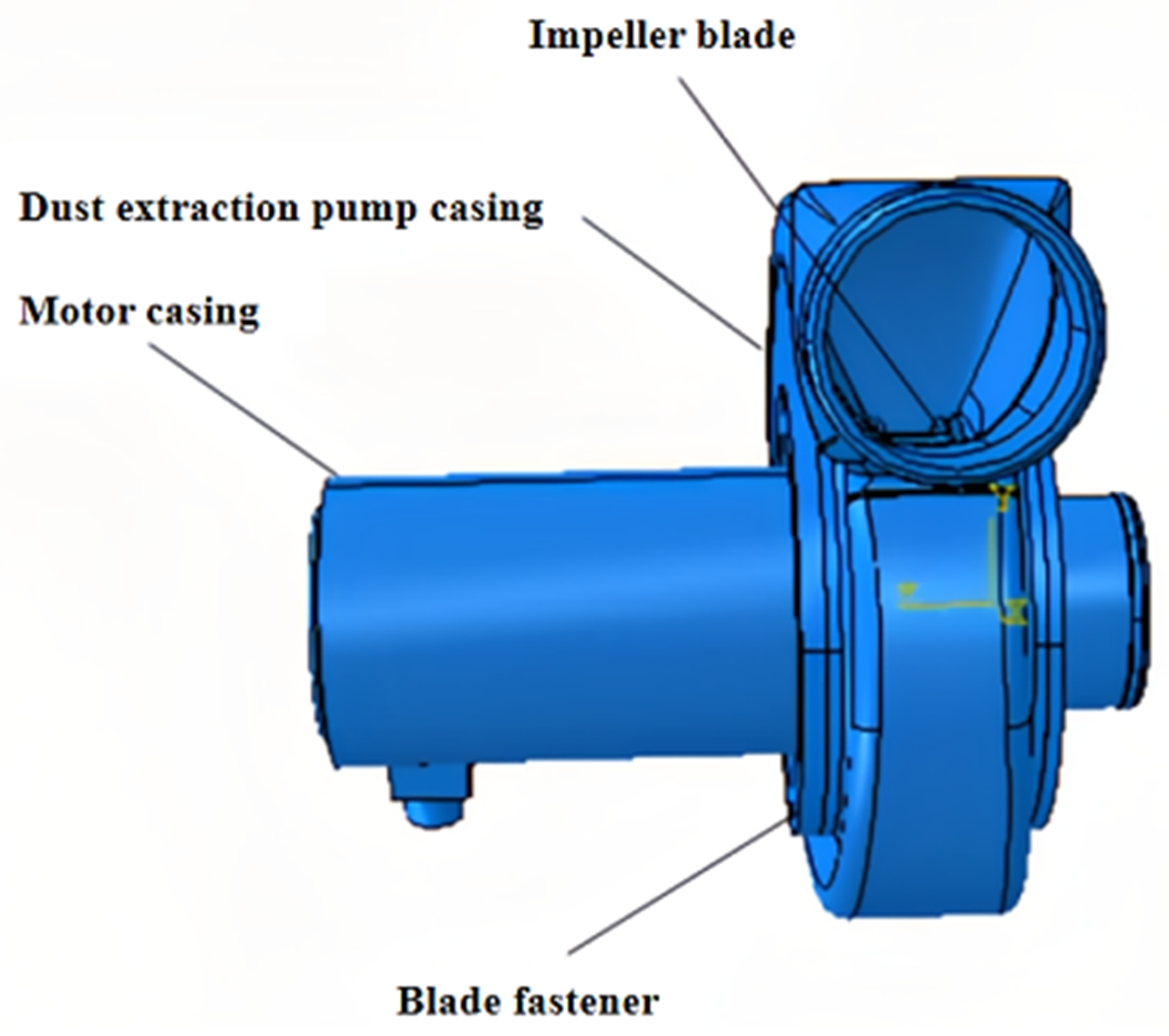
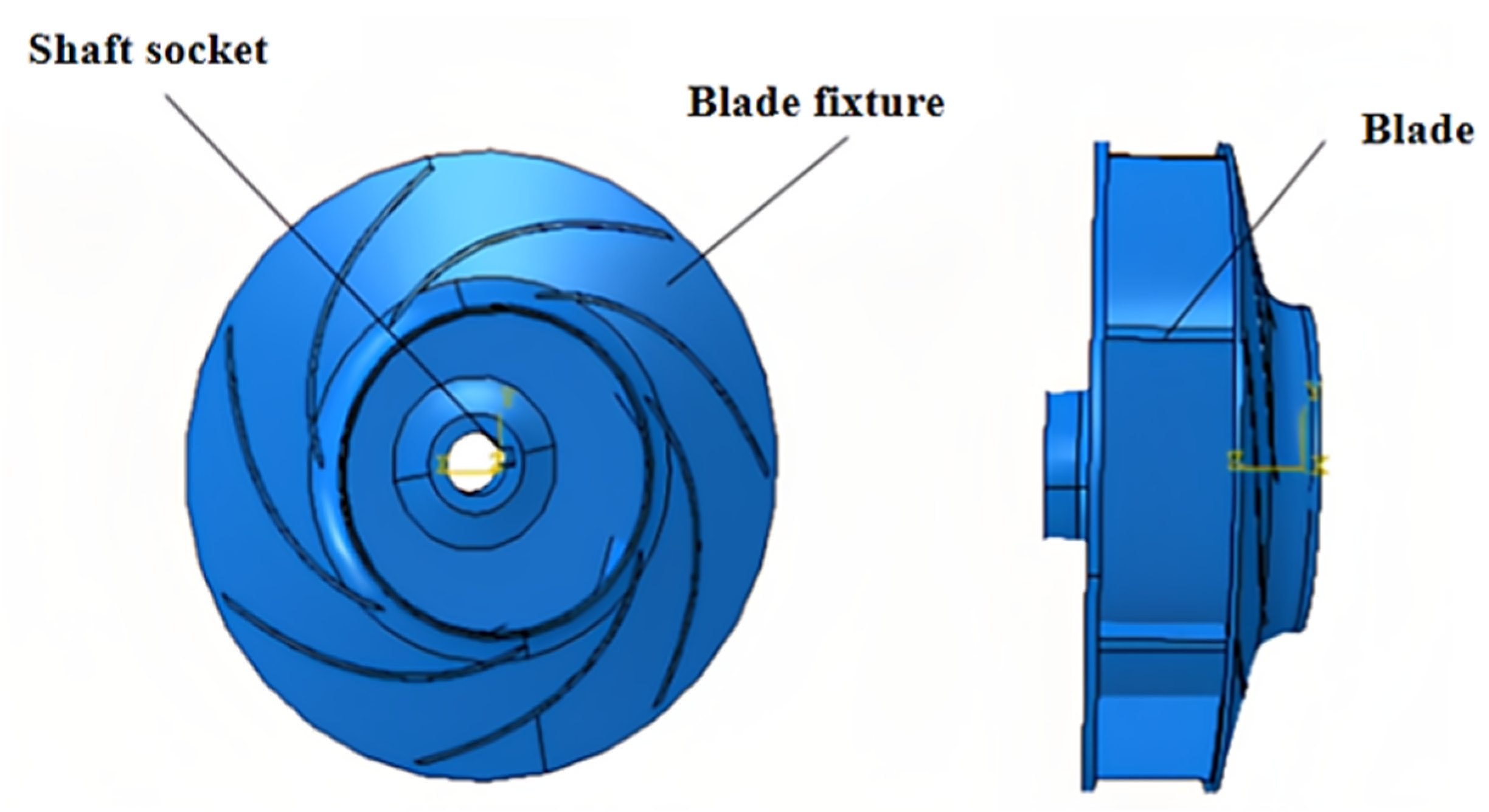
2.1. Finite Element Model
2.2. Parametric Model
- Key parameters
- 2.
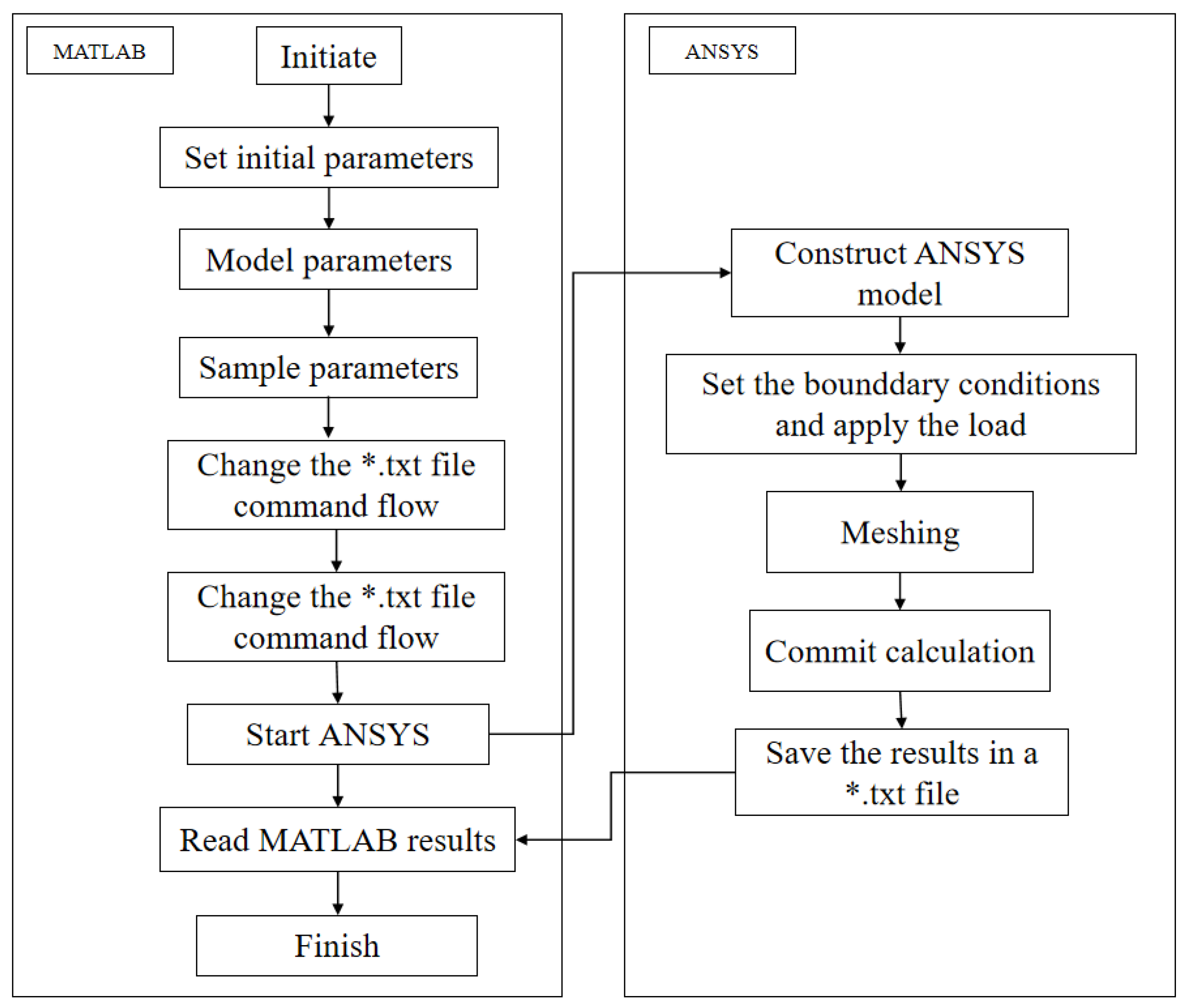
- Parameterised calculation model
3. Prediction of Impeller Blade Fixture Response Using the BP Neural Network
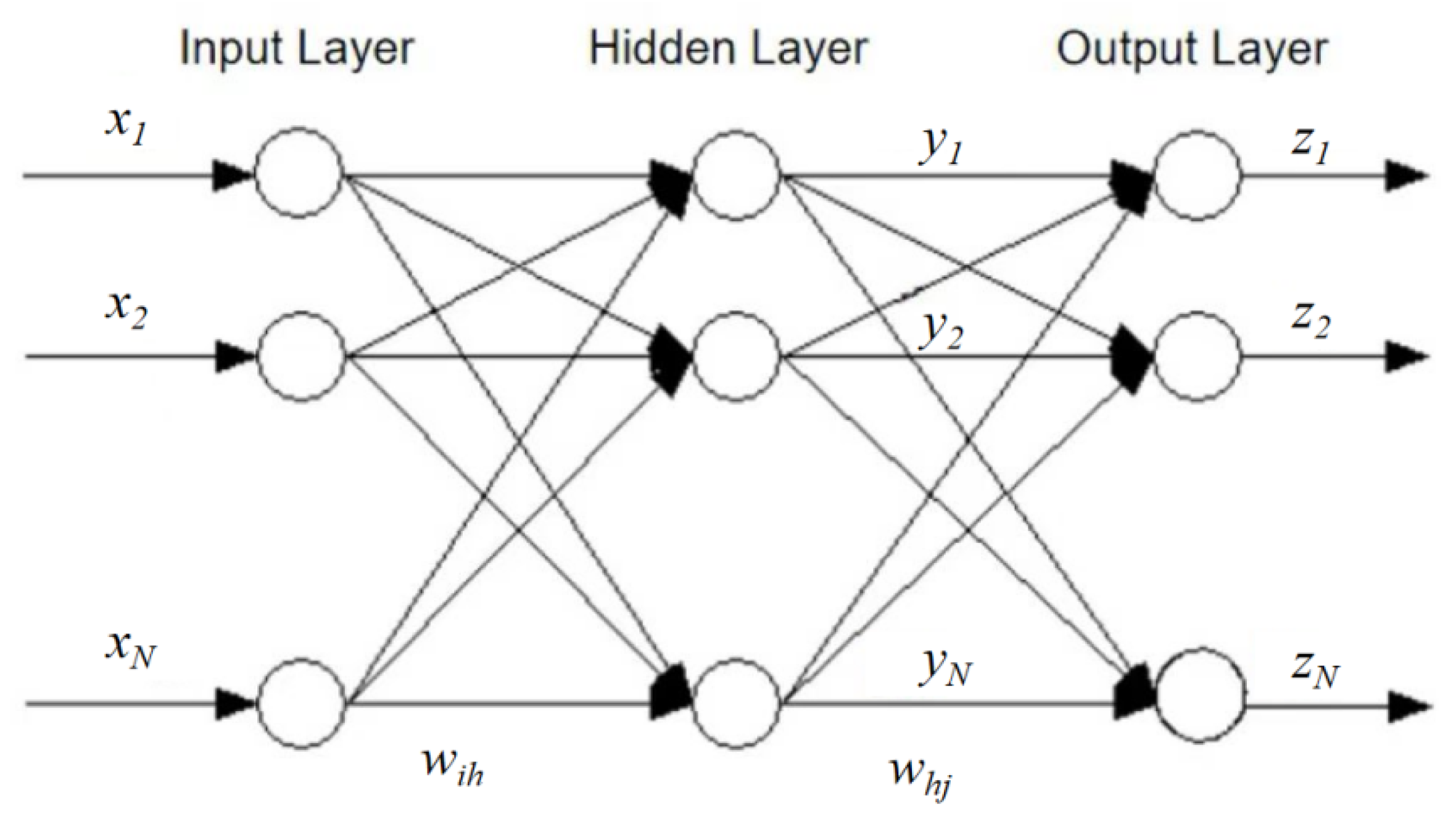
3.1. Construction of BP Neural Network
3.2. Prediction of Impeller Blade Failure
- Dataset partitioning. The parameter data obtained through MATLAB sampling were combined into a single sample set with the stress results calculated by ANSYS on their basis. This sample set was divided into training and test sets in a 4:1 ratio.
- BP neural network construction. A five-layer BP neural network was constructed as described in Section 3.1 using six nodes in the input layer representing the Poisson’s ratio, elastic modulus, density, fixture plate thickness, blade thickness, and rotational speed; a hidden layer comprising three levels each containing 14 neurons; and one output layer representing the stress in the impeller blade fixture under rotational load. The number of hidden layer levels was determined bywhere h is the number of neurons in the hidden layer, m is the number of neurons contained in the input layer (m = 6 in this study), n is the number of neurons in the output layer (n = 1 in this study), and the value of a fluctuates between 1 and 15. The tansig transfer function was used between the first and second hidden layers and the purelin transfer function was used between the second and third hidden layers.
- Network parameter configuration. The parameters to be set included the number of network training sessions, learning rate, training time, and minimum error of the training target.
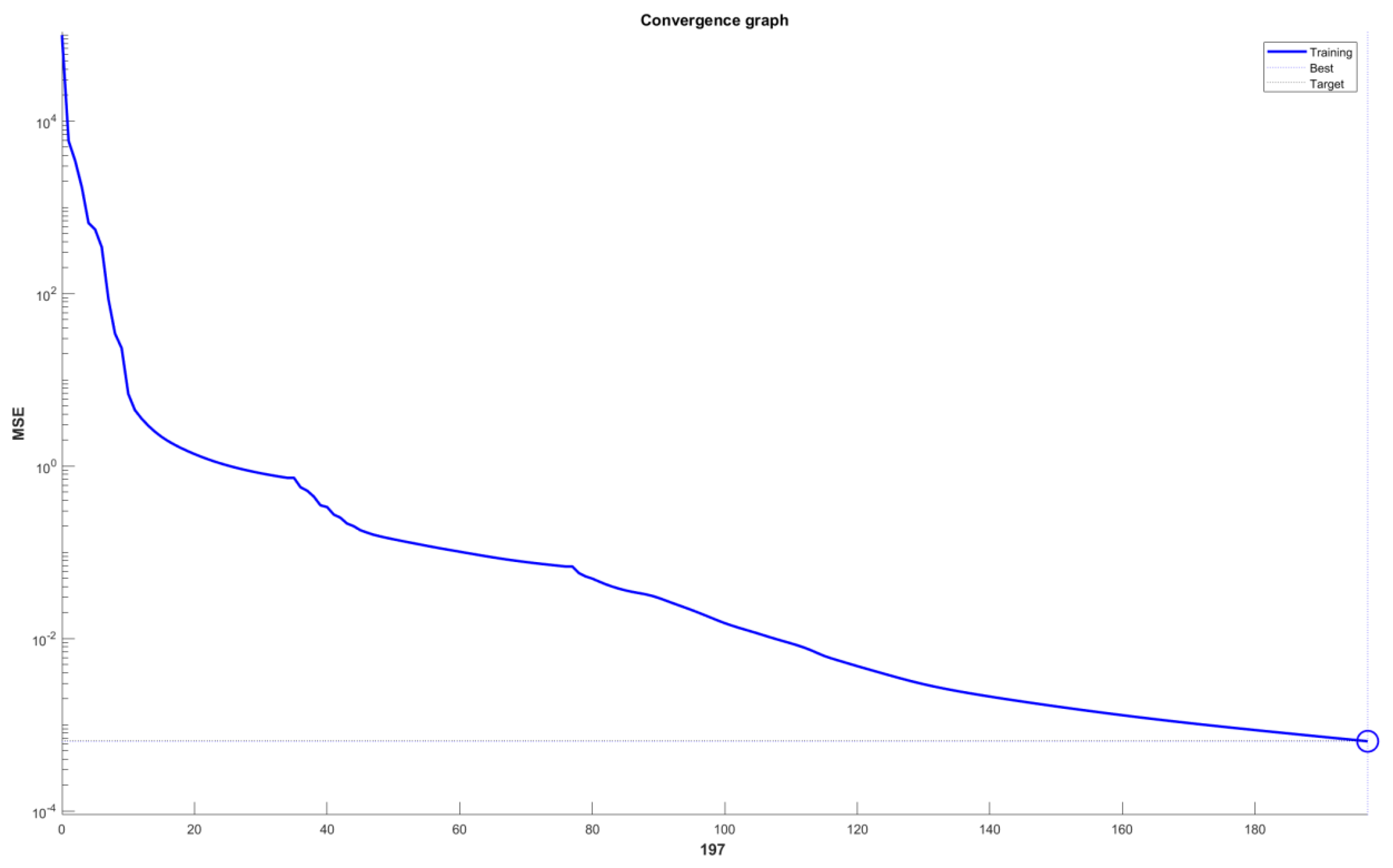
- Network training. Four convergence conditions were established to avoid overfitting the neural network: maximum training sessions (less than 10,000), minimum training time (less than 1 min), generalisation ability (error remained unchanged for six consecutive iterations), and error accuracy (less than 0.65 × 10⁻³). If the neural network met any of these conditions during the training process, the training was terminated.
- Error calculation. The error between the simulated output and BP neural network-predicted value was calculated as follows:where is the actual value of the simulation output and is the predicted value of the BP neural network.
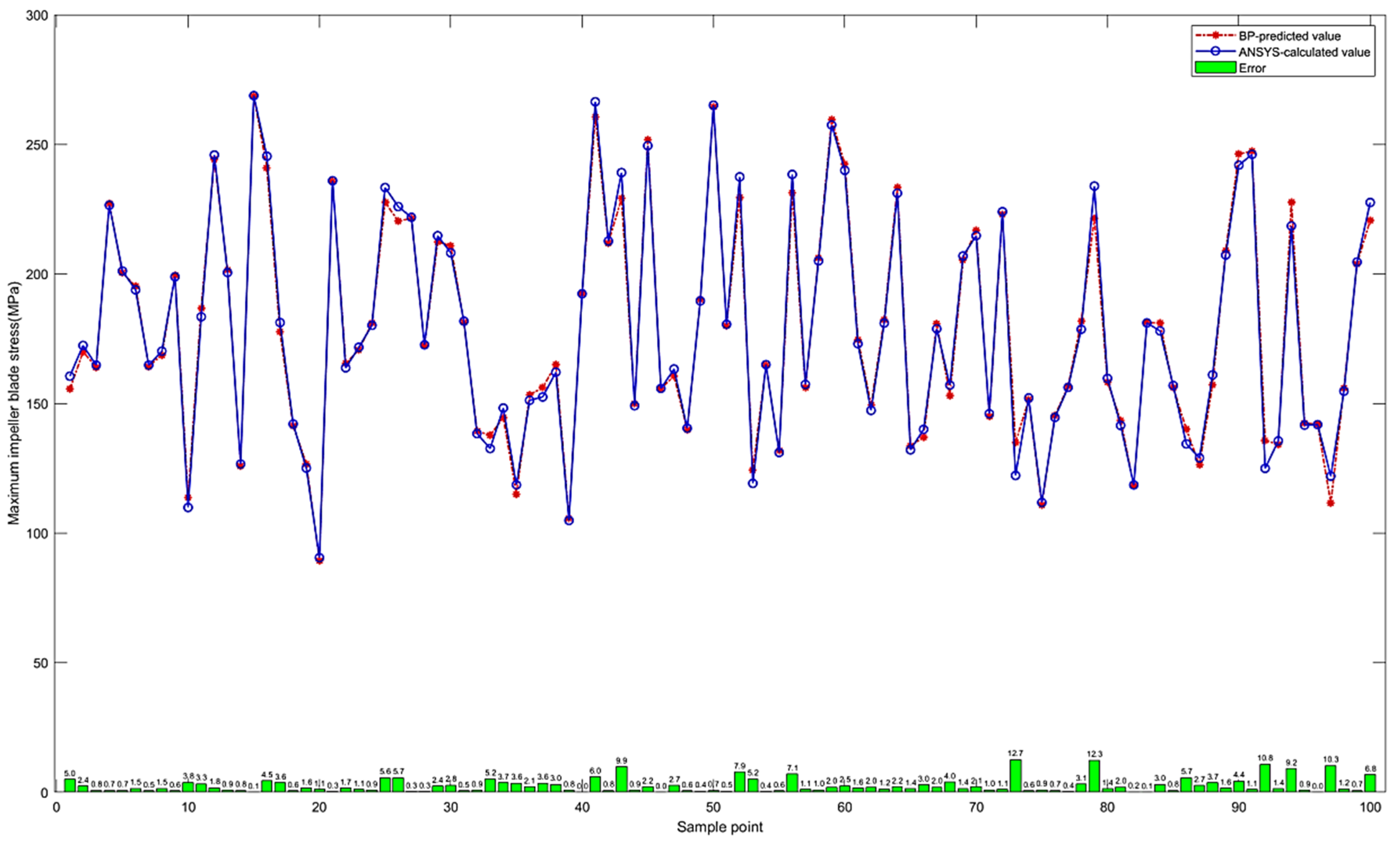
3.3. Validation of BP Neural Network Predictions
4. Determining the Importance Measures of Impeller Blade Fixture Parameters
4.1. Variance-Based Importance Measure Theory
- Variance decomposition and importance measures
- 2.
- Calculating the importance measures using MCS
4.2. Importance Measures for Impeller Blade Displacement
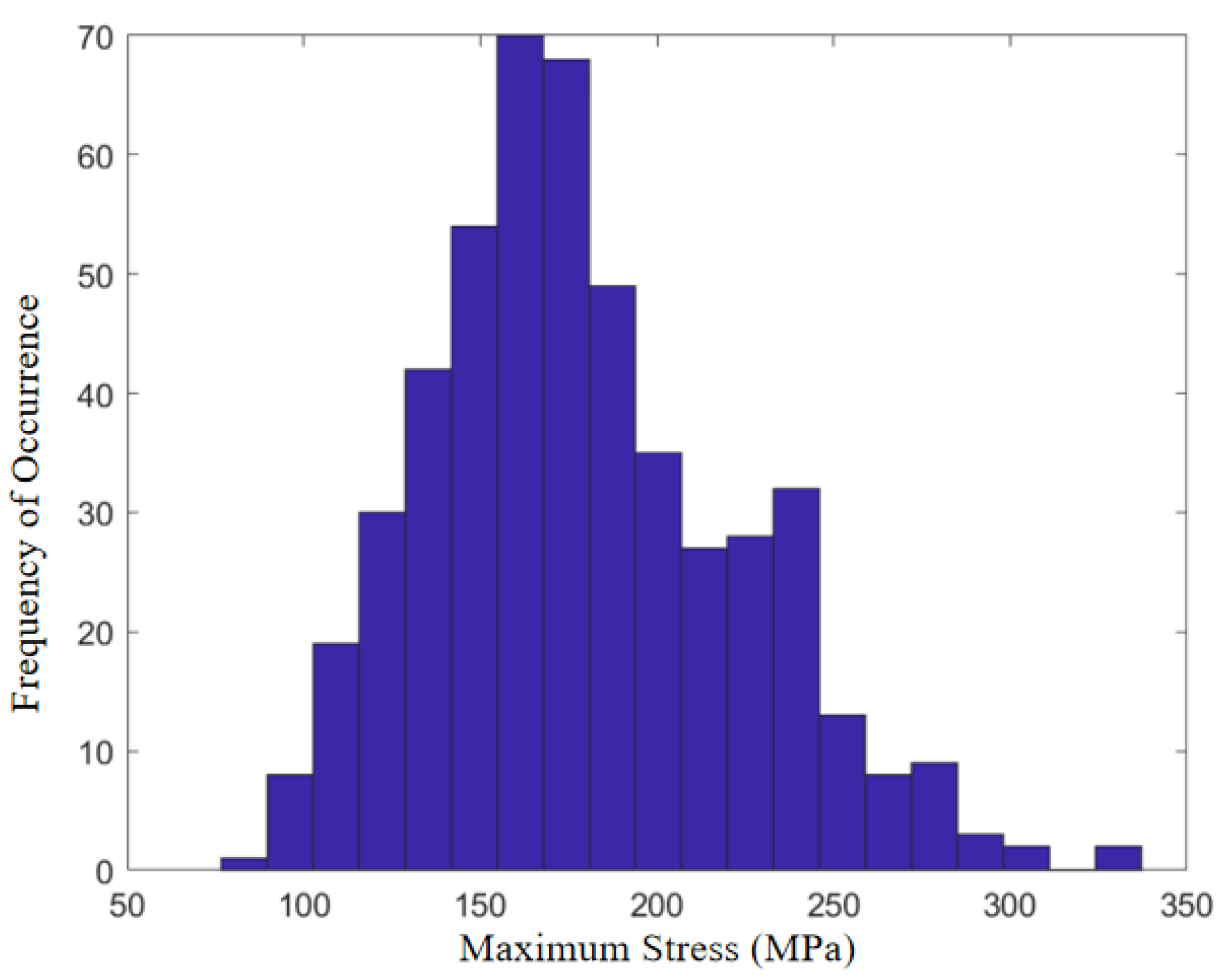
4.3. Importance Measures for Impeller Blade Stress
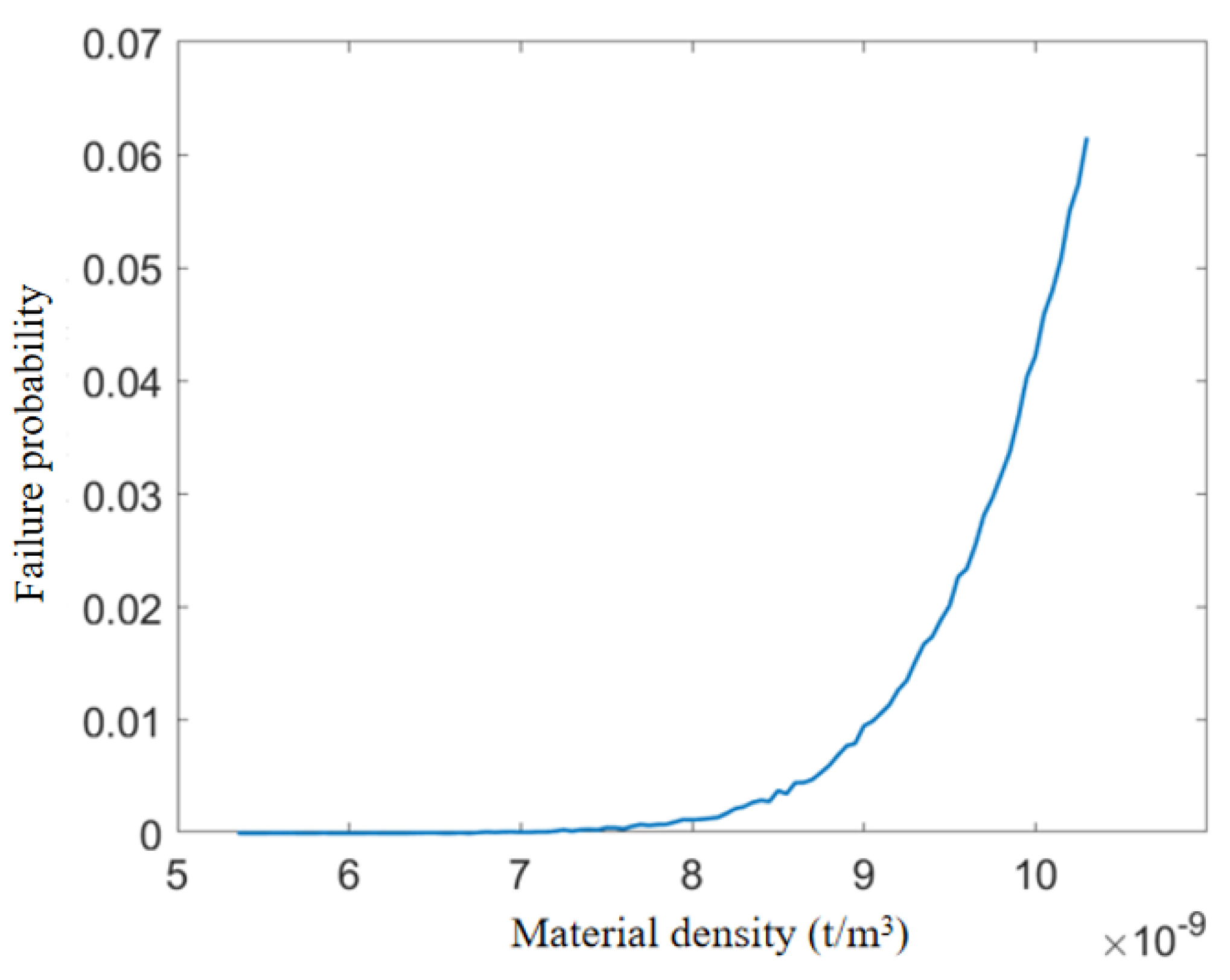
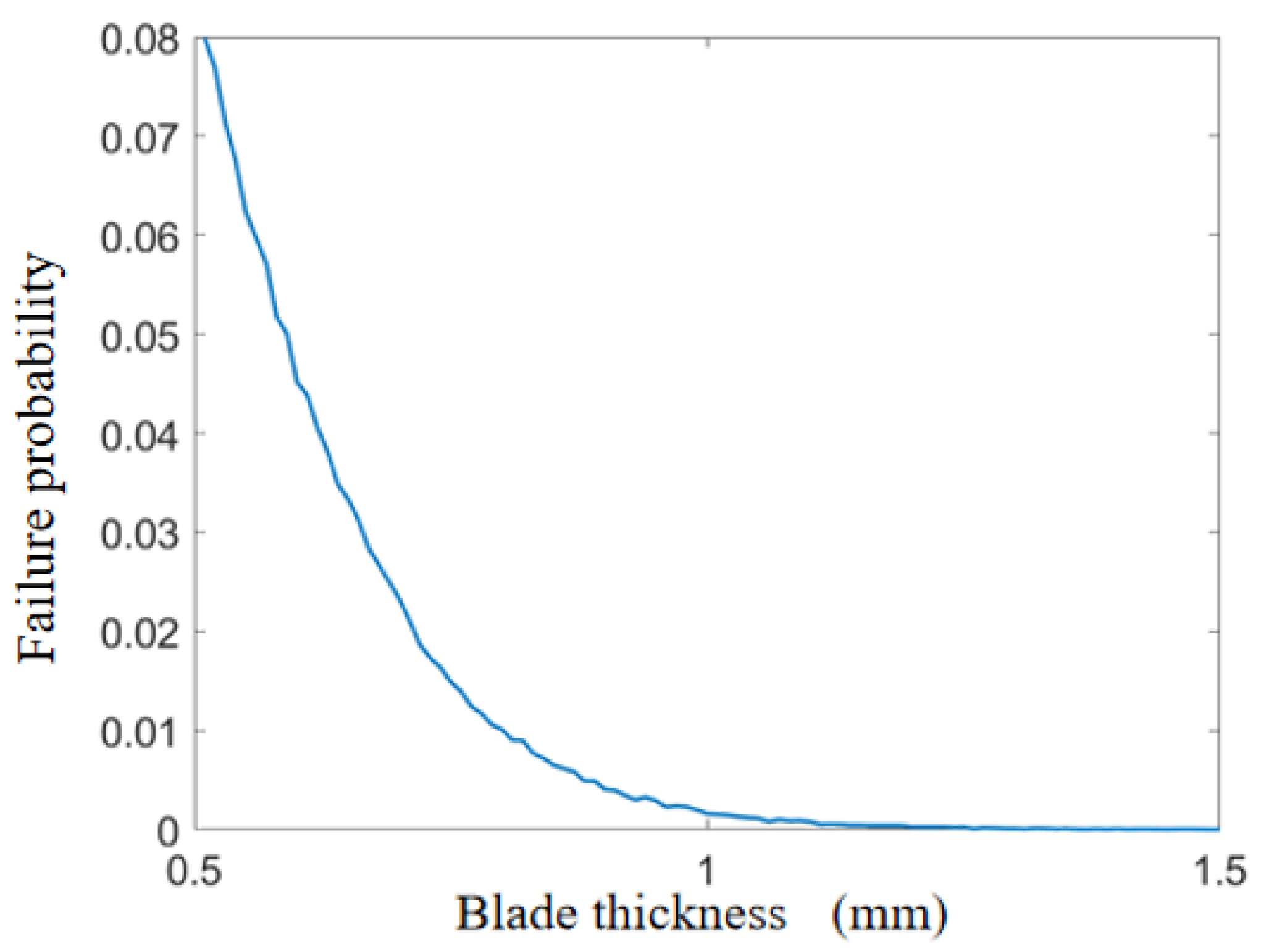
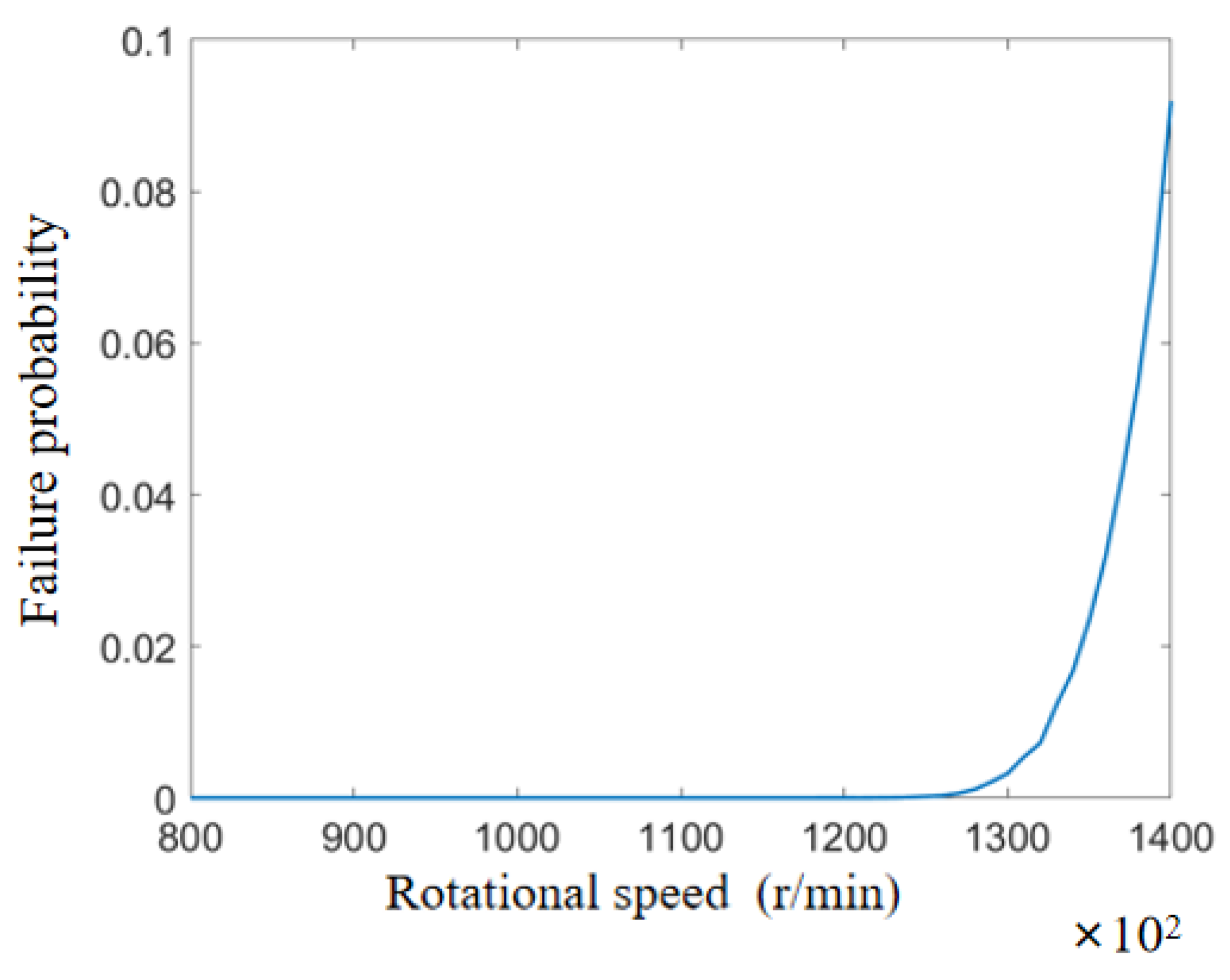
4.4. Impacts of Key Parameters on Impeller Blade Failure Probability
5. Conclusions
- This paper employs a neural network to predict the relationship between the geometric parameters of the dust pump impeller blade and stress–strain responses. Subsequently, based on the prediction results from the neural network, a variance-based global sensitivity analysis method is adopted to investigate the influence of uncertainties in the impeller blade fixture parameters on the output responses (displacement and stress). The results indicated that the parameter importance to the impeller blade displacement decreased from the rotational speed to the elastic modulus, material density, blade thickness, Poisson’s ratio, and fixture plate thickness; the rotational speed had a much greater effect on the displacement than the other parameters. The parameter importance to the impeller blade stress decreased from the rotational speed to the material density, blade thickness, Poisson’s ratio, elastic modulus, and fixture thickness; again, the rotational speed had a much greater effect on the stress than the other parameters. Therefore, the influence of blade rotational speed on the reliability of the dust pump should be prioritised during design, as should the material density and blade thickness.
- In certain operational environments, dust particles significantly affect the reliability of ventilation and air filtration systems. Accumulated dust can lead to airflow obstruction, increased load on impeller blades, and higher stress concentrations, which ultimately reduce the service life and efficiency of the filtration system. Therefore, it is crucial to analyse the interaction between dust deposition and mechanical reliability during the design stage.
- This study provides a theoretical and methodological basis for improving the reliability design of air filtration systems in armoured vehicles and other off-road machinery. The proposed surrogate modelling approach effectively combines finite element simulation and machine learning, providing a rapid and accurate means for reliability prediction. The data obtained in this study can be used for optimisation of impeller blade geometry, material selection, and operational maintenance strategies.
Author Contributions
Funding
Data Availability Statement
Conflicts of Interest
References
- Chen, Y.; Cai, Y.; Yang, G.; Zhou, H.; Liu, J. Neural adaptive pointing control of a moving tank gun with lumped uncertainties based on dynamic simulation. J. Mech. Sci. Technol. 2022, 36, 2709–2720. [Google Scholar] [CrossRef]
- Simiński, P.; Kończak, J.; Przybysz, K. Analysis and testing of reliability of military vehicles. J. KONBiN 2018, 47, 87–103. [Google Scholar] [CrossRef]
- Dziubak, T.; Karczewski, M. Experimental study of the effect of air filter pressure drop on internal combustion engine performance. Energies 2022, 15, 3285. [Google Scholar] [CrossRef]
- Lu, J.; Sun, Y.; Qiao, M.; Wang, J.; Chen, K. Simulation and experimental study on the performance of air filter materials. Veh. Power Technol. 2019, 1, 38–42+49. [Google Scholar]
- Korobko, B.; Kryvorot, A.; Skoryk, M.; Virchenko, V. Air filter throughput impact experimental study on internal combustion engine fuel efficiency. In Proceedings of the 3rd International Conference on Building Innovations, Baku, Azerbaijan, 1–2 June 2020; Springer International Publishing: Cham, Switherland, 2020; pp. 215–224. [Google Scholar]
- Jiang, B. Simulation Study on the Off-Road Passability of Tracked Tanks. Master’s Thesis, China University of Petroleum (East China), Qingdao, China, 2019. [Google Scholar]
- Dziubak, T. Experimental Testing of Filter Materials for Two-Stage Inlet Air Systems of Internal Combustion Engines. Energies 2024, 17, 2462. [Google Scholar] [CrossRef]
- Dziubak, T.; Karczewski, M.; Dziobek, I. Empirical study of the effect of the air filter on the performance and exhaust emissions of a diesel engine. Combust. Engines 2023, 193, 94–111. [Google Scholar] [CrossRef]
- Hao, Y. Analysis of the Force-Thermal Coupling Response of Turbine Blades. Master’s Thesis, Beijing University of Chemical Technology, Beijing, China, 2023. [Google Scholar]
- Zhang, L.; Bin, G.; Zhong, X.; Yang, F.; Chen, A. Study on carbon particle deposition distribution of turbocharger turbine blade based on the gas-solid two-phase flow theory. Tribol. Int. 2023, 178, 108019. [Google Scholar] [CrossRef]
- Zhang, Y.; Zhang, C.; You, H.; Liang, K.; Wei, C.; Sun, A. Analysis of performance improvement methods for offshore wind turbine blades affected by leading edge erosion. Ocean. Eng. 2024, 310, 118773. [Google Scholar] [CrossRef]
- Tang, Y. Point Cloud Denoising and Surface Reconstruction in the Fabrication of Dust Pump Blades Based on Deep Learning. Master’s Thesis, Southwest University of Science and Technology, Mianyang, China, 2023. [Google Scholar]
- Li, Y.; Qin, Q.; Wang, Y.; Hu, M. Welded Joint Fatigue Reliability Analysis on Bogie Frame of High-Speed Electric Multiple Unit. J. Shanghai Jiaotong Univ. (Sci.) 2017, 22, 365–370. [Google Scholar] [CrossRef]
- Gao, W.; Mo, X.; Fu, R.; Sun, G.; Zhong, Z. 6σ robustness optimization design for crashover resistance of foam-filled conical thin-walled structures based on Kriging. Chin. J. Solid Mech. 2012, 33, 370–378. [Google Scholar]
- Gupta, S.; Manohar, C.S. Improved response surface method for time-variant reliability analysis of nonlinear random structures under non-stationary excitations. Nonlinear Dyn. 2004, 36, 267–280. [Google Scholar] [CrossRef]
- Zhang, C.; Bai, G.; Xiang, J. Reliability optimization design of flexible mechanisms based on extreme response surface method. J. Harbin Eng. Univ. 2010, 31, 1503–1508. [Google Scholar]
- Kang, Z.; Luo, Y. Reliability-based structural optimization with probability and convex set hybrid models. Struct. Multidiscip. Optim. 2010, 42, 89–102. [Google Scholar] [CrossRef]
- Wang, Y.; Shao, J.; Yang, F.; Zhu, Q.; Zuo, M. Optimization design of centrifugal pump cavitation performance based on the improved BP neural network algorithm. Measurement 2025, 245, 116553. [Google Scholar] [CrossRef]
- Han, X.; Kang, Y.; Sheng, J.; Hu, Y.; Zhao, W. Centrifugal pump impeller and volute shape optimization via combined NUMECA, genetic algorithm, and back propagation neural network. Struct. Multidiscip. Optim. 2020, 61, 381–409. [Google Scholar] [CrossRef]
- Wang, J.; Peng, W.; Bao, Y.; Yang, Y.; Chen, C. VHCF evaluation with BP neural network for centrifugal impeller material affected by internal inclusion and GBF region. Eng. Fail. Anal. 2022, 136, 106193. [Google Scholar] [CrossRef]
- Wei, C.; Wensheng, M.; Lei, W.; Meng, Z.; Qiang, Z.; Kaizi, H. Optimization of Centrifugal Pump Impeller Based on Neural Network and NSGA-II Algorithm. J. Phys. Conf. Ser. 2024, 2752, 012120. [Google Scholar] [CrossRef]
- Sun, Z.; Tang, F.; Shi, L.; Liu, H. Multi-conditional optimization of a high-specific-speed axial flow pump impeller based on machine learning. Machines 2022, 10, 1037. [Google Scholar] [CrossRef]
- Wu, D.; Wang, H.; Huang, L.; Wang, Y. Computer aided machining fixture design algorithm and software based on case learning for near-net-shaped jet engine blade. J. Manuf. Process. 2021, 69, 545–555. [Google Scholar] [CrossRef]
- Wu, D.; Zheng, Y.; Liang, J.; Wang, H. Flexible fixture designs and accuracy improvements for the adaptive machining of near-net-shaped blades. J. Manuf. Process. 2025, 143, 188–204. [Google Scholar] [CrossRef]
- Zhang, F.; Tian, Y.; Du, R.; Xu, Y.; Gao, Y.; Li, X. Parameter Stress Response Prediction for Vehicle Dust Extraction Fan Impeller Based on Feedback Neural Network. Machines 2025, 13, 496. [Google Scholar] [CrossRef]
- Arslane, M.; Slamani, M.; Louhichi, B. Advancements and optimization in fixture layouts and machining processes: A comprehensive review in the context of Industry 4.0. Int. J. Adv. Manuf. Technol. 2025, 137, 5387–5404. [Google Scholar] [CrossRef]
- Li, Y.; Ding, F.; Wang, D.; Tian, W.; Zhou, J. Predicting the dynamic parameters for milling thin-walled blades with a neural network. J. Manuf. Mater. Process. 2024, 8, 43. [Google Scholar] [CrossRef]
- Lu, Z.; Li, L.; Song, S.; Hao, W. Importance Analysis Theory and Solution Method for Uncertain Structural Systems; Science Press: Beijing, China, 2015. [Google Scholar]
- Zheng, J.; Jin, W.; Song, Y. Progress in Structural Sensitivity Analysis. Light Ind. Mach. 2016, 34, 93–96+102. [Google Scholar]
- Dui, H.-Y.; Li, Y.; Bai, G.-H. A Reliability-oriented Improved Uncertainty Importance Measure. Oper. Res. Manag. Sci. 2022, 31, 100. [Google Scholar]
- Zhao, X. Global reliability sensitivity analysis based on subset simulation and space partition method. J. Phys. Conf. Ser. 2024, 2898, 012006. [Google Scholar] [CrossRef]
- Puy, A.; Roy, T.P.; Saltelli, A. Discrepancy Measures for Global Sensitivity Analysis. Technometrics 2024, 66, 347. [Google Scholar] [CrossRef]
- Kang, L.; Yan, H.; Lu, L.; Dong, D. Global sensitivity analysis of structural parameters for automobile air conditioning blower. J. Phys. Conf. Ser. 2023, 2581, 012002. [Google Scholar]
- Cui, L.; Lyu, Z.; Wang, W. The importance measure of fundamental random variables and their probability density evolutionary algorithm. J. Nanjing Univ. Aeronaut. Astronaut. 2011, 43, 165–171. [Google Scholar]
- Liu, J.; Li, L. Efficient importance analysis methods for structures with distribution parameter uncertainty based on cubature formula. Xibei Gongye Daxue Xuebao/J. Northwestern Polytech. Univ. 2022, 40, 1212–1222. [Google Scholar] [CrossRef]
- Nezhad, M.D.; Raoufi, R.; Dalvand, A. A network-based importance measurement index for bridge security risk assessment and prioritisation. Balt. J. Road Bridge Eng. 2022, 17, 1–30. [Google Scholar] [CrossRef]
- Li, S.; Han, F. A new failure theory and importance measurement analysis for multidirectional fiber-reinforced composite laminates with holes. Materials 2022, 15, 2227. [Google Scholar] [CrossRef] [PubMed]
- Sobol’, M. Global sensitivity indices for nonlinear mathematical models and their Monte Carlo estimates. Math. Comput. Simul. 2001, 55, 271–280. [Google Scholar] [CrossRef]
- Wang, S.; Wu, J.; Tian, P.; Tang, C.; Tao, Y. Global Sensitivity Analysis of Dynamic Parameters to Industrial Robots Considering Spacetime Two-Dimensional Output Responses. IEEE Trans. Reliab. 2024, 74, 2813–2826. [Google Scholar] [CrossRef]
- Zhou, C.; Shi, Z.; Zhou, C. Global sensitivity analysis of structural models by active subspace and neural network. Multidiscip. Model. Mater. Struct. 2022, 18, 477–491. [Google Scholar] [CrossRef]
- Lu, Z.; Lu, Z.; Tang, T.; Wang, P. Importance measurement analysis of aviation gear vibration. Mech. Transm. 2013, 37, 80–85. [Google Scholar]
- Mohamad, E.T.; Faradonbeh, R.S.; Armaghani, D.J.; Monjezi, M.; Majid, M.Z.A. An optimized ANN model based on genetic algorithm for predicting ripping production. Neural Comput. Appl. 2017, 28, 393–406. [Google Scholar] [CrossRef]
- Hao, L.; Li, Q.; Pan, W.; Yao, R.; Liu, S. Ice accretion thickness prediction using flash infrared thermal imaging and BP neural networks. IET Image Process. 2023, 17, 649–659. [Google Scholar] [CrossRef]
- Wei, L.; Wang, Y. Optimization of solid oxide fuel cell power generation voltage prediction based on improved neural network. Int. J. Low-Carbon Technol. 2023, 18, 464–472. [Google Scholar] [CrossRef]



| Author | Application Area Research Subject | Key Method | Major Finding and Parameter Importance |
|---|---|---|---|
| Wang et al. [18] | Cavitation Performance Optimization of Centrifugal Pumps | Improved BP Neural Network (using network weight perturbation method) | Blade geometric parameters (e.g., blade inlet angle, blade thickness) have the highest sensitivity to the cavitation margin. |
| Han et al. [19] | Collaborative Optimization of Impeller and Volute | BP Neural Network + Genetic Algorithm + NUMECA | The initial stress state induced by the fixture contributes up to 18.7% to impeller efficiency. |
| Wei et al. [21] | Multi-objective Optimization of Centrifugal Pump Impellers | NSGA-II + Neural Network Surrogate Model | Excessive clamping force leads to stress concentration at the blade root, ranking in the top three in importance on the Pareto front. |
| Wang et al. [20] | Very-High-Cycle Fatigue (VHCF) Life Prediction of Impeller Material | BP Neural Network | Residual stress introduced by fixture parameters during manufacturing is a key factor affecting VHCF life, with an importance score as high as 0.62. |
| Sun et al. [22] | Multi-condition Optimization of High-specific-speed Axial-flow Pump Impellers | Machine-Learning-Based Surrogate Model | Fixture positioning error contributes 12–22% to impeller energy loss under varying conditions. |
| Wu et al. [23,24] | Fixture Design for Near-net-shaped Aero-engine Blades | BP Neural Network (Case-based learning) | The number of support points and clamping force distribution are far more important than the fixture material stiffness for machining deformation. |
| Zhang et al. [25] | Stress Response Prediction for Vehicle Dust Extraction Fan Impellers | Feedback Neural Network | When blade width < 8 mm, fixturethickness (0.78) and positioningaccuracy (0.71) are the two mostsensitive parameters. |
| Li et al. [27] | Dynamic Parameter Prediction during Thin-walled Blade Milling | Neural Networks | Fixture damping characteristics contribute 24% to vibration suppression, significantly higher than traditional empirical values. |
| Arslane et al. [26] | Fixture Layout Optimization (Review) | BP Neural Network + Genetic Algorithm | This integrated approach enables global sensitivity analysis and reduces positioning error by 37% in complex thin-walled blade machining. |
| Parameter | Value |
|---|---|
| Elastic modulus | 210 GPa |
| Poisson’s ratio | 0.3 |
| Density | 7850 kg/m3 |
| Yield strength | 235 MPa |
| Impeller fixture outer diameter | 130 mm |
| Lower fixture inner hole diameter | 14 mm |
| Upper fixture hole diameter | 64 mm |
| Blade thickness | 1 mm |
| Upper fixture plate thickness | 2 mm |
| Lower fixture plate thickness | 2 mm |
| Parameter | Distribution | Mean | Coefficient of Variation |
|---|---|---|---|
| Poisson’s ratio | Normal | 0.3 | 0.1 |
| Elastic modulus | Normal | 210,000,000,000 | 0.1 |
| Density | Normal | 7.85 × 10⁻⁹ | 0.1 |
| Fixture plate thickness | Normal | 7 | 0.1 |
| Blade thickness | Normal | 1 | 0.1 |
| Rotational speed | Normal | 12,500 | 0.1 |
| Poisson’s Ratio | Elastic Modulus | Density | Fixture Plate Thickness | Blade Thickness | Rotational Speed | |
|---|---|---|---|---|---|---|
| Principal importance measure | 0.0294 | 0.2776 | 0.1468 | 0.0046 | 0.0923 | 0.4218 |
| Total importance measure | 0.0379 | 0.2859 | 0.1480 | 0.0017 | 0.0897 | 0.4282 |
| Poisson’s Ratio | Elastic Modulus | Density | Fixture Plate Thickness | Blade Thickness | Rotational Speed | |
|---|---|---|---|---|---|---|
| Principal importance measure | 0.0051 | 0.0048 | 0.2097 | 0.0047 | 0.0575 | 0.7310 |
| Total importance measure | 0.0095 | 0.0092 | 0.2149 | 0.0091 | 0.0652 | 0.7436 |
Disclaimer/Publisher’s Note: The statements, opinions and data contained in all publications are solely those of the individual author(s) and contributor(s) and not of MDPI and/or the editor(s). MDPI and/or the editor(s) disclaim responsibility for any injury to people or property resulting from any ideas, methods, instructions or products referred to in the content. |
© 2026 by the authors. Licensee MDPI, Basel, Switzerland. This article is an open access article distributed under the terms and conditions of the Creative Commons Attribution (CC BY) license.
Share and Cite
Zhang, F.; Liu, J.; Zhang, X.; Tian, Y.; Du, R. Importance Measures for Vehicle Dust Pump Impeller Blade Fixture Parameters Based on BP Neural Network. Machines 2026, 14, 207. https://doi.org/10.3390/machines14020207
Zhang F, Liu J, Zhang X, Tian Y, Du R. Importance Measures for Vehicle Dust Pump Impeller Blade Fixture Parameters Based on BP Neural Network. Machines. 2026; 14(2):207. https://doi.org/10.3390/machines14020207
Chicago/Turabian StyleZhang, Feng, Jinze Liu, Xunhao Zhang, Yuxiang Tian, and Ruijie Du. 2026. "Importance Measures for Vehicle Dust Pump Impeller Blade Fixture Parameters Based on BP Neural Network" Machines 14, no. 2: 207. https://doi.org/10.3390/machines14020207
APA StyleZhang, F., Liu, J., Zhang, X., Tian, Y., & Du, R. (2026). Importance Measures for Vehicle Dust Pump Impeller Blade Fixture Parameters Based on BP Neural Network. Machines, 14(2), 207. https://doi.org/10.3390/machines14020207