1. Introduction
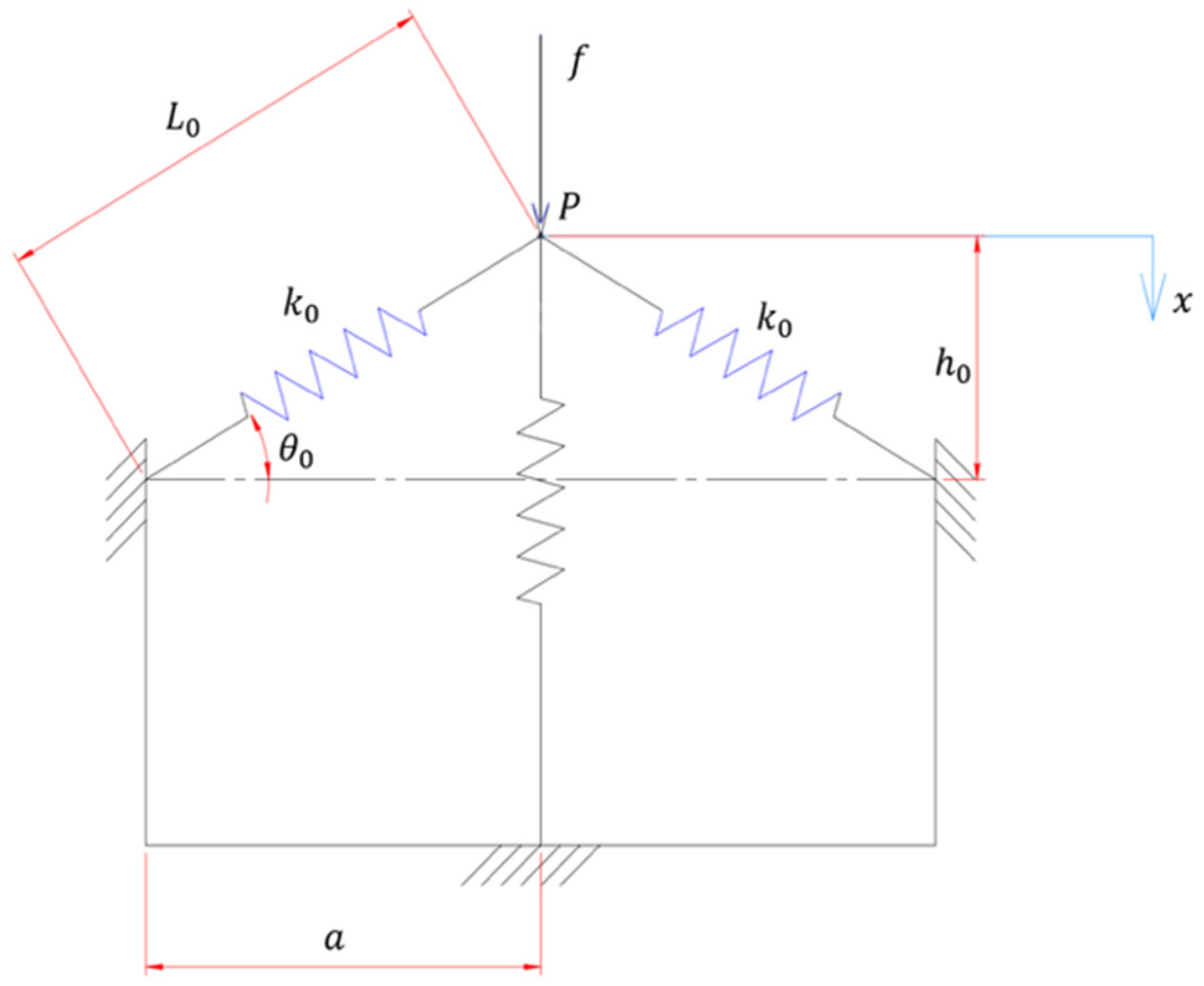
The increasing needs of high-precision tooling, e.g., in automotives, electronics, or aerospace, in extreme working environments have led to a special need for low- and ultra-low-frequency vibration isolation systems. Traditional linear isolators face challenges when attempting to mitigate vibrations at low frequencies without compromising system stability. To address this issue, non-linear isolators, specifically Quasi-Zero Stiffness (QZS) isolators, have been proposed. These isolators achieve almost zero stiffness through combining positive and negative stiffness mechanisms. QZS isolators effectively decrease vibrations at low frequencies, support high static loads, and maintain system stability. Their applications cover diverse fields, including isolating ship instrumentation, reducing loads during aerospace launches, mitigating impact-induced vibrations, safeguarding structures from earthquakes, and protecting various systems and occupants from ground-induced and machinery vibrations. In the design of QZS mechanisms, the primary goal is to balance positive stiffness with negative stiffness elements, utilizing passive, active, or semi-active methodologies. Vibration isolation systems use various passive mechanisms such as mechanical springs, flexural beams, and magnetic components. Mechanical springs may introduce limitations; magnetic springs offer controlled negative stiffness and active and semi-active systems, and they utilize position feedback and adapt better to diverse conditions than passive mechanisms. QZS isolators, a passive type of system, address the contradiction in linear systems by combining positive and negative stiffness, minimizing equivalent stiffness, and enhancing mechanical isolation. In the proposed suspension architecture, the negative stiffness effect arises from the geometric arrangement of the inclined elastic elements, whose restoring force components counteract the positive stiffness contribution of the main spring. The calibrated contributions establish a working region with minimized stiffness, using force and displacement transmissibility as key criteria. The evaluation of the transmissibility of force and displacement is an important criterion in the analysis of mechanical insulation performance, and, according to classical vibration theory [
1], can be written as
where ζ is the damping ratio, r = ω/
is the frequency ratio, ω denotes the excitation frequency, and
is the natural frequency of the system.
In the QZS system, a higher frequency ratio (
,
is the excitation and
is the fundamental frequency) reduces transmissibility in the suppression region (
), effectively decreasing the natural frequency and enhancing load capacity for mechanical isolation. QZS mechanisms, with their non-linearity, offer a unique advantage for achieving both reduced natural frequency and high load capacity compared to linear isolators. Displacement and force transmissibility depend on non-linearity, damping ratio, and excitation amplitude. The system’s nonlinearity introduces a curvature in the amplitude–frequency relationship: for the softening systems, the higher the vibration amplitude, the lower the resonance frequency; the opposite happens for hardening systems. Two distinct regions in the amplitude–frequency response are identified, potentially leading to the jump-up or jump-down phenomenon, as detailed by Brennan et al. [
2] in their investigation of Duffing oscillators using the Harmonic Balance Method. The initial QZS suspension design comprises three parallel mechanical springs: two obliques for negative stiffness and one vertical for positive stiffness [
3]. Different structures, such as multi-spring, special spring, sliding block-rod, and origami, originated from the primary structure. Despite these variations, they all use linear elements to replicate the nonlinear contribution, with the specific geometric and structural configuration defining the system’s nonlinear elastic response and QZS characteristic. Zhao et al. [
4] proposed a multi-spring structure that can be redesigned for different applications and working conditions. It consists of three pairs of oblique springs capable of counteracting the positive stiffness contribution of the vertical spring. This structure can reduce transmissibility compared to the model with two oblique springs. Lan et al. [
5] replicated the basic mechanism by reshaping the horizontal springs as planar springs to allow stiffness variation through design modifications. They also implemented manual actuators at the free ends of oblique and vertical springs for controlling the system configuration. Lateral tuning compensates for deviations in stiffness and geometric ratios, while vertical tuning maintains the mechanism operating around equilibrium under varying loads. The structure proposed by Danh Le et al. [
6] is a sliding rod-type, comprising a vertical spring supporting the mass, a vertical damper, and, in parallel, two horizontal springs connected to the suspended mass through two oscillating arms. Ye et al. [
7] proposed an origami structure composed of beams and springs, modeling the stiffness of origami folds. The precise selection of stiffness and geometric parameters can yield various system responses optimized for different applications and working conditions. Applying these types of isolators exhibits a force–displacement relationship expressed as a convex function. It is crucial to limit the working range to positive equivalent stiffness values to prevent instability in the system. All these isolator structures share the characteristic of High Static Low Dynamic Stiffness, a critical feature for effectively suppressing low frequencies without losing high payload capacity. The incorporation of multi-spring structures extends the isolation range and minimizes resonance peaks. While specially designed springs can enhance effectiveness in compact and high-stiffness structures, their design poses challenges. Parameters governing stiffness and loading capacity fall into two groups: “design parameters” and “tuning parameters”. Design parameters set initial constraints, while tuning parameters allow adjustments based on working conditions.
Replacing the oblique springs with buckled beams provides an equivalent elastic behavior governed by the beam’s own stiffness, which can be expressed as
, where
is the Young’s modulus,
is the moment of inertia of the beam, and
is half the length of the unloaded beam. Liu et al. [
8] considered a low-frequency isolator using Euler buckled beams as a negative stiffness corrector, and Huang et al. [
9] applied a non-linear isolator using a double Euler buckled beam on each side.
Cam–Roller–Spring is based on the sliding and consequent compression of the elastic element, a roller on the profile of a cam. The adopted cam geometry determines the nonlinearity of the force–displacement relationship that compensates for the positive stiffness contribution. Zhou et al. [
10] developed a cam–roller mechanism, achieving an excellent transmissibility response and isolation performance. Later, the same authors proposed a compact design based on the same working principle: the cam–roller mechanism was integrated into a “strut” [
11]. Using a tripod of these struts, they also proposed a six-degree-of-freedom platform isolator. Finally, they adapted the principle for rotary or torsional applications, proposing a QZS torsional isolator capable of attenuating vibrations transmitted between two rotating shafts [
12].
Shan et al. [
13] proposed a QZS isolator using a pair of mutually repelling permanent magnets in parallel with a pneumatic spring and analyzed the static and dynamic behavior of different system configurations. Experiments showed a vibration amplitude reduction in resonance, but due to the low damping, significant resonance peaks were still present in the transfer function. Zheng et al. [
14] proposed a QZS joint, in which a magnetic torsional spring, composed of two coaxial ring magnets, compensates for the positive stiffness contribution of an elastomeric spring. Zhou et al. [
15] produced a six-degree-of-freedom QZS platform isolator implementing a negative stiffness mechanism with ring magnets. This platform was able to effectively attenuate a wide range of low-amplitude and high-damping force inputs. Dai et al. [
16] propose a limb-like mechanism inspired by the lower limbs of kangaroos to isolate a satellite from impacts due to the capture mechanism; the system was composed of rods simulating bones and springs simulating muscles. They found that shorter arms resulted in greater attenuation of external forces. Sun et al. [
17], inspired by the skeletal structure of bipeds, proposed an X-shaped isolator. In this study, they proposed an Origami-Joint Flexible structure capable of effectively attenuating impacts. Deng et al. [
18] reproduced the typical structures of vertebrates with long necks, implementing a multi-layer architecture where each layer consists of the three-spring model. In Ref. [
19], a bio-mimetic QZS isolator was compared with two “traditional” QZS isolators, demonstrating that the bio-mimetic structure achieved a lower resonance frequency, a smaller response peak, and eliminated hardening effects and jump-down.
Research in the automotive field regarding QZS isolators is limited; major studies focus on designing them as a secondary suspension, typical for heavy-duty vehicles such as trucks or buses, aiming to provide greater driver comfort [
6]. Suman et al. [
20] integrated the Three-Spring model, analyzed in detail by Carrella et al. [
3], into the structure of a traditional suspension for off-road applications related to a Double Wishbone Suspension scheme. Additionally, Mohit Saini [
21] integrated a QZS isolator, a structure with curved beams, into a Push-Rod suspension scheme. It is also proposed as an active suspension by integrating two actuators at the ends of the curved beams capable of modifying the equivalent stiffness in real time [
21].
Active isolation methodologies were proven to be effective in civil and aerospace applications [
22,
23] and also appear promising in automotives, even though real applications are not yet ready. Recent automotive studies have explored advanced active control strategies to enhance ride comfort and vehicle performance, including optimization-based PID (Proportional–Integral–Derivative) tuning and fuzzy logic approaches, as well as model predictive control frameworks with road preview information [
24,
25,
26,
27]. Conversely, passive dynamic absorbers find wide applicability in engineering [
28,
29,
30].
In addition to these approaches, inerter-based vibration isolation devices have been extensively investigated as an effective solution for improving low-frequency vibration isolation in vehicle dynamics and mechanical systems. Comprehensive reviews have highlighted their theoretical foundations, physical realizations, and applications in vibration control [
31].
The concept of QZS found interesting applications in different engineering fields; interesting theoretical and experimental investigations can be found in Refs. [
32,
33], where the concept of QZS was replaced by the High Static Low Dynamic Stiffness paradigm; in such works, the critical impact of friction on the overall suspension performance was stigmatized.
In Ref. [
34], the concept of “Meta Structure” was experimentally investigated; this was an attempt to solve the aforementioned friction problems of mechanisms in the realization of QZS by introducing novel concepts of elastic non-linear structural elements. Vibration suppression can also be achieved by means of actions on the design parameters of mechanical systems, see, e.g., Ref. [
35], regarding the phasing implications on the gear vibration generation.
In Ref. [
36], an insightful study demonstrating how inclined trapezoidal beams achieve practical QZS behavior was published. Simulations and experiments confirm reduced natural frequency and strong low-frequency isolation, offering a promising passive solution for precision applications. A solid contribution demonstrating how adjustable quasi-zero stiffness and damping enable stable, broadband vibration suppression in robotic drilling can be found in Ref. [
37]. The semiactive strategy effectively avoids resonance and improves precision under varying ambient disturbances.
A comprehensive, well-structured review, Ref. [
38], clarifies QZS principles, categorizes passive and active realizations, and highlights future research needs, offering valuable guidance for designing next-generation low-frequency vibration isolation systems. A well-structured study demonstrating how a tunable bio-mimetic X-shaped isolator achieves quasi-zero stiffness and ultra-low-frequency control, delivering remarkable seismic vibration reduction for offshore platforms with high load-bearing reliability, can be found in Ref. [
39].
Ref. [
40] integrates quasi-zero stiffness design, sliding-mode control, and magnetorheological damping to achieve robust vibration suppression. Simulations demonstrate significant improvements over passive and PID methods, highlighting strong potential for precision robotic machining. This work focuses on a detailed multibody dynamics assessment of the suspension behavior under realistic road excitations, with particular attention to vibration isolation and ride comfort.
The present work addresses the design and verification of a potential application of the QZS isolators in automotive sector applications. Specifically, the aim is to apply this type of isolator as the primary suspension of a vehicle. Implementing a primary suspension could have a broader range of applications and provide ride comfort to all vehicle occupants rather than just the driver. With the primary objective of improving ride comfort and suppressing vibrations and forces typically generated by ground contact, as well as addressing the static load–stiffness compromise, the choice of application was based on three critical aspects. Firstly, a preliminary classification of the vehicle based on road approval was considered. Secondly, the question was posed regarding whether the vehicle is heavy-duty or light-duty. This consideration aims at a general pre-configuration of the parameters in the mathematical model to be implemented, such as the suspended mass value. Finally, after considering the above classifications, the choice was based on aspects such as common suspensions, cost-effectiveness, and driving dynamics.
2. Multibody Model
The choice of the suspension model falls on the standard Double Wishbone Suspension system from the suspension system example present in the Adams tutorial kit for mechanical engineering courses [
41,
42]. The decision considered technical aspects and followed the approach of the article by Suman et al. [
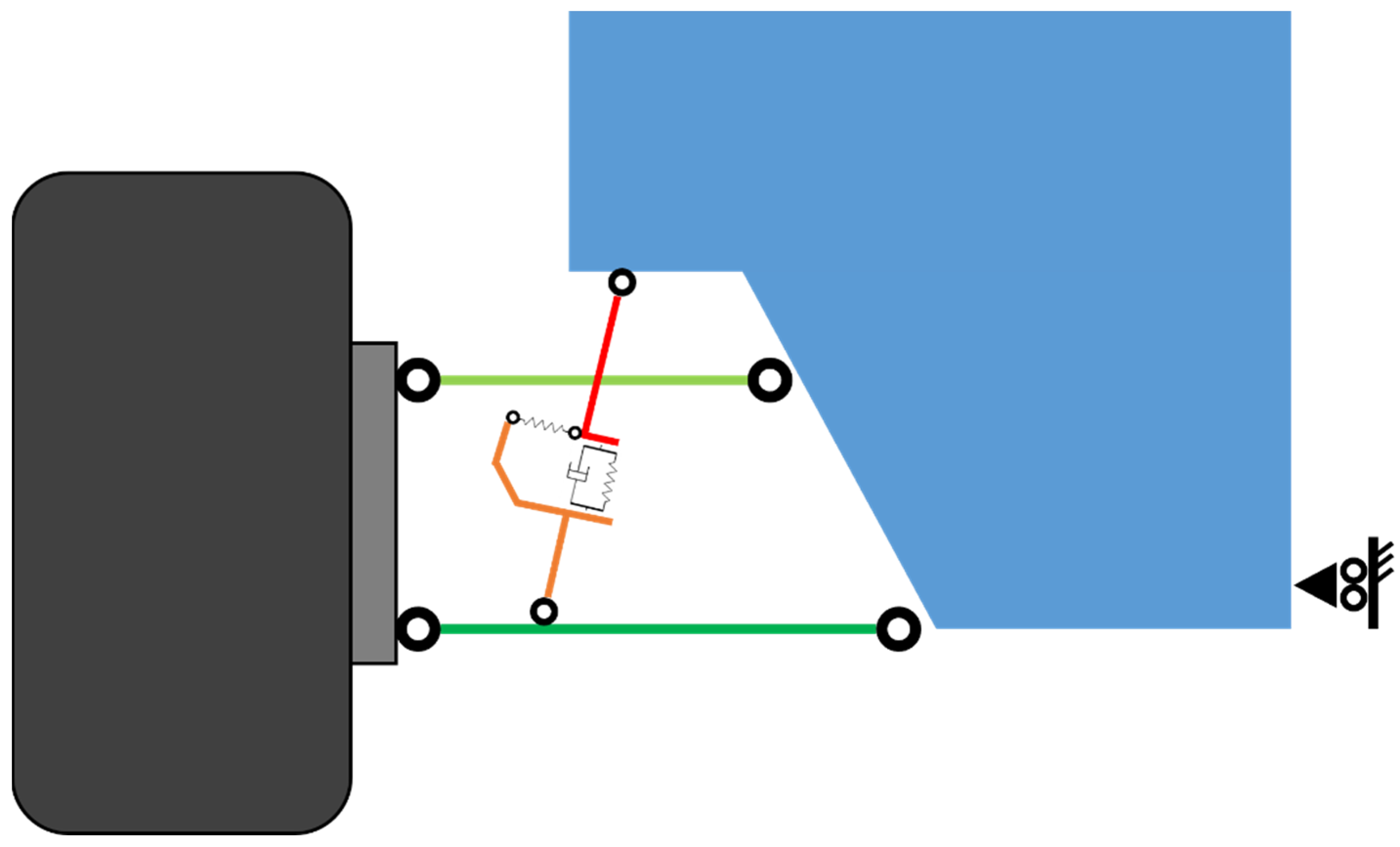
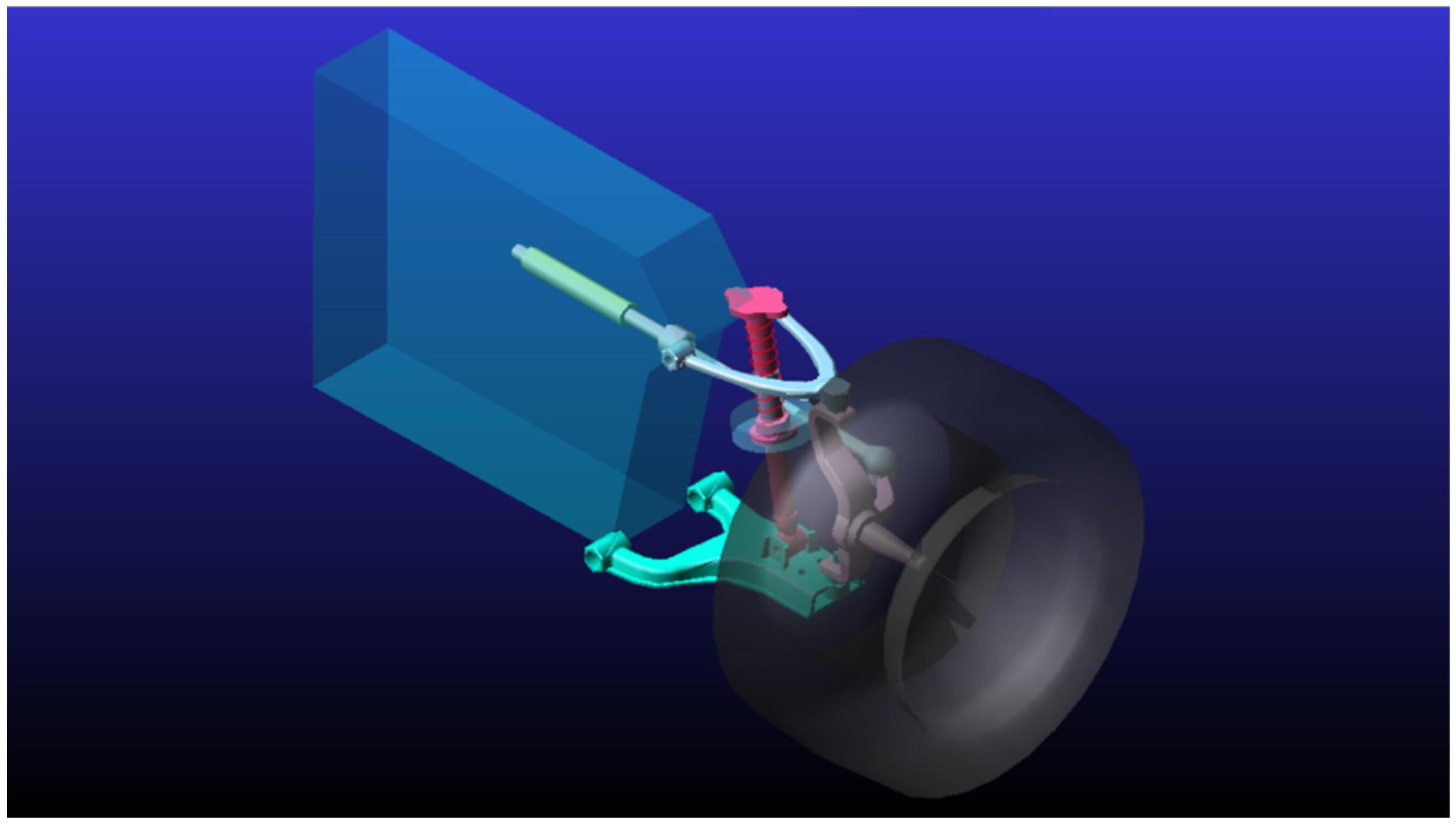
20], chosen as a reference. A functional schematic of the suspension in its final version is shown in
Figure 1. Modifications were subsequently applied to the MSC Adams
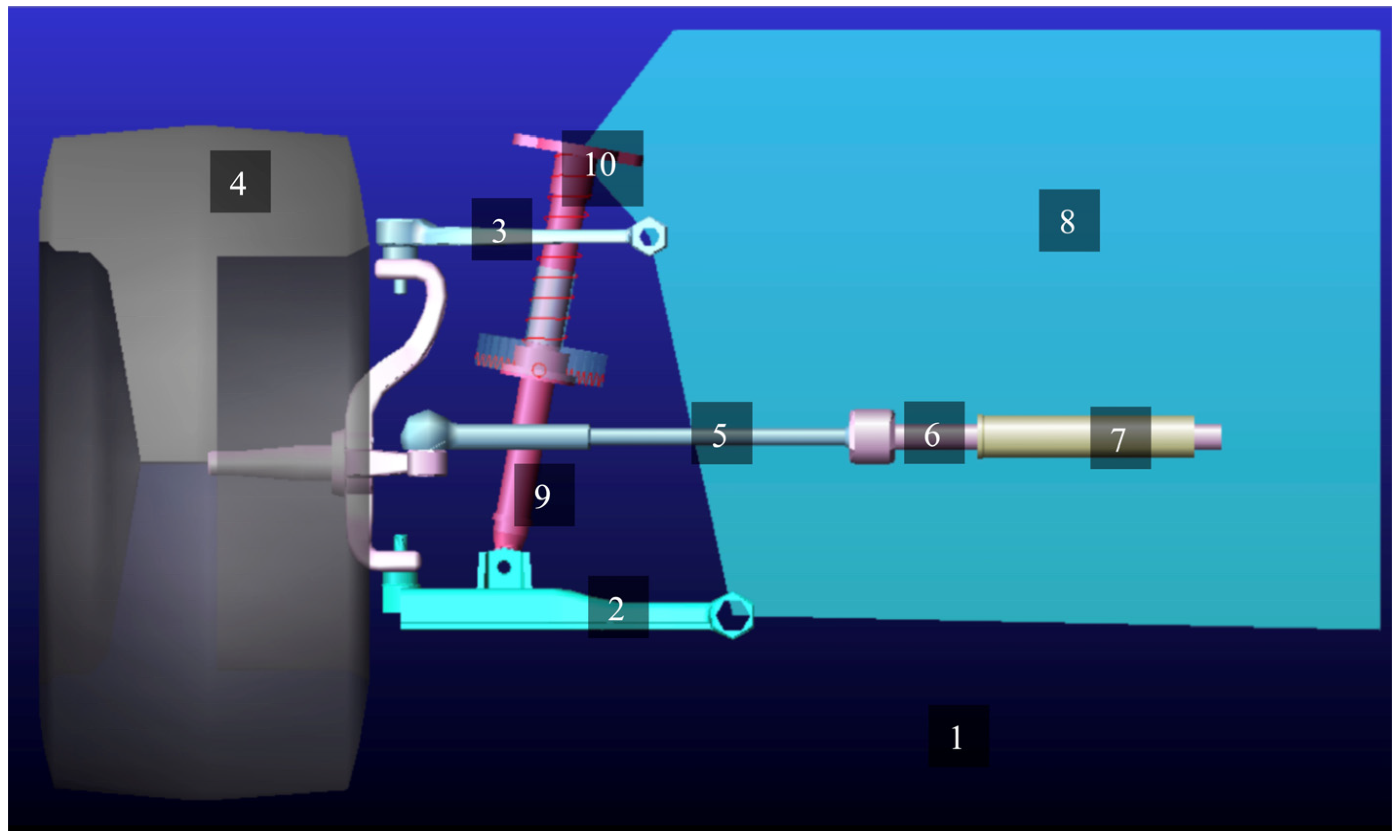
® model to obtain two comparable models of the Quarter Car Model with traditional suspension and non-linear QZS suspension. The standard structure, whose geometry has not been modified, consists of nine main components—Ground, Lower Arm, Upper Arm, Spindle Wheel, Tie Rod, Steering Rack, Body Ground, Chassis, Strut Lower, and Strut Upper—as illustrated in
Figure 2.
The ground body is the main reference system in the multibody environment, where it represents the ground or the main system of axes in the 3D model space. It is assigned a set of points that determine the main spatial points of the suspension geometry, specifically the connection points between the different elements of the mechanism: points from HP1 to HP6 determine the geometry of the two swing arms, Upper and Lower Arm, which are constrained to the Ground through two Revolute Joints that allow rotation around the local
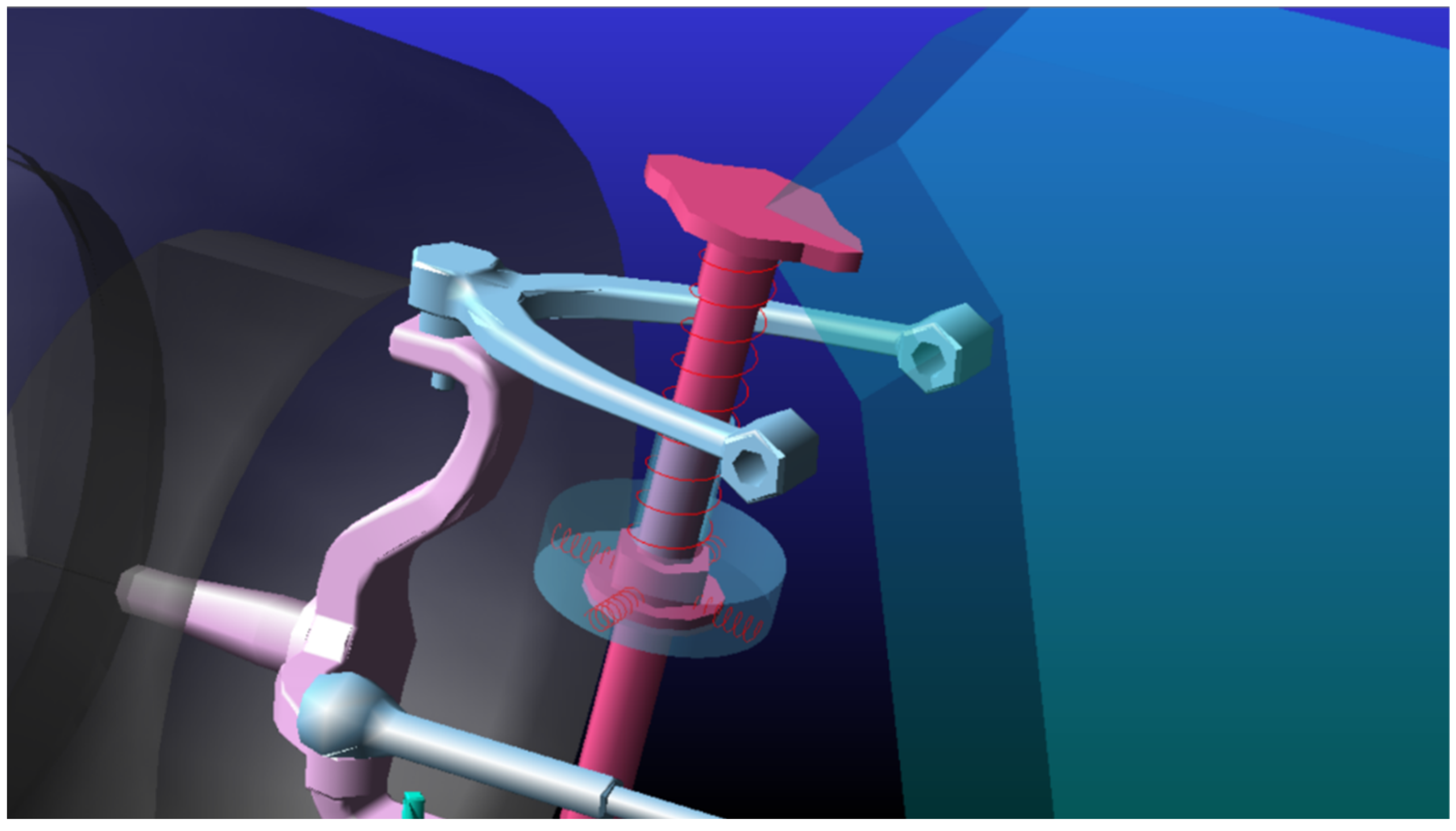
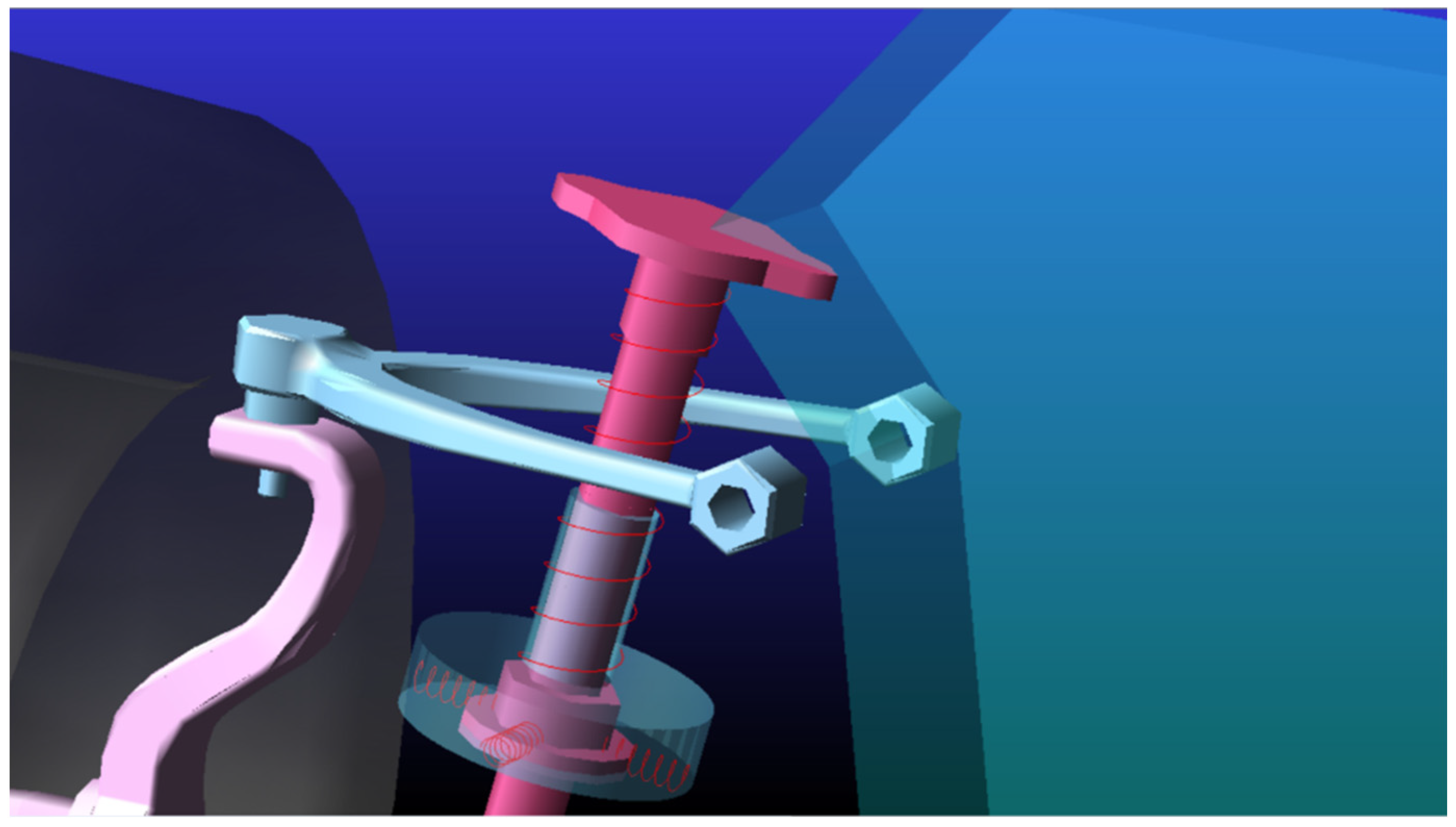
z-axis. The ends of the swing arms (HP3, HP6) are connected to the Spindle Wheel through two Spherical Joints that allow three rotations (
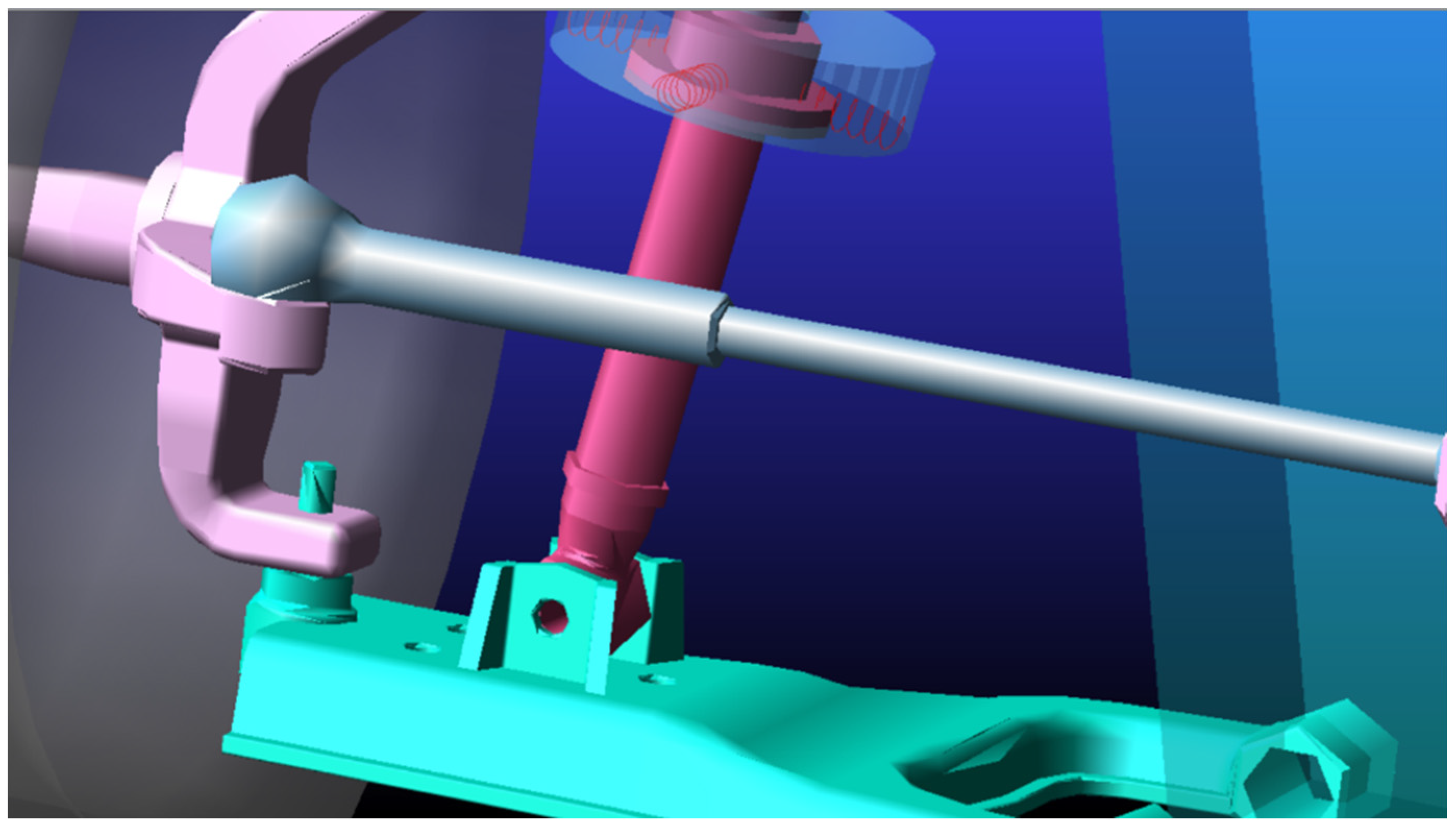
Figure 3). The Tie Rod is connected to the Spindle Wheel via a Spherical Joint (
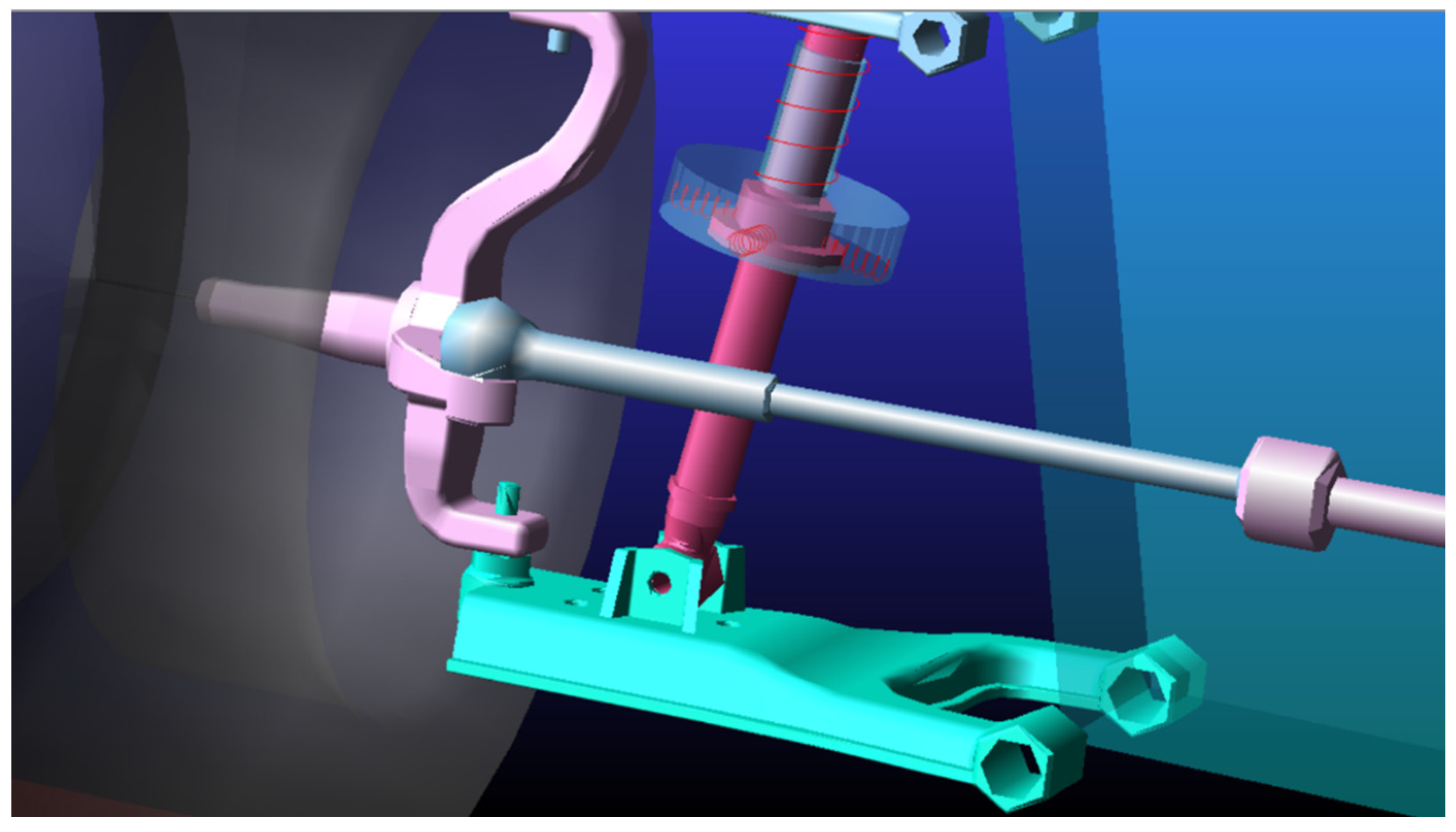
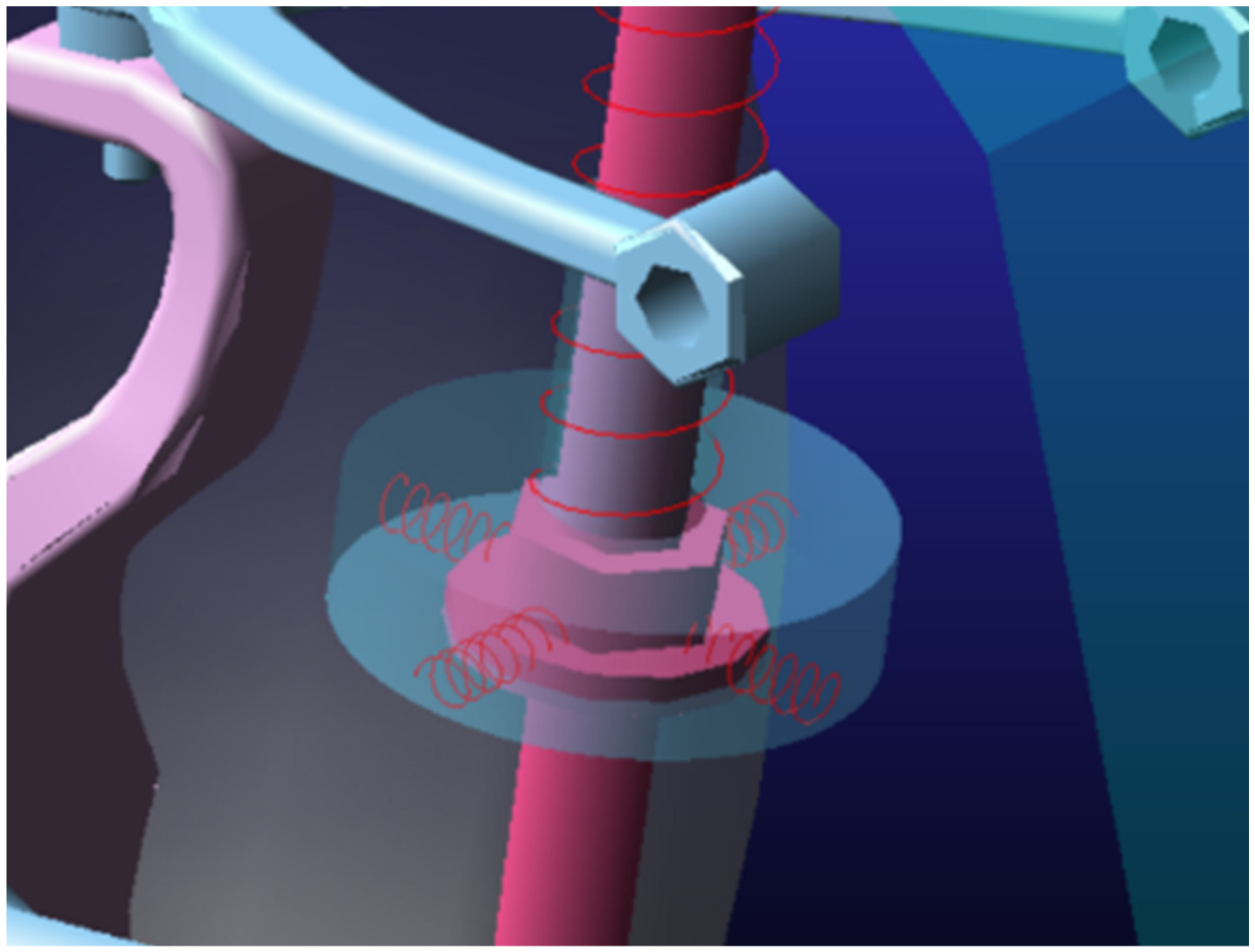
Figure 4). Finally, the Tie Rod is constrained to the Steering Rack by a Hooke-type joint that constrains the rotation between the two bodies around their principal axes, and the translations, leaving angular misalignment around the remaining axes free. The Steering Rack is fixed to the Body Ground, and the Body Ground is fixed to the Ground. The two remaining bodies, Strut Upper and Strut Lower, are constrained to each other through a Translational Joint, allowing only sliding along the common axis, and relatively constrained to Ground through another Hooke-type joint (
Figure 5) and Lower Arm with a Spherical Joint (
Figure 6). A summary of all components and their corresponding connection points is provided in
Table 1.
This model was slightly modified to obtain a final version of the traditional Double Wishbone Suspension: firstly, an additional body representing the vehicle frame was added. This body, appropriately named Chassis, is positioned between the suspension and the Ground. It replaces the direct constraints to the Ground or Body Ground of the Strut Upper, Upper Arm, Lower Arm, and Steering Rack with connections to the Chassis. The Chassis itself is constrained to the Ground through a Translational Joint along the vertical y-axis. In doing so, the model changes from a single-degree-of-freedom mechanism to a two-degree-of-freedom mechanism, involving the vertical motion of the suspended mass (Chassis) and the vertical motion of the vehicle wheel assembly. Subsequently, a force element was added, characterized by stiffness and damping , between Strut Upper and Strut Lower to model the viscoelastic force of the suspension. In particular, and represent the static preload forces of the vertical and horizontal springs, respectively, while denotes the equivalent stiffness contribution associated with the vertical spring configuration.
Once the traditional suspension model with two degrees of freedom for attenuation and isolation performance comparison was obtained, it was further modified to replicate the QZS suspension structure as a reference [
20].
Compared to the baseline suspension layout shown in
Figure 1,
Figure 2,
Figure 3,
Figure 4,
Figure 5 and
Figure 6, the QZS configuration in
Figure 7 and
Figure 8 is obtained by replacing the linear spring–damper branch with an oblique-spring mechanism. Specifically, four inclined springs are introduced between the Strut Upper and Strut Lower bodies. To accommodate their lower endpoints, the Strut Lower geometry is modified by expanding it to a radius of 60 mm, and four attachment points are defined at 90° intervals at a radial distance
a from the central point (354). The upper ends of the springs are fixed to the Strut Upper at a point located a distance
h from point 354, where
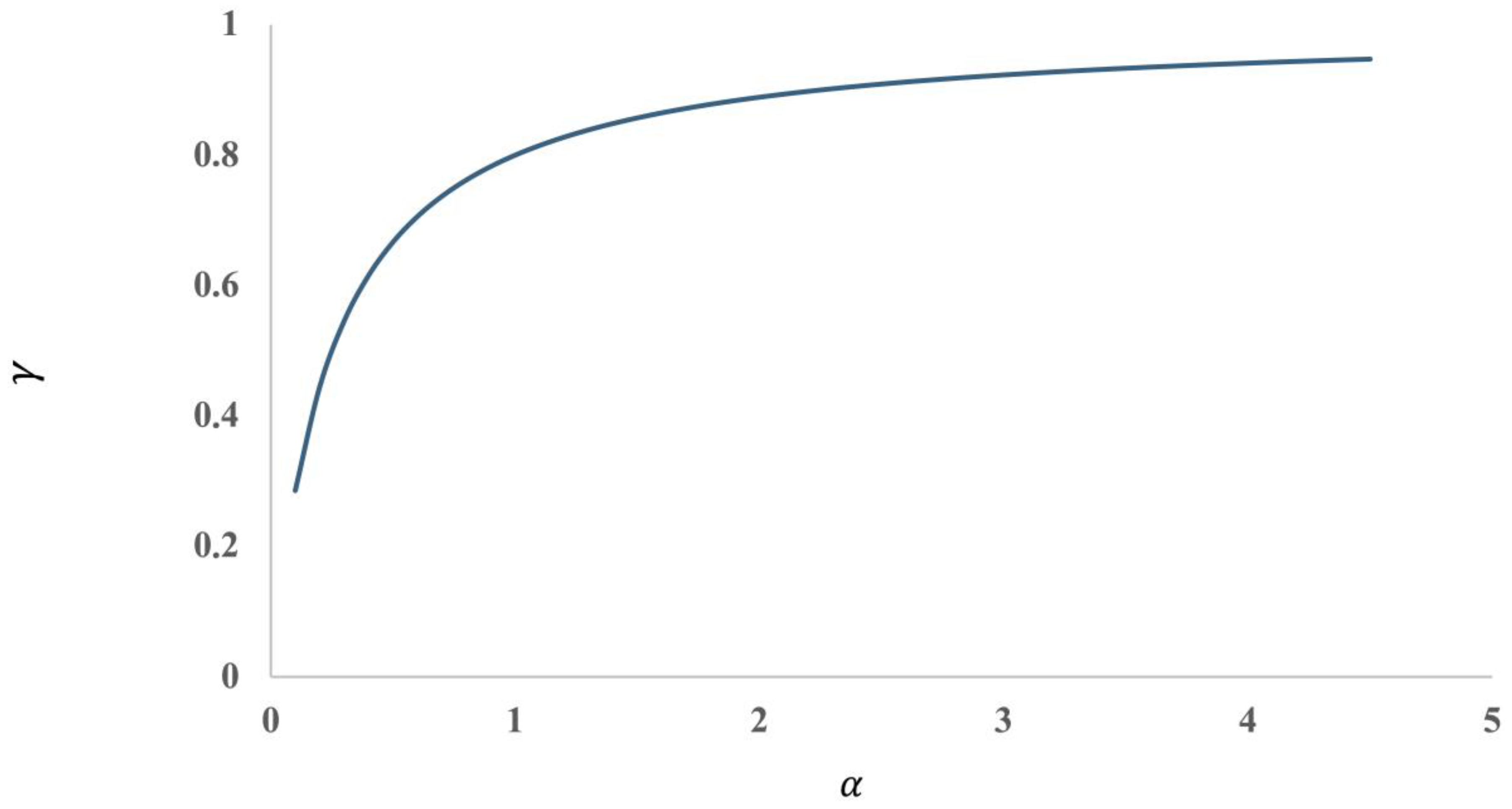
h represents the spring height under static conditions. These modifications constitute the essential changes enabling the quasi-zero-stiffness behavior and are not present in the baseline suspension model. To complete the suspension modeling, additional variables useful for parameterizing the mechanism were defined: alpha,
,
,
,
. Alpha corresponds to the ratio between the stiffness of the vertical spring
and the individual horizontal spring
.
and
are the respective preloads due to the static deflection of the suspension.
corresponds to the damping coefficient of the suspension.
5. Static Analysis
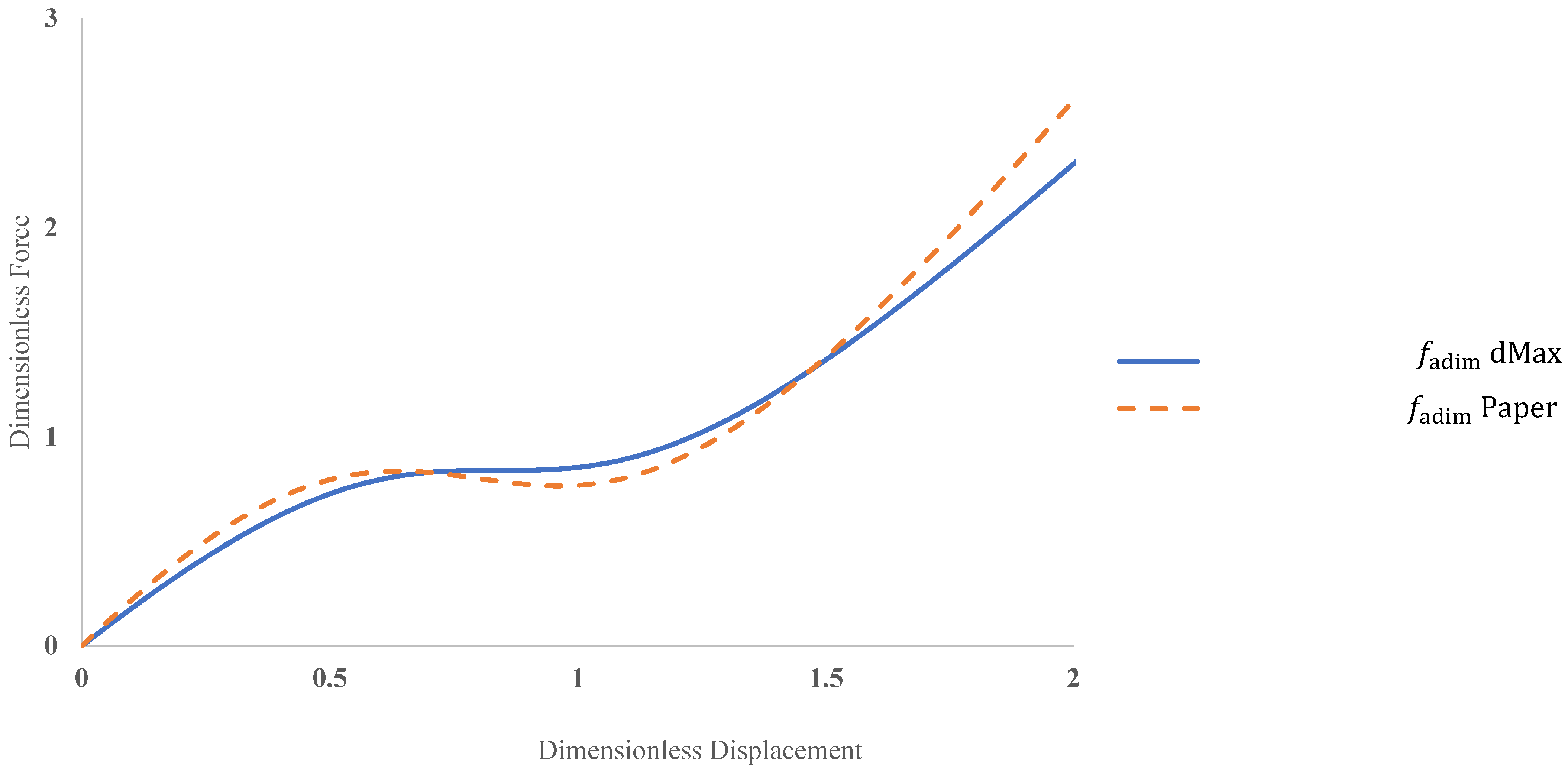
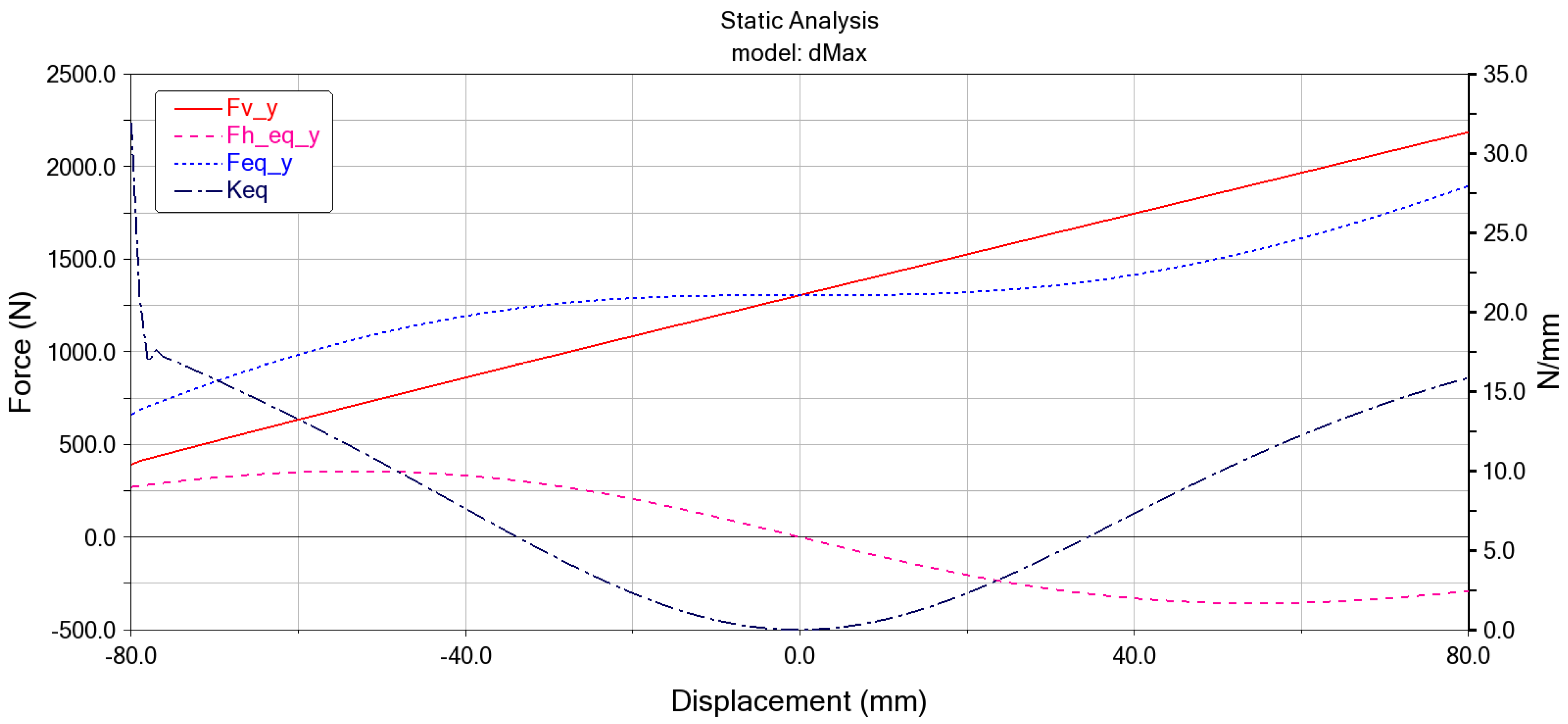
Analyses performed through MSC Adams on the initial models begin with static characterization, defining the force–displacement relationship characteristic of the mechanism. This aspect technically describes how the system behaves under quasi-static conditions, providing an initial understanding of its properties. To determine the force–displacement curves of the three models under analysis, a vertical translational motion was defined at the wheel hub, from one end to the other of the available stroke (), with the Chassis fixed to the Ground. The vertical force contribution of individual springs, constituting the mechanism, was then plotted against the relative displacement in the equilibrium configuration.
From
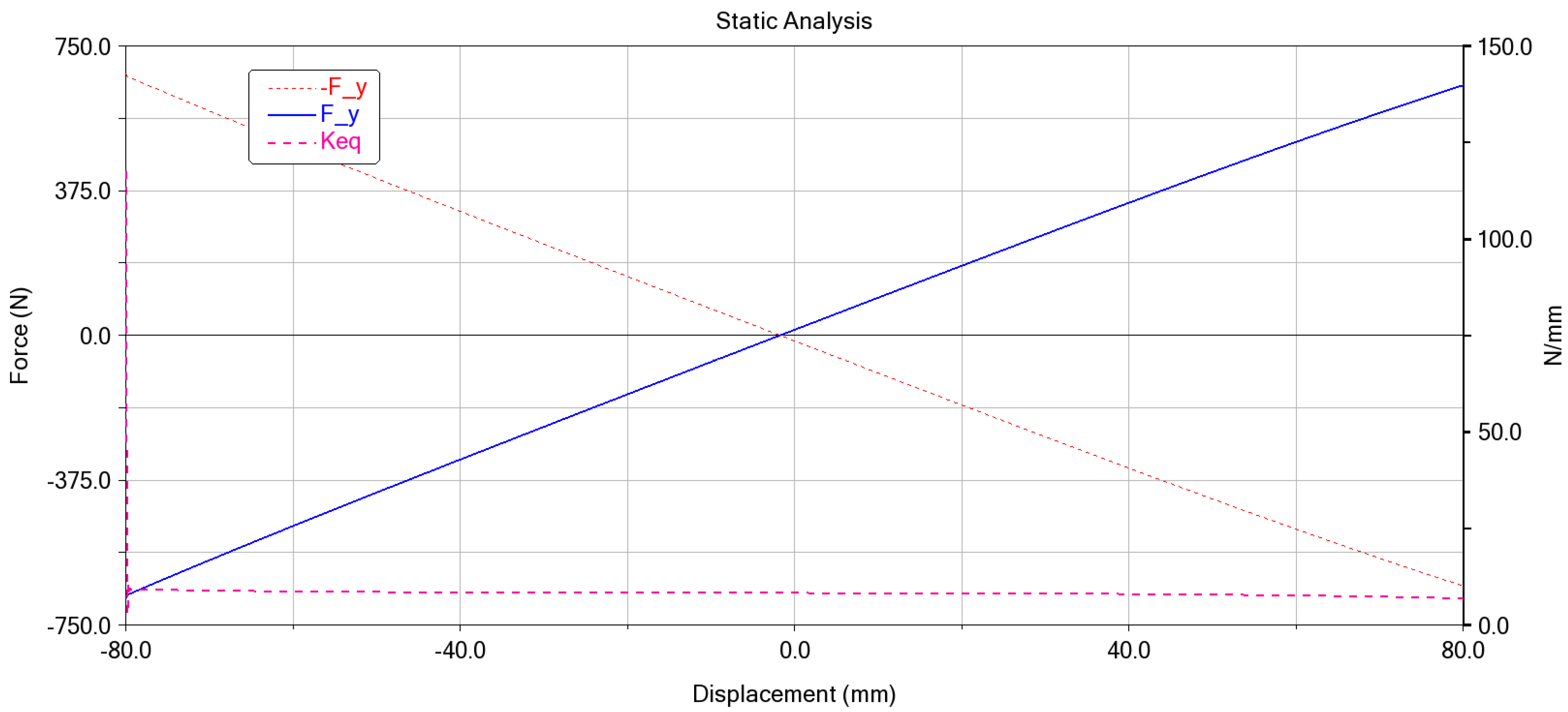
Figure 17, it can be confirmed that the theoretical characterization of the model leads to a characteristic with zero stiffness. Additionally, it is observed that this parameterization results in an equivalent stiffness curve that is lower than the vertical stiffness throughout almost the entire working range, specifically
between
. However, it is essential to note that the analytical treatment presented here considers the suspension as a lumped linear system and therefore neglects the intrinsic geometric nonlinearity clearly visible in the force–displacement behavior of the mechanism shown in
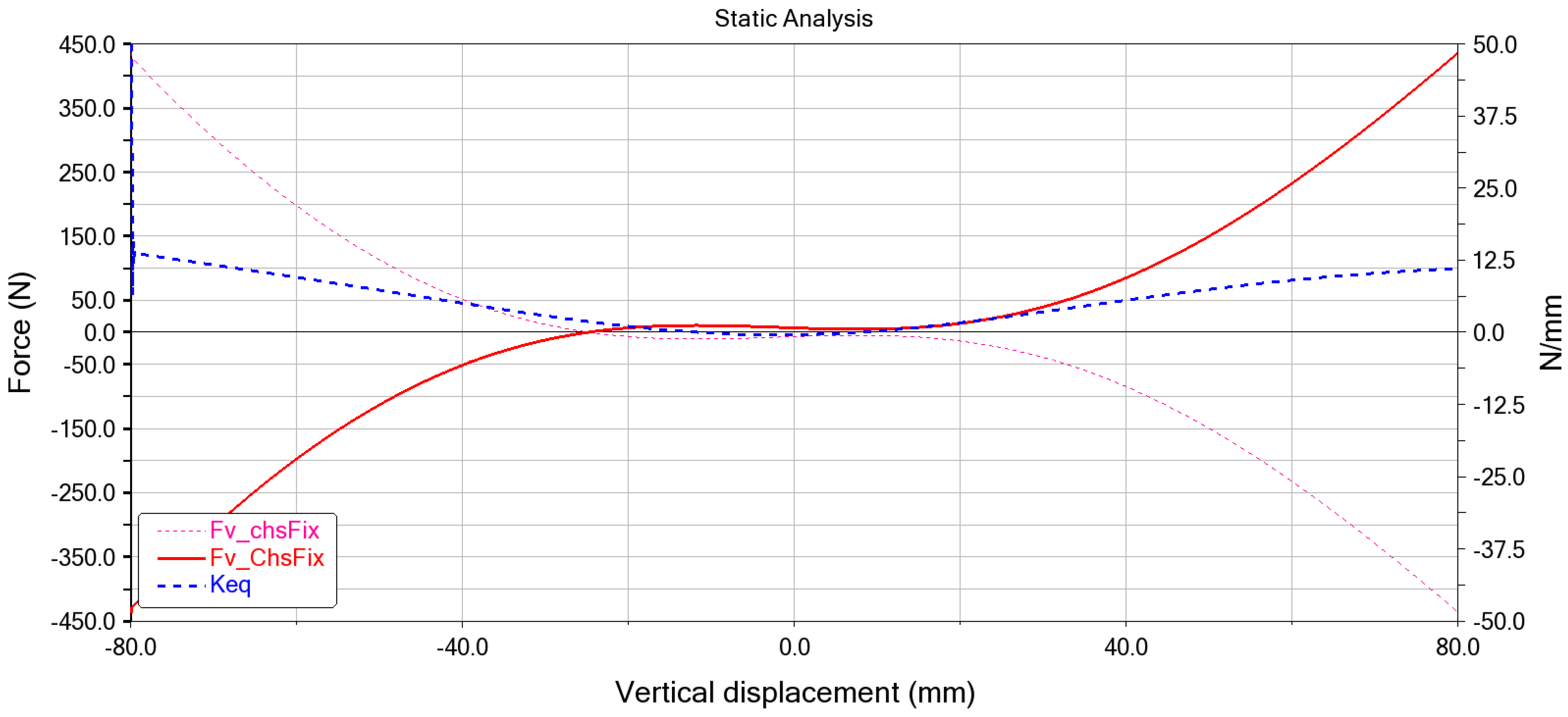
Figure 17. This nonlinearity arises from the kinematic coupling of the oblique springs and the large deflection effects, which are not captured by the simplified linear model. This approach was compared with a slightly different method: by still fixing the Chassis to the Ground and applying the same motion, the vertical force acting on the Chassis–Ground constraint was plotted.
As shown in
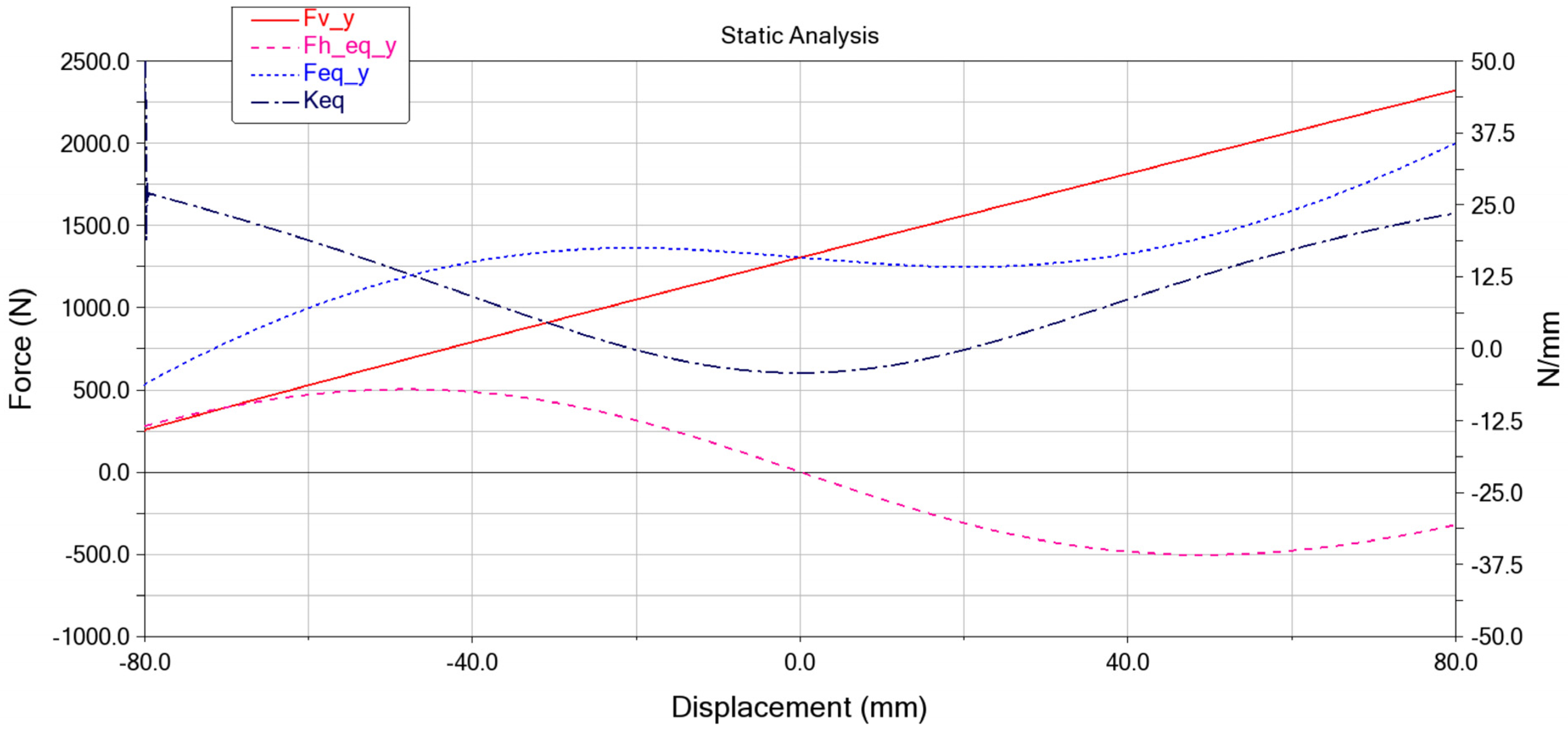
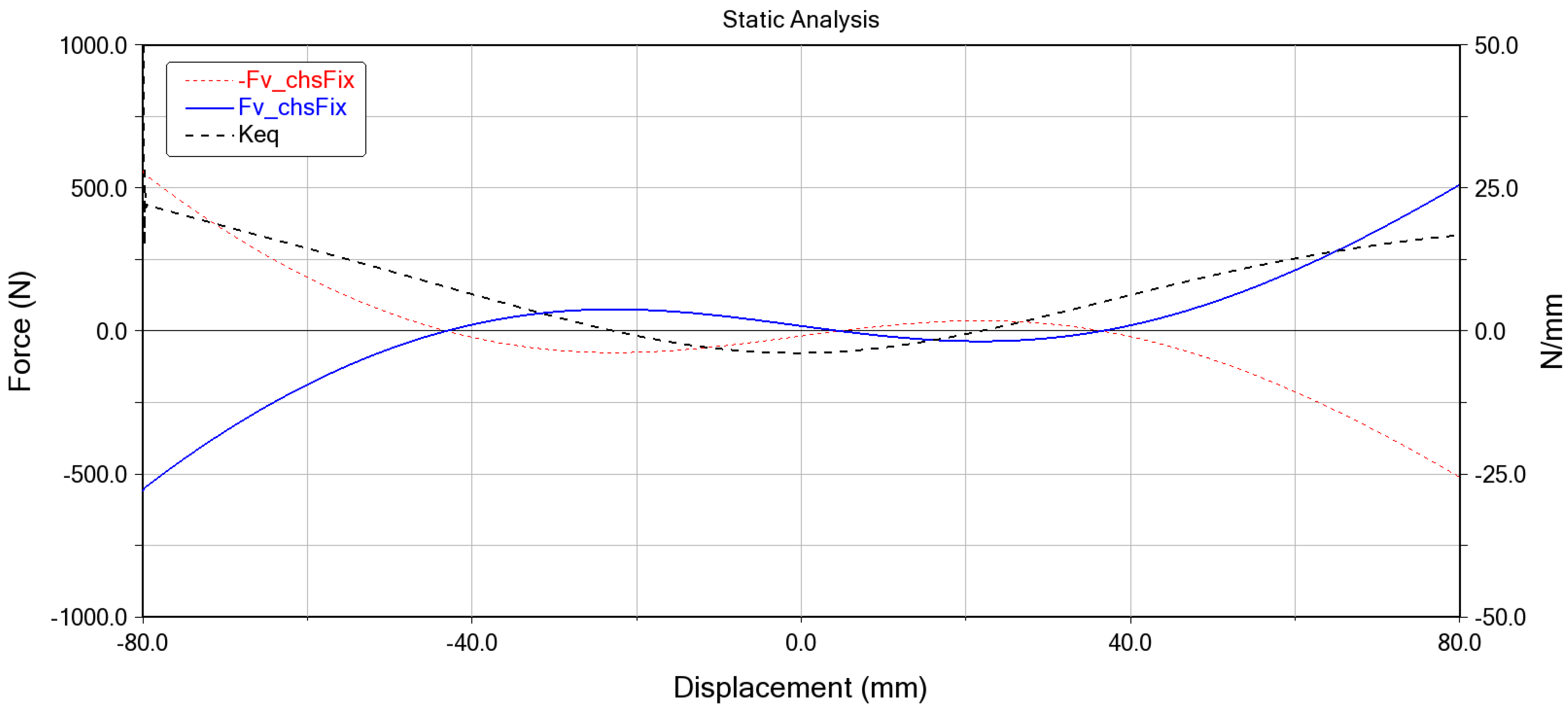
Figure 18, which represents the variation in the reaction force with respect to the vertical displacement of the Chassis (formerly indicated as “length”), the second analysis method highlighted the intrinsic nonlinearity of the suspension system, resulting in a slightly negative equivalent stiffness of −0.456 N/mm at the equilibrium point, where a zero equivalent stiffness was initially expected. This deviation from the theoretical condition can be corrected by slightly oversizing the model according to the previously described criteria, thereby shifting the parameterization toward a configuration with positive stiffness. Similarly, the reference model [
20] was characterized, revealing a theoretical behavior with a negative stiffness of −4.42 N/mm at the minimum point (
Figure 19 and
Figure 20).
In any case, the nonlinearity of the suspension system minimally affected the static characteristics of the suspension, and the scaling discussed in the previous chapter was considered sufficiently reliable. Finally, the static characteristic of the traditional (linear) suspension is included in
Figure 21 for reference and validation purposes. The comparison confirms that the geometric configuration of the suspension has a minimal effect on the overall static force–displacement response, which remains essentially linear.
Small fluctuations observed around the −80 mm displacement in the stiffness curves are due to numerical artifacts. Since the simulation is initialized with the wheel hub already positioned at −80 mm relative to the assembly reference, minor computational errors appear during the calculation of derivatives and measured quantities at the beginning of the simulation.
6. Dynamic Analysis
For dynamic analyses, an automated methodology was developed to generate transmissibility curves characterizing the three models. Specifically, the curves of the ratios between the RMS values of the output (Chassis) and input (wheel group) were analyzed. The Chassis and wheel responses were selected as performance indexes, while they represent, respectively, the sprung-mass response related to ride comfort and the unsprung-mass response associated with road excitation; for this reason, the responses of the Traditional and dMax models are directly compared using the same Chassis and wheel signals under identical excitation conditions.
Dynamic analyses with specific forcing functions were also conducted to evaluate the attenuation of RMS acceleration values. To achieve this, a sinusoidal translational motion applied to the wheel hub, dependent on two design variables of amplitude and frequency, was first implemented in the multibody models. Utilizing the measure related to the Chassis motion, a Design Study was set up in MSC Adams to study the Chassis response with varying only the frequency of the forcing function across 50 levels. By plotting each of the 50 Chassis responses over time and evaluating the steady-state behavior (the simulation length was adjusted to the minimum frequency, ensuring an adequate number of periods), these time responses were exported in tabular form to MATLAB
®. The RMS of the response, calculated after removing its mean value (i.e., zero-mean signal), was then evaluated using MATLAB
®. This Design Study was repeated for each model with three different forcing amplitudes: 50, 25, and 5 mm, to assess their influence as the systems under analysis are strongly non-linear. Reference [
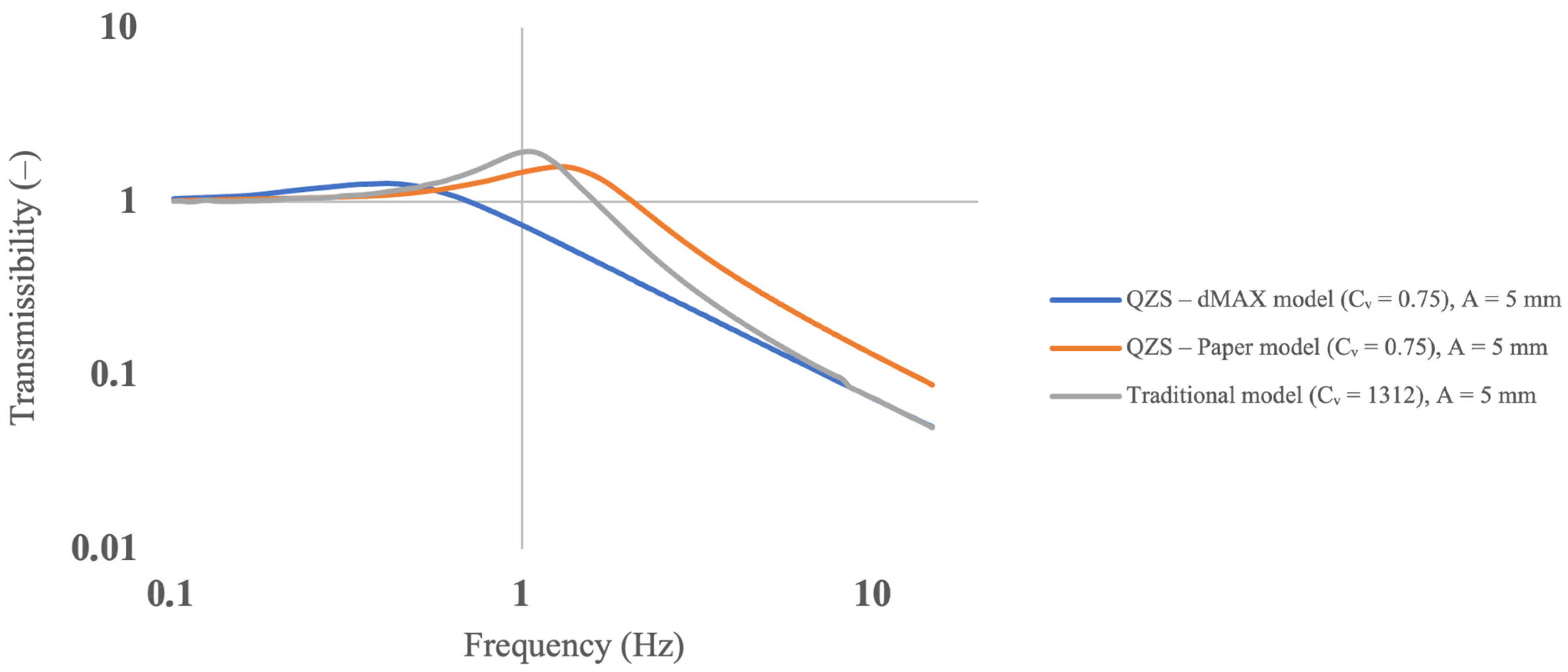
20] and the dMax model correspond to the configuration exhibiting the maximum static deflection obtained from the parametric analysis of the QZS suspension, used here as a representative nonlinear configuration for dynamic evaluation. In the models, the transmissibility for high-amplitude forcing was determined in two “cycles” to densify the number of points to interpolate around the natural frequencies. The dMax model corresponds to the configuration exhibiting the maximum static deflection obtained from the parametric analysis of the QZS suspension, used here as a representative non-linear configuration for dynamic evaluation. The first cycle covered the range 1.5–15 Hz, and the second cycle covered only the range 0.1–1.5 Hz. This additional step aimed to represent the nonlinearity of the models’ transmissibility; however, this curvature, which should appear near-resonance, is not reflected due to the lack of passing final simulation conditions as initial conditions for the subsequent one. Consequently, the point series represents only part of the complete curve. The transmissibility of the three models under optimal conditions, i.e., with low amplitude forcing, is shown in
Figure 22.
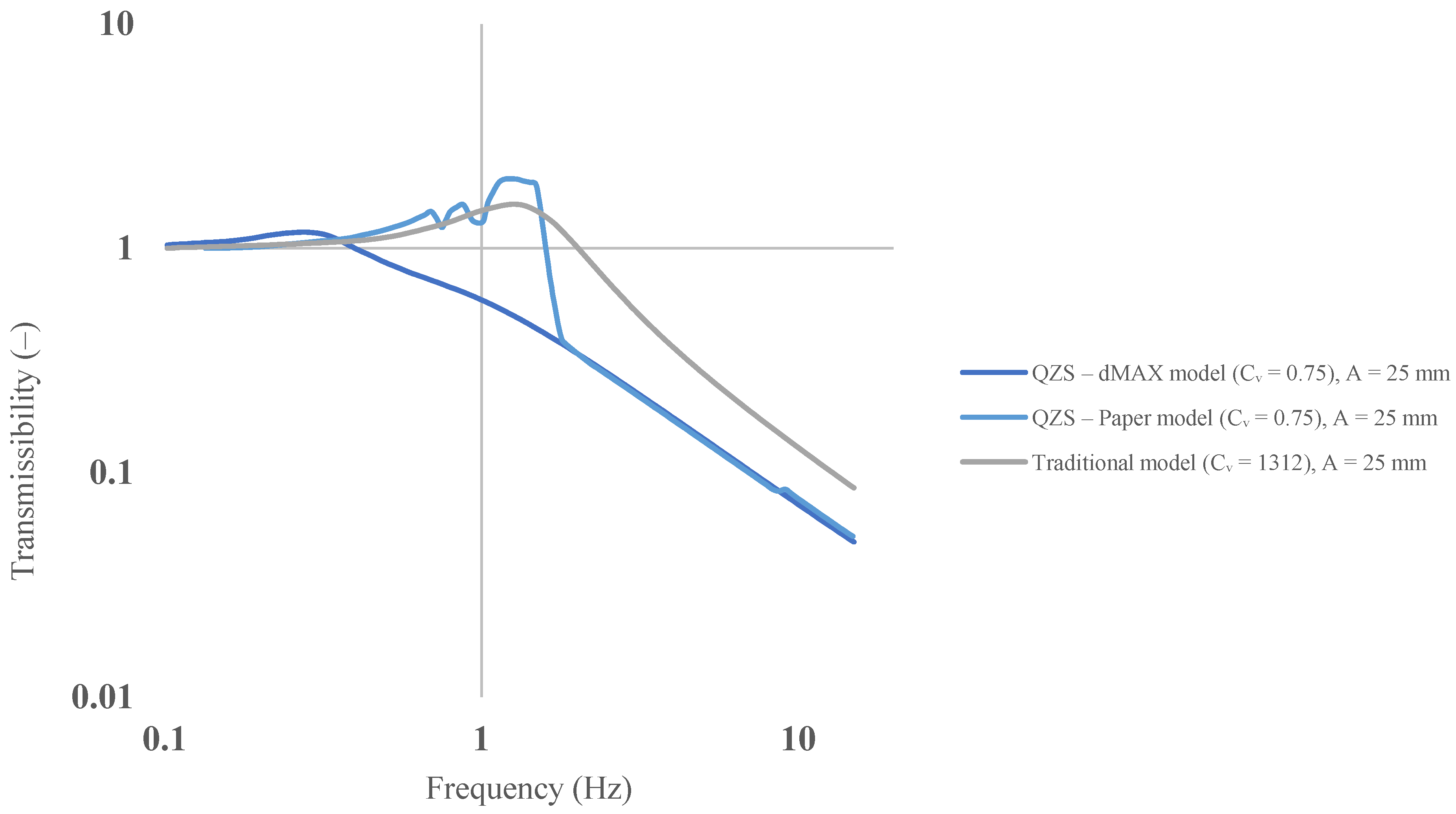
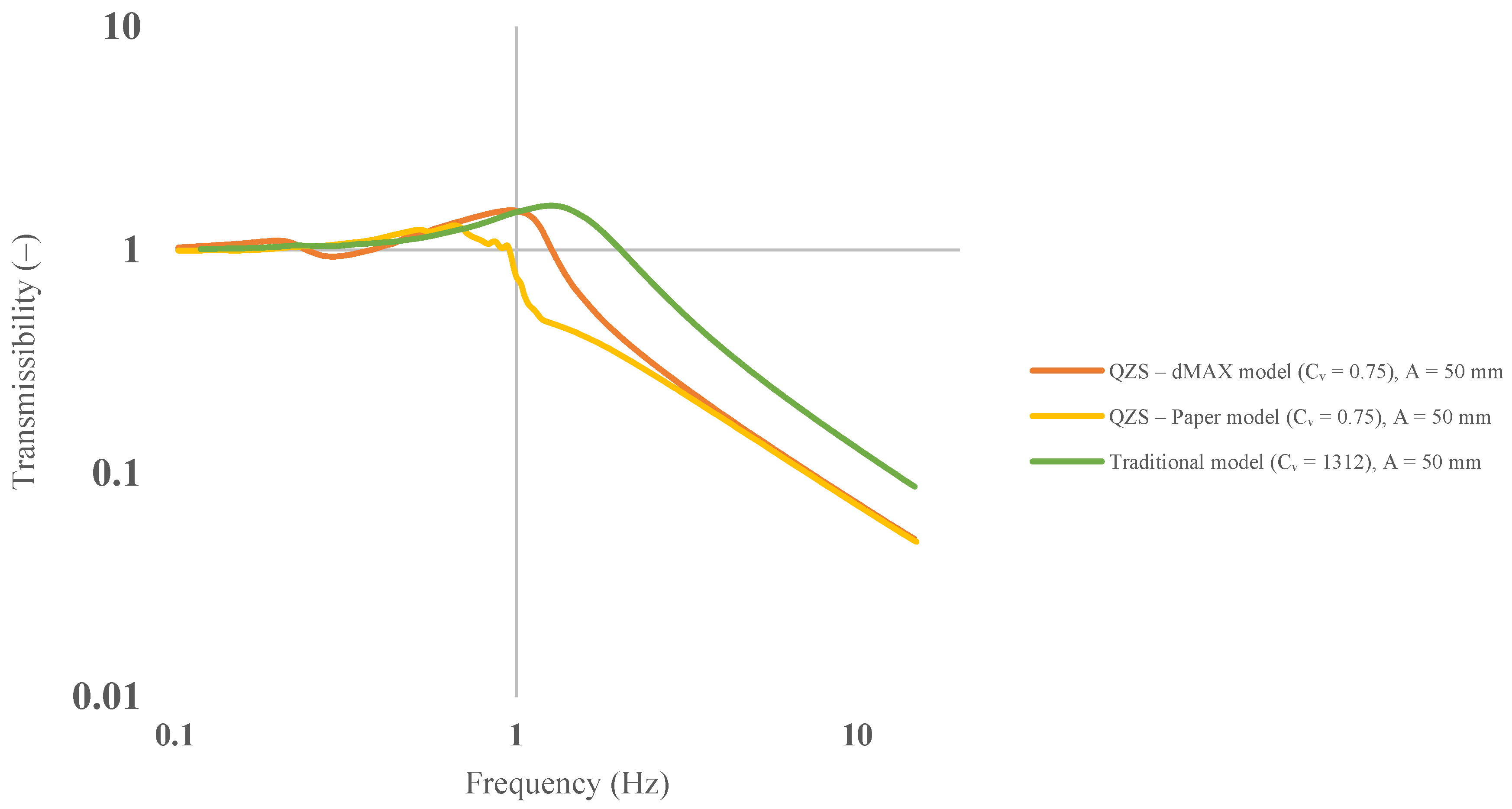
The main characteristic of the QZS suspension is the lowering of the natural frequency of the system. It also allows obtaining lower transmissibility values at resonance compared to the Traditional model. The transition is from the Traditional model with a range of around 1.3 Hz to the dMax model with a resonance peak around 1 Hz, significantly reducing transmission for higher frequency forcing. Subsequently, the discussion continues for larger amplitudes in
Figure 23 and
Figure 24.
Previously, the influence of damping, attributed only to the vertical component, in the harmonic response of nonlinear systems was also investigated. The QZS suspension models were originally formulated without damping; however, including a damping term is essential for a realistic dynamic representation of the system. The presence of damping, a force function of the relative velocity between the suspended and unsuspended masses, leads to undesirable dynamic behavior, as excessive damping suppresses the beneficial nonlinear motion of the mechanism, effectively preventing it from responding freely to impulsive excitations. The Design Study discussed earlier was repeated with a 50 mm amplitude, varying
according to values of
in the dMax and reference models [
20], and plotting the trend in the frequency domain.
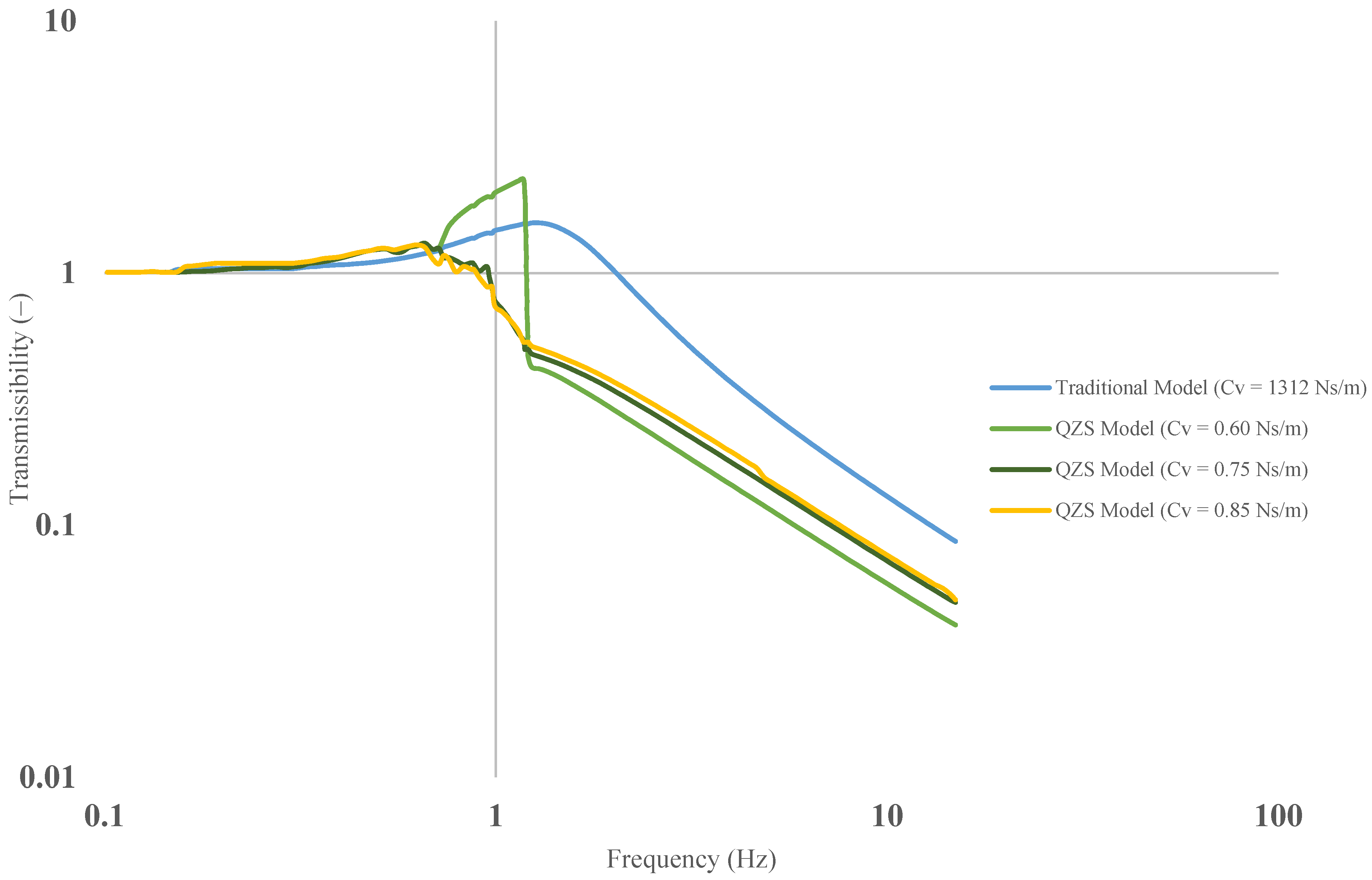
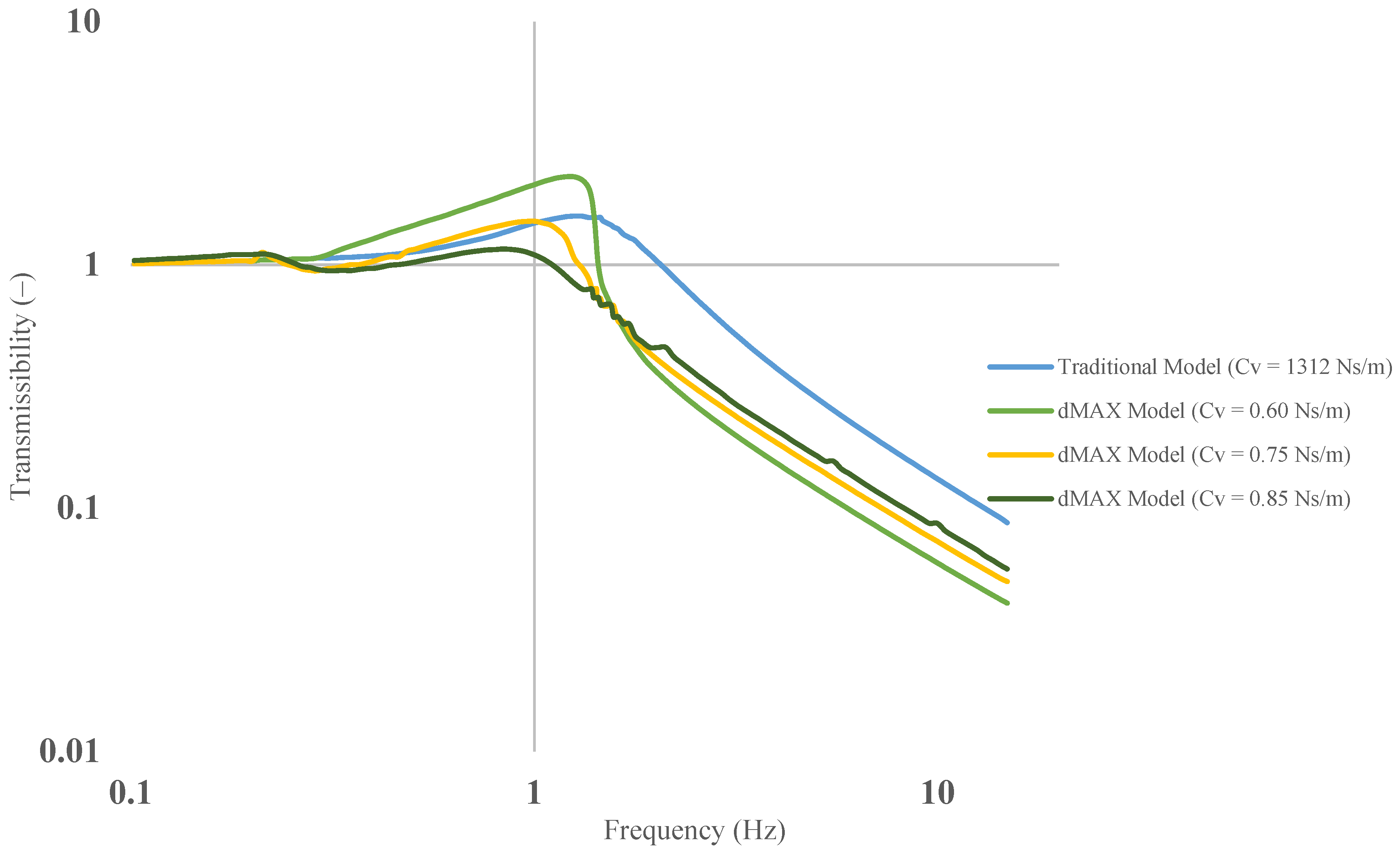
As seen in
Figure 25 and
Figure 26, an increase in damping in both systems leads to a reduction in amplitude at resonance, potentially avoiding amplification. However, it also worsens performance at high frequencies, resulting in lower performance. Based on these analyses, a damping value of 0.75 Ns/m was chosen as it represents the minimum damping capable of improving performance by avoiding undesirable non-linear behaviors. This value is implemented in the curves shown in
Figure 22,
Figure 23 and
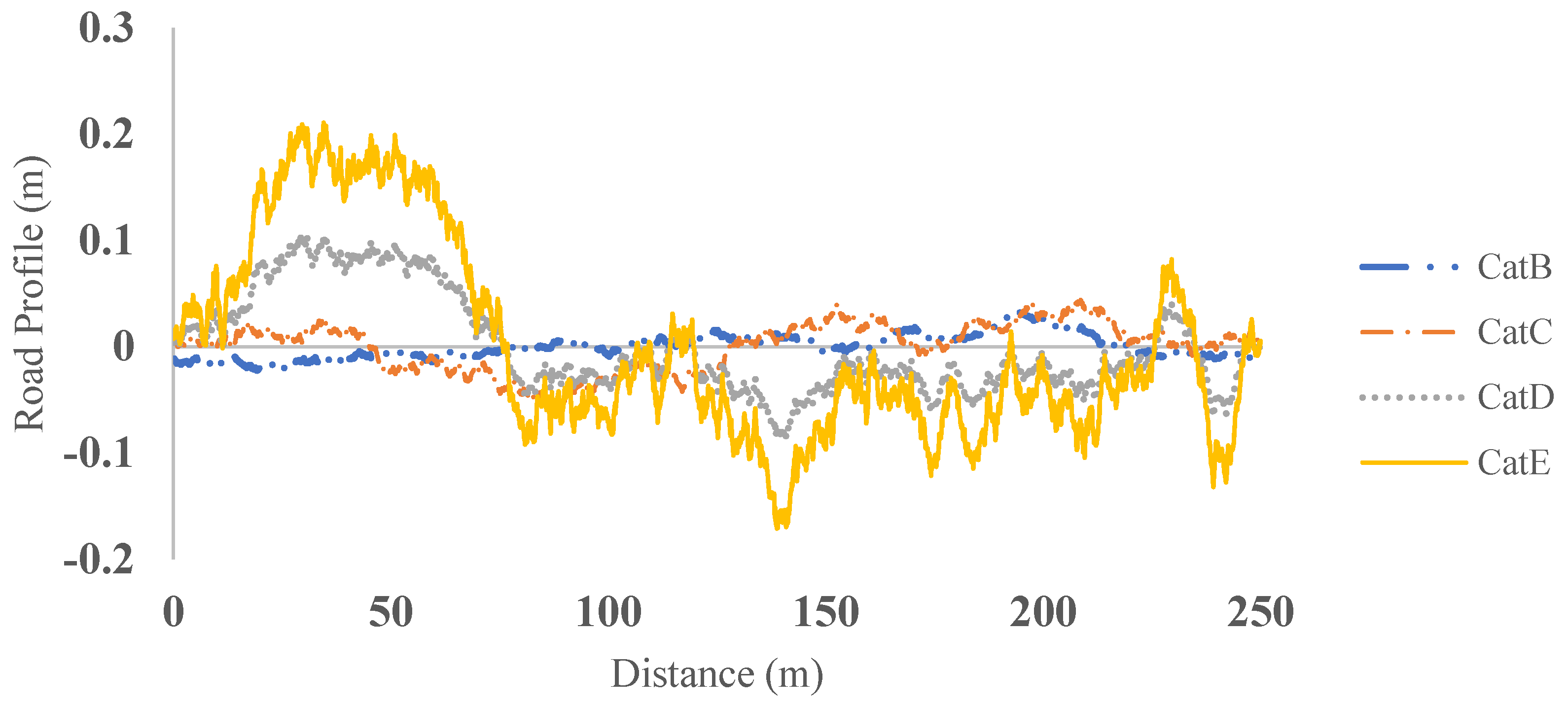
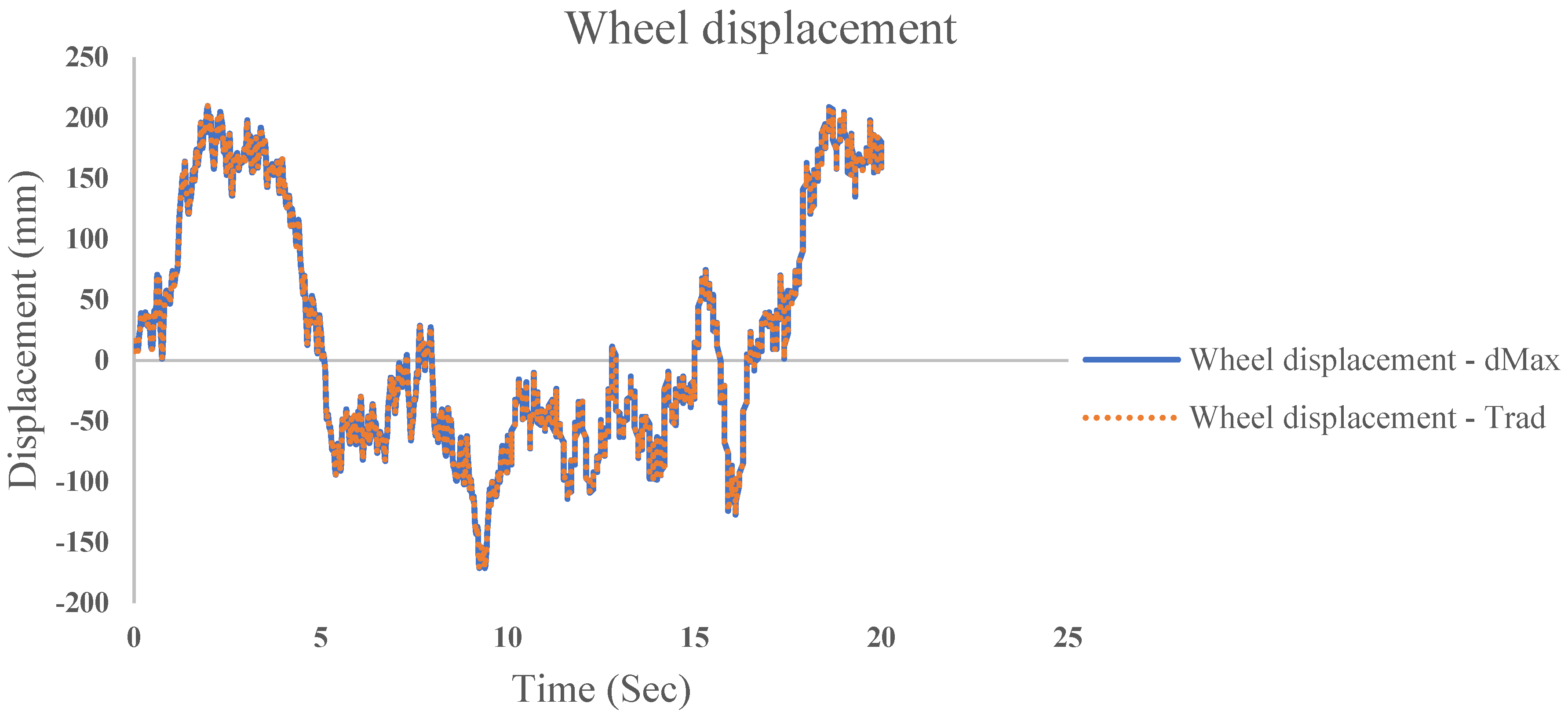
Figure 24. Following this, the performance of the three models under random-type forcing was evaluated; various road profiles were generated, among which one was selected. The Class E profile was implemented in MSC Adams
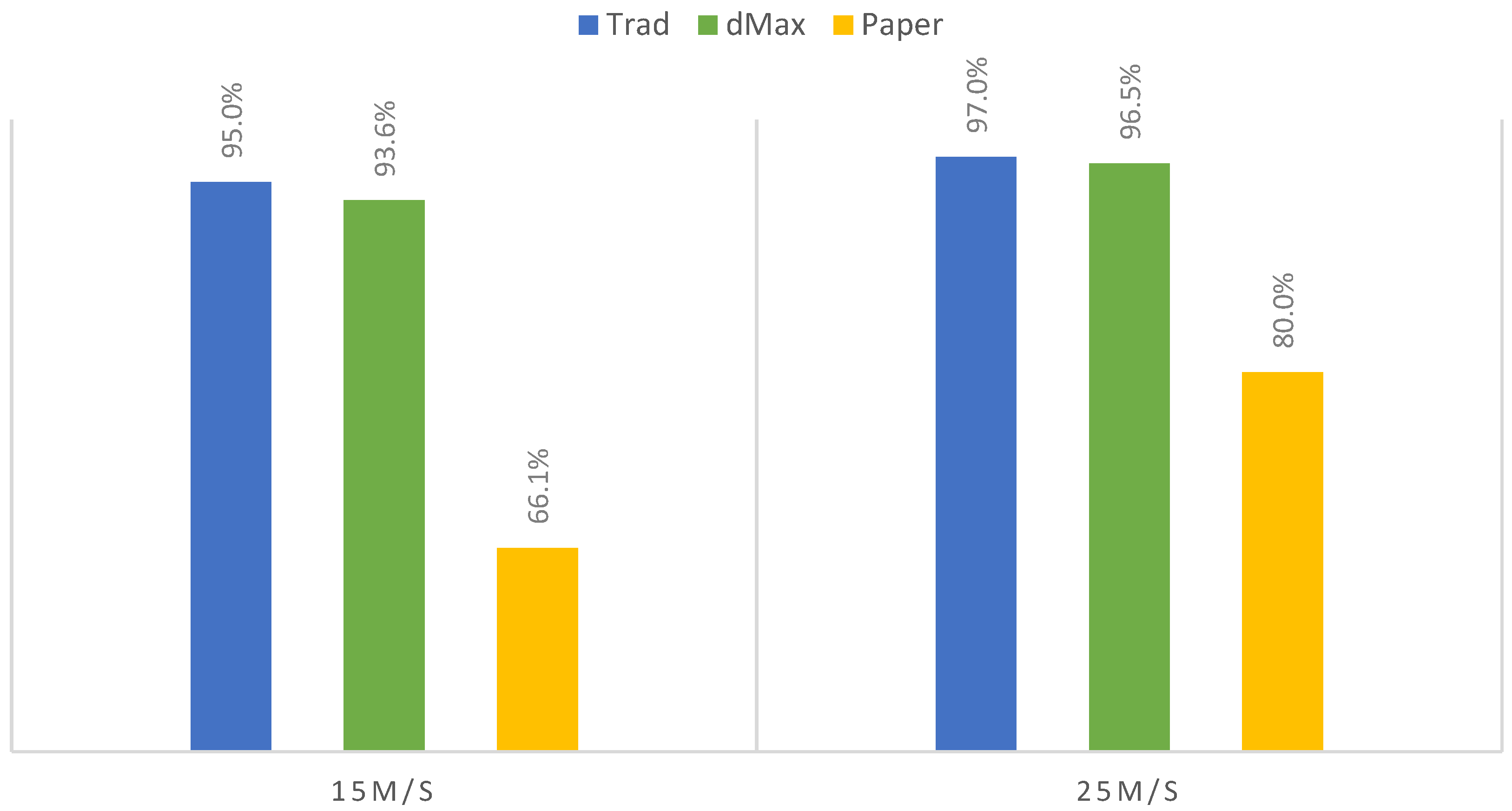
® as a spline and used as a displacement motion applied to the wheel hub. Tests under this road profile were conducted at two velocities: 15 and 25 m/s. The attenuation of the three models under investigation was evaluated as the ratio between the RMS values of Chassis and Spindle Wheel accelerations. The results of these tests are shown in
Figure 27.
It is worth noting that increasing damping improves vibration attenuation near resonance, contributing to enhanced ride comfort. However, excessive damping may adversely affect road holding by limiting the suspension’s ability to follow high-frequency road irregularities. Therefore, an optimal damping value represents a compromise between comfort and handling performance.
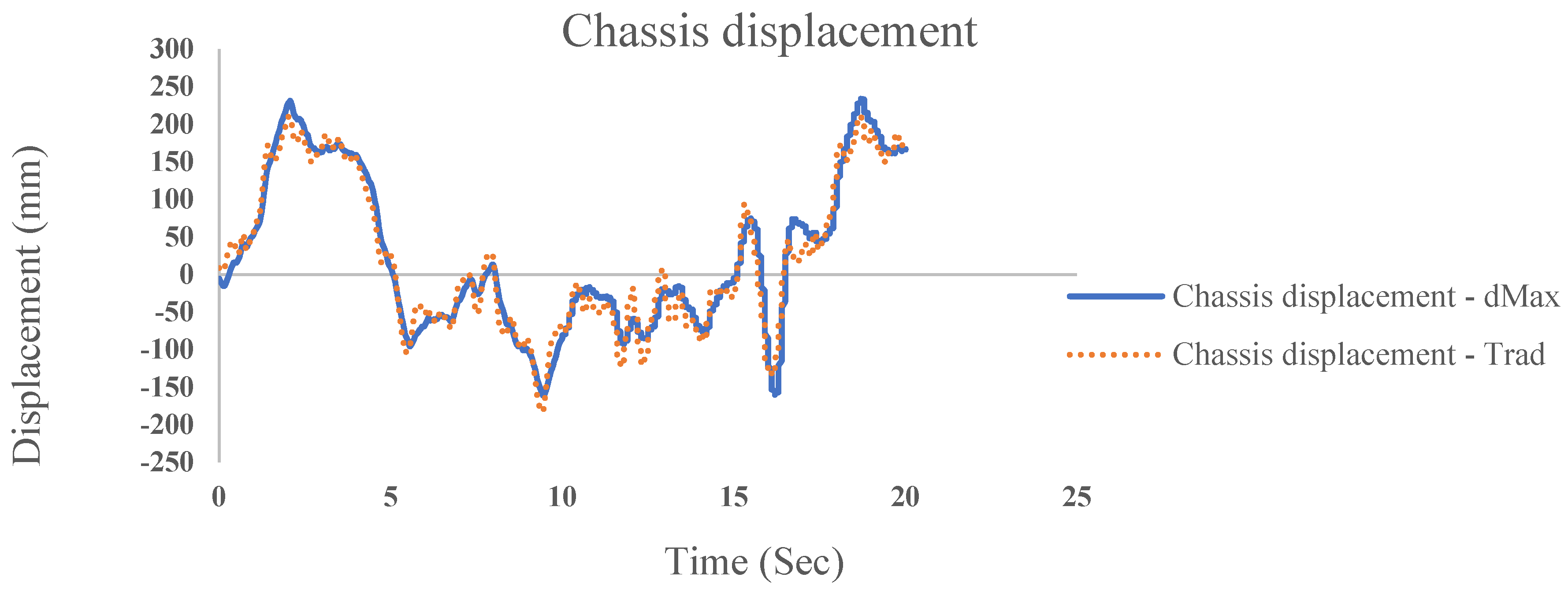
From such analyses, it can be deduced that there is an actual improvement in isolation and/or comfort performance by the non-linear models compared to the traditional suspension. There is also a portion of the simulation under the road excitation of category E for the Traditional and dMax models, showing the time history of Chassis and Wheel shaking (
Figure 28 and
Figure 29). Although the detailed frequency content cannot be directly observed from the time histories, they clearly show that the non-linear suspension exhibits smoother motion and reduced high-frequency oscillations compared to the Traditional model, which more directly follows the irregularities of the road profile.
Although
Figure 29 presents a time history similar to that of the Traditional model (
Figure 28), the dMax model shows slightly reduced peak-to-peak amplitudes and smoother oscillations, indicating a modest improvement in vibration isolation. The limited difference in the visual response can be attributed to the low excitation amplitude and the non-linear stiffness characteristics, which reduce the overall sensitivity of the system to road irregularities.
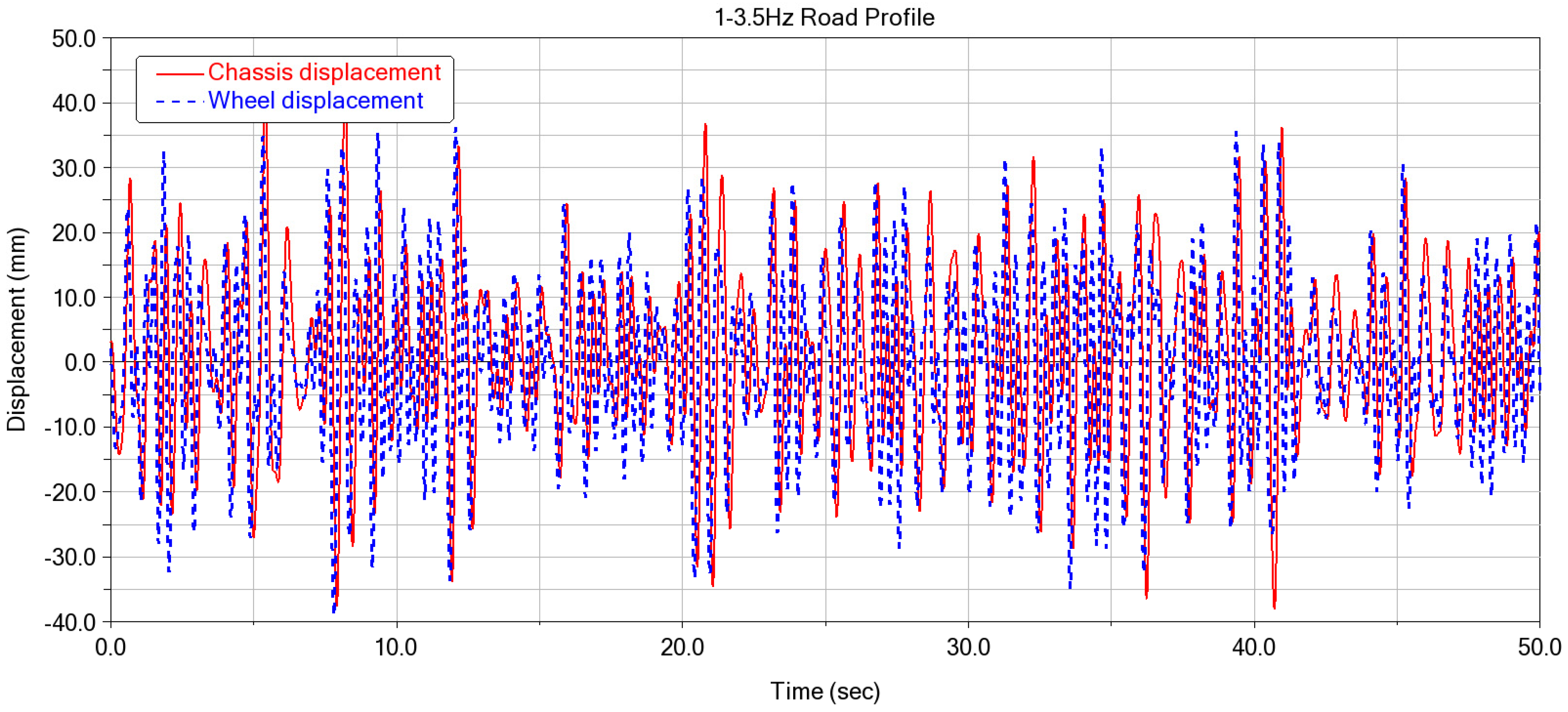
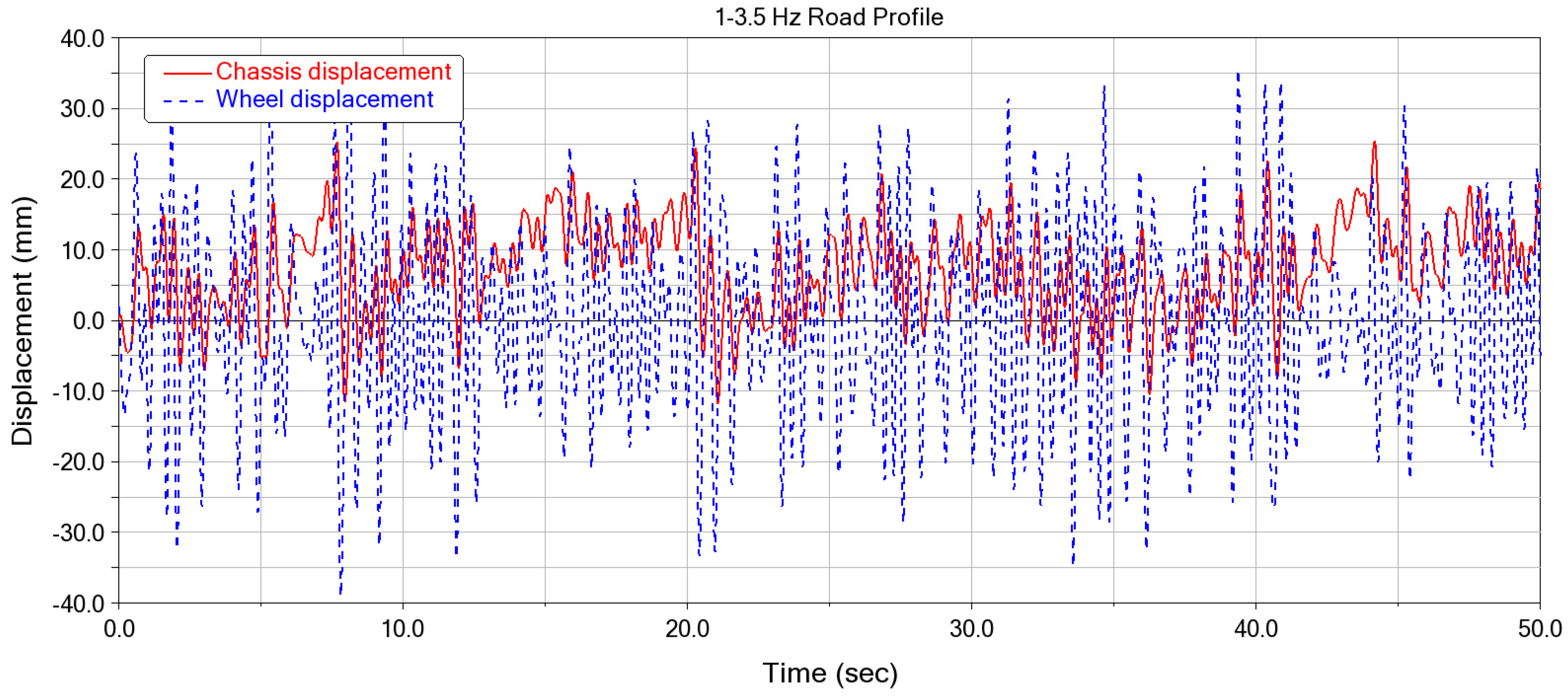
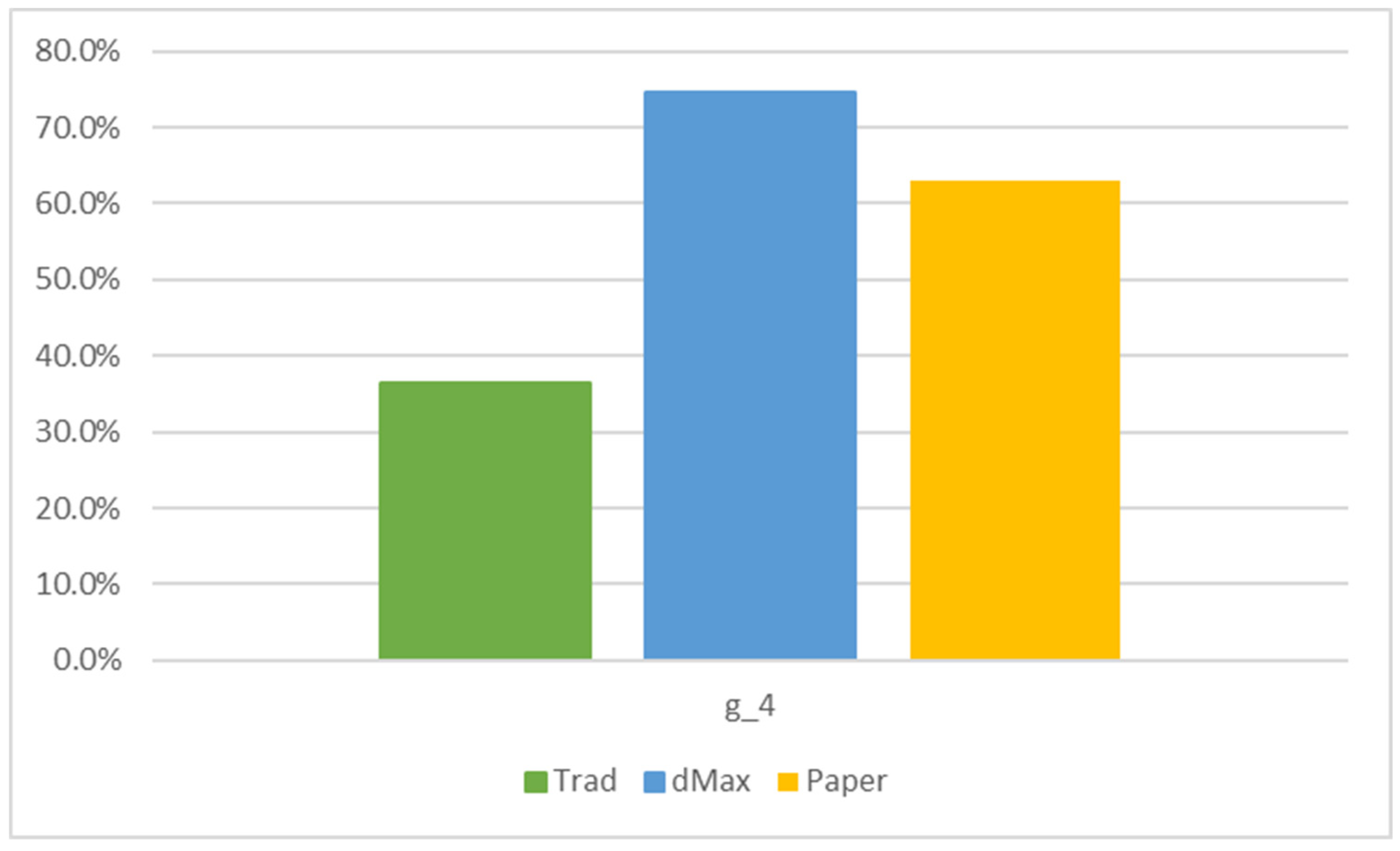
To better represent the positive aspects of the QZS suspension, an additional road profile was generated with a predominant harmonic content where QZS suspension performs better, between approximately 1 and 3.5 Hz. This was done to demonstrate the effective contribution of this type of suspension.
Figure 30 shows the time histories for the Traditional model and
Figure 31 for the non-linear dMax model. Simulations with this road profile yielded attenuation values in
Figure 32.
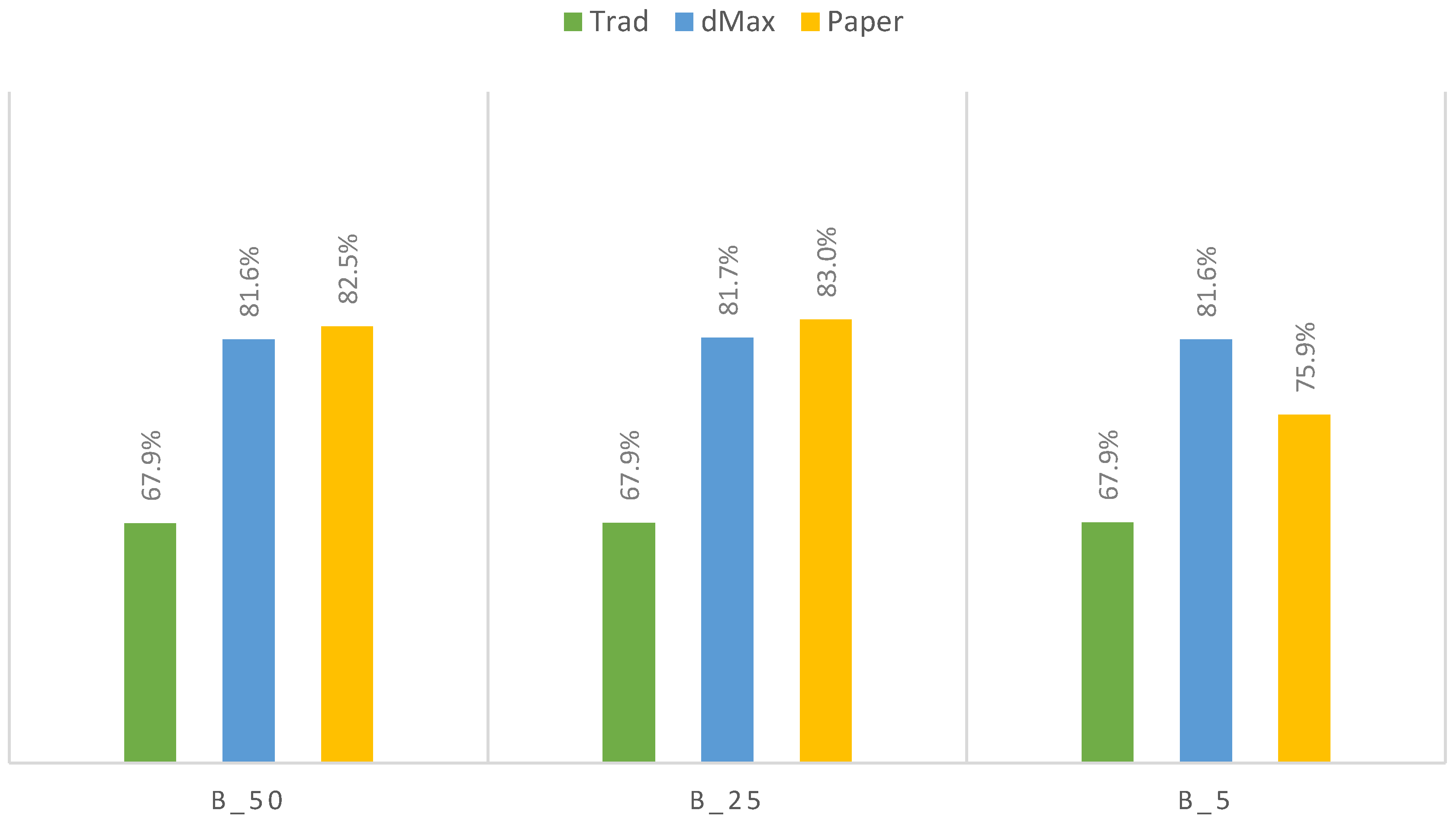
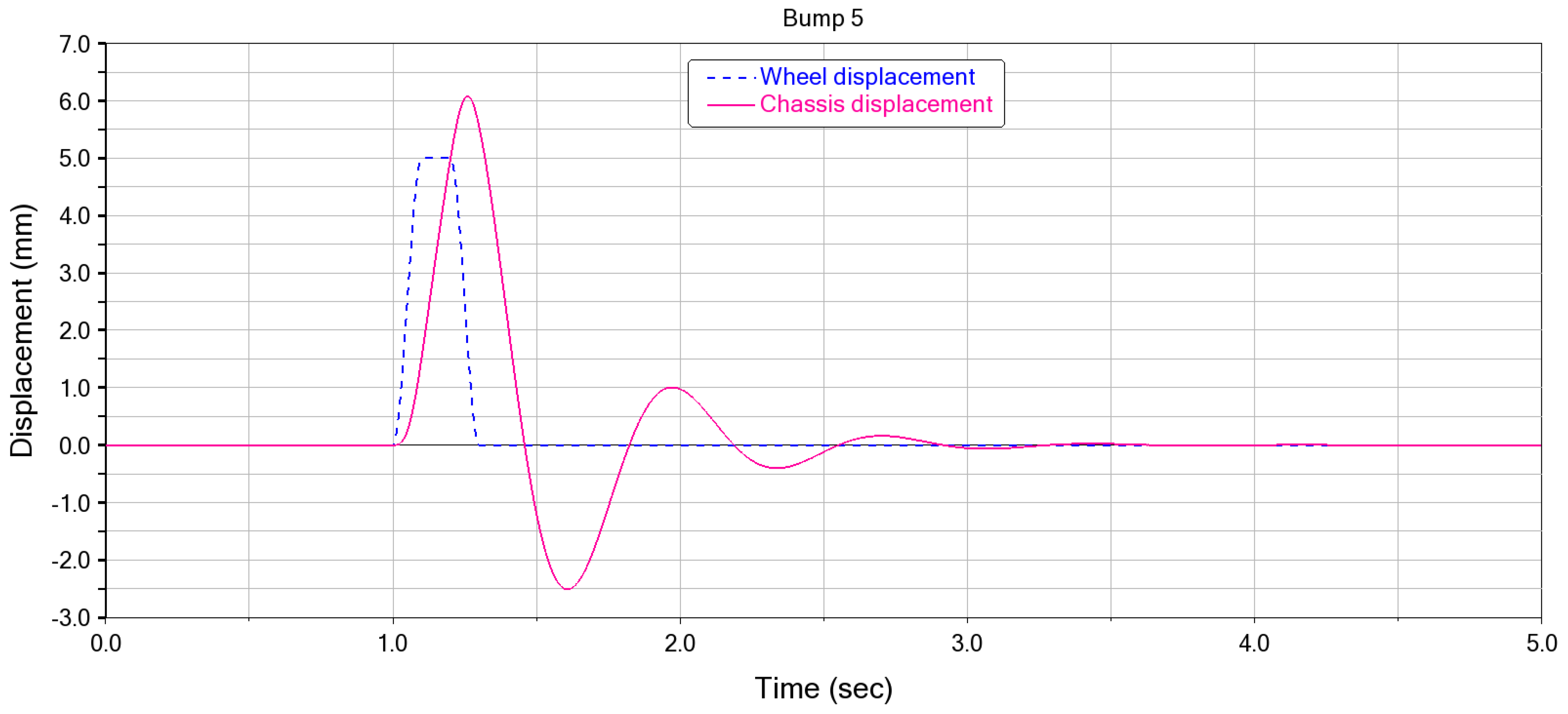
This aspect is also well-represented by “Bump” simulations, a motion assimilated as impulsive, described by two cubic steps, one rising and one falling, each of 0.1 s with a constant section of 0.1 s in between. This type of excitation is characterized by more uniformly distributed harmonic contributions across the entire area of interest. As seen in
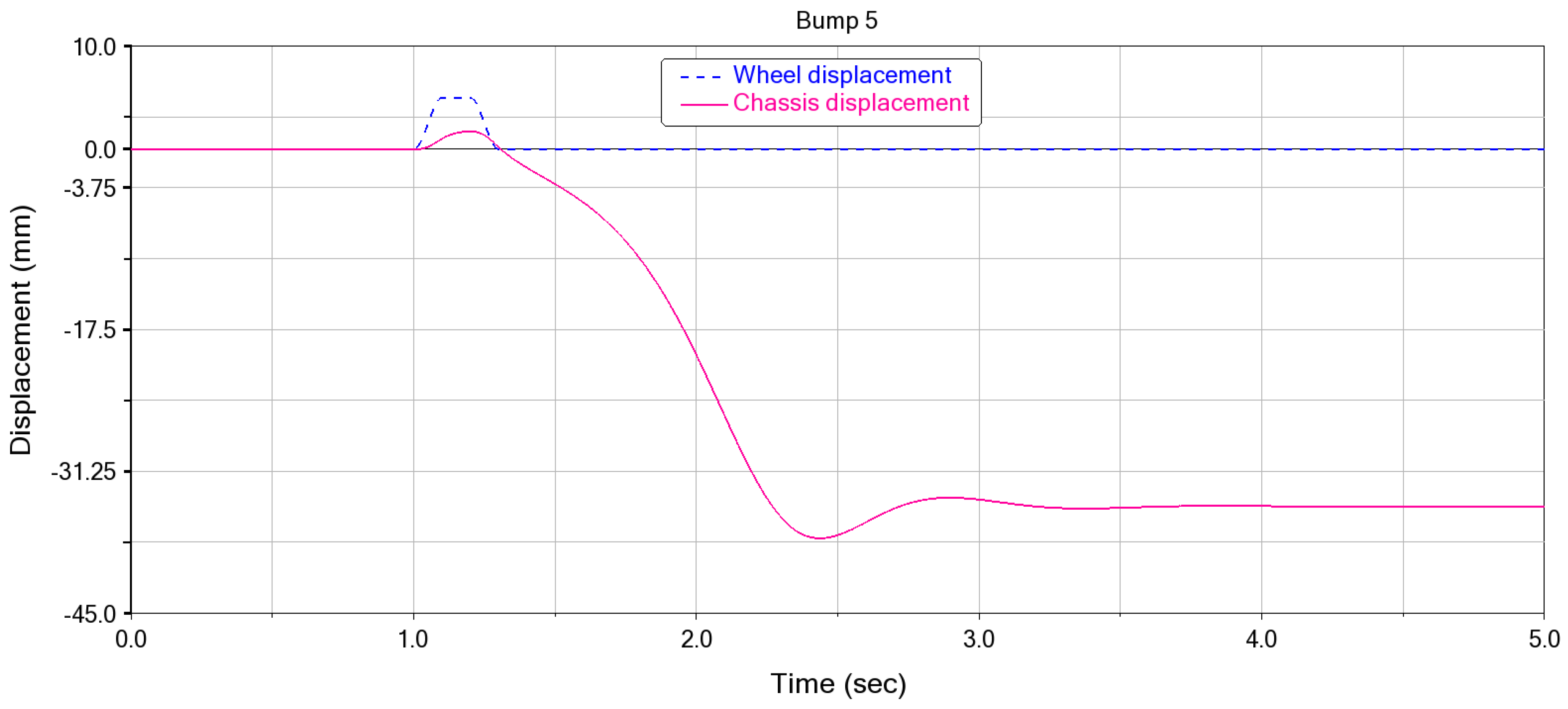
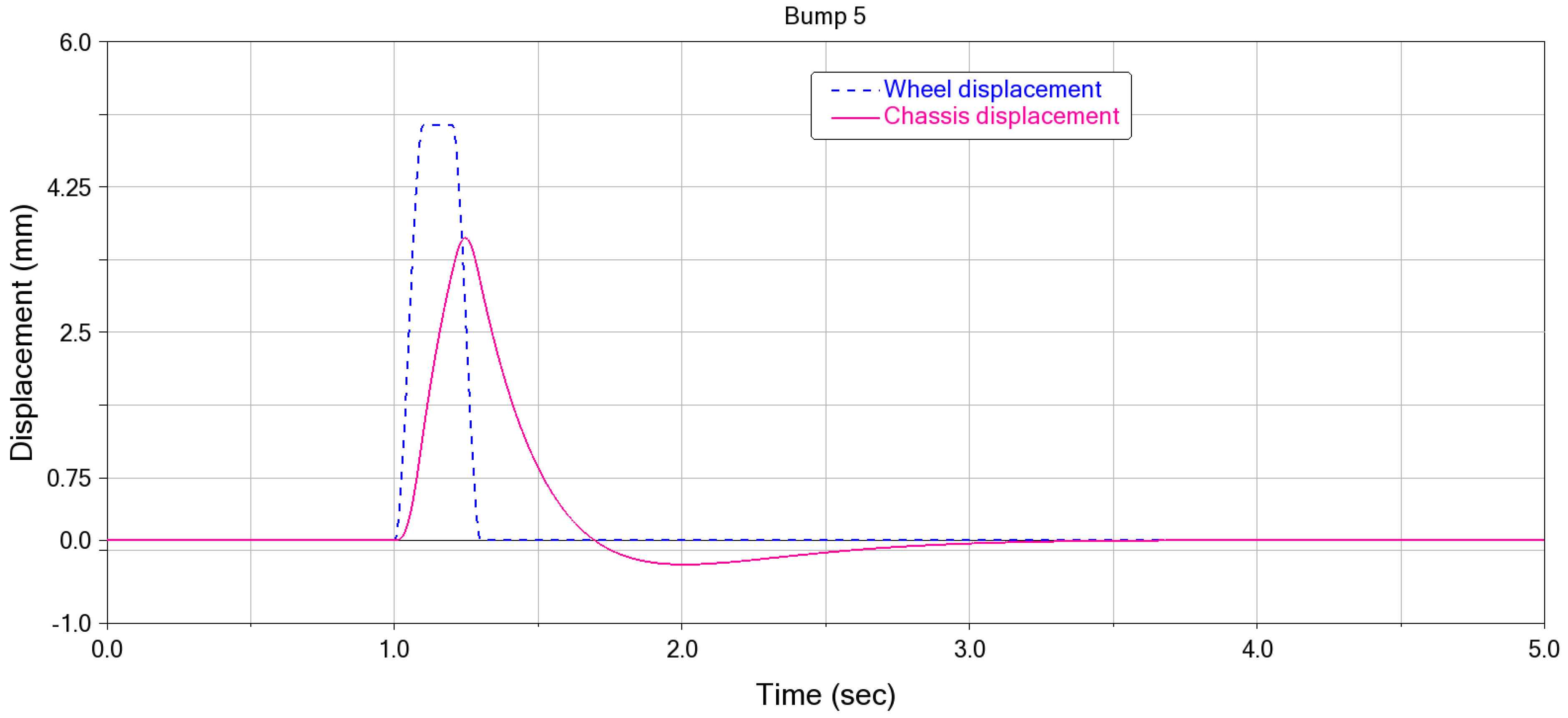
Figure 33, these simulations better represent the benefits of the non-linear suspensions discussed so far. These models can attenuate 19% more than the Traditional model, going from 67% to 86%. It is noted that the attenuation level from Ref. [
20], although comparable to the attenuation of the dMax model, does not fully represent the actual behavior. This parameterization leads to a static equilibrium problem where the mechanism does not return to the initial position after the bump excitation but stabilizes in a different configuration. This occurs because the geometric parameters of the model produce an asymmetric force–displacement relationship, causing an imbalance between the restoring forces during loading and unloading, and resulting in a shifted equilibrium point (see
Figure 34). In contrast, it can be verified that the parameterization of the dMax model generates a correct behavior where the mechanism returns to the initial conditions (see
Figure 35). The time history of the Bump simulations for the Traditional model is also shown in
Figure 36.
7. Conclusions
The application of a Quasi-Zero Stiffness suspension, specifically the “3 Springs” or “Oblique Springs” model, as the primary suspension of a vehicle, was analyzed. In this study, which focused on vertical dynamics and ride comfort, numerical simulations were conducted to demonstrate how this technology can lead to improved mechanical vibration isolation performance. The research objectives were successfully confirmed, and additional insights were obtained through a detailed multibody dynamics investigation. Overall, the critical aspects of this research focus on improving the transmissibility of the mechanism compared to a traditional suspension system. It was shown that this alternative solution can lead to a reduction in the natural frequency of the system (from approximately 1.3 Hz to about 1 Hz), a decrease in resonance transmissibility, and a mitigation of the trade-off between stiffness and static load-bearing capability. Consequently, improved attenuation performance is achieved in the low-frequency range, which is critical for driving comfort.
A critical point highlighted in this discussion concerns the theoretical scaling and parameterization of the non-linear system. Due to the intrinsic non-linearity of the suspension scheme, such parameterization may potentially lead to unstable configurations, as observed in the reference model reported in [
20]. Future developments will therefore focus on scaling the suspension based on real commercial vehicle data and redesigning the system by introducing active functionalities to enhance adaptability under varying operating conditions. Furthermore, integrating the proposed suspension into Half-Car and Full-Car models represents an important extension of this work, enabling a more comprehensive evaluation in accordance with ISO 2631 standards and driving comfort criteria based on vehicle body motions such as pitch and roll. Finally, implementation within a Full-Car model would allow verification of the overall dynamic behavior under realistic driving conditions.
It should be noted that the present analysis focuses on the nominal performance of the suspension system under standardized road excitations. Although the system response is evaluated under different excitation amplitudes and road profiles, a systematic robustness assessment with respect to parametric uncertainties and extreme external disturbances is beyond the scope of this study and represents an important direction for future research.
The occurrence of slightly negative stiffness around the static equilibrium point, observed in some configurations, raises important safety considerations for real-world applications. In practical suspension systems, such conditions could potentially lead to local instability if not properly controlled. For this reason, the proposed design strategy deliberately shifts the operating point toward configurations with a small but positive equivalent stiffness, ensuring static stability while preserving the beneficial quasi-zero stiffness behavior.
Moreover, the analysis highlights the inherent trade-off between ride comfort and road holding associated with damping selection. While lower damping values enhance vibration isolation and comfort, increased damping improves stability and road contact at the expense of high-frequency isolation. The selected damping configuration therefore represents a compromise between these competing requirements.
Despite the encouraging results obtained in this study, some limitations should be acknowledged. First, the analysis is entirely simulation-based and does not include experimental validation, which is necessary to fully assess the real-world applicability of the proposed suspension concept. Second, the vehicle is modeled using a simplified quarter car representation; therefore, full-vehicle dynamics such as pitch, roll, load transfer, and axle coupling effects are not captured. Moreover, the robustness of the proposed configuration with respect to parametric uncertainties (e.g., stiffness, damping, and mass variations) and severe or non-stationary external disturbances has not been investigated. Finally, the occurrence of quasi-zero or slightly negative stiffness is discussed from a theoretical perspective, while practical safety aspects and control strategies required for real-world implementation are beyond the scope of the present work.
Future work will focus on experimental validation of the proposed suspension concept, robustness analyses under parametric uncertainties and variable road excitations, and the extension of the methodology to semi-active and active suspension architectures.
In addition, ongoing research is focused on extending the proposed quasi-zero stiffness suspension concept to impulsive loading conditions and specific random vibration environments. In particular, the performance of the QZS mechanism under shock-type excitations and stochastic road-induced vibrations is currently being investigated to further evaluate its effectiveness in realistic and severe operating scenarios.