Article

Importance Measures for Vehicle Dust Pump Impeller Blade Fixture Parameters Based on BP Neural Network


1
School of Mechanics and Transportation Engineering, Northwestern Polytechnical University, Xi’an 710129, China
2
National Key of Laboratory of Strength and Structural Integrity, AVIC Aircraft Strength Research Institute, Xi’an 710065, China
*
Author to whom correspondence should be addressed.
Machines 2026, 14(2), 207; https://doi.org/10.3390/machines14020207
Submission received: 3 October 2025 / Revised: 1 February 2026 / Accepted: 5 February 2026 / Published: 10 February 2026
(This article belongs to the Section Machine Design and Theory)

Abstract

The reliability of the dust pump in an engine air filtration system significantly affects vehicle performance. Therefore, the extent to which the parameters of the dust pump impeller blade fixture affect its reliability is a critical consideration during blade design. This study investigated the influences of various impeller blade fixture parameters on reliability. First, a three-dimensional finite element model of the vehicle dust pump was established to analyse the reliability of the impeller blade fixture in terms of deflection and stress according to parameter value. Next, a parametric model was established, and parameter uncertainties were defined for reliability analysis. The relationships between the different parameters and the reliability of the impeller blade fixture were subsequently predicted by a BP neural network model trained and tested using 400 and 100 samples, respectively. Finally, the output of the BP neural network model was applied to analyse the principal and total importance measures of each considered impeller blade parameter to fixture reliability. This study shows that in the reliability design of the dust pump impeller blades, priority should be given to rotational speed, blade thickness, and material density, as these factors have the greatest impact on the reliability of the blade mounting system.

1. Introduction

Armoured vehicles carry out combat missions in a variety of environments where harsh conditions are present, including at sea or on land in deserts, jungles, or plateaus, making reliability a prominent concern [1,2]. Critically, the demand for vehicle reliability increases with the level of systems integration in a combat vehicle. The engine air filtration system is a key component of a vehicle [3,4,5] that helps ensure a clean air supply to improve fuel combustion efficiency, extend engine life, and reduce maintenance requirements [6,7]. The dust pump is an auxiliary device of the vehicle air filtration system that is primarily responsible for removing particulate matter and dust from the air supply. It is a critical component as dust pump failure prevents the effective operation of the filtration system, thereby reducing the air quality inside the vehicle as well as the performance of the engine [8]. Furthermore, a faulty dust pump can drastically shorten the air filter replacement cycle. The dust pump converts mechanical energy from the electric motor into pneumatic energy of the air by rotating the impeller blade at high speed to accelerate the air. Therefore, the impeller blade is the core component of the dust pump and must withstand various loads such as centrifugal and aerodynamic forces during operation [9,10,11]. Furthermore, because the air in the filtration system contains a large amount of dust, the dust pump impeller blade must operate under harsh conditions for long periods of time [12]. As the reliability of the dust pump affects the reliability of the entire filtration system, and the filtration quality significantly affects the performance of the entire vehicle, the reliability of the vehicle dust pump impeller blade in response to variations in its design parameters must be accurately predicted.
Surrogate model technology has been increasingly applied to predict structural reliability. For example, Li et al. [13] used a surrogate model with the response surface method to fit the failure functions obtained during the fatigue reliability analyses of typical welded joints. Furthermore, surrogate models can be used to reduce the computational cost and improve the efficiency of reliability optimisation design. Gao et al. [14] optimised foam-filled conical thin-walled structures using a kriging surrogate model, and Gupta and Manohar [15] proposed an improved response surface approach that addressed the problem of excessive design points in the original approach by employing test points. However, the number of test points required by this method increases with the number of design variables, making its application to the optimisation of large and complex structures difficult owing to the excessive computational load incurred. Therefore, Zhang et al. [16] and Kang and Luo [17] applied the response surface method to conduct reliability optimisation designs in which the secondary term contained no cross terms.
Fixture parameters (such as locator layout, clamping force, fixture stiffness, and support position) during the machining and assembly of vehicle dust pump impeller blades have a significant impact on machining deformation, stress distribution, and final aerodynamic performance. Traditional importance evaluation of fixture parameters mainly relies on finite element simulation and experimental verification, which is computationally expensive and has long iteration cycles. In recent years, BP neural networks and their improved variants have been widely used to establish surrogate models between fixture parameters and impeller performance indicators due to their strong nonlinear mapping and generalization capabilities. Parameter importance is quantified through sensitivity analysis, feature importance ranking, and other methods [18,19,20].
In the field of centrifugal and axial-flow pump impeller optimization, BP neural networks have achieved relatively mature applications. Wang et al. [18] proposed an improved BP neural network algorithm for optimizing the cavitation performance of centrifugal pumps and found that geometric parameters such as blade inlet angle and blade thickness have the highest sensitivity to cavitation margin; parameter importance ranking was obtained using the network weight perturbation method. Han et al. [19] combined a BP neural network with a genetic algorithm and NUMECAsoftware for collaborative optimization of impeller and volute, demonstrating that the initial stress state induced by fixtures contributes up to 18.7% to impeller efficiency. Similarly, Wei et al. [21] performed multi-objective optimization of centrifugal pump impellers based on NSGA-II and neural network surrogate models; results showed that excessive clamping force leads to stress concentration at the blade root, with its importance ranking in the top three on the Pareto front.
For impeller material fatigue performance, Wang et al. [20] used a BP neural network to predict very-high-cycle fatigue (VHCF) life of centrifugal pump impeller material containing internal inclusions and grain boundary facets (GBF), pointing out that residual stress introduced by fixture parameters during manufacturing is a key factor affecting VHCF life, with an importance score as high as 0.62. Sun et al. [22] constructed a machine-learning-based surrogate model in the multi-condition optimization of high-specific-speed axial-flow pump impellers and found that fixture positioning error contributes 12–22% to impeller energy loss under varying conditions.
Neural networks have also been extensively introduced into fixture design itself for parameter importance evaluation. Wu et al. [23,24] developed a case-based learning fixture automatic design algorithm for near-net-shaped aero-engine blades, using BP neural network to evaluate the contribution of different locating-clamping schemes to machining deformation; results showed that the number of support points and clamping force distribution are far more important than fixture material stiffness. Zhang et al. [25] directly targeted vehicle dust extraction fan impellers and proposed a feedback neural network-based stress response prediction model for fixture parameters; quantitative results showed that when the blade width is less than 8 mm, fixture thickness and positioning accuracy have importance scores of 0.78 and 0.71, respectively, making them the two most sensitive parameters.
In the context of Industry 4.0, Arslane et al. [26] systematically reviewed fixture layout optimization, emphasizing that the integration of a BP neural network and a genetic algorithm can achieve global sensitivity analysis and automatic ranking of fixture parameters, reducing positioning error by 37% in complex thin-walled blade machining. Li et al. [27] used neural networks to predict dynamic parameters during milling of thin-walled blades and found that fixture damping characteristics contribute 24% to vibration suppression, significantly higher than traditional empirical values.
Sensitivity analyses can reflect the extent to which input variables affect an output response and are primarily classified into analyses of local or global sensitivity [28,29]. Local sensitivity reflects the influence of the input variable on the output response at a nominal value, is constrained by the selection of this nominal value, and lacks global meaning and computational stability. Global sensitivity (also known as the importance measure) describes the average impact of an input variable on the output response over its entire distribution [30,31,32,33] and reflects the extent to which the uncertainty of an input variable affects the uncertainty of the output response [34,35,36,37]. After considerable development, the most common importance models today are based on moment independence, variance, or nonparametric methods. Among the three approaches, the variance-based model [38,39,40] is the most widely used, and several relatively mature methods for measuring variance-based importance have been developed accordingly, including the Monte Carlo simulation (MCS), state-dependent parameter (SDP), and stochastic robust design (RBD) techniques [41]. The SDP and RBD techniques can only calculate the principal importance, which describes the contribution of only the considered variable to the output response, whereas the MCS technique can simultaneously obtain the principal importance as well as the total importance, which describes the contribution of the considered variable to the output response considering the uncertainty of the other variables; as a result, MCS is the most widely used method for importance analysis. We have compiled the relevant literature and presented it in Table 1.
This study innovatively evaluates the reliability of a dust pump in armored vehicles by employing finite element simulation software to construct a three-dimensional parameterized model of the dust pump impeller blade fixture, systematically analyzing the effects of parameter variations on impeller stress and deformation. Subsequently, a high-precision backpropagation (BP) neural network surrogate model was trained using the simulation data, effectively capturing the complex nonlinear relationships between input parameters and output responses. This approach significantly reduces the computational burden of traditional reliability analysis while improving efficiency. Finally, an importance analysis of the impeller blade parameters was conducted using the Monte Carlo Simulation (MCS) method integrated with the BP surrogate model outputs, providing a novel and efficient surrogate model-driven framework for the optimal design of critical vehicle components under extreme service conditions.

2. Finite Element Analysis and Parametric Modelling of the Impeller Blade Fixture

2.1. Finite Element Model

This chapter aims to provide the fundamental models for the reliability analysis of the impeller blade fixture. Given that this study is a continuation and application based on previous research on impeller stress response prediction, the description of existing structural and Finite Element Models (FEM) is simplified [25]. The focus is shifted to the essential elements for reliability analysis: the definition of parameter uncertainties and the construction of the BP Neural Network (BPNN) surrogate model.
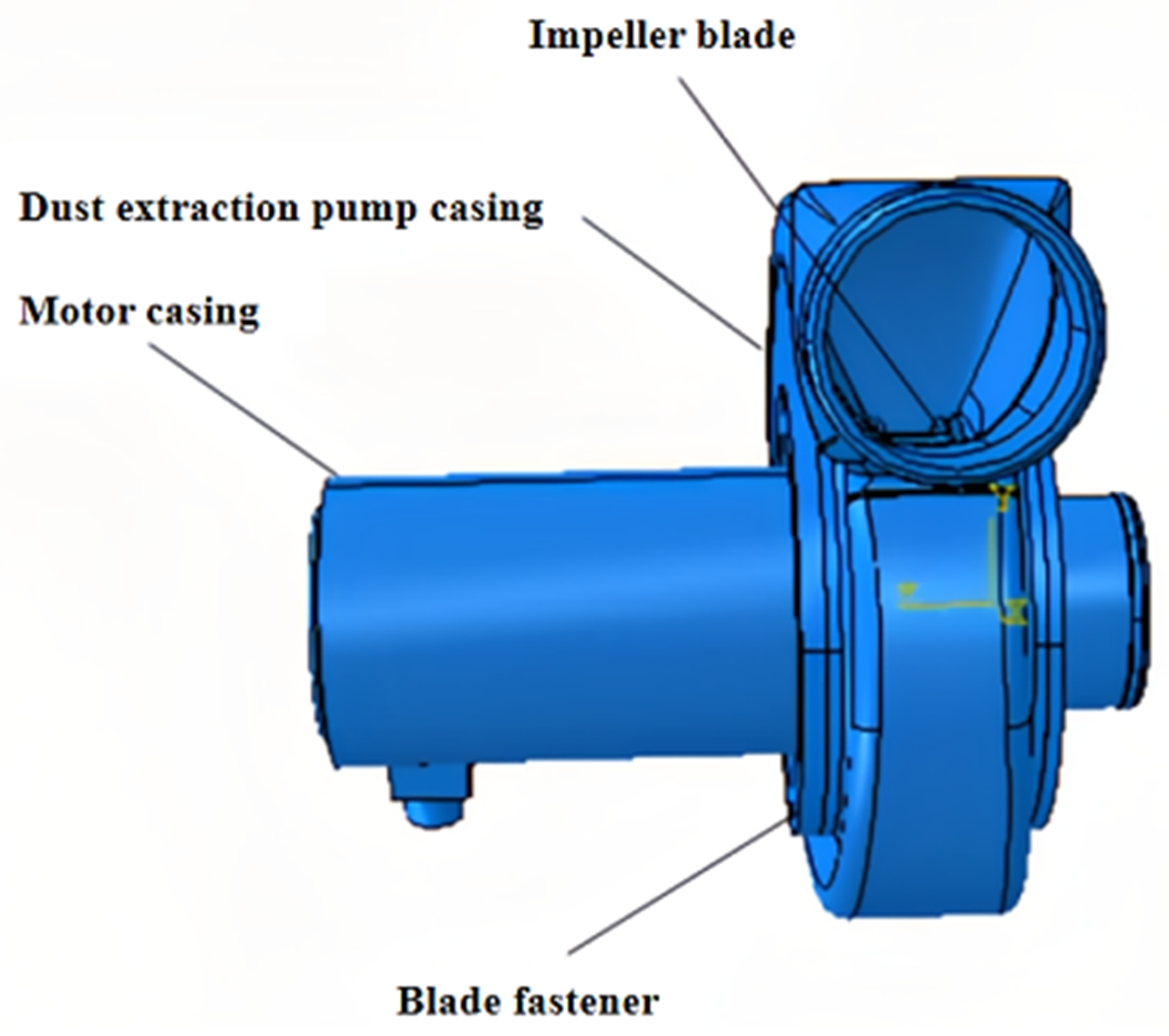
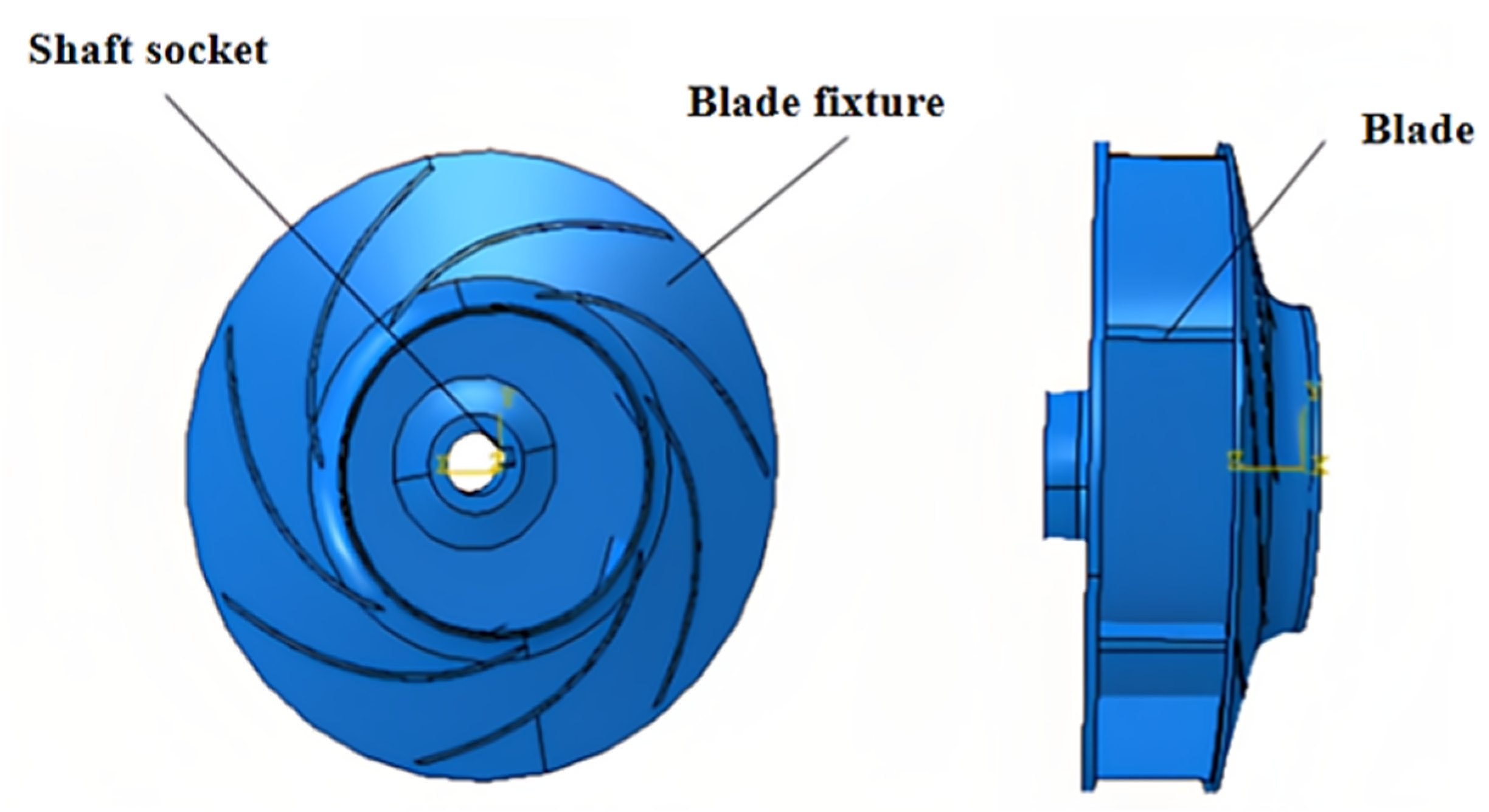
A dust pump model was created in SolidWorks 2024, which is shown in Figure 1 and Figure 2. This study focuses on the impeller blade fixture, a key component consisting of multiple blades mounted between fixture plates. The blade uses a typical radial design with thickened/rounded transitions at the root to minimize stress concentration. The material properties and geometry of the considered dust pump assembly are detailed in Table 2.
The subject of this study is the impeller and its blade fixture for a vehicle dust extraction pump. Its structure, material properties, and operating load conditions (such as rotational speed, temperature, fluid load, etc.) are identical to the model studied in the reference [25].
Continuation of the Finite Element Model (FEM): The 3D geometric modeling, mesh generation, material parameters, boundary conditions, and load application methods of the impeller all follow the FEM established in our previous work [25].
To simulate centrifugal force during high-speed rotation, displacements at the central shaft hole were fixed in the x, y, and z directions. Rotations about the x and y axes were also fixed, allowing only rotation about the z-axis.
This model has been validated experimentally and can accurately capture the stress response of the blade fixture under complex operating conditions. Therefore, this chapter will not repeat the detailed FEM establishment process. Instead, this FEM is directly utilized as the foundation of the deterministic model to generate the training dataset required for reliability analysis.

2.2. Parametric Model

  • Key parameters
The six parameters involved in modelling the dust pump impeller blade fixture can be classified as geometric (e.g., fixture thickness and blade thickness), material (e.g., Poisson’s ratio, elastic modulus, and material density), and load (e.g., operating speed) parameters, all of which affect the stiffness and strength of the blades and thus, their reliability.
2.
Parameterised calculation model
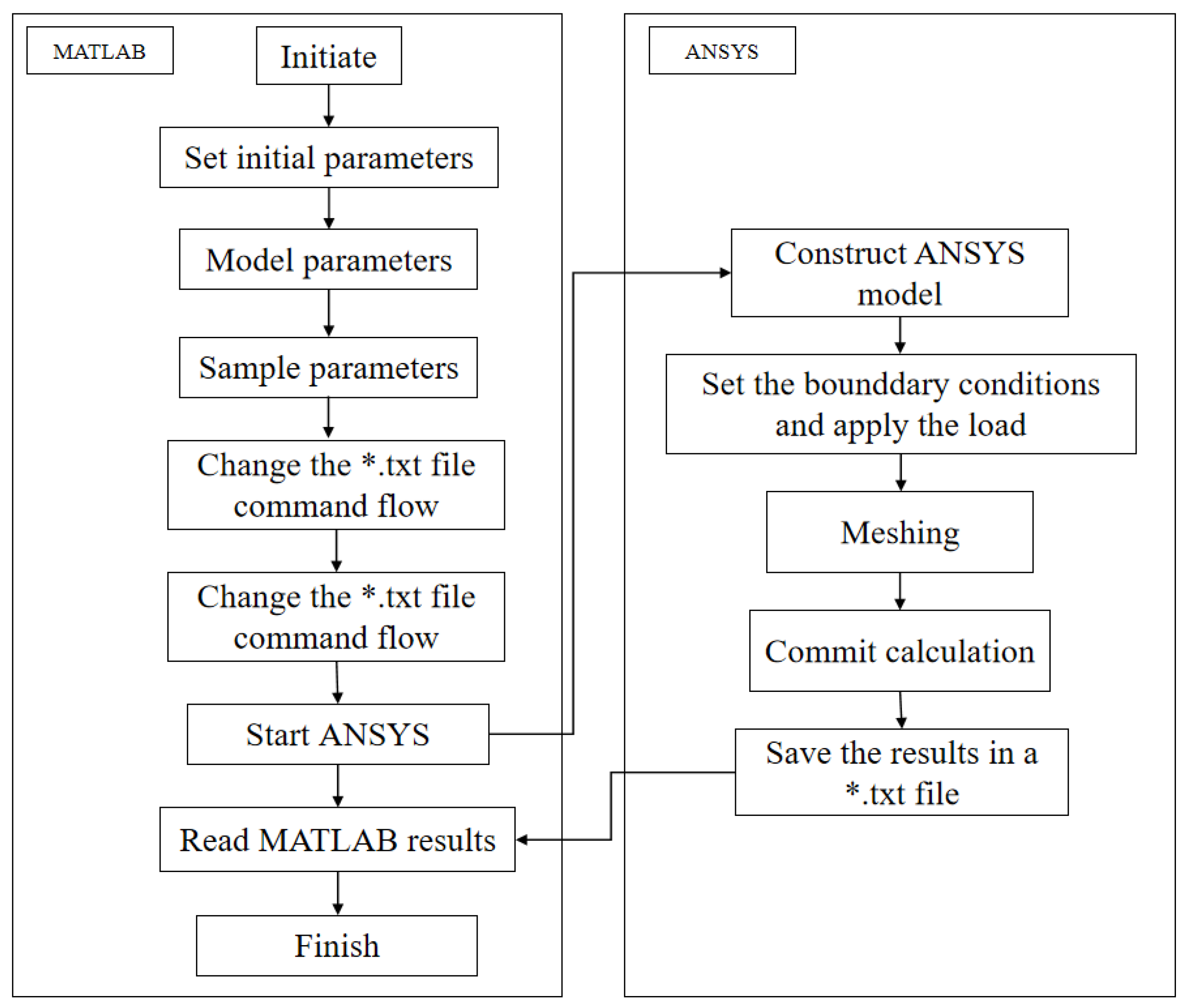
The parametric calculations for the reliability analyses were undertaken using the process shown in Figure 3. First, a deterministic model was established using the ANSYS 17.0 command stream by replacing the parameters with letters that were assigned values at the top of the command stream, resulting in a model *.txt file containing parameters and their values. Next, MATLAB 2024b’s fopen function was used to read the created *.txt files and complete the assignment of values. Subsequently, the assigned *.txt data were input into ANSYS using the parametric design language to conduct the reliability analysis, and the results were written into a final *.txt file. This file was opened in MATLAB using the fopen function to read the results calculated by ANSYS.
Owing to the nature of mechanical manufacturing processes, there is an unavoidable degree of uncertainty in the geometric dimensions of dust pump impeller blade fixtures, and various material parameters are uncertain owing to defects in the materials themselves. As these uncertainties can affect the mechanical properties of the impeller blade fixture, their influences on the performance of the fixture must be evaluated. Practical experience in processing and production has shown that the normal distribution curve is the most widely used theoretical distribution for workpiece errors [33]. Therefore, this study assumed that the six considered parameters (Poisson’s ratio, elastic modulus, density, fixture plate thickness, blade thickness, and rotational speed) all followed normal distributions; Table 3 presents the means and standard deviations of these distributions. The subsequent uncertainty calculations were based on the information shown in Table 3 using the distribution function in MATLAB.
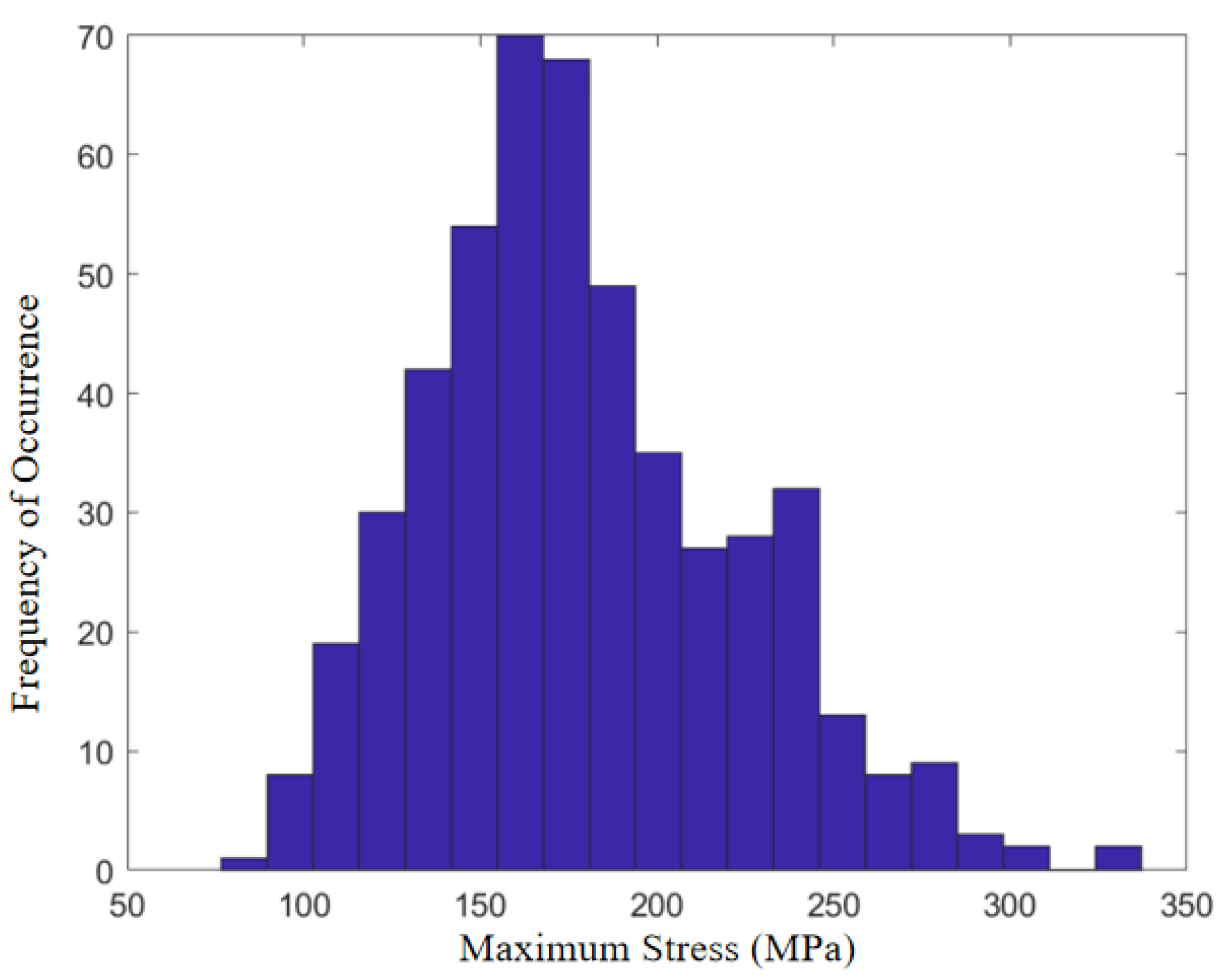
The parametric calculation process detailed in Figure 3 was applied to obtain 500 sets of data samples for the reliability analysis of the impeller blade fixture, and the maximum stress and displacement were determined for each sample condition. As shown in Figure 4, the maximum stress was distributed within the interval [75, 350] and most maximum values were within [125, 200].

3. Prediction of Impeller Blade Fixture Response Using the BP Neural Network

3.1. Construction of BP Neural Network

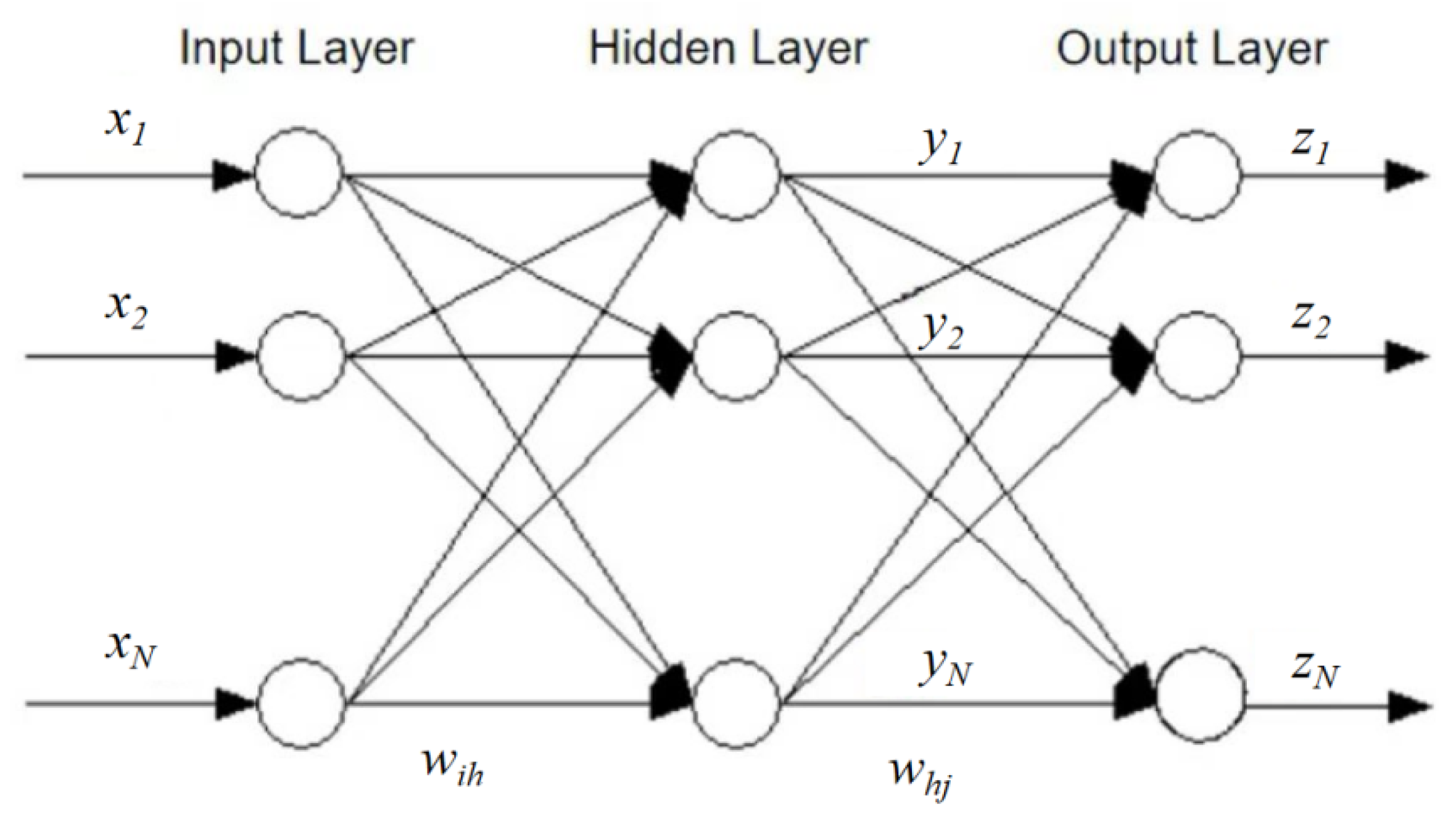
The BP neural network is a multilayer feedforward neural network that is trained using the error backpropagation algorithm and exhibits a strong nonlinear fitting ability [42,43,44]. Therefore, it can achieve nonlinear mapping of any input to the response according to the actual working conditions. The topological structure of the BP neural network is shown in Figure 5.
The BP neural network consists of input, hidden, and output layers. For the impeller blade fixture response prediction model established in this study, the input layer comprised a vector xi containing the six input nodes: the Poisson’s ratio, elastic modulus, density, fixture plate thickness, blade thickness, and rotational speed. As no calculation was undertaken in the input layer, its output value was equal to its input value. The hidden layer comprised three levels, each input with the weighted sum of the outputs of the nodes in the previous level. The activation degree of each node was determined by its activation function, which describes the connection weight between nodes in the input and hidden layers, w i j . The output layer contained the connection weights between the hidden and output layers, w j k . The error between the target signal and network output was subsequently backpropagated to the network.
The forward transmission process applied in a neural network weighs the output of the previous layer and adds a threshold to obtain the input for the node in the present layer. It is relatively simple to calculate as follows:
z i n p u t = i = 1 m w i j x i + b j , j = [ 1 , n ] ,
where bj is the bias term (threshold) of the jth node in the current layer, used to adjust the position of the activation function and m is the number of nodes in the previous layer.
Next, the input values z i n p u t are processed using an activation function and transformed into the [0, 1] interval by
z o u t p u t = θ z i n p u t ,
where the activation function θ is defined as
θ z = 1 1 + e z ,
in which z is the input value of the activation function.
The BP neural network training process iteratively adjusts the weights and biases to minimise the value of the error function, and the error is propagated backward along the direction of the fastest gradient descent. Therefore, the weights and biases between neurons are continuously adjusted to change each training sample in the direction of the weight gradient to minimise error. The error is generally calculated using a loss function; the root mean square error loss function L(e) is minimised as follows:
L e = 1 2 S S E = 1 2 k = 1 p e k 2 = 1 2 k = 1 p y ^ k y ˙ k 2 ,
where S S E is the sum of the squares of the prediction errors for all samples, e k is x is the prediction error of the kth sample, y ^ k is the output value calculated by the neural network, y ˙ k is the actual result that should be output (i.e., the true value), and p is the total number of samples included in the calculation. According to the gradient-descent method, the correction of the weight vector should be proportional to the gradient at the current position. The correction for the error E w , b at jth output node is given by
Δ ω i , j = η E ω , b ω i , j .
Taking the derivative of the activation function in Equation (3) yields
θ x = θ x 1 θ x .
Next, with respect to w i j :
E ω , b w i j = 1 w i j 1 2 j = 1 n y ˙ k y ^ k 2 ,
and transforming Equation (7) yields
E ω , b ω i j = y ^ k y ˙ k f z i n p u t 1 f z i n p u t x i = δ i j · x i ,
where
δ i j = y ^ k y ˙ k f z i n p u t 1 f z i n p u t .
According to Equation (9), the weights and thresholds between the hidden and output layers can be adjusted using the gradient descent as follows:
ω i j = ω i j η 1 E ω , b ω i j = ω i j η 1 δ i j x i ,
b j = b j η 2 E ω , b b j = b j η 2 δ i j .

3.2. Prediction of Impeller Blade Failure

Blade failure was predicted using the BP neural network surrogate model via the following process:
  • Dataset partitioning. The parameter data obtained through MATLAB sampling were combined into a single sample set with the stress results calculated by ANSYS on their basis. This sample set was divided into training and test sets in a 4:1 ratio.
  • BP neural network construction. A five-layer BP neural network was constructed as described in Section 3.1 using six nodes in the input layer representing the Poisson’s ratio, elastic modulus, density, fixture plate thickness, blade thickness, and rotational speed; a hidden layer comprising three levels each containing 14 neurons; and one output layer representing the stress in the impeller blade fixture under rotational load. The number of hidden layer levels was determined by
    h = m + n + a ,
    where h is the number of neurons in the hidden layer, m is the number of neurons contained in the input layer (m = 6 in this study), n is the number of neurons in the output layer (n = 1 in this study), and the value of a fluctuates between 1 and 15. The tansig transfer function was used between the first and second hidden layers and the purelin transfer function was used between the second and third hidden layers.
  • Network parameter configuration. The parameters to be set included the number of network training sessions, learning rate, training time, and minimum error of the training target.
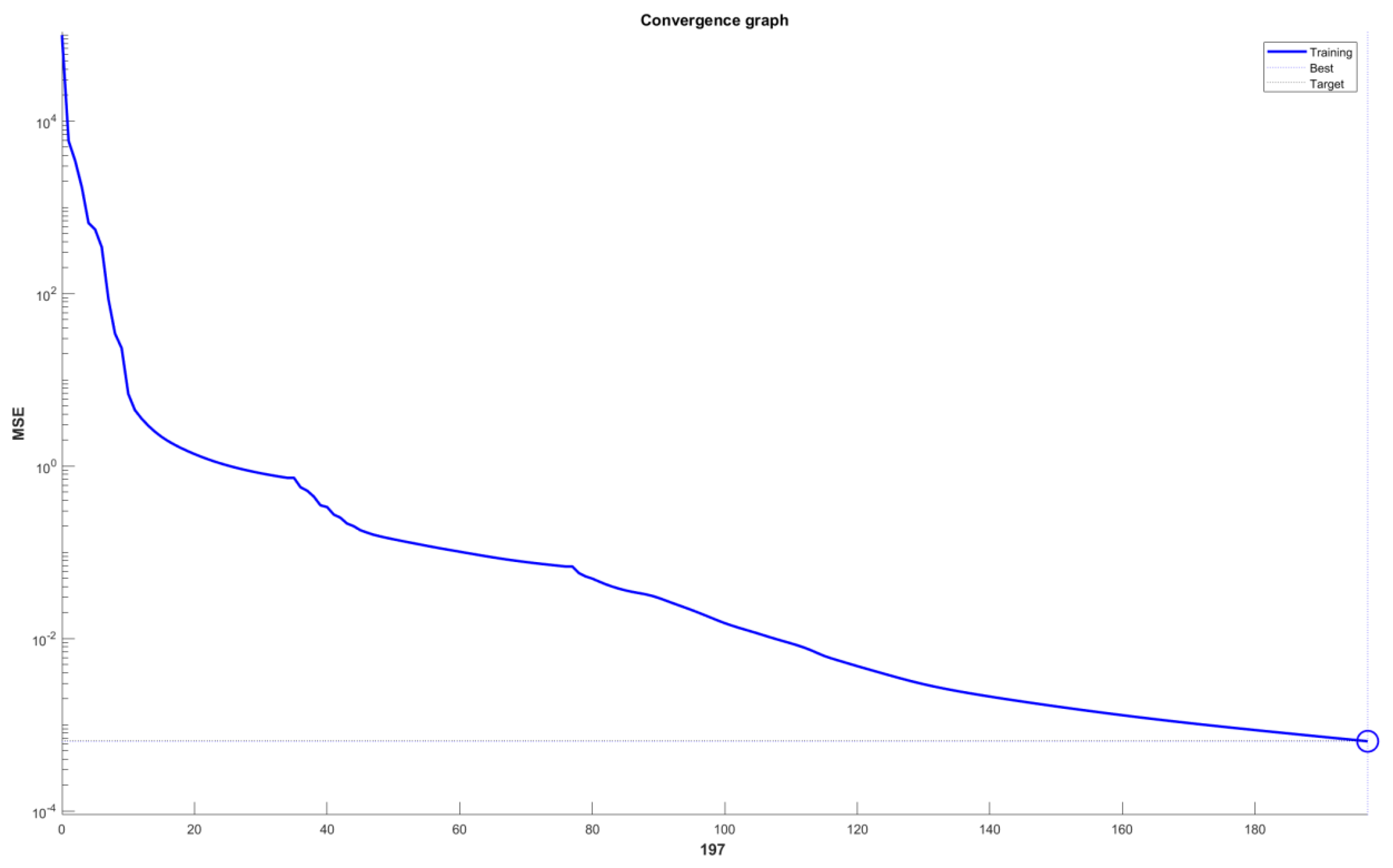
  • Network training. Four convergence conditions were established to avoid overfitting the neural network: maximum training sessions (less than 10,000), minimum training time (less than 1 min), generalisation ability (error remained unchanged for six consecutive iterations), and error accuracy (less than 0.65 × 10⁻³). If the neural network met any of these conditions during the training process, the training was terminated.
  • Error calculation. The error between the simulated output and BP neural network-predicted value was calculated as follows:
    E r r = T a T n T a ,
    where T a is the actual value of the simulation output and T n is the predicted value of the BP neural network.

3.3. Validation of BP Neural Network Predictions

The relationships between the Poisson’s ratio, elastic modulus, density, fixture plate thickness, blade thickness, and rotational speed parameters and the stress in the impeller blade fixture were determined according to the process described in Section 3.2. Among the 500 groups of samples calculated in Section 2, the first 400 were used as network training data and the remaining 100 were used to test to the network and calculate its predictive accuracy.
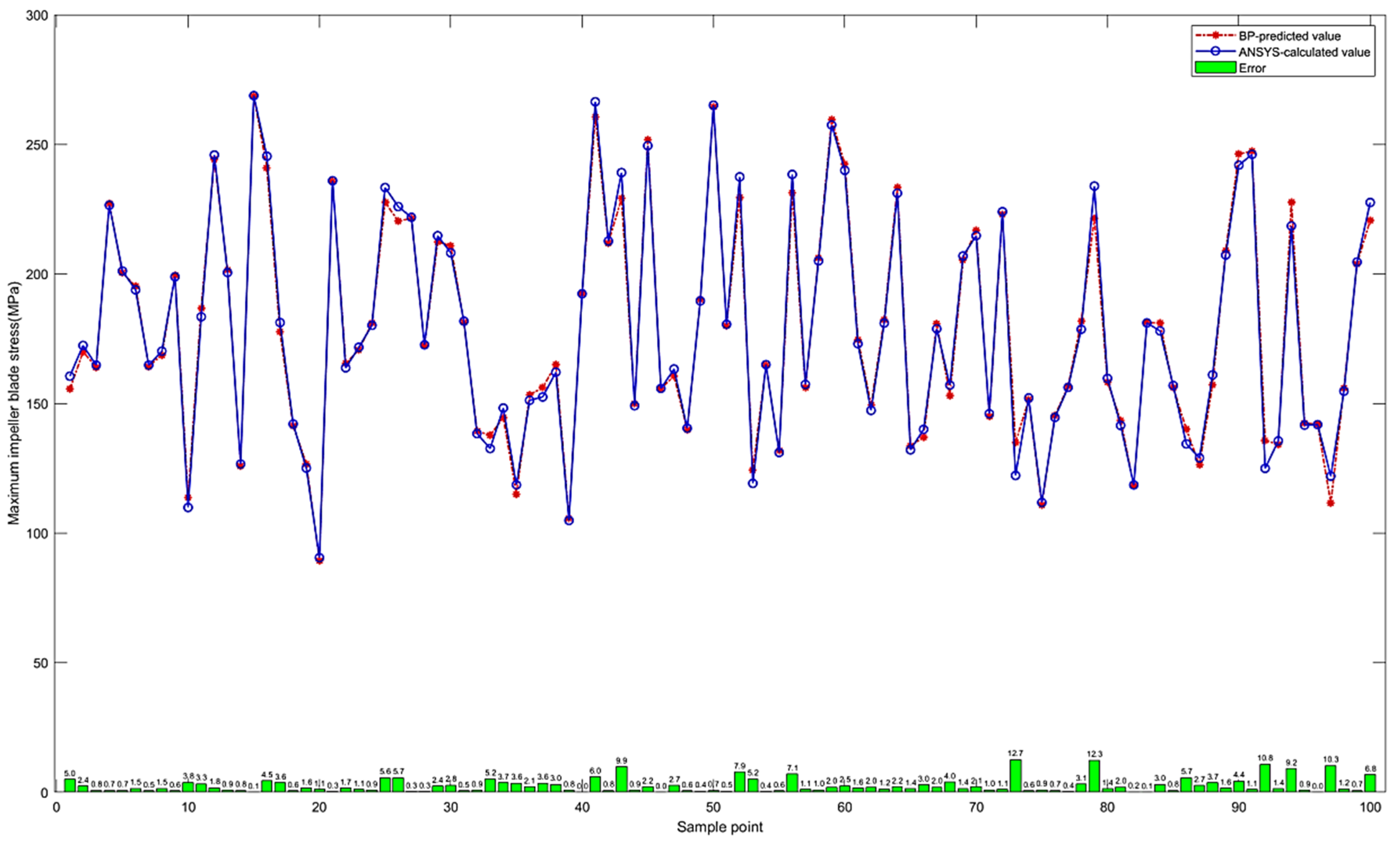
The prediction curve for the established neural network is presented in Figure 6, in which the blue line represents the ANSYS simulation results, the red line represents the BP neural network predictions, and the green bars represent the error between the two at each point. The simulated values generally coincided with the network-predicted values, with the largest error of 12.7% observed at the 73rd sample point; the remaining errors were all considerably less than 10%, with an average of 2.55%. These results indicate that the BP neural network effectively predicted the stress in the impeller blade fixture. The convergence curve of the BP neural network is shown in Figure 7.

4. Determining the Importance Measures of Impeller Blade Fixture Parameters

4.1. Variance-Based Importance Measure Theory

We employed a BP neural network to predict the relationship between geometric parameters and stress–strain responses. Subsequently, based on the prediction results from the neural network, we conducted a variance-based importance measure analysis to obtain the sensitivity of the geometric parameters to stress and strain.
  • Variance decomposition and importance measures
In variance-based importance measure theory, the output response is expressed as Y = g x , where x = x 1 , x 2 , , x n is the n dimensional input variable. The variance decomposition of Y is given by
V Y = i = 1 n V x i + i = 1 n j = i + 1 n V x i x j + + V x 1 x 2 x n ,
where x i denotes the input variable; V x i denotes the principal variance contributions for x i , in which V x i = V E Y | x i ; and V x i x j denotes the second-order variance contributions of x i and x j , in which V x i x j = V E Y | x i , x j V x i V x j .
The total variance contribution V x i T of the input variables x i is defined as follows:
V x i T = V x i + j = 1 , j i n V x i x j + j = 1 , j i n k = 1 , k i , k j n V x i x j x k + V x 1 x 2 x n   = V Y V E Y | x i ,
where x i is the n -dimension input variable other than x i the other n 1 dimension variables.
The variance-based importance measure S x i 1 x i 2 x i s is defined as the ratio of the variance contribution V x i 1 x i 2 x i s of the corresponding input variable to the variance of the output response V Y as follows:
S x i 1 x i 2 x i s = V x i 1 x i 2 x i s V Y .
Equation (16) can be used to measure the variance contribution of each individual impeller blade parameter; the importance measure V x i corresponding to the input variable x i is called the principal importance measure S x i and reflects the effect of the input variable x i on the variance of the output response Y when acting alone, as follows:
S x i = V x i V Y = V E Y | x i V Y .
Furthermore, the total importance measure of the input variable x i is given by S x i T , which corresponds to V x i T and reflects the overall influence of the variance of the input variable x i on the total output response Y as follows:
S x i T = V x i T V Y = 1 V E Y | x i V Y .
2.
Calculating the importance measures using MCS
The specific steps used to calculate the variance-based importance measures via the MCS technique are as follows:
Step 1: Two sets of samples were selected based on the joint probability density function of the known independent input variables x = x 1 , x 2 , , x n and expressed as the following matrices:
A = x 11 x i 1 x n 1 x 1 N x i N x n N   B = x 1 N + 1 x i N + 1 x n N + 1 x 1 N + N x i N + N x n N + N
Next, the matrix Ci was constructed by replacing column i in matrix B with column i in matrix A as follows:
C i = x 1 N + 1 x i 1 x n N + 1 x 1 N + N x i N x n N + N
Step 2: Matrices A, B, and Ci were substituted into the output response Y = g x to obtain the corresponding output matrices y A = y A 1 , , y A N T , y B = y B 1 , , y B N T , and y C i = y C i 1 , , y C i N T , respectively.
Step 3: The principal and total importance measures of the input variable x i were calculated based on Equations (17) and (18), respectively, as follows:
S x i T = 1 V E Y | x i V Y = 1 ( y B . y C i ) y 0 2 ( y A . y A ) y 0 2 = 1 1 N j = 1 N y B j y C i j y 0 2 1 N j = 1 N ( y A j ) 2 y 0 2

4.2. Importance Measures for Impeller Blade Displacement

The BP neural network model was used as the surrogate model, and the predicted deformation of the dust pump impeller blade fixture was used as the output response to conduct an importance measure analysis evaluating the degree of influence of each parameter on the impeller blade fixture displacement variance. The importance of the six considered parameters was subsequently ranked to identify the parameter with the greatest impact on the blade displacement. Thus, the impeller blade fixture parameter distributions listed in Table 3 were applied using the importance measure theory detailed in Section 4.1 to obtain the principal and total importance measures for each parameter to the impeller blade displacement variance as listed in Table 4.
The rotational speed exhibited the largest principal importance measure, followed by the elastic modulus, material density, blade thickness, fixture plate thickness, and Poisson’s ratio. Notably, the primary importance measure for the impeller rotational speed was much greater than that for the other five parameters, and the primary importance measures for the fixture thickness and Poisson’s ratio were much smaller than those for the other four parameters, reflecting the extent to which these parameters affect the variance in the impeller blade displacement when acting separately.
The total importance of the six parameters to the displacement variance of the impeller blade fixture decreased from the rotational speed to the elastic modulus, material density, blade thickness, Poisson’s ratio, and fixture plate thickness, which is generally consistent with the ranking of primary importance measures. Indeed, the total importance measure for the rotational speed was substantially higher than those for the other five parameters, and the total importance measures for the fixture plate thickness and Poisson’s ratio were also much smaller than those for the other four parameters.

4.3. Importance Measures for Impeller Blade Stress

The degree of influence of each considered parameter on the blade stress variance was evaluated according to the method presented in Section 4.1 to identify the parameter with the greatest impact. Thus, the principal and total importance measures of each parameter to the stress variance in the impeller blade fixture were calculated as shown in Table 5.
The principal importance of the impeller blade fixture parameters to stress decreased from the rotational speed to the material density, blade thickness, Poisson’s ratio, elastic modulus, and fixture plate thickness. Similar to the results for displacement in Section 4.2, the primary importance measure for the rotational speed was much greater than that for the other five parameters, and those for the fixture thickness and Poisson’s ratio were much smaller than those for the other four parameters. However, the contribution of the elastic modulus to the stress variance was much smaller than its contribution to the displacement variance, and only the rotational speed and material density significantly impacted the stress variance in the impeller blade fixture. The total importance of the different parameters to the stress variance in the impeller blade fixture decreased from the rotational speed to the material density, blade thickness, Poisson’s ratio, elastic modulus, and fixture plate thickness, which is consistent with the ranking of the primary importance measures.
These analyses indicate that the six parameters had different degrees of influence on the displacement and stress responses, with the rotational speed of the impeller blades exerting the greatest influence on both. In contrast, the fixture plate thickness and Poisson’s ratio had negligible effects on the impeller blade displacement and stress. Therefore, the effect of the uncertainty of these two parameters on the behaviour of the impeller blade fixture can be ignored during design.

4.4. Impacts of Key Parameters on Impeller Blade Failure Probability

As discussed in Section 4.3, the rotational speed, blade thickness, and material density parameters significantly affected the displacement and stress in the impeller blade fixture. The uncertainty of the working load (rotational speed) is determined by the external environment, whereas the uncertainties of the material density and blade thickness are determined by the production process.
A comparative analysis with the related literature summarized in Table 1 reveals that rotational speed ranks first in the variance decomposition analysis of this study, which is highly consistent with multiple studies concluding that rotational speed dominates centrifugal forces, stress escalation, and performance degradation in centrifugal/dust-removal pump impellers [18,21,25]. Blade thickness ranks third in this ordering, aligning with the literature that emphasizes its critical impact on flow losses, vibration, cavitation margin, and structural reliability. Material density also exhibits a secondary yet notable influence, consistent with its role in proportionally amplifying centrifugal loads as density increases. This strong consistency with established trends in impeller optimization simulations within the field supports the reliability of employing a BP neural network surrogate model combined with Monte Carlo simulation (MCS) for parameter importance assessment.
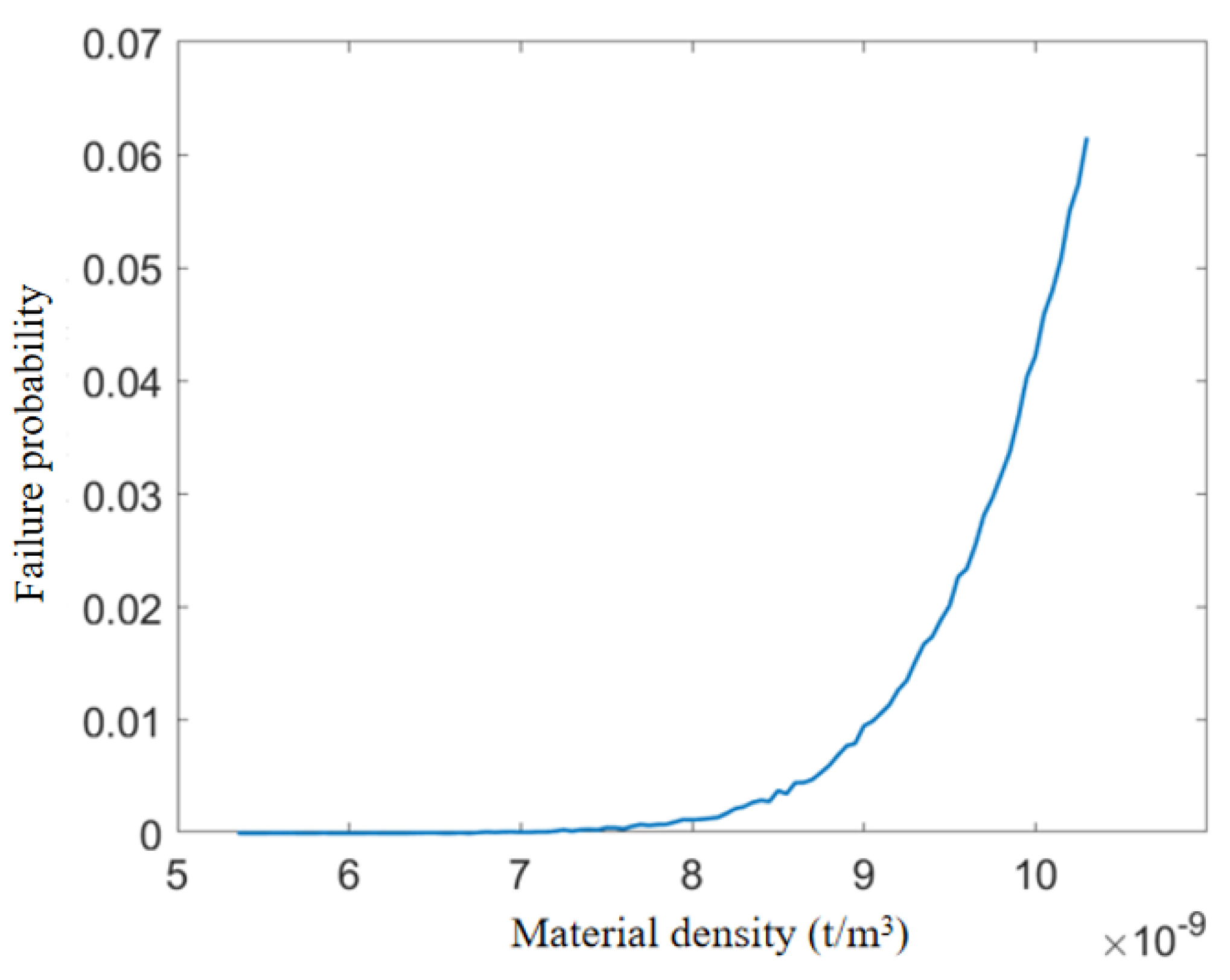
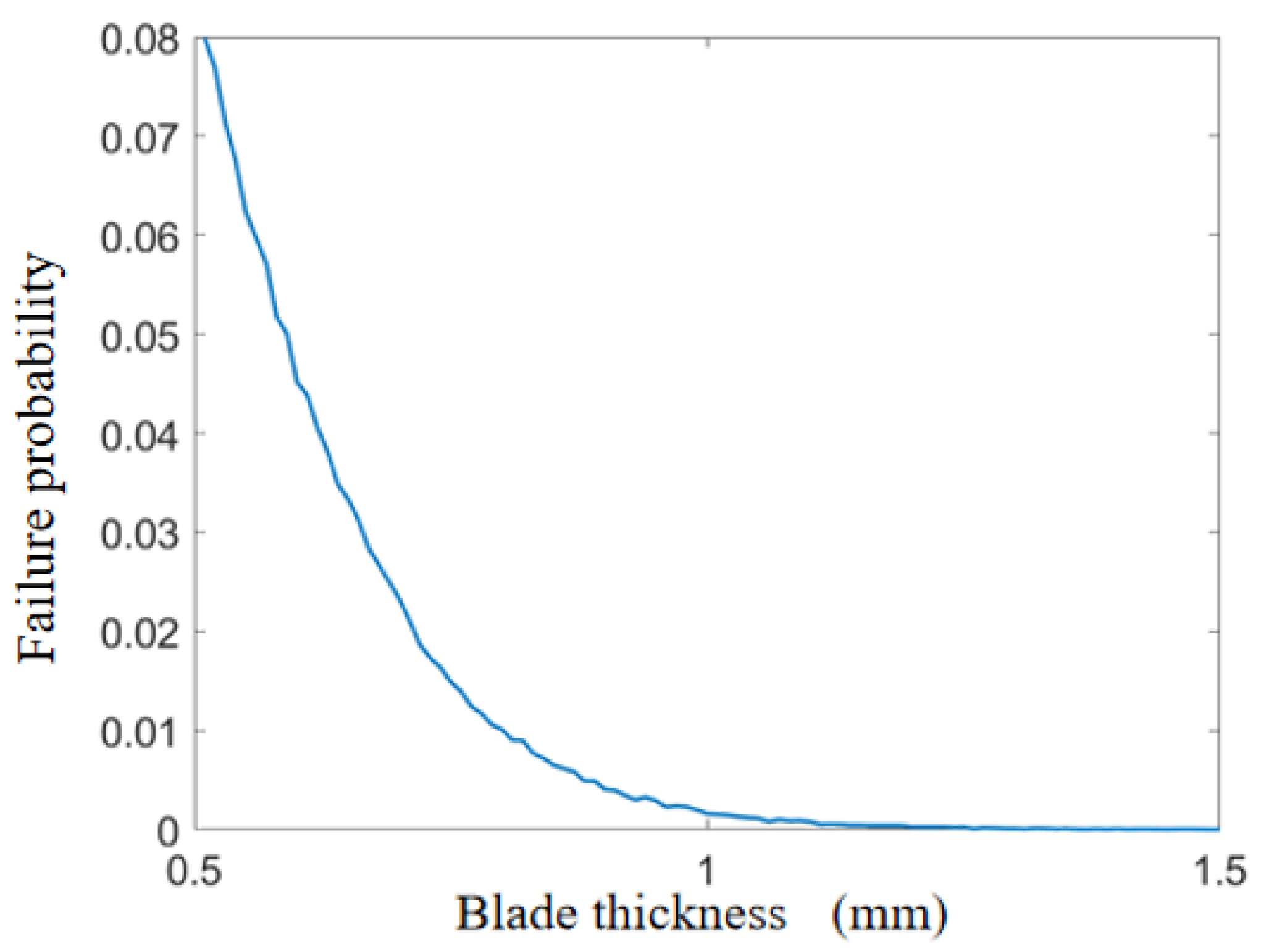
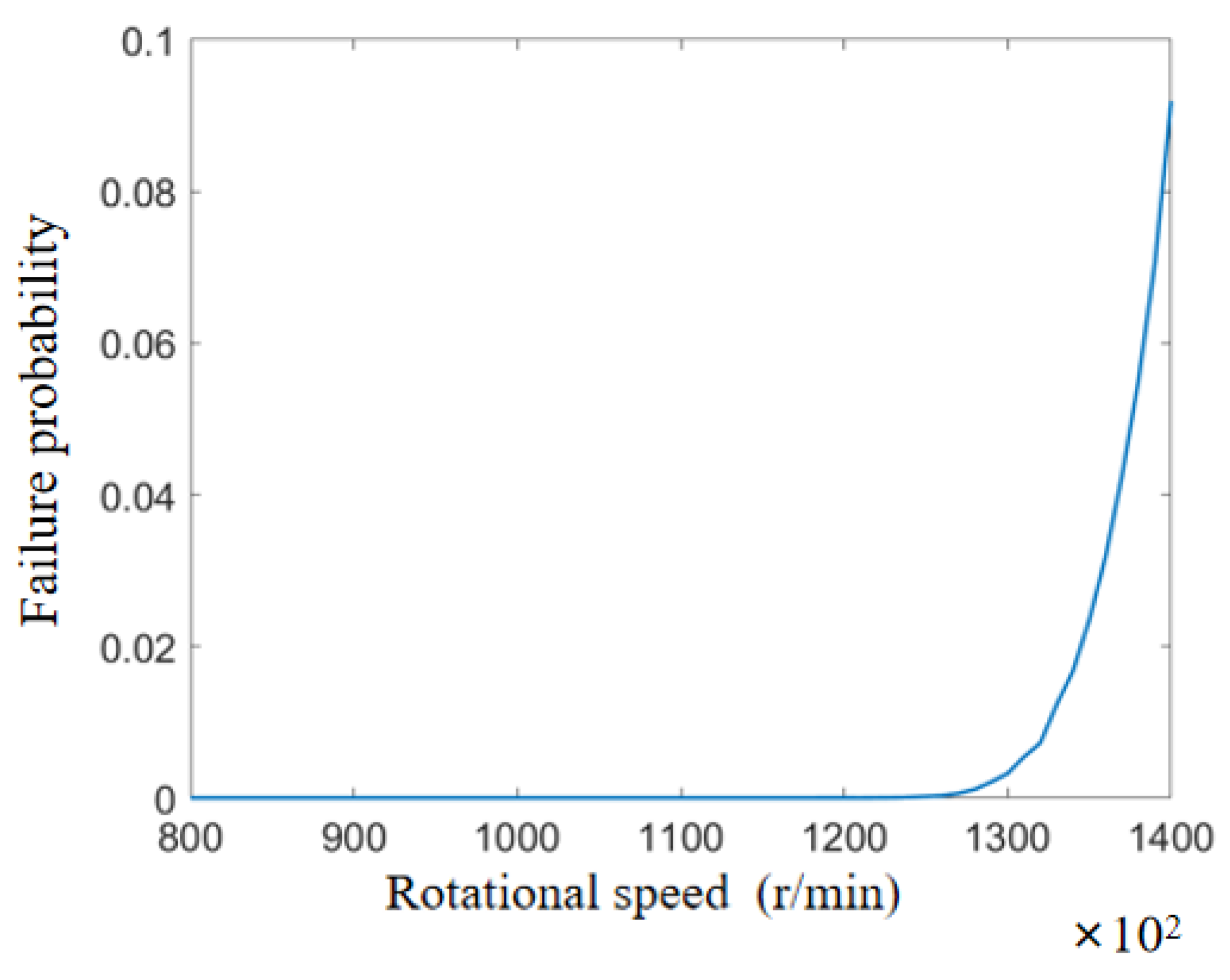
The influences of these three parameters on the failure probability can be considered during impeller blade fixture design using the failure probability curves shown in Figure 8, Figure 9 and Figure 10.
The curves in Figure 8, Figure 9 and Figure 10 indicate that the failure probability of the impeller blade fixture is negatively correlated with the blade thickness and positively correlated with the rotational speed and material density. Therefore, when designing an impeller blade fixture, the blade thickness should be increased, materials with lower densities should be selected, and the rotational speed should be carefully controlled. When the material density was less than 8 t/m3, blade thickness was greater than 1 mm, and rotational speed was lower than 12,500 r/min, the failure probability remained relatively low.

5. Conclusions

This study established a surrogate parametric model of the impeller blade fixture in an armoured vehicle air filtration system using a finite element simulation and BP neural network, then subjected it to an MCS-based reliability analysis. The primary conclusions of this study are as follows:
  • This paper employs a neural network to predict the relationship between the geometric parameters of the dust pump impeller blade and stress–strain responses. Subsequently, based on the prediction results from the neural network, a variance-based global sensitivity analysis method is adopted to investigate the influence of uncertainties in the impeller blade fixture parameters on the output responses (displacement and stress). The results indicated that the parameter importance to the impeller blade displacement decreased from the rotational speed to the elastic modulus, material density, blade thickness, Poisson’s ratio, and fixture plate thickness; the rotational speed had a much greater effect on the displacement than the other parameters. The parameter importance to the impeller blade stress decreased from the rotational speed to the material density, blade thickness, Poisson’s ratio, elastic modulus, and fixture thickness; again, the rotational speed had a much greater effect on the stress than the other parameters. Therefore, the influence of blade rotational speed on the reliability of the dust pump should be prioritised during design, as should the material density and blade thickness.
  • In certain operational environments, dust particles significantly affect the reliability of ventilation and air filtration systems. Accumulated dust can lead to airflow obstruction, increased load on impeller blades, and higher stress concentrations, which ultimately reduce the service life and efficiency of the filtration system. Therefore, it is crucial to analyse the interaction between dust deposition and mechanical reliability during the design stage.
  • This study provides a theoretical and methodological basis for improving the reliability design of air filtration systems in armoured vehicles and other off-road machinery. The proposed surrogate modelling approach effectively combines finite element simulation and machine learning, providing a rapid and accurate means for reliability prediction. The data obtained in this study can be used for optimisation of impeller blade geometry, material selection, and operational maintenance strategies.
In summary, the results of this study confirmed the utility of applying BP neural network predictions with importance measure theory to determine the effects of parameter uncertainty on the reliability of components in complex devices such as the dust pump in the engine air filtration system of an armoured vehicle.
Furthermore, the dataset used in this study was primarily derived from numerical simulations. However, numerical simulations cannot fully represent the real working environments of the dust extraction impeller. In service, the impeller is affected by complex multi-factor coupling, including variations in dust particle characteristics, humidity, gas–solid flow interactions, vibration and shock loading, and material fatigue degradation. These influences may cause time-dependent changes in stress distribution and dynamic response that are not fully captured by the current surrogate model, leading to uncertainties when applied to long-term reliability prediction.
To address the above issues, the data acquisition strategy can be optimized to improve the diversity and representativeness of the sample data, or data augmentation techniques may be employed to expand the size of the training dataset, thereby enhancing the robustness of the model. In addition, gas–solid two-phase flow experimental data, impeller service condition monitoring data, and multi-field coupled experimental results can be incorporated into the model updating process to achieve dynamic calibration of the surrogate model, thus improving its reliability and applicability in real engineering environments.

Author Contributions

J.L. and X.Z.: Writing—original draft, Validation, Software, Methodology. Y.T. and R.D.: Writing—review & editing, Funding acquisition. F.Z.: Writing—original draft, Supervision, Software, Methodology, Funding acquisition. All authors have read and agreed to the published version of the manuscript.

Funding

This work was supported in part by the Key R&D Program of Jiangxi Province: 20243BBG71006.

Data Availability Statement

The original contributions presented in this study are included in the article. Further inquiries can be directed to the corresponding author.

Conflicts of Interest

The authors declare no conflict of interest.

References

  1. Chen, Y.; Cai, Y.; Yang, G.; Zhou, H.; Liu, J. Neural adaptive pointing control of a moving tank gun with lumped uncertainties based on dynamic simulation. J. Mech. Sci. Technol. 2022, 36, 2709–2720. [Google Scholar] [CrossRef]
  2. Simiński, P.; Kończak, J.; Przybysz, K. Analysis and testing of reliability of military vehicles. J. KONBiN 2018, 47, 87–103. [Google Scholar] [CrossRef]
  3. Dziubak, T.; Karczewski, M. Experimental study of the effect of air filter pressure drop on internal combustion engine performance. Energies 2022, 15, 3285. [Google Scholar] [CrossRef]
  4. Lu, J.; Sun, Y.; Qiao, M.; Wang, J.; Chen, K. Simulation and experimental study on the performance of air filter materials. Veh. Power Technol. 2019, 1, 38–42+49. [Google Scholar]
  5. Korobko, B.; Kryvorot, A.; Skoryk, M.; Virchenko, V. Air filter throughput impact experimental study on internal combustion engine fuel efficiency. In Proceedings of the 3rd International Conference on Building Innovations, Baku, Azerbaijan, 1–2 June 2020; Springer International Publishing: Cham, Switherland, 2020; pp. 215–224. [Google Scholar]
  6. Jiang, B. Simulation Study on the Off-Road Passability of Tracked Tanks. Master’s Thesis, China University of Petroleum (East China), Qingdao, China, 2019. [Google Scholar]
  7. Dziubak, T. Experimental Testing of Filter Materials for Two-Stage Inlet Air Systems of Internal Combustion Engines. Energies 2024, 17, 2462. [Google Scholar] [CrossRef]
  8. Dziubak, T.; Karczewski, M.; Dziobek, I. Empirical study of the effect of the air filter on the performance and exhaust emissions of a diesel engine. Combust. Engines 2023, 193, 94–111. [Google Scholar] [CrossRef]
  9. Hao, Y. Analysis of the Force-Thermal Coupling Response of Turbine Blades. Master’s Thesis, Beijing University of Chemical Technology, Beijing, China, 2023. [Google Scholar]
  10. Zhang, L.; Bin, G.; Zhong, X.; Yang, F.; Chen, A. Study on carbon particle deposition distribution of turbocharger turbine blade based on the gas-solid two-phase flow theory. Tribol. Int. 2023, 178, 108019. [Google Scholar] [CrossRef]
  11. Zhang, Y.; Zhang, C.; You, H.; Liang, K.; Wei, C.; Sun, A. Analysis of performance improvement methods for offshore wind turbine blades affected by leading edge erosion. Ocean. Eng. 2024, 310, 118773. [Google Scholar] [CrossRef]
  12. Tang, Y. Point Cloud Denoising and Surface Reconstruction in the Fabrication of Dust Pump Blades Based on Deep Learning. Master’s Thesis, Southwest University of Science and Technology, Mianyang, China, 2023. [Google Scholar]
  13. Li, Y.; Qin, Q.; Wang, Y.; Hu, M. Welded Joint Fatigue Reliability Analysis on Bogie Frame of High-Speed Electric Multiple Unit. J. Shanghai Jiaotong Univ. (Sci.) 2017, 22, 365–370. [Google Scholar] [CrossRef]
  14. Gao, W.; Mo, X.; Fu, R.; Sun, G.; Zhong, Z. 6σ robustness optimization design for crashover resistance of foam-filled conical thin-walled structures based on Kriging. Chin. J. Solid Mech. 2012, 33, 370–378. [Google Scholar]
  15. Gupta, S.; Manohar, C.S. Improved response surface method for time-variant reliability analysis of nonlinear random structures under non-stationary excitations. Nonlinear Dyn. 2004, 36, 267–280. [Google Scholar] [CrossRef]
  16. Zhang, C.; Bai, G.; Xiang, J. Reliability optimization design of flexible mechanisms based on extreme response surface method. J. Harbin Eng. Univ. 2010, 31, 1503–1508. [Google Scholar]
  17. Kang, Z.; Luo, Y. Reliability-based structural optimization with probability and convex set hybrid models. Struct. Multidiscip. Optim. 2010, 42, 89–102. [Google Scholar] [CrossRef]
  18. Wang, Y.; Shao, J.; Yang, F.; Zhu, Q.; Zuo, M. Optimization design of centrifugal pump cavitation performance based on the improved BP neural network algorithm. Measurement 2025, 245, 116553. [Google Scholar] [CrossRef]
  19. Han, X.; Kang, Y.; Sheng, J.; Hu, Y.; Zhao, W. Centrifugal pump impeller and volute shape optimization via combined NUMECA, genetic algorithm, and back propagation neural network. Struct. Multidiscip. Optim. 2020, 61, 381–409. [Google Scholar] [CrossRef]
  20. Wang, J.; Peng, W.; Bao, Y.; Yang, Y.; Chen, C. VHCF evaluation with BP neural network for centrifugal impeller material affected by internal inclusion and GBF region. Eng. Fail. Anal. 2022, 136, 106193. [Google Scholar] [CrossRef]
  21. Wei, C.; Wensheng, M.; Lei, W.; Meng, Z.; Qiang, Z.; Kaizi, H. Optimization of Centrifugal Pump Impeller Based on Neural Network and NSGA-II Algorithm. J. Phys. Conf. Ser. 2024, 2752, 012120. [Google Scholar] [CrossRef]
  22. Sun, Z.; Tang, F.; Shi, L.; Liu, H. Multi-conditional optimization of a high-specific-speed axial flow pump impeller based on machine learning. Machines 2022, 10, 1037. [Google Scholar] [CrossRef]
  23. Wu, D.; Wang, H.; Huang, L.; Wang, Y. Computer aided machining fixture design algorithm and software based on case learning for near-net-shaped jet engine blade. J. Manuf. Process. 2021, 69, 545–555. [Google Scholar] [CrossRef]
  24. Wu, D.; Zheng, Y.; Liang, J.; Wang, H. Flexible fixture designs and accuracy improvements for the adaptive machining of near-net-shaped blades. J. Manuf. Process. 2025, 143, 188–204. [Google Scholar] [CrossRef]
  25. Zhang, F.; Tian, Y.; Du, R.; Xu, Y.; Gao, Y.; Li, X. Parameter Stress Response Prediction for Vehicle Dust Extraction Fan Impeller Based on Feedback Neural Network. Machines 2025, 13, 496. [Google Scholar] [CrossRef]
  26. Arslane, M.; Slamani, M.; Louhichi, B. Advancements and optimization in fixture layouts and machining processes: A comprehensive review in the context of Industry 4.0. Int. J. Adv. Manuf. Technol. 2025, 137, 5387–5404. [Google Scholar] [CrossRef]
  27. Li, Y.; Ding, F.; Wang, D.; Tian, W.; Zhou, J. Predicting the dynamic parameters for milling thin-walled blades with a neural network. J. Manuf. Mater. Process. 2024, 8, 43. [Google Scholar] [CrossRef]
  28. Lu, Z.; Li, L.; Song, S.; Hao, W. Importance Analysis Theory and Solution Method for Uncertain Structural Systems; Science Press: Beijing, China, 2015. [Google Scholar]
  29. Zheng, J.; Jin, W.; Song, Y. Progress in Structural Sensitivity Analysis. Light Ind. Mach. 2016, 34, 93–96+102. [Google Scholar]
  30. Dui, H.-Y.; Li, Y.; Bai, G.-H. A Reliability-oriented Improved Uncertainty Importance Measure. Oper. Res. Manag. Sci. 2022, 31, 100. [Google Scholar]
  31. Zhao, X. Global reliability sensitivity analysis based on subset simulation and space partition method. J. Phys. Conf. Ser. 2024, 2898, 012006. [Google Scholar] [CrossRef]
  32. Puy, A.; Roy, T.P.; Saltelli, A. Discrepancy Measures for Global Sensitivity Analysis. Technometrics 2024, 66, 347. [Google Scholar] [CrossRef]
  33. Kang, L.; Yan, H.; Lu, L.; Dong, D. Global sensitivity analysis of structural parameters for automobile air conditioning blower. J. Phys. Conf. Ser. 2023, 2581, 012002. [Google Scholar]
  34. Cui, L.; Lyu, Z.; Wang, W. The importance measure of fundamental random variables and their probability density evolutionary algorithm. J. Nanjing Univ. Aeronaut. Astronaut. 2011, 43, 165–171. [Google Scholar]
  35. Liu, J.; Li, L. Efficient importance analysis methods for structures with distribution parameter uncertainty based on cubature formula. Xibei Gongye Daxue Xuebao/J. Northwestern Polytech. Univ. 2022, 40, 1212–1222. [Google Scholar] [CrossRef]
  36. Nezhad, M.D.; Raoufi, R.; Dalvand, A. A network-based importance measurement index for bridge security risk assessment and prioritisation. Balt. J. Road Bridge Eng. 2022, 17, 1–30. [Google Scholar] [CrossRef]
  37. Li, S.; Han, F. A new failure theory and importance measurement analysis for multidirectional fiber-reinforced composite laminates with holes. Materials 2022, 15, 2227. [Google Scholar] [CrossRef] [PubMed]
  38. Sobol’, M. Global sensitivity indices for nonlinear mathematical models and their Monte Carlo estimates. Math. Comput. Simul. 2001, 55, 271–280. [Google Scholar] [CrossRef]
  39. Wang, S.; Wu, J.; Tian, P.; Tang, C.; Tao, Y. Global Sensitivity Analysis of Dynamic Parameters to Industrial Robots Considering Spacetime Two-Dimensional Output Responses. IEEE Trans. Reliab. 2024, 74, 2813–2826. [Google Scholar] [CrossRef]
  40. Zhou, C.; Shi, Z.; Zhou, C. Global sensitivity analysis of structural models by active subspace and neural network. Multidiscip. Model. Mater. Struct. 2022, 18, 477–491. [Google Scholar] [CrossRef]
  41. Lu, Z.; Lu, Z.; Tang, T.; Wang, P. Importance measurement analysis of aviation gear vibration. Mech. Transm. 2013, 37, 80–85. [Google Scholar]
  42. Mohamad, E.T.; Faradonbeh, R.S.; Armaghani, D.J.; Monjezi, M.; Majid, M.Z.A. An optimized ANN model based on genetic algorithm for predicting ripping production. Neural Comput. Appl. 2017, 28, 393–406. [Google Scholar] [CrossRef]
  43. Hao, L.; Li, Q.; Pan, W.; Yao, R.; Liu, S. Ice accretion thickness prediction using flash infrared thermal imaging and BP neural networks. IET Image Process. 2023, 17, 649–659. [Google Scholar] [CrossRef]
  44. Wei, L.; Wang, Y. Optimization of solid oxide fuel cell power generation voltage prediction based on improved neural network. Int. J. Low-Carbon Technol. 2023, 18, 464–472. [Google Scholar] [CrossRef]
Figure 1. Dust pump model.
Machines 14 00207 g001
Figure 2. Dust pump impeller blade fixture model.
Machines 14 00207 g002
Figure 3. The ANSYS–MATLAB joint calculation process.
Machines 14 00207 g003
Figure 4. Distribution of ANSYS results.
Machines 14 00207 g004
Figure 5. Model of the BP neural network.
Machines 14 00207 g005
Figure 6. BP neural network prediction error.
Machines 14 00207 g006
Figure 7. Convergence Curve of the BP Neural Network.
Machines 14 00207 g007
Figure 8. Impeller blade fixture failure probability curve for material density.
Machines 14 00207 g008
Figure 9. Impeller blade fixture failure probability curve for blade thickness.
Machines 14 00207 g009
Figure 10. Impeller blade fixture failure probability curve for rotational speed.
Machines 14 00207 g010
Table 1. Literature Findings on Fixture Parameter Importance Assessment in Impeller/Blade Manufacturing.
AuthorApplication Area
Research Subject
Key MethodMajor Finding and Parameter Importance
Wang et al. [18]Cavitation Performance Optimization of Centrifugal PumpsImproved BP Neural Network (using network weight perturbation method)Blade geometric parameters (e.g., blade inlet angle, blade thickness) have the highest sensitivity to the cavitation margin.
Han et al. [19]Collaborative Optimization of Impeller and VoluteBP Neural Network + Genetic Algorithm + NUMECAThe initial stress state induced by the fixture contributes up to 18.7% to impeller efficiency.
Wei et al. [21]Multi-objective Optimization of Centrifugal Pump ImpellersNSGA-II + Neural Network Surrogate ModelExcessive clamping force leads to stress concentration at the blade root, ranking in the top three in importance on the Pareto front.
Wang et al. [20]Very-High-Cycle Fatigue (VHCF) Life Prediction of Impeller MaterialBP Neural NetworkResidual stress introduced by fixture parameters during manufacturing is a key factor affecting VHCF life, with an importance score as high as 0.62.
Sun et al. [22]Multi-condition Optimization of High-specific-speed Axial-flow Pump ImpellersMachine-Learning-Based Surrogate ModelFixture positioning error contributes 12–22% to impeller energy loss under varying conditions.
Wu et al. [23,24]Fixture Design for Near-net-shaped Aero-engine BladesBP Neural Network (Case-based learning)The number of support points and clamping force distribution are far more important than the fixture material stiffness for machining deformation.
Zhang et al. [25]Stress Response Prediction for Vehicle Dust Extraction Fan ImpellersFeedback Neural NetworkWhen blade width < 8 mm, fixturethickness (0.78) and positioningaccuracy (0.71) are the two mostsensitive parameters.
Li et al. [27]Dynamic Parameter Prediction during Thin-walled Blade MillingNeural NetworksFixture damping characteristics contribute 24% to vibration suppression, significantly higher than traditional empirical values.
Arslane et al. [26]Fixture Layout Optimization (Review)BP Neural Network + Genetic AlgorithmThis integrated approach enables global sensitivity analysis and reduces positioning error by 37% in complex thin-walled blade machining.
Table 2. Dust pump impeller fixture parameters.
ParameterValue
Elastic modulus210 GPa
Poisson’s ratio0.3
Density7850 kg/m3
Yield strength235 MPa
Impeller fixture outer diameter130 mm
Lower fixture inner hole diameter14 mm
Upper fixture hole diameter64 mm
Blade thickness1 mm
Upper fixture plate thickness2 mm
Lower fixture plate thickness2 mm
Table 3. Dust pump impeller blade fixture parameters and their distributions.
ParameterDistributionMeanCoefficient of Variation
Poisson’s ratioNormal0.30.1
Elastic modulusNormal210,000,000,0000.1
DensityNormal7.85 × 10−90.1
Fixture plate thicknessNormal70.1
Blade thicknessNormal10.1
Rotational speedNormal12,5000.1
Table 4. Importance measures of impeller blade parameters to displacement variance.
Poisson’s RatioElastic ModulusDensityFixture Plate ThicknessBlade ThicknessRotational Speed
Principal importance measure0.02940.27760.14680.00460.09230.4218
Total importance measure0.03790.28590.14800.00170.08970.4282
Table 5. Importance measures of impeller blade parameters to stress variance.
Poisson’s RatioElastic ModulusDensityFixture Plate ThicknessBlade ThicknessRotational Speed
Principal importance measure0.00510.00480.20970.00470.05750.7310
Total importance measure0.00950.00920.21490.00910.06520.7436
Disclaimer/Publisher’s Note: The statements, opinions and data contained in all publications are solely those of the individual author(s) and contributor(s) and not of MDPI and/or the editor(s). MDPI and/or the editor(s) disclaim responsibility for any injury to people or property resulting from any ideas, methods, instructions or products referred to in the content.