1. Introduction
In recent years, Functionally Graded Materials (FGMs) have experienced remarkable expansion in several engineering fields. These composites originate from a new structural design, composed primarily of metals and ceramics with a graded distribution that attributes a continuous spatial variation in material properties [
1]. Due to their specific structure, they are multifunctional and have shown enormous potential to provide significant improvements in terms of electrical conductivity, high energy absorption, and thermal management. Additionally, FGMs have also been implicated in wide-ranging applications, such as the marine and aerospace industries, due to their chemical stability and superior mechanical properties, including bulk density, elastic modulus, and Poisson’s ratio [
2,
3,
4].
To keep pace with advances in science and technology, a significant number of research activities have been conducted to analyze the mechanical behavior of shell or solid-shell FGM structures under different types of loading, such as static [
5], buckling [
6], nonlinear bending [
7], and free vibration [
8].
Nevertheless, in real-world cases, micro-voids are mostly produced in the middle area of the material’s body via an interfacial reaction during the manufacturing process. Typically, the term “imperfect” is used to refer to materials with porosity defects. Recently, several researchers have paid attention to considering porosity effects in the analysis of FG structures [
9,
10]. Thus far, it has been proven that geometric imperfections constitute a crucial parameter for the stability of functionally graded material, and their mechanical properties depend significantly on the porosity distribution and size, as well as the density, of internal pores [
11,
12,
13].
In order to predict the mechanical properties of porous FG materials, the mixture theory is commonly used, taking into account the porosity effects, as mentioned by [
10]. This approach is simple and relevant because it accounts for significant factors related to the micro-voids incorporated into FGMs.
To summarize, porous FGMs have increasingly gained interest in modern technologies, while the power law index and internal porosity significantly limit the mechanical-property improvements. It is a challenging assignment to exhibit the mechanisms through which the mechanical behavior is affected by the factors mentioned above. In order to assist the development of these advanced materials, a finite element (FE) model must be developed to study the static responses of FGM structures. The conventional shell elements based on Kirchhoff–Love and Reissner–Mindlin theories suffer from various locking problems, such as membrane and shear locking. Indeed, it has been proven that these approaches may lead to inaccuracies due to their restrictions, making them suitable only for thin structures [
14,
15]. Subsequently, many research works have been developed to introduce the corrections required to overcome the analysis limitations in the through-thickness direction to model the behavior of FGM composite plate/shell structures with porosities. Gupta and Talha [
16] integrated a generic imperfection function on a non-polynomial higher-order shear and normal deformation theory to trigger the influence of the presence of internal pores on the stability of FGM plates and avoid the above-mentioned complexity. Zghal et al. [
10] used a refined mixed finite beam element to study the static bending behavior of FG porous beams and reported that the existence of such defects in the shell structure can significantly affect its response and performance. Nguyen et al. [
17] proposed a novel computational approach based on an efficient polygonal finite element method associated with quadratic serendipity shape functions to investigate the effect of micro-porosity distribution on the nonlinear static and dynamic responses of functionally graded (FG) plates. Karamanli and Aydogdu [
18] investigated the free vibrational and buckling behavior of 2D-FG porous micro-beams using a transverse shear and normal deformation approach.
To solve the aforementioned numerical problems, solid-shell elements based on full 3D elasticity formulations are suggested to be used for computational simplicity and efficiency. In fact, these elements were adopted to successfully model thin and thick structures, with a satisfactory precision and lower numerical resolution, compared to shell elements [
19,
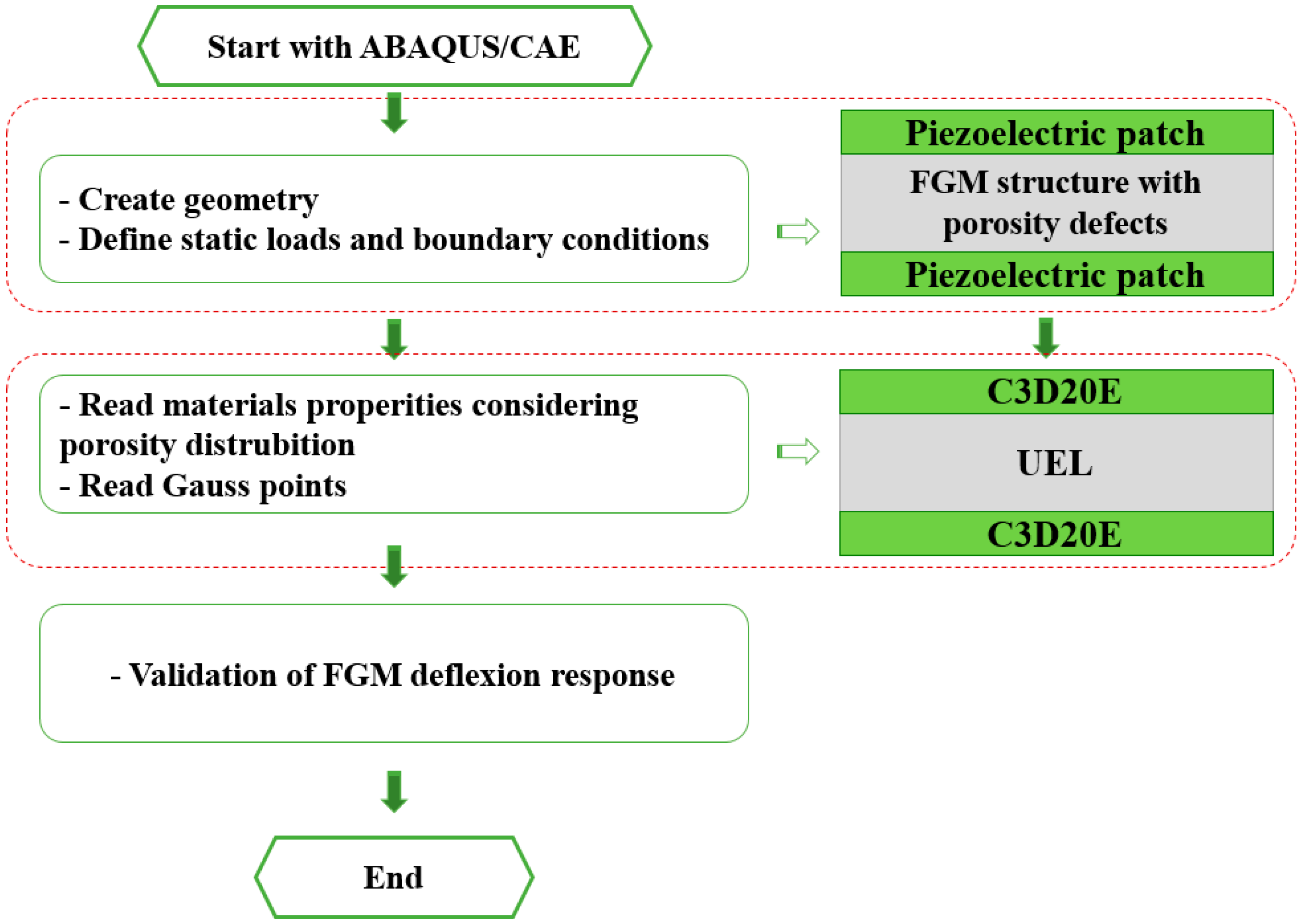
20]. Hence, an efficient eight-node hexahedral solid-shell element was developed based on the first-order shear deformation theory to simulate Functionally Graded Material (FGM) structures, while using the ABAQUS C3D20E element for piezoelectric patches. Since the C3D20E element cannot accurately model FGMs, the developed element was specifically designed for this purpose and addresses common numerical locking issues through the combined use of the assumed natural strain (ANS) and enhanced assumed strain (EAS) methods. The ANS method mitigates shear locking by interpolating transverse shear and normal thickness strains, while the EAS method addresses thickness locking by improving thickness strain and stress predictions. This combination enhances strain accuracy (membrane, bending, and shear) and ensures robust simulations of FGM structures under various loading conditions.
A key issue in monitoring and controlling the aforementioned FGM materials is the integration of piezoelectric materials on the top and bottom surfaces of the FGM structures [
21,
22]. Indeed, piezoelectric materials have increasingly gained interest during the last decade in modern technologies because they provide passive structures (FGM structures) with the ability to adjust their response through actuation, sensing, and control [
23,
24]. At the same time, efficient computational tools have been developed to appropriately predict the piezoelectric coupling behavior of these particular smart structures, which play a major role in the design process of engineering devices [
25,
26].
In order to assist the development of porous FGMs bonded between piezo-active layers, constitutive relationships coupling the electrical and mechanical features must be developed to study the static behavior of piezolaminated structures. For example, Mallek et al. [
27,
28] employed piezoelectric shell formulations to evaluate both static and dynamic responses of structures incorporating intelligent materials, demonstrating their effectiveness in modeling thin smart components. However, such shell-based elements are inherently restricted to thin-walled configurations, including beams, plates, and shells. To address this limitation, the piezoelectric solid–shell concept was introduced, aiming to achieve high accuracy while maintaining a reduced numerical cost. Within this framework, Klinkel and Wagner [
29] developed a piezoelectric solid–shell element based on a mixed variational formulation, which was successfully applied to the static and dynamic analysis of smart structures.
According to the aforementioned literature, it can be seen that full 3D elasticity formulations are limited to static and dynamic analysis of piezolaminated structures without taking into consideration the porosity effects mentioned above. Nevertheless, in this work, we concentrate on the full 3D bending analysis of porous FGM structures with bonded piezoelectric layers by using an efficient FSDT piezo-solid-shell element introduced to the Abaqus code via the user element interface. In fact, the C3D20E ABAQUS element is used for piezoelectric patches, and the developed hexahedral solid-shell element is used for the FGM structures since the C3D20E ABAQUS element cannot predict the behavior of the FG materials. The developed solid-shell element is implemented into the ABAQUS software code via user element (UEL) subroutines. The robustness of the element is shown in predicting the electromechanical stiffening of different FGM porous structures. For this purpose, numerical examples are conducted, and the results are compared to reference solutions found in the open literature. The results indicate excellent agreement. Moreover, a parametric investigation evaluates the influence of key design variables, specifically, the material gradation power law index and the volume fraction of porosity, on the electromechanical response of the smart porous FGM shell. The resulting data constitute a novel set of benchmark solutions for piezolaminated structures, providing a valuable reference for future studies in the field.
This work addresses the limitations outlined above to provide a comprehensive analysis of the electromechanical response of porous FGM shell structures with bonded piezoelectric layers. Many existing studies commonly rely on standard FSDT or HSDT theories, which, as mentioned earlier, come with certain limitations and drawbacks. So, as an effective compromise between computational efficiency and accuracy, we propose in this paper an effective finite element model based on the EAS and ANS methods, incorporating significant improvements in the shear formulation.
Specifically, the model introduces constitutive relationships that couple electrical and mechanical properties with some assumptions. Perfect bonding is assumed between all layers of the shell structure, ensuring displacement continuity and an efficient transfer of mechanical and electromechanical interactions across the interfaces. The porous functionally graded material is represented using a homogenized material model, in which the effective properties vary smoothly through the thickness. In addition, thermal effects and thermoelectric coupling are neglected, and the electromechanical response is assumed to result solely from mechanical loading and applied electric fields. However, the developed solid-shell element is incorporated into the Abaqus software to prevent shear strain locking throughout the thickness of the FGM shell, ensuring both reliability and accuracy in analysis. Furthermore, the simplicity of this model makes it easy to implement using most finite element software, ensuring its practical applicability.
3. Solid-Shell Finite Element Formulation
This work deals with the development of a solid-shell element, which is a type of finite element that integrates the features of both solid and shell elements. It is particularly useful for modeling structures where the thickness is small relative to the other dimensions, but the through-thickness behavior cannot be neglected, preventing the structure from being idealized as a thin shell. Unlike traditional shell elements, which focus solely on in-plane behavior, solid-shell elements facilitate a comprehensive 3D stress analysis, including considerations in the through-thickness direction.
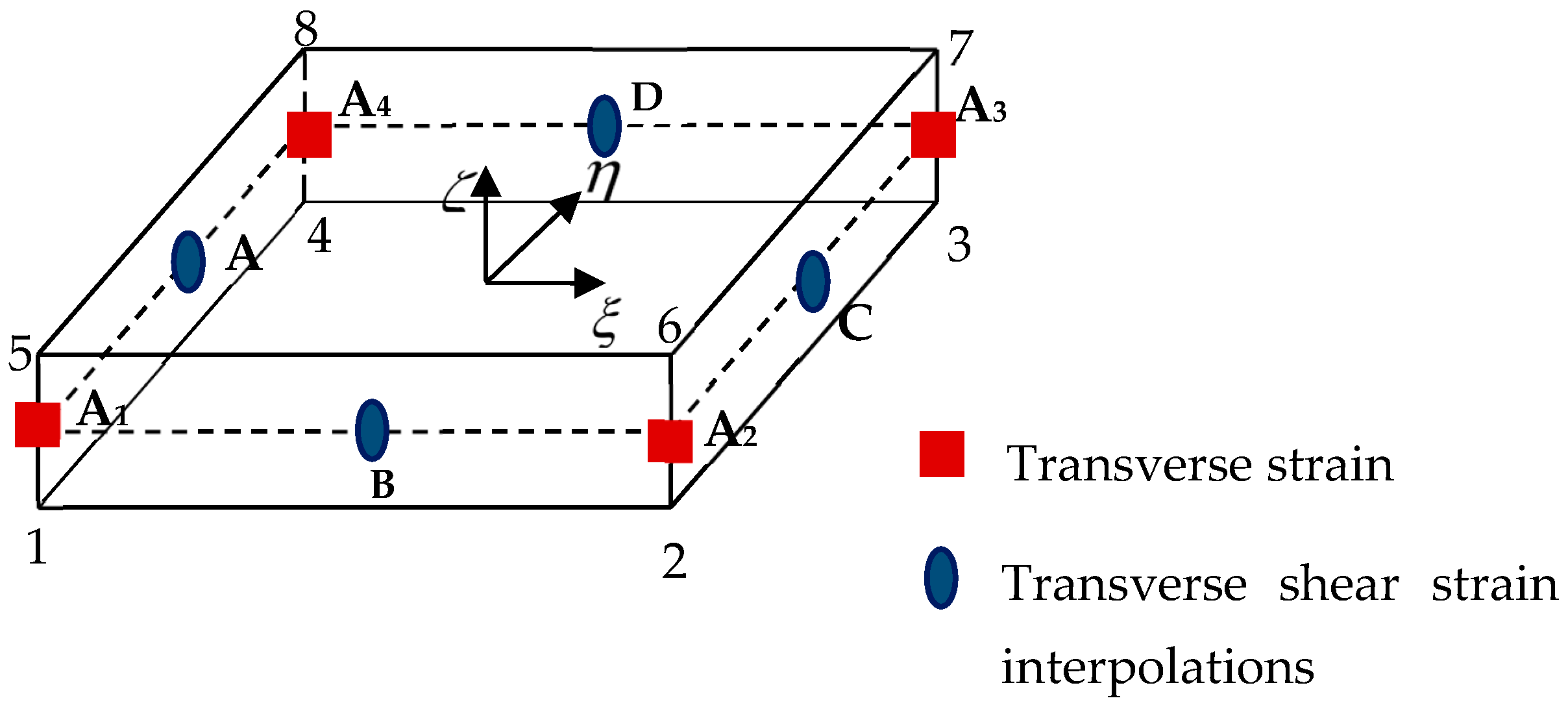
The developed solid-shell element, distinguished by an optimal number of enhancing assumed strain (EAS) parameters, features a node at both the top and bottom surfaces, making it different from standard shell elements. The element geometry, as shown in
Figure 3, clearly defines thickness strains and transverse shear strains using the ANS method.
To get the total strain tensor, the enhanced assumed strain (EAS) concept is based on the enhancement of the compatible part of the Green Lagrange strain tensor,
, with an enhancing part noted
as follows
Hence, the variation of strain fields is obtained by
where
and
refer, respectively, to the variation of the compatible part and enhanced part of the strain field.
By introducing the orthogonality conditions, the weak form of the three-field Hu-Washizu variational principle takes the following form
In Equation (9),
and
vectors represent the prescribed surface and body force, respectively,
represents the independent tensorial quantities referring to the displacement vector and the incompatible strain part, and finally,
S is the second Piola–Kirchhoff stress tensor given by
where
is the is the Helmotz strain energy function
. The Helmholtz free energy function
is a scalar potential used in continuum mechanics to describe the strain energy of a material.
3.1. Finite Element Approximations
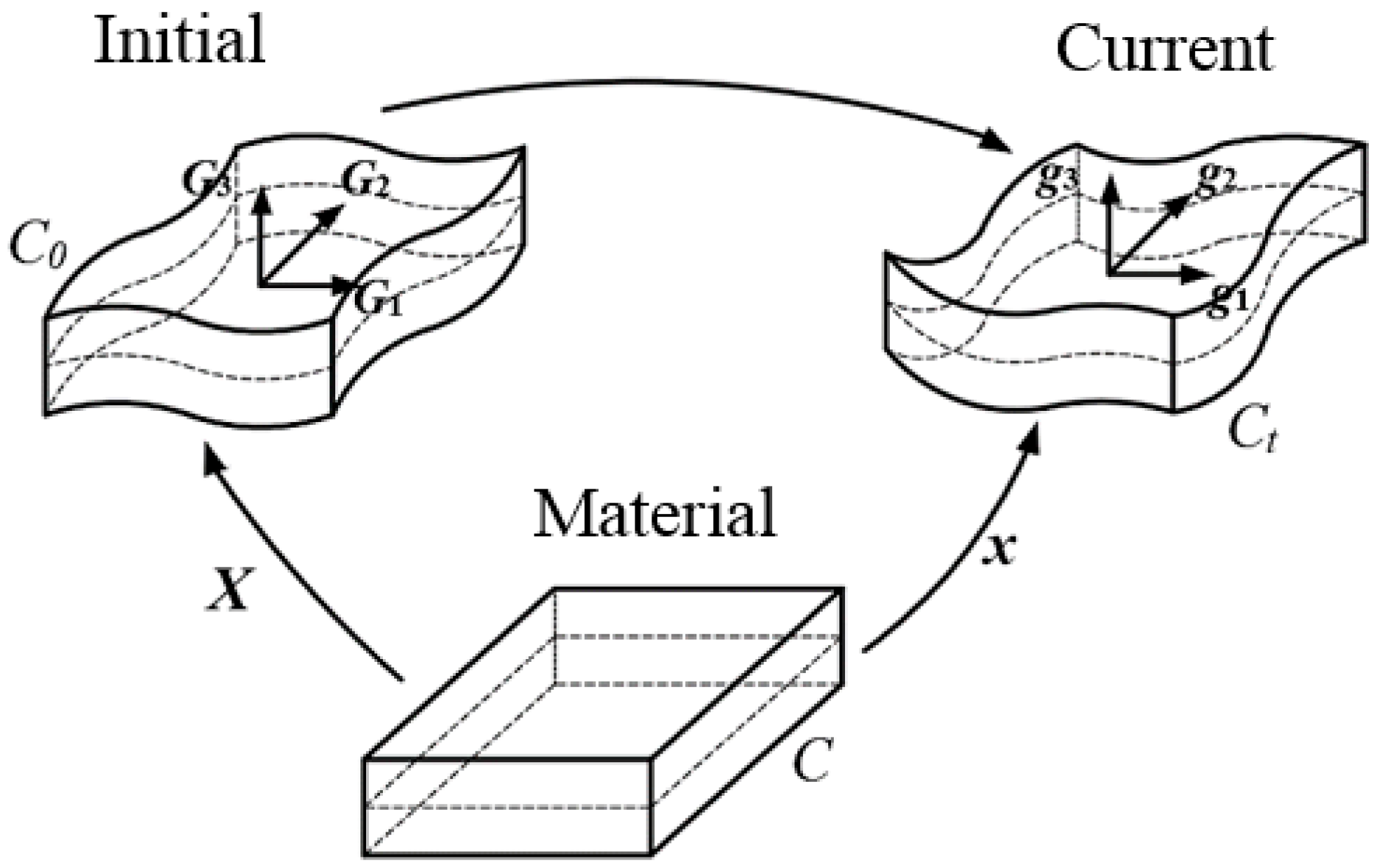
As shown in
Figure 4, we denote the reference and current configurations as (
C0) and (
Ct), respectively. Furthermore, the kinematics of the solid-shell element is presented in curvilinear coordinates. The parameter
is used to define the thickness coordinate, and two others
are assigned for the in-plane coordinates of the considered solid-shell.
Every material point is defined by its reference and current position, denoted by
X and
x, respectively. The kinematics of Lagrange is based only on the displacement degrees of freedom of the hexahedral element with eight nodes. The position vectors are defined as
where
and
refer to nodal coordinates, and
N presents the tri-linear isoparametric shape function’s matrix. The interpolation of the displacement vector, and its corresponding variation and increment, are defined in the same manner as follows:
where
defines the vector displacements of each node at the element level. The covariant vectors are obtained by derivation of the position vector with respect to the convective coordinate in the initial and deformed configurations
as follows:
The Lagrangian strain tensor
can be expressed in the following form:
3.2. Compatible Strains
The compatible Green–Lagrange strain part is arranged in a (6 × 1) column matrix in the following form:
In the standard formulations of hexahedral elements, several types of locking, such as shear strain locking, can lead to inaccurate results, especially when the structure experiences complex deformations. To address this, the ANS method is implemented. As part of the ANS method, the transverse shear strains,
and
, are evaluated at four specific points along the element’s mid-surface edge, as outlined by Bathe and Dvorkin [
34]. These points are designated as
A = (−1, 0, 0),
B = (0, −1, 0),
C = (1, 0, 0), and
D = (0, 1, 0), as shown in
Figure 3.
Additionally, for the thickness strains
, the ANS method uses an evolution of the transverse shear strain at four collocation points on the reference surface, labeled
A1 = (−1, −1, 0),
A2 = (1, −1, 0),
A3 = (1, 1, 0), and
A4 = (−1, 1, 0). The coordinates assigned to these points ensure the correct interpolation of thickness strains, allowing for the effective resolution of shear locking issues and enhancing the accuracy of the numerical model.
By employing these techniques, the ANS method ensures that the transverse shear strains, including the thickness strains, are evaluated accurately across the structure, minimizing numerical errors and improving the overall performance of the finite element model. Then, the compatible strain tensor is written in the following form:
The matrix
represents the strain transformation given by:
where
(j = 1, 2, 3) defines a local set of orthogonal-based vectors. Using finite element approximations, the virtual and increment compatible Green Lagrange strain tensor are then given by:
where
is used to define the nodal displacement vector, and the compatible strain interpolation
matrix is defined at the nodal level as:
3.3. Enhanced Strains
To entirely overcome the locking problem, the application of the enhanced assumed strain concept (EAS) with the ANS method is very important. Then, the enhanced strain part is expressed in function of internal strain parameters
as:
where
is the interpolation function matrix imposed by the orthogonality conditions in terms of the parametric coordinates
, to be expressed as follows:
with
representing the Jacobian matrix and
and
attributed to the element center. Here, the interpolation matrix
will be defined with 5 parameters as follows:
The proposed enhancement for the interpolation function matrix is developed with five parameters, as mentioned in Equation (21). According to the EAS approach, the interpolation of is treated independently for each element and introduced via additional parameters. These parameters are condensed within the element to enhance the model, as explained in Equation (21).
Further, the strain parameters
α, which are internal to the element, are removed at the element level when resolving the weak form equations. This adjustment ensures that the element formulation remains consistent and numerically stable. The concept of the adopted methodology is briefly depicted in
Figure 5.
For this purpose, the application of static condensation at the element level leads to the element stiffness matrix given by:
Here,
,
L, and
H are defined by:
4. Numerical Results and Discussions
This section demonstrates the accuracy and robustness of the proposed finite element model in predicting the electromechanical behavior of piezoelectric composite structures, both with plane and curved surfaces. To validate the model, the present results are compared with existing solutions from the literature for various geometries of piezoelectric composite structures, including clamped beams with active piezoelectric layers, FGM plates with integrated piezoelectric sensors, active plate structures, and cylindrical FGM panels. Additionally, the effects of geometrical parameters and the power law index on the response of these structures are investigated. For all numerical simulations, the developed hexahedral solid-shell element is used for the FGM structures, while the C3D20E ABAQUS element is employed for the piezoelectric patches. The solid-shell element is implemented in ABAQUS through user element (UEL) subroutines. This comprehensive comparison highlights the model’s capability and provides insight into its performance across different structural configurations.
4.1. Clamped Beam with Active Piezoelectric Layers
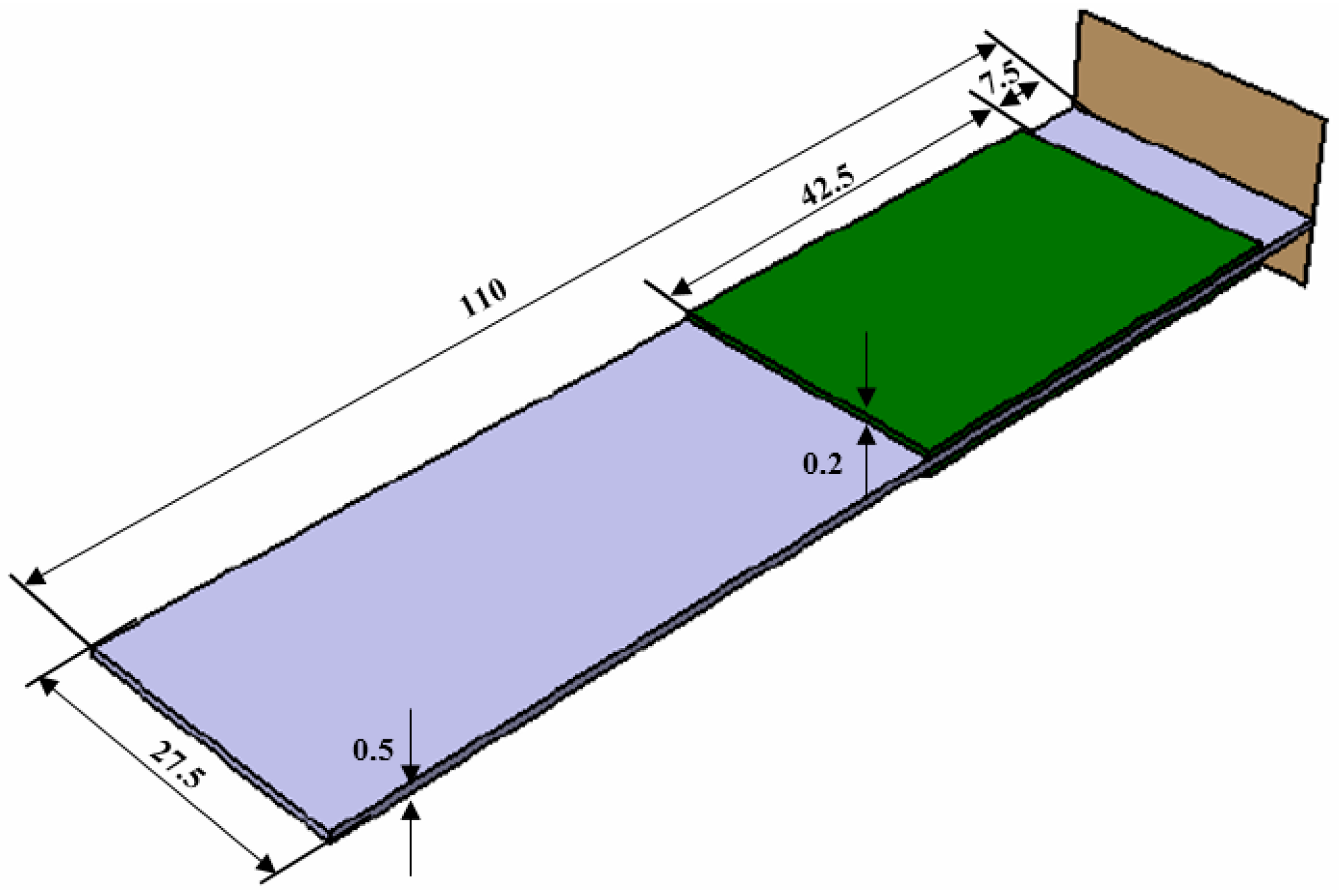
The first example considers a clamped beam structure composed of an aluminum layer located between a pair of piezoceramic patches.
Figure 6 presents the adapted assembly between the different parts by specifying the geometry and the dimensions for each component. This configuration is applicable in the design of vibration control systems in aerospace and automotive industries, where piezoelectric actuators and sensors are employed to actively suppress unwanted vibrations [
35,
36].
This example was first discussed in Marinkovic [
31]. The aluminum properties were fixed at
and
for Young’s modulus and Poisson’s ratio, respectively. The pair of piezoceramic patches was made of PIC151 material with Young’s modulus of
, Poisson’s ratio of
, a dielectric constant equal to
, and piezoelectric constants
.
The test consists of applying 100 V of voltage over the electrodes of the patches. Hence, bending moments are created uniformly over the edges of these piezoelectric transducers due to the generation of an opposite polarization and their activation. Therefore, the goal of this section is to evaluate the robustness of the developed solid-shell element to identify the deflections of the beam through a static analysis.
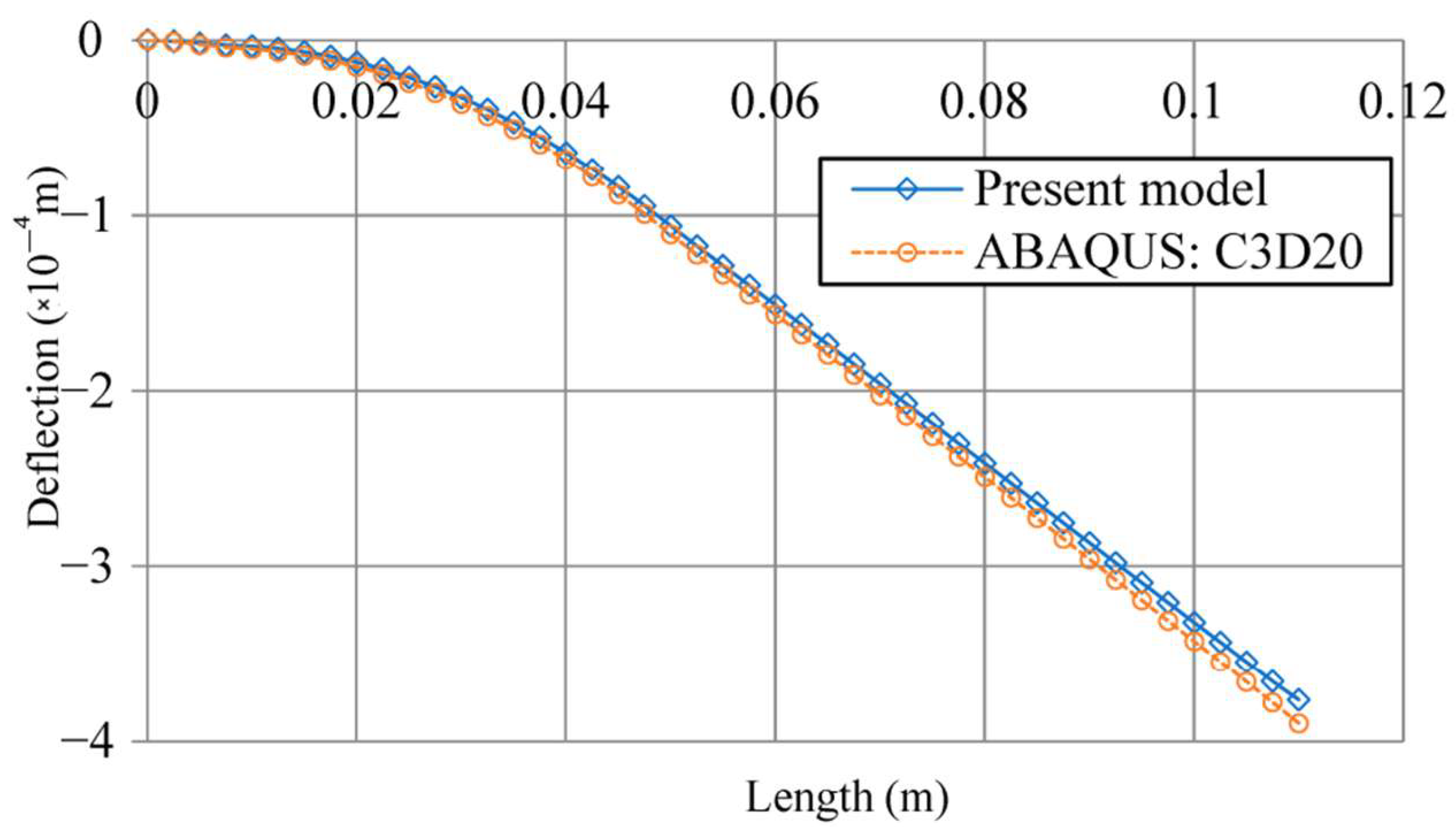
Figure 7 depicts the results obtained using the developed hexahedral solid-shell element implemented into the ABAQUS software code via a user element (UEL) and another analysis by means of the ABAQUS standard Element C3D20. The linkage between the EAS and ANS methods seems to be a good alternative to predict the electromechanical behavior of the piezoelectric beam by overcoming locking problems under the thickness of the studied structure.
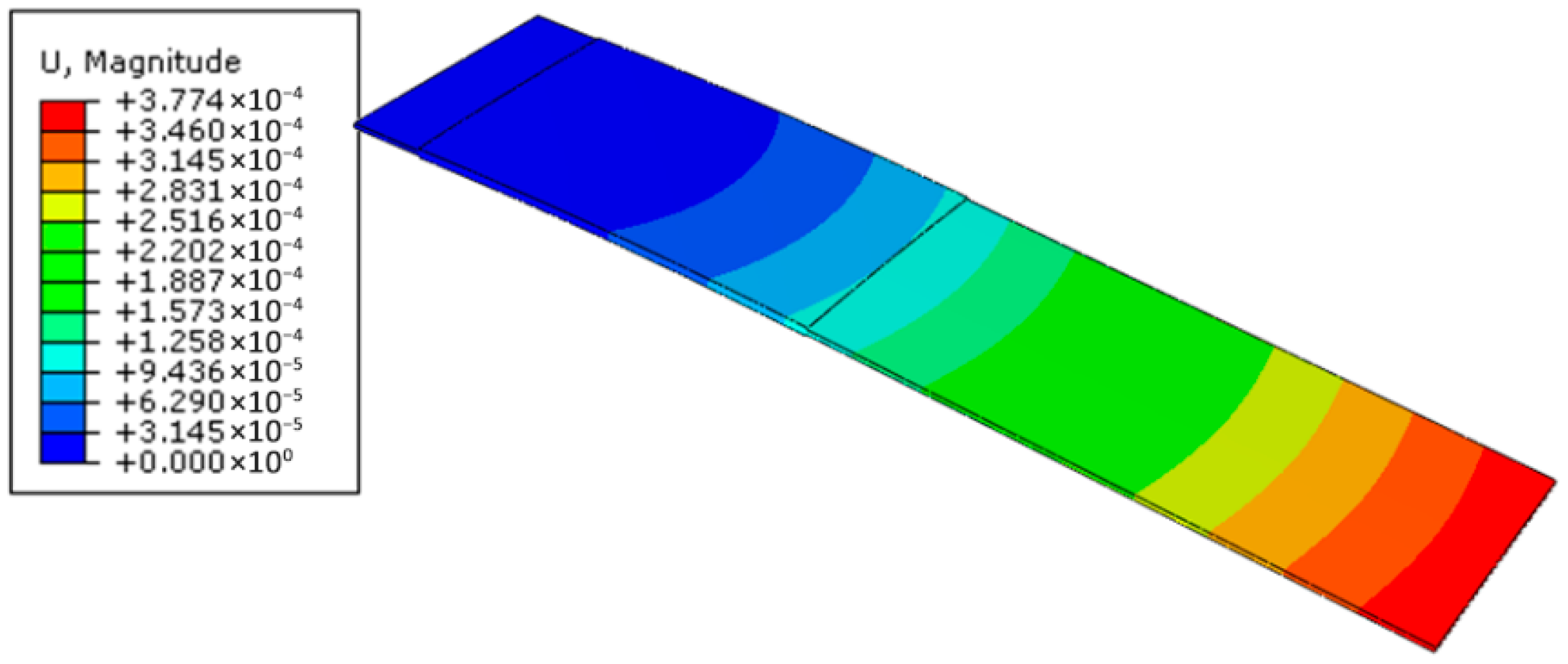
Figure 8 shows the deformed configuration of the clamped beam.
The computational efficiency and accuracy of the proposed solid-shell element are quantitatively assessed in
Table 1. The analysis was conducted on a system featuring an Intel Core i5 processor, with all simulations using an identical structured mesh of 3432 elements to ensure a direct, hardware-consistent comparison of performance per unit discretization. The proposed solid-shell element demonstrates superior accuracy in predicting the maximum deflection. Its result (3.774 × 10
−4 m) is in close agreement with the result from the high-order quadratic reference element, ABAQUS C3D20 (3.897 × 10
−4 m). In contrast, the standard linear brick element, ABAQUS C3D8, shows a significant under-prediction (3.368 × 10
−4 m). The relative error of the proposed element, compared to the C3D20 benchmark, is only 3.2%, whereas the C3D8 element exhibits a much larger error of 13.6%. This indicates that the proposed formulation successfully mitigates shear and volumetric locking, a common problem with linear solid elements in thin structure applications, without requiring a computationally expensive quadratic displacement field.
From a computational standpoint, the proposed element demonstrates an excellent balance between efficiency and accuracy. For the Core i5 test system, the CPU time required is 16.8 s, which is only 11% higher than that of the fastest but least accurate C3D8 element (15.1 s). More importantly, the proposed formulation achieves its enhanced accuracy with approximately 45% less computational time than the higher-order C3D20 element (30.8 s). This advantageous performance is primarily due to the simplicity of the formulation, which uses the same number of nodes as the C3D8 element (13,522), thus avoiding the increased number of nodes and degrees of freedom associated with the C3D20 element (20,429 nodes). Furthermore, the internal improvements introduced to mitigate locking effects result in only minimal computational overhead.
4.2. FGM Plate Subjected to Double Sinusoidal Load
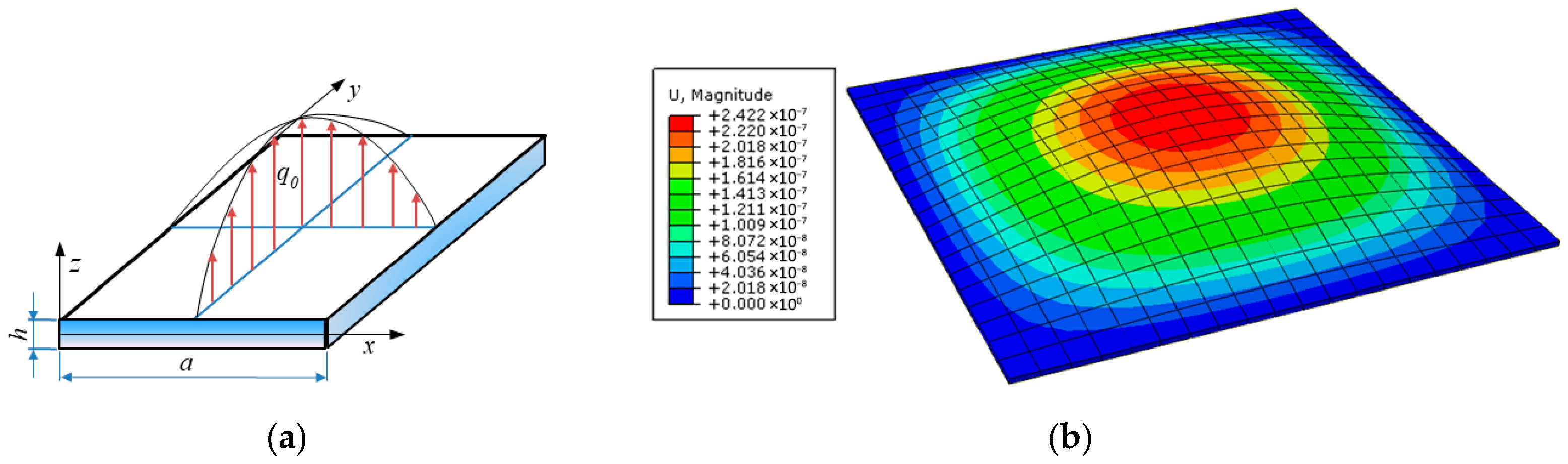
In this subsection, the effect of porosity distribution on the normalized central deflection of an FGM plate with a thickness ratio of a/h = 100 is investigated within the framework of linear analysis. To validate the proposed model, a simply supported square FGM plate made of aluminum-alumina (Al/Al
2O
3) is subjected to a double sinusoidal load
, as illustrated in
Figure 9a.
Figure 9b illustrates the deflection shape of the FGM plate together with the corresponding isovalue distributions. The material properties of the plate are summarized in
Table 2. The normalized central deflection values (
) obtained for the thickness ratio
a/
h = 100 and a power law index of
n = 0.5 are reported in
Table 3. The present results are compared with those obtained using the polygonal finite element model reported in [
17]. Both even and uneven porosity distributions are considered. As shown in
Table 3, excellent agreement is observed between the two models, confirming the accuracy of the proposed formulation for linear configurations.
4.3. FGM Plate with Integrated Piezoelectric Sensors
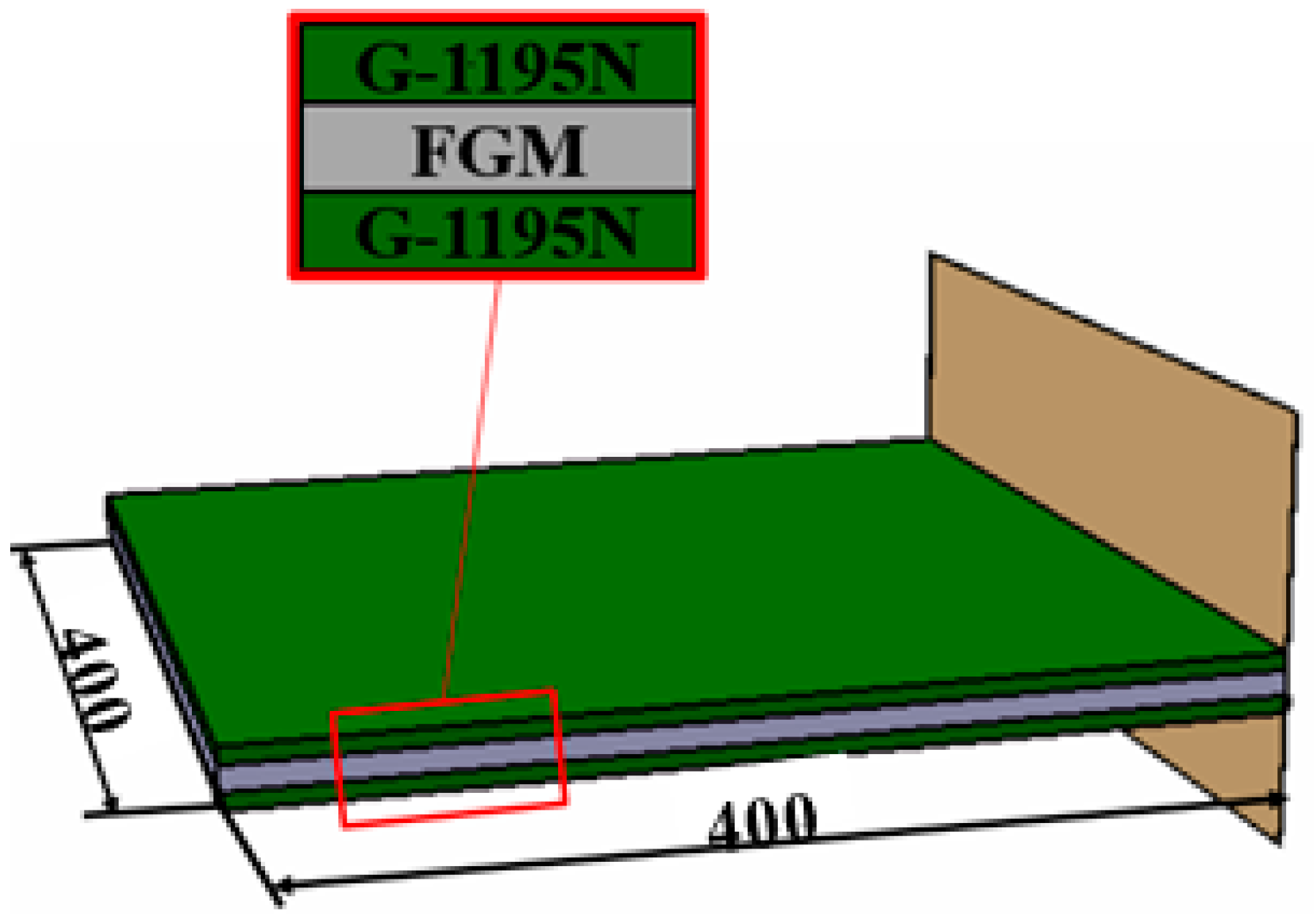
In this section, we consider the test of a cantilevered FGM plate attached to two piezoelectric films, as presented in
Figure 10. Such structures find applications in advanced sensing systems, particularly in smart infrastructure, where they are used to monitor stress, strain, or potential damage in critical components [
37].
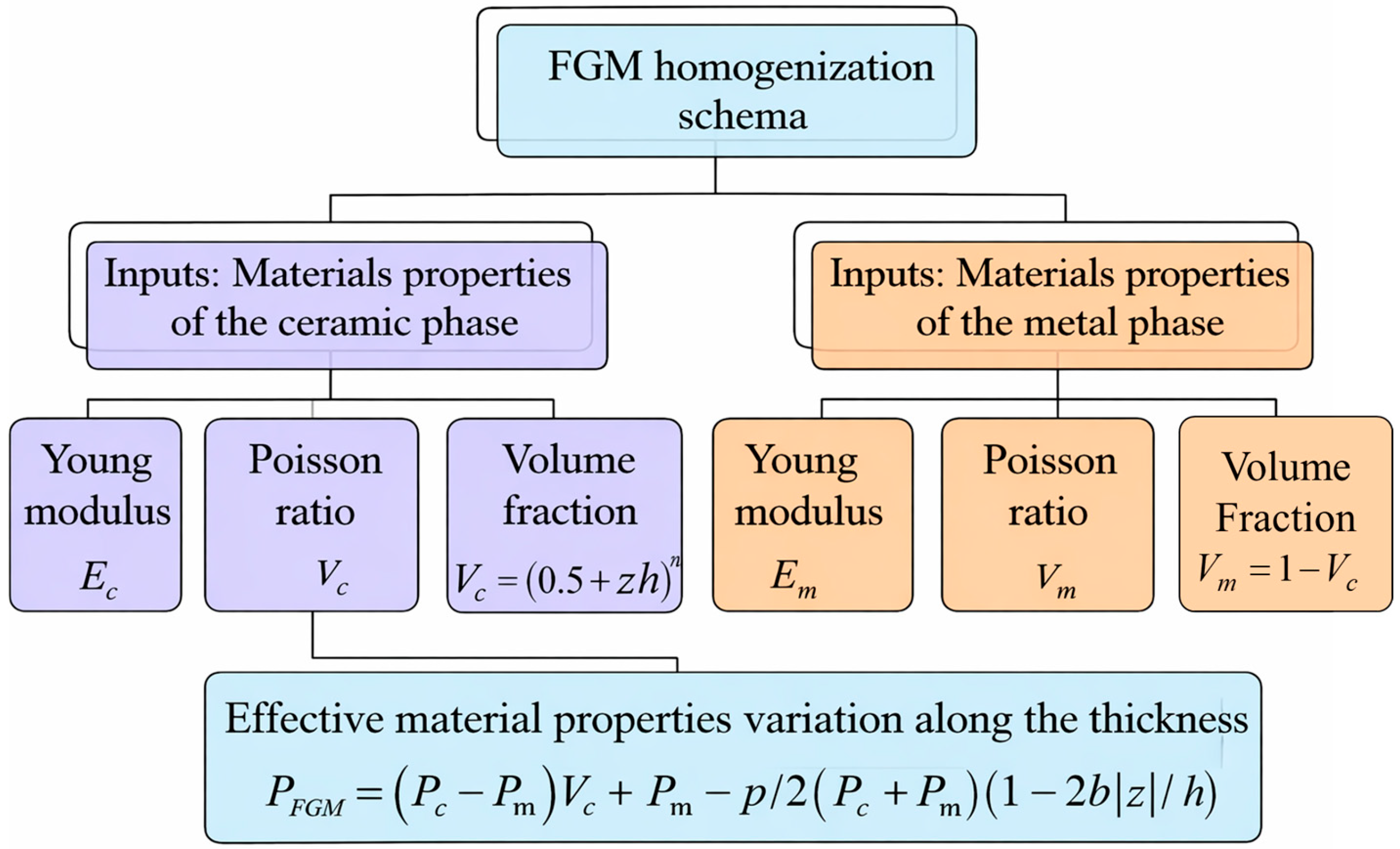
The FGM layer has a thickness of 5 mm. This plate is made essentially from a combination of a titanium alloy (Ti-6Al-4V) and Aluminum oxide material with different mixing ratios in the thickness direction according to the power law distribution in Equations (2) and (3). Typically, the upper surface of the FGM plate should be rich in Ti-6Al-4V alloys, whereas the bottom one is “Aluminum-rich”.
According to He et al. [
38], the material properties of the FGM plate are temperature dependent. Indeed,
Table 4 illustrates the FGM properties at a temperature of 300 K. Concerning the G-1195N piezoelectric patches, each one is represented in the form of a film with a thickness of 0.1 mm. The electromechanical properties of piezoelectric materials are reported in
Table 5.
First, the cantilever FGM structure strip is exposed to a uniformly distributed load equivalent to
. Then, the piezoelectric films are polarized oppositely in the same direction of the applied voltage fixed at 40 V. Hence, their action will serve as actuators. This problem is crucial and has been studied in many works [
39,
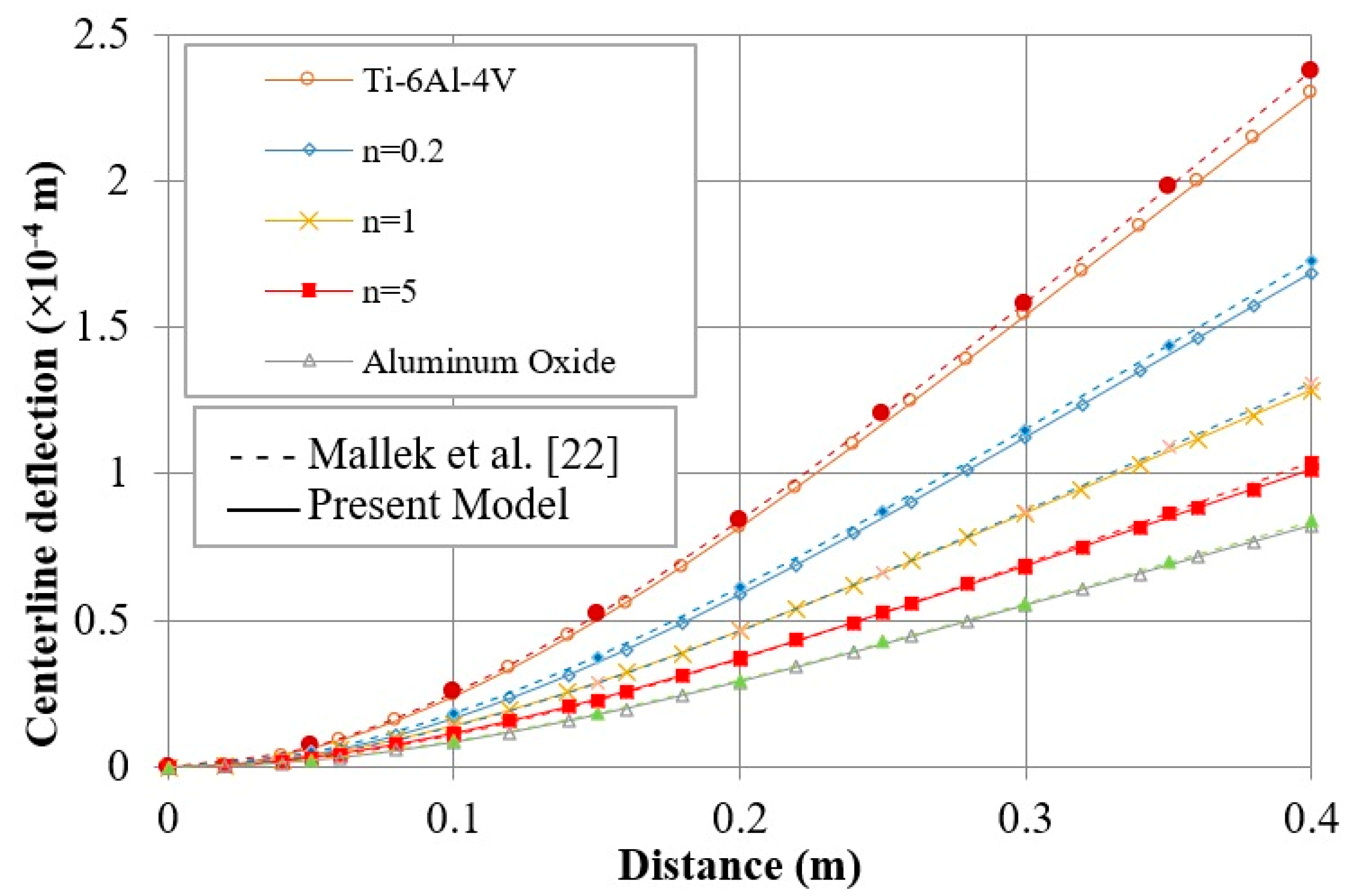
40] to test the elastic bending performance of the element. In order to evaluate the accuracy of the proposed finite element approach, the centerline deflection evolution for the FGM plate is plotted in
Figure 11 and compared with the numerical results of Mallek et al. [
22].
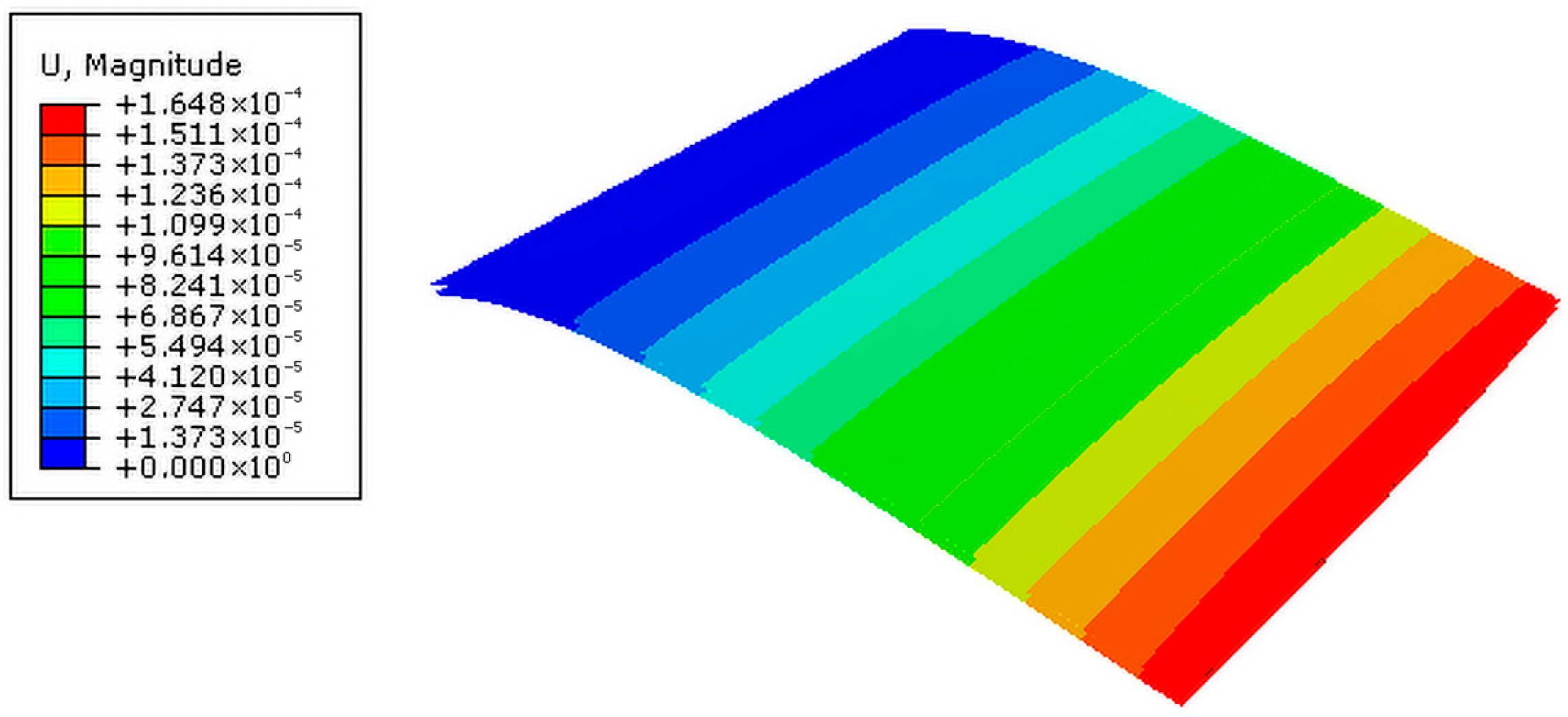
Figure 12 illustrates the deformed configurations of the plate with integrated piezoelectric sensors.
It can obviously be noted that the exponent of the volume fraction has a considerable effect on the behavior of the active plate under uniformly distributed loading. Indeed, the deflection of FGM beams decreases when the volume fraction exponent becomes larger. This can be explained by the fact that bending stiffness is greater with a higher amount of aluminum, increasing with high values of the power law index, which is generally characterized by a significant elastic property compared to Ti-6Al-4V. Hence, the induced strain mainly depends on the bending stiffness of the actuator.
4.4. Active Plate Structure
The adopted active plate structure is relevant for adaptive systems in robotics and precision machinery, enabling real-time shape or stiffness adjustments based on operational requirements through integrated piezoelectric layers [
41].
4.4.1. Active Isotropic Plate Structure
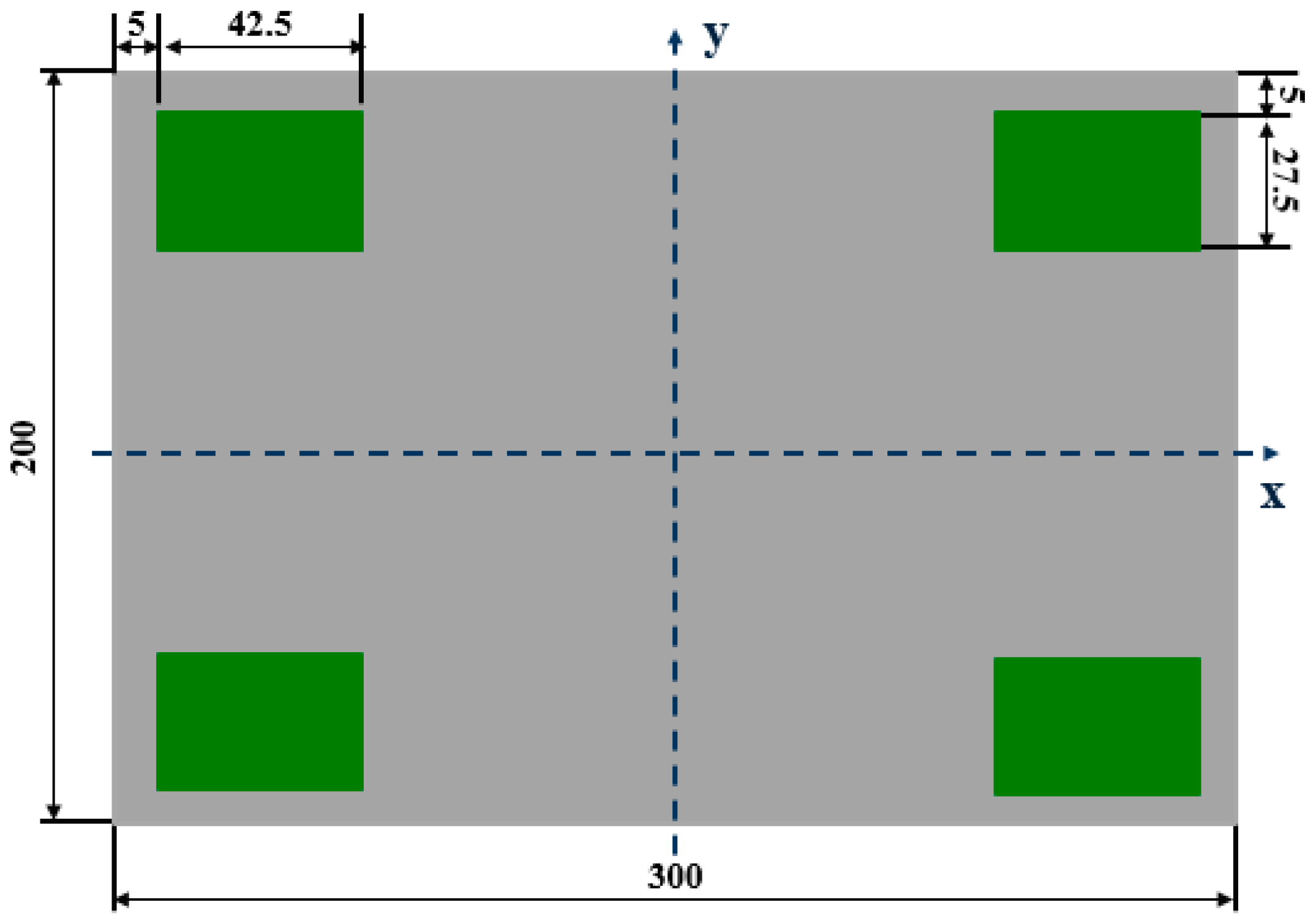
The purpose of this part is to demonstrate the performance of the present solid-shell element by the static analysis of a plate structure with four piezoelectric patches at its corners. This test consists of embedding all four edges of a steel sheet. The elastic behavior of the plate is expressed with the following properties:
,
. The dimensions of the assembly parts are indicated in
Figure 13, and the thickness of the plate is 1 mm. Regarding the patches, there are four pairs of type PIC151 with a thickness of 0.2 mm, and their properties are
;
. Since an electrical voltage of 100 V is applied simultaneously to each patch, a bending moment is induced and uniformly distributed at the edges of the designed plate. Hence, a static deflection of the whole plate occurs.
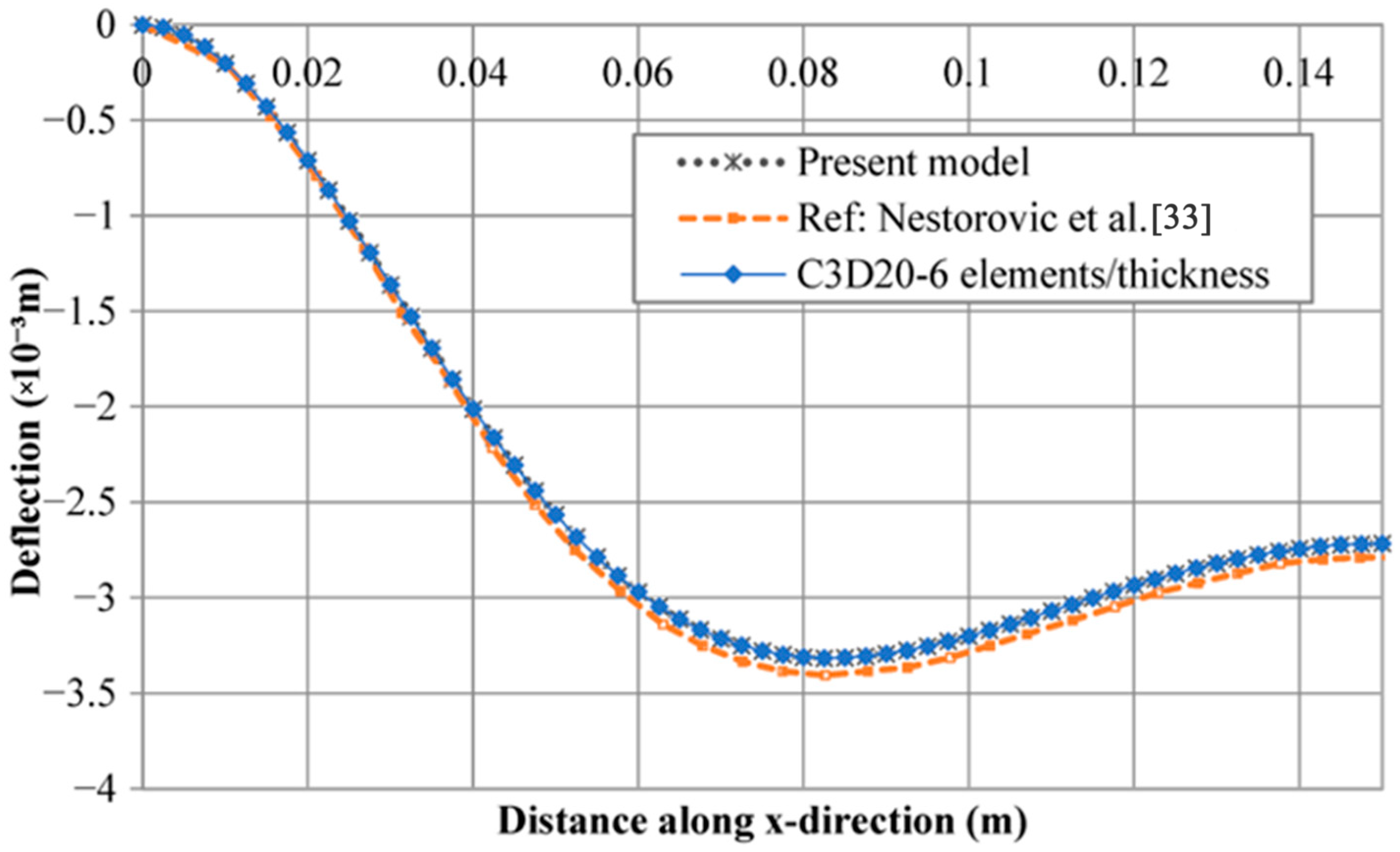
The obtained results from numerical simulations are presented in
Figure 14 and compared with the implemented UEL subroutine derived by Nestorović et al. [
33] and also with the ABAQUS standard element C3D20. There is clear evidence of complete consistency among the results presented in
Figure 14. Hence, the following example illustrates that the proposed solid shell element exhibits a high level of numerical efficiency compared to other standard tools, particularly in its application to static analysis of smart plates.
4.4.2. Active Perfect FGM Plate Structures
After validating the bending results of an isotropic active plate, this section is devoted to examining the electromechanical behavior of an active perfect FGM plate without considering the effect of porosity. The mechanical properties of the FGM smart plate are illustrated in
Table 4.
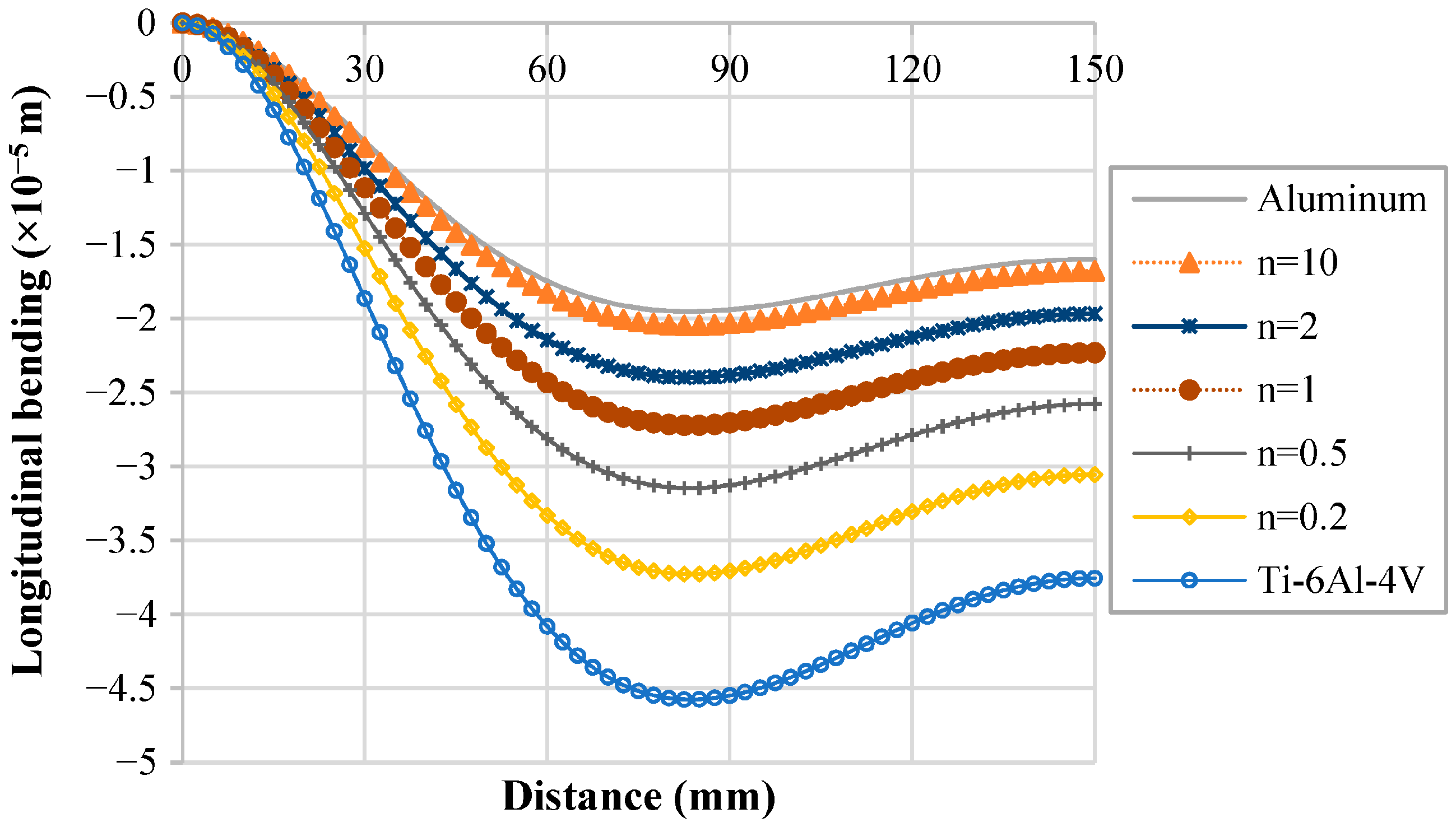
Figure 15 illustrates longitudinal deflections considering one quarter of the plate, y = 0, for a perfect FGM plate with four patches embedded for various power law index
n values. It is clearly seen that the change in the volume fraction of the FGM composition induces marked impacts on the response of the smart structure. Indeed, the longitudinal deflections increase when the power index
n passes from Aluminum oxide to Ti-6Al-4V. This can be explained by the high-bending stiffness of Aluminum oxide compared to Ti-6Al-4V.
4.4.3. Active Imperfect (Porous) FGM Plate Structure
The main objective of this study is to predict the electromechanical behavior of FG smart plates with embedded piezoelectric layers, considering the influence of porosities. After validating the electromechanical behavior of a perfect FGM plate in the previous section, this section is dedicated to examining the electromechanical behavior of an active FGM plate, with a focus on the impact of porosity. The same plate geometry and geometrical characteristics are used as in the previous section to maintain consistency in the analysis.
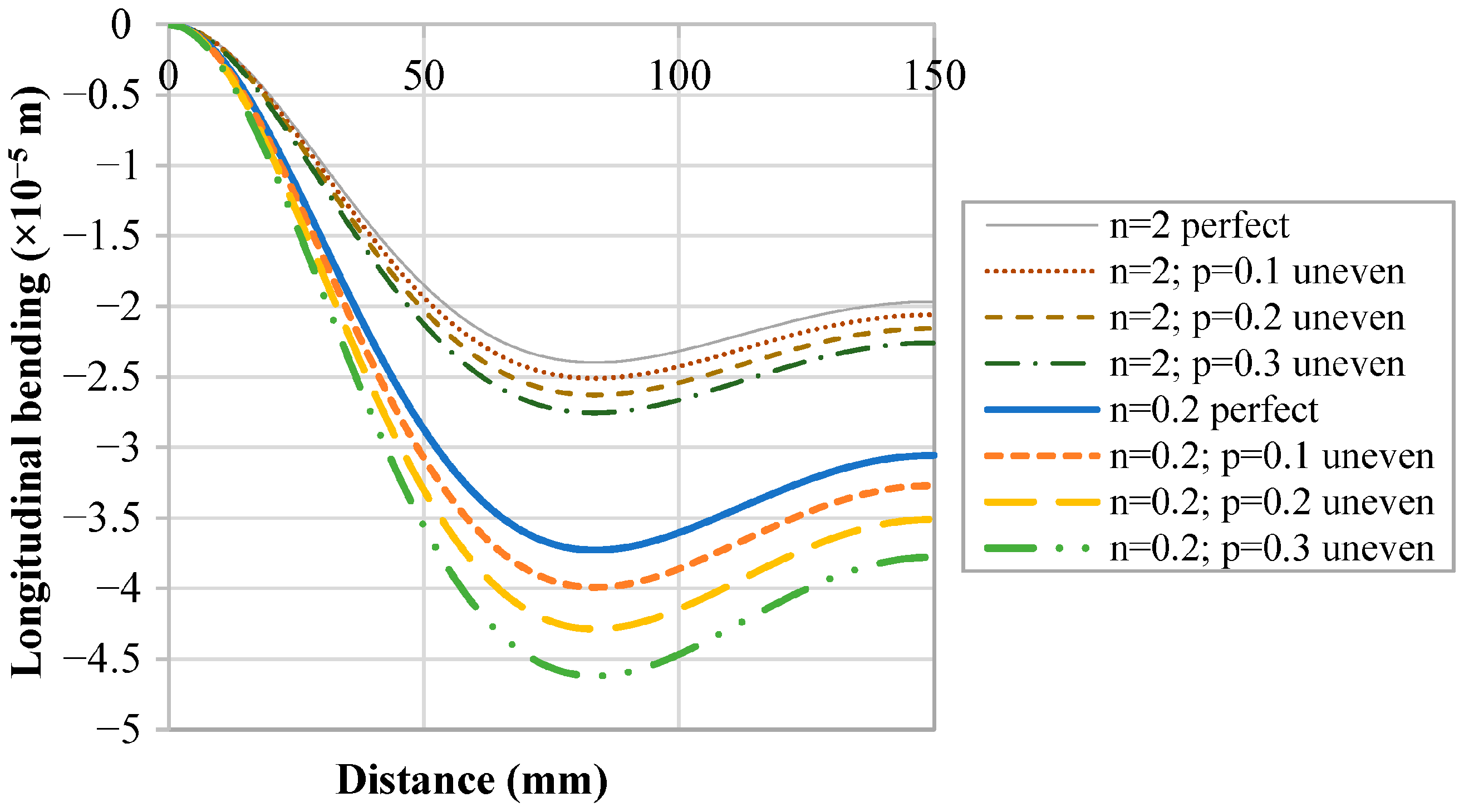
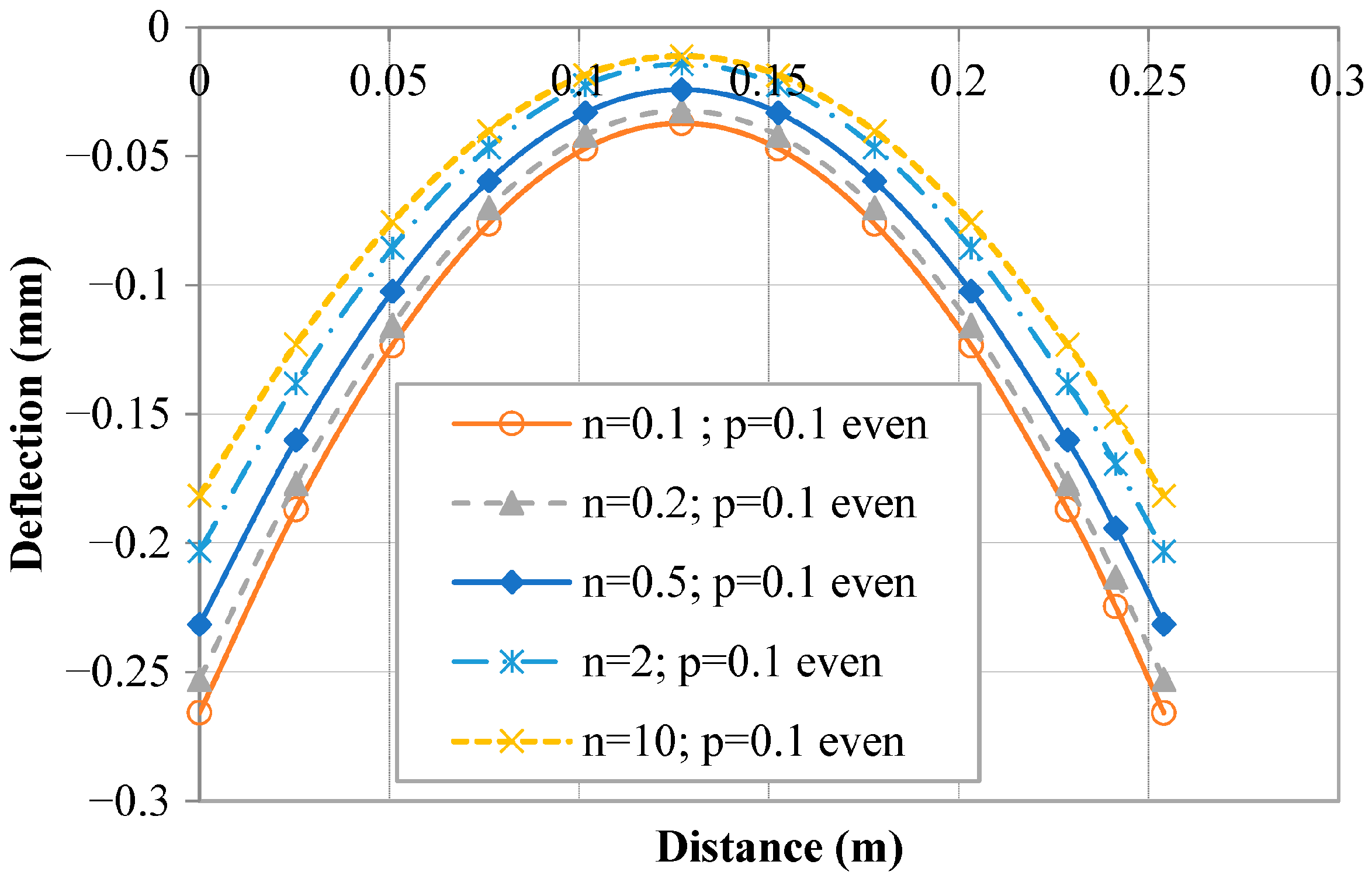
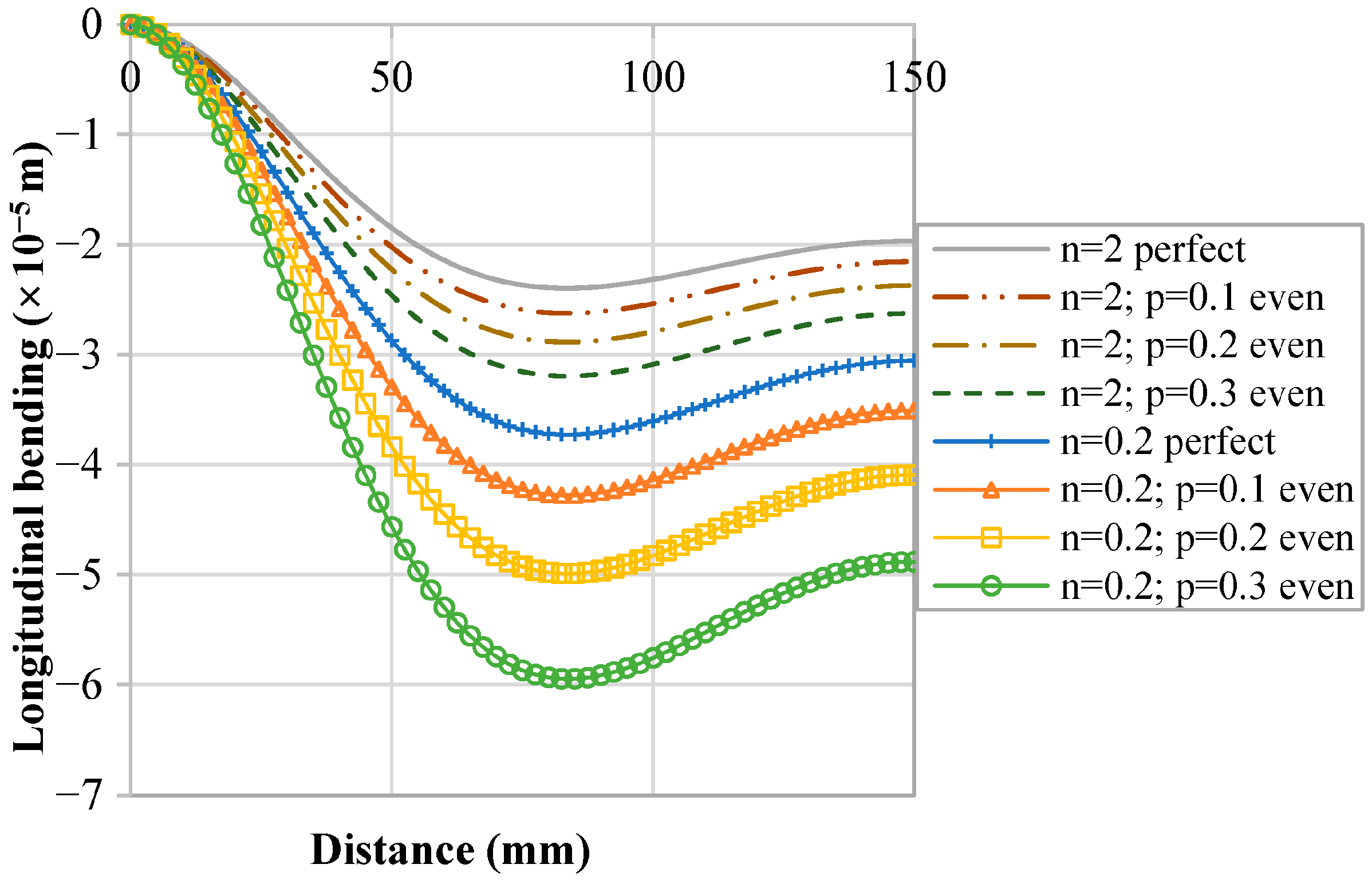
Figure 16 and
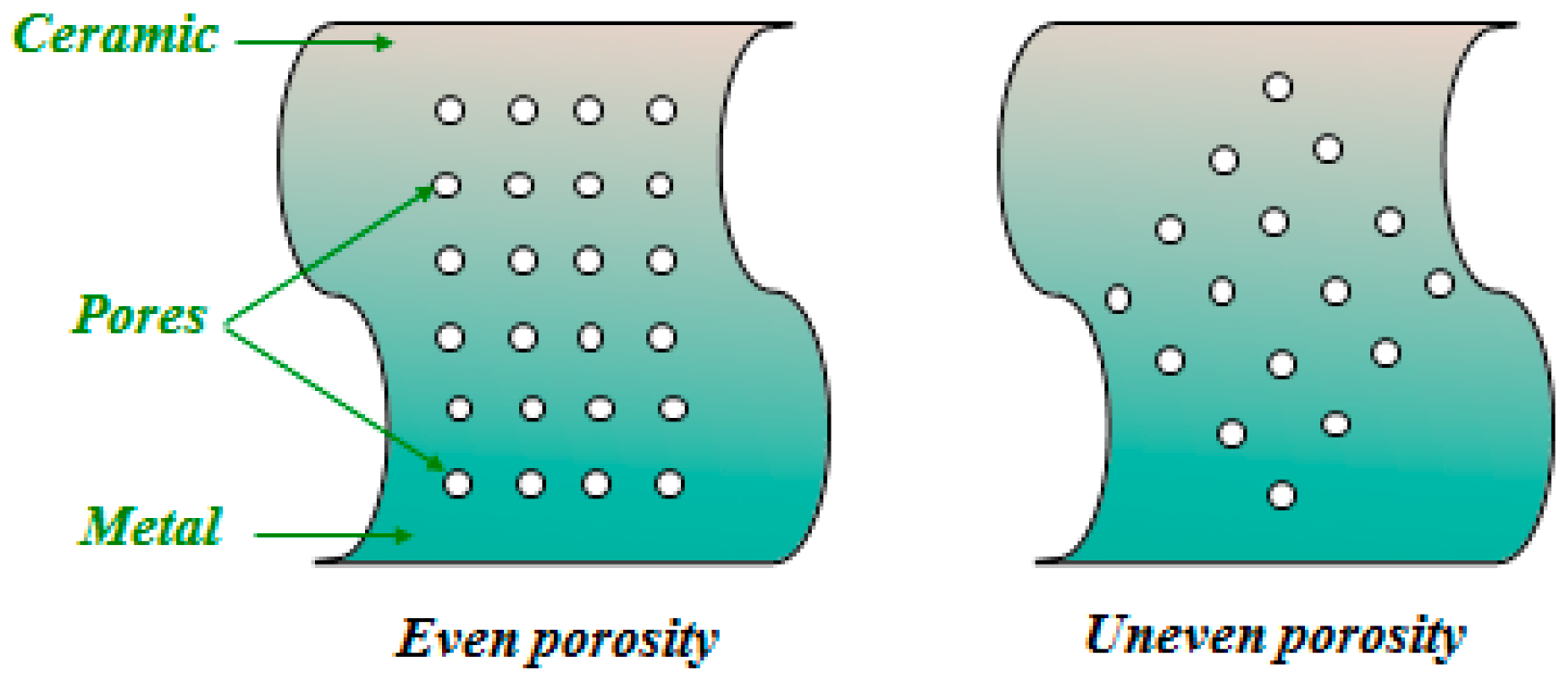
Figure 17 depict the impact of porosity volume fraction and power law index on the longitudinal deflection of the active imperfect FGM plate. The investigation encompasses two distinct types of porosity distributions: even and uneven distributions.
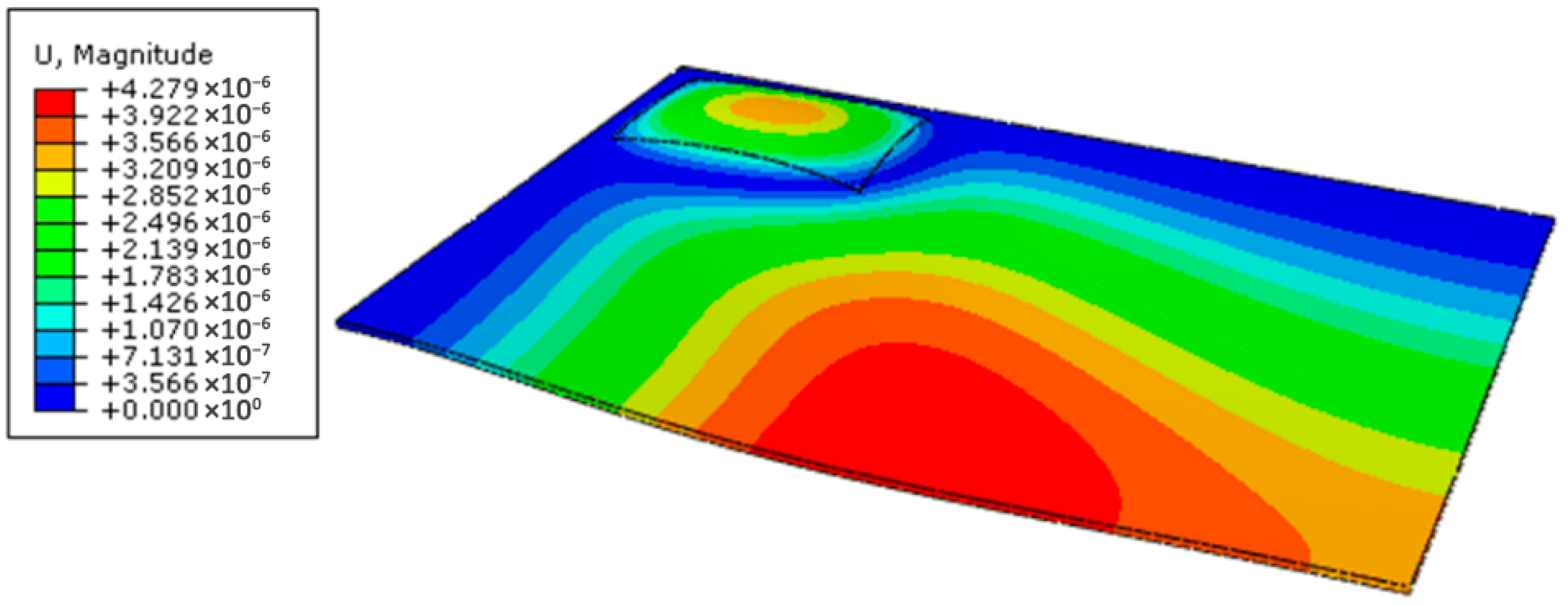
Figure 18 represents the deformed configurations for the porous FGM plate considering the even configuration (
n = 0.2,
p = 0.1).
It should be mentioned, from the deduced results, that the deflection of the FGM plate is influenced by the porosity distribution. As the porosity volume fraction increases, the deflections tend to increase as well, regardless of the porosity distribution type. This is because higher porosity leads to a reduction in the effective stiffness of the material, making the structure more prone to deformation under a bending moment. Therefore, areas with uneven porosity might experience lower degrees of deflection compared to regions with even porosity because of enhanced stiffness. The overall stiffness of the FGM plate may decrease as n increases, resulting in higher deflections, especially if the porosity gradient leads to significant variations in stiffness across its thickness.
4.5. Smart Cylindrical FGM Panel
Panels are essential in the aerospace and marine industries, serving as load-bearing structures with integrated actuation and sensing capabilities that enable adaptive performance under varying operational conditions. Therefore, accurately predicting the electromechanical behavior of FG smart plates with embedded piezoelectric layers is crucial for their effective design and functionality.
4.5.1. Smart Cylindrical Panel
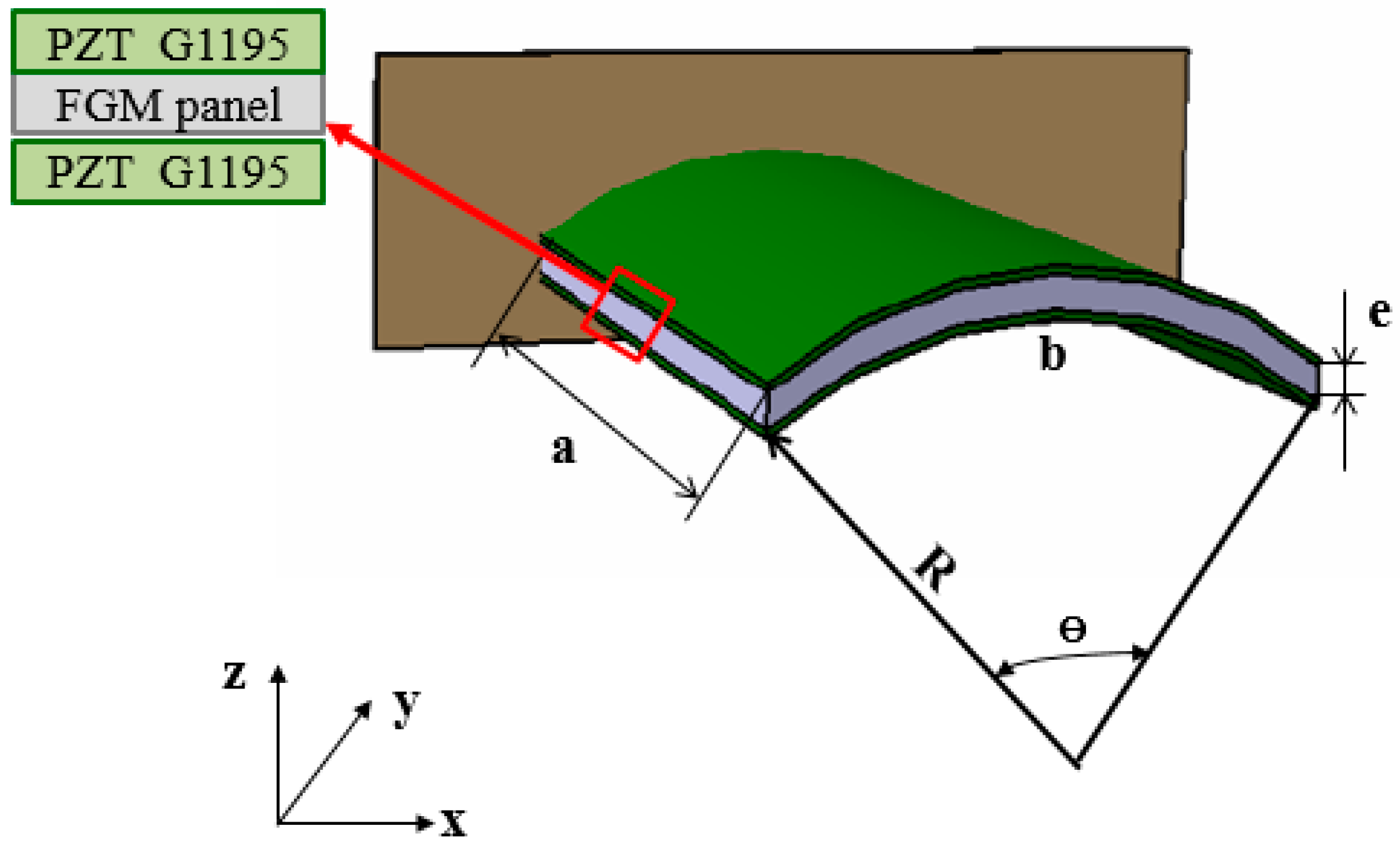
The fourth example is considered to discuss the case of a cantilevered curved-shaped structure covered by two piezoelectric layers, as illustrated in
Figure 19. The material of the medium layer properties are
and
. The geometrical parameters of this model are defined as a = b = 254 mm, e = 0.5 mm, and a radius of undeformed mid-surface R = 2540 mm. The bonded piezoelectric patches are made from the PZT G1195 material already identified in
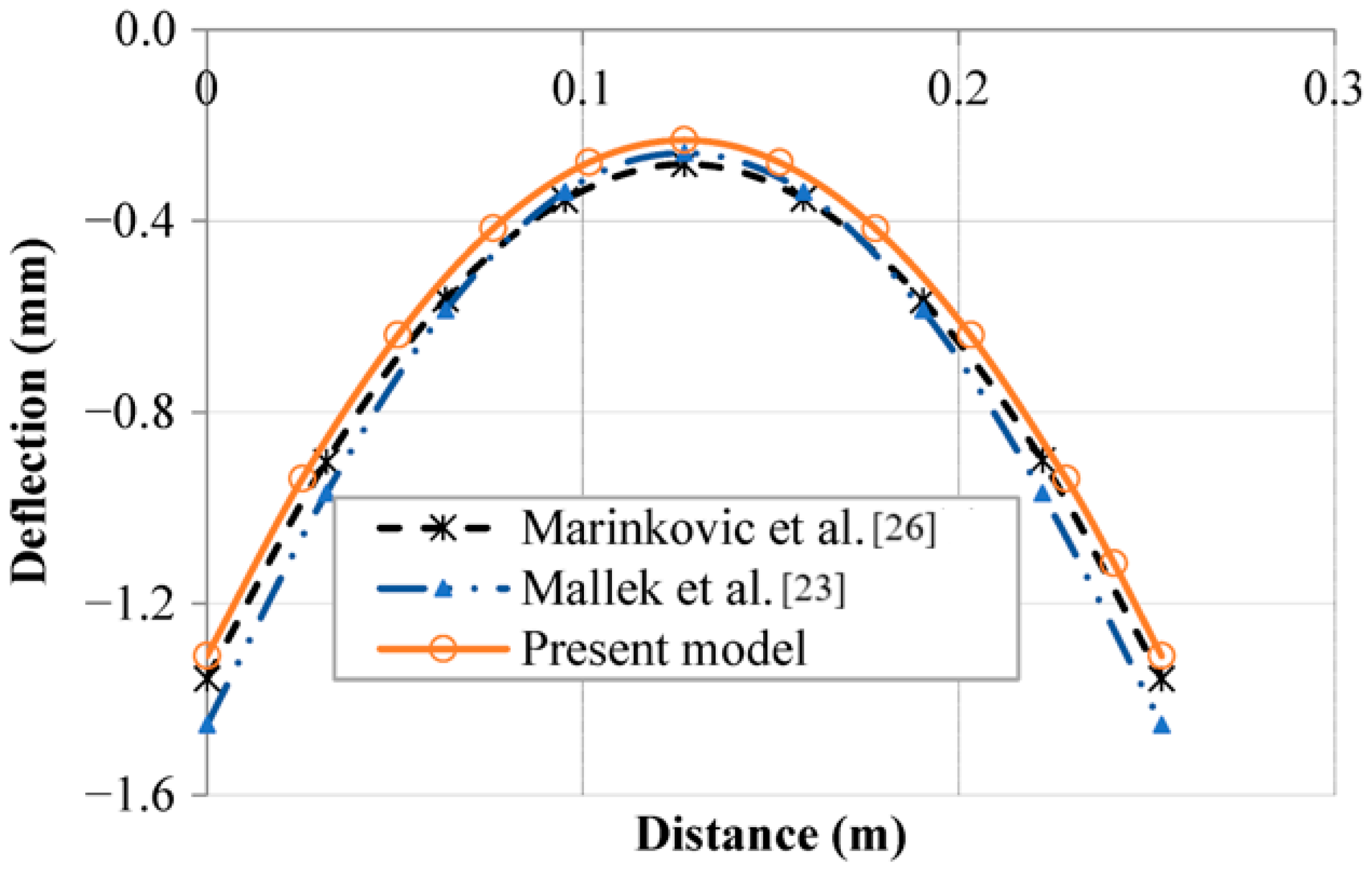
Table 5, with a thickness of 0.2 mm. The actuation with 100 V of voltage induces an opposite polarization of these layers, leading to the creation of a bending moment distributed uniformly over the panel edges. The proposed element is introduced in the model to mesh the whole part. In order to validate the effectiveness of the implemented model for curved structures, a comparison is performed between the achieved results and those detailed in the research of Mallek et al. [
22] and Marinkovic et al. [
26]. The whole cylindrical panel is meshed using 192 elements of the developed element.
Figure 20 depicts the circumferential centerline deflection of a cylindrical panel structure under actuation load. It is obvious that the obtained results closely align with deflections presented in the abovementioned references. These observations underscore that the implemented solid-shell element can be used to conduct static analysis on the cylindrical panel. In such scenarios, the proposed model demonstrates its ability to overcome numerical locking issues in shaped structures with complex geometries.
4.5.2. Mesh Sensitivity Study of the Smart Cylindrical Panel
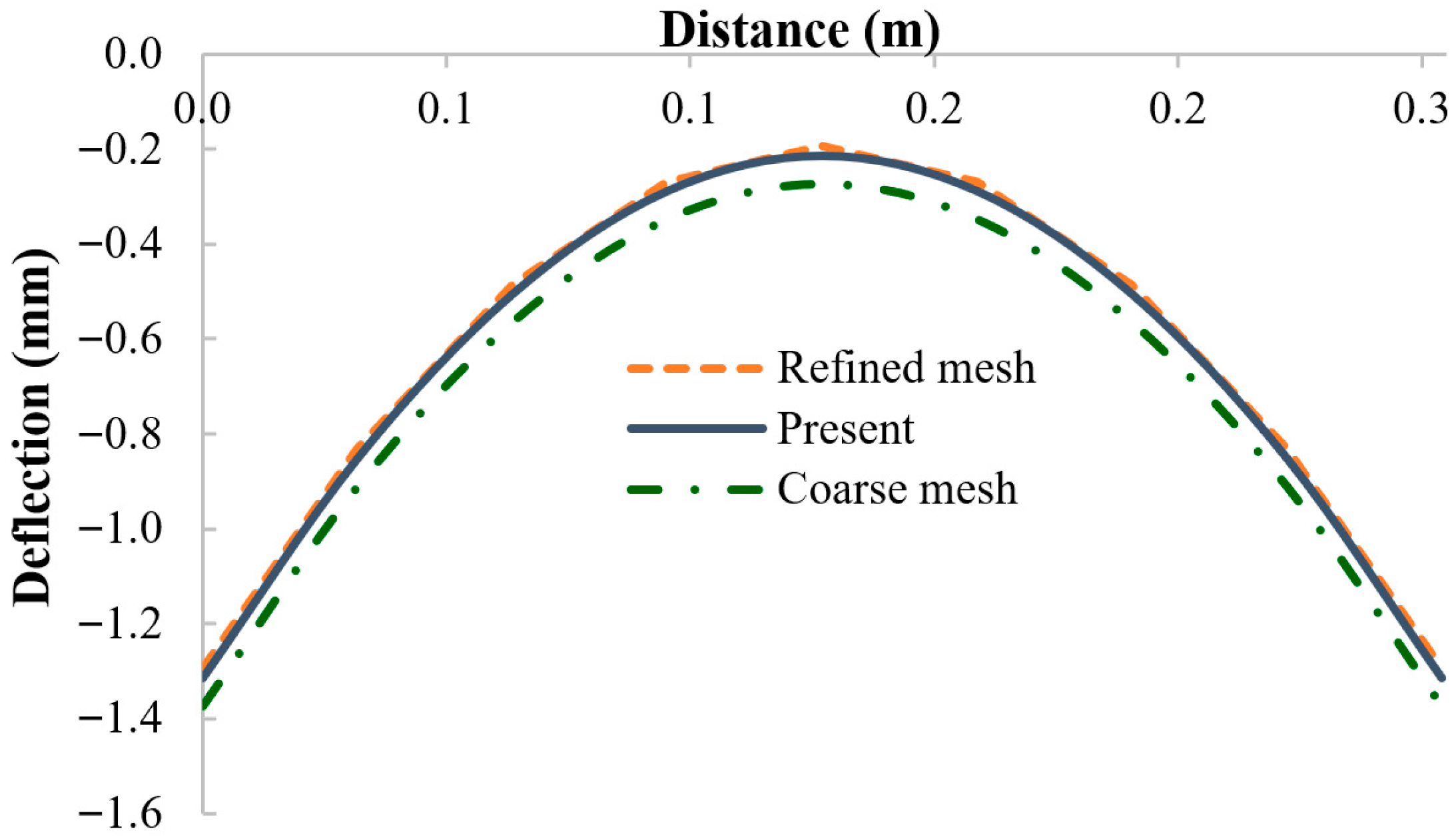
A mesh convergence study was conducted to ensure the numerical solution’s independence from spatial discretization. Three distinct mesh densities (coarse (147 elements), baseline (192 elements), and refined (243 elements)) were applied to the cylindrical panel model. The circumferential centerline deflection profiles for these configurations are compared in
Figure 21.
The results demonstrate that the coarse mesh yields artificially stiff responses, indicating insufficient resolution of the shell’s deformation modes. In contrast, the baseline and refined meshes produce nearly identical deflection curves, confirming that the solution has converged. The negligible difference between the baseline and refined results confirms that the chosen discretization (192 elements) provides sufficient accuracy without requiring further computational expense.
4.5.3. Smart Imperfect FGM Cylindrical Panel
On the basis of the perfect agreement proven, numerical tests are carried out to mainly predict the effect of the power law index and porosity on the response of an active porous FGM structure.
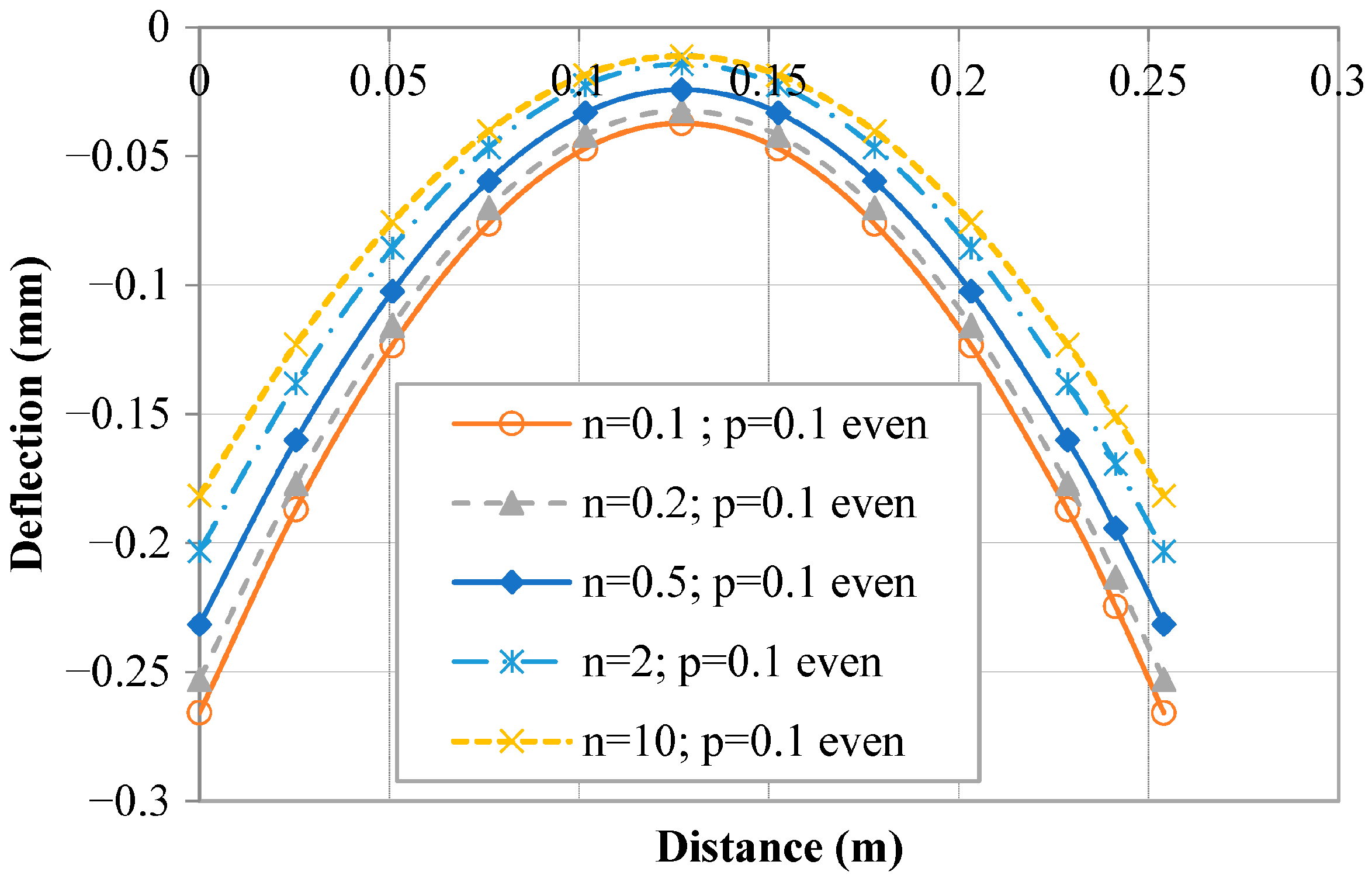
The initial assessment covers a parametric investigation on the effect of material composition for a well-defined porosity distribution, as plotted in
Figure 22 and
Figure 23. As can be observed, elevated values of
n exhibit a more pronounced centerline deflection as porosity persists. This insight suggests that the FGM porous cylindrical panel with a higher power law index is more susceptible to a reduction in the overall stiffness due to the increased amount of Ti-6Al-4V in the structure.
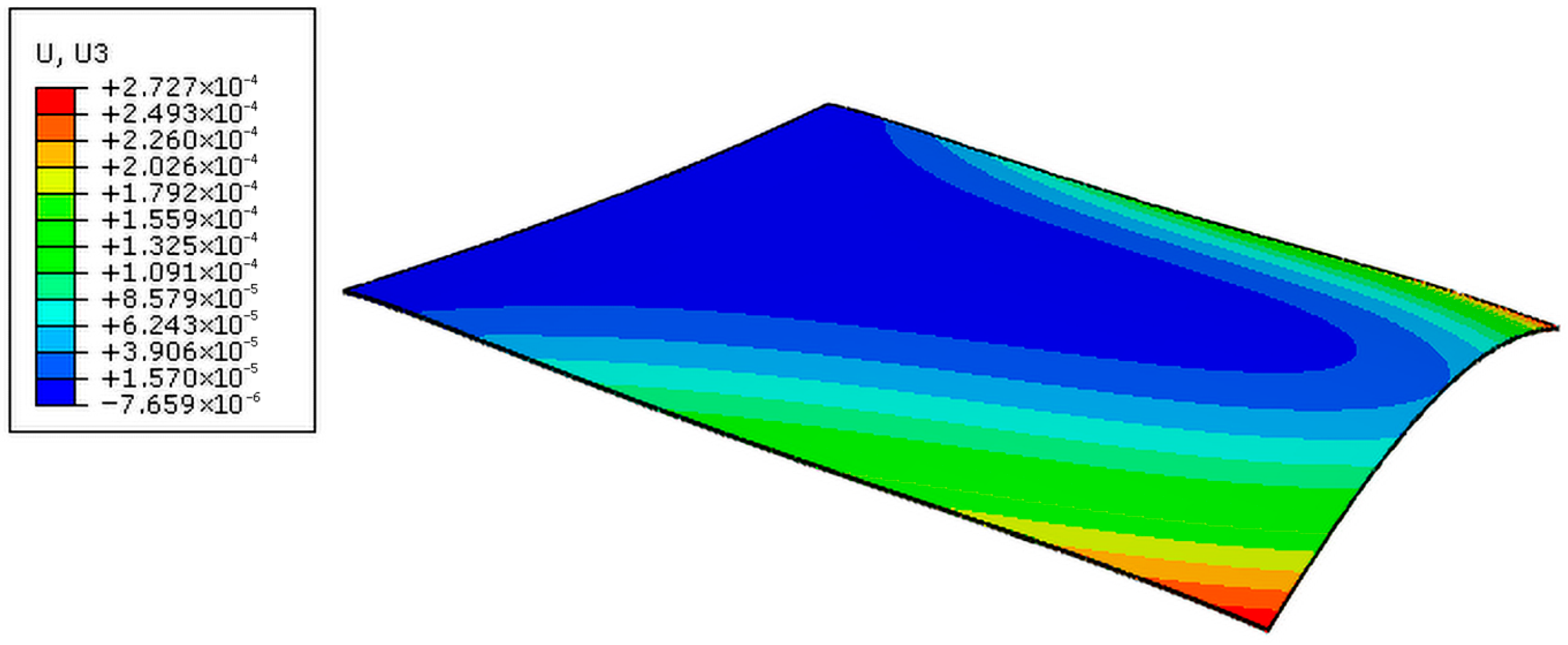
Figure 24 represents the deformed configuration of the porous FGM cylindrical panel at the even porosity with
n = 0.2,
p = 0.2.
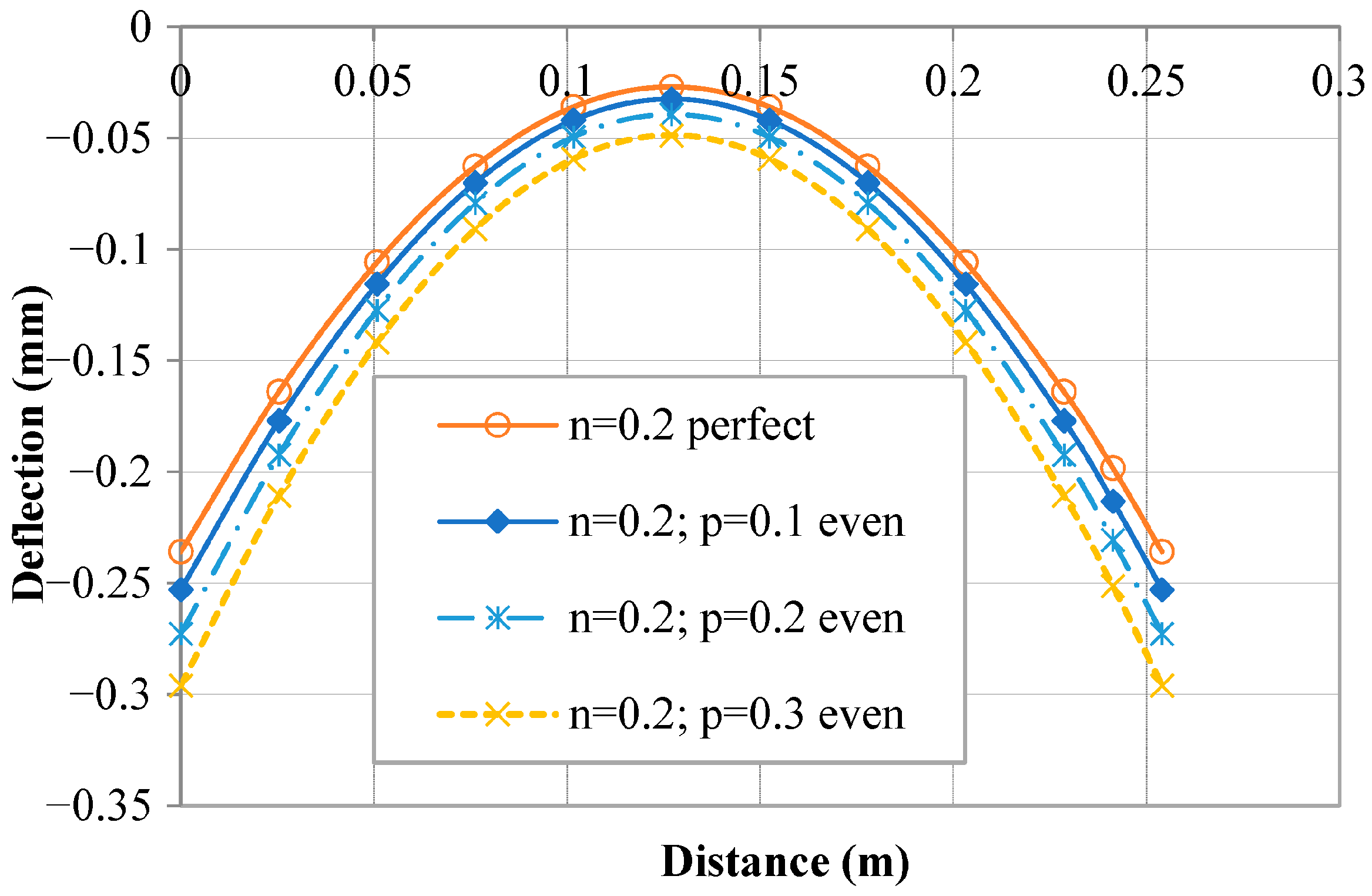
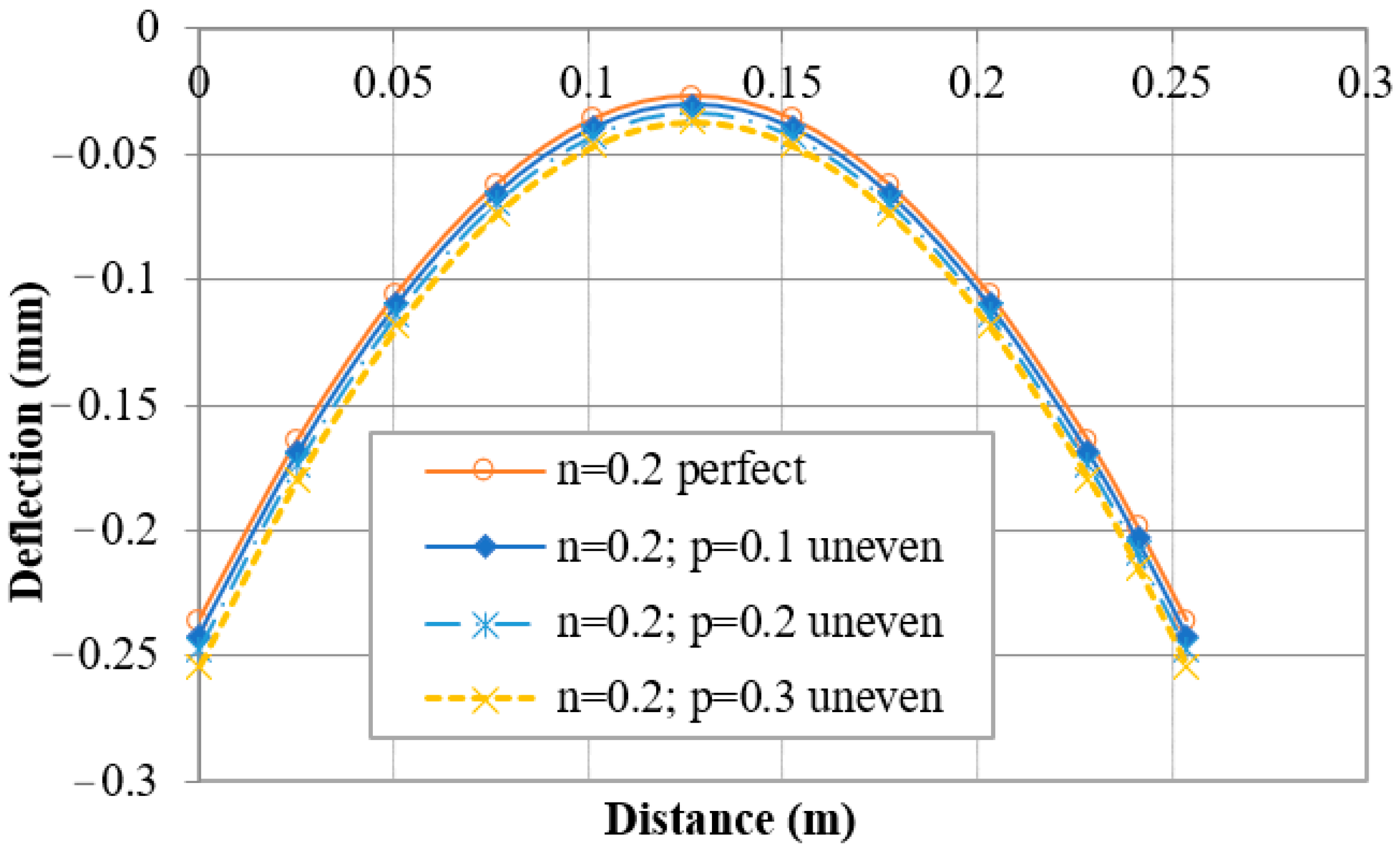
A subsequent evaluation is conducted to study the behavior of these smart structures under an electrical loading, taking into account the influence of the micro-porosity density. For this purpose, three values for the porosity volume fraction ratio are considered—0.1, 0.2, and 0.3—to be compared with the response of a perfect structure for a gradient index
n equal to 0.2 and with two porosity configurations: even (
Figure 25) and uneven (
Figure 26) distributions.
As depicted in the provided illustrations, the deflection response of porous FGM structures is highly dependent on the porosity distribution and volume fraction. Structures with an uneven porosity distribution tend to exhibit lower deflections compared to those with even porosity distributions. Notably, higher porosity of p typically results in increased circumferential centerline deflections due to decreased bending stiffness. Therefore, the electromechanical behavior of smart structures demonstrates a heightened sensitivity to porosity alterations and proportions. Given the significance of this parameter, the model should be designed to accommodate this parameter.