1. Introduction
Laser Metal Deposition (LMD) is an Additive Manufacturing (AM) technology classified as a Directed Energy Deposition—Laser Beam (DED-LB) process (ISO/ASTM 52900:2023) [
1,
2]. It enables both the manufacturing of metal parts with intricate shapes and the repair of worn-out components. This technology has found various industrial applications such as turbine repair, tool manufacturing, and aerospace engine construction, among others [
3,
4].
Compared to traditional subtractive manufacturing methods, LMD offers significant advantages in terms of material utilization and energy efficiency, making it an attractive solution for industries seeking more sustainable production techniques. However, achieving stable and repeatable process conditions in LMD is challenging due to the involvement of several physical phenomena (e.g., fluid dynamics, heat diffusion, mass transfer, etc.) that strongly affect the quality of the produced parts [
5,
6].
Therefore, precise monitoring and optimization of process parameters are essential to ensure the overall quality of the final product [
7,
8]. Currently, various optical techniques are under active development to monitor geometrical [
9] features and detect process-induced defects in-process [
10,
11]. In parallel, several studies have emphasized the need for stable powder feeding through the nozzles, which plays a vital role not only in maintaining process consistency and part integrity but also in minimizing material waste and environmental impact. Reliable powder delivery is thus a key requirement from both technical and economic standpoints [
12,
13].
Ensuring a high and consistent deposition efficiency is crucial for reducing material waste and minimizing the energy consumption associated with rework and defect correction. Irregular powder feeding, often caused by powder adhesion and nozzle clogging, is a frequent occurrence and can result in severe defects, detectable as lack or excess of material (variable deposition volume) [
14].
The deposition efficiency, also known as powder catchment efficiency, gauges the capacity of the melt pool to catch powder particles and form the track [
15]. It is primarily affected by powder quality in terms of particle size distribution [
16]. Moreover, various deposition parameters, such as powder flow distribution and laser focal plane position, can affect the melt pool geometry, leading to the formation of “powder islands” [
17,
18].
Although deposition efficiency was one of the earliest research topics in LMD [
19], further investigation in this area is still required [
12].
Recent studies have made significant technical efforts to improve deposition efficiency by varying key parameters such as the injector’s inner diameter, nozzle inclination angle, working distance, and powder stream focus. A well-focused powder stream enhances catchment efficiency and geometric precision, while changes in nozzle geometry and alignment affect powder-laser interaction and layer height [
20]. Nozzle wear can also impact deposition efficiency in LMD systems. Lisa DeWitte et al. demonstrate that axial reduction of the nozzle tip, caused by wear, leads to an increase in powder stream diameter and a consequent decrease in catchment efficiency of up to 20% [
21].
However, the quantification of deposition efficiency generally relies on estimates derived from two-dimensional metallographic analyses or rough approximations, limiting the accuracy of the measurements. Over time, different methods have been proposed to assess deposition efficiency for simple geometries [
22]. Maffia et al. [
23] introduced an interesting method to evaluate deposition efficiency in the LMD–DED process, based on the acquisition of the upper surface of the tracks using 3D focus variation microscopy. A semi-automatic algorithm enables the extraction of geometrical parameters (width, height, contact angle, volume, and cross-sectional area) and the calculation of productivity and powder catchment efficiency. The method proved to be accurate, repeatable, and faster than localized cross-sectional analysis; however, it requires interruption of the process, and thus it constitutes an offline monitoring technique. Siva Prasad et al. [
24] proposed an alternative approach to analyze deposition efficiency by using high-speed imaging to observe the behavior of individual powder grains during the process. By tracking their trajectories frame by frame, it is possible to quantify the time, distance, and velocity of incorporation into the melt pool, while distinguishing different catchment zones. Although this method is precise and provides valuable insights, it relies on the analysis of slowed-down video footage, making it complex and unsuitable for real-time process monitoring. Other recent approaches rely on the definition of quantitative indices aimed at providing a more accurate description of the quality of the material deposited. Among these, Grima et al. [
25] proposed the Material Distribution (MD) index, which enables a more precise evaluation of the deposition quality and efficiency in coatings produced by Direct Energy Deposition (DED). Unlike traditional methods, which are limited to measuring the deposited material volume or providing two-dimensional estimations, the MD index allows for quantification of the spatial distribution and uniformity of the material within single coating scan tracks (CSTs) along all three spatial directions (XY, XZ, and YZ), thus offering a more comprehensive three-dimensional characterization of the deposition process. However, it remains an indirect estimation, based on offline measurements of surface geometry acquired through three-dimensional digital confocal microscopy.
Several predictive models have been developed, based on analytical-computational models [
26,
27]. Ancalmo et al. [
28] proposed a predictive model for powder catchment efficiency and melt track height in the LMD–DED process, focusing on the relationship between laser parameters, powder size distribution, and carrier gas flow rate. Using measurements from high-speed imaging, the geometry-based model relying on particle stream diameter predicted deposition efficiency with a root mean squared error of 11.5%. While this approach offers potential advantages for production planning with AISI 316L powders, it must be noted that it remains a predictive tool and does not support real-time process control. Deposition efficiency has also been investigated through online monitoring systems, either by analyzing geometrical features such as the average height of the deposited layer using geometric models [
29] or through image-based in-process monitoring of the powder stream [
30]. However, these techniques often lack the necessary accuracy for real-time applications and tend to fall short in capturing the complexity of multi-track deposition scenarios.
Advancements in digitalization and process monitoring technologies are increasingly seen as key enablers for improving sustainability in AM processes [
31,
32]. A crucial aspect of LMD sustainability is the optimization of powder utilization. The metal powders used in LMD are often expensive and resource-intensive to produce. Improving the deposition efficiency directly contributes to reducing the overall environmental footprint by lowering raw material consumption [
33]. Additionally, inefficient powder utilization leads to excess material that requires post-processing, recycling, or disposal, all of which entail further energy consumption and costs. Enhancing process efficiency, therefore, aligns with the principles of the circular economy, which aims to minimize waste and maximize resource utilization [
34]. Moreover, the energy demands of LMD are closely linked to process stability. A stable process reduces the need for corrective actions, reworking, and part rejection, all of which increase the total energy input required per manufactured component [
35]. From a broader perspective, integrating sustainable practices into LMD can support the adoption of green manufacturing principles and contribute to more energy-efficient industrial operations [
36].
This study aims to introduce an innovative approach for assessing some deposition efficiency indicators during multi-track deposition. The proposed methodology leverages end-track scan data, acquired through a laser line scanning system mounted on the deposition head, to monitor each deposited track and to enable in situ evaluation of powder catchment efficiency. Comparing these parameters with those estimated via a simple geometrical model, as outlined in the following section, allows for the determination of powder feeding deviations during deposition. Validation, conducted through a test case, confirms its effectiveness in defect detection and prevention. Additionally, by reducing material waste and improving deposition stability, the methodology contributes to a more sustainable manufacturing process, aligning with current industrial goals for greener and more resource-efficient production.
2. Materials and Methods
2.1. Materials
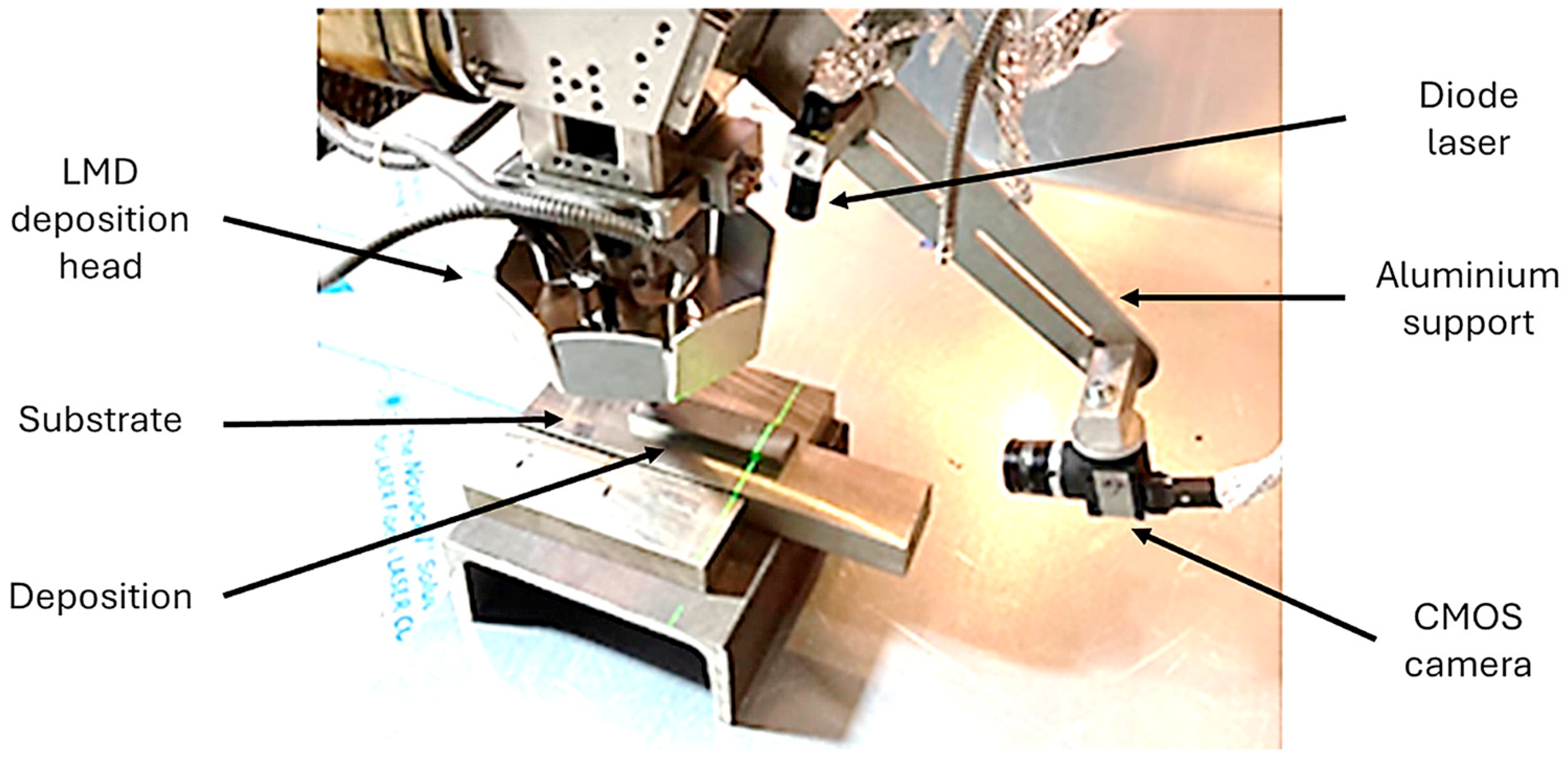
The experimental setup involved a prototype laser line monitoring system (LL) mounted on the deposition head of the LaserCell 1005 LMD machine (TRUMPF, Ditzingen, Germany), as shown in
Figure 1. The LMD system consists of a 3 kW CO
2 laser source, which provides Gaussian-like power distribution on the spot laser. The motion is performed by a CNC system with six degrees of freedom, ensuring excellent flexibility in processing. Finally, the powder feeding system comprises an external feeder equipped with a double hopper and a coaxial multijet nozzle. Argon was used as shielding gas to prevent oxidation, while Helium was utilized as carrier gas to transport powders.
The LL system comprises a 532 nm, 5 mW diode laser (Changchun New Industries Optoelectronics Tech, Changchun, China) as the light emitter and an industrial-grade IDS UI148xSE-C (IDS Imaging Development Systems, Obersulm, Germany) camera equipped with a 12.5 mm focal length lens for image acquisition. The optical components are rigidly mounted on a precision-engineered aluminum framework to ensure stability and alignment. Accurate alignment between the scanning system and the deposition head is critical for precise profile reconstruction. This was ensured during system setup by employing a dedicated positioning jig, which established a repeatable and stable of the components. Once aligned, the mechanical setup remained unchanged throughout the experiments, minimizing the risk of misalignment during data acquisition. The LL system was configured as a track-wise system, requiring an additional movement of the deposition head at the end of each track. Data were acquired as video sequences by the IDS UI148xSE-C CMOS camera (IDS Imaging Development Systems) at a frame rate of 8 frames per second, while the scan speed was set to 200 mm/min, equal to the deposition speed. This configuration resulted in a resolution of approximately 0.06 mm along the X-axis (the minimum distance between adjacent points on each acquired profile), while the resolution along the scan axis (Y-axis) was on the order of 0.4 mm depending on the camera frame rate and scanning speed.
2.2. Methods
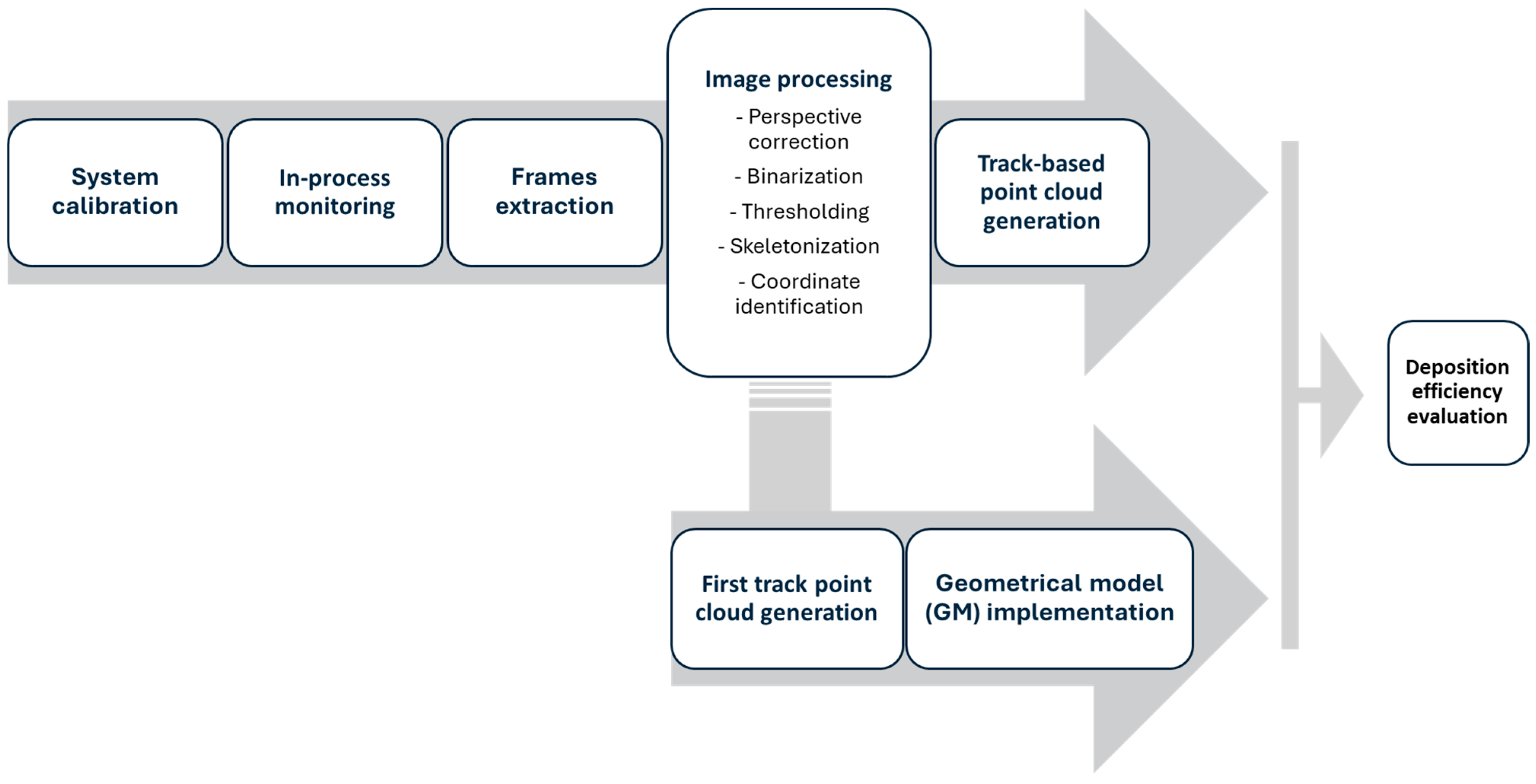
The proposed monitoring procedure follows the workflow illustrated in
Figure 2. The first step consists of calibrating the system by scanning a reference object with well-defined dimensions. A prismatic artifact made of 316L stainless steel (nominal dimensions: 30 × 60 × 12 mm), previously measured using a DeMeet 400 coordinate measuring machine (Schut Geometrical Metrology, Groningen, The Netherlands), was employed for this purpose. The system, equipped with a 2 mm ruby-tipped probe, has a maximum permissible error of approximately 3 μm along the X, Y, and Z axes.
The measurement uncertainty of the laser line scanning system was addressed through a dedicated calibration procedure that compensates for perspective distortion and geometric deviations. Repeated measurements were performed to configure the system and reduce systematic error, ensuring that the extracted data provide a reliable representation of both deposition efficiency and track geometry. Specifically, the calibration artifact was scanned three times using the same setup and scanning speed adopted during the in situ monitoring phase, in order to guarantee repeatability and consistency of the acquisition conditions. Correction factors were then computed for each spatial direction (X, Y, and Z). Specifically, corrections along the X and Z axes were introduced to compensate for perspective distortions resulting from the angular inclination of the camera with respect to the deposition plane. The correction factor along the Y axis addressed inaccuracies stemming from deviations in the profile acquisition frequency and minor variations in the scanning velocity. Since the spacing between adjacent profiles depends on both scanning speed and acquisition rate, slight fluctuations in either parameter can lead to dimensional inconsistencies. The estimated correction factors were then implemented in the MATLAB R2021b (MathWorks, Natick, MA, USA) algorithm used for the in-process data processing. Because the experimental setup remained unchanged across all builds, these factors were assumed constant and applied uniformly to all measurements.
In the proposed setup, the scanning phase was performed with the process laser switched off; therefore, spatter was not generated during data acquisition. The main source of potential artifacts was instead related to surface reflectivity, which could produce reflections of the laser line and introduce localized noise in the acquired images. To mitigate these effects, each frame was first corrected for perspective distortions based on the initial calibration, and then thresholded using an automated procedure based on Otsu’s method. This method selects an optimal threshold by minimizing intra-class variance between pixel intensity distributions.
Following preliminary tuning tests aimed at improving the quality of the acquired profiles by increasing the number of detected points and reducing background noise, a fixed threshold equal to 50% of the value computed via Otsu’s method was applied consistently across all frames. This approach ensured robust extraction of the track geometry, which was only weakly sensitive to moderate threshold variations. This limited sensitivity results from the high spatial resolution of the system, which defines each track profile with a large number of points, allowing reliable reconstruction of track or layer volumes. As a result, the impact of surface reflectivity on overall track volume estimation is therefore limited, as the main geometric features of each deposited track are preserved while enhancing the robustness and reliability of the measurements. Point-cloud filtering during image processing primarily removes outliers arising from noise or laser-line reflections, which could otherwise distort the reconstructed profile.
The binarized frames were then skeletonized to extract the XZ profiles, defined as the height values associated with each X-coordinate. By stacking these profiles along the Y axis, the full point cloud of the component was reconstructed. Residual misalignment between the monitoring system and the substrate was then corrected through geometric alignment. Finally, track volumes were obtained by subtracting the cumulative volume of the preceding track from that of the current track, enabling in-process estimation of deposition efficiency.
In this study, all scans were carried out at the end of each deposited track by translating the LL system along the Y axis. However, the proposed methodology is readily adaptable to different monitoring strategies, including layer-by-layer scanning.
Table 1 provides a summary of the process parameters and the setup of the LMD machine. The powder flow rate (
) was determined through preliminary calibration tests. During fabrication, a controlled defect was introduced by temporarily interrupting the powder flow to evaluate its effects on the deposition process and deposition efficiency analysis.
To assess deviations from the nominal geometry, a simple geometric model (GM) was developed, as discussed in the following section. This model is based on the acquisition of a single track realized using the same setup and process parameters, from which the average cross-sectional area is calculated. The nominal volume of the deposited track is then estimated accordingly.
In order to assess the system’s capability in estimating deposition volume and efficiency, a two-layer sample (25 × 50 mm
2) was fabricated using a bidirectional raster deposition strategy with a 10% overlap between tracks. AISI 316L (density γ of 7930 kg/m
3) was used both as powder and as substrate material. Although higher track overlap were not directly investigated, complementary experiments using the LL system for in-situ point cloud acquisition showed robust performance across overlap values between 10 and 50% [
10]. Since the method relies on geometric reconstruction from the point cloud, it is expected to remain reliable under higher overlap conditions. Furthermore, the two-layer sample was employed to demonstrate the scalability of the proposed approach, which can be iteratively extended to an arbitrary number of deposited layers.
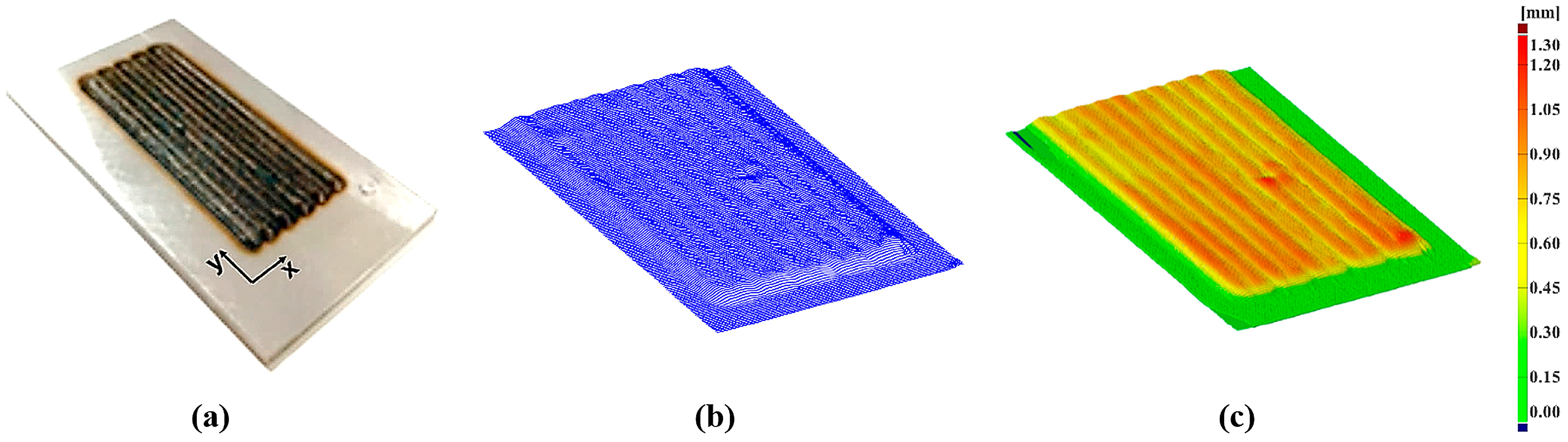
Figure 3 shows the fabricated sample, the point cloud and the final 3D reconstruction obtained using the LL system.
A metallographic analysis was performed to validate the deposition efficiency results obtained by LL system. Cross-sections extracted from regions where the deposition process had reached a stable deposition regime were considered representative of the full track length under steady-state conditions. The sample preparation was initiated by sectioning using a precision diamond saw to minimize deformation. The sample was then mounted in epoxy resin to facilitate handling and ground using progressively finer abrasive papers to eliminate surface damage. Polishing follows, employing alumina suspensions on specialized cloths to achieve a mirror-like finish. Finally, a detailed characterization was carried out using optical microscopy for metallurgical evaluation and quality assessment.
3. Results and Discussion
In this study, each deposited track was scanned immediately following its deposition. The point clouds collected by the LL system were analyzed by means of the Inspect Optical 3D 2023 software (ZEISS, Oberkochen, Germany), which generated a color map representing the height of each point relative to the substrate reference plane.
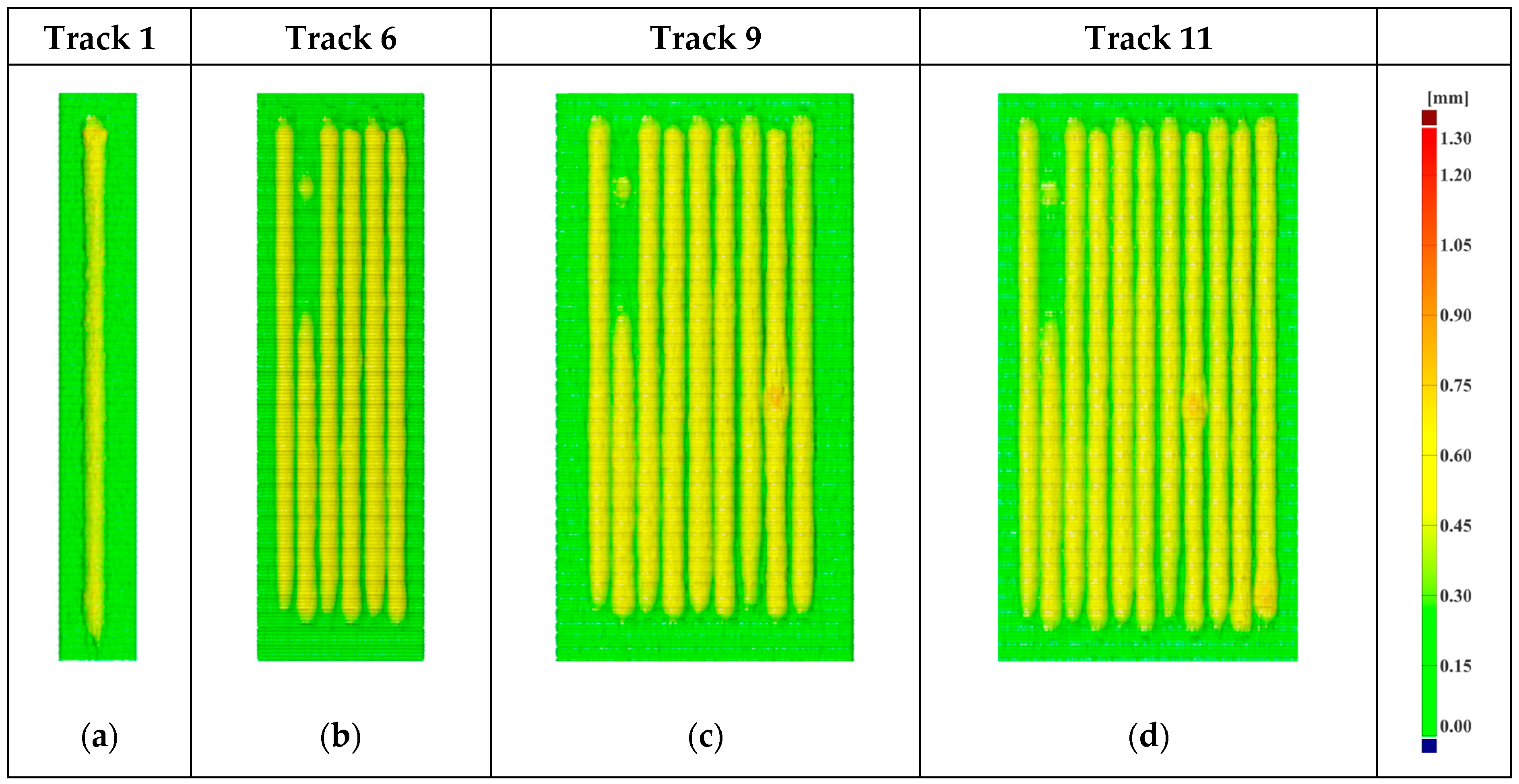
Figure 4 illustrates the output of the track-by-track scanning process and the morphology at different stages of the first-layer deposition. Furthermore, the area affected by the induced defect is visible at the second track, where the interruption of powder delivery produced a lack of deposited material. Other minor defects are detectable after track 2, caused by slight fluctuations in the powder flow due to partial clogging of the nozzle, which may have locally compromised the stability of the deposition process.
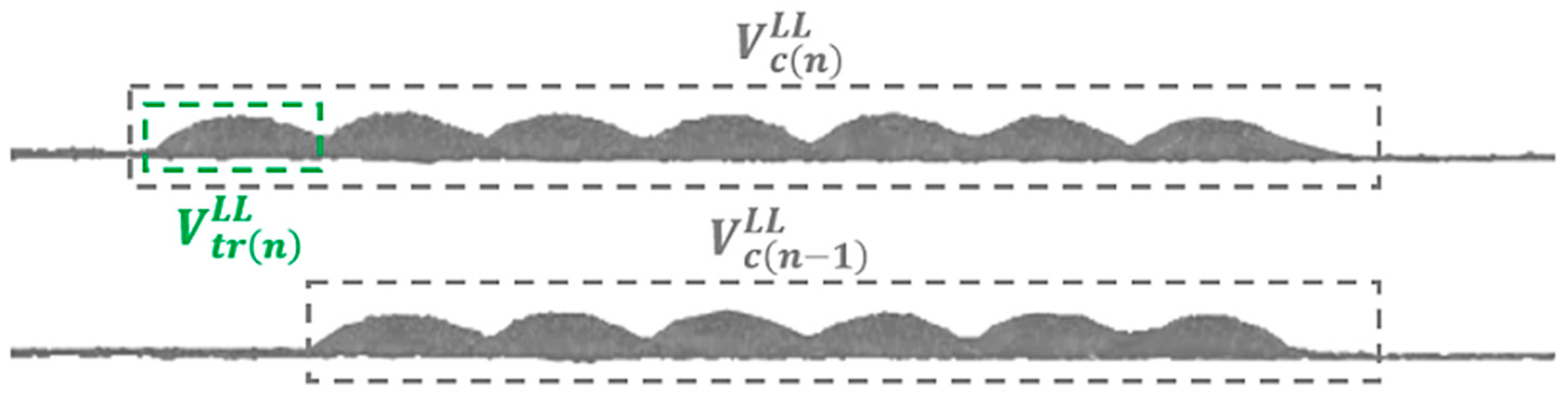
By analyzing the point cloud of each deposited track acquired by the LL system, the deposited volume could be assessed. This was achieved by iteratively defining the surface that best fit the substrate plane for each scan in order to account for slight deformations caused by the deposition process. However, the overlap between tracks (
Figure 5) prevents the direct calculation of individual track volume.
Therefore, a subtractive approach was applied to calculate the individual volumes. Specifically, Equation (1) was used to determine the volume of a specific track “n” (
), calculated as the difference between the cumulative volume up to track “n” (
) and the cumulative volume up to the previous track (
).
This methodology was also applied to the second layer, which comprises tracks deposited within the valleys of the underlying layer.
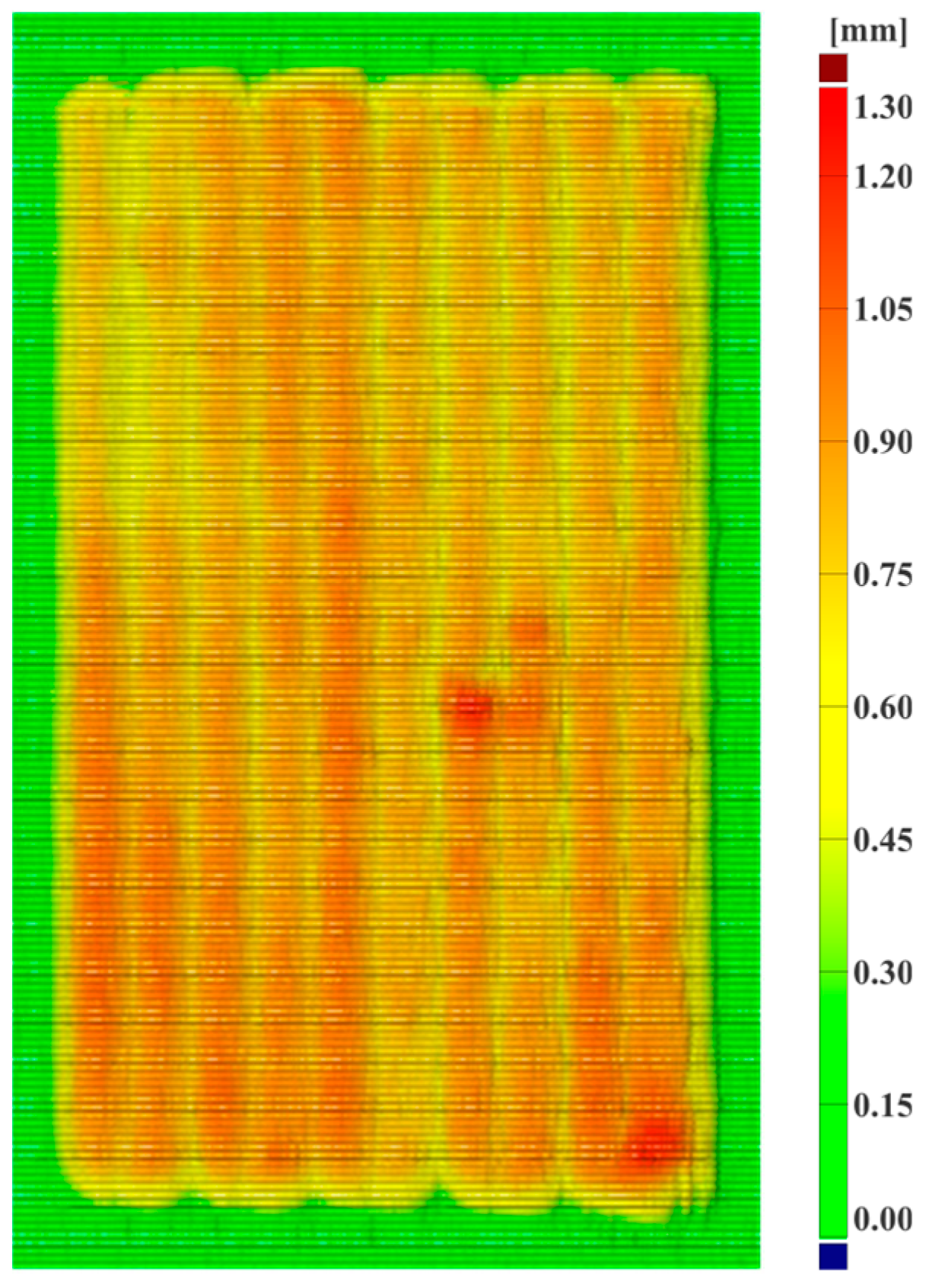
Figure 6 shows the surface height distribution data of the second layer. The color map shows how the deposition of the second layer has partially mitigated the irregularity of the first layer.
In this case, the reference surface is no longer the approximately planar substrate, but the geometrically complex surface defined by the morphology of the previously deposited tracks. Under such conditions, the proposed subtractive approach is the most appropriate method for accurately calculating individual track volumes. Specifically, for the first track of the second layer, the volume of the entire first layer was subtracted from the cumulative deposited volume measured up to the end of that track. This allowed for the isolation of the volume attributable solely to the track in question, thus enabling a more precise assessment of deposition. This iterative procedure was applied to all subsequent tracks.
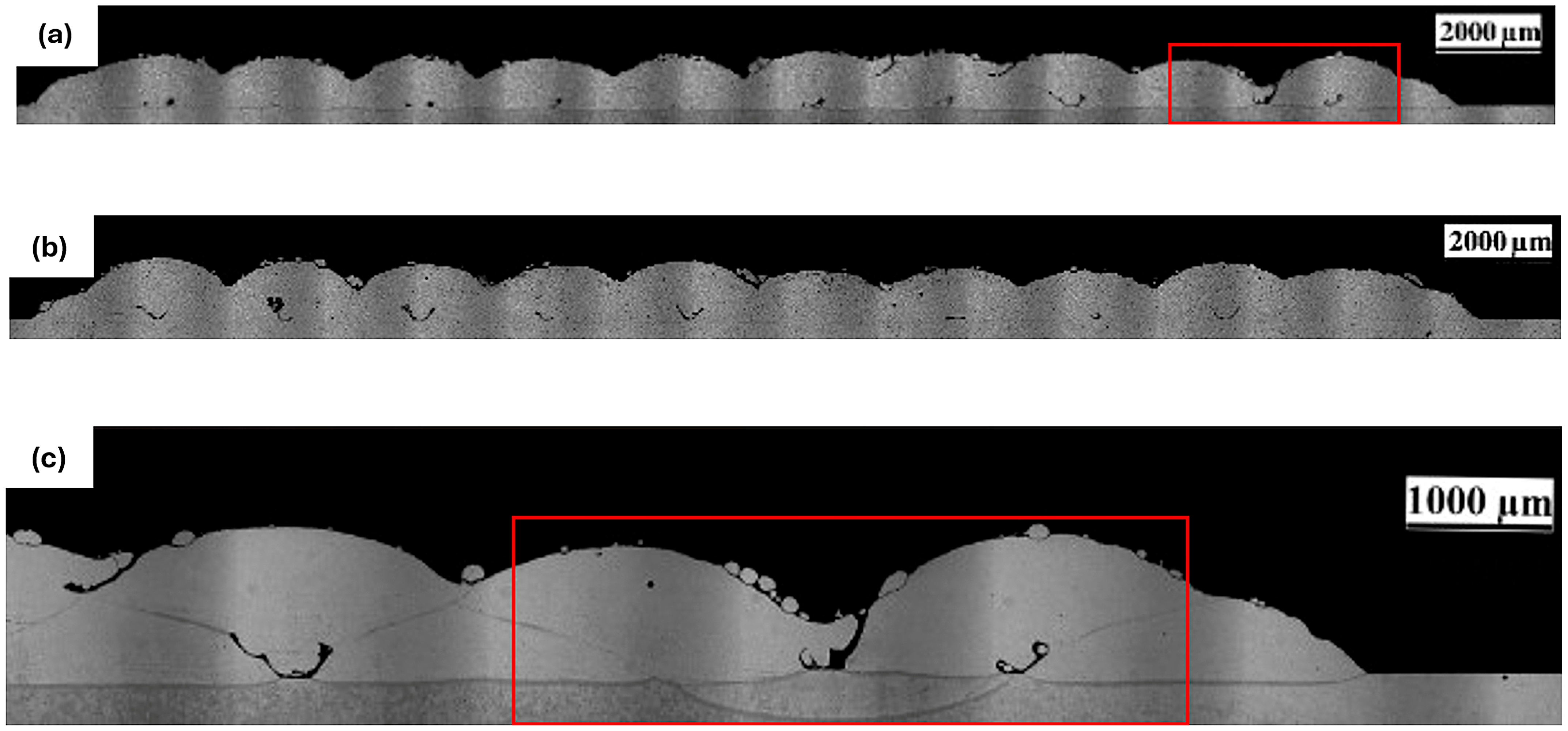
To validate the proposed procedure, the data collected by the LL system were compared with values obtained through metallographic analysis (
Figure 7). First, the cross-sectional area of each track (
) in both cross-sections was measured using micrographs analyzed with an image processing algorithm implemented in ImageJ 1.54 (National Institutes of Health, Bethesda, MD, USA). Subsequently, the two approaches were compared by calculating the deposition efficiency.
Assuming steady-state deposition conditions with a constant powder flow rate (
) and the absence of porosity, the efficiency (
) was calculated according to Equation (2), where
represents the deposition length derived by the part program,
is the material density, and
is the volume of the track.
In the case of metallographic analysis,
values were calculated using Equation (3), by assuming a constant cross-sectional area over the entire length
. This assumption reflects the intrinsic limitations of metallography, which is destructive and time-consuming and therefore permits examination of only a limited number of cross-sections.
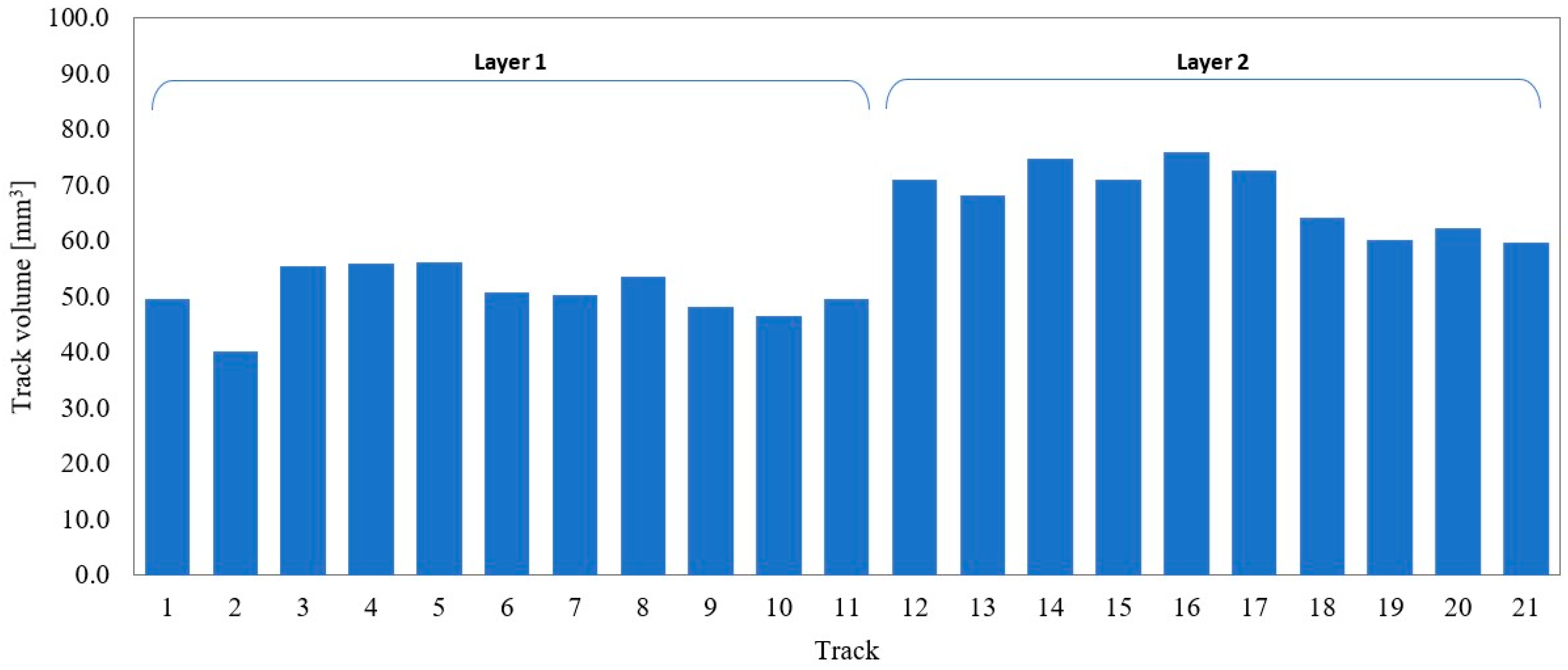
Figure 8 presents the track volumes estimated using the proposed method. The
average values of the second layer (67.97 mm
3) are considerably higher than those of the first layer (50.57 mm
3). This behavior aligns with findings from other studies, suggesting that second-layer tracks are deposited within deep valleys formed between first-layer tracks, which confine the melt pool and enhance powder catchment efficiency [
37].
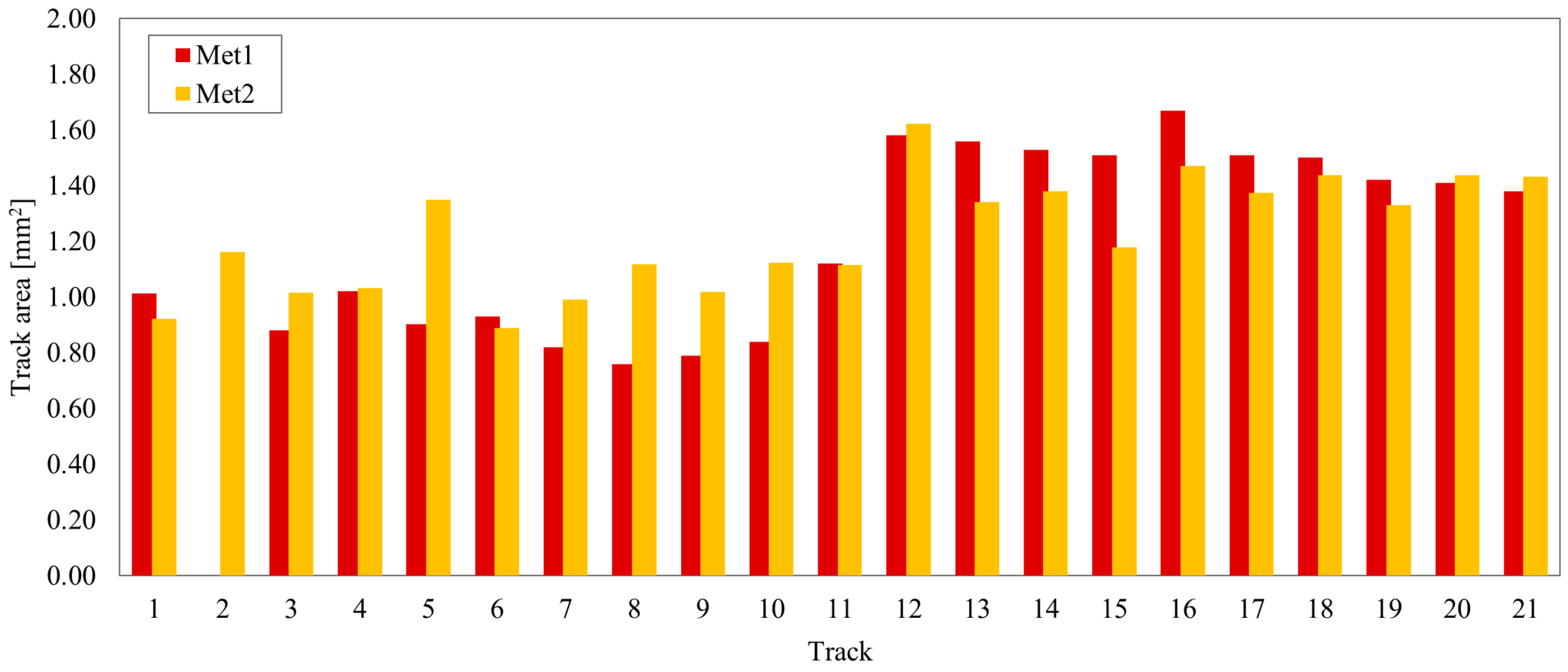
Figure 9 compares the track areas (
) measured in the two cross-sections, referred to as Met1 and Met2. In particular, track number 2 highlights the limitations of the metallographic approach, showing a significant discrepancy between values (0.00 and 1.163 mm
2). This discrepancy is attributable to the localized nature of the metallographic approach, where values are obtained from specific sections that may not represent the overall track dimensions and geometry. Specifically, Met1 was taken in the region affected by the lack of material, giving a null value. This highlights the limitations of metallographic analysis, which provides accurate but highly localized results.
Finally, deposition efficiency calculated using both methods was compared. Moreover, the estimation of
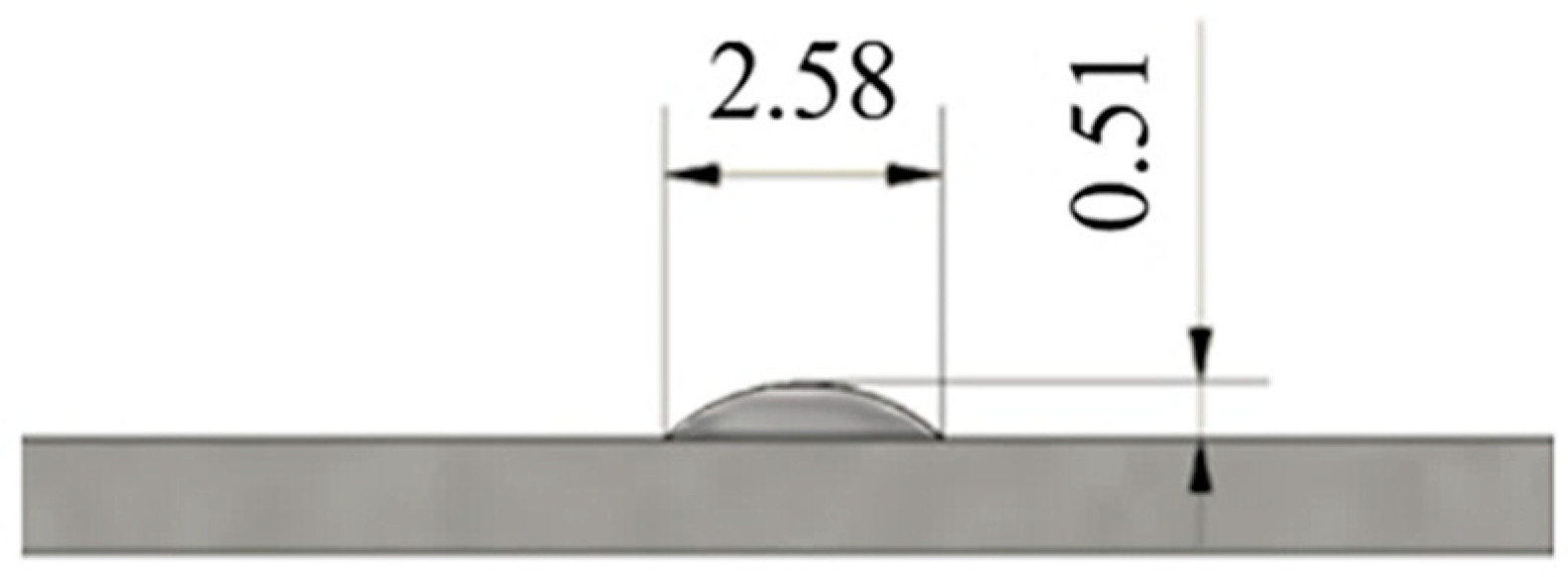
, derived from the simple GM proposed, is provided as a reference. As previously mentioned, this model is based on scanning the first deposited track and calculating its average cross-sectional area. (
Figure 10). This model represents a simple model widely used for the preliminary design of laser deposition processes in which the cross-sectional shape of the single track is approximated to a segment of a circle whose area is determined by the intersection of the circle area and the substrate profile [
38,
39,
40].
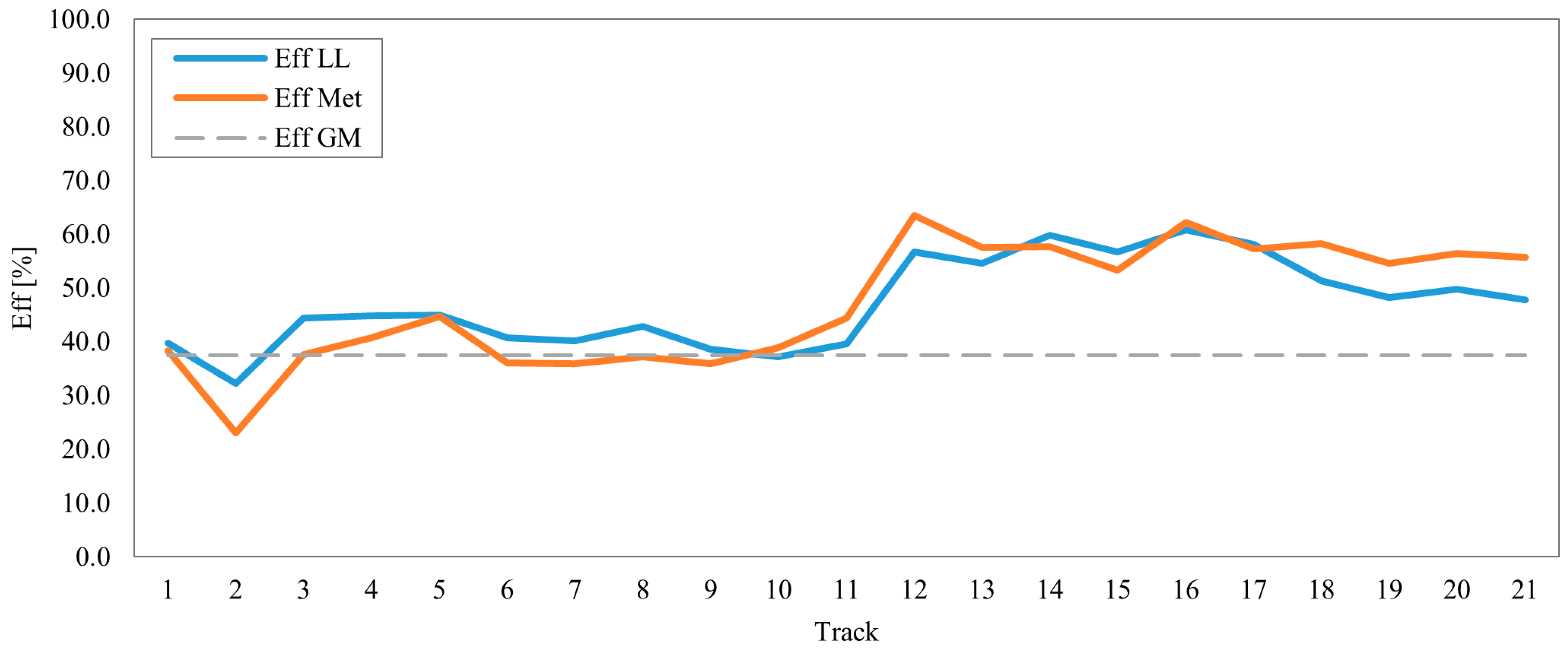
Figure 11 shows the comparison between the methods.
values were calculated by averaging the data obtained from the two sections. Results indicate that the trends derived from the different approaches are very similar, yielding average deposition efficiencies of 40.5% for
, 35.5% for
and 37.4% for
in the first layer. This is likely due to the limited overlap between adjacent tracks. The calculated indices successfully identified the induced anomaly, the interruption of powder feeding during the deposition of the second track, yielding an efficiency value lower than 40%. For the second layer, the deposition efficiencies calculated by the LL system and metallographic analysis deviated significantly from the geometrical model, with average values of 54.4% and 57.6%, respectively. In practice, the melt pool is confined within a valley formed between two previously deposited tracks of the first layer, which enhances powder catchment efficiency, as previously discussed [
37]. This effect, however, is not captured by the geometrical model (GM).
Assessing indexes related to deposition efficiency, computed from in-process data, is crucial for detecting process anomalies and defects associated with powder feeding issues, while also offering opportunities for economic assessments. Indeed, although scientific literature indicates that
typically ranges from 10% to 90% for LMD processes, considering the costs of the powders and the challenges related to their reuse, maximizing this value is essential, and generally, values below 50% raise significant concerns regarding the industrial feasibility of the specific application [
12]. Although porosity and thermally induced volume variations may affect deposition efficiency, their impact in the present experiments was minor compared to powder flow interruptions caused by nozzle clogging, which represented the primary source of deposition defects. The proposed approach does not yet explicitly distinguish between these effects, but it provides a robust in-process estimation of overall deposition efficiency.
It is fully scalable to multiple layers and, in principle, can be extended to non-planar curved substrates and repair applications. It is fundamentally based on geometric reconstruction from the in-situ point cloud, with the volume of each track obtained by subtracting the cumulative volume of the previous track, and deposition efficiency calculated using the actual curvilinear deposition length . While surface curvature and local orientation may require minor calibration or compensation, the underlying volume-based methodology remains valid.
4. Conclusions
This work introduces an innovative method for in-process monitoring of deposition efficiency () in LMD multi-layer deposition, utilizing end-track scan data collected through a laser line scanning system mounted on the deposition head.
The method first involves the accurate 3D reconstruction of the specimen during fabrication. Using the planar surface of the substrate as a reference for the first layer, and the complex geometry of the underlying layer for the second, the cumulative volume of the deposited tracks can be determined. A subtractive approach is applied to calculate the individual volumes and the average deposition efficiency of each track.
Deposition efficiency was demonstrated to be a reliable indicator for evaluating process performance, as shown by its application to a multi-track, two-layer sample used as a test case. The proposed method was compared with metallographic analysis, yielding closely aligned results (average deviation of 4.3% across all tracks) and effectively identifying the impact of a temporary suspension in the powder feeding. Furthermore, the experiment highlighted the limitations of conventional metallography, particularly its destructive and time-consuming nature, thereby motivating the adoption of the LL-based approach, which enables continuous in situ evaluation over the entire deposition process.
The method has proven effective for defect detection and may also be valuable in optimizing process parameters during the setup phase of different materials. In fact, the method is material-independent: although this study focused on AISI 316L powder, the same approach can be applied to other materials, including nickel-based alloys, provided that the LL system can reliably detect the deposited tracks. Minor adjustments in image acquisition parameters and thresholding do not alter the core methodology.
Future work will extend the proposed method to samples with more layers, complex geometries, and different materials, enabling reliable in-process evaluation of deposition efficiency under diverse conditions, where the impact of porosity and thermal volumetric variations will be precisely defined through combined detection strategies. Additional tests on components with different surface finishes, colors, textures, and roughness will be conducted to further investigate their effect on profile reconstruction accuracy. Finally, alternative optical filter configurations will be investigated to enable reliable near in-process measurements of deposited volume, which are currently hindered by severe laser-line distortions induced by the process laser in the present experimental setup.




 ,
,