Robust Flux-Weakening Control Strategy Against Multiple Parameter Variations for Interior Permanent Magnet Synchronous Motors




Abstract
1. Introduction
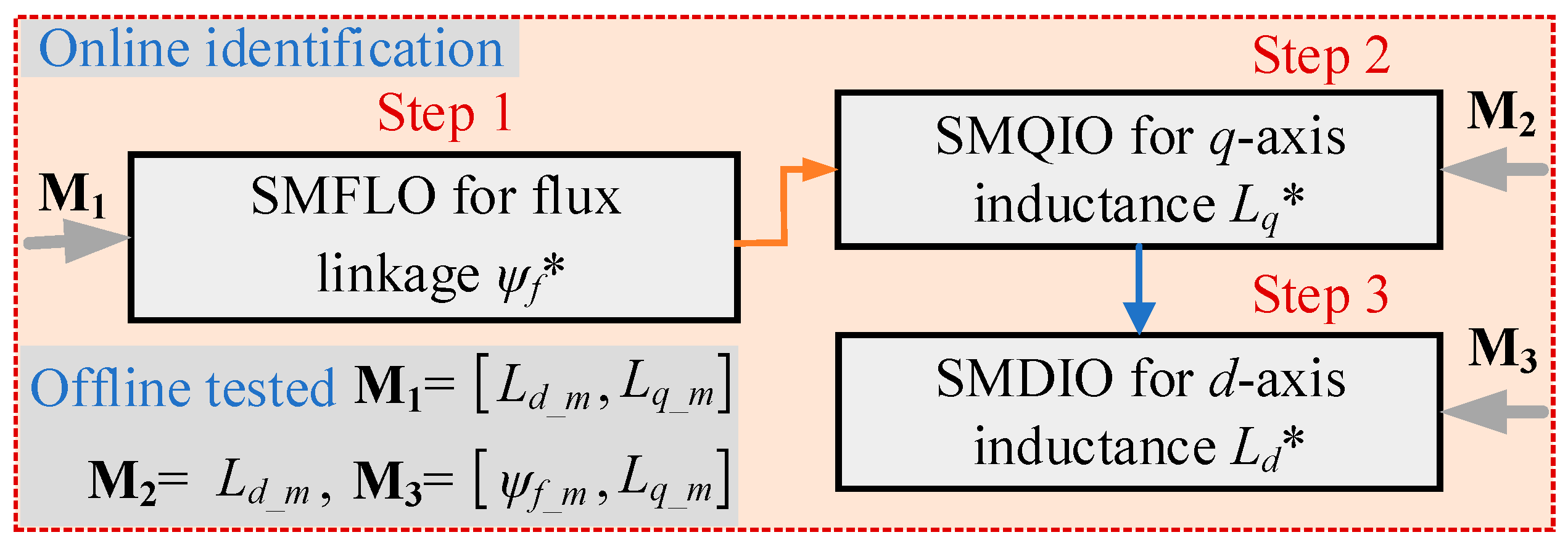
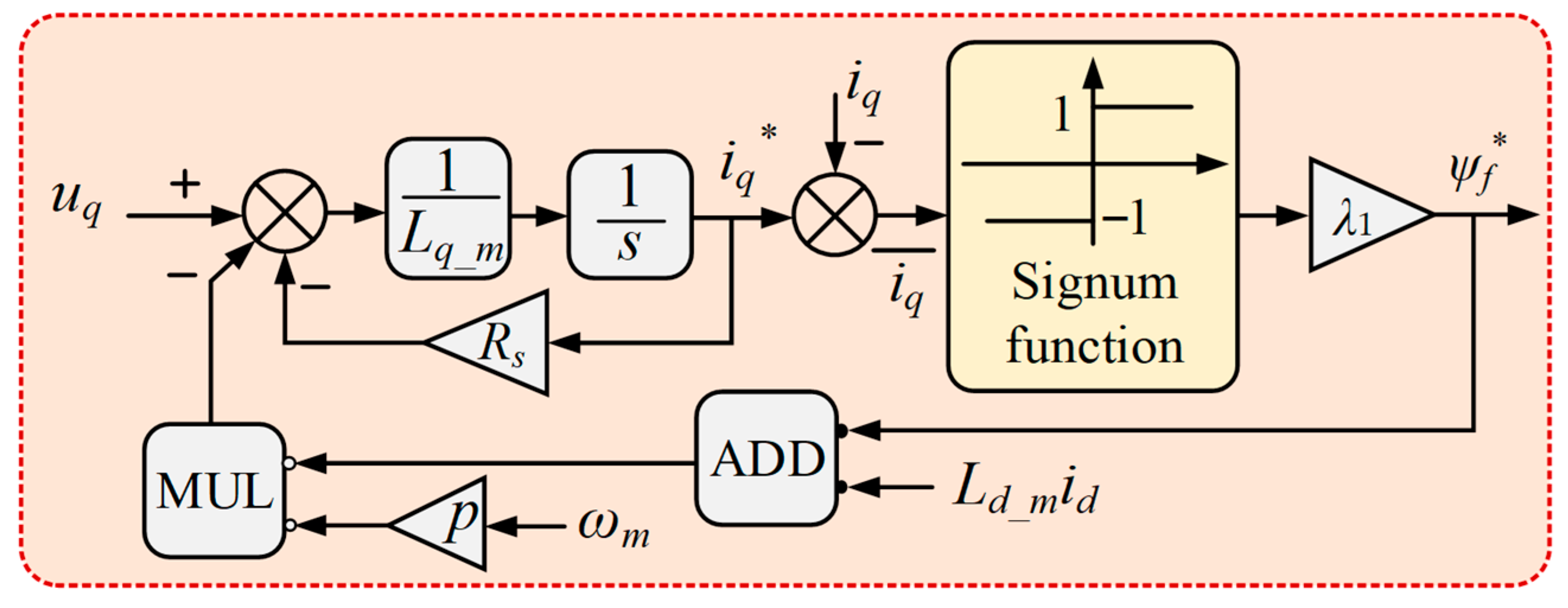
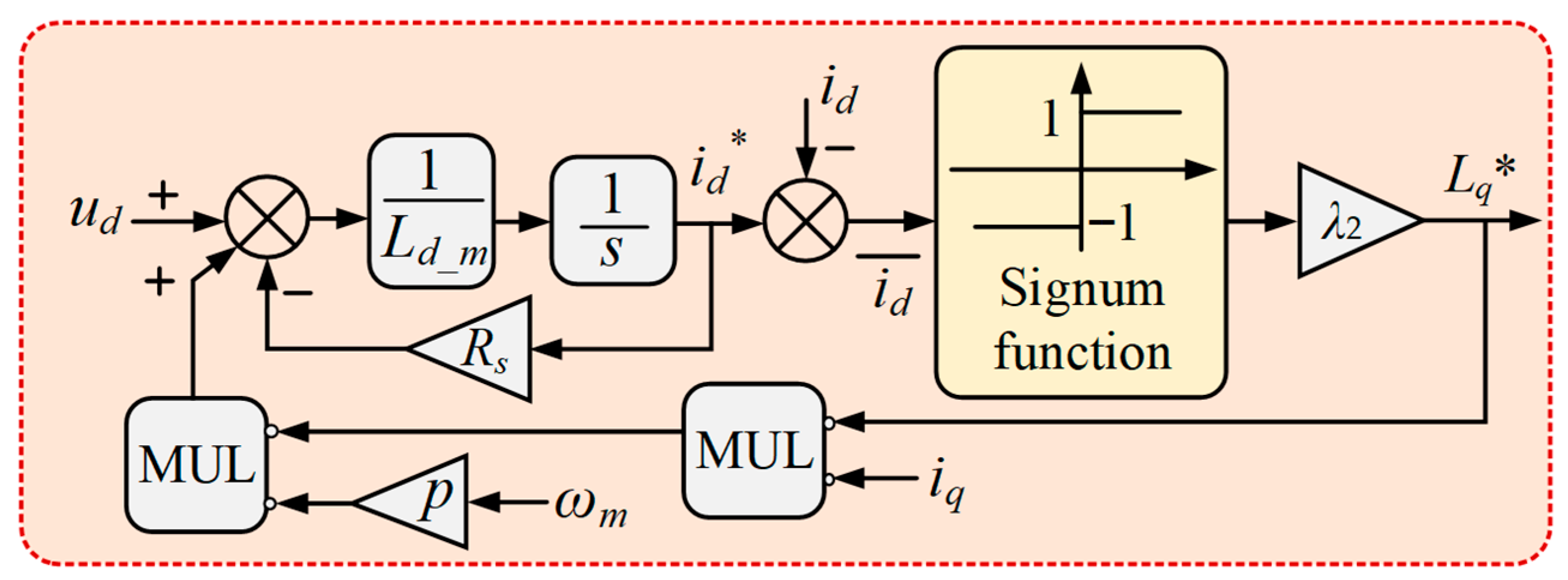
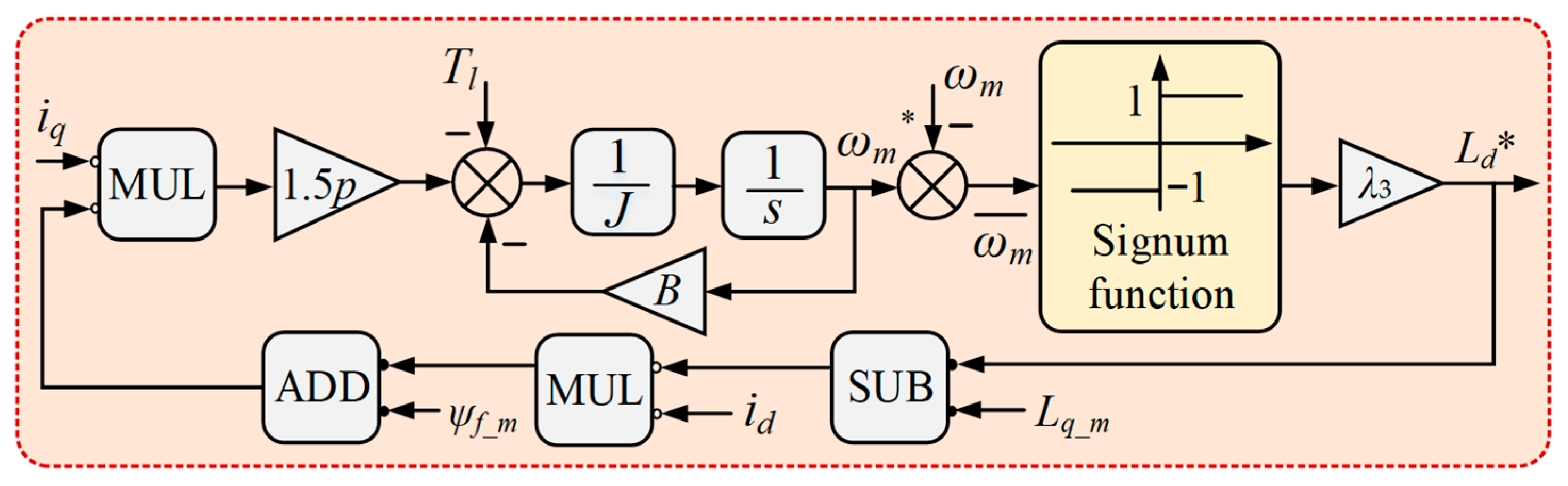
- Instead of estimating one parameter at a time while assuming the others to be known and fixed, three sequential sliding-mode observers are jointly designed to form a sliding-mode observer suite (SMOS) that simultaneously targets the flux linkage, q-axis inductance, and d-axis inductance. The three observers operate in a sequential manner under identical operating conditions, making the estimation of even a single parameter inherently dependent on the entire suite rather than on an isolated observer. Lyapunov-based analysis is further employed to derive explicit stability constraints for the SMOS, ensuring reliable operation under EV-relevant flux-weakening scenarios.
- Based on the SMOS, an error-analysis extraction (EAE) procedure is developed to combine the observer outputs with offline-measured values and formulate a system of three linear equations that is analytically solved to obtain corrected flux-linkage and inductance values. This process explicitly removes the mutual coupling among parameters, enabling accurate and simultaneous identification of flux linkage and inductance even when the original offline measurements exhibit large deviations. As a result, the overall robustness and consistency of the parameter-identification process are significantly enhanced compared with traditional single-observer-based schemes. This method is suitable for EV powertrains whose parameters vary frequently.
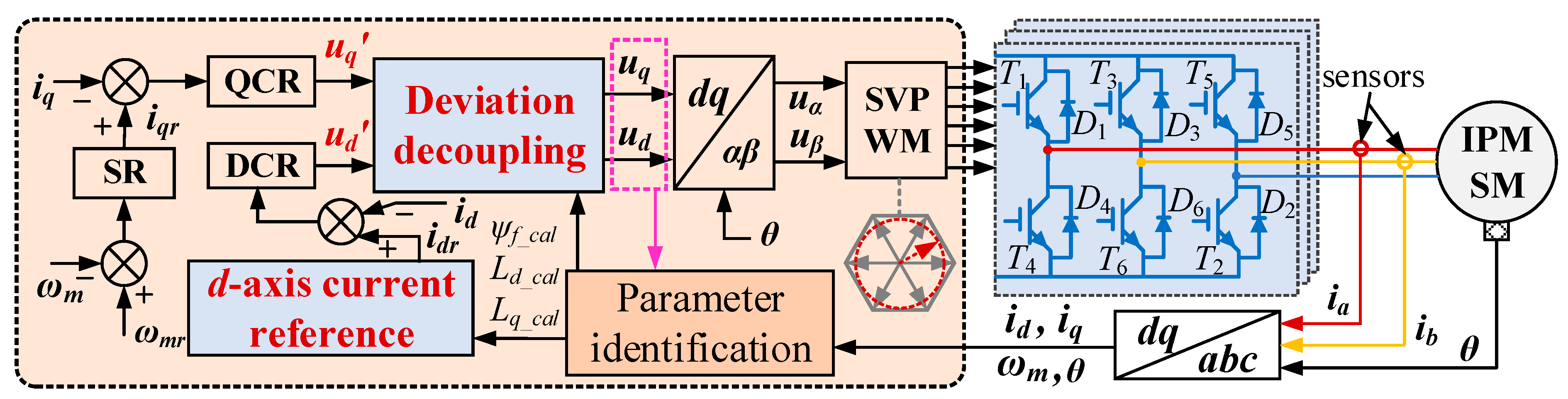
- Unlike traditional flux-weakening methods that use fixed parameters to calculate the reference current in the CVC framework, the accurately estimated flux linkage and inductance are utilized for reference current generation in the proposed method. Together with a numerically derived decoupling strategy, a robust flux-weakening control strategy is achieved. This method is developed by explicitly incorporating the operating characteristics of electric vehicle powertrains, including frequent parameter variations induced by varying working conditions, thereby endowing the proposed strategy with inherent innovation and practical value.
2. Sliding-Mode Multiple Parameter Identification Based on EAE
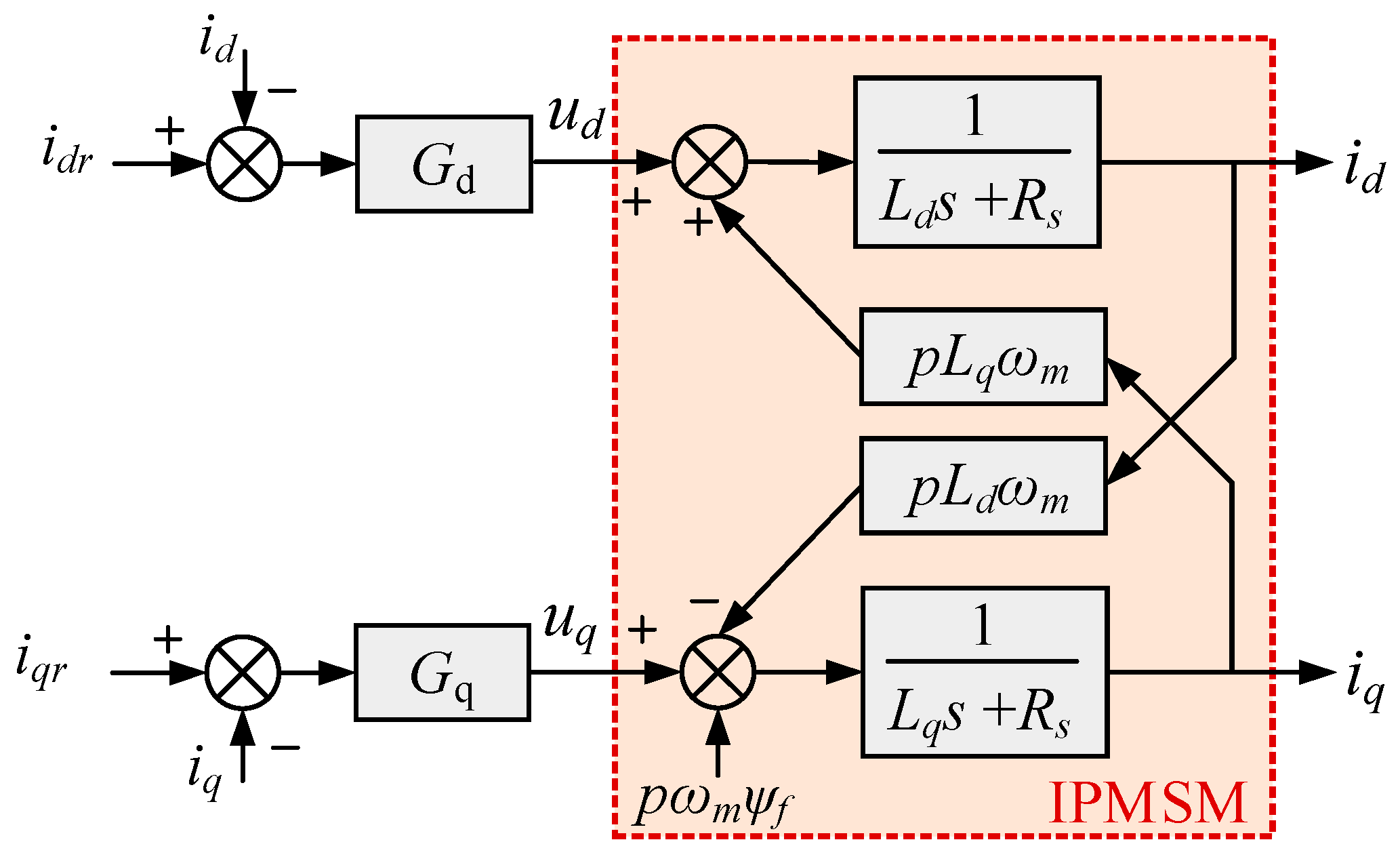
2.1. Modeling of IPMSMs
2.2. Stable Sliding-Mode Observer Suite
- (1)
- No-load rated-speed operation: the motor is operated at no load and accelerated to the nominal rated speed. After reaching steady state, the estimated parameter produced by the SMOS is monitored, and the maximum steady-state fluctuation amplitude Δψf* is recorded (the peak-to-peak variation within a fixed observation window).
- (2)
- Step-load excitation: a step load torque of unit load (1 Nm) is abruptly applied. The time required for the estimated parameter to transition from the disturbed state to a new steady state is measured and defined as the response time Tr.
- (3)
- Cost evaluation and selection: substitute the maximum steady-state fluctuation amplitude Δψf* and response time Tr into the cost function (24). The gain value that minimizes J is selected as the optimal gain within the stability-guaranteed region.where J represents the value of the cost function. Ts denotes the control period, and μ represents the maximum acceptable number of convergence periods. In this study, μ is set to 12.
2.3. EAE-Based SMOS for Parameter Calculation
3. Robust CVC-Based Flux-Weakening Control Strategy
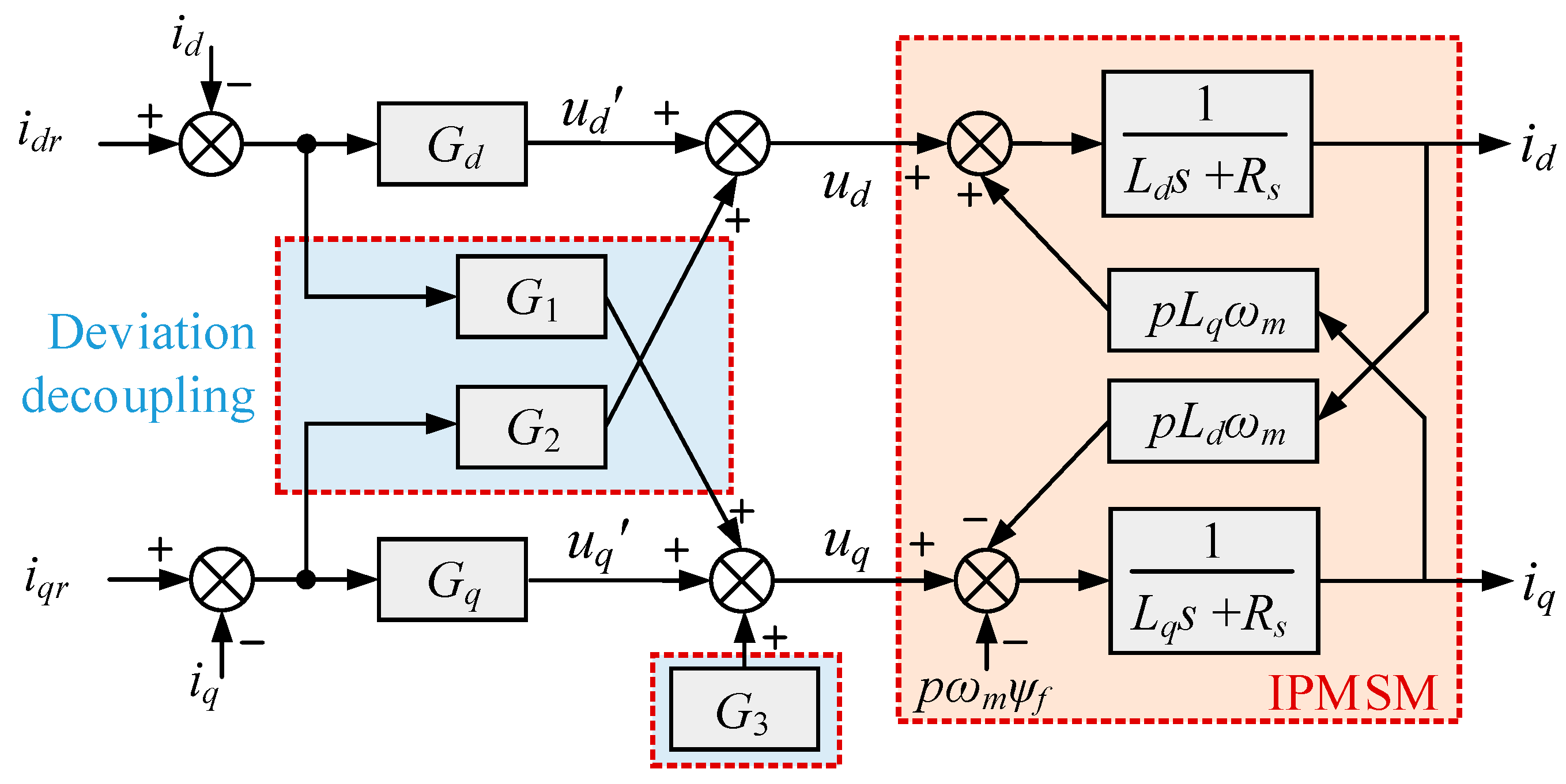
3.1. Deviation Decoupling
3.2. Implementation of Robust CVC-Based Flux-Weakening Strategy
4. Verification Results
4.1. Parameter Identification Results
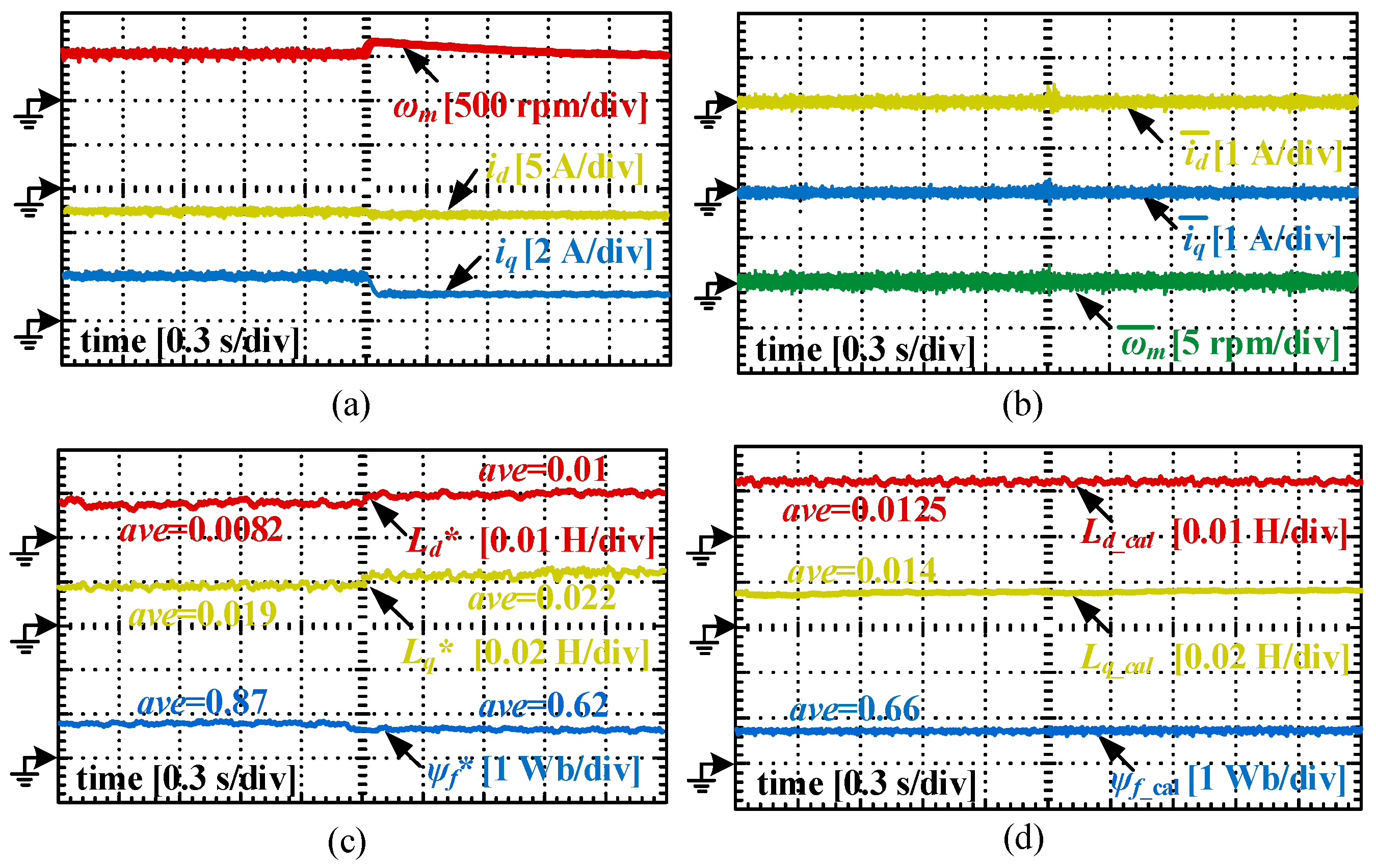
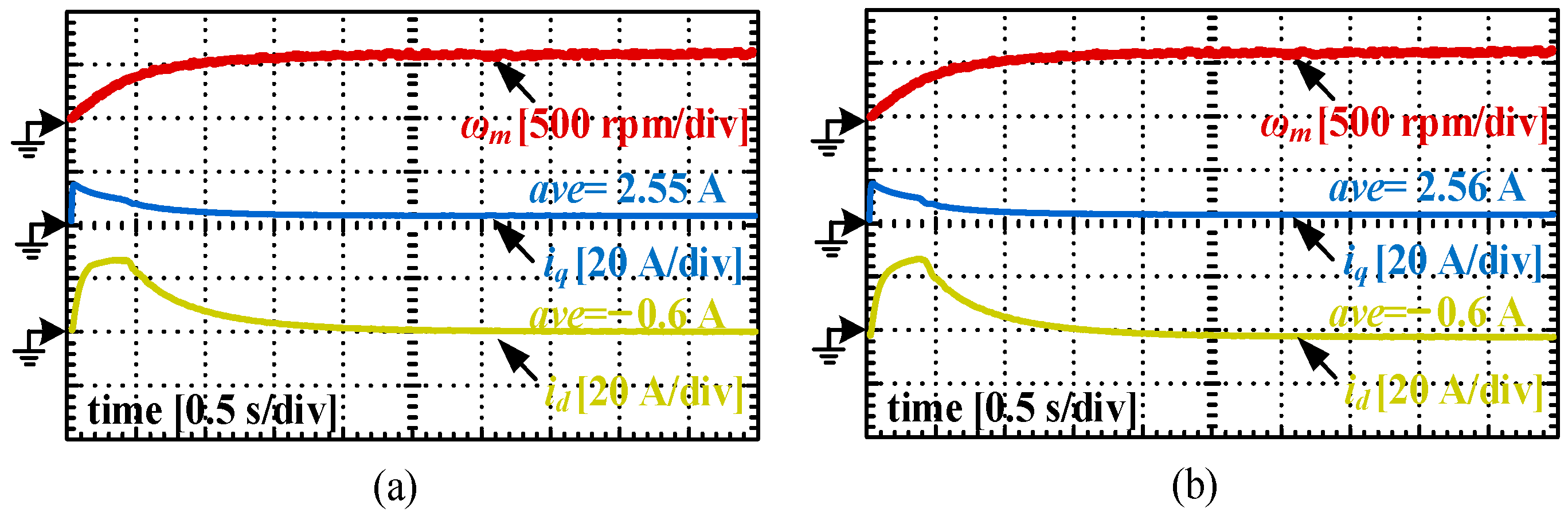
- (a)
- Steady-State performance
- (b)
- Dynamic performance
4.2. Comparative Results of Flux-Weakening Strategy
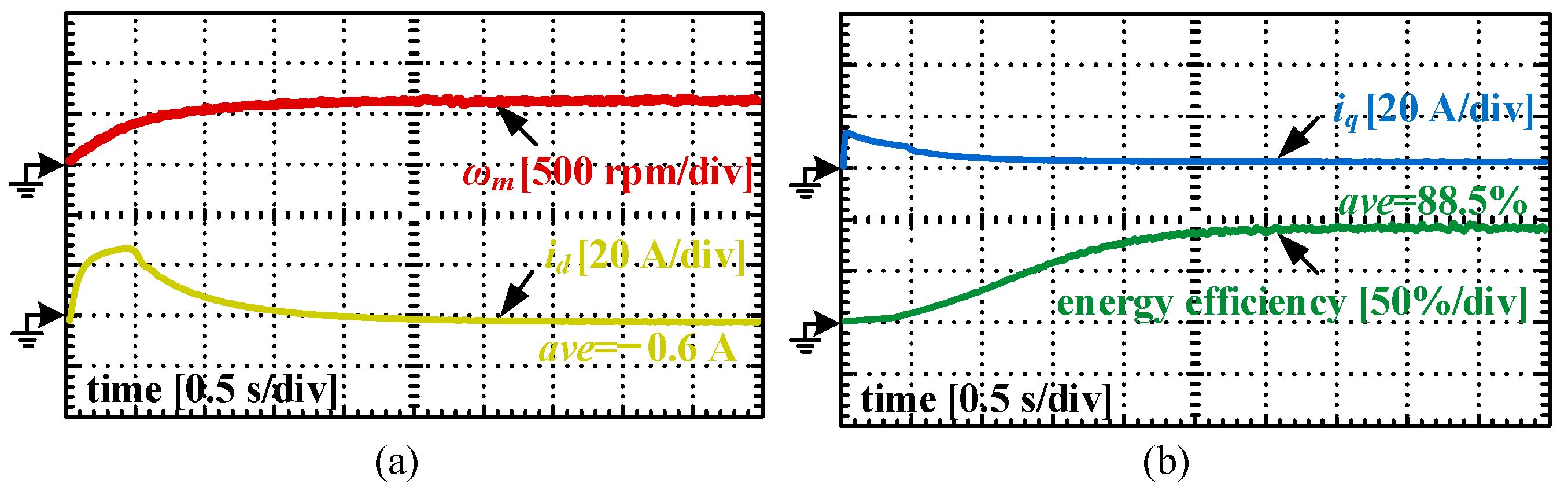
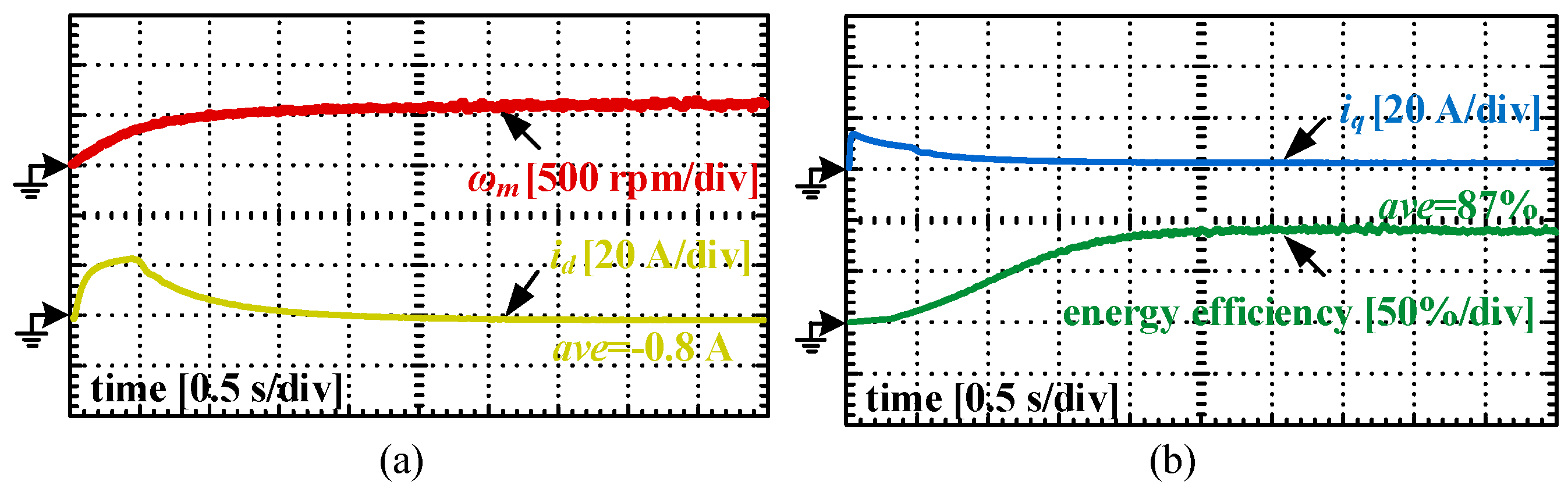
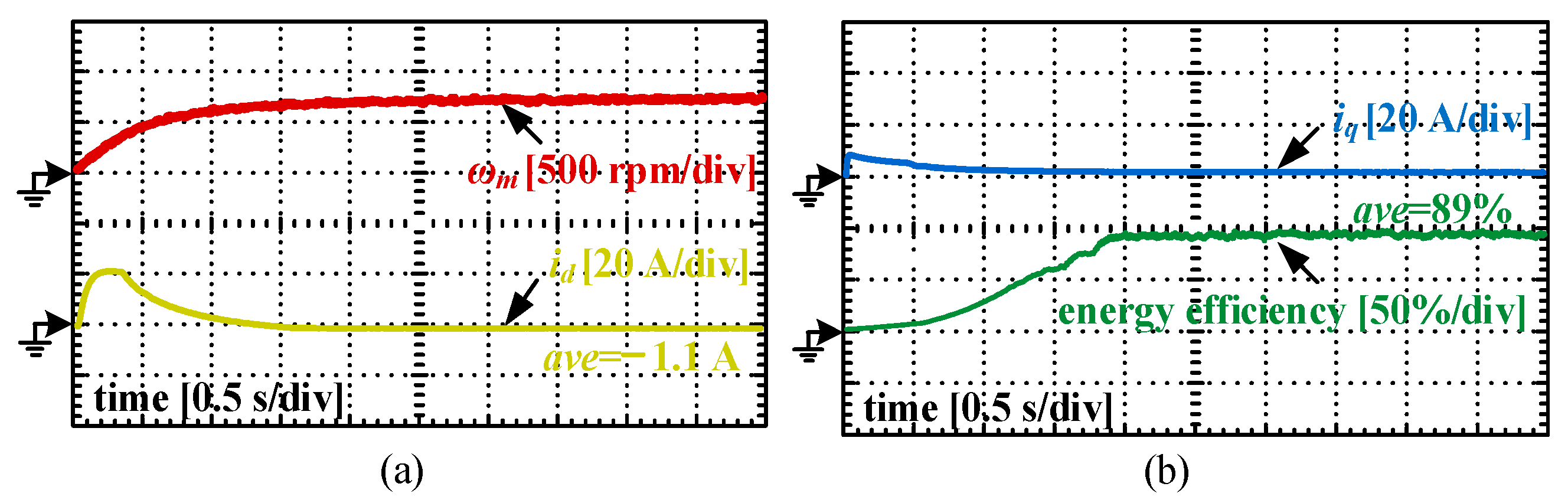
- (a)
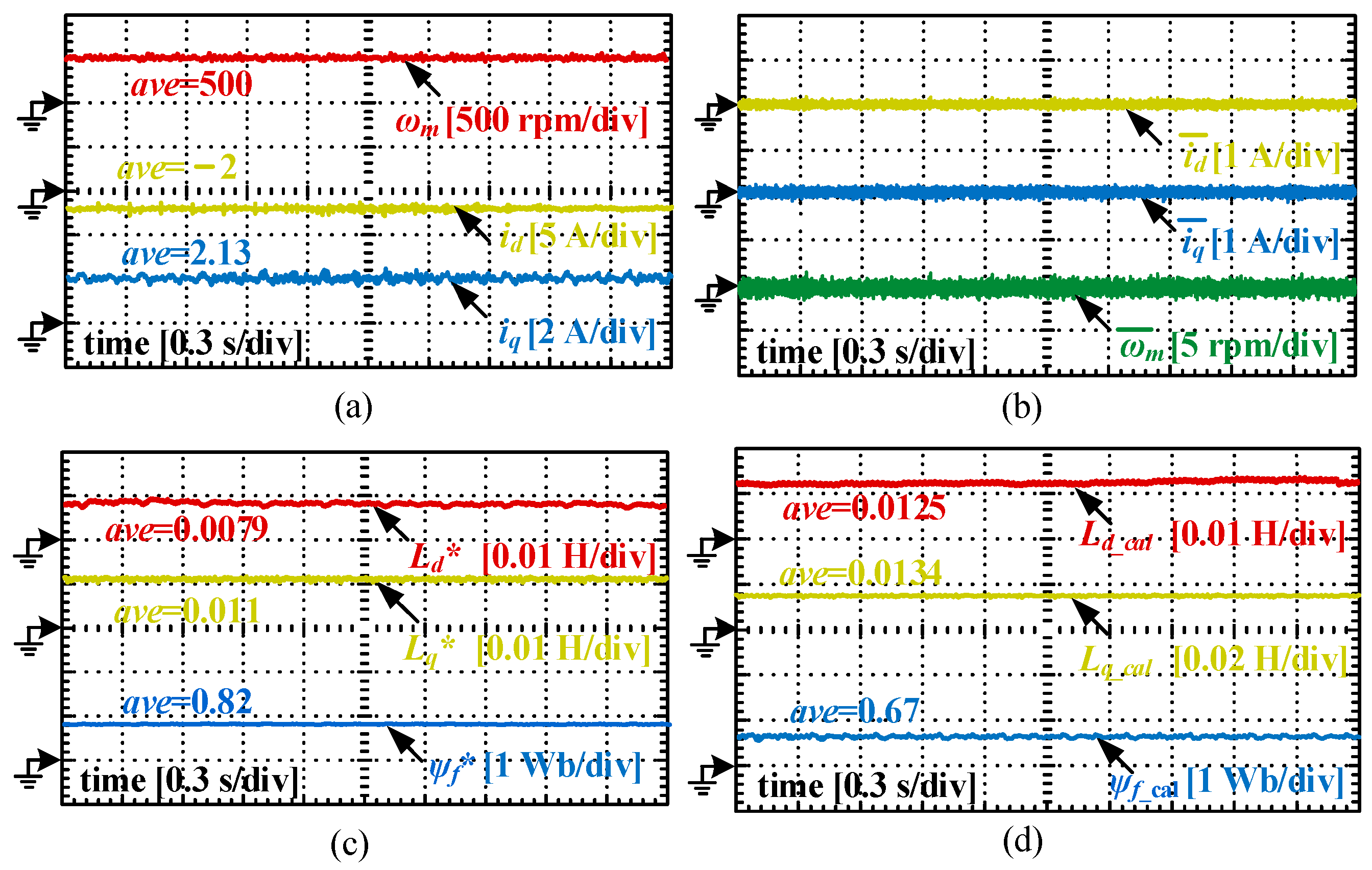
- Without parameter mismatch
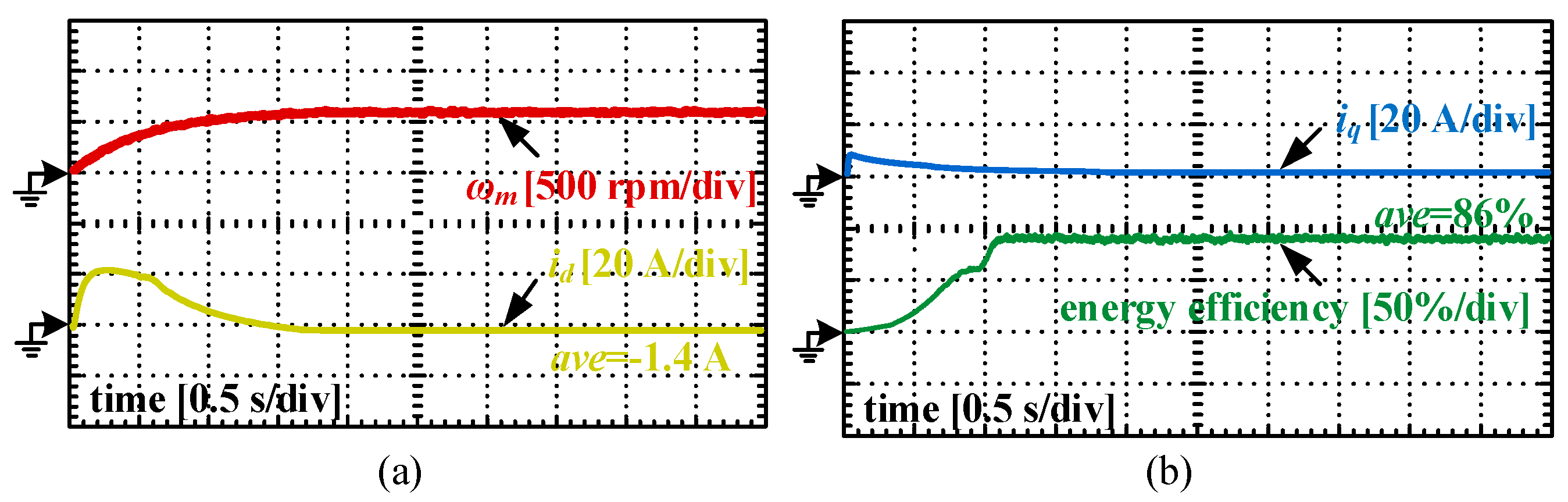
- (b)
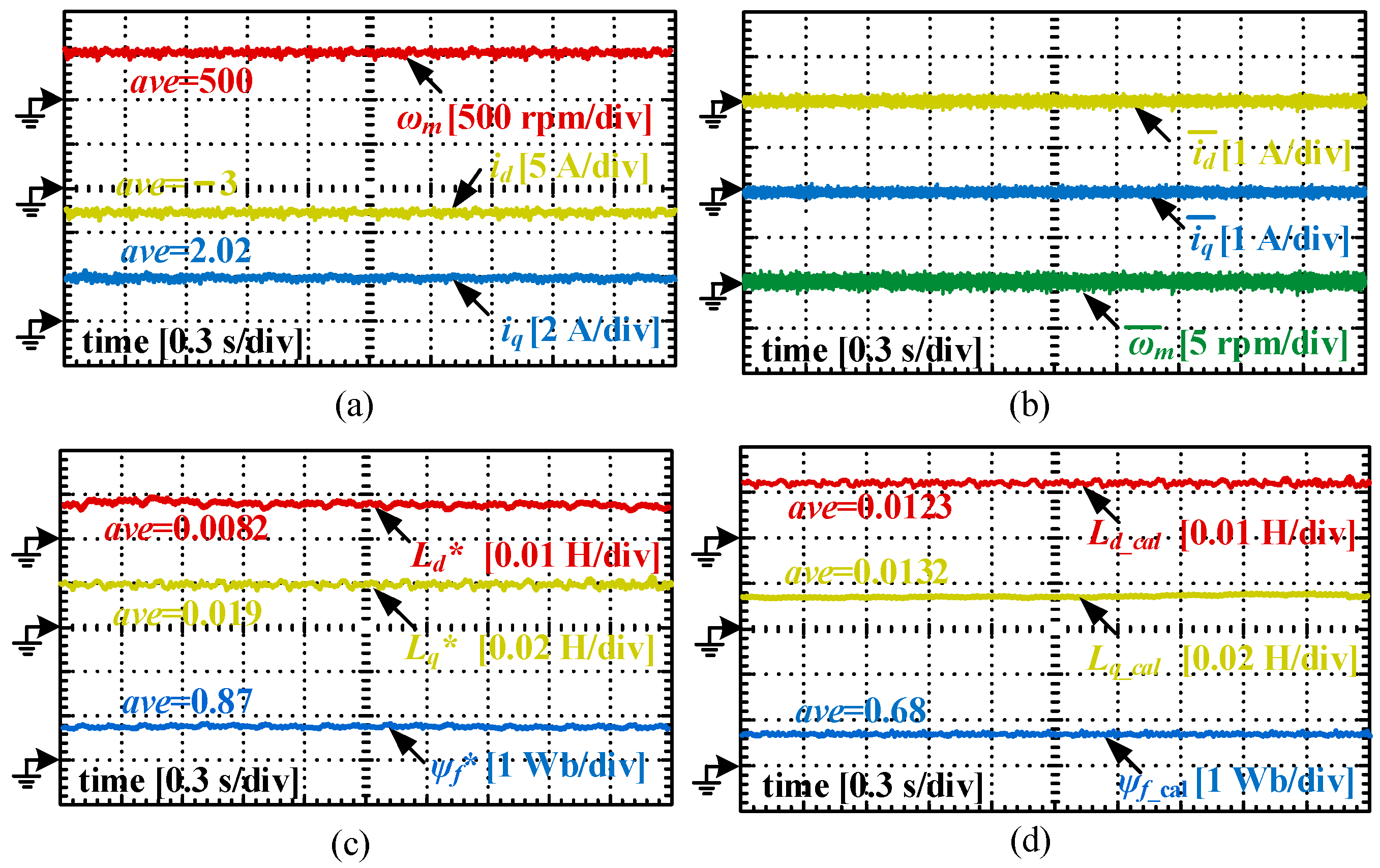
- With parameter mismatch
5. Conclusions
Author Contributions
Funding
Institutional Review Board Statement
Informed Consent Statement
Data Availability Statement
Conflicts of Interest
References
- Tang, A.; Yang, Y.; Yu, Q.; Zhang, Z.; Yang, L. A Review of Life Prediction Methods for PEMFCs in Electric Vehicles. Sustainability 2022, 14, 9842. [Google Scholar] [CrossRef] [Scilit]
- Ling, Z.; Cherry, C.R.; Wen, Y. Determining the Factors That Influence Electric Vehicle Adoption: A Stated Preference Survey Study in Beijing, China. Sustainability 2021, 13, 11719. [Google Scholar] [CrossRef] [Scilit]
- Lang, W.; Hu, Y.; Gong, C.; Zhang, X.; Xu, H.; Deng, J. Artificial Intelligence-Based Technique for Fault Detection and Diagnosis of EV Motors: A Review. IEEE Trans. Transp. Electrif. 2022, 8, 384–406. [Google Scholar]
- Podmiljšak, B.; Saje, B.; Jenuš, P.; Tomše, T.; Kobe, S.; Žužek, K.; Šturm, S. The Future of Permanent-Magnet-Based Electric Motors: How Will Rare Earths Affect Electrification? Materials 2024, 17, 848. [Google Scholar]
- Gong, C.; Li, Y.R.; Zargari, N.R. An Overview of Advancements in Multimotor Drives: Structural Diversity, Advanced Control, Specific Technical Challenges, and Solutions. Proc. IEEE 2024, 112, 184–209. [Google Scholar] [CrossRef] [Scilit]
- Guo, S.; Su, X.; Zhao, H. Optimal Design of an Interior Permanent Magnet Synchronous Motor for Electric Vehicle Applications Using a Machine Learning-Based Surrogate Model. Energies 2024, 17, 3864. [Google Scholar] [CrossRef] [Scilit]
- Vlachou, V.I.; Sakkas, G.K.; Xintaropoulos, F.P.; Pechlivanidou, M.S.C.; Kefalas, T.D.; Tsili, M.A.; Kladas, A.G. Overview on Permanent Magnet Motor Trends and Developments. Energies 2024, 17, 538. [Google Scholar] [CrossRef] [Scilit]
- Rauth, S.S.; Samanta, B. Comparative Analysis of IM/BLDC/PMSM Drives for Electric Vehicle Traction Applications Using ANN-Based FOC. In Proceedings of the 2020 IEEE 17th India Council International Conference (INDICON), New Delhi, India, 10–13 December 2020; pp. 1–8. [Google Scholar]
- Mynar, Z.; Vesely, L.; Vaclavek, P. PMSM Model Predictive Control with Field-Weakening Implementation. IEEE Trans. Ind. Electron. 2016, 63, 5156–5166. [Google Scholar] [CrossRef] [Scilit]
- Han, Y.; Chen, S.; Gong, C.; Zhao, X.; Zhang, F.; Li, Y. Accurate SM Disturbance Observer-Based Demagnetization Fault Diagnosis With Parameter Mismatch Impacts Eliminated for IPM Motors. IEEE Trans. Power Electron. 2023, 38, 5706–5710. [Google Scholar] [CrossRef] [Scilit]
- Chen, Y.; Yuan, R. Active Disturbance Rejection Control for Flux Weakening in Interior Permanent Magnet Synchronous Motor Based on Full Speed Range. World Electr. Veh. J. 2024, 15, 496. [Google Scholar] [CrossRef] [Scilit]
- Rubino, S.; Mandrile, F.; Tolosano, L.; Armando, E.; Bojoi, R. Direct Flux and Load Angle Vector Control of Permanent Magnet Synchronous Motors. In Proceedings of the 2021 IEEE Energy Conversion Congress and Exposition (ECCE), Vancouver, BC, Canada, 10–14 October 2021; pp. 4668–4675. [Google Scholar]
- Medina, J.; Gómez, C.; Pozo, M.; Chamorro, W.; Tibanlombo, V. Utility of Field Weakening and Field-Oriented Control in Permanent-Magnet Synchronous Motors: A Case Study. Eng. Proc. 2023, 47, 17. [Google Scholar]
- Yao, K.; Du, B.; Li, J.; Huang, W.; Cheng, Y.; Zhang, Q.; Cui, S. Torque Closed-Loop Flux-Weakening Control of IPMSM Based on Search Coils. IEEE Trans. Ind. Electron. 2024, 72, 122–133. [Google Scholar] [CrossRef] [Scilit]
- Zhao, X.; Liang, H. Flux-weakening control of permanent magnet synchronous motor using in electric vehicles. In Proceedings of the 2009 IEEE 6th International Power Electronics and Motion Control Conference, Wuhan, China, 17–20 May 2009; pp. 1050–1054. [Google Scholar]
- Capponi, F.G.; Borocci, G.; De Donato, G.; Caricchi, F. Closed-loop, flux weakening control for hybrid excitation synchronous machines. In Proceedings of the 2015 IEEE Energy Conversion Congress and Exposition (ECCE), Montreal, QC, Canada, 20–24 September 2015; pp. 5271–5278. [Google Scholar]
- Zheng, H.; Wangb, B.; Luo, W. A Novel Field Weakening Control Strategy with Variable Reference Voltage for Asynchronous Motor. IFAC Proc. Vol. 2013, 46, 80–85. [Google Scholar] [CrossRef] [Scilit]
- El Khatib, H.; Peña, M.; Grothmann, B.; Gedlu, E.; Saur, M. Flux Observer-Based MTPF/MTPV-Operation With Low Parameter Sensitivity Applying Deadbeat-Direct Torque and Flux Control. IEEE Trans. Ind. Appl. 2021, 57, 2494–2504. [Google Scholar] [CrossRef] [Scilit]
- Han, Y.; Gong, C.; Yan, L.; Wen, H.; Wang, Y.; Shen, K. Multiobjective Finite Control Set Model Predictive Control Using Novel Delay Compensation Technique for PMSM. IEEE Trans. Power Electron. 2020, 35, 11193–11204. [Google Scholar] [CrossRef] [Scilit]
- Zhang, S.; Zhou, Z.; Pu, Y.; Li, Y.; Xu, Y. Parameter Identification of Permanent Magnet Synchronous Motor Based on LSOSMO Algorithm. Sensors 2025, 25, 2648. [Google Scholar] [CrossRef] [Scilit] [PubMed]
- Liang, D.; Li, J.; Qu, R.; Kong, W. Adaptive Second-Order Sliding-Mode Observer for PMSM Sensorless Control Considering VSI Nonlinearity. IEEE Trans. Power Electron. 2018, 33, 8994–9004. [Google Scholar] [CrossRef] [Scilit]
- Han, Y.; Gong, C.; Chen, G.; Ma, Z.; Chen, S. Robust MTPA Control for Novel EV-WFSMs Based on Pure SM Observer Based Multistep Inductance Identification Strategy. IEEE Trans. Ind. Electron. 2022, 69, 12390–12401. [Google Scholar] [CrossRef] [Scilit]
- Xu, B.; Zhang, L.; Ji, W. Improved Non-Singular Fast Terminal Sliding Mode Control With Disturbance Observer for PMSM Drives. IEEE Trans. Transp. Electrif. 2021, 7, 2753–2762. [Google Scholar] [CrossRef] [Scilit]
- Li, L.; Xiao, J.; Zhao, Y.; Liu, K.; Peng, X.; Luan, H.; Li, K. Robust position anti-interference control for PMSM servo system with uncertain disturbance. CES Trans. Electr. Mach. Syst. 2020, 4, 151–160. [Google Scholar] [CrossRef] [Scilit]
- Li, M.; Li, S.; Zhang, J.; Wu, F.; Zhang, T. Neural Adaptive Funnel Dynamic Surface Control with Disturbance-Observer for the PMSM with Time Delays. Entropy 2022, 24, 1028. [Google Scholar] [CrossRef] [Scilit] [PubMed]
- Abouseda, A.I.; Doruk, R.O.; Amini, A. Parameter Identification and Speed Control of a Small-Scale BLDC Motor: Experimental Validation and Real-Time PI Control with Low-Pass Filtering. Machines 2025, 13, 656. [Google Scholar] [CrossRef] [Scilit]
- Fazdi, M.F.; Hsueh, P.-W. Parameters Identification of a Permanent Magnet DC Motor: A Review. Electronics 2023, 12, 2559. [Google Scholar] [CrossRef] [Scilit]
- Pavlenko, I.; Saga, M.; Kuric, I.; Kotliar, A.; Basova, Y.; Trojanowska, J.; Ivanov, V. Parameter Identification of Cutting Forces in Crankshaft Grinding Using Artificial Neural Networks. Materials 2020, 13, 5357. [Google Scholar] [CrossRef] [Scilit] [PubMed]
- Jeong, S.; Chwa, D. Sliding Mode Disturbance Observer-Based Robust Tracking Control for Omnidirectional Mobile Robots with Kinematic and Dynamic Uncertainties. IEEE/ASME Trans. Mechatron. 2021, 26, 741–752. [Google Scholar] [CrossRef] [Scilit]
- Han, Y.; Chen, S.; Ma, Z.; Gong, C.; Zhao, X.; Li, Y. Search-Algorithm-Based Offline Inductance Identification Using Sliding Mode Flux Observation Data for IPMSMS. IEEE/ASME Trans. Mechatron. 2024, 29, 4033–4038. [Google Scholar] [CrossRef] [Scilit]
- Gong, C.; Hu, Y.; Gao, J.; Wang, Y.; Yan, L. An Improved Delay-Suppressed Sliding-Mode Observer for Sensorless Vector-Controlled PMSM. IEEE Trans. Ind. Electron. 2020, 67, 5913–5923. [Google Scholar] [CrossRef] [Scilit]
- Jung, J.W.; Dang, D.Q.; Vu, N.T.T.; Justo, J.J.; Do, T.D.; Choi, H.H.; Kim, T.H. A Nonlinear Sliding Mode Controller for IPMSM Drives With An Adaptive Gain Tuning Rule. J. Power Electron. 2015, 15, 753–762. [Google Scholar] [CrossRef] [Scilit]
- Zuo, Y.; Lai, C.; Iyer, K.L.V. A Review of Sliding Mode Observer Based Sensorless Control Methods for PMSM Drive. IEEE Trans. Power Electron. 2023, 38, 11352–11367. [Google Scholar] [CrossRef] [Scilit]
- Nunes, G.F.S.; Sakamoto, J.M.S. Sliding Mode Observer with Gain Tuning Method for Passive Interferometric Fiber-Optic Gyroscope. Sensors 2025, 25, 3385. [Google Scholar] [CrossRef] [Scilit]
- Xiong, S.; Pan, J.; Yang, Y. Robust Decoupling Vector Control of Interior Permanent Magnet Synchronous Motor Used in Electric Vehicles with Reduced Parameter Mismatch Impacts. Sustainability 2022, 14, 11910. [Google Scholar] [CrossRef] [Scilit]
- Yoon, Y.-D.; Lee, W.-J.; Sul, S.-K. New flux weakening control for high saliency interior permanent magnet synchronous machine without any tables. In Proceedings of the 2007 European Conference on Power Electronics and Applications, Aalborg, Denmark, 2–5 September, 2007; pp. 1–7. [Google Scholar]


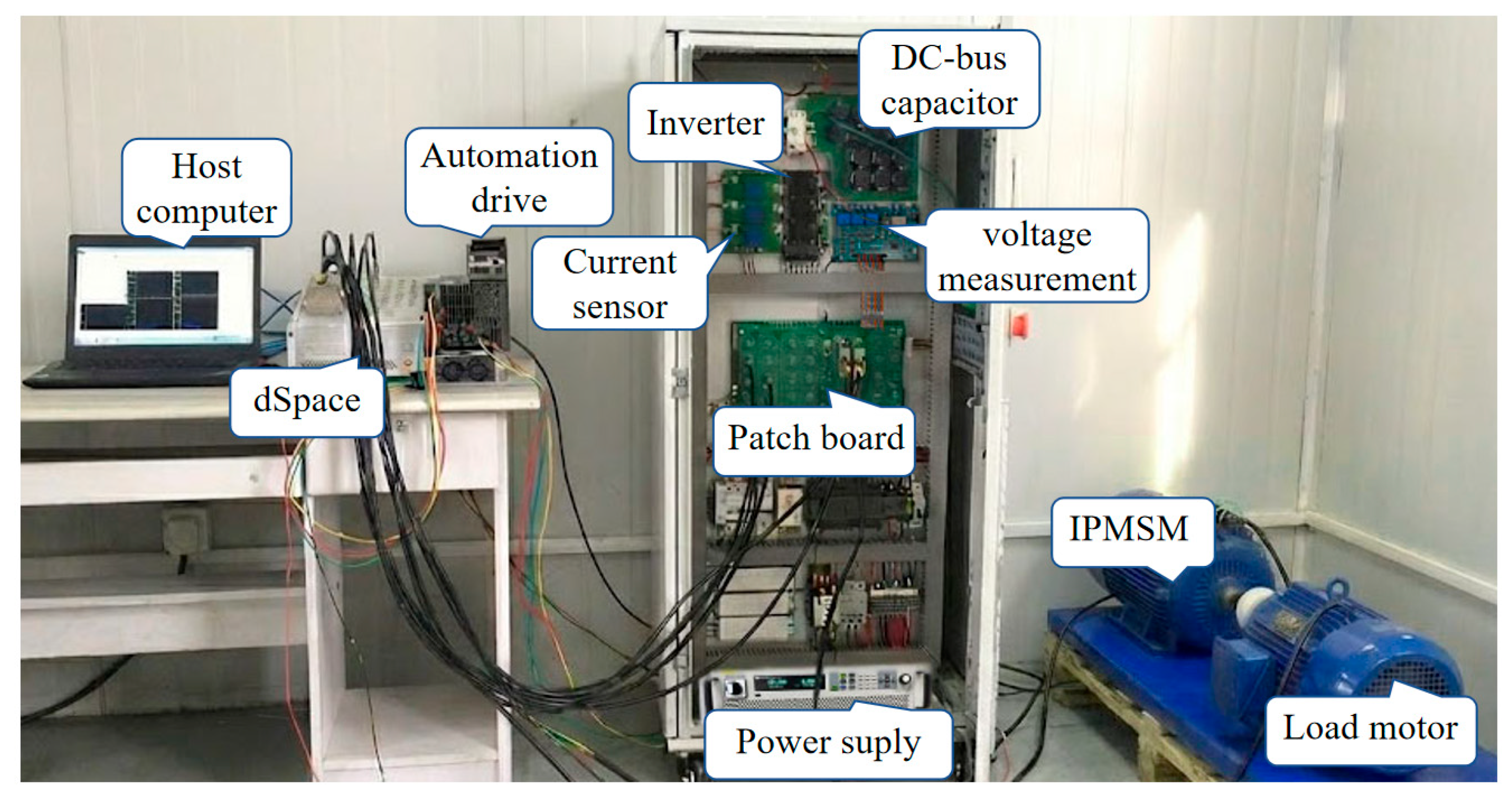





| Parameter | Value | Unit |
|---|---|---|
| winding resistance Rs | 0.605 | Ω |
| d-axis inductance Ld | 12.650 | mH |
| q-axis inductance Lq | 13.500 | mH |
| the number of pole pairs p | 2 | - |
| rated speed ωmrated | 560 | rpm |
| flux linkage ψf | 0.687 | Wb |
Disclaimer/Publisher’s Note: The statements, opinions and data contained in all publications are solely those of the individual author(s) and contributor(s) and not of MDPI and/or the editor(s). MDPI and/or the editor(s) disclaim responsibility for any injury to people or property resulting from any ideas, methods, instructions or products referred to in the content. |
© 2025 by the authors. Licensee MDPI, Basel, Switzerland. This article is an open access article distributed under the terms and conditions of the Creative Commons Attribution (CC BY) license.
Share and Cite
Gao, J.; Li, H.; Yin, S.; Ming, Y.; Zhang, G.; Gong, C.; Tang, K.; Guo, P. Robust Flux-Weakening Control Strategy Against Multiple Parameter Variations for Interior Permanent Magnet Synchronous Motors. Machines 2026, 14, 53. https://doi.org/10.3390/machines14010053
Gao J, Li H, Yin S, Ming Y, Zhang G, Gong C, Tang K, Guo P. Robust Flux-Weakening Control Strategy Against Multiple Parameter Variations for Interior Permanent Magnet Synchronous Motors. Machines. 2026; 14(1):53. https://doi.org/10.3390/machines14010053
Chicago/Turabian StyleGao, Jinqiu, Huichao Li, Shicai Yin, Yao Ming, Gerui Zhang, Chao Gong, Ke Tang, and Pengcheng Guo. 2026. "Robust Flux-Weakening Control Strategy Against Multiple Parameter Variations for Interior Permanent Magnet Synchronous Motors" Machines 14, no. 1: 53. https://doi.org/10.3390/machines14010053
APA StyleGao, J., Li, H., Yin, S., Ming, Y., Zhang, G., Gong, C., Tang, K., & Guo, P. (2026). Robust Flux-Weakening Control Strategy Against Multiple Parameter Variations for Interior Permanent Magnet Synchronous Motors. Machines, 14(1), 53. https://doi.org/10.3390/machines14010053