Article

Dual-Channel Parallel Multimodal Feature Fusion for Bearing Fault Diagnosis

1
LongMen Laboratory, Luoyang 471000, China
2
School of Mechanical and Electrical Engineering, Henan University of Science and Technology, Luoyang 471003, China
3
Collaborative Innovation Center of High-End Bearing in Henan Province, Luoyang 471000, China
*
Author to whom correspondence should be addressed.
Machines 2025, 13(10), 950; https://doi.org/10.3390/machines13100950

Submission received: 10 September 2025 / Revised: 1 October 2025 / Accepted: 13 October 2025 / Published: 15 October 2025
(This article belongs to the Section Machines Testing and Maintenance)

Abstract

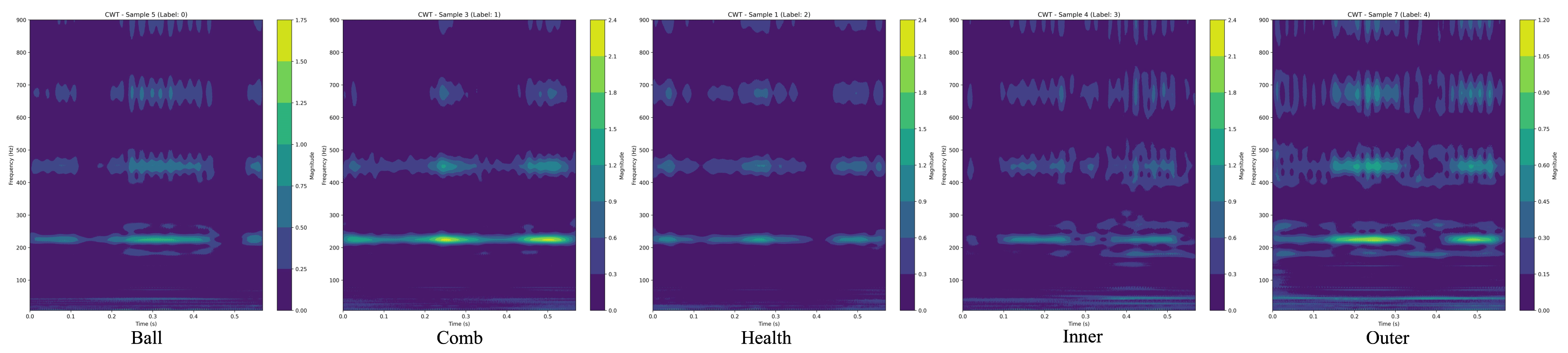
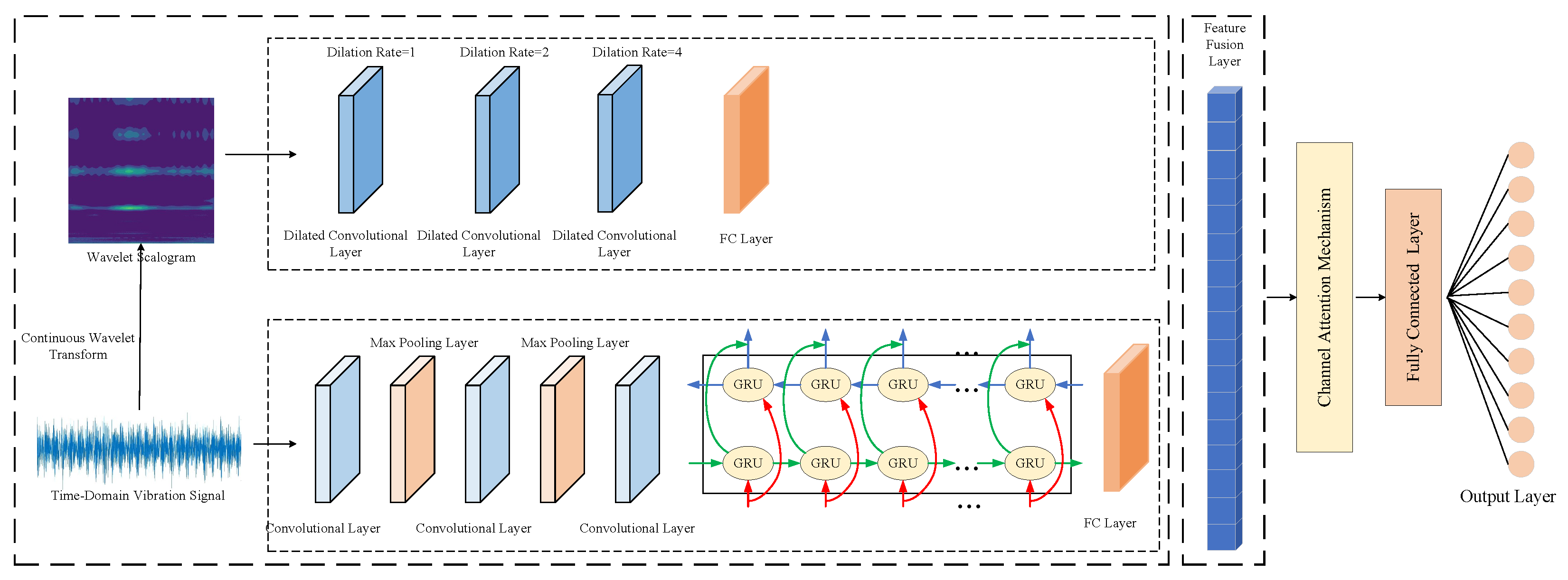
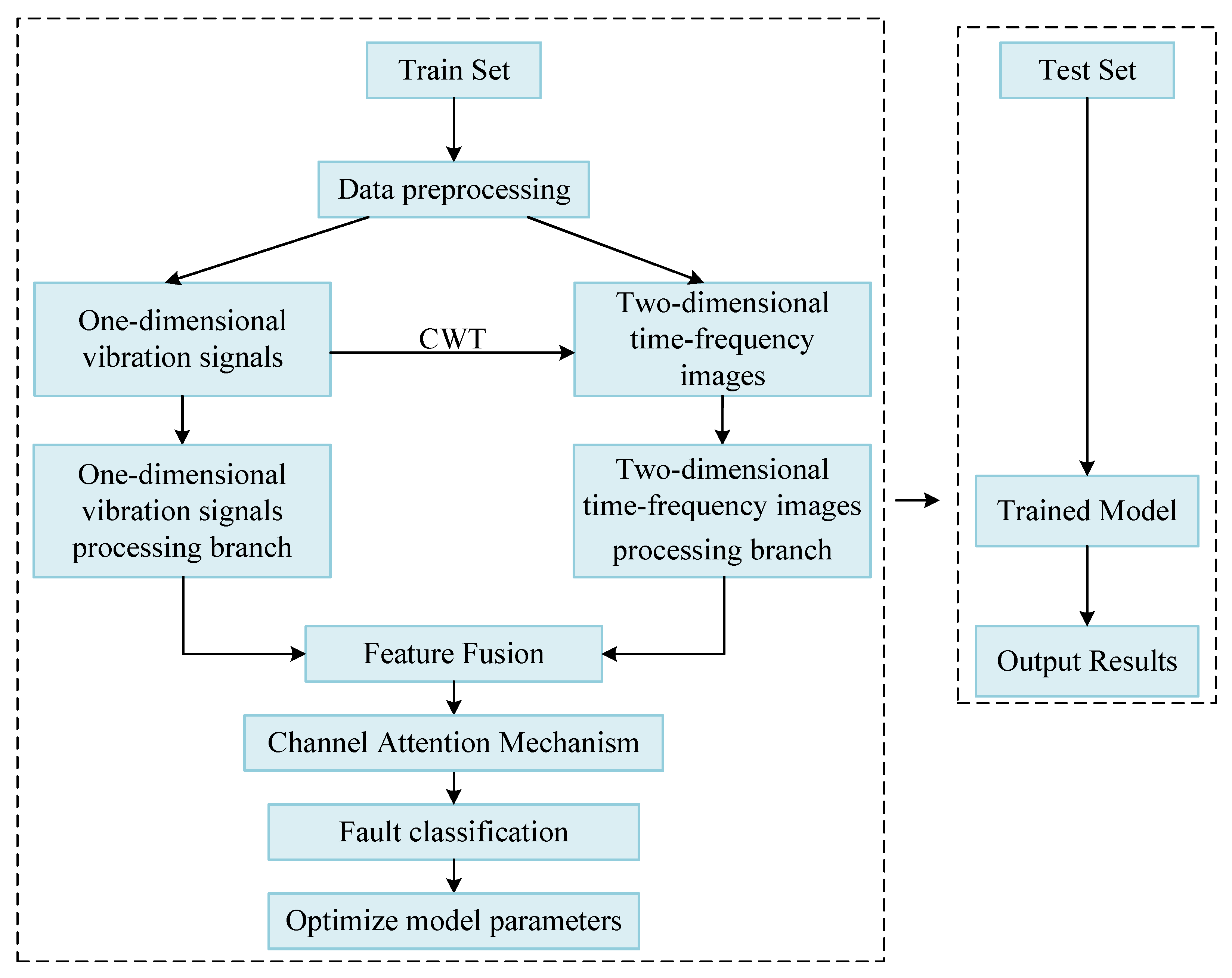
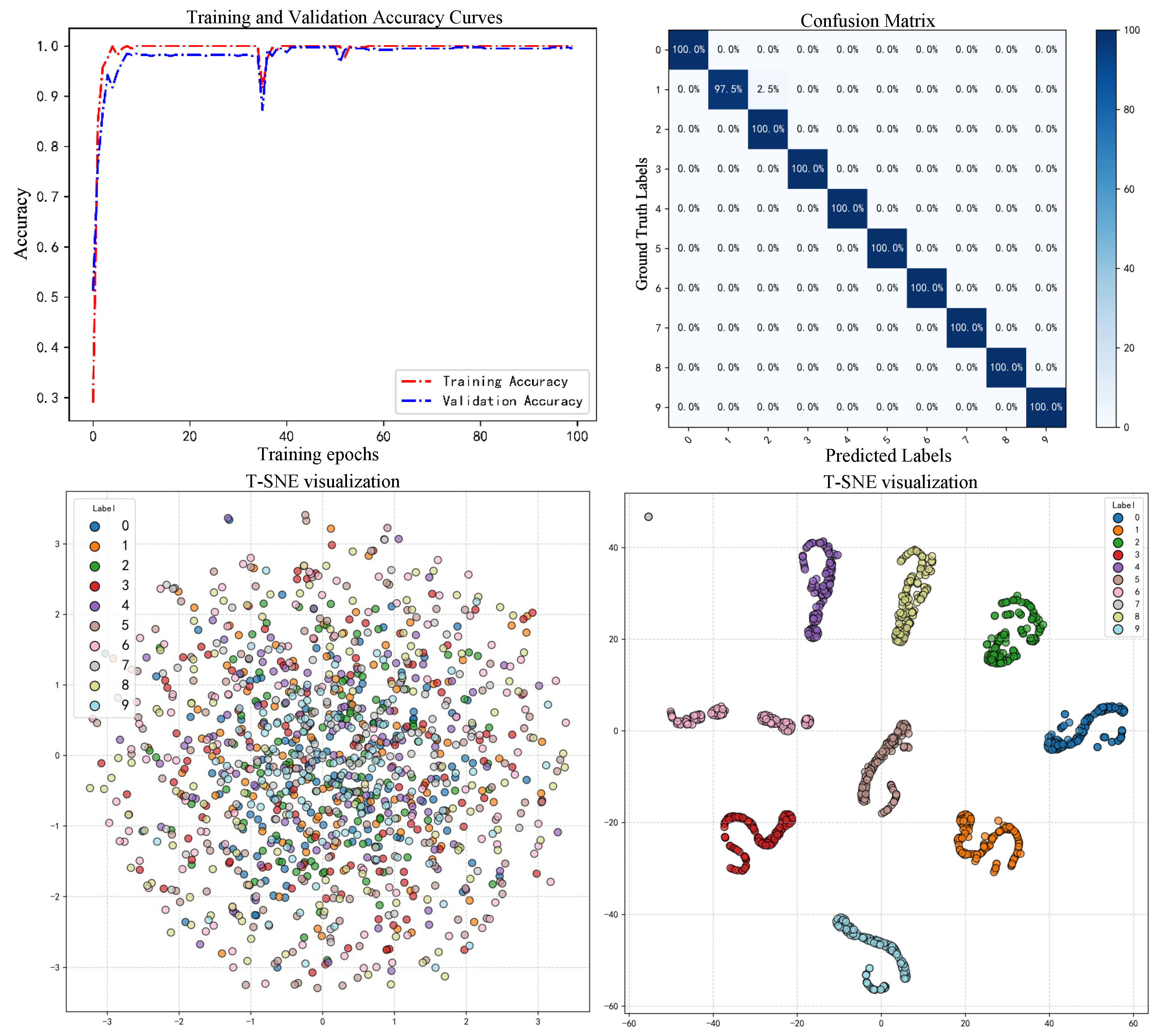
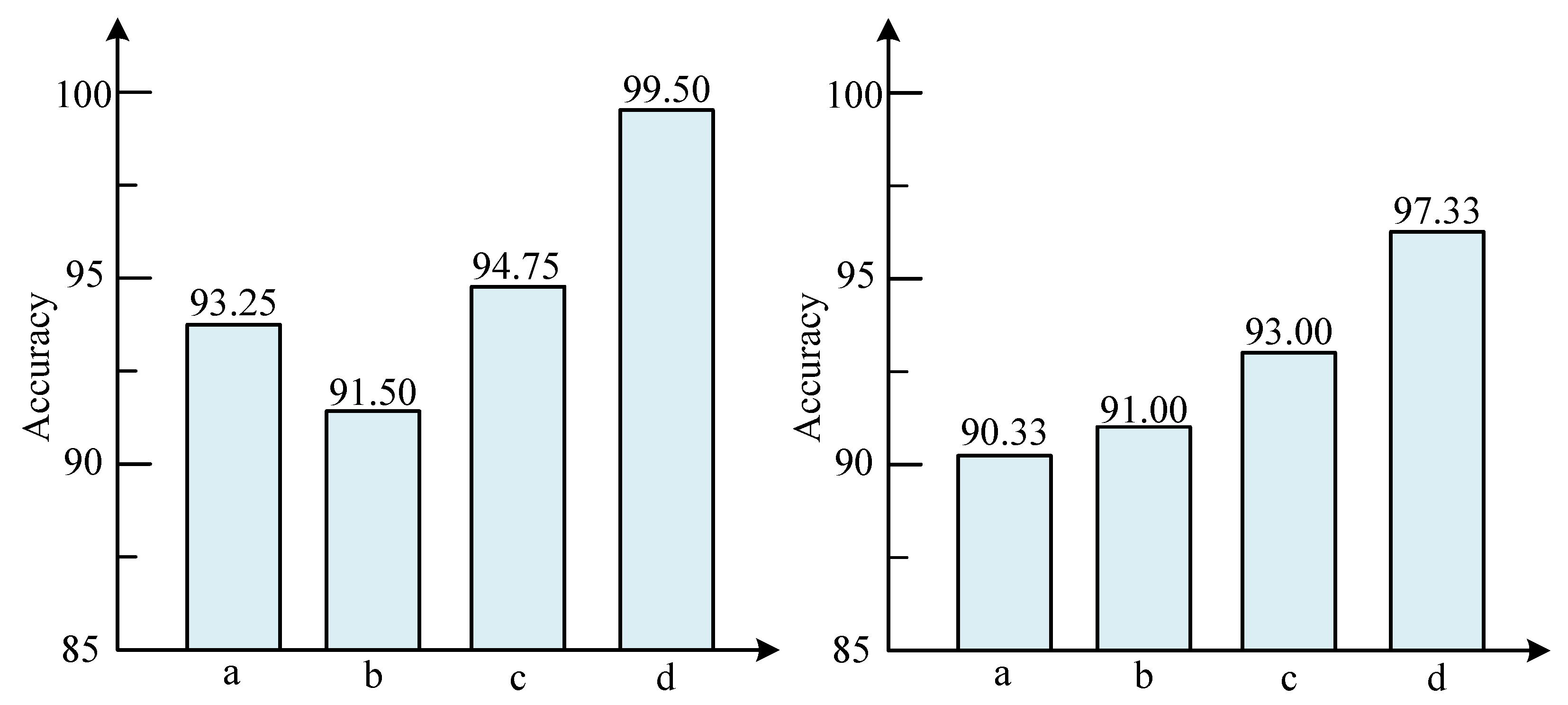
In recent years, the powerful feature extraction capabilities of deep learning have attracted widespread attention in the field of bearing fault diagnosis. To address the limitations of single-modal and single-channel feature extraction methods, which often result in incomplete information representation and difficulty in obtaining high-quality fault features, this paper proposes a dual-channel parallel multimodal feature fusion model for bearing fault diagnosis. In this method, the one-dimensional vibration signals are first transformed into two-dimensional time-frequency representations using continuous wavelet transform (CWT). Subsequently, both the one-dimensional vibration signals and the two-dimensional time-frequency representations are fed simultaneously into the dual-branch parallel model. Within this architecture, the first branch employs a combination of a one-dimensional convolutional neural network (1DCNN) and a bidirectional gated recurrent unit (BiGRU) to extract temporal features from the one-dimensional vibration signals. The second branch utilizes a dilated convolutional to capture spatial time–frequency information from the CWT-derived two-dimensional time–frequency representations. The features extracted by both branches were are input into the feature fusion layer. Furthermore, to leverage fault features more comprehensively, a channel attention mechanism is embedded after the feature fusion layer. This enables the network to focus more effectively on salient features across channels while suppressing interference from redundant features, thereby enhancing the performance and accuracy of the dual-branch network. Finally, the fused fault features are passed to a softmax classifier for fault classification. Experimental results demonstrate that the proposed method achieved an average accuracy of 99.50% on the Case Western Reserve University (CWRU) bearing dataset and 97.33% on the Southeast University (SEU) bearing dataset. These results confirm that the suggested model effectively improves fault diagnosis accuracy and exhibits strong generalization capability.
Keywords: fault diagnosis; dual-channel parallel; multimodal feature fusion; continuous wavelet transform (CWT); attention mechanism fault diagnosis; dual-channel parallel; multimodal feature fusion; continuous wavelet transform (CWT); attention mechanism