1. Introduction
During the last few years, peristaltic transport has been the focus of many research studies because of its broad scope of application both in physiological processes and in industrial processes. This principle plays an important role in the transport of many biological fluids in animal and human bodies such as the transport of urine from the kidney to the bladder, food mixing and chyme movement in the gastrointestinal tract, transport of spermatozoa in the efferent ducts of the male reproductive tract and cervical canal, movement of eggs in the fallopian tube, swallowing of food through the esophagus, cilia movement and blood circulation in small blood vessels and movement of lymphatic fluids in lymphatic vessels. Moreover, the peristaltic mechanism has found many applications for fluid mechanics in engineering like high solid slurries, noxious fluid in nuclear industries, hose pumps, heart-lung machines, roller pumps, blood pumps and dialysis machines. A few experimental and theoretical attempts were carried out to understand the peristaltic mechanism under different conditions. Abd-Alla et al. [
1] investigated peristaltic transport within a nanofluid flowing through a ciliated tube, emphasizing its role in improving the system’s heat and mass transfer efficiency. On the same note, Abd-Alla et al. [
2] also examined the use of a peristaltic pump to study the behavior of heat and mass transfer of a fractional second-grade fluid that was flowing through a porous medium in a tube and showed the interactions between the kinematic and thermal properties of the fluid. These experiments put great emphasis on the importance of the porous medium effect because the introduction of the porous medium brings about an increased level of complexity on the peristaltic flow by creating more resistance forces and leakage, varying the pressure–velocity relationship. Knowledge of thermal properties, mass, and viscosity is thus important for physiological and engineering uses in the building of complicated peristaltic flow models.
Alrashdi [
3] examined the peristaltic flow of the nanofluids and hybrid nanofluids in asymmetric channels with reference to heat transfer applications. The paper formulated mathematical models to identify the impacts of thermal properties, porosity, Darcy number, Hall currents, and magnetic fields on the velocity, pressure distribution, rheological behavior, and flow patterns in magnetohydrodynamic (MHD)-based studies.
In line with this, Bilal et al. [
4] conducted studies on peristaltic flows of hybrid nanofluids and laid emphasis on the interaction of thermal and magnetic influence on asymmetric conduits. Chen et al. [
5] studied the flow and transport of biological vascular systems both physiologically and chemically. The research was aimed at examining the flow pattern, material transport, and chemical reactions in the blood vessels, with a particular focus on the extent to which the structural properties of the blood vessels systems affect the velocity, pressure and solutes distribution. Moreover, the review offered an integrated perspective on the modeling, analysis, and experimental studies toward understanding peristaltic dynamics and transport in the human body as well as the significance of applying concepts of physiology and chemical engineering in the design and simulation of models. The peristaltic mechanism underlies many biological functions, such as the transport of chyme along the gastrointestinal tract, the passage of urine through the ureters, and fluid transport in reproductive channels. In this regard, Esser et al. [
6] demonstrated how living organisms use the peristaltic principle to transport fluids efficiently and quietly and how the same principle can be applied in engineering pumps to convey sensitive fluids without direct contact with mechanical components, offering additional benefits such as reduced wear, lower maintenance, and consistent flow regulation. Heat and mass transfer in a second-grade fluid passing through a porous media under the long-wavelength-approximation, low-Reynolds-number model was studied by Farooq et al. [
7], who showed that buoyancy and wall slide significantly affect temperature distribution. He applied this method to electro-osmotic Sutterby nanofluids, showing that adding thermophoretic and Brownian effects improves energy dissipation. More generally, these investigations indicate that pumping efficiency, trapping mechanisms, and energy transfer in peristaltic systems are significantly influenced by the interaction of magnetohydrodynamics (MHD), pore resistance, and non-Newtonian rheology.
Peristaltic analyses in porous channels also draw from both classical and contemporary theoretical frameworks. Hasan et al. [
8] obtained flux–pressure relations in the peristaltic pumping in slim orifices with permeable walls through the combination of lubrication theory and the law of Darcy. Khan et al. [
9] studied peristaltic behavior in channels which are asymmetric and have magnetic fields and porous media, showing that porosity and strength of the magnetic field have a great effect on trapping and pressure increase. Magdy et al. [
10] studied the influence of wall slip and heat transfer on particle-laden fluid magnetohydrodynamic (MHD) peristaltic flow. They created a mathematical formulation to determine dynamic velocity, pressure field, and energy transport focusing on the effect of wall slip and turbulent particles on thermal and hydrodynamic properties of the flow.
Similarly, Magdy et al. [
11] examined the influence of a magnetic field and heat transfer on peristaltic transport in an asymmetrically inclined channel considering the wall slide. The analysis of the velocity, pressure and heat transfer properties of peristaltic flow pointed to the impact of slip, magnetic field and channel asymmetry on the dynamics of peristaltic flow. Mohamed et al. [
12], in their study of the magnetohydrodynamic (MHD) peristaltic flow of viscoelastic nanofluids through porous asymmetric channels, discovered that with a stronger magnetic field, uniformity of flow is enhanced, and pressure drop is reduced.
Hayat et al. [
13] investigated the influence of thermal radiation on peristaltic flow of non-Newtonian fluids and reported significant effects on temperature distribution and heat transfer characteristics. Akbar et al. [
14] examined magnetohydrodynamic peristaltic flow with thermal radiation and showed that radiation and magnetic field strongly influence velocity and thermal behavior. Ellahi et al. [
15] studied the impact of thermal radiation on peristaltic transport and demonstrated that radiative effects play an important role in heat and mass transfer processes.
In contrast, Sanil et al. [
16] investigated the peristaltic motion of non-Newtonian Ree–Eyring fluid with variable fluid properties, with a focus on maximization of the entropy production to minimize the loss of energy to heat transfer and viscous dissipation. The results revealed that the thermodynamic and flow performance of the fluid can be significantly improved by changing the viscosity and thermal properties.
To gain a superior understanding of the intricate peristaltic and convective processes and to develop superior thermal and biological flow systems, our work valuates the importance of integrating thermal-magnetic manipulation and entropy-based modeling. To understand the effects of the characteristics of wall permeability and porous medium on the effectiveness of the pumping process and on the flow characteristics, the study conducted by Takagi et al. [
17] investigated peristaltic pumping in a porous conduit.
The mathematical model of the interaction of peristaltic waves with the fluid flow and the porous media through the Stokes and Darcy equations was employed by the scientists. Their observations showed that although the walls absorb or leak fluid leading to observable change in the net flow rate, increased permeability leads to reduced pumping pressure required and velocity distribution within the conduit.
Overall, this piece of work provides information about peristaltic transport in porous surfaces, and its implications in chemical engineering, environmental engineering and bioengineering (including fluid flow in tissues). Other studies [
18,
19,
20,
21,
22,
23,
24] were primarily aimed at investigating the effects of peristaltic and thermal flow in non-Newtonian and nanofluids due to the action of magnetic fields, convective mechanisms, and various fluid characteristics. They focused on entropy creation, Joule heating, pressure diffusion and velocity distribution in different curved systems, such as stenosed arteries and inclined channels. Moreover, the thermal and flow performance of the fluid was also assessed by other studies through complex computational techniques, e.g., artificial neural networks. Vaidya et al. [
25] employed a modified Darcy law to investigate peristaltic transport of non-Newtonian fluid with a strong focus on the channel permeability and its influence on velocity and pressure distribution. Vlahovska [
26] focused on the electrohydrodynamics of drops and vesicles, their behavior under electric fields and the resulting effects on shape formation and stability. Meanwhile, Zhang et al. [
27] concentrated on non-linear interactions among stresses, thermal movement and particle transport during the research of the liaison movement of particles, and fluid under peristaltic flow with thermal impact and mass transfer. In recent years, researchers have extensively focused on the heat/mass transfer and magnetic field on peristaltic flow of Rabinowitsch fluid through a symmetric inclined channel (for example in [
28,
29,
30,
31,
32,
33,
34,
35,
36,
37] and several references therein). A literature survey reveals that a study on the effect of radiation, and heat and mass generation/absorption [
32,
33] for peristalsis of Rabinowitsch fluid has not been attempted yet. Here, we examined the radiative peristaltic transport of Rabinowitsch fluid. Velocity features are considered along channel walls. Heat and mass transfer force and Hartmann number impacts are also recorded in this study. The governing equations were derived under the assumptions of a large wavelength and a small Reynolds number. The resulting set of equations was solved analytically using Mathematica. The graphical results highlight how the main parameters influence the velocity field, temperature profile, concentration level, and heat transfer rate.
2. Materials and Methods
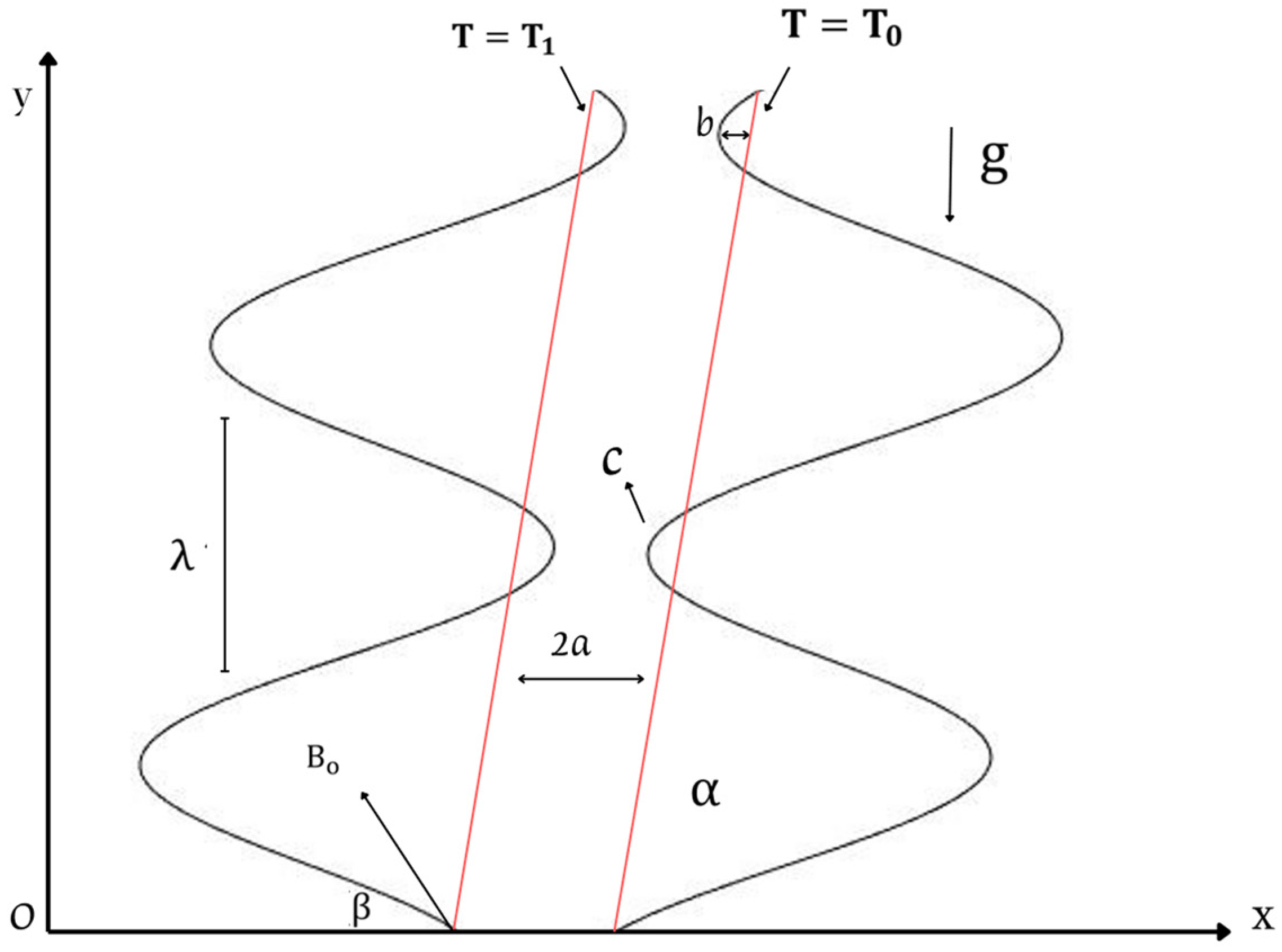
This study investigated the behavior of an incompressible Rabinowitsch fluid undergoing peristaltic motion within a uniform inclined channel. The channel walls in this case are symmetric and have a width of
. Cartesian coordinates
and
were selected in such a manner so that it is assumed horizontally along a wave’s propagation and
is taken into account perpendicularly. The fluid flowed along the channel walls, driven by sinusoidal wave trains with wavelength
and constant speed
, where
represents the wave amplitude and
denotes the wave duration. The sinusoidal equations outlined below are employed to identify the geometry of deformable walls as depicted in
Figure 1 [
38].
The governing equations for the flow are:
The heat conduction equation is as follows:
The concentration equation is as follows:
By applying the Rosseland diffusion approximation, the radiative flux is expressed as follows:
It is important to note that this model considers the optically thick radiation limit. It is assumed that the temperature variations within the flow are sufficiently small such that
can be approximated as a linear function of temperature. This is achieved by expanding
using a Taylor series around the reference temperature
as follows:
By neglecting the higher-order terms (second order onwards), we arrive at
By taking the derivative of Equation (7) with respect to
and using Equation (8), we obtain
In the laboratory frame
the flow is unsteady. However, if observed in a coordinate system moving at the wave speed
c (wave frame)
, it can be treated as steady. Transforming variables from the laboratory into the wave frames comprises:
We let and denote the velocity components in the wave frame , the pressure, and the corresponding quantity in the fixed reference frame.
The following non-dimensional variables and parameters are then introduced for the flow:
where
is the angle of inclination of the channel,
is the heat source/sink parameter,
is the gravity field,
is the heat transfer coefficient, and
is the wave number, with the following formulas representing the stress components:
2.1. Solution to the Problem
Using the above transformations (10) along with the non-dimensional variables (11), the governing Equations (2)–(6) are reduced to:
where
By simplifying and applying the long-wavelength and low-Reynolds-number assumptions, Equations (13)–(17) reduce to:
The corresponding dimensionless boundary conditions are given by:
where
.
The solutions of Equations (19)–(22), under the boundary conditions specified in (23), can be written as
where
where
is the retardation time,
is the thermal radiation, and
is the reference concentration.
2.2. Validity of the Model
When the peristaltic transport of a Rabinowitsch-type non-Newtonian fluid within an inclined channel (which is illustrated by thermal radiation, heat source and Hatman number) is ignored, the peristaltic transport of a Rabinowitsch-type within an inclined channel is obtained and the results agree with Abdelhafez et al. [
37]. When the mass transfer (which is illustrated by concentration
) is ignored, the peristaltic transport of a Rabinowitsch-type fluid is obtained and the results agree with Elmhedy et al. [
33].
3. Results and Discussion
The primary aim of this research is to examine how an inclined magnetic field, together with heat and mass transfer, influences the peristaltic motion of a Rabinowitsch fluid flowing through an inclined symmetric channel. The analysis considers the combined effects of thermal radiation , heat source or sink , gravitational parameter , aligned magnetic field , and the inclination angle of the asymmetric channel relative to the vertical ξ.
In the preceding section, the behavior of an electrically conducting Rabinowitsch fluid within an inclined wavy channel under the action of an oblique magnetic field was investigated. The effects of key governing parameters on the temperature
θ, concentration
Θ, velocity
, pressure gradient
, pressure rise
, and frictional forces
, have been thoroughly analyzed. The corresponding results are illustrated in
Figure 2,
Figure 3,
Figure 4,
Figure 5,
Figure 6 and
Figure 7.
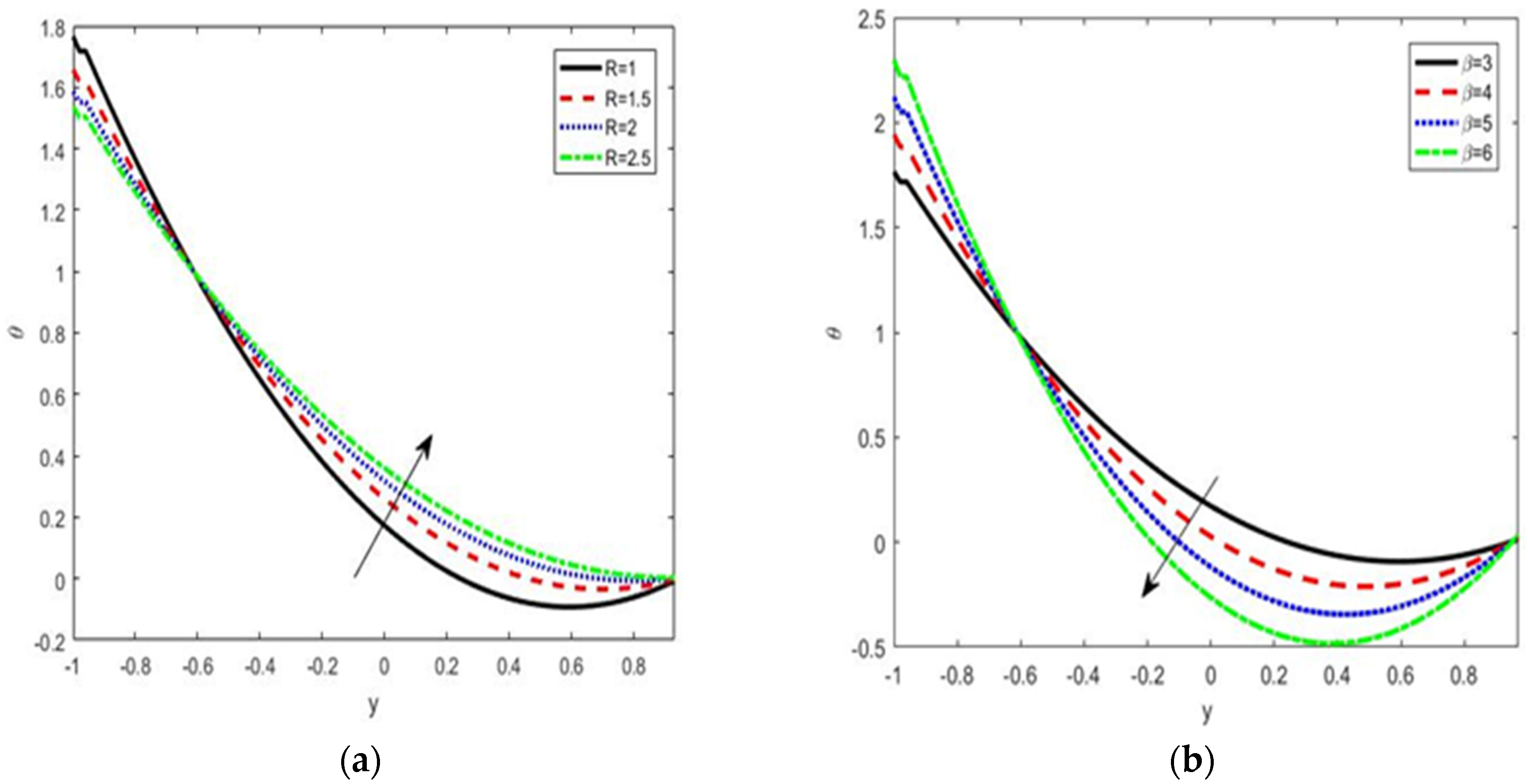
Figure 2 illustrates the effects of the thermal radiation parameter
and the heat source/sink parameter
on the temperature distribution
.
Figure 2a shows that the temperature increases with increasing values of the thermal radiation parameter
due to the enhancement of radiative heat flux within the fluid, which elevates the overall thermal energy.
On the other hand,
Figure 2b shows that the temperature decreases with increasing values of
, indicating that this parameter acts as a heat sink, removing thermal energy from the fluid and thereby reducing the temperature distribution.
Moreover, the temperature profiles exhibit smooth and continuous behavior across the channel and tend to converge toward fixed values at the boundaries, which is consistent with the imposed thermal boundary conditions.
These results are consistent with those reported by Abd-Alla et al. [
2].
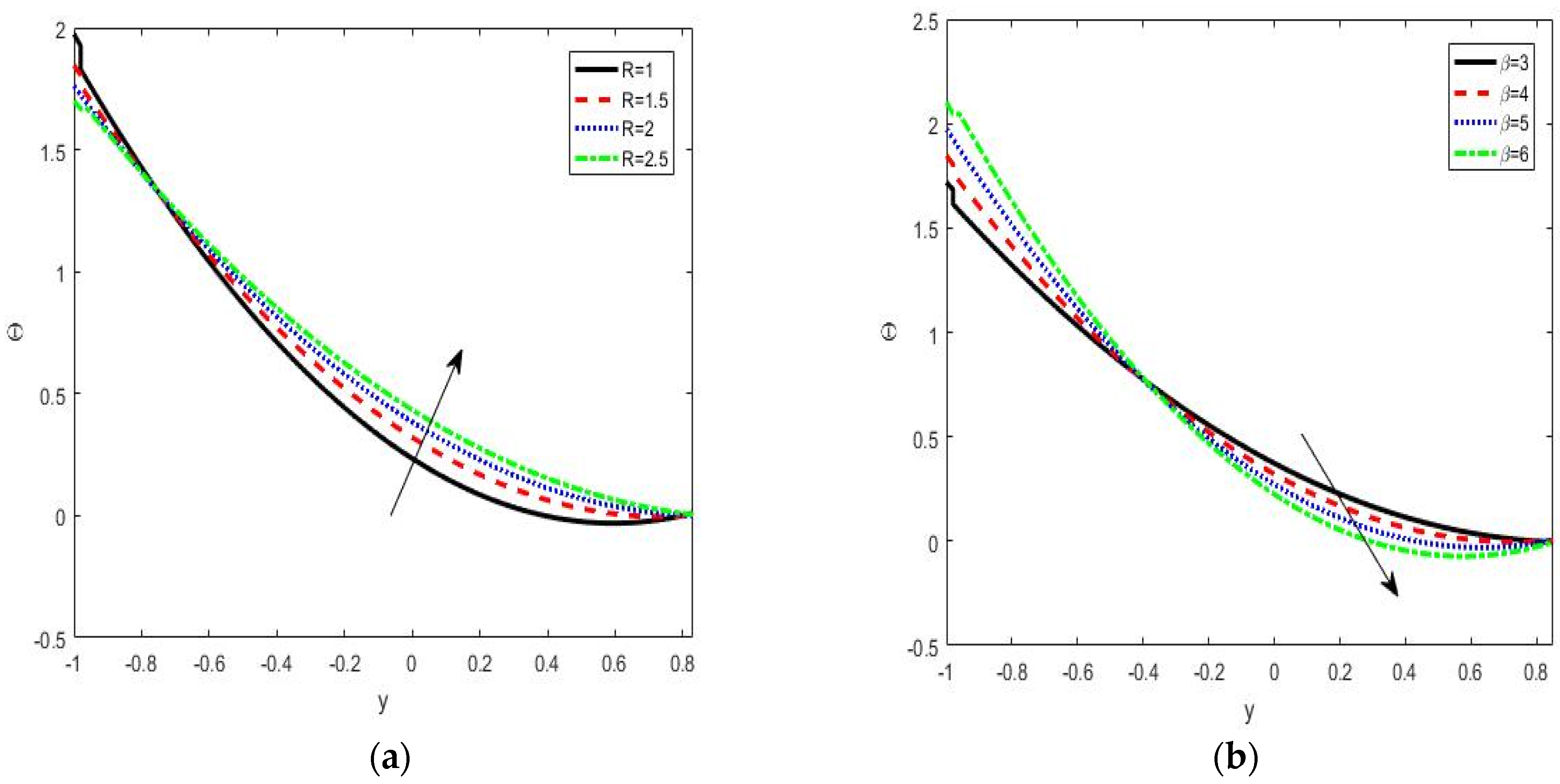
Figure 3 illustrates the variation in the concentration profile
with respect to the transverse coordinate
for different values of the thermal radiation parameter R and the heat source/sink parameter
.
Figure 3a shows that the concentration increases with increasing values of the thermal radiation parameter
, which can be attributed to the enhancement of thermal energy within the fluid. This increase in thermal energy promotes mass diffusion and particle transport, leading to a higher concentration distribution across the channel.
On the other hand,
Figure 3b shows that the concentration decreases with increasing values of
, indicating that the heat sink effect reduces the thermal energy within the fluid. This reduction in thermal energy weakens the mass diffusion process and limits particle transport, leading to a decrease in the concentration distribution.
Moreover, the concentration profiles exhibit smooth and continuous behavior across the channel and tend to converge toward fixed values at the boundaries, which is consistent with the imposed concentration boundary conditions.
These results are consistent with those reported by Abd-Alla et al. [
2].
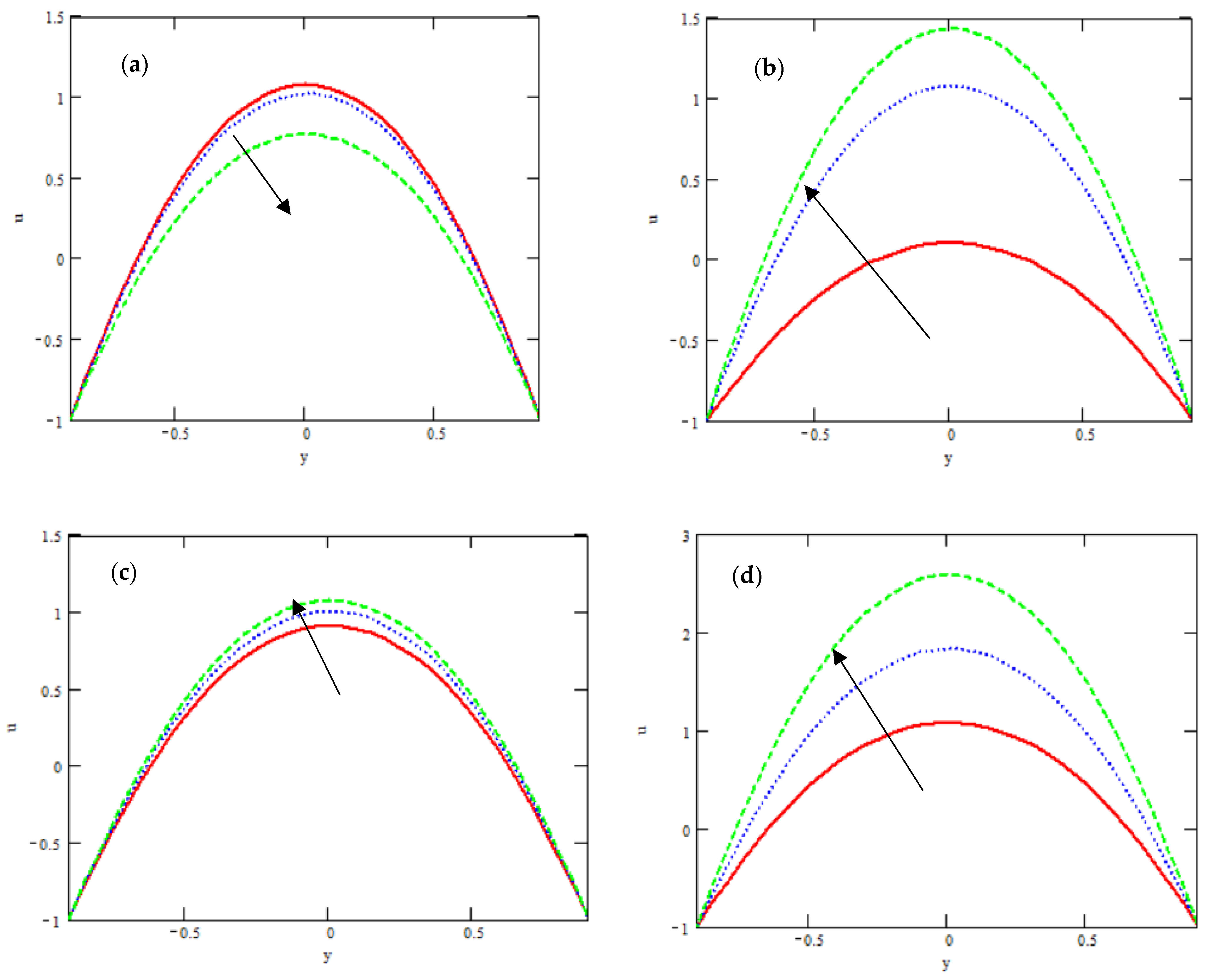
Figure 4 shows the variation in the axial velocity
with respect to the
-axis for different values of Hartmann number
, channel inclination angle
, gravity field
and the ratio of relaxation to retardation times
. It is observed that the axial velocity decreases with increasing Hartmann number, while it increases with increasing channel inclination angle, gravity field and retardation and relaxation time. Moreover, the velocity profiles exhibit smooth and continuous behavior and satisfy the imposed boundary conditions at the channel walls, confirming the physical validity of the solution. These results are consistent with those reported by Abd-Alla et al. [
1].
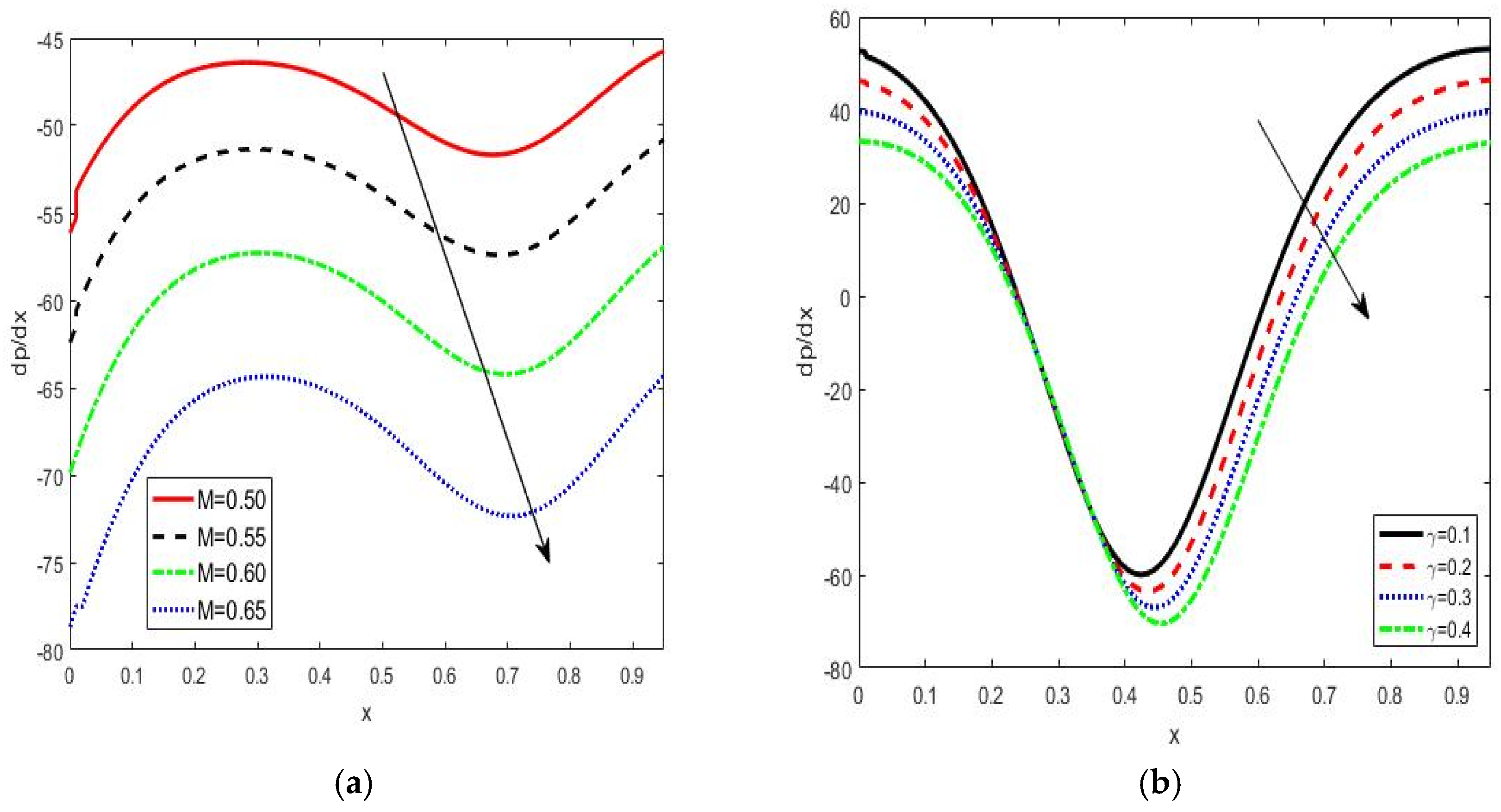
Figure 5 illustrates the variation in the pressure gradient
with respect to the axial coordinate
under the influence of the Hartmann number
and the gravitational parameter
.
Figure 5a shows that the pressure gradient exhibits an oscillatory behavior throughout the entire range of
x, which is primarily attributed to the peristaltic motion of the channel walls. It is also observed that an increase in the Hartmann number enhances the Lorentz force, leading to greater resistance to the flow and consequently higher pressure gradients.
In contrast,
Figure 5b shows that the gravitational parameter modifies the pressure distribution by acting as an additional driving force along the flow direction.
Furthermore, it is observed that a relatively larger pressure gradient is required to maintain the same volumetric flow rate in the wider region of the channel, x ∈ [0, 0.95]. On the other hand, in the narrower region, x ∈ [0.18, 0.58], a smaller pressure gradient is sufficient to sustain the same flow rate, particularly near the narrowest section around x = 0.39. This behavior is consistent with the physical characteristics of peristaltic transport.
These observations highlight the sensitivity of the pressure gradient to geometric variations in the channel, which is important in the design of efficient fluid transport systems operating under varying physical conditions.
Additionally, identifying regions of high sensitivity in the pressure gradient can help in designing more robust systems that perform consistently across a range of operating conditions, in agreement with [
5].
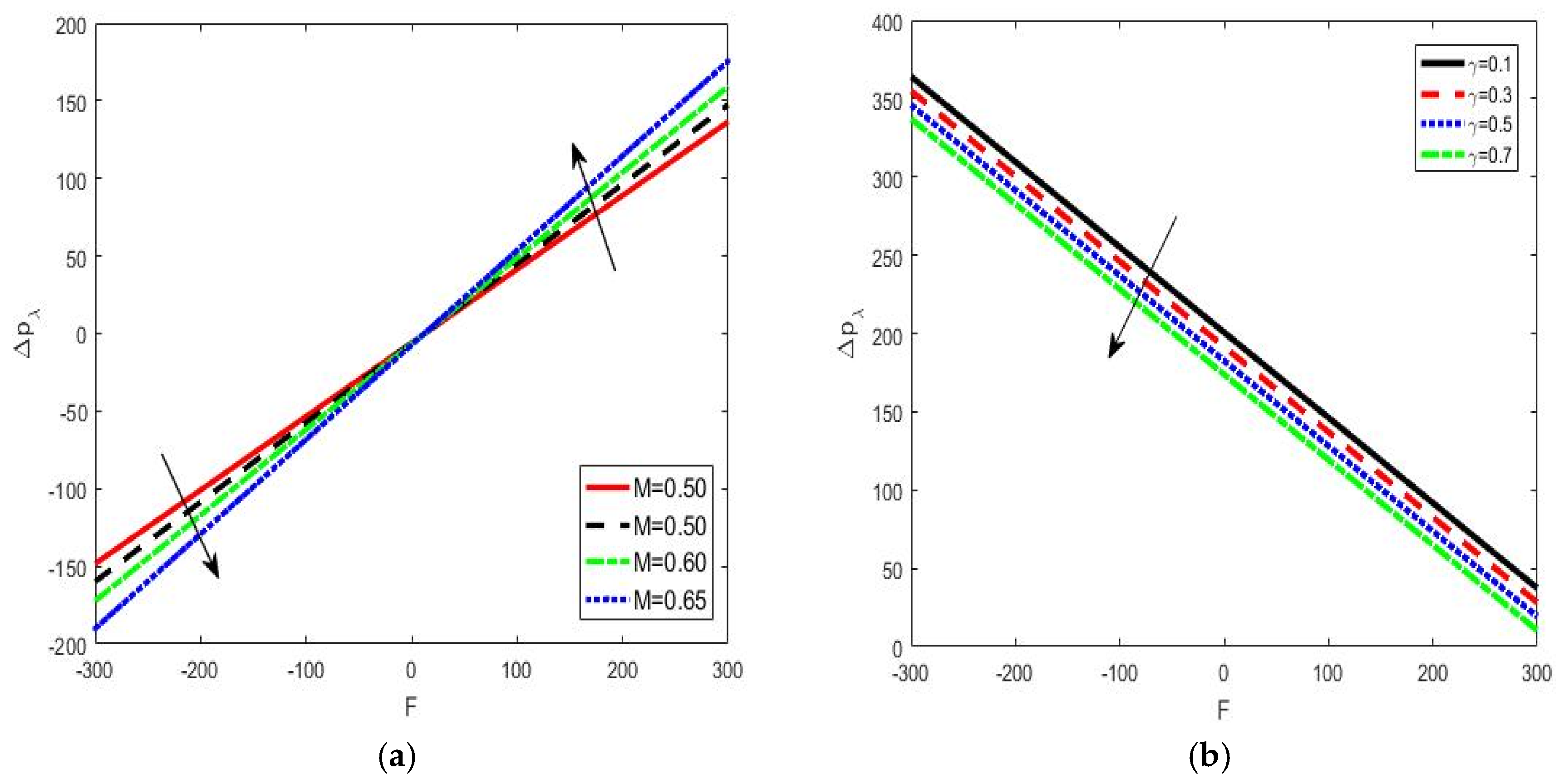
Figure 6 illustrates the variation in the pressure rise
with respect to the volumetric flow rate
F.
Figure 6a shows that the pressure rise varies linearly with the flow rate, particularly in the region
F ∈ (−300, 0). The pressure rise is defined as the pressure difference per wavelength, representing the ability of the peristaltic wave to drive the fluid along the channel.
Figure 6b shows that peristaltic pumping occurs within the region −300 ≤
F ≤ 300, while augmented pumping occurs when the flow is assisted by the wave motion, resulting in a larger pressure rise compared to the case of peristaltic pumping. The flow regimes can be classified based on the signs of
F and
. The region where
F > 0 and
< 0 corresponds to augmented pumping, whereas the region where
F < 0 and
> 0 is known as retrograde or backward pumping, where the flow moves opposite to the peristaltic wave.
Thus, the flow behavior depends strongly on the direction of flow, where directional effects play a significant role in the mechanical response of the system. These results are in good agreement with those obtained by Magdy et al. [
10,
11].
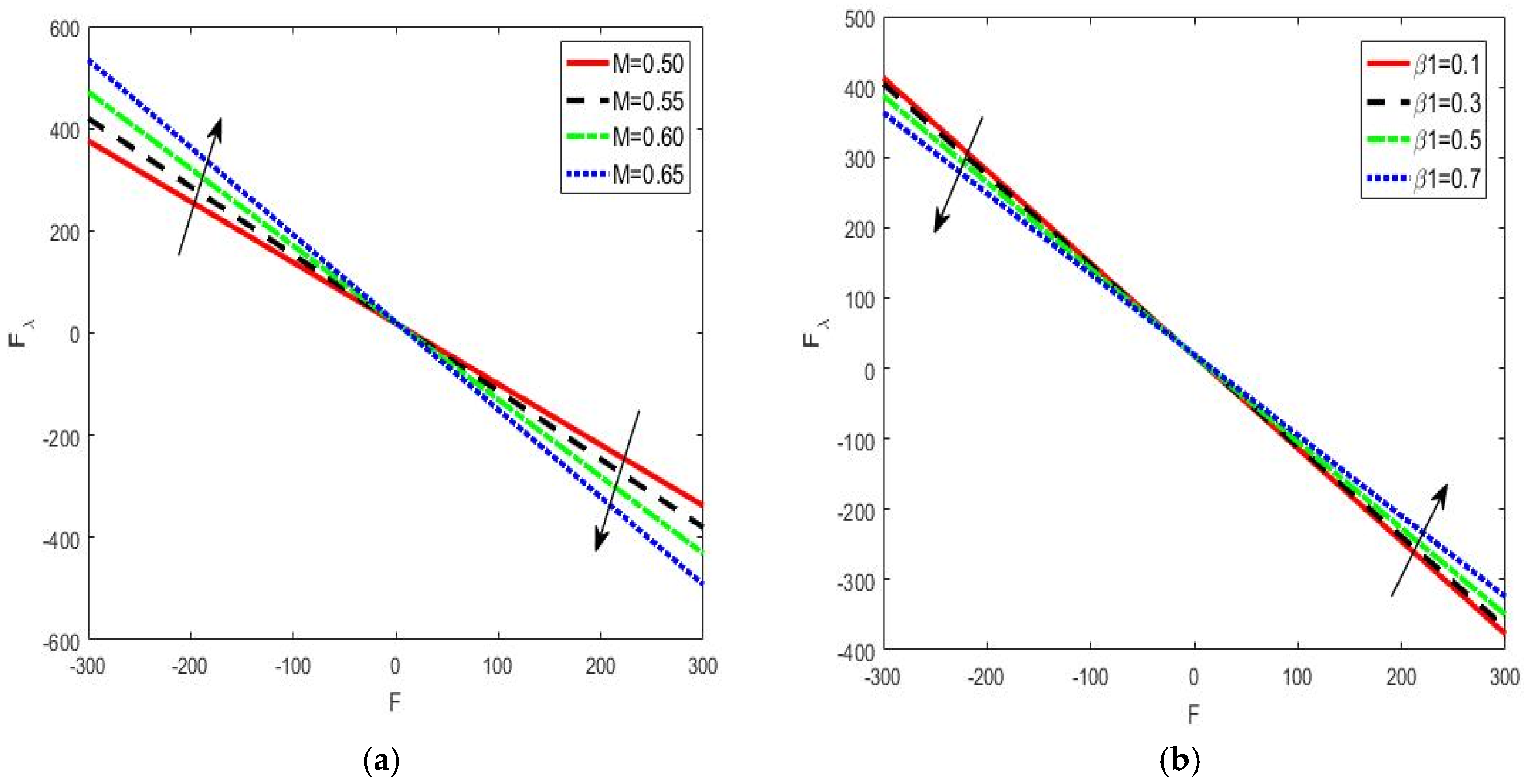
Figure 7 illustrates the sensitivity of the governing system to variations in physical parameters, showing the variation in the frictional force with respect to the volumetric flow rate F for different values of the Hartmann number M and the heat source/sink parameter β.
Figure 7a shows that there exists a linear relationship between the frictional force and the volumetric flow rate. The frictional force increases with increasing values of the Hartmann number M in the negative flow region (
F < 0), while it decreases in the positive flow region (
F > 0), indicating that its behavior depends on the direction of flow.
Similarly,
Figure 7b shows that the frictional force decreases with increasing values of the heat source/sink parameter
β in the negative flow region (
F < 0), while it increases in the positive flow region (
F > 0), reflecting the reduction in the magnitude of frictional force.
Moreover, the frictional force exhibits an opposite trend compared to the pressure rise, highlighting the inverse relationship between these two physical quantities. This result is in good agreement with the results obtained in reference [
11].
Streamline Pattern and Trapping Phenomenon
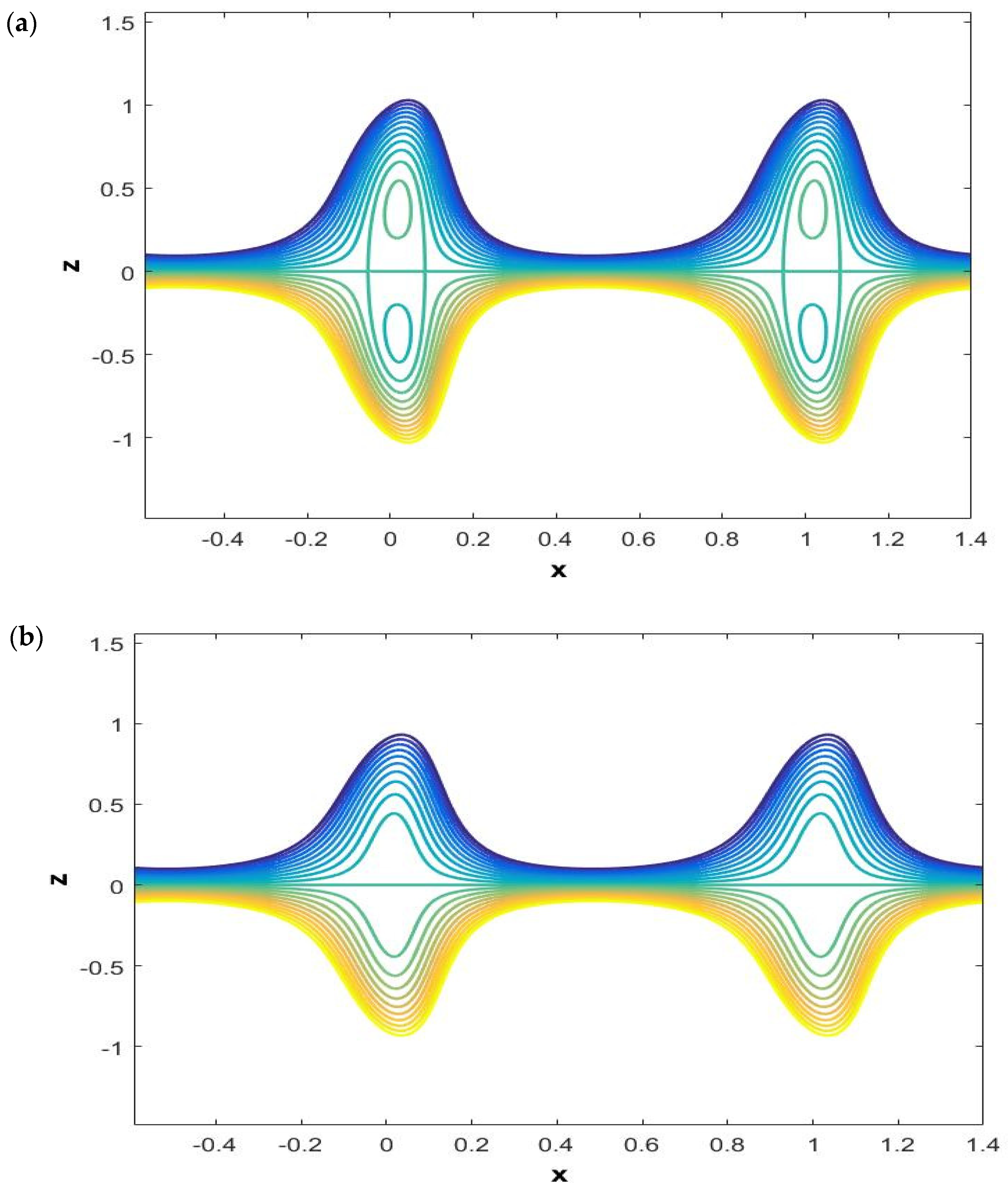
Trapping occurs when some streamlines split to enclose a bolus of fluid particles representing closed streamlines under certain conditions. Backward flow occurs when the entire flow is going in the opposite direction to the normal flow. Augmented flow occurs on the channel when the trapped bolus breaks up and there is some flow going in the forward direction.
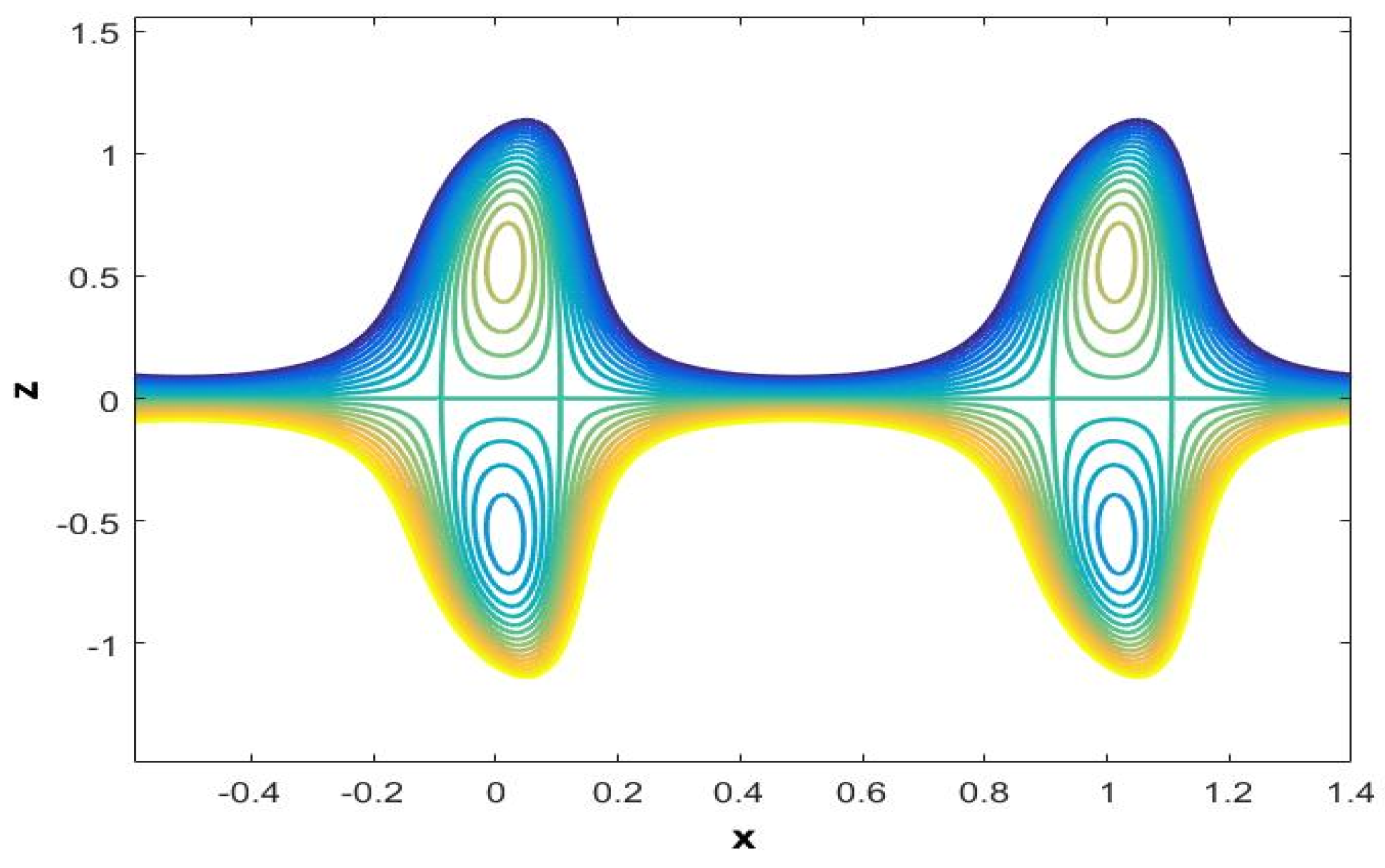
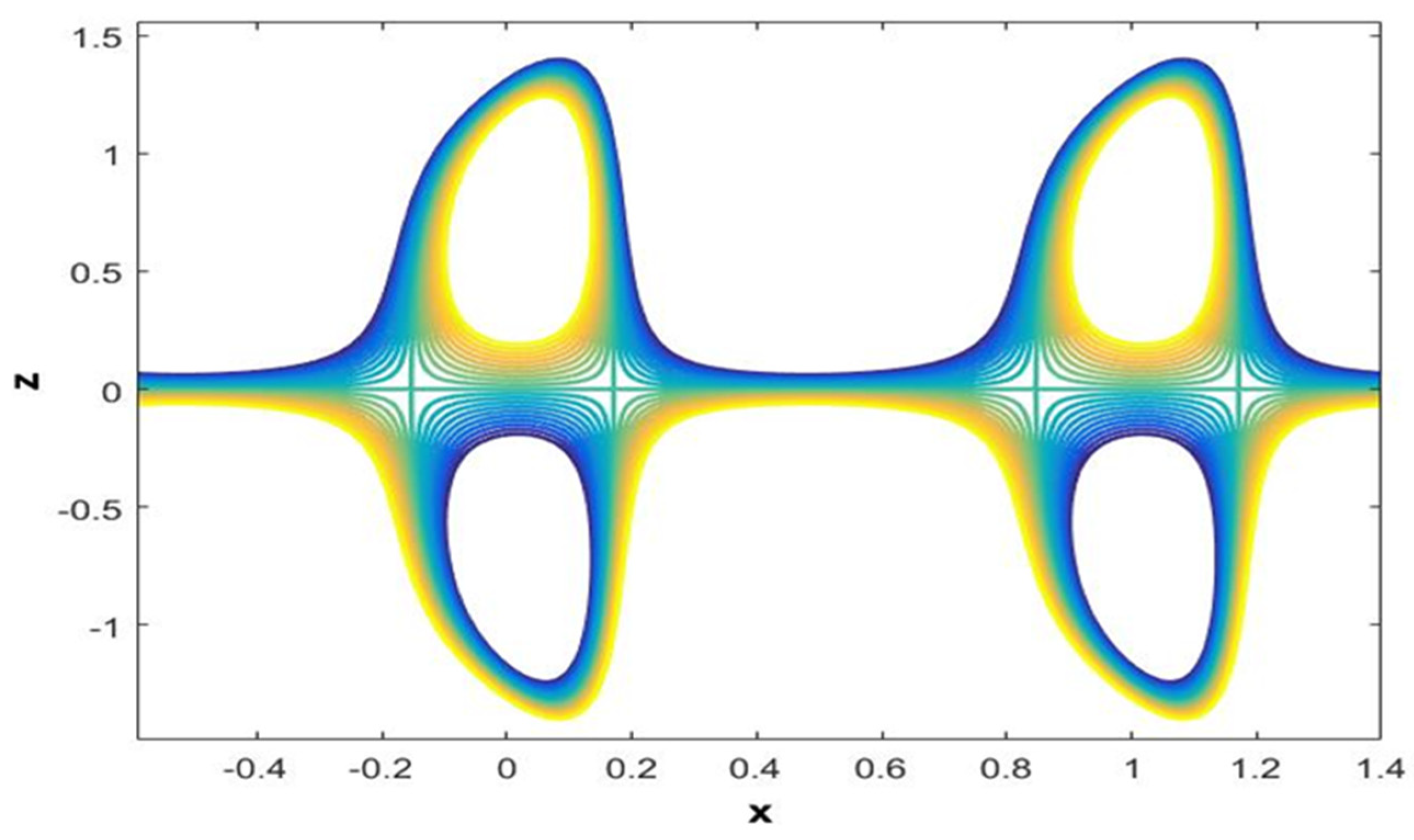
Now, we consider the most interesting feature of peristaltic motion, which is the trapping of the flow, where streamlines split to trap a bolus in the wave frame; thus, the Hartmann number
is varied and a rich variety of flow patterns are observed. In
Figure 8a, surprisingly, we observe that the trapping phenomenon occurs at
. On the other hand, it is shown in
Figure 8b that when the value of the Hartmann number increases at
there was a transition of the trapping phenomenon into backward flow. In addition, in
Figure 9, it is shown that when the ratio of relaxation to retardation times
increased, the number of boluses increased due to a change in velocity distribution. This resulted in an increase in the size of the bolus trapped which describes the volume of the fluid that is bound by invariant closed streamlines. Also, the trapping phenomenon occurring at
resulted in an increase in the size of the bolus trapped which describes the volume of the fluid (
Figure 10).
4. Conclusions
The present study investigates the effects of heat and mass transfer, thermal radiation, magnetic field, and channel inclination on the peristaltic flow of a Rabinowitsch fluid in an inclined symmetric channel under the assumptions of long-wavelength and low-Reynolds-number.
The results demonstrate that the flow characteristics are significantly influenced by the governing physical parameters. It is observed that the Hartmann number introduces a resistive Lorentz force, which modifies the velocity profile across the channel. The gravitational parameter enhances the fluid motion, while the inclination angle alters the flow distribution along the channel.
Thermal radiation and the heat source/sink parameter play an important role in both the temperature and concentration fields. Specifically, an increase in thermal radiation leads to an increase in both temperature and concentration, whereas, in the case of a heat sink, an increase in the parameter results in a decrease in both temperature and concentration. Furthermore, the pressure rise and frictional force exhibit directional dependence with respect to the flow rate, indicating the complex nature of peristaltic transport. The obtained solutions satisfy the imposed boundary conditions and show physically consistent behavior. From an engineering perspective, the results highlight the importance of controlling magnetic, thermal, and geometrical parameters to optimize transport processes in peristaltic systems. These findings are relevant to biomedical applications, microfluidic devices, and industrial heat transfer systems.
The volume of the trapped bolus increases as the Hartmann number and the ratio of relaxation to retardation times increase, while it decreases as the heat source increases. Future studies may consider the inclusion of porous media, unsteady flow conditions, and experimental validation to further enhance the applicability of the model.