Article

Solutions of a Fuzzy Difference Equation with Maximum

1
Faculty of Mathematics and Statistics, Sichuan Minzu College, Kangding 626000, China
2
College of Applied Mathematics, Chengdu University of Information Technology, Chengdu 610225, China
*
Author to whom correspondence should be addressed.
Axioms 2026, 15(3), 202; https://doi.org/10.3390/axioms15030202

Submission received: 30 January 2026 / Revised: 3 March 2026 / Accepted: 6 March 2026 / Published: 9 March 2026
(This article belongs to the Special Issue Delay Differential Equations: Theory, Control and Applications)

Abstract

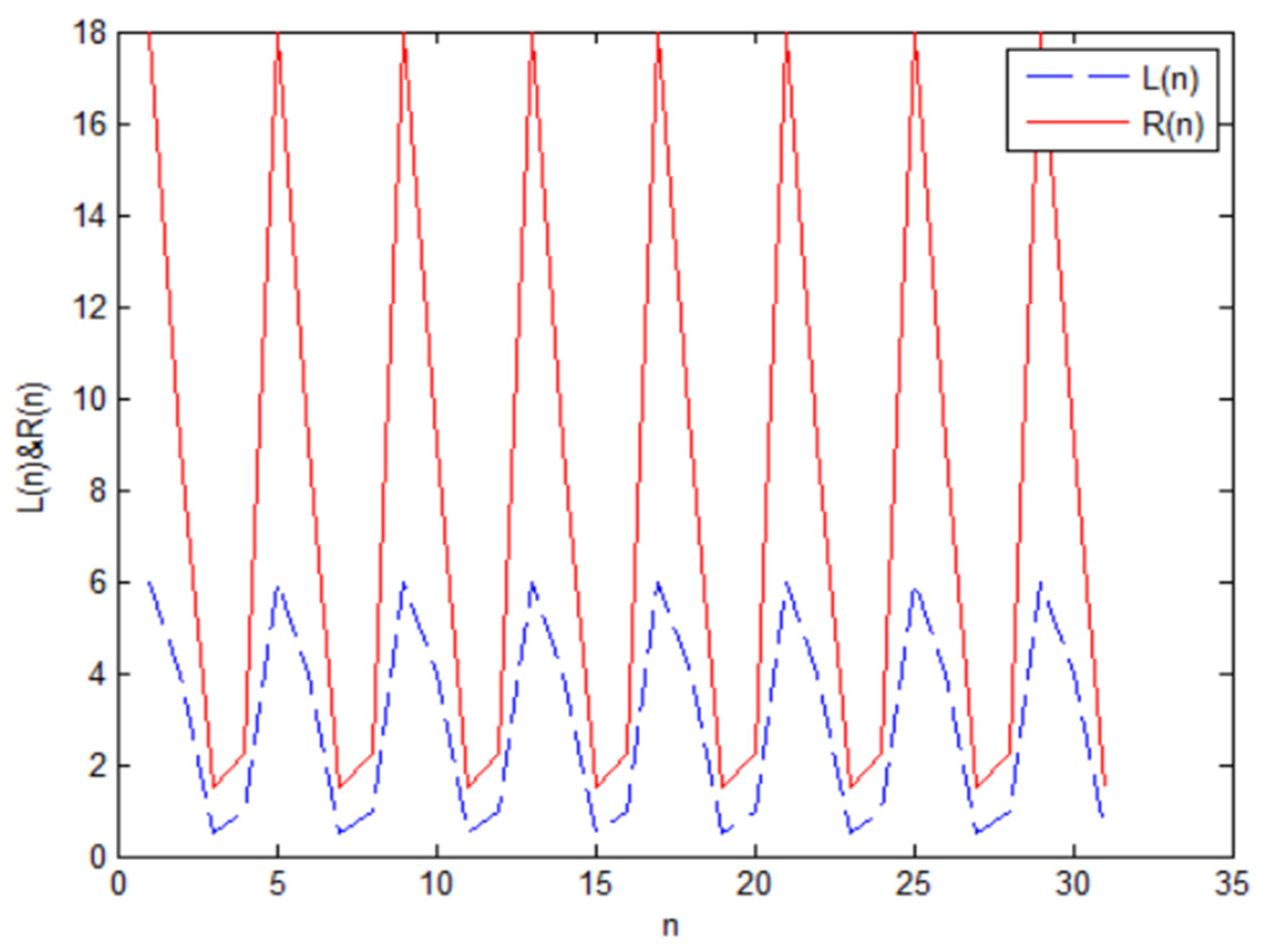
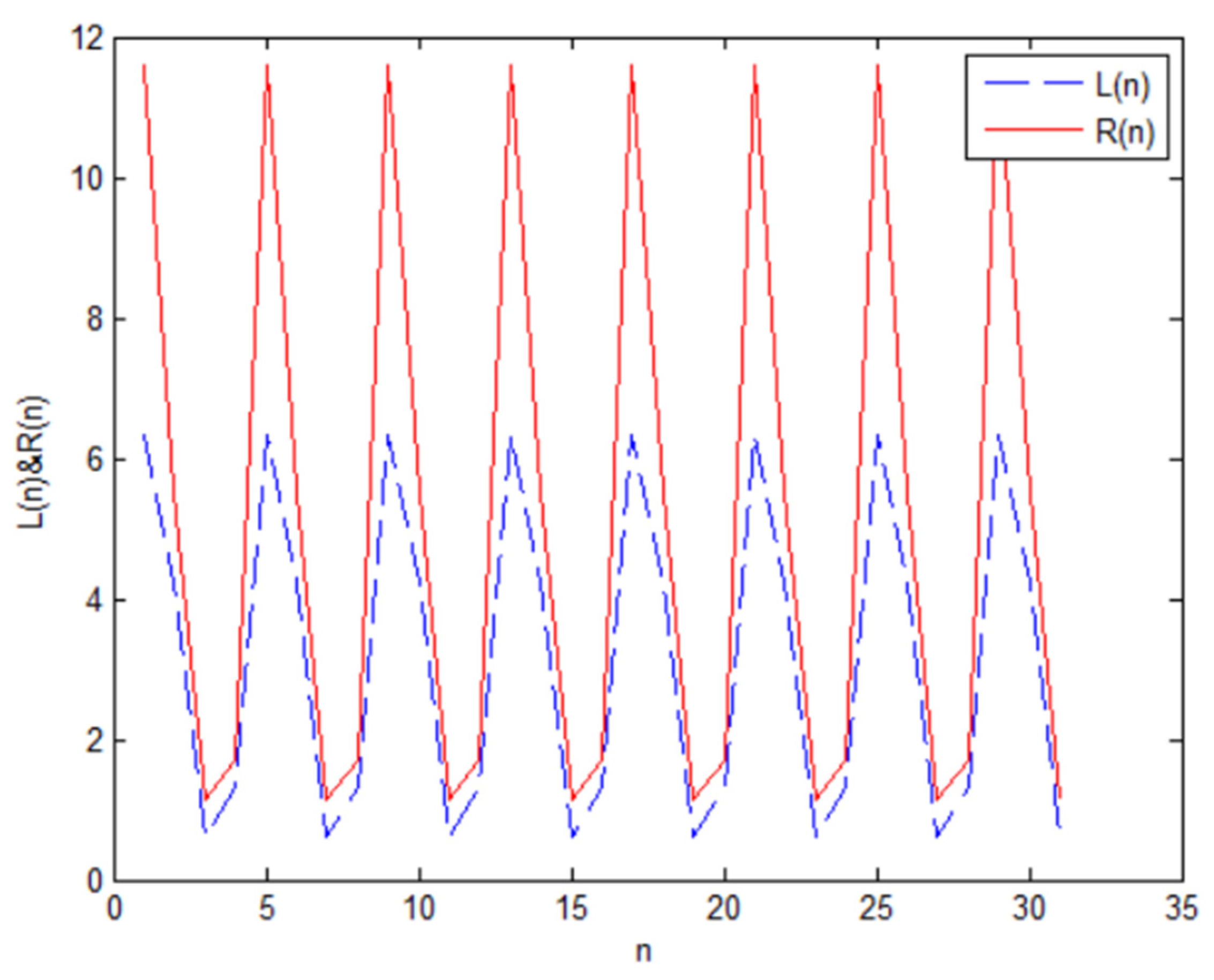
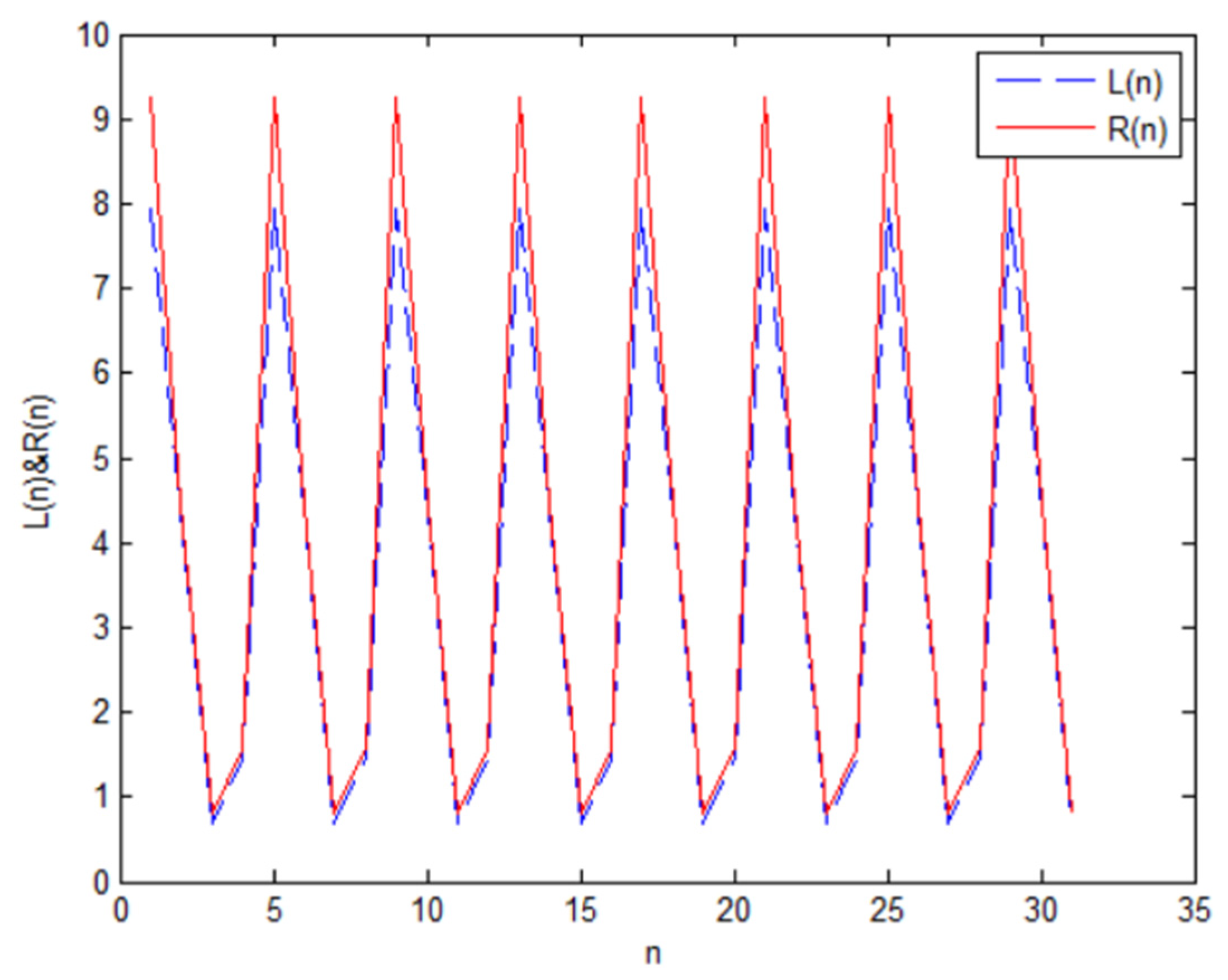
This paper systematically investigates the dynamical properties of a class of max-type fuzzy difference equation. The study first establishes the existence and uniqueness of the solution sequence under given initial conditions with positive fuzzy numbers. Subsequently, by applying the cut-set theory, the fuzzy equation is transformed into a system coupled by two ordinary difference equations. Through a combination of case analysis and mathematical induction, the study rigorously demonstrates that the solutions of this system exhibit global periodicity with a period of 4, while also deriving the exact closed-form expressions of the periodic solutions. Based on the periodic solutions obtained from the ordinary difference system, the research successfully reveals the periodic characteristics of the solutions to the original fuzzy difference equation and rigorously analyzes their boundedness and persistence. Finally, numerical simulations conducted with Matlab 2016 provide robust data support for the theoretical conclusions and the effectiveness of the methodology.
Keywords: maximum-type; fuzzy difference equation; periodic solution; boundedness; persistence maximum-type; fuzzy difference equation; periodic solution; boundedness; persistence