1. Introduction
Since Zadeh’s pioneering work in the field of fuzzy set theory [
1], uncertainty models have become a key foundation for multi-attribute group decision-making (MAGDM). They possess the ability to present human judgment, hesitation, and imprecision within an irregular mathematical framework, and this ability has largely transformed decision science. Over the past few decades, a number of extended contents have been proposed to enhance the descriptive and operational capabilities of fuzzy systems. Intuitionistic fuzzy sets and Pythagorean fuzzy sets provided early methods for representing membership and non-membership degrees, while q-rung orthopair fuzzy sets have generalized these models. They have made significant improvements in information representation and tolerance for high uncertainty, offering greater flexibility in modeling the interaction between membership and non-membership degrees as well as in accommodating heterogeneous expert opinions. Recently, circular intuitionistic fuzzy sets (C-IFSs) have emerged, providing a geometric interpretation of uncertainty. Under this representation, experts’ evaluations are expressed as points within a circular domain rather than scalar values on a linear continuum. This geometric embedding enables the dependence between membership and non-membership to be explicitly constrained and coherently quantified, thereby enhancing modeling flexibility in representing uncertainty structures. These advancements have stimulated the emergence of many decision-making models, such as the circular intuitionistic fuzzy sorting and allocation framework [
2,
3], the Einstein–Bonferroni operator in Fermatean hesitant fuzzy environments [
4], and hybrid methods integrating language, probability, or q-rung orthopair fuzzy information [
5,
6,
7]. Overall, these developments illustrate how fuzzy expansion is constantly evolving towards high-dimensional and information-rich representations, which enhance computational adaptability and also improve the ability to explain reality in the decision-making process.
Among recent contributions, the study by Chen [
8]—hereafter the ORESTE-CIF model—offers a systematic framework for MAGDM under circular intuitionistic fuzzy environments. The ORESTE-CIF model introduces a projection-driven ranking mechanism, which can map the expert’s evaluation content into a multi-dimensional fuzzy space. It is also allowed to determine the quantitative method for reaching a consensus by means of geometric approximation. This research achievement demonstrates how projection-based modeling methods can capture the potential relationships between expert evaluations while ensuring interpretability and computational traceability. However, although this method seems rather complex, the ORESTE-CIF model and similar project-driven models still face three challenges that have not been solved in the MAGDM literature until now.
Firstly, there is a heavy reliance on preprocessing. Currently, most decision-making frameworks still rely on entropy-based weighting schemes [
9], similarity transformations [
10], and distance-based standardization procedures [
11]. Before aggregating heterogeneous data, these data are normalized. Although such transformations do indeed improve the comparability of numerical values, they also make the calculation more stable, but at the same time, they change the original intrinsic geometric structure of the data. This means that some subtle changes in expert evaluations may disappear during the repetitive normalization or scaling process, as reflected in the probability-weighted sum bidirectional projection formula of the Fermatean hesitant fuzzy environment, which demonstrates [
12] the continuous efforts of people to improve the accuracy of fuzzy measurement. However, these methods still rely on pre-set distance metrics or normalization constraints. As a result, any process that aims to reduce information bias may bring about new distortions and alter the semantic relationships among expert opinions. Theoretically speaking, this reliance on preprocessing conflicts with a core of the fuzzy model. This core objective is to preserve the natural structure of human uncertainty. Nowadays, there is an increasing need for aggregation methods that can directly handle raw or minimally processed fuzzy data. This can reduce external interference and also ensure the authenticity of experts’ cognition.
The second challenge is brought about by the overuse and central dominance of aggregation operators. Weighted averages and their variants still hold a dominant position in the literature due to their simplicity, explainability, and ease of implementation [
13], although various eye-catching operators have been proposed, like those of Hamacher, Frank, Dombi, Einstein, Hamy, and Heronianhas, which are used to deal with different decision-making environments [
14,
15,
16], but their structural behaviors are basically of an algebraic nature. Most of these methods assume that the opinions of experts are commensurable and can be linearly fused through parametric operators. However, in actual situations, the judgments of experts are rarely the same. They differ in terms of accuracy, confidence, and interpretation of attributes. A unified operator is used to summarize all inputs. It may inadvertently mask the very prominent cognitive diversity among decision-makers. Once the operator is selected, the parameters it embeds often determine the final decision-making trend. As a result, the space for adaptive adjustment is very limited. This phenomenon is sometimes called operator-led, which means that the decision-making outcome may more reflect the operator’s design rather than the actual expert reasoning. A new method is needed to clearly capture how the heterogeneity of the experts’ models’ interpersonal differences and promote data-driven consensus rather than formulaic consensus. This approach should emphasize geometric or structural integration rather than merely algebraic averaging, allowing group consensus to arise naturally from the relationships among experts.
The third limitation is related to the convergence of the algorithmic convergence and solution stability. Even if the algorithm framework incorporates advanced optimization mechanisms, they often encounter the problem of converging prematurely to local optima in high-dimensional or nonlinear fuzzy environments. Recent studies have demonstrated improvements in interpretability and efficiency by leveraging projection-based similarity measures [
12], circular intuitionistic fuzzy preference relations [
17], and consensus-reaching processes [
18]. However, these methods still rely on fixed update rules and deterministic search paths, which limits their ability to explore the global solution space. Similarly, conflict elimination strategies based on opinion dynamics improve numerical stability, but they often lock the system in local equilibrium. Once the consensus threshold is reached, it is impossible to optimize. This problem of premature stability indicates that the existing convergence schemes do not have sufficient adaptability to capture the nonlinear feedback mechanism that can represent the deliberation of real-world groups. A robust decision-making algorithm should integrate dynamic search control, balance exploration and development, and allow the solution path to be adjusted according to the evolution of the divergence structure.
From the above content, it can be seen that the three issues of preprocessing dependency, operator dominance, and premature convergence actually reveal a fundamental deficiency in current MAGDM research: there is currently a lack of a unified and adaptive framework that can integrate the original expert information, geometric diversity, and iterative global optimization. Under such circumstances, this paper introduces the Convergent Radiation Algorithm (CRA) in a circular intuitionistic fuzzy environment, namely CRA. CRA redefines the aggregation process as the radiative convergence dynamics in the information-energy domain. In this dynamic process, expert evaluations rely on iterative steps of radiation, reflection, and convergence to interact with each other. By relying on the simulation of how information spreads outward and then converges back to a balanced state, the CRA system can systematically determine a globally stable consensus, which is called the Optimal Consensus Point, or OCP. This geometric mechanism is fundamentally different from the traditional operator-based fusion. The reason lies in the fact that it regards each expert’s input as an energy particle that affects the collective balance, rather than a weight in the formula. This algorithm avoids stagnation at an early stage by adaptively adjusting the search direction and step size, and continuously explores new solution trajectories until the global energy is minimized. CRA reduces its reliance on preprocessing [
19], which refers to the reference and utilizes weighted spatial dispersion [
20]. That is, as discussed in [
21], the proposed mechanism explicitly simulates the thermal erosion of expert opinions and introduces a self-regulating feedback process, which effectively reduces the risk of local convergence. In this way, the method integrates geometric optimization with consensus formation, providing a flexible and theoretically grounded paradigm for robust multi-attribute group decision-making.
2. Related Work
This section reviews representative studies related to circular intuitionistic fuzzy group decision-making and projection-based aggregation methods. Particular attention is paid to existing aggregation frameworks that emphasize similarity measurement, operator-driven fusion, and convergence mechanisms, as well as their respective advantages and limitations. Based on this review, the motivation for developing a geometry-oriented consensus aggregation strategy is further clarified.
2.1. Objectives of the Study
Motivated by the limitations identified in existing circular intuitionistic fuzzy group decision-making frameworks, the objectives of this study are threefold. First, this work aims to develop a geometry-oriented aggregation mechanism that can directly operate on circular intuitionistic fuzzy information while preserving its intrinsic geometric structure, thereby reducing information distortion caused by excessive preprocessing. Second, the study seeks to design a deterministic consensus-search strategy capable of achieving stable convergence toward a global equilibrium, even under heterogeneous and multimodal expert opinion distributions. Third, this paper aims to establish an interpretable projection-based evaluation framework that integrates naturally with the proposed aggregation process and provides reliable and transparent ranking results for multi-attribute group decision-making problems.
The above objectives jointly guide the methodological design of the proposed Convergent Radiation Algorithm and serve as the basis for the comparative analysis presented in the subsequent sections.
2.2. Contributions and Limitations of the ORESTE-CIF Model
Group-based aggregation frameworks have received increasing attention in the past few years as researchers have attempted to balance expert diversity with collective consistency. Among these, the study by Chen [
8], hereafter referred to as the ORESTE-CIF model, represents one of the most systematic and influential contributions to multi-attribute group decision-making (MAGDM) under circular intuitionistic fuzzy environments. The ORESTE-CIF framework introduced a projection-driven similarity mechanism that maps expert evaluations into a multidimensional fuzzy space, allowing a quantitative measure of consensus through geometric proximity. This contribution demonstrated how projection-based modeling can capture latent relations between experts’ evaluations while maintaining interpretability and computational tractability. Similar modeling paradigms can be observed in recent research on hybrid ranking systems [
22], projection-based similarity under hesitant or intuitionistic fuzzy environments [
23], and Pythagorean or q-rung orthopair extensions to distance/measure families [
24], as well as projection-style TOPSIS and metric refinements in circular or intuitionistic settings [
25]. All these works have a methodological basis that can be compared with each other. They rely on projection measurements or distance-driven operators to obtain collective results under uncertain conditions.
However, although these methods are rather complex, models like the ORESTE-CIF often exhibit some structural limitations. The first aspect is that they particularly rely on information preprocessing, such as normalization, entropy-based reweighting, or similarity transformation, which may make the relationships between the original data less clear. The second aspect is that they rely on pre-defined operators and linear aggregation mechanisms to compress the judgments of different experts into a single prime. This way, the diversity of cognition is overlooked. The third aspect is that their iterative processes generally adopt a step-convergence scheme, which may stabilize prematurely before reaching the global optimal consensus. Among these methods, the ORESTE-CIF model is particularly representative because it integrates the three features of comprehensive data preprocessing, operator-driven aggregation, and projection-based convergence within a unified framework. It provides a meaningful benchmark for evaluating the inherent trade-offs among interpretability, flexibility, and algorithmic depth, and can also be regarded as a diagnostic case. Considering that the ORESTE-CIF model concept is relatively complete, it has been widely used in recent decision analyses. This paper selects the ORESTE-CIF model as the main comparison baseline for subsequent evaluation and algorithm verification.
2.3. Preprocessing Dependence and Information Distortion
To ensure that data can be compared and to facilitate the smooth progress of calculations, preprocessing has always been regarded as an indispensable step in MAGDM. Entropy weights [
26] and distance normalization [
27] are often used to eliminate scale differences, while similarity adjustments [
28] can help reach consensus among experts within the same evaluation framework. However, a large amount of preprocessing adds an artificial layer between the expert’s judgment and the representation of calculation. Each transformation, whether it is normalization, defuzzification, or weighting, inevitably changes the underlying geometry of the fuzzy evaluation. Take the ORESTE-CIF framework as an example. Entropy-based normalization is carried out before the aggregation process. The shape and scale of the circular intuitionistic fuzzy domain were changed before the implementation of the similarity projection. In this way, some of the inherent uncertain structures in the original expert matrix will be lost or distorted, reducing the fidelity of the explanation.
To solve this problem, this study adopted a geometric strategy, that is, relying on the CRA to directly aggregate the original fuzzy data without the need for extensive preprocessing. In the CRA framework, each expert’s evaluation is regarded as an energy particle embedded in the information energy field. This algorithm does not transform data through statistical weighting but minimizes the overall energy dispersion among experts to find a collective equilibrium state. This mechanism normalizes the differences among experts during the optimization process. Instead of doing it before optimization, the original topological structure of the decision space is retained. CRA can achieve scale-free convergence, which makes it particularly suitable for multi-expert systems with significant differences in attribute weights, evaluation intervals, or uncertainty radii. With such a design, CRA reduces information distortion and maintains a high level of semantic transparency between human judgment and algorithmic calculation.
2.4. Algorithmic Convergence and Local Optima Risks
In the existing MAGDM literature, there is a frequently occurring limitation, which is the tendency of premature convergence. Traditional algorithms that rely on projection and consensus generally adopt a deterministic iterative scheme. In this scheme, the update direction and step size of the iteration remain unchanged. In this fixed setting, most of the time, the optimized trajectory will fall into a local optimum or boundary equilibrium. Although recent methods that adopt adaptive preference relations [
29] or dynamic opinion adjustment [
19] have improved stability, they generally explore the decision space in a linear or sequential manner, which limits their ability to explore in multiple directions. The ORESTE-CIF framework itself adopts a similar-driven convergence criterion. Once the aggregated projection distance is lower than the fixed threshold, this criterion will stop. Although this approach is quite efficient in calculation, this fixed convergence boundary hinders the exploration of the solution space when the opinions of experts present a multimodal distribution.
The CRA has embedded adaptability in the optimization process, fundamentally changing this convergence paradigm. It models the search dynamics as a radiation–reflection–convergence cycle: At the very beginning, it radiates from the initial consensus center in multiple different directions, then reflects back from the local energy peak. This way, it can avoid being trapped, and finally converges again towards the global equilibrium, which is also called the OCP. By introducing an adaptive step size mechanism, CRA can dynamically balance exploration and development. If improvement comes to a standstill, the search radius is expanded; if it approaches a balanced state, the search radius is reduced. This radiation mechanism can prevent premature stabilization and ensure that consensus is reached through global optimization rather than local optimization. Because CRA assesses progress by means of an information-energy-potential function rather than a fixed-distance metric, it can capture convergence and divergence nonlinear patterns more accurately than traditional projection or entropy-based methods. The final result is that the convergence curve will be smoother, the reproducibility will be higher, and the resistance to local minima will be significantly improved.
2.5. Research Gap and Directions for Improvement
The above analysis highlights a situation that frequently occurs in the recent development of MAGDM: Most of the current frameworks either sacrifice the integrity of information for the sake of prioritizing computational convenience or rely on fixed iterative schemes, which limit global exploration. Although projection-based models like the ORESTE-CIF framework can provide interpretability and mathematical consistency, in complex decision-making environments, they lack the adaptability and flexibility needed to simulate the interaction among heterogeneous experts. Conversely, operator-based systems can effectively integrate inputs, but most of the time, they blur the divergent structures that are crucial for forming meaningful consensus. There is a particular need for a method that can combine the interpretability of the projection model, the adaptability of the optimization algorithm, and the reality of geometric aggregation.
The CRA proposed in this study directly resolves this issue, integrating all the advantages mentioned above into a single framework. Its contribution can be discussed from three interrelated aspects. CRA uses geometric energy optimization instead of statistical preprocessing, thus preserving the structure of the circular intuitionistic fuzzy evaluation itself and keeping the explanation transparent and clear. CRA introduces a radiation–reflection convergence mechanism, which can dynamically adjust the direction and step size of the search. Enable the system to break away from the local minimum and eventually converge to the Optimal Consensus Point. CRA has constructed a collective decision-making matrix based on energy dispersion minimization, which naturally incorporates the heterogeneity among experts into the consensus results, achieving individual fairness and group consistency. Compared with existing methods, this approach has stronger robustness, faster convergence speed, and can also ensure better consistency among expert groups. CRA supplements the advantages of projection-based clustering and expands its theoretical scope, providing a new foundation for robust and interpretable multi-attribute group decision-making.
4. Methodology
Building on preliminaries, which established the circular intuitionistic fuzzy (C-IF) representation and the feasible domain
, this section develops a deterministic geometric optimization model for MAGDM under C-IF environments. We propose a coordinate-based CRA that treats aggregation as energy minimization inside the circular domain. Unlike stochastic or multi-beam variants, the implementation used in this work is a
single-beam,
axis-aligned scheme designed for reproducibility and faithful alignment with the C-IF constraints. The use of feasibility projection and information-based scoring aligns with the latest developments in probabilistic linguistic consensus modeling [
40] and circular intuitionistic fuzzy preference aggregation [
17], ensuring theoretical consistency with modern fuzzy decision paradigms [
13].
4.1. Conceptual Motivation
Traditional aggregation mechanisms in MAGDM often rely on linear averaging or static operator fusion. Such methods treat expert evaluations as isolated numeric entries rather than structured points in a constrained fuzzy geometry, which may distort the interplay among membership , non-membership , and reliability . CRA reconceives aggregation as a geometric energy-minimization process: expert opinions are seen as points that jointly induce an information energy field over the feasible domain. A deterministic radiation–convergence mechanism explores axis-aligned directions and iteratively reduces total disagreement until a stable equilibrium is reached. This offers three benefits: (i) geometric interpretability (movements have spatial meaning), (ii) feasibility by construction (projection enforces the C-IF constraints), and (iii) reproducibility (determinism with fixed step).
4.2. Optimal Consensus Point (OCP)
The OCP represents the geometric equilibrium of all expert evaluations under a given attribute–alternative cell. Intuitively, each expert point exerts an attraction proportional to its credibility, and the OCP is the lowest-energy position balancing all these forces in the circular intuitionistic fuzzy (C-IF) space. Formally, for expert vectors
provided by
K experts
, and their normalized credibilities
,
In Equation (
17),
denotes a general attribute-wise weighting matrix. In the present implementation, we set
, implying that no attribute reweighting is performed during the aggregation stage. Attribute weights are instead incorporated exclusively in the projection-based scoring stage described in
Section 4.6.
The function aggregates the weighted Euclidean distances from a candidate point x to all expert evaluations, and minimizing yields the consensus point for the cell . Although the Euclidean distance is adopted in this study for its geometric interpretability and numerical stability, the proposed framework is not restricted to this choice and can be readily extended to other distance metrics, such as Manhattan or Mahalanobis distances, depending on the underlying decision context. This process ensures that the OCP lies within the feasible circular domain , where jointly describe membership, non-membership, and reliability.
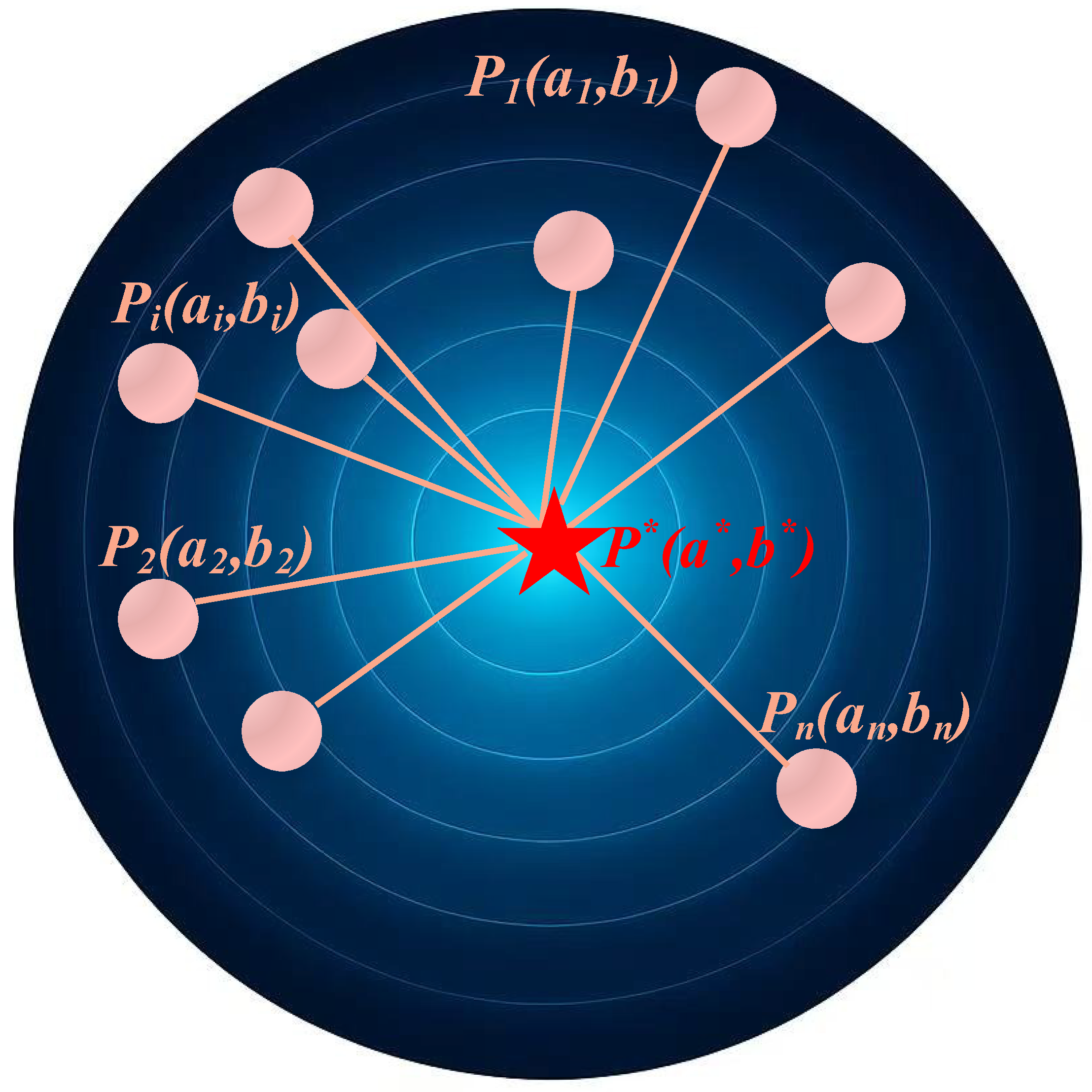
Figure 1 provides a planar explanation of the consensus process, in which each expert evaluation is represented as a point embedded in the circular intuitionistic fuzzy space and can be intuitively interpreted as a light source whose intensity is weighted by the corresponding expert credibility. The red center point
denotes the Optimal Consensus Point, where the overall potential energy induced by all expert evaluations reaches its minimum. This point represents a geometrically balanced equilibrium state, indicating that heterogeneous expert opinions have converged toward a common and stable consensus.
In order to promote this concept more widely,
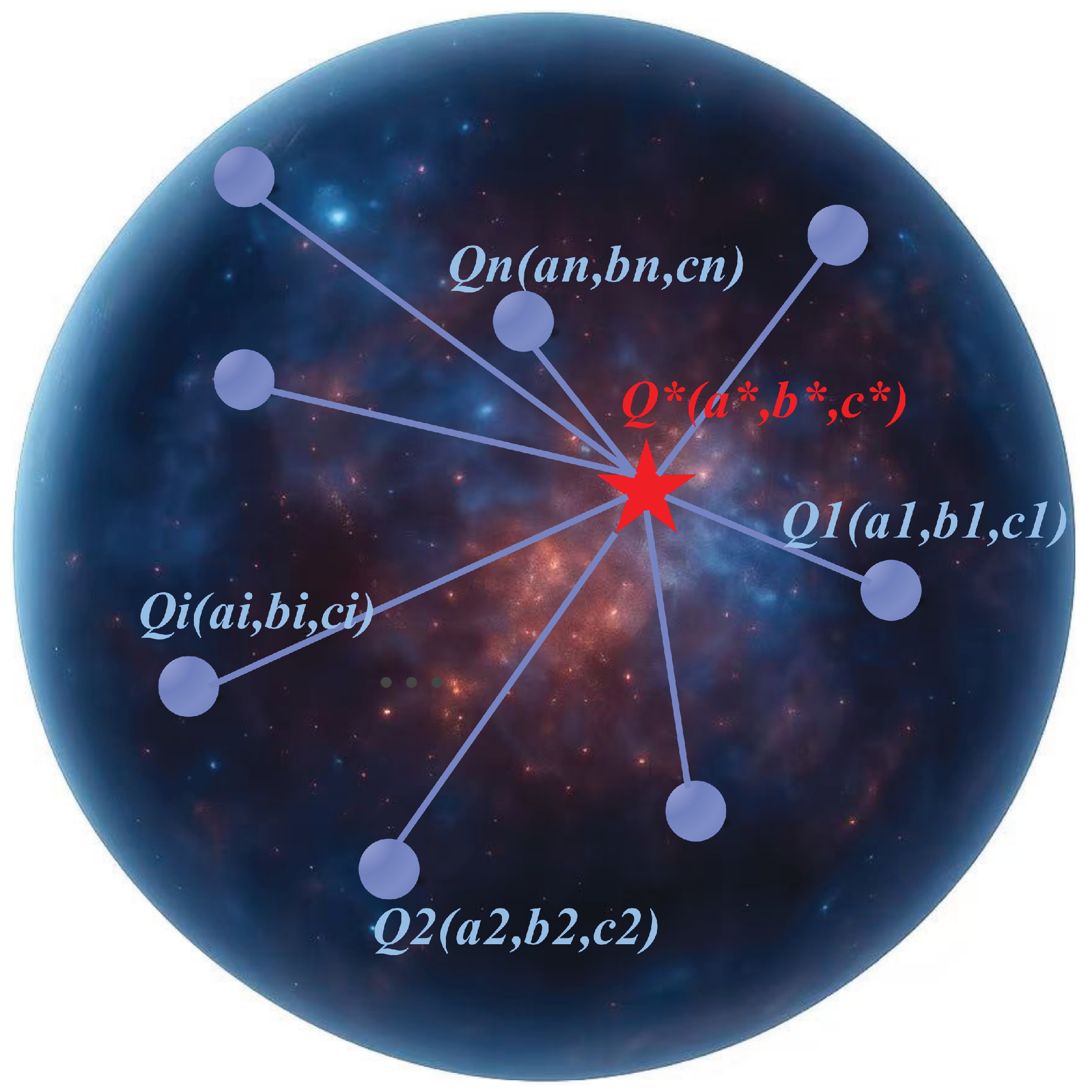
Figure 2 expands the OCP into the three-dimensional
space, which corresponds to several aspects such as membership degree, non-membership degree, and reliability component, respectively. In the view of this three-dimensional space, the expert nodes
are distributed in the C-IF domain. And these expert nodes will be drawn towards the central equilibrium point
together, which indicates the situation related to the perspective of cosmic expansion in the formation of consensus.
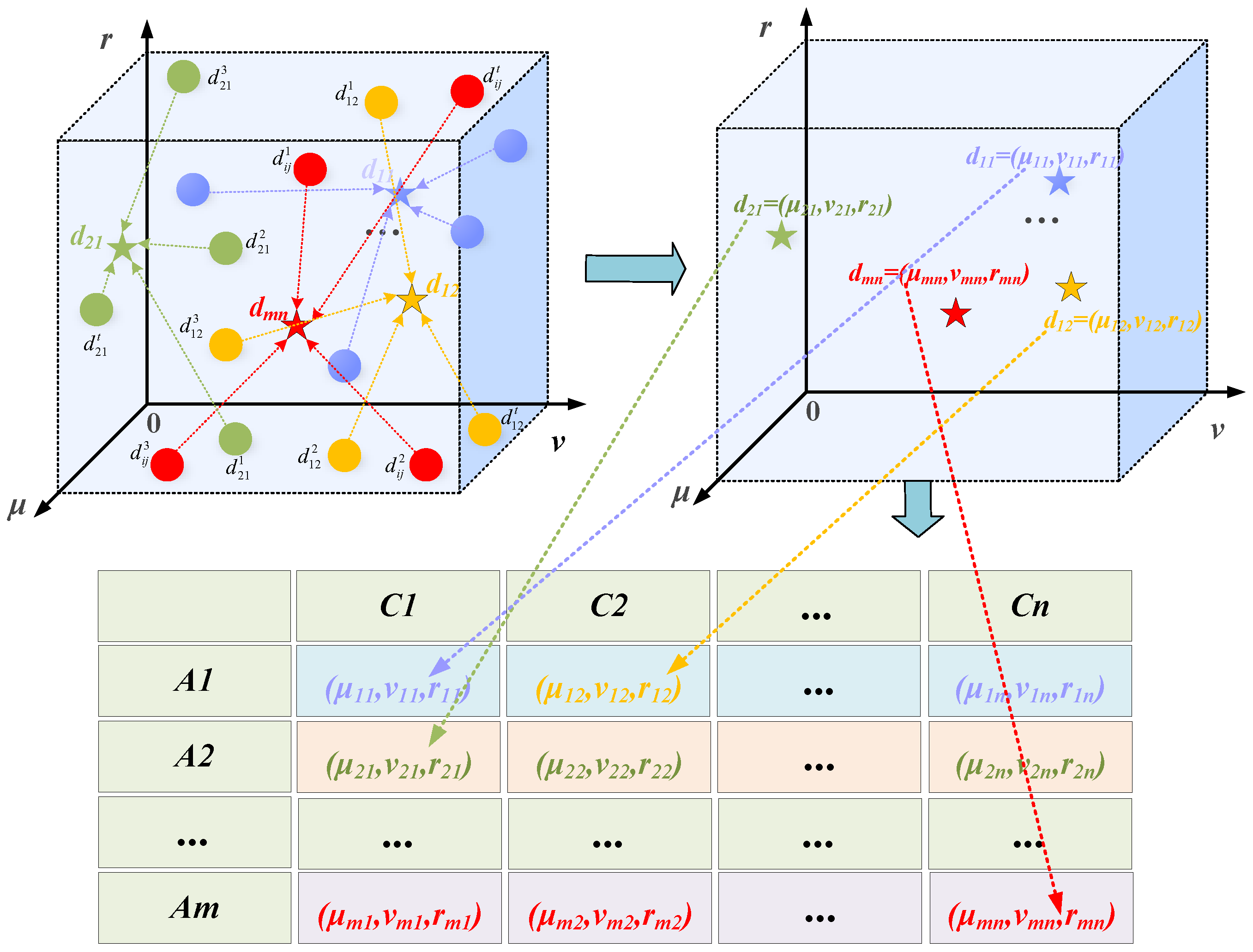
Together, the two visualizations connect the intuitive and geometric understanding of the OCP. The 2D light-source model emphasizes the direction and intensity of expert attraction, while the 3D spatial model captures the complete convergence behavior in the domain, providing a vivid conceptual foundation for the subsequent construction of the aggregated collective matrix.
4.3. Notation, Feasible Set, and Problem Statement
Let
K experts
evaluate alternative
on attribute
using C-IFNs, where
denotes the normalized credibility (weight) of expert
k:
The constraint ensures that each expert contributes non-negatively to the aggregation process, while the normalization condition interprets as a convex weighting scheme. This normalization is not intended to restrict individual to be less than one in isolation, but to guarantee scale invariance of the objective function and to prevent any single expert from dominating the aggregation due to magnitude effects. Such normalized credibility weights are standard in weighted consensus and aggregation models.
The feasible domain introduced in
Section 3 is
Explanation.
is convex (unit disk in
with nonnegativity, and a segment for
r), so feasibility projection is well-posed. The aggregation problem is to determine
minimizing
for each cell and then assemble all
into a consensus matrix.
4.3.1. Cell-Wise Objective and Global Separability
and the global energy
is separable.
Explanation. Here, separability means that the global optimization problem can be decomposed into independent cell-wise subproblems. This property holds because each objective function depends only on the local decision variable and does not involve cross-cell coupling terms or shared constraints across different pairs. As a result, each cell-wise optimization can be solved independently and in parallel, which is consistent with the proposed algorithmic implementation and significantly reduces computational coupling across attributes and alternatives.
4.3.2. Existence, Convexity, and (Near-)Uniqueness
Because is compact and is continuous and convex (as a finite weighted sum of Euclidean norms composed with a linear map ), an optimal solution exists. Moreover, the solution is unique in generic (non-degenerate) configurations, while non-uniqueness may arise only in symmetric or degenerate cases, such as when expert points are collinear or coincide. In such degenerate cases, the set of optimal solutions forms a convex subset of (e.g., a line segment or a face), rather than a single point; any element of this set yields the same objective value and is therefore equally valid for aggregation and subsequent scoring.
Remark. This places our problem in the same class as the weighted Euclidean Weber problem (geometric median) but constrained to ; CRA acts as a constrained, projection-based solver for this convex objective.
4.3.3. Subgradient and KKT Characterization
The objective function is convex but generally non-differentiable at points where for some k, due to the presence of Euclidean norms. Therefore, optimality is characterized using subgradient analysis.
When
for all
k, the subgradient of
is single-valued and given by
Since the optimization is performed over the compact feasible set
, the first-order optimality condition for the constrained problem can be expressed in terms of the KKT condition. Specifically, an Optimal Consensus Point
satisfies
where
denotes the normal cone of
at
.
Explanation. Equation (
22) states that, at the optimal solution, the weighted attraction directions induced by all expert evaluations are in equilibrium, up to the feasibility forces imposed by the boundary of the circular intuitionistic fuzzy domain
. If
lies in the interior of
, the normal cone vanishes and the subgradient balances to zero, indicating perfect geometric equilibrium. If
lies on the boundary, the normal cone accounts for constraint forces that prevent the solution from leaving
. Geometrically, this condition characterizes the OCP as a constrained geometric median of expert evaluations in the C-IF space.
4.4. CRA with Roulette-Based Growth Selection and Deterministic Coordinate Radiation
The proposed CRA follows a single-beam mechanism that integrates roulette-based growth node selection with deterministic coordinate radiation. At each iteration, a growth node is chosen through the inverse-energy roulette rule, after which a set of axis-aligned candidates in space is generated with a fixed step, projected back to the feasible domain , and the lowest-energy candidate is retained. This procedure can be viewed as a discretized projection–gradient descent process that preserves controlled exploration through stochastic roulette sampling.
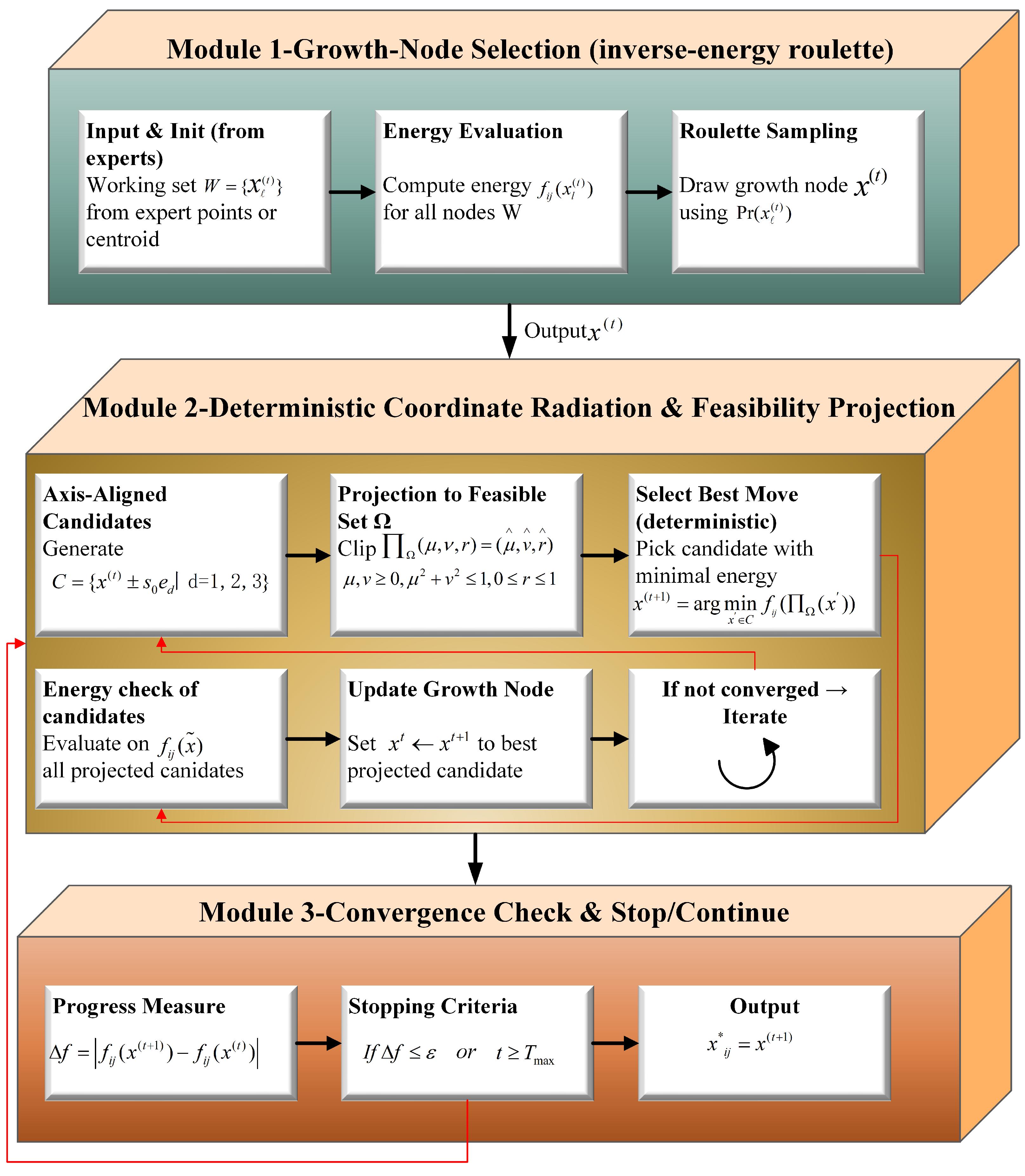
Illustration. The overall workflow of CRA is visualized in
Figure 3 and consists of three modules arranged in a vertically stacked manner:
Module I: executes inverse-energy roulette for probabilistic growth node selection;
Module II: performs deterministic coordinate radiation combined with feasibility projection;
Module III: checks convergence and updates the working set for the next iteration.
The detailed algorithmic procedures corresponding to the three CRA modules are formally summarized in Algorithm 1, Algorithm 2, and Algorithm 3, respectively.
Together, these modules form the complete iterative loop that drives CRA toward the Optimal Consensus Point.
4.4.1. Initialization
The working set is initialized from the expert points (or their centroid). In our MATLAB implementation, the initial array is directly assigned to the expert set, so each expert evaluation serves as an initial growth node within the feasible domain. This matches the statement array = A; in the code.
4.4.2. Growth Node Selection (Inverse-Energy Roulette)
Select a growth node
via
The inverse-energy roulette mechanism for growth node selection is formally described in Algorithm 1.
Explanation. Equation (
23) defines an inverse-energy roulette rule, where each candidate growth node
is selected with probability proportional to
. Since
measures the aggregated weighted distance to expert evaluations, lower values indicate better local consensus quality. The normalization in the denominator ensures
, so that low-energy nodes are favored while higher-energy nodes still retain a nonzero selection probability, which helps avoid premature concentration on a single basin.
4.4.3. Visualization of the Roulette Mechanism
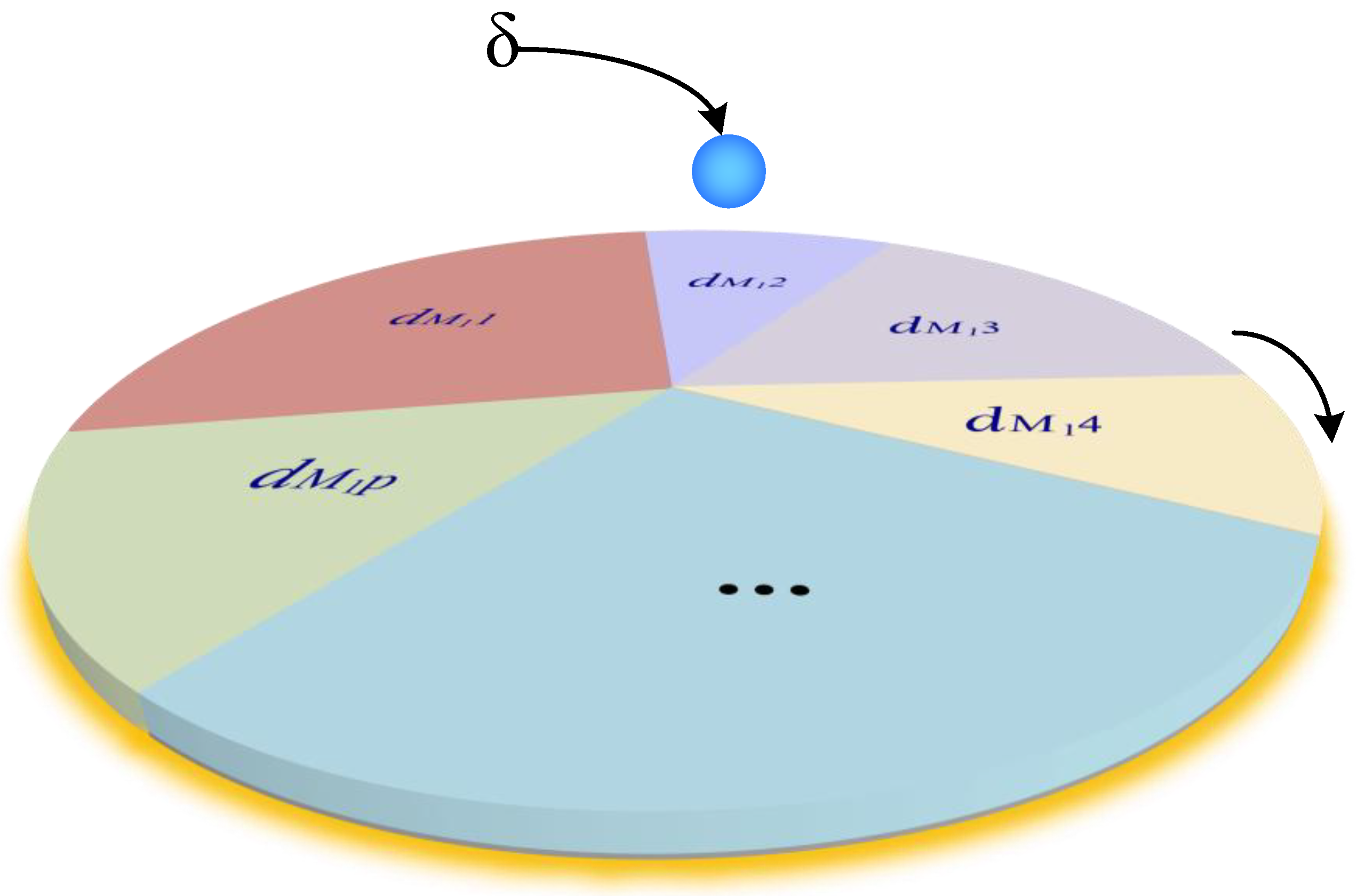
The inverse-energy roulette allocates a higher selection probability to lower-energy nodes, helping the CRA explore multiple regions before convergence.
Explanation.
Figure 4 shows how a random number
determines the selected growth node. This controlled randomness improves early exploration while maintaining overall determinism once the seed is fixed.
Pseudocode (Module I: Growth node selection).
4.4.4. Coordinate Radiation and Feasibility Projection
Form coordinate candidates with fixed step
:
To ensure that each candidate remains a valid circular intuitionistic fuzzy number, a feasibility projection operator
is applied:
The projection of the
components is defined as
Explanation. Equation (
26) implements the feasibility projection for the CIFN domain
. First,
enforces the nonnegativity constraints by component-wise truncation. If the resulting point already lies inside the unit quarter-disk, it is kept unchanged; otherwise, it is radially projected onto the boundary
by normalization. Together with the clipping of
r in Equation (
25), this guarantees that
always holds, so that every candidate remains a valid circular intuitionistic fuzzy number.
Choose the best projected candidate:
The complete coordinate radiation and feasibility projection procedure is summarized in Algorithm 2.
Explanation. The update rule in Equation (
27) corresponds to a deterministic coordinate radiation step, where feasibility is enforced through
. This design preserves the circular coupling between
and
while ensuring that the search remains within the admissible CIFN domain.
Pseudocode (Module II: Coordinate radiation and feasibility projection).
4.4.5. Termination, Parameters, and Numerical Safeguards
The convergence checking and update strategy of CRA is detailed in Algorithm 3.
Use a fixed step
and stop if
Implementation note. The MATLAB R2023a implementation uses the iteration cap
as the sole stopping rule; the tolerance
is kept in the theoretical formulation and can be enabled without changing the algorithmic flow.
Default parameters follow the implementation:
Distances are clipped by to avoid division by zero in inverse-energy sampling and to stabilize candidate comparisons.
Pseudocode (Module III: Convergence and update).
4.4.6. Computational Complexity and Implementation Mapping
Per iteration, after roulette selection of a growth node, at most six candidates (three axes × ±) are evaluated. The per-cell objective-evaluation cost is , and cells are independent and parallelizable. The MATLAB modules map as: func_distance , func_fitness ↔ inverse-energy growth node selection, func_updated_array ↔ coordinate radiation and projection, func_drawing ↔ visualization of convergence.
4.5. Construction of the Aggregated Consensus Matrix
Once each OCP
is obtained, assemble the consensus matrix
Explanation. Each entry is feasible by projection, preserving the coupling among
. The matrix
C provides a geometrically coherent summary of expert opinions and is compatible with projection-type scoring in C-IF environments [
13].
Visualization of the Matrix Construction Process
After the Optimal Consensus Points are obtained, the CRA aggregates them into the final collective matrix.
Explanation.
Figure 5 illustrates how the CRA converts geometric consensus points into the collective matrix
C, integrating expert preferences across all attributes and alternatives.
4.6. Projection-Based Evaluation and Ranking in
Building on projection-based scoring ideas in neutrosophic settings and extending them to the CIFN embedding used here, we treat
as benefit-type, while
(non-membership) and
r (uncertainty radius) are cost-type components. All formulas are expressed directly in
. Let
be nonnegative attribute weights (typically
). Note that attribute weights are introduced only in this projection-based scoring stage, while the aggregation stage in
Section 4.2 adopts
.
Triplet embedding. For each aggregated entry, write .
Attribute-wise positive/negative ideals. For each attribute
j, the extrema used to build the ideal vectors are summarized in
Table 1.
The ideal vectors are then
Remark. The subsequent projections are performed on the benefit-mapped triplets
and
defined in (
32).
Benefit-oriented mapping. After this mapping, all three components become benefit-type ; hence, each projection component enters additively.
Define benefit-mapped vectors by
Projection-based closeness (alternative
).
Final score (larger is better).
With alternatives ranked in descending order of .
Explanation. The
embedding isolates the roles of support, hesitation, and opposition; the projection terms implement geometric similarity to ideal points and are consistent with modern information-measure-based scoring mechanisms employed in probabilistic linguistic and C-IF consensus models [
17,
40].
4.7. Quality Assessment and Sensitivity
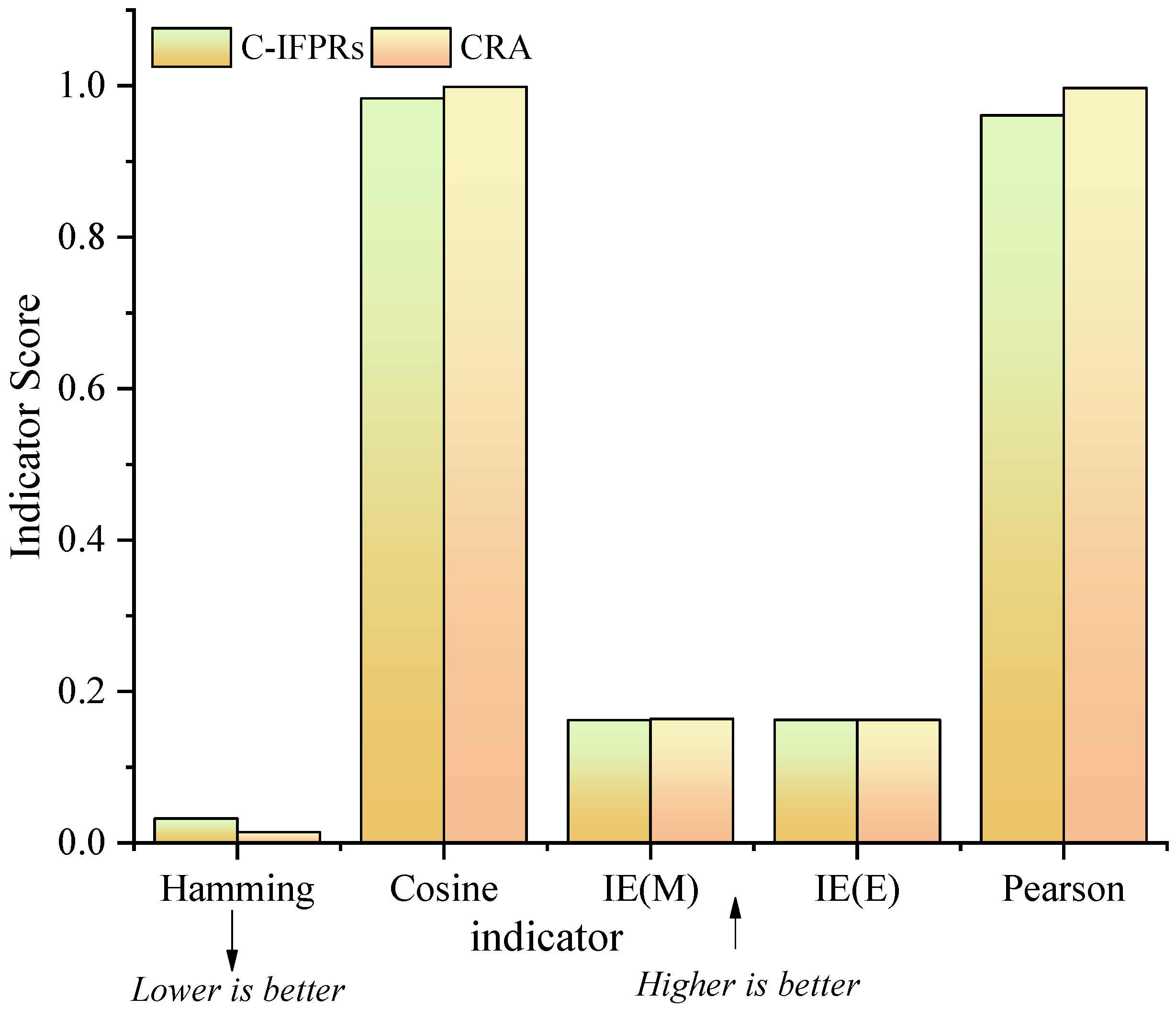
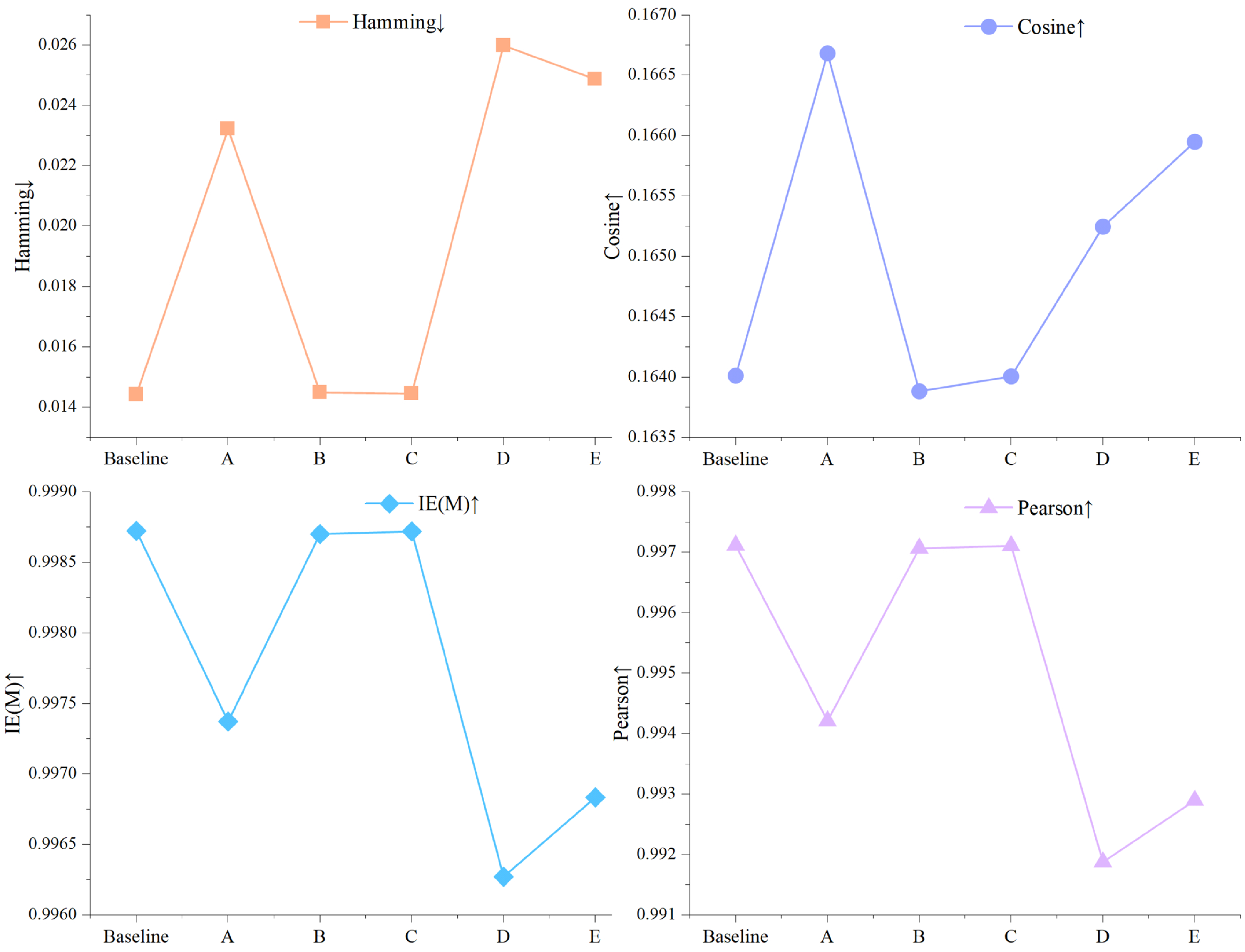
We evaluate fidelity and robustness using four indicators computed from C and . For reference, the average information energy of expert matrices is also reported to compare the concentration before and after aggregation.
4.7.1. Hamming Distance (Dispersion)
4.7.2. Similarity (Coherence)
4.7.3. Correlation (Structural Alignment)
Flatten
into vectors and compute
4.7.4. Information Energy (Compactness)
6. Conclusions
This paper proposes a novel Convergent Radiation Algorithm (CRA) for multi-attribute group decision-making (MAGDM) problems in circular intuitionistic fuzzy environments. Starting from the geometric interpretation of circular intuitionistic fuzzy preference relations (C-IFPRs), the CRA framework formulates the aggregation process as a deterministic optimization problem, while ensuring consistency, convergence, and interpretability.
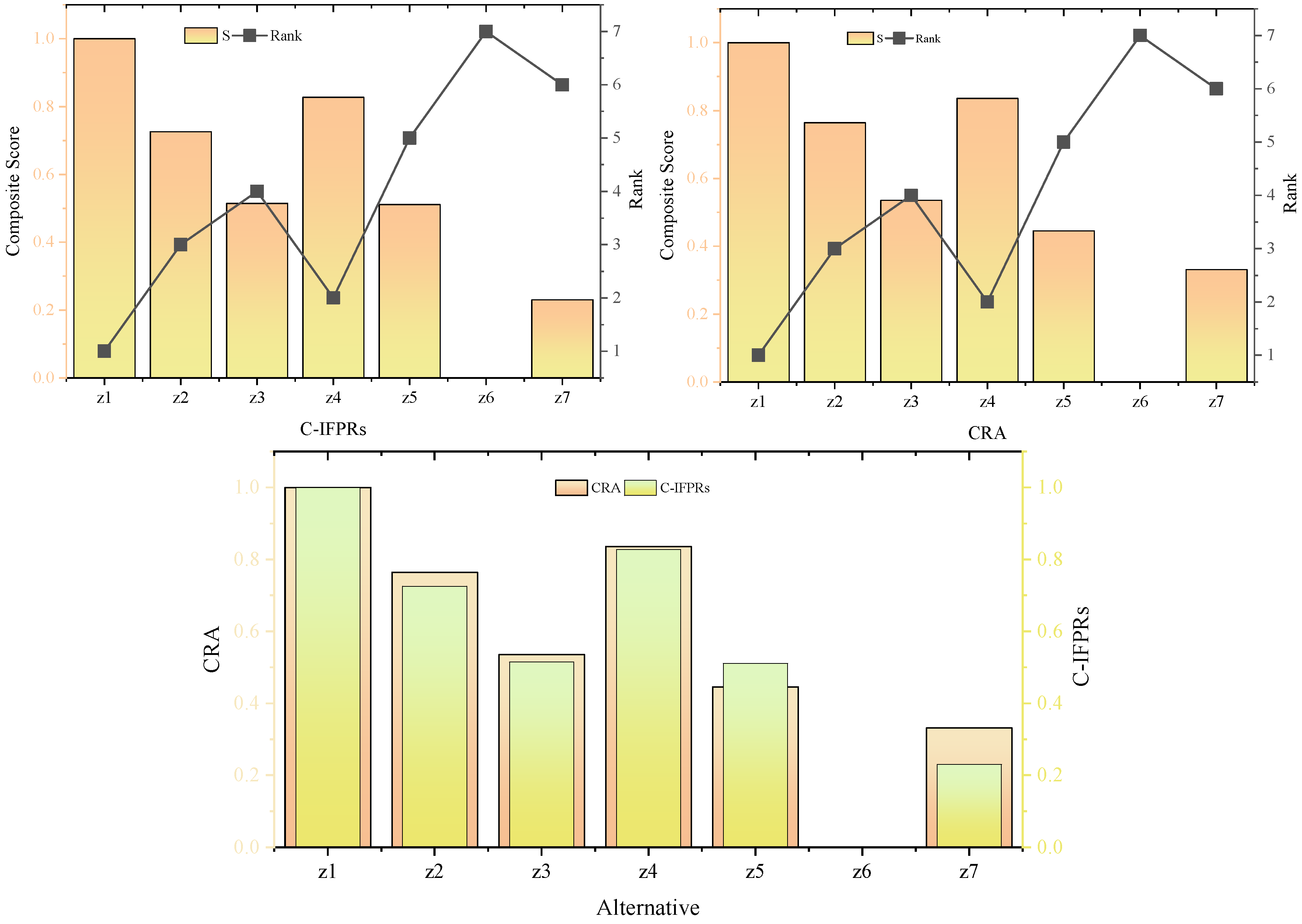
Based on the dataset from the Hubei agro-ecological zone, the empirical results show that, compared with the benchmark C-IFPR model [
17], the proposed CRA method achieves higher aggregation quality, smaller internal deviations among experts, and stronger prediction consistency. Furthermore, the comparative analysis presented in
Section 5.4 demonstrates that the CRA framework preserves the global ranking order obtained by existing methods, while exhibiting improved robustness in terms of similarity and correlation metrics.
Overall, the CRA framework contributes to the existing literature in three main aspects: (1) it provides a parameter-free geometric mechanism for collective optimization; (2) it offers a stable and interpretable consensus structure without reliance on preprocessing procedures; and (3) it generalizes the classical projection-based decision paradigm to circular intuitionistic fuzzy settings. Future research may extend the CRA framework to hybrid fuzzy environments, investigate its performance on large-scale decision datasets, and incorporate adaptive weighting strategies for dynamic expert reliability evaluation.