Article

Ultimate Bounds for a Diabetes Mathematical Model Considering Glucose Homeostasis
Postgraduate Program in Engineering Sciences, BioMath Research Group, Tecnológico Nacional de México/IT Tijuana, Blvd. Alberto Limón Padilla s/n, Tijuana 22454, Mexico
*
Author to whom correspondence should be addressed.
Axioms 2022, 11(7), 320; https://doi.org/10.3390/axioms11070320

Submission received: 27 May 2022 / Revised: 20 June 2022 / Accepted: 28 June 2022 / Published: 30 June 2022
(This article belongs to the Special Issue Mathematical and Computational Applications)

Abstract

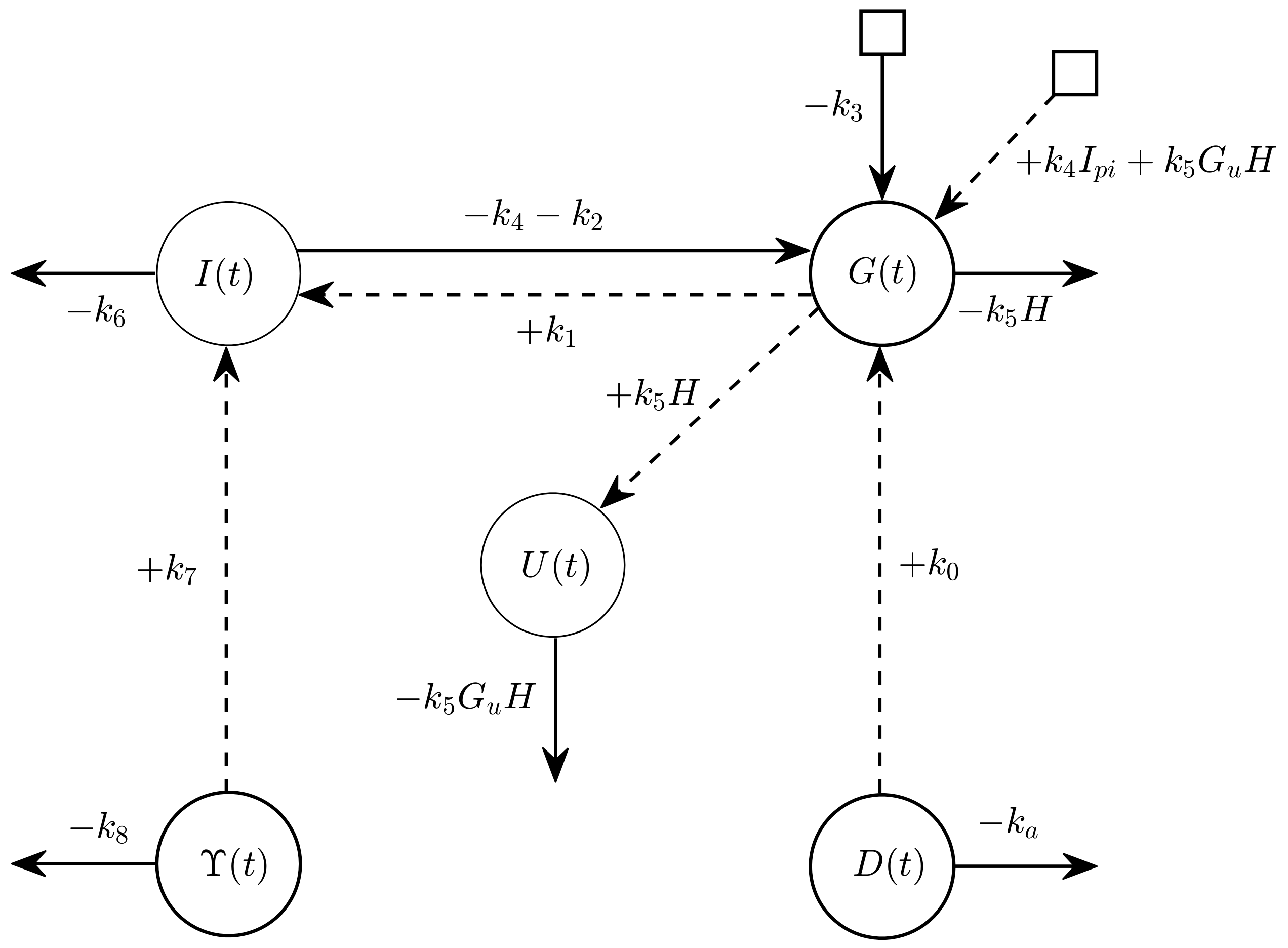
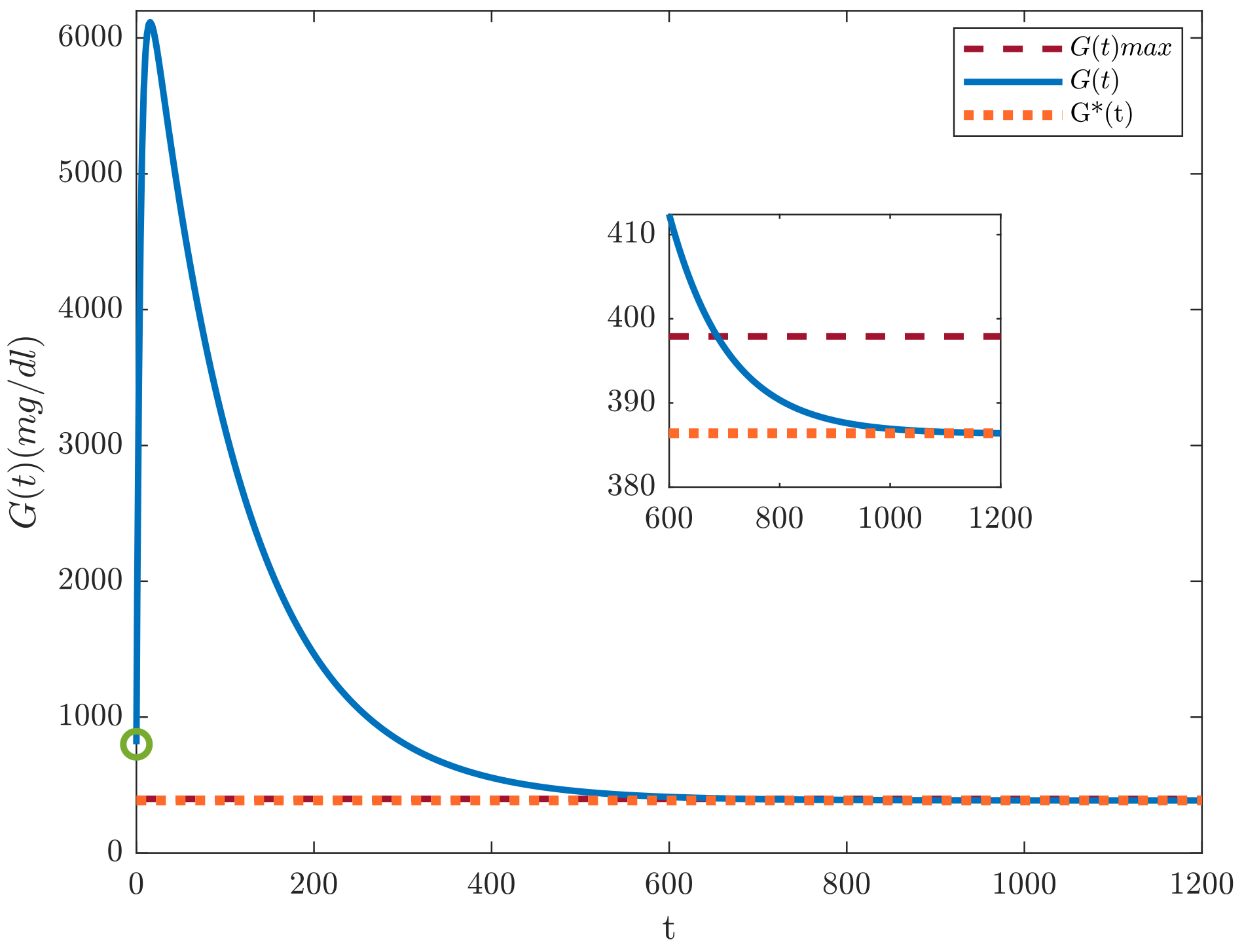
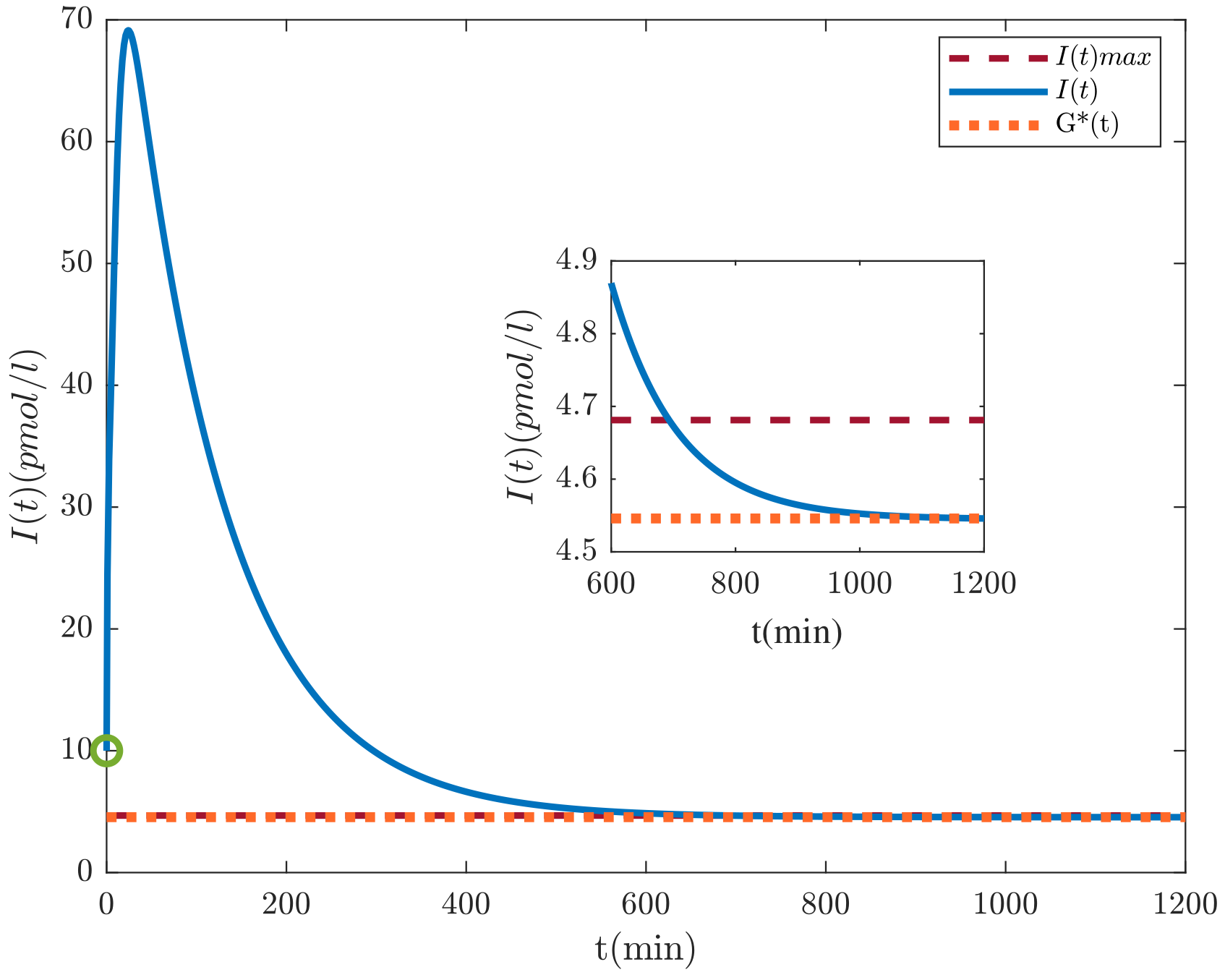
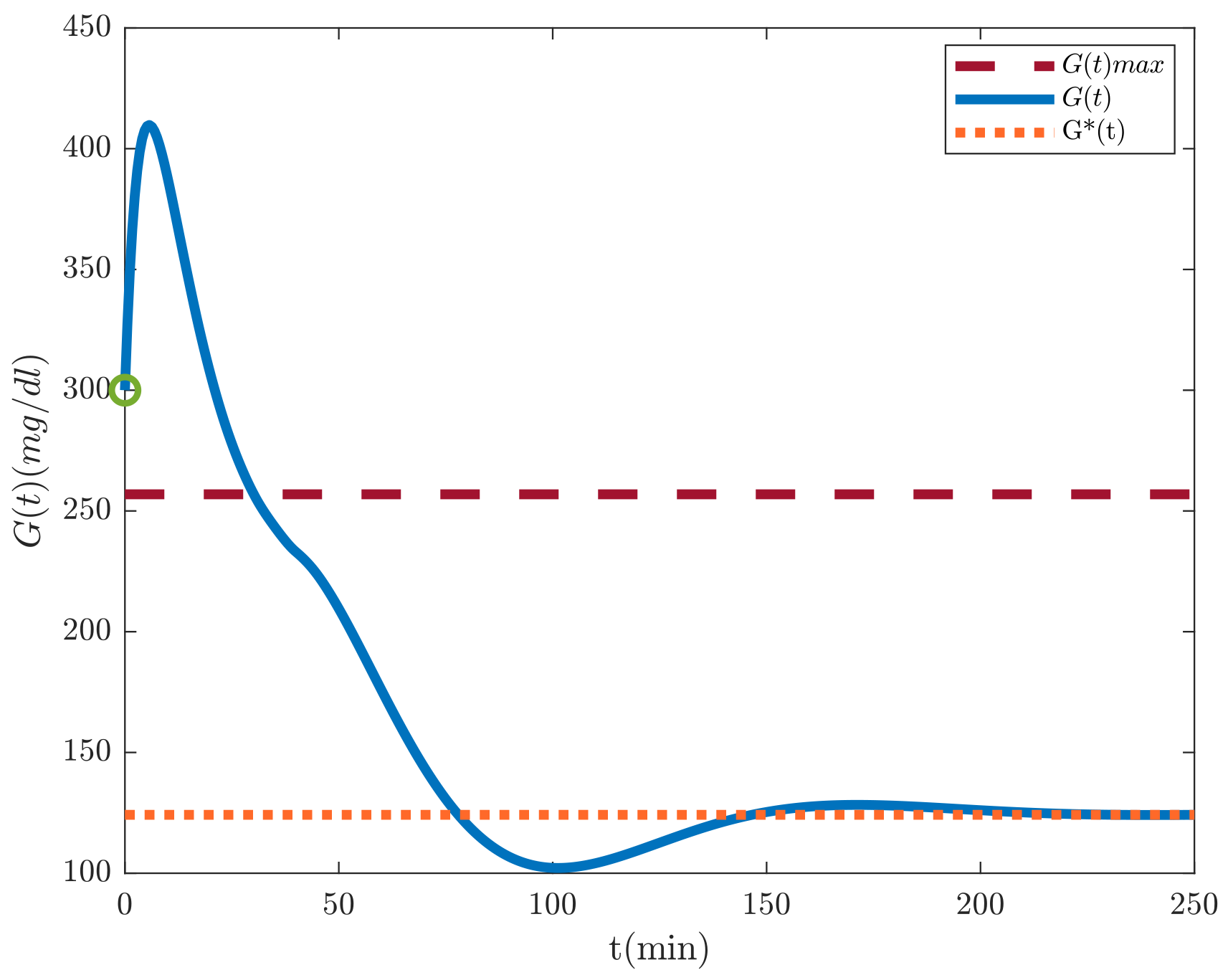
This paper deals with a recently reported mathematical model formulated by five first-order ordinary differential equations that describe glucoregulatory dynamics. As main contributions, we found a localization domain with all compact invariant sets; we settled on sufficient conditions for the existence of a bounded positively-invariant domain. We applied the localization of compact invariant sets and Lyapunov’s direct methods to obtain these results. The localization results establish the maximum cell concentration for each variable. On the other hand, Lyapunov’s direct method provides sufficient conditions for the bounded positively-invariant domain to attract all trajectories with non-negative initial conditions. Further, we illustrate our analytical results with numerical simulations. Overall, our results are valuable information for a better understanding of this disease. Bounds and attractive domains are crucial tools to design practical applications such as insulin controllers or in silico experiments. In addition, the model can be used to understand the long-term dynamics of the system.
Keywords: diabetes; localizing domain; Lyapunov Stability; ODEs; attraction domain diabetes; localizing domain; Lyapunov Stability; ODEs; attraction domain