Article

Geochemical Evidence on the Source of Silica and Depositional Setting of the Diatomites in the Ağın (Elazığ, Turkey)


1
Department of Geological Engineering, Firat University, 23119 Elazig, Turkey
2
Istituto Nazionale di Geofisica e Vulcanologia, Sezione Osservatorio Etneo, Piazza Roma 2, 95125 Catania, Italy
3
Department of Geology, Faculty of Sciences, Urmia University, Urmia 57561-51818, Iran
*
Author to whom correspondence should be addressed.
Minerals 2026, 16(7), 718; https://doi.org/10.3390/min16070718
Submission received: 8 June 2026 / Revised: 5 July 2026 / Accepted: 7 July 2026 / Published: 8 July 2026

Abstract

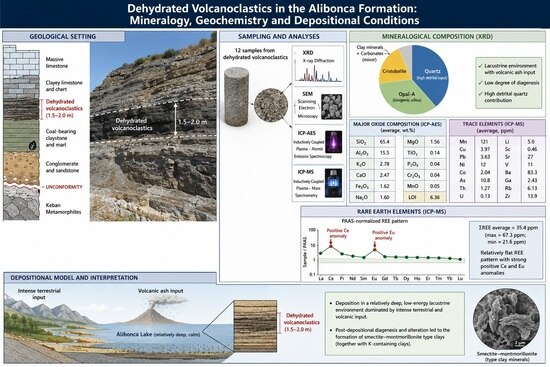
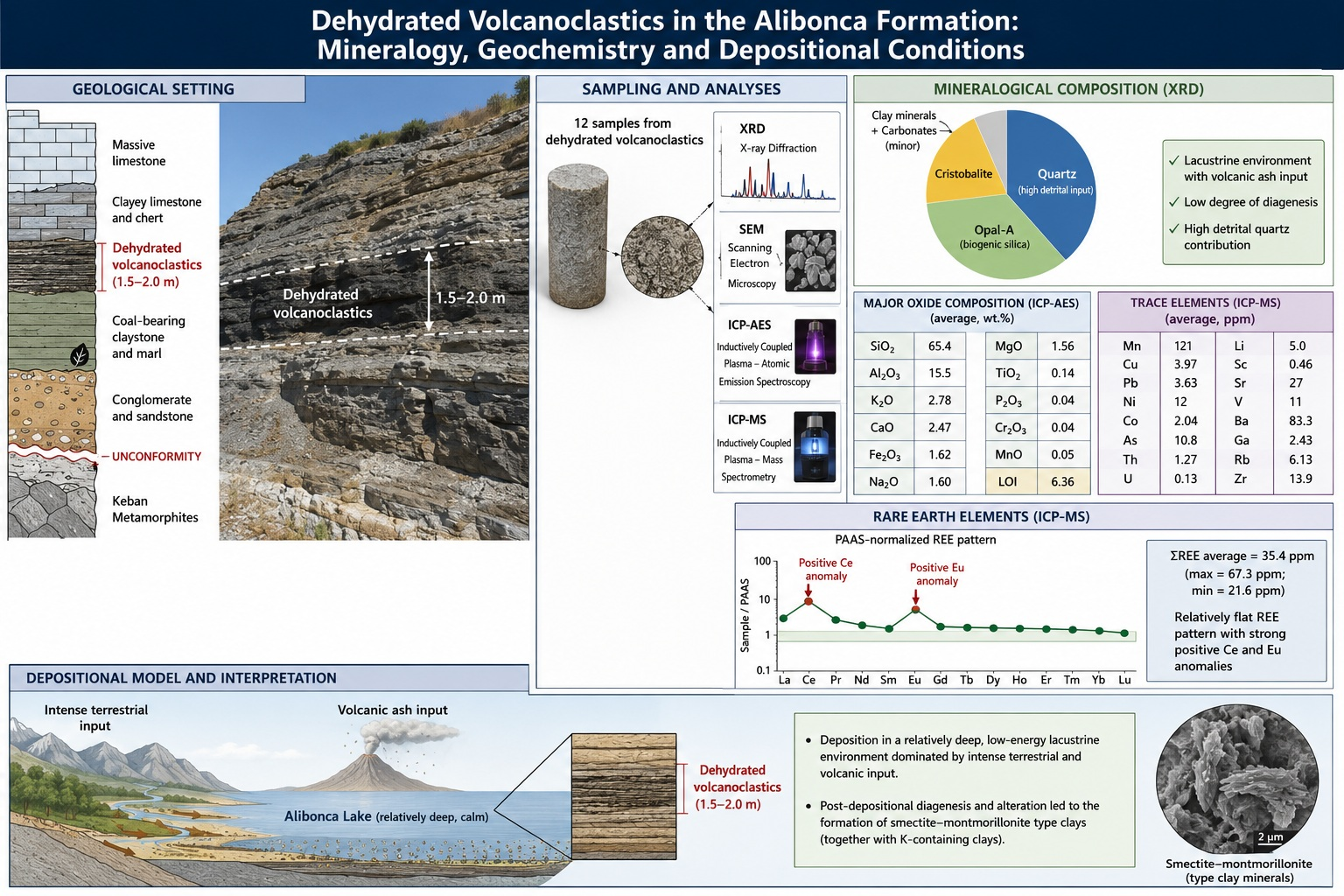
The Upper Oligocene–Lower Miocene Alibonca Formation retains an essential record of intricate relationships among carbonate platform evolution, volcanic–sedimentary inflow, and high-purity silica deposition. This study examines the stratigraphic structure, paleoenvironmental development, and industrial viability of the Ağın diatomite deposits using comprehensive sedimentological, mineralogical, and geochemical investigations. Stratigraphic evidence indicates that the formation commenced with Early Miocene alluvial fan and shallow restricted marine sub-basin sedimentation prior to evolving into a significant marine incursion. This marine phase created a resilient carbonate platform structure consisting of reef-core, fore-reef, and back-reef sub-environments. Simultaneously, vigorous regional synsedimentary volcanism introduced high-flux silica pulses into the basin, acting as a major catalyst for diatom proliferation and high biological productivity within a restricted sub-basin setting. Geochemical analyses indicate that these bright white, diatomite deposits formed in conjunction with potassium-rich clays in a relatively deep, low-energy, and confined sub-basin of the Alibonca Sea. The high concentration of bulk SiO2 and low trace element baselines are consistent with a high-purity deposional system and a low total rare earth element (ΣREE) abundance. However, their relatively high Al2O3 and K2O contents indicate significant volcanic and terrigenous detrital input together with authigenic clay mineral formation during diatomite deposition, classifying the deposits as clay-bearing (argillaceous) diatomites rather than exceptionally pure diatomites. Chemical Index of Alteration (CIA) values indicate moderate continental chemical weathering under mostly hot and humid paleoclimatic conditions. The rapid terrestrial runoff and nutrient influx stimulated significant diatom growth before the ultimate late Early Miocene marine regression, transforming the area into a subaerial, volcanically influenced terrestrial environment. The Ağın deposits exemplify intra-platform marine silica sinks, demonstrating how tectonic–magmatic influences can surpass typical carbonate factory conditions to provide economically valuable biogenic mineral resources.

Graphical Abstract

1. Introduction

Diatomite is a lightweight, extremely porous, silica-rich sedimentary rock that results from the geological deposition and compaction of fossilized skeletal remains (frustules) of microscopic, unicellular aquatic algae called diatoms. Diatomite is a biogenic siliceous rock distinguished by its remarkable porosity, low density, and elevated specific surface area, resulting from the post-mortem deposition and consolidation of amorphous hydrous silica cell walls from aquatic diatoms [1,2,3]. The disparity in viscosity directly influences eruption style; high-viscosity lavas impede degassing and encourage explosive activity, resulting in substantial fine-grained volcaniclastic material, whereas low-viscosity lavas facilitate effusive eruptions with minimal fragmentation [4,5]. Subsequent to deposition, diatomite materials experience swift diagenetic modification, wherein unstable volcanic glass and primary minerals are converted into secondary phases, notably clay minerals like smectite, via hydration, dissolution, and reprecipitation processes [6,7]. Upon the death of a diatom, its soft tissue initially decomposes and vanishes, ultimately accumulating as silt [8,9,10]. Diatomite deposits are created when siliceous shells accumulate and undergo petrification. Diatomite is a lightweight, silica–clay composite rock that readily disintegrates. Diatom shells, feldspars, volcanic glass, silica sand, iron oxides, and organic molecules are the primary constituents that supply H2O [11]. Pure diatomites often exhibit a high melting point, low thermal conductivity, and a pale coloration. Diatomite rocks may also contain silica polymorphs, silica sand, volcanic glass, carbonates, feldspars, clay minerals, iron oxides, and organic compounds [12,13,14]. Diatomites are insoluble in acids, with the exception of hydrofluoric acid (HF). The rock’s hardness is roughly 1.5 on the Mohs scale, whereas the grains exhibit a hardness between 4 and 6.5. Dry diatomites can exhibit a specific gravity of 0.4 g/cm3, however their typical specific gravity ranges from 1.9 to 2.4 g/cm3. Due to its 90% porosity, it can absorb three times its weight in water. The distinctive characteristics of diatomites, including their low density, high porosity (up to 80%), and specific surface area, are attributed to their diverse morphologies [15,16,17,18,19,20]. Consequently, free isolated silanol groups (-SiOH), free double silanol groups (-Si(OH)2), and -Si-O-Si bridges with surface oxygen atoms constitute the active centers of diatomites, possessing hydroxyl groups that facilitate the adsorption of rare earth elements (REEs). Silanol groups, due to their elevated reactivity, can engage with a diverse array of chemical and inorganic compounds. Diatomite-based materials have been utilized as adsorbents to isolate and recover rare earth elements from aqueous solutions [21]. The distinctive properties of diatomite, such as its extensive specific surface area, chemical stability, and micronized and submicronized porous structure, render it valuable across various industries, including environmental engineering and construction [22]. The application of diatomites as a substitute for cement has recently attracted significant interest [23,24,25,26,27,28,29]. Diatomites are extensively utilized in the food industry as filtration media for products like sugar syrups, water, and fruit juices, owing to their distinctive attributes of high porosity, low bulk density, permeable microstructure, chemical inertness, high purity, substantial specific surface area, and robust adsorption capacity. In addition to filtration, these characteristics render diatomites exceptionally valuable for various industrial applications, such as adsorbents, catalyst supports, pozzolanic additives in cement, construction materials, environmental remediation agents, components in textile dye processing, glass manufacturing, porous ceramics, moisture-control products, and controlled-release drug delivery systems [29,30,31,32,33,34,35,36]. The main aim of this study is to ascertain the specific paleoenvironmental and depositional conditions that led to the diatomite horizon in the Alibonca Formation, and to thoroughly clarify its mineralogical and geochemical properties to evaluate its potential as an industrial raw material.

2. Geological Setting

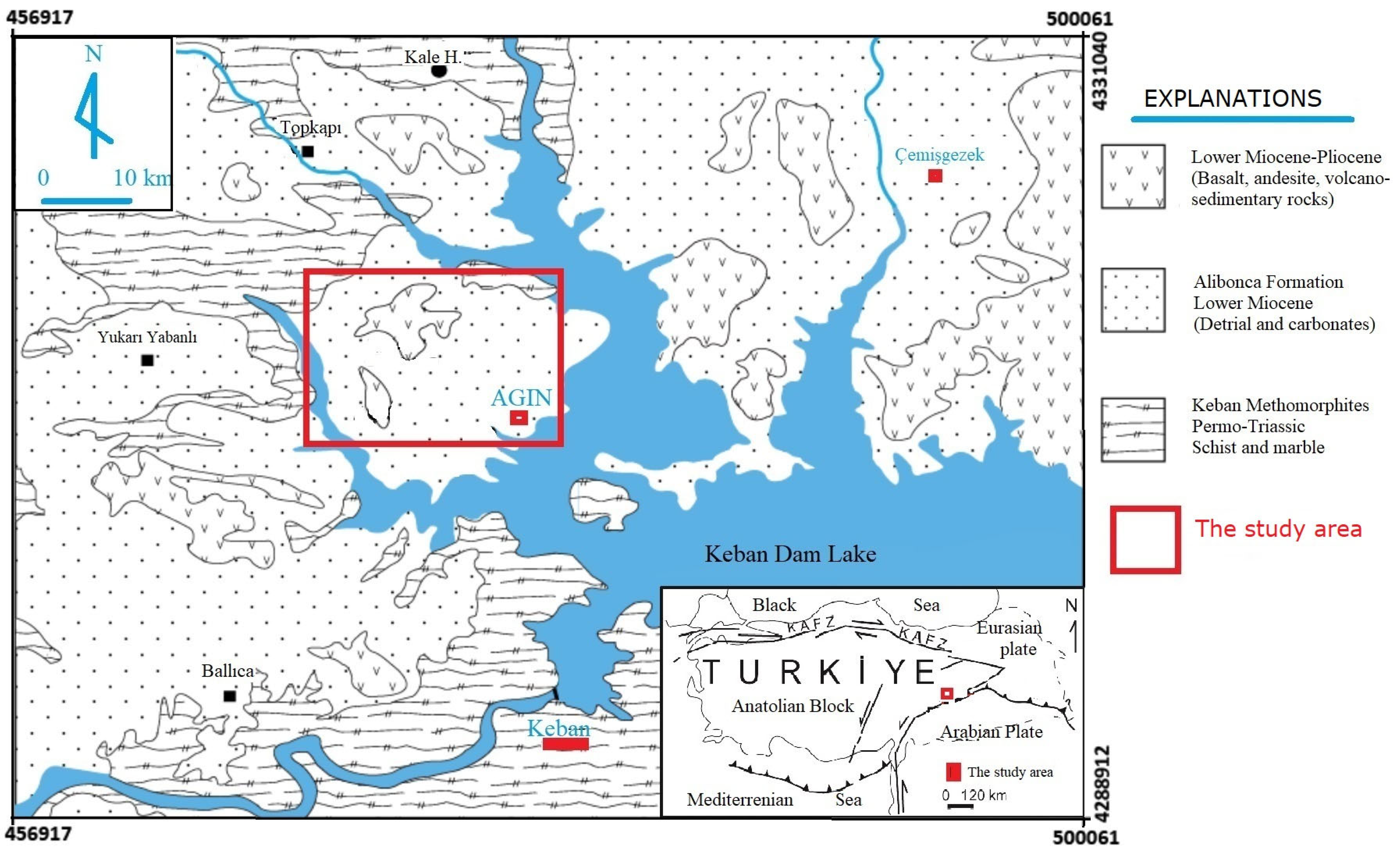
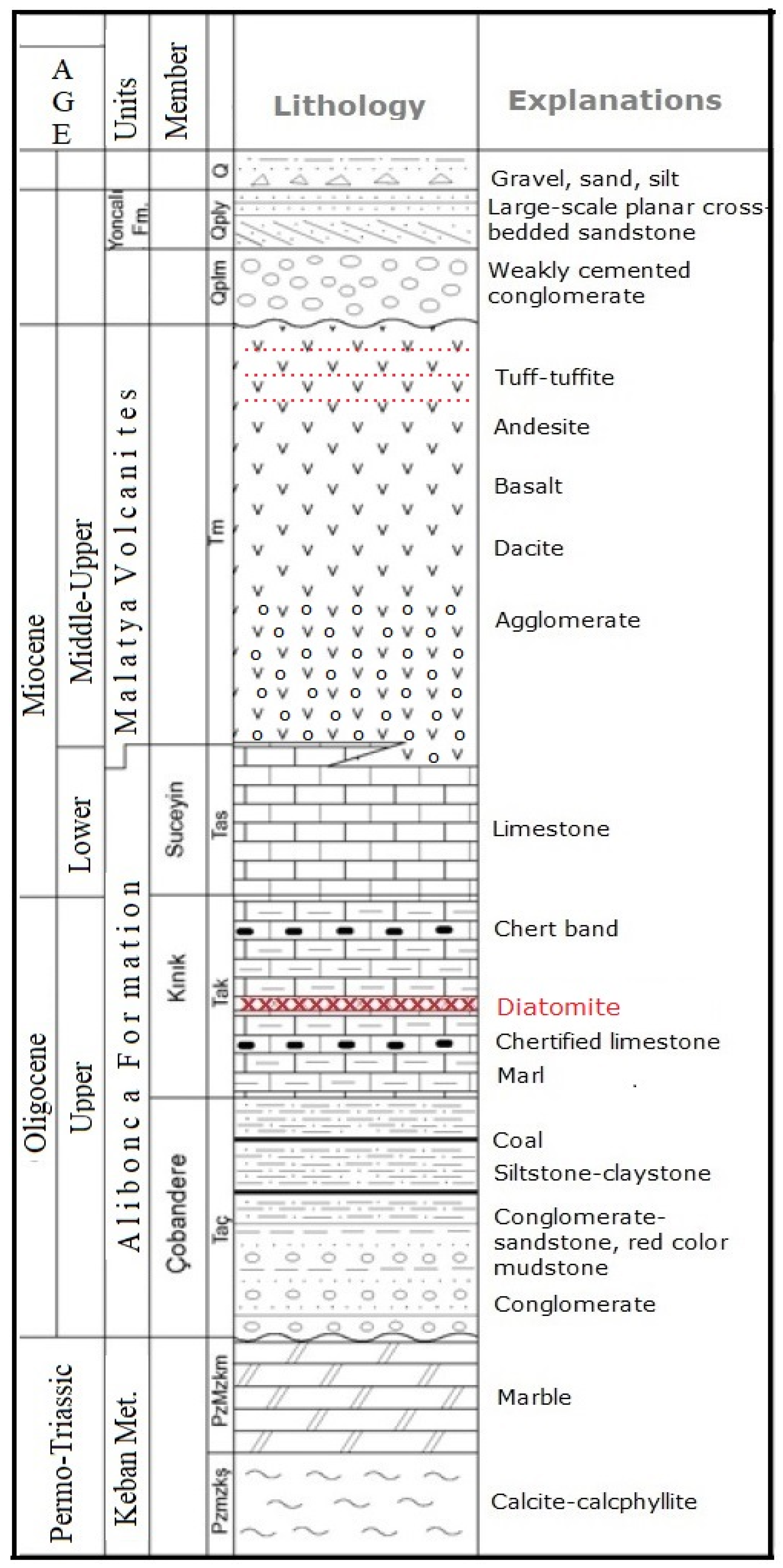
The Upper Oligocene–Lower Miocene Alibonca Formation, which constitutes the last sedimentary record of the Neo-Tethys realm, is extensively exposed in the Eastern Anatolia Region [37]. The Alibonca Formation, extensively spread around the Ağın network and composed of marine deposits, rests upon the Keban Metamorphites with an angular unconformity (Figure 1 and Figure 2). The unit typically commences with densely stratified and occasionally substantial limestones at the base, evolving into marls that incorporate thickly bedded sandstone interlayers in the top strata. At the summit, it has alternating strata of tuff and tuffaceous marl. The setting of the Alibonca Formation’s deposition originally signifies a shallow and dynamic environment. This ecosystem progressively evolved into a more profound and tranquil setting, where turbidity currents generated alternating sandstone–tuffaceous marl deposits [38,39]. The Alibonca Formation is characterized by a pale yellow–beige hue and typically displays soil-like, worn, and occasionally stratified features. The clay–marl strata, characterized by severe weathering, have a softer topography, whereas the stratified sandstone–limestone formations present a more rigid topography [39]. The diatomite layers of the Alibonca Formation, which spans extensive areas in the region, reach a thickness of 1.5 to 2.0 m in certain locations and conformably extend to the strata.

3. Samples and Analytical Method

3.1. Sampling

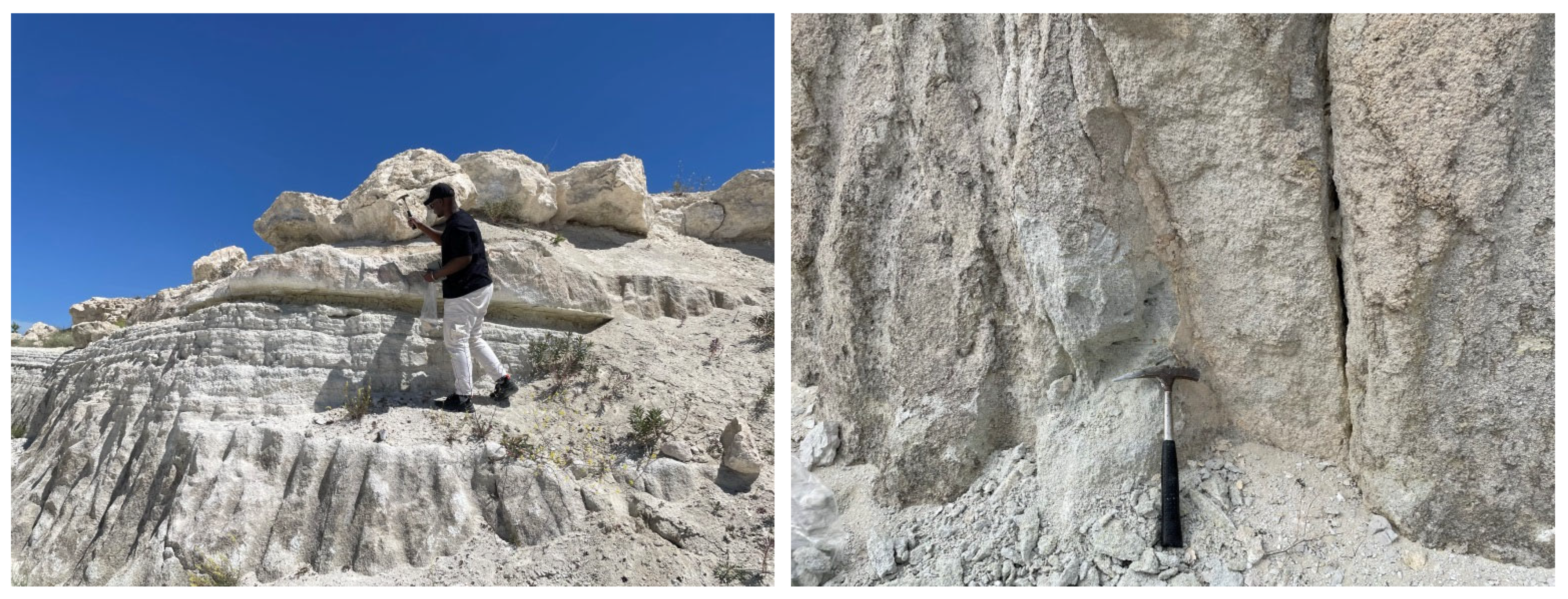
The diatomite outcrops at Ağın (Elazığ) manifest as a horizontal layer of 1.5–2.0 m thick, located in the central sections of the Alibonca Formation, roughly 2 km east of the town of Ağın, near the peaks. Twelve diatomite specimens were systematically collected from the base to the apex of this stratum (Figure 3) at the following coordinates: 1-N 38.927462°, E 38.692389°; 2-N 38.927075°, E 38.692423°; 3-N 38.926995°, E 38.692480°; 4-N 38.926695°, E 38.692674°. Thin sections were produced from these specimens, and samples were collected for XRD and SEM analysis, as well as for the examination of main oxides, trace elements, and rare earth elements (REEs).

3.2. Analytical Methods

The mineralogical composition of the diatomite samples was analyzed using a Bruker D8 Advance X-ray diffractometer (XRD) (Bruker Corporation; Billerica, MC, USA) at Ankara University/YEBIM. Each sample was ground in an agate mortar and allowed to dry at ambient temperature. The samples were then gathered onto a silicon sample holder. Measurements were performed utilizing Cu K radiation, with a cumulative counting duration of thirty minutes. The XRD patterns of the reference materials were correlated. The intensity and frequency of these mineral peaks are illustrated in figures as results of XRD investigation. Scanning Electron Microscope–Energy-Dispersive Spectroscopy (SEM-EDS) analyses and images were performed on Ağın diatomite utilizing the Thermoscientific-Scios 2 model (Thermo Fisher Scientific, Waltham, MC, USA) at Munzur University Laboratories. The examinations employed a maximum magnification of 100,000, and EDS evaluations were performed by selecting pertinent regions on the materials. This study utilized descriptive statistics to clarify the characteristics of geochemical data and to examine the correlations among variables (elements), with statistical analyses performed using STATA ver. 13 software. Ce and Eu anomalies were determined by dividing REE values by Post-Archean Australian Shale (PAAS) values [43,44,45]. Eu/Eu* = Eun/√[Smn*Gdn]; Ce/Ce* = Cen/√[Lan*Prn].
Twelve samples from the diatomites of the Alibonca Formation were initially crushed, reduced to a 200 mesh size, and subsequently dried in an oven at 60 °C for one day. The principal oxides were subsequently tested via ICP-AES, while the trace elements and rare earth elements were examined using ICP-MS. The error margins in the repeated assessments of the diatomites were found to be within 5%. Acme Laboratory (Canada) offers ICP-AES and ICP-MS analysis services, specifically for ascites or trace elements in silicate rocks. A multi-acid method was utilized for the dissolution of diatomite samples; thereafter, a 0.25 g aliquot was heated in HNO3, HCl, and HF until fuming, dried, and subsequently dissolved in HCl. Secondly, powdered diatomite samples underwent digestion for one hour in an HCl solution, HNO3:H2O (1:1:1, v/v; 6 mL for 1.0 g of sample). The detection limits for trace elements are as follows: 0.01 ppm for Mo, Cu, and Pb; 0.1 ppm for Zn, Ni, Co, Sc, Ga, Rb, Sn, and Zr; 0.02 ppm for Sb, Bi, Cs, Hf, and Nb; 0.5 ppm for Sr and Ba; 1 ppm for Mn and V; 10 ppm for Ti; and 0.02 ppm for rare earth elements (REEs). Procedural blanks were integrated and analyzed as part of the QA/QC protocol during sample freezing and preparation. Blank results were examined for each analytical batch, and any blank values exceeding the detection limits (DLs) or indicating potential contamination were thoroughly scrutinized. In these cases, the pertinent samples were either reanalyzed after instrument recalibration or re-preparation, or excluded from the dataset if contamination could not be resolved.

4. Results

4.1. Mineralogy

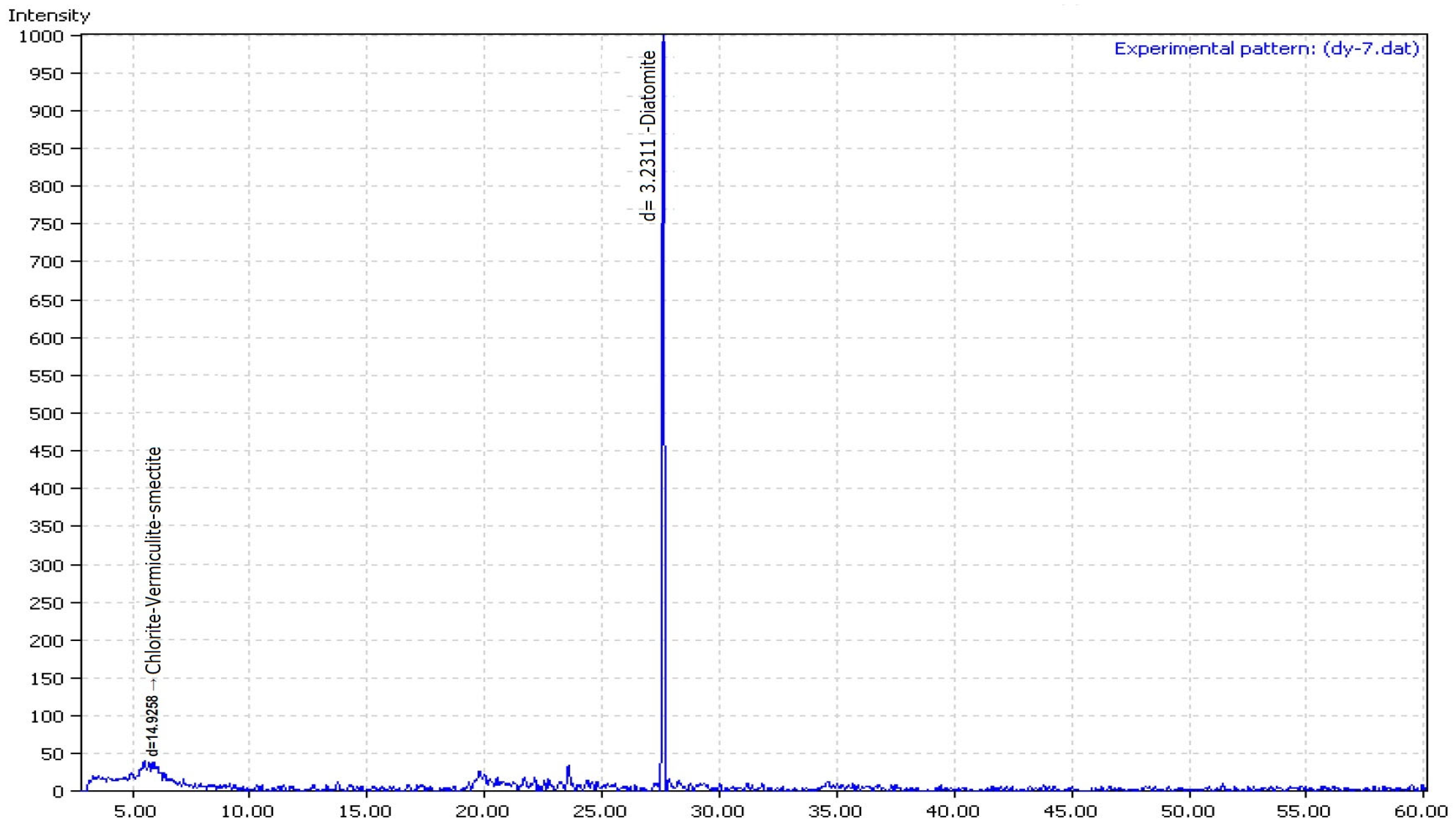
The mineralogical investigation of the sample reveals a composition predominantly consisting of amorphous silica, chiefly sourced from volcaniclastic material (Figure 4). X-ray diffraction (XRD) data corroborates this explanation, revealing a large scattering hump between 20° and 30° (2θ), indicative of poorly organized or amorphous silica. A distinct and prominent peak at 26.7° (2θ) signifies the presence of α-quartz as a major crystalline phase rather than a trivial impurity. XRD examination of the diatomites materials indicates that the predominant phase is Opal-A (SiO2 · nH2O, hydrated amorphous silica or biogenic silica) (Table 1). Secondary phases comprise quartz (SiO2), cristobalite (SiO2), and opal-CT (SiO2 · nH2O), whereas minor phases consist of clay minerals and trace amounts of carbonate minerals. This mineral paragenesis indicates a restricted marine intra-platform sub-basin affected by intermittent volcanic ash deposition, succeeded by early diagenetic alterations under low-grade settings. The collection indicates a gradual transformation of biogenic silica linked to diatomite, together with the inclusion of detrital quartz sourced from adjacent terrestrial environments. These mineralogical associations are characteristic of volcanic-influenced restricted marine basins, where primary sedimentation, volcanic contributions, and early diagenesis together dictate the developing mineral framework of diatomite-bearing sequences.
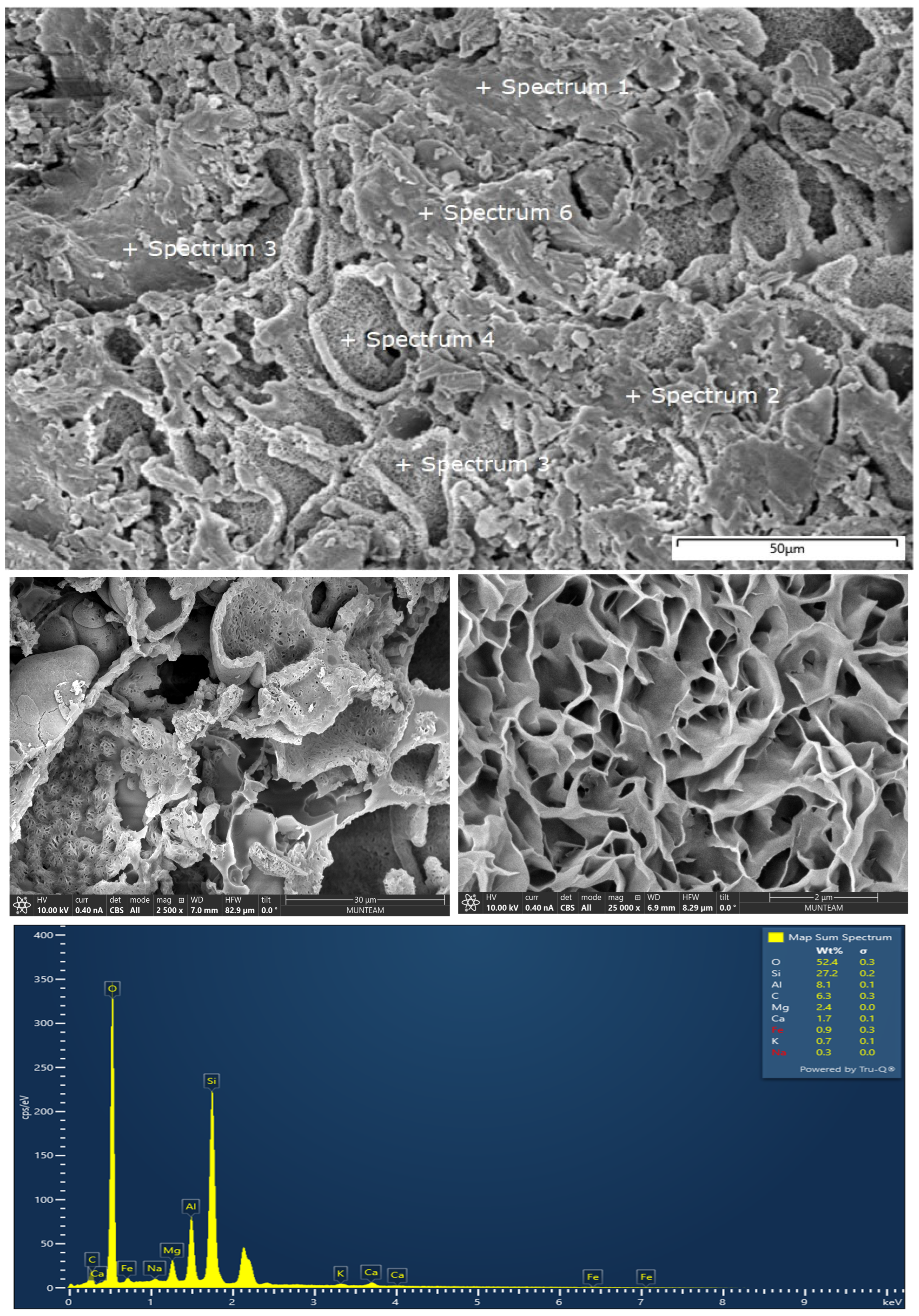
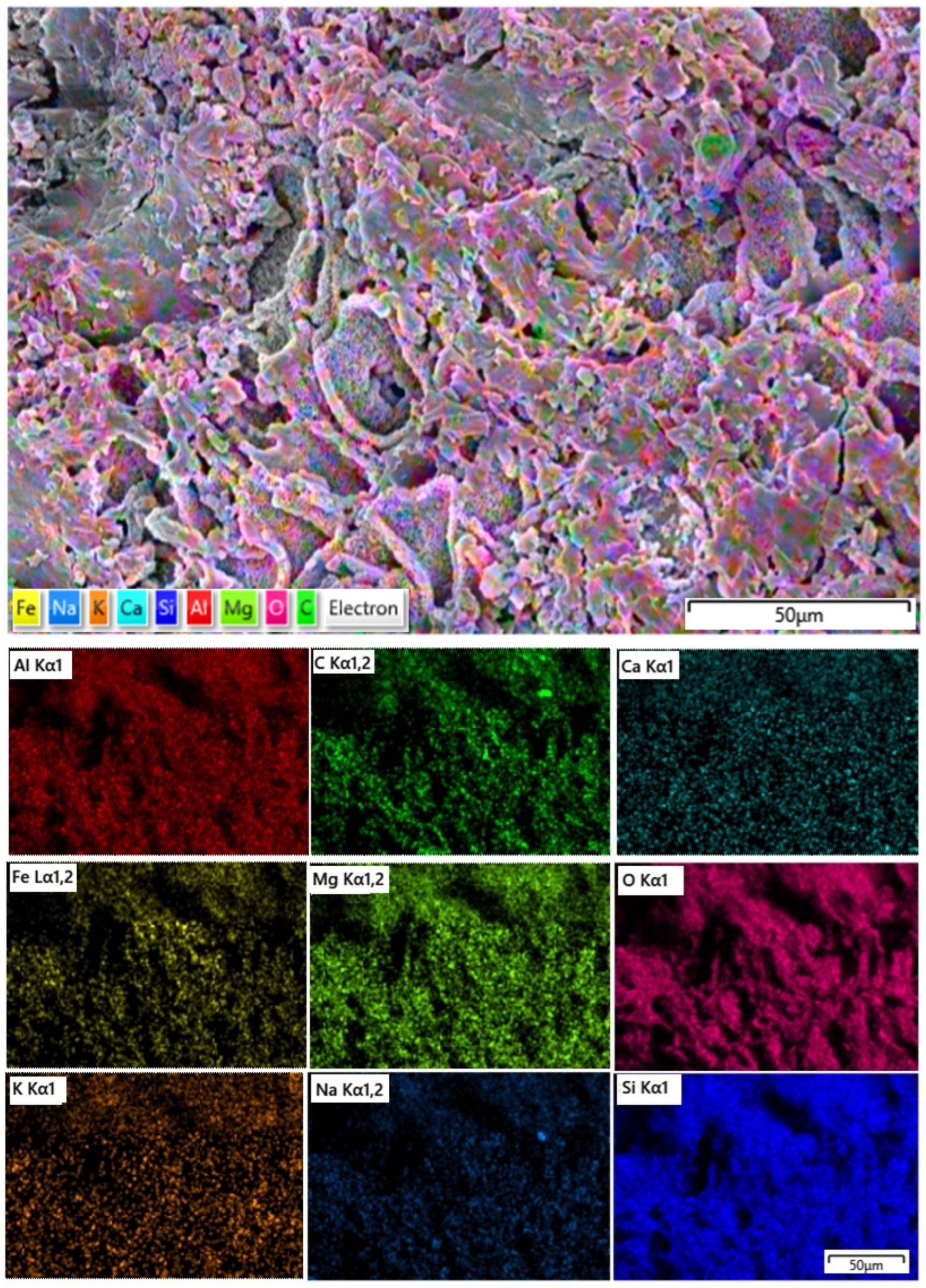
SEM–EDS analyses of the diatomite samples indicate that their elemental composition is dominated by O and Si, with subordinate amounts of Al, C, Mg, and Ca (Figure 5). The elemental composition confirms that the diatomites are composed predominantly of amorphous biogenic silica accompanied by clay minerals, including chlorite, smectite, and vermiculite. SEM observations reveal the close spatial association of these clay minerals with the siliceous matrix (Figure 5). Elemental mapping of a representative sample (Figure 6) indicates a homogeneous distribution of O and Si throughout the diatomite matrix, whereas Al and Mg are concentrated within clay-rich domains. Calcium occurs only in minor amounts and does not provide conclusive evidence for discrete carbonate minerals. In agreement with the XRD results, which do not show diagnostic carbonate reflections, the detected Ca and Mg are more likely associated with clay minerals than with carbonate phases, although trace carbonate contents below the XRD detection limit cannot be entirely excluded. The SEM–EDS observations therefore support the predominance of biogenic silica with subordinate clay mineral admixtures in the Ağın diatomites.

4.2. Major Oxides and Bulk Composition of Diatomite Deposit

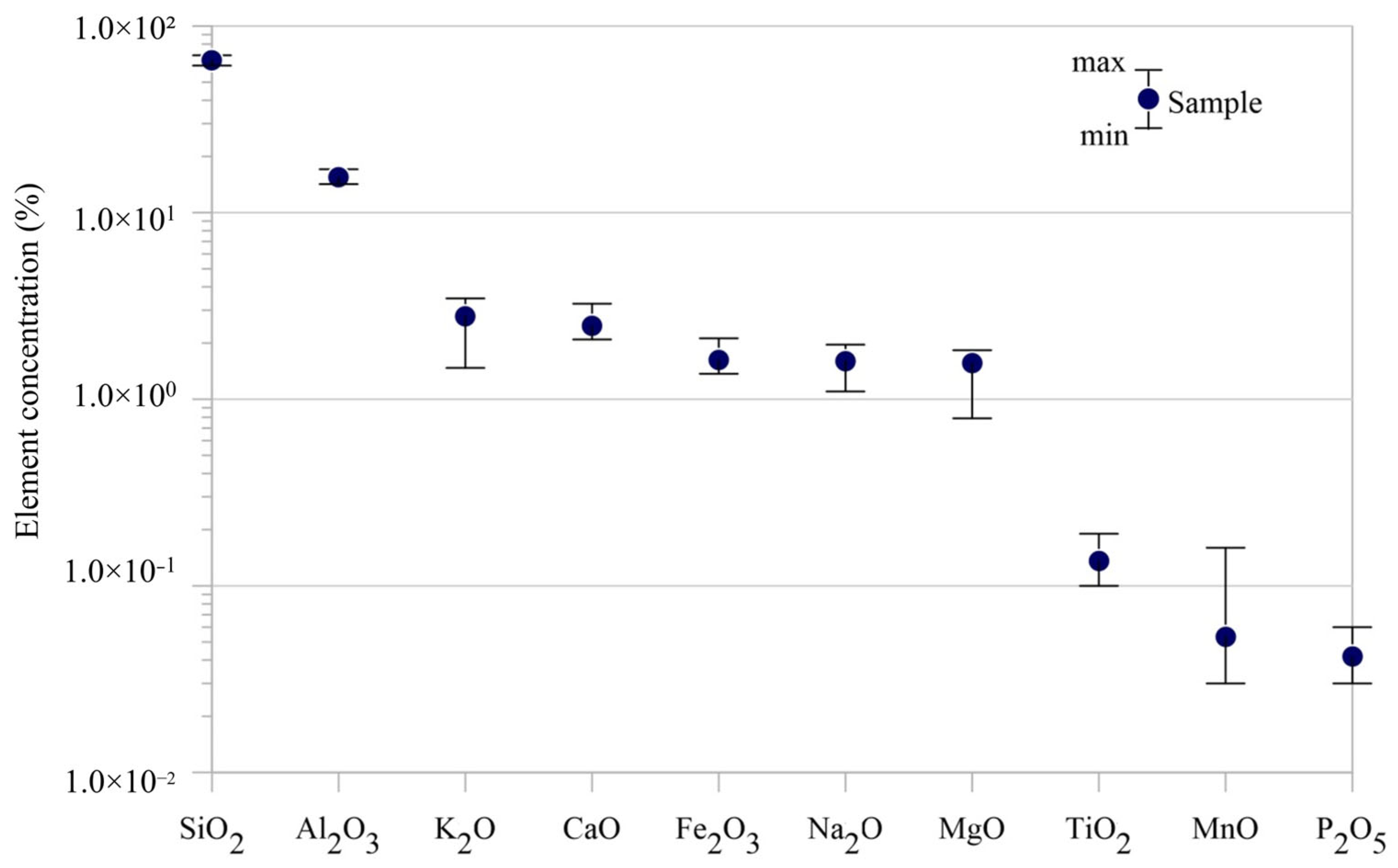
The main element oxide concentrations (% weight) and descriptive statistics (mean, standard deviation, minimum and maximum values) of the examined diatomite samples are given in Table 2 and Figure 7. The SiO2 content varies between 61.35% and 69.63%, reflecting a predominant siliceous matrix. The existence of a pronounced XRD peak at 26.7° (2θ) verifies that a significant fraction of this silica exists as crystalline quartz (Figure 4). The elevated amounts of Al2O3 and K2O are geochemically relevant, as they coincide with substantial terrestrial or volcanic detrital input and imply robust clay formation during diatomite development. The Fe2O3 concentration (~1.05%) and minimal CaO contents suggest that the non-siliceous layer predominantly consists of silicate minerals rather than carbonates or evaporites.
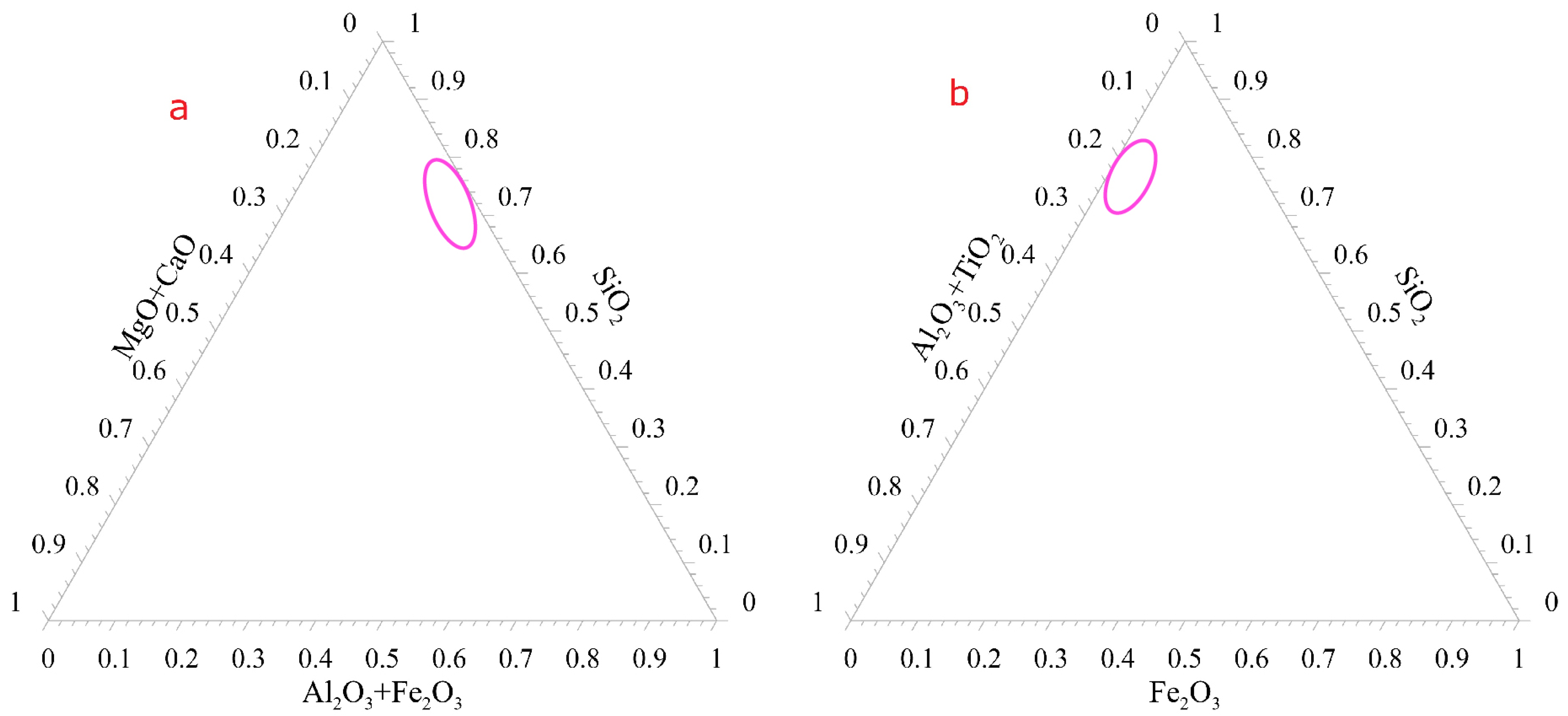
The X-ray diffraction patterns exhibit a broad scattering hump between 20° and 30° (2θ). While this diffuse halo typically indicates the presence of poorly ordered or amorphous silica (e.g., diagenetically altered volcanic glass), it may also incorporate diffuse reflections from poorly crystalline or fine-grained potassium feldspar. The presence of a K-feldspar component within this amorhous-to-cryptocrystalline matrix is strongly supported by the bulk geochemical data, specifically accounting for the elevated concentrations of Al2O3 and K2O observed in these samples. Figure 8 shows the ternary diagrams for SiO2-MgO+CaO-Al2O3+Fe2O3 and SiO2-Al2O3+TiO2–Fe2O3. This diagram indicates that the diatomites in the region are rich in SiO2.

4.3. Trace Elements

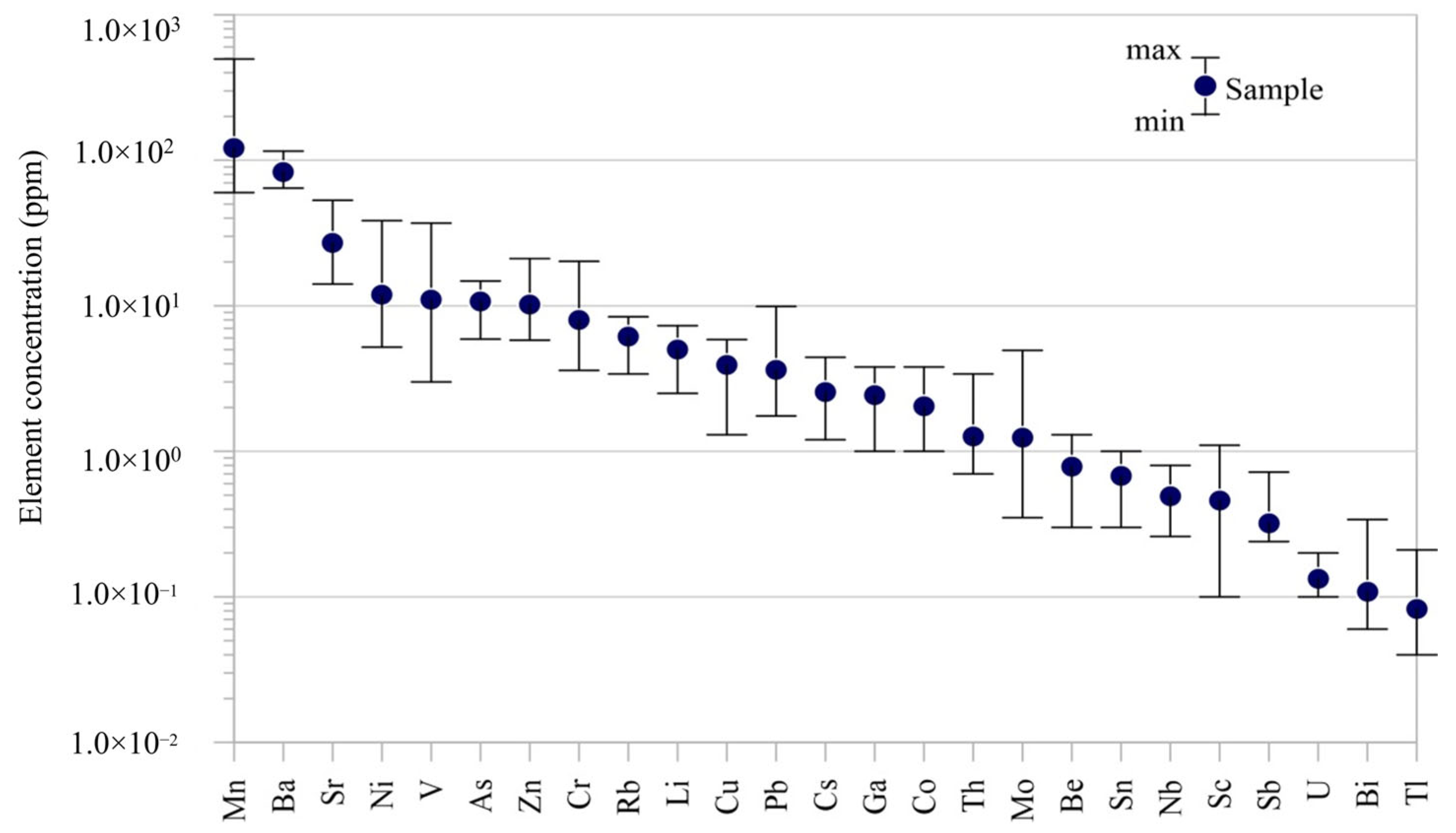
The logarithmic scale concentration graph in Figure 9 illustrates that the geochemical trace element profile of diatomites displays a pronounced element gradient, with concentrations ranging over five orders of magnitude from macro-trace to ultra-trace element levels. Manganese (Mn) and Barium (Ba) predominate in the trace element composition; Mn exhibits the highest average concentration at roughly 1.2 × 10² ppm, with a broad range from a minimum of approximately 60 ppm to a maximum of about 5 × 10² ppm. The lower end of the spectrum is characterized by severely depleted metals like Ag, indicating the minimal average concentration recorded at around 1.1 × 10⁻² ppm.
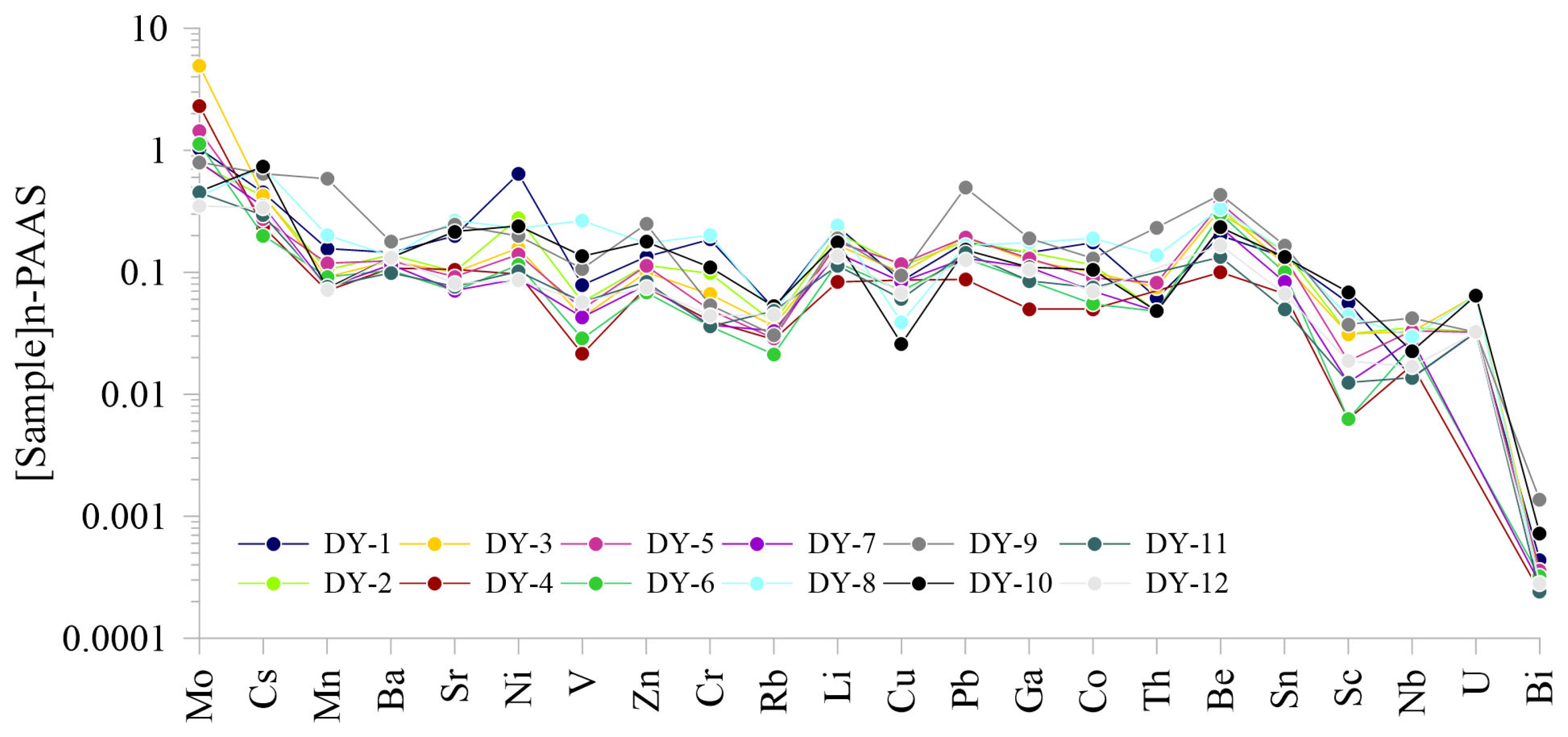
PAAS-normalized trace element patterns mostly exhibit relative enrichment or depletion in comparison to the upper continental crust, rather than indicating a specific source or habitat. The distribution of trace elements normalized to Post-Archean Australian Shale (PAAS) [43,44,45] offers a systematic representation of elemental fractionation in relation to average upper continental crust compositions (Figure 10). The normalized patterns for the diatomite samples typically exhibit a depleted signature (<1) for most trace elements, a characteristic mainly ascribed to the elevated biogenic silica concentration that significantly attenuates the detrital signal.
The consistent coherence of these patterns throughout the entire sample set indicates a stable sedimentary source and a uniform depositional environment, where minor vertical variations probably represent slight fluctuations in the influx of terrigenous clay minerals rather than a shift in the primary geological provenance.
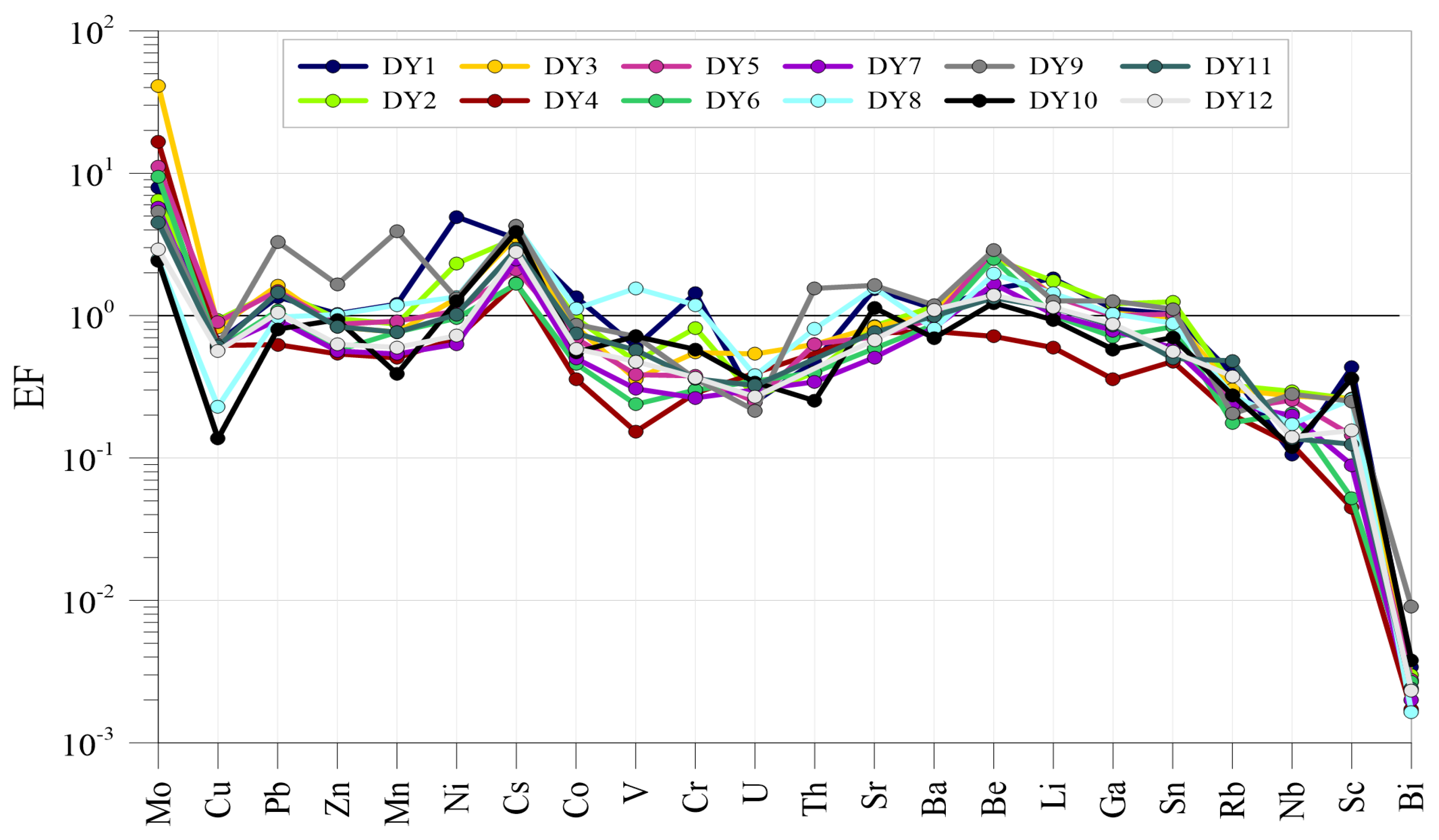
To differentiate between elements originating from detrital crustal inputs and those augmented by authigenic or biogenic processes, Enrichment Factors (EFs) were computed utilizing Ti as a conservative and generally stable reference element [46]. The EF data indicate clear patterns of trace-element behavior in the diatomaceous deposits (Figure 11). Most trace elements display enrichment factor (EF) values below 1.5, signifying minimal to no enrichment compared to the detrital background and implying that their concentrations are predominantly influenced by terrigenous mineral contributions [47]. Conversely, Ba and Mn exhibit moderate enrichment (1.5 < EF < 5), potentially indicating increased biological productivity linked to diatom blooms and the ensuing accumulation or scavenging of these elements in the sedimentary milieu [48,49]. Elements with EF values exceeding 10 indicate significant enrichment compared to the crustal background and are understood as results of authigenic concentration processes. This enrichment may relate to redox-controlled precipitation at the sediment–water interface, early diagenetic mineral production, or localized mineralogical concentrations within the diatomaceous matrix [50].
The incorporation of trace element paleoredox proxies (V/Cr, Ni/Co, and U/Th) from the restricted marine sub-basin sequence suggests a primarily oxic water column interspersed with frequent, episodic bottom-water dysoxia. The consistently low U/Th ratios (mean: 0.22, maximum: 0.50) are firmly below the oxic threshold (<0.75), definitively indicating the lack of sustained deep-water anoxia and restricted authigenic uranium enrichment in the basin. A notable decoupling is observed as the V/Cr (mean: 1.47, peaking at 2.78) and Ni/Co (mean: 5.53, peaking at 11.00) ratios often swing within dysoxic and suboxic ranges. This geochemical disparity in a dynamic restricted marine sub-basin environment strongly suggests a pseudo-anaerobic condition. Although the main water column was adequately oxygenated, seasonal thermal stratification or surges in primary productivity likely induced temporary oxygen depletion and localized reducing conditions exclusively at the sediment–water interface, facilitating the swift, kinetic uptake of redox-sensitive nickel and vanadium without creating stable, long-term anoxia throughout the basin.

4.4. Rare Earth Elements

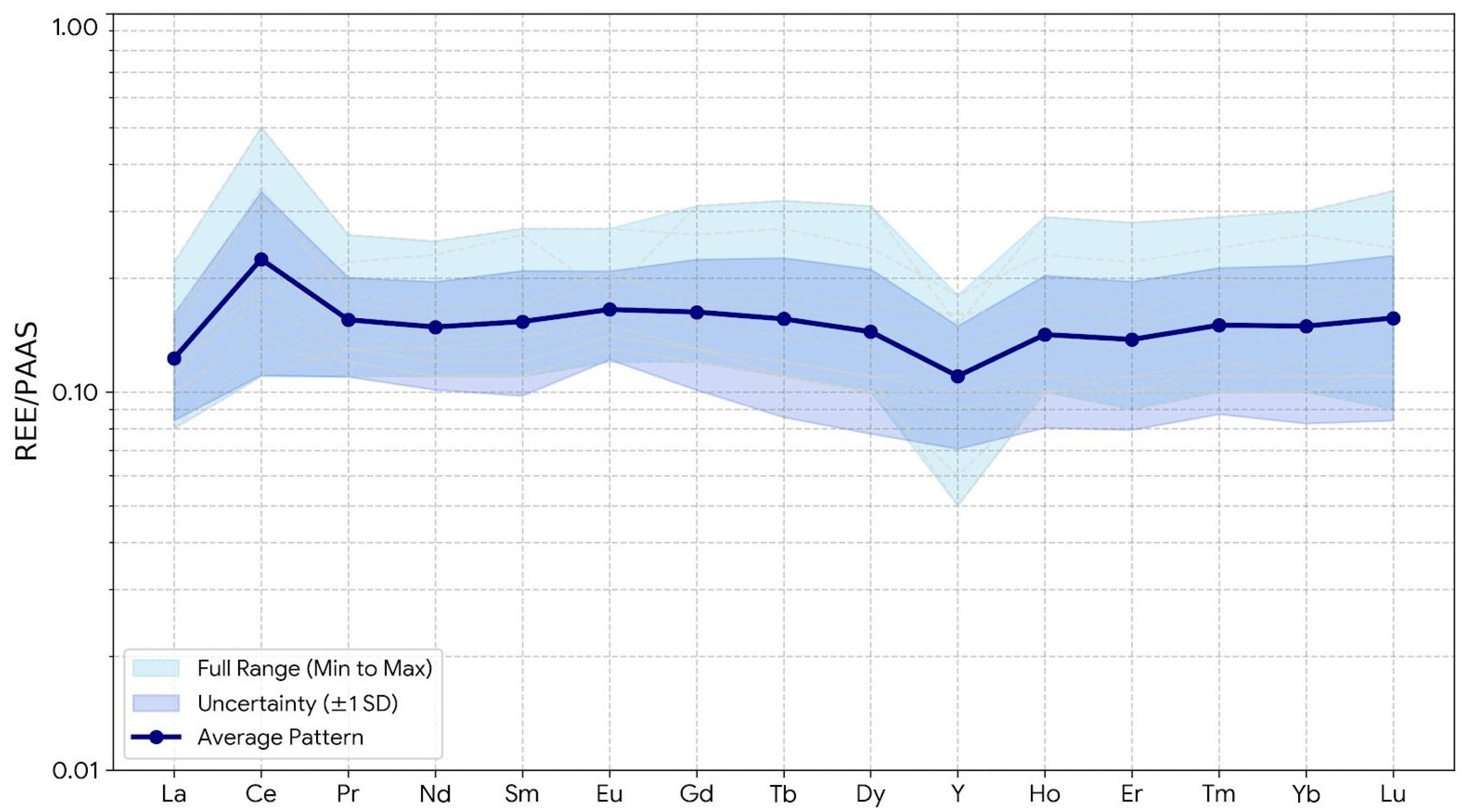
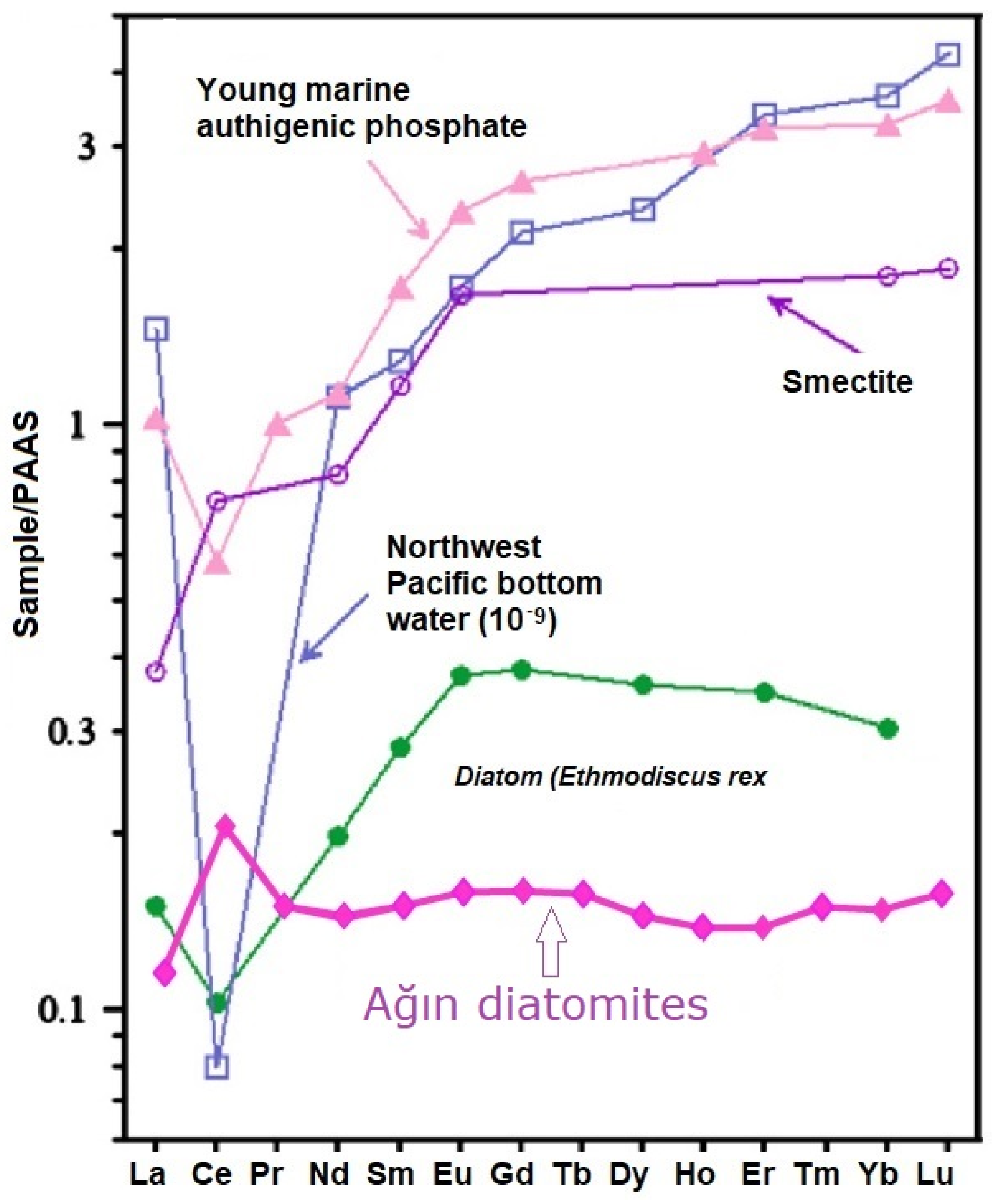
The rare earth element (REE) patterns of the diatomite samples, normalized to Post-Archean Australian Shale (PAAS) (Figure 12), exhibit a generally flat distribution with a slight relative enrichment of heavy REEs (HREEs) compared to light REEs (LREEs) [51,52,53]. The average total REE concentration is 35.4 ppm, indicating low overall abundances that yield normalized values ranging from roughly 0.1 to 0.5 times PAAS. The Rare Earth Element (REE) data exhibit a distinct positive Cerium anomaly, with Ce/Ce* ratios ranging from 0.83 to 2.25, yielding a clear average of 1.52 and positive Europium anomaly, with Eu/Eu* ratios ranging from 0.74 to 1.20, yielding a clear average of 1.04. This distinct positive enrichment indicates significant fractionation of Cerium relative to neighboring light REEs (La and Pr) during deposition and early diagenesis [53,54]. A subtle fractionation is evident in the middle REE (MREE) segment; a slight positive europium anomaly is observed in select samples (DY-08 and DY-10), which is believed to indicate localized redox-sensitive processes occurring during sedimentation or early diagenesis, as well as contributions from clay minerals or minor feldspar. Light rare earth elements (La–Nd) exhibit the lowest normalized abundances, reaching roughly 0.08 PAAS, whereas heavy rare earth elements (Tb–Lu) establish a very stable and slightly elevated plateau. The distribution of these rare earth elements exhibits a relative enrichment of heavy rare earth elements within a silico acid-dominant matrix, likely influenced by a combination of source rock inheritance, adsorption onto amorphous silica, and post-sedimentary diagenetic alteration [55].

4.5. Genesis and Geochemical Provenance of the Diatomite

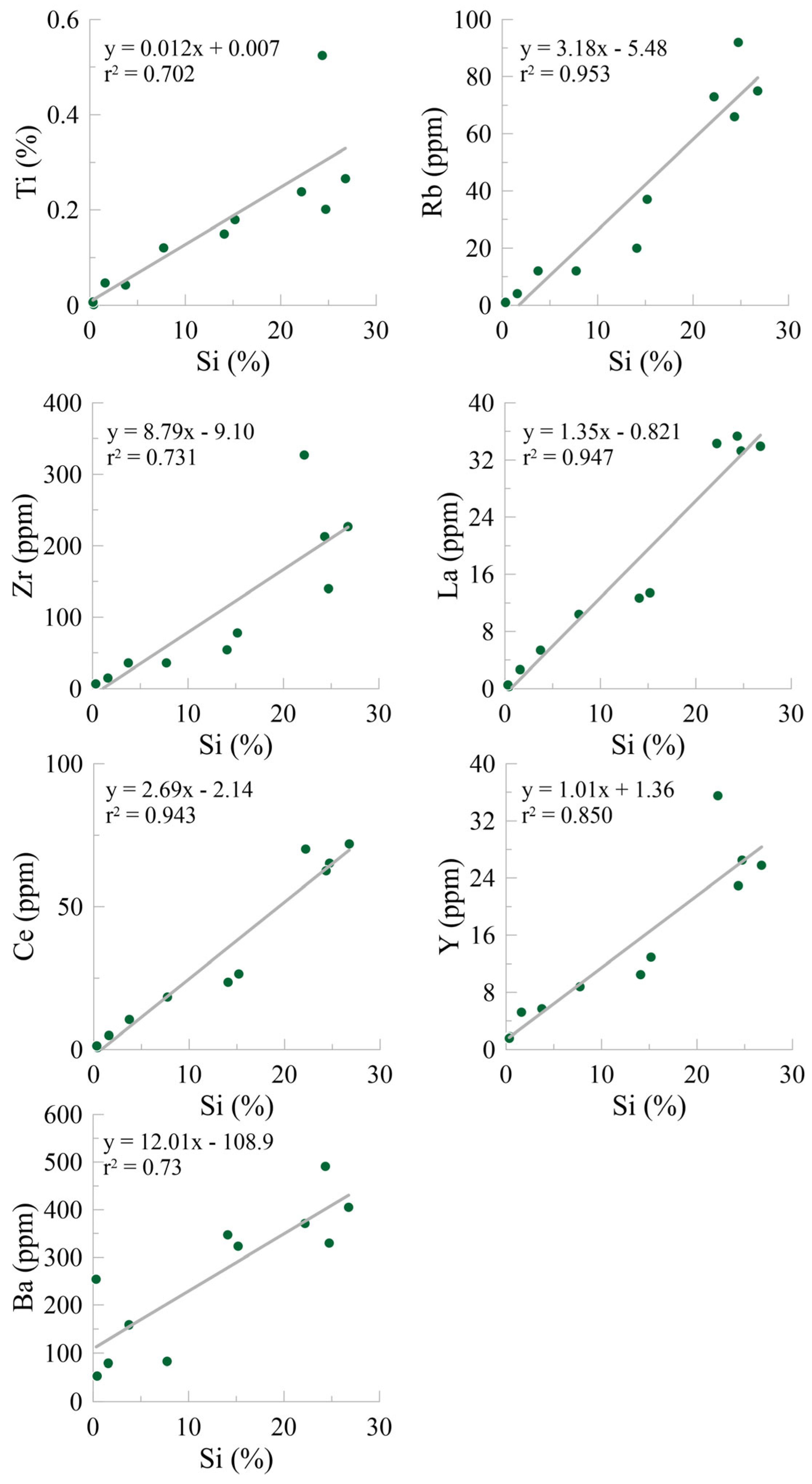
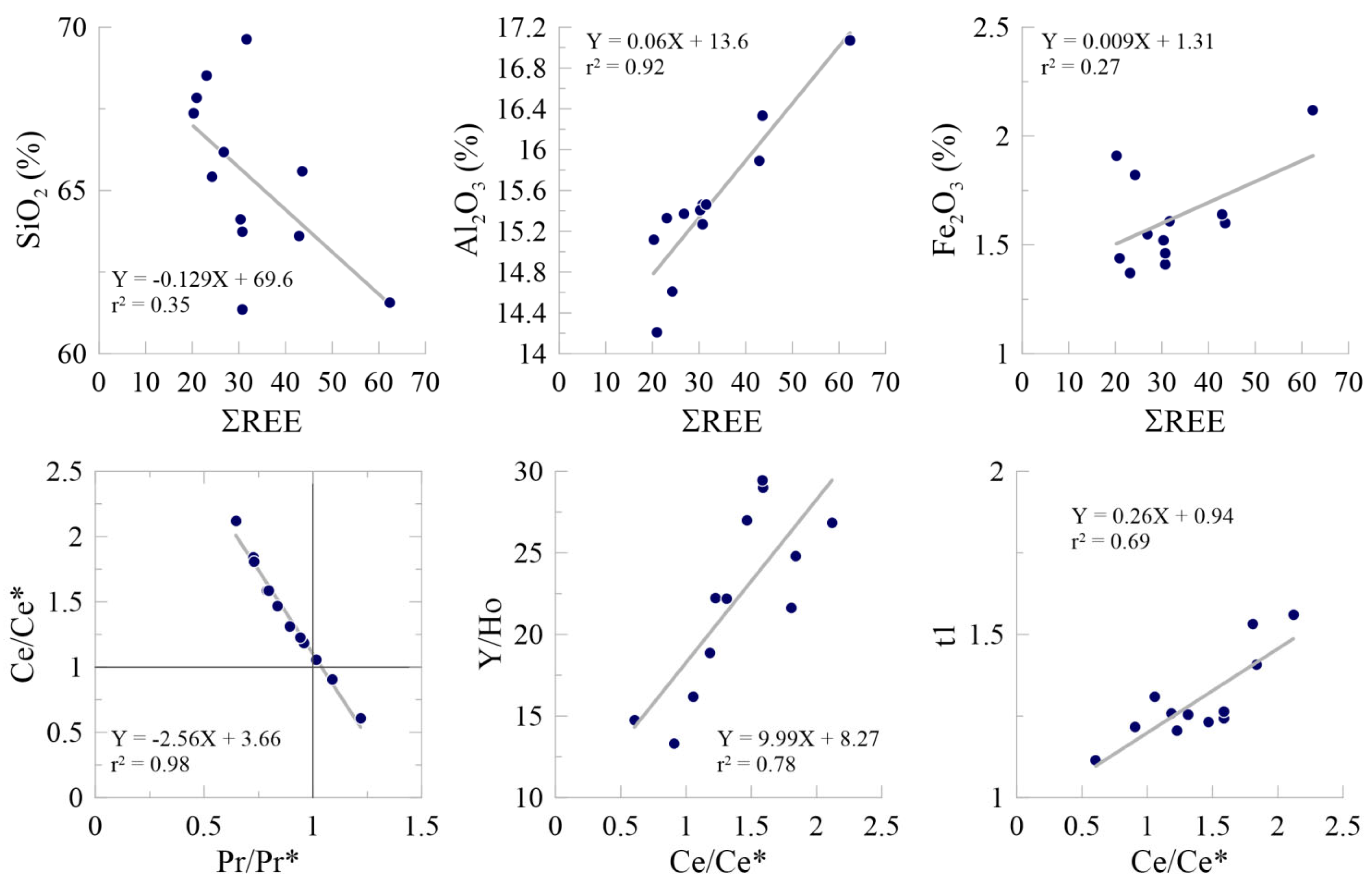
The binary variation diagrams of select trace elements and major oxides (Figure 13 and Figure 14) serve as mathematical foundations to unravel the sedimentary mechanisms operating in the restricted Alibonca sub-basin. A fundamental feature of the dataset is the pronounced, statistically robust negative correlation between SiO2 and immobile terrigenous indicators such as Al2O3 and TiO2. This relationship strongly supports a two-component system governed by biogenic dilution. It mathematically confirms that variations in the silica grade of the Ağın deposit were not controlled by fluctuating continental sand delivery, but rather by pulses of explosive biogenic opal-A productivity that overwhelmed and diluted a persistent background influx of volcanic air-fall ash and terrigenous clays. Concurrently, Al2O3 displays high-coefficient positive correlations with K2O, Fe2O3, MgO and select transition metals. Geochemically, this systematic coupling indicates that these elements reside within a singular, shared mineral host phase. This directly substantiates our XRD and SEM-EDS findings: the clay mineral framework (dominated by smectite, vermiculite, and chlorite) was formed via the syndepositional and early diagenetic alteration (halmyrolysis) of an intermediate to felsic volcanic glass precursor. The potassium enrichment K2O tightly tracks Al2O3, demonstrating that the volcanic ash possessed an alkaline-to-shoshonitic affinity characteristic of the regional Miocene magmatic background. Furthermore, the absolute lack of covariance between biogenic productivity indicator Ba and detrital monitors (TiO2, Zr) points to complete geochemical decoupling. This lack of correlation proves that the moderate to high Barium Enrichment Factors (EFBa > 1.5) are entirely decoupled from terrigenous or epiclastic inputs. Instead, they reflect legitimate variations in primary biological output, where barite was trapped during intensive diatom blooms, providing independent geochemical validation for our high-productivity depositional model. Robust positive correlations between specific transition metals and rare earth elements (REEs) indicate a shared mineralogical host phase, possibly linked to the fine-grained detrital fraction and/or accessory heavy minerals [52,53,54]. This coherent trend generally indicates linked inclusion during sediment transit and deposition, together with post-depositional concentration within certain authigenic or detrital phases. The lack of substantial relationships between biogenic proxies like barium (Ba) and lithogenic tracers signifies disconnected geochemical activity. This indicates that Ba is predominantly regulated by processes associated with marine productivity rather than detrital input, aligning with its correlation to biologically driven barite production in marine environments [56].
The inter-element correlations among major oxides and trace constituents illustrated in Figure 14 offer essential insights into the distribution of trace elements throughout the silicate, carbonate, and biogenic phases. A strong positive association between aluminum oxide (Al2O3) and most trace elements indicates that the detrital clay fraction serves as the principal carrier for these constituents, thereby functioning as a proxy for terrestrial inflow into the basin. The relationship between SiO2 and trace elements typically demonstrates an inverse correlation, illustrating the “dilution effect,” wherein the buildup of biogenic opal-A from diatom frustules diminishes the relative concentration of practically all other geochemical constituents. These binary trends clearly illustrate the struggle between silica-rich biogenic production and the intermittent deposition of aluminosilicate minerals.

5. Discussion

5.1. Stratigraphic Evolution

The Upper Oligocene–Lower Miocene Alibonca Formation exhibits a clearly delineated, regionally correlatable transgressional–regressional cycle. The base Çobandere Member, consisting of red conglomerates, sandstones, mudstones, siltstones, and coal-bearing layers, documents the onset of continental sedimentation in alluvial fan and shallow restricted marine sub-basin environments during the Early Miocene [42]. A subsequent regional marine transgression resulted in the formation of a shallow–marine carbonate platform system, characterized by the marl–chert–limestone sequences of the Kınık Member and the extensive limestones of the overlying Suceyin Member [37,38,39,40,41,42]. The presence of silica-rich volcano–sedimentary facies interspersed with marine carbonate units offers compelling evidence of synsedimentary volcanic activity. The lateral and vertical transitions of chert and altered diatomite strata into platform limestones suggest that regional volcanism commenced earlier than previously recorded. While historical conceptions confined this volcanism to the Middle Miocene, our data corroborate the interpretation of Türkmen et al. [42] that magmatic activity commenced in the Early Miocene. Comparable early-stage volcanic contributions have been demonstrated to substantially influence silica super saturation and accumulation in confined marine and restricted marine sub-basin basins throughout [41]. At the end of the Early Miocene, a regional regression of the Alibonca Sea ended marine carbonate deposition, restoring a terrestrial landscape characterized by diatomites and restricted marine sub-basin processes [42].
Diatomite development in the depositional environment occurred according to the following model:
  • Marine and Lacustrine Environment: The diatomites of the network were deposited within a restricted, semi-enclosed, low-energy marine sub-basin or intra-platform lagoon associated with the Alibonca Sea. This restriction allowed for local freshwater-brackish water conditions due to significant continental currents and concurrent pyroclastic/volcanic input.
  • Transition from Marine to restricted Marine Sub-basin Environment: Regional marine regression occurred at the end of the Early Miocene, shifting the entire area into a terrestrial environment. The diatomite layer studied here is located in the middle sections of the Alibonca Formation (Kınık Member); this means it was deposited during an active marine phase within a sheltered intra-platform depression before the last regression.
  • Stratigraphic and Geochemical Adequacy: Existing stratigraphic relationships (diatomites interspersed with marl and chertified/platform limestones of the Kınık Member; Figure 2) strongly support this intra-platform marine sub-basin model. Geochemical indicators (e.g., low Sr/Ba ratios, trace element redox sensitivities) have been recontextualized to reflect a limited, freshwater marine environment rather than a fully lacustrine lake system.

5.2. Geochemical Fingerprints and Provenance

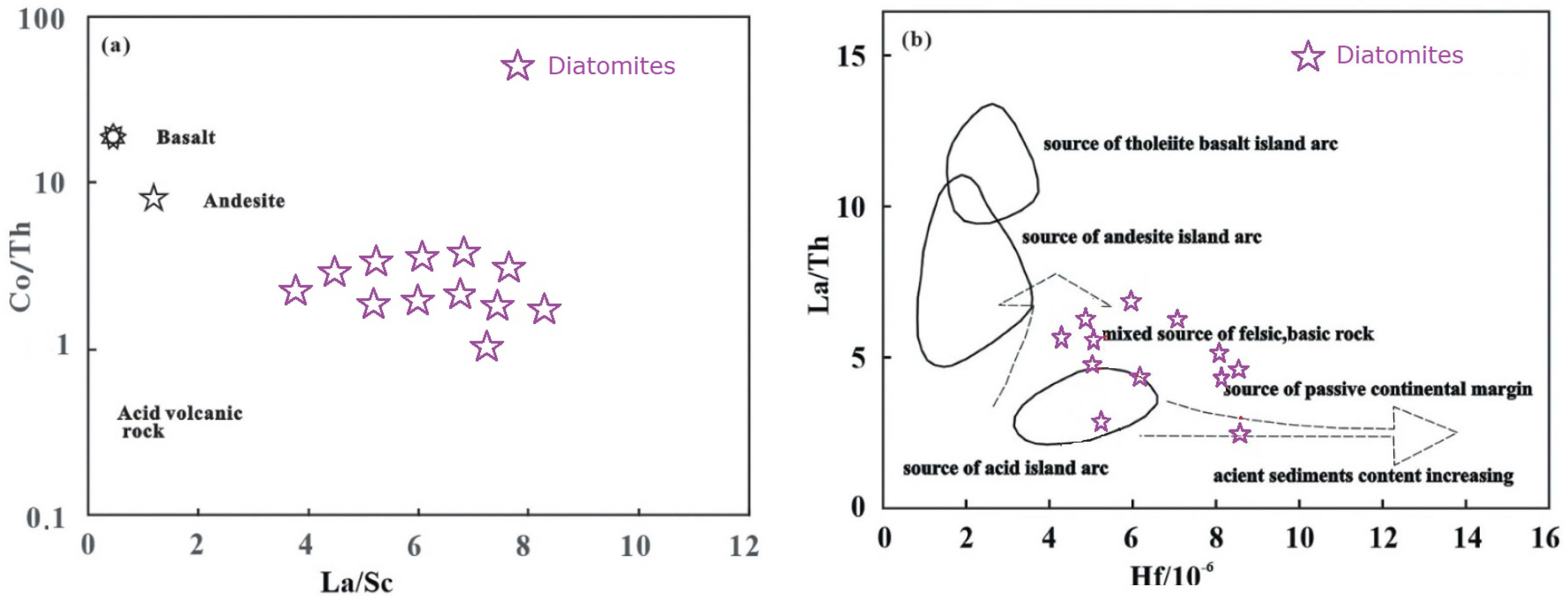
The Ağın diatomite deposits exhibit significant silica enrichment (mean: 66.6 wt.% SiO2), accompanied by diminished trace element concentrations and a markedly low total rare earth element content (ΣREE = 35.4 ppm). The predominance of biogenic opal and amorphous diatomite over minor detrital quartz and clay minerals corresponds with standard primary silica deposits globally [57,58]. Nonetheless, PAAS-normalized REE patterns indicate an enrichment of middle-to-heavy REEs (MREEs–HREEs) alongside significant positive Ce and Eu anomalies (Figure 15). This behavior significantly differs from typical open-marine or exclusively biogenic silica deposits, which generally exhibit a pronounced negative Ce anomaly derived from surrounding seawater or oxygenated freshwater [59]. To understand the origin of this distinct positive Ce anomaly, multiple competing processes must be considered, including redox variations, diagenetic overprints, and particulate adsorption. Because a strong correlation between Ce anomalies and Fe2O3 or MnO is lacking in our dataset, classical scavenging by Fe-Mn oxyhydroxides can be excluded as the primary driver. Instead, we attribute the positive Ce anomaly to a combination of restricted basin redox dynamics and intensive particulate scavenging driven by syndepositional volcanism. The active volcanic background introduced massive amounts of fine-grained ash into the restricted Alibonca sub-basin. The halmyrolysis (marine weathering) of this volcanic glass to smectite generated a high surface-area particulate phase capable of efficiently adsorbing REEs from the water column [60,61,62]. Moreover, the simultaneous positive Eu anomaly offers definitive proof of the introduction of primary volcanic material, indicating hydrothermal or direct pyroclastic contributions to the basin [63]. Immobile element discrimination strategies were utilized to restrict the magmatic source of the diatomite components. The La/Sc vs. Co/Th (Figure 16a) and Hf vs. La/Th (Figure 16b) graphs reveal that the diatomite samples constitute a dense cluster, with La/Sc values ranging from approximately 4 to 8 and Co/Th values from 1 to 4. The results are distinctly separated from the basaltic field and exhibit the greatest resemblance to the andesitic compositional domain, suggesting that the detrital fraction primarily originated from intermediate volcanic source rocks. The constrained dispersion of the samples indicates minimal heterogeneity in source composition and reflects a reasonably uniform provenance during deposition [64]. The noted enrichment of La in relation to Sc and the relatively low Co/Th ratios align with a source from intermediate to felsic volcanic materials, as La and Th are typically concentrated in evolved magmatic rocks, while Co and Sc are preferentially enriched in mafic lithologies. The lack of samples trending towards the basaltic end-member further suggests that mafic volcanic inputs were negligible. The absence of a notable transition to upper continental crust compositions indicates that the sediment supply was primarily influenced by volcanic detritus rather than by substantially worn continental material. Furthermore, the close clustering of the data signifies a geologically significant signal rather than a product of analytical uncertainty. Even when accounting for 2σ errors, the samples remain restricted to the intermediate volcanic field and are distinctly differentiated from basaltic compositions. This pattern is typically regarded as indicative of a stable volcanic source region and minimal mixing of sediments from compositionally diverse origins [65,66,67,68].

5.3. Paleoenvironmental and Paleoclimatic Reconstructions

Various geochemical proxies were utilized to elucidate the hydrochemistry, redox architecture, and climatic variations throughout the development of the Ağın basin:
  • Paleosalinity: Sr/Ba ratios vary from 0.19 to 0.60 (mean: 0.31), consistently aligning with the range characteristic of a freshwater to moderately brackish depositional environment. Nonetheless, as Sr2+ can replace Ca2+ in carbonate lattices, these values should be regarded as upper-bound limitations, as localized carbonate precipitation may artificially inflate raw Sr/Ba trends [58,59,60,61].
  • Redox Conditions: To mitigate the confusing influences of changing detrital dilution, redox-sensitive trace element ratios (V/Cr, Ni/Co, U/Th, and V/(V+Ni)) were examined [61,62,63,64,65,66,67,68,69,70]. Concurrently, our paleoredox proxies (V/Cr and Ni/Co) indicate a transition toward suboxic to dysoxic bottom waters. In such restricted environments, the trapping of organic matter alongside the rapid deposition of altered volcanic material facilitates the preferential retention of Ce over its REE neighbors, either via the preferential settling of Ce(IV) bearing particles or diagenetic immobilization under weak reducing conditions. Therefore, while the Ce anomaly does not directly fingerprint a volcanic source magma, it represents an indirect sedimentological expression of the massive volcanic ash influx coupled with basin restriction. These proxies collectively suggest that the water column was primarily oxic. Nonetheless, intermittent elevated V/(V+Ni) ratios suggest temporary dysoxic occurrences. High-frequency redox swings are indicative of confined basins, where seasonal stratification or intermittent volcanic/hydrothermal events import thick, oxygen-poor or nutrient-rich waters.
While the close spatial and temporal association between tuffaceous interlayers, negative Eu-Ce anomalies, and pure diatomite horizons strongly implies a volcanic influence on the silicon cycle, we note that volcanic input alone does not automatically equate to biological dominance. In marine systems, diatom blooming is typically co-limited by silica and micronutrients like iron (Fe). The devitrification and syndepositional alteration of volcanic glass (evidenced by the formation of smectite in our samples) not only saturated the restricted Alibonca sub-basin with dissolved silica (H4SiO4) but likely released bioavailable iron and trace metals. Therefore, rather than volcanism being the sole independent driver of productivity variations, it is more accurately interpreted as a fundamental environmental trigger. It bypassed the typical nutrient limitations of the sub-basin, sustaining prolonged high-flux biological productivity when coupled with favorable solar irradiance and restricted basinal circulation.
  • Paleoclimate: The paleoclimatic indications indicate an unstable and changeable regime during the Early Miocene. The Chemical Index of Alteration (CIA) varies from 67 to 74 (mean: approximately 70), indicating considerable silicate weathering in a warm, humid atmosphere [71]. In contrast, interbedded horizons have increased Sr/Cu ratios (3.14–33.2; mean: 9.43), indicative of greater temperatures, aridity, and high evaporation rates [72]. This geochemical link signifies high-frequency climate variability, characterized by a predominantly humid baseline interspersed with severe arid evaporative phases, a feature extensively documented in enclosed Miocene restricted marine sub-basin basins [70,71,72].
The Ağın deposit, similar to prominent diatomite–silica systems like Shengzhou (China), Lake Abiyata (Ethiopia), and several Mediterranean Neogene basins, underscores the interplay between tectonic/volcanic influences and biological reactions. Volcanic activity supplied the requisite dissolved silica flux to stimulate significant diatom output, while concurrent ash modification produced the characteristic smectite-dominated, authigenically changed geochemical signature typical of the Neogene lacustrine basins of Anatolia [73,74,75,76,77,78,79].
This volcano–biological synergy and its subsequent diagenetic pathways parallel several classic Neogene siliceous successions globally. For instance, the Miocene Truckee Formation (Nevada, USA) [80,81] and the Riverton diatomites (Wyoming, USA) [82] similarly reflect enclosed basinal settings where episodic rhyolitic volcanism sustained elevated dissolved silica levels, directly triggering massive diatom blooms amidst active tephra deposition. Furthermore, while the Miocene Monterey Formation (California, USA) represents a vast marine upwelling counterpart rather than a restricted lacustrine basin, it shares a fundamentally analogous geochemical trajectory [83]. In both the Monterey and Ağın systems, the influx of reactive volcaniclastic material under volatile tectonic regimes governed the early-stage diagenetic matrix, drives the maturation of amorphous biogenic silica (Opal-A), and promotes the authigenic precipitation of smectite-group clays during ash alteration [84,85]. Integrating these global analogs demonstrates that the Alibonca Formation represents a premier restricted marine sub-basin archetype of a globally recurrent tectono-environmental phenomenon.

6. Conclusions

The comprehensive stratigraphic, sedimentological, and geochemical analysis of the Upper Oligocene–Lower Miocene Alibonca Formation and its associated high-purity silica deposits provides the following primary insights. The study interval within the Alibonca Formation captures an environmental transition during the Early Miocene. Initial continental sedimentation, characterized by alluvial fan deposits, transitioned into a restricted marine sub-basin, which was subsequently followed by a localized marine transgression that facilitated carbonate platform development. Stratigraphic relations show that a final regression toward the end of the Early Miocene shifted the local depositional environment back to a subaerial, terrestrial setting.
Our analytical results show that within this marine sequence, high-purity diatomites, bedded cherts, and cherty limestones accumulated concurrently with carbonate precipitation. The diatomite deposits of Ağın are mineralogically associated with potassium-bearing clay assemblages, reflecting a low-energy, protected depositional environment within an intra-platform marine sub-basin. The high accumulation of biosiliceous material was supported by a combination of continental runoff and synsedimentary pyroclastic inputs, which supplied dissolved silica to the basin.
XRF and ICP-MS analyses reveal that the Ağın diatomites possess notable industrial-grade attributes, characterized by high bulk SiO2 content and low abundances of detrital clay impurities. The deposits are geochemically clean, exhibiting low total rare earth element levels and low baseline trace element concentrations. Paleoclimatic indices calculated from major oxides, such as the Chemical Index of Alteration (CIA), indicate that the sediment source terranes underwent moderate chemical weathering under a generally warm and humid climate. This weathering regime facilitated the land-to-basin transfer of weathered solutes, supporting primary biological productivity within the sub-basin prior to the final marine regression.
While the geochemical and mineralogical indicators provide strong evidence for the influx and subaqueous alteration of pyroclastic material, our data suggest that the total silicon budget represents a mixed system. Solute contributions from ambient continental runoff and the recycling of biogenic silica cannot be completely decoupled from volcanic inputs using the current dataset. However, the close spatial and temporal association with tuffaceous layers indicates that ash alteration acted as an effective accelerator for localized silica enrichment, facilitating diatom accumulation. In conclusion, the geochemical and mineralogical evidence supports a model where synsedimentary volcanic activity critically enhanced provided an essential silica feedstock and necessary chemical catalysts within a restricted intra-platform marine sub-basin. Ultimately, the Ağın deposits provide an important Miocene record of localized marine silica sinks, illustrating how localized pyroclastic inputs and climate-driven weathering feedbacks can combine to form high-purity industrial mineral resources.
Future research should focus on refining the temporal resolution of the Alibonca Formation through high-precision dating of the volcanic intercalations and broader stratigraphic correlations. Additional proximal–distal geochemical transects are needed to better delineate the spatial linkages between volcanism, silica supply, and carbonate platform development. Incorporating stable and radiogenic isotope systems (Si, Sr, Nd, B), alongside high-resolution microanalytical techniques (SEM–EDS, TEM, and LA-ICP-MS), will help quantify early diagenetic processes and further refine the provenance pathways of silica accumulation in Miocene biosiliceous systems.

Author Contributions

Methodology, M.S.S., M.C., N.K., A.A., M.P. and A.S.; formal analysis, N.K. and A.S.; investigation, M.S.S., N.K. and A.S.; writing—original draft, N.K., M.P. and A.S.; writing—review and editing, M.C., N.K., M.P. and A.S.; project administration, A.S.; funding acquisition, A.S. All authors have read and agreed to the published version of the manuscript.

Funding

This research was funded by Firat University grant number MF 26.84 project.

Data Availability Statement

The original contributions presented in this study are included in the article. Further inquiries can be directed to the corresponding author.

Conflicts of Interest

The authors declare no conflicts of interest.

References

  1. Zahajská, P.; Opfergelt, S.; Fritz, S.C.; Stadmark, J.; Conley, D.J. What is diatomite? Quat. Res. 2020, 96, 48–52. [Google Scholar] [CrossRef]
  2. Giordano, D.; Russell, J.K.; Dingwell, D.B. Viscosity of magmatic liquids: A model. Earth Planet. Sci. Lett. 2008, 271, 123–134. [Google Scholar] [CrossRef]
  3. Le Losq, C.; Mysen, B.O.; Cody, G.D. Water and magmas: Insights into the structure of silicate melts. Prog. Earth Planet. Sci. 2015, 2, 22. [Google Scholar] [CrossRef]
  4. Di Genova, D.; Vasseur, J.; Hess, K.-U.; Neuville, D.R.; Dingwell, D.B. A compositional tipping point governing the mobilization and eruption style of rhyolitic magma. Nature 2017, 552, 235–238. [Google Scholar] [CrossRef] [PubMed]
  5. Cassidy, M.; Manga, M.; Cashman, K.; Bachmann, O. Controls on explosive–effusive volcanic eruption styles. Nat. Commun. 2018, 9, 2839. [Google Scholar] [CrossRef] [PubMed]
  6. Martel, C.; Pichavant, M.; Scaillet, B. Pre-eruptive conditions and eruptive styles of silicic magmas. Lithos 2012, 152, 122–131. [Google Scholar]
  7. Sato, H.; Nakada, S.; Fujii, T. Viscosity of andesitic lava and its implications for eruption style. Earth Planets Space 2013, 65, 623–631. [Google Scholar] [CrossRef]
  8. Ilia, K.I.; Stamatakis, G.M.; Perraki, S.T. Mineralogy and technical properties of clayey diatomites from north and central Greece. Cent. Eur. J. Geosci. 2009, 1, 393–403. [Google Scholar] [CrossRef]
  9. Mohamed, E.A.; Selim, A.Q.; Zayed, A.M.; Komarneni, S.; Mobarak, M.; Seliem, M.K. Enhancing adsorption capacity of Egyptian diatomaceous earth by thermo-chemical purification: Methylene bule uptake. J. Colloid Interface Sci. 2019, 534, 408–419. [Google Scholar] [CrossRef] [PubMed]
  10. Stefanou, E.; Kantiranis, N.; Chatzicharalambous, K.; Mytiglaki, C.; Stamatakis, M.; Georgiadis, G. Diatomaceous silica in environmental applications: A case study from the Lacustrine deposit of Limnos Island, Aegean Sea, Greece. Minerals 2022, 12, 523. [Google Scholar] [CrossRef]
  11. Yildiz, A.; Gürel, A.; Dursun, Y.G. Diatom community and palaeoenvironmental properties of Karacaören diatomite deposits (Nevşehir, Central Anatolia, Turkey). J. Afr. Earth Sci. 2017, 134, 276–291. [Google Scholar] [CrossRef]
  12. Şenol, Z.M.; Şenol Arslan, D.; Şimşek, S. Preparation and characterization of a novel diatomite-based composite and investigation of its adsorption properties for uranyl ions. J. Radioanal. Nucl. Chem. 2019, 321, 791–803. [Google Scholar] [CrossRef]
  13. Sriram, G.; Kigga, M.; Uthappa, U.T.; Rego, R.M.; Thendral, V.; Kumeria, T.; Jung, H.Y.; Kurkuri, M.D. Naturally available diatomite and their surface modification for the removal of hazardous dye and metal ions: A review. Adv. Colloid Interface Sci. 2020, 282, 102198. [Google Scholar] [CrossRef] [PubMed]
  14. Cui, S.L.; Tao, Z.P.; Zhang, Y.; Su, H.; Jia, Y. Engineering properties and microcosmic mechanism of cement stabilized diatomite. Front. Earth Sci. 2022, 10, 971387. [Google Scholar] [CrossRef]
  15. Dhaouadi, F.; Dotto, G.L.; Vieillard, J.; Pinto, D.; Silva, L.F.O.; Lima, E.C.; Naushad, M.; Aouaini, F.; Nasr, S.; Bonilla-Petriciolet, A.; et al. Adsorption of rare earth elements onto diatomite M45: Experimental investigations and modeling with statistical physics theory. J. Rare Earths 2023, 41, 1805–1811. [Google Scholar] [CrossRef]
  16. Du, W. Study on preparation of ultra-high strength and high performance concrete from diatomite and its mechanical properties. In IOP Conference Series: Earth and Environmental Science; IOP Publishing: Bristol, UK, 2019; p. 012054. [Google Scholar]
  17. Degirmenci, N.; Yilmaz, A. Use of diatomite as partial replacement for Portland cement in cement mortars. Constr. Build. Mater. 2009, 23, 284–288. [Google Scholar] [CrossRef]
  18. Ergun, A. Effects of the usage of diatomite and waste marble powder as partial replacement of cement on the mechanical properties of concrete. Constr. Build. Mater. 2011, 25, 806–812. [Google Scholar] [CrossRef]
  19. Ahmadi, Z.; Esmaeili, J.; Kasaei, J.; Hajialioghli, R. Properties of sustainable cement mortars containing high volume of raw diatomite. Sustain. Mater. Technol. 2018, 16, 47–53. [Google Scholar] [CrossRef]
  20. Hasanzadeh, B.; Sun, Z. Impacts of diatomaceous earth on the properties of cement pastes. J. Build. Mater. Struct. 2018, 5, 197–211. [Google Scholar] [CrossRef]
  21. Kocak, Y.; Pınarcı, I. Effects of hydration mechanism on mechanical properties of diatomite-cement composites. Eur. J. Environ. Civ. Eng. 2022, 27, 3707–3721. [Google Scholar] [CrossRef]
  22. Li, C.; Li, G.; Chen, D.; Gao, K.; Cao, Y.; Zhou, Y.; Mao, Y.; Fan, S.; Tang, L.; Jia, H. The effects of diatomite as an additive on the macroscopic properties and microstructure of concrete. Materials 2023, 16, 1833. [Google Scholar] [CrossRef] [PubMed]
  23. Ouyang, X.; Yu, L.; Chen, J.; Wu, K.; Ma, Y.; Fu, J. Roles of diatomite in hydration, microstructure and strength development of cement paste. Mater. Today Commun. 2023, 37, 107555. [Google Scholar] [CrossRef]
  24. Bello, O.S.; Adegoke, K.A.; Oyewole, R.O. Insights into the adsorption of heavy metals from wastewater using diatomaceous earth. Sep. Sci. Technol. 2014, 49, 1787–1806. [Google Scholar] [CrossRef]
  25. Yılmaz, B.; Ediz, N. The use of raw and calcined diatomite in cement production. Cem. Concr. Compos. 2008, 30, 202–211. [Google Scholar] [CrossRef]
  26. Janićijević, J.; Krajišnik, D.; Čalija, B.; Dobričić, V.; Daković, A.; Krstić, J.; Marković, M.; Milić, J. Inorganically modified diatomite as a potential prolonged-release. Mater. Sci. Eng. C 2014, 42, 412–420. [Google Scholar] [CrossRef]
  27. Chen, F.; Miao, Y.; Ma, L.; Zhan, F.; Wang, W.; Chen, N.; Xie, Q. Optimization of pore structure of a clayey diatomite. Part. Sci. Technol. 2020, 38, 522–528. [Google Scholar]
  28. Akhtar, F.; Rehman, Y.; Bergström, L. A study of the sintering of diatomite to produce porous ceramic monoliths with bimodal porosity and high strength. Powder Technol. 2010, 201, 253–257. [Google Scholar] [CrossRef]
  29. Manevich, V.E.; Subbotin, R.K.; Nikiforov, E.A.; Senik, N.A.; Meshkov, A.V. Diatomite—Siliceous material for the glass industry. Glass Ceram. 2012, 69, 168–172. [Google Scholar] [CrossRef]
  30. Athar, S.; Asilian, H. Catalytic oxidation of carbon monoxide using copper-zinc mixed oxide nanoparticles supported on diatomite. Health Scope 2012, 1, 52–56. [Google Scholar] [CrossRef]
  31. Rahimov, R.Z.; Kamalova, Z.A.; Ermilova, E.J.O.; Stojanov, V. Thermally treated trepel as active mineral additive in cement. Gaz. Kazan Inst. Technol. 2014, 17, 99–101. [Google Scholar]
  32. Ibrahim, S.S.; Selim, A.Q. Heat treatment of natural diatomite. Physicochem. Probl. Miner. Process. 2012, 48, 413–424. [Google Scholar] [CrossRef]
  33. Loganina, V.I.; Simonov, E.E.; Jezierski, W.; Małaszkiewicz, D. Application of activated diatomite for dry lime mixes. Constr. Build. Mater. 2014, 65, 29–37. [Google Scholar] [CrossRef]
  34. Zheng, R.; Ren, Z.; Gao, H.; Zhang, A.; Bian, Z. Effects of calcination on silica phase transition in diatomite. J. Alloys Compd. 2018, 757, 364–371. [Google Scholar] [CrossRef]
  35. Paules, D.; Hamida, S.; Lasheras, R.J.; Escudero, M.; Benouali, D.; Cáceres, J.O.; Anzano, J. Characterization of natural and treated diatomite by laser-induced breakdown spectroscopy (LIBS). Microchem. J. 2018, 137, 1–7. [Google Scholar] [CrossRef]
  36. Semenkova, A.; Belousov, P.; Rzhevskaia, A.; Izosimova, Y.; Maslakov, K.; Tolpeshta, I.; Romanchuk, A.; Krupskaya, V. U(VI) sorption onto natural sorbents. J. Radioanal. Nucl. Chem. 2020, 326, 293–301. [Google Scholar] [CrossRef]
  37. Türkmen, İ.; Taşgin, C.K.; Avşar, N.; Aksoy, E. Sedimentological characteristics of Alibonca Formation (Upper Oligocene-Lower Miocene) near Arapgir-Yoncalı area (Malatya). Earth Sci. 2011, 32, 235–254. [Google Scholar]
  38. Kürüm, S.; Akgül, B.; Erdem, E. Petrographic and petrological characteristics of the volcanics around the old Arapgir-Şıhlar (Malatya-Elazig) villages. Geosound 1999, 34, 187–201. [Google Scholar]
  39. Okan, Ö.Ö.; Canpolat, Ö. The hydrogeochemical characteristics of groundwaters recharging from the Lower Miocene clastic and carbonate units around Ağın (Elâzığ). GUFBD/GUJS 2022, 12, 260–274. [Google Scholar]
  40. MTA (General Directorate of Mineral Research and Exploration of Türkiye). 1:1,250,000 Scaled Geological Map of Türkiye; General Directorate of Mineral Research and Exploration of Türkiye; MTA Publication: Ankara, Türkiye, 2011. [Google Scholar]
  41. Sönmez, M. Stratigraphic and Tectonic Characteristics of the Area Southwest of Arapgir (Malatya). Doctoral Dissertation, F.U. Institute of Science, Elazig, Turkey, 2004. [Google Scholar]
  42. Türkmen, İ.; Aksoy, E.; Kürüm, S.; Akgül, B.; İnceöz, M. The Lower Miocene volcanism of the Arguvan-Arapgir (Malatya) area and its place within the regional stratigraphy. Geosound 1998, 32, 105–115. [Google Scholar]
  43. Morgan, J.W.; Higuchi, H.; Takahashi, H.; Hertogen, J. ‘A “Chondritic” Eucrite Parent Body: Inference from Trace Elements’. Geochim. Cosmochim. Acta 1978, 42, 27–38. [Google Scholar] [CrossRef]
  44. Taylor, S.R.; McLennan, S.M. The Continental Crust: Its Composition and Evolution GeoSci. Texts; Blackwell Scientific Publications: Oxford, UK, 1985; p. 312. [Google Scholar]
  45. Taylor, S.R.; Mclennan, S.M. The Geochemical Evolution of the Continental Crust. Rev. Geophys. 1995, 33, 241–265. [Google Scholar] [CrossRef]
  46. Boës, X.; Rydberg, J.; Martinez-Cortizas, A.; Bindler, R.; Renberg, I. Evaluation of conservative lithogenic elements (Ti, Zr, Al and Rb) to study anthropogenic element enrichments in lake sediments. J. Paleolimnol. 2011, 46, 75–87. [Google Scholar] [CrossRef]
  47. Reimann, C.; de Caritat, P. Intrinsic flaws of element enrichment factors (EFs) in environmental geochemistry. Environ. Sci. Technol. 2000, 34, 5084–5091. [Google Scholar] [CrossRef]
  48. Tribovillard, N.; Algeo, T.J.; Lyons, T.; Riboulleau, A. Trace metals as paleoredox and paleoproductivity proxies: An update. Chem. Geol. 2006, 232, 12–32. [Google Scholar] [CrossRef]
  49. Paytan, A.; Griffith, E.M. Marine barite: Recorder of variations in ocean export productivity. Deep Sea Res. Part II 2007, 54, 687–705. [Google Scholar] [CrossRef]
  50. Algeo, T.J.; Li, C. Redox classification and calibration of suboxic (anoxic, non-sulfidic) depositional conditions. Chem. Geol. 2020, 558, 119893. [Google Scholar]
  51. Jones, B.; Manning, D.A. Comparison of geochemical indices used for the interpretation of palaeoredox conditions in ancient mudstones. Chem. Geol. 1994, 111, 111–129. [Google Scholar] [CrossRef]
  52. McLennan, S.M. Rare earth elements in sedimentary rocks: Influence of provenance and sedimentary processes. Rev. Mineral. Geochem. 1989, 21, 169–200. [Google Scholar] [CrossRef]
  53. McLennan, S.M. Relationships between the trace element composition of sedimentary rocks and upper continental crust. Geochem. Geophys. Geosyst. 2001, 2, 1021. [Google Scholar] [CrossRef]
  54. German, C.R.; Elderfield, H. Rare earth elements in Saanich Inlet, British Columbia: Geochemistry of anoxic waters. Geochim. Cosmochim. Acta 1990, 54, 2773–2789. [Google Scholar] [CrossRef]
  55. Cullers, R.L. The controls on the major and trace element variation of shales, siltstones and sandstones. Chem. Geol. 1994, 113, 181–203. [Google Scholar]
  56. Bau, M.; Dulski, P. Distribution of yttrium and rare-earth elements in the Penge and Kuruman Iron Formations. Chem. Geol. 1996, 132, 13–36. [Google Scholar]
  57. Dymond, J.; Suess, E.; Lyle, M. Barium in deep-sea sediment: A geochemical proxy for paleoproductivity. Paleoceanography 1992, 7, 163–181. [Google Scholar] [CrossRef]
  58. Xiong, Z.; Li, T.; Algeo, T.; Chang, F.; Yin, X.; Xu, Z. Rare earth element geochemistry of laminated diatom mats from tropical West Pacific: Evidence for more reducing bottomwaters and higher primary productivity during the Last Glacial Maximum. Chem. Geol. 2012, 296–297, 103–118. [Google Scholar] [CrossRef]
  59. Jia, X.; Chu, P.; Wu, X. Material source. sedimentary environment. and mineralization process of Shengzhou diatomite deposit in Eastern Zhejiang Province, China. Int. Geol. Rev. 2024, 67, 1376–1388. [Google Scholar] [CrossRef]
  60. Remírez, M.N.; Algeo, T.J. Paleosalinity determination in ancient epicontinental seas: A case study of the T-OAE in the Cleveland Basin (UK). Earth Sci. Rev. 2020, 201, 103072. [Google Scholar] [CrossRef]
  61. Wei, W.; Algeo, T.J. Elemental Proxies for Paleosalinity Analysis of Ancient Shales and Mudrocks. Geochim. Cosmochim. Acta 2020, 287, 341–366. [Google Scholar] [CrossRef]
  62. Wang, A.; Wang, Z.; Liu, J.; Xu, N.; Li, H. The Sr/Ba ratio response to salinity in clastic sediments of the Yangtze River Delta. Chem. Geol. 2021, 559, 119923. [Google Scholar] [CrossRef]
  63. Zou, Y.; Webb, G.E.; Zhao, F.; Liu, D.; Kuang, H.; Zhang, J.; Chen, Y. Heterogeneous redox evolution of the Meso-Neoproterozoic ocean: Insights from eastern China. Palaeogeogr. Palaeoclimatol. Palaeoecol. 2021, 567, 110304. [Google Scholar] [CrossRef]
  64. Wei, H.Y.; Chen, D.Z.; Wang, J.G.; Yu, H.; Tucker, M.E. Organic accumulation in the lower Chihsia Formation (Middle Permian) of South China: Constraints from pyrite morphology and multiple geochemical proxies. Palaeogeogr. Palaeoclimatol. Palaeoecol. 2012, 353, 73–86. [Google Scholar] [CrossRef]
  65. Rimmer, S.M. Geochemical paleoredox indicators in Devonian–Mississippian black shales, central Appalachian Basin (USA). Chem. Geol. 2004, 206, 373–391. [Google Scholar] [CrossRef]
  66. McLennan, S.M.; Hemming, S.; McDaniel, D.K.; Hanson, G.N. Geochemical approaches to sedimentation, provenance and tectonics. In Processes Controlling the Composition of Clastic Sediments; Geological Society of America Special Paper; Geological Society of America: Reston, VA, USA, 1993; p. 284. [Google Scholar]
  67. Cullers, R.L. Implications of elemental concentrations for provenance, redox conditions, and metamorphic studies of shales and limestones near Pueblo, Colorado, USA. Chem. Geol. 2002, 191, 305–327. [Google Scholar] [CrossRef]
  68. Cullers, R.L.; Podkovyrov, V.N. The source and origin of terrigenous sedimentary rocks in the Mesoproterozoic Ui Group, southeastern Russia. Precambrian Res. 2002, 117, 157–183. [Google Scholar] [CrossRef]
  69. Baioumy, H.; Ahmed Salim, A.M.; Ahmed, N.; Maisie, M.; Al-Kahtany, K. Upper cretaceous-upper Eocene mud-dominated turbidites of the Belaga formation, Sarawak (Malaysia): 30Ma of paleogeographic, paleoclimate and tectonic stability in Sundaland. Mar. Pet. Geol. 2021, 126, 104897. [Google Scholar] [CrossRef]
  70. Ge, X.Y.; Mou, C.L.; Yu, Q.; Liu, W.; Men, X.; He, J.L. The geochemistry of the sedimentary rocks from the Huadi No. 1 well in the Wufeng-Longmaxi Formations (Upper Ordovician-Lower Silurian), South China, with implications for paleoweathering, provenance, tectonic setting and paleoclimate. Mar. Pet. Geol. 2019, 13, 646–660. [Google Scholar] [CrossRef]
  71. Fathy, N.A.; Mousa, S.M.; Aboelenin, R.M.; Sherief, M.A.; Abdelmoaty, A.S. Strengthening the surface and adsorption properties of diatomite for removal of Cr (VI) and methylene blue dye. Arab. J. Geosci. 2022, 15, 1664. [Google Scholar] [CrossRef]
  72. Hunegnaw, Y.; Getaneh, W. Geology, mineralogy, geochemistry and genesis of volcano-sedimentary hosted Lake Abiyata diatomite in central main Ethiopian Rift. Heliyon 2024, 10, e36132. [Google Scholar] [CrossRef] [PubMed]
  73. Samet, A.; Reolid, M.; Marok, A.; Kamikuri, S. Environmental conditions during the deposition of the diatomite-organicrich marl alternation of the lower Messinian of the lower chelif basin (Algeria) interpreted from microfossil assemblages and geochemistry. J. Afr. Earth Sci. 2022, 190, 104521. [Google Scholar] [CrossRef]
  74. Türk, F.D. Diatom Community and Palaeoenvironmental Characteristics of Taşkınpaşa (Nevşehir and İncesu (Kayseri) Diatomites). Master’s Thesis, Aksaray University, Aksaray, Turkey, 2018; 68p. [Google Scholar]
  75. Gürel, A.; Yildiz, A. Diatom communities, lithofacies characteristics and paleoenvironmental interpretation of Pliocene diatomite deposits in the Ihlara–Selime plain (Aksaray, Central Anatolia, Turkey). J. Asian Earth Sci. 2007, 30, 170–180. [Google Scholar] [CrossRef]
  76. Gürel, A.; Kadir, S. Geology, mineralogy and origin of clay minerals of the Pliocene fluvial-lacustrine deposits in the Cappadocin Volcanic Province Central Anatolia, Turkey. Clays Clay Miner. 2006, 5, 555–570. [Google Scholar] [CrossRef]
  77. Görgülü, E. Sedimentological Analysis of Diatomites in the Shelmo Formation Outfronted in Southern Adıyaman. Master’s Thesis, Selcuk University, Konya, Turkey, 2014; 70p. [Google Scholar]
  78. Koukouzas, N. Mineralogy and geochemistry of diatomite associated with lignite seams in the Komnina Lignite Basin, Ptolemais, Northern Greece. Int. J. Coal Geol. 2007, 71, 276–286. [Google Scholar] [CrossRef]
  79. Aruntaş, Y.H.; Albayrak, M.; Saka, A.H.; Tokyay, M. Investigation of the properties of diatomites from Ankara-Kızılcahamam and Çankırı-Çerkeş regions. Turk. J. Eng. Environ. Sci. 1998, 22, 337–343. [Google Scholar]
  80. Wallace, A.R. Regional Geologic Setting of Late Cenozoic Lacustrine Diatomite Deposits, Great Basin and Surrounding Region: Overview and Plans for Investigation; USGS Report 2209; U.S. Geological Survey: Reston, VA, USA, 2003. [Google Scholar]
  81. Houseman, M.D. Late Miocene diatomite near Fernley, Nevada. In Betting on Industrial Minerals: Proceedings of the 39th Forum on the Geology of Industrial Minerals; Castor, S.B., Papke, K., Meeuwig, R.O., Eds.; Nevada Bureau of Mines and Geology: Reno, NV, USA, 2004; Volume 33, pp. 142–152. [Google Scholar]
  82. Stewart, J.H.; Perkins, M.E. Stratigraphy, Tephrochronology, and Structure of Part of the Miocene Truckee Formation in the Trinity Range-Hot Springs Mountains Area, Churchhill County, West-Central Nevada; US Geological Survey Open File Rept. 99-330; U.S. Geological Survey: Reston, VA, USA, 1999; 17p. [Google Scholar]
  83. Krebs, W.N.; Bradbury, J.P.; Theriot, E. Neogene and Quaternarylacustrine diatom biochronology, Western USA. Palaios 1987, 2, 505–513. [Google Scholar] [CrossRef]
  84. Behl, R.J.; Kassa, T.G. Diagenetic evolution of porosity microfabric in biosiliceous sediments, Monterey Formation, California, United States. Front. Earth Sci. 2026, 14, 1754395. [Google Scholar] [CrossRef]
  85. Isaacs, C.M.; Pisciotto, K.A.; Garrison, R.E. Facies and diagenesis of the Miocene Monterey Formation, California: A summary. In Siliceous Deposits in the Pacific Region; Iijima, A., Hein, J.R., Siever, R., Eds.; Elsevier: Amsterdam, The Netherlands, 1983; Volume 36, pp. 247–282. [Google Scholar]
Figure 1. The geological map of the study area (taken from MTA [40]. The map was generated using the MTA Geoscience Map Viewer (Yerbilimleri Harita Görüntüleyicisi) developed by the General Directorate of Mineral Research and Exploration (MTA) (accessed June 2022).
Minerals 16 00718 g001
Figure 2. Generalized stratigraphic section of the study area (modified from Sönmez [41] and Turkmen et al. [42]).
Minerals 16 00718 g002
Figure 3. Appearance of diatomite in the study area.
Minerals 16 00718 g003
Figure 4. X-ray diffraction pattern of the diatomites in Alibonca Formation.
Minerals 16 00718 g004
Figure 5. SEM-EDS analyses of the diatomite.
Minerals 16 00718 g005
Figure 6. SEM-EDS maps of the cross-section of spinel coating.
Minerals 16 00718 g006
Figure 7. Major oxide distributions of the diatomites in the study area.
Minerals 16 00718 g007
Figure 8. Ternary diagram: (a) SiO2-MgO+CaO-Al2O3+Fe2O3; (b) SiO2-Al2O3+TiO2–Fe2O3.
Minerals 16 00718 g008
Figure 9. Average. minimum and maximum concentrations of trace elements of diatomites.
Minerals 16 00718 g009
Figure 10. Trace element pattern normalized according to PAAS [43,44,45].
Minerals 16 00718 g010
Figure 11. Enrichment factor calculated with respect to Ti considered as immobile element (Elsample/Tisample)/(ElPAAS/TiPAAS).
Minerals 16 00718 g011
Figure 12. Rare earth elements pattern normalized to PAAS [43,44,45] in the diatomite samples.
Minerals 16 00718 g012
Figure 13. Binary diagrams between trace elements in the diatomites.
Minerals 16 00718 g013
Figure 14. Binary diagrams between major oxide and trace elements in the diatomites.
Minerals 16 00718 g014
Figure 15. PAAS-normalized REE patterns of modern marine sediments and seawater (taken from Xiong et al. [58]).
Minerals 16 00718 g015
Figure 16. (a) La/Sc vs Co/Th; (b) Hf vs La/Th diagrams of the diatomites (data taken from Jia et al. [59]).
Minerals 16 00718 g016
Table 1. Semi-quantitative mineral distribution and matrix budget in Ağın Diatomites.
Opal-A
SiO2 · nH2O
Predominant Phase
(Constitutes the bulk matrix)
  • Identified via a large, diffuse scattering halo/hump between 20° and 30°
  • Composed of amorphous hydrous biogenic silica from diatom frustules.
  • Reflected in the high total SiO2 (mean: 66.6 wt%).
  • Accounts for structural water in LOI (mean: 6.39 wt%).
Quartz
(α-quartz)
Major Secondary Phase
  • Verifiable through a distinct, sharp, and prominent reflection peak at 26.7°
  • Introduced as detrital terrestrial inputs into the platform.
  • Contributes heavily to the overall SiO2 pool.
Cristobalite/Opal-CTSecondary Phase
  • Formed as crystalline to micro-crystalline modifications or early low-grade diagenetic products
  • Linked with the total silica budget.
Clay Minerals
(Smectite, Chlorite, Vermiculite)
Subordinate/
Minor Phase
  • Verified through microstructural spatial association via SEM-EDS.
  • Derived from syndepositional and diagenetic halmyrolysis of volcanic air-fall ash.
  • Smectite/chlorite package forms local concentrations
  • Al2O3 (mean: 15.7 wt%).
  • K2O (mean: 2.78 wt%) tracking potassium-rich clays.
  • Minor MgO (1.56 wt%) and Fe2O3 (1.62 wt%).
CarbonatesTrace Phase
(Below direct XRD detection limit)
  • No diagnostic reflections visible on XRD patterns
  • Ca/Mg ions are bound within the clay lattice sheets rather than discrete carbonate minerals.
  • Strictly limited by low bulk CaO content (mean: 2.47 wt%).
Table 2. Major element oxide concentrations (wt. %) and descriptive statistics (Mean, Standard Deviation, Min and Max values) of the studied diatomite samples.
SiO2TiO2Al2O3MnOMgOCaONa2OK2OP2O5Cr2O3Fe2O3LOITotal
Mean66.60.1415.70.051.562.471.612.780.040.021.626.3999.06
SD1.540.020.890.030.330.340.270.620.010.010.220.590.77
Min64.40.114.20.030.792.111.101.470.030.011.374.8197.7
Max69.60.1917.50.161.833.251.963.470.060.032.117.31100.1
Disclaimer/Publisher’s Note: The statements, opinions and data contained in all publications are solely those of the individual author(s) and contributor(s) and not of MDPI and/or the editor(s). MDPI and/or the editor(s) disclaim responsibility for any injury to people or property resulting from any ideas, methods, instructions or products referred to in the content.