Article

Bulgarian Spectral Database for Painting Materials: An Open-Access Web Resource for Cultural Heritage Analysis


by
Denitsa Yancheva
1,*,
Simeon Stoyanov
1,
Nikifor Haralampiev
2,
Maria Argirova
1,
Nikolay Lumov
1,
Marin Rogozherov
1,
Ekaterina Stoyanova-Dzhambazova
2,
Vesselin Petrov
3,4 and
Bistra Stamboliyska
1,*
1
Institute of Organic Chemistry with Centre of Phytochemistry, Bulgarian Academy of Sciences, Acad. G. Bonchev Str., Build. 9, 1113 Sofia, Bulgaria
2
Faculty of Applied Arts and Design, National Academy of Art, Tsarigradsko Shose Blvd. 73, 1113 Sofia, Bulgaria
3
Faculty of Chemistry and Pharmacy, Sofia University St. Kliment Ohridski, J. Bourchier Blvd. 1, 1164 Sofia, Bulgaria
4
Research and Development and Innovation Consortium, 111 Tsarigradsko Shose Blvd., 1784 Sofia, Bulgaria
*
Authors to whom correspondence should be addressed.
Minerals 2026, 16(6), 598; https://doi.org/10.3390/min16060598
Submission received: 30 April 2026 / Revised: 29 May 2026 / Accepted: 1 June 2026 / Published: 3 June 2026
(This article belongs to the Special Issue Mineral Pigments: Properties Analysis and Applications)

Abstract

The present work introduces the Bulgarian Spectral Database for Painting Materials, a freely accessible web-based resource containing FTIR and Raman spectra, together with complementary analytical information, for materials commonly found in Bulgarian artworks. The database encompasses a collection of over 200 reference materials and more than 100 entries derived from authentic samples obtained from wall paintings, dating from the 5th century BC to the 20th century. The largest section of the database consists of inorganic reference materials, including natural and synthetic mineral pigments, fillers, and additives commonly identified in historical mural paintings, complemented by organic binders and natural dyes. Reference model mixtures simulating historical painting techniques are also included. The database provides interactive visualization and downloadable spectra in plain text formats (.txt) compatible with all spectroscopic software. The integration of spectral data obtained from artworks represents a distinctive feature of the resource. The database is a practical tool for material identification, comparative studies, and conservation research in the field of cultural heritage science. It also provides a robust foundation for comparative studies and facilitates interdisciplinary research across the Balkan region and beyond.

1. Introduction

Bulgaria possesses a rich cultural heritage that spans the Thracian, Ancient Greek, Roman, Byzantine, Medieval, and modern periods, including numerous monuments that are protected by UNESCO [1]. Murals (wall paintings) represent a significant component of this heritage, offering well-preserved evidence of the archeological context and artistic traditions of the past. Wall paintings are typically composed of several layers of diverse materials, including a ground layer, which is commonly made of gypsum or chalk; a paint layer containing pigments dispersed in various binding media depending on the technique, such as oil (oil painting), egg yolk (tempera), gum arabic (watercolour), or acrylic resin (acrylic paint); and one or more varnish layers composed of natural resins or synthetic polymers [2,3,4]. Chemical characterization of these materials is essential for understanding artistic techniques, determining material composition and provenance, and monitoring degradation processes caused by natural ageing and environmental influences. Such knowledge plays a crucial role in selecting appropriate conservation strategies and contributes to authentication, dating, and identification of later interventions or overpainting [5,6,7].
A wide range of analytical techniques [8,9,10,11,12,13] have been employed to study cultural heritage materials, including vibrational spectroscopy [14,15,16,17,18,19,20], scanning electron microscopy with energy-dispersive X-ray spectroscopy (SEM–EDS) [21,22,23], X-ray diffraction (XRD) [24,25,26,27], chromatography–mass spectrometry techniques (GC/MS, Py-GC/MS) [28,29,30,31,32,33,34,35], thermogravimetric analysis (TGA) [36,37,38,39], and enzyme-linked immunosorbent assay (ELISA) [40,41,42,43,44]. Among these approaches, vibrational spectroscopy—particularly Fourier-transform infrared (FTIR) and Raman spectroscopy—has emerged as one of the most powerful and widely applied methods for the characterization of painting materials, due to their rapid, minimally invasive nature and their ability to identify both organic and inorganic components in complex mixtures. The application of vibrational spectroscopy in cultural heritage science has expanded considerably since the introduction of Raman microscopy for the analysis of artworks. The development of FT-Raman instrumentation during the 1990s, followed by the implementation of portable Raman and FTIR instruments in the 2000s and 2010s, substantially enhanced the possibilities for non-destructive and in situ investigations of historical and archeological objects. Comprehensive overviews of their application to cultural heritage materials have been presented in numerous review papers and monographs devoted to the identification of pigments, dyes, and organic media in artworks [45,46,47,48].
Reliable interpretation of vibrational spectra requires access to well-structured reference spectral libraries containing pure reference materials—such as pigments, fillers, binders, and varnishes—as well as representative mixtures corresponding to historical painting techniques. Several spectral databases for cultural heritage materials, Raman, FTIR, and ATR spectra, have been developed [49,50,51,52,53,54,55,56,57].
One of the earliest web-based systematic collections was a high-quality Raman spectral library of more than 60 natural and synthetic pigments compiled at University College London [49,50]. Although this collection represented an important early resource for pigment identification, the spectra are no longer available online.
The e-VISART database [51], developed at the University of the Basque Country (Spain), provided online FTIR and Raman spectra together with complementary information such as chemical composition, historical use, and possible adulteration or mixtures for approximately 100 pigments and artists’ materials. However, this database is also no longer accessible online.
Pigments Checker [52] is a freely available online spectral database that represents a useful tool for conservation scientists. It contains Raman spectra and FTIR diffuse reflectance spectra of historical and modern pigments, while a digital spectral library SOPRANO [53] comprehends almost 300 Raman spectra of different synthetic organic pigments. ATR-FTIR spectral libraries [54] have also been developed, including a spectral collection of conservation materials covering an extended spectral range. Currently, one of the most extensive freely accessible resources is the IRUG Raman Spectral Database [55], which contains more than 3000 IR and Raman spectra of a wide variety of art materials, including some authentic samples. The spectra can be interactively visualized through the web interface, although direct downloading of spectral files is limited.
More recently, the INFRA-ART database [56] has been introduced, integrating ATR-FTIR, Raman, and XRF spectral information for art-related materials.
In addition to cultural heritage databases, specialized resources such as the RRUFF project [57] provide essential spectral data for minerals in downloadable form, which could be used for mineral pigments.
Recent monographs published in the Springer Cultural Heritage Science series summarize the development of vibrational spectroscopy and spectral resources for cultural heritage applications [58].
Importantly, there is a limited availability of integrated, openly accessible repositories that combine well-characterized reference materials with spectral data obtained from authentic historical and archeological samples [55]. This gap restricts comparative analysis and limits the application of digital tools in heritage research.
Regionally focused and systematically curated databases can play a crucial role in advancing the field. The cultural heritage of Bulgaria represents a particularly valuable case study, as it encompasses a wide chronological range and reflects complex interactions between local traditions and broader European artistic practices. Concurrently, materials and techniques that are characteristic of the Balkan region remain underrepresented. The systematic documentation and digitization of such materials not only fills an important geographical and scientific gap but also enables new research questions related to regional technologies, material circulation, and conservation challenges specific to this context.
To address these needs, we have developed the Bulgarian Spectral Database for Painting Materials, a freely accessible web-based resource (http://libra.orgchm.bas.bg, accessed on 20 April 2026). The contribution of the current database comprises the integration of FTIR and Raman spectra with complementary analytical information for both reference materials and authentic samples derived from artworks. The database includes pure organic and inorganic reference substances, as well as model mixtures simulating historical painting techniques. Importantly, it also incorporates spectral data obtained from cultural heritage objects, providing a bridge between laboratory reference data and real-world applications. The resources were created in an interactive online form with downloadable spectra in plain text formats (.txt) compatible with all spectroscopic software.
The database has been developed and validated through its application to a wide range of Bulgarian wall paintings from monuments, dating from the 5th century BC to the 20th century [59,60,61,62,63,64,65,66,67,68,69,70]. The integration of these datasets into a unified digital platform enables systematic comparison and supports both regional and cross-cultural studies.
The aim of this article is to present the structure, functionalities, and application potential of the Bulgarian Spectral Database for Painting Materials. The proposed resource contributes to current developments in digital heritage infrastructures by providing an open-access, interoperable, and experimentally validated dataset that integrates reference and authentic materials.

2. Materials and Methods

2.1. Samples

2.1.1. Reference Materials

To ensure comprehensive coverage relevant to the study and conservation of cultural heritage in the Bulgarian region, a wide range of reference materials was selected and analyzed. The selection was based on historical recipes, specialized monographs, and accumulated knowledge about organic and inorganic materials used in archeological and artistic contexts in the Bulgarian region [3,71,72,73,74]. The diversity of materials and the variety of painting techniques employed by artists and restorers through different historical periods were carefully considered during the selection process. Part of the reference materials are purchased from painting materials producers and laboratory chemical producers (Kremer Pigments, Aichstetten, Germany; Kristal Dekor, Sofia, Bulgaria; Valerus, Sofia, Bulgaria; etc.), while others were prepared in the laboratory (saponified (punic) beeswax, wheat flour-based glue (klayster), dried egg, dried egg yolk, dried egg white, dried linseed extract, etc.), or collected from natural sources (plant gums from sour cherry, plum, peach, cherry trees).
Klayster was prepared by water extraction of wheat flour at room temperature and was used as a reference material after drying. Punic beeswax was prepared by saponification of beeswax with KOH in boiling water.

2.1.2. Reference Mixtures

To simulate historical painting techniques, four sets of model samples containing mixtures of pigments or dyes with different binders (egg yolk, egg white, and bovine animal glue) were prepared. Each set of model mixtures comprised samples with the following pigments and organic dyes: ivory black, green earth, verdigris, malachite, smalt, ultramarine, azurite, red ochre, vermillion, red lead, yellow ochre, lead-tin yellow II, orpiment, titanium white, lead white, calcium sulphate anhydride, lime white, Stil de Grain, lac dye, and madder. Additional model mixtures consisting only of organic binders, such as egg white mixed with wine, honey, or fish glue, were also prepared and analyzed. All reference materials and model mixtures were studied using vibrational spectroscopy and complementary analytical techniques, and the results were included in the database.

2.1.3. Authentic Samples

Samples from wall paintings were collected during the investigation and restoration of monuments on the territory of Bulgaria, as fine powder or small plinths scratched from the pictorial layers. The historical monuments and artefacts from a variety of periods that were the subject of the investigation are listed in Table 1.

2.2. Analytical Techniques Applied

The ATR-FTIR spectra were measured in the middle IR region (4000–600 cm–1) on a Bruker Tensor 27 or Bruker INVENIO R FTIR spectrometer (Bruker, Billerica, MA, USA) equipped with a diamond crystal ATR accessory. The sample was directly deposited on top of the crystal and pressed by a metal tip in order to ensure good contact with the diamond surface. The sample spectra were referenced to the air spectrum, acquired by accumulating 64 scans at a resolution of 2 cm−1. The IR spectra in the far IR region (400–200 cm−1) were measured on a Bruker Vertex 70 FT spectrometer (Bruker) in solid state (CsI pellet) by accumulating 64 scans at a resolution of 2 cm−1. Before depositing in the database, the spectra were processed for removal of the atmospheric moisture and baseline correction with OPUS v8.5 software. No smoothing was applied.
The Raman spectra were recorded using the following micro-Raman instruments and measurement parameters:
A LabRAM HR Visible micro-Raman spectrometer (Horiba Jobin-Yvon, Kyoto, Japan), in the interval 4000–100 cm−1, integration time of 0.5 s, and accumulation of 200 scans for every sample. An objective X50 was used both to focus the incident laser beam onto the sample surface into a spot with a diameter of about 2 μm and to collect the scattered light. The used excitation was a He-Ne 633 nm laser line. The laser power on the surface was varied from 0.3 to 10 mW.
An inVia Qontor micro-Raman spectrometer (Renishaw, Wotton-under-Edge, UK) equipped with a 20× Zeiss (Oberkochen, Germany) and 50× Olympus (Tokyo, Japan) objective lens and a laser operating at 785 nm, in the interval 4000–150 cm−1 by accumulation of 1 to 5 scans with exposure times between 5 and 20 s according to the signal intensity.
An alpha 300R micro-Raman spectrometer (WiTec GmbH, Ulm, Germany) equipped with a solid-state laser operating at 532 nm, in the interval 100–4000 cm−1 with an integration time of 0.5 s and accumulation of 200 scans for every sample. The laser beam was focused with a 20× Zeiss and 50× Olympus objective lens. The laser power on the surface was varied from 0.3 to 10 mW.
Calibration protocol prior to Raman measurements was based on the application of a Si standard by maintaining the wavenumber accuracy within 1 cm−1. The measured Raman spectra were deposited in the database without pre-processing.
SEM-EDS analysis was performed with a JEOL JSM 6390 instrument (JEOL Ltd., Tokyo, Japan) equipped with an INCA Oxford EDS detector (Oxford Instruments, Oxford, UK). Prior to the analysis, the surface of the samples was coated with thin gold.

2.3. Database Architecture

The Bulgarian Spectral Database for Painting Materials is developed as a dynamic, modular web-based platform designed to facilitate the systematic study of cultural heritage. The architecture follows a robust three-tier model, prioritizing data integrity, transparency, and long-term accessibility.

2.3.1. Technical Stack and Visualization

The back-end infrastructure utilizes a MariaDB v14.14 (Distrib. 5.1.73) relational database for data persistence and structured metadata management. Server-side operations are handled via Python CGI (Common Gateway Interface) v2.6.6, ensuring efficient data retrieval and processing. The front-end interface is constructed using a standard HTML5/CSS layout [75,76] with JavaScript for client-side interactivity [77]. Currently, interactive spectral rendering is implemented using the Flotr 0.2.0 library. While this is a legacy framework, its selection during the initial development phase was predicated on providing a lightweight, functional tool for desktop-based research environments where rigorous archaeometric analysis is typically conducted. Plans for the next development phase include migration to contemporary libraries such as Chart.js or D3.js to utilize HTML5 Canvas/WebGL for enhanced performance and mobile-device compatibility.

2.3.2. Data Formats and Interoperability

To ensure maximum interoperability and compliance with open science standards, the database provides spectra exclusively in universal plain text (.txt) format. This non-proprietary format allows researchers to import data into any standard spectroscopic software for independent comparative analysis. Each downloadable file follows a standardized structure consisting of the following:
a Metadata Header including the unique sample ID, material name, and the specific analytical technique employed (e.g., ATR-FTIR or micro-Raman). Standardized X-axis Units: Wavenumbers recorded in cm−1.

2.3.3. FAIR Principles and Metadata Schema

The database is structured to align with the FAIR (Findable, Accessible, Interoperable, and Reusable) data principles:
Every entry is assigned a unique persistent internal identifier: (R) for Reference Standards and (S) for Authentic Samples.
The resource is Open Access, released under the Creative Commons Attribution (CC BY 4.0) licence, which permits the unrestricted use, distribution, and adaptation of the data for both commercial and non-commercial purposes, provided the original work is properly cited. The platform facilitates the download of spectral data in universal formats to support interdisciplinary research in conservation and heritage science.
By utilizing standardized .txt formats, the data remains accessible across diverse analytical platforms.
Records are enriched with comprehensive metadata, including chemical composition, CAS numbers, Colour Index (C.I.) numbers, and historical context (e.g., dating and provenance of authentic samples).

2.3.4. Hosting and Long-Term Preservation

The platform is hosted on the institutional servers of the Institute of Organic Chemistry with the Centre of Phytochemistry, Bulgarian Academy of Sciences (BAS). Long-term data preservation and redundancy are managed through the Institute’s IT infrastructure, ensuring regular backups and hosting stability. While the current version lacks a REST/JSON API for programmatic access, this functionality is planned for future iterations to facilitate broader integration with international heritage science digital infrastructures.

3. Results and Discussions

3.1. Organization and Search Options Within the Database

The Bulgarian Spectral Database for Painting Materials was developed as a dynamic web-based resource. With the aim of facilitating the processing and integration with modern spectroscopic software tools, the resources were created in an interactive online form with downloadable spectra in a universal format. The information is provided in English and Bulgarian.
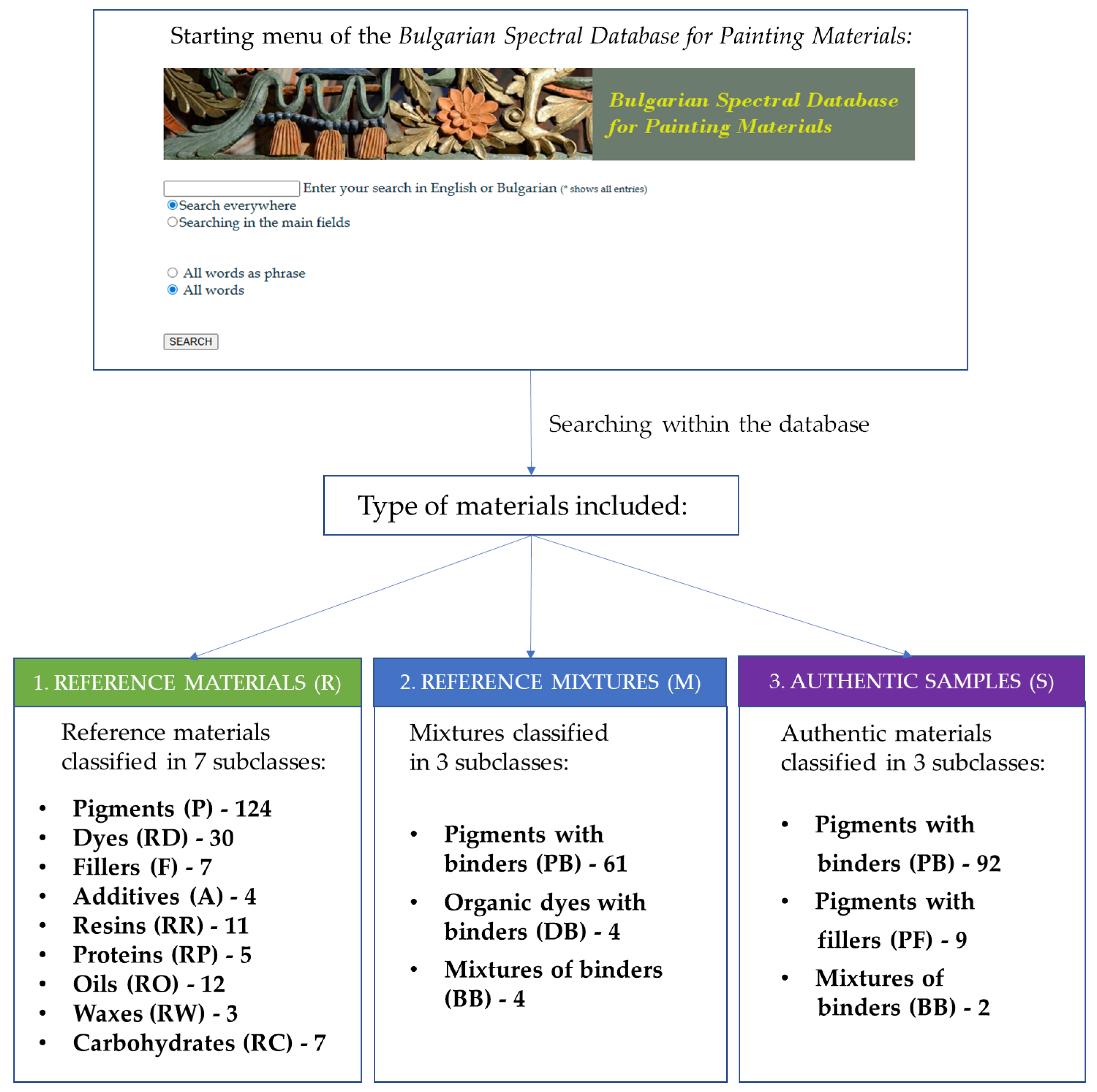
Methods for combined searching, characteristic of every modern system for searching and comparing the results, have been developed in order to allow the user to quickly find the desired information. The following search modes are available (Figure 1):
  • Search Everywhere—global search across all metadata fields.
  • Searching in the main fields—Name, Type, Subtype, Notes, and Colour Group.
The latter option could filter and display selected entries relevant to the category, providing only the necessary results.
The structure of the database is presented in more detail in Figure 1.

3.2. Searching Information and Spectral Data for Reference Materials

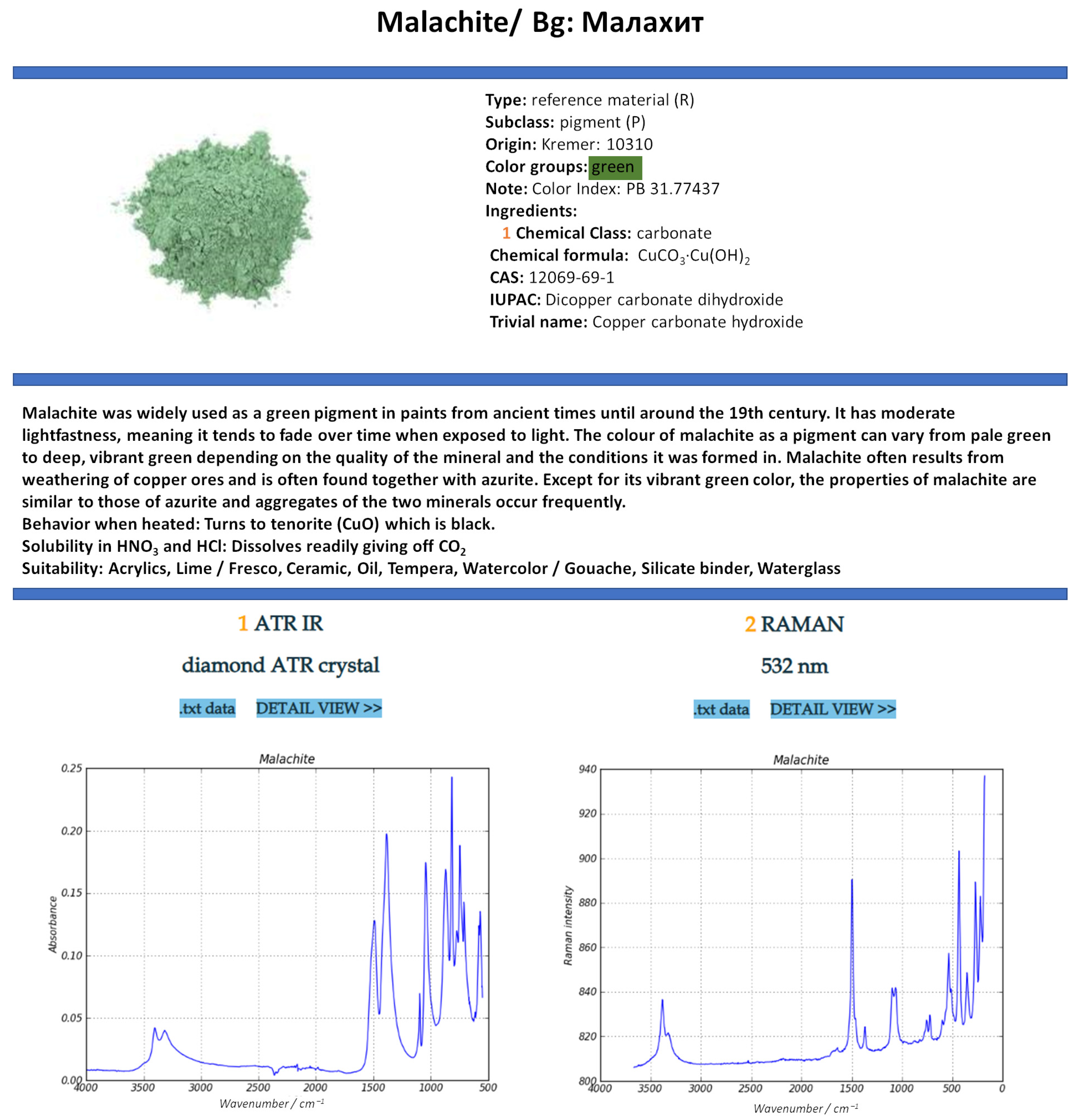
For each reference material, vibrational spectra (IR and/or Raman) are provided along with additional information, including names, synonyms, types, chemical composition, CAS numbers, Colour Index (C.I.) numbers, and historical periods of use. The spectra are interactive and can be exported in text format (.txt), allowing users to open them with any text editor and spectral software. This facilitates the comparison of the spectra of an unknown sample with those in the database, aiding in the identification of the materials and clarification of the techniques used in the artwork. Figure 2 shows an example of the type of information that can be found in the database for the reference material malachite.
The database currently contains more than 200 reference materials classified into subclasses (Figure 1): pigments (P), fillers (F), additives (A), resins (RR), proteins (RP), oils (RO), waxes (RW), carbohydrates (RC), and dyes (RD). The inorganic section represents the largest part of the database and comprises 124 pigment entries, together with 7 fillers and 4 additives. These materials include both natural and synthetic mineral pigments commonly encountered in cultural heritage objects. The predominance of pigments reflects the primary objective of the database, namely the characterization and identification of mineral pigments used in historical artworks. In addition to inorganic materials, the database also contains complementary information on organic painting materials, including 30 dyes, 12 oils, 11 resins, 7 carbohydrates, 5 proteins, and 3 waxes. The integration of both inorganic and organic reference materials enables a comprehensive investigation of complex painting systems and supports the identification of pigments, binders, varnishes, and degradation products in authentic cultural heritage samples.
Methods for combined searching characteristics for every modern system for searching and comparing the results have been developed. This allows the user to quickly find the desired information.
The “Search Everywhere” option allows keyword-based searching across all textual fields in each database record, including both primary fields and extended descriptive content. This enables users to retrieve information based on any term associated with a given reference material, such as name, CAS number, C.I. number, colour, origin, presumed composition, etc. In contrast, the “Searching in the main fields” option restricts the query to the main structured fields—Type, Subtype, Name, and Colour Groups—thereby excluding extended descriptive text. This approach reduces search complexity, improves performance, and provides more targeted results. For example, all resins included in the database can be retrieved using the keywords “RR” (resins) option, as illustrated in Figure S1 (Supplementary Material).
Similarly, red pigments can be identified by combining the keywords “red”, “(R)” (reference materials), and “(P)”(pigments), as shown in Figure S2 (Supplementary Material).

3.3. Searching Information and Spectral Data for Authentic Samples

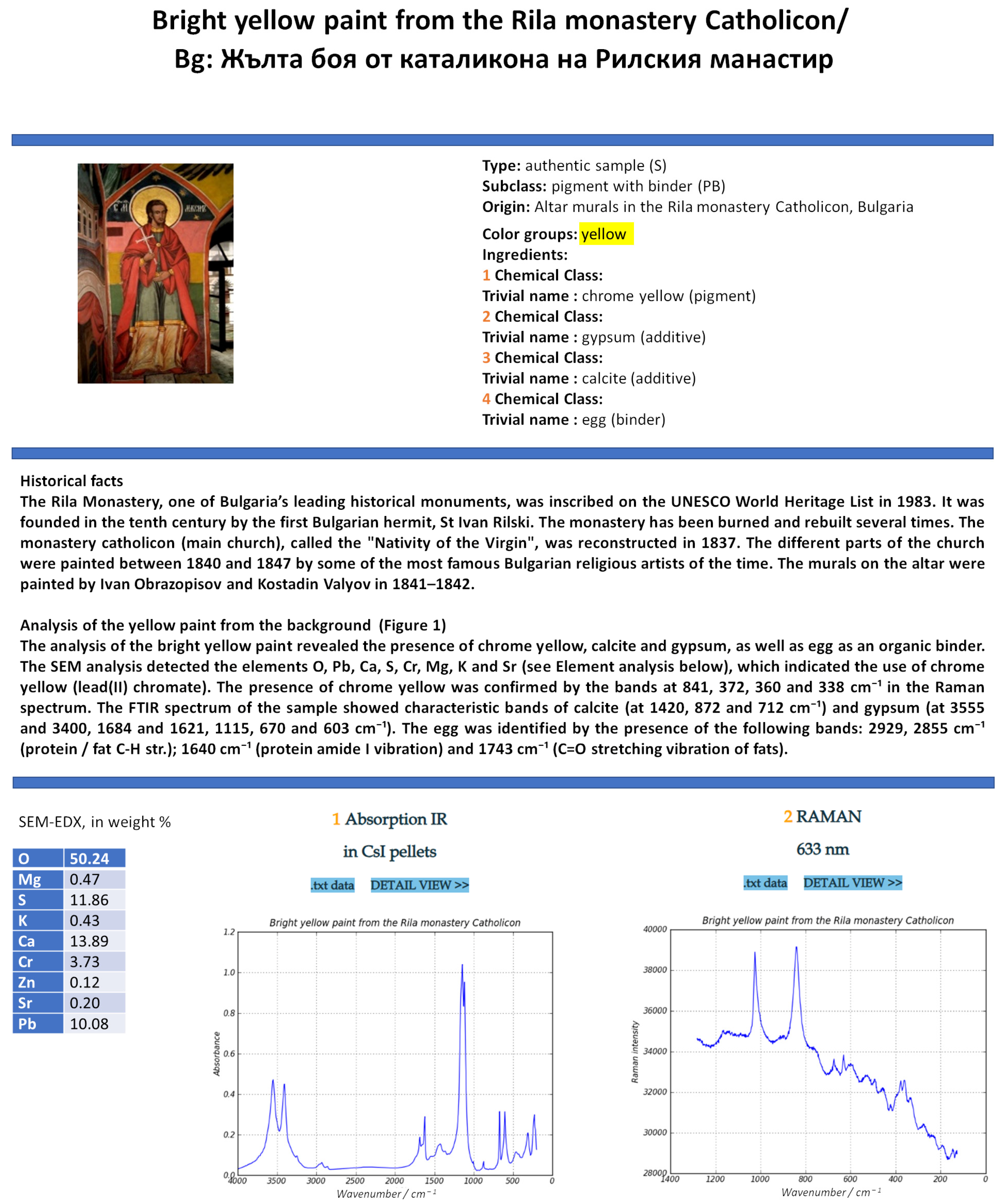
All analytical information obtained from the investigated cultural heritage sites (Table 1) was systematically classified and integrated into the database. Similar to the reference materials, each database record includes vibrational spectra (FTIR and/or Raman), chemical composition, material identification, and relevant synonyms. In addition, entries corresponding to authentic samples contain extended metadata, including photographs of the sampling location, geographic information, approximate dating of the artwork, and detailed descriptions of the identified materials. Currently, the database comprises more than 100 entries derived from analyzed authentic samples from Bulgarian cultural heritage sites. An example of a typical database entry is presented in Figure 3.
The integration of analytical results into a unified digital platform enables systematic comparison of materials across sites and historical periods, providing new insights into technological choices, material availability, and artistic practices. This demonstrates the potential of the database as a tool for both material identification and broader art-historical and conservation research.
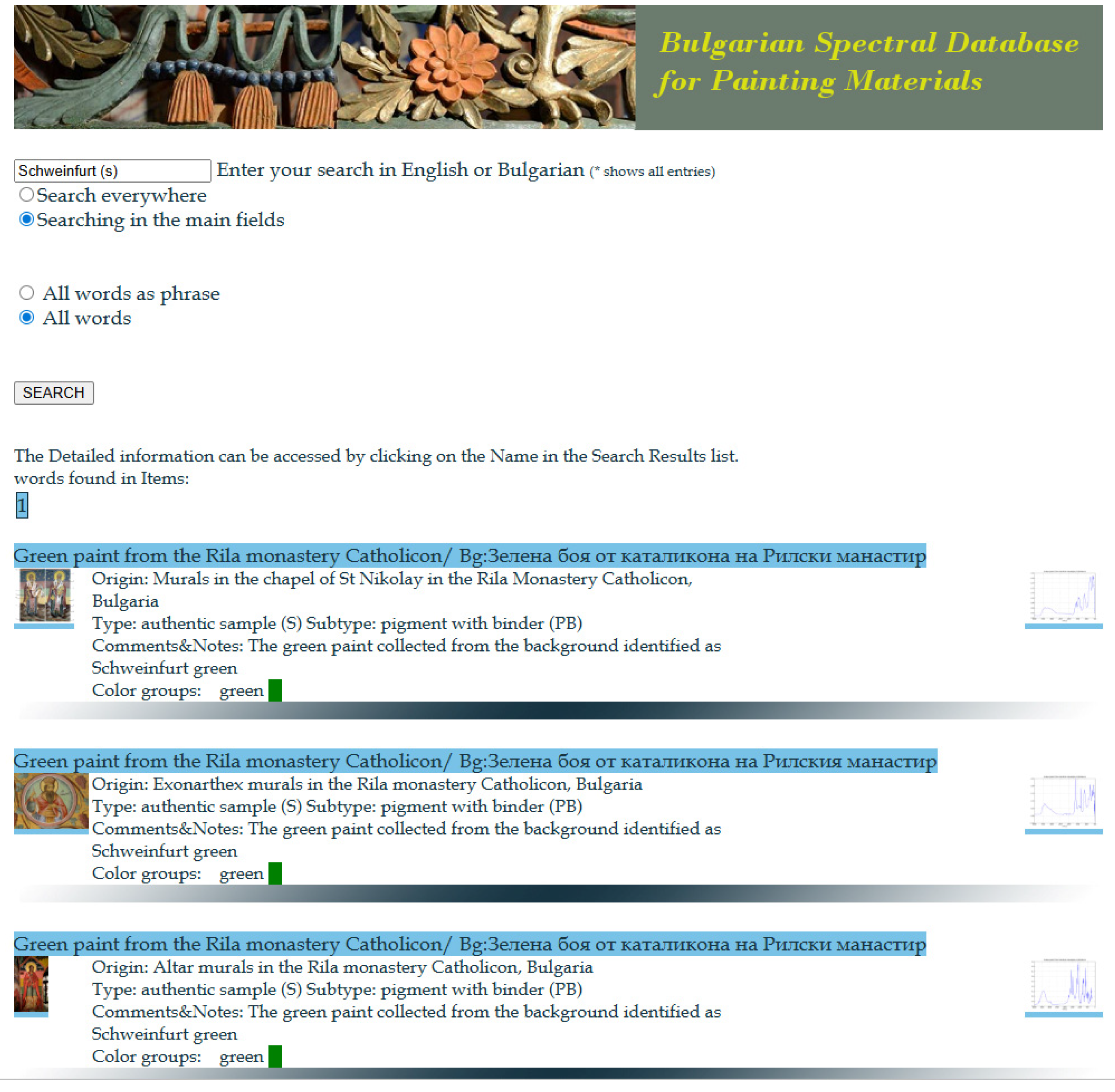
For example, a search for the keywords (S) (authentic sample) and “Schweinfurt green” (Figure 4) reveals the presence of this synthetic pigment copper acetoarsenite (also known as emerald green) in the murals located in three specific areas of the Rila Monastery: the altar, the chapel of St. Nikolay, and the exonarthex of the main church (Catholicon). It is important to note that these murals were painted after 1840 (see Table 1). The results obtained demonstrate the impact of imported pigments and evolving artistic practices during the period under investigation. Bulgarian icon painters replaced the previously ubiquitous green earth with a modern emerald green, which has gained popularity due to its brilliant green colour, soon after its discovery [78].
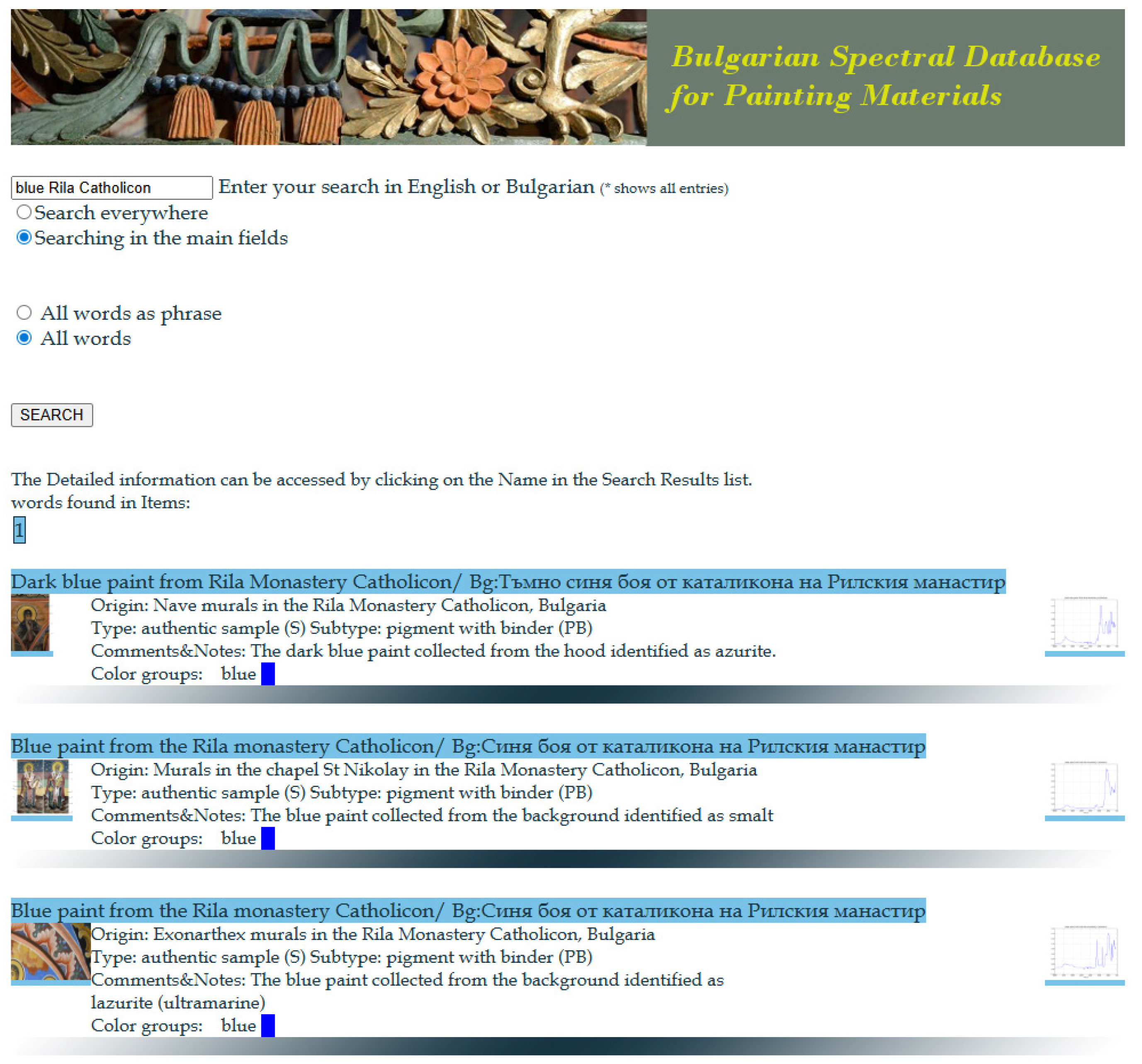
Similarly, a search using the keywords “blue”, “Rila”, and “Catholicon” retrieves all blue pigments identified in the main church, including smalt, ultramarine, and azurite (Figure 5). Ultramarine, which exhibits higher stability under outdoor environmental conditions, is predominantly found in exterior murals, whereas smalt is mainly detected in interior areas, particularly in sky representations. This distribution is consistent with a deliberate selection of materials based on their durability and visual properties.
The database also provides insights into painting techniques and binder selection. Information about the binders used by artists can be easily and quickly obtained using a keyword or the specific binder and the “Search Everywhere” option. An example of samples with carbohydrate binder is shown in Figure S3 (Supplementary Material). As can be seen, only smalt used in blue paint layers is associated with a carbohydrate binder. It is in contrast to the Orthodox mural traditions (e.g., Greek and Cypriot), where protein-based binders such as egg are more commonly reported. This observation may reflect regional or chronological differences in workshop practices, particularly considering the later date of the Rila Monastery wall paintings.
In contrast to the blue paint with smalt, the analysis revealed the presence of egg as a binder in all other samples from the churches in the Rila monastery complex. These findings suggest that these murals were painted using the conventional egg tempera technique.
The database also facilitates targeted searches for specific material classes. To illustrate this, consider a query employing the keywords “wax” and “S” (authentic sample). This will retrieve entries for wax identified in authentic samples. The results, displayed in Figure S4 (Supplementary Material), encompass monochrome decorative fields in Thracian tombs. The analytical data suggest that wax was applied as a finishing layer on the plaster, enhancing colour saturation and surface texture while acting as a protective coating that could be polished from a soft sheen to a high gloss. The technique of creating polished wall surfaces in combination with organic coatings, known as stucco lustro, is traditionally associated with the Pompeian frescoes and the work of Roman painters. It is reasonable to hypothesize that the paint-craftsmen operating within Thrace inland used a similar technique.

3.4. Database Curation and Quality Control

The curation and validation of new entries are managed by a multidisciplinary team of specialists, including chemists from the Institute of Organic Chemistry with the Centre of Phytochemistry (BAS) and art restorers/historians from the National Academy of Art. Each new entry undergoes a two-step verification process: first, the material’s provenance is checked against historical recipes and monographs; second, the resulting spectra are compared with established international libraries to ensure consistency.
Spectral quality is maintained by adhering to rigorous experimental protocols. All FTIR and Raman data are acquired using high-performance research-grade spectrometers with standardized parameters, such as a resolution of 1–2 cm−1 and 64 accumulated scans for FTIR to ensure a high signal-to-noise ratio. While the current version of the database facilitates manual comparative analysis through downloadable universal .txt formats compatible with all spectroscopic software, the integration of automated peak-matching algorithms is planned for future updates to streamline the identification process for unknown samples.

4. Conclusions

A comprehensive spectral database dedicated to painting materials used in Bulgarian cultural heritage has been successfully developed and implemented. The Bulgarian Spectral Database for Painting Materials integrates FTIR and Raman spectra with detailed analytical and contextual information for both reference standards and authentic samples obtained from artworks spanning a wide chronological range from the Thracian period to the twentieth century. The inclusion of spectra obtained directly from real artifacts represents a significant advantage over existing spectral resources. This approach improves the reliability of material identification and provides insight into historical painting techniques and technological developments.
The web-based platform provides flexible search options, standardized metadata, and downloadable spectra in universal formats, ensuring compatibility with modern spectroscopic software and facilitating comparative analysis. As a freely accessible resource, it represents a valuable tool for conservation scientists, archeologists, and art historians.
Future development will include the expansion of reference materials, the incorporation of additional analytical techniques, and the continuous integration of new case studies. The Bulgarian Spectral Database for Painting Materials is expected to contribute significantly to the scientific study and preservation of cultural heritage at both regional and international levels.

Supplementary Materials

The following supporting information can be downloaded at https://www.mdpi.com/article/10.3390/min16060598/s1. Figure S1. Example of search results extracted by using the keyword “resins” under the “Search in the main fields” option; Figure S2. Example of search results extracted by using the keyword “red”, “(R)” (reference materials), and “(P)” (pigments) under the “Search in the main fields” option; Figure S3. Example of search results extracted by using the keywords “carbohydrate” under the “Search everywhere”; Figure S4: Example of search results extracted by using the keywords “wax” under the “Search in the main fields”.

Author Contributions

Conceptualization, D.Y., S.S., M.R., N.H., V.P. and B.S.; methodology, D.Y., S.S., N.H., E.S.-D., V.P. and B.S.; validation, D.Y., S.S., M.R., M.A., N.L., N.H. and B.S.; formal analysis, D.Y., S.S., M.R., M.A., N.L., N.H. and B.S.; investigation, D.Y., S.S., M.R., M.A., N.L., N.H., V.P. and B.S.; writing—original draft preparation, B.S., D.Y. and V.P.; writing—review and editing, B.S. and D.Y.; visualization, D.Y., S.S., M.R., M.A., N.L., N.H. and B.S.; supervision, B.S. and D.Y. All authors have read and agreed to the published version of the manuscript.

Funding

This work is supported by project No. BG16RFPR002-1.014-0014-C01 “Development Program with a Business Plan for the Laboratory Complex of Sofia Tech Park”, which is implemented under the “Research, Innovation and Digitalization for Smart Transformation” Program, co-financed by the European Union through the European Regional Development Fund.

Data Availability Statement

The original contributions presented in this study are included in the article/Supplementary Materials. Further inquiries can be directed to the corresponding authors.

Acknowledgments

Research equipment of the Distributed Research Infrastructure INFRAMAT, part of the Bulgarian National Roadmap for Research Infrastructures, supported by the Bulgarian Ministry of Education and Science, was used in this work.

Conflicts of Interest

The authors declare no conflicts of interest.

References

  1. Available online: https://whc.unesco.org/en/statesparties/bg (accessed on 15 April 2026).
  2. Mayer, R. The Artist’s Handbook of Materials and Techniques, 5th ed.; Sheehan, S., Ed.; Viking Penguin: New York, NY, USA, 1991. [Google Scholar]
  3. Gettens, R.J.; Stout, G.L. Painting Materials: A Short Encyclopaedia; Dover Publications: New York, NY, USA, 1966. [Google Scholar]
  4. Hermens, E. Technical Art History: The Synergy of Art, Conservation and Science. In Art History and Visual Studies in Europe; Matthew, R., Lenain, T., Locher, H., Pinotti, A., Zijlmans, C.J.M., Eds.; Brill: Lancaster, UK, 2012; pp. 151–165. [Google Scholar]
  5. Heritage, A.; Golfomitsou, S. Conservation Science: Reflections and Future Perspectives. Stud. Conserv. 2015, 60, 2–6. [Google Scholar] [CrossRef]
  6. Stoner, J.H. Changing Approaches in Art Conservation: 1925 to the Present. In Scientific Examination of Art: Modern Techniques in Conservation and Analysis; The National Academies Press: Washington, DC, USA, 2005; pp. 40–58. [Google Scholar]
  7. Taft, W.; Mayer, J.W. The Science of Paintings; Springer: New York, NY, USA, 2000. [Google Scholar]
  8. Coccato, A.; Moens, L.; Vandenabeele, P. On the Stability of Mediaeval Inorganic Pigments: A Literature Review of the Effect of Climate, Material Selection, Biological Activity, Analysis and Conservation Treatments. Herit. Sci. 2017, 5, 12. [Google Scholar] [CrossRef]
  9. Madariaga, J.M. Analytical chemistry in the field of cultural heritage. Anal. Methods 2015, 7, 4848–4876. [Google Scholar] [CrossRef]
  10. Sibilia, J.P. A Guide to Materials Characterization and Chemical Analysis; VCH Publishers: New York, NY, USA, 1996. [Google Scholar]
  11. Creagh, D.; Bradley, D. Physical Techniques in the Study of Art, Archaeology and Cultural Heritage; Elsevier: Oxford, UK, 2007; Volume 2. [Google Scholar]
  12. Artioli, G. Scientic Methods and Cultural Heritage: An Introduction to the Application of Materials Science to Archaeometry and Conservation Science; Oxford University Press: New York, NY, USA, 2010. [Google Scholar]
  13. Pozzi, F.; Stephens, C.H. Advances in analytical methods for cultural heritage. Appl. Sci. 2024, 14, 7587. [Google Scholar] [CrossRef]
  14. Bitossi, G.; Giorgi, R.; Mauro, M.; Salvadori, B.; Dei, L. Spectroscopic Techniques in Cultural Heritage Conservation: A Survey. Appl. Spectrosc. Rev. 2005, 40, 187–228. [Google Scholar] [CrossRef]
  15. Doménech Carbó, M.T.; Bosch Reig, F.; Gimeno Adelantado, J.V.; Periz Martínez, V. Fourier transform infrared spectroscopy and the analytical study of works of art for purposes of diagnosis and conservation. Anal. Chim. Acta 1996, 330, 207–215. [Google Scholar] [CrossRef]
  16. Rosi, F.; Daveri, A.; Miliani, C.; Verri, G.; Benedetti, P.; Pique, F. Non-invasive identification of organic materials in wall paintings by fiber optic reflectance infrared spectroscopy: A statistical multivariate approach. Anal. Bioanal. Chem. 2009, 95, 2097–2106. [Google Scholar] [CrossRef]
  17. Derrick, M.R.; Stulik, D.C.; Landry, J.M. Infrared Spectroscopy in Conservation Science. In Scientific Tools for Conservation; Getty Conservation Institute: Los Angeles, CA, USA, 1999. [Google Scholar]
  18. Daher, C.; Paris, C.; Le Ho, A.-S.; Bellot-Gurlet, L.; Echard, J.-P. A Joint use of Raman and Infrared Spectroscopies for the Identication of Natural Organic Media Used in Ancient Varnishes. J. Raman Spectrosc. 2010, 41, 1204–1209. [Google Scholar] [CrossRef]
  19. Edwards, H.G. Raman spectroscopy of inorganic materials in art and archaeology: Spectroscopic analysis of historical mysteries. In Spectroscopic Properties of Inorganic and Organometallic Compounds; Yarwood, J., Douthwaite, R., Duckett, S., Eds.; The Royal Society of Chemistry: London, UK, 2009; Volume 40, pp. 16–48. [Google Scholar]
  20. Vandenabeele, P.; Edward, H.G.M.; Moens, L. A Decade of Raman Spectroscopy in Art and Archaeology. Chem. Rev. 2007, 107, 675–686. [Google Scholar] [CrossRef]
  21. Frahm, E. Scanning Electron Microscopy (SEM): Applications in Archaeology. In Encyclopedia of Global Archaeology; Smith, C., Ed.; Springer: Cham, Switzerland, 2020. [Google Scholar]
  22. Sessa, C.; Vila, A.; García, J.F. Determination of detection limits for SEM-EDS and m-FTIR analysis of artwork. Anal. Bioanal. Chem. 2011, 400, 2241–2251. [Google Scholar] [CrossRef] [PubMed]
  23. Cardell, C.; Guerra, I.; Sánchez-Navas, A. SEM-EDX at the Service of Archaeology to Unravel Historical Technology. Microsc. Today 2009, 17, 28–33. [Google Scholar] [CrossRef]
  24. Artioli, G. Science for the cultural heritage: The contribution of X-ray diffraction. Rend. Fis. Acc. Lincei 2013, 24, 55–62. [Google Scholar] [CrossRef]
  25. Franceschi, E. X-Ray Diffraction in Cultural Heritage and Archaeology Studies. Open Access Libr. J. 2014, 1, 1–10. [Google Scholar] [CrossRef]
  26. Gonzalez, V.; Cotte, M.; Vanmeert, F.; de Nolf, W.; Janssens, K. X-ray Diffraction Mapping for Cultural Heritage Science: A Review of Experimental Configurations and Applications. Chem. Eur. J. 2019, 25, 1703–1719. [Google Scholar] [CrossRef] [PubMed]
  27. Pagès-Camagna, S.; Laval, E.; Vigears, D. Non-destructive and in situ analysis of Egyptian wall paintings by X-ray diffraction and X-ray fluorescence portable systems. Appl. Phys. A 2010, 100, 671–681. [Google Scholar] [CrossRef]
  28. Bonaduce, I.; Ribechini, E.; Modugno, F.; Colombini, M.P. Analytical Approaches Based on Gas Chromatography Mass Spectrometry (GC/MS) to Study Organic Materials in Artworks and Archaeological Objects. Top. Curr. Chem. 2016, 374, 6. [Google Scholar] [CrossRef]
  29. Colombini, M.P.; Modugno, F.; Ribechini, E. Analytical strategies for characterizing organic paint media using gas chromatography/mass spectrometry. Acc. Chem. Res. 2010, 43, 715–727. [Google Scholar] [CrossRef]
  30. Analytical Methods Committee. Analytical pyrolysis in cultural heritage. Anal. Methods 2018, 10, 5463–5467. [Google Scholar] [CrossRef]
  31. Poulin, J.; Kearney, M.; Veall, M.-A. Direct Inlet Py-GC-MS analysis of cultural heritage materials. J. Anal. Appl. Pyrolysis 2022, 164, 105506. [Google Scholar] [CrossRef]
  32. Wang, N.; Gu, A.; Qu, Y.; Lei, Y. Identification of polysaccharide binding materials used in cultural relics by pyrolysis-gas chromatography/mass spectrometry. Chin. J. Chromatogr. 2022, 40, 753–762. [Google Scholar] [CrossRef]
  33. Han, B.; Daheur, G.; Sablier, M. Py-GCxGC/MS in cultural heritage studies: An illustration through analytical characterization of traditional East Asian handmade papers. J. Anal. Appl. Pyrolysis 2016, 122, 458–467. [Google Scholar] [CrossRef]
  34. Perruchini, E.; Pinault, G.-J.; Sablier, M. Exploring the potential of pyrolysis-comprehensive two-dimensional gas chromatography/mass spectrometry in the characterization of Chinese inks of ancient manuscripts. J. Anal. Appl. Pyrolysis 2022, 164, 105503. [Google Scholar] [CrossRef]
  35. Bonaduce, I.; Andreotti, A. Py-GC/MS of Organic Paint Binders. In Organic Mass Spectrometry in Art and Archaeology; Colombini, M.P., Modugno, F., Eds.; Wiley: Hoboken, NJ, USA, 2009; Chapter 11. [Google Scholar]
  36. Pires, J.; Cruz, A.J. Techiques of thermal analysis applied to the study of cultural heritage. J. Therm. Anal. Calorim. 2007, 87, 411. [Google Scholar] [CrossRef]
  37. Fessas, D.; Schiraldi, A.; Tenni, R.; Vitellaro Zuccarello, L.; Bairati, A.; Facchini, A. Calorimetric, biochemical and morphological investigations to validate a restoration method of fire injured ancient parchment. Thermochim. Acta 2000, 348, 129–137. [Google Scholar] [CrossRef]
  38. Tomassetti, M.; Marini, F.; Campanella, L.; Coppa, A. Archaeometric classification of ancient human fossil bones, with particular attention to their carbonate content, using chemometrics, thermogravimetry and ICP emission. Chem. Cent. J. 2014, 8, 26. [Google Scholar] [CrossRef]
  39. Garcia-Valles, M.; Di Mariano, A.; Alfonso, P. Differentiation between copal and amber by their structure and thermal behaviour. J. Therm. Anal. Calorim. 2023, 148, 13027–13037. [Google Scholar] [CrossRef]
  40. Potenza, M.; Sabatino, G.; Giambi, F.; Rosi, L.; Papini, A.M.; Dei, L. Analysis of egg-based model wall paintings by use of an innovative combined dot-ELISA and UPLC-based approach. Anal. Bioanal. Chem. 2013, 405, 691–701. [Google Scholar] [CrossRef] [PubMed]
  41. Li, J.; Zhanga, B. Study of identification results of proteinous binding agents in Chinese painted cultural relics. J. Cult. Herit. 2020, 43, 73–79. [Google Scholar] [CrossRef]
  42. Cartechini, L.; Vagnini, M.; Palmieri, M.; Pitzurra, L.; Mello, T.; Mazurek, J.; Chiari, G. Immunodetection of Proteins in Ancient Paint Media. Acc. Chem. Res. 2010, 43, 867–876. [Google Scholar] [CrossRef]
  43. Zhang, B.; Chen, W. Electrochemical Chip Combined with Immunomagnetic Beads Enrichment for the Detection of Peach Gum Binding Medium in Ancient Wall Paintings. Anal. Lett. 2023, 56, 2869–2881. [Google Scholar] [CrossRef]
  44. Palmieri, M.; Vagnini, M.; Pitzurra, L.; Brunetti, B.G.; Cartechini, L. Identification of animal glue and hen-egg yolk in paintings by use of enzyme-linked immunosorbent assay (ELISA). Anal. Bioanal. Chem. 2013, 405, 6365–6637. [Google Scholar] [CrossRef]
  45. Clark, R.J.H. Raman microscopy: Application to the identification of pigments on medieval manuscripts. Chem. Soc. Rev. 1995, 24, 187–196. [Google Scholar] [CrossRef]
  46. Smith, G.D.; Clark, R.J.H. Raman microscopy in archaeological science. J. Archaeol. Sci. 2004, 31, 1137–1160. [Google Scholar] [CrossRef]
  47. Vandenabeele, P.; Donais, M.K. Mobile Spectroscopic Instrumentation in Archaeometry Research. Appl. Spectrosc. 2016, 70, 27–41. [Google Scholar] [CrossRef] [PubMed]
  48. Vandenabeele, P. Practical Raman Spectroscopy: An Introduction; Wiley: Chichester, UK, 2013. [Google Scholar]
  49. Bell, I.M.; Clark, R.J.H.; Gibbs, P.J. Raman spectroscopic library of natural and synthetic pigments (pre-~1850 AD). Spectrochim. Acta A 1997, 53, 2159–2179. [Google Scholar] [CrossRef]
  50. Burgio, L.; Clark, R.J.H. Library of FT-Raman spectra of pigments, minerals, pigment media and varnishes, and supplement to existing library of Raman spectra of pigments with visible excitation. Spectrochim. Acta A 2001, 57, 1491–1521. [Google Scholar] [CrossRef] [PubMed]
  51. Castro, K.; Alonso, M.P.; Rodriguez-Laso, M.D.; Fernandez, L.A.; Madariaga, J.M. On-line FT-Raman and dispersive Raman spectra database of artists’ materials (e-VISART database). Anal. Bioanal. Chem. 2005, 382, 248–258. [Google Scholar] [CrossRef]
  52. Caggiani, M.C.; Cosentino, A.; Mangone, A. Pigments Checker version 3.0, a handy set for conservation scientists: A free online Raman spectra database. Microchem J. 2016, 129, 123–132. [Google Scholar] [CrossRef]
  53. Fremout, W.; Saverwyns, S. Identification of synthetic organic pigments: The role of a comprehensive digital Raman spectral library. J. Raman Spectrosc. 2012, 43, 1536–1544. [Google Scholar] [CrossRef]
  54. Vahur, S.; Teearu, A.; Peets, P.; Joosu, L.; Leito, I. ATR-FT-IR spectral collection of conservation materials in the extended region of 4000–80 cm−1. Anal. Bioanal. Chem. 2016, 408, 3373–3379. [Google Scholar] [CrossRef]
  55. Lomax, S.Q.; Price, B.A.; Lins, A.; Davis, C.; Pretzel, B.; Picollo, M.; Richards, G.; Rice, S. The IRUG Raman Spectral Web Database: Objectives, Progress and Plans. e-Preserv. Sci. 2013, 10, 38–41. [Google Scholar]
  56. Cortea, I.M.; Chiroşca, A.; Angheluta, L.M.; Seriţan, G. INFRA-ART: An Open Access Spectral Library of Art-related Materials as a Digital Support Tool for Cultural Heritage Science. ACM J. Comput. Cult. Herit. 2023, 16, 40. [Google Scholar] [CrossRef]
  57. Lafuente, B.; Downs, R.T.; Yang, H.; Stone, N. The power of databases: The RRUFF project. In Mineralogical Crystallography; Armbruster, T., Micaela Danisi, R., Eds.; De Gruyter Oldenbourg: Berlin, Germany; München, Germany; Boston, MA, USA, 2016; pp. 1–30. [Google Scholar]
  58. Edwards, H.G.M.; Vandenabeele, P.; Colomban, P. Raman Spectroscopy in Cultural Heritage Preservation; Springer: Cham, Switzerland, 2023. [Google Scholar]
  59. Velcheva, E.; Tapanov, S.; Yancheva, D.; Stoyanov, S.; Stamboliyska, S. Multi-analytical study on the wall paintings of Kurilo monastery “St. Ivan Rilski”. Bulg. Bulg. Chem. Commun. 2017, 49, 289–294. [Google Scholar]
  60. Stamboliyska, B.; Tapanov, S.; Velcheva, E.; Atanasova-Vladimirova, S.; Ranguelov, B.; Guncheva, M.; Yancheva, D. Materials and Techniques of the Mural Paintings in the Church-Ossuary of the Rila Monastery, Bulgaria. Minerals 2024, 14, 1115. [Google Scholar] [CrossRef]
  61. Stamboliyska, B.; Tapanov, S.; Velcheva, E.; Yancheva, D.; Stoyanov, S. Spectroscopic Analysis of Wall Paintings from the Church of the Dormition of St John of Rila, Rila Monastery. J. Bulg. Acad. Sci. 2021, 4, 29–36. [Google Scholar]
  62. Yancheva, D.; Tapanov, S.; Stamboliyska, B.; Velcheva, E.; Glavcheva, Z.; Stoyanov, S.; Haralampiev, N.; Fisher, D.; Lederer, A. Micro-Raman and ATR-IR spectroscopy analysis of pigments of mural paintings from the Rila Monastery complex (Bulgaria). In Proceedings of the 9th International Congress on the Application of Raman Spectroscopy in Art and Archaeology, Evora, Portugal, 24–27 October 2017; HERCULES Laboratory: Évora, Portugal, 2017; ISBN 978-989-99475-4-2. [Google Scholar]
  63. Stamboliyska, B.; Tapanov, S.; Velcheva, E.; Yancheva, D.; Rogozherov, M.; Glavcheva, Z.; Lalev, G.; Dimitrov, M. The altar wall paintings of the catholicon “The Nativity of the Virgin”, Rila Monastery, Bulgaria: Identification of the painting materials by means of vibrational spectroscopic techniques complemented by EDX, XRD and TGA analysis. Spectrochim. Acta A 2021, 247, 119087. [Google Scholar] [CrossRef] [PubMed]
  64. Yancheva, D.; Tapanov, S.; Anastasova, N.; Velcheva, E.; Stoyanov, S.; Stamboliyska, B. Pigments and organic binders in the wall paintings of chapel “St. Nikolay” in Rila Monastery cathalicon, Bulgaria. C. R. Acad. Bulg. Sci. 2019, 72, 1468–1474. [Google Scholar]
  65. Yancheva, D.; Tapanov, S.; Velcheva, E.; Stamboliyska, B.; Glavcheva, Z.; Stoyanov, S.; Haralampiev, N.; Fischer, D.; Lederer, A. Characterization of Zahari Zograph’s nave wall paintings in the church “Nativity of the Virgin” of Rila Monastery (Bulgaria) by vibrational spectroscopy and SEM–EDX analysis. STAR Sci. Technol. Archaeol. Res. 2017, 3, 437–449. [Google Scholar] [CrossRef]
  66. Stamboliyska, B.; Tapanov, S.; Kovacheva, D.; Atanasova-Vladimirova, S.; Ranguelov, B.; Yancheva, D.; Velcheva, E.; Stoyanov, S.; Guncheva, M.; Fischer, D.; et al. Characterization of art materials and degradation processes in the exterior wall paintings of the main church of Rila Monastery, Bulgaria. Vibr. Spectr. 2023, 128, 103580. [Google Scholar] [CrossRef]
  67. Stamboliyska, B.; Belishki, S.; Haralampiev, N.; Yancheva, D.; Velcheva, E.; Penkova, P.; Lederer, A.; Fischer, D. The wall paintings in the Russian church St. Nicholas in Sofia: A technological study by Integrated analytical approach. C. R. Acad. Bulg. Sci. 2023, 76, 377–387. [Google Scholar] [CrossRef]
  68. Glavcheva, Z.; Yancheva, D.; Velcheva, E.; Stamboliyska, B.; Petrova, N.; Petkova, V.; Lalev, G.; Todorov, V. Analytical studies of the Alexandrovo Thracian tomb wall paintings. Spectrochim. Acta A 2016, 152, 622–628. [Google Scholar] [CrossRef]
  69. Avdeev, G.; Kukeva, R.; Yancheva, D.; Mihailov, V.; Tankova, V.; Dimitrov, M.; Nekhrizov, G.; Stoyanova, R.; Stamboliyska, B. Multi-Analytical Analysis of Decorative Color Plasters from the Thracian Tomb near Alexandrovo, Bulgaria. Minerals 2024, 14, 374. [Google Scholar] [CrossRef]
  70. Guirdzhiiska, D.; Zlateva, B.; Glavcheva, Z. Polished Decorative Fields in Thracian Fresco Tombs from the Hellenistic period—Archaeometrical Research. STAR Sci. Technol. Archaeol. Res. 2017, 3, 428–436. [Google Scholar] [CrossRef]
  71. Cennini, C. The Book of the Art of Cennino Cennini: A Contemporaty Practical Treatise of Quattrocento Painting Translated from the Italian, with Notes on Mediaeval Art Methods; G. Allen & Unwin: London, UK, 1922. [Google Scholar]
  72. Eastaugh, N.; Walsh, V.; Chaplin, T.; Siddall, R. Pigment Compendium: A Dictionary of Historical Pigments; Butterworth-Heinemann: Oxford, UK, 2004. [Google Scholar]
  73. Vasilev, A. Ermines. Technology and Iconography (Original Taitle: Ermines. Technologia i Ikonografia); Septemvri: Sofia, Bulgaria, 1976. [Google Scholar]
  74. Sharenkov, A. Techniques and Technology of Bulgarian Revival Painting. The Revival Icon (Original Title: Tehnika I Tehnologia na Wazrozhdenskata Zhivopis. Vasrozhdenski Ikoni); Nauka I i izkustvo: Sofia, Bulgaria, 1992. [Google Scholar]
  75. W3C. HTML5: A Vocabulary and Associated APIs for HTML and XHTML. W3C Recommendation, October 2014. Available online: https://www.w3.org/TR/html5/ (accessed on 15 April 2026).
  76. W3C. Cascading Style Sheets (CSS) Overview. Available online: https://www.w3.org/Style/CSS/Overview.en.html (accessed on 15 April 2026).
  77. Ecma International. ECMAScript® Language Specification (ECMA-262). Available online: https://tc39.es/ecma262/ (accessed on 15 April 2026).
  78. Fiedler, I.; Bayard, M. Emerald Green and Scheele’s Green. In Artists’ Pigments: A Handbook of Their History and Characteristics; Fitzhugh, E.W., Ed.; Archetype Publications: London, UK, 1986; Volume 3, pp. 219–273. [Google Scholar]
Figure 1. Structure of the Bulgarian Spectral Database for Painting Materials.
Minerals 16 00598 g001
Figure 2. Example of a reference material entry in the spectral database.
Minerals 16 00598 g002
Figure 3. Example of an authentic sample entry in the spectral database.
Minerals 16 00598 g003
Figure 4. Example of search results extracted by using the keywords “Schweinfurt green” and “(S)” (authentic sample).
Minerals 16 00598 g004
Figure 5. Example of part of the search results extracted by using the keywords “blue”, “Rila”, and “Catholicon”.
Minerals 16 00598 g005
Table 1. Cultural heritage sites from which authentic mural samples were obtained.
Site/LocationDating of the MuralsArtists/AttributionRef.
Kurilo Monastery Church, 15 km northwest of Sofia, Bulgaria1596Pimen Zografski, founder of the first Bulgarian painting school[59]
Church-ossuary, Rila Monastery, Bulgaria, south of the monastery walls 1795Zacharias and Veniamin of Galatista, Athonite masters[60]
Church of the Dormition of St. Ivan Rilski, near the grave of St. Ivan Rilski.1828–1830Dimitar and Zahari Zograf, famous Bulgarian religious artists[61]
Chapel of St. John of Rila, the main church “Nativity of the Virgin”, Rila Monastery, Bulgaria1840Dimitar Zograf, Kostadin Valyov, famous Bulgarian religious artists[62]
Central altar in the main church “Nativity of the Virgin”, Rila Monastery, Bulgaria1840–1842Ivan Obrazopisov, Kostadin Valyov, famous Bulgarian religious artists[63]
Chapel of St. Nicholas, the main church “Nativity of the Virgin”, Rila Monastery, Bulgaria1840–1841Dimitar Zograf, Stanislav Dospevski, famous Bulgarian religious artists[64]
Nave in the main church “Nativity of the Virgin”, Rila Monastery, Bulgaria1844Zahari Zograf, famous Bulgarian religious artist[65]
Exonarthex in the main church “Nativity of the Virgin”, Rila Monastery, Bulgaria1846Dimitar Zograf, Stanislav Dospevski, famous Bulgarian religious artists[66]
Russian Church of St. Nicholas, Sofia, Bulgaria1911–1912Vasily Perminov, Russian artist[67]
1945–1946Mikhail Malecki, Russian artist
1953–1954Nikolai Sheleho, Russian artist
Thracian tomb near Alexandrovo, Bulgariaend of the 4th century BCAnonymous[68,69]
Thracian tomb near Maglizh, Bulgariamid-3rd century BCAnonymous[70]
Thracian tomb near Dolno Lukovo, Bulgariaend of the 3rd century BCAnonymous[70]
Thracian tomb near Kazanlak, Bulgariaearly 3rd century BCAnonymous[70]
Disclaimer/Publisher’s Note: The statements, opinions and data contained in all publications are solely those of the individual author(s) and contributor(s) and not of MDPI and/or the editor(s). MDPI and/or the editor(s) disclaim responsibility for any injury to people or property resulting from any ideas, methods, instructions or products referred to in the content.