Article

Experimental Study on Mechanics of Carbonate Outcrops from the Cambrian and Sinian Systems in the Tarim Basin

1
PetroChina Tarim Oilfield Company, Korla 841000, China
2
R&D Center for Ultra Deep Complex Reservoir Exploration and Development, China National Petroleum Corporation (CNPC), Korla 841000, China
3
Engineering Research Center for Ultra-Deep Complex Reservoir Exploration and Development, Xinjiang Uygur Autonomous Region, Korla 841000, China
4
Xinjiang Key Laboratory of Ultra-Deep Oil and Gas, Korla 841000, China
5
College of Petroleum Engineering, China University of Petroleum (Beijing), Beijing 102249, China
*
Author to whom correspondence should be addressed.
Minerals 2026, 16(5), 553; https://doi.org/10.3390/min16050553
Submission received: 10 April 2026 / Revised: 6 May 2026 / Accepted: 15 May 2026 / Published: 20 May 2026
(This article belongs to the Topic Failure Characteristics of Deep Rocks, 3rd Edition)

Abstract

This study investigates Cambrian and Sinian carbonate outcrops in the Tarim Basin using 19 stratigraphically diverse rock samples. Through integrated X-ray diffraction mineralogical analysis, triaxial compression testing, and Brazilian splitting experiments, we systematically characterized rock mechanical properties and their correlations with microscopic mineral constituents. Key findings demonstrate remarkably distinct mechanical properties across formations: vuggy dolomites from the Xiaqiulitage formation exhibit the lowest compressive strength (minimum 200.0 MPa) and tensile strength (3.85 MPa), while the Yuertusi formation’s Y5 layer dolomites achieve exceptional tensile strength (21.69 MPa). Mineral composition fundamentally controls rock strength: dolomite or quartz concentrations exceeding 90% significantly enhance strength, whereas calcareous minerals (calcite, fluorapatite) degrade mechanical integrity. Most specimens display pronounced brittle failure characteristics; uniquely, basal dolostones of the Awatage formation exhibit distinctive plastic deformation. This research elucidates the synergistic effects of tectonic history, mineral assemblages, and microtextural attributes on rock mechanical behavior, providing critical theoretical underpinnings for deep carbonate reservoir development in overpressured basins.

1. Introduction

Carbonate reservoirs play a critically pivotal role in hydrocarbon exploration and development. Particularly in the Cambrian and Sinian formation of the Tarim Basin, extensive carbonate sedimentary sequences are prevalent [1]. Thus, investigating the mechanical properties of these strata holds paramount significance for informing development strategies targeting deep to ultra-deep carbonate hydrocarbon resources. Specifically, in ultra-deep fields such as Shunbei and Tazhong, drilling operations frequently encounter complex engineering challenges, including wellbore collapse and severe circulation loss, which are closely related to the in-situ stress state and rock mechanical properties [2].
Zeng et al. [3] conducted uniaxial compression and tensile tests on downhole cores of hard and brittle carbonate rocks (e.g., limestone and dolomite) from southern China. They quantified the instability characteristics of rocks such as limestone and dolomite using the elastic energy index (W) and the strength brittleness index (R). Zhang et al. [4] performed quasi-in-situ triaxial compression tests on downhole cores of ultra-deep carbonate rocks (burial depth 6077–6738 m) from the Tarim Basin. Their results indicated that the long-term strength approaches the peak strength, the elastic modulus is reduced by pore water, and with increasing burial depth, the rock plasticity enhances, leading to a rise in the ratio of residual strength to peak strength. Yang et al. [5] and Wang et al. [6] carried out high-temperature and high-pressure triaxial tests on downhole carbonate rock cores from the Tarim oilfield. They found that the critical confining pressure for the brittle–ductile transition increases with temperature, while Young’s modulus exhibits a negative correlation with temperature and a positive correlation with confining pressure. Liu et al. [7] implemented triaxial mechanical tests and 3D scanning on downhole cores from a fractured carbonate rock formation, combined with fractal geometry analysis. They demonstrated that the fractal dimension of the fracture surface is functionally related to cohesion and the internal friction angle.
In summary, existing studies primarily focus on shallow or deep carbonate rocks, while experimental data on the mechanical properties of carbonate rocks from ultra-deep and extreme-depth strata remain relatively scarce. The mechanical behavior under high confining pressures and the controlling factors related to microstructure are still not well understood. Previous studies have demonstrated that macroscopic mechanical behaviors (e.g., compressive strength, brittleness) of carbonate rocks are fundamentally governed by their microscopic mineral compositions and pore structures [8]. For instance, variations in the content of rigid minerals (dolomite, quartz) versus clay minerals dictate the elastic modulus and failure modes of the rock matrix [9]. However, quantitative experimental data linking specific stratigraphic mineral assemblages to triaxial mechanical responses in the Tarim Basin remain limited. Recent advances in microstructural characterization techniques have further elucidated the role of diagenetic processes in modifying the mechanical integrity of carbonate rocks under high-stress conditions, highlighting the need for integrated approaches that combine mineralogical and mechanical analyses [10].
Given the scarcity and high cost of downhole cores from ultra-deep formations, high-quality outcrop analogues serve as a critical proxy for characterizing the spatial heterogeneity and mechanical evolution of reservoir rocks [11].
While previous works have focused on shallow to deep carbonate rocks or individual borehole cores, three critical gaps remain: (1) quantitative experimental data linking specific stratigraphic mineral assemblages to triaxial mechanical responses across a continuous Cambrian–Sinian section in the Tarim Basin are limited; (2) the effect of accessory minerals (e.g., fluorapatite) on strength and brittleness transition has not been systematically isolated; (3) most existing studies present technical reports of measured parameters without developing a process-based understanding of how microtexture and mineralogy jointly govern macroscopic failure.
To fill these gaps, this study investigates the mechanical properties of rocks and their relationships with mineral composition by performing X-ray diffraction mineral component analysis, triaxial compression tests, and Brazilian split tests on 19 sets of outcrop rock samples from different horizons of the Cambrian and Sinian systems. It also compares the differences in rock mechanical properties across various strata, providing a valuable reference for ultra-deep drilling, completion, and hydrocarbon development.

2. Rock Outcrop Acquisition

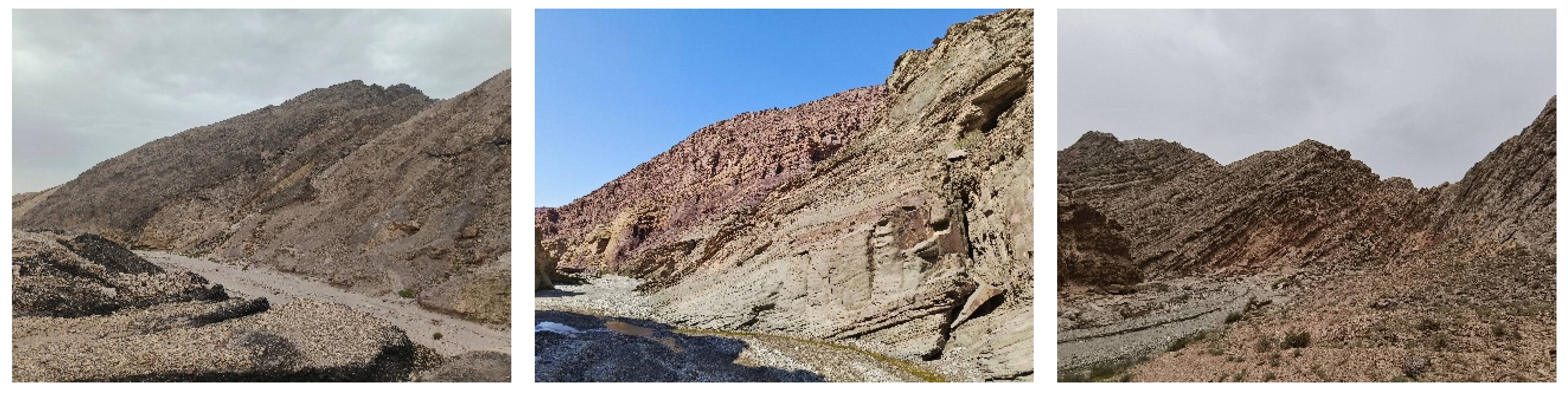
The outcrop samples utilized in this study were collected from the Xiaoerbulake Section and Ordovician Dawan’gou area in the Aksu region of Northern Tarim, Xinjiang, China (as shown in Figure 1). These samples comprehensively represent the Cambrian Xiaqiulitage, Awatage, Xiaoerbulake, and Yuertusi formation, along with the Sinian Qigebulake formation, totaling 19 outcrop samples from distinct stratigraphic units (As shown in Figure 2).
The distribution of the 19 outcrop horizons is shown in Table 1.

3. Outcrop Mineral Composition Experiments

3.1. Experimental Apparatus and Sample Preparation

X-ray diffraction (XRD) is widely used in the petroleum industry for mineral identification and quantitative analysis [12]. In this study, whole-rock and clay-fraction XRD analyses were performed to determine the mineral composition and its proportional distribution in each outcrop sample. These data serve as the basis for investigating the influence of mineral assemblages on rock mechanical properties [13,14].
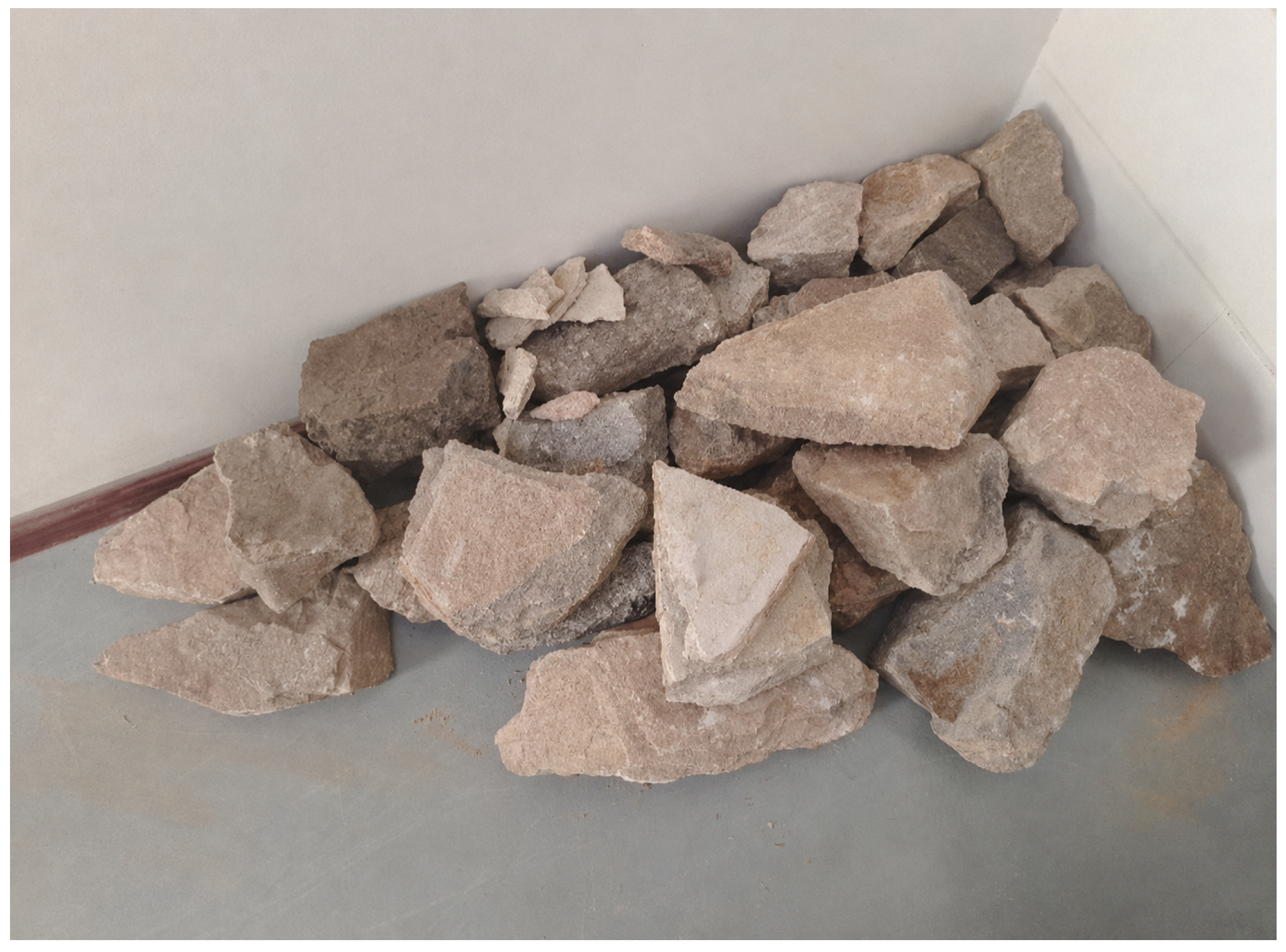
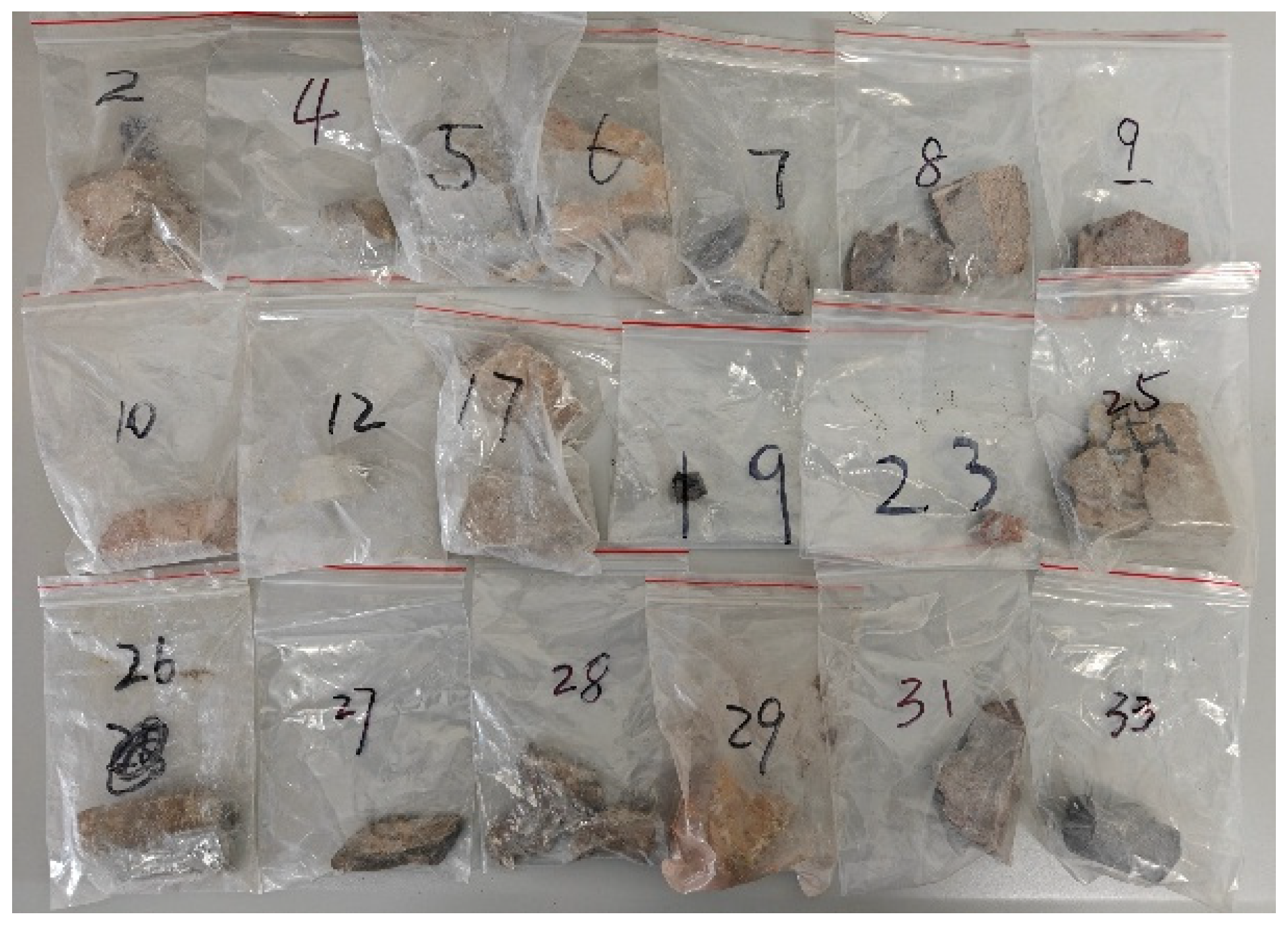
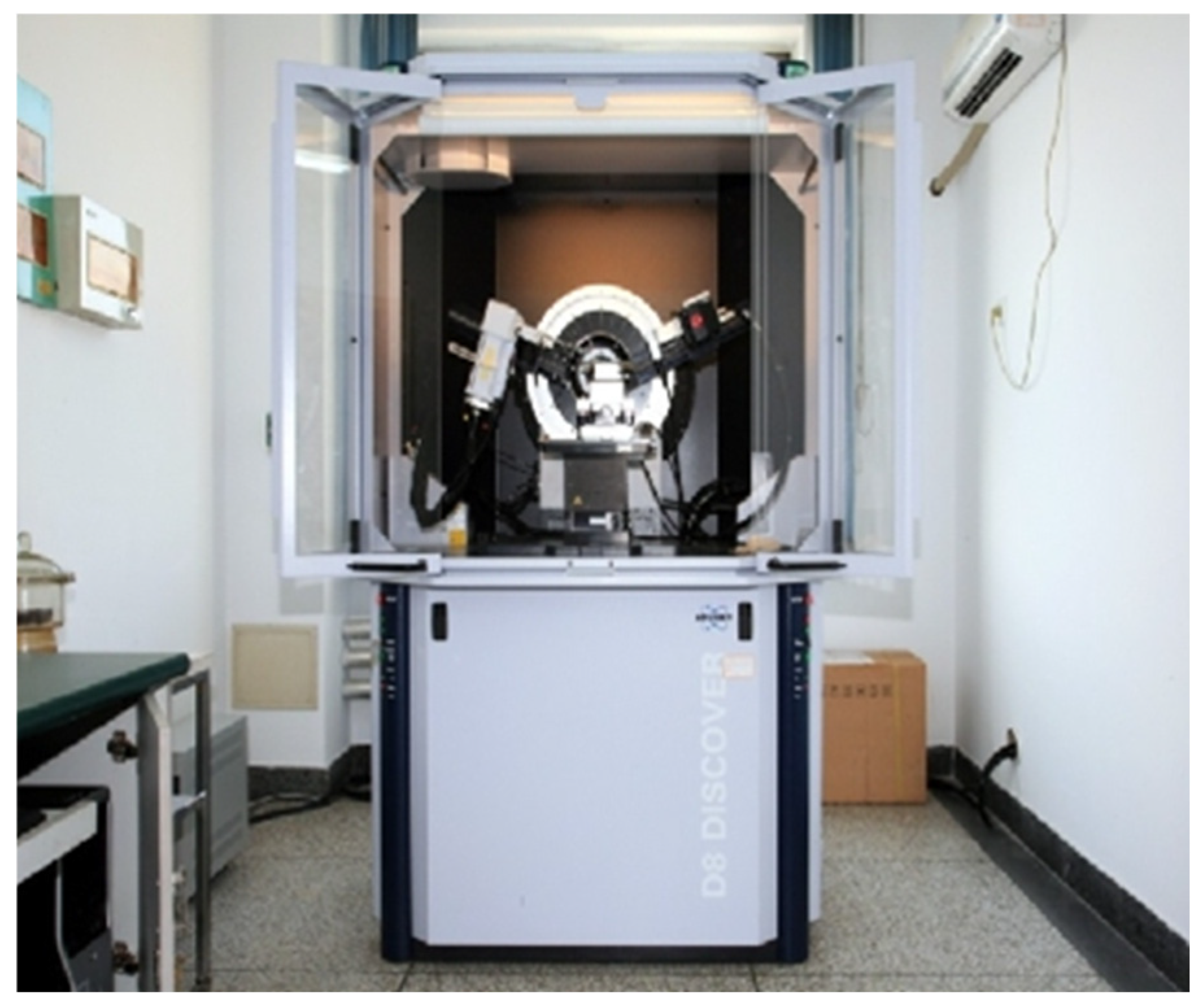
The samples employed in this experiment were derived from residual outcrop cuttings after coring operations, as illustrated in Figure 3. Fifty-gram aliquots were meticulously pulverized to achieve particle sizes below 40 μm. Experimental analyses were conducted utilizing a Bruker D8 DISCOVER X-ray diffractometer (Figure 4), in strict accordance with the Chinese petroleum industry standard SY/T 5163-2018 “Analytical Methods for X-ray Diffraction of Clay Minerals and Common Non-clay Minerals in Sedimentary Rocks” [15].

3.2. Experimental Data and Results

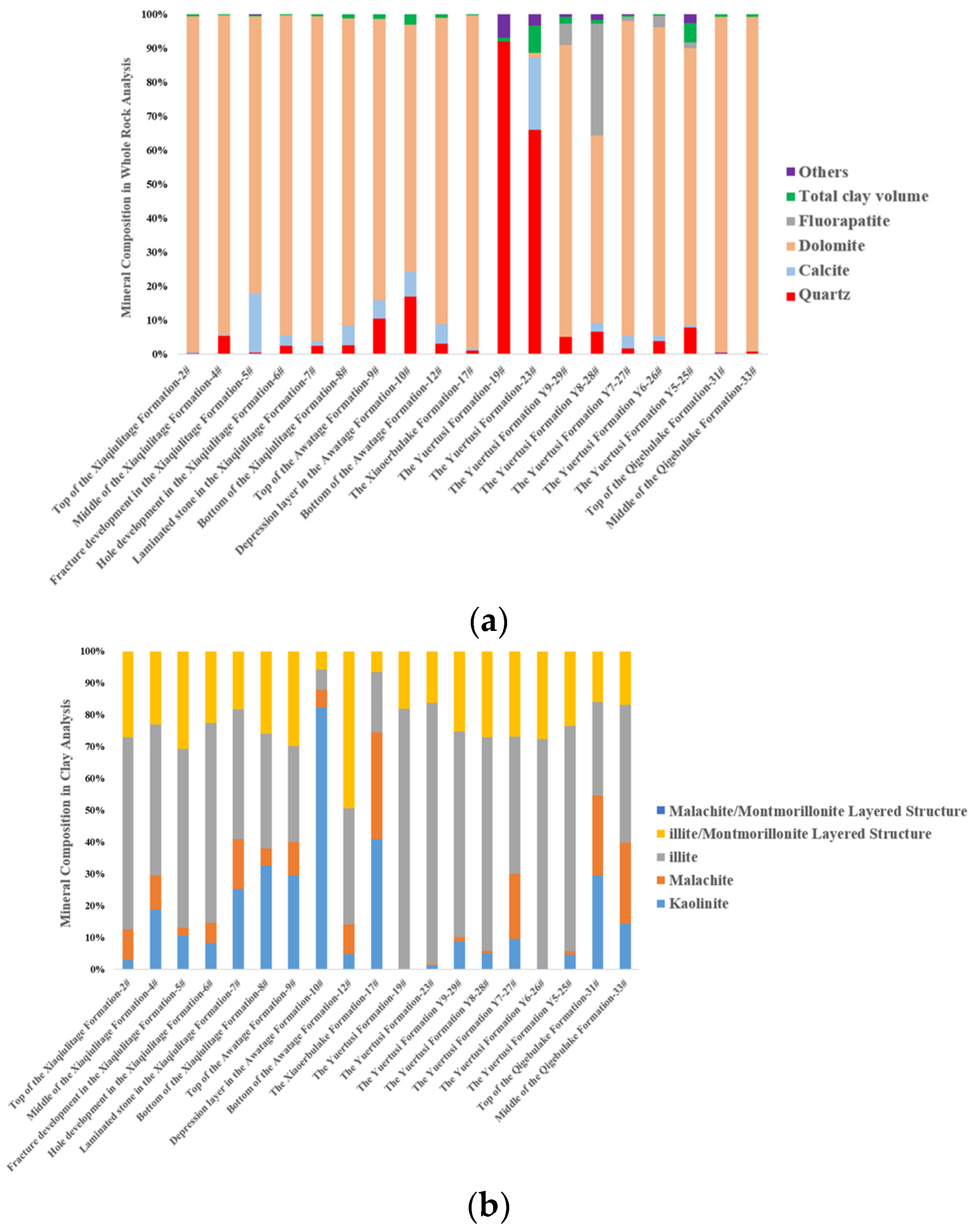
Based on XRD mineral composition analyses conducted via the aforementioned methodology, we have determined the mineral assemblages and quantitative proportions across all 19 outcrop samples. These data were subsequently utilized to characterize the lithology of each outcrop formation, with comprehensive results presented in Figure 5 and Table 2.
Analysis of the data reveals that outcrops across all stratigraphic units are predominantly composed of dolomite (≤98.9%) or quartz (≤92.1%), with subordinate calcareous minerals (≤35.5%) and clay minerals (≤8%). The clay mineral assemblages are dominated by illite (≤82.1%) and kaolinite (≤82.4%), accompanied by variable proportions of illite–smectite mixed-layer minerals (≤49.4%). Notably, outcrops from the Awatage and Yuertusi formation exhibit elevated silica contents (quartz-dominated), warranting lithological classification as siliceous rocks (quartz > 70%), whereas other units are predominantly classified as dolostones (dolomite > 90%) with minor calcitic dolostones (dolomite 50–90% + calcite > 10%).

4. Outcrop Rock Mechanical Properties Experiments

4.1. Experimental Apparatus and Sample Preparation

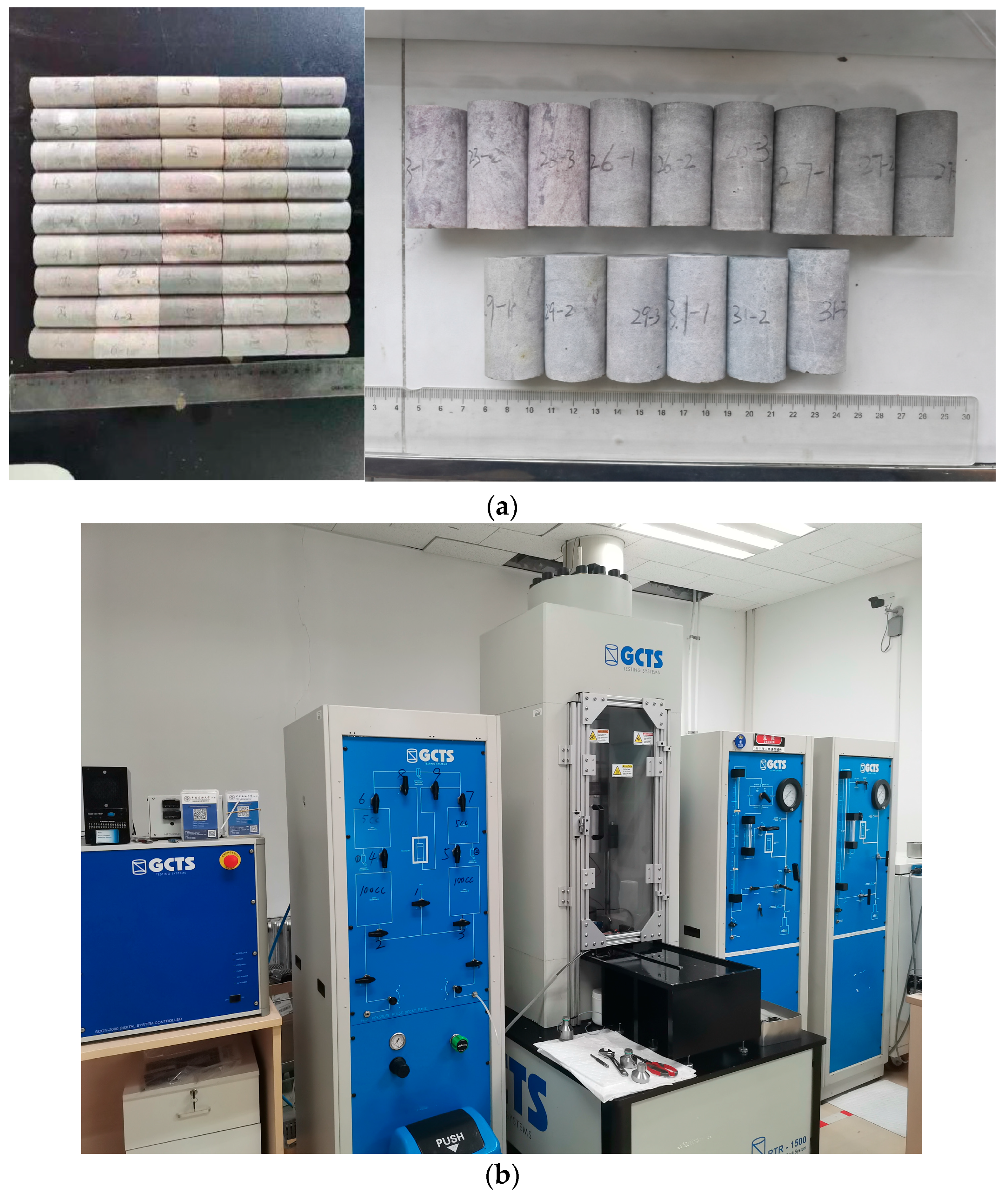
Triaxial compression tests were conducted to evaluate the compressive strength of outcrop specimens, with standard cylindrical samples (25 mm × 50 mm; dimensional tolerance ±0.5 mm) drilled from each outcrop group as shown in Figure 6a. Specimen ends were faced and polished to ensure flatness tolerance within 2.5%. The experimental apparatus depicted in Figure 6b utilized a GCTS RTR-1500 high-pressure/high-temperature rock triaxial system (GCTS Inc., Tempe, AZ, USA) [16,17], capable of achieving maximum temperature (200 °C), confining pressure (140 MPa), pore pressure (140 MPa), axial static load (1000 kN), and axial dynamic load (800 kN), and of accommodating specimens up to 54 mm diameter. This system fully meets requirements for evaluating rock mechanical properties under 7000 m-depth HPHT conditions. Testing protocols first increased confining pressure to preset values at 3 MPa/min, followed by axial loading at 0.03%/min strain rate. Each exposed rock group was tested under three different confining pressure conditions in accordance with GB/T 23561.9-2009 “Methods for determining the physical and mechanical properties of coal and rock—Part 9: Methods for determining the triaxial strength and deformation parameters of coal and rock”.
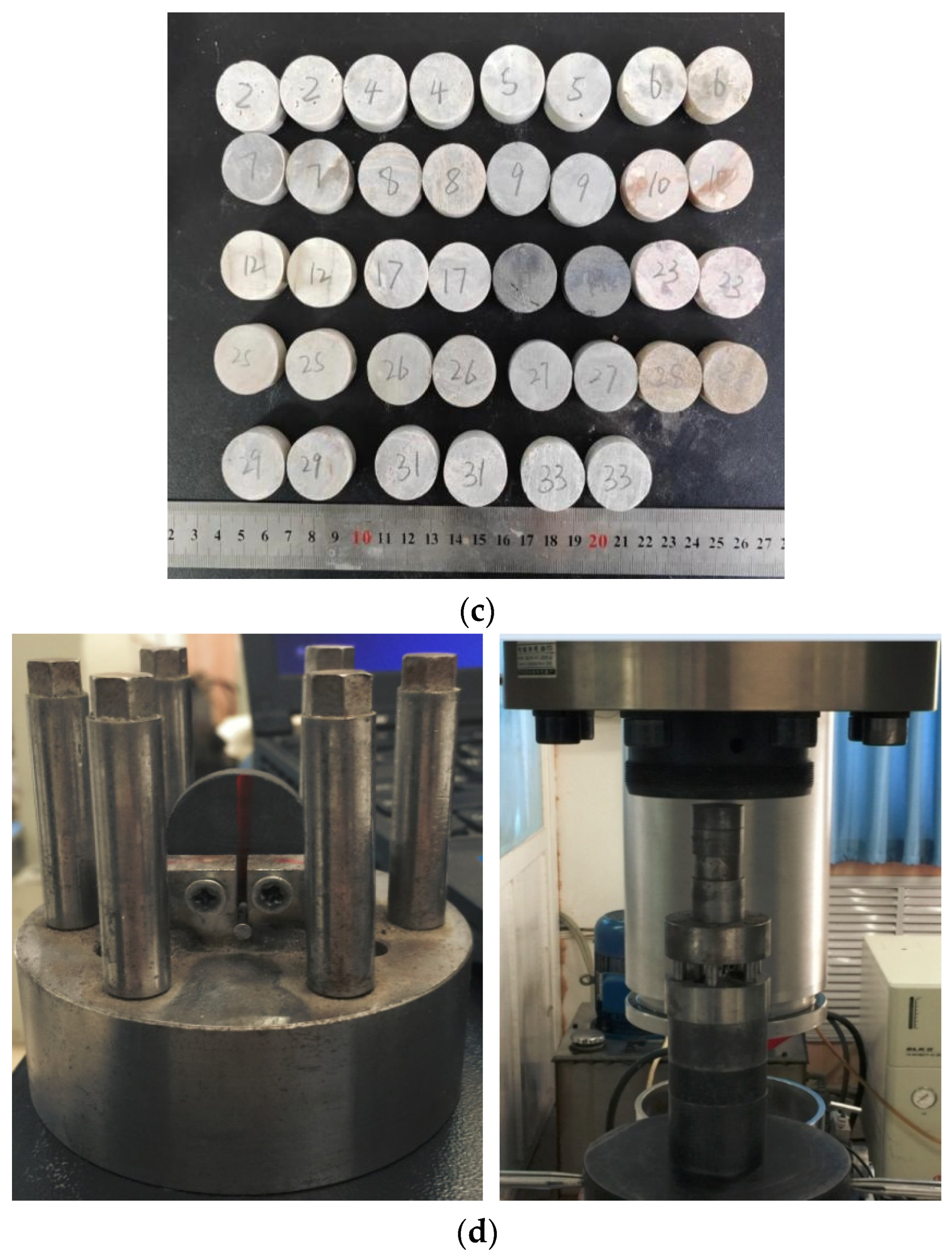
Brazilian splitting tests were employed to determine the tensile strength of outcrop specimens. In the laboratory, cores were processed using the dry drilling method. Coring bits were utilized to extract 25 mm-diameter cores along the bedding planes of shale formation, yielding cylindrical specimens. These cylinders were then sectioned at 5–6 mm intervals to produce disk-shaped specimens with thicknesses of 10–13 mm (as shown in Figure 6c). Following the International Society for Rock Mechanics (ISRM) standards [18], specimen ends were faced and polished to ensure parallelism tolerance within ±0.5 mm and surface flatness ≤0.2 mm. Testing was performed using the RTR-1500 high-pressure/high-temperature rock testing system, with the experimental setup illustrated in Figure 6d. Two tensile strength tests were conducted per outcrop group, with results averaged.

4.2. Experimental Data and Results

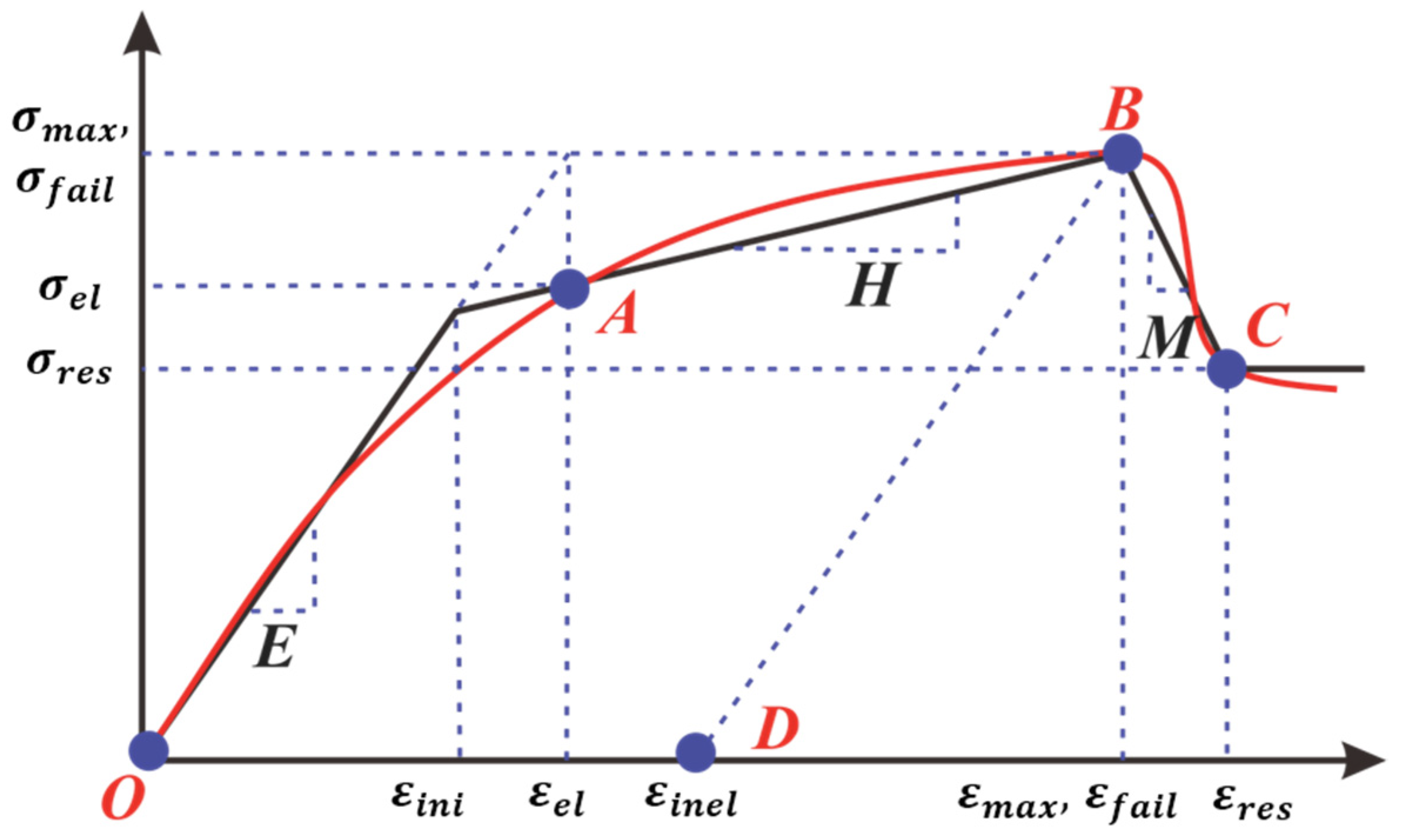
Through triaxial compression tests, we calculated key parameters including compressive strength (peak strength), elastic modulus, Poisson’s ratio, cohesion, and internal friction angle under varying confining pressures. Additionally, full stress–strain curve analysis [19,20] was employed to evaluate rock brittleness, utilizing triaxial test data to compute the pre-peak brittleness index (Bpre) and the post-peak brittleness index (Bres):
B p r e = H E
B r e s = E M
where Bpre is the pre-peak brittleness index, with 1 indicating brittle behavior and 0 indicating ductile behavior. E is the elastic modulus, defined as E = ΔσLεL. H is the hardening modulus, defined as H = (σmaxσel)/(εmaxεel). Bres is the post-peak brittleness index, where values in the range [−1, 0] indicate brittle behavior, and tendency towards +∞ indicates ductile behavior. M is the drop modulus (or softening modulus), defined as M = −(σresσmax)/(εresεmax). ΔσL is the stress difference in the linear segment; ΔεL is the strain difference in the linear segment; σmax is the peak stress; εmax is the peak strain; σel is the elastic limit stress; εel is the elastic limit strain; σres is the residual stress; and εres is the residual strain. The above calculation parameters can all be obtained from the rock stress–strain curve, as shown in Figure 7.
These experimental results are comprehensively documented in Table 3. Concurrently, Brazilian splitting test data were used to determine tensile strength for each outcrop specimen, with corresponding results presented in Table 4.

4.3. Xiaqiulitage Formation

The Xiaqiulitage formation, as the uppermost Cambrian stratigraphic unit, is renowned for its extensive thick-bedded dolostone reservoirs, which constitute one of the most critical hydrocarbon exploration targets within the Cambrian system. These reservoirs predominantly comprise dolostones alongside subordinate lithologies including calcitic dolostones, gypsum-bearing dolostones, and argillaceous dolostones. Dominant rock colors range from gray to dark gray, with minor occurrences of brown and black variants [21,22].
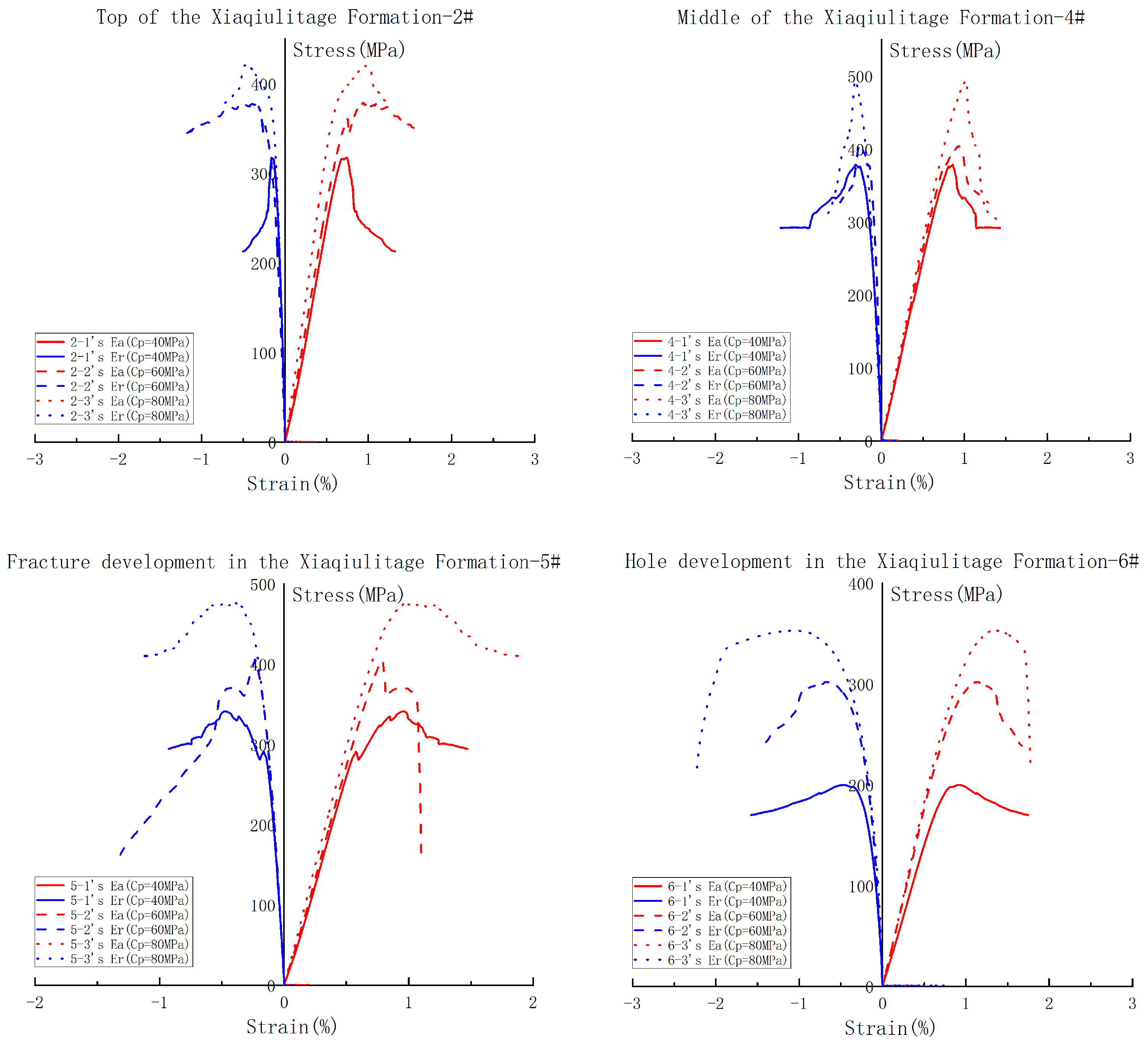
As shown in Figure 8, dolostones from various sections of the Xiaqiulitage formation predominantly exhibit linear elastic deformation under confining pressures ranging from 40 to 80 MPa. Specifically, the compressive strength of central dolostones ranges between 378.7 and 494.8 MPa, exceeding values for both the upper section (317.4–420.4 MPa) and basal section (289.1–378.3 MPa). Among three specialized dolostone types—fractured, vuggy, and stromatolitic—the stromatolitic variety demonstrates the highest compressive strength (288.8–565.4 MPa), while fractured and vuggy dolostones exhibit comparatively lower strengths (200.0–446.7 MPa).
Additionally, dolostones from the upper, central, and basal sections exhibit high cohesion values ranging from 67.81 to 73.86 MPa. The basal dolostones display a lower internal friction angle of 22.38°. Notably, vuggy dolostones in this section demonstrate the lowest cohesion (14.09 MPa) and highest internal friction angle (48.36°) due to vug development.
Dolostone #6 exhibits significant vuggy development, substantially reducing its internal binding strength. Consequently, it displays the lowest tensile strength among all tested specimens at 3.85 MPa. By contrast, other Xiaqiulitage formation dolostones exhibit tensile strengths ranging between 8.29 and 11.98 MPa.
Further analysis reveals that the elastic modulus of specimens from various sections of the Xiaqiulitage formation increases with rising confining pressure. These samples consistently exhibit pronounced brittle characteristics both pre- and post-peak. Notably, vuggy rock specimens display lower elastic modulus and higher Poisson’s ratios, likely attributable to structural discontinuities within their internal fabric. Conversely, other stratigraphic intervals—particularly rocks from the upper section—demonstrate higher elastic modulus, indicating denser and more homogeneous structural configurations.

4.4. Awatage Formation

Within the Tarim Basin, the Awatage formation serves as a critical geological unit, maintaining conformable stratigraphic contacts with the overlying Xiaqiulitage formation and underlying Xiaoerbulake formation. In basin-wide hydrocarbon exploration, two primary reservoir–seal pairs emerge as key targets: (1) evaporites and gypsum beds within the Awatage formation overlying dolostone reservoirs spanning the Shayilike to Wusonggeer formation, and (2) mudstones of the Yuertusi formation capping weathering-crust dolostone reservoirs of the Sinian Qigebulake formation—these configurations define pivotal exploration plays [23].
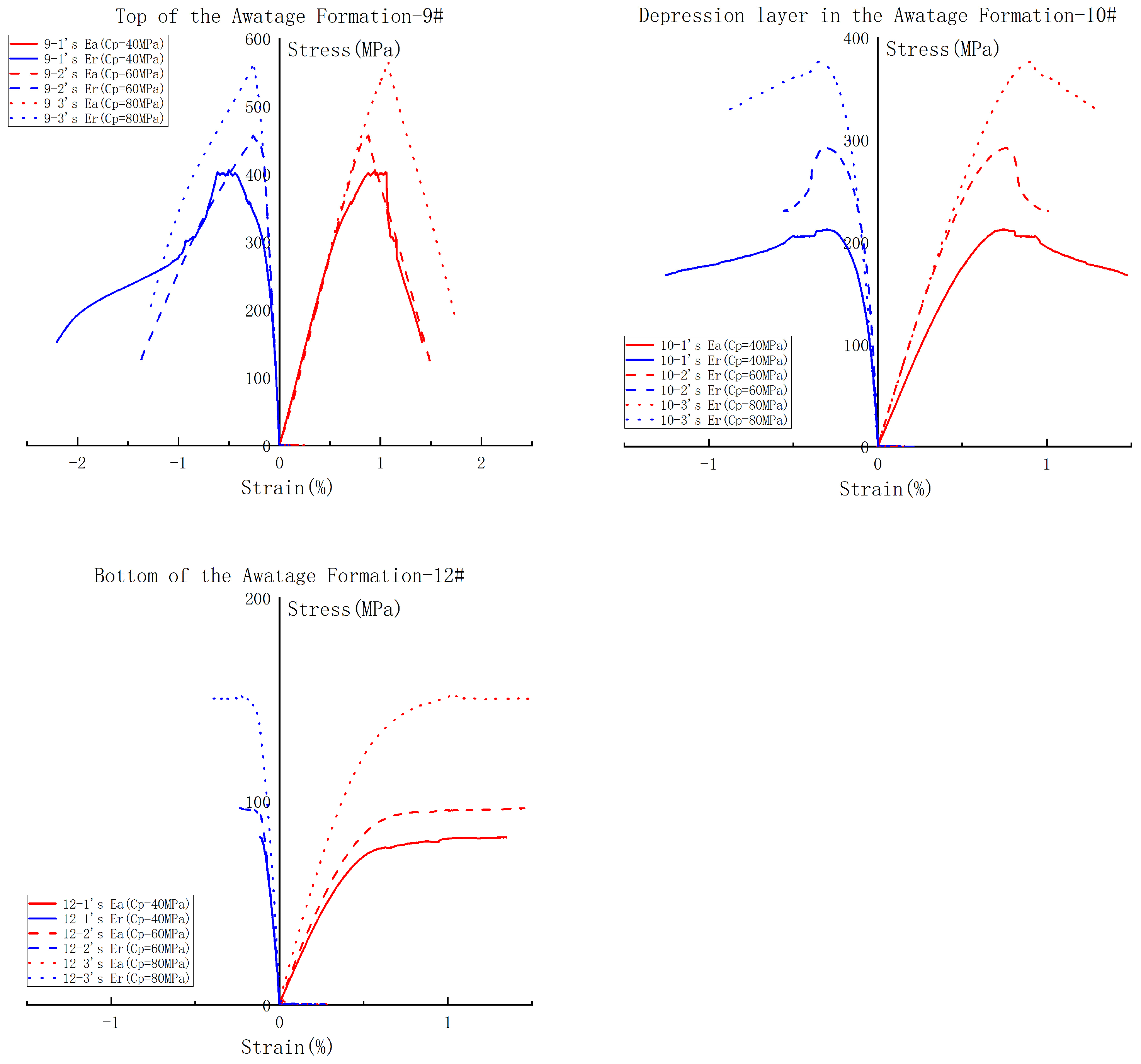
As shown in Figure 9, under confining pressures of 40–80 MPa, dolostones from the top of the Awatage formation and siliceous dolostones from the sag layer primarily exhibit linear elastic deformation prior to peak stress, whereas the basal dolostones display distinct plastic deformation. Specifically, at identical confining pressures, the compressive strength progressively decreases from siliceous dolostones in the upper section (413.1–653.4 MPa) to siliceous dolostones in the sag layer (212.5–376.6 MPa), and finally to basal dolostones (82.4–152.4 MPa). Cohesion and internal friction angle follow the same trend, decreasing from 39.79 MPa and 41.20° to 2.08 MPa and 15.83° respectively, representing significant reductions.
Furthermore, tensile strength values decreased from 6.84 MPa to 6.45 MPa and 5.68 MPa, representing a relatively smaller reduction while still adhering to the trend. Notably, under identical confining pressures, siliceous dolostones from the sag zone exhibit higher elastic modulus and Poisson’s ratios. Consistent with findings from the Xiaqiulitage formation, the elastic modulus of all sections increases with elevated confining pressure.
Through analysis of three sets of stress–strain curves, it is observed that both types of siliceous dolostones exhibit pronounced brittle characteristics prior to peak strength, while basal dolostones display plastic behavior. Post-peak, all units except the upper dolostones demonstrate reduced brittleness and enhanced plasticity, with this transition being particularly pronounced in basal dolostones where distinctive ductile characteristics emerge—a unique phenomenon among the 19 outcrop sample groups.

4.5. Xiaoerbulake Formation

The Xiaoerbulake formation primarily developed during the sustained regression phase following the Early Cambrian marine transgression event. This period records sedimentation in the Tarim Basin during the post-rift subsidence stage after the breakup of the Rodinia supercontinent. As a promising sub-salt reservoir interval within the Cambrian system of the Tarim Basin, the Xiaoerbulake formation exhibits superior reservoir-seal assemblages, indicating significant exploration potential [24,25,26].
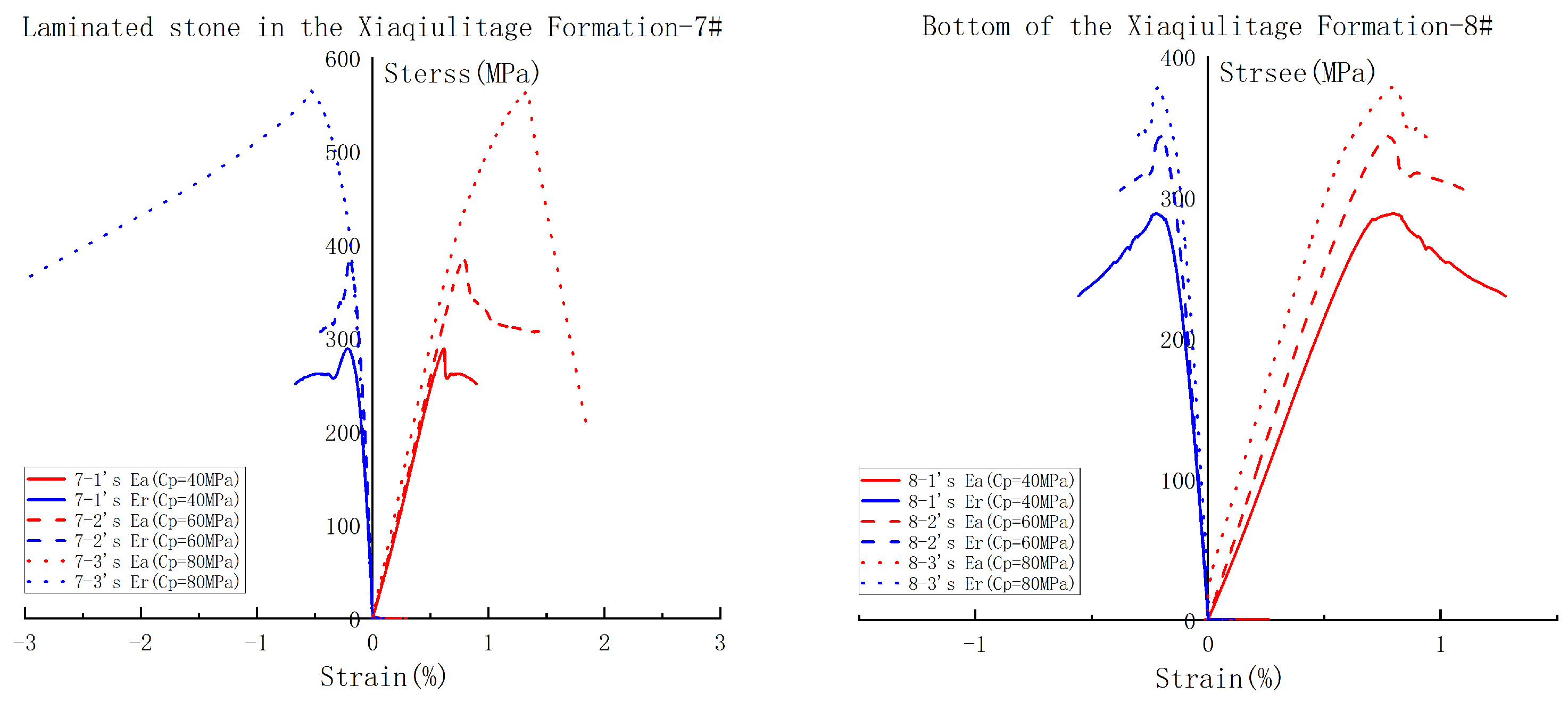
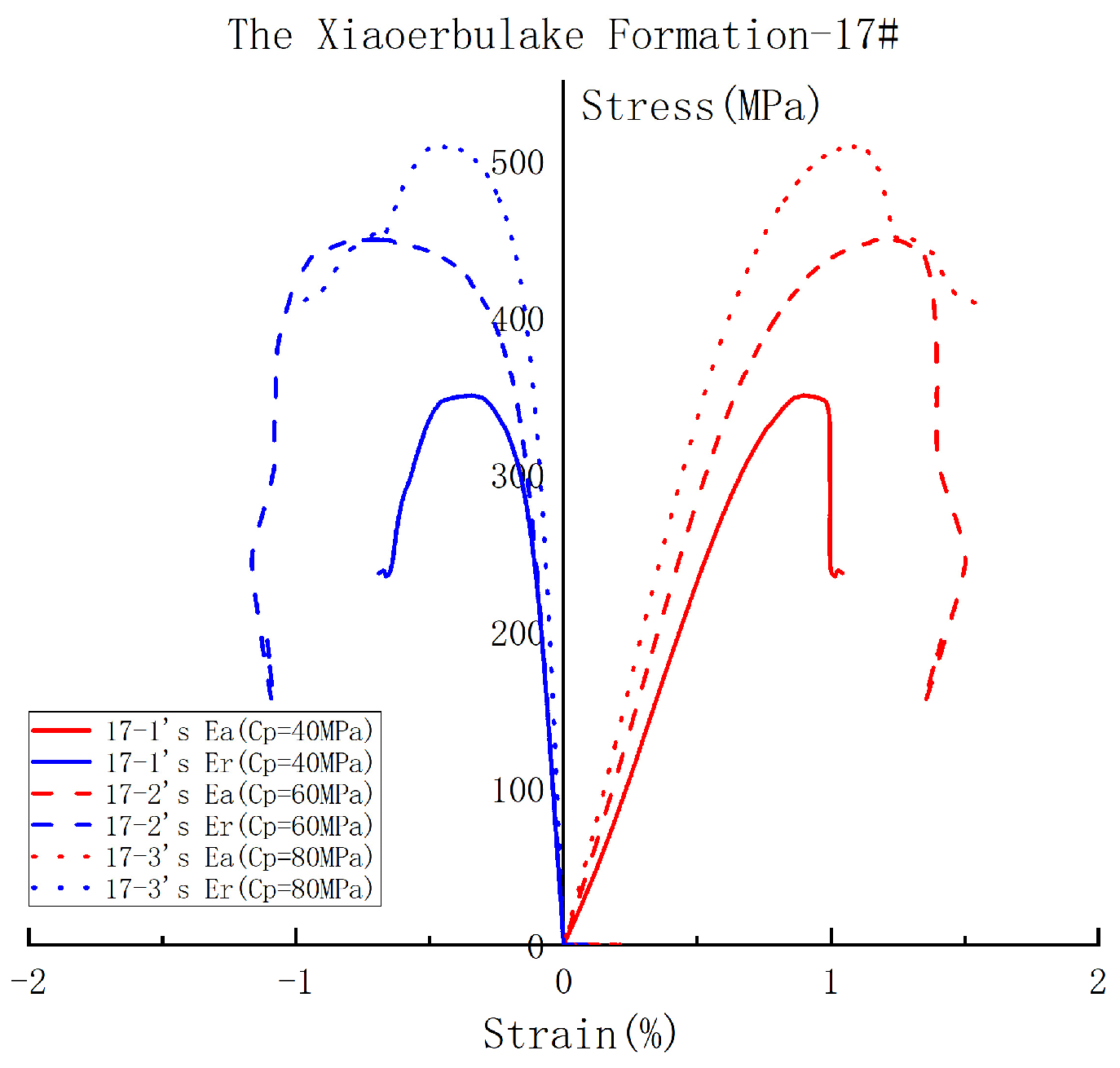
Outcrop samples from this formation predominantly consist of dolostones with dolomite content reaching 98.1%. Compared to dolostones from the Xiaqiulitage and Awatage formation under identical confining pressures, this unit exhibits higher compressive strength, cohesion, and internal friction angle. Its tensile strength measures 11.33 MPa, marginally lower than the 11.98 MPa observed in fractured dolostones of the Xiaqiulitage formation. Additionally, under 80 MPa confining pressure, the elastic modulus of these dolostones reaches 67.79 GPa, second only to the upper dolostones of the Xiaqiulitage formation. As illustrated in Figure 10, stress–strain curves reveal pronounced brittle characteristics both pre- and post-peak, reflecting their high compositional purity and dense structural integrity.

4.6. Yuertusi Formation

The Yuertusi formation, composed of organic-rich mudstones and carbonates, serves as a critical hydrocarbon source rock within the Tarim Basin. These sediments primarily accumulated along the western margin of the basin during the Early Cambrian, spanning the Precambrian–Cambrian transition. This interval holds significant scientific value for elucidating paleoenvironmental changes and mechanisms of organic matter accumulation/preservation during this pivotal geological transition [27].
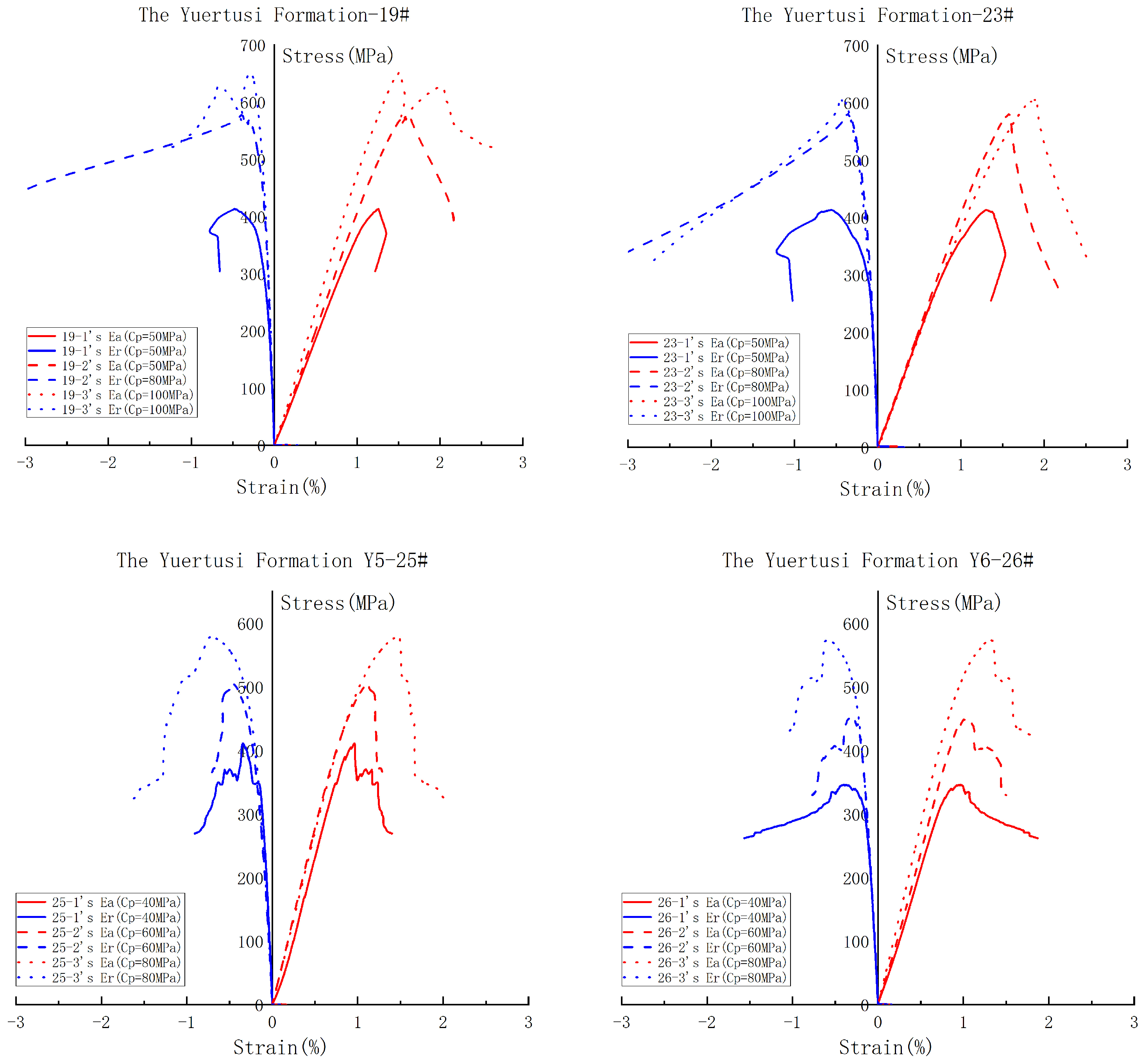
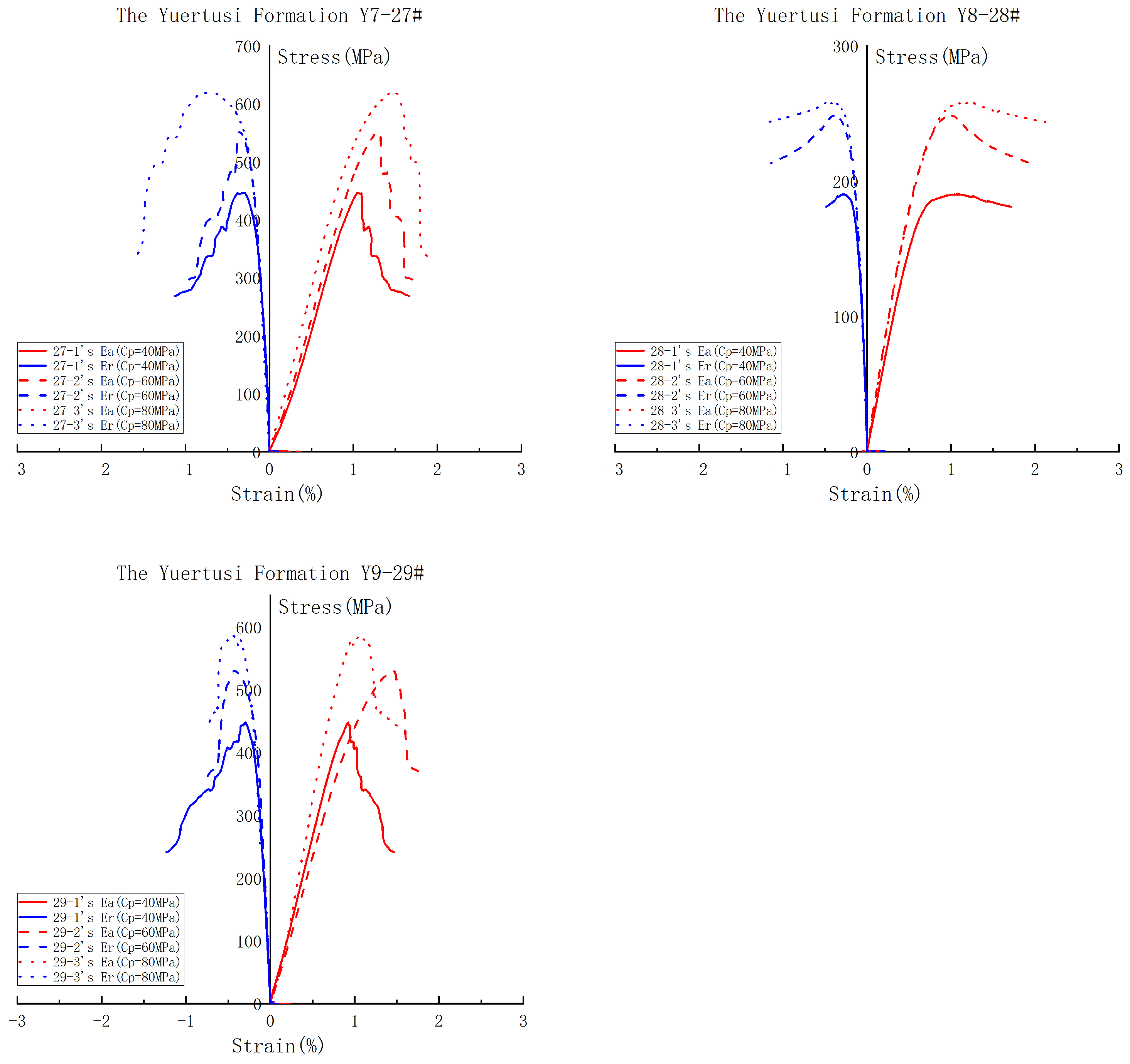
As illustrated in Figure 11, under 80 MPa confining pressure, dolostones from the Y7 layer of the Yuertusi formation exhibit the highest compressive strength at 618.4 MPa. By contrast, other samples demonstrate compressive strengths predominantly within the 573.2–585.4 MPa range and display linear elastic deformation during loading. Conversely, calcitic dolostones from the Y8 layer exhibit post-peak plastic deformation with the lowest compressive strength (258.4 MPa), marginally exceeding the 152.4 MPa recorded for the basal Awatage formation dolostones. Furthermore, dolostones from the Y9 layer exhibit significantly higher cohesion (84.90 MPa), substantially surpassing the 24.35 MPa of the Y6 layer dolostones. However, the Y9 layer displays the lowest internal friction angle (33.32°) among all tested specimens, while other samples exhibit relatively consistent friction angles ranging from 36.79° to 45.11°.
Brazilian splitting tests reveal that the Y8 layer outcrop in the Yuertusi formation exhibits the lowest tensile strength at 6.46 MPa. In contrast, dolostones from the Y5 layer achieve the highest tensile strength (21.69 MPa), representing the maximum value among all 19 outcrop samples. Tensile strengths of other outcrops range between 7.72 and 18.64 MPa.
Except for calcitic dolostones in the Y8 layer, which demonstrate a transition toward ductile behavior post-peak, specimens from other sections of the Yuertusi formation display pronounced brittle characteristics throughout pre- and post-peak stages. Regarding elastic modulus, Y9 layer dolostones exhibit higher values than other units, while Y8 layer calcitic dolostones show the lowest elastic modulus—marginally higher than that of the basal Awatage formation dolostones under identical confining pressures among the 19 outcrop groups.

4.7. Qigebulake Formation

The Qigebulake formation, constituting the uppermost lithostratigraphic unit of the Wushinanshan Group within the Sinian System, is primarily composed of light gray to gray massive and laminated dolostones. These dolostones occasionally exhibit cross-bedding structures and contain widespread microbial carbonates [28]. Consequently, the Qigebulake formation is recognized as a promising reservoir interval for deep to ultra-deep hydrocarbon exploration.
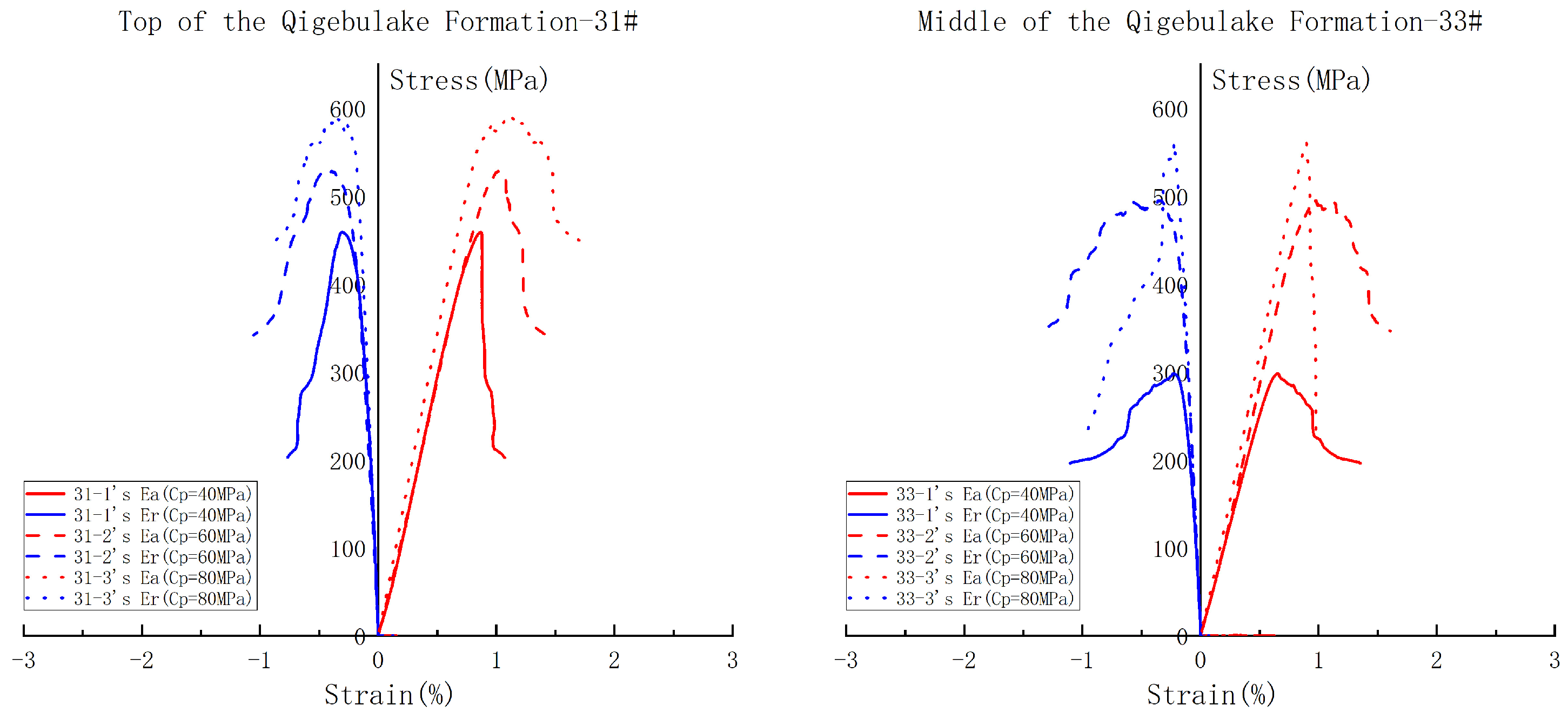
As shown in Figure 12, dolostones from the top and central sections of the Qigebulake formation exhibit significant differences in compressive strength under identical confining pressures. The top dolostones display compressive strengths ranging from 459.0 to 588.7 MPa, whereas central dolostones range between 298.5 and 562.4 MPa. This disparity diminishes with increasing confining pressure, and a similar convergence trend is observed for elastic modulus. The top dolostones exhibit cohesion of 91.89 MPa—the highest among all 19 outcrop samples and significantly exceeding the 10.92 MPa of central dolostones. Similarly, the tensile strength of central outcrops is approximately twice that of the top section (13.77 MPa vs. 6.94 MPa), demonstrating pronounced strength differentials.
Notably, both units exhibit nearly identical mineral compositions, indicating that the disparities in compressive/tensile strength and cohesion primarily stem from divergent pore architectures within the rock matrix. Similar to most outcrop samples, the two Qigebulake formation outcrops display pronounced brittle characteristics both pre- and post-peak.

5. Comparative Analysis of Mechanical Properties

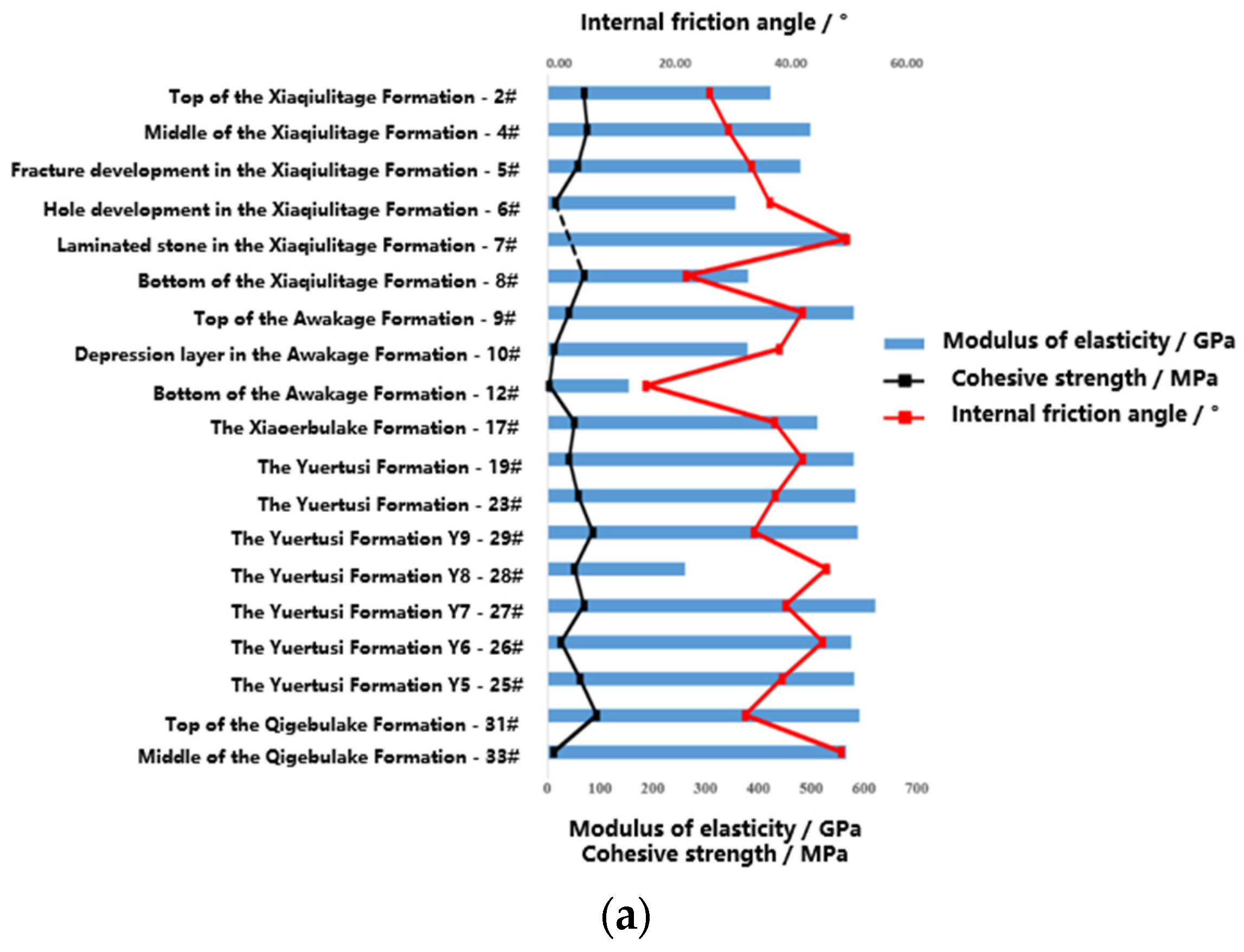
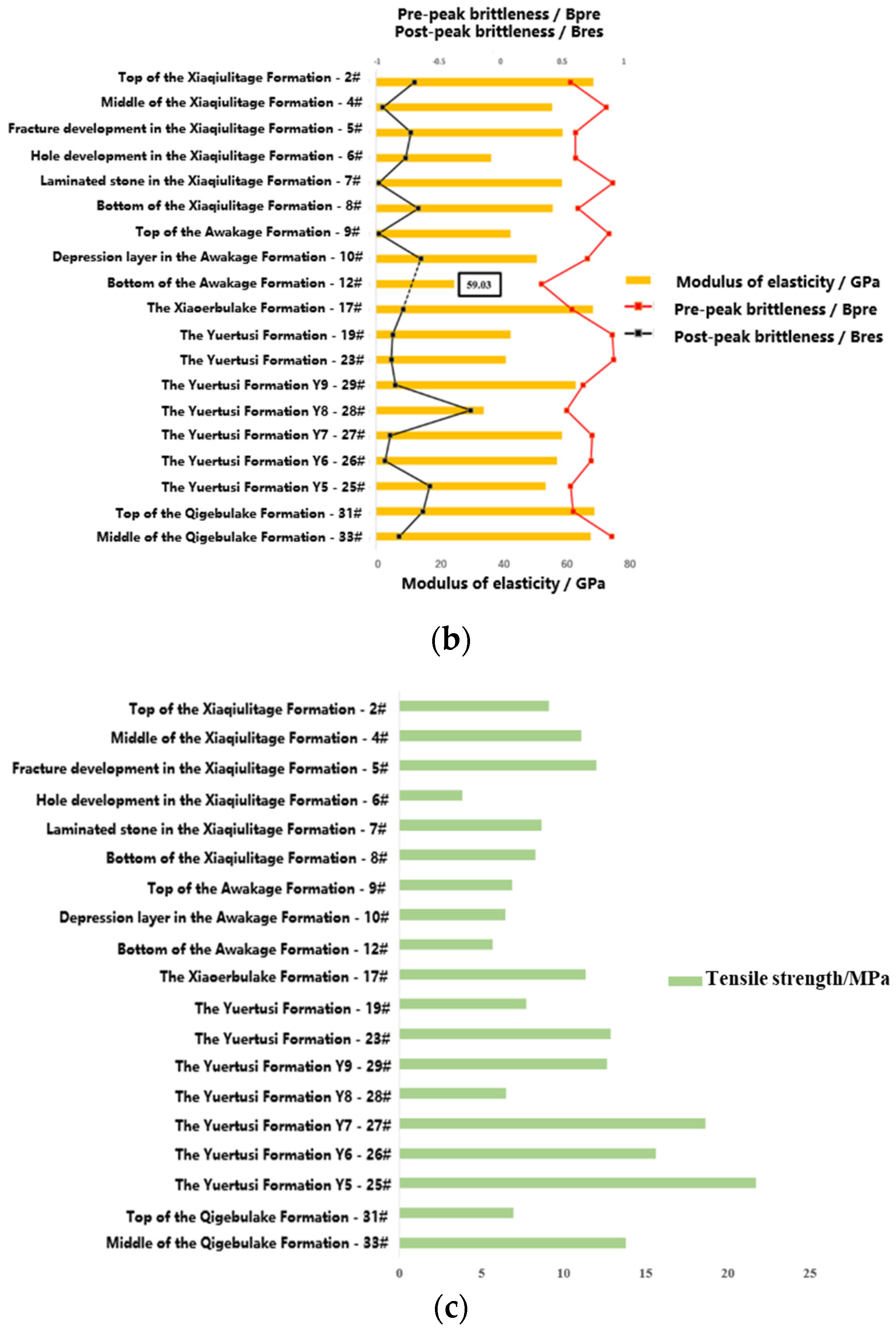
The strength characteristic parameters—including compressive strength, cohesion, and internal friction angle—derived from triaxial compression tests at 80 MPa confining pressure for each outcrop are presented in a bar–line chart in Figure 13a. Additionally, deformation parameters such as elastic modulus, pre-peak brittleness, and post-peak brittleness are illustrated in a bar–line chart in Figure 13b. Figure 13c is a histogram of tensile strength for different formations.
Based on Figure 13, the following conclusions are evident:
  • Vuggy rock samples from the Xiaqiulitage formation exhibit lower elastic modulus, compressive strengths, and tensile strengths, whereas rocks from the upper section demonstrate consistently higher elastic modulus.
  • Rock specimens from the Awatage formation generally display lower tensile strengths, with basal dolostones showing the lowest compressive strength, elastic modulus, cohesion, and internal friction angle among all 19 outcrop groups. Conversely, dolostones from the upper section exhibit relatively higher compressive strength.
  • Outcrop samples from the Xiaoerbulake and Qigebulake formation possess higher elastic modulus compared to other stratigraphic units.
  • Under identical confining pressures, outcrop samples from the Yuertusi formation (excluding Y8 calcitic dolostones) and Qigebulake formation typically achieve higher compressive strengths. Notably, outcrops from Layers Y5–Y7 of the Yuertusi formation yield the highest tensile strengths among all 19 groups.
  • Except for basal dolostones of the Awatage formation, all 18 outcrop groups display pronounced brittle characteristics pre- and post-peak across varying confining pressures. The basal Awatage dolostones exhibit unique nonlinear elastic deformation, demonstrating significant plasticity and ductility both pre- and post-peak under different confining pressures.

6. Discussion: From Compositional Control to Mechanical Prediction

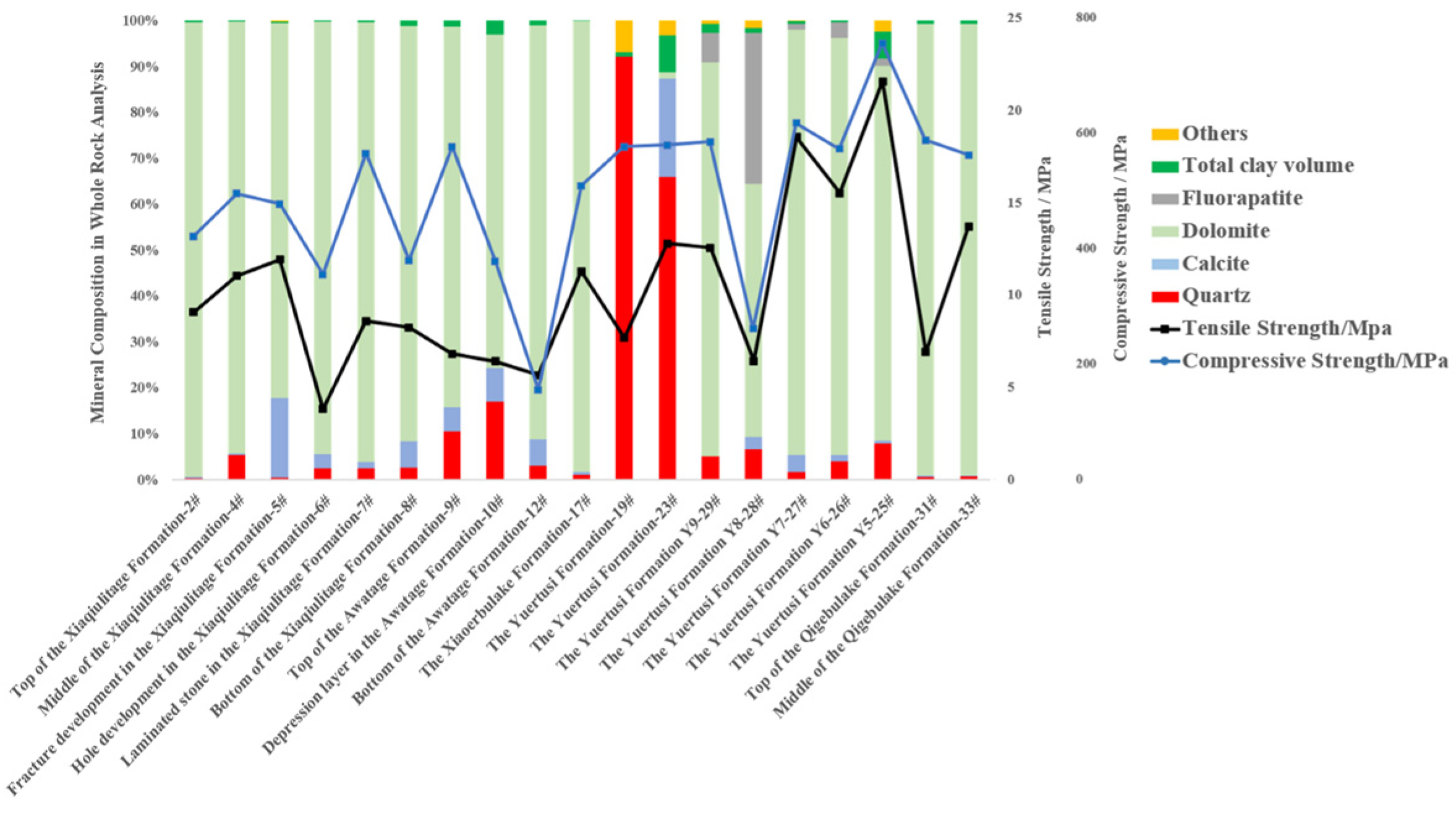
Comprehensive analysis of XRD mineral composition analyses, triaxial compression tests, and Brazilian splitting tests across the 19 outcrop groups reveals quantitative correlations between microscopic mineral constituents and macroscopic mechanical behaviors of rocks.
As depicted in Figure 14, the following mechanistic observations emerge.

6.1. Dominant Mineral Control and the Dual Role of Quartz

Dominant-mineral control and the dual role of quartz: when dolomite or quartz exceeds 90%, the framework of rigid grains resists deformation, giving high strengths. However, quartz at intermediate concentrations (6.6–17%) in a non-dolomitic matrix (e.g., Awatage depressed layer, sample 10, quartz 16.9%) correlates with reduced strength. In such rocks, isolated quartz grains likely act as stress concentrators in a weaker, calcite- or clay-rich matrix, facilitating microcrack initiation rather than reinforcing the frame.

6.2. Weakening by Calcareous and Phosphate Accessory Minerals

Calcite and fluorapatite systematically degrade strength. The Yuertusi Y8 calcitic silicalite (sample 28) with 32.9% fluorapatite and only 55.2% dolomite yields the lowest compressive strength within that formation and a post-peak ductile response, contrasting with the brittle, high-strength Y5 dolomite (sample 25, fluorapatite only 1.6%). Fluorapatite’s lower hardness and distinct cleavage likely promote grain-boundary sliding, accelerating strength loss.

6.3. Clay Mineralogy Implications

Though total clay is ≤8%, its composition varies. In high-strength dolomites (e.g., Y5, sample 25), clay is dominated by illite (82.1%); where interstratified illite–smectite is more abundant, swelling upon saturation could further reduce effective stress. As all tests were performed dry, the actual weakening by clays may be underestimated under in-situ conditions.

6.4. Mineral Composition and Brittleness

Pre-peak brittleness increases with the total content of framework minerals (dolomite + quartz). The highly brittle upper Awatage dolomite (sample 9) has >93% framework minerals, whereas the plastically deforming basal Awatage dolostone (sample 12) has only 93.3% dolomite + quartz and contains elevated calcite and clay. The low proportion of rigid minerals allows distributed damage rather than unstable fracture propagation, explaining the unique ductile behavior.

6.5. Beyond Bulk Mineralogy

Almost identical bulk mineralogy (e.g., Qigebulake samples 31 and 33, both ~98.5% dolomite) can yield compressive strengths differing by nearly 200 MPa at 80 MPa confining pressure and a cohesion spanning 10.9–91.9 MPa. This highlights that pore structure, grain size, and microcrack density—not captured by XRD alone—exert a first-order control on mechanical properties and must be incorporated in future work.
In summary, quantitative XRD establishes the essential compositional baseline, but interpreting mechanical behavior requires considering accessory minerals, textural heterogeneity, and fluid–rock interactions.

7. Limitations

While this study provides systematic mechanical and mineralogical data for Cambrian–Sinian carbonate outcrops in the Tarim Basin, several limitations should be acknowledged.
  • Outcrop versus subsurface conditions.
    All samples are outcrop analogues, not downhole cores. Although outcrops capture primary lithological and textural heterogeneity, they lack in-situ stress magnitudes, pore pressure, and temperature conditions typical of ultra-deep reservoirs. Our experiments were conducted under dry conditions at room temperature, meaning that the potential weakening effects of pore fluid and temperature-dependent ductility are not represented.
  • Limited sample size and stratigraphic coverage.
    Only 19 samples were tested, with some formations represented by a single lithological type. Statistical population analysis is therefore constrained. Additionally, the mineral compositions are strongly skewed toward dolomite-rich lithologies; few samples cover clay-rich, silica-rich, or evaporite end-members that may be mechanically distinct.
  • Single-stage mechanical testing.
    Each sample was tested at only three discrete confining pressures. A more complete failure envelope would require testing over a wider range of confining pressures and additional loading paths.
  • Limited exploration of clay mineral effects.
    Total clay content is low (≤8%). However, the composition of clay minerals (illite, kaolinite, illite–smectite mixed layers) varies. Under dry test conditions, clay swelling and associated strength reduction were not activated. Therefore, the results likely underestimate the mechanical impact of clay minerals under wet in-situ conditions.

8. Conclusions

Through rock mechanical experiments and analyses on 19 outcrop samples from five Cambrian and Sinian formations, this study investigates the mechanical failure characteristics (including triaxial compressive and tensile behaviors) and the influence of mineral composition on rock mechanical properties. The principal conclusions are as follows:
  • Large inter-formation and intra-formation strength variations exist.
    The highest compressive strength (758.5 MPa at 80 MPa confining pressure) is observed in the top Qigebulake dolomite (sample #31). The lowest compressive strength (152.4 MPa at 80 MPa) is found in the basal Awatage dolostone (sample #12). Tensile strength ranges from 3.85 MPa (vuggy Xiaqiulitage dolomite, sample #6) to 21.69 MPa (Yuertusi Y5 dolomite, sample #25). These ranges confirm that mechanical properties are not formation-specific but are controlled by local texture and accessory minerals.
  • Mineral composition exerts a dominant but non-linear control on strength.
    When dolomite or quartz exceeds 90%, compressive and tensile strengths are maximized (e.g., samples #2, #17, #31). However, in rocks where dolomite is not the dominant phase (e.g., 72.7% dolomite + 16.9% quartz in sample #10), added quartz acts as a stress concentrator, reducing strength relative to purer dolomites. Calcareous minerals (calcite, fluorapatite) systematically degrade strength: the Y8 sample with 32.9% fluorapatite has only 55% of the compressive strength of the Y5 sample with 1.6% fluorapatite under the same confining pressure.
  • A unique brittle–ductile transition is identified and linked to fluorapatite and texture.
    Most samples (18 out of 19) display brittle failure (pre-peak brittleness index Bpre > 0.5, post-peak Bres negative). The basal Awatage dolostone (sample #12) exhibits clear plastic behavior (Bres positive, 55.99–64.42), making it a rare natural example of ductile carbonate. The Y8 calcitic silicalite (28.0% calcite + 32.9% fluorapatite) shows a transitional post-peak ductile response (Bres = −0.12 to −0.41), suggesting that high fluorapatite content promotes grain-boundary sliding.
  • Bulk mineralogy alone is insufficient to predict mechanical behavior; pore architecture is a first-order control.
    Two Qigebulake samples (#31 and #33) with nearly identical dolomite content (~98.5%) differ in compressive strength by ~185 MPa (758.5 vs. 573.2 MPa at 80 MPa) and in cohesion by a factor of 8.4 (91.89 vs. 10.92 MPa). This discrepancy, invisible to XRD, must be attributed to differences in pore structure, grain size, or microcrack density—emphasizing the need for multi-scale characterization in future work.
  • Practical implications for ultra-deep drilling
    The quantitative dataset and derived mechanistic rules provide a reference for predicting formation strength, fracture initiation pressure, and borehole stability in Cambrian–Sinian carbonates of the Tarim Basin. In particular, the discovery that fluorapatite-rich layers may behave ductilely suggests that such intervals could act as stress barriers or plastic seals, influencing hydraulic fracture containment.

Author Contributions

Conceptualization, C.W. and Y.X.; methodology, C.W. and N.L.; software, J.L. and W.F.; validation, C.W. and N.L.; formal analysis, C.W. and W.F.; investigation, N.L., Y.J. and Y.L.; resources, Y.J. and Y.L.; data curation, C.W., N.L., Y.J., Y.L. and J.L.; writing—review and editing, C.W.; visualization, J.L. and W.F.; supervision, Y.X.; project administration, Y.X.; funding acquisition, Y.J. and Y.X. All authors have read and agreed to the published version of the manuscript.

Funding

Funding: This research was funded by the National Natural Science Foundation of China, grant numbers 52374021 and U24B2029. The APC was funded by the National Natural Science Foundation of China.

Data Availability Statement

The data that support the findings of this study are available from the corresponding author upon reasonable request.

Acknowledgments

The authors sincerely thank the journal editors and anonymous reviewers for their constructive comments and valuable suggestions.

Conflicts of Interest

Chunsheng Wang, Ning Li and Wentong Fan are employees of PetroChina Tarim Oilfield Company and China National Petroleum Corporation. The paper reflects the views of the scientists and not the company.

References

  1. Wang, H.; Huang, H.; Bi, W.; Ji, G.; Zhou, B.; Zhuo, L. Deep and ultra-deep oil and gas well drilling technologies: Progress and prospect. Nat. Gas Ind. B 2022, 9, 141–157. [Google Scholar] [CrossRef]
  2. Zeng, L.; Shi, J.; Ma, Q.; Lyu, W.; Dong, S.; Cao, D.; Wei, H. Strike-slip fault control on karst in ultra-deep carbonates, Tarim Basin, China. AAPG Bull. 2024, 108, 235–260. [Google Scholar] [CrossRef]
  3. Zeng, Y.; Chen, J.; Li, D.; Li, X. Study on rock burst behavior and tendency identification of surrounding rocks in hard and brittle formations of deep and ultra-deep wells. IOP Conf. Ser. Earth Environ. Sci. 2020, 570, 032056. [Google Scholar] [CrossRef]
  4. Zhang, R.; Sun, J.; Cheng, Z.; Xin, B.; Chen, H. Mechanical behavior and microstructural characteristics of ultradeep tight carbonate rocks with different burial depths. Front. Earth Sci. 2022, 10, 858899. [Google Scholar] [CrossRef]
  5. Yang, W.; Wang, B.; Yao, J.; Ranjith, P.G.; Zhang, X. Experimental study on the physical and mechanical properties of carbonatite rocks under high confining pressure after thermal treatment. Deep Undergr. Sci. Eng. 2025, 4, 105–118. [Google Scholar] [CrossRef]
  6. Wang, Z.; Zhu, H.; Lei, M.; Wu, Y.; Ji, P. Study on in-situ rock mechanical behavior and wellbore stability of ultra-deep carbonate formations in A 10000-meter well. In Proceedings of the 59th US Rock Mechanics/Geomechanics Symposium, Atlanta, GA, USA, 23–26 June 2025; ARMA: Alexandria, VA, USA, 2025. [Google Scholar]
  7. Liu, H.; Cui, S.; Meng, Y.; Han, Z.; Yang, M. Study on rock mechanical properties and wellbore stability of fractured carbonate formation based on fractal geometry. ACS Omega 2022, 7, 43022–43035. [Google Scholar] [CrossRef] [PubMed]
  8. Wu, D.; Li, B.; Wu, J.; Hu, G.; Gao, X.; Lu, J. Influence of mineral composition on rock mechanics properties and brittleness evaluation of surrounding rocks in soft coal seams. ACS Omega 2024, 9, 1375–1388. [Google Scholar]
  9. Deng, T.; Zhao, J.; Yin, H.; Xie, Q.; Gou, L. Mechanical characterization of main minerals in carbonate rock at the micro scale based on nanoindentation. Processes 2024, 12, 272. [Google Scholar] [CrossRef]
  10. Wang, Q.; Zhang, Y.; Xie, Z.; Zhao, Y.; Zhang, C.; Sun, C.; Wu, G. The advancement and challenges of seismic techniques for ultra-deep carbonate reservoir exploitation in the Tarim Basin of Northwestern China. Energies 2022, 15, 7653. [Google Scholar] [CrossRef]
  11. Dong, X.; Hampson, G.J.; Lonergan, L.; Wang, Y. Seismic-attribute-driven analysis of an ultra-deep carbonate reservoir: Middle Cambrian to Middle Ordovician strata, north-central Tarim Basin, northwest China. J. Sediment. Res. 2024, 94, 871–894. [Google Scholar] [CrossRef]
  12. Chaddha, A.S.; Sharma, A.; Singh, N.K. Clay minerals identification in rock varnish by XRD: A one-step reduction approach. MethodsX 2021, 8, 101511. [Google Scholar] [CrossRef] [PubMed]
  13. Kang, Y.; Zhu, R.; Liu, K.; Zhang, J.; Zhang, S. Detrital and authigenic clay minerals in shales: A review on their identification and applications. Heliyon 2024, 10, e39239. [Google Scholar] [CrossRef]
  14. Lavina, B.; Dera, P.; Downs, R.T. Modern X-ray diffraction methods in mineralogy and geosciences. Rev. Mineral. Geochem. 2014, 78, 1–31. [Google Scholar] [CrossRef]
  15. SY/T 5163-2018; Analysis Method for Clay Minerals and Common Non-Clay Minerals in Sedimentary Rocks by X-ray Diffraction. Petroleum Industry Press: Beijing, China, 2018.
  16. Huo, Z.; Zhang, J.; Li, P.; Tang, X.; Yang, X.; Qiu, Q.; Dong, Z.; Li, Z. An improved evaluation method for the brittleness index of shale and its application—A case study from the southern north China basin. J. Nat. Gas Sci. Eng. 2018, 59, 47–55. [Google Scholar] [CrossRef]
  17. Guo, Y.; Wang, L.; Chang, X. Study on the damage char.acteristics of gas-bearing shale under different unloading stress paths. PLoS ONE 2019, 14, e0224654. [Google Scholar] [CrossRef] [PubMed]
  18. Li, Q.; Chen, M.; Zhou, Y.; Jin, Y.; Wang, F.P.; Zhang, R. Rock mechanical properties of shale gas reservoir and their influences on hydraulic fracture. In Proceedings of the International Petroleum Technology Conference, Beijing, China, 26–28 March 2013; International Petroleum Technology Conference: Richardson, TX, USA, 2013. [Google Scholar]
  19. Ye, Y.; Tang, S.; Xi, Z. Brittleness evaluation in shale gas reservoirs and its influence on fracability. Energies 2020, 13, 388. [Google Scholar] [CrossRef]
  20. Li, Y.; Long, M.; Zuo, L.; Li, W.; Zhao, W. Brittleness evaluation of coal based on statistical damage and energy evolution theory. J. Pet. Sci. Eng. 2019, 172, 753–763. [Google Scholar] [CrossRef]
  21. Li, B.; Xia, Q.; Peng, J.; Yang, S.; Xu, Q.; Zeng, L. Characteristics and dolomitization of the Lower Qiulitage Group reservoir in Bachu Uplift, Tarim Basin, China. Earth Sci. Res. J. 2019, 23, 199–208. [Google Scholar] [CrossRef]
  22. Wei, M.; Bao, Z.; Munnecke, A.; Liu, W.; Harrison, G.W.M.; Zhang, H.; Zhang, D.; Li, Z.; Xu, X.; Lu, K.; et al. Paleoenvironment of the Lower–Middle Cambrian evaporite series in the Tarim Basin and its impact on the organic matter enrichment of Shallow Water source rocks. Minerals 2021, 11, 659. [Google Scholar] [CrossRef]
  23. Zhang, K.; You, X.; Wu, Y.; Zhao, Y.; Wang, J. The main controlling factors on the evolution of the Cambrian carbonate platform in the Tarim Basin and its implications for the distribution of ultra-deep dolomite reservoirs. Minerals 2023, 13, 245. [Google Scholar] [CrossRef]
  24. Zheng, J.; Zhu, Y.; Huang, L.; Yang, G.; Hu, F. Geochemical characteristics and their geological significance of lower Cambrian Xiaoerblak Formation in northwestern Tarim Basin, China. Minerals 2022, 12, 781. [Google Scholar] [CrossRef]
  25. Zheng, J.; Pan, W.; Shen, A.; Yuan, W.; Huang, L.; Ni, X.; Zhu, Y. Reservoir geological modeling and significance of Cambrian Xiaoerblak Formation in Keping outcrop area, Tarim Basin, NW China. Pet. Explor. Dev. 2020, 47, 536–547. [Google Scholar] [CrossRef]
  26. Li, Q.; Jiang, Z.; Hu, W.; You, X.; Hao, G.; Zhang, J.; Wang, X. Origin of dolomites in the Lower Cambrian Xiaoerbulak Formation in the Tarim Basin, NW China: Implications for porosity development. J. Asian Earth Sci. 2016, 115, 557–570. [Google Scholar] [CrossRef]
  27. Gao, Z.; Shi, J.; Lv, J.; Chang, Z. High-frequency sequences, geochemical characteristics, formations, and distribution predictions of the lower Cambrian Yuertusi Formation in the Tarim Basin. Mar. Pet. Geol. 2022, 146, 105966. [Google Scholar] [CrossRef]
  28. Bao, Z.-D.; Ji, H.-C.; Wang, Y.; Li, Z.-F.; Liang, T.; Niu, B.; Wei, M.-Y.; Lu, K.; Shi, Y.-Q.; Zhang, H.; et al. The primary dolostone in the Meso-Neoproterozoic: Cases study on platforms in China. J. Palaeogeogr. 2022, 11, 151–172. [Google Scholar] [CrossRef]
Figure 1. Outcrop sampling site.
Minerals 16 00553 g001
Figure 2. Collecting outcrops.
Minerals 16 00553 g002
Figure 3. Experimental samples of mineral components. (The numbers marked on the sample bags denote sample IDs used for sample identification).
Minerals 16 00553 g003
Figure 4. Bruker D8 DISCOVER Discover X-ray Diffractometer.
Minerals 16 00553 g004
Figure 5. Experimental results of mineral compositions of each group of outcrops. (a) Whole-rock analysis histogram; (b) Clay analysis histogram. (“#” denotes the specimen number).
Minerals 16 00553 g005
Figure 6. Experimental equipment and sample preparation. (a) Triaxial compression rock sample preparation; (b) Triaxial compression test, Brazilian splitting test equipment; (c) Brazilian splitting rock sample preparation; (d) Brazilian splitting test frame. (The numbers marked on the specimens denote specimen IDs used for sample identification).
Minerals 16 00553 g006aMinerals 16 00553 g006b
Figure 7. Typical Stress–Strain Curve of Rocks. (oint A denotes the elastic limit or yield point; point B denotes the peak-strength or failure point; point C denotes the residual-strength point; and point D denotes the inelastic strain obtained after unloading from the peak state. E, H, and M represent the elastic modulus, hardening modulus, and post-peak softening modulus, respectively).
Minerals 16 00553 g007
Figure 8. Triaxial compression stress-strain curves of the Xiaqiulitage formation. (“#” denotes the specimen number).
Minerals 16 00553 g008aMinerals 16 00553 g008b
Figure 9. Triaxial compression stress–strain curves of the Awatage formation. (“#” denotes the specimen number).
Minerals 16 00553 g009
Figure 10. Triaxial compression stress–strain curves of the Xiaoerbulake formation. (“#” denotes the specimen number).
Minerals 16 00553 g010
Figure 11. Triaxial compression stress–strain curves of the Yuertusi formation. (“#” denotes the specimen number).
Minerals 16 00553 g011aMinerals 16 00553 g011b
Figure 12. Triaxial compression stress–strain curves of the Qigebulak formation. (“#” denotes the specimen number).
Minerals 16 00553 g012
Figure 13. Summary diagram of compressive and tensile test data. (a) 80 MPa compressive strength characteristics under confining pressure; (b) 80 MPa deformation characteristic parameters under confining pressure; (c) tensile strength characteristics. (“#” denotes the specimen number).
Minerals 16 00553 g013aMinerals 16 00553 g013b
Figure 14. Relationship between micro mineral composition and macro mechanical properties of rocks. (“#” denotes the specimen number).
Minerals 16 00553 g014
Table 1. Distribution of collected outcrop horizons.
Sample NumberHorizonLocation/Feature
2Xiaqiulitage formationTop
4Middle
5Fracture development
6Hole development
7Stromatolite
8Bottom
9Awatage formationTop
10Depressed layer
12Bottom
17Xiaoerbulake formation/
19Yuertusi formation/
23/
25Y5
26Y6
27Y7
28Y8
29Y9
31Qigebulake formationTop
33Middle
The symbols Y5, Y6, Y7, Y8, and Y9 denote Layer 5, Layer 6, Layer 7, Layer 8, and Layer 9 of the Yuertusi formation, respectively.
Table 2. Proportions of main minerals and lithology of each group of outcrops.
Sample
Number
HorizonLocation/FeatureMineral Content (%)Lithology
QuartzCalciteDolomiteFluorapatiteClay
Minerals
Others
2Xiaqiulitage
formation
Top0.30.398.9/0.5/Dolomite
4Middle5.40.394/0.3/Dolomite
5Fracture development0.417.481.6/0.30.3Calcitic dolomite
6Hole development2.43.194.2/0.3/Dolomite
7Stromatolite2.41.495.7/0.5/Dolomite
8Bottom2.65.790.5/1.2/Dolomite
9Awatage
formation
Top10.55.382.9/1.3/Dolomite
10Depressed layer16.97.472.7/3/Siliceous dolomite
12Bottom3.15.690.2/1.1/Dolomite
17Xiaoerbulake
formation
/10.798.1/0.2/Dolomite
19Yuertusi
formation
/92.1///16.9Silicalite
23/6621.31.4/83.3Calcitic silicalite
25Y57.80.681.71.65.82.5Dolomite
26Y63.91.490.93.40.4/Dolomite
27Y71.63.892.61.30.50.2Dolomite
28Y86.62.655.232.911.7Calcitic silicalite
29Y95.1/85.86.41.90.8Dolomite
31Qigebulake
formation
Top0.50.398.5/0.7/Dolomite
33Middle0.70.298.4/0.7/Dolomite
Table 3. Compressive strength test results of outcrop specimens.
Sample
Description
Sample NumberConfining Pressure
/MPa
Elastic
Modulus
/GPa
Poisson’s RatioCompressive Strength
/MPa
Pre-peak Brittleness
/Bpre
Post−peak Brittleness
/Bres
Cohesion
/MPa
Internal Friction Angle
Top of Xiaqiulitage
formation
2-14053.480.201317.40.62−0.8567.8126.14
2-26056.340.281378.60.51−0.70
2-38067.930.252420.40.52−0.70
Middle of
Xiaqiulitage
formation
4-14043.490.223378.70.58−0.8073.8629.18
4-26054.400.172403.90.55−0.79
4-38055.090.257494.80.80−0.95
Fracture development in Xiaqiulitage formation5-14055.330.277341.30.57−0.7255.6932.95
5-26056.390.263406.10.80−0.99
5-38058.330.298476.70.56−0.73
Hole development in Xiaqiulitage formation6-14028.640.3362000.52−0.7714.0935.88
6-26035.940.389302.10.56−0.74
6-38036.060.463353.30.56−0.77
Laminated stone in Xiaqiulitage formation7-14052.550.271288.80.66−0.89/48.36
7-26054.300.221383.50.53−0.79
7-38058.180.279565.40.85−0.98
Bottom of
Xiaqiulitage
formation
8-14045.200.243289.10.58−0.6968.0722.38
8-26050.270.224343.90.58−0.68
8-38055.290.224378.30.58−0.67
Top of
Awatage
formation
9-14038.160.171413.10.79−0.9639.7941.20
9-26042.010.129577.10.82−0.98
9-38049.030.147653.40.81−0.98
Depressed layer in Awatage
formation
10-14035.740.266212.50.55−0.6311.7737.45
10-26048.830.242292.40.55−0.82
10-38050.190.275376.60.65−0.65
Bottom of
Awatage formation
12-14015.990.18582.40.1764.422.0815.83
12-26017.500.19296.70.3655.99
12-38024.490.210152.40.3059.03
Xiaoerbulake formation17-14050.150.230350.10.55−0.6249.7736.67
17-26058.280.283449.50.53−0.87
17-38067.790.239508.70.53−0.79
Yuertusi formation19-15038.160.171411.10.71−0.7439.7941.20
19-28042.010.1295050.85−0.87
19-311049.030.147578.50.51−0.48
23-15039.070.148346.20.75−0.7856.9236.79
23-28040.600.176450.10.86−0.88
23-311036.780.176573.20.80−0.82
Yuertusi formation
Y5
25-14051.640.213446.70.59−0.6460.3937.90
25-26054.090.317550.90.72−0.71
25-38053.090.290618.40.52−0.58
Yuertusi formation
Y6
26-14046.180.218190.20.50−0.5524.3544.46
26-26050.940.239248.20.61−0.92
26-38056.580.278258.40.68−0.93
Yuertusi formation
Y7
27-14052.050.238447.90.61−0.7467.8438.47
27-26053.960.227529.90.59−0.71
27-38058.100.243585.40.69−0.89
Yuertusi formation
Y8
28-14029.840.2344590.36−0.1249.7745.11
28-26034.670.274528.70.55−0.41
28-38033.640.250588.70.49−0.26
Yuertusi formation
Y9
29-14055.100.242298.50.79−0.9284.9033.32
29-26061.820.2364950.54−0.84
29-38062.350.278562.40.62−0.85
Top of
Qigebulake formation
31-14063.040.265411.10.68−0.7691.8931.91
31-26060.660.2555050.58−0.61
31-38068.230.218758.50.54−0.63
Middle of
Qigebulake formation
33-14051.290.275346.20.54−0.5610.9247.46
33-26061.980.259450.10.52−0.51
33-38067.030.224573.20.84−0.82
Table 4. Test results of tensile strength of outcrop samples.
Sample DescriptionSample NumberRock Sample Diameter
/mm
Rock Sample Thickness
/mm
Peak Load
/KN
Tensile Strength
/MPa
Average Tensile Strength
/MPa
Top of
Xiaqiulitage formation
2-425.5511.394.39.4079.11
2-525.5211.334.08.807
Middle of
Xiaqiulitage formation
4-425.6111.184.19.11611.08
4-525.7711.366.013.048
Fracture development in
Xiaqiulitage formation
5-425.5612.486.112.17411.98
5-525.7811.945.711.789
Pore development in
Xiaqiulitage formation
6-425.5412.111.42.8823.85
6-526.0812.162.44.818
Stromatolites in
Xiaqiulitage formation
7-425.7011.094.08.9358.64
7-525.5711.043.78.344
Bottom of
Xiaqiulitage formation
8-425.6311.854.08.3858.29
8-525.5512.474.18.193
Top of
Awatage formation
9-425.7211.333.16.7736.84
9-525.7511.813.36.908
Depressed layer in
Awatage formation
10-425.768.772.57.0456.45
10-525.5310.222.45.856
Bottom of
Awatage formation
12-425.5211.802.85.9205.68
12-525.5311.902.65.448
Xiaoerbulake formation17-425.6011.755.611.85211.33
17-525.5112.005.210.814
Yuertusi formation19-425.8412.113.77.5287.72
19-525.6612.544.07.914
23-425.8412.086.112.44112.86
23-525.6311.976.413.281
Yuertusi formation
Y5
25-425.5512.9911.622.25121.68
25-525.8312.610.821.126
Yuertusi formation
Y6
26-425.9311.558.217.43115.60
26-525.5112.516.913.765
Yuertusi formation
Y7
27-425.5811.869.119.0918.64
27-525.7711.958.818.193
Yuertusi formation
Y8
28-425.6712.283.16.2616.46
28-525.6012.313.36.667
Yuertusi formation
Y9
29-425.5412.185.711.66512.62
29-525.6911.866.513.582
Top of
Qigebulake formation
31-425.6111.143.57.8106.94
31-525.6912.233.06.079
Qigebulake formation33-425.8211.516.313.49613.77
33-525.6611.306.414.052
Disclaimer/Publisher’s Note: The statements, opinions and data contained in all publications are solely those of the individual author(s) and contributor(s) and not of MDPI and/or the editor(s). MDPI and/or the editor(s) disclaim responsibility for any injury to people or property resulting from any ideas, methods, instructions or products referred to in the content.