Review

Progress in the Modification and Utilization of Coal Gangue

Engineering Research Center of Ministry of Education for Geological Carbon Storage and Low Carbon Utilization of Resources, Beijing Key Laboratory of Materials Utilization of Nonmetallic Minerals and Solid Wastes, National Laboratory of Mineral Materials, Hebei Key Laboratory of Resource Low-Carbon Utilization and New Materials, School of Materials Science and Technology, China University of Geosciences (Beijing), Beijing 100083, China
*
Authors to whom correspondence should be addressed.
Minerals 2026, 16(3), 329; https://doi.org/10.3390/min16030329
Submission received: 22 January 2026 / Revised: 15 March 2026 / Accepted: 16 March 2026 / Published: 20 March 2026
(This article belongs to the Special Issue Clay Minerals for Environmental Remediation and Sustainable Energy)

Abstract

Coal gangue, the primary solid by-product of coal mining, presents severe environmental challenges due to massive accumulation. At the same time, it represents potential as a secondary resource if properly utilized. This review systematically summarizes the mineralogical characteristics, modification strategies, and utilization pathways of coal gangue. Current treatment methods, including thermal, chemical, and microbial activation, are discussed, highlighting their respective efficiencies, economic feasibility, and environmental impacts. Furthermore, this review emphasizes the transition of coal gangue from low-value disposal to high-value utilization. Representative applications are summarized, including its use as a precursor for advanced construction materials, as a functional material for environmental remediation, and as a feedstock for energy recovery. Finally, the major technological challenges and research gaps are identified. Future development should focus on intelligent sorting technologies, low-carbon activation processes, and synergistic multi-waste integration. These directions are expected to promote the transformation of coal gangue from an environmental liability into a valuable resource for the circular economy.

1. Introduction

Coal gangue is the primary solid by-product of coal mining and processing. It originates from sedimentary materials in coal-bearing strata and is produced as industrial waste through mechanical mining and beneficiation. The massive accumulation of this material poses multifaceted environmental challenges [1]. Extensive stockpiling not only occupies critical land resources but also heightens the risk of geological hazards such as landslides. In addition, long-term weathering can facilitate the release of hazardous components, including sulfides and potentially toxic elements (PTEs) [2,3,4] (among others), to leach into surrounding soil and water systems, creating severe risks to environmental quality and threatening human health.
The scientific investigation of coal gangue, historically referred to as colliery spoil or mine stone, dates back well before the 21st century. Foundational studies from the mid-20th century laid the groundwork for characterizing its basic mineralogical composition and exploring preliminary utilization approaches, including mine backfilling and brick production [5]. During the 1990s, European researchers systematically evaluated the geotechnical and physicochemical properties of coal gangue, validating its application in civil engineering applications like road embankments and hydraulic structures [6,7]. However, these early approaches were largely confined to bulk disposal and low-value utilization. With increasingly stringent environmental regulations and growing interest in resource recovery, research attention gradually shifted toward more efficient utilization strategies. In the early 2000s, studies began to investigate the chemical and thermal activation of aluminosilicate phases in coal gangue. For instance, studies elucidating the dehydroxylation of kaolinite to form reactive metakaolin provided an important basis for the coal gangue-based pozzolanic materials [8]. At the same time, pioneering work on alkaline hydrothermal synthesis demonstrated that coal gangue could serve as a precursor for the preparation of zeolite materials with high-cation-exchange capacity [9,10]. These seminal milestones provided the essential framework for the field’s transition toward a circular economy. Based on these research foundations, recent studies have developed from simple primary utilization to high-value applications [11]. Contemporary investigations now increasingly focus on microscopic modification mechanisms [12,13] and multidisciplinary integration [14,15], aiming to overcome the long-standing technical and economic limitations.
To highlight the technological developments in this field, this review concentrates on studies published since 2000. It summarizes the progress of various treatment approaches, including physical, chemical, microbial, and thermal treatment technologies, and evaluates their roles in mitigating environmental risks and promoting resource utilization. Particular attention is given to the utilization of coal gangue in construction materials, mine backfilling, land reclamation, and the production of value-added materials. Overall, this review aims to provide a systematic overview of current research progress and potential utilization pathways for coal gangue and its associated clay minerals in the context of sustainable resource management.

2. Formation and Physical/Chemical Properties of Coal Gangue

2.1. Formation of Coal Gangue

The formation of coal gangue involves multiple stages, including coalification, diagenesis, subsequent mining, and processing activities. Coal gangue mainly originates from non-coal rock materials within coal-bearing strata that have been affected by sedimentation, diagenesis, and subsequent mining activities [16,17]. From a geological perspective, coal gangue originates from argillaceous, silty, or tuffaceous sediments incorporated into peat during the accumulation of plant material in ancient swamp environments. During peat formation, fluctuations in water levels, variations in sedimentation rates, and the input of clastic materials led to the development of interbedded layers of mudstone, sandstone, or siltstone within coal seams. These layers gradually consolidated into coal-measure rocks during coalification, forming the primary geological source of coal gangue. With repeated tectonic uplift and subsidence, coal seams underwent diagenesis and metamorphism, increasing temperature and pressure, resulting in recrystallization and metamorphic alterations within the mineral structures of the interbedded rocks. These processes produced coal-associated rocks enriched in aluminosilicate clay minerals such as kaolinite and illite [18,19].
During coal mining, roof and floor strata, interbedded rocks, and fragmented surrounding materials are mixed with coal as “rock fractions” (gangue) in the raw coal during mechanical extraction. To improve the quality of marketable coal, coal preparation plants apply physical separation processes, including crushing, screening, dense-medium separation, and flotation, to remove non-coal components with higher density, higher ash content, and lower combustible matter. These rejected materials, mainly composed of carbonaceous shale, sandstone, and clay-rich rocks, constitute coal gangue, which is a major type of industrial solid waste generated during coal mining and processing [20]. Thus, in terms of origin, coal gangue can be regarded as both a geological product of sedimentary evolution within coal-bearing strata and an industrial by-product of coal mining and processing. Its formation integrates geological processes and engineering stages, reflecting a dual geological–engineering origin [21].

2.2. Composition of Coal Gangue

The compositional and mineralogical characteristics of coal gangue are important for determining its physicochemical properties and potential utilization. In terms of chemical composition, coal gangue is mainly composed of SiO2 and Al2O3, which represent the major components of its inorganic fraction, while Fe2O3 is commonly present as an impurity [22]. Carbonaceous matter is another important component, and its content depends largely on the efficiency of coal separation during coal preparation. Minor components include CaO, MgO, K2O, Na2O, TiO2, and sulfur compounds. The mineral phase composition of coal gangue varies significantly among different regions and is largely controlled by sedimentary environments and diagenetic processes (Table 1). Kaolinite is generally the dominant mineral, often occurring with other clay minerals (e.g., montmorillonite and illite), feldspar, pyrite, and carbonates [23,24]. These clay minerals significantly influence the plasticity, thermal behavior, and chemical reactivity of the mineral matrix, and serve as important precursors for further material utilization.
The chemical and mineral compositions of coal gangue vary among different geological regions, which influences both its environmental risks and utilization strategies. For instance, coal gangues from the British Coal Measures and the European Silesian Basin are commonly composed of illite and ferrihydrite-like secondary minerals. The clay fraction in these materials may exceed 75%, making them susceptible to weathering and structural slaking [25,26]. Furthermore, European and North American Appalachian spoils frequently contain relatively high concentrations of syngenetic pyrite, which requires strict management to prevent acid mine drainage [27]. When carbonate minerals like calcite and dolomite are present, they can naturally neutralize this acidity and significantly alter the gangue’s environmental behavior [28]. In addition, many coal-bearing strata exhibit a unique mineralogical feature rich in kaolinite, with a correspondingly high Al2O3 content [29]. This high-alumina profile serves as suitable raw materials for thermal activation and the synthesis of porous ceramsite, which functions as a filtration medium for heavy metal adsorption [29]. Additionally, certain global coal wastes exhibit localized enrichments in critical metals like lithium, gallium, and germanium, offering opportunities for hydrometallurgical recovery rather than bulk disposal [30]. Ultimately, differences in composition indicate that utilization strategies should be adapted to the localized geochemical characteristics of the coal gangue.
Table 1. Estimated oxide and mineral composition of coal gangue [22,23,24,28].
ComponentEstimated Content (wt%)Supplementary Explanation
SiO240–70Main components; typically >70% in sandstone-type coal gangue
Al2O315–50Main components; can exceed 40% in aluminous coal gangue
Fe2O33–20Highly variable; content is relatively high in specific iron-rich coal gangue
CaO1–30Can exceed 30% in calcareous coal gangue
MgO0.5–3Usually a minor component
K2O0.5–5Usually a minor component
TiO20.5–1.5Trace to minor components
Kaolinite10–67Main clay minerals; relatively high content in producing regions of China and the UK
Illite5–66Common clay minerals; relatively high content in European samples (e.g., Germany, Czech Republic)
MontmorilloniteVariablePresent in some expansive clays
FeldsparVariableCommon associated phases
Pyrite/Siderite0.2–25Main source of sulfur; significantly influenced by the sedimentary environment

2.3. Physical and Chemical Properties of Coal Gangue

The physical properties of coal gangue are closely related to its mineral composition. Due to variations in sedimentary environments and coalification processes, the physicochemical characteristics of coal gangue vary significantly among regions. The density of coal gangue typically ranges from 1.0 to 2.5 g·cm−3. This value is primarily influenced by the content of residual carbon and the distribution of natural pores, and it is generally lower than that of common rocks, which typically have densities of 2.6–2.8 g·cm−3 [31]. Under normal conditions, this material possesses high porosity and a considerable specific surface area, providing it with a favorable physical adsorption potential. While these porous characteristics may be beneficial for pollutant adsorption in environmental applications [32], they lead to elevated water absorption when used as concrete aggregates, subsequently forming a weak interfacial transition zone (ITZ) [33]. In terms of mechanical performance, the strength of coal gangue is governed by its mineral composition. Generally, gangue with high Al2O3 and SiO2 contents tends to show relatively high hardness and compressive strength, making them suitable as coarse aggregates for mine backfilling. However, coal gangue from specific regions, such as the European Silesian Basin, may contain more than 75% clay minerals [25,26]. These materials are prone to slaking and weathering under natural conditions, resulting in relatively high brittleness and poor mechanical stability.
In terms of chemical properties, raw coal gangue generally exhibits relatively low reactivity, because its chemical behavior is controlled by the structural stability of its constituent aluminosilicate minerals. However, the clay minerals present in coal gangue, such as kaolinite, possess significant potential activity. Thermal activation can induce dehydroxylation, which transforms crystalline kaolinite into amorphous metakaolin [34]. This phase transformation provides reactive sites required for the synthesis of geopolymeric binders or cement-based materials. The environmental stability is highly dependent on the presence of associated minerals. Gangue rich in pyrite is prone to oxidation in natural conditions, generating acidic drainage, whereas the presence of carbonate minerals such as calcite can neutralize acidity, thereby altering the long-term geochemical evolution of the material [35]. Furthermore, coal gangue can react differently under acidic and alkaline conditions. The cleavage rate of Si-O-Al bonds is strictly governed by the pH and temperature of the solution [1], which facilitates the feasible chemical extraction of valuable elements such as aluminum and iron.

3. Modifications of Coal Gangue

3.1. Physical Methods

3.1.1. Screening and Sorting

Mechanical screening is a widely used method for particle size classification, utilizing vibrational forces to drive particle stratification and separation according to size. This process optimizes downstream valorization by routing finer particles for reactive applications and coarser fractions for structural backfilling [36]. The evolution beyond simple size classification into sophisticated coal gangue separation is predicated on foundational research in sensor-based sorting (SBS) that matured in the late 20th century. Early studies by Salter and Wyatt [37] demonstrated the potential of radiometric and photometric sensors for mineral discrimination. Subsequently, European and North American developers such as Steinert and TOMRA introduced near-infrared (NIR) sensors systems to replace manual sorting, achieving industrialization during the 1990s and early 2000s. However, traditional photometric and near-infrared methods may have difficulty distinguishing coal from gangue when their surface appearances are similar. The deployment of X-ray transmission (XRT) sensors, specifically dual-energy XRT, utilizes two distinct X-ray energy levels to successfully decouple material composition information from physical dimensions. By calculating the effective atomic number, this technology can separate gangue from coal even in coarse particle streams with irregular shapes [38,39,40].
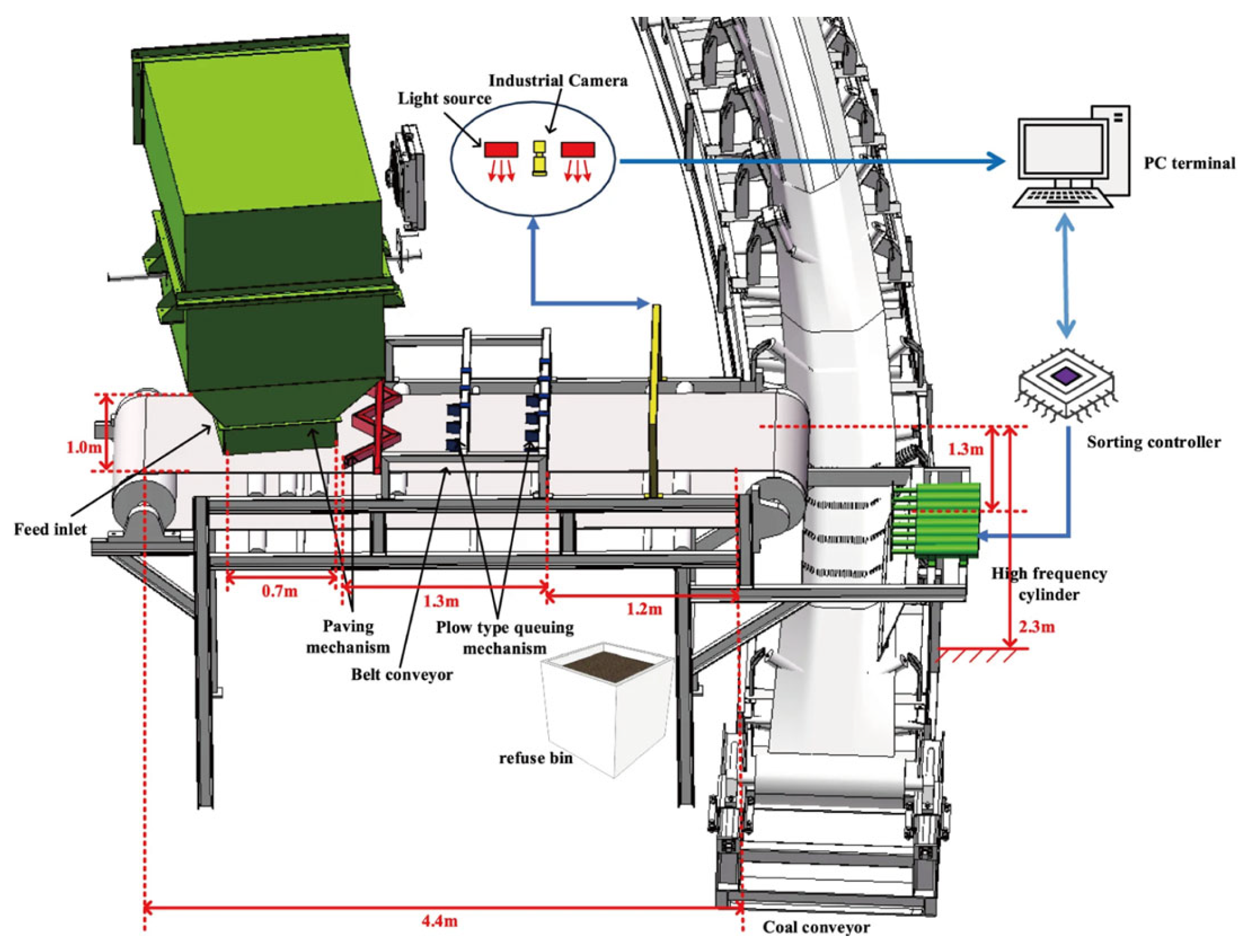
Based on these technological developments, recent studies have increasingly explored intelligent sorting systems that integrate deep learning algorithms and sensor fusion technologies (Figure 1). Modern sorting systems now incorporate closed-loop control driven by convolutional neural networks (CNNs), with research by Zhang et al. [41] demonstrating that these architectures achieve coal-gangue identification rates consistently exceeding 90%. Such AI-based methods can improve sorting accuracy and resource recovery efficiency, while reducing energy consumption by optimizing real-time decision-making. With increasing environmental regulations and land-use constraints associated with surface preparation plants, recent studies have proposed underground or in situ waste management approaches. Consequently, current research increasingly focuses on the development of in situ underground sorting and backfilling systems. These integrated frameworks combine intelligent mining with precision backfilling to mitigate environmental disturbance at the source, representing an important research direction for sustainable solid-waste management [42,43].

3.1.2. Comminution and Mechanochemical Activation

Comminution is not only a process of particle size reduction but also a form of mechanochemical activation that restructures the mineral components of coal gangue [44,45]. Previous studies by Boldyrev [46] and Tromans [47] have shown that intensive grinding can store mechanical energy in material in the form of structural defects and lattice strain. During high-energy milling, the mechanical energy input can disrupt the stable aluminosilicate lattice structure of kaolinite. This structural transformation from a crystalline to a more disordered state increases the specific surface area and modifies the surface charge characteristics. Consequently, the activation energy required for subsequent chemical reactions may decrease, and previously inert minerals can become more reactive precursors [46].
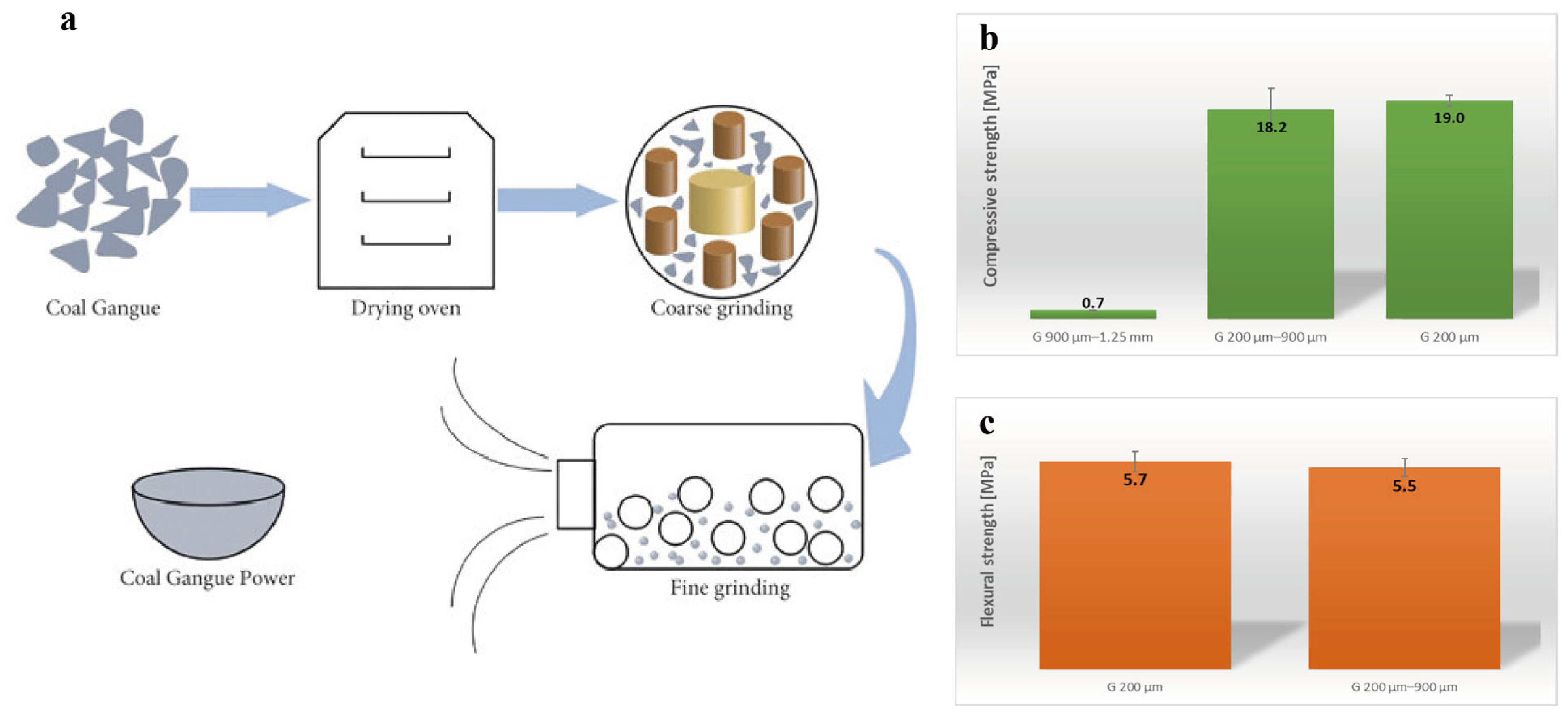
Recent research quantifies how these changes enhance material performance. Figiela et al. [44] demonstrated that reducing coal gangue particles to below 200 μm significantly increased the compressive strength of geopolymers. This improvement is mainly attributed to accelerated geopolymerization kinetics and improved interfacial bonding (Figure 2b,c). To produce these fine particles efficiently, modern processing uses multi-stage crushing and grinding circuits (Figure 2a). A two-stage process, consisting of coarse crushing followed by high-energy ball milling, can produce mechanically activated powders while minimizing total energy consumption [48]. This integrated method ensures that activated microparticles are suitable for high-performance concrete and composite manufacturing.

3.1.3. Flotation and Gravity Separation

The core of flotation lies in utilizing an interfacial chemistry optimization mechanism to achieve highly selective separation between coal components and the gangue matrix. The theoretical basis of this process was discussed in early studies by Laskowski [49], who examined the relationship between mineral surface chemistry and flotation behavior. In flotation systems, collectors and frothers are added to the pulp to modify the surface wettability of mineral particles, thereby adjusting the contact angle and zeta potential at the particle–liquid interfaces. This prompts hydrophobic carbonaceous particles (SG ≈ 1.4) to attach to air bubbles and rise to form a froth layer, while hydrophilic gangue minerals, such as kaolinite (SG ≈ 2.6), remain in the pulp and settle [50,51]. This mechanism, enhanced by precisely matching the molecular structures of long-chain or aromatic collectors, significantly improves the recovery of carbonaceous components [50]. Furthermore, it enables the pre-concentration of critical metal carriers such as lithium (Li) and gallium (Ga), opening new pathways for the high-value utilization of coal gangue [51].
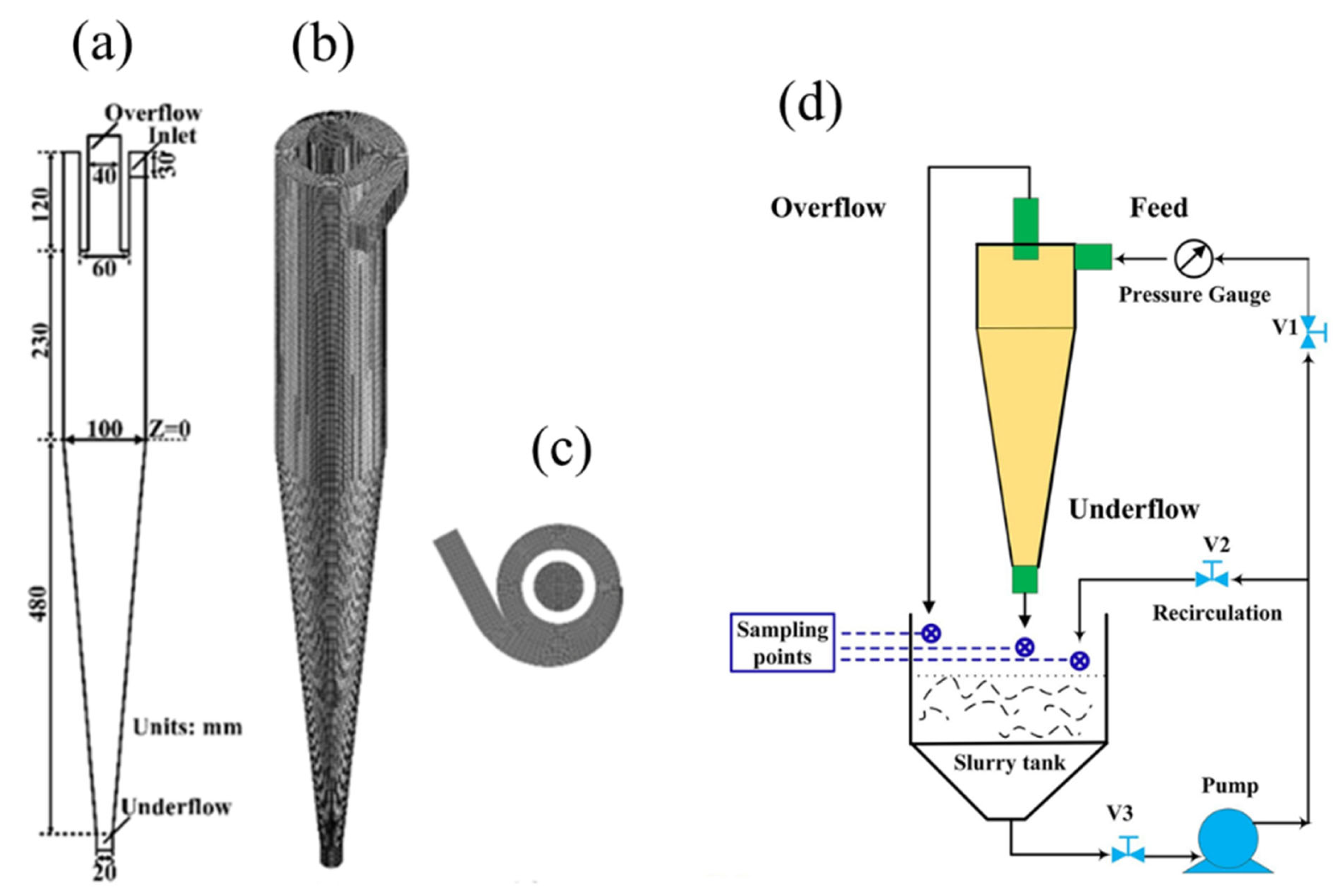
Gravity separation separates mineral components based on differences in density between mineral phases. Early studies by Honaker [52] utilized centrifugal force fields to establish centrifugal gravity separation for rejecting fine pyritic sulfur and high-ash mineral matter. The working principle relies on differences in specific gravity, and gravitational, vibrational, or centrifugal forces can be used to remove high-density impurities, such as pyrite (SG ≈ 5.0), from the kaolinite-rich matrix [53,54]. To overcome the limitations of individual methods, hydrodynamic conditions within equipment such as hydrocyclones or flotation columns can be adjusted, including flow velocity distribution and turbulence intensity, to control the movement of particles with different densities [55]. Contemporary cleaning circuits increasingly adopt a hybrid process that couples hydrocyclones with flotation columns (Figure 3). This combined process improves hydrodynamic conditions and reduces the ineffective adsorption of reagents on coarse particles, increasing fine coal recovery by approximately 10% while significantly reducing overall chemical reagent consumption [56].

3.2. Chemical Methods

3.2.1. Acid Leaching

Acid leaching uses acidic solutions, such as hydrochloric acid (HCl) or sulfuric acid (H2SO4), to dissolve metal oxides, sulfides, carbonates, and aluminosilicates contained in coal gangue. Through these chemical reactions, metallic ions are dissolved into the leachate, thereby achieving the removal of impurity elements or the recovery of valuable metals [57,58,59]. Rather than functioning merely as an extraction process, this chemical treatment targets specific metal oxides and aluminosilicate phases to alter the physical and chemical properties of the matrix. Recent studies by Zhang et al. and Peng et al. [60,61] reported that the selective dissolution of metal-bearing phases during acid leaching can generate microstructural voids and increase the specific surface area of the residual solid.
To maximize this structural disruption, thermal activation frequently serves as a prerequisite, as calcination disrupts the stable kaolinite lattice and facilitates the subsequent acid dissolution process. For instance, a combined calcination and sulfuric acid leaching process can dissolve approximately 79.9% of Fe and 43.8% of Al from coal gangue [62]. Beyond inducing physical porosity, this modification detoxifies the residual matrix by mobilizing and flushing out potentially toxic inclusions. Studies on low sulfur coal gangue from northern Anhui Province show that lower leaching pH values accelerate the release of trace impurities such as Mn, Zn, and Pb. By transferring these hazardous elements into the liquid phase, the process yields a relatively pure aluminosilicate framework [63]. The degree of structural modification depends on operating parameters, including acid concentration, temperature, leaching time, and the liquid-to-solid ratio. After washing to achieve structural neutrality, this chemically modified and stabilized matrix can be used as a suitable precursor for the synthesis of functional materials.

3.2.2. Alkaline Activation

Alkaline activation utilizes bases such as NaOH, KOH, or Ca(OH)2 to chemically digest the inert aluminosilicate structures within coal gangue. By inducing depolymerization and disrupting stable crystalline structures, this process transforms mineral phases into reactive hydrated gels or zeolitic phases while increasing porosity [64]. This research area originates from the work of Davidovits [65], who established the concept of “geopolymer” in the late 1970s to describe the synthesis of inorganic polymeric materials from aluminosilicate precursors. Based on this concept, alkaline hydrothermal treatments can convert relatively inert crystalline phases into materials possessing a high cation exchange capacity, making the resulting matrices exceptionally suitable for nutrient retention and the adsorption of potentially toxic elements [9].
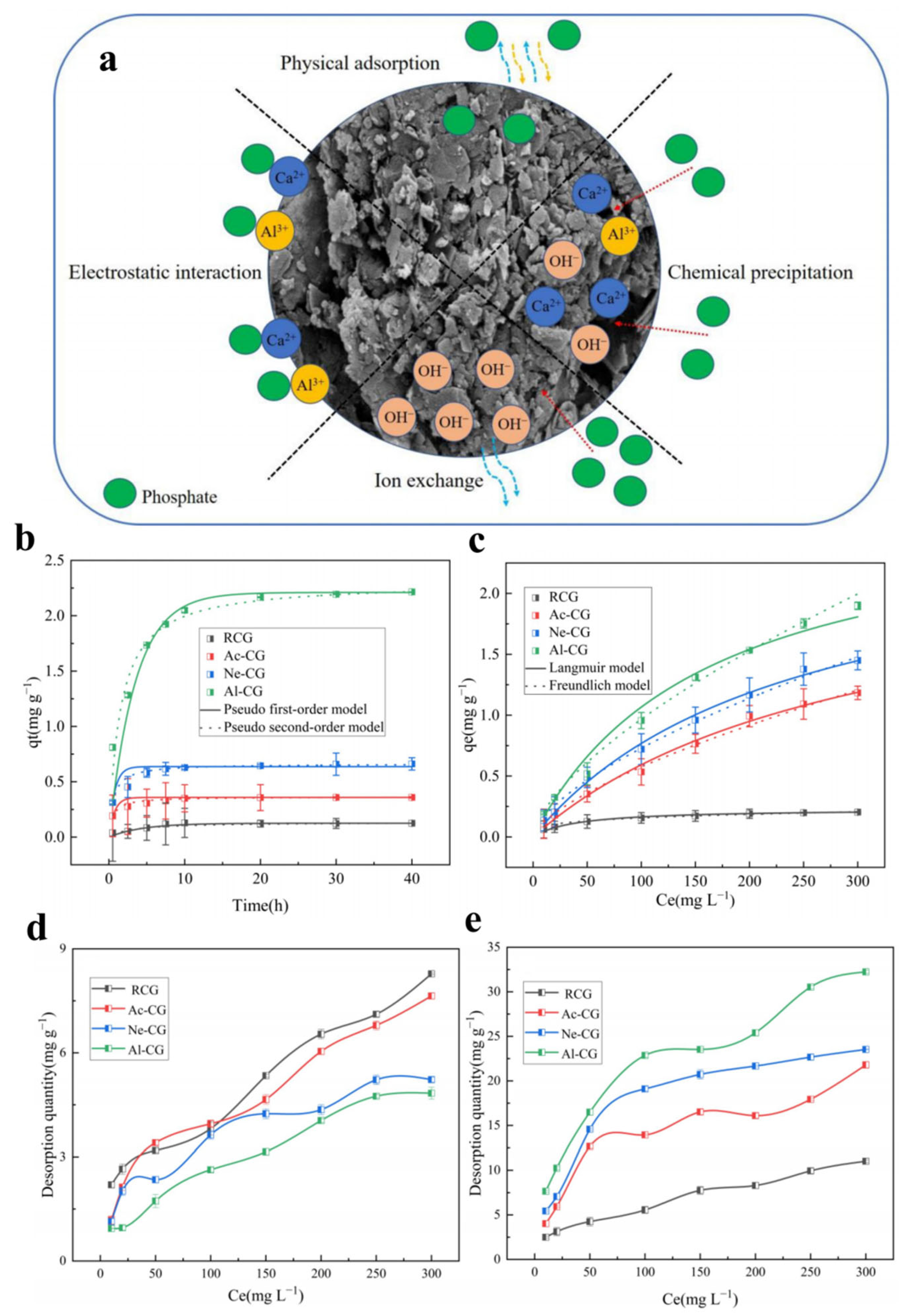
Recent studies on alkali-modified coal gangue materials demonstrate improved performance in environmental remediation applications. Ye et al. [66] developed calcium-modified and alkali-activated coal gangue materials for phosphate runoff in agricultural applications. The calcium-modified material achieved a maximum phosphorus adsorption capacity of 3.599 mg·g−1, 16.3 times higher than that of the raw coal gangue. Furthermore, the fully alkali-activated fine fraction reached a higher adsorption capacity of 11.796 mg·g−1. These modified substrates exhibit slow-release properties, maintaining low aqueous phosphorus leaching concentrations while remaining highly bioavailable to plants under simulated soil conditions (Figure 4). By integrating hazardous waste detoxification with the synthesis of high-value functional sorbents, these strategies provide a potential pathway for the high-value utilization of coal-derived aluminosilicates.

3.3. Microbial Modification

3.3.1. Microbial Desulfurization

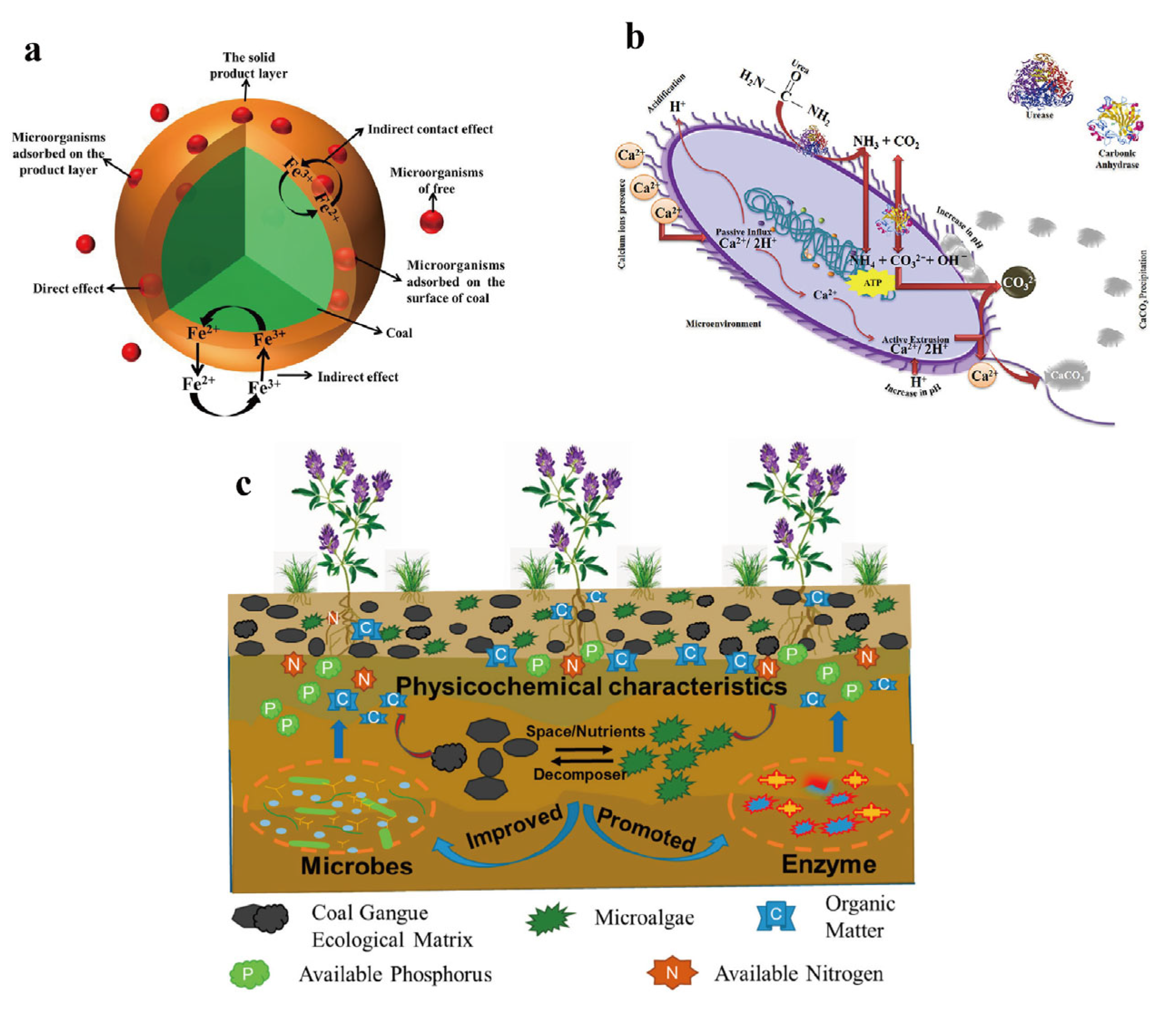
Sulfur in coal gangue primarily exists as pyrite, which can oxidize during stockpiling to generate acidic mine drainage. To mitigate this environmental risk, biodesulfurization utilizes microbe-mediated redox reactions to oxidize pyrite (FeS2) in coal gangue, thereby reducing the risk of acidic drainage during storage. Acidophilic microorganisms, including Acidithiobacillus ferrooxidans, A. thiooxidans, and A. caldus, catalyze the oxidation of Fe2+ and elemental sulfur to Fe3+ and H2SO4. The resulting Fe3+ functions as an oxidant that attacks the pyrite crystal lattice to facilitate sulfur dissolution (Figure 5a). Research indicates that mixed microbial cultures generally exhibit higher stability and desulfurization efficiency than single-strain systems [67], for instance, a consortium of A. ferrooxidans and A. thiooxidans achieved a desulfurization efficiency of 78.8% [68]. Additionally, moderately thermophilic species such as A. caldus can maintain leaching efficiencies of 65%–80% under acidic conditions at 45 °C [69].
Despite the effectiveness of microbial desulfurization, its large-scale industrial application is still limited by kinetic constraints and operational challenges. Modern engineering solutions employ fluidized bed or column reactors to optimize interfacial mass transfer and stabilize the oxidation boundary layer [70]. Additionally, supplementing biological systems with nutrients or porous carbonaceous buffering agents helps sustain metabolic activity and strictly regulate the pH of the reaction system [70]. Microbial acclimation or genetic engineering can also improve cellular tolerance against extreme salinity and highly concentrated trace element stress [71]. However, achieving fully sustainable utilization requires overcoming the techno-economic constraints of managing the resulting highly acidic effluents. Future research should focus on integrating biological processing with robust physicochemical neutralization frameworks to improve environmental safety and promote resource recovery.

3.3.2. Microbially Induced Carbonate Precipitation (MICP)

Microbially induced carbonate precipitation (MICP) is an emerging biomineralization technique for modifying coal gangue. This process uses urease-producing bacteria to drive the targeted crystallization of calcium carbonate within mineral voids instead of relying on conventional physical binders (Figure 5b). The urease-mediated pathway for CaCO3 precipitation has been well established in previous studies, including the work of Whiffin [72] and DeJong et al. [73]. This biologically mediated precipitation functions as a cementing phase that densifies the matrix structure while immobilizing potentially toxic elements within the growing crystal lattice [74,75]. Previous studies indicate that MICP modification improves the physical properties and environmental performance of coal gangue. MICP treatment can decrease the water absorption and crushing index of coal gangue aggregates by 18.5% and 24.1%, respectively. Furthermore, concrete prepared with these modified aggregates exhibited increases of 8.13%, 13.88%, and 8.53% in 28-day compressive, flexural, and tensile strengths [76]. Additionally, Zhang et al. utilized MICP to achieve immobilization efficiencies exceeding 40% for heavy metals such as Pb, Zn, and Cd [77].
Despite these advantages, deploying this biomineralization technology at an industrial scale encounters distinct operational and environmental constraints. The urea hydrolysis process produces ammonia, which may lead to nitrogen pollution and odor emissions. Additionally, achieving uniform spatial distribution of the carbonate precipitates remains challenging and may affect the structural uniformity of the treated materials. To circumvent these limitations, recent studies have combined microbial precipitation systems with highly porous carbon-based carriers or fly ash [78]. The introduction of these high-surface-area substrates improves precipitation uniformity and provides abundant nucleation sites to accelerate crystallization kinetics, thereby enhancing the immobilization of trace toxic elements.

3.3.3. Microbial Degradation (Organic Matter Transformation and Stabilization)

Residual coal and polycyclic aromatic hydrocarbons (PAHs) within coal gangue limit its high-value utilization and pose persistent environmental risks [79]. Early studies by Cerniglia [80] and Fakoussa [81] elucidated the enzymatic pathways for the oxidation and transformation of complex aromatic compounds. Based on these findings, microbial consortia including Bacillus species and fungi have been applied to degrade recalcitrant aromatic inclusions through sequential enzymatic oxidation. Recent investigations have further described the “biological aging” mechanism [82], whereby mobile organic pollutants are transformed into stable macromolecules containing oxygen-bearing functional groups. For instance, applying Bacillus aerius strains to the mineral matrix over a 40-day period resulted in a 17 times increase in humic acid content, reaching a concentration of 17,338.17 mg·kg−1, while concurrently reducing matrix pH and benzo[a]pyrene levels [83]. Additionally, the physical properties of the coal gangue may influence microbial detoxification processes (Figure 5c). Fine particle fractions can promote microbial colonization, thereby accelerating the enzymatic conversion of precursors such as polyphenols into stable humic substances [84].
Despite these established metabolic pathways, the high aromaticity and structural complexity of organic matter in coal gangue still limit its biodegradation, and process coupling and matrix modification strategies are often required to overcome kinetic limitations. Recent studies have employed alternating anaerobic–aerobic processes or coupled microbial systems to facilitate aromatic ring cleavage followed by further mineralization [85]. In addition, adding co-substrates (e.g., straw, glucose) or porous amendments (e.g., biochar) can improve available carbon sources for microbes, enhance microbial activity, and affect adsorption–desorption processes, thereby influencing the bioavailability and degradation of PAHs. Previous studies have shown that biochar may reduce the freely dissolved fraction of PAHs and temporarily restrict immediate bioavailability [86,87]. However, it can also promote long-term biotransformation by mitigating substrate toxicity and optimizing microbial community dynamics. Consequently, the dosage and properties of carbonaceous amendments should be carefully controlled to balance pollutant adsorption and microbial accessibility. Future innovations should prioritize targeted genetic enhancement and the optimization of hybrid processing systems to address inherent kinetic bottlenecks. Ultimately, this microbe-driven purification and stabilization pathway effectively detoxifies recalcitrant pollutants, fundamentally enhancing the environmental compatibility of coal gangue for sustainable applications in soil amendment and advanced construction materials.
Figure 5. Microbial modification mechanism: (a) the mechanism diagram of the microbial desulfurization process [88], (b) schematic diagram of MICP formation mediated by urease and carbonic anhydrase [89], and (c) schematics of the biological improvement system and its application for ecological restoration in mining areas [90].
Minerals 16 00329 g005

3.4. Thermal Treatment

3.4.1. Pyrolysis and Combustion

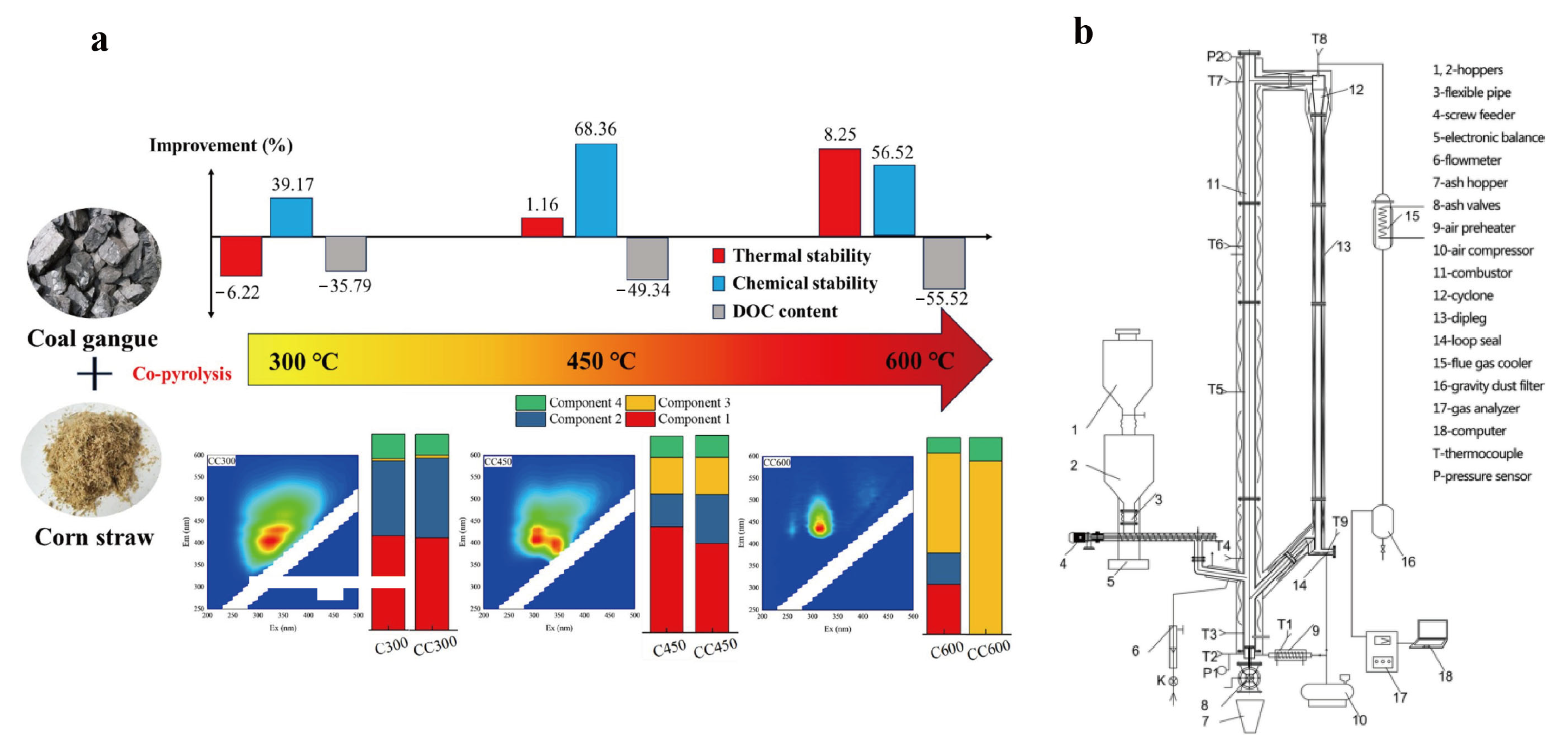
Pyrolysis and combustion are high-temperature thermal processes used to decompose organic matter in coal gangue, simultaneously reducing its volume, immobilizing harmful substances, and generating usable energy [91,92,93]. Early studies in the late 20th century, including the work of Pisupati and Scaroni [94], investigated the pyrolysis kinetics and combustion behavior of coal-derived wastes, providing a basis for subsequent research on the thermal conversion of coal gangue. Pyrolysis typically occurs under oxygen-free or oxygen-limited conditions to produce solid char, gases, and liquids. Because processing coal gangue alone yields relatively low amounts of gas and liquid products due to its high mineral and low volatile content, current advancements focus on co-pyrolysis with biomass or low-rank coal. This approach facilitates hydrogen and oxygen transfer reactions and utilizes mineral catalysis to significantly increase the yields and calorific value of combustible gases and liquid products. It can also improve the thermochemical stability of the resulting carbon-rich solid products, such as biochar composites (Figure 6a) [95]. Recent international research, for instance by Borowski et al. [96], has explored co-thermal conversion processes to improve the quality of solid residues for sustainable material applications.
Conversely, combustion involves the oxidation of coal gangue under oxygen-rich conditions. For large-scale power generation, circulating fluidized bed (CFB) combustion technology has been widely applied due to its high adaptability to fuels with high ash content and low volatile matter [97]. This technical paradigm builds upon decades of international engineering refinement of fluidized bed systems, which ensure stable combustion and high thermal efficiency for low-grade solid wastes. CFB systems also allow the resulting ash to be utilized as raw materials for construction products, supporting resource recycling [98]. While practical engineering challenges, including fuel pretreatment, boiler tube erosion, and temperature control remain, thermal treatment is still considered an effective approach for the detoxification of coal gangue and energy recovery. Recent studies have evaluated the environmental performance of these systems, evaluating the co-combustion of coal gangues with various industrial wastes, with the aim of reducing emissions and improving resource utilization.

3.4.2. High-Temperature Gasification

High-temperature gasification represents an advanced thermochemical pathway that converts the carbonaceous components of coal gangue into synthesis gas through reactions with oxidizing agents such as oxygen or steam [99]. This process is largely predicated on the “energyplex” concepts pioneered by international researchers such as Yamashita and Barreto [100], who established the feasibility of co-producing hydrogen and electricity from low-reactivity solid fuels. Gasification effectively occurs under reducing conditions, during which sulfur, nitrogen, and trace elements are mainly transferred to the gas phase. This characteristic facilitates pre-combustion gas purification and can reduce the emission of volatile pollutants, especially when integrated with carbon capture technologies [101]. Recent studies, including those by Belonogov et al. [102], have investigated the combustion characteristics of coal-derived syngas in high-temperature systems, with the aim of improving overall energy utilization.
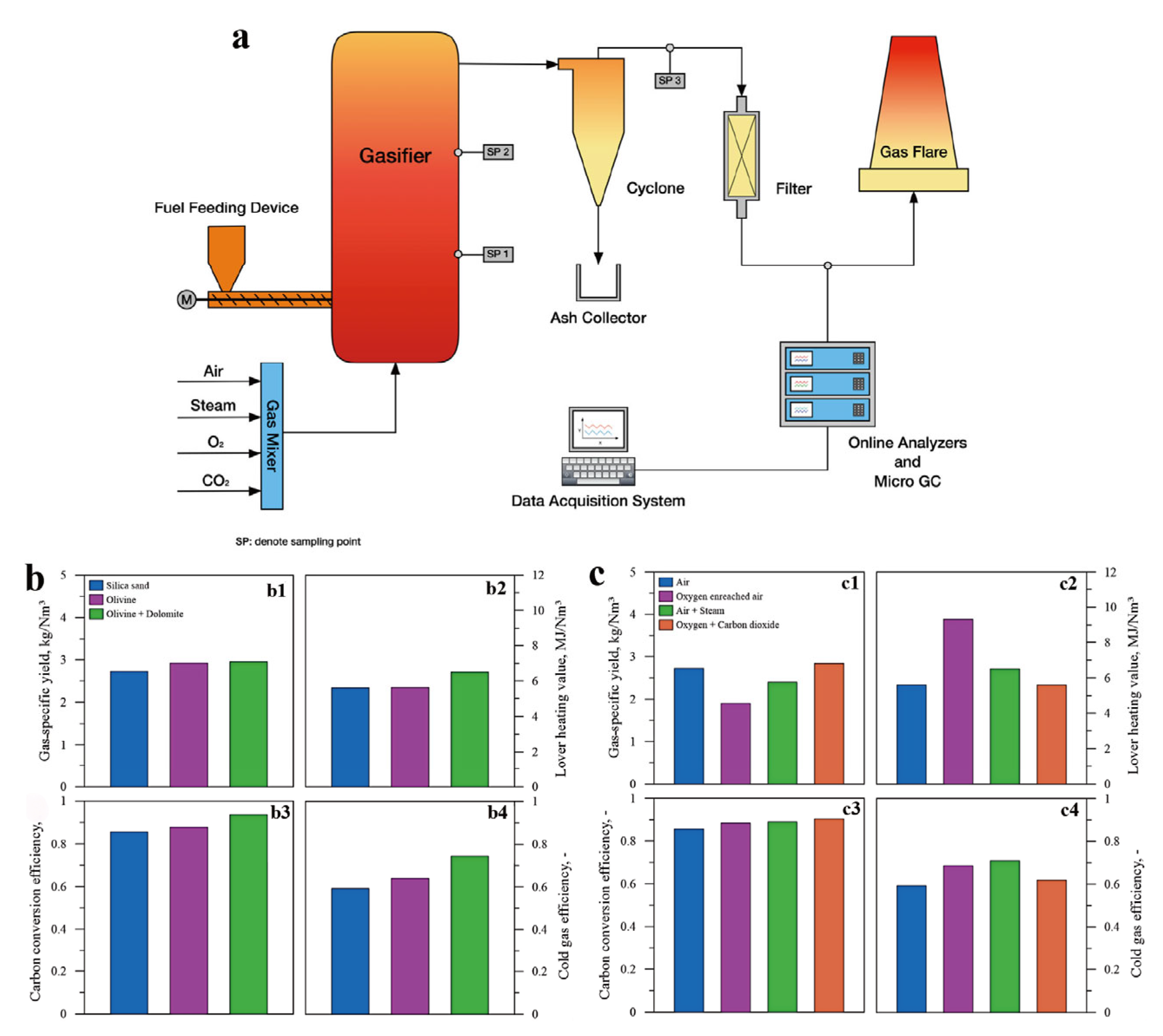
Despite these advantages, the inherently low volatile content and high mineral fraction of coal gangue often limit its gasification reactivity and syngas yield when used alone. To overcome these limitations, contemporary strategies focus on synergistic co-gasification with biomass or high-volatile coal. Integrating these blended feedstocks with alkaline additives in high-turbulence reactors significantly improves conversion kinetics and enhances the yields of hydrogen and carbon monoxide [98,103,104,105]. Recent studies, such as the work of Zaccariello and Mastellone, utilized a bubbling fluidized bed reactor to examine the critical interplay between gasifying agent composition and bed catalysis. Their experimental findings demonstrated that introducing steam and carbon dioxide mixtures promotes the water–gas shift and dry reforming reactions, while the deployment of catalytic beds composed of olivine and dolomite can reduce tar formation by 94% (Figure 7) [106]. This intense thermochemical environment effectively volatilizes remaining organic inhibitors and yields a reactive aluminosilicate slag, which serves as an ideal primary precursor for synthesizing ceramsite materials.

3.4.3. Calcination Activation

The fundamental objective of thermal activation is to overcome the key challenge in the utilization of coal gangue, specifically the efficient phase separation of alumina and silica [8] (among others). Because aluminum- and silicon-bearing minerals, such as kaolinite and other stable clay phases, exist as stable intergrown structures, direct chemical extraction typically results in low separation efficiencies and excessive reagent consumption. The mechanisms of these phase transformations have been investigated in previous studies, such as the kinetic models developed by Ptáček et al. [107], which describe the dehydroxylation and structural transformation of clay-rich minerals during thermal treatment. Based on these mechanisms, mineralizers are utilized at elevated temperatures to systematically disrupt the stable crystalline architecture, driving profound transformations that convert inert matrices into highly reactive precursors primed for subsequent chemical extraction.
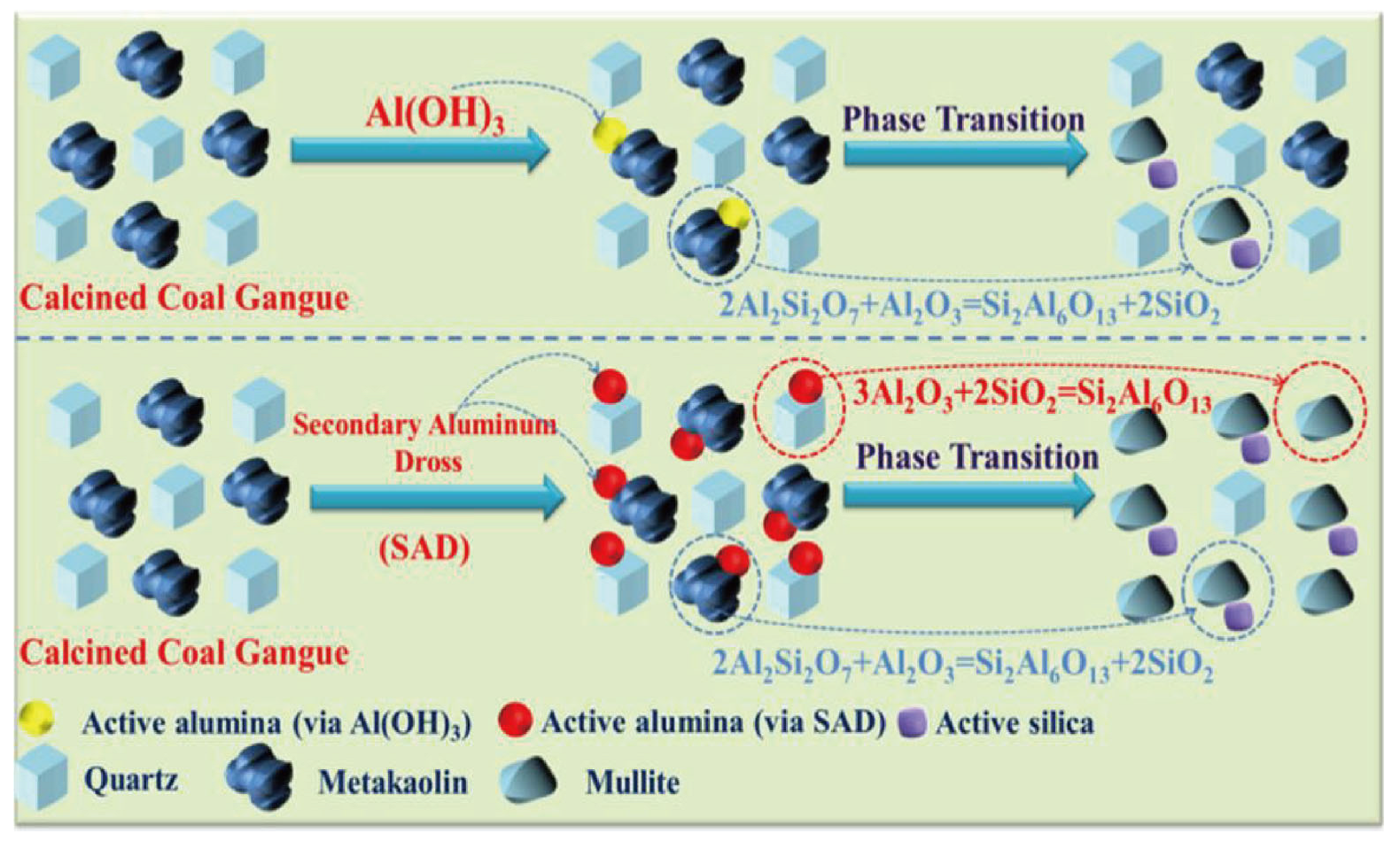
Recent studies have focused on the use of additives to further enhance reactivity and selectivity. For instance, Liu et al. [108] compared several types of additives containing aluminum, sodium, and silicon, and found that aluminum-rich variants, particularly secondary aluminum dross (SAD) and aluminum hydroxide, significantly enhance desilication efficiency. During high-temperature treatment, these additives generate reactive alumina that interacts with the metakaolin intermediate to synthesize mullite, thereby liberating reactive silica (Figure 8). Recent studies, such as the work of Valášková et al. [109], have demonstrated that precise control over cooling rates and phase transitions in coal-derived wastes can further increase the accessibility of reactive components. Following this mineral restructuring, alkaline leaching can separate the activated material into soluble sodium silicate and a concentrated high-alumina residue. Ultimately, utilizing hazardous SAD as a potent mineralizer achieves the efficient combined utilization of multiple industrial wastes while generating exceptional precursors for advanced material synthesis.
To systematically compare the various coal gangue modification technologies mentioned above, Table 2 provides a comprehensive analysis across multiple dimensions, such as key methods, advantages, limitations, efficiency, cost, and environmental impact. This multi-dimensional comparison facilitates the selection of the most suitable activation and utilization pathways based on the specific mineralogical characteristics of the coal gangue and its intended downstream application goals.

4. Utilization Technologies of Coal Gangue

The utilization of coal gangue has become a significant focus in the fields of resource recovery and environmental protection. Its core objective is to transform this solid waste into useful products through appropriate processing technologies, thereby achieving environmental impacts and improving resource utilization. This section systematically reviews the diverse applications of coal gangue, ranging from bulk construction materials to functional materials and environmental remediation.

4.1. Mine Backfilling

While the accumulation of coal gangue presents environmental risks such as spontaneous combustion and contaminant leaching [110] (among others), its mechanical hardness allows it to serve as a coarse aggregate for mine backfilling [111,112]. The industrial application of coal gangue backfilling can be traced to early European mining practices, particularly in Germany and Poland during the late 20th century, where early studies established the mechanical feasibility of using gangue as backfilling material. Backfilling strategies are generally classified into solid, paste, and slurry methods based on water content and particle size distribution. Solid backfilling relies on crushing gangue into coarse particles and mechanically compacting them into the goaf. This method forms a dense particle skeleton for immediate roof support and requires minimal water with no binders. Consequently, it demands an optimal gradation of larger aggregates to improve compaction density and bearing capacity without the rheological constraints of pumpable fluids.
Currently, paste backfill has become one of the main approaches for the utilization and disposal of coal gangue in mining operations. This technique mixes gangue aggregates with binders and water to create a pumpable slurry with good resistance to particle segregation [113,114]. Unlike solid filling, paste backfill requires a specific ratio of coarse to fine particles. Sufficient fine particles, such as fly ash, are necessary to improve the lubrication between coarse gangue particles during pipeline transport. Research indicates that a solid concentration of approximately 74% can produce a Bingham-type slurry that balances flowability with mechanical strength [115,116,117]. At this concentration, the gangue mainly acts as a structural filler. Meanwhile, the binder matrix controls the early compressive strength of the backfill, which can be further enhanced by activating fine gangue particles [118].
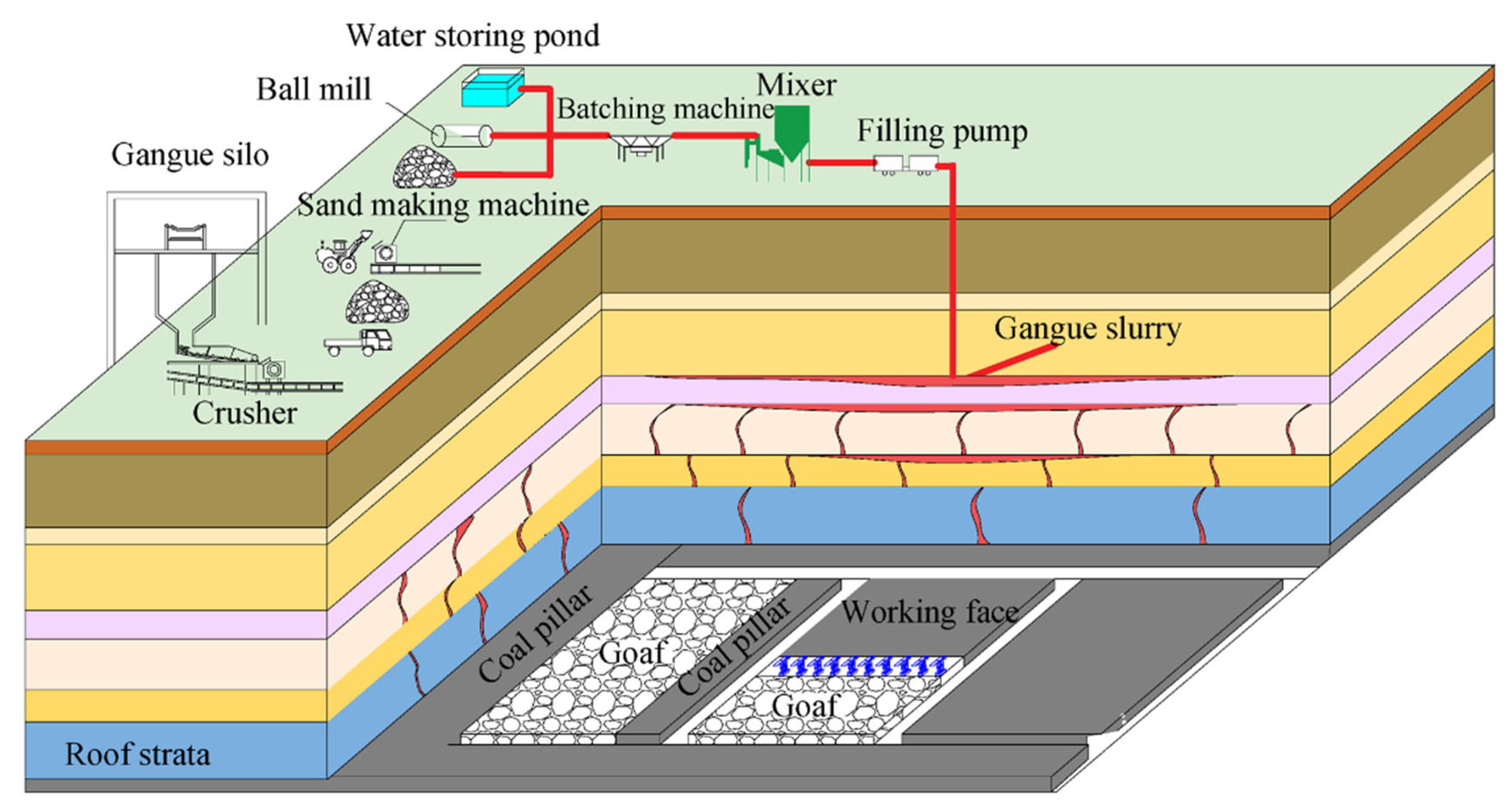
For conditions where deep penetration into rock fractures is required, slurry or grouting-based backfilling methods are commonly used. A primary example of this is the Goaf Grouting Flexible Stepwise Support technology [112,119]. This method requires a lower solid concentration and finer particle size than paste backfill to ensure sufficient fluidity and permeability (Figure 9). While solid backfilling mainly relies on the skeletal strength of coarse gangue and paste backfilling optimizes the rheology of fluid mixtures, slurry filling focuses on sealing and continuity. Ultimately, tailoring the particle size and concentration of coal gangue to these specific backfilling methods can improve backfilling performance and promote the utilization of coal gangue in mining operations [111,116,120,121].

4.2. Land Reclamation and Restoration

4.2.1. Assisted Phytoremediation

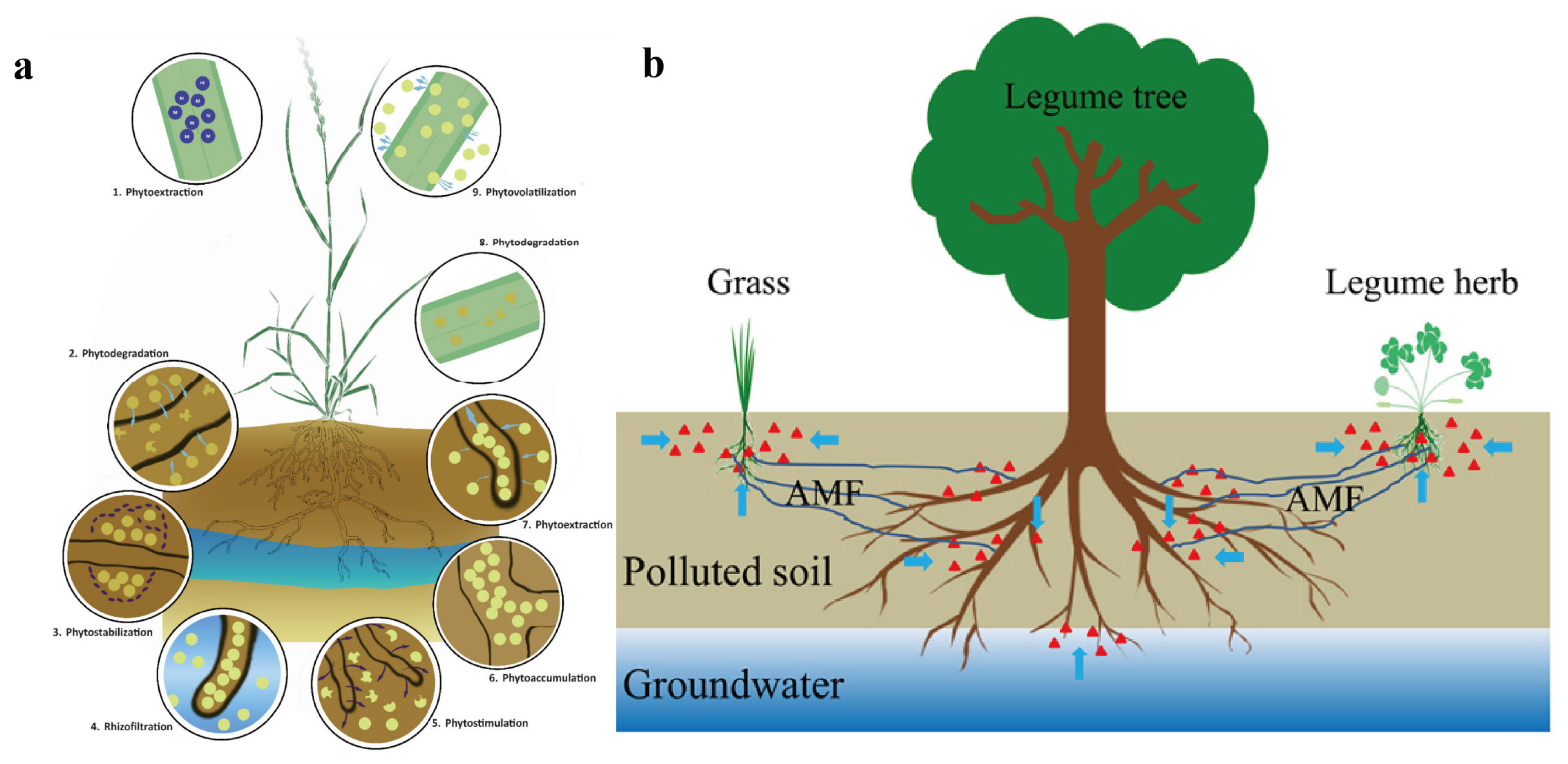
Assisted phytoremediation strategies utilize coal gangue dumps as rooting substrates, relying on vegetation to rehabilitate and biologically stabilize land impacted by mining activities (Figure 10). Various strategies have been employed to promote plant establishment and ecosystem restoration directly on these degraded lands. One widely adopted method is the Forestry Reclamation Approach (FRA) [122], which facilitates the establishment of self-sustaining forest vegetation on coal gangue dumps. Rather than heavily amending the bulk substrate, this method prepares the surface gangue as a suitable rooting medium by minimizing compaction, selecting compatible ground cover plants, choosing early successional and commercially valuable tree species, and utilizing appropriate planting techniques [123]. The research results indicate that trees can grow directly on coal overburden when these steps are followed, demonstrating the feasibility of using gangue dumps as substrates for long-term ecological restoration [124,125,126].
Because raw coal gangue often presents unfavorable soil conditions with poor moisture retention and potential toxicity, plant selection plays a key role in vegetation stabilization. Incorporating native seeds has been widely recommended, as native plants are inherently better adapted to localized climatic and gangue-specific conditions, leading to higher survival rates and improved rehabilitation outcomes [127]. Furthermore, selecting resilient plants, such as salt-tolerant species or those capable of phytostabilizing potentially toxic elements, can immobilize hazardous substances within the root zone, further enhancing the success of revegetation efforts.
To improve plant survival within the nutrient-deficient coal gangue substrates, microbial inoculants have also been explored to improve localized soil fertility and support plant growth. Specific inoculants, including arbuscular mycorrhizal fungi (AMF) and nitrogen-fixing bacteria, can be introduced into the rhizosphere to enhance nutrient availability and facilitate plant establishment in mine waste materials [128,129]. While the potential benefits of these biological interventions are promising for overcoming the gangue’s nutritional deficits, the application of microbial inoculants in large-scale land rehabilitation projects still faces practical constraints, including technical requirements and economic costs [130].
Figure 10. Mechanism of phytoremediation assistance: (a) phytoremediation strategies with the use of grasses [131]; (b) the roles of arbuscular mycorrhizal fungi (AMF) in phytoremediation and tree–herb interactions in Pb-contaminated soil [132].
Minerals 16 00329 g010

4.2.2. Soil Reconstruction and Amendment

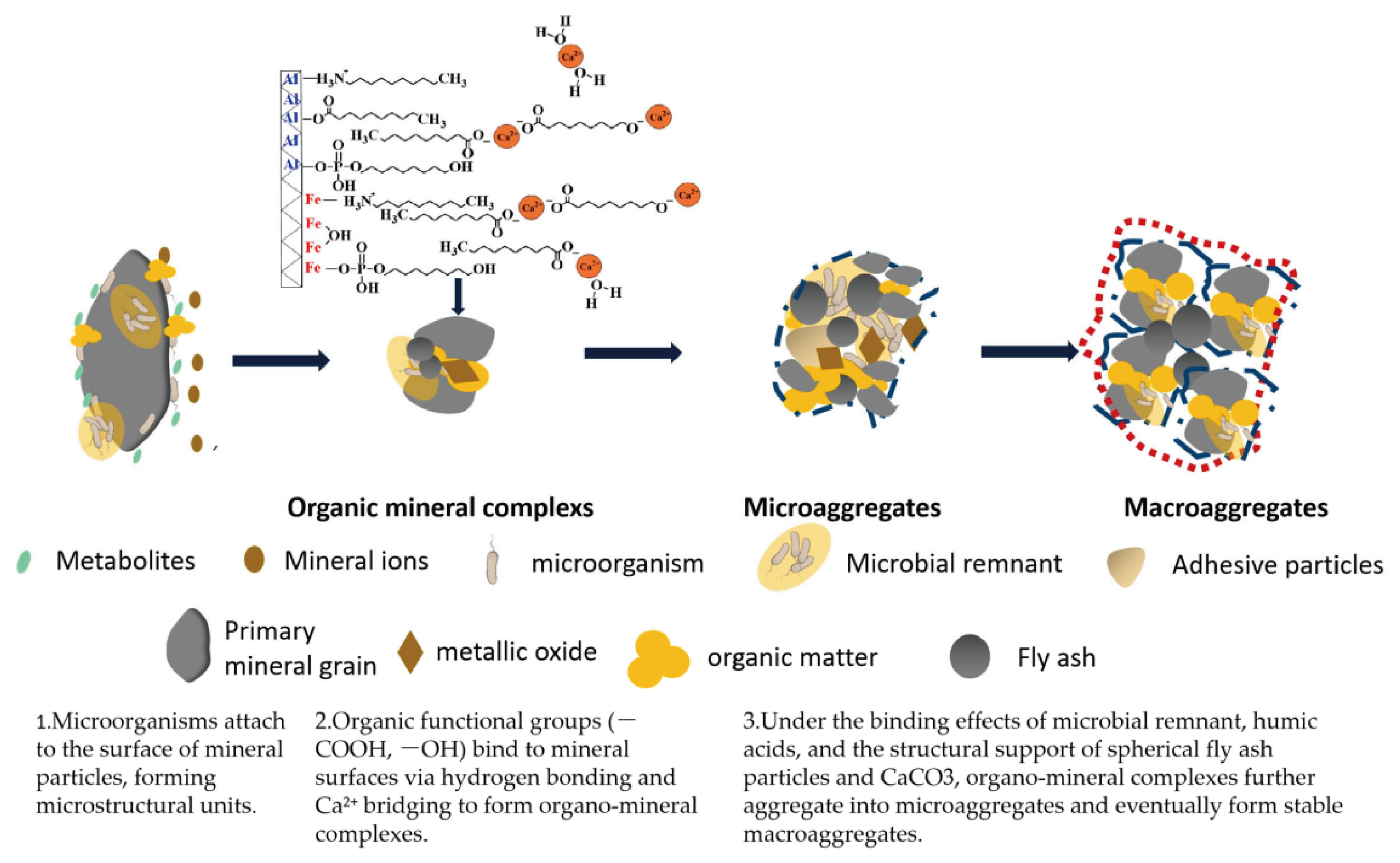
To achieve more effective ecological restoration, soil reconstruction moves beyond using gangue as a passive rooting medium, instead actively engineering the gangue material into a functional, Coal Gangue-Based Artificial Soil(CGAS). This technological paradigm is based on soil engineering concepts developed in the late 20th century, which emphasize the physical and chemical modification of technogenic substrates to simulate natural soil formation processes. While applying artificial topsoil provides an immediate nutrient profile [125,126,133], long-term ecological restoration fundamentally relies on altering the gangue’s inherent physical and chemical limitations [134]. Physically, deep ripping is used to alleviate compaction within the waste dumps, thereby improving water infiltration and porosity. Chemically, amendments such as gypsum can be applied to leach salts from the sodic gangue fractions. To further stabilize the newly formed aggregate structure, the synergistic effect of microbial agents and fly ash plays a crucial role. The process involves organic binders such as humic acid (HA), inorganic binders including calcium carbonate and gypsum (releasing Ca2+ ions), and the bonding effect of spherical fly ash particles. These components interact to form stable and healthy soil-like aggregates, which significantly enhance water retention and reduce soil bulk density (Figure 11) [135]. Furthermore, integrating geotextiles establishes structural micro-dams that decelerate surface runoff and improve the overall stability of steep gangue slopes.
Transitioning from physical stabilization to biological regeneration, the physicochemical properties of the coal gangue also play an important role. While initial carbon sources are supplied by organic amendments like biochar and compost [126], fine coal gangue particles may also participate in soil development rather than acting solely as inert fillers. These fine gangue particles can influence ecological succession by promoting microbial activity that accelerates organic matter degradation and humic acid accumulation. Wen et al. [84] used structural equation modeling to show that the unique surface properties of fine coal gangue directly optimize the architecture of the colonizing microbial community. This specific gangue-driven microbial optimization promotes the microbial conversion of precursor substances, such as polyphenols, into stable humic substances. Ultimately, this profound interplay between the microbial community and the active gangue mineral matrix transforms the once-barren waste into a highly functional and self-sustaining ecological soil substitute.

4.3. Aggregate and Foundation Materials

4.3.1. Concrete

The utilization of coal gangue in concrete has been explored as a means to reduce resource waste and partially replace natural construction materials. This pursuit is predicated on foundational international research established in the late 20th century, notably the pioneering work of Neville [136], who elucidated the physical and chemical requirements for incorporating industrial by-products into cementitious matrices to ensure structural integrity. The research results indicate that incorporating coal gangue as an aggregate in concrete can significantly influence its mechanical properties and durability. For instance, the mechanical properties and durability of coal gangue concrete (CGC) have been extensively studied, revealing that the compressive strength and workability of CGC are typically lower than those of ordinary concrete (OC). This reduction is directly correlated with the physicochemical properties of coal gangue described in Section 2.3. The relatively high porosity and residual carbon content of raw gangue aggregates increase water demand and weaken the interfacial transition zone (ITZ) [33,137]. However, for calcined gangue, the exposure of active sites and the formation of amorphous metakaolin (as detailed in Section 2.3) can promote pozzolanic reactions, which consume calcium hydroxide (CH) and densify the microstructure, thereby partially improving the long-term strength of the concrete.
Recent studies have increasingly focused on high-performance composite design and precise performance prediction using sophisticated computational models. In this context, Gao [33] and Qin [138] developed predictive models for the compressive strength of coal gangue concrete (CGC), as well as proposing a creep model applicable to CGC. Furthermore, these models have been demonstrated to have reasonable agreement with the performance of CGC. To improve the performance of raw aggregates, Zhang [77] employed an environmentally friendly biomineralization technique, microbially induced calcium carbonate precipitation (bio-CaCO3), to form CaCO3 deposits on the surface and within the pores of coal gangue aggregates. These precipitates can block water penetration and reduce the water absorption of the aggregates. Moreover, metal ions present in the gangue aggregates could react with carbonate ions to form stable compounds, enhancing the immobilization efficiency of PTEs. In another study, Yang [139] proposed a novel strategy to reduce the water absorption and crushing index of coal gangue by co-calcining it with metallurgical slag. During the calcination process, the slag generated a microcrystalline glaze layer on the surface of the gangue particles, improving pore structure and enhancing mechanical strength. As a result, the crushing index of coal gangue decreased from 16.8% to 16.1%–13.2%, and the water absorption decreased from 5.29% to 2.74%–3.90% after slag-assisted calcination.
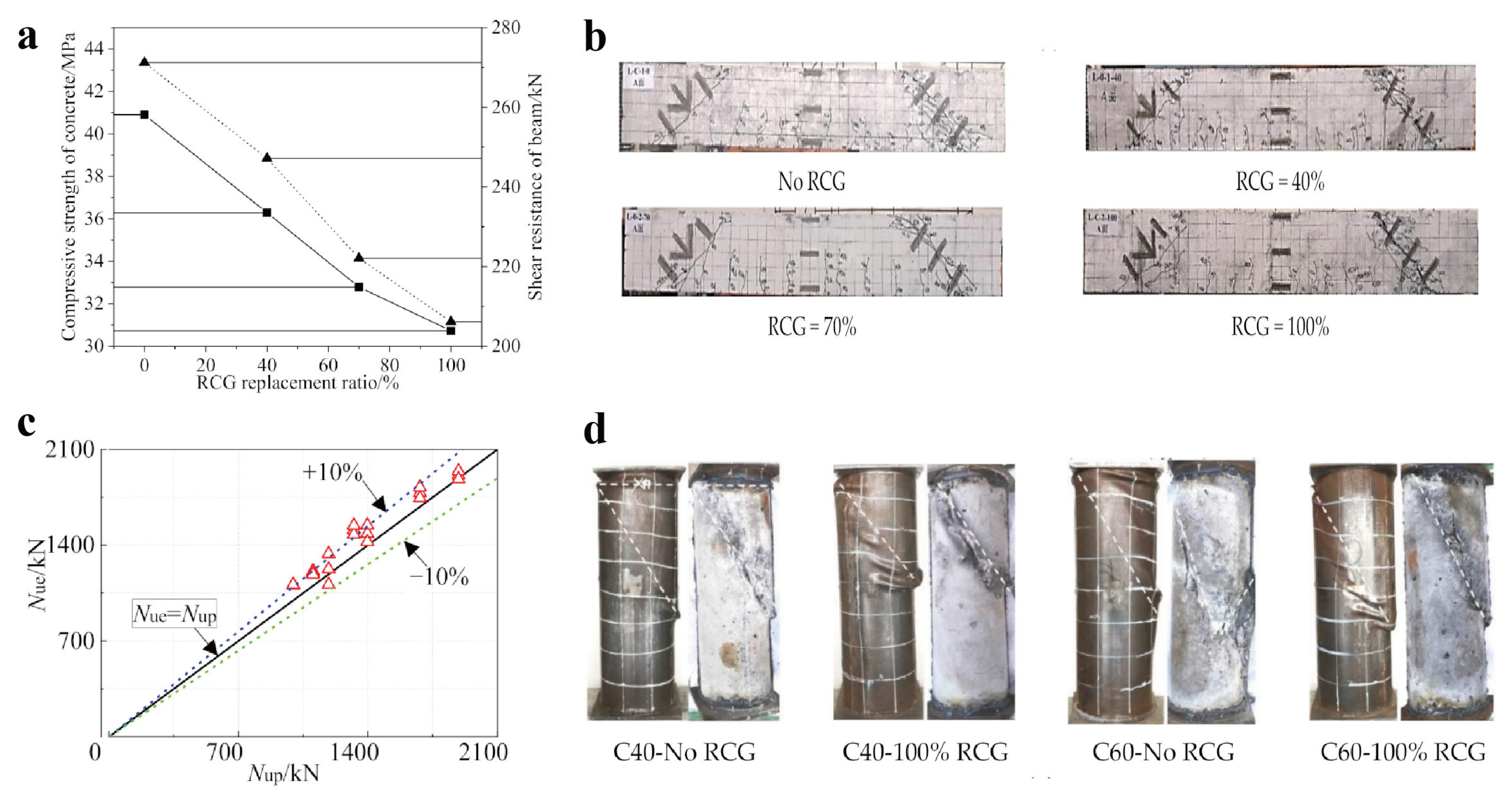
Coal gangue has been investigated for use in various concrete applications. For instance, researchers have demonstrated that coal gangue can serve as coarse aggregates in C30 structural concrete, with compressive strength and other mechanical properties meeting basic engineering requirements [137]. Similarly, the study on alkali-activated coal gangue-slag concrete also reported superior mechanical properties and durability [140]. The incorporation of coal gangue in concrete mixtures has also been influenced by its interaction with other materials. For example, combining coal gangue with river sand as a fine aggregate has resulted in improving the split tensile strength in slope-protecting concrete applications. Moreover, the use of coal gangue has extended to both low-strength concrete and high-strength concrete-filled steel tubes (Figure 12), showcasing its potential for broader applications in the construction industry [141].

4.3.2. Cement-Stabilized Materials for Road Engineering

Coal gangue has been investigated extensively as a partial replacement for natural aggregates in cement-stabilized materials. This approach not only helps manage the waste generated from coal mining but also contributes to the advancement of sustainable highway construction practices. This application is predicated on foundational international research established by pioneers such as Sherwood [143], who in the early 1990s formulated the essential physical and chemical criteria for incorporating alternative mineral wastes into pavement engineering. Building on these studies, coal gangue has been reported to replace natural gravels of various sizes in cement-stabilized mixtures, although this substitution may affect the mechanical properties of the material [144,145]. The incorporation of coal gangue aggregates typically reduces the dry density and increases the optimal moisture content of the mixture compared to natural crushed stone mixtures, primarily due to the material’s porosity. These modifications result in variations in unconfined compressive strength, splitting tensile strength, and resilient modulus, yet the material generally meets the strength requirements for highway engineering.
Recent international investigations, such as the work of Kanalli et al. [146], have further refined the structural stability and long-term durability of road bases composed of technogenic mineral wastes. Within this framework, optimizing the cement dosage remains critical to achieving desirable mechanical properties and construction cost. For instance, a cement content of approximately 4% has been reported to be suitable for light-traffic base applications, providing a necessary balance between strength and material cost. Moreover, the resilient modulus and freeze–thaw resistance are affected by the aggregate gradation and compaction conditions. Investigations into these parameters have been conducted to enhance the material’s applicability in high-grade highway bases, ensuring that the stabilized gangue matrix maintains its integrity under repetitive loading and adverse climatic conditions [147]. Ultimately, this approach successfully transforms coal mining residues into functional components for a sustainable transportation network.

4.3.3. Ceramsite

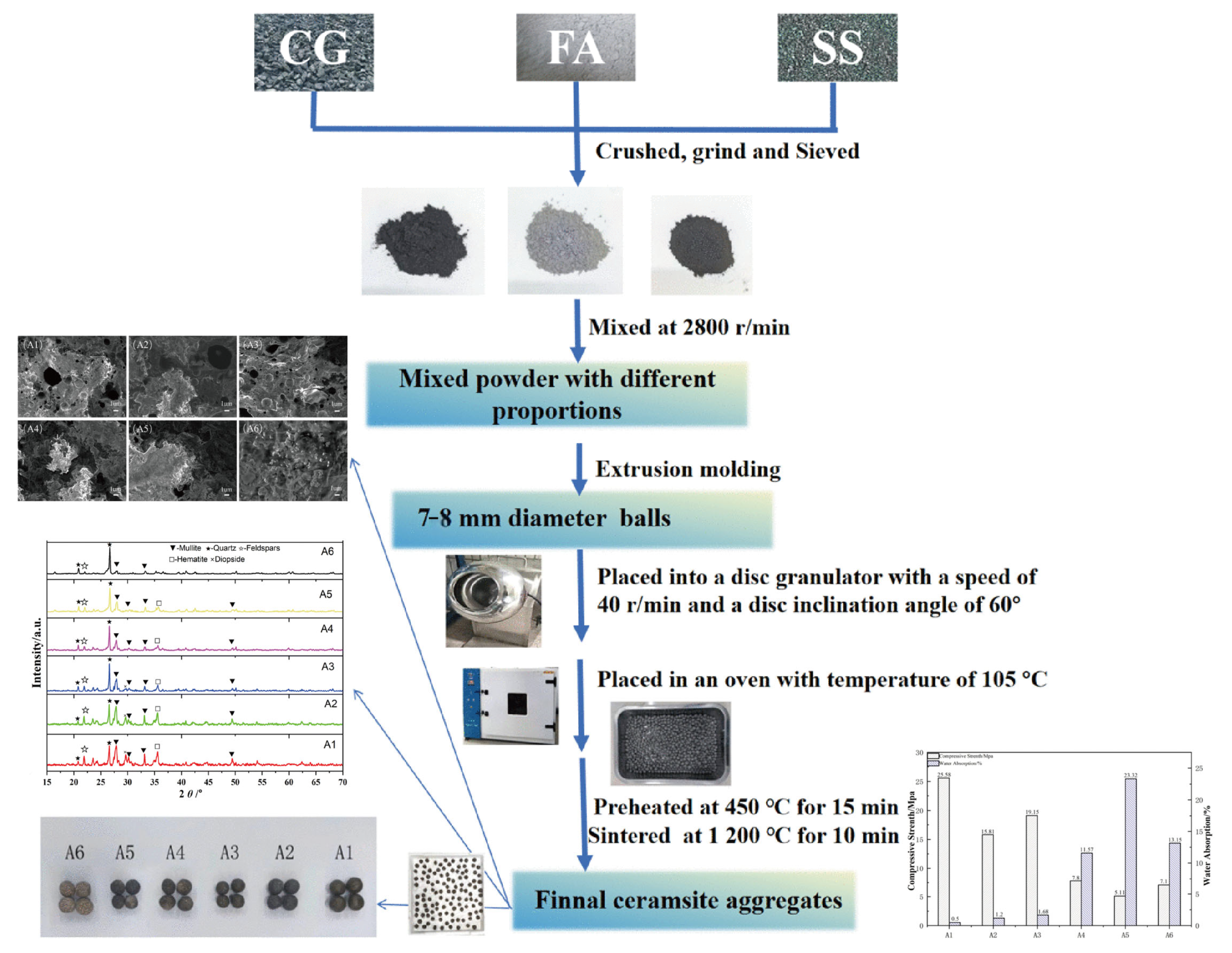
Coal gangue provides an exceptionally abundant aluminosilicate precursor for synthesizing ceramsite, leveraging high-temperature sintering to create lightweight aggregates (Figure 13) [148,149] (among others). This development is predicated on the foundational bloating theory established by Riley [150], who defined the relationship between chemical properties and the formation of a high-viscosity liquid phase required to entrap evolved gases. This mechanism affects the aggregate’s ultimate compressive strength, water absorption, and density. Based on these principles, recent studies have investigated the co-processing of coal gangue with industrial wastes like fly ash and steel slag to adjust the SiO2-Al2O3-CaO-Fe2O3 composition system. Incorporating these fluxing components significantly lowers the required sintering temperature and optimizes melt viscosity, allowing for the production of high-strength structural ceramsite with one-hour water absorption rates below 3% when sintered between 1050 and 1200 °C. Furthermore, the sintering atmosphere and heating rates govern the critical equilibrium between open and closed porosity, which directly determines the long-term structural durability of the lightweight aggregates [151,152].
Beyond structural applications, coal gangue has also been used to produce environmental functional ceramsite, a field that has evolved from early waste-to-aggregate concepts pioneered by researchers like Wainwright and Cresswell [153] more than two decades ago. Recent studies have focused on creating highly porous, reactive media designed for wastewater treatment and PTEs [154]. In this category, coal gangue is often mixed with pore-forming surface activators such as biomass carbon or municipal sewage sludge to expand the specific surface area and active adsorption sites. During the high-temperature synergistic sintering process, PTEs can be immobilized through chemical incorporation into stable aluminosilicate crystal lattices, such as newly formed spinel or mullite phases, or through physical encapsulation within the dense glassy matrix [155]. Current advancements further demonstrate that adding pore-forming agents to gangue can produce multiphase porous ceramics, which can adsorb metal ions like Ni2+, Cu2+, and Co2+ and maintain relatively stable adsorption performance during repeated use. Ultimately, this integrated valorization strategy successfully transforms massive coal-mining wastes into high-performance functional materials for sustainable environmental remediation [156,157].

4.4. High-Value Utilization

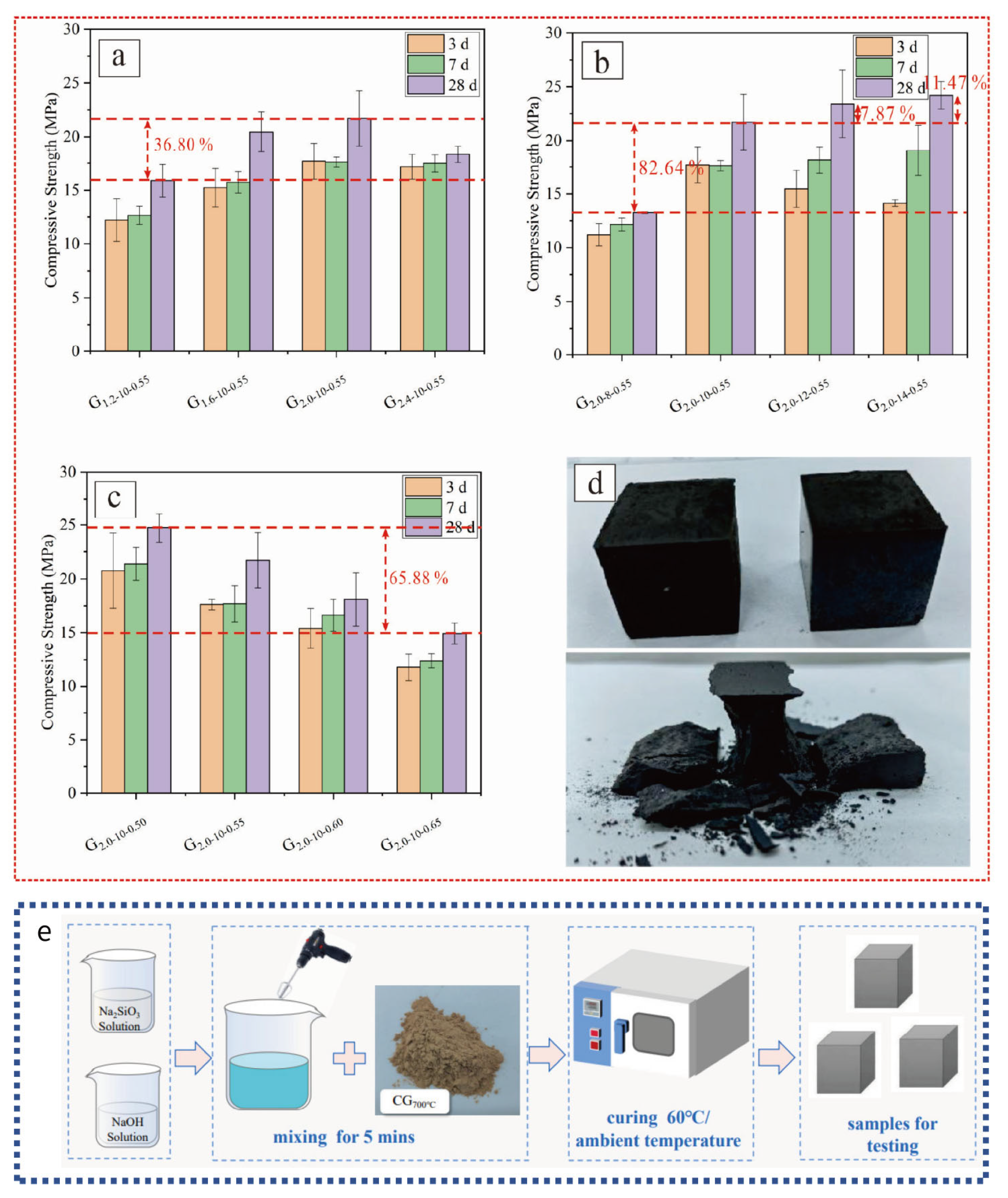
Calcined coal gangue, rich in metakaolinite, has been studied as a precursor for alkali-activated materials and geopolymer binders. Thermal activation, typically at 600–800 °C, disrupts the crystalline structure of kaolinite and enhances the reactivity of aluminosilicate phases. Subsequent alkali activation generates geopolymer gels with substantial compressive strength, which can replace ordinary Portland cement in both structural and precast applications (Figure 14) [158]. The mechanical performance of these binders is closely related to the mineralogical transformation discussed in Section 2.3. The dehydroxylation of kaolinite produces amorphous metakaolinite, which provides reactive Al and Si species for geopolymerization. Furthermore, the Si/Al molar ratio of the parent gangue (Section 2.2) influences the degree of polycondensation and the structure of the geopolymer gel (N-A-S-H or C-A-S-H), thereby affecting the material’s compressive strength and durability. Moreover, the incorporation of supplementary cementitious materials, such as ground granulated blast furnace slag or phosphoric acid activation, can promote polycondensation reactions and improve the mechanical strength and durability of the resulting materials. These strategies expand the potential applications of coal-based geopolymers and may reduce the carbon footprint compared with conventional cement production [31].
Beyond structural binders, recent studies have expanded the application scope of these materials. Wang et al. [159] reported the preparation of geopolymer foamed concrete using coal gangue and slag. By optimizing the foam content and alkali activator modulus, the prepared material showed low thermal conductivity (0.0781 W·(m·K)−1) and sufficient strength, indicating potential application for energy-efficient building insulation. Furthermore, Yang et al. [160] explored the potential of alkali-activated coal gangue powder for soil stabilization. The results showed that the geopolymer binder could effectively solidify loess, improving its water stability and compressive strength (up to 2.06 MPa), which suggests potential application in road-subgrade engineering.
In addition to material applications, hydrometallurgical and pyrometallurgical technologies have been developed to recover aluminum, silicon, and other trace elements from high-alumina coal gangue. Direct extraction is often inefficient due to the stable Si-O-Al bonds in crystalline kaolinite and other clay minerals described in Section 2.2. Therefore, thermal activation is commonly applied to disrupt these lattice structures and transform the inert minerals into acid/alkali-soluble amorphous phases, as this reduces the activation energy required for the leaching reactions. Combined processes, such as roasting followed by acid leaching or alkali-lime sintering, can achieve alumina extraction efficiencies up to 80%–90% under optimized conditions [161]. These findings underscore the technical feasibility of transforming coal gangue into chemical products such as alumina (Al2O3) and sodium silicate, particularly when the extraction process is integrated with downstream purification and utilization processes [162].
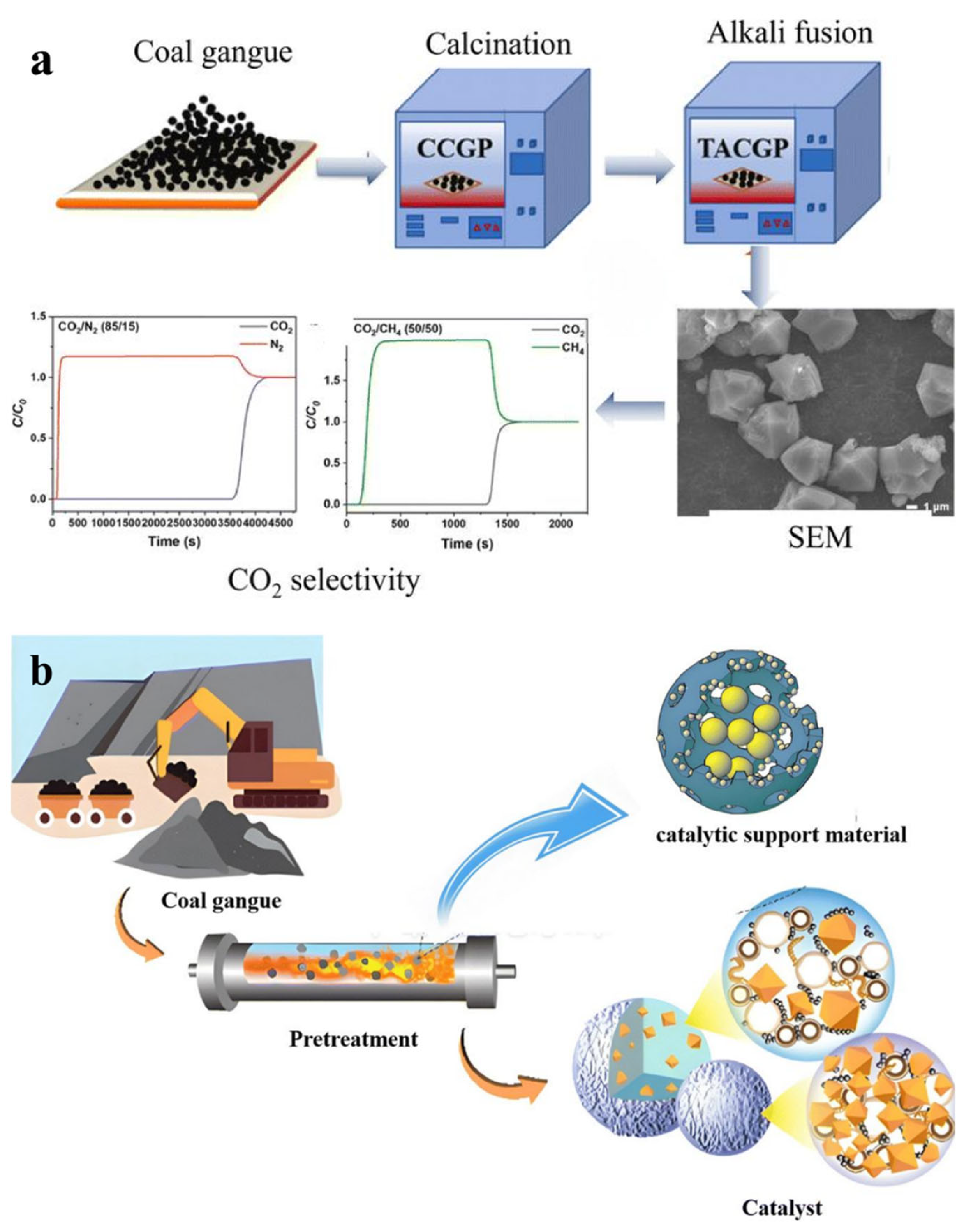
Beyond binder and feedstock production, thermochemical conversion techniques, including pyrolysis and activation, have also been investigated to convert carbonaceous gangue into functional materials. When used alone, coal gangue can produce porous carbon–mineral composites (Figure 15a); when co-processed with biomass, it can act as a structural template to form biochar-based composites with relatively high surface area and adjustable porosity. These materials have demonstrated high adsorption capacities toward PTEs and organic dyes [163]. These porous materials have also been explored as catalyst supports for tar decomposition in biomass gasification systems, extending potential applications in energy conversion and environmental remediation (Figure 15b) [164,165].
In summary, the utilization of coal gangue has evolved from basic resource recovery toward the development of multifunctional materials with environmental and structural applications. The integration of thermochemical activation, element extraction, and functional material synthesis provides a potential approach for the sustainable management of coal-mining wastes while supporting circular economy objectives and low-carbon development in the industrial sector.

5. Conclusions

This review summarizes the research progress on coal gangue in the past two decades, encompassing its formation, physicochemical properties, treatment technologies, and resource utilization. Coal gangue shows both geological and engineering characteristics and is predominantly composed of kaolinite and other clay minerals. Provided that its inherent porosity and residual carbon content are effectively managed, coal gangue can be used as a precursor for construction aggregates and cementitious materials.
Regarding activation strategies, thermal treatment is the most commonly used method to activate the pozzolanic activity of coal gangue, making it highly effective for developing geopolymers and concrete materials. While chemical extraction demonstrates exceptional efficiency in recovering valuable metals, its large-scale application is limited by reagent costs and the risk of secondary pollution. Conversely, microbial modification offers an environmentally friendly approach for in situ ecological remediation, though its practical application is currently limited by relatively slow reaction kinetics.
To promote the transition from traditional backfilling to higher-value utilization of coal gangue, future research should focus on several key directions. First, intelligent sorting systems should be developed to advance in situ underground separation technologies, thereby reducing the amount of gangue transported to the surface and minimizing environmental disturbance at the source. Second, low-energy activation technologies should be optimized by developing efficient low-temperature processing methods to reduce the energy consumption and carbon emissions associated with industrial activation. Third, integrated utilization processes should be explored by combining coal gangue with other industrial wastes, such as through co-gasification or co-sintering, in order to improve process stability, enhance economic feasibility, and increase the overall efficiency of coal gangue resource utilization.

Funding

The authors acknowledge the financial support from the project Analysis of Coal Gangue Composition in the Tumd Right Banner Section of the Yellow River Basin, Inner Mongolia Autonomous Region (Z083612025065).

Data Availability Statement

No new data were created or analyzed in this study. Data sharing is not applicable to this article.

Conflicts of Interest

The authors declare no conflicts of interest.

References

  1. Zheng, Q.; Zhou, Y.; Liu, X.; Liu, M.; Liao, L.; Lv, G. Environmental hazards and comprehensive utilization of solid waste coal gangue. Prog. Nat. Sci. Mater. Int. 2024, 34, 223–239. [Google Scholar] [CrossRef] [Scilit]
  2. Yang, D.; Li, J.; Zheng, K.; Du, C.; Liu, S. Impact-crush separation characteristics of coal and gangue. Int. J. Coal Prep. Util. 2018, 38, 127–134. [Google Scholar] [CrossRef] [Scilit]
  3. Cheng, Y.; Hongqiang, M.; Hongyu, C.; Jiaxin, W.; Jing, S.; Zonghui, L.; Mingkai, Y. Preparation and characterization of coal gangue geopolymers. Constr. Build. Mater. 2018, 187, 318–326. [Google Scholar] [CrossRef] [Scilit]
  4. Zhao, G.; Chang, F.; Chen, J.; Si, G. Research and prospect of underground intelligent coal gangue sorting technology: A review. Miner. Eng. 2024, 215, 108818. [Google Scholar] [CrossRef] [Scilit]
  5. Rainbow, A.K.M. Building a useful role for colliery spoil piles. Indian Min. Eng. J. 1984, 22, 12–16. [Google Scholar]
  6. Skarżyńska, K.M. Reuse of coal mining wastes in civil engineering—Part 1: Properties of minestone. Waste Manag. 1995, 15, 3–42. [Google Scholar] [CrossRef] [Scilit]
  7. Skaryńska, K.M. Reuse of coal mining wastes in civil engineering—Part 2: Utilization of minestone. Waste Manag. 1995, 15, 83–126. [Google Scholar] [CrossRef] [Scilit]
  8. Kakali, G.; Perraki, T.; Tsivilis, S.; Badogiannis, E. Thermal treatment of kaolin: The effect of mineralogy on the pozzolanic activity. Appl. Clay Sci. 2001, 20, 73–80. [Google Scholar] [CrossRef] [Scilit]
  9. Querol, X.; Moreno, N.; Umaña, J.C.; Alastuey, A.; Hernández, E.; López-Soler, A.; Plana, F. Synthesis of zeolites from coal fly ash: An overview. Int. J. Coal Geol. 2002, 50, 413–423. [Google Scholar] [CrossRef] [Scilit]
  10. Höller, H.; Wirsching, U. Zeolite Formation from Fly Ash. Fortschr. Mineral. 1985, 63, 21–43. [Google Scholar]
  11. Li, J.; Wang, J. Comprehensive utilization and environmental risks of coal gangue: A review. J. Clean. Prod. 2019, 239, 117946. [Google Scholar] [CrossRef] [Scilit]
  12. Ma, L.; Yang, S. Study on the difference in oxidation characteristics of coal and Gangue from the same coal seam. Combust. Sci. Technol. 2023, 197, 1137–1153. [Google Scholar] [CrossRef] [Scilit]
  13. Hu, F.; Zhou, M.; Yan, P.; Bian, K.; Dai, R. Multispectral imaging: A new solution for identification of coal and gangue. IEEE Access 2019, 7, 169697–169704. [Google Scholar] [CrossRef] [Scilit]
  14. Yang, Y.; Zeng, Q.; Wan, L.; Yin, G. Influence of coal gangue volume mixing ratio on the system contact response when multiple coal gangue particles impacting the metal plate and the study of coal gangue mixing ratio recognition based on the metal plate contact response and the multi-information fusion. IEEE Access 2020, 8, 102373–102398. [Google Scholar] [CrossRef] [Scilit]
  15. Yin, J.; Zhu, J.; Zhu, H.; Pan, G.; Zhu, W.; Zeng, Q.; Shi, Q. Intelligent photoelectric identification of coal and gangue—A review. Measurement 2024, 233, 114723. [Google Scholar] [CrossRef] [Scilit]
  16. Guo, Y.; Li, X.; Li, Q.; Hu, Z. Environmental impact assessment of acidic coal gangue leaching solution on groundwater: A coal gangue pile in Shanxi, China. Environ. Geochem. Health 2024, 46, 120. [Google Scholar] [CrossRef] [Scilit]
  17. Zhang, W.; Dong, C.; Huang, P.; Sun, Q.; Li, M.; Chai, J. Experimental study on the characteristics of activated coal gangue and coal gangue-based geopolymer. Energies 2020, 13, 2504. [Google Scholar] [CrossRef] [Scilit]
  18. Zhang, Y.; Zhao, P.; Yang, F. Char-CO2 reaction behaviour and interactions of coal gangue/weathered coal and coal gangue/pine sawdust blends. J. Therm. Anal. Calorim. 2023, 148, 3605–3612. [Google Scholar] [CrossRef] [Scilit]
  19. Tan, W.-F.; Wang, L.-A.; Huang, C. Environmental effects of coal gangue and its utilization. Energy Sources Part A Recovery Util. Environ. Eff. 2016, 38, 3716–3721. [Google Scholar]
  20. Chilikwazi, B.; Onyari, J.; Wanjohi, J. Determination of heavy metals concentrations in coal and coal gangue obtained from a mine, in Zambia. Int. J. Environ. Sci. Technol. 2023, 20, 2053–2062. [Google Scholar] [CrossRef] [Scilit]
  21. Yang, Y.; Zeng, Q. Impact-slip experiments and systematic study of coal gangue “category” recognition technology Part I: Impact-slip experiments between coal gangue mixture and top coal caving hydraulic support and the study of coal gangue “category” recognition technology. Powder Technol. 2021, 392, 224–240. [Google Scholar] [CrossRef] [Scilit]
  22. Sun, Y.; Bai, B.; Yang, X.; Zhu, S.; Tian, J.; Wang, Z.; Xu, L.; Xu, L.; Shen, B. Coal Gangue Utilization: Applications, Challenges, and Sustainable Development Strategies. Energies 2025, 18, 444. [Google Scholar] [CrossRef] [Scilit]
  23. Zhang, H.; Zhao, R.; Liu, Z.; Zhang, X.; Du, C. Enhanced adsorption properties of polyoxometalates/coal gangue composite: The key role of kaolinite-rich coal gangue. Appl. Clay Sci. 2023, 231, 106730. [Google Scholar] [CrossRef] [Scilit]
  24. Zhang, J.; Han, H.; Wang, L. Pozzolanic activity experimental dataset of calcined coal gangue. Data Brief 2023, 51, 109802. [Google Scholar] [CrossRef] [Scilit]
  25. Taylor, R.K. Coal Measures mudrocks: Composition, classification and weathering processes. Q. J. Eng. Geol. Hydrogeol. 1988, 21, 85–99. [Google Scholar] [CrossRef] [Scilit]
  26. Fabiańska, M.J.; Ciesielczuk, J.; Szczerba, M.; Misz-Kennan, M.; Więcław, D.; Szram, E.; Nádudvari, Á.; Ciesielska, Z. Weathering alterations of coal mining wastes geochemistry, petrography, and mineralogy, a case study from the Janina and Marcel Coal Mines, Upper Silesian Coal Basin (Poland). Int. J. Coal Geol. 2024, 281, 104407. [Google Scholar] [CrossRef] [Scilit]
  27. Younger, P.L. Environmental impacts of coal mining and associated wastes: A geochemical perspective. Geol. Soc. Lond. Spec. Publ. 2004, 236, 169–209. [Google Scholar] [CrossRef] [Scilit]
  28. Yang, K.; Hu, L.; Zhu, J.; Luo, Z.; Zhang, Z.; He, J.; Chen, X. Adsorption performance of calcined coal gangue for ethyl mercaptan. Energy Sources Part A Recovery Util. Environ. Eff. 2023, 45, 4050–4063. [Google Scholar]
  29. Guo, S. Trace Elements in Coal Gangue: A Review. In Contributions to Mineralization; Al-Juboury, A.I., Ed.; IntechOpen: London, UK, 2017. [Google Scholar]
  30. Rudnik, E. Coal and Coal By-Products as Unconventional Lithium Sources: A Review of Occurrence Modes and Hydrometallurgical Strategies for Metal Recovery. Minerals 2024, 14, 849. [Google Scholar] [CrossRef] [Scilit]
  31. Gao, L.; Liu, Y.; Xu, K.; Bai, L.; Guo, N.; Li, S. A short review of the sustainable utilization of coal gangue in environmental applications. RSC Adv. 2024, 14, 39285–39296. [Google Scholar] [CrossRef] [Scilit]
  32. Han, R.; Guo, X.; Guan, J.; Yao, X.; Hao, Y. Activation Mechanism of Coal Gangue and Its Impact on the Properties of Geopolymers: A Review. Polymers 2022, 14, 3861. [Google Scholar] [CrossRef] [Scilit] [PubMed]
  33. Gao, S.; Zhao, G.; Guo, L.; Zhou, L.; Yuan, K. Utilization of coal gangue as coarse aggregates in structural concrete. Constr. Build. Mater. 2021, 268, 121212. [Google Scholar] [CrossRef] [Scilit]
  34. Hao, Y.; Guo, X.; Yao, X.; Han, R.; Li, L.; Zhang, M. Using Chinese Coal Gangue as an Ecological Aggregate and Its Modification: A Review. Materials 2022, 15, 4495. [Google Scholar] [CrossRef] [Scilit] [PubMed]
  35. Zhang, B.; Yang, K.; Zhang, K.; Wang, Q.; Wu, N. Migration transformation, prevention, and control of typical heavy metal lead in coal gangue: A review. Int. J. Coal Sci. Technol. 2023, 10, 85. [Google Scholar] [CrossRef] [Scilit]
  36. Lai, W.; Zhou, M.; Hu, F.; Bian, K.; Song, H. A Study of Multispectral Technology and Two-Dimension Autoencoder for Coal and Gangue Recognition. IEEE Access 2020, 8, 61834–61843. [Google Scholar] [CrossRef] [Scilit]
  37. Salter, J.D.; Wyatt, N.P.G. Sorting in the minerals industry: Past, present and future. Miner. Eng. 1991, 4, 779–796. [Google Scholar] [CrossRef] [Scilit]
  38. Robben, C.; Wotruba, H. Sensor-Based Ore Sorting Technology in Mining—Past, Present and Future. Minerals 2019, 9, 523. [Google Scholar] [CrossRef] [Scilit]
  39. Wotruba, H.; Harbeck, H. Sensor-Based Sorting; Elsevier: Amsterdam, The Netherlands, 2010. [Google Scholar]
  40. Ketelhodt, L.V.; Bergmann, C.P. Dual energy X-ray transmission sorting of coal. J. S. Afr. Inst. Min. Metall. 2010, 110, 371–378. [Google Scholar]
  41. Zhang, K.; Wang, Z.; Zhang, Z.; Shi, Z.; Qi, Y.; Du, M.; Chen, Y.; Liu, T.; Chen, Y.; Yin, Z. Design and application of coal gangue sorting system based on deep learning. Sci. Rep. 2024, 14, 16508. [Google Scholar] [CrossRef] [Scilit]
  42. Liang, W.; Guo, F.; Yu, Y.; Zhang, Z.; Yan, J. Research progress on in-situ intelligent sorting and filling technology of coal gangue underground. Coal Sci. Technol. 2024, 52, 12–27. [Google Scholar] [CrossRef]
  43. Zhao, M.; Wu, L.; Lu, M. Overall Design and Application of Intelligent Coal Gangue Separation System. In Proceedings of the 2025 5th International Conference on Computer, Control and Robotics (ICCCR), Hangzhou, China, 16–18 May 2025; pp. 541–545. [Google Scholar] [CrossRef] [Scilit]
  44. Figiela, B.; Korniejenko, K.; Bulut, A.; Şahin, B.; Azizağaoğlu, G.; Pławecka, K.; Kozub, B. Influence of the Size of Milled Coal Gangue Particles on the Mechanical Properties of Geopolymers. Mater. Proc. 2023, 13, 4. [Google Scholar]
  45. Hu, Y.; Han, X.; Sun, Z.; Jin, P.; Li, K.; Wang, F.; Gong, J. Study on the Reactivity Activation of Coal Gangue for Efficient Utilization. Materials 2023, 16, 6321. [Google Scholar] [CrossRef] [Scilit] [PubMed]
  46. Boldyrev, V.V. Mechanochemistry and mechanical activation of solids. Solid State Ion. 1993, 63–65, 537–543. [Google Scholar] [CrossRef] [Scilit]
  47. Tromans, D.; Meech, J.A. Fracture toughness and surface energies of minerals: Theoretical estimates for oxides, sulphides, silicates and halides. Miner. Eng. 2002, 15, 1027–1041. [Google Scholar] [CrossRef] [Scilit]
  48. Chen, J.; Guan, X.; Zhu, M.; Gao, J. Mechanism on Activation of Coal Gangue Admixture. Adv. Civ. Eng. 2021, 2021, 5436482. [Google Scholar] [CrossRef] [Scilit]
  49. Laskowski, J.; Laskowski, J.S. Coal Flotation and Fine Coal Utilization; Elsevier Science: Amsterdam, The Netherlands, 2001. [Google Scholar]
  50. Ren, X.; Shu, X.; Xu, H.; Huang, G.; Yuan, N.; Wen, B.; Cui, M.; Zhou, H.; Liu, X.; Li, J. Research on the Preparation of Kaolin from Coal Gangue by Flotation Decarburization with Different Collectors. Processes 2023, 11, 3075. [Google Scholar] [CrossRef] [Scilit]
  51. Fang, D.; Xia, Y.; Li, Y.; Xing, Y.; Miao, Z.; Gui, X. Separation and Recovery of Valuable Carbon Components and Li/Ga Metals in Coal Gangue by Using a Flotation Flowsheet. ACS Omega 2024, 9, 14336–14342. [Google Scholar] [CrossRef] [Scilit]
  52. Honaker, R.Q.; Wang, D.; Ho, K.K. Application of the Falcon Concentrator for fine coal cleaning. Miner. Eng. 1996, 9, 1143–1156. [Google Scholar] [CrossRef] [Scilit]
  53. Williams, N.; Anderson, C. Bastnaesite Beneficiation by Froth Flotation and Gravity Separation. Min. Metall. Explor. 2024, 41, 1535–1542. [Google Scholar]
  54. Yang, Z.; Xing, Y.; Wang, D.; Yangchao, X.; Gui, X. A new process based on a combination of gravity and flotation for the recovery of clean coal from flotation tailings. Energy Sources Part A Recovery Util. Environ. Eff. 2018, 40, 420–426. [Google Scholar]
  55. Gupta, A.; Sharma, V.; Sharma, K.; Kumar, V.; Choudhary, S.; Mankotia, P.; Kumar, B.; Mishra, H.; Moulick, A.; Ekielski, A.; et al. A Review of Adsorbents for Heavy Metal Decontamination: Growing Approach to Wastewater Treatment. Materials 2021, 14, 4702. [Google Scholar] [CrossRef] [Scilit] [PubMed]
  56. Zhang, C.; Lu, S. Study on the separation mechanism of coal and gangue particles during coal slime classification in a hydrocyclone. Powder Technol. 2023, 424, 118566. [Google Scholar] [CrossRef] [Scilit]
  57. Cho, H.; Oh, D.; Kim, K. A study on removal characteristics of heavy metals from aqueous solution by fly ash. J. Hazard. Mater. 2005, 127, 187–195. [Google Scholar] [CrossRef] [Scilit] [PubMed]
  58. Seeley, F.G.; Canon, R.M.; Mcdowell, W.J. Chemical Development of New Processes for the Recovery of Resource Materials from Coal Ash; Battelle Pacific Northwest Labs.: Richland, WA, USA, 1979. [Google Scholar]
  59. Murtha, M.J.; Burnet, G. Power Plant Fly Ash as a Resource for Alumina and Cement; Ames Lab.: Ames, IA, USA, 1980. [Google Scholar]
  60. Zhang, Y.; Yang, X.; Tighe, S. Evaluation of mechanical properties and microscopic structure of coal gangue after aqueous solution treatment. Materials 2019, 12, 3207. [Google Scholar] [CrossRef] [Scilit]
  61. Peng, L.; Wang, R.; Cheng, H.; Zhang, L.; He, Y.; Yin, C.; Zhang, X. Investigation on the adsorption performance of modified coal gangues to p-hydroxybenzenesulfonic acid. Korean J. Chem. Eng. 2023, 40, 1767–1774. [Google Scholar] [CrossRef] [Scilit]
  62. Zhao, J.; Yu, T.; Zhang, H.; Zhang, Y.; Ma, L.; Li, J.; Qu, C.; Wang, T. Study on Extraction Valuable Metal Elements by Co-Roasting Coal Gangue with Coal Gasification Coarse Slag. Molecules 2023, 29, 130. [Google Scholar] [CrossRef] [Scilit]
  63. Li, C.; Zheng, L.; Jiang, C.; Chen, X.; Ding, S. Characteristics of leaching of heavy metals from low-sulfur coal gangue under different conditions. Int. J. Coal Sci. Technol. 2021, 8, 780–789. [Google Scholar] [CrossRef] [Scilit]
  64. Dong, Y.; Zhai, H.; Gao, Z.; Gong, G.; Li, F. Study on the preparation of calcium modified coal gangue and its adsorption performance of phosphate. Sci. Rep. 2025, 15, 2240. [Google Scholar] [CrossRef] [Scilit]
  65. Davidovits, J. Geopolymers. J. Therm. Anal. 1991, 37, 1633–1656. [Google Scholar] [CrossRef] [Scilit]
  66. Ye, T.; Min, X.; Jiang, X.; Sun, M.; Li, X. Adsorption and Desorption of Coal Gangue toward Available Phosphorus through Calcium-Modification with Different pH. Minerals 2022, 12, 801. [Google Scholar] [CrossRef] [Scilit]
  67. Okibe, N.; Johnson, D.B. Biooxidation of pyrite by defined mixed cultures of moderately thermophilic acidophiles in pH-controlled bioreactors: Significance of microbial interactions. Biotechnol. Bioeng. 2004, 87, 574–583. [Google Scholar] [CrossRef] [Scilit]
  68. Chen, Z.; Huang, X.; He, H.; Tang, J.; Tao, X.; Huang, H.; Haider, R.; Ali, M.I.; Jamal, A.; Huang, Z. Bioleaching Coal Gangue with a Mixed Culture of Acidithiobacillus ferrooxidans and Acidithiobacillus thiooxidans. Minerals 2021, 11, 1043. [Google Scholar] [CrossRef] [Scilit]
  69. He, H.; Hong, F.-F.; Tao, X.-X.; Li, L.; Ma, C.-Y.; Zhao, Y.-D. Biodesulfurization of coal with Acidithiobacillus caldus and analysis of the interfacial interaction between cells and pyrite. Fuel Process. Technol. 2012, 101, 73–77. [Google Scholar] [CrossRef] [Scilit]
  70. Tezyapar Kara, I.; Kremser, K.; Wagland, S.T.; Coulon, F. Bioleaching metal-bearing wastes and by-products for resource recovery: A review. Environ. Chem. Lett. 2023, 21, 3329–3350. [Google Scholar] [CrossRef] [Scilit]
  71. Jung, H.; Inaba, Y.; Banta, S. Genetic engineering of the acidophilic chemolithoautotroph Acidithiobacillus ferrooxidans. Trends Biotechnol. 2022, 40, 677–692. [Google Scholar] [CrossRef] [Scilit]
  72. Whiffin, V.S. Microbial CaCO3 Precipitation: For the Production of Biocement. Ph.D. Thesis, Murdoch University, Perth, Australia, 2008. [Google Scholar]
  73. DeJong, J.T.; Fritzges, M.B.; Nüsslein, K. Microbially Induced Cementation to Control Sand Response to Undrained Shear. J. Geotech. Geoenviron. Eng. 2006, 132, 1381–1392. [Google Scholar] [CrossRef] [Scilit]
  74. Gadd, G.M. Metals, minerals and microbes: Geomicrobiology and bioremediation. Microbiology 2010, 156, 609–643. [Google Scholar] [CrossRef] [Scilit]
  75. Wang, Z.; Zhang, J.; Li, M.; Guo, S.; Zhang, J.; Zhu, G. Experimental study of microorganism-induced calcium carbonate precipitation to solidify coal gangue as backfill materials: Mechanical properties and microstructure. Environ. Sci. Pollut. Res. Int. 2022, 29, 45774–45782. [Google Scholar] [CrossRef] [Scilit]
  76. Guan, X.; Liu, Y.; Zhang, X.; Hou, X.; Yang, H. Enhancement mechanism of microbial mineralization modified coal gangue aggregate properties. Constr. Build. Mater. 2024, 440, 137477. [Google Scholar] [CrossRef] [Scilit]
  77. Zhang, R.; Wu, K.; Jiang, Z.; Wang, J. Bacterially induced CaCO3 precipitation for the enhancement of quality of coal gangue. Constr. Build. Mater. 2022, 319, 126102. [Google Scholar] [CrossRef] [Scilit]
  78. Xu, M.; Ma, J.; Zhang, X.-H.; Yang, G.; Long, L.-L.; Chen, C.; Song, C.; Wu, J.; Gao, P.; Guan, D.-X. Biochar-bacteria partnership based on microbially induced calcite precipitation improves Cd immobilization and soil function. Biochar 2023, 5, 20. [Google Scholar] [CrossRef] [Scilit]
  79. Liu, M.; Liu, X.; Shi, Z.; Liu, L.; Fatima, M.; Wang, Z.; Li, Q.; Wang, Y. Enhancement of the utilization of coal gangue as mineral fertilizers by the thermophilic bacterium Bacillus aerius. J. Environ. Chem. Eng. 2025, 13, 115850. [Google Scholar] [CrossRef] [Scilit]
  80. Cerniglia, C.E. Biodegradation of polycyclic aromatic hydrocarbons. Biodegradation 1992, 3, 351–368. [Google Scholar] [CrossRef] [Scilit]
  81. Fakoussa, R.M.; Hofrichter, M. Biotechnology and microbiology of coal degradation. Appl. Microbiol. Biotechnol. 1999, 52, 25–40. [Google Scholar] [CrossRef] [Scilit]
  82. Sekhohola-Dlamini, L.M.; Khan, S.; Wang, B.; Yu, Z.; Cowan, A.K. Recent progress on the biological degradation and solubilization of coal. Biodegradation 2025, 36, 84. [Google Scholar] [CrossRef] [Scilit] [PubMed]
  83. Liu, C.; Ma, S.; Wang, X.; Ou, Y.; Du, H. Biodegradation of organic compounds in the coal gangue by Bacillus sp. into humic acid. Biodegradation 2023, 34, 125–138. [Google Scholar] [CrossRef] [Scilit] [PubMed]
  84. Wen, X.; Qu, F.; Chen, J.; Tao, W.; Zhou, J.; Yang, H.; Wei, Z. Evaluation of coal gangue resource utilization: A study on the humification process and microbial community dynamics in composting with different particle sizes of coal gangue. Process Saf. Environ. Prot. 2025, 202, 107701. [Google Scholar] [CrossRef] [Scilit]
  85. Wang, Z.; Li, J.; Hesham Ael, L.; He, S.; Zhang, Y.; Wang, Z.; Yang, M. Co-variations of bacterial composition and catabolic genes related to PAH degradation in a produced water treatment system consisting of successive anoxic and aerobic units. Sci. Total Environ. 2007, 373, 356–362. [Google Scholar] [CrossRef] [Scilit]
  86. Zhang, S.; Hu, Z.; Wang, H. Metagenomic analysis exhibited the co-metabolism of polycyclic aromatic hydrocarbons by bacterial community from estuarine sediment. Environ. Int. 2019, 129, 308–319. [Google Scholar] [CrossRef] [Scilit]
  87. Li, D.; Su, P.; Tang, M.; Zhang, G. Biochar alters the persistence of PAHs in soils by affecting soil physicochemical properties and microbial diversity: A meta-analysis. Ecotoxicol. Environ. Saf. 2023, 266, 115589. [Google Scholar] [CrossRef] [Scilit]
  88. Zhao, D.; Sun, P.P.; Ai, C.M.; Mu, X.Z. Study on the experiment and reaction kinetics of sulfur removal from coal by microorganisms. Front. Microbiol. 2023, 14, 13. [Google Scholar] [CrossRef] [Scilit]
  89. Castro-Alonso, M.J.; Montañez-Hernandez, L.E.; Sanchez-Muñoz, M.A.; Macias Franco, M.R.; Narayanasamy, R.; Balagurusamy, N. Microbially Induced Calcium Carbonate Precipitation (MICP) and Its Potential in Bioconcrete: Microbiological and Molecular Concepts. Front. Mater. 2019, 6, 126. [Google Scholar] [CrossRef] [Scilit]
  90. Yu, S.; Li, J.; Du, D.; Li, H.; Hao, J.; Teng, Z.; Ji, X. Coal Gangue Ecological Matrix Coupled with Microalgae for Soil Improvement and Plant Growth in Reclaimed Mining Areas. Biology 2025, 14, 741. [Google Scholar] [CrossRef] [Scilit] [PubMed]
  91. Li, Y.; Ren, X.; Zhang, Y.; Zhang, Y.; Shi, X.; Ren, S. Study on the thermal reaction characteristics and kinetics of coal and coal gangue coexisting spontaneous combustion. Energy 2024, 288, 129781. [Google Scholar]
  92. Liu, Z.; Zhong, X.; Ye, J.; Chen, T.; Lu, Y.; Zhong, Q. Characterization of the gas explosion under continuous disturbance by coal gangue in a coal mine gob. Case Stud. Therm. Eng. 2024, 60, 104679. [Google Scholar] [CrossRef] [Scilit]
  93. Huo, X.; Jia, X.; Song, C.; Hao, S.; Zhang, D.; Ding, Y.; Liu, S.; Zhang, W. Investigation of co-pyrolysis characteristics of modified coal gangue and biomass. Thermochim. Acta 2021, 705, 179033. [Google Scholar] [CrossRef] [Scilit]
  94. Pisupati, S.V.; Scaroni, A.W. Natural weathering and laboratory oxidation of bituminous coals: Organic and inorganic structural changes. Fuel 1993, 72, 531–542. [Google Scholar] [CrossRef] [Scilit]
  95. Chen, M.; Sun, Y.; Peng, Y.; Han, Z.; Chen, G.; Chen, X.; Lu, S. Effect of low-carbon coal gangue on the stability and dissolved organic matter characteristics of co-pyrolysis biochar: Insights on pyrolysis temperatures and minerals. Carbon. Res. 2025, 4, 19. [Google Scholar] [CrossRef] [Scilit]
  96. Borowski, M.; Życzkowski, P.; Cheng, J.; Łuczak, R.; Zwolińska, K. The Combustion of Methane from Hard Coal Seams in Gas Engines as a Technology Leading to Reducing Greenhouse Gas Emissions—Electricity Prediction Using ANN. Energies 2020, 13, 4429. [Google Scholar] [CrossRef] [Scilit]
  97. Qin, J.; Zhao, R.; Chen, T.; Zi, Z.; Wu, J. Co-combustion of municipal solid waste and coal gangue in a circulating fluidized bed combustor. Int. J. Coal Sci. Technol. 2019, 6, 218–224. [Google Scholar] [CrossRef] [Scilit]
  98. Xu, Y.; Wu, H.; Dong, Z.; Wang, Q.; Chen, X. Life cycle energy use efficiency and greenhouse gas emissions of circulating fluidized bed coal-fired plant with coal gangue and coal co-combustion. Environ. Dev. Sustain. 2024, 26, 20049–20071. [Google Scholar] [CrossRef] [Scilit]
  99. Tiwary, S.; Ghugare, S.B.; Chavan, P.D.; Saha, S.; Datta, S.; Sahu, G.; Tambe, S.S. Co-gasification of High Ash Coal–Biomass Blends in a Fluidized Bed Gasifier: Experimental Study and Computational Intelligence-Based Modeling. Waste Biomass Valorization 2020, 11, 323–341. [Google Scholar] [CrossRef] [Scilit]
  100. Yamashita, K.; Barreto, L. Energyplexes for the 21st century: Coal gasification for co-producing hydrogen, electricity and liquid fuels. Energy 2005, 30, 2453–2473. [Google Scholar] [CrossRef] [Scilit]
  101. Minchener, A.J. Coal gasification for advanced power generation. Fuel 2005, 84, 2222–2235. [Google Scholar] [CrossRef] [Scilit]
  102. Belonogov, M.V.; Dorokhov, V.V.; Glushkov, D.O.; Kuznechenkova, D.; Romanov, D.S. Combustion Characteristics of Coal-Water Slurry Droplets in High-Temperature Air with the Addition of Syngas. Energies 2023, 16, 3304. [Google Scholar] [CrossRef] [Scilit]
  103. Fan, H.; Li, F.; Guo, M.; Han, G.; Guo, Q.; Xu, M. Effects of coal gangue on the ash initial deformation temperature and gasification characteristic of biomass. Asia-Pac. J. Chem. Eng. 2024, 19, e3050. [Google Scholar] [CrossRef] [Scilit]
  104. Miao, H.; Wang, Z.; Sun, H.; Li, X.; Mei, Y.; Liu, Z.; Dong, L.; Huang, J.; Bai, J.; Fang, Y. Gasification and activation behaviors of coal gangue with Na2CO3 in CO2 atmosphere. Fuel Process. Technol. 2022, 228, 107163. [Google Scholar] [CrossRef] [Scilit]
  105. Niu, Y.; Han, S.; Chi, Z.; Wang, L. Effect of La, Ce or Pr modified Dol-C dual-support catalysts on the co-gasification of coal gangue and biomass for the production of hydrogen-rich gas. Renew. Energy 2026, 256, 124181. [Google Scholar] [CrossRef] [Scilit]
  106. Zaccariello, L.; Mastellone, M.L. Fuel Gas Production from the Co-Gasification of Coal, Plastic Waste, and Wood in a Fluidized Bed Reactor: Effect of Gasifying Agent and Bed Material. Sustainability 2023, 15, 7547. [Google Scholar] [CrossRef] [Scilit]
  107. Ptáček, P.; Šoukal, F.; Opravil, T.; Havlica, J.; Brandštetr, J. The kinetic analysis of the thermal decomposition of kaolinite by DTG technique. Powder Technol. 2011, 208, 20–25. [Google Scholar] [CrossRef] [Scilit]
  108. Liu, F.; Xie, M.; Yu, G.; Ke, C.; Zhao, H. Study on Calcination Catalysis and the Desilication Mechanism for Coal Gangue. ACS Sustain. Chem. Eng. 2021, 9, 10318–10325. [Google Scholar] [CrossRef] [Scilit]
  109. Valášková, M.; Barabaszová, K.; Hundáková, M.; Ritz, M.; Plevová, E. Effects of brief milling and acid treatment on two ordered and disordered kaolinite structures. Appl. Clay Sci. 2011, 54, 70–76. [Google Scholar] [CrossRef] [Scilit]
  110. Chun, W.; Xin-Ru, L.; Lu-Ping, C.; Zu-Qiang, X.; Shuai-Fei, Z. Study on the proportion of paste filling materials based on fluorogypsum. PLoS ONE 2023, 18, e0286872. [Google Scholar] [CrossRef] [Scilit] [PubMed]
  111. Zhao, Y.; Yang, C.; Li, K.; Qu, F.; Yan, C.; Wu, Z. Toward understanding the activation and hydration mechanisms of composite activated coal gangue geopolymer. Constr. Build. Mater. 2022, 318, 125999. [Google Scholar] [CrossRef] [Scilit]
  112. Xie, S.; Pan, H.; Gu, W.; Zhu, L.; Yue, D.; Chen, D.; Song, T.; Jiang, Z. Technology and engineering test of filling goaf with coal gangue slurry. Sci. Rep. 2023, 13, 20536. [Google Scholar] [CrossRef] [Scilit] [PubMed]
  113. Yang, S.; Zhu, H.; Pang, S.; Ruan, Z.; Lin, S.; Ding, Y.; Cao, P.; Shen, Z. Preparation a High-Performance of Gangue-Based Geopolymer Backfill Material: Recipes Optimization Using the Taguchi Method. Materials 2023, 16, 5360. [Google Scholar] [CrossRef] [Scilit]
  114. Wang, H.; Chen, D.; Guo, R.; Tian, J.; Li, B. A Preliminary Study on the Improvement of Gangue/Tailing Cemented Fill by Bentonite: Flow Properties, Mechanical Properties and Permeability. Materials 2023, 16, 6802. [Google Scholar] [CrossRef] [Scilit]
  115. Zhang, X.; Lin, J.; Liu, J.; Li, F.; Pang, Z. Investigation of Hydraulic-Mechanical Properties of Paste Backfill Containing Coal Gangue-Fly Ash and Its Application in an Underground Coal Mine. Energies 2017, 10, 1309. [Google Scholar] [CrossRef] [Scilit]
  116. Xiang, H.; Zhen, W.; Ke, Y.; Xiang, Y.; Shuxin, H.; Yihao, S.; Bin, L. Experimental Study on the Diffusion Law of Coal-Based Solid Waste Slurry with Grouting Filling in the Gangue Voids of the Caving Zone. ACS Omega 2023, 9, 264–275. [Google Scholar] [CrossRef] [Scilit]
  117. An, T.; Wu, Z.; Zhang, J.; Liu, Y.; Duan, G.; Zhou, N.; Yan, H. Strata Movement of Gangue Grouting Filling in Subsequent Space for Coal Mining and Analysis of Its Practical Effects. Minerals 2023, 13, 609. [Google Scholar] [CrossRef] [Scilit]
  118. Huo, B.; Zhang, J.; Li, M.; Guo, Q. Insight into the Micro Evolution of Backfill Paste Prepared with Modified Gangue as Supplementary Cementitious Material: Dissolution and Hydration Mechanisms. Materials 2023, 16, 6609. [Google Scholar] [CrossRef] [Scilit]
  119. Pan, Y.; Yuan, H.; Zhai, S.; Geng, Z.; Huo, F. Study on Slump and Compressive Strength of Gangue Based on Aggregate Size Gradation. Appl. Sci. 2024, 14, 4214. [Google Scholar] [CrossRef] [Scilit]
  120. Wu, D.; Guo, W.; Luo, F.; Li, M.; Wen, P. Stiffness of gangue backfilling body in goaf and its influence mechanism on rock strata control and stress evolution in gangue backfill mining. Environ. Sci. Pollut. Res. 2023, 30, 61789–61807. [Google Scholar] [CrossRef] [Scilit] [PubMed]
  121. Gu, W.; Yang, B.; Pan, H.; Song, T. Research and engineering practice on space characteristics of gangue slurry filling. Sci. Rep. 2023, 13, 22006. [Google Scholar] [CrossRef] [Scilit] [PubMed]
  122. Angel, P.; Adams, M.B. The Forestry Reclamation Approach: Guide to Successful Reforestation of Mined Lands; U.S. Department of Agriculture, Forest Service, Northern Research Station: Madison, WI, USA, 2017.
  123. Gunathunga, S.U.; Gagen, E.J.; Evans, P.N.; Erskine, P.D.; Southam, G. Anthropedogenesis in coal mine overburden; the need for a comprehensive, fundamental biogeochemical approach. Sci. Total Environ. 2023, 892, 164515. [Google Scholar] [CrossRef] [Scilit]
  124. Ren, H.; Xiao, W.; Zhao, Y. Examining the effect of spontaneous combustion on vegetation restoration at coal waste dumps after reclamation: Taking Medicago sativa L. (Alfalfa) as an indicator. Sci. Total Environ. 2023, 901, 165668. [Google Scholar] [CrossRef] [Scilit]
  125. Du, T.; Wang, D.; Bai, Y.; Zhang, Z. Optimizing the formulation of coal gangue planting substrate using wastes: The sustainability of coal mine ecological restoration. Ecol. Eng. 2020, 143, 105669. [Google Scholar] [CrossRef] [Scilit]
  126. Yang, K.; Zhang, K.; Zhang, B.; Ao, L.; Tang, Y. Study on environmental characteristics of sustainable biomimetic soil preparation and its application in gangue reclamation. Constr. Build. Mater. 2024, 435, 136874. [Google Scholar] [CrossRef] [Scilit]
  127. Bai, D.-S.; Yang, X.; Lai, J.-L.; Wang, Y.-W.; Zhang, Y.; Luo, X.-G. In situ restoration of soil ecological function in a coal gangue reclamation area after 10 years of elm/poplar phytoremediation. J. Environ. Manag. 2022, 305, 114400. [Google Scholar] [CrossRef] [Scilit]
  128. Zhu, X.; Gong, W.; Li, W.; Bai, X.; Zhang, C. Reclamation of waste coal gangue activated by Stenotrophomonas maltophilia for mine soil improvement: Solubilizing behavior of bacteria on nutrient elements. J. Environ. Manag. 2022, 320, 115865. [Google Scholar] [CrossRef] [Scilit]
  129. Sun, Q.; Chen, X.; Ma, Z.; Cao, H.; Wang, W. Archaea diversity of reclaimed soil in the coal gangue hill. In Proceedings of the IOP Conference Series: Earth and Environmental Science; IOP Publishing: Bristol, England, 2020; p. 052006. [Google Scholar]
  130. Hou, H.; Wang, C.; Ding, Z.; Zhang, S.; Yang, Y.; Ma, J.; Chen, F.; Li, J. Variation in the soil microbial community of reclaimed land over different reclamation periods. Sustainability 2018, 10, 2286. [Google Scholar] [CrossRef] [Scilit]
  131. Sladkovska, T.; Wolski, K.; Bujak, H.; Radkowski, A.; Sobol, Ł. A Review of Research on the Use of Selected Grass Species in Removal of Heavy Metals. Agronomy 2022, 12, 2587. [Google Scholar] [CrossRef] [Scilit]
  132. Yang, Y.; Liang, Y.; Han, X.; Chiu, T.Y.; Ghosh, A.; Chen, H.; Tang, M. The roles of arbuscular mycorrhizal fungi (AMF) in phytoremediation and tree-herb interactions in Pb contaminated soil. Sci. Rep. 2016, 6, 20469. [Google Scholar] [CrossRef] [Scilit] [PubMed]
  133. Wang, S.; Wang, X. Potentially useful elements (Al, Fe, Ga, Ge, U) in coal gangue: A case study in Weibei coal mining area, Shaanxi Province, northwestern China. Environ. Sci. Pollut. Res. 2018, 25, 11893–11904. [Google Scholar] [CrossRef] [Scilit]
  134. Li, D.; Wang, Z.; Wang, B.; Zhang, J.; Hu, T. Experimental study on reconstructed soil properties based on numerical analysis. Environ. Earth Sci. 2021, 80, 767. [Google Scholar] [CrossRef] [Scilit]
  135. Gong, W.; Hui, H.; Ma, S.; Ji, J.; Jiang, H. Preparation of Coal Gangue-Based Artificial Soil and Investigation of the Mechanism of Aggregate Structure Formation. Sustainability 2025, 17, 3318. [Google Scholar] [CrossRef] [Scilit]
  136. Neville, A.M. Properties of Concrete: Fourth and Final Edition; Wiley: Hoboken, NJ, USA, 1996. [Google Scholar]
  137. Li, Y.; Liu, S.; Guan, X. Multitechnique investigation of concrete with coal gangue. Constr. Build. Mater. 2021, 301, 124114. [Google Scholar] [CrossRef] [Scilit]
  138. Qin, J.; Zhang, H.; Geng, Y.; Moy, C.K.S.; Wang, Y. Creep behavior for concrete incorporating coal gangue coarse and fine aggregates. J. Build. Eng. 2025, 111, 113427. [Google Scholar] [CrossRef] [Scilit]
  139. Yang, F.; Lv, J.; Zheng, Y.; Cui, J.; Huang, Y.; Cao, X.; Liu, H.; Zhao, L. Enhancement of coal gangue performance by surface micro-crystalline glaze derived from mineral powder. Sci. Total Environ. 2023, 858, 159986. [Google Scholar] [CrossRef] [Scilit]
  140. Li, L.; Long, G.; Bai, C.; Ma, K.; Wang, M.; Zhang, S. Utilization of coal gangue aggregate for railway roadbed construction in practice. Sustainability 2020, 12, 4583. [Google Scholar] [CrossRef] [Scilit]
  141. Li, H.; Zhang, H.; Yan, P.; Yan, C.; Tong, Y. Mechanical Properties of Furnace Slag and Coal Gangue Mixtures Stabilized by Cement and Fly Ash. Materials 2021, 14, 7103. [Google Scholar] [CrossRef] [Scilit] [PubMed]
  142. Gao, S.; Zhang, S.; Guo, L. Application of Coal Gangue as a Coarse Aggregate in Green Concrete Production: A Review. Materials 2021, 14, 6803. [Google Scholar] [CrossRef] [Scilit] [PubMed]
  143. Sherwood, P.T. Alternative Materials in Road Construction: A Guide to the Use of Recycled and Secondary Aggregates; Thomas Telford: London, UK, 2001. [Google Scholar]
  144. Li, Z.; Yang, P.; Yang, X.; Zhang, Q.; Feng, G.; Yu, Y.; Liu, Y. Experimental Study on Nonuniform Compaction and Re-Crushing Behavior for Crushed Coal Gangue Under Axial Loading. IEEE Sens. J. 2022, 22, 20546–20554. [Google Scholar] [CrossRef] [Scilit]
  145. Zhang, Z.-T.; Xu, Y.-X.; Liao, J.-B.; Liu, S.-K.; Liu, Z.; Gao, W.-H.; Yi, L.-W. Study on the Particle Strength and Crushing Patterns of Coal Gangue Coarse-Grained Subgrade Fillers. Sustainability 2024, 16, 5155. [Google Scholar] [CrossRef] [Scilit]
  146. Kanalli, S.A.; Badiger, M.H.; Jaiswal, P.; Naagesh, S.; Ganesh, K.; Koppa, N. Stabilization of Clayey Soil Using Mine and Industrial Waste: Economic and Environmental Benefits of Bituminous Concrete Pavement with Cement-Treated Base. Int. J. Pavement Res. Technol. 2026. [Google Scholar] [CrossRef] [Scilit]
  147. Guan, J.; Lu, M.; Yao, X.; Wang, Q.; Wang, D.; Yang, B.; Liu, H. An Experimental Study of the Road Performance of Cement Stabilized Coal Gangue. Crystals 2021, 11, 993. [Google Scholar] [CrossRef] [Scilit]
  148. Chen, X.; Zhang, C.; Tong, Y.; Wang, X.; Chen, X.; Yang, Y.; Liu, J.; Chen, Q.; Li, N. Preparation of high-strength ceramsite from coal gangue, fly ash, and steel slag. RSC Adv. 2025, 15, 4332–4341. [Google Scholar] [CrossRef] [Scilit]
  149. Wang, H.; Liu, C.; Zhu, C.; Gong, Z. Resource Recycling and Ceramsite Utilization of Coal-Based Solid Waste: A Review. Minerals 2025, 15, 948. [Google Scholar] [CrossRef] [Scilit]
  150. Riley, C.M. Relation of Chemical Properties to the Bloating of Clays. J. Am. Ceram. Soc. 2006, 34, 121–128. [Google Scholar] [CrossRef] [Scilit]
  151. Zhao, B.; Duan, X.; Li, Y. Effect of Temperature and Pyrolysis Atmosphere on Pore Structure of Sintered Coal Gangue Ceramsites. Materials 2025, 18, 3386. [Google Scholar] [CrossRef] [Scilit]
  152. Wang, Y.; Qiu, J.; Zeng, C. Shrinkage and Strength Properties of Coal Gangue Ceramsite Lightweight Aggregate Concrete. Adv. Mater. Sci. Eng. 2020, 2020, 3575709. [Google Scholar] [CrossRef] [Scilit]
  153. Wainwright, P.J.; Cresswell, D.J. Synthetic aggregates from combustion ashes using an innovative rotary kiln. Waste Manag. 2001, 21, 241–246. [Google Scholar] [CrossRef] [Scilit] [PubMed]
  154. Li, H.; Du, H.; Kang, L.; Zhang, Y.; Lu, T.; Zhang, Y.; Yang, L.; Song, S. Biomass Carbon Improves the Adsorption Performance of Gangue-Based Ceramsites: Adsorption Kinetics and Mechanism Analysis. J. Renew. Mater. 2023, 11, 4161–-4174. [Google Scholar] [CrossRef] [Scilit]
  155. Ke, G.; Zeng, W.; Liu, J.; Li, Y.; Yang, R.; Dong, S.; Shu, Q.; Chen, T.; Huang, W.; Li, W. Metal transformation, immobilization, and risks in ceramsite production via co-sintering of metal-contaminated soil and coal gangue. Fuel 2025, 401, 135830. [Google Scholar] [CrossRef] [Scilit]
  156. Zhou, X.; Wang, Y.; Lin, R.; Zhou, R.; Ma, Y. Adsorption of Ni2+, Cu2+ and Co2+ ions on coal gangue-based porous ceramics. Front. Mater. 2025, 12, 1414085. [Google Scholar] [CrossRef] [Scilit]
  157. Li, Y.; Xu, M.; Li, Q.; Gai, A.; Yang, T.; Li, R. Study on the Properties and Heavy Metal Solidification Characteristics of Sintered Ceramsites Composed of Magnesite Tailings, Sewage Sludge, and Coal Gangue. Int. J. Environ. Res. Public Health 2022, 19, 11128. [Google Scholar] [CrossRef] [Scilit]
  158. Wang, X.; Liu, F.; Pan, Z.; Chen, W.; Muhammad, F.; Zhang, B.; Li, L. Geopolymerization of Coal Gangue via Alkali-Activation: Dependence of Mechanical Properties on Alkali Activators. Buildings 2024, 14, 787. [Google Scholar] [CrossRef] [Scilit]
  159. Wang, D.; Shan, W.; Li, R.; Song, Z.; Guo, L. Mix Design Optimization of Coal Gangue-Based Geopolymer Foamed Concrete Using Response Surface Methodology. Materials 2025, 18, 3801. [Google Scholar] [CrossRef] [Scilit]
  160. Yang, Y.; Yu, S.; Hu, A.; Lu, L.; Du, T.; Yang, J.; Liu, H. Performance Study of Alkali-Activated Coal Gangue Powder-Based Geopolymer Flowable Solidified Soil. ACS Omega 2025, 10, 47928–47935. [Google Scholar] [CrossRef] [Scilit]
  161. Zhang, Y.-J.; Sun, J.-M.; LÜ, G.-Z.; Zhang, T.-A.; Gong, Y.-B. Kinetics of alumina extraction from coal gangue by hydrochloric acid leaching. Trans. Nonferr. Met. Soc. China 2023, 33, 1932–1942. [Google Scholar] [CrossRef] [Scilit]
  162. Yang, Q.; Zhang, F.; Deng, X.; Guo, H.; Zhang, C.; Shi, C.; Zeng, M. Extraction of alumina from alumina rich coal gangue by a hydro-chemical process. R. Soc. Open Sci. 2020, 7, 192132. [Google Scholar] [CrossRef] [Scilit]
  163. Liu, D.; Ban, M.; Peng, X.; Bai, B.; Xu, F. Research Progress of Coal Gangue Based Adsorption Materials Towards Water Treatment. Ion Exch. Adsorpt. 2023, 39, 285–304. [Google Scholar] [CrossRef]
  164. Lu, M.; Xiong, Z.; Fang, K.; Li, X.; Li, J.; Li, T. Steam reforming of toluene over nickel catalysts supported on coal gangue ash. Renew. Energy 2020, 160, 385–395. [Google Scholar] [CrossRef] [Scilit]
  165. Wang, R.; Song, Y.; Yang, X.; Zhou, J.; Jiang, Q.; Wang, Z.; Wang, L.; Peng, B.; Song, H.; Lin, W. Self-Combustion–Depolymerization Approach to Activate Solid-Waste Coal Gangue Minerals for Fluid Catalytic Cracking Catalyst Synthesis. ACS Sustain. Chem. Eng. 2022, 10, 11376–11386. [Google Scholar] [CrossRef] [Scilit]
Figure 1. Coal gangue sorting system diagram [41].
Minerals 16 00329 g001
Figure 2. Mechanochemical activation of coal gangue: (a) coal gangue grinding process flow [48], (b) flexural strength of coal gangue with different particle sizes, and (c) compressive strength of coal gangue with different particle sizes [44].
Minerals 16 00329 g002
Figure 3. Washing circuit with short cyclone and separation flotation: (a) geometrical parameters, (b) mesh representation, (c) inlet cross-sectional characteristics of the simulated hydrocyclone, and (d) technological route. Reproduced with permission from Zhang and Lu, Study on the separation mechanism of coal and gangue particles during coal slime classification in a hydrocyclone; published by Elsevier, 2023 [56].
Minerals 16 00329 g003
Figure 4. Adsorption of phosphate by Al-CG: (a) the mechanisms of phosphate adsorption of Al-CG; (b) adsorption kinetics curves and (c) adsorption isotherm curves of coal gangue samples toward phosphate; and desorption curves of coal gangue samples toward phosphate for 10 h. The desorbents are distilled (d) water and (e) NaHCO3 solution [66].
Minerals 16 00329 g004
Figure 6. (a) The effects of coal gangue on biochar’s stability, carbon structure, and the components of biochar-derived DOM [95]. (b) Circulating fluidized bed combustor [97].
Minerals 16 00329 g006
Figure 7. Critical interaction between gasifying agent composition and bed layer catalytic effect: (a) schematic illustration of the lab-scale fluidized bed gasification apparatus. (b) Effect of gasifying agent on specific yield (b1), heating value (b2), carbon conversion efficiency (b3), and cold gas efficiency (b4) of gas obtained during the co-gasification tests with a bed of quartz sand. (c) Effect of bed material on specific gas yield (c1), heating value (c2), carbon conversion efficiency (c3), and cold gas efficiency (c4) of gas obtained during the co-gasification tests with air as gasifying agent [106].
Minerals 16 00329 g007
Figure 8. Schematic diagram of the catalytic behavior of Al(OH)3 and secondary alumina dross. Reproduced with permission from Liu et al., Study on Calcination Catalysis and the Desilication Mechanism for Coal Gangue; published by American Chemical Society, 2021 [108].
Minerals 16 00329 g008
Figure 9. General conception of GGFSS in coal mining [117].
Minerals 16 00329 g009
Figure 11. Mechanism of formation of CGAS aggregate [135].
Minerals 16 00329 g011
Figure 12. Shear performance of a reinforced coal gangue concrete beam: (a) shear resistance reduction; (b) shear−compression failure patterns; compressive performance of coal gangue concrete-filled steel tubes; (c) failure pattern; and (d) axial strength prediction [142].
Minerals 16 00329 g012
Figure 13. Production process of ceramsite aggregates [148].
Minerals 16 00329 g013
Figure 14. Compressive strength of geopolymers: (a) GX-10-0.55, (b) G2.0-Y-0.55, and (c) G2.0-10-Z, (the prepared geopolymers were marked as ‘GX-Y-Z’, where ‘X’ represents the Na2SiO3/NaOH mass ratio, ‘Y’ represents the NaOH concentration, and ‘Z’ represents the liquid–solid mass ratio) and (d) photos of damaged samples. (e) Preparation of CG700–based geopolymers [158].
Minerals 16 00329 g014
Figure 15. High-value utilization of coal gangue: (a) The process of synthesizing CO2 adsorbents from coal gangue and their CO2 adsorption performance [31]; (b) Application of coal gangue in catalytic applications (Reproduced with permission from Wang et al., Self-Combustion–Depolymerization Approach to Activate Solid-Waste Coal Gangue Minerals for Fluid Catalytic Cracking Catalyst Synthesis; published by American Chemical Society, 2022 [165]).
Minerals 16 00329 g015
Table 2. Comparative analysis of coal gangue modification technologies.
Technology CategoryKey MethodsAdvantagesLimitationsEfficiencyCostEnvironmental Impact
Physical ActivationCrushing, grinding, screening, flotationSimple process; improve particle gradation; reduce transportation costsCannot deeply alter the crystalline structure; limited added value when used alone; generates dust and noiseHighLow to mediumMedium (dust, noise, land use)
Chemical ModificationAcid leaching, alkaline activationHigh element extraction efficiency (Al, Fe); significantly increases specific surface area and reaction activity; deep impurity removalHigh reagent cost; severe equipment corrosion; safety hazards present; complex wastewater treatmentHighHighHigh risk (chemical wastewater, acid mist, risk of secondary pollution)
Microbial ModificationBiodesulfurization, MICPEnvironmentally friendly; low energy consumption; low secondary pollution; possesses in situ remediation potentialSlow reaction kinetics; long processing cycle; sensitive to environmental conditions (pH, temperature); difficult to scale upLow to mediumLowLow (green technology, minimal waste)
Thermal TreatmentCombustion, pyrolysis, calcinationSignificant volume reduction; energy recovery; strong activation effect (pozzolanic activity); destruction of organic pollutantsHigh energy consumption (for calcination); equipment wear/erosion; potential gas emissions (require purification)HighMedium to highModerate (flue gas emissions, CO2, fly ash)
Disclaimer/Publisher’s Note: The statements, opinions and data contained in all publications are solely those of the individual author(s) and contributor(s) and not of MDPI and/or the editor(s). MDPI and/or the editor(s) disclaim responsibility for any injury to people or property resulting from any ideas, methods, instructions or products referred to in the content.