3.1. Validation of Cluster Models and Computational Framework
The reliability of adsorption energies and geometric descriptors obtained from ab initio calculations depends strongly on the realism of the mineral surface models used. In the present study, four-layer cluster models of illite, chlorite, montmorillonite, and kaolinite were constructed based on crystallographic data reported in standard clay mineralogy literature [
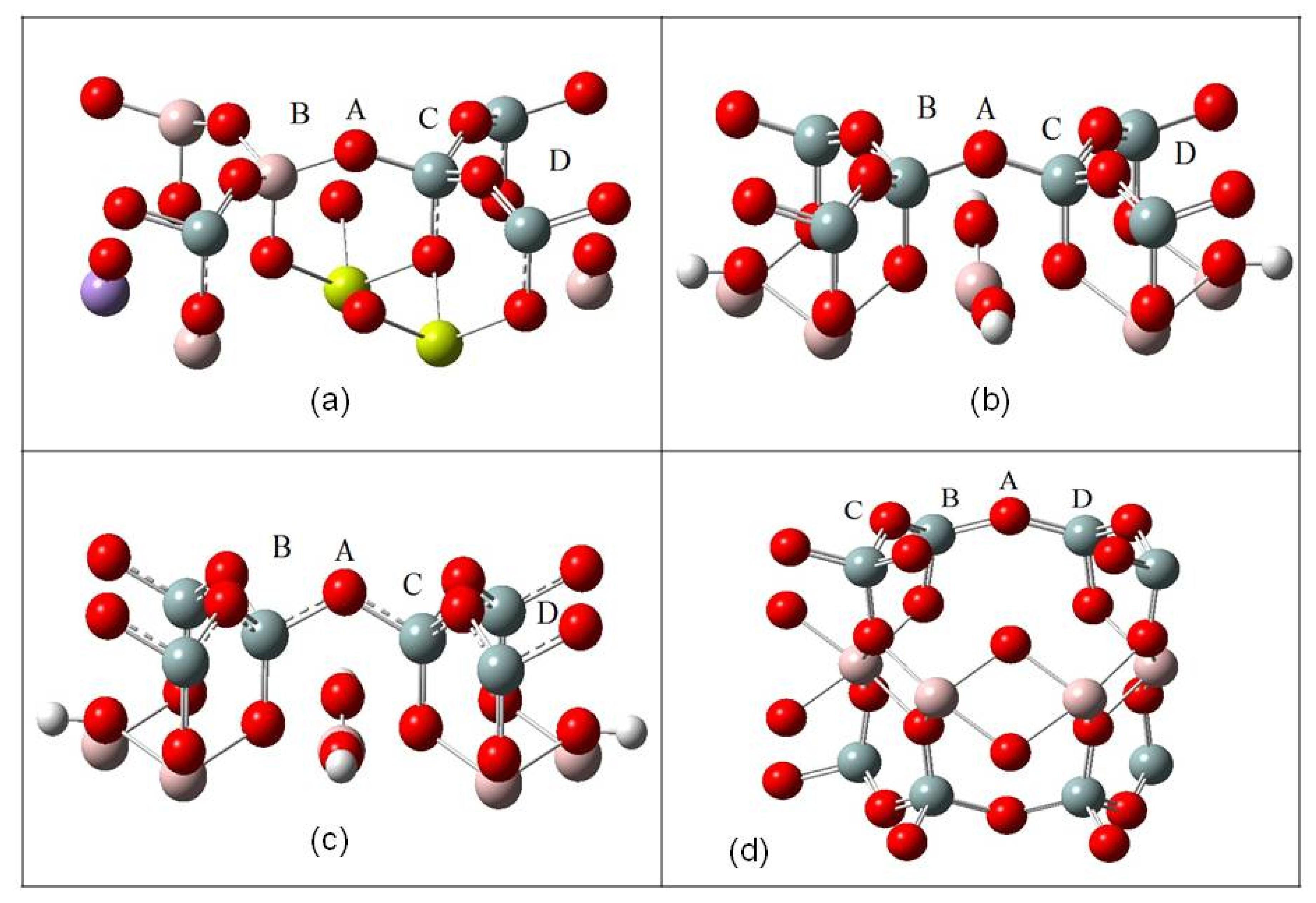
16]. These models preserve the essential surface coordination environment, including surface oxygen atoms, hydroxyl groups, and octahedral and tetrahedral cationic sites that dominate adsorption processes in natural soils. The identification of distinct adsorption sites-atop atom, bridge, three-fold filled, and three-fold hollow sites-allows systematic evaluation of As binding preferences (
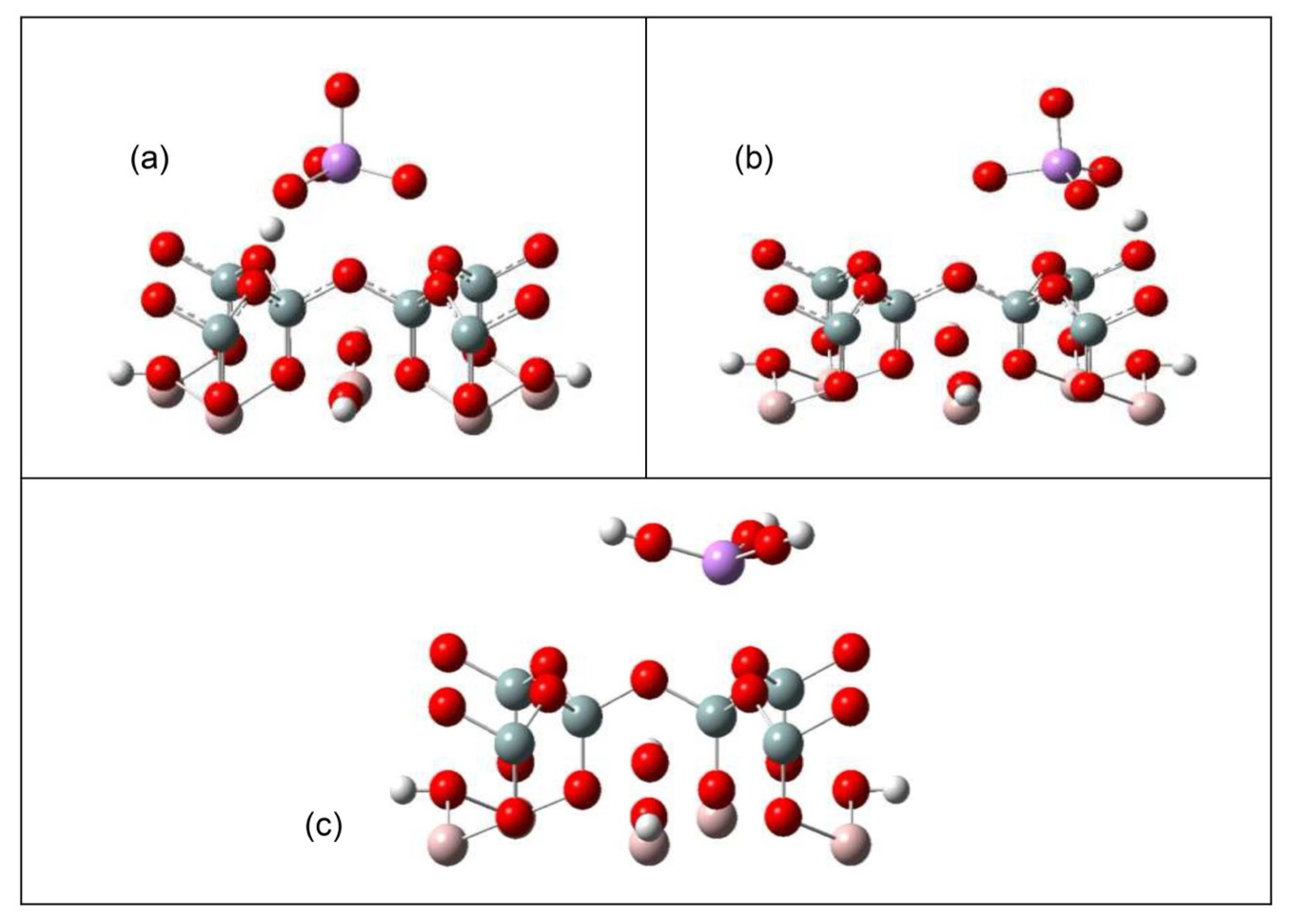
Figure 1a–d). It should be noted that the structures illustrated represent finite cluster fragments of the basal surfaces rather than complete mineral layers. Consequently, only a portion of the ideal crystallographic unit cell is shown, which may visually resemble a partial layer (e.g., in the chlorite model). This truncation is necessary to maintain computational feasibility while preserving the local coordination geometry of adsorption sites. To avoid artificial reactivity associated with dangling bonds at the cluster edges, terminal oxygen atoms were saturated with hydrogen atoms during model construction. This treatment stabilizes the electronic structure of the cluster and ensures that adsorption interactions occur primarily at interior surface oxygen sites rather than at artificial edge defects. Similar proton-saturated cluster models have been widely used in quantum chemical studies of mineral-adsorbate systems.
The atoms shown in
Figure 1a–d (O, Si, Al, and Mg) play distinct but complementary roles in controlling As adsorption on clay mineral surfaces. Surface oxygen atoms constitute the primary reactive sites for adsorption in the present cluster models. In natural clay minerals, additional hydroxyl-terminated surfaces (for example, the Al-OH octahedral surface of kaolinite) can also participate in adsorption processes; however, such hydroxyl-terminated basal surfaces were not explicitly represented in the simplified cluster models used in this study. The spatial distribution and coordination of surface oxygen atoms determine the availability of bridge, atop, and three-fold hollow adsorption sites identified in the present study. Silicon atoms form the tetrahedral framework of the clay structure and do not directly participate in adsorption; however, they influence adsorption indirectly by stabilizing the siloxane surface and governing the geometric arrangement and electronic environment of surface oxygen atoms. Aluminum and magnesium atoms, located mainly within octahedral sheets, contribute indirectly by modifying layer charge, local electrostatic potential, and surface acidity, which in turn affect the polarization and reactivity of adjacent oxygen atoms. Consequently, As adsorption in aluminosilicate clays is controlled primarily by oxygen-mediated interactions, while Si, Al, and Mg regulate adsorption strength through structural and electronic effects on the mineral surface.
Although the present investigation is computational in nature, the structural features represented in the cluster models are consistent with experimentally characterized clay mineral surfaces reported in the literature. X-ray diffraction (XRD) studies have established the layer structures, basal spacings, and tetrahedral–octahedral coordination environments of illite, chlorite, montmorillonite, and kaolinite, which form the structural basis of the present models. In addition, vibrational spectroscopic investigations, such as FTIR and ATR-FTIR, have demonstrated the presence and reactivity of surface hydroxyl groups and Si–O–Al linkages, which actively participate in adsorption and surface complex formation. Previous combined FTIR–theoretical studies on clay–adsorbate systems have shown good agreement between calculated adsorption geometries and experimentally observed vibrational shifts, supporting the reliability of cluster-based DFT approaches for describing adsorption mechanisms at mineral surfaces [
13,
26]. Thus, the computational framework adopted here remains consistent with experimentally observed mineral surface chemistry.
Geometry optimizations of isolated arsenate [As(OH)
4−] and arsenious acid [As(OH)
3] were performed at the B3LYP level using the SBKJC/LANL2DZ basis set. Structural validation against larger basis sets confirmed the reliability of the optimized geometries within acceptable error limits (<2%). This validation justifies fixing adsorbate geometries during surface scan, thereby reducing computational cost without compromising accuracy. Similar cluster-based approaches have been widely adopted for studying adsorption on aluminosilicate and iron oxide surfaces [
8,
18]. Furthermore, the use of finite-cluster models enables the explicit treatment of localized surface heterogeneities, edge effects, and coordination asymmetries that are often averaged out in periodic models. Such resolved representations are particularly important for clay minerals, where surface terminations and hydroxyl configurations exert strong control over contaminant binding. By systematically probing multiple adsorption sites on each mineral surface, the present approach provides a comprehensive and internally consistent framework for comparing As-mineral interactions across contrasting clay mineralogies. Collectively, this ensures that the computed adsorption energies and geometrical descriptors are both physically meaningful and environmentally relevant. While dispersion interactions may contribute to secondary stabilization, the dominant adsorption mechanism identified here involves short-range coordination and hydrogen bonding, suggesting that the qualitative adsorption trends remain robust despite the known limitations of dispersion in conventional hybrid functionals.
In addition to mineral composition, the microstructural characteristics of mineral surfaces play a decisive role in determining As adsorption strength. At the atomistic scale, adsorption is governed by the spatial distribution of surface oxygen atoms, hydroxyl group density, and the local coordination environment created by tetrahedral and octahedral sheets. Minerals possessing closely spaced surface oxygen atoms enable multidentate binding configurations, allowing arsenate species to form stable inner-sphere complexes through simultaneous interactions with multiple surface oxygens. This configuration lowers the total system energy and results in higher binding energies observed at three-fold hollow or filled sites. In contrast, surfaces with lower hydroxyl density or sterically constrained coordination environments restrict the formation of such multidentate interactions, leading to weaker adsorption as observed for arsenious acid. Furthermore, differences between 1:1 and 2:1 clay structures influence adsorption through variations in surface charge distribution, isomorphic substitution, and electrostatic heterogeneity, which collectively regulate hydrogen bonding strength and ligand exchange processes at the mineral–water interface [
8,
18]. The present results, therefore, demonstrate that adsorption strength is not solely a function of mineral chemistry but emerges from the microstructural arrangement of reactive surface sites that control accessibility, coordination geometry, and the electronic stabilization of adsorbed As species. Recalculation of representative adsorption configurations using the dispersion-corrected B3LYP-D3 functional resulted in moderate increases in absolute binding energies (typically 3%–8%). Meanwhile, the relative stability ordering among minerals and adsorption sites remained unchanged. This confirms that the mechanistic trends discussed herein are robust with respect to dispersion treatment.
3.2. Adsorption Site Preference and Binding Energies on Illite
The adsorption behavior of As species on illite reveals a clear dependence on surface coordination environment. As shown in
Table 1, BSSE-corrected adsorption energies calculated at the B3LYP level indicate that As(V) exhibits its strongest binding at the three-fold hollow site, with a BSSE-corrected binding energy of 59.8 kcal mol
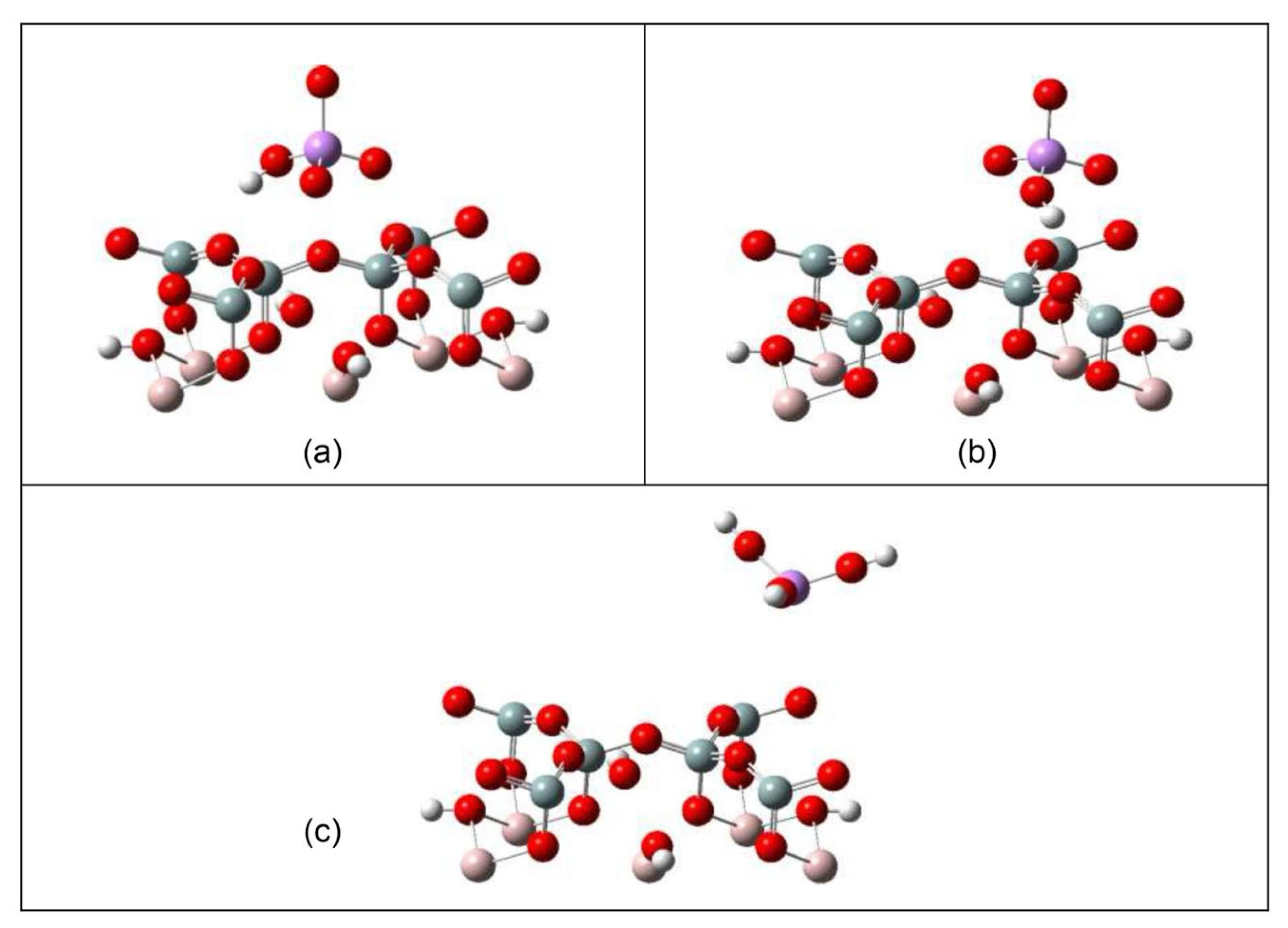
−1 and a vertical separation of approximately 3.08 Å from the surface. The atop atom site is the second most favorable, while the three-fold filled site shows the weakest interaction (
Figure 2a,b). This hierarchy indicates that adsorption is dominated by multidentate interactions involving surface oxygen atoms rather than direct coordination to underlying cations.
Arsenious acid shows comparatively weaker binding on illite, with maximum binding energies limited to 33.6 kcal mol
−1 at the three-fold hollow site. Additionally, As(OH)
3 prefers a tilted adsorption geometry, with As-O-H bonds oriented away from the surface (
Table 1 and
Figure 2c). This geometry minimizes steric repulsion and indicates weaker hydrogen bonding than in arsenate. The flatter energy landscape for As(OH)
3 across different sites suggests higher surface mobility, which has important implications for As bioavailability under reducing soil conditions [
15,
25].
These results underline the critical role of surface oxygen topology in governing As retention on illite, where hollow sites provide optimal coordination geometry for inner-sphere complexation. The pronounced difference in binding strength between arsenate and arsenious acid reflects speciation-dependent electrostatic and hydrogen-bonding interactions at the mineral-water interface. The weaker and more flexible adsorption of As(OH)3 implies a greater susceptibility to desorption and transport, particularly under anoxic conditions where As(III) dominates. Consequently, illite-rich soils may act as less effective sinks for As in reduced environments, enhancing the risk of As migration into groundwater and the food chain.
3.3. Comparative Adsorption Behavior on Chlorite
Results for chlorite closely mirror those observed for illite, reinforcing the robustness of the observed adsorption trends. As summarized in
Table 2, As(V) again binds most strongly at the three-fold hollow site (62.1 kcal mol
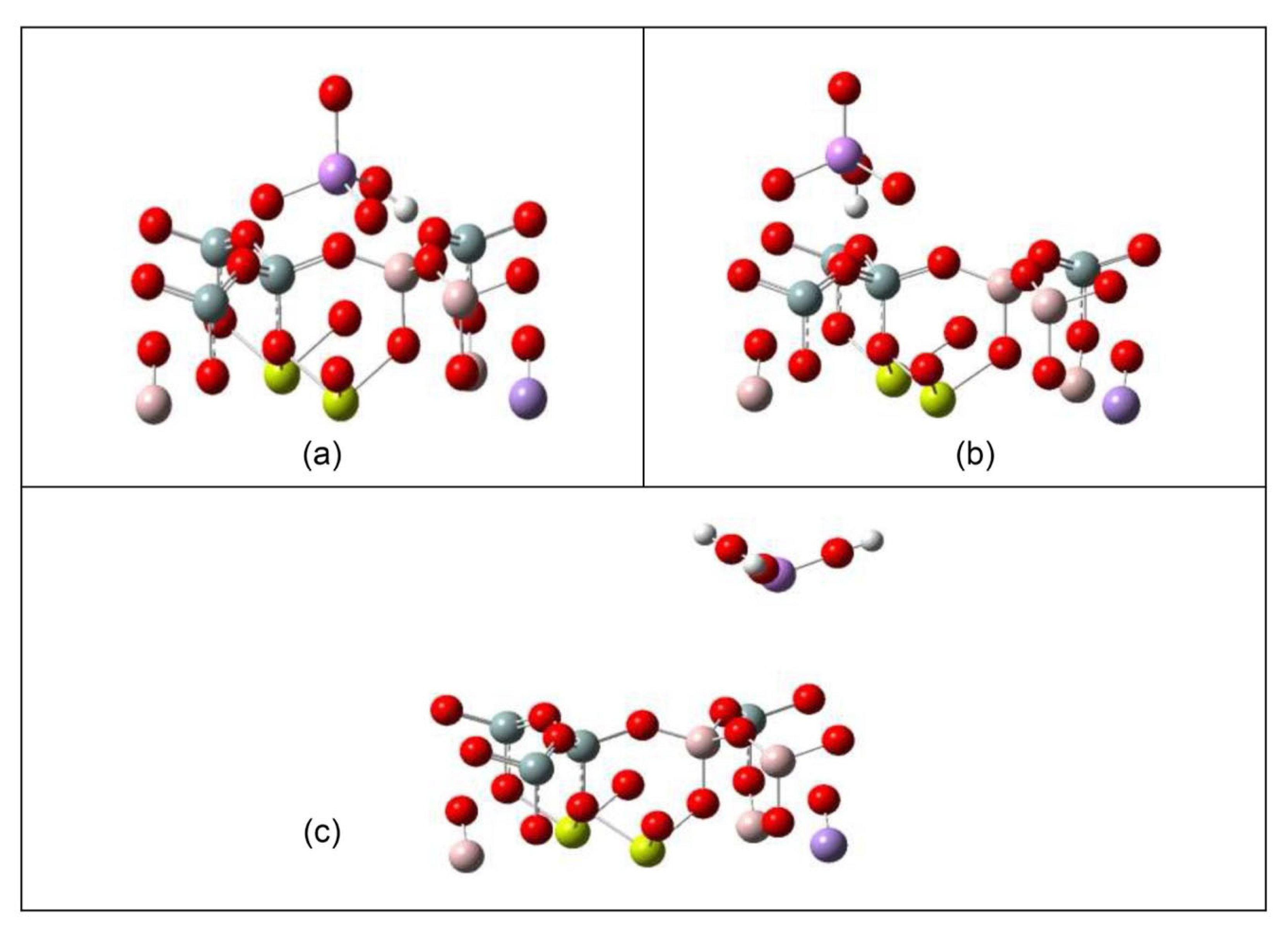
−1), followed by the atop atom site, as also evident from
Figure 3a,b. The adsorption distances remain within 3.04–3.78 Å, consistent with inner-sphere surface complexation.
For arsenious acid, binding energies range from 29.9 to 37.2 kcal mol
−1, with the three-fold hollow site being the most stable (
Figure 3c). The tendency of As(OH)
3 to adopt tilted configurations persists, with tilt angles between 11° and 17°. These findings suggest that chlorite surfaces, despite their mixed octahedral composition, exhibit adsorption characteristics similar to those of illite, primarily governed by surface oxygen coordination rather than by specific cation identity.
The close similarity between chlorite and illite adsorption behavior indicates that the fundamental mechanism of As retention is largely independent of variations in octahedral cation composition. Instead, the availability and spatial arrangement of surface oxygen and hydroxyl groups are decisive in stabilizing As species at the mineral-water interface [
27]. The consistent preference for three-fold hollow sites reflects enhanced multidentate interactions and hydrogen bonding possibilities. Consequently, chlorite-rich soils are expected to exhibit As retention capacities comparable to illitic systems under similar geochemical conditions.
3.4. Enhanced Arsenic Binding on Montmorillonite
Montmorillonite exhibits stronger interactions with both species of As relative to illite and chlorite, highlighting the role of expandable 2:1 clay structures in contaminant retention. As shown in
Table 3, arsenate binding energies reach up to 65.4 kcal mol
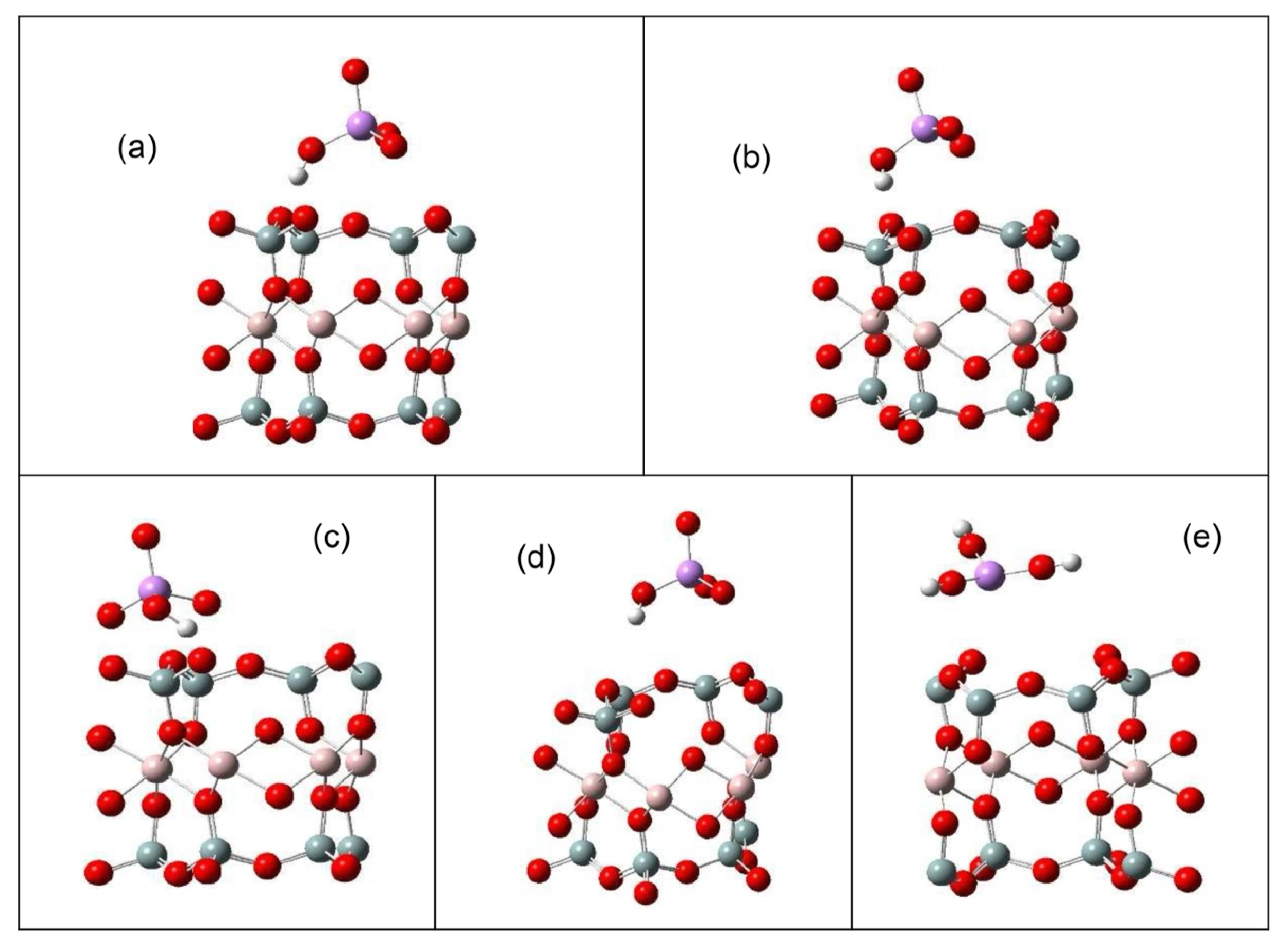
−1 at the three-fold filled site, with adsorption distances as low as 2.90 Å. The enhanced binding can be attributed to the high surface reactivity of montmorillonite, greater density of hydroxylated oxygen atoms, and the presence of isomorphic substitutions that generate localized negative charges. These features collectively promote stronger electrostatic and hydrogen-bonding interactions with arsenate species (
Figure 4a–d).
Arsenious acid also shows enhanced binding on montmorillonite compared to other 2:1 clays, with binding energies exceeding 49 kcal mol
−1 at favorable sites (
Figure 4e). However, the relatively small energy differences among adsorption sites suggest a flatter potential energy surface for As(OH)
3, implying higher surface mobility and sensitivity to environmental conditions. This behavior reflects the weaker electrostatic interactions of neutral arsenious acid compared to those of anionic As(V). Overall, the results are consistent with experimental reports of enhanced As retention in smectitic soils, particularly under neutral to slightly alkaline pH conditions [
6,
28], reinforcing the geochemical significance of montmorillonite-rich soils in As sequestration.
3.5. Strongest Arsenic Retention on Kaolinite Surfaces
Among all clay minerals investigated, kaolinite exhibits the strongest affinity for As(V). As shown in
Table 4, the three-fold filled site yields a binding energy as high as 75.4 kcal mol
−1, accompanied by short adsorption distances (~2.70 Å) which are characteristic of strong inner-sphere surface complexes. This enhanced binding can be attributed to the high density of surface hydroxyl groups and the structurally ordered, non-expandable 1:1 layer configuration of kaolinite, providing well-defined and energetically favorable adsorption sites (
Figure 5a,b). Such surface characteristics promote stable coordination and limit As desorption under varying environmental conditions.
Arsenious acid, although more weakly bound than arsenate, still shows appreciable binding (
Figure 5c) on kaolinite, with energies ranging from 49.7 to 53.5 kcal mol
−1. The pronounced tilt of the As-O-H bonds away from the mineral surface reflects steric accommodation and the reorganization of hydrogen-bonding networks at the interface. Despite this reduced binding strength, the overall retention of As(III) on kaolinite remains significant relative to other clay minerals. The superior As sequestration capacity of kaolinite observed in this study lends strong theoretical support to its application in As filtration and remediation systems, particularly in As-affected regions [
29,
30].
3.6. General Trends in Arsenic Speciation and Mineralogical Control
Although four adsorption environments (atop atom, bridge, three-fold filled, and three-fold hollow sites) were identified and evaluated for all mineral cluster models, only selected representative adsorption geometries are illustrated for illite, chlorite, and kaolinite in
Figure 2,
Figure 3 and
Figure 5 to maintain clarity and avoid redundancy. All adsorption energies discussed in this section correspond to BSSE-corrected interaction energies obtained using the B3LYP-D3/6-311G** level, indicating that As(V) exhibits its strongest binding functional, ensuring consistent comparison across mineral surfaces, as reported in
Table 1,
Table 2,
Table 3 and
Table 4. In contrast, montmorillonite exhibits a comparatively heterogeneous surface coordination environment and smaller energetic differences among adsorption sites; therefore, all four adsorption configurations are explicitly shown in
Figure 4 to illustrate the diversity of stable adsorption geometries. The difference in graphical representation thus reflects a choice in visualization rather than differences in adsorption site availability or computational treatment across minerals.
Across all mineral surfaces, several consistent trends emerge that clarify the mechanistic controls on As retention in soils. Arsenate [As(V)] exhibits systematically stronger adsorption than arsenious acid [As(III)], primarily due to its higher negative charge and enhanced ability to form multidentate hydrogen-bonded surface complexes. These trends further emphasize that mineral microstructure—particularly surface oxygen topology and hydroxyl arrangement—controls the energetic stabilization of As species by governing the availability of multidentate adsorption geometries across different clay minerals. The universal preference for three-fold hollow sites highlights the dominant role of coordinated surface oxygen atoms in stabilizing As species through inner-sphere complexation. Furthermore, the stronger retention observed on kaolinite and montmorillonite compared to illite and chlorite reflects the influence of mineral structure, surface hydroxyl density, and layer reactivity in regulating As mobility and persistence in soil environments.
These atomistic trends are in strong agreement with spectroscopic and macroscopic adsorption studies reported for iron oxides and clay minerals, which identify inner-sphere complex formation as the primary mechanism of As immobilization [
26,
31]. The close correspondence between computational predictions and experimental observations confirms that the DFT-based cluster models employed here successfully capture the essential physicochemical processes governing As-soil interactions. It should be noted, however, that the adsorption energies reported here represent intrinsic binding strengths derived from single-adsorbate systems. In natural soils, the presence of competing oxyanions, such as phosphate, silicate, and sulfate, may reduce the effective adsorption of As by occupying reactive surface sites or altering local electrostatic environments. Therefore, while the computed trends reliably describe relative mineral affinities and adsorption mechanisms, absolute adsorption stability in field conditions may be lower due to competitive sorption effects.
3.7. Effect of Vermicompost on Arsenic Adsorption
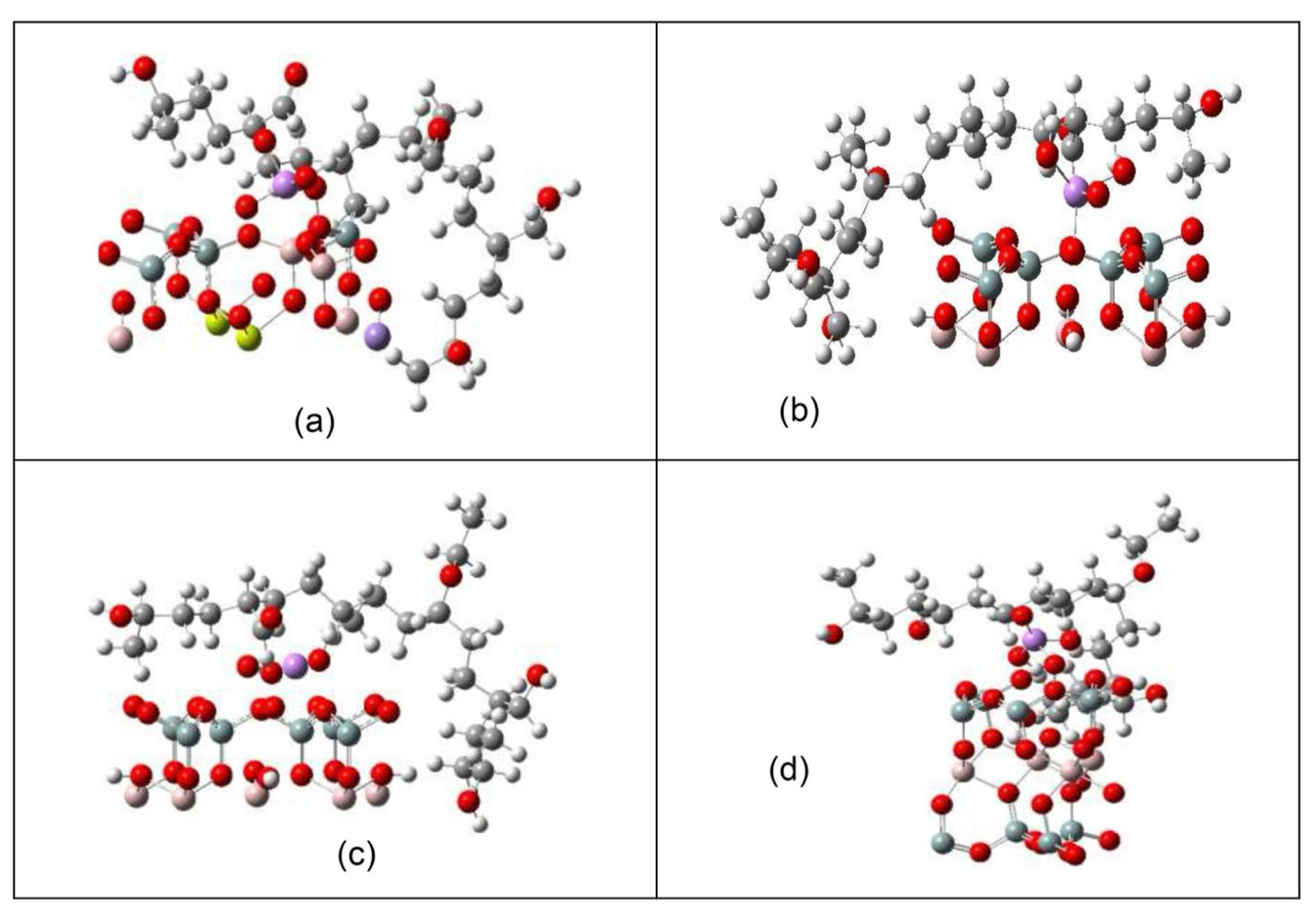
Incorporation of a simplified vermicompost model reveals a pronounced modification of arsenate-mineral interactions, with a clear tendency toward destabilization of As(V) binding on most clay surfaces [
28]. The simplified representation of vermicompost used here captures dominant competitive and electronic effects but does not account for the full chemical heterogeneity and dynamic behavior of natural soil organic matter. As shown in
Table 5 and
Figure 6, the organic model molecule effectively disrupts arsenate adsorption on chlorite, kaolinite, and montmorillonite, resulting in positive binding energies that signify desorption and enhanced mobility. The persistence of weak As(V) binding only on illite (−8.44 kcal mol
−1) indicates that the response to organic amendments is strongly mineral-specific and governed by surface structural characteristics.
The calculated energies correspond to the interaction of arsenate with an already formed organic-mineral composite system (O-M). Binding energies were therefore computed relative to the organic-coated mineral surface using the expression described in
Section 2.6. Consequently, positive binding energies represent energetically unfavorable adsorption of arsenate on the organic-coated surface, indicating that the organic layer disrupts or weakens the intrinsic mineral-arsenate interaction. The magnitude of the positive interaction energies partly reflects steric constraints imposed by the simplified organic model and the fixed mineral framework used during initial PM6 pre-optimization, which can amplify destabilization when arsenate is forced into sterically crowded adsorption environments. Therefore, these values should be interpreted primarily in a comparative and qualitative sense, as indicators of destabilized adsorption rather than absolute thermodynamic adsorption energies, reflecting relative disruption of mineral–arsenate interactions by organic coatings.
Binding energies were calculated as BE = E(O-M-As) − [E(O-M) + E(As)] with BSSE correction. For the large organic-mineral-arsenate composite systems, energies were evaluated using the semiempirical PM6 method, as the system size rendered full B3LYP-D3 calculations computationally impractical. Positive values indicate destabilization of arsenate adsorption on the organic-coated mineral surface.
The vermicompost influence was evaluated only for As(V), as this species dominates under oxidizing soil environments typically associated with organic amendment application. Because arsenate exhibits stronger electrostatic and multidentate interactions with mineral surfaces, any disruption caused by organic coatings becomes more clearly quantifiable. The weaker, largely hydrogen-bond-driven adsorption of As(III), as demonstrated in earlier sections, would be less sensitive to competitive site occupation in the simplified organic model used here. These observations suggest that organic matter can competitively inhibit As adsorption by masking reactive surface sites, modifying hydrogen-bonding networks, or altering local electrostatic environments at the mineral interface [
32]. Such behavior is in agreement with experimental reports documenting increased As release and transport following organic matter enrichment in soils and sediments. Consequently, the results emphasize the need for mineral-organic interactions when designing and implementing remediation strategies based on vermicompost amendments, particularly in As-contaminated environments.
The atomistic insights generated in this study clarify the fundamental mechanisms controlling As retention and transport at soil mineral interfaces. A notable outcome of the simulations is the distinctly different response of illite compared to chlorite, montmorillonite, and kaolinite following vermicompost addition. While organic coating substantially destabilized arsenate adsorption on most minerals, illite retained weakly negative binding energy, indicating partial preservation of adsorption stability. This difference can be attributed to mineral structural characteristics and surface charge distribution. Illite, a non-expandable 2:1 clay with fixed interlayer potassium and localized negative charge from tetrahedral substitution, restricts penetration and rearrangement of organic molecules at reactive surface sites, thereby limiting surface masking. In contrast, expandable clays such as montmorillonite allow greater organic accessibility to adsorption sites, leading to stronger disruption of multidentate arsenate coordination. Kaolinite, despite its strong intrinsic affinity for arsenate, contains abundant surface hydroxyl groups that readily interact with organic functional groups, resulting in competitive adsorption and weakened arsenate binding. Chlorite exhibits intermediate behavior but remains susceptible to organic-induced electrostatic screening.
Mechanistically, vermicompost-derived organic matter likely modifies As adsorption through the following: (i) competitive occupation of surface oxygen sites by organic functional groups, (ii) alteration of local electrostatic conditions at the mineral interface, and (iii) disruption of hydrogen-bonding networks stabilizing inner-sphere arsenate complexes. The persistence of limited arsenate binding on illite, therefore, suggests that structural rigidity and localized charge stabilization can partially counteract organic competition.
The markedly stronger adsorption of As(V) on kaolinite and montmorillonite indicates their potential to act as long-term geochemical sinks for As under oxidizing conditions. In contrast, the relatively weaker and flatter binding-energy landscape of arsenious acid suggests enhanced mobility and bioavailability, particularly in reduced soil and sediment environments. Furthermore, the disruption of As adsorption in the presence of organic amendments highlights the complex and sometimes counterproductive role of organic matter in remediation strategies. Collectively, these findings underscore that the fate of As in soils is governed by the interplay of mineralogical composition, chemical speciation, and organic interactions, demonstrating the strength of DFT-based methods in resolving environmentally relevant geochemical processes at the molecular scale.