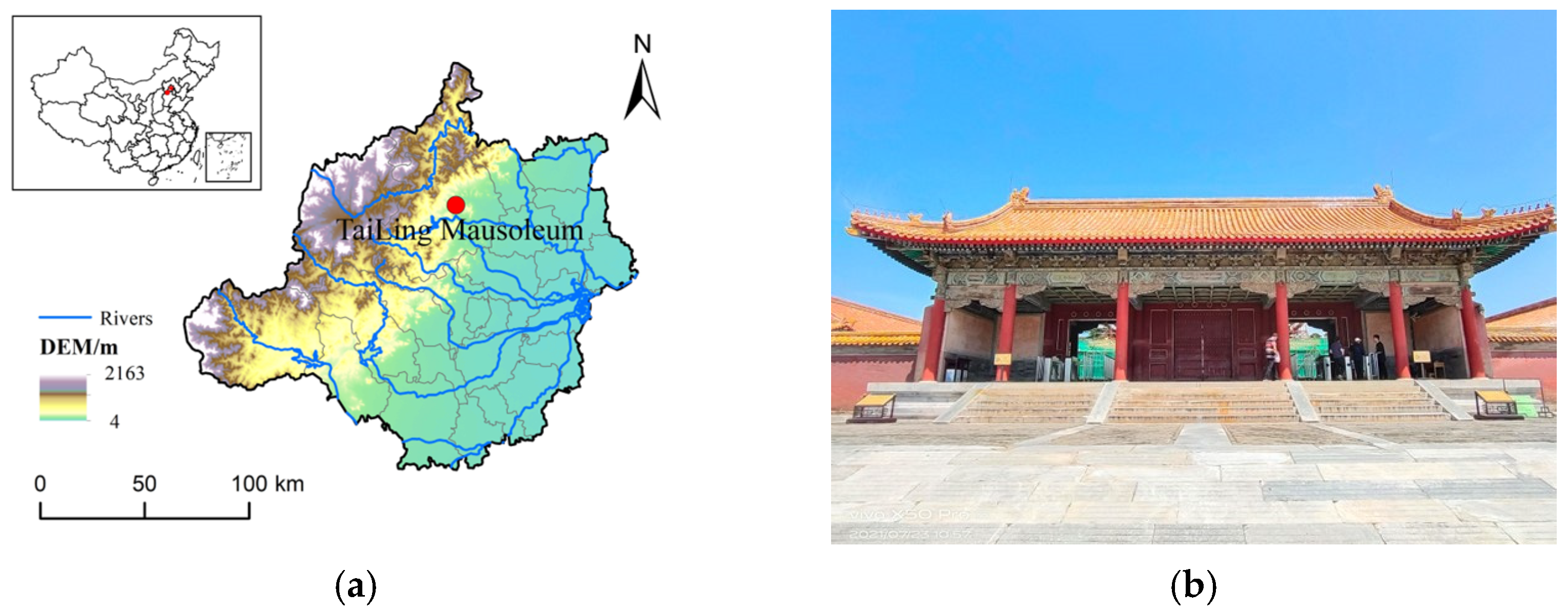
Multi-Technique Analysis of Pigments Used in Architectural Polychrome Paintings at the TaiLing Mausoleum, Western Qing Tombs



Abstract
Share and Cite
Wang, W.; Zhang, Z.; Sun, Y.; Yang, M.; Sang, Z.; Li, L. Multi-Technique Analysis of Pigments Used in Architectural Polychrome Paintings at the TaiLing Mausoleum, Western Qing Tombs. Minerals 2026, 16, 309. https://doi.org/10.3390/min16030309
Wang W, Zhang Z, Sun Y, Yang M, Sang Z, Li L. Multi-Technique Analysis of Pigments Used in Architectural Polychrome Paintings at the TaiLing Mausoleum, Western Qing Tombs. Minerals. 2026; 16(3):309. https://doi.org/10.3390/min16030309
Chicago/Turabian StyleWang, Weixiang, Zhongjian Zhang, Yutong Sun, Mei Yang, Zengqian Sang, and Lihui Li. 2026. "Multi-Technique Analysis of Pigments Used in Architectural Polychrome Paintings at the TaiLing Mausoleum, Western Qing Tombs" Minerals 16, no. 3: 309. https://doi.org/10.3390/min16030309
APA StyleWang, W., Zhang, Z., Sun, Y., Yang, M., Sang, Z., & Li, L. (2026). Multi-Technique Analysis of Pigments Used in Architectural Polychrome Paintings at the TaiLing Mausoleum, Western Qing Tombs. Minerals, 16(3), 309. https://doi.org/10.3390/min16030309